1. Introduction
Malaria continues to pose a serious threat to global health and contributes significantly to the disease burden in sub-Saharan Africa (SSA). In 2024, there were approximately about 610,000 malaria-related deaths and 282 million cases of malaria, and 13 million pregnant women were infected with malaria in the African region [
1]. Placental malaria (PM) occurs with the attachment of
Plasmodium falciparum-infected red blood cells to the placenta through the VAR2CSA protein. This adhesion triggers inflammation, which then reduces placental blood flow, as well as limiting the nutrient and oxygen transfers to the foetus, potentially leading to problems such as maternal anaemia, low birth weight, and premature birth [
2,
3]. Nearly 17% of pregnancies are affected by placental malaria globally, and this number rises up to 25% in SSA, causing an estimated 75,000–200,000 infant deaths annually [
4]. Women are at higher risk during their primary and secondary pregnancies because they have not built up enough immunity to VAR2CSA-associated parasites [
2]. In 2024, the majority of malaria cases (94%) and deaths (95%) occurred in the African region [
1].
Malaria is endemic in Malawi, with 2021 figures suggesting roughly 4.4 million cases and 7392 deaths [
5]. National malaria control efforts in Malawi have achieved some success [
6]; however, the emergence of drug resistance, together with low IPTp3 coverage (56%) [
7], presents major obstacles to malaria in pregnancy (MiP) prevention and reduction of harmful outcomes of PM [
8]. These limitations emphasise the necessity of alternative interventions, such as vaccines, and there have been recent developments in the progress of malaria vaccines [
9,
10,
11].
It is essential to understand the perceptions, practices, knowledge, and beliefs of mothers and women of reproductive age to encourage the uptake of potential vaccines. These factors notably influence vaccine decisions and shape the perceptions of future mothers toward disease and the vaccine [
12]. National surveys and behaviour studies show persistent gaps in knowledge and prevention behaviour among women of reproductive age. The 2021 Malawi Malaria Indicator Survey (MMIS) shows a significant malaria burden and documents behavioural and psychosocial barriers that continue to impede optimal malaria practices among vulnerable populations [
7,
13].
Surveys are common tools to gather essential data, thereby informing the design of future interventions aimed at promoting community involvement, acceptance and adherence [
14]. While general malaria knowledge among Malawian women has been described in national and peer-reviewed surveys, robust, recent evidence specifically on women’s knowledge of malaria in pregnancy, especially among rural populations, remains sparse [
15,
16,
17,
18,
19]. The main objective of this study was to generate evidence that can guide the design of social and behaviour change interventions to raise awareness of PM and improve their vaccine acceptance.
3. Results
3.1. Participants’ Demographic Characteristics
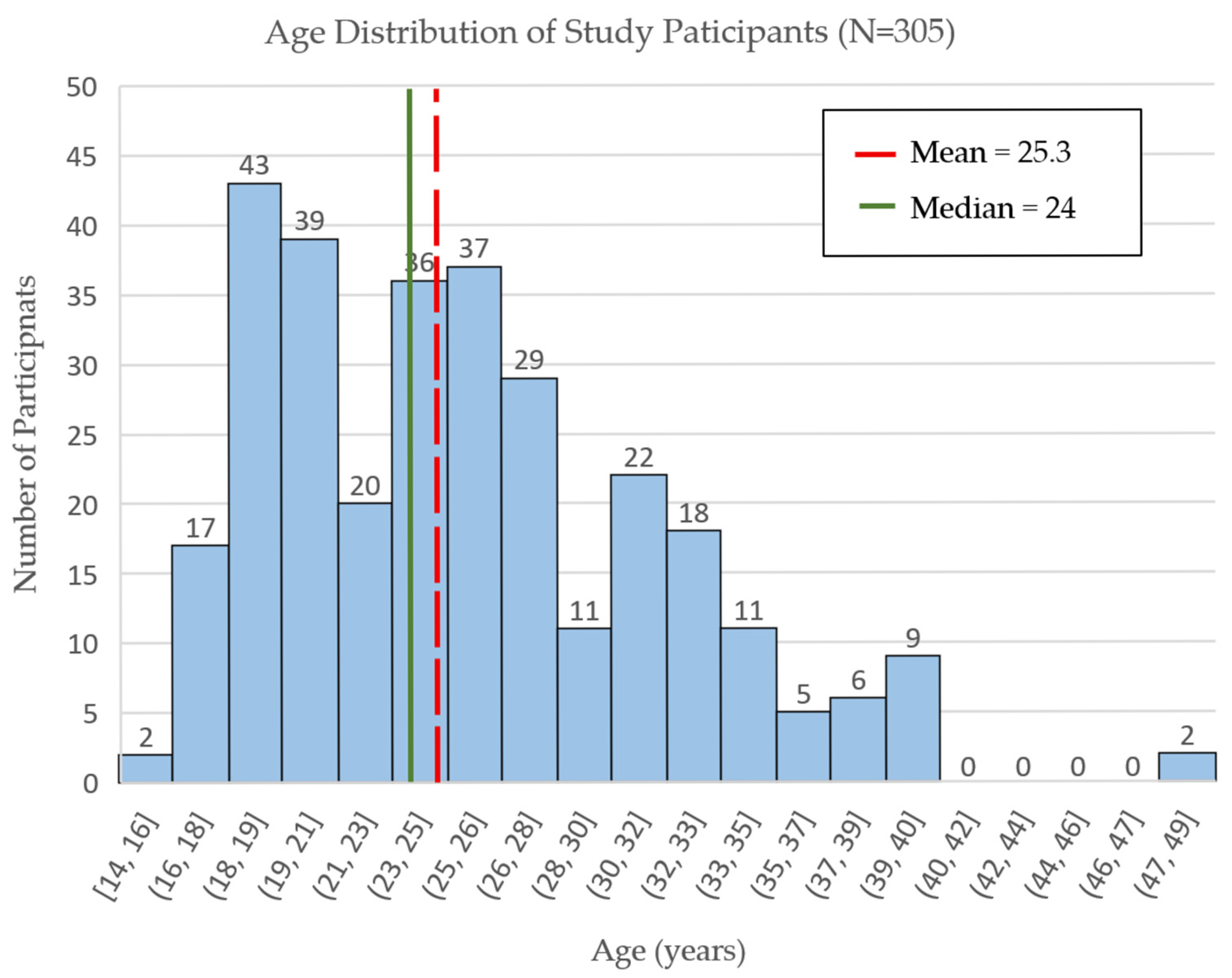
A total of 307 participants, with a mean age of 25.3 years (median age 24, interquartile range 20–29), participated in the survey (see
Table 1). The targeted reproductive age range was 15–49 (see
Figure 3). One participant outside the age range was excluded from the dataset. Another participant who only answered questions on demographic data and left all other questions unanswered was also excluded. This resulted in a final dataset of 305 participants.
Most participants, 62.6% (n = 191), had only attended primary education, 31.8% (n = 97) had secondary education, and one participant held a tertiary education diploma. Most participants were in their 20s (56.4%, n = 172), and the median age of the group was 24. Adolescents younger than 20 made up 19.7% (n = 60) of participants, with a similar number of older women in their 30s (22%, n = 67). A small minority was in their 40s (2%, n = 6). Participants came from the districts of Mpemba (34.8, n = 106), Madziabango (32.1%, n = 98), and Thyolo (33.1%, n = 101). Within districts, participants from Thyolo came from 50 different villages (for seven participants no village was recorded), those from Mpemba came from 54 different villages (village information missing for 3), and those from Madziabango came from 34 villages (with village information missing for 14), with similar participant numbers from each. Two women from villages within Thyolo were surveyed at the Madziabango health care facility, and were subsequently grouped with other women from Thyolo instead of the Madziabango group.
3.2. Knowledge About Malungo, Perceived Causes and Prevention
Out of 305 participants, 98% (n = 299) reported having heard about a disease called malungo. Regarding perceived causes of malungo, 62.3% (n = 190) mentioned mosquitoes as the sole cause, while 9.5% (n = 29) mentioned mosquitoes along with other explanations. A total of 10.5% (n = 32) of participants attributed malungo to not following prevention methods or to environmental factors, without mentioning mosquitoes, such as not sleeping under bed nets, the presence of stagnant water, or unclean surroundings. A total of 0.7% (n = 2) of participants provided symptom-based explanations only, such as shivering, coldness, fever, cough, or flu. Notably, 12.1% (n = 37) reported that they did not know the cause, while 4.9% (n = 15) provided unscorable responses (stating “yes” without further explanation).
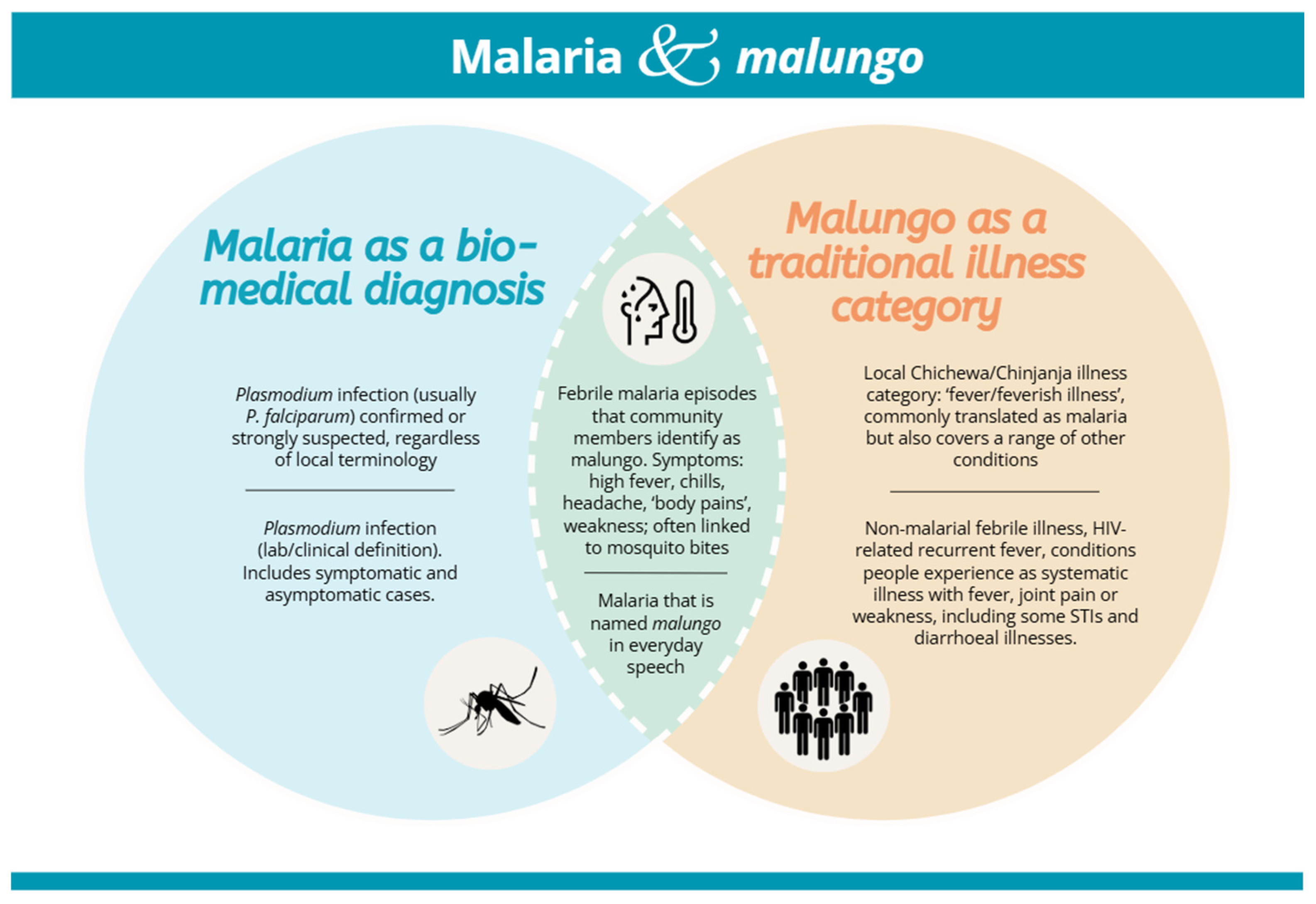
To understand whether respondents conceptualized malungo predominantly as the biomedical disease malaria, or under the broader category of malungo (which encompasses other febrile diseases as well), answers were categorized based on whether they belonged exclusively to malaria, to malungo (general hygiene, flu-like symptoms), or to a mix of both. The majority (79.0%, n = 241) described malungo causes consistent with biomedical malaria only, by either mentioning mosquitoes and/or the plasmodium parasites or by mentioning not following malaria prevention methods (“not sleeping under a bed net”, “keeping stagnant water”, “not taking antimalarial drugs”). A smaller proportion (3.3%, n = 10) provided mixed explanations that combined malaria-related responses and alternative environmental or symptom-based interpretations, which are aligned to the broader illness category of malungo. Very few respondents (0.7%, n = 2) attributed malungo exclusively to causes unconnected to malaria, such as hygiene, coldness, or flu-like symptoms.
Knowledge Index
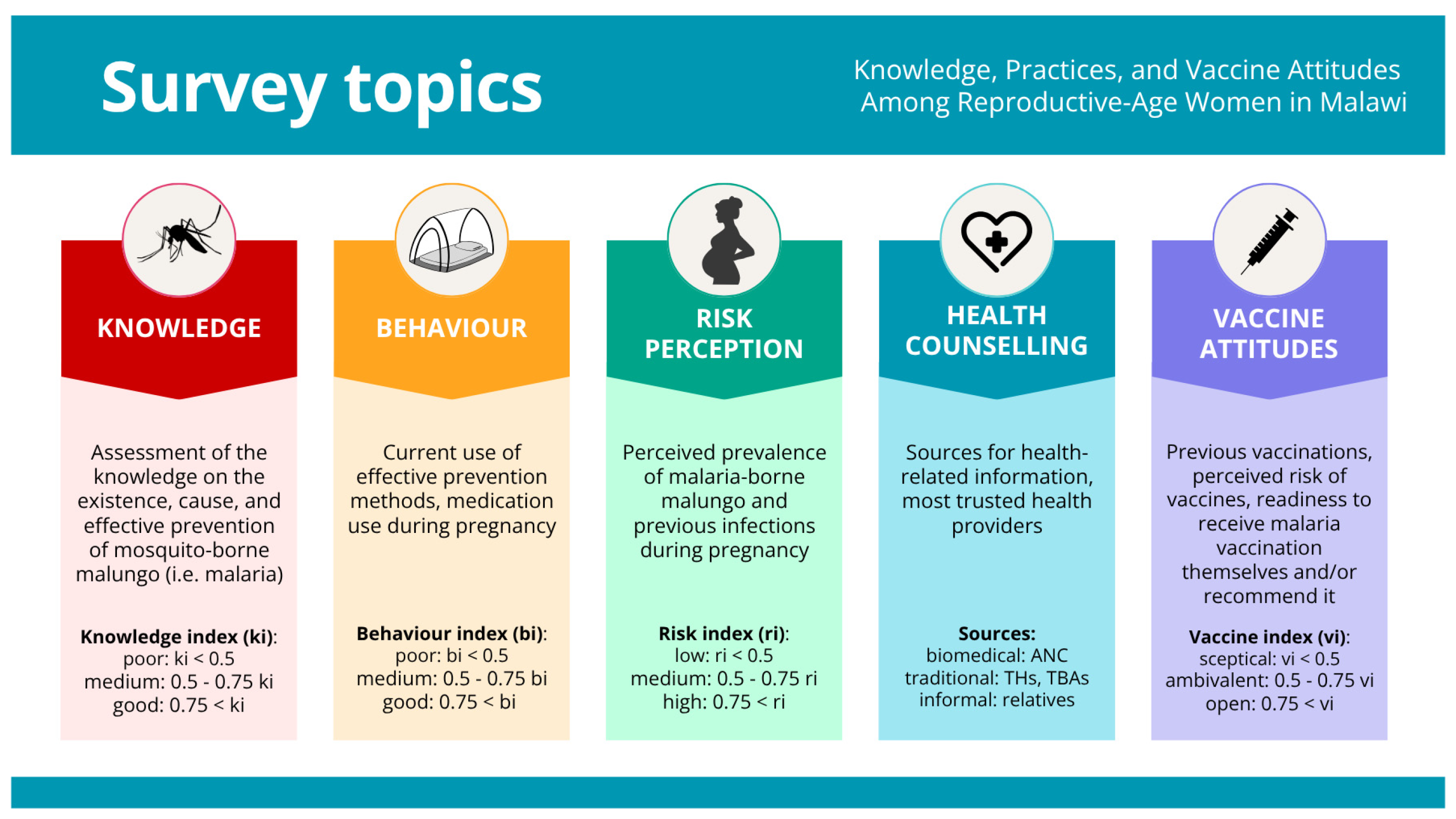
A composite malaria knowledge index was calculated from the “Knowledge Index” dataset. The index was dichotomized into high versus low knowledge using the sample median as the cutoff. Most respondents demonstrated at least moderate understanding of malaria, as the sample median was a knowledge index of 0.69 (with a mean of 0.72). Education was significantly associated with higher malaria knowledge (aOR 1.83, 95% CI 1.09–3.11,
p = 0.024). Age was not associated with knowledge level (aOR 0.87, 95% CI 0.54–1.40,
p = 0.561). Knowledge level differences particular to each district were statistically significant. No significant difference was observed between Madziabango and Thyolo (aOR 0.85, 95% CI 0.48–1.50,
p = 0.572). In contrast, respondents from Mpemba had substantially lower odds of high knowledge compared to both Thyolo (aOR 0.23, 95% CI 0.12–0.41,
p < 0.001) and Madziabango (aOR 0.27, 95% CI 0.14–0.49,
p < 0.001) (see
Table 2).
3.3. Prevention Behaviour
The majority of study participants (78.5%;
n = 241)—see
Table 3—mentioned sleeping under a mosquito net as a preventive method. Among these, 53.1% (
n = 162) mentioned only a mosquito net (Madziabango: 37 responses (38%), Mpemba: 56 responses (53%), Thyolo: 71 responses (70%).), while others combined this with other practices such as filling the stagnant water bodies (6.2%;
n = 19), clearing the surroundings (5.6%;
n = 17), burning coil/Doom (Doom is the brand name of the local mosquito repellent spray) 6.2% (
n = 19), and taking antimalarial drugs 2.0% (
n = 6). Additionally, 12.7% (
n = 39) of participants included eating clean or hygienic food, burning animal dung, using mosquito repellents, and burning bushes or herbs as localised practices to repel mosquitoes. Around 7.8% (
n = 24) said ‘no’, indicating that they do not know how to prevent
malungo, and 5.5% (17) said ‘yes’, without specifying a method. While the majority associate mosquito nets with prevention, only 6 of 305 participants mentioned taking antimalarial drugs as prevention methods. Fifty-four participants said they sleep under mosquito net and are currently taking antimalarials; however, pregnancy status at the time of the interview was not systematically recorded, and therefore these answers cannot be interpreted as pregnancy-specific prevention behaviours.
Most women 82.1% (n = 252), said they would take medication if they contracted malungo in pregnancy. A minority answered either “I do not know” 6.2%, (n = 19) or “no” 3.6%, (n = 11), citing reasons such as not being aware, fear of harm to the baby or lack of money.
The composite behaviour index was generally high, with a mean of 0.86 and a median of 0.92, reflecting the widespread use of bed nets and willingness to take medication to treat malaria. Multivariable logistic regression adjusted for education, age, and district showed that education level was not associated with above average preventive behaviour (aOR = 1.57, 95% CI 0.88–2.81,
p = 0.126); see
Table 4. Age was likewise not associated with preventive behaviour, with women aged ≥25 years showing similar odds of good preventive behaviour compared with those aged <25 years (aOR = 1.06, 95% CI 0.61–1.85,
p = 0.831).
In contrast, the district was a significant predictor. Compared with Thyolo, women from Madziabango had substantially lower odds of above-average preventive behaviour (aOR = 0.26, 95% CI 0.13–0.50, p < 0.001), and women from Mpemba also had substantially lower odds (aOR = 0.26, 95% CI 0.13–0.49, p < 0.001). There was no difference between Mpemba and Madziabango (aOR = 1.00, 95% CI 0.47–2.17, p = 0.997). Overall, these findings indicate that preventive behaviour differed by district, with Thyolo showing stronger behavioural index scores than both Madziabango and Mpemba, while education and age were not significant predictors in the adjusted model.
3.4. Perceived Risk Awareness
Perceived malaria risk awareness was moderate overall. Two-thirds of respondents, 63.9%, (n = 195) believed their area was high-risk for malungo, while 28.2%, (n = 86) perceived it as low risk, 5.6% said they did not know (n = 17), while data was missing for 2.3% (n = 7). To the question “Did you have malungo in this/your last pregnancy?”, 68.5%, (n = 209) said ‘No’, 25.6%, (n = 78) said ‘Yes’, while data was missing for 5.9% (n = 18). To the question “Did you have malaria in any other previous pregnancy?”, 61.0% (n = 186) said ‘No’, 38.7%, (n = 118) said ‘Yes’, while data was missing for one person (0.3%).
The mean of the risk index was 0.46, with a median of 0.33 (a higher index indicating more perceived risk/experiences of infection), indicating low-to-medium perceived risk of malaria infection. Neither education nor age was significantly associated with the risk index (see
Table 5). Women with higher education had similar odds of high risk index compared to those with lower education (aOR = 0.94, 95% CI 0.56–1.57,
p = 0.817). Likewise, women aged ≥25 years had slightly higher odds of a higher risk index than younger women, but this difference was not statistically significant (aOR = 1.12, 95% CI 0.70–1.79,
p = 0.643).
In contrast, the risk index differed by district. No significant difference was observed between Madziabango and Thyolo (aOR = 0.81, 95% CI 0.46–1.42, p = 0.455). However, women in Mpemba had significantly lower odds of a high-risk index compared to both Thyolo (aOR = 0.31, 95% CI 0.17–0.56, p < 0.001) and Madziabango (aOR = 0.39, 95% CI 0.21–0.69, p = 0.002).
3.5. Health Counselling
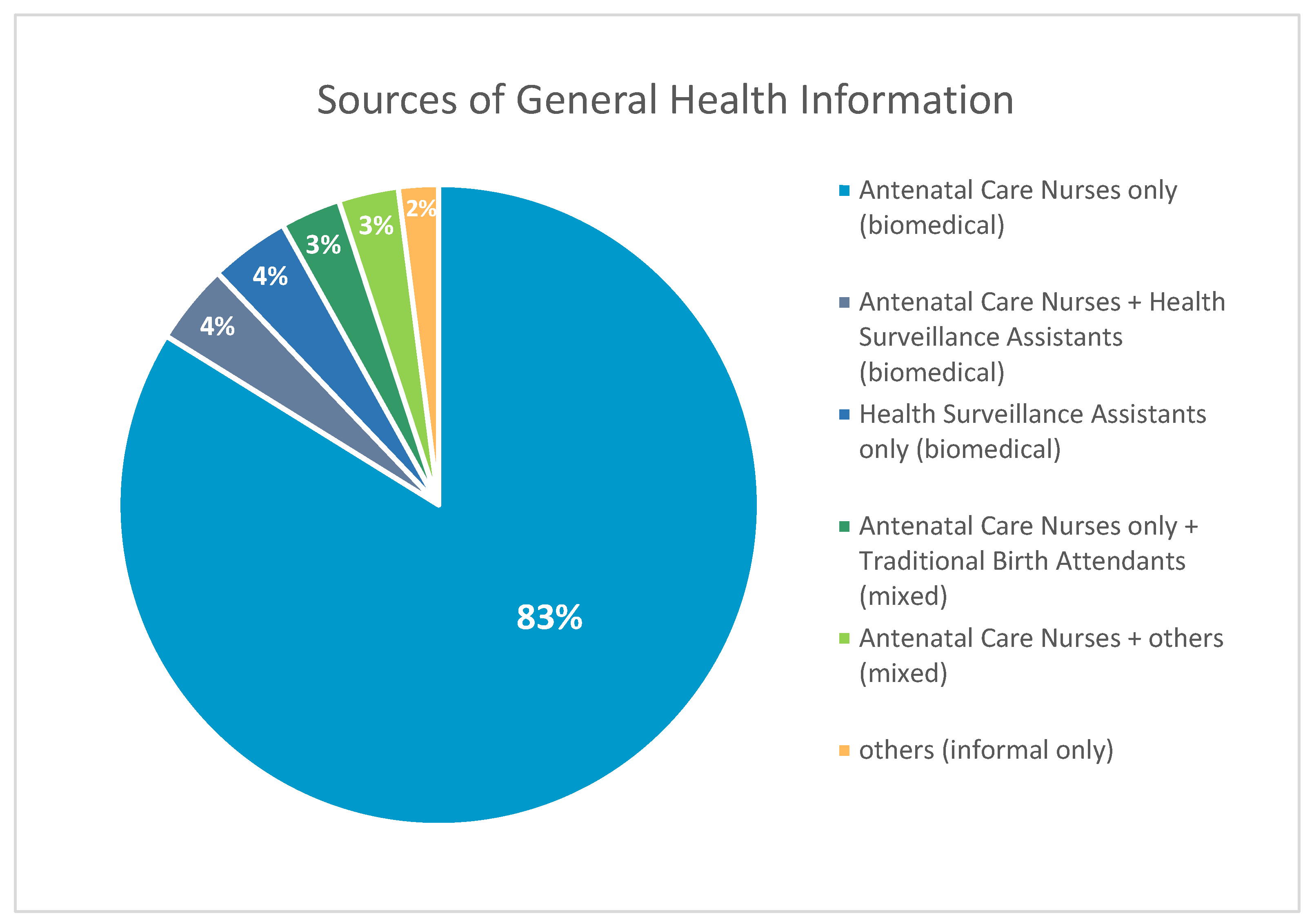
Most participants (83%;
n = 255) stated ANC nurses as sole healthcare advisors. The participants showed strong preference for formal healthcare and trust in hospitals and clinics. They described biomedical care as routine, safe, and professional. This was reflected in statements such as: “Hospitals are reliable,” “We trust our hospitals,” and “They have all required resources.” (see
Figure 4). However, others mentioned other medical providers such as HSAs 4.2%, (
n = 13) and non-biomedical and informal sources of health counselling such as TBAs 3.2%, (
n = 10), relatives 1.9%, (
n = 6), village chief, relatives, parents and care group, newspapers, community gatherings, and friends 1.6%, (
n = 5). Few stated only HSAs 4.2%, (
n = 13) as their medical advisors, or only relatives 0.97%, (
n = 3). No data was provided for 0.65% (
n = 2) participants.
Responses to whether women visited TBAs and/or THs varied and often included explanations. Only 4.5% (
n = 14) said they used TBAs/THs services. Among them, three participants reported using TBAs services to get
Mulimbiko, a traditional herbal medicine made from
Hippocratea parviflora leaves, to avoid miscarriage during pregnancy [
28]. The survey answers revealed significant scepticism towards TBAs and traditional healers. Common concerns mentioned were fear of miscarriage, “some TBAs deceive”, “they are after money”, “they lie”, “do not have equipment”, “they do not have expertise in medicine”, “they are not permitted to operate”.
To understand whether women who preferred exclusively biomedical counselling differed from those who also accessed informal health counselling, education, age, and district association were analysed between women with a health counselling index of 1 (exclusively biomedical), and those <1 (not exclusively biomedical). Education level showed no association with counselling preference (see
Table 6). Women with higher education had similar odds of relying exclusively on biomedical counselling compared to those with lower education (aOR = 0.98, 95% CI 0.55–1.78,
p = 0.958). In contrast, age was a significant predictor. Women aged ≥25 years were more than twice as likely to rely exclusively on biomedical counselling compared to younger women (aOR = 2.10, 95% CI 1.22–3.69,
p = 0.009).
Health counselling behaviour also differed by district. Compared with Thyolo, women in Madziabango had significantly lower odds of relying exclusively on biomedical counselling (aOR = 0.40, 95% CI 0.21–0.76, p = 0.006), while no significant difference was observed between Mpemba and Thyolo (aOR = 1.14, 95% CI 0.56–2.33, p = 0.716). Women in Mpemba were also significantly more likely to rely exclusively on biomedical counselling than those in Madziabango (aOR = 2.84, 95% CI 1.49–5.58, p = 0.002).
3.6. Attitude Toward Vaccination
There was a high rate of vaccination coverage and willingness among the participants. The majority of women (82.4%; n = 253) reported getting a vaccine in the past five years. The majority (83.4%; n = 256) also reported receiving a tetanus vaccine recommendation during pregnancy. A vast majority of women (92.8%; n = 283) reported having been vaccinated against tetanus in their current pregnancy, while 6.2% (n = 19) had not (missing data for 1%, n = 3).
Despite this, safety concerns regarding vaccines were prevalent. A majority of women (92.1%;
n = 281) endorsed the statement that vaccines “may carry a possibility of harm for the baby”, and only 4.9% (
n = 15) believed there was no harm (missing data for 1%,
n = 3). Despite this, participants were still open towards receiving vaccinations: Willingness to accept a future malaria vaccine recommended for pregnant women was very high (97.4%;
n = 297). Similarly, many respondents said they would advise their daughters to get vaccinated (94.4%,
n = 288). Some participants were not willing to accept a future vaccine (2.0%,
n = 6) or recommend it to their daughters (4.6%,
n = 14). A small amount of participants were uncertain about receiving a vaccine themselves (0.7%,
n = 2) or recommending it to their daughters (0.3%,
n = 1). Data was missing from two participants (0.7%) on whether they would recommend it to their daughter. This reveals a notable paradox: respondents in the small minority who believed that vaccines were generally safe more often considered to senot vaccinate their children after birth (60%), compared to respondents who did believe in the potential harm of vaccines (2.6%). However, this is due to the large number of participants who were concerned about vaccine safety and who chose not to answer the question of whether they would vaccinate their baby after birth (73.9%). This could indicate either indecision or fear of potential stigma in answering “no”, or high compliance and willingness despite persistent concerns about vaccine safety (see
Table 7).
Within the subset analysis, the participants who expressed greater concern about the potential harm of vaccines, appeared to be generally better informed about the existence of malaria vaccines. Just over half of participants (57.4%, n = 175) had heard of malaria vaccines, but many had not (42.4%, n = 129; missing data 0.3%, n = 1). Of those who were not worried about harmful effects of vaccines, almost three quarters 73.3% (n = 255) had not heard of malaria vaccines for children yet as it first became available for children in Malawi in April 2019. However, the number of respondents who were not concerned about vaccine safety was in general quite small. It is also possible, that the participants who expressed greater concern about vaccine safety had been more exposed to information about vaccines than those who were less concerned, with both positive and negative messages about vaccine safety.
Interestingly, participants who expressed greater concern about vaccine safety were somewhat more likely than those who were less concerned to report willingness to receive the vaccine themselves (97.2% vs. 86.7%) as well as to recommend it to their daughter (95.4% vs. 80%). Among women who were willing to get vaccination for themselves, nearly all (96.0%, 286 of 298) would advise it to their daughters, while a small minority (3.3%, 10 of 298) would not recommend it. Among the very small number of respondents who would reject a vaccine themselves (2.0%, n = 6), half would still recommend it to their daughter.
Vaccine Index
To assess factors associated with more positive vaccine attitudes, multivariable logistic regression was used to compare women with a vaccine attitude index of ≥0.8 (median: 0.8; mean: 0.75) to those with lower scores. Education was not significantly associated with vaccine attitude (see
Table 8). Women with higher education had slightly higher odds of a more positive vaccine attitude than those with lower education, but this difference was not statistically significant (aOR = 1.23, 95% CI 0.70–2.19,
p = 0.482). Age was also not significantly associated with vaccine attitude, although women aged ≥25 years had somewhat higher odds of a more positive vaccine attitude than younger women (aOR = 1.47, 95% CI 0.88–2.50,
p = 0.146).
District-level differences were modest and did not reach statistical significance. Compared with Thyolo, women in Madziabango had lower odds of a vaccine attitude index ≥ 0.8, with borderline evidence of a difference (aOR = 0.53, 95% CI 0.28–1.01, p = 0.057), while women in Mpemba did not differ significantly from those in Thyolo (aOR = 0.79, 95% CI 0.41–1.53, p = 0.495). There was also no significant difference between Mpemba and Madziabango (aOR = 1.49, 95% CI 0.80–2.77, p = 0.209). Overall, the analysis did not identify strong demographic or geographic predictors of more positive vaccine attitudes in this sample.
4. Limitations
The participants were recruited from antenatal care (ANC) facilities in three districts in southern Malawi, rather than through community-based sampling. The sample therefore reflects women engaged with formal healthcare services and may underrepresent those with limited or no facility access, limiting generalizability to other settings.
The data were collected through interviewer-administered questionnaires within health facilities. Despite the absence of healthcare staff during interviews, responses may have been influenced by social desirability, particularly for preventive behaviours and vaccine attitudes. Pregnancy status at the time of interview and detailed reproductive history (e.g., gravidity/parity) were not systematically recorded, and although participants were recruited from ANC clinics and were thus likely pregnant, this could not be formally verified or analysed.
Several variables relied on self-reported past experiences, including malaria in previous pregnancies, and are therefore subject to recall bias. In addition, some items, particularly those related to infant vaccination intentions, had substantial missing data, which may have affected the robustness of those findings.
Village representation was uneven across districts, with some villages contributing disproportionately more respondents than others. This was most pronounced in Madziabango, where a single village accounted for around one-fifth of participants, while in Thyolo and Mpemba, a small number of villages also contributed multiple respondents alongside many villages represented by only one participant. No adjustment for clustering at village level was performed, and this uneven distribution may have influenced the precision of estimated associations.
5. Discussion
Overall, most participants showed high awareness of
malungo and its prevention methods. This aligns with national trends in Malawi [
7], often attributed to longstanding public health campaigns [
18,
29]. However, we found consistent disparities among districts regarding perceived risk awareness, trust in HCWs counselling, and vaccine confidence. Although general awareness of
malungo was high, specific awareness about “
Malungo a mu nsengwa ya amayi,” (placental malaria) was significantly lower. This knowledge gap is striking, given the major role of PM in maternal anaemia, stillbirth, and low birth weight [
2]. Bridging biomedical distinctions (e.g., placental malaria) with local understandings of
malungo in pregnancy will be essential for community engagement with future vaccines for MiP/PM. These results provide further support for previous findings suggesting that malungo is a complex concept encompassing multiple conditions or symptoms including but not limited to malaria [
15,
16,
22,
27].
Education and age were not significant predictors of knowledge in any district. However, knowledge differed sharply by district, with lower knowledge scores in Mpemba compared to Madziabango and Thyolo. These findings are consistent with previous evidence from Malawi: National level survey analyses have shown that women from rural areas are significantly more likely to have less knowledge of causes and symptoms than urban women, even after adjusting for age, education, media access, and other factors [
18]. Spatial modelling has also demonstrated fine scale geographical variations in malaria risk and intervention coverage across districts and eco-epidemiological zones, linked to differences in altitude, rainfall and hydrology, as well as local vector habitats [
30,
31]. At service level, studies have found that comprehension of ITPp and related messages differs between tertiary urban, semiurban, and rural facilities; clinic workflows and health worker practices, as well as ANC attendance also shape who is exposed to and able to internalise prevention messages [
32,
33,
34]. In parallel, documented variation in HSA density, training, supervision, and motivation further amplifies gaps, shaping the credibility of household education. Finally, structural and logistical issues such as accessibility (distance, road, and transport) constraints reduce routine contact with facilities and can depress knowledge [
35,
36]. Taken together, the observed district differences are therefore plausible in the light of known rural–urban disparities in media and service access, underlying heterogeneity in malaria transmission and variation in ANC utilisation and quality across sites.
The majority of women identified bed net use as the primary preventive practice, with limited reference to antimalarial drugs or environmental controlling. These results align with national ITNs coverage, indicating that large-scale distribution campaigns have significantly increased ownership and reported usage, even though impact and coverage remain diverse across the country [
37,
38,
39]. The low uptake of antimalarial drugs in Malawi is attributed to structural challenges such as limited or restricted access to healthcare, stockouts, HCW attitudes, and insufficient knowledge about antimalarials [
40,
41]. There was no significant correlation between age or education level and preventive practices; a previous Malawi study found similar results [
33]. This suggests widespread ITNs and basic messaging through ANC and community campaigns can make prevention a community norm, regardless of formal education. Preventive behaviour was higher in Thyolo compared to both Madziabango and Mpemba, with no significant difference between the latter two. These differences may reflect differences in access to health promotion plans, distribution of mosquito nets, facility effectiveness and accessibility, or community engagement. Instead of assuming uniform uptake across rural areas, district-specific implementation strategies should be put in place. Neither education nor age was associated with the perceived risk of disease. Earlier work from rural Malawi showed that understandings of
malungo risks are embedded in local illness concepts and everyday experience rather than in formal education or biomedical messaging alone [
15,
27,
42].
By contrast, the strong district level differences point to the importance of place and local context in shaping how risk is perceived. Women in Mpemba were significantly less likely to perceive their area as high risk compared to those in Thyolo and Madziabango, despite the fact that in national context almost all Malawians are considered at risk for malaria [
13,
29]. This pattern is consistent with wider evidence that malaria transmission and perceived risk are highly spatially heterogeneous, reflecting local ecologies, exposure patterns and programme histories [
43,
44]. One possible explanation is that lower perceived risk in Mpemba reflects recent reductions in visible malaria burden, variations in vector ecology, or lower local emphasis on malaria in health communication. From a programmatic perspective, these findings suggest that risk communication efforts must be locally adapted and cannot presume that national-level “high burden” labels align with community-level perceptions of risk.
ANC nurses were the most commonly reported source, with far fewer citing HSAs, TBAs, relatives, and other informal sources. Although women valued ANC and recognised its role in maternal health counselling, evidence from Malawi shows that this does not always translate into practice: many women still initiate ANC late, usually in the second or third trimester, and may not receive consistent and adequate information during the visit [
45,
46]. Structural and social barriers such as long distances, limited resources, low decision-making power and negative interactions with ANC further limit the usefulness of ANC as a reliable information source [
45,
47]. Although survey participants denied using TBAs, this finding should be interpreted cautiously in light of Malawi’s historical policy environment. While contemporary large-scale studies do not robustly document TBA-led deliveries in Malawi following the 2007–2008 national ban on Traditional Birth Attendants (TBAs), historical and policy research suggest that TBA use was reduced but not completely eliminated, as the ban was lifted in 2010 [
48,
49]. In remote areas, residual and informal use may persist but go unreported because of legal, programmatic, and social pressure, as well as the protection of TBAs by community members [
50,
51,
52]. This potential underreporting should be considered when interpreting our survey findings. Small but persistent recourse to traditional practices (e.g.,
mulimbiko from
Hippocratea parviflora) underscores how women negotiate perceived benefits and risks when formal care is distant, under-resourced, or culturally mismatched [
28,
53]. Health counselling patterns varied across districts, and were also associated with age, with older women more likely to rely exclusively on biomedical counselling. Women in Thyolo and Mpemba were more likely to rely on formal health services and biomedical counselling, whereas women in Madziabango also relied on mixed or informal counselling sources. This likely reflects uneven HSA reach, patient–provider relationships, perceived value of services and facility performance, financial constraints, as well as accessibility, factors that have frequently been shown to shape the credibility and uptake of ANC advice [
54,
55].
Vaccine attitudes of participants show a familiar paradox: very high uptake and stated willingness alongside pervasive safety concerns. The item on vaccine harm likely captures general awareness that medical interventions may carry some risk, rather than specific safety concerns about vaccination. In addition, stated willingness to accept a hypothetical vaccine may overestimate real-world uptake, particularly in the context of interviewer-administered surveys, where acquiescence and social desirability bias may influence responses.
Around 92% of women voiced concern of potential harm from vaccines, similar to other Malawi studies that document safety narratives circulating alongside acceptance, with hesitancy shaped more by trust, rumours, and social networks than by simple pro/anti binaries [
56,
57]. The finding that women who worried about harm were more likely to say they would take a future malaria vaccine is not contradictory: This tension reflects a form of “anxious compliance,” where women accept vaccination despite persistent concerns, a pattern also noted in other maternal vaccine studies [
58,
59]. Studies show that provider recommendations and social norms can outweigh anxiety, producing “compliant but cautious” behaviour [
56,
60]. There is a complex interplay between trust in medical authority, cultural values regarding motherhood, and persistent safety concerns in shaping vaccine behaviours among pregnant women. This pattern may facilitate the introduction of maternal malaria vaccines, as Malawi’s prior role as an RTS,S pilot country demonstrated feasibility and strong parental demand when vaccines are offered through routine services with clear guidance.
Education and age were not significantly associated with vaccine attitudes. These findings are consistent with earlier research in Africa showing that education and demographic factors are not strong predictors of vaccine acceptance [
61,
62,
63]. Other factors more reliably predict vaccine behaviour, including trust in health authorities, perceived vaccine safety and effectiveness, access to accurate health information, and social norms within communities [
64,
65,
66,
67]. However, district differences in attitude indices show that acceptance is locally dependent, likely due to communication, logistics, and recent service experience. RTS,S pilot implementation reviews highlight these determinants (cold-chain reliability, timely counselling, dose-schedule support) [
68]. High willingness is a strong foundation, but concerns about vaccine safety, the growing number of vaccines for girls, and questions about the need for vaccines [
64,
69,
70] must be addressed beforehand to promote community uptake through trustworthy, repeated ANC counselling, community engagement, and rapid issue management to ensure on-time, complete series when pregnancy malaria vaccines become available.





 ,
,