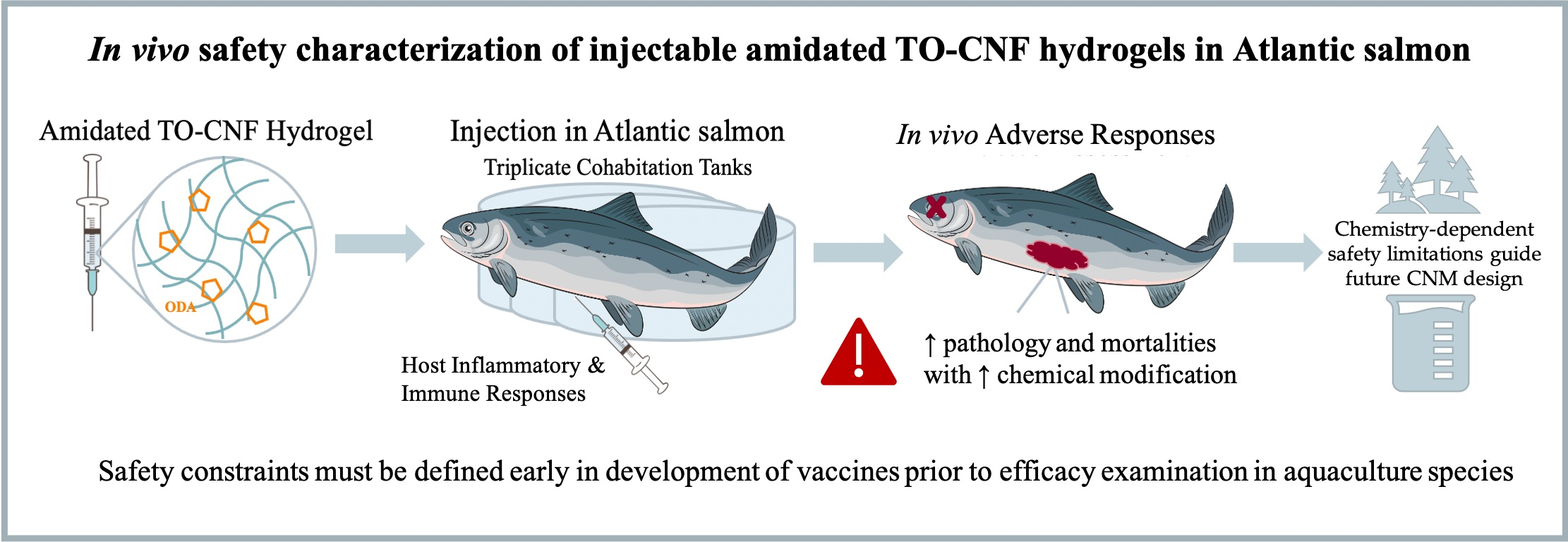
In Vivo Safety Characterization of Injectable Amidated TEMPO-Oxidized Cellulose Nanofiber Hydrogel Vaccine Formulations in Farmed Atlantic Salmon (Salmo salar L.)

 , and
, and
Abstract
1. Introduction
2. Materials and Methods
2.1. Preparation of Vaccine Using CNM Matrices as an Adjuvant
2.1.1. Bacterin Production
2.1.2. Amidated TEMPO-Oxidized CNF Production
2.2. In Vivo Evaluation of Amidated TO-CNF in Atlantic Salmon
2.2.1. In Vivo Study
2.2.2. Observed Biometrics
2.2.3. External and Internal Gross Examination
2.2.4. Histopathology
2.3. Exploratory Examination of In Vivo Immune Markers in Atlantic Salmon
2.3.1. Real-Time qPCR Assay
2.3.2. Serological Antigen Specific Antibody Response by Indirect ELISA
2.4. Examining In Vitro Characteristics of Amidated TO-CNF Hydrogel Formulations
2.4.1. Mechanical Properties: Rheology
2.4.2. Structural Properties: Scanning Electron Microscopy
2.4.3. Chemical Properties: Fourier Transform Infrared Spectroscopy
2.5. Calculations and Statistical Analysis
3. Results
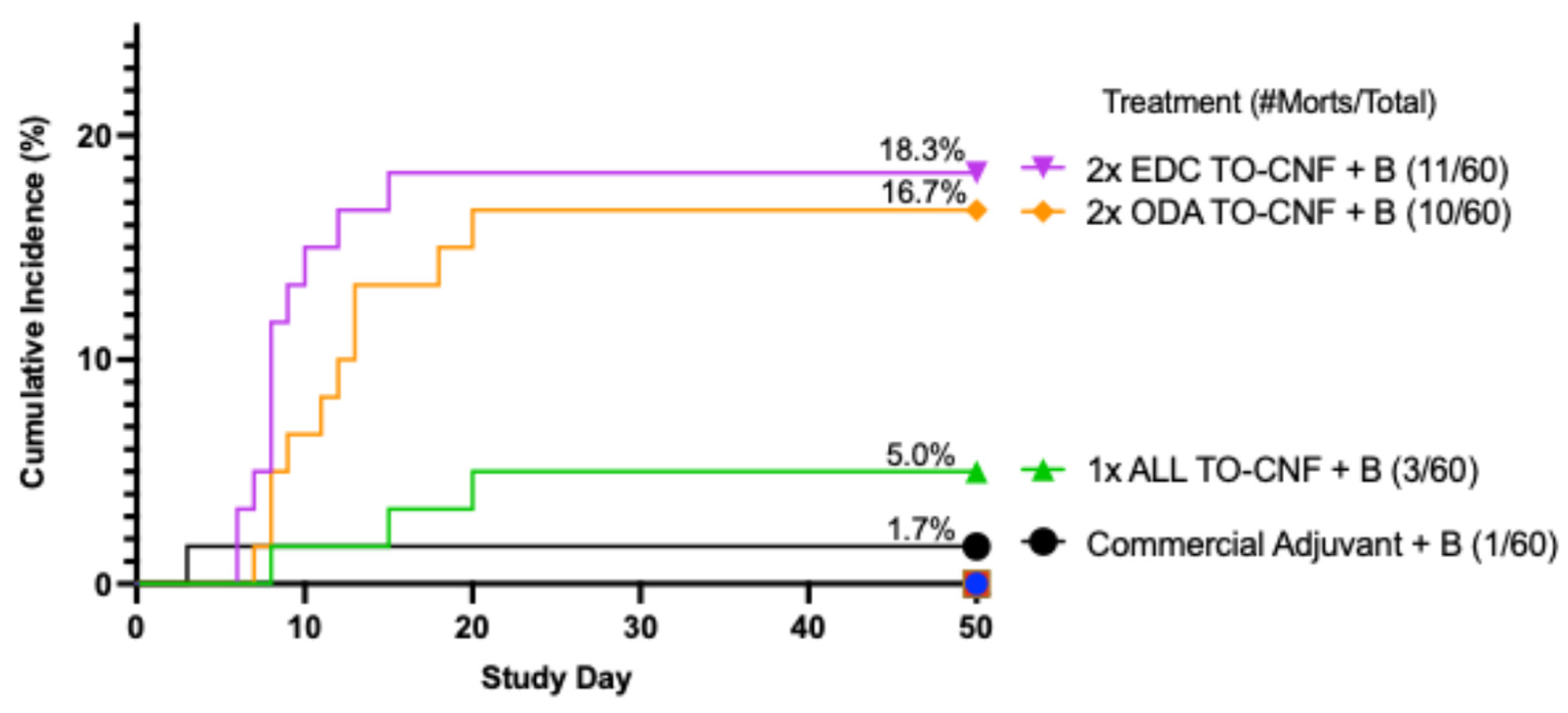
3.1. Amidated TO-CNF Hydrogels Are Associated with Reagent-Loading-Dependent Adverse Outcomes in Atlantic Salmon
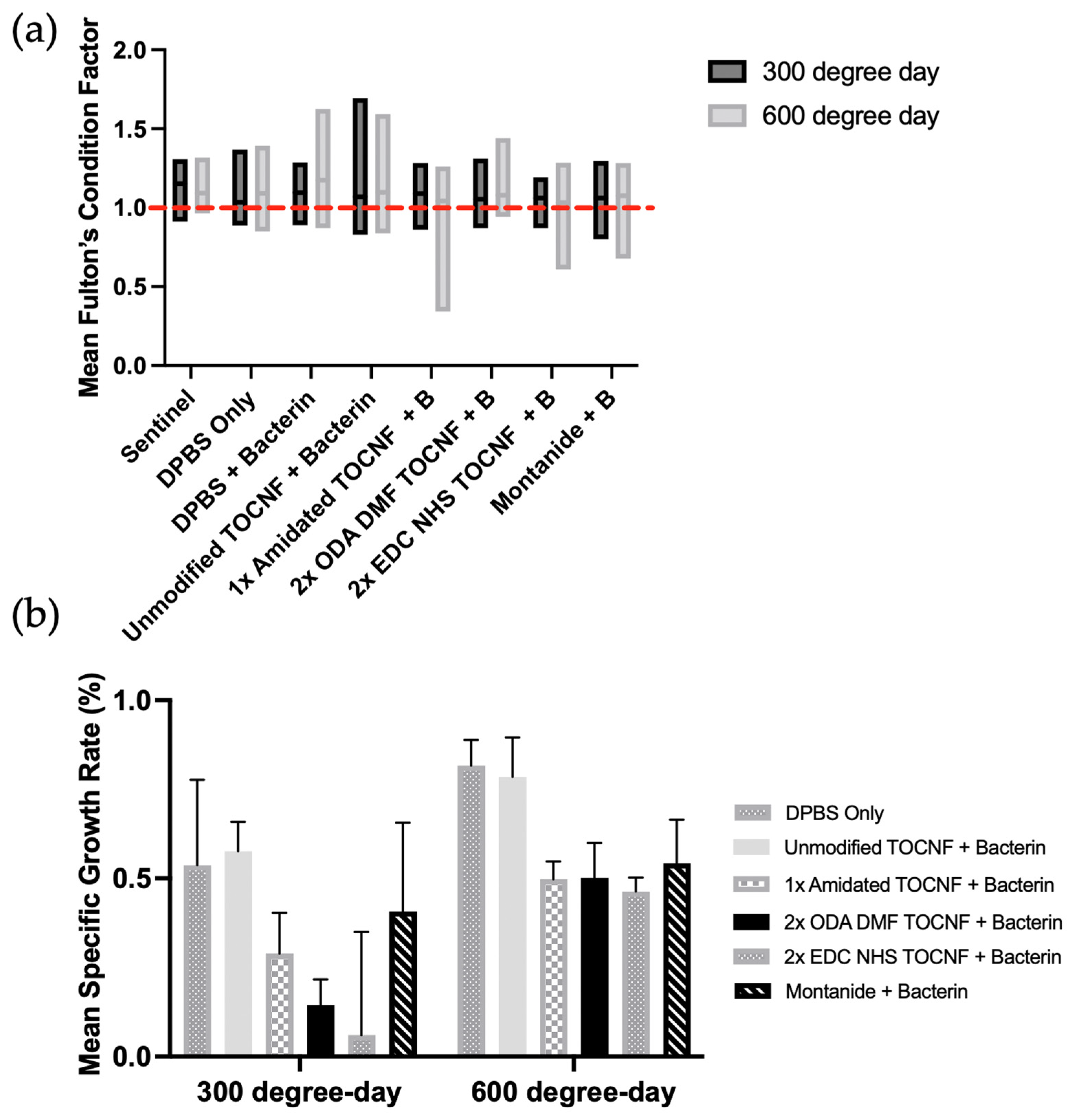
3.2. Fish Growth Metrics Were Largely Maintained over the Study Period
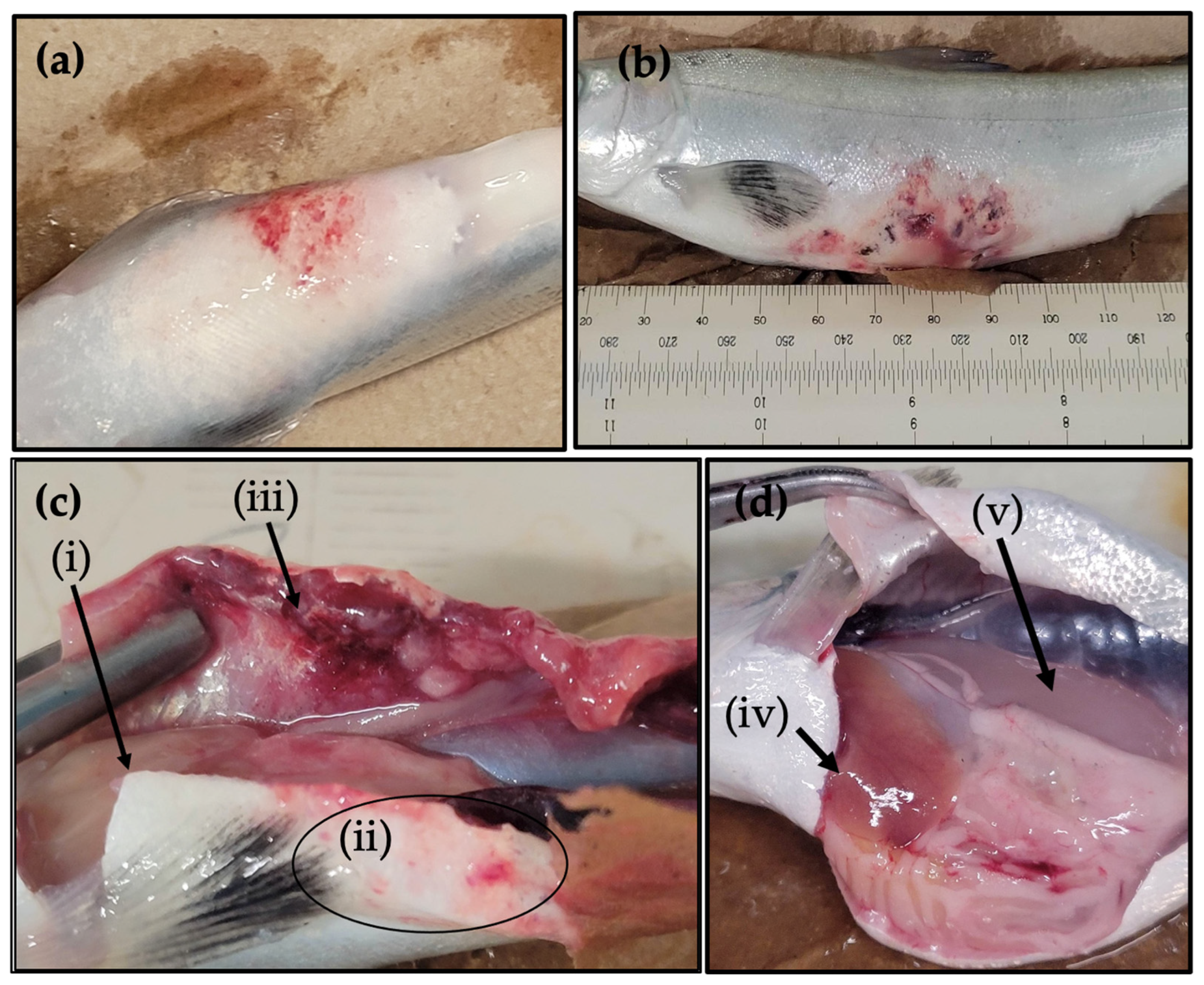
3.3. Macroscopic and Microscopic Pathology Indicate Formulation-Associated Side Effects
3.3.1. External Gross Pathology
3.3.2. Internal Gross Pathology
3.3.3. Comparative Histopathological Scoring of Body Wall and Coelom
3.3.4. Exploratory Relative Expression of Immunoglobulin Genes Following Vaccination
3.3.5. Serological Antigen-Specific Antibody Response by Indirect ELISA
3.4. Physicochemical Characterization Indicates Differences in Structural Behavior and Potential Chemical Residuals in Amidated TO-CNF Formulations
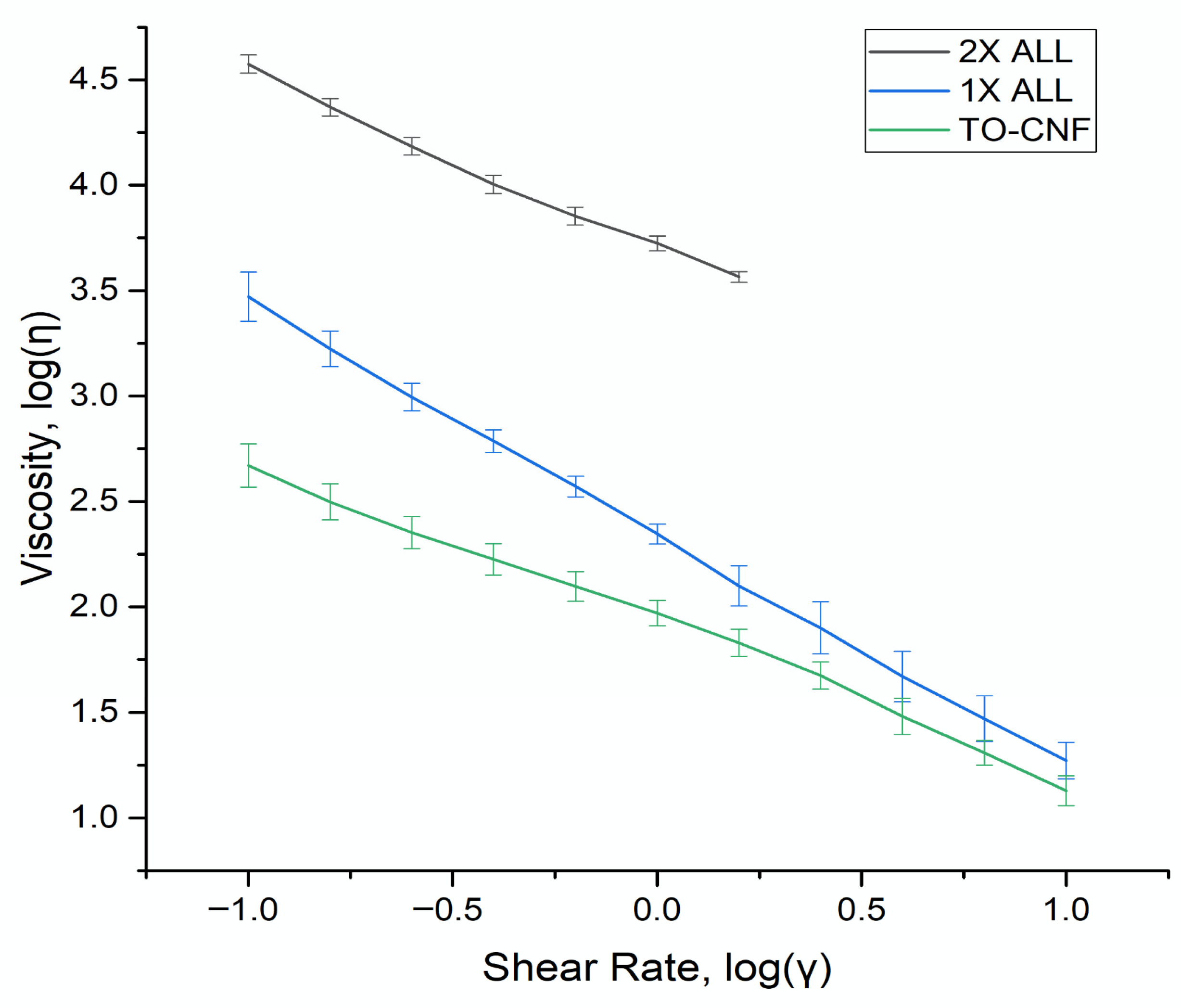
3.4.1. Shear-Thinning Flow Behavior of TO-CNF Formulations by Rheology
3.4.2. Structural Differences in TO-CNF Formulations by SEM
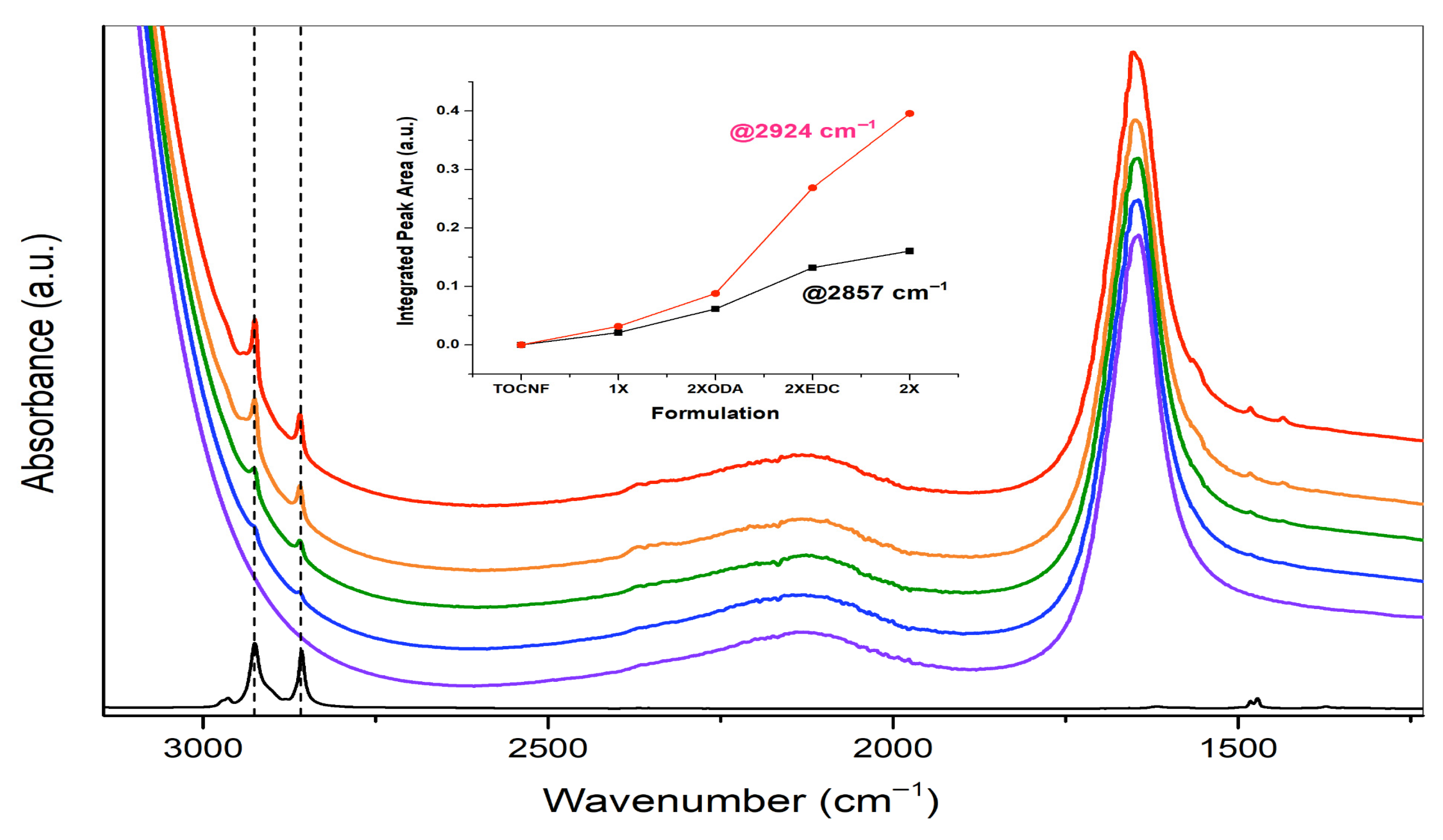
3.4.3. Qualitative FT-IR Assessment of Chemical Features in TO-CNF Formulations
4. Discussion
5. Conclusions
6. Limitations of the Study
Supplementary Materials
Author Contributions
Funding
Institutional Review Board Statement
Data Availability Statement
Acknowledgments
Conflicts of Interest
Abbreviations
| TO-CNF | 2,2,6,6-tetramethylpiperidine-1-oxyl radical (TEMPO)-mediated cellulose nanofibers |
| CNM | cellulose nanomaterials |
| CNF | cellulose nanofibers |
| FBR | foreign body response |
| ELISA | enzyme-linked immunosorbent assay |
| HR | hazard ratio |
| CI | confidence interval |
| M-H | Mantel-Haenszel hazard ratio |
| B | bacterin |
| Df | degrees of freedom |
| DPBS | Dulbecco’s phosphate-buffered saline |
| ODA | octadecylamine |
| DMF | dimethylformamide |
| EDC | -ethyl-3-(3-dimethylaminopropyl) carbodiimide hydrochloride |
| NHS | N-Hydroxysuccinimide |
| ANOVA | analysis of variance |
| SGR | specific growth rate |
| SS | sum of squares |
| MS | mean square |
| SEM | scanning electron microscopy |
| FT-IR | Fourier transform infrared spectroscopy |
References
- FAO. The State of World Fisheries and Aquaculture—Towards Blue Transformation; Food and Agriculture Organization of the United Nations: Rome, Italy, 2022. [Google Scholar] [CrossRef]
- World Bank. Reducing Disease Risk in Aquaculture; World Bank Group: Washington, DC, USA, 2014; Available online: https://documents1.worldbank.org/curated/en/110681468054563438/pdf/882570REPLACEM00NAME0Reantaso0Melba.pdf (accessed on 28 October 2023).
- Wright, A.; Li, X.; Yang, X.; Soto, E.; Gross, J. Disease prevention and mitigation in US finfish aquaculture: A review of current approaches and new strategies. Rev. Aquac. 2023, 15, 1638–1653. [Google Scholar] [CrossRef]
- Tammas, I.; Bitchava, K.; Gelasakis, A.I. Transforming Aquaculture through Vaccination: A Review on Recent Developments and Milestones. Vaccines 2024, 12, 732. [Google Scholar] [CrossRef]
- Oidtmann, B.; Peeler, E.; Lyngstad, T.; Brun, E.; Jensen, B.B.; Stark, K.D.C. Risk-based methods for fish and terrestrial animal disease surveillance. Prev. Vet. Med. 2013, 112, 13–26. [Google Scholar] [CrossRef] [PubMed]
- Mitchell, H. Choosing a furunculosis vaccine: Points to consider. Bull.-Aquac. Assoc. Can. 1995, 95, 30–37. [Google Scholar]
- Busch, R.A. Polyvalent vaccines in fish: The interactive effects of multiple antigens. Dev. Biol. Stand. 1997, 90, 245–256. [Google Scholar] [PubMed]
- Veenstra, K.A.; Wang, T.; Russell, K.S.; Tubbs, L.; Ben Arous, J.; Secombes, C.J. Montanide™ ISA 763A VG and ISA 761 VG induce different immune pathway responses in rainbow trout (Oncorhynchus mykiss) when used as adjuvant for an Aeromonas salmonicida bacterin. Fish Shellfish Immunol. 2021, 114, 171–183. [Google Scholar] [CrossRef] [PubMed]
- Mutoloki, S.; Alexandersen, S.; Gravningen, K.; Evensen, O. Time-course study of injection site inflammatory reactions following intraperitoneal injection of Atlantic cod (Gadus morhua L.) with oil-adjuvanted vaccines. Fish Shellfish Immunol. 2008, 24, 386–393. [Google Scholar] [CrossRef]
- Mutoloki, S.; Cooper, G.A.; Marjara, I.S.; Koop, B.F.; Evensen, Ø. High gene expression of inflammatory markers and IL-17A correlates with severity of injection site reactions of Atlantic salmon vaccinated with oil-adjuvanted vaccines. BMC Genom. 2010, 11, 336. [Google Scholar] [CrossRef]
- Midtlyng, P.; Reitan, L.; Spielberg, L. Experimental studies on the efficacy and side-effects of intraperitoneal vaccination of Atlantic salmon (Salmo salar L.) against furunculosis. Fish Shellfish Immunol. 1996, 6, 335–350. [Google Scholar] [CrossRef]
- Midtlyng, P.J.; Lillehaug, A. Growth of Atlantic salmon Salmo salar after intraperitoneal administration of vaccines containing adjuvants. Dis. Aquat. Org. 1998, 32, 91–97. [Google Scholar] [CrossRef]
- Afonso, A.; Gomes, S.; Silva, J.; Marques, F.; Henrique, M.A. Side effects in sea bass (Dicentrarchus labrax L.) due to intraperitoneal vaccination against vibriosis and pasteurellosis. Fish Shellfish Immunol. 2005, 19, 1–16. [Google Scholar] [CrossRef]
- Thim, H.L.; Villoing, S.; McLoughlin, M.; Christie, K.E.; Grove, S.; Frost, P.; Jørgensen, J.B. Vaccine Adjuvants in Fish Vaccines Make a Difference: Comparing Three Adjuvants (Montanide ISA763A Oil, CpG/Poly I:C Combo and VHSV Glycoprotein) Alone or in Combination Formulated with an Inactivated Whole Salmonid Alphavirus Antigen. Vaccines 2014, 2, 228–251. [Google Scholar] [CrossRef]
- Horne, M. Technical aspects of the administration of vaccines. Dev. Biol. Stand. 1997, 90, 79–89. [Google Scholar]
- Sprague, M.; Dick, J.R.; Tocher, D.R. Impact of sustainable feeds on omega-3 long-chain fatty acid levels in farmed Atlantic salmon, 2006–2015. Sci. Rep. 2016, 6, 21892. [Google Scholar] [CrossRef] [PubMed]
- Jensen, I.J.; Eilertsen, K.E.; Otnæs, C.H.A.; Mæhren, H.K.; Elvevoll, E.O. An Update on the Content of Fatty Acids, Dioxins, PCBs and Heavy Metals in Farmed, Escaped and Wild Atlantic Salmon (Salmo salar L.) in Norway. Food 2020, 9, 1901. [Google Scholar] [CrossRef]
- Kibenge, F.S.B.; Godoy, M.G.; Fast, M.; Workenhe, S.; Kibenge, M.J.T. Countermeasures against viral diseases of farmed fish. Antivir. Res. 2012, 95, 257–281. [Google Scholar] [CrossRef] [PubMed]
- Berg, A.; Rødseth, O.M.; Hansen, T. Fish size at vaccination influence the development of side-effects in Atlantic salmon (Salmo salar L.). Aquaculture 2007, 265, 9–15. [Google Scholar] [CrossRef]
- Ji, J.; Torrealba, D.; Ruyra, À.; Roher, N. Nanodelivery Systems as New Tools for Immunostimulant or Vaccine Administration: Targeting the Fish Immune System. Biology 2015, 4, 664–696. [Google Scholar] [CrossRef]
- Rivas-Aravena, A.; Fuentes, Y.; Cartagena, J.; Brito, T.; Poggio, V.; La Torre, J.; Mendoza, H.; Gonzalez-Nilo, F.; Sandino, A.M.; Spencer, E. Development of a nanoparticle-based oral vaccine for Atlantic salmon against ISAV using an alphavirus replicon as adjuvant. Fish Shellfish Immunol. 2015, 45, 157–166. [Google Scholar] [CrossRef]
- Bookstaver, M.L.; Tsai, S.J.; Bromberg, J.S.; Jewell, C.M. Improving Vaccine and Immunotherapy Design Using Biomaterials. Trends Immunol. 2018, 39, 135–150. [Google Scholar] [CrossRef] [PubMed]
- Roth, G.A.; Gale, E.C.; Alcántara-Hernández, M.; Luo, W.; Axpe, E.; Verma, R.; Yin, Q.; Yu, A.C.; Lopez Hernandez, H.; Maikawa, C.L.; et al. Injectable Hydrogels for Sustained Codelivery of Subunit Vaccines Enhance Humoral Immunity. ACS Cent. Sci. 2020, 6, 1800–1812. [Google Scholar] [CrossRef]
- Rana, M.M.; Demirkaya, C.; De la Hoz Siegler, H. Beyond Needles: Immunomodulatory Hydrogel-Guided Vaccine Delivery Systems. Gels 2024, 11, 7. [Google Scholar] [CrossRef] [PubMed]
- Rezaei, Z.; Yilmaz-Aykut, D.; Tourk, F.M.; Bassous, N.; Barroso-Zuppa, M.; Shawl, A.I.; Ashraf, S.S.; Avci, H.; Hassan, S. Immunomodulating Hydrogels as Stealth Platform for Drug Delivery Applications. Pharmaceutics 2022, 14, 2244. [Google Scholar] [CrossRef] [PubMed]
- Clegg, J.R.; Adebowale, K.; Zhao, Z.; Mitragotri, S. Hydrogels in the clinic: An update. Bioeng. Transl. Med. 2024, 9, e10680. [Google Scholar] [CrossRef]
- Turner, S.M.; Kukk, K.; Sidor, I.F.; Mason, M.; Bouchard, D.A. Biocompatibility of intraperitoneally implanted TEMPO-oxidized cellulose nanofiber hydrogels for antigen delivery in Atlantic salmon (Salmo salar L.) vaccines. Fish Shellfish Immunol. 2024, 147, 109464. [Google Scholar] [CrossRef]
- Guvendiren, M.; Lu, H.D.; Burdick, J.A. Shear-thinning hydrogels for biomedical applications. Soft Matter 2012, 8, 260–272. [Google Scholar] [CrossRef]
- Chiu, Y.L.; Chen, S.C.; Su, C.J.; Hsiao, C.W.; Chen, Y.M.; Chen, H.L.; Sung, H.W. pH-triggered injectable hydrogels prepared from aqueous N-palmitoyl chitosan: In vitro characteristics and in vivo biocompatibility. Biomaterials 2009, 30, 4877–4888. [Google Scholar] [CrossRef]
- Correa, S.; Grosskopf, A.K.; Lopez Hernandez, H.; Chan, D.; Yu, A.C.; Stapleton, L.M.; Appel, E.A. Translational Applications of Hydrogels. Chem. Rev. 2021, 121, 11385–11457. [Google Scholar] [CrossRef]
- Zhao, P.; Yang, Y.; Yu, L.; Li, G.; Zhu, D. Hydrogels in Veterinary Vaccine Development: Types, Mechanisms, and Applications. Gels 2025, 11, 468. [Google Scholar] [CrossRef] [PubMed]
- Ciolacu, D.E.; Nicu, R.; Ciolacu, F. Cellulose-Based Hydrogels as Sustained Drug-Delivery Systems. Materials 2020, 13, 5270. [Google Scholar] [CrossRef]
- Lin, N.; Dufresne, A. Nanocellulose in biomedicine: Current status and future prospect. Eur. Polym. J. 2014, 59, 302–325. [Google Scholar] [CrossRef]
- Trache, D.; Tarchoun, A.F.; Derradji, M.; Hamidon, T.S.; Masruchin, N.; Brosse, N.; Hussin, M.H. Nanocellulose: From Fundamentals to Advanced Applications. Front. Chem. 2020, 8, 392. [Google Scholar] [CrossRef]
- Moon, R.J.; Schueneman, G.T.; Simonsen, J. Overview of Cellulose Nanomaterials, Their Capabilities and Applications. JOM 2016, 68, 2383–2394. [Google Scholar] [CrossRef]
- Liu, H.; Liu, K.; Han, X.; Xie, H.; Si, C.; Liu, W.; Bae, Y. Cellulose Nanofibrils-based Hydrogels for Biomedical Applications: Progresses and Challenges. Curr. Med. Chem. 2020, 27, 4622–4646. [Google Scholar] [CrossRef] [PubMed]
- Credou, J.; Berthelot, T. Cellulose: From biocompatible to bioactive material. J. Mater. Chem. B 2014, 2, 4767–4788. [Google Scholar] [CrossRef]
- Moreira, S.; Silva, N.B.; Almeida-Lima, J.; Rocha, H.A.; Medeiros, S.R.; Alves, C., Jr.; Gama, F.M. BC nanofibres: In vitro study of genotoxicity and cell proliferation. Toxicol. Lett. 2009, 189, 235–241. [Google Scholar] [CrossRef] [PubMed]
- Ventura, C.; Pinto, F.; Lourenço, A.F.; Ferreira, P.J.T.; Louro, H.; Silva, M.J. On the toxicity of cellulose nanocrystals and nanofibrils in animal and cellular models. Cellulose 2020, 27, 5509–5544. [Google Scholar] [CrossRef]
- Johnson, R.; Zink-Sharp, A.; Glasser, W. Preparation and characterization of hydrophobic derivatives of TEMPO-oxidized nanocelluloses. Cellulose 2011, 18, 1599–1609. [Google Scholar] [CrossRef]
- Masruchin, N.; Nuryawan, A.; Kusumaningrum, W.; Sudarmanto, S.; Astari, L.; Amanda, P.; Marlina, R.; Suryanegara, L. Surface modification of TEMPO-mediated cellulose nanofibril cellulose with octadecylamine. J. Sains Mater. Indones. 2019, 20, 156. [Google Scholar] [CrossRef]
- Dahan, W.M.; Mohammad, F.; Ezzat, A.O.; Atta, A.M.; Al-Tilasi, H.H.; Al-Lohedan, H.A. Influence of Amidation on the Release Profiles of Insulin Drug from Chitosan-Based Matrices. Coatings 2022, 12, 465. [Google Scholar] [CrossRef]
- Berg, A.R.; Tangeras, O.M.A.; Hansen, T. Time of vaccination influences development of adhesions, growth, and spinal deformities in Atlantic salmon (Salmo salar L.). Dis. Aquat. Org. 2006, 69, 239–248. [Google Scholar] [CrossRef] [PubMed]
- Hopkins, K. Reporting Fish Growth: A Review of the Basics. J. World Aquac. Soc. 1992, 23, 173–179. [Google Scholar] [CrossRef]
- Habte-Tsion, H.M.; Hawkyard, M.; Sealey, W.M.; Bradshaw, D.; Meesala, K.-M.; Bouchard, D.A. Effects of Fishmeal Substitution with Mealworm Meals (Tenebrio molitor and Alphitobius diaperinus) on the Growth, Physiobiochemical Response, Digesta Microbiome, and Immune Genes Expression of Atlantic Salmon (Salmo salar). Aquac. Nutr. 2024, 2024, 6618117. [Google Scholar] [CrossRef]
- Livak, K.J.; Schmittgen, T.D. Analysis of relative gene expression data using real-time quantitative PCR and the 2(-Delta Delta C(T)) Method. Methods 2001, 25, 402–408. [Google Scholar] [CrossRef]
- Olsvik, P.A.; Torstensen, B.E.; Hemre, G.I.; Sanden, M.; Waagbø, R. Hepatic oxidative stress in Atlantic salmon (Salmo salar L.) transferred from a diet based on marine feed ingredients to a diet based on plant ingredients. Aquac. Nutr. 2011, 17, e424–e436. [Google Scholar] [CrossRef]
- Faul, F.; Erdfelder, E.; Lang, A.G.; Buchner, A. G*Power 3: A flexible statistical power analysis program for the social, behavioral, and biomedical sciences. Behav. Res. Methods 2007, 39, 175–191. [Google Scholar] [CrossRef]
- Chezik, K.A.; Lester, N.P.; Venturelli, P.A. Fish growth and degree-days I: Selecting a base temperature for a within-population study. Can. J. Fish. Aquat. Sci. 2013, 71, 47–55. [Google Scholar] [CrossRef]
- Tanner, R.I. Engineering Rheology; Oxford University Press: New York, NY, USA, 2000. [Google Scholar]
- Parvin, N.; Joo, S.W.; Mandal, T.K. Injectable Biopolymer-Based Hydrogels: A Next-Generation Platform for Minimally Invasive Therapeutics. Gels 2025, 11, 383. [Google Scholar] [CrossRef]
- Lee, Y.; Kim, M.; Kim, N.; Byun, S.; Seo, S.; Han, J.Y. Injectable Hydrogel Systems for Targeted Drug Delivery: From Site-Specific Application to Design Strategy. Appl. Sci. 2025, 15, 11599. [Google Scholar] [CrossRef]
- Khare, S.; Kumar, S.; Urmaliya, P.; Yadav, S. Recent advancement and applications of green hydrogels: Revolutionizing biomedicine and environmental sustainability. Results Chem. 2025, 18, 102857. [Google Scholar] [CrossRef]
- Benkaddour, A.; Journoux-Lapp, C.; Jradi, K.; Robert, S.; Daneault, C. Study of the hydrophobization of TEMPO-oxidized cellulose gel through two routes: Amidation and esterification process. J. Mater. Sci. 2014, 49, 2832–2843. [Google Scholar] [CrossRef]
- National Center for Biotechnology Information. PubChem Compound Summary for CID 15793, Octadecylamine. Available online: https://pubchem.ncbi.nlm.nih.gov/compound/Octadecylamine (accessed on 11 February 2024).
- Lewis, R.J. Sax’s Dangerous Properties of Industrial Materials, 9th ed.; Van Nostrand Reinhold: New York, NY, USA, 1996; Volumes 1–3, p. 2515. [Google Scholar]
- Poirier, S.H.; Knuth, M.L.; Anderson-Buchou, C.D.; Brooke, L.T.; Lima, A.R.; Shubat, P.J. Comparative toxicity of methanol and N, N-dimethylformamide to freshwater fish and invertebrates. Bull. Environ. Contam. Toxicol. 1986, 37, 615–621. [Google Scholar] [CrossRef] [PubMed]
- Mohamad, N.; Amal, M.N.A.; Yasin, I.S.M.; Zamri Saad, M.; Nasruddin, N.S.; Al-saari, N.; Mino, S.; Sawabe, T. Vibriosis in cultured marine fishes: A review. Aquaculture 2019, 512, 734289. [Google Scholar] [CrossRef]
- Williams, J.E. The Coefficient of Condition of Fish. In Manual of Fisheries Survey Methods II: With Periodic Updates (Fisheries Special Report 25); James, C., Ed.; Chapter 13 in Schneider; Michigan Department of Natural Resources: Ann Arbor, MI, USA, 2000. [Google Scholar]
- Crane, D.P.; Ogle, D.H.; Shoup, D.E. Use and misuse of a common growth metric: Guidance for appropriately calculating and reporting specific growth rate. Rev. Aquac. 2020, 12, 1542–1547. [Google Scholar] [CrossRef]
- Van West, P. Saprolegnia parasitica, an oomycete pathogen with a fishy appetite: New challenges for an old problem. Mycologist 2006, 20, 99–104. [Google Scholar] [CrossRef]
- Beckmann, M.J.; Saraiva, M.; McLaggan, D.; Pottinger, T.G.; Van West, P. Saprolegnia infection after vaccination in Atlantic salmon is associated with differential expression of stress and immune genes in the host. Fish Shellfish Immunol. 2020, 106, 1095–1105. [Google Scholar] [CrossRef]
- Hordvik, I. Immunoglobulin isotypes in Atlantic salmon, Salmo salar. Biomolecules 2015, 5, 166–177. [Google Scholar] [CrossRef] [PubMed]
- Uribe, C.; Folch, H.; Enríquez, R.; Moran, G. Innate and adaptive immunity in teleost fish: A review. Vet. Med. 2011, 56, 486–503. [Google Scholar] [CrossRef]
- Kamil, A.; Fjelldal, P.G.; Hansen, T.; Raae, A.; Koppang, E.O.; Hordvik, I. Vaccination of Atlantic salmon leads to long-lasting higher levels of serum immunoglobulin and possible skewed ratios of two distinct IgM isotypes. Adv. Biosci. Biotechnol. 2013, 4, 85–90. [Google Scholar] [CrossRef]
- Koppang, E.O.; Bjerkås, I.; Haugarvoll, E.; Chan, E.K.; Szabo, N.J.; Ono, N.; Akikusa, B.; Jrillo, E.; Poppe, T.T.; Sveier, H. Vaccination-induced systemic autoimmunity in farmed Atlantic salmon. J. Immunol. 2008, 181, 4807–4814. [Google Scholar] [CrossRef]
- Munang’andu, H.M.; Evensen, Ø. Correlates of protective immunity for fish vaccines. Fish Shellfish Immunol. 2019, 85, 132–140. [Google Scholar] [CrossRef]
- Adams, A. Progress, challenges and opportunities in fish vaccine development. Fish Shellfish Immunol. 2019, 90, 210–214. [Google Scholar] [CrossRef] [PubMed]
- Ligoure, C.; Mora, S. Fractures in complex fluids: The case of transient networks. Rheol. Acta 2013, 52, 91–114. [Google Scholar] [CrossRef]
- Dutta, A. Fourier transform infrared spectroscopy. Spectrosc. Methods Nanomater. Charact. 2017, 73–93. [Google Scholar] [CrossRef]



| Formulation Name | TO-CNF Modification | Modification Difference | Sonication | Purification | Antigen (Bacterin) | Intended Role |
|---|---|---|---|---|---|---|
| Sham (DPBS) | None | N/A | No | None | No | Negative control |
| DPBS + Bacterin | None | N/A | No | None | Yes | Antigen control |
| Unmodified TO-CNF + Bacterin | Unmodified | N/A | No | None | Yes | Material control |
| 1× ALL TO-CNF + Bacterin | Amidation | Baseline reagent loading (1×) | Yes | Washed and Dialyzed | Yes | Baseline amidation |
| 2× ODA TO-CNF + Bacterin | Amidation | Increased ODA + DMF (2×) | Yes | Washed and Dialyzed | Yes | Increased hydrophobicity |
| 2× EDC TO-CNF + Bacterin | Amidation | Increased EDC + NHS (2×) | Yes | Washed and Dialyzed | Yes | Increased coupling density |
| Commercial oil-adjuvanted vaccine | None | N/A | No | None | Yes | Positive control |
| Genes | Component | Sequences (5′–3′) | Gene Accession No | Product Size | Reference |
|---|---|---|---|---|---|
| IgM | Forward Reverse | AGGCGGAAATTCCCTGACTG CACGGAGTTGACTGACTCCC | Y12457.1 | 83 | (Habte-Tsion et al., 2024) [45] |
| IgD | Forward Reverse | CGTCTACTCCATCGCTCCAC TTTGGCGTCATACGCAGAGT | AF141607.1 | 104 | (Habte-Tsion et al., 2024) [45] |
| IgT | Forward Reverse | CAAAGGGCAACCTGAACAGC GAACGACCGGTGTGTCTTCA | GQ907004.1 | 117 | (Habte-Tsion et al., 2024) [45] |
| β-actin | Forward Reverse | CCAAAGCCAACAGGGAGAA AGGGACAACACTGCCTGGAT | BG933897 | 102 | (Olsvik et al., 2011) [47] |
| Formulation | % Cumulative Incidence (No. Morts/No. Total) | % Cumulative Survival (No. Censored/No. Total) | M-H Hazard Ratio (95% CI) x2 (df), p-Value |
|---|---|---|---|
| Sentinel (Unvaccinated) | 0 (0/120) | 100 (120/120) | 0.0498 (0.00078–3.183) 2.000 (1), p = 0.3173 |
| DPBS Only (Sham Negative Control) | 0 (0/60) | 100 (60/60) | 0.1353 (0.0027–6.821) 1.000 (1), p = 0.3173 |
| DPBS + Bacterin (Antigen Control) | 0 (0/20) | 100 (20/20) | 0.2636 (0.0029–24.36) 0.333 (1), p = 0.5637 |
| Unmodified TO-CNF + Bacterin (Material Control) | 0 (0/60) | 100 (60/60) | 0.1353 (0.0027–6.821) 1.000 (1), p = 0.3173 |
| 1× ALL TO-CNF + Bacterin | 5.0 (3/60) | 95 (57/60) | 2.719 (0.383–19.300) 0.9748 (1) p = 0.3235 |
| 2× ODA TO-CNF + Bacterin | 16.7 (10/60) | 83.3 (50/60) | 5.461 (1.670–17.860) 7.728 (1) p = 0.0054 |
| 2× EDC TO-CNF + Bacterin | 18.3 (11/60) | 81.7 (49/60) | 5.713 (1.830–17.830) 8.828 (1) p = 0.0030 |
| Commercial oil-adjuvanted vaccine (Positive Control) | 1.7 (1/60) | 98.3 (59/60) | Referent |
Disclaimer/Publisher’s Note: The statements, opinions and data contained in all publications are solely those of the individual author(s) and contributor(s) and not of MDPI and/or the editor(s). MDPI and/or the editor(s) disclaim responsibility for any injury to people or property resulting from any ideas, methods, instructions or products referred to in the content. |
© 2026 by the authors. Licensee MDPI, Basel, Switzerland. This article is an open access article distributed under the terms and conditions of the Creative Commons Attribution (CC BY) license.
Share and Cite
Turner, S.M.; Mason, M.; Holbrook, J.A.; Hong, J.; Sidor, I.F.; Bouchard, D.A. In Vivo Safety Characterization of Injectable Amidated TEMPO-Oxidized Cellulose Nanofiber Hydrogel Vaccine Formulations in Farmed Atlantic Salmon (Salmo salar L.). Vaccines 2026, 14, 313. https://doi.org/10.3390/vaccines14040313
Turner SM, Mason M, Holbrook JA, Hong J, Sidor IF, Bouchard DA. In Vivo Safety Characterization of Injectable Amidated TEMPO-Oxidized Cellulose Nanofiber Hydrogel Vaccine Formulations in Farmed Atlantic Salmon (Salmo salar L.). Vaccines. 2026; 14(4):313. https://doi.org/10.3390/vaccines14040313
Chicago/Turabian StyleTurner, Sarah M., Michael Mason, Jacob A. Holbrook, Jeongwhui Hong, Inga F. Sidor, and Deborah A. Bouchard. 2026. "In Vivo Safety Characterization of Injectable Amidated TEMPO-Oxidized Cellulose Nanofiber Hydrogel Vaccine Formulations in Farmed Atlantic Salmon (Salmo salar L.)" Vaccines 14, no. 4: 313. https://doi.org/10.3390/vaccines14040313
APA StyleTurner, S. M., Mason, M., Holbrook, J. A., Hong, J., Sidor, I. F., & Bouchard, D. A. (2026). In Vivo Safety Characterization of Injectable Amidated TEMPO-Oxidized Cellulose Nanofiber Hydrogel Vaccine Formulations in Farmed Atlantic Salmon (Salmo salar L.). Vaccines, 14(4), 313. https://doi.org/10.3390/vaccines14040313