Article

Opportunities to Increase Influenza Vaccine Uptake Among Pregnant Women: Insights from Surveys in 2013 and 2023


1
School of Public Health, Nanjing Medical University, Nanjing 211166, China
2
Suzhou Center for Disease Control and Prevention, Suzhou 215123, China
3
School of Public Health, Xuzhou Medical University, Xuzhou 221004, China
*
Author to whom correspondence should be addressed.
Vaccines 2025, 13(6), 589; https://doi.org/10.3390/vaccines13060589

Submission received: 23 April 2025 / Revised: 23 May 2025 / Accepted: 27 May 2025 / Published: 30 May 2025
(This article belongs to the Special Issue Impact of Immunization Safety Monitoring on Vaccine Coverage)

Abstract

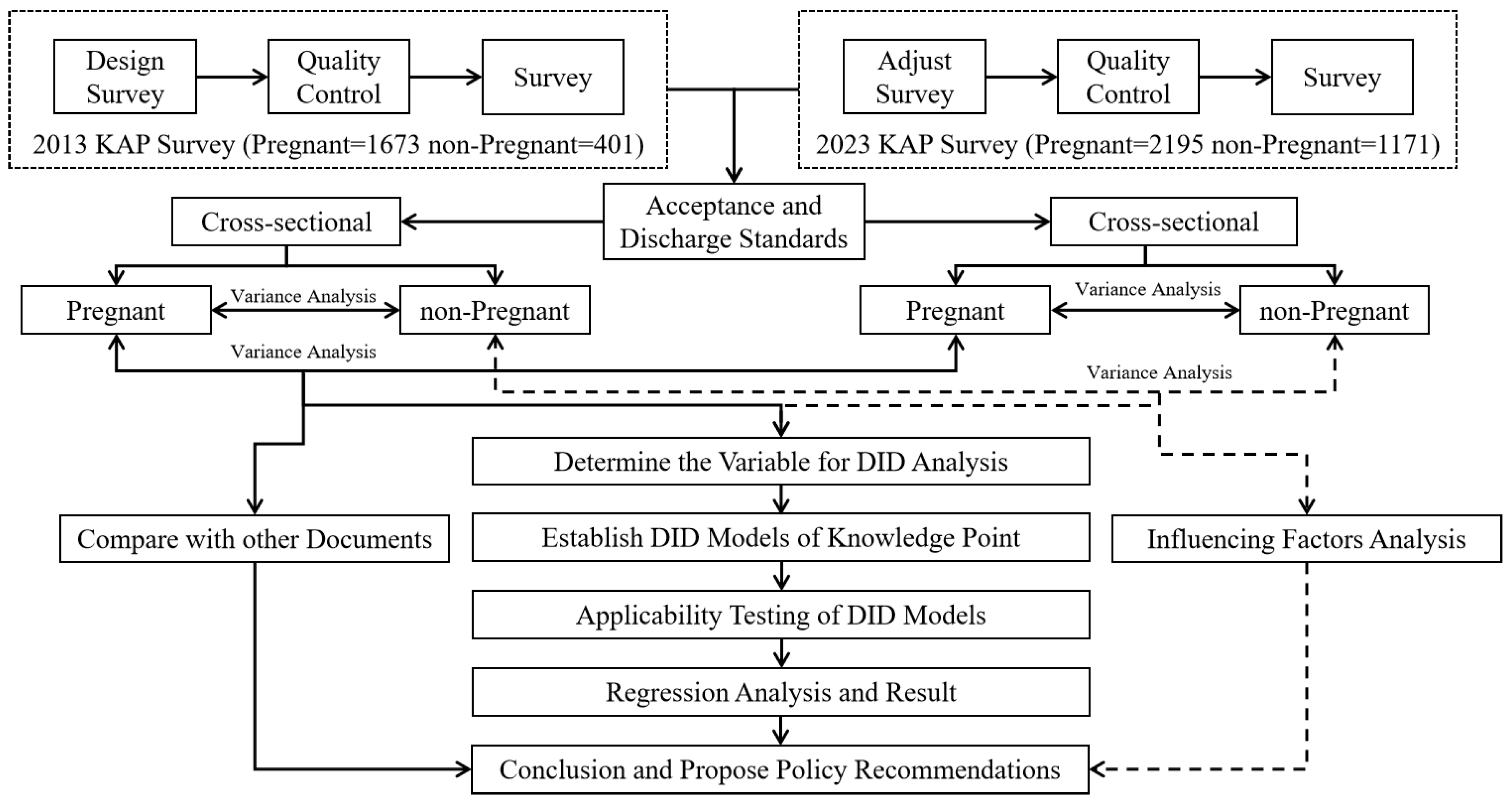
Background: Health departments disseminate health education related to influenza to the public through various media in China. We examined knowledge, attitudes, and practices regarding influenza and the influenza vaccine (KAP-flu) over time among pregnant women (PW) compared to non-PW. Methods: A cross-sectional survey was conducted in Suzhou, China in 2013 and 2023. We included and interviewed PW seeking prenatal care and excluded PW there for non-routine visits. The comparison group was drawn from non-PW seeking physical examinations at the same facilities. Stratified cluster sampling was used to enroll participants from the various levels of prenatal-care facilities. Results: In 2013, we surveyed 1673 PW and 401 non-PW, and in 2023, we surveyed 2195 PW and 1171 non-PW. The proportion of PW who had ever heard of the influenza vaccine showed no significant change, at 56% in 2013 and 57% in 2023; by contrast, there was a significant increase among non-PW (55% to 78%). The proportion of pregnant participants who knew when to get vaccinated dropped from 14% to 12%, in contrast to the increase among non-PW (6% to 20%). The proportion of PW who believed that the influenza vaccine is effective dropped from 91% in 2013 to 76% in 2023, in contrast to the stable value among non-PW (84% to 82%). In 2023, pregnant participants exhibited lower levels of knowledge about both influenza disease and the influenza vaccine, along with less positive attitudes toward the effectiveness and safety of the vaccine. They also showed lower willingness to vaccinate and lower vaccination rates compared to non-pregnant participants. Concerning KAP-flu among PW, less than half recognized that influenza is different from a common cold; fewer than one in five understood the timing and frequency of vaccination or the policy prioritizing PW for influenza vaccination; vaccination coverage remained below 2% over time. Conclusions: PW had concerning gaps in knowledge and attitudes regarding influenza and the influenza vaccine compared to non-PW in Suzhou, China. Specific actions targeting PW, such as initiatives leveraging the maternal and child healthcare system, are warranted to reduce the gaps.
Keywords: influenza; influenza vaccine; pregnant women; knowledge; attitude and practices (KAP); vaccination coverage influenza; influenza vaccine; pregnant women; knowledge; attitude and practices (KAP); vaccination coverage