From Waste to Beauty: Agri-Food By-Products as Sources of Antioxidant Compounds for Cosmeceutical Applications

 , ,
, ,  , ,
, ,  ,
,  and
and 
Abstract
1. Introduction
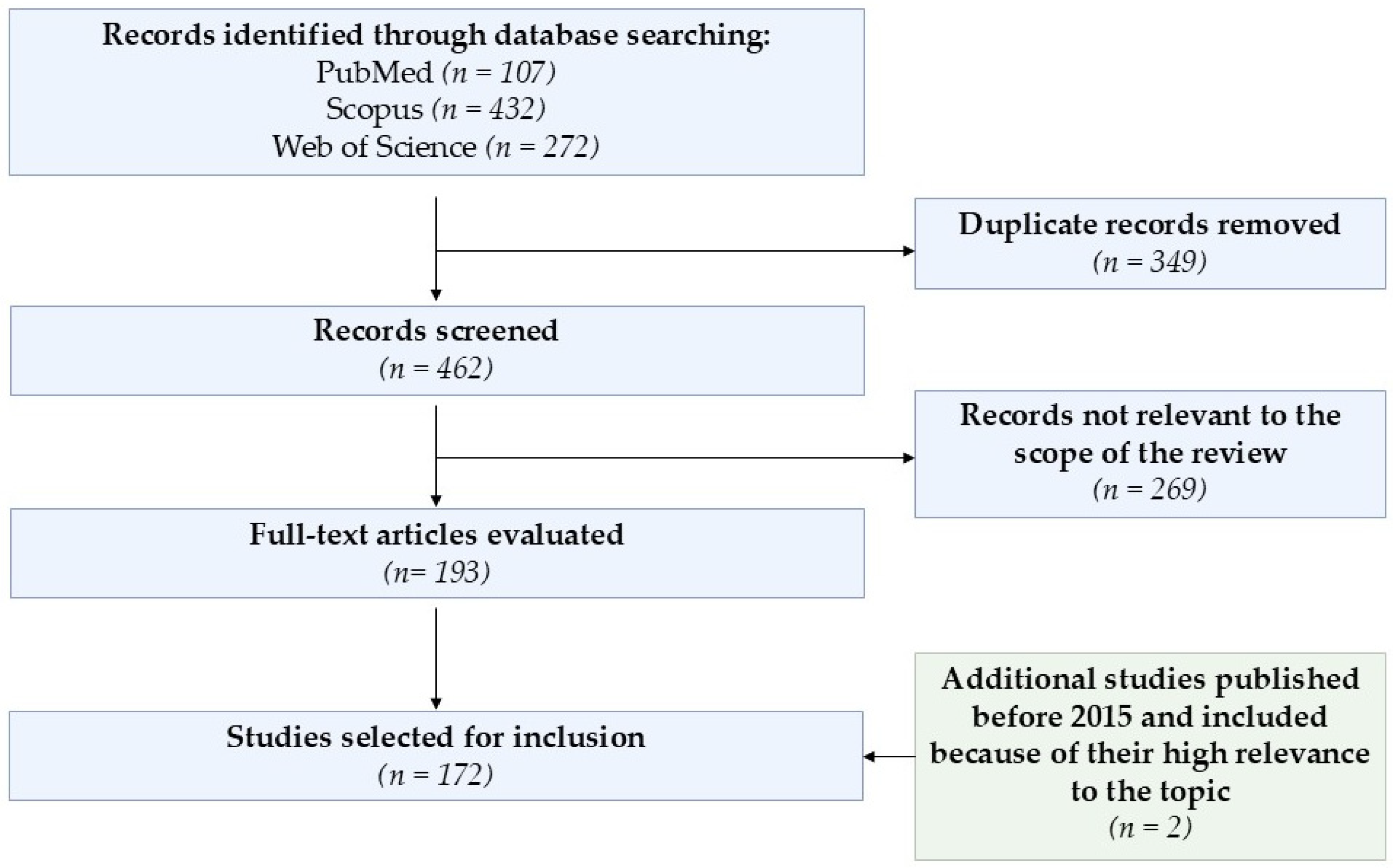
2. Literature Search Strategy
3. Antioxidant Compounds in Agri-Food By-Products: Sources and Green Recovery Strategies
4. Analytical Determination of Antioxidant Compounds Recovered from Agri-Food By-Products: The Contribution of Omics Technologies
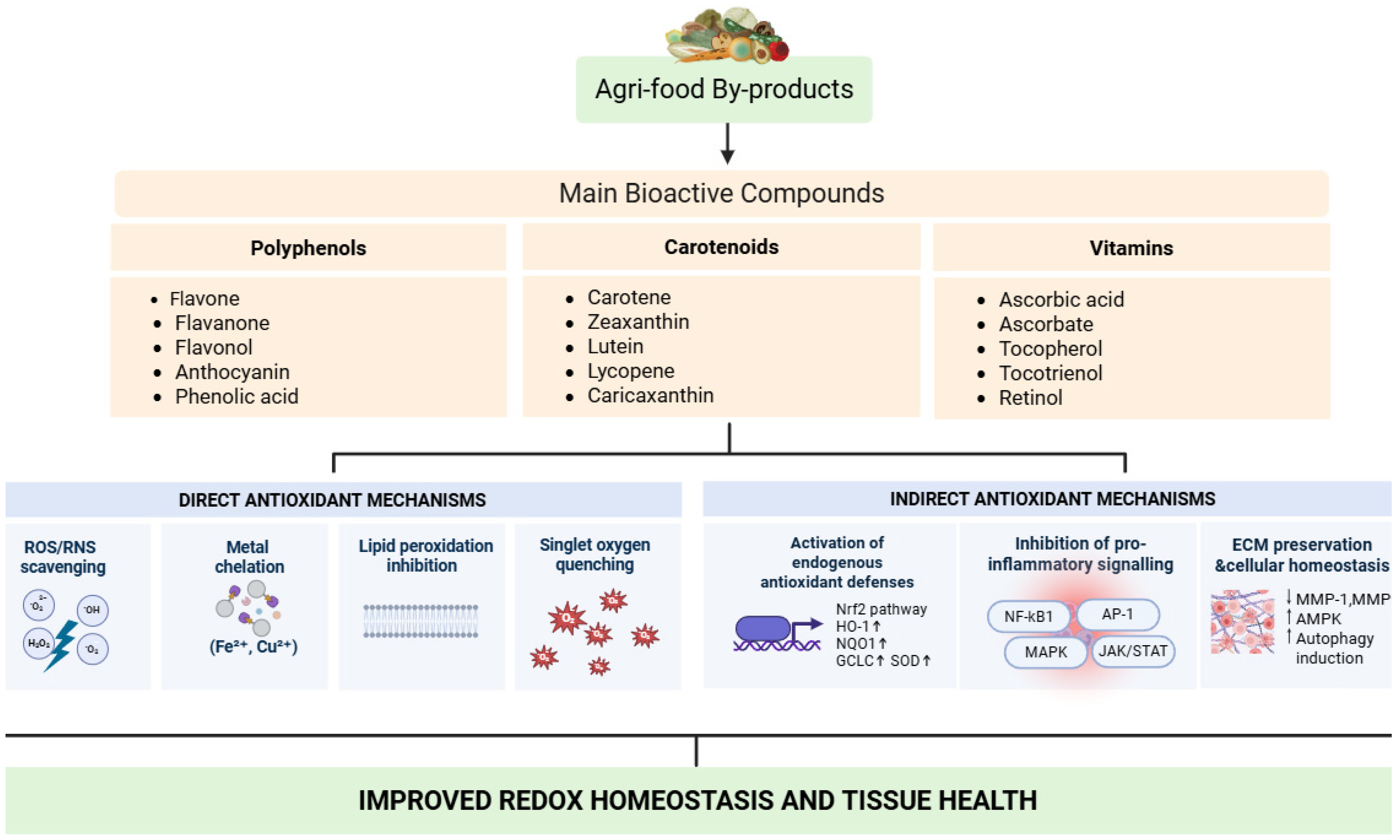
5. Mechanisms of Action of Antioxidants from Agri-Food By-Products in Cosmeceutical Applications
6. Skin Care Applications
7. Oral Care Applications

| Agri-Food By-Product | Main Bioactive Compounds | Oral Models | Biological Activities | Key References |
|---|---|---|---|---|
| Grape pomace and grape seeds | Proanthocyanidins, flavan-3-ols, anthocyanins, resveratrol, oleanolic acid | S. mutans, Porphyromonas gingivalis, human gingival fibroblasts | ROS scavenging; inhibition of glucosyltransferases and biofilm formation; downregulation of IL-1β, IL-6, IL-8, TNF-α; | [131,132,133,134] |
| Pomegranate peel | Punicalagins, punicalin, ellagic acid, gallic acid, anthocyanins | S. mutans, S. sanguinis, S. oralis, Candida albicans, human gingival epithelial cells | Antioxidant activity; inhibition of NF-κB signaling; reduction in ROS production; antimicrobial and antibiofilm effects | [48,135,136] |
| Olive pomace and olive mill wastewater | Hydroxytyrosol, tyrosol, oleuropein, secoiridoids | Experimental periodontitis models; S. mutans; Candida tropicalis | Reduction in alveolar bone resorption; antimicrobial activity | [137,138,139] |
| Citrus processing residues | Hesperidin, naringenin, narirutin | S. mutans biofilms; inflammatory oral cell models | Anti-inflammatory activity; inhibition of bacterial adhesion and acidogenicity; suppression of biofilm maturation | [108,140,141] |
| Tea-processing waste | Catechins, epigallocatechin-3-gallate (EGCG) | Oral biofilm models; salivary antioxidant models | ROS scavenging; anti-inflammatory activity; inhibition of bacterial growth and biofilm formation; enhancement of salivary antioxidant capacity | [142,143] |
| Cocoa husks | Catechins, epicatechins, procyanidins, theobromine | Oral biofilm models, S. mutans | Antioxidant and antibiofilm effects; inhibition of bacterial adhesion | [143,144] |
| Tomato pomace (peels and seeds) | Lycopene, phenolic acids, flavonoids | Oral potentially malignant disorder (OPMD) models; human gingival epithelial cells | Singlet oxygen quenching; modulation of apoptosis and cell proliferation; reduction in oxidative stress and inflammatory signaling | [48,145] |
8. Hair Care Applications
| Agri-Food By-Product | Main Bioactive Compounds | Hair Models | Biological Activities | Key References |
|---|---|---|---|---|
| Coffee pulp | Phenolic compounds, flavonoids, caffeine | Human hair follicle dermal papilla cells | Antioxidant activity; promotion of cell proliferation and migration; activation of Wnt/β-catenin and Sonic Hedgehog pathways; inhibition of 5α-reductase isoforms (SRD5A1-3); stimulation of VEGF signaling and follicular vascularization | [155,156] |
| Rice bran | γ-Oryzanol, tocopherols, ferulic acid, chlorogenic acid, polyphenols | Human hair follicle dermal papilla cells; DU-145 cells | Promotion of cell proliferation; antioxidant and anti-inflammatory effects; inhibition of SRD5A1-3 expression; activation of Wnt/β-catenin, Sonic Hedgehog, and VEGF pathways; stimulation of hair follicle regeneration | [157,158] |
| Camellia japonica fruit shell | Gallic acid and protocatechuic acid | Human hair follicle dermal papilla cells | Increased proliferation; activation of VEGF and Wnt/β-catenin signaling; inhibition of 5α-reductase activity; suppression of Dkk-1 expression; ROS scavenging; protection against oxidative stress-induced senescence; anti-androgenic activity | [159] |
| Camellia oleifera seed cake | Polyphenols, flavonoids, tannins, alkaloids, saponins | Dermal papilla cells; C57BL/6J mice | Promotion of cell proliferation; activation of potassium channels; stimulation of ERK/MAPK and PI3K/Akt pathways; upregulation of VEGF, IGF-1, and HGF; anti-inflammatory, anti-apoptotic, anti-androgenic and anti-senescent effects; improved hair density, hair shaft thickness, and follicular development in vivo | [160,161] |
9. Future Perspectives, Limitations and Challenges
10. Conclusions
Author Contributions
Funding
Institutional Review Board Statement
Informed Consent Statement
Data Availability Statement
Conflicts of Interest
References
- Rao, S.; Nagendra, A. An Insight into Food Waste Generations: Status, Source, and Global Impact. In Microbial Cell Factories in Food Waste Biorefinery; Elsevier: Amsterdam, The Netherlands, 2026; pp. 1–22. [Google Scholar]
- Guo, X.; Broeze, J.; Groot, J.J.; Axmann, H.; Vollebregt, M. A Worldwide Hotspot Analysis on Food Loss and Waste, Associated Greenhouse Gas Emissions, and Protein Losses. Sustainability 2020, 12, 7488. [Google Scholar] [CrossRef] [Scilit]
- Adedeji, A.A. Agri-Food Waste Reduction and Utilization: A Sustainability Perspective. J. ASABE 2022, 65, 471–479. [Google Scholar] [CrossRef] [Scilit]
- Priya, K.; Rani, J.; Gwal, S. Transforming Agricultural Residues to Value-Added Products: Waste to Wealth. In Sustainable Management of Agro-Food Waste; Elsevier: Amsterdam, The Netherlands, 2025; pp. 69–85. [Google Scholar]
- Hrelia, S.; Angeloni, C.; Barbalace, M.C. Agri-Food Wastes as Natural Source of Bioactive Antioxidants. Antioxidants 2023, 12, 351. [Google Scholar] [CrossRef] [Scilit] [PubMed]
- Pal, P.; Singh, A.K.; Srivastava, R.K.; Rathore, S.S.; Sahoo, U.K.; Subudhi, S.; Sarangi, P.K.; Prus, P. Circular Bioeconomy in Action: Transforming Food Wastes into Renewable Food Resources. Foods 2024, 13, 3007. [Google Scholar] [CrossRef] [Scilit] [PubMed]
- Carus, M.; Dammer, L. The Circular Bioeconomy—Concepts, Opportunities, and Limitations. Ind. Biotechnol. 2018, 14, 83–91. [Google Scholar] [CrossRef] [Scilit]
- Tan, E.C.D.; Lamers, P. Circular Bioeconomy Concepts—A Perspective. Front. Sustain. 2021, 2, 701509. [Google Scholar] [CrossRef] [Scilit]
- Food and Agricolture Organization of the United Nations (FAO). Sustainable Development Goals. Available online: https://www.fao.org/sustainable-development-goals/en/ (accessed on 30 June 2026).
- Ferraz, D.; Pyka, A. Circular Economy, Bioeconomy, and Sustainable Development Goals: A Systematic Literature Review. Environ. Sci. Pollut. Res. 2023. Online ahead of print. [Google Scholar] [CrossRef] [Scilit] [PubMed]
- Fernandes, F.; Delerue-Matos, C.; Grosso, C. Unveiling the Potential of Agrifood By-Products: A Comprehensive Review of Phytochemicals, Bioactivities and Industrial Applications. Waste Biomass Valorization 2025, 16, 2715–2748. [Google Scholar] [CrossRef] [Scilit]
- Dillard, C.J.; German, J.B. Phytochemicals: Nutraceuticals and Human Health. J. Sci. Food Agric. 2000, 80, 1744–1756. [Google Scholar] [CrossRef]
- Galali, Y.; Omar, Z.A.; Sajadi, S.M. Biologically Active Components in By-products of Food Processing. Food Sci. Nutr. 2020, 8, 3004–3022. [Google Scholar] [CrossRef] [Scilit] [PubMed]
- Sorrenti, V.; Burò, I.; Consoli, V.; Vanella, L. Recent Advances in Health Benefits of Bioactive Compounds from Food Wastes and By-Products: Biochemical Aspects. Int. J. Mol. Sci. 2023, 24, 2019. [Google Scholar] [CrossRef] [Scilit] [PubMed]
- Parra-Pacheco, B.; Cruz-Moreno, B.A.; Aguirre-Becerra, H.; García-Trejo, J.F.; Feregrino-Pérez, A.A. Bioactive Compounds from Organic Waste. Molecules 2024, 29, 2243. [Google Scholar] [CrossRef] [Scilit] [PubMed]
- Castrica, M.; Rebucci, R.; Giromini, C.; Tretola, M.; Cattaneo, D.; Baldi, A. Total Phenolic Content and Antioxidant Capacity of Agri-Food Waste and by-Products. Ital. J. Anim. Sci. 2019, 18, 336–341. [Google Scholar] [CrossRef] [Scilit]
- Sagar, N.A.; Pareek, S.; Sharma, S.; Yahia, E.M.; Lobo, M.G. Fruit and Vegetable Waste: Bioactive Compounds, Their Extraction, and Possible Utilization. Compr. Rev. Food Sci. Food Saf. 2018, 17, 512–531. [Google Scholar] [CrossRef] [Scilit] [PubMed]
- Papaccio, F.; D′Arino, A.; Caputo, S.; Bellei, B. Focus on the Contribution of Oxidative Stress in Skin Aging. Antioxidants 2022, 11, 1121. [Google Scholar] [CrossRef] [Scilit] [PubMed]
- Rinnerthaler, M.; Bischof, J.; Streubel, M.; Trost, A.; Richter, K. Oxidative Stress in Aging Human Skin. Biomolecules 2015, 5, 545–589. [Google Scholar] [CrossRef] [Scilit] [PubMed]
- Chen, X.; Yang, C.; Jiang, G. Research Progress on Skin Photoaging and Oxidative Stress. Adv. Dermatol. Allergol. 2021, 38, 931–936. [Google Scholar] [CrossRef] [Scilit] [PubMed]
- Salminen, A.; Kaarniranta, K.; Kauppinen, A. Photoaging: UV Radiation-Induced Inflammation and Immunosuppression Accelerate the Aging Process in the Skin. Inflamm. Res. 2022, 71, 817–831. [Google Scholar] [CrossRef] [Scilit] [PubMed]
- Chen, J.; Liu, Y.; Zhao, Z.; Qiu, J. Oxidative Stress in the Skin: Impact and Related Protection. Int. J. Cosmet. Sci. 2021, 43, 495–509. [Google Scholar] [CrossRef] [Scilit] [PubMed]
- Kumar, S.; Subba, D.P.; Seema; Firdous, S.M.; Odeku, O.A.; Kumar, S.; Sindhu, R.K. Antioxidants in Skin Disorders. In Antioxidants; Wiley: Hoboken, NJ, USA, 2025; pp. 551–572. [Google Scholar]
- Budzianowska, A.; Banaś, K.; Budzianowski, J.; Kikowska, M. Antioxidants to Defend Healthy and Youthful Skin—Current Trends and Future Directions in Cosmetology. Appl. Sci. 2025, 15, 2571. [Google Scholar] [CrossRef] [Scilit]
- Kumar, V.; Tanwar, N.; Goel, M.; Khan, M.; Kumar, D.; Singh, G.; Mundlia, J.; Khatri, N.; Kumar, A. Antioxidants for Skin Health. Recent Adv. Food Nutr. Agric. 2025, 16, 250–265. [Google Scholar] [CrossRef] [Scilit] [PubMed]
- Azevedo Martins, T.E.; Sales de Oliveira Pinto, C.A.; Costa de Oliveira, A.; Robles Velasco, M.V.; Gorriti Guitiérrez, A.R.; Cosquillo Rafael, M.F.; Tarazona, J.P.H.; Retuerto-Figueroa, M.G. Contribution of Topical Antioxidants to Maintain Healthy Skin—A Review. Sci. Pharm. 2020, 88, 27. [Google Scholar] [CrossRef] [Scilit]
- Farjadmand, F.; Karimpour-Razkenari, E.; Nabavi, S.M.; Ardekani, M.R.S.; Saeedi, M. Plant Polyphenols: Natural and Potent UV-Protective Agents for the Prevention and Treatment of Skin Disorders. Mini Rev. Med. Chem. 2021, 21, 576–585. [Google Scholar] [CrossRef] [Scilit] [PubMed]
- Menaa, F.; Menaa, A.; Tréton, J. Polyphenols against Skin Aging. In Polyphenols in Human Health and Disease; Elsevier: Amsterdam, The Netherlands, 2014; pp. 819–830. [Google Scholar]
- Sun, M.; Deng, Y.; Cao, X.; Xiao, L.; Ding, Q.; Luo, F.; Huang, P.; Gao, Y.; Liu, M.; Zhao, H. Effects of Natural Polyphenols on Skin and Hair Health: A Review. Molecules 2022, 27, 7832. [Google Scholar] [CrossRef] [Scilit] [PubMed]
- Flieger, J.; Raszewska-Famielec, M.; Radzikowska-Büchner, E.; Flieger, W. Skin Protection by Carotenoid Pigments. Int. J. Mol. Sci. 2024, 25, 1431. [Google Scholar] [CrossRef] [Scilit] [PubMed]
- Ma, Y.; Li, C.; Su, W.; Sun, Z.; Gao, S.; Xie, W.; Zhang, B.; Sui, L. Carotenoids in Skin Photoaging: Unveiling Protective Effects, Molecular Insights, and Safety and Bioavailability Frontiers. Antioxidants 2025, 14, 577. [Google Scholar] [CrossRef] [Scilit] [PubMed]
- Varghese, R.; Emerson, A.; Vannier, B.; George Priya Doss, C.; Priyadharshini, R.; Efferth, T.; Ramamoorthy, S. Substantial Effects of Carotenoids on Skin Health: A Mechanistic Perspective. Phytother. Res. 2025, 39, 2513–2532. [Google Scholar] [CrossRef] [Scilit] [PubMed]
- Bin-Jumah, M.; Alwakeel, S.S.; Moga, M.; Buvnariu, L.; Bigiu, N.; Zia-Ul-Haq, M. Application of Carotenoids in Cosmetics. In Carotenoids: Structure and Function in the Human Body; Springer International Publishing: Cham, Switzerland, 2021; pp. 747–756. [Google Scholar]
- Rathod, S.; Mali, S.; Shinde, N.; Aloorkar, N. Cosmeceuticals and Beauty Care Products: Current Trends with Future Prospects. Res. J. Top. Cosmet. Sci. 2020, 11, 45. [Google Scholar] [CrossRef] [Scilit]
- Crespi, O.; Rosset, F.; Pala, V.; Sarda, C.; Accorinti, M.; Quaglino, P.; Ribero, S. Cosmeceuticals for Anti-Aging: Mechanisms, Clinical Evidence, and Regulatory Insights—A Comprehensive Review. Cosmetics 2025, 12, 209. [Google Scholar] [CrossRef] [Scilit]
- Yadav, S.; Malik, K.; Moore, J.M.; Kamboj, B.R.; Malik, S.; Malik, V.K.; Arya, S.; Singh, K.; Mahanta, S.; Bishnoi, D.K. Valorisation of Agri-Food Waste for Bioactive Compounds: Recent Trends and Future Sustainable Challenges. Molecules 2024, 29, 2055. [Google Scholar] [CrossRef] [Scilit] [PubMed]
- Panzella, L.; Moccia, F.; Nasti, R.; Marzorati, S.; Verotta, L.; Napolitano, A. Bioactive Phenolic Compounds from Agri-Food Wastes: An Update on Green and Sustainable Extraction Methodologies. Front. Nutr. 2020, 7, 60. [Google Scholar] [CrossRef] [Scilit] [PubMed]
- Vicente-Zurdo, D.; Gómez-Mejía, E.; Morante-Zarcero, S.; Rosales-Conrado, N.; Sierra, I. Analytical Strategies for Green Extraction, Characterization, and Bioactive Evaluation of Polyphenols, Tocopherols, Carotenoids, and Fatty Acids in Agri-Food Bio-Residues. Molecules 2025, 30, 1326. [Google Scholar] [CrossRef] [Scilit] [PubMed]
- Li, J.; Pettinato, M.; Campardelli, R.; De Marco, I.; Perego, P. High-Pressure Technologies for the Recovery of Bioactive Molecules from Agro-Industrial Waste. Appl. Sci. 2022, 12, 3642. [Google Scholar] [CrossRef] [Scilit]
- Ristivojević, P.; Krstić Ristivojević, M.; Stanković, D.; Cvijetić, I. Advances in Extracting Bioactive Compounds from Food and Agricultural Waste and By-Products Using Natural Deep Eutectic Solvents: A Circular Economy Perspective. Molecules 2024, 29, 4717. [Google Scholar] [CrossRef] [Scilit] [PubMed]
- Ingallina, C.; Spano, M.; Prencipe, S.A.; Vinci, G.; Di Sotto, A.; Ambroselli, D.; Vergine, V.; Crestoni, M.E.; Di Meo, C.; Zoratto, N.; et al. Enhancing Human Health Through Nutrient and Bioactive Compound Recovery from Agri-Food By-Products: A Decade of Progress. Nutrients 2025, 17, 2528. [Google Scholar] [CrossRef] [Scilit] [PubMed]
- Vanacore, D.; Beltrami, S.; Gori, A.; Alderotti, F.; Lo Piccolo, E.; Detti, C.; Baptista, A.; Ferrini, F.; Brunetti, C. Valorisation of Mediterranean Basin Fruit By-Products: Bioactive Composition, Applications, and Future Research Directions. Nat. Prod. Res. 2025, 1–17. [Google Scholar] [CrossRef] [Scilit] [PubMed]
- Ribas-Agustí, A.; Martín-Belloso, O.; Soliva-Fortuny, R.; Elez-Martínez, P. Food Processing Strategies to Enhance Phenolic Compounds Bioaccessibility and Bioavailability in Plant-Based Foods. Crit. Rev. Food Sci. Nutr. 2018, 58, 2531–2548. [Google Scholar] [CrossRef] [Scilit] [PubMed]
- Tomas, M.; Kamiloglu, S.; Nemli, E.; Ozdal, T.; Haque, S.; Apak, R.; Capanoglu, E. From Carotene-Rich Waste-to-Food: Extraction, Food Applications, Challenges and Opportunities. Trends Food Sci. Technol. 2025, 155, 104756. [Google Scholar] [CrossRef] [Scilit]
- Timón, M.L.; Andrés, A.I.; Petrón, M.J. Antioxidant Activity of Aqueous Extracts Obtained from By-Products of Grape, Olive, Tomato, Lemon, Red Pepper and Pomegranate. Foods 2024, 13, 1802. [Google Scholar] [CrossRef] [Scilit] [PubMed]
- Singh, B.; Singh, J.P.; Kaur, A.; Singh, N. Phenolic Composition, Antioxidant Potential and Health Benefits of Citrus Peel. Food Res. Int. 2020, 132, 109114. [Google Scholar] [CrossRef] [Scilit] [PubMed]
- Silla, A.; Punzo, A.; Caliceti, C.; Barbalace, M.C.; Hrelia, S.; Malaguti, M. The Role of Antioxidant Compounds from Citrus Waste in Modulating Neuroinflammation: A Sustainable Solution. Antioxidants 2025, 14, 581. [Google Scholar] [CrossRef] [Scilit] [PubMed]
- Silla, A.; Punzo, A.; Bonvicini, F.; Perillo, M.; Malaguti, M.; Lorenzini, A.; Foltran, I.; Mercatante, D.; Mandrioli, M.; Rodriguez-Estrada, M.T.; et al. Anti-Inflammatory, Antioxidant and Antibacterial Properties of Tomato Skin and Pomegranate Peel Extracts: A Sustainable Approach for Oral Health Care. Antioxidants 2025, 14, 54. [Google Scholar] [CrossRef] [Scilit] [PubMed]
- Debnath, M.; Aneja, D. Waste Valorization Utilizing Green Nanotechnology: A Sustainable Approach for Pomegranate Peel Agro Wastes in Skincare Formulations. Bioresour. Bioprocess. 2025, 12, 152. [Google Scholar] [CrossRef] [Scilit] [PubMed]
- Maciejczyk, E.; Wajs-Bonikowska, A.; Batory, M.; Budzisz, E. Tomato Pomace: Underestimated Sustainable Cosmetic/Pharmaceutical Raw Source. Molecules 2025, 31, 53. [Google Scholar] [CrossRef] [Scilit] [PubMed]
- Fernandes, D.S.; Ferreira Neto, G.M.; Galiciani, G.G.; Ferreira, R.d.S.; Santana, L.F.; Hiane, P.A.; do Nascimento, V.A.; Pott, A.; Guimarães, R.d.C.A.; Freitas, K.d.C. Fruit Seeds with Functional Applications: From Food Waste to Potential Uses. Molecules 2026, 31, 1626. [Google Scholar] [CrossRef] [Scilit] [PubMed]
- Lucarini, M.; Durazzo, A.; Romani, A.; Campo, M.; Lombardi-Boccia, G.; Cecchini, F. Bio-Based Compounds from Grape Seeds: A Biorefinery Approach. Molecules 2018, 23, 1888. [Google Scholar] [CrossRef] [Scilit] [PubMed]
- Zerbib, M.; Cazals, G.; Enjalbal, C.; Saucier, C. Identification and Quantification of Flavanol Glycosides in Vitis Vinifera Grape Seeds and Skins during Ripening. Molecules 2018, 23, 2745. [Google Scholar] [CrossRef] [Scilit] [PubMed]
- Spedale, C.; Chiofalo, V.; Dell’Anno, M.; Frazzini, S.; Puglia, M.; Pedrazzi, S.; Moscatelli, A.; Onelli, E.; Rossi, L. Sustainable Valorization of Citrus Pomace Waste: Biochar Production and in Vitro Bioactivities. Vet. Res. Commun. 2026, 50, 370. [Google Scholar] [CrossRef] [Scilit] [PubMed]
- Wang, J.; Du, P.; Ju, H.; Li, M.; Cai, Y.; Yu, Q.; Liu, X.; Lv, Y. Recent Advances in the Extraction and Skincare Applications of Grape By-Product Extracts. Nanoscale 2026, 18, 8500–8519. [Google Scholar] [CrossRef] [Scilit] [PubMed]
- Mensah, R.Q.; Gao, Y.; Dunn, K.; Strong, J.; Ball, M.; Plaza, F. Biokinetic Profiling of Nutritional Value and Bioactivity in Grape and Apple Pomace during Microbial Proliferation. Bioresour. Technol. 2026, 456, 134929. [Google Scholar] [CrossRef] [Scilit] [PubMed]
- Mattioli, L.B.; Corazza, I.; Budriesi, R.; Hrelia, S.; Malaguti, M.; Caliceti, C.; Amoroso, R.; Maccallini, C.; Crupi, P.; Clodoveo, M.L.; et al. From Waste to Health: Olive Mill Wastewater for Cardiovascular Disease Prevention. Nutrients 2024, 16, 2986. [Google Scholar] [CrossRef] [Scilit] [PubMed]
- Abbattista, R.; Ventura, G.; Calvano, C.D.; Cataldi, T.R.I.; Losito, I. Bioactive Compounds in Waste By-Products from Olive Oil Production: Applications and Structural Characterization by Mass Spectrometry Techniques. Foods 2021, 10, 1236. [Google Scholar] [CrossRef] [Scilit] [PubMed]
- Teksoy, A.; Şen, M. Evaluation of Olive Processing Wastes in Terms of Zero Discharge and Green Energy Production. Sci. Rep. 2025, 15, 39571. [Google Scholar] [CrossRef] [Scilit] [PubMed]
- Saikia, S.; Mahanta, C.L. In Vitro Physicochemical, Phytochemical and Functional Properties of Fiber Rich Fractions Derived from by-Products of Six Fruits. J. Food Sci. Technol. 2016, 53, 1496–1504. [Google Scholar] [CrossRef] [Scilit] [PubMed]
- Prata, C.; Zalambani, C.; Rossi, F.; Rossello, S.; Cerchiara, T.; Cappadone, C.; Malucelli, E. Nutrients and Nutraceuticals from Vitis Vinifera L. Pomace: Biological Activities, Valorization, and Potential Applications. Nutrients 2025, 17, 583. [Google Scholar] [CrossRef] [Scilit] [PubMed]
- Fărcaș, A.C.; Socaci, S.A.; Nemeș, S.A.; Pop, O.L.; Coldea, T.E.; Fogarasi, M.; Biriș-Dorhoi, E.S. An Update Regarding the Bioactive Compound of Cereal By-Products: Health Benefits and Potential Applications. Nutrients 2022, 14, 3470. [Google Scholar] [CrossRef] [Scilit] [PubMed]
- Jagelavičiūtė, J.; Bašinskienė, L.; Čižeikienė, D. Enhancing the Nutritional Value of Foods Through Probiotics and Dietary Fiber from Fruit and Berry Pomace. Fermentation 2025, 11, 481. [Google Scholar] [CrossRef] [Scilit]
- Gómez-García, R.; Campos, D.A.; Aguilar, C.N.; Madureira, A.R.; Pintado, M. Valorisation of Food Agro-Industrial by-Products: From the Past to the Present and Perspectives. J. Environ. Manag. 2021, 299, 113571. [Google Scholar] [CrossRef] [Scilit] [PubMed]
- Boateng, I.D. Recent Advances in Combined Avant-Garde Technologies (Thermal-Thermal, Non-Thermal-Non-Thermal, and Thermal-Non-Thermal Matrix) to Extract Polyphenols from Agro Byproducts. J. Food Drug Anal. 2023, 31, 552. [Google Scholar] [CrossRef] [Scilit] [PubMed]
- Sun, Q.; Huang, M.; Zeng, J.; Ma, M.; Li, J.; Le, T. Beyond Waste to Bioactive Potential: Advances in Olive by-Product Valorization and Resource Recovery. Food Chem. 2025, 496, 146727. [Google Scholar] [CrossRef] [Scilit] [PubMed]
- Vilas-Boas, A.A.; Magalhães, D.; Gómez-García, R.; Campos, D.A.; Correia, M.; Pintado, M. Upcycled Orange Peel Ingredients: A Scoping Review on Phytochemical Composition, Extraction Techniques, and Biorefinery Strategies. Foods 2025, 14, 3766. [Google Scholar] [CrossRef] [Scilit] [PubMed]
- Hndeya, A.G.; Sbhatu, D.B.; Gebreyohannes, G. Advances in Eco-Friendly Extraction of Fruit Bioactive Compounds: Technologies, Challenges and Future Directions. Anal. Sci. Adv. 2026, 7, e70071. [Google Scholar] [CrossRef] [Scilit] [PubMed]
- Carpentieri, S.; Soltanipour, F.; Ferrari, G.; Pataro, G.; Donsì, F. Emerging Green Techniques for the Extraction of Antioxidants from Agri-Food By-Products as Promising Ingredients for the Food Industry. Antioxidants 2021, 10, 1417. [Google Scholar] [CrossRef] [Scilit] [PubMed]
- Ahmad, T.; Masoodi, F.A.; Rather, S.A.; Wani, S.M.; Gull, A. Supercritical Fluid Extraction: A Review. J. Biol. Chem. Chron. 2019, 5, 114–122. [Google Scholar] [CrossRef] [Scilit]
- Murador, D.C.; Braga, A.R.C.; Martins, P.L.G.; Mercadante, A.Z.; de Rosso, V.V. Ionic Liquid Associated with Ultrasonic-Assisted Extraction: A New Approach to Obtain Carotenoids from Orange Peel. Food Res. Int. 2019, 126, 108653. [Google Scholar] [CrossRef] [Scilit] [PubMed]
- De los Ángeles Fernández, M.; Espino, M.; Gomez, F.J.V.; Silva, M.F. Novel Approaches Mediated by Tailor-Made Green Solvents for the Extraction of Phenolic Compounds from Agro-Food Industrial by-Products. Food Chem. 2018, 239, 671–678. [Google Scholar] [CrossRef] [Scilit] [PubMed]
- Vinatoru, M.; Mason, T.J.; Calinescu, I. Ultrasonically Assisted Extraction (UAE) and Microwave Assisted Extraction (MAE) of Functional Compounds from Plant Materials. TrAC Trends Anal. Chem. 2017, 97, 159–178. [Google Scholar] [CrossRef] [Scilit]
- Varadharajan, V.; Shanmugam, S.; Ramaswamy, A. Model Generation and Process Optimization of Microwave-assisted Aqueous Extraction of Anthocyanins from Grape Juice Waste. J. Food Process Eng. 2017, 40, e12486. [Google Scholar] [CrossRef] [Scilit]
- Pal, C.B.T.; Jadeja, G.C. Microwave-Assisted Deep Eutectic Solvent Extraction of Phenolic Antioxidants from Onion (Allium cepa L.) Peel: A Box–Behnken Design Approach for Optimization. J. Food Sci. Technol. 2019, 56, 4211–4223. [Google Scholar] [CrossRef] [Scilit] [PubMed]
- Pinela, J.; Prieto, M.A.; Carvalho, A.M.; Barreiro, M.F.; Oliveira, M.B.P.P.; Barros, L.; Ferreira, I.C.F.R. Microwave-Assisted Extraction of Phenolic Acids and Flavonoids and Production of Antioxidant Ingredients from Tomato: A Nutraceutical-Oriented Optimization Study. Sep. Purif. Technol. 2016, 164, 114–124. [Google Scholar] [CrossRef] [Scilit]
- Niu, D.; Ren, E.-F.; Li, J.; Zeng, X.-A.; Li, S.-L. Effects of Pulsed Electric Field-Assisted Treatment on the Extraction, Antioxidant Activity and Structure of Naringin. Sep. Purif. Technol. 2021, 265, 118480. [Google Scholar] [CrossRef] [Scilit]
- Niu, D.; Zeng, X.-A.; Ren, E.-F.; Xu, F.-Y.; Li, J.; Wang, M.-S.; Wang, R. Review of the Application of Pulsed Electric Fields (PEF) Technology for Food Processing in China. Food Res. Int. 2020, 137, 109715. [Google Scholar] [CrossRef] [Scilit] [PubMed]
- Barba, F.J.; Brianceau, S.; Turk, M.; Boussetta, N.; Vorobiev, E. Effect of Alternative Physical Treatments (Ultrasounds, Pulsed Electric Fields, and High-Voltage Electrical Discharges) on Selective Recovery of Bio-Compounds from Fermented Grape Pomace. Food Bioproc. Tech. 2015, 8, 1139–1148. [Google Scholar] [CrossRef] [Scilit]
- Ahmad Shiekh, K.; Odunayo Olatunde, O.; Zhang, B.; Huda, N.; Benjakul, S. Pulsed Electric Field Assisted Process for Extraction of Bioactive Compounds from Custard Apple (Annona squamosa) Leaves. Food Chem. 2021, 359, 129976. [Google Scholar] [CrossRef] [Scilit] [PubMed]
- Dalvi-Isfahan, M.; Hamdami, N.; Le-Bail, A.; Xanthakis, E. The Principles of High Voltage Electric Field and Its Application in Food Processing: A Review. Food Res. Int. 2016, 89, 48–62. [Google Scholar] [CrossRef] [Scilit] [PubMed]
- El Kantar, S.; Rajha, H.N.; Boussetta, N.; Vorobiev, E.; Maroun, R.G.; Louka, N. Green Extraction of Polyphenols from Grapefruit Peels Using High Voltage Electrical Discharges, Deep Eutectic Solvents and Aqueous Glycerol. Food Chem. 2019, 295, 165–171. [Google Scholar] [CrossRef] [Scilit] [PubMed]
- Jurić, S.; Ferrari, G.; Velikov, K.P.; Donsì, F. High-Pressure Homogenization Treatment to Recover Bioactive Compounds from Tomato Peels. J. Food Eng. 2019, 262, 170–180. [Google Scholar] [CrossRef] [Scilit]
- Zhu, X.; Cheng, Y.; Chen, P.; Peng, P.; Liu, S.; Li, D.; Ruan, R. Effect of Alkaline and High-Pressure Homogenization on the Extraction of Phenolic Acids from Potato Peels. Innov. Food Sci. Emerg. Technol. 2016, 37, 91–97. [Google Scholar] [CrossRef] [Scilit]
- Da Porto, C.; Natolino, A. Supercritical Fluid Extraction of Polyphenols from Grape Seed (Vitis vinifera): Study on Process Variables and Kinetics. J. Supercrit. Fluids 2017, 130, 239–245. [Google Scholar] [CrossRef] [Scilit]
- Hatami, T.; Meireles, M.A.A.; Ciftci, O.N. Supercritical Carbon Dioxide Extraction of Lycopene from Tomato Processing By-Products: Mathematical Modeling and Optimization. J. Food Eng. 2019, 241, 18–25. [Google Scholar] [CrossRef] [Scilit]
- Pinto, D.; de la Luz Cadiz-Gurrea, M.; Sut, S.; Ferreira, A.S.; Leyva-Jimenez, F.J.; Dall’Acqua, S.; Segura-Carretero, A.; Delerue-Matos, C.; Rodrigues, F. Valorisation of Underexploited Castanea Sativa Shells Bioactive Compounds Recovered by Supercritical Fluid Extraction with CO2: A Response Surface Methodology Approach. J. CO2 Util. 2020, 40, 101194. [Google Scholar] [CrossRef] [Scilit]
- Martinez, G.A.; Rebecchi, S.; Decorti, D.; Domingos, J.M.B.; Natolino, A.; Del Rio, D.; Bertin, L.; Da Porto, C.; Fava, F. Towards Multi-Purpose Biorefinery Platforms for the Valorisation of Red Grape Pomace: Production of Polyphenols, Volatile Fatty Acids, Polyhydroxyalkanoates and Biogas. Green Chem. 2016, 18, 261–270. [Google Scholar] [CrossRef] [Scilit]
- Kagueyam, S.S.; dos Santos Filho, J.R.; Contato, A.G.; de Souza, C.G.M.; Castoldi, R.; Corrêa, R.C.G.; Conte Junior, C.A.; Yamaguchi, N.U.; Bracht, A.; Peralta, R.M. Green Extraction of Bioactive Compounds from Plant-Based Agri-Food Residues: Advances Toward Sustainable Valorization. Plants 2025, 14, 3597. [Google Scholar] [CrossRef] [Scilit] [PubMed]
- Silla, A.; Punzo, A.; Comito, R.; Porru, E.; Gozzi, G.; Barbalace, M.C.; Perillo, M.; Lorenzini, A.; Malaguti, M.; Hrelia, S.; et al. Upcycling of Citrus Waste by Natural Deep Eutectic Solvents: Green Extraction of Bioactive Compounds with Antioxidant and Regenerative Properties on Human Keratinocytes. Nutrients 2025, 17, 3692. [Google Scholar] [CrossRef] [Scilit] [PubMed]
- Rashid, R.; Mohd Wani, S.; Manzoor, S.; Masoodi, F.A.; Masarat Dar, M. Green Extraction of Bioactive Compounds from Apple Pomace by Ultrasound Assisted Natural Deep Eutectic Solvent Extraction: Optimisation, Comparison and Bioactivity. Food Chem. 2023, 398, 133871. [Google Scholar] [CrossRef] [Scilit] [PubMed]
- Punzo, A.; Porru, E.; Silla, A.; Simoni, P.; Galletti, P.; Roda, A.; Tagliavini, E.; Samorì, C.; Caliceti, C. Grape Pomace for Topical Application: Green NaDES Sustainable Extraction, Skin Permeation Studies, Antioxidant and Anti-Inflammatory Activities Characterization in 3D Human Keratinocytes. Biomolecules 2021, 11, 1181. [Google Scholar] [CrossRef] [Scilit] [PubMed]
- Roda, A.; Michelini, E.; Caliceti, C.; Guardigli, M.; Mirasoli, M.; Simoni, P. Advanced Bioanalytics for Precision Medicine. Anal. Bioanal. Chem. 2018, 410, 669–677. [Google Scholar] [CrossRef] [Scilit] [PubMed]
- Ciampa, A.; Danesi, F.; Picone, G. NMR-Based Metabolomics for a More Holistic and Sustainable Research in Food Quality Assessment: A Narrative Review. Appl. Sci. 2022, 13, 372. [Google Scholar] [CrossRef] [Scilit]
- Muguruma, Y.; Nunome, M.; Inoue, K. A Review on the Foodomics Based on Liquid Chromatography Mass Spectrometry. Chem. Pharm. Bull. 2022, 70, 12–18. [Google Scholar] [CrossRef] [Scilit] [PubMed]
- Donno, D.; Mellano, M.G.; Gamba, G.; Riondato, I.; Beccaro, G.L. Analytical Strategies for Fingerprinting of Antioxidants, Nutritional Substances, and Bioactive Compounds in Foodstuffs Based on High Performance Liquid Chromatography–Mass Spectrometry: An Overview. Foods 2020, 9, 1734. [Google Scholar] [CrossRef] [Scilit] [PubMed]
- Fernandes, A.; Rodrigues, P.M.; Pintado, M.; Tavaria, F.K. A Systematic Review of Natural Products for Skin Applications: Targeting Inflammation, Wound Healing, and Photo-Aging. Phytomedicine 2023, 115, 154824. [Google Scholar] [CrossRef] [Scilit] [PubMed]
- Stanescu, C.; Chiscop, I.; Mihalache, D.; Popa, F.; Tamas, C.; Stoleriu, G. Skin Aging and Carotenoids: A Systematic Review of Their Multifaceted Protective Mechanisms. Nutrients 2025, 17, 2596. [Google Scholar] [CrossRef] [Scilit] [PubMed]
- Kumar, J.; Teoh, S.L.; Das, S.; Mahakknaukrauh, P. Oxidative Stress in Oral Diseases: Understanding Its Relation with Other Systemic Diseases. Front. Physiol. 2017, 8, 693. [Google Scholar] [CrossRef] [Scilit] [PubMed]
- Rodrigues, C.V.; Pintado, M. Hesperidin from Orange Peel as a Promising Skincare Bioactive: An Overview. Int. J. Mol. Sci. 2024, 25, 1890. [Google Scholar] [CrossRef] [Scilit] [PubMed]
- Lee, H.-S.; Kwon, Y.-J.; Seo, E.-B.; Kim, S.-K.; Lee, H.; Lee, J.-T.; Chang, P.-S.; Choi, Y.J.; Lee, S.-H.; Ye, S.-K. Anti-Inflammatory Effects of Allium cepa L. Peel Extracts via Inhibition of JAK-STAT Pathway in LPS-Stimulated RAW264.7 Cells. J. Ethnopharmacol. 2023, 317, 116851. [Google Scholar] [CrossRef] [Scilit] [PubMed]
- Durante, M.; Montefusco, A.; Marrese, P.P.; Soccio, M.; Pastore, D.; Piro, G.; Mita, G.; Lenucci, M.S. Seeds of Pomegranate, Tomato and Grapes: An Underestimated Source of Natural Bioactive Molecules and Antioxidants from Agri-Food by-Products. J. Food Compos. Anal. 2017, 63, 65–72. [Google Scholar] [CrossRef] [Scilit]
- Singh, B.; Singh, J.P.; Kaur, A.; Singh, N. Phenolic Compounds as Beneficial Phytochemicals in Pomegranate (Punica granatum L.) Peel: A Review. Food Chem. 2018, 261, 75–86. [Google Scholar] [CrossRef] [Scilit] [PubMed]
- Zhang, X.; Zhou, Q.; Qi, Y.; Chen, X.; Deng, J.; Zhang, Y.; Li, R.; Fan, J. The Effect of Tomato and Lycopene on Clinical Characteristics and Molecular Markers of UV-Induced Skin Deterioration: A Systematic Review and Meta-Analysis of Intervention Trials. Crit. Rev. Food Sci. Nutr. 2024, 64, 6198–6217. [Google Scholar] [CrossRef] [Scilit] [PubMed]
- Piao, M.J.; Kang, K.A.; Fernando, P.D.S.M.; Herath, H.M.U.L.; Senavirathna, H.M.M.M.; Kang, H.K.; Hyun, J.W. Anti-Senescence and Anti-Apoptotic Effects of Immature Citrus Unshiu Peel Ethanol Extract on Ultraviolet B-Irradiated Skin Keratinocytes. Toxicol. Res. 2025, 41, 335–349. [Google Scholar] [CrossRef] [Scilit] [PubMed]
- Okselni, T.; Septama, A.W.; Juliadmi, D.; Dewi, R.T.; Angelina, M.; Yuliani, T.; Saragih, G.S.; Saputri, A. Quercetin as a Therapeutic Agent for Skin Problems: A Systematic Review and Meta-Analysis on Antioxidant Effects, Oxidative Stress, Inflammation, Wound Healing, Hyperpigmentation, Aging, and Skin Cancer. Naunyn. Schmiedebergs. Arch. Pharmacol. 2025, 398, 5011–5055. [Google Scholar] [CrossRef] [Scilit] [PubMed]
- Bang, E.; Kim, D.H.; Chung, H.Y. Protease-Activated Receptor 2 Induces ROS-Mediated Inflammation through Akt-Mediated NF-ΚB and FoxO6 Modulation during Skin Photoaging. Redox Biol. 2021, 44, 102022. [Google Scholar] [CrossRef] [Scilit] [PubMed]
- Maquera-Huacho, P.M.; Spolidorio, D.P.; Manthey, J.; Grenier, D. Effect of Hesperidin on Barrier Function and Reactive Oxygen Species Production in an Oral Epithelial Cell Model, and on Secretion of Macrophage-Derived Inflammatory Mediators during Porphyromonas Gingivalis Infection. Int. J. Mol. Sci. 2023, 24, 10389. [Google Scholar] [CrossRef] [Scilit] [PubMed]
- Jiang, Y.; Tsoi, L.C.; Billi, A.C.; Ward, N.L.; Harms, P.W.; Zeng, C.; Maverakis, E.; Kahlenberg, J.M.; Gudjonsson, J.E. Cytokinocytes: The Diverse Contribution of Keratinocytes to Immune Responses in Skin. JCI Insight 2020, 5, e142067. [Google Scholar] [CrossRef] [Scilit] [PubMed]
- Zhou, X.; Cao, Q.; Orfila, C.; Zhao, J.; Zhang, L. Systematic Review and Meta-Analysis on the Effects of Astaxanthin on Human Skin Ageing. Nutrients 2021, 13, 2917. [Google Scholar] [CrossRef] [Scilit] [PubMed]
- Fernando, P.D.S.M.; Kang, K.A.; Piao, M.J.; Herath, H.M.U.L.; Senavirathna, H.M.M.M.; Kim, E.T.; Kim, H.-S.; Chae, S.; Park, M.; Hyun, J.W. Fucoxanthin Ameliorates PM 2.5 -Mediated Skin Cell Inflammation and Senescence. Toxicol. Mech. Methods 2025, 35, 809–822. [Google Scholar] [CrossRef] [Scilit] [PubMed]
- Hecker, A.; Schellnegger, M.; Hofmann, E.; Luze, H.; Nischwitz, S.P.; Kamolz, L.; Kotzbeck, P. The Impact of Resveratrol on Skin Wound Healing, Scarring, and Aging. Int. Wound J. 2022, 19, 9–28. [Google Scholar] [CrossRef] [Scilit] [PubMed]
- Crăciun, L.M.; Dumitriu, B.G.; Olariu, L.; Jurcoane, S.; Cristea, S.; Adil, A.; Rosoiu, N.; Papacocea, R. Regenerative and Scare Healing Potential of Active Compounds from Camelina Sativa Oil and Grape Pomace. Rom. Biotechnol. Lett. 2019, 24, 1075–1080. [Google Scholar] [CrossRef] [Scilit]
- Xia, Y.; Zhang, H.; Wu, X.; Xu, Y.; Tan, Q. Resveratrol Activates Autophagy and Protects from UVA-Induced Photoaging in Human Skin Fibroblasts and the Skin of Male Mice by Regulating the AMPK Pathway. Biogerontology 2024, 25, 649–664. [Google Scholar] [CrossRef] [Scilit] [PubMed]
- Szymczak, K.; Krajewska, A.; Grzyb, M.; Jodłowska, I.; Mietlińska, K.; Bonikowski, R. Upcycling Roman Chamomile Hydrolate and Apple Pomace Agri-Wastes into Sustainable Cosmetic Ingredients. Antioxidants 2026, 15, 380. [Google Scholar] [CrossRef] [Scilit] [PubMed]
- Shill, D.D.; Goodson, K.C.; Stade, H.N.; Sneed, C.M.; Haller, D.; Drohan, M.; Drumwright, M.D.; Scholz, D. From Crown to Cosmetics: Exploring the Efficacy of an Upcycled Pineapple Biopolymer in Sustainable Skincare, Suncare and Hair Care Applications. Int. J. Cosmet. Sci. 2026. early view. [Google Scholar] [CrossRef] [Scilit] [PubMed]
- Gomes, S.M.; Campos, F.; Martins, M.C.L.; Monteiro, C.; Santos, L. Exploring the Bioactive Potential and Biocompatibility of Extracts from Agro-Industrial Residues for Cosmetic Applications. Int. J. Mol. Sci. 2025, 26, 9169. [Google Scholar] [CrossRef] [Scilit] [PubMed]
- Martinez, S.F.; Jaouhari, Y.; Giovannelli, L.; Bordiga, M. From Waste to Dermocosmetic Value: A Narrative Review of Agro-Industrial Residues in Skincare Innovation. Appl. Sci. 2026, 16, 4777. [Google Scholar] [CrossRef] [Scilit]
- Silletta, A.; Mancuso, A.; d’Avanzo, N.; Cristiano, M.C.; Paolino, D. Antimicrobial Compounds from Food Waste in Cosmetics. Cosmetics 2024, 11, 151. [Google Scholar] [CrossRef] [Scilit]
- Krzyżostan, M.; Wawrzyńczak, A.; Nowak, I. Use of Waste from the Food Industry and Applications of the Fermentation Process to Create Sustainable Cosmetic Products: A Review. Sustainability 2024, 16, 2757. [Google Scholar] [CrossRef] [Scilit]
- Nunes, A.; Marto, J.; Gonçalves, L.; Martins, A.M.; Fraga, C.; Ribeiro, H.M. Potential Therapeutic of Olive Oil Industry By-products in Skin Health: A Review. Int. J. Food Sci. Technol. 2022, 57, 173–187. [Google Scholar] [CrossRef] [Scilit]
- Nunes, A.; Gonçalves, L.; Marto, J.; Martins, A.M.; Silva, A.N.; Pinto, P.; Martins, M.; Fraga, C.; Ribeiro, H.M. Investigations of Olive Oil Industry By-Products Extracts with Potential Skin Benefits in Topical Formulations. Pharmaceutics 2021, 13, 465. [Google Scholar] [CrossRef] [Scilit] [PubMed]
- Nanashima, N.; Maeda, H.; Nakajima, A.; Nishizuka, M.; Narumi, T.; Ichita, J.; Itoku, K. Apple Pomace Extract Induces Cell Proliferation and Increases Type I Collagen and Hyaluronan Production in Human Skin Fibroblasts In Vitro. Plant Foods Hum. Nutr. 2024, 79, 693–699. [Google Scholar] [CrossRef] [Scilit] [PubMed]
- Stanisic, D.; Liu, L.H.B.; dos Santos, R.V.; Costa, A.F.; Durán, N.; Tasic, L. New Sustainable Process for Hesperidin Isolation and Anti-Ageing Effects of Hesperidin Nanocrystals. Molecules 2020, 25, 4534. [Google Scholar] [CrossRef] [Scilit] [PubMed]
- Kim, J.-K.; Park, N.-H.; Hwang, J.-S. Skin Lightening Effect of the Dietary Intake of Citrus Peel Extract Against UV-Induced Pigmentation. Nat. Prod. Commun. 2019, 14, 1934578X19859979. [Google Scholar] [CrossRef] [Scilit]
- Henning, S.M.; Yang, J.; Lee, R.-P.; Huang, J.; Hsu, M.; Thames, G.; Gilbuena, I.; Long, J.; Xu, Y.; Park, E.H.; et al. Pomegranate Juice and Extract Consumption Increases the Resistance to UVB-Induced Erythema and Changes the Skin Microbiome in Healthy Women: A Randomized Controlled Trial. Sci. Rep. 2019, 9, 14528. [Google Scholar] [CrossRef] [Scilit] [PubMed]
- Yarovaya, L.; Waranuch, N.; Wisuitiprot, W.; Khunkitti, W. Clinical Study of Asian Skin Changes after Application of a Sunscreen Formulation Containing Grape Seed Extract. J. Cosmet. Dermatol. 2022, 21, 4523–4535. [Google Scholar] [CrossRef] [Scilit] [PubMed]
- Rached, R.A.; Habre, M.; Salem, Y.; Khodeir, J.; Allaw, M.; Castangia, I.; Rajha, H.N.; Habre, L.; Feghali, J.; Touma, J.A.; et al. Clinical Trial to Evaluate the Effect of Grape Seed Extract-Loaded Hyalurosomes on Skin Wellness. Cosmetics 2025, 12, 38. [Google Scholar] [CrossRef] [Scilit]
- Jesus, A.; Ratanji, S.; Cidade, H.; Sousa, E.; Cruz, M.T.; Oliveira, R.; Almeida, I.F. Phenolics as Active Ingredients in Skincare Products: A Myth or Reality? Molecules 2025, 30, 1423. [Google Scholar] [CrossRef] [Scilit] [PubMed]
- Jain, A.; Bahuguna, R. Role of Matrix Metalloproteinases in Dental Caries, Pulp and Periapical Inflammation: An Overview. J. Oral Biol. Craniofac. Res. 2015, 5, 212–218. [Google Scholar] [CrossRef] [Scilit] [PubMed]
- Chen, H.; Wang, W.; Yu, S.; Wang, H.; Tian, Z.; Zhu, S. Procyanidins and Their Therapeutic Potential against Oral Diseases. Molecules 2022, 27, 2932. [Google Scholar] [CrossRef] [Scilit] [PubMed]
- Esteban-Fernández, A.; Zorraquín-Peña, I.; Ferrer, M.D.; Mira, A.; Bartolomé, B.; González de Llano, D.; Moreno-Arribas, M.V. Inhibition of Oral Pathogens Adhesion to Human Gingival Fibroblasts by Wine Polyphenols Alone and in Combination with an Oral Probiotic. J. Agric. Food Chem. 2018, 66, 2071–2082. [Google Scholar] [CrossRef] [Scilit] [PubMed]
- Li, L.; Li, J.; Wang, Y.; Liu, X.; Li, S.; Wu, Y.; Tang, W.; Qiu, Y. Resveratrol Prevents Inflammation and Oxidative Stress Response in LPS-Induced Human Gingival Fibroblasts by Targeting the PI3K/AKT and Wnt/β-Catenin Signaling Pathways. Genet. Mol. Biol. 2021, 44, e20200349. [Google Scholar] [CrossRef] [Scilit] [PubMed]
- Shimazu, K.; Ookoshi, K.; Fukumitsu, S.; Kagami, H.; Mitsuhata, C.; Nomura, R.; Aida, K. Effects of Oleanolic Acid Derived from Wine Pomace on Periodontopathic Bacterial Growth in Healthy Individuals: A Randomized Placebo-Controlled Study. Dent. J. 2024, 12, 133. [Google Scholar] [CrossRef] [Scilit] [PubMed]
- Gosset-Erard, C.; Zhao, M.; Lordel-Madeleine, S.; Ennahar, S. Identification of Punicalagin as the Bioactive Compound behind the Antimicrobial Activity of Pomegranate (Punica granatum L.) Peels. Food Chem. 2021, 352, 129396. [Google Scholar] [CrossRef] [Scilit] [PubMed]
- Čolić, M.; Miljuš, N.; Đokić, J.; Bekić, M.; Krivokuća, A.; Tomić, S.; Radojević, D.; Radanović, M.; Eraković, M.; Ismaili, B.; et al. Pomegranate Peel Extract Differently Modulates Gene Expression in Gingiva-Derived Mesenchymal Stromal Cells under Physiological and Inflammatory Conditions. Int. J. Mol. Sci. 2023, 24, 15407. [Google Scholar] [CrossRef] [Scilit] [PubMed]
- Sengun, M.C.; Gunpinar, S. Effects of Systemic Hydroxytyrosol Application in Experimental Periodontitis of Rats. Int. J. Plant Based Pharm. 2021, 2, 42–50. [Google Scholar] [CrossRef] [Scilit]
- Ramos, A.C.; de Melo, M.C.F.; de Lima, A.K.M.; Souza, T.G.; Ferreira, A.K.A.; de Macêdo, T.S.; de França Caldas Júnior, A.; da Silva Telles, A.M.; Godoy, G.P. Biosafety and Protective Effects of Tyrosol from Olea europaea L. in Gingivitis: In Vitro and in Vivo Studies. Pesqui. Bras. Odontopediatria Clin. Integr. 2025, 25, e230185. [Google Scholar] [CrossRef] [Scilit]
- Adampour, Z.; Yilmaz Özturk, B.; Yenice Gursu, B.; Dag, İ. In Vitro Antibiofilm Activity of Tyrosol against Single and Dual-Species Biofilms of Candida Tropicalis and Streptococcus Mutans. Turk. J. Biol. 2025, 49, 770–789. [Google Scholar] [CrossRef] [Scilit] [PubMed]
- Gugliandolo, E.; Fusco, R.; D’Amico, R.; Peditto, M.; Oteri, G.; Di Paola, R.; Cuzzocrea, S.; Navarra, M. Treatment with a Flavonoid-Rich Fraction of Bergamot Juice Improved Lipopolysaccharide-Induced Periodontitis in Rats. Front. Pharmacol. 2019, 9, 1563. [Google Scholar] [CrossRef] [Scilit] [PubMed]
- Yue, J.; Yang, H.; Liu, S.; Song, F.; Guo, J.; Huang, C. Influence of Naringenin on the Biofilm Formation of Streptococcus mutans. J. Dent. 2018, 76, 24–31. [Google Scholar] [CrossRef] [Scilit] [PubMed]
- Kong, C.; Zhang, H.; Li, L.; Liu, Z. Effects of Green Tea Extract Epigallocatechin-3-Gallate (EGCG) on Oral Disease-Associated Microbes: A Review. J. Oral Microbiol. 2022, 14, 2131117. [Google Scholar] [CrossRef] [Scilit] [PubMed]
- Malcangi, G.; Patano, A.; Ciocia, A.M.; Netti, A.; Viapiano, F.; Palumbo, I.; Trilli, I.; Guglielmo, M.; Inchingolo, A.D.; Dipalma, G.; et al. Benefits of Natural Antioxidants on Oral Health. Antioxidants 2023, 12, 1309. [Google Scholar] [CrossRef] [Scilit] [PubMed]
- Kibriya, S.; Srinivasan, I.; Setty, J.V.; Anu, S.; Khan, B.S. Characterization of Cocoa Bean Husk Extract Particles and Its Comparison as a Mouthrinse with Different Vehicles in Children Aged 7–12 Years. Int. J. Clin. Pediatr. Dent. 2023, 16, 54–59. [Google Scholar] [CrossRef] [Scilit] [PubMed]
- Viglianisi, G.; Polizzi, A.; Grippaudo, C.; Cocuzza, S.; Leonardi, R.; Isola, G. Chemopreventive and Biological Strategies in the Management of Oral Potentially Malignant and Malignant Disorders. Bioengineering 2024, 11, 65. [Google Scholar] [CrossRef] [Scilit] [PubMed]
- Christine, D.W. Grape Products and Oral Health. J. Nutr. 2009, 139, 1818S–1823S. [Google Scholar] [CrossRef] [Scilit] [PubMed]
- Lin, X.; Zhu, L.; He, J. Morphogenesis, Growth Cycle and Molecular Regulation of Hair Follicles. Front. Cell Dev. Biol. 2022, 10, 899095. [Google Scholar] [CrossRef] [Scilit] [PubMed]
- Zhao, J.; Li, H.; Zhou, R.; Ma, G.; Dekker, J.D.; Tucker, H.O.; Yao, Z.; Guo, X. Foxp1 Regulates the Proliferation of Hair Follicle Stem Cells in Response to Oxidative Stress during Hair Cycling. PLoS ONE 2015, 10, e0131674. [Google Scholar] [CrossRef] [Scilit] [PubMed]
- Du, F.; Li, J.; Zhang, S.; Zeng, X.; Nie, J.; Li, Z. Oxidative Stress in Hair Follicle Development and Hair Growth: Signalling Pathways, Intervening Mechanisms and Potential of Natural Antioxidants. J. Cell. Mol. Med. 2024, 28, e18486. [Google Scholar] [CrossRef] [Scilit] [PubMed]
- Mustafa, A.I.; Khashaba, R.A.; Fawzy, E.; Baghdady, S.M.A.; Rezk, S.M. Cross Talk between Oxidative Stress and Inflammation in Alopecia Areata. J. Cosmet. Dermatol. 2021, 20, 2305–2310. [Google Scholar] [CrossRef] [Scilit] [PubMed]
- Trüeb, R.M. Oxidative Stress and Its Impact on Skin, Scalp and Hair. Int. J. Cosmet. Sci. 2021, 43, S9–S13. [Google Scholar] [CrossRef] [Scilit] [PubMed]
- Le Floc’h, C.; Cheniti, A.; Connétable, S.; Piccardi, N.; Vincenzi, C.; Tosti, A. Effect of a Nutritional Supplement on Hair Loss in Women. J. Cosmet. Dermatol. 2015, 14, 76–82. [Google Scholar] [CrossRef] [Scilit] [PubMed]
- Katoulis, A.C.; Liakou, A.I.; Koumaki, D.; Vakirlis, E.; Tsantes, A.G.; Mortaki, D.; Bozi, E.; Ioannides, D. A Randomized, Single-blinded, Vehicle-controlled Study of a Topical Active Blend in the Treatment of Androgenetic Alopecia. Dermatol. Ther. 2020, 33, e13734. [Google Scholar] [CrossRef] [Scilit] [PubMed]
- Echeverria, M.C.; Nuti, M. Valorisation of the Residues of Coffee Agro-Industry: Perspectives and Limitations. Open Waste Manag. J. 2017, 10, 13–22. [Google Scholar] [CrossRef] [Scilit]
- Hoseini, M.; Cocco, S.; Casucci, C.; Cardelli, V.; Corti, G. Coffee By-Products Derived Resources. A Review. Biomass Bioenergy 2021, 148, 106009. [Google Scholar] [CrossRef] [Scilit]
- Muangsanguan, A.; Linsaenkart, P.; Chaitep, T.; Sangta, J.; Sommano, S.R.; Sringarm, K.; Arjin, C.; Rachtanapun, P.; Jantanasakulwong, K.; Phimolsiripol, Y.; et al. Hair Growth Promotion and Anti-Hair Loss Effects of By-Products Arabica Coffee Pulp Extracts Using Supercritical Fluid Extraction. Foods 2023, 12, 4116. [Google Scholar] [CrossRef] [Scilit] [PubMed]
- Wisetkomolmat, J.; Arjin, C.; Satsook, A.; Seel-audom, M.; Ruksiriwanich, W.; Prom-u-Thai, C.; Sringarm, K. Comparative Analysis of Nutritional Components and Phytochemical Attributes of Selected Thai Rice Bran. Front. Nutr. 2022, 9, 833730. [Google Scholar] [CrossRef] [Scilit] [PubMed]
- Muangsanguan, A.; Ruksiriwanich, W.; Arjin, C.; Jamjod, S.; Prom-u-Thai, C.; Jantrawut, P.; Rachtanapun, P.; Hnorkaew, P.; Satsook, A.; Sainakham, M.; et al. Comparison of In Vitro Hair Growth Promotion and Anti-Hair Loss Potential of Thai Rice By-Product from Oryza Sativa L. Cv. Buebang 3 CMU and Sanpatong. Plants 2024, 13, 3079. [Google Scholar] [CrossRef] [Scilit] [PubMed]
- You, J.; Woo, J.; Roh, K.; Ryu, D.; Jang, Y.; Cho, E.; Park, D.; Jung, E. Assessment of the Anti-hair Loss Potential of Camellia japonica Fruit Shell Extract in Vitro. Int. J. Cosmet. Sci. 2023, 45, 155–165. [Google Scholar] [CrossRef] [Scilit] [PubMed]
- Ma, L.; Shen, H.; Fang, C.; Chen, T.; Wang, J. Camellia Seed Cake Extract Supports Hair Growth by Abrogating the Effect of Dihydrotestosterone in Cultured Human Dermal Papilla Cells. Molecules 2022, 27, 6443. [Google Scholar] [CrossRef] [Scilit] [PubMed]
- Wang, J.; Shen, H.; Chen, T.; Ma, L. Hair Growth-promoting Effects of Camellia Seed Cake Extract in Human Dermal Papilla Cells and C57BL/6 Mice. J. Cosmet. Dermatol. 2022, 21, 5018–5025. [Google Scholar] [CrossRef] [Scilit] [PubMed]
- Chauhan, S.; Pandit, N.K.; Mohanty, A.; Meena, S.S. Resource Recovery of Bioactive Compounds from Food Waste and Their Diverse Industrial Applications. Biomass Convers. Biorefin. 2025, 15, 27941–27961. [Google Scholar] [CrossRef] [Scilit]
- Rodrigues, R.; Oliveira, M.B.P.P.; Alves, R.C. Chlorogenic Acids and Caffeine from Coffee By-Products: A Review on Skincare Applications. Cosmetics 2023, 10, 12. [Google Scholar] [CrossRef] [Scilit]
- Grigolon, G.; Nowak, K.; Poigny, S.; Hubert, J.; Kotland, A.; Waldschütz, L.; Wandrey, F. From Coffee Waste to Active Ingredient for Cosmetic Applications. Int. J. Mol. Sci. 2023, 24, 8516. [Google Scholar] [CrossRef] [Scilit] [PubMed]
- Fernandes, G.L.; Vieira, A.P.M.; Danelon, M.; Emerenciano, N.G.; Berretta, A.A.; Buszinski, A.F.M.; Hori, J.I.; Lima, M.H.F.d.; Reis, T.F.d.; Lima, J.A.d.; et al. Pomegranate Extract Potentiates the Anti-Demineralizing, Anti-Biofilm, and Anti-Inflammatory Actions of Non-Alcoholic Mouthwash When Associated with Sodium-Fluoride Trimetaphosphate. Antibiotics 2022, 11, 1477. [Google Scholar] [CrossRef] [Scilit] [PubMed]
- Aït-Kaddour, A.; Hassoun, A.; Tarchi, I.; Loudiyi, M.; Boukria, O.; Cahyana, Y.; Ozogul, F.; Khwaldia, K. Transforming Plant-Based Waste and by-Products into Valuable Products Using Various “Food Industry 4.0” Enabling Technologies: A Literature Review. Sci. Total Environ. 2024, 955, 176872. [Google Scholar] [CrossRef] [Scilit] [PubMed]
- Casanova, F.; Santos, L. Encapsulation of Cosmetic Active Ingredients for Topical Application—A Review. J. Microencapsul. 2016, 33, 1–17. [Google Scholar] [CrossRef] [Scilit] [PubMed]
- Bouizgma, K.; Rabbah, N.; Abbas, Z.; Abourriche, A. Unlocking Sustainable Extraction of Natural Antioxidants: Green Solvents, Smart Technologies, Scalability and Future Directions. Sep. Sci. Technol. 2025, 60, 657–683. [Google Scholar] [CrossRef] [Scilit]
- Thakali, A.; MacRae, J.D.; Isenhour, C.; Blackmer, T. Composition and Contamination of Source Separated Food Waste from Different Sources and Regulatory Environments. J. Environ. Manag. 2022, 314, 115043. [Google Scholar] [CrossRef] [Scilit] [PubMed]
- Socas-Rodríguez, B.; Álvarez-Rivera, G.; Valdés, A.; Ibáñez, E.; Cifuentes, A. Food By-Products and Food Wastes: Are They Safe Enough for Their Valorization? Trends Food Sci. Technol. 2021, 114, 133–147. [Google Scholar] [CrossRef] [Scilit]
- Ferreira, M.; Matos, A.; Couras, A.; Marto, J.; Ribeiro, H. Overview of Cosmetic Regulatory Frameworks around the World. Cosmetics 2022, 9, 72. [Google Scholar] [CrossRef] [Scilit]
- Monika; Pragi; Kumar, V.; Jyoti; Sarswa, A.; Shrikant; Malik, G.; Kumari, S. The Global Cosmetic Industry: Regulatory Challenges and Innovations for Ensuring Safety and Compliance. Curr. Cosmet. Sci. 2025, 4, E26667797340276. [Google Scholar] [CrossRef] [Scilit]


| Extraction Method | Main Mechanism | Main Target Antioxidants | Advantages | Limitations | References |
|---|---|---|---|---|---|
| Ultrasound-Assisted Extraction (UAE) | Acoustic cavitation generates microbubbles that collapse near plant tissues, disrupting cell walls and enhancing mass transfer | Phenolic acids (e.g., gallic acid, caffeic acid), flavan-3-ols (e.g., epigallocatechin, catechin), anthocyanins, tannins, carotenoids | Low temperature, reduced extraction time, low equipment cost, efficient extraction of thermolabile compounds | Separation and purification steps required, non-uniform energy distribution, possible degradation under prolonged treatment, scale-up challenges | [70,71,72] |
| Microwave-Assisted Extraction (MAE) | Rapid dielectric heating of polar molecules generates internal pressure, leading to cell wall disruption and enhanced mass transfer | Flavonols (e.g., quercetin), anthocyanins, carotenoids, stilbenes (e.g., resveratrol) | High efficiency, short time, low solvent consumption; good reproducibility, easy scale-up | High equipment cost, possible thermal degradation of sensitive compounds, limited suitability for highly volatile molecules | [73,74,75,76] |
| Pulsed Electric Fields (PEF) | Short high-voltage pulses induce membrane electroporation, increasing cell permeability | Flavonoids (e.g., naringin), anthocyanins (e.g., malvidin-3-O-glucoside), tannins | Non-thermal process, high selectivity, low energy consumption, suitable as pre-treatment before extraction | High equipment cost, effectiveness depends on tissue conductivity and structure | [77,78,79,80] |
| High Voltage Electrical Discharges (HVED) | Electrical discharges generate shock waves, cavitation, turbulence, and electroporation, resulting in extensive cell disruption and enhanced mass transfer | Phenolic acids (e.g., caffeic acid), flavanones (e.g., naringin), anthocyanins (e.g., malvidin-3-O-glucoside), tannins | High extraction yields, low solvent consumption, efficient recovery of thermolabile compounds | Generation of reactive species may oxidize target compounds, hard to scale up, process optimization is required | [79,81,82] |
| High-Pressure Homogenization (HPH) | High shear forces, turbulence, and pressure gradients mechanically disrupt cellular structures | Phenolic acids (e.g., gallic acid, chlorogenic acid), flavonoids, carotenoids (e.g., lycopene, β-carotene) | High extraction yields, high scalability, effective disruption of rigid plant tissues, suitable for aqueous systems | High energy consumption, cooling needed, low extraction selectivity | [83,84] |
| Supercritical Fluid Extraction (SFE) | Solubilization of compounds in supercritical fluids (mainly CO2), with tunable solvent properties through pressure and temperature control, enabling selective extraction of target compounds | Carotenoids (e.g., lycopene, β-carotene), tocopherols, terpenes, lipophilic antioxidants, polyphenols (when co-solvents are used) | Solvent-free extracts, no toxic residues, high purity, excellent for thermolabile lipophilic compounds | High equipment costs, elevated pressure requirements, risk of volatile compounds losses | [85,86,87,88] |
| Natural Deep Eutectic Solvents (NaDES) | Hydrogen-bond-based solvent systems enhance the solubilization and stabilization of bioactive compounds, improving extraction efficiency | Phenolic acids, flavanones (e.g., hesperidin), anthocyanins (e.g., malvidin), tannins, stilbenes, carotenoids and tocopherols (with hydrophobic NaDES) | Biodegradable, low toxicity, tunable polarity, high extraction efficiency, enhanced stability of antioxidant compounds, compatible with UAE and MAE | High viscosity may limit mass transfer, difficult solvent recovery, limited industrial standardization, extraction efficiency depends on composition and water content | [72,89,90,91,92] |
| Agri-Food By-Product | Main Bioactive Compounds | Skin Models | Biological Activities | Key References |
|---|---|---|---|---|
| Apple pomace | Polyphenols, polysaccharides | Human skin fibroblasts; human volunteers (14-day split-face study) | Antioxidant activity; increased fibroblast proliferation; upregulation of hyaluronan synthesis-related genes; improved skin hydration; | [115,123] |
| Pineapple leaf fiber residues | Cellulosic fibers, lignin-derived polyphenols | Human skin fibroblasts; human volunteers (14-day split-face study) | Anti-pollution effects; antioxidant and anti-inflammatory activity; improved hydration and barrier function; enhanced pigment dispersion; reduced dermal carbon deposition | [116] |
| Citrus peels | Hesperidin, naringin, flavanones, phenolic acids | Keratinocytes; Human skin fibroblasts; melan-a cells; guinea pigs | Anti-aging; photoprotection; barrier support; reduction in UV-induced oxidative damage, cellular senescence and apoptosis; modulation of MMP expression; tyrosinase inhibition; melanin reduction; skin-brightening effects | [100,105,124,125] |
| Pomegranate peel | Punicalagin, ellagic acid, ellagitannins, gallic acid, flavonoids | In vitro assays; reconstructed skin models; human volunteers (oral pomegranate juice for 12 weeks) | Antioxidant, anti-inflammatory, antimicrobial and photoprotective activities; inhibition of melanogenesis; reduction in UVB-induced DNA damage; support of collagen-related pathways | [48,49,126] |
| Grape pomace/grape seeds | Procyanidins, catechins, anthocyanins, resveratrol | 3D human keratinocytes; skin permeation models; human volunteers (6-week or 12-week trials) | Antioxidant and anti-inflammatory activity; improved hydration and elasticity; reduced wrinkle depth, melanin and erythema; | [92,127,128] |
| Tomato skin and tomato-processing residues | Lycopene, carotenoids | Human intervention studies; systematic review and meta-analysis | Photoprotection; reduction in UV-induced erythema; decreased MMP-1 and ICAM-1; reduced pigmentation; increased minimal erythema dose, skin thickness and density | [104] |
| Onion peel | Quercetin, flavonoids, phenolic compounds | In vitro skin models; topical formulation studies | Antioxidant and anti-inflammatory effects; | [118] |
| Chestnut shell | Tannins, phenolic acids, flavonoids | In vitro skin models | Antioxidant and anti-inflammatory activities; protection against oxidative stress-related skin damage; potential anti-aging applications | [117] |
| Kiwi peel | Polyphenols, flavonoids, vitamin C-related compounds | In vitro assays | Antioxidant and skin-protective properties | [119] |
| Olive pomace, olive leaves and olive mill wastewater | Hydroxytyrosol, tyrosol, oleuropein, secoiridoids, flavonoids, phenolic acids | HaCaT keratinocytes; L929 fibroblasts; reconstructed human epidermis; cream formulations; human volunteers | Antioxidant and photoprotective activity; reduction in ROS formation in keratinocytes exposed to H2O2 or UVB; elastase inhibition; potential anti-aging and photoprotector-booster effects; good skin compatibility in topical formulations | [121,122] |
Disclaimer/Publisher’s Note: The statements, opinions and data contained in all publications are solely those of the individual author(s) and contributor(s) and not of MDPI and/or the editor(s). MDPI and/or the editor(s) disclaim responsibility for any injury to people or property resulting from any ideas, methods, instructions or products referred to in the content. |
© 2026 by the authors. Licensee MDPI, Basel, Switzerland. This article is an open access article distributed under the terms and conditions of the Creative Commons Attribution (CC BY) license.
Share and Cite
Silla, A.; Barbalace, M.C.; Caliceti, C.; Punzo, A.; Hrelia, S.; Angeloni, C.; Malaguti, M. From Waste to Beauty: Agri-Food By-Products as Sources of Antioxidant Compounds for Cosmeceutical Applications. Antioxidants 2026, 15, 949. https://doi.org/10.3390/antiox15080949
Silla A, Barbalace MC, Caliceti C, Punzo A, Hrelia S, Angeloni C, Malaguti M. From Waste to Beauty: Agri-Food By-Products as Sources of Antioxidant Compounds for Cosmeceutical Applications. Antioxidants. 2026; 15(8):949. https://doi.org/10.3390/antiox15080949
Chicago/Turabian StyleSilla, Alessia, Maria Cristina Barbalace, Cristiana Caliceti, Angela Punzo, Silvana Hrelia, Cristina Angeloni, and Marco Malaguti. 2026. "From Waste to Beauty: Agri-Food By-Products as Sources of Antioxidant Compounds for Cosmeceutical Applications" Antioxidants 15, no. 8: 949. https://doi.org/10.3390/antiox15080949
APA StyleSilla, A., Barbalace, M. C., Caliceti, C., Punzo, A., Hrelia, S., Angeloni, C., & Malaguti, M. (2026). From Waste to Beauty: Agri-Food By-Products as Sources of Antioxidant Compounds for Cosmeceutical Applications. Antioxidants, 15(8), 949. https://doi.org/10.3390/antiox15080949