Protective Effects of Vitis coignetiae Vine Stem Extract Against Carbon Tetrachloride-Induced Acute Liver Injury in Mice


Abstract
1. Introduction
2. Materials and Methods
2.1. Chemicals and Preparations of CG Extract
2.2. Experimental Animals
2.3. Experimental Design and Treatment
2.4. Measurements of Body and Liver Weight
2.5. Serum Biochemistry
2.6. Measurements of Hepatic Inflammatory Cytokines
2.7. Quantitative Real-Time PCR Analysis
2.8. Measurement of Lipid Peroxidation
2.9. Measurement of Antioxidant Defense Systems
2.10. Histopathological Analysis
2.11. Immunohistochemistry
2.12. Statistical Analysis
3. Results
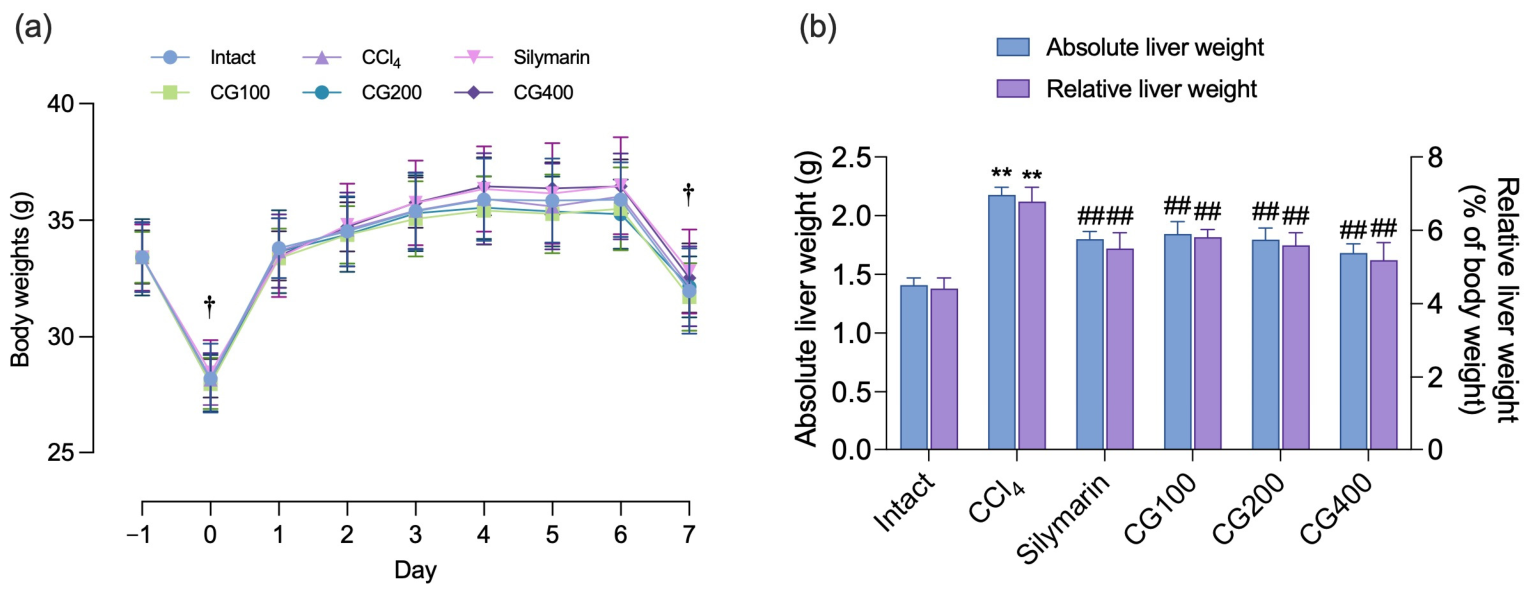
3.1. Effects of CG on Body and Liver Weights
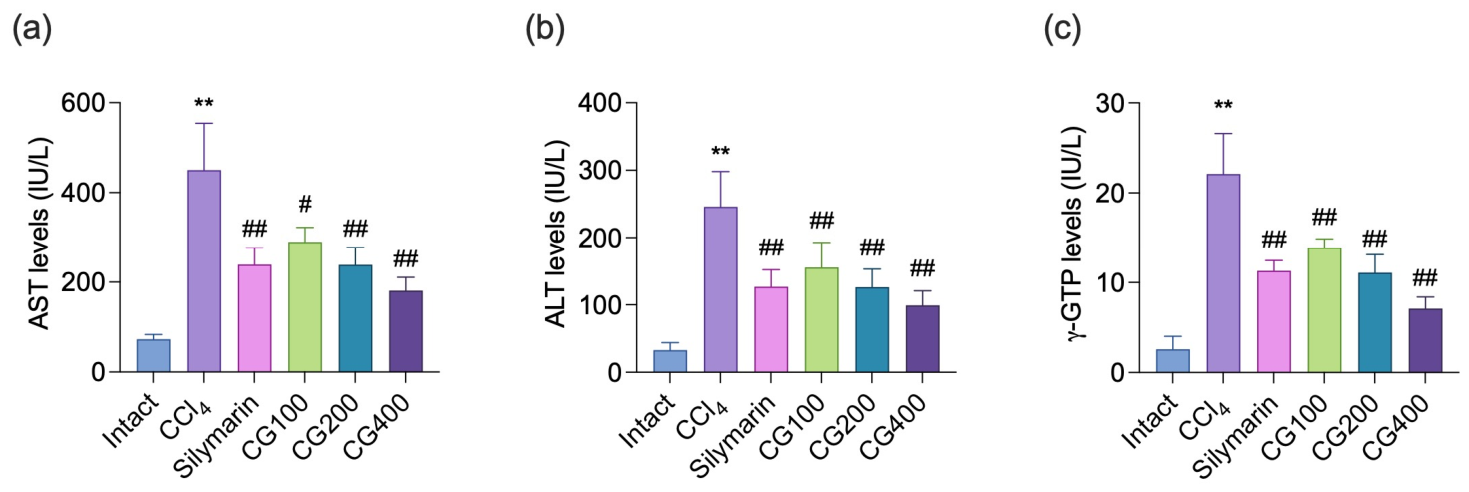
3.2. Effects of CG on Serum AST, ALT, and γ-GTP Levels
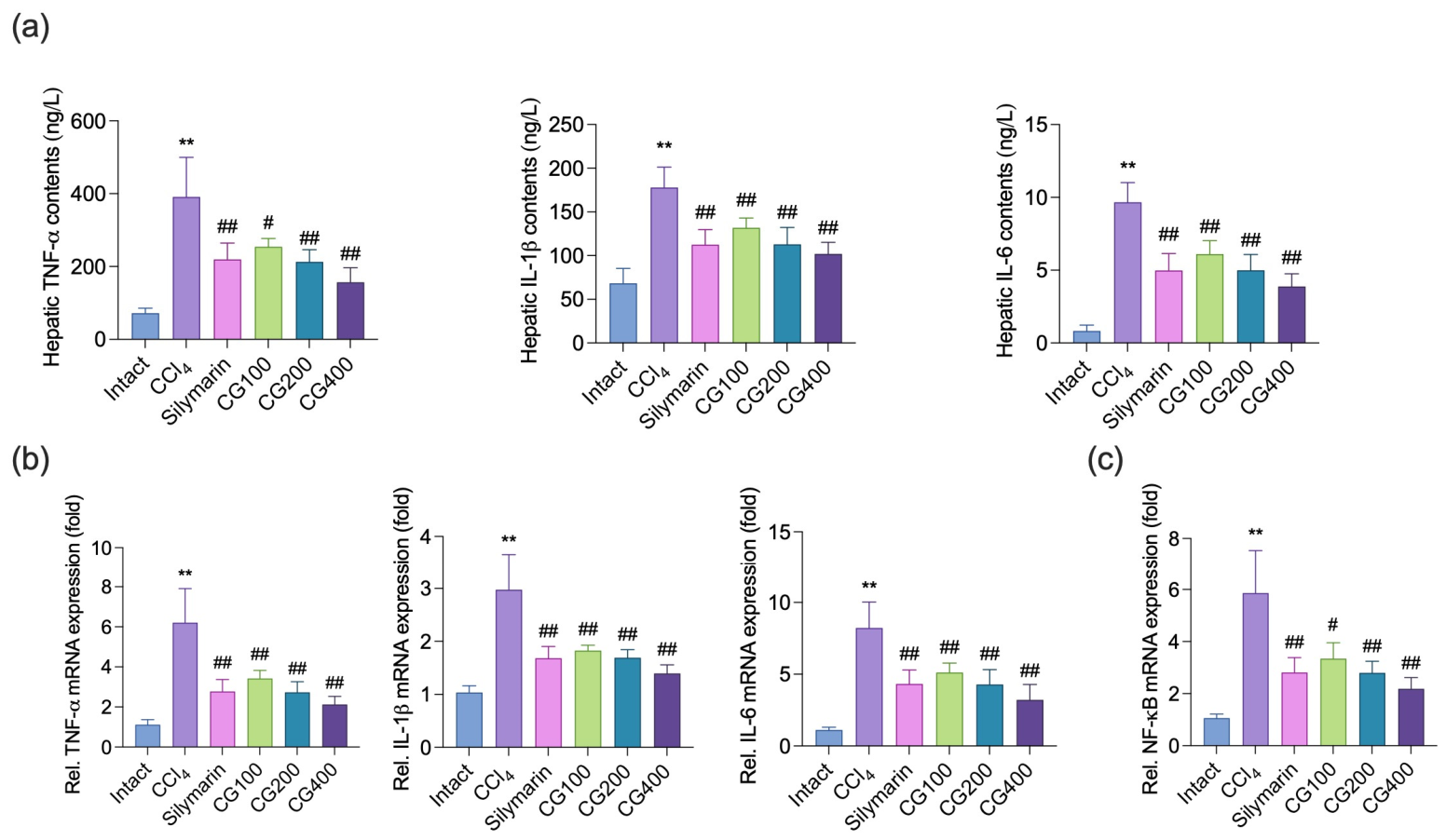
3.3. Effects of CG on Hepatic Expressions of Inflammatory Cytokines
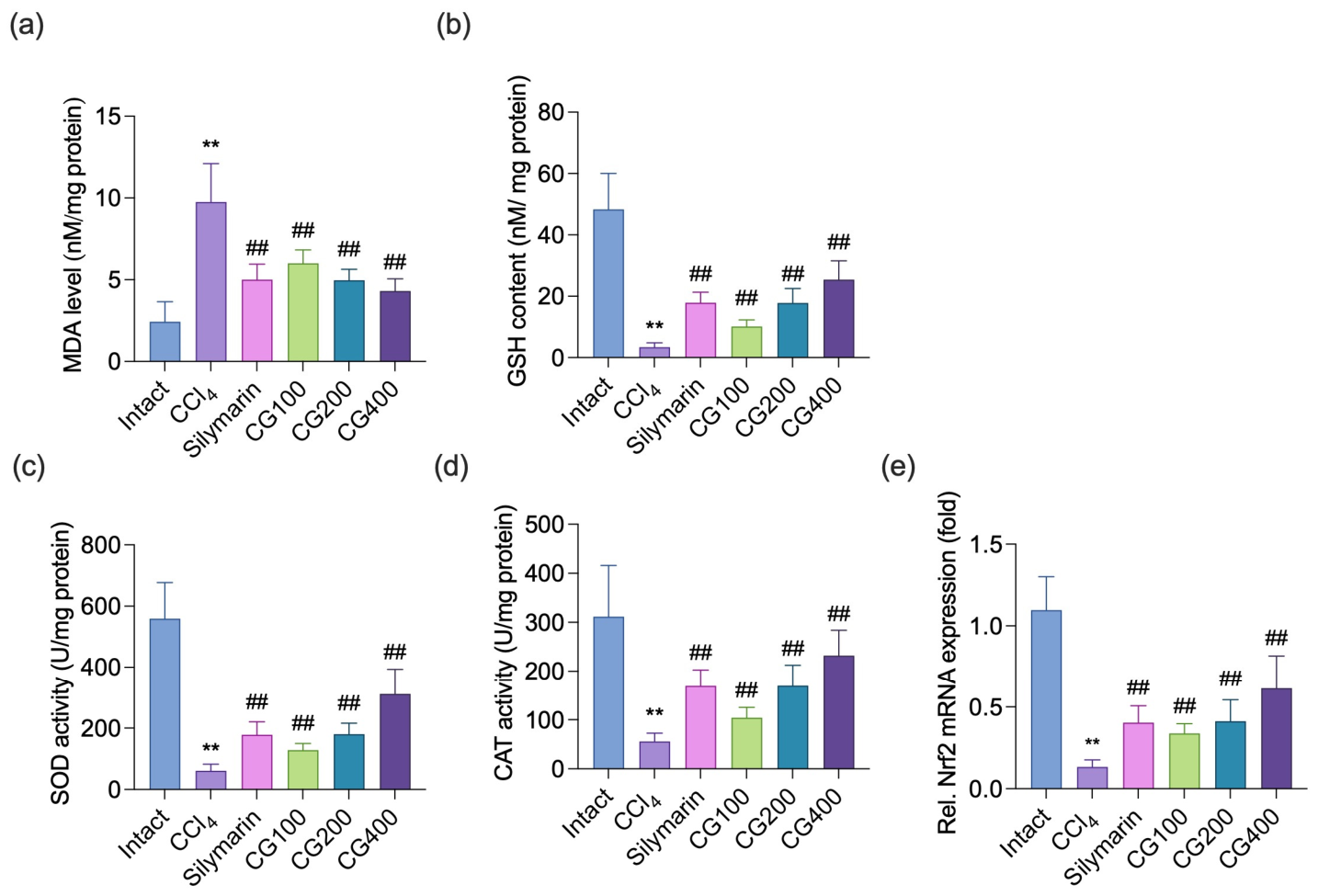
3.4. Effects of CG on Hepatic Lipid Peroxidation and Antioxidant Defense Systems
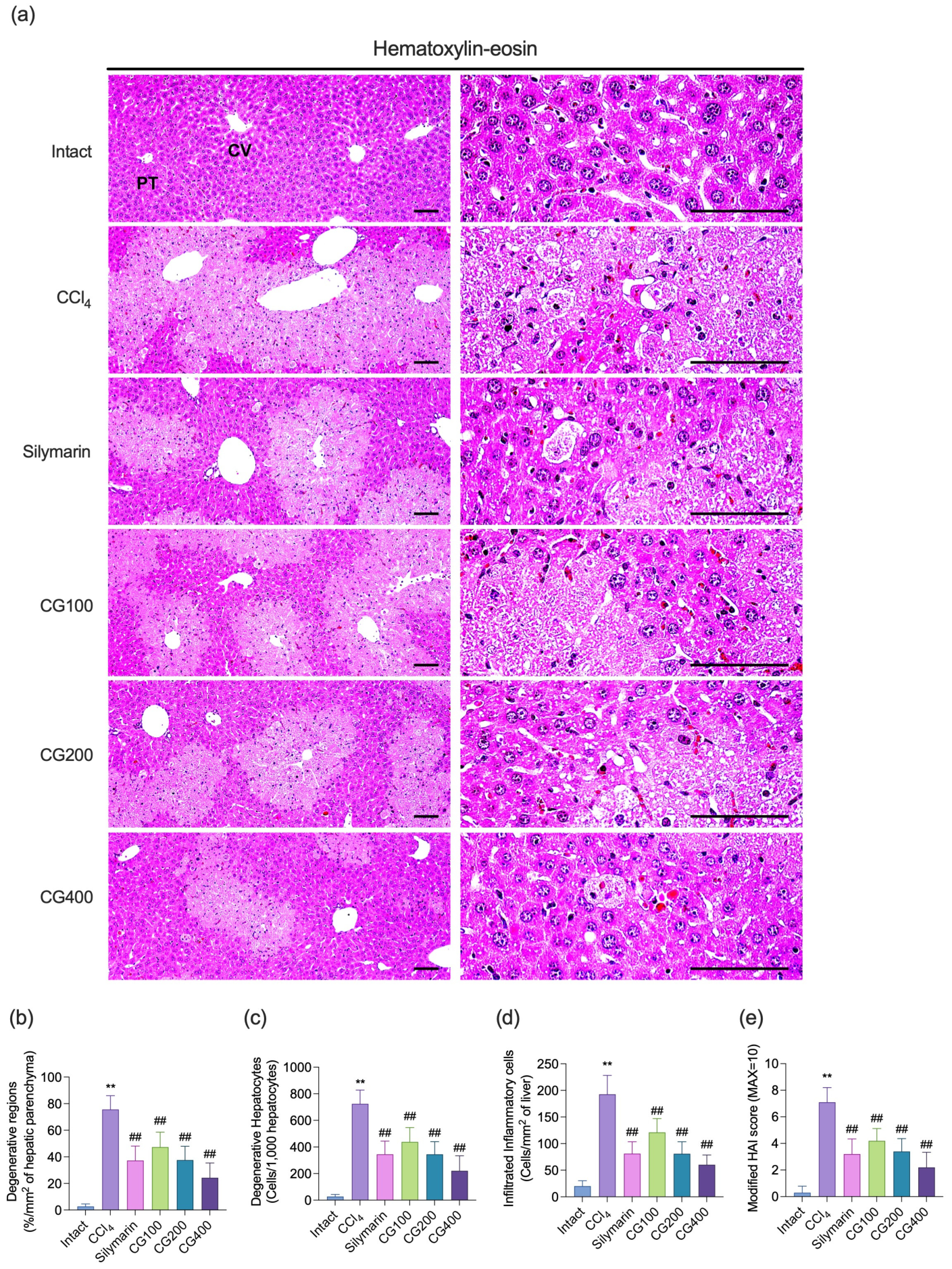
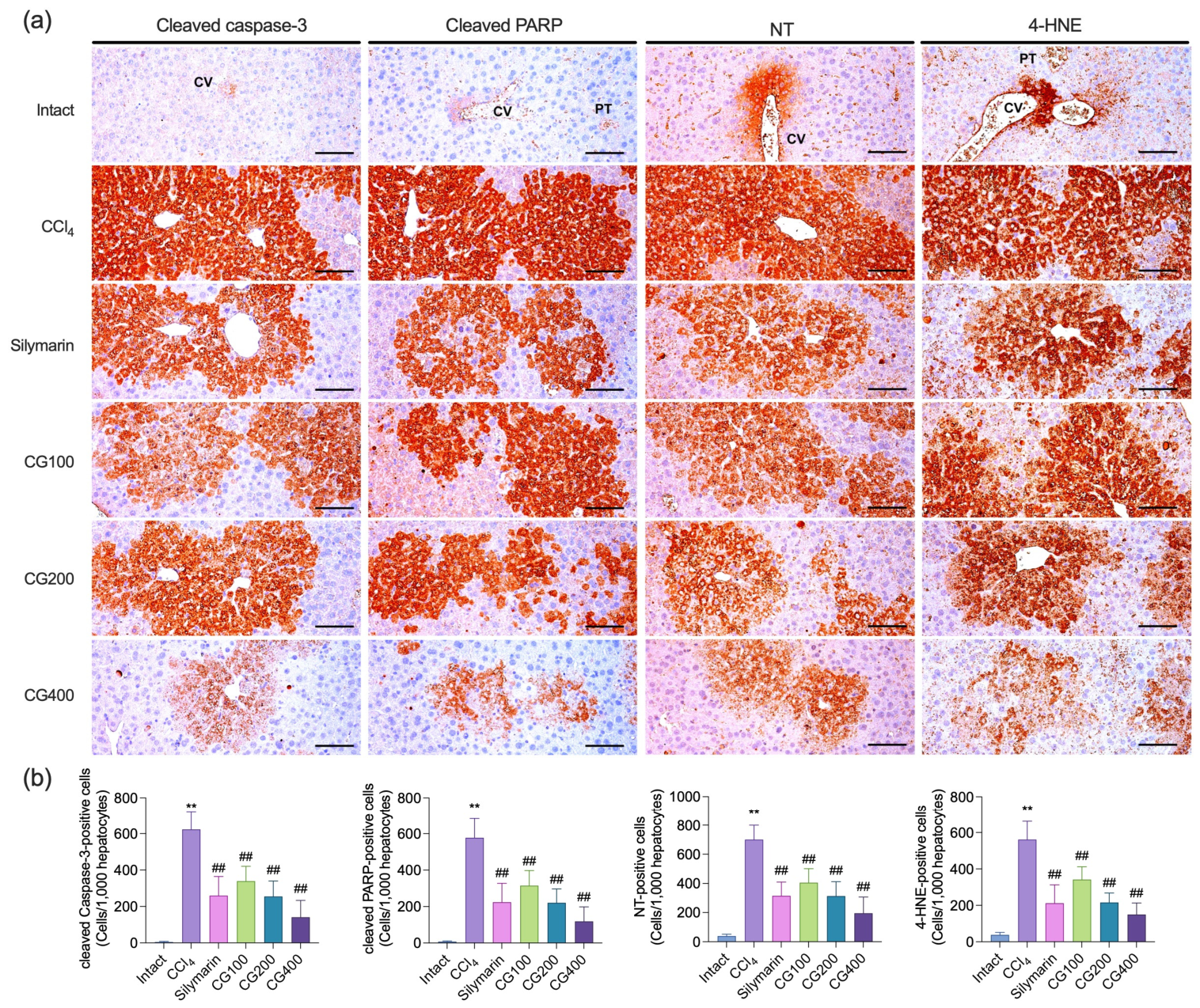
3.5. Effects of CG on Hepatic Histopathological Alterations, Apoptosis, and Oxidative Damage
4. Discussion
5. Conclusions
Supplementary Materials
Author Contributions
Funding
Institutional Review Board Statement
Informed Consent Statement
Data Availability Statement
Conflicts of Interest
References
- Cichoz-Lach, H.; Michalak, A. Oxidative stress as a crucial factor in liver diseases. World J. Gastroenterol. 2014, 20, 8082–8091. [Google Scholar] [CrossRef]
- Roberts, R.A.; Ganey, P.E.; Ju, C.; Kamendulis, L.M.; Rusyn, I.; Klaunig, J.E. Role of the Kupffer cell in mediating hepatic toxicity and carcinogenesis. Toxicol. Sci. 2007, 96, 2–15. [Google Scholar] [CrossRef]
- Shin, S.M.; Yang, J.H.; Ki, S.H. Role of the Nrf2-ARE pathway in liver diseases. Oxidative Med. Cell. Longev. 2013, 2013, 763257. [Google Scholar] [CrossRef]
- Jadeja, R.N.; Upadhyay, K.K.; Devkar, R.V.; Khurana, S. Naturally Occurring Nrf2 Activators: Potential in Treatment of Liver Injury. Oxidative Med. Cell. Longev. 2016, 2016, 3453926. [Google Scholar] [CrossRef]
- Kolios, G.; Valatas, V.; Kouroumalis, E. Role of Kupffer cells in the pathogenesis of liver disease. World J. Gastroenterol. 2006, 12, 7413–7420. [Google Scholar] [CrossRef]
- Liu, T.; Zhang, L.; Joo, D.; Sun, S.C. NF-κB signaling in inflammation. Signal Transduct. Target. Ther. 2017, 2, 17023. [Google Scholar] [CrossRef] [PubMed]
- Yan, J.; Nie, Y.; Luo, M.; Chen, Z.; He, B. Natural Compounds: A Potential Treatment for Alcoholic Liver Disease? Front. Pharmacol. 2021, 12, 694475. [Google Scholar] [CrossRef]
- Lu, J.N.; Lee, W.S.; Yun, J.W.; Kim, M.J.; Kim, H.J.; Kim, D.C.; Jeong, J.H.; Choi, Y.H.; Kim, G.S.; Ryu, C.H.; et al. Anthocyanins from Vitis coignetiae Pulliat Inhibit Cancer Invasion and Epithelial-Mesenchymal Transition, but These Effects Can Be Attenuated by Tumor Necrosis Factor in Human Uterine Cervical Cancer HeLa Cells. Evid. Based Complement. Altern. Med. 2013, 2013, 503043. [Google Scholar] [CrossRef]
- Takayama, F.; Nakamoto, K.; Kawasaki, H.; Mankura, M.; Egashira, T.; Ueki, K.; Hasegawa, A.; Okada, S.; Mori, A. Beneficial effects of Vitis coignetiae Pulliat leaves on nonalcoholic steatohepatitis in a rat model. Acta Med. Okayama 2009, 63, 105–111. [Google Scholar] [CrossRef] [PubMed]
- Jeong, H.-J.; Park, S.-B.; Kim, S.-A.; Kim, H.-K. Total Polyphenol Content and Antioxidative Activity of Wild Grape (Vitis coignetiae) Extracts Depending on Ethanol Concentrations. J. Korean Soc. Food Sci. Nutr. 2007, 36, 1491–1496. [Google Scholar] [CrossRef]
- Paramanantham, A.; Kim, M.J.; Jung, E.J.; Kim, H.J.; Chang, S.H.; Jung, J.M.; Hong, S.C.; Shin, S.C.; Kim, G.S.; Lee, W.S. Anthocyanins Isolated from Vitis coignetiae Pulliat Enhances Cisplatin Sensitivity in MCF-7 Human Breast Cancer Cells through Inhibition of Akt and NF-κB Activation. Molecules 2020, 25, 3623. [Google Scholar] [CrossRef] [PubMed]
- Pak, W.; Takayama, F.; Hasegawa, A.; Mankura, M.; Egashira, T.; Ueki, K.; Nakamoto, K.; Kawasaki, H.; Mori, A. Water extract of Vitis coignetiae Pulliat leaves attenuates oxidative stress and inflammation in progressive NASH rats. Acta Med. Okayama 2012, 66, 317–327. [Google Scholar] [CrossRef]
- Kim, S.J.; Lee, Y.H.; Han, M.D.; Mar, W.; Kim, W.K.; Nam, K.W. Resveratrol, purified from the stem of Vitis coignetiae Pulliat, inhibits food intake in C57BL/6J Mice. Arch. Pharmacal Res. 2010, 33, 775–780. [Google Scholar] [CrossRef]
- Livak, K.J.; Schmittgen, T.D. Analysis of relative gene expression data using real-time quantitative PCR and the 2−ΔΔCT Method. Methods 2001, 25, 402–408. [Google Scholar] [CrossRef]
- Kim, J.S.; Jegal, K.H.; Park, H.R.; Choi, B.R.; Kim, J.K.; Ku, S.K. A Mixture of Fermented Schizandrae Fructus Pomace and Hoveniae Semen cum Fructus Extracts Synergistically Protects against Oxidative Stress-Mediated Liver Injury. Antioxidants 2023, 12, 1556. [Google Scholar] [CrossRef]
- Ishak, K.; Baptista, A.; Bianchi, L.; Callea, F.; De Groote, J.; Gudat, F.; Denk, H.; Desmet, V.; Korb, G.; MacSween, R.N.; et al. Histological grading and staging of chronic hepatitis. J. Hepatol. 1995, 22, 696–699. [Google Scholar] [CrossRef]
- Weber, L.W.; Boll, M.; Stampfl, A. Hepatotoxicity and mechanism of action of haloalkanes: Carbon tetrachloride as a toxicological model. Crit. Rev. Toxicol. 2003, 33, 105–136. [Google Scholar] [CrossRef]
- Basu, S. Carbon tetrachloride-induced lipid peroxidation: Eicosanoid formation and their regulation by antioxidant nutrients. Toxicology 2003, 189, 113–127. [Google Scholar] [CrossRef] [PubMed]
- Mao, J.; Tan, L.; Tian, C.; Wang, W.; Zhang, H.; Zhu, Z.; Li, Y. Research progress on rodent models and its mechanisms of liver injury. Life Sci. 2024, 337, 122343. [Google Scholar] [CrossRef]
- Chavez, E.; Reyes-Gordillo, K.; Segovia, J.; Shibayama, M.; Tsutsumi, V.; Vergara, P.; Moreno, M.G.; Muriel, P. Resveratrol prevents fibrosis, NF-κB activation and TGF-β increases induced by chronic CCl4 treatment in rats. J. Appl. Toxicol. 2008, 28, 35–43. [Google Scholar] [CrossRef] [PubMed]
- Lee, Y.S.; Cho, I.J.; Kim, J.W.; Lee, M.K.; Ku, S.K.; Choi, J.S.; Lee, H.J. Hepatoprotective effects of blue honeysuckle on CCl4-induced acute liver damaged mice. Food Sci. Nutr. 2019, 7, 322–338. [Google Scholar] [CrossRef]
- Muriel, P.; Mourelle, M. Prevention by silymarin of membrane alterations in acute CCl4 liver damage. J. Appl. Toxicol. 1990, 10, 275–279. [Google Scholar] [CrossRef]
- Vargas-Mendoza, N.; Madrigal-Santillan, E.; Morales-Gonzalez, A.; Esquivel-Soto, J.; Esquivel-Chirino, C.; Garcia-Luna, Y.G.-R.M.; Gayosso-de-Lucio, J.A.; Morales-Gonzalez, J.A. Hepatoprotective effect of silymarin. World J. Hepatol. 2014, 6, 144–149. [Google Scholar] [CrossRef]
- Hsu, Y.W.; Tsai, C.F.; Chuang, W.C.; Chen, W.K.; Ho, Y.C.; Lu, F.J. Protective effects of silica hydride against carbon tetrachloride-induced hepatotoxicity in mice. Food Chem. Toxicol. 2010, 48, 1644–1653. [Google Scholar] [CrossRef] [PubMed]
- Iqbal, N.; Zubair, H.M.; Almutairi, M.H.; Abbas, M.; Akhtar, M.F.; Aleya, L.; Kamel, M.; Saleem, A.; Jabeen, Q.; Noreen, S.; et al. Hepatoprotective effect of Cordia rothii extract against CCl4-induced oxidative stress via Nrf2-NFκB pathways. Biomed. Pharmacother. 2022, 156, 113840. [Google Scholar] [CrossRef]
- Peng, C.; Zhou, Z.M.; Li, J.; Luo, Y.; Zhou, Y.S.; Ke, X.H.; Huang, K.E. CCl4-Induced Liver Injury Was Ameliorated by Qi-Ge Decoction through the Antioxidant Pathway. Evid. Based Complement. Altern. Med. 2019, 2019, 5941263. [Google Scholar] [CrossRef]
- Poli, G.; Albano, E.; Dianzani, M.U. The role of lipid peroxidation in liver damage. Chem. Phys. Lipids 1987, 45, 117–142. [Google Scholar] [CrossRef]
- Rivera, H.; Shibayama, M.; Tsutsumi, V.; Perez-Alvarez, V.; Muriel, P. Resveratrol and trimethylated resveratrol protect from acute liver damage induced by CCl4 in the rat. J. Appl. Toxicol. 2008, 28, 147–155. [Google Scholar] [CrossRef]
- Seif El-Din, S.H.; El-Lakkany, N.M.; Salem, M.B.; Hammam, O.A.; Saleh, S.; Botros, S.S. Resveratrol mitigates hepatic injury in rats by regulating oxidative stress, nuclear factor-kappa B, and apoptosis. J. Adv. Pharm. Technol. Res. 2016, 7, 99–104. [Google Scholar] [CrossRef] [PubMed]
- Uchida, K. 4-Hydroxy-2-nonenal: A product and mediator of oxidative stress. Prog. Lipid Res. 2003, 42, 318–343. [Google Scholar] [CrossRef] [PubMed]
- Shi, C.; Li, Y.; You, Z.; Tian, Y.; Zhu, X.; Xu, H.; Yang, M.; Zhang, Y.; Dong, R.; Quan, H.; et al. Mangiferin Ameliorates CCl4-Triggered Acute Liver Injury by Inhibiting Inflammatory Response and Oxidative Stress: Involving the Nrf2-ARE Pathway. J. Inflamm. Res. 2024, 17, 7081–7097. [Google Scholar] [CrossRef]
- Saha, S.; Buttari, B.; Panieri, E.; Profumo, E.; Saso, L. An Overview of Nrf2 Signaling Pathway and Its Role in Inflammation. Molecules 2020, 25, 5474. [Google Scholar] [CrossRef]
- Li, L.; Lan, Y.; Wang, F.; Gao, T. Linarin Protects Against CCl4-Induced Acute Liver Injury via Activating Autophagy and Inhibiting the Inflammatory Response: Involving the TLR4/MAPK/Nrf2 Pathway. Drug Des. Dev. Ther. 2023, 17, 3589–3604. [Google Scholar] [CrossRef]
- Lyu, H.; Wang, H.; Li, L.; Zhu, J.; Chen, F.; Chen, Y.; Liu, C.; Fu, J.; Yang, B.; Zhang, Q.; et al. Hepatocyte-specific deficiency of Nrf2 exacerbates carbon tetrachloride-induced liver fibrosis via aggravated hepatocyte injury and subsequent inflammatory and fibrogenic responses. Free Radic. Biol. Med. 2020, 150, 136–147. [Google Scholar] [CrossRef]
- Xu, W.; Hellerbrand, C.; Kohler, U.A.; Bugnon, P.; Kan, Y.W.; Werner, S.; Beyer, T.A. The Nrf2 transcription factor protects from toxin-induced liver injury and fibrosis. Lab. Investig. 2008, 88, 1068–1078. [Google Scholar] [CrossRef] [PubMed]
- Wang, B.; Cui, S.; Mao, B.; Zhang, Q.; Tian, F.; Zhao, J.; Tang, X.; Chen, W. Cyanidin Alleviated CCl4-Induced Acute Liver Injury by Regulating the Nrf2 and NF-κB Signaling Pathways. Antioxidants 2022, 11, 2383. [Google Scholar] [CrossRef] [PubMed]
- Farkhondeh, T.; Folgado, S.L.; Pourbagher-Shahri, A.M.; Ashrafizadeh, M.; Samarghandian, S. The therapeutic effect of resveratrol: Focusing on the Nrf2 signaling pathway. Biomed. Pharmacother. 2020, 127, 110234. [Google Scholar] [CrossRef]
- Kiso, K.; Ueno, S.; Fukuda, M.; Ichi, I.; Kobayashi, K.; Sakai, T.; Fukui, K.; Kojo, S. The Role of Kupffer Cells in Carbon Tetrachloride Intoxication in Mice. Biol. Pharm. Bull. 2012, 35, 980–983. [Google Scholar] [CrossRef]
- Brempelis, K.J.; Crispe, I.N. Infiltrating monocytes in liver injury and repair. Clin. Transl. Immunol. 2016, 5, e113. [Google Scholar] [CrossRef] [PubMed]
- Su, L.; Li, N.; Tang, H.; Lou, Z.; Chong, X.; Zhang, C.; Su, J.; Dong, X. Kupffer cell-derived TNF-α promotes hepatocytes to produce CXCL1 and mobilize neutrophils in response to necrotic cells. Cell Death Dis. 2018, 9, 323. [Google Scholar] [CrossRef]
- Tian, Y.; Ma, J.; Wang, W.; Zhang, L.; Xu, J.; Wang, K.; Li, D. Resveratrol supplement inhibited the NF-κB inflammation pathway through activating AMPKα-SIRT1 pathway in mice with fatty liver. Mol. Cell. Biochem. 2016, 422, 75–84. [Google Scholar] [CrossRef]



| Target (Cat. No.) | Direction | Primer Sequences (5′⟶3′) | GenBank Accession Number |
|---|---|---|---|
| Nrf2 (MP209070) | Forward Reverse | CAGCATAGAGCAGGACATGGAG, GAACAGCGGTAGTATCAGCCAG | NM_010902 |
| NF-κB (MP209060) | Forward Reverse | GCTGCCAAAGAAGGACACGACA, GGCAGGCTATTGCTCATCACAG | NM_008689 |
| TNF-α (MP217748) | Forward Reverse | GGTGCCTATGTCTCAGCCTCTT, GCCATAGAACTGATGAGAGGGAG | NM_013693 |
| IL-1β (MP206724) | Forward Reverse | TGGACCTTCCAGGATGAGGACA, GTTCATCTCGGAGCCTGTAGTG | NM_008361 |
| IL-6 (MP206798) | Forward Reverse | TACCACTTCACAAGTCGGAGGC, CTGCAAGTGCATCATCGTTGTTC | NM_031168 |
| β-actin (MP200232) | Forward Reverse | CATTGCTGACAGGATGCAGAAGG, TGCTGGAAGGTGGACAGTGAGG | NM_007393 |
Disclaimer/Publisher’s Note: The statements, opinions and data contained in all publications are solely those of the individual author(s) and contributor(s) and not of MDPI and/or the editor(s). MDPI and/or the editor(s) disclaim responsibility for any injury to people or property resulting from any ideas, methods, instructions or products referred to in the content. |
© 2026 by the authors. Licensee MDPI, Basel, Switzerland. This article is an open access article distributed under the terms and conditions of the Creative Commons Attribution (CC BY) license.
Share and Cite
Yoon, N.-K.; Lee, J.; Chung, H.; Kim, J.-K.; Ku, S.-K. Protective Effects of Vitis coignetiae Vine Stem Extract Against Carbon Tetrachloride-Induced Acute Liver Injury in Mice. Antioxidants 2026, 15, 651. https://doi.org/10.3390/antiox15050651
Yoon N-K, Lee J, Chung H, Kim J-K, Ku S-K. Protective Effects of Vitis coignetiae Vine Stem Extract Against Carbon Tetrachloride-Induced Acute Liver Injury in Mice. Antioxidants. 2026; 15(5):651. https://doi.org/10.3390/antiox15050651
Chicago/Turabian StyleYoon, Nam-Kyu, Jeongjun Lee, Hunsuk Chung, Jae-Kwang Kim, and Sae-Kwang Ku. 2026. "Protective Effects of Vitis coignetiae Vine Stem Extract Against Carbon Tetrachloride-Induced Acute Liver Injury in Mice" Antioxidants 15, no. 5: 651. https://doi.org/10.3390/antiox15050651
APA StyleYoon, N.-K., Lee, J., Chung, H., Kim, J.-K., & Ku, S.-K. (2026). Protective Effects of Vitis coignetiae Vine Stem Extract Against Carbon Tetrachloride-Induced Acute Liver Injury in Mice. Antioxidants, 15(5), 651. https://doi.org/10.3390/antiox15050651