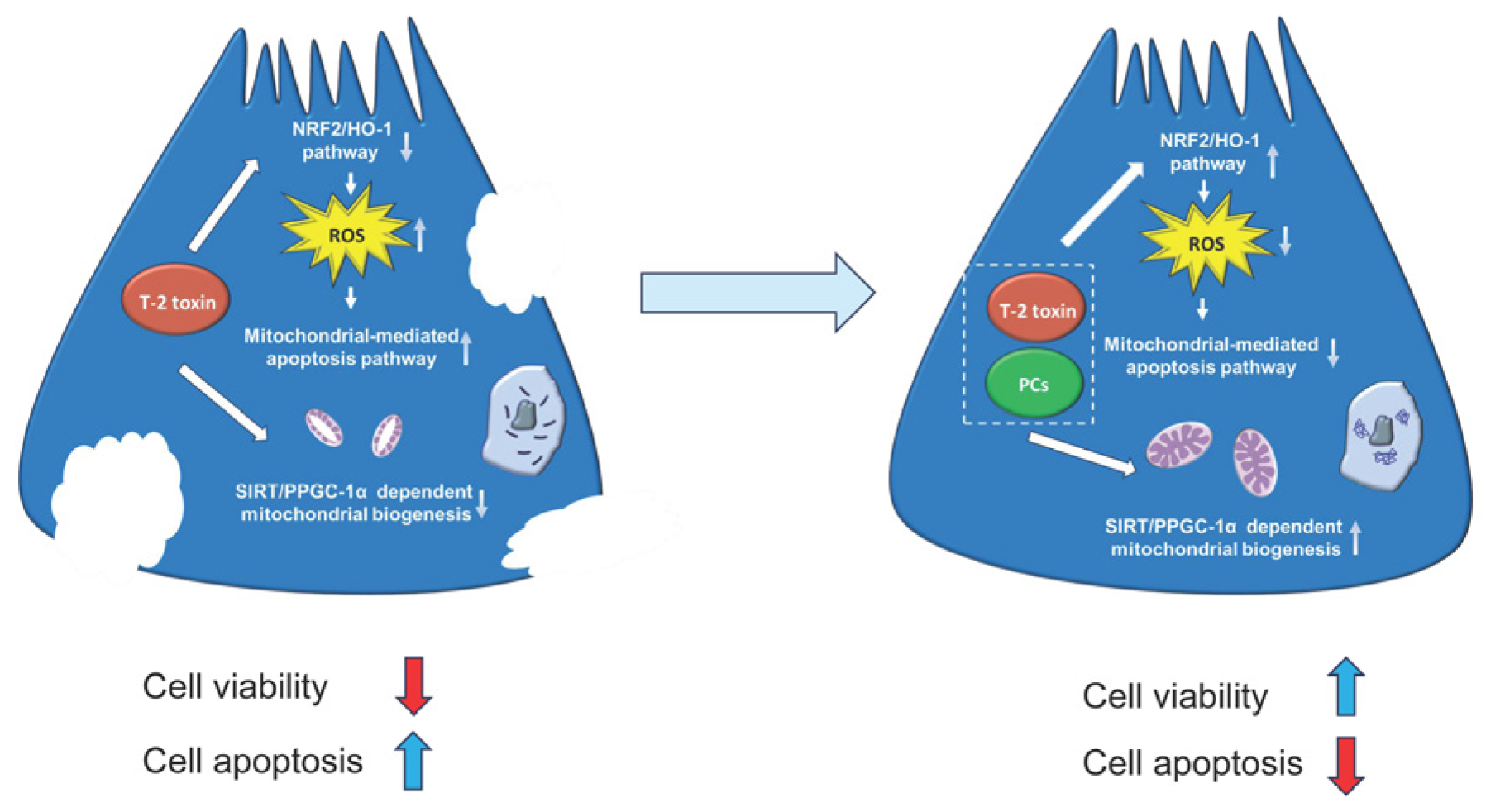
Proanthocyanidins Alleviate T-2 Toxin-Induced Toxicity in Yak (Bos grunniens) Sertoli Cells by Alleviating Oxidative Stress and Modulating Mitochondrial Biogenesis

 , and
, and
Abstract
1. Introduction
2. Materials and Methods
2.1. Animals
2.2. Sertoli Cell Isolation, Culture, and Treatment
2.3. Immunofluorescence Staining for Sertoli Cell Identification
2.4. Cell Counting Kit-8 (CCK-8) Assay
2.5. 5-Ethynyl-2′-Deoxyuridine (EdU) Staining
2.6. Terminal Deoxynucleotidyl Transferase (TUNEL) Assay
2.7. γ-H2AX Immunofluorescence Staining
2.8. Measurement of Reactive Oxygen Species (ROS), Malondialdehyde (MDA), Superoxide Dismutase (SOD), and Catalase (CAT) Activity
2.9. RNA Extraction, cDNA Synthesis, and Real-Time PCR
2.10. Western Blotting
2.11. Mitochondrial Membrane Potential (MMP) Detection
2.12. Transmission Electron Microscopy (TEM)
2.13. Measurement of Intracellular ATP Levels
2.14. Statistical Analysis
3. Results
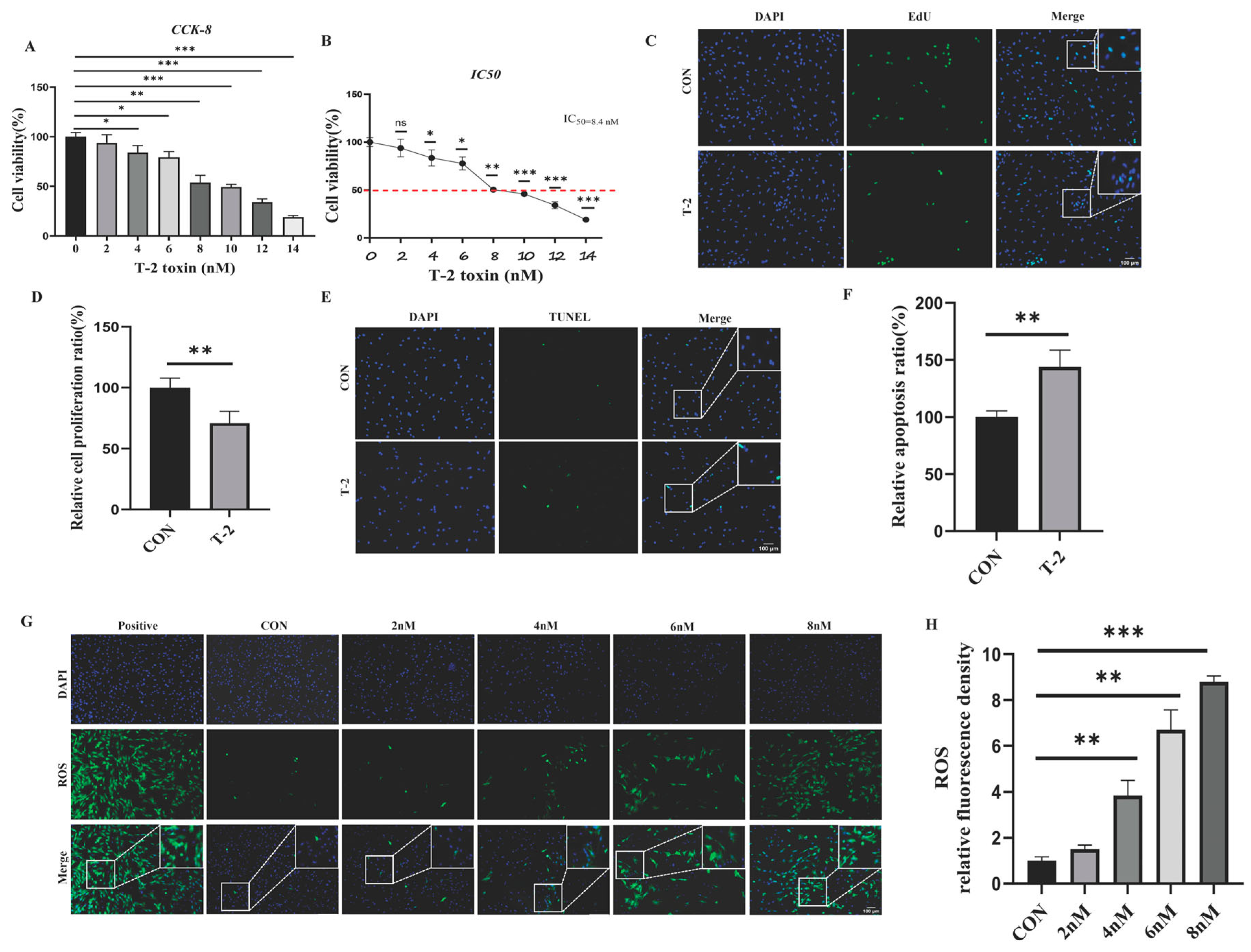
3.1. T-2 Toxin Impaired Cell Survival and Elevated ROS Levels in Yak SCs
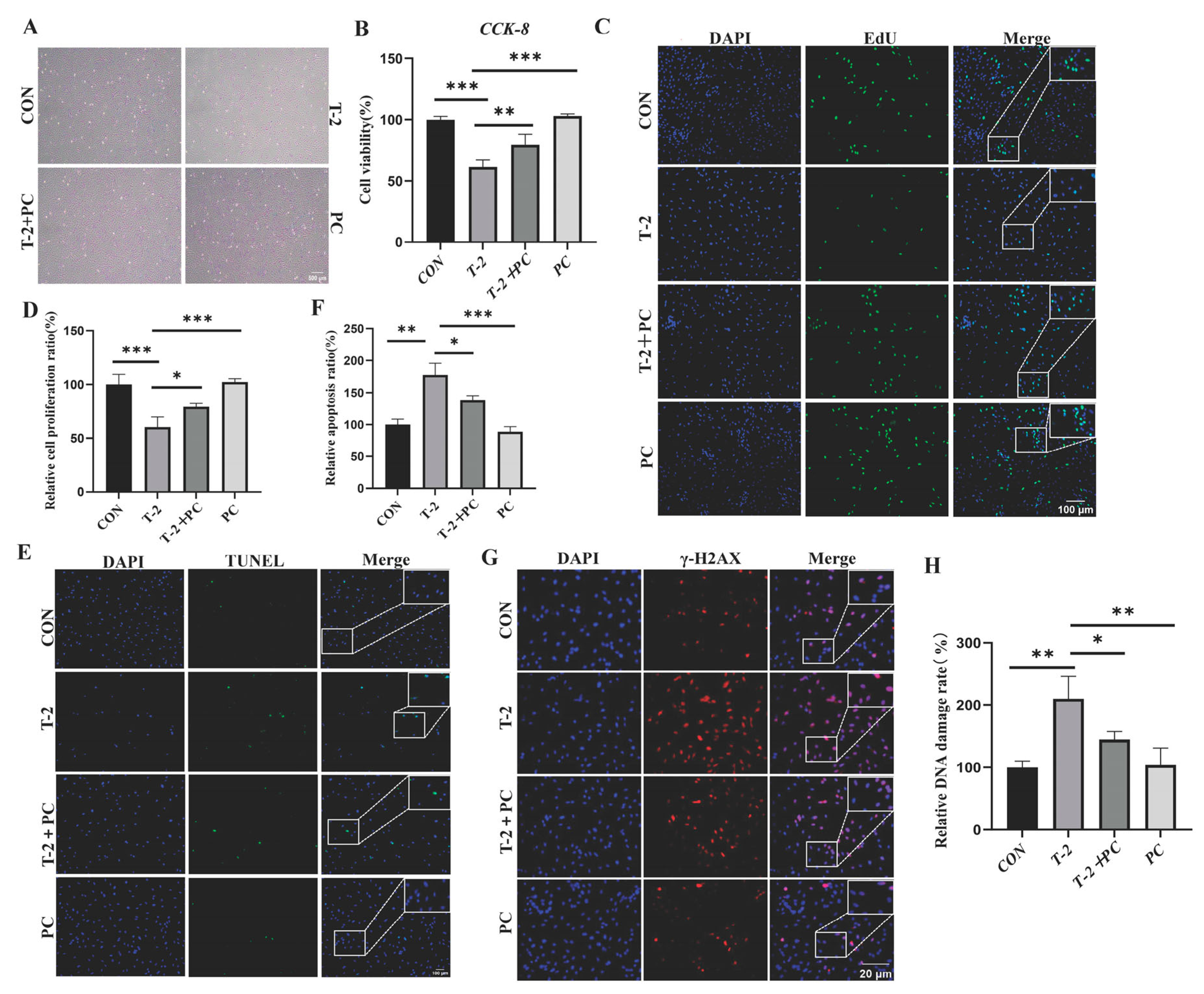
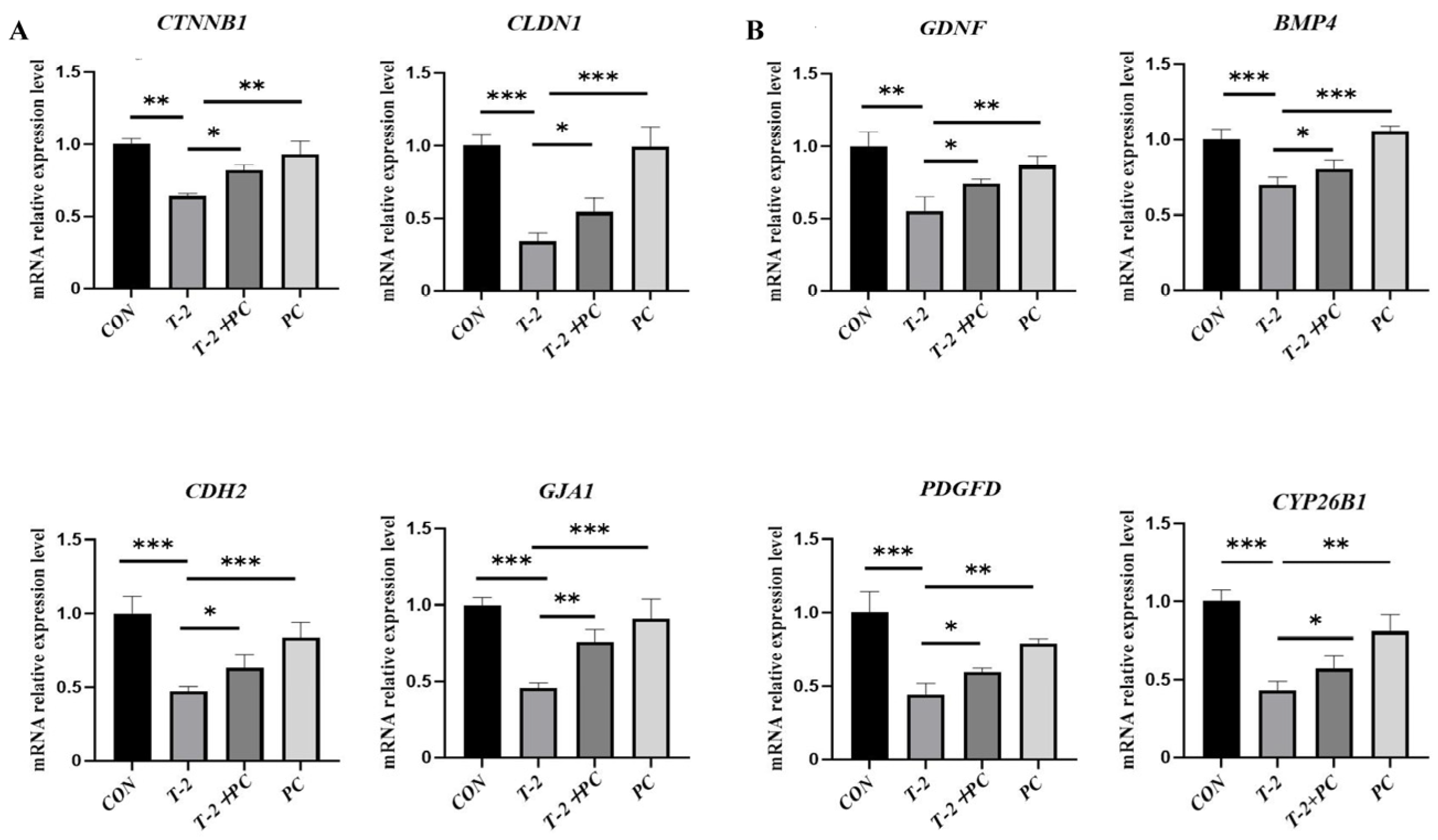
3.2. PCs Inhibited Cellular Apoptosis and Mitigated Functional Impairments in Yak SCs Exposed to T-2 Toxin
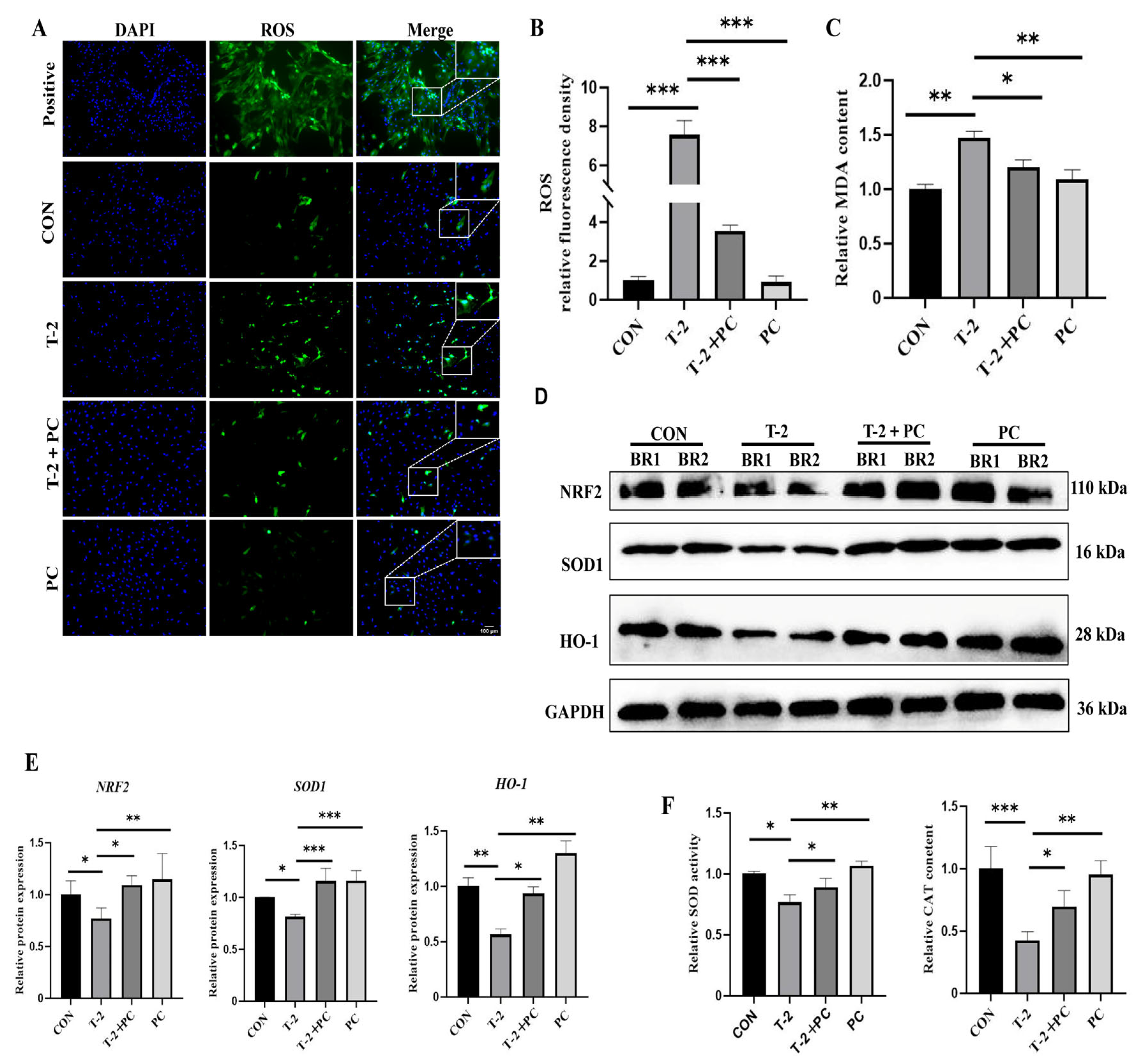
3.3. PCs Mitigated Excessive Oxidative Stress Induced by T-2 Toxin in Yak SCs, an Effect Correlated with Upregulation of the NFE2-like bZIP Transcription Factor 2 (NRF2)/Heme Oxygenase-1 (HO-1) Signaling Pathway
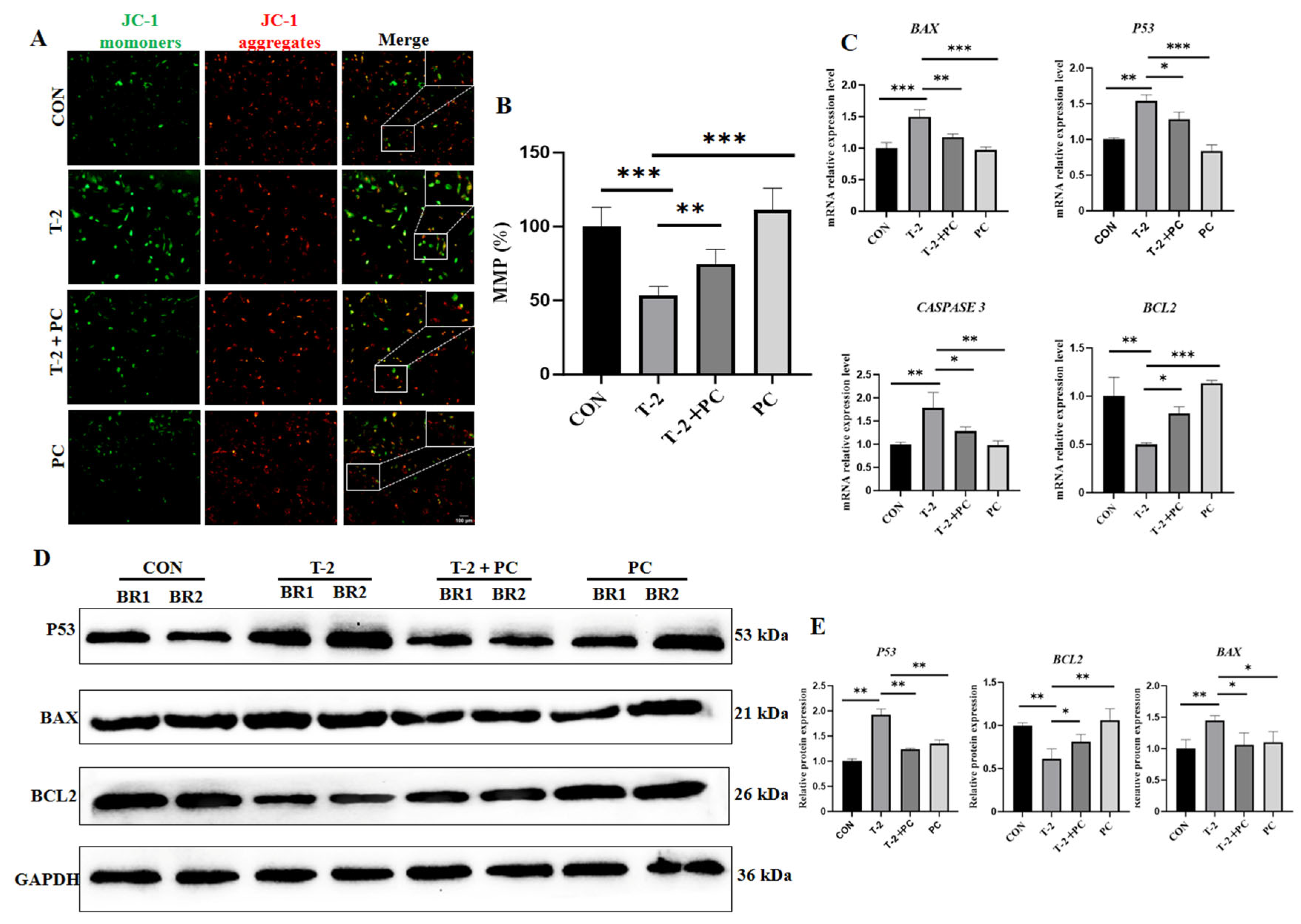
3.4. PCs Alleviated the Cytotoxic Effects in Yak SCs Exposed to T-2 Toxin by Repressing Mitochondria-Mediated Apoptotic Pathway
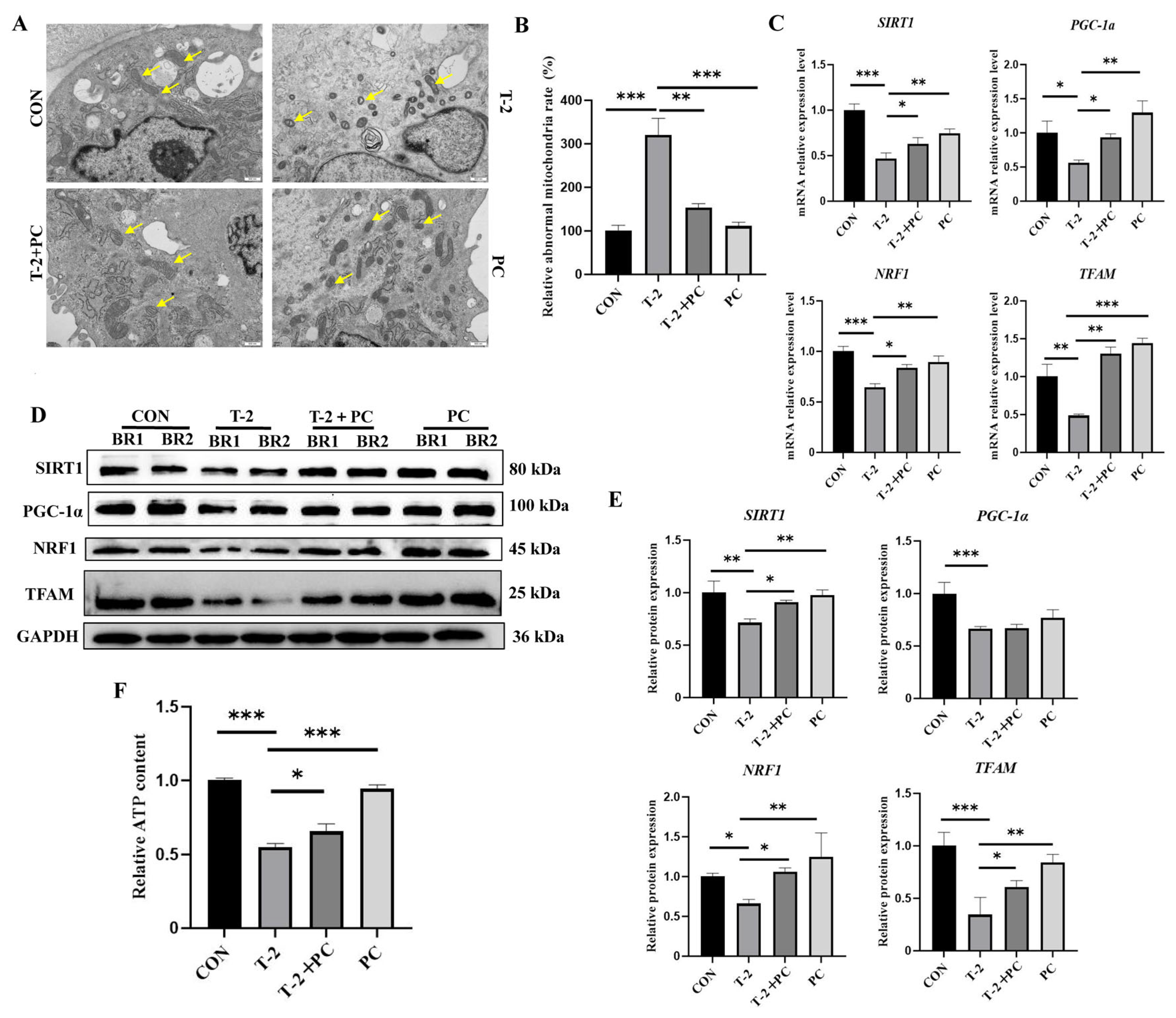
3.5. PCs Mitigated Mitochondrial Dysfunction and Restored the Expression of Key Genes Related to Mitochondrial Biogenesis in Yak SCs Exposed to T-2 Toxin
4. Discussion
5. Conclusions
Supplementary Materials
Author Contributions
Funding
Institutional Review Board Statement
Informed Consent Statement
Data Availability Statement
Conflicts of Interest
Abbreviations
| PCs | proanthocyanidins |
| ROS | reactive oxygen species |
| NRF2 | Nuclear factor erythroid derived 2-like |
| HO-1 | heme oxygenase-1 |
| SIRT1 | sirtuin 1 |
| PGC-1α | peroxisome proliferator-activated receptor gamma coactivator 1 alpha |
| SCs | Sertoli cells |
| BTB | blood-testis barrier |
| GDNF | glial cell line-derived neurotrophic factor |
| SCF | stem cell factor |
| PDGF | platelet-derived growth factor |
| GSPs | grape seed proanthocyanidins |
| PCR | real-time polymerase chain reaction |
| PBS | phosphate-buffered saline |
| BSA | bovine serum albumin |
| CCK-8 | Cell Counting Kit-8 |
| EdU | 5-Ethynyl-2′-deoxyuridine |
| TUNEL | terminal deoxynucleotidyl transferase |
| MDA | malondialdehyde |
| SOD | superoxide dismutase |
| CAT | catalase |
| DCFH-DA | 2′,7′-dichlorodihydrofluorescein diacetate |
| GAPDH | glyceraldehyde-3-phosphate dehydrogenase |
| MMP | mitochondrial membrane potential |
| JC-1 | fluorescence probe 5,5′,6,6′-Tetrachloro-1,1′,3,3′-tetraethyl-imidacarbocyanine |
| TEM | transmission electron microscopy |
| WT1 | Wilms tumor1 transcription factor |
| SOX9 | SRY-box transcription factor 9 |
| γ-H2AX | phosphorylated histone H2AX |
| CTNNB1 | catenin beta 1 |
| CLDN1 | claudin 1 |
| CDH2 | cadherin 2 |
| GJA1 | gap junction protein alpha 1 |
| BMP4 | bone morphogenetic protein 4 |
| PDGFD | platelet-derived growth factor D |
| CYP26B1 | cytochrome P450, family 26, subfamily b, polypeptide 1 |
| BCL2 | B-cell lymphoma-2 |
| BAX | BCL2-associated X, apoptosis regulator |
| CASPASE 3 | cysteine-dependent aspartate-specific protease-3 |
| NRF1 | nuclear respiratory factor 1 |
| TFAM | transcription factor A, mitochondrial |
| ATP | adenosine triphosphate |
References
- Gao, Y.; Wang, Z.; Long, Y.; Yang, L.; Jiang, Y.; Ding, D.; Teng, B.; Chen, M.; Yuan, J.; Gao, F. Unveiling the roles of Sertoli cells lineage differentiation in reproductive development and disorders: A review. Front. Endocrinol. 2024, 15, 1357594. [Google Scholar] [CrossRef]
- O’Donnell, L.; Smith, L.B.; Rebourcet, D. Sertoli cells as key drivers of testis function. Semin. Cell Dev. Biol. 2022, 121, 2–9. [Google Scholar] [CrossRef]
- You, X.; Chen, Q.; Yuan, D.; Zhang, C.; Zhao, H. Common markers of testicular Sertoli cells. Expert Rev. Mol. Diagn. 2021, 21, 613–626. [Google Scholar] [CrossRef]
- Cheng, C.Y.; Mruk, D.D. The blood-testis barrier and its implications for male contraception. Pharmacol. Rev. 2012, 64, 16–64. [Google Scholar] [CrossRef]
- Wanjari, U.R.; Gopalakrishnan, A.V. Blood-testis barrier: A review on regulators in maintaining cell junction integrity between Sertoli cells. Cell Tissue Res. 2024, 396, 157–175. [Google Scholar] [CrossRef]
- Hofmann, M.C.; McBeath, E. Sertoli Cell-Germ Cell Interactions Within the Niche: Paracrine and Juxtacrine Molecular Communications. Front. Endocrinol. 2022, 13, 897062. [Google Scholar] [CrossRef]
- Peng, Y.J.; Tang, X.T.; Shu, H.S.; Dong, W.; Shao, H.; Zhou, B.O. Sertoli cells are the source of stem cell factor for spermatogenesis. Development 2023, 150, dev200706. [Google Scholar] [CrossRef]
- Tian, H.; Wang, X.; Li, X.; Song, W.; Mi, J.; Zou, K. Regulation of spermatogonial stem cell differentiation by Sertoli cells-derived exosomes through paracrine and autocrine signaling. J. Cell Physiol. 2024, 239, e31202. [Google Scholar] [CrossRef] [PubMed]
- Cai, P.; Feng, N.; Zheng, W.; Zheng, H.; Zou, H.; Yuan, Y.; Liu, X.; Liu, Z.; Gu, J.; Bian, J. Treatment with, Resveratrol, a SIRT1 Activator, Prevents Zearalenone-Induced Lactic Acid Metabolism Disorder in Rat Sertoli Cells. Molecules 2019, 24, 2474. [Google Scholar] [CrossRef] [PubMed]
- Gorga, A.; Rindone, G.M.; Dasso, M.E.; Centola, C.L.; Pellizzari, E.H.; Camberos, M.C.; Toneatto, J.; Riera, M.F.; Galardo, M.N.; Meroni, S.B. Simultaneous regulation of lactate production and fatty acid metabolism by Resveratrol in rat Sertoli cells. Biochimie 2023, 208, 75–85. [Google Scholar] [CrossRef] [PubMed]
- Chen, Y.; Wei, H.F.; Song, C.W.; Zhu, C.C. Discoidin domain receptor 2 expression increases phagocytotic capacity in sertoli cells of sertoli cell-only syndrome testes. Am. J. Transl. Res. 2022, 14, 6067–6081. [Google Scholar]
- Yefimova, M.G.; Messaddeq, N.; Meunier, A.C.; Cantereau, A.; Jegou, B.; Bourmeyster, N. Phagocytosis by Sertoli Cells: Analysis of Main Phagocytosis Steps by Confocal and Electron Microscopy. Methods Mol. Biol. 2018, 1748, 85–101. [Google Scholar] [CrossRef]
- Song, W.; Wang, Y.; Huang, T.; Liu, Y.; Chen, F.; Chen, Y.; Jiang, Y.; Zhang, C.; Yang, X. T-2 toxin metabolism and its hepatotoxicity: New insights on the molecular mechanism and detoxification. Environ. Pollut. 2023, 330, 121784. [Google Scholar] [CrossRef]
- Wang, Y.; Wang, B.; Wang, P.; Hua, Z.; Zhang, S.; Wang, X.; Yang, X.; Zhang, C. Review of neurotoxicity of T-2 toxin. Mycotoxin Res. 2024, 40, 85–95. [Google Scholar] [CrossRef]
- Chen, Z.; Duan, S.; Li, J.; Su, J.; Lei, H. T-2 toxin triggers depression-like behaviors via upregulation of dopamine transporter in nucleus accumbens of male mice. Ecotoxicol. Environ. Saf. 2025, 289, 117392. [Google Scholar] [CrossRef]
- Fan, J.; Song, W.; Wang, Y.; Li, S.; Zhang, C.; Wang, X.; Yang, X. An in-depth review of the dermal toxicity of T-2 toxin: Clinical symptoms, injury mechanisms, and treatment approach. Food Chem. Toxicol. 2024, 193, 114986. [Google Scholar] [CrossRef]
- Song, C.; Wang, Z.; Cao, J.; Dong, Y.; Chen, Y. Neurotoxic mechanisms of mycotoxins: Focus on aflatoxin B1 and T-2 toxin. Environ. Pollut. 2024, 356, 124359. [Google Scholar] [CrossRef] [PubMed]
- Liu, M.; Zhao, L.; Wei, J.T.; Huang, Y.X.; Khalil, M.M.; Wu, W.D.; Kuča, K.; Sun, L.H. T-2 toxin-induced intestinal damage with dysregulation of metabolism, redox homeostasis, inflammation, and apoptosis in chicks. Arch. Toxicol. 2023, 97, 805–817. [Google Scholar] [CrossRef] [PubMed]
- Ning, C.; Xiao, W.; Liang, Z.; Wu, Y.; Fan, H.; Wang, S.; Kong, X.; Wang, Y.; Wu, A.; Li, Y.; et al. Melatonin alleviates T-2 toxin-induced oxidative damage, inflammatory response, and apoptosis in piglet spleen and thymus. Int. Immunopharmacol. 2024, 129, 111653. [Google Scholar] [CrossRef] [PubMed]
- Vörösházi, J.; Neogrády, Z.; Mátis, G.; Mackei, M. Pathological consequences, metabolism and toxic effects of trichothecene T-2 toxin in poultry. Poult. Sci. 2024, 103, 103471. [Google Scholar] [CrossRef] [PubMed]
- Popov, L.D. Mitochondrial biogenesis: An update. J. Cell Mol. Med. 2020, 24, 4892–4899. [Google Scholar] [CrossRef]
- Zhao, T.; Zhang, J.; Lei, H.; Meng, Y.; Cheng, H.; Zhao, Y.; Geng, G.; Mu, C.; Chen, L.; Liu, Q.; et al. NRF1-mediated mitochondrial biogenesis antagonizes innate antiviral immunity. Embo J. 2023, 42, e113258. [Google Scholar] [CrossRef] [PubMed]
- Dai, C.; Xiao, X.; Sun, F.; Zhang, Y.; Hoyer, D.; Shen, J.; Tang, S.; Velkov, T. T-2 toxin neurotoxicity: Role of oxidative stress and mitochondrial dysfunction. Arch. Toxicol. 2019, 93, 3041–3056. [Google Scholar] [CrossRef] [PubMed]
- Fang, H.; Cong, L.; Zhi, Y.; Xu, H.; Jia, X.; Peng, S. T-2 toxin inhibits murine ES cells cardiac differentiation and mitochondrial biogenesis by ROS and p-38 MAPK-mediated pathway. Toxicol. Lett. 2016, 258, 259–266. [Google Scholar] [CrossRef] [PubMed]
- Li, J.R.; Wu, S.L.; Hu, L.L.; Liao, B.Y.; Sun, S.C. HT-2 toxin impairs porcine oocyte in vitro maturation through disruption of endomembrane system. Theriogenology 2024, 226, 286–293. [Google Scholar] [CrossRef]
- Zhang, Y.; Han, J.; Zhu, C.C.; Tang, F.; Cui, X.S.; Kim, N.H.; Sun, S.C. Exposure to HT-2 toxin causes oxidative stress induced apoptosis/autophagy in porcine oocytes. Sci. Rep. 2016, 6, 33904. [Google Scholar] [CrossRef]
- Zhu, C.C.; Zhang, Y.; Duan, X.; Han, J.; Sun, S.C. Toxic effects of HT-2 toxin on mouse oocytes and its possible mechanisms. Arch. Toxicol. 2016, 90, 1495–1505. [Google Scholar] [CrossRef]
- Chen, Y.; Zheng, X.; Zhou, R.; Zhang, H.; Liu, Y.; Hu, X.; Yin, Z. Mechanism of Apoptosis in Porcine Ovarian Granulosa Cells Triggered by T-2 Toxin. Genes 2024, 15, 579. [Google Scholar] [CrossRef]
- Wu, J.; Tu, D.; Yuan, L.Y.; Yuan, H.; Wen, L.X. T-2 toxin exposure induces apoptosis in rat ovarian granulosa cells through oxidative stress. Environ. Toxicol. Pharmacol. 2013, 36, 493–500. [Google Scholar] [CrossRef]
- Yang, X.; Zhang, X.; Yao, Q.; Song, M.; Han, Y.; Shao, B.; Li, Y. T-2 toxin impairs male fertility by disrupting hypothalamic-pituitary-testis axis and declining testicular function in mice. Chemosphere 2019, 234, 909–916. [Google Scholar] [CrossRef]
- Yang, X.; Song, W.; Zhang, K.; Wang, Y.; Chen, F.; Chen, Y.; Huang, T.; Jiang, Y.; Wang, X.; Zhang, C. p38 mediates T-2 toxin-induced Leydig cell testosterone synthesis disorder. Ecotoxicol. Environ. Saf. 2023, 253, 114695. [Google Scholar] [CrossRef] [PubMed]
- Yang, X.; Liu, P.; Zhang, X.; Zhang, J.; Cui, Y.; Song, M.; Li, Y. T-2 toxin causes dysfunction of Sertoli cells by inducing oxidative stress. Ecotoxicol. Environ. Saf. 2021, 225, 112702. [Google Scholar] [CrossRef] [PubMed]
- Pang, J.; Yang, H.; Feng, X.; Wang, Q.; Cai, Y.; Liu, Z.; Wang, C.; Wang, F.; Zhang, Y. HT-2 toxin affects cell viability of goat spermatogonial stem cells through AMPK-ULK1 autophagy pathways. Theriogenology 2021, 164, 22–30. [Google Scholar] [CrossRef]
- Tkachev, A.V.; Tkacheva, O.L. Comparison of the Cytotoxic Effects of Zearalenon and T-2 Toxin on the Horses and Oxen Germ Cell In Vitro Before and After Cryopreservation. Tsitologiia 2017, 59, 45–52. [Google Scholar]
- Rauf, A.; Imran, M.; Abu-Izneid, T.; Iahtisham Ul, H.; Patel, S.; Pan, X.; Naz, S.; Sanches Silva, A.; Saeed, F.; Rasul Suleria, H.A. Proanthocyanidins: A comprehensive review. Biomed. Pharmacother. 2019, 116, 108999. [Google Scholar] [CrossRef]
- Tang, J.; Chen, L.; Yan, D.; Shen, Z.; Wang, B.; Weng, S.; Wu, Z.; Xie, Z.; Shao, J.; Yang, L.; et al. Surface Functionalization with Proanthocyanidins Provides an Anti-Oxidant Defense Mechanism That Improves the Long-Term Stability and Osteogenesis of Titanium Implants. Int. J. Nanomed. 2020, 15, 1643–1659. [Google Scholar] [CrossRef]
- Song, Y.; Yu, H.; Sun, Q.; Pei, F.; Xia, Q.; Gao, Z.; Li, X. Grape seed proanthocyanidin extract targets p66Shc to regulate mitochondrial biogenesis and dynamics in diabetic kidney disease. Front. Pharmacol. 2022, 13, 1035755. [Google Scholar] [CrossRef]
- Tie, F.; Wang, J.; Liang, Y.; Zhu, S.; Wang, Z.; Li, G.; Wang, H. Proanthocyanidins Ameliorated Deficits of Lipid Metabolism in Type 2 Diabetes Mellitus Via Inhibiting Adipogenesis and Improving Mitochondrial Function. Int. J. Mol. Sci. 2020, 21, 2029. [Google Scholar] [CrossRef]
- Long, M.; Yang, S.; Zhang, Y.; Li, P.; Han, J.; Dong, S.; Chen, X.; He, J. Proanthocyanidin protects against acute zearalenone-induced testicular oxidative damage in male mice. Environ. Sci. Pollut. Res. Int. 2017, 24, 938–946. [Google Scholar] [CrossRef]
- Yan, R.; Wang, H.; Zhu, J.; Wang, T.; Nepovimova, E.; Long, M.; Li, P.; Kuca, K.; Wu, W. Procyanidins inhibit zearalenone-induced apoptosis and oxidative stress of porcine testis cells through activation of Nrf2 signaling pathway. Food Chem. Toxicol. 2022, 165, 113061. [Google Scholar] [CrossRef] [PubMed]
- Li, S.G.; Ding, Y.S.; Niu, Q.; Xu, S.Z.; Pang, L.J.; Ma, R.L.; Jing, M.X.; Feng, G.L.; Liu, J.M.; Guo, S.X. Grape Seed Proanthocyanidin Extract Alleviates Arsenic-induced Oxidative Reproductive Toxicity in Male Mice. Biomed. Environ. Sci. 2015, 28, 272–280. [Google Scholar] [CrossRef] [PubMed]
- Ayalew, W.; Chu, M.; Liang, C.; Wu, X.; Yan, P. Adaptation Mechanisms of Yak (Bos grunniens) to High-Altitude Environmental Stress. Animals 2021, 11, 2344. [Google Scholar] [CrossRef]
- Shah, A.M.; Bano, I.; Qazi, I.H.; Matra, M.; Wanapat, M. “The Yak”-A remarkable animal living in a harsh environment: An overview of its feeding, growth, production performance, and contribution to food security. Front. Vet. Sci. 2023, 10, 1086985. [Google Scholar] [CrossRef]
- Zhang, H.; Liu, B.; Qiu, Y.; Fan, J.; Yu, S. Pure cultures and characterization of yak Sertoli cells. Tissue Cell 2013, 45, 414–420. [Google Scholar] [CrossRef]
- Ma, R.; Cui, Y.; Yu, S.J.; Pan, Y.Y.; He, J.F.; Wang, Y.Y.; Zhao, L.; Bai, X.F.; Yang, S.S. Whole transcriptome sequencing revealed the gene regulatory network of hypoxic response in yak Sertoli cells. Sci. Rep. 2024, 14, 19903. [Google Scholar] [CrossRef]
- Ma, S.; Zhao, Y.; Sun, J.; Mu, P.; Deng, Y. miR449a/SIRT1/PGC-1α Is Necessary for Mitochondrial Biogenesis Induced by T-2 Toxin. Front. Pharmacol. 2017, 8, 954. [Google Scholar] [CrossRef]
- Vincent, A.E.; Ng, Y.S.; White, K.; Davey, T.; Mannella, C.; Falkous, G.; Feeney, C.; Schaefer, A.M.; McFarland, R.; Gorman, G.S.; et al. The Spectrum of Mitochondrial Ultrastructural Defects in Mitochondrial Myopathy. Sci. Rep. 2016, 6, 30610. [Google Scholar] [CrossRef]
- Li, H.B.; Yue, Z.D.; Zhao, H.W.; Wang, L.; Fan, Z.H.; He, F.L.; Dong, X.Q.; Liu, F.Q. Pathological Features of Mitochondrial Ultrastructure Predict Susceptibility to Post-TIPS Hepatic Encephalopathy. Can. J. Gastroenterol. Hepatol. 2018, 2018, 4671590. [Google Scholar] [CrossRef]
- Janik, E.; Niemcewicz, M.; Podogrocki, M.; Ceremuga, M.; Stela, M.; Bijak, M. T-2 Toxin—The Most Toxic Trichothecene Mycotoxin: Metabolism, Toxicity, and Decontamination Strategies. Molecules 2021, 26, 6868. [Google Scholar] [CrossRef] [PubMed]
- Zhang, S.; Song, W.; Hua, Z.; Du, J.; Lucena, R.B.; Wang, X.; Zhang, C.; Yang, X. Overview of T-2 Toxin Enterotoxicity: From Toxic Mechanisms and Detoxification to Future Perspectives. J. Agric. Food Chem. 2024, 72, 3314–3324. [Google Scholar] [CrossRef] [PubMed]
- He, J.; Jin, H.; Guo, J.; Li, K.; Jia, L.; Li, Y.; Zhang, L. T-2 toxin-induced testicular impairment by triggering oxidative stress and ferroptosis. Ecotoxicol. Environ. Saf. 2024, 270, 115844. [Google Scholar] [CrossRef] [PubMed]
- Li, S.J.; Zhang, G.; Xue, B.; Ding, Q.; Han, L.; Huang, J.C.; Wu, F.; Li, C.; Yang, C. Toxicity and detoxification of T-2 toxin in poultry. Food Chem. Toxicol. 2022, 169, 113392. [Google Scholar] [CrossRef] [PubMed]
- Yang, X.; Liu, P.; Cui, Y.; Xiao, B.; Liu, M.; Song, M.; Huang, W.; Li, Y. Review of the Reproductive Toxicity of T-2 Toxin. J. Agric. Food Chem. 2020, 68, 727–734. [Google Scholar] [CrossRef]
- Pomothy, J.M.; Szabó, O.; Czimmermann, Á.E.; Babiczky, Á.; Jerzsele, Á.; Pászti-Gere, E. Investigation of the inflammatory and oxidative stress-inducing effects of deoxynivalenol and T-2 toxin exposure in non-tumorigenic human intestinal cell model. Toxicon 2021, 200, 78–86. [Google Scholar] [CrossRef]
- Karacaoğlu, E.; Selmanoğlu, G. T-2 toxin induces cytotoxicity and disrupts tight junction barrier in SerW3 cells. Environ. Toxicol. Pharmacol. 2017, 56, 259–267. [Google Scholar] [CrossRef] [PubMed]
- Naser, A.N.; Lu, Q.; Chen, Y.H. Trans-Compartmental Regulation of Tight Junction Barrier Function. Tissue Barriers 2023, 11, 2133880. [Google Scholar] [CrossRef]
- Dai, C.; Das Gupta, S.; Wang, Z.; Jiang, H.; Velkov, T.; Shen, J. T-2 toxin and its cardiotoxicity: New insights on the molecular mechanisms and therapeutic implications. Food Chem. Toxicol. 2022, 167, 113262. [Google Scholar] [CrossRef]
- Yang, X.; Liu, P.; Cui, Y.; Song, M.; Zhang, X.; Zhang, C.; Jiang, Y.; Li, Y. T-2 Toxin Caused Mice Testicular Inflammation Injury via ROS-Mediated NLRP3 Inflammasome Activation. J. Agric. Food Chem. 2022, 70, 14043–14051. [Google Scholar] [CrossRef]
- Fang, Z.; Wang, G.; Huang, R.; Liu, C.; Yushanjiang, F.; Mao, T.; Li, J. Astilbin protects from sepsis-induced cardiac injury through the NRF2/HO-1 and TLR4/NF-κB pathway. Phytother. Res. 2024, 38, 1044–1058. [Google Scholar] [CrossRef]
- Hong, H.; Lou, S.; Zheng, F.; Gao, H.; Wang, N.; Tian, S.; Huang, G.; Zhao, H. Hydnocarpin D attenuates lipopolysaccharide-induced acute lung injury via MAPK/NF-κB and Keap1/Nrf2/HO-1 pathway. Phytomedicine 2022, 101, 154143. [Google Scholar] [CrossRef]
- Zhang, X.; Wang, Y.; Velkov, T.; Tang, S.; Dai, C. T-2 toxin-induced toxicity in neuroblastoma-2a cells involves the generation of reactive oxygen, mitochondrial dysfunction and inhibition of Nrf2/HO-1 pathway. Food Chem. Toxicol. 2018, 114, 88–97. [Google Scholar] [CrossRef] [PubMed]
- Chen, L.; Huang, J.; Yao, Z.M.; Sun, X.R.; Tong, X.H.; Hu, M.; Zhang, Y.; Dong, S.Y. Procyanidins Alleviated Cerebral Ischemia/Reperfusion Injury by Inhibiting Ferroptosis via the Nrf2/HO-1 Signaling Pathway. Molecules 2023, 28, 3582. [Google Scholar] [CrossRef] [PubMed]
- Han, S.; Gao, H.; Chen, S.; Wang, Q.; Li, X.; Du, L.J.; Li, J.; Luo, Y.Y.; Li, J.X.; Zhao, L.C.; et al. Procyanidin A1 Alleviates Inflammatory Response induced by LPS through NF-κB, MAPK, and Nrf2/HO-1 Pathways in RAW264.7 cells. Sci. Rep. 2019, 9, 15087. [Google Scholar] [CrossRef] [PubMed]
- Song, J.H.; Lee, H.J.; Kang, K.S. Procyanidin C1 Activates the Nrf2/HO-1 Signaling Pathway to Prevent Glutamate-Induced Apoptotic HT22 Cell Death. Int. J. Mol. Sci. 2019, 20, 142. [Google Scholar] [CrossRef]
- Zeng, J.; Weng, Y.; Lai, T.; Chen, L.; Li, Y.; Huang, Q.; Zhong, S.; Wan, S.; Luo, L. Procyanidin alleviates ferroptosis and inflammation of LPS-induced RAW264.7 cell via the Nrf2/HO-1 pathway. Naunyn Schmiedebergs Arch. Pharmacol. 2024, 397, 4055–4067. [Google Scholar] [CrossRef]
- Wu, X.; Gong, L.; Xie, L.; Gu, W.; Wang, X.; Liu, Z.; Li, S. NLRP3 Deficiency Protects Against Intermittent Hypoxia-Induced Neuroinflammation and Mitochondrial ROS by Promoting the PINK1-Parkin Pathway of Mitophagy in a Murine Model of Sleep Apnea. Front. Immunol. 2021, 12, 628168. [Google Scholar] [CrossRef]
- Yang, N.; Guan, Q.W.; Chen, F.H.; Xia, Q.X.; Yin, X.X.; Zhou, H.H.; Mao, X.Y. Antioxidants Targeting Mitochondrial Oxidative Stress: Promising Neuroprotectants for Epilepsy. Oxid. Med. Cell Longev. 2020, 2020, 6687185. [Google Scholar] [CrossRef]
- Zorov, D.B.; Juhaszova, M.; Sollott, S.J. Mitochondrial reactive oxygen species (ROS) and ROS-induced ROS release. Physiol. Rev. 2014, 94, 909–950. [Google Scholar] [CrossRef]
- Deyu, H.; Luqing, C.; Xianglian, L.; Pu, G.; Qirong, L.; Xu, W.; Zonghui, Y. Protective mechanisms involving enhanced mitochondrial functions and mitophagy against T-2 toxin-induced toxicities in GH3 cells. Toxicol. Lett. 2018, 295, 41–53. [Google Scholar] [CrossRef]
- Jin, H.; Xue, B.; Chen, X.; Ma, T.; Ma, Y.; Zou, H.; Zhu, J.; Tong, X.; Song, R.; Meng, W.; et al. Polystyrene microplastics induced spermatogenesis disorder via disrupting mitochondrial function through the regulation of the Sirt1-Pgc1α signaling pathway in male mice. Environ. Pollut. 2025, 364, 125364. [Google Scholar] [CrossRef]
- Lei, M.Y.; Cong, L.; Liu, Z.Q.; Liu, Z.F.; Ma, Z.; Liu, K.; Li, J.; Deng, Y.; Liu, W.; Xu, B. Resveratrol reduces DRP1-mediated mitochondrial dysfunction via the SIRT1-PGC1α signaling pathway in manganese-induced nerve damage in mice. Environ. Toxicol. 2022, 37, 282–298. [Google Scholar] [CrossRef] [PubMed]
- Li, L.; Zou, J.; Zhou, M.; Li, H.; Zhou, T.; Liu, X.; Huang, Q.; Yang, S.; Xiang, Q.; Yu, R. Phenylsulfate-induced oxidative stress and mitochondrial dysfunction in podocytes are ameliorated by Astragaloside IV activation of the SIRT1/PGC1α/Nrf1 signaling pathway. Biomed. Pharmacother. 2024, 177, 117008. [Google Scholar] [CrossRef] [PubMed]
- Pang, Y.; Zhang, L.; Liu, Q.; Peng, H.; He, J.; Jin, H.; Su, X.; Zhao, J.; Guo, J. NRF2/PGC-1α-mediated mitochondrial biogenesis contributes to T-2 toxin-induced toxicity in human neuroblastoma SH-SY5Y cells. Toxicol. Appl. Pharmacol. 2022, 451, 116167. [Google Scholar] [CrossRef] [PubMed]




Disclaimer/Publisher’s Note: The statements, opinions and data contained in all publications are solely those of the individual author(s) and contributor(s) and not of MDPI and/or the editor(s). MDPI and/or the editor(s) disclaim responsibility for any injury to people or property resulting from any ideas, methods, instructions or products referred to in the content. |
© 2026 by the authors. Licensee MDPI, Basel, Switzerland. This article is an open access article distributed under the terms and conditions of the Creative Commons Attribution (CC BY) license.
Share and Cite
Zhang, H.; Liu, D.; Ding, L.; Zhang, F.; Mao, J.; He, W.; Zhuoma, Q.; He, H.; Fu, W.; Lan, D.; et al. Proanthocyanidins Alleviate T-2 Toxin-Induced Toxicity in Yak (Bos grunniens) Sertoli Cells by Alleviating Oxidative Stress and Modulating Mitochondrial Biogenesis. Antioxidants 2026, 15, 547. https://doi.org/10.3390/antiox15050547
Zhang H, Liu D, Ding L, Zhang F, Mao J, He W, Zhuoma Q, He H, Fu W, Lan D, et al. Proanthocyanidins Alleviate T-2 Toxin-Induced Toxicity in Yak (Bos grunniens) Sertoli Cells by Alleviating Oxidative Stress and Modulating Mitochondrial Biogenesis. Antioxidants. 2026; 15(5):547. https://doi.org/10.3390/antiox15050547
Chicago/Turabian StyleZhang, Huai, Dongju Liu, Linwen Ding, Fuchao Zhang, Jianmei Mao, Wanzhong He, Qilin Zhuoma, Honghong He, Wei Fu, Daoliang Lan, and et al. 2026. "Proanthocyanidins Alleviate T-2 Toxin-Induced Toxicity in Yak (Bos grunniens) Sertoli Cells by Alleviating Oxidative Stress and Modulating Mitochondrial Biogenesis" Antioxidants 15, no. 5: 547. https://doi.org/10.3390/antiox15050547
APA StyleZhang, H., Liu, D., Ding, L., Zhang, F., Mao, J., He, W., Zhuoma, Q., He, H., Fu, W., Lan, D., & Yin, S. (2026). Proanthocyanidins Alleviate T-2 Toxin-Induced Toxicity in Yak (Bos grunniens) Sertoli Cells by Alleviating Oxidative Stress and Modulating Mitochondrial Biogenesis. Antioxidants, 15(5), 547. https://doi.org/10.3390/antiox15050547