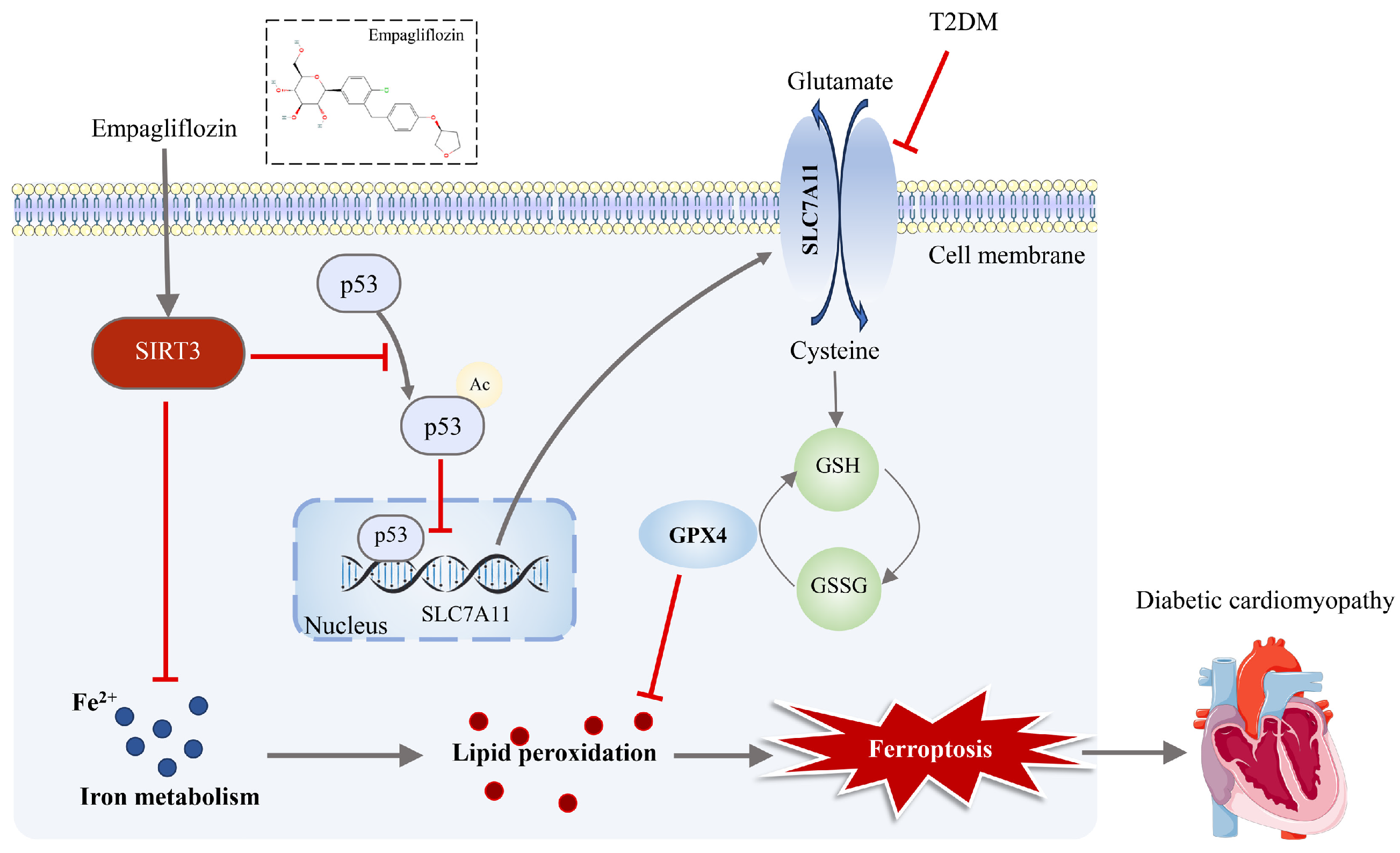
Empagliflozin Ameliorates Diabetic Cardiomyopathy by Inhibiting Ferroptosis via SIRT3: Mechanisms and Therapeutic Implications
 , , , , and
Abstract
1. Introduction
2. Materials and Methods
2.1. Animals
2.2. Intraperitoneal Glucose Tolerance Test (IPGTT) and Intraperitoneal Insulin Tolerance Test (ITT)
2.3. Echocardiography
2.4. Histological Evaluation
2.5. Prussian Blue Staining
2.6. Transmission Electron Microscopy (TEM)
2.7. Measurement of Serum Creatine Kinase-MB (CK-MB)
2.8. In Vitro Experiments
2.9. Transfections Experiments
2.10. Cell Viability and Mortality Determination
2.11. Determination of ROS and Mitochondrial Reactive Oxygen Species (mitoROS) Generation
2.12. Intracellular Fe2+ and Total Iron Assay
2.13. Detection of Malondialdehyde (MDA), Superoxide Dismutase (SOD), Glutathione/Glutathione Oxidized (GSH/GSSG) Ratio and Adenosine Triphosphate (ATP)
2.14. Detection of Lipid Peroxidation Level
2.15. Detection of Mitochondrial Membrane Potential (MMP)
2.16. Western Blot
2.17. Quantitative Real-Time PCR (qPCR)
2.18. Molecular Docking and Molecular Dynamics Simulations
2.19. Cellular Thermal Shift Assay (CETSA)
2.20. Drug Affinity Responsive Target Stability (DARTS)
2.21. Statistical Analysis
3. Results
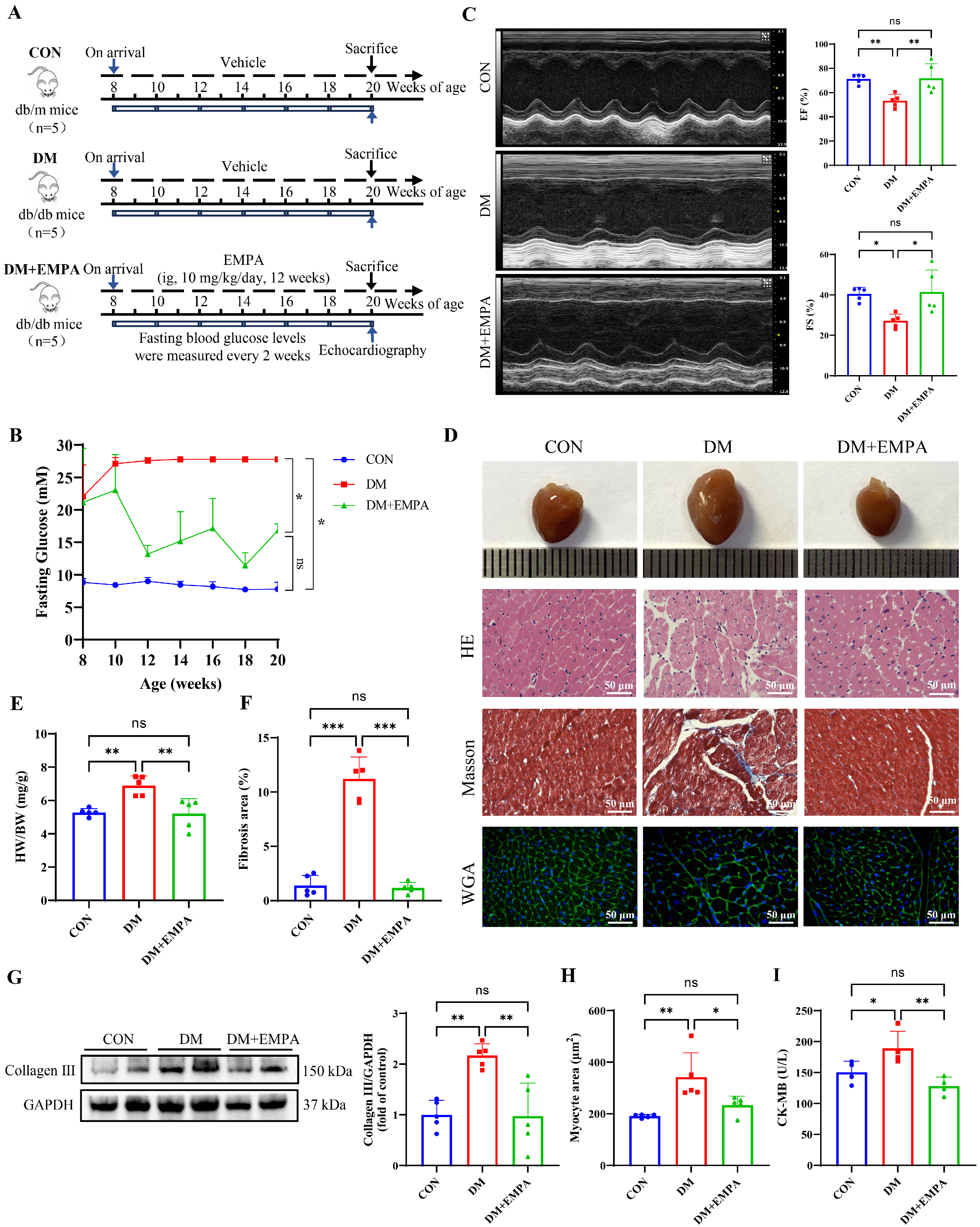
3.1. Empagliflozin Ameliorates Diabetic Symptoms and Cardiac Injury in DCM
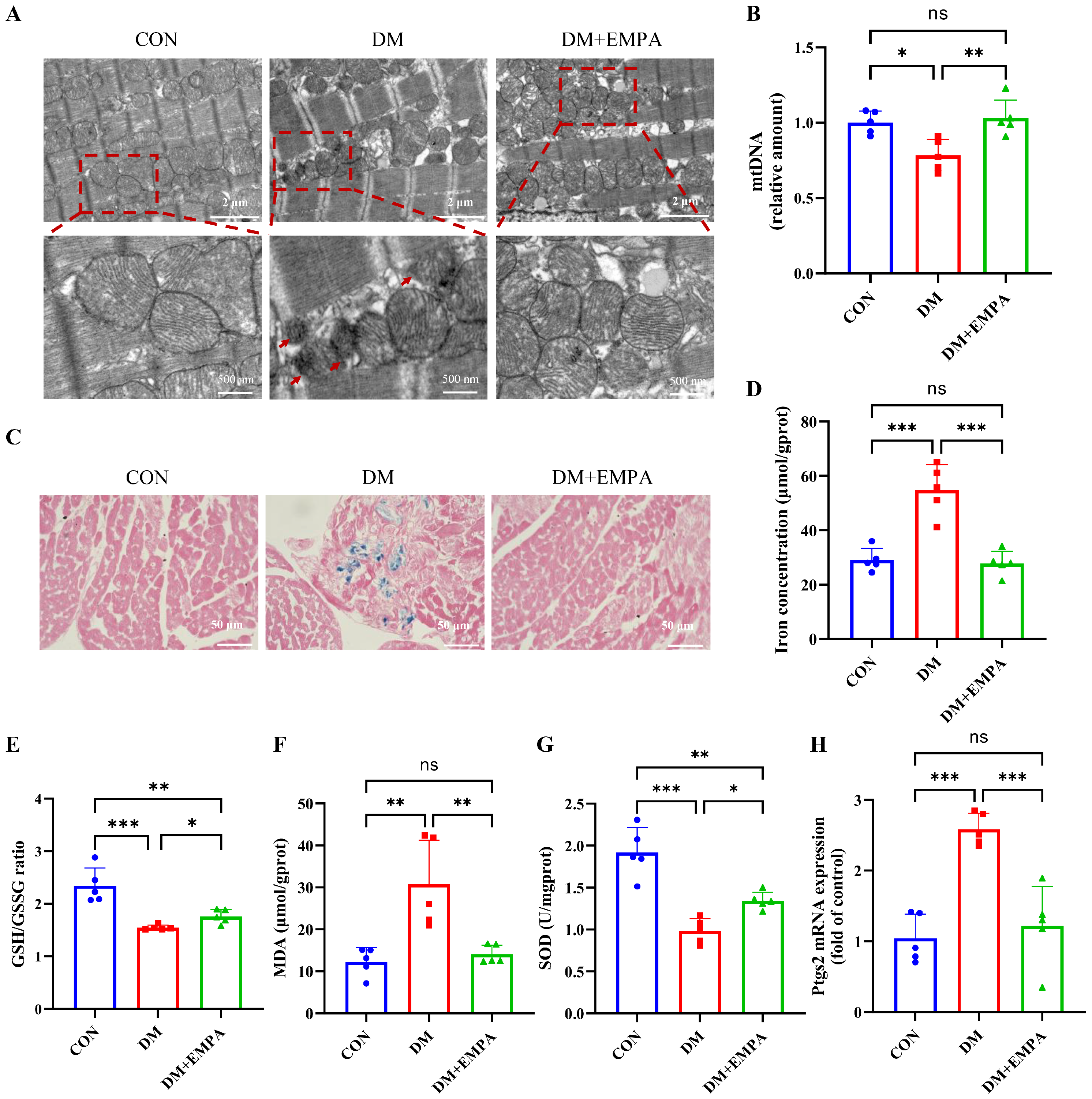
3.2. Empagliflozin Ameliorates the Mitochondrial Damage and Ferroptosis in DCM Mice
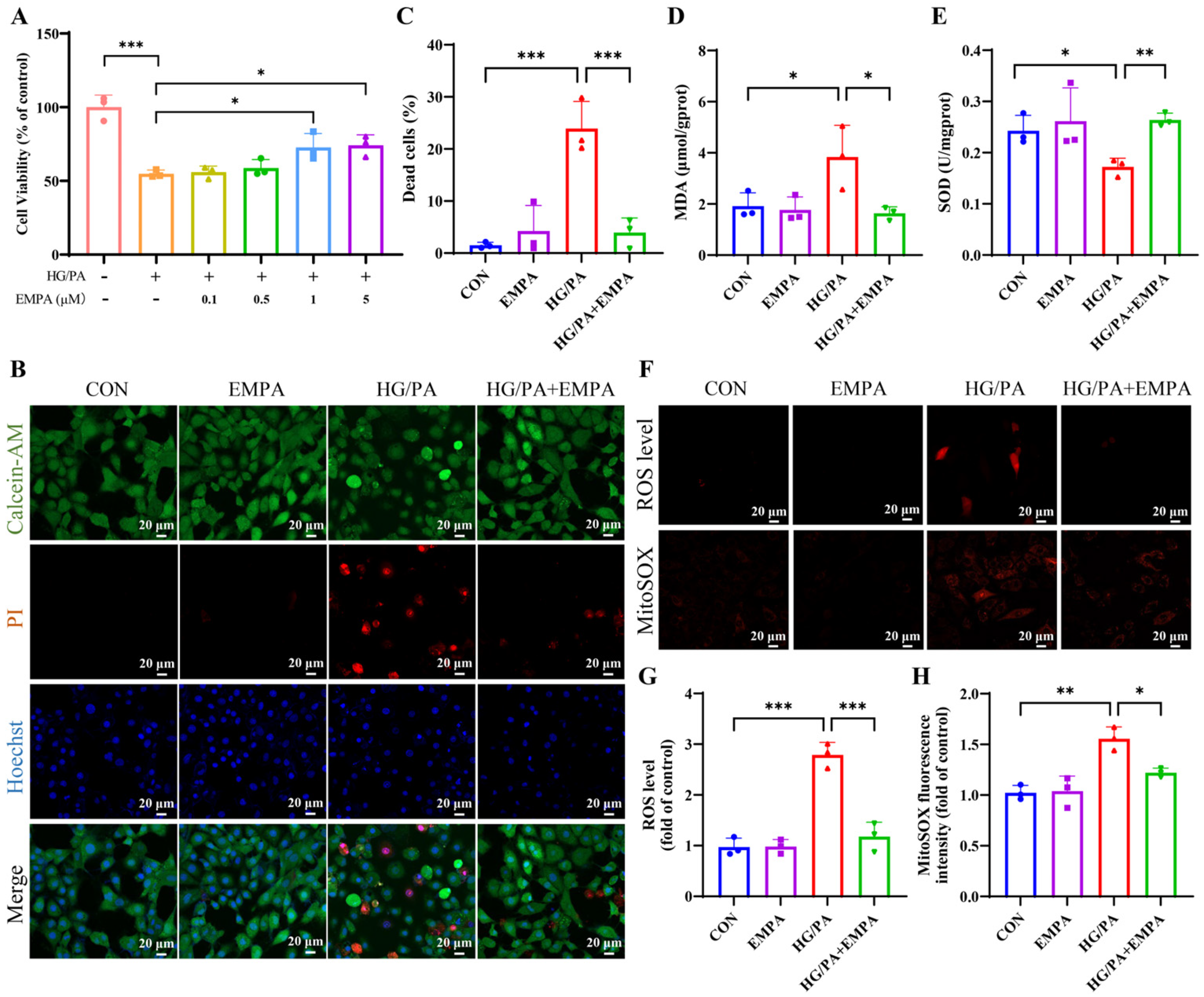
3.3. Empagliflozin Attenuates HG/PA-Induced Cell Death and Oxidative Stress
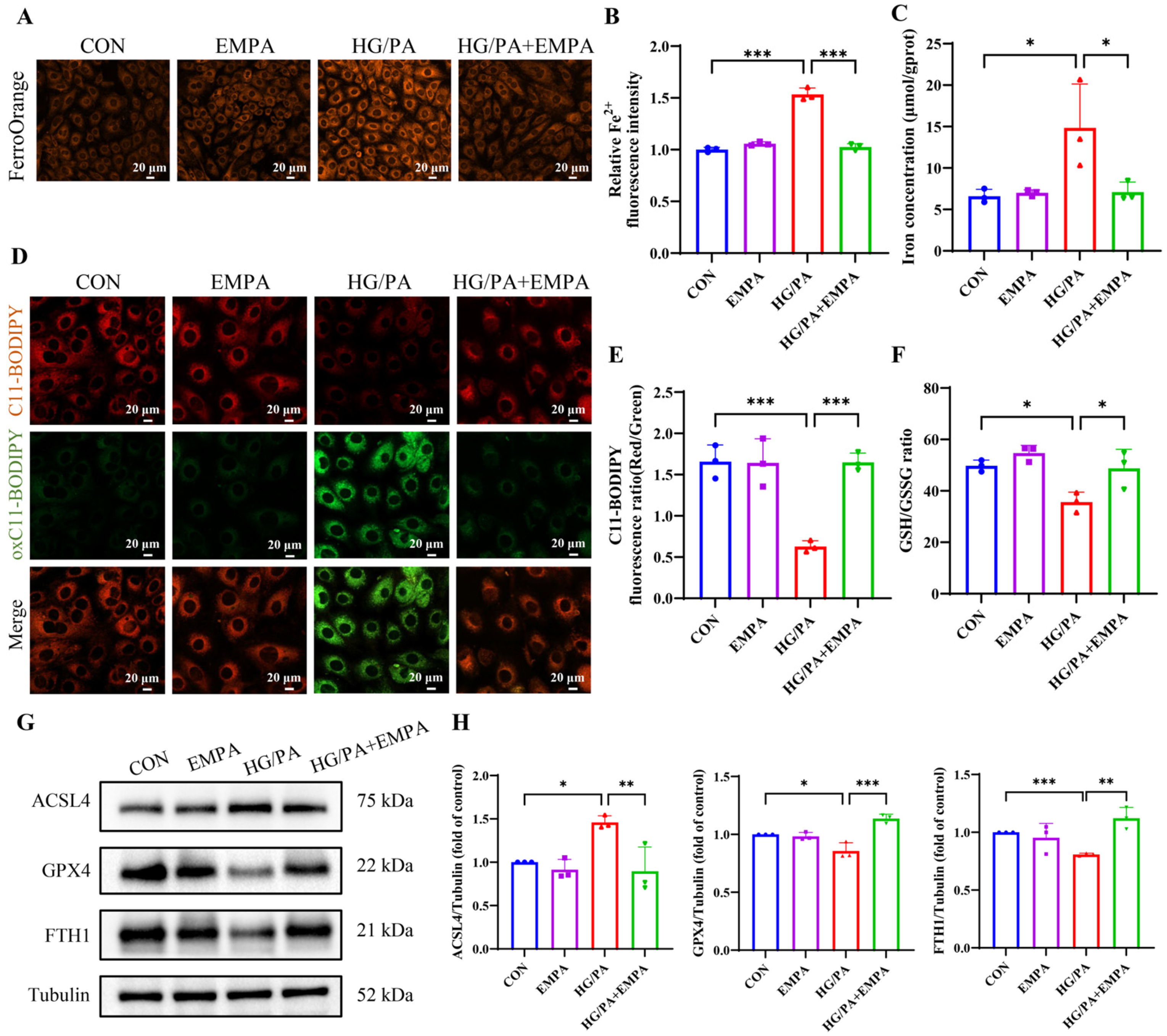
3.4. Empagliflozin Mitigates HG/PA-Induced Ferroptosis in H9c2 Cells
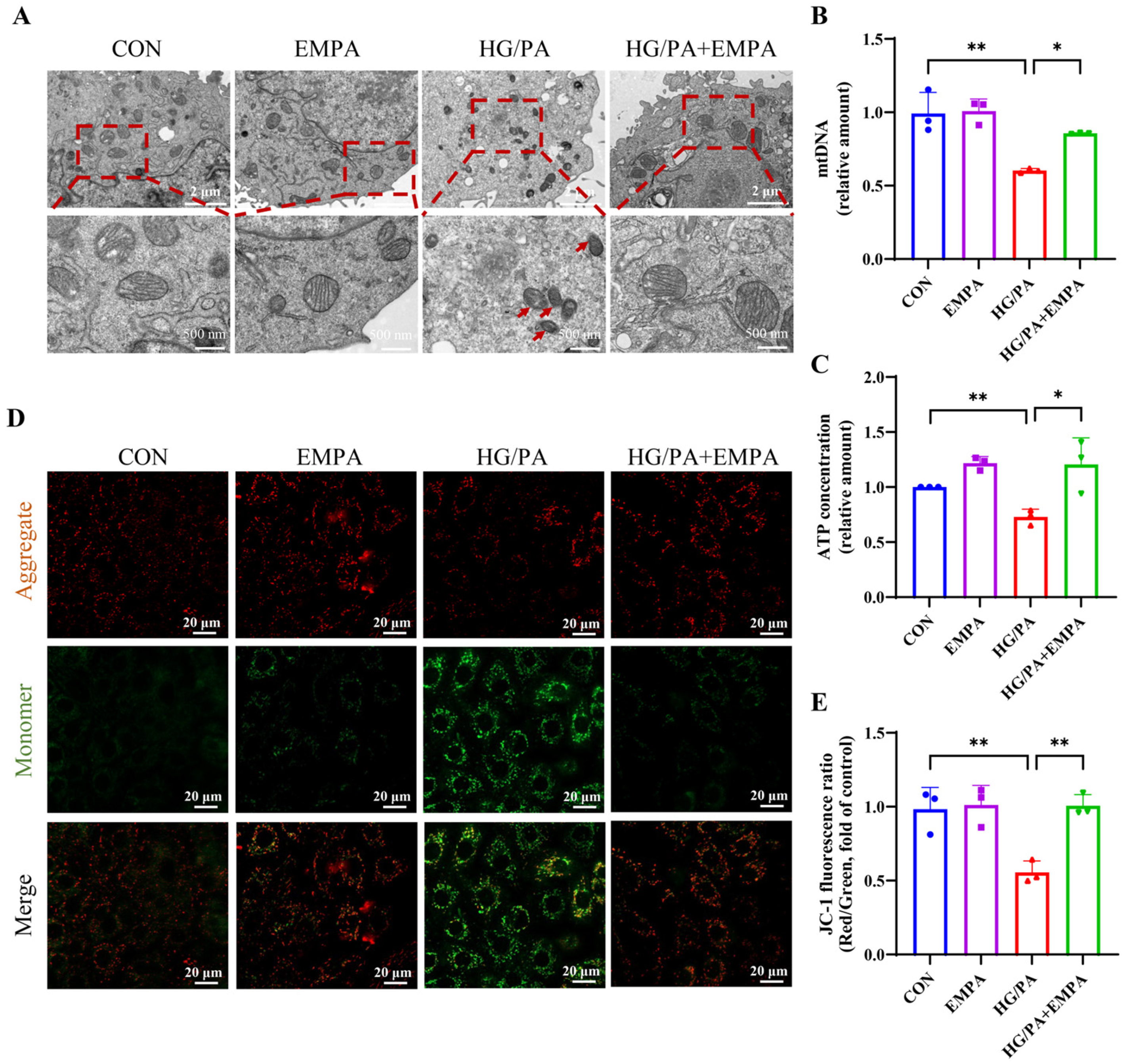
3.5. Empagliflozin Ameliorates HG/PA-Induced Mitochondrial Dysfunction in H9c2 Cells
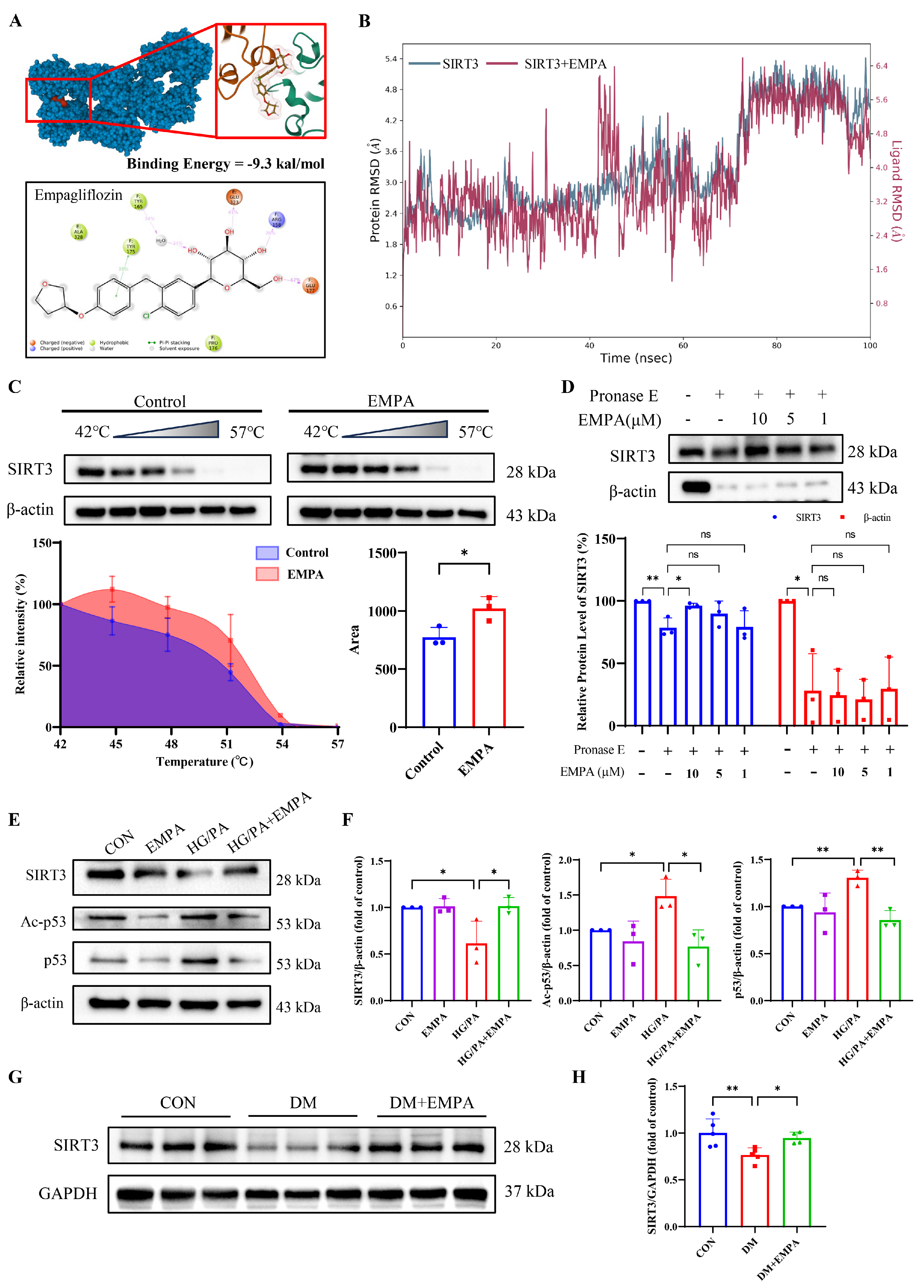
3.6. SIRT3 Is a Potential Target for Empagliflozin
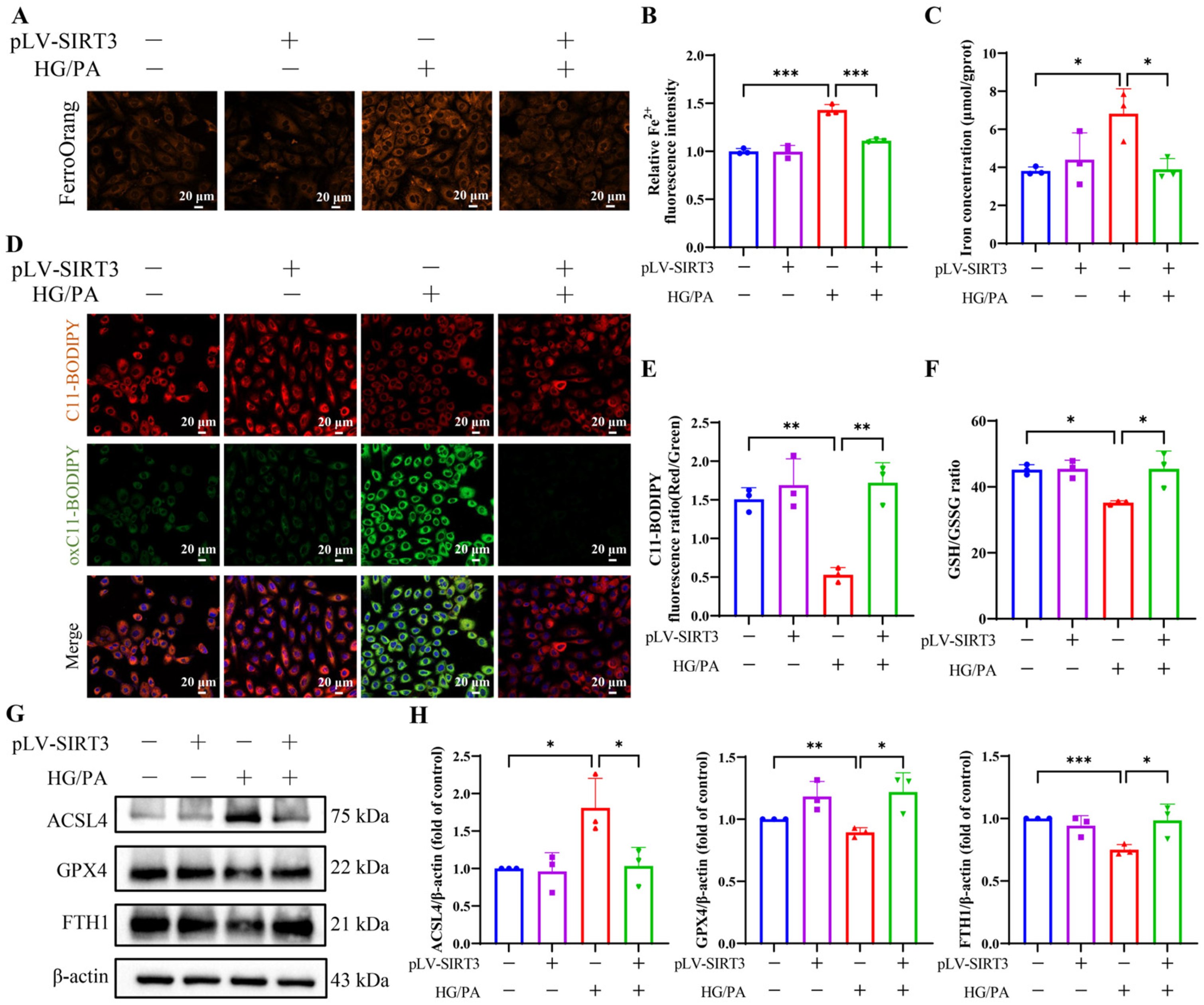
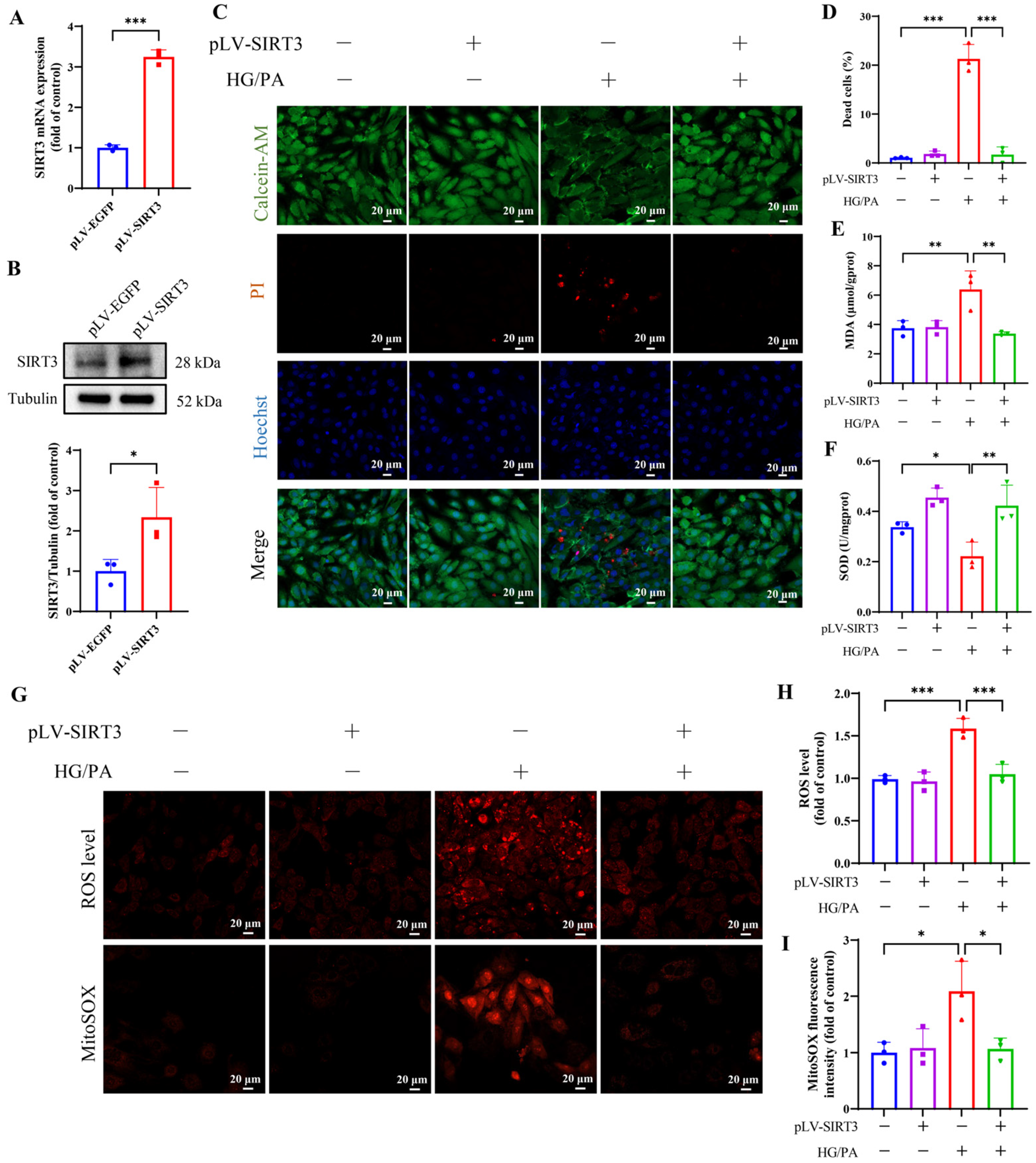
3.7. Overexpression of SIRT3 Alleviates Ferroptosis in H9c2 Cells Under HG/PA
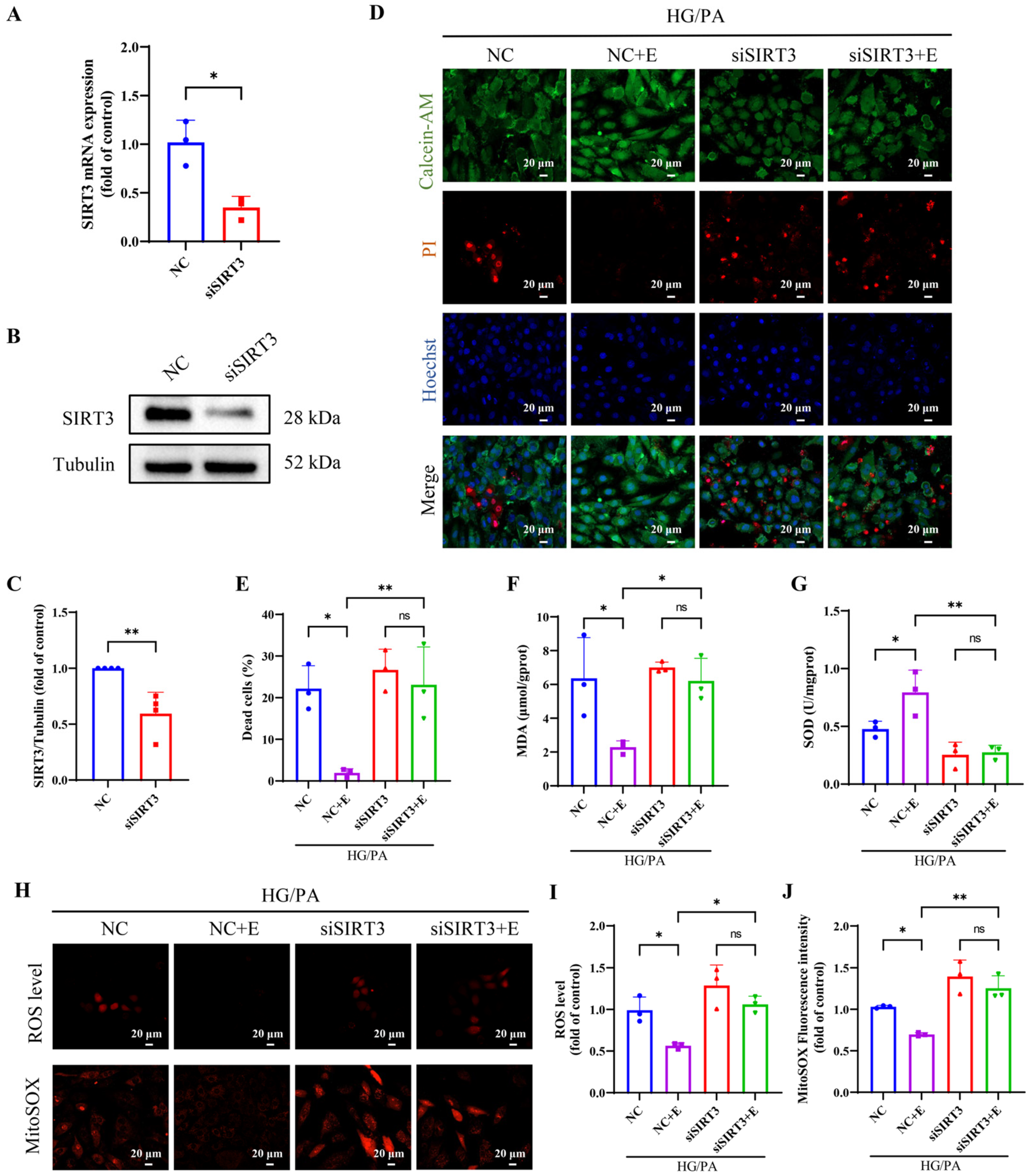
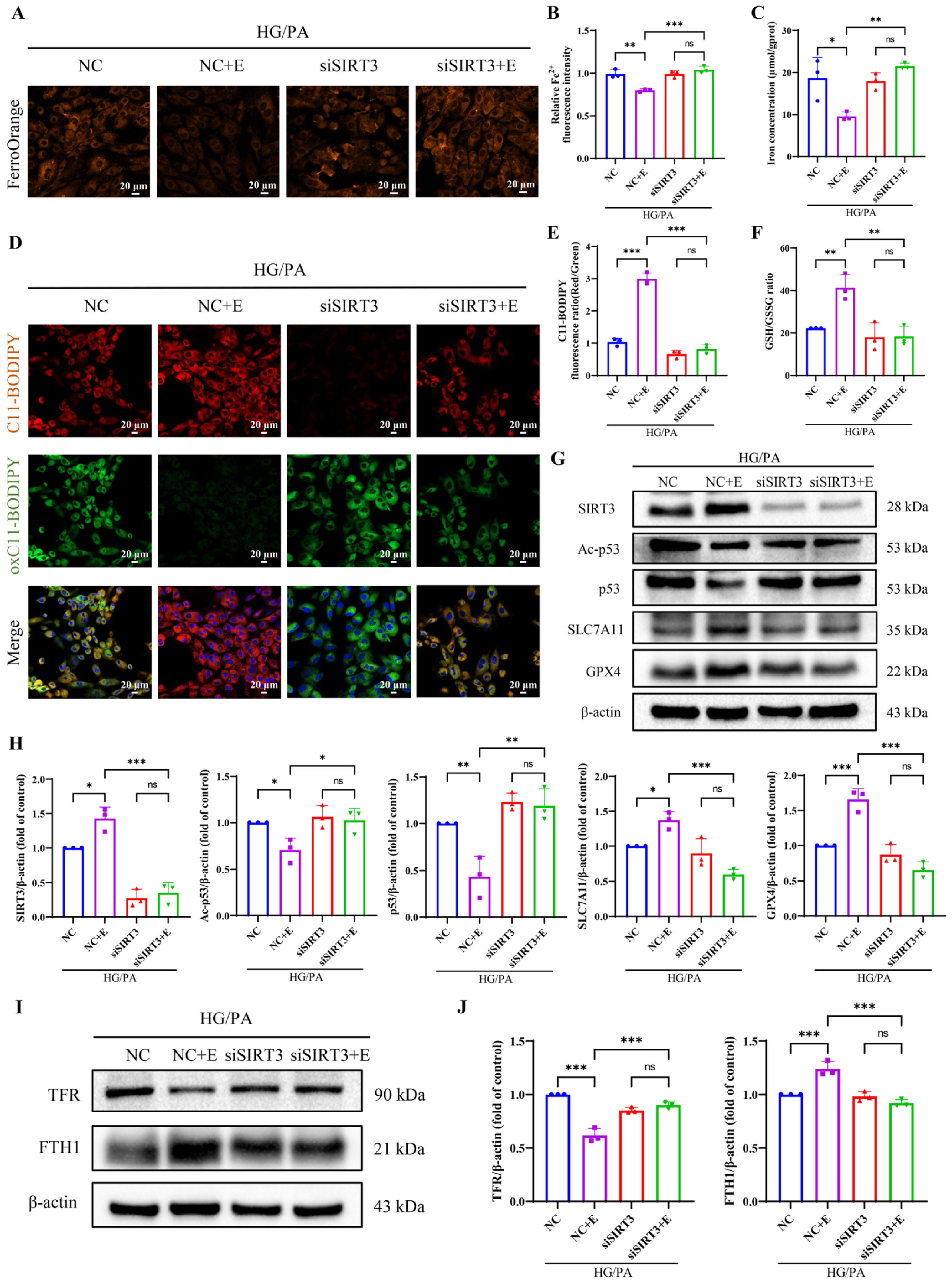
3.8. SIRT3 Knockdown Alleviated the Protective Effect of Empagliflozin Treatment on Ferroptosis in H9c2 Cells
4. Discussion
5. Conclusions
Supplementary Materials
Author Contributions
Funding
Institutional Review Board Statement
Informed Consent Statement
Data Availability Statement
Conflicts of Interest
Abbreviations
| ACSL4 | Acyl-CoA Synthetase Long-Chain Family Member 4 |
| ATP | Adenosine Triphosphate |
| CETSA | Cellular Thermal Shift Assay |
| DARTS | Drug Affinity Responsive Target Stability |
| DCM | Diabetic Cardiomyopathy |
| DM | Diabetes Mellitus |
| EF | Ejection Fraction |
| EMPA | Empagliflozin |
| FBG | Fasting Blood Glucose |
| FS | Fractional Shortening |
| FTH1 | Ferritin Heavy Chain 1 |
| GPX4 | Glutathione Peroxidase 4 |
| GSH | Glutathione |
| GSSG | Glutathione Oxidized |
| HE | Hematoxylin and Eosin |
| HG | High Glucose |
| MDA | Malondialdehyde |
| MitoROS | Mitochondrial Reactive Oxygen Species |
| MMP | Mitochondrial Membrane Potential |
| mtDNA | Mitochondrial DNA |
| NAD+ | Nicotinamide Adenine Dinucleotide |
| NC | Negative Control |
| PA | Palmitic Acid |
| PBS | Phosphate-Buffered Saline |
| Ptgs2 | Prostaglandin-Endoperoxide Synthase 2 |
| RMSD | Root Mean Square Deviation |
| ROS | Reactive Oxygen Species |
| qPCR | Quantitative Real-time PCR |
| SGLT2 | Sodium-Glucose Cotransporter 2 |
| siRNA | Small Interfering RNA |
| SIRT3 | Silent Information Regulator 3 |
| SLC7A11 | Solute Carrier Family 7 Member 11 |
| SOD | Superoxide Dismutase |
| STZ | Streptozocin |
| T2DM | Type 2 Diabetes Mellitus |
| TFR | Transferrin Receptor |
| WGA | Wheat Germ Agglutinin |
References
- De Sousa, R.A.L.; Harmer, A.R.; Freitas, D.A.; Mendonça, V.A.; Lacerda, A.C.R.; Leite, H.R. An update on potential links between type 2 diabetes mellitus and Alzheimer’s disease. Mol. Biol. Rep. 2020, 47, 6347–6356. [Google Scholar] [CrossRef]
- Arnett, D.K.; Blumenthal, R.S.; Albert, M.A.; Buroker, A.B.; Goldberger, Z.D.; Hahn, E.J.; Himmelfarb, C.D.; Khera, A.; Lloyd-Jones, D.; McEvoy, J.W.; et al. 2019 ACC/AHA Guideline on the Primary Prevention of Cardiovascular Disease: Executive Summary: A Report of the American College of Cardiology/American Heart Association Task Force on Clinical Practice Guidelines. J. Am. Coll. Cardiol. 2019, 74, 1376–1414. [Google Scholar] [CrossRef]
- Ndumele, C.E.; Matsushita, K.; Lazo, M.; Bello, N.; Blumenthal, R.S.; Gerstenblith, G.; Nambi, V.; Ballantyne, C.M.; Solomon, S.D.; Selvin, E.; et al. Obesity and Subtypes of Incident Cardiovascular Disease. J. Am. Heart Assoc. 2016, 5, e003921. [Google Scholar] [CrossRef]
- Park, J.J. Epidemiology, Pathophysiology, Diagnosis and Treatment of Heart Failure in Diabetes. Diabetes Metab. J. 2021, 45, 146–157. [Google Scholar] [CrossRef] [PubMed]
- Dal Canto, E.; Ceriello, A.; Rydén, L.; Ferrini, M.; Hansen, T.B.; Schnell, O.; Standl, E.; Beulens, J.W. Diabetes as a cardiovascular risk factor: An overview of global trends of macro and micro vascular complications. Eur. J. Prev. Cardiol. 2019, 26, 25–32. [Google Scholar] [CrossRef] [PubMed]
- Chen, Y.; Hua, Y.; Li, X.; Arslan, I.M.; Zhang, W.; Meng, G. Distinct Types of Cell Death and the Implication in Diabetic Cardiomyopathy. Front. Pharmacol. 2020, 11, 42. [Google Scholar] [CrossRef] [PubMed]
- Bergmann, O.; Bhardwaj, R.D.; Bernard, S.; Zdunek, S.; Barnabé-Heider, F.; Walsh, S.; Zupicich, J.; Alkass, K.; Buchholz, B.A.; Druid, H.; et al. Evidence for cardiomyocyte renewal in humans. Science 2009, 324, 98–102. [Google Scholar] [CrossRef]
- Cai, L.; Kang, Y.J. Cell death and diabetic cardiomyopathy. Cardiovasc. Toxicol. 2003, 3, 219–228. [Google Scholar] [CrossRef]
- Liu, D.; Xing, R.; Zhang, Q.; Tian, X.; Qi, Y.; Song, H.; Liu, Y.; Yu, H.; Zhang, X.; Jing, Q.; et al. The CREG1-FBXO27-LAMP2 axis alleviates diabetic cardiomyopathy by promoting autophagy in cardiomyocytes. Exp. Mol. Med. 2023, 55, 2025–2038. [Google Scholar] [CrossRef]
- Qi, B.; He, L.; Zhao, Y.; Zhang, L.; He, Y.; Li, J.; Li, C.; Zhang, B.; Huang, Q.; Xing, J.; et al. Akap1 deficiency exacerbates diabetic cardiomyopathy in mice by NDUFS1-mediated mitochondrial dysfunction and apoptosis. Diabetologia 2020, 63, 1072–1087. [Google Scholar] [CrossRef]
- Chen, Y.; Zheng, Y.; Chen, R.; Shen, J.; Zhang, S.; Gu, Y.; Shi, J.; Meng, G. Dihydromyricetin Attenuates Diabetic Cardiomyopathy by Inhibiting Oxidative Stress, Inflammation and Necroptosis via Sirtuin 3 Activation. Antioxidants 2023, 12, 200. [Google Scholar] [CrossRef]
- Dixon, S.J.; Lemberg, K.M.; Lamprecht, M.R.; Skouta, R.; Zaitsev, E.M.; Gleason, C.E.; Patel, D.N.; Bauer, A.J.; Cantley, A.M.; Yang, W.S.; et al. Ferroptosis: An iron-dependent form of nonapoptotic cell death. Cell 2012, 149, 1060–1072. [Google Scholar] [CrossRef] [PubMed]
- Wu, S.; Zhu, J.; Wu, G.; Hu, Z.; Ying, P.; Bao, Z.; Ding, Z.; Tan, X. 6-Gingerol Alleviates Ferroptosis and Inflammation of Diabetic Cardiomyopathy via the Nrf2/HO-1 Pathway. Oxidative Med. Cell. Longev. 2022, 2022, 3027514. [Google Scholar] [CrossRef] [PubMed]
- Du, S.; Shi, H.; Xiong, L.; Wang, P.; Shi, Y. Canagliflozin mitigates ferroptosis and improves myocardial oxidative stress in mice with diabetic cardiomyopathy. Front. Endocrinol. 2022, 13, 1011669. [Google Scholar] [CrossRef] [PubMed]
- Liu, B.; Zhao, C.; Li, H.; Chen, X.; Ding, Y.; Xu, S. Puerarin protects against heart failure induced by pressure overload through mitigation of ferroptosis. Biochem. Biophys. Res. Commun. 2018, 497, 233–240. [Google Scholar] [CrossRef]
- Mancardi, D.; Mezzanotte, M.; Arrigo, E.; Barinotti, A.; Roetto, A. Iron Overload, Oxidative Stress, and Ferroptosis in the Failing Heart and Liver. Antioxidants 2021, 10, 1864. [Google Scholar] [CrossRef]
- Sumneang, N.; Siri-Angkul, N.; Kumfu, S.; Chattipakorn, S.C.; Chattipakorn, N. The effects of iron overload on mitochondrial function, mitochondrial dynamics, and ferroptosis in cardiomyocytes. Arch. Biochem. Biophys. 2020, 680, 108241. [Google Scholar] [CrossRef]
- Sha, W.; Hu, F.; Xi, Y.; Chu, Y.; Bu, S. Mechanism of Ferroptosis and Its Role in Type 2 Diabetes Mellitus. J. Diabetes Res. 2021, 2021, 9999612. [Google Scholar] [CrossRef]
- Liu, Q.; Sun, L.; Tan, Y.; Wang, G.; Lin, X.; Cai, L. Role of iron deficiency and overload in the pathogenesis of diabetes and diabetic complications. Curr. Med. Chem. 2009, 16, 113–129. [Google Scholar] [CrossRef]
- White, D.L.; Collinson, A. Red meat, dietary heme iron, and risk of type 2 diabetes: The involvement of advanced lipoxidation endproducts. Adv. Nutr. 2013, 4, 403–411. [Google Scholar] [CrossRef]
- Wilson, A.J.; Gill, E.K.; Abudalo, R.A.; Edgar, K.S.; Watson, C.J.; Grieve, D.J. Reactive oxygen species signalling in the diabetic heart: Emerging prospect for therapeutic targeting. Heart 2018, 104, 293–299. [Google Scholar] [CrossRef] [PubMed]
- Giralt, A.; Villarroya, F. SIRT3, a pivotal actor in mitochondrial functions: Metabolism, cell death and aging. Biochem. J. 2012, 444, 1–10. [Google Scholar] [CrossRef] [PubMed]
- Zhi, F.; Zhang, Q.; Liu, L.; Chang, X.; Xu, H. Novel insights into the role of mitochondria in diabetic cardiomyopathy: Molecular mechanisms and potential treatments. Cell Stress Chaperones 2023, 28, 641–655. [Google Scholar] [CrossRef] [PubMed]
- Li, Y.; Wei, X.; Liu, S.L.; Zhao, Y.; Jin, S.; Yang, X.Y. Salidroside protects cardiac function in mice with diabetic cardiomyopathy via activation of mitochondrial biogenesis and SIRT3. Phytother. Res. 2021, 35, 4579–4591. [Google Scholar] [CrossRef]
- Zelniker, T.A.; Wiviott, S.D.; Raz, I.; Im, K.; Goodrich, E.L.; Bonaca, M.P.; Mosenzon, O.; Kato, E.T.; Cahn, A.; Furtado, R.H.M.; et al. SGLT2 inhibitors for primary and secondary prevention of cardiovascular and renal outcomes in type 2 diabetes: A systematic review and meta-analysis of cardiovascular outcome trials. Lancet 2019, 393, 31–39. [Google Scholar] [CrossRef]
- Zinman, B.; Wanner, C.; Lachin, J.M.; Fitchett, D.; Bluhmki, E.; Hantel, S.; Mattheus, M.; Devins, T.; Johansen, O.E.; Woerle, H.J.; et al. Empagliflozin, Cardiovascular Outcomes, and Mortality in Type 2 Diabetes. N. Engl. J. Med. 2015, 373, 2117–2128. [Google Scholar] [CrossRef]
- Marfella, R.; Scisciola, L.; D’Onofrio, N.; Maiello, C.; Trotta, M.C.; Sardu, C.; Panarese, I.; Ferraraccio, F.; Capuano, A.; Barbieri, M.; et al. Sodium-glucose cotransporter-2 (SGLT2) expression in diabetic and non-diabetic failing human cardiomyocytes. Pharmacol. Res. 2022, 184, 106448. [Google Scholar] [CrossRef]
- Scisciola, L.; Paolisso, P.; Belmonte, M.; Gallinoro, E.; Delrue, L.; Taktaz, F.; Fontanella, R.A.; Degrieck, I.; Pesapane, A.; Casselman, F.; et al. Myocardial sodium-glucose cotransporter 2 expression and cardiac remodelling in patients with severe aortic stenosis: The BIO-AS study. Eur. J. Heart Fail. 2024, 26, 471–482. [Google Scholar] [CrossRef]
- Li, J.; Liu, H.; Takagi, S.; Nitta, K.; Kitada, M.; Srivastava, S.P.; Takagaki, Y.; Kanasaki, K.; Koya, D. Renal protective effects of empagliflozin via inhibition of EMT and aberrant glycolysis in proximal tubules. JCI Insight 2020, 5, e129034. [Google Scholar] [CrossRef]
- Oshima, H.; Miki, T.; Kuno, A.; Mizuno, M.; Sato, T.; Tanno, M.; Yano, T.; Nakata, K.; Kimura, Y.; Abe, K.; et al. Empagliflozin, an SGLT2 Inhibitor, Reduced the Mortality Rate after Acute Myocardial Infarction with Modification of Cardiac Metabolomes and Antioxidants in Diabetic Rats. J. Pharmacol. Exp. Ther. 2019, 368, 524–534. [Google Scholar] [CrossRef]
- Cai, W.; Chong, K.; Huang, Y.; Huang, C.; Yin, L. Empagliflozin improves mitochondrial dysfunction in diabetic cardiomyopathy by modulating ketone body metabolism and oxidative stress. Redox Biol. 2024, 69, 103010. [Google Scholar] [CrossRef] [PubMed]
- Hegyi, B.; Bers, D.M. New cardiac targets for empagliflozin: O-GlcNAcylation, CaMKII, and calcium handling. Am. J. Physiol. Heart Circ. Physiol. 2023, 324, H338–H340. [Google Scholar] [CrossRef] [PubMed]
- Li, N.; Zhu, Q.X.; Li, G.Z.; Wang, T.; Zhou, H. Empagliflozin ameliorates diabetic cardiomyopathy probably via activating AMPK/PGC-1α and inhibiting the RhoA/ROCK pathway. World J. Diabetes 2023, 14, 1862–1876. [Google Scholar] [CrossRef] [PubMed]
- Zhang, L.; Zhang, H.; Xie, X.; Tie, R.; Shang, X.; Zhao, Q.; Xu, J.; Jin, L.; Zhang, J.; Ye, P. Empagliflozin ameliorates diabetic cardiomyopathy via regulated branched-chain amino acid metabolism and mTOR/p-ULK1 signaling pathway-mediated autophagy. Diabetol. Metab. Syndr. 2023, 15, 93. [Google Scholar] [CrossRef]
- Abdurrachim, D.; Manders, E.; Nicolay, K.; Mayoux, E.; Prompers, J.J. Single dose of empagliflozin increases in vivo cardiac energy status in diabetic db/db mice. Cardiovasc. Res. 2018, 114, 1843–1844. [Google Scholar] [CrossRef]
- Tu, Y.; Li, Q.; Zhou, Y.; Ye, Z.; Wu, C.; Xie, E.; Li, Y.; Li, P.; Wu, Y.; Guo, Z.; et al. Empagliflozin inhibits coronary microvascular dysfunction and reduces cardiac pericyte loss in db/db mice. Front. Cardiovasc. Med. 2022, 9, 995216. [Google Scholar] [CrossRef]
- Wang, R.; Zhang, X.; Ye, H.; Yang, X.; Zhao, Y.; Wu, L.; Liu, H.; Wen, Y.; Wang, J.; Wang, Y.; et al. Fibroblast growth factor 21 improves diabetic cardiomyopathy by inhibiting ferroptosis via ferritin pathway. Cardiovasc. Diabetol. 2024, 23, 394. [Google Scholar] [CrossRef]
- Zhou, Y.; Zhou, H.; Hua, L.; Hou, C.; Jia, Q.; Chen, J.; Zhang, S.; Wang, Y.; He, S.; Jia, E. Verification of ferroptosis and pyroptosis and identification of PTGS2 as the hub gene in human coronary artery atherosclerosis. Free Radic. Biol. Med. 2021, 171, 55–68. [Google Scholar] [CrossRef]
- Zou, C.; Xu, H.; Hu, F.; Yu, Y.; Liu, L.; Wang, X.; Zhang, Z.; Zou, H.; Liu, J.; Huang, H.; et al. Gallic acid attenuates diabetic cardiomyopathy by inhibiting ferroptosis and protecting mitochondria via the TSPO/FTMT pathway. Front. Pharmacol. 2025, 16, 1661144. [Google Scholar] [CrossRef]
- Yu, L.M.; Dong, X.; Xu, Y.L.; Zhou, Z.J.; Huang, Y.T.; Zhao, J.K.; Xu, D.Y.; Xue, X.D.; Zhao, Q.S.; Liu, T.; et al. Icariin attenuates excessive alcohol consumption-induced susceptibility to atrial fibrillation through SIRT3 signaling. Biochim. Biophys. Acta Mol. Basis Dis. 2022, 1868, 166483. [Google Scholar] [CrossRef]
- Cavasotto, C.N.; Abagyan, R.A. Protein flexibility in ligand docking and virtual screening to protein kinases. J. Mol. Biol. 2004, 337, 209–225. [Google Scholar] [CrossRef] [PubMed]
- Su, H.; Cantrell, A.C.; Chen, J.X.; Gu, W.; Zeng, H. SIRT3 Deficiency Enhances Ferroptosis and Promotes Cardiac Fibrosis via p53 Acetylation. Cells 2023, 12, 1428. [Google Scholar] [CrossRef]
- Muñoz-Córdova, F.; Hernández-Fuentes, C.; Lopez-Crisosto, C.; Troncoso, M.F.; Calle, X.; Guerrero-Moncayo, A.; Gabrielli, L.; Chiong, M.; Castro, P.F.; Lavandero, S. Novel Insights into the Pathogenesis of Diabetic Cardiomyopathy and Pharmacological Strategies. Front. Cardiovasc. Med. 2021, 8, 707336. [Google Scholar] [CrossRef] [PubMed]
- Sobczak, A.I.S.; Blindauer, C.A.; Stewart, A.J. Changes in Plasma Free Fatty Acids Associated with Type-2 Diabetes. Nutrients 2019, 11, 2022. [Google Scholar] [CrossRef]
- Tudoran, C.; Tudoran, M.; Giurgi-Oncu, C.; Abu-Awwad, A.; Abu-Awwad, S.A.; Voiţă-Mekereş, F. Associations between Oral Glucose-Lowering Agents and Increased Risk for Life-Threatening Arrhythmias in Patients with Type 2 Diabetes Mellitus-A Literature Review. Medicina 2023, 59, 1760. [Google Scholar] [CrossRef] [PubMed]
- Hirashima, Y.; Nakano, T.; Torisu, K.; Aihara, S.; Wakisaka, M.; Kitazono, T. SGLT2 inhibition mitigates transition from acute kidney injury to chronic kidney disease by suppressing ferroptosis. Sci. Rep. 2024, 14, 20386. [Google Scholar] [CrossRef]
- Li, C.; Zhang, J.; Xue, M.; Li, X.; Han, F.; Liu, X.; Xu, L.; Lu, Y.; Cheng, Y.; Li, T.; et al. SGLT2 inhibition with empagliflozin attenuates myocardial oxidative stress and fibrosis in diabetic mice heart. Cardiovasc. Diabetol. 2019, 18, 15. [Google Scholar] [CrossRef]
- Wang, J.; Huang, X.; Liu, H.; Chen, Y.; Li, P.; Liu, L.; Li, J.; Ren, Y.; Huang, J.; Xiong, E.; et al. Empagliflozin Ameliorates Diabetic Cardiomyopathy via Attenuating Oxidative Stress and Improving Mitochondrial Function. Oxidative Med. Cell. Longev. 2022, 2022, 1122494. [Google Scholar] [CrossRef]
- Ideishi, A.; Suematsu, Y.; Tashiro, K.; Morita, H.; Kuwano, T.; Tomita, S.; Nakai, K.; Miura, S.I. Combination of Linagliptin and Empagliflozin Preserves Cardiac Systolic Function in an Ischemia-Reperfusion Injury Mice with Diabetes Mellitus. Cardiol. Res. 2021, 12, 91–97. [Google Scholar] [CrossRef]
- Dyck, J.R.B.; Sossalla, S.; Hamdani, N.; Coronel, R.; Weber, N.C.; Light, P.E.; Zuurbier, C.J. Cardiac mechanisms of the beneficial effects of SGLT2 inhibitors in heart failure: Evidence for potential off-target effects. J. Mol. Cell. Cardiol. 2022, 167, 17–31. [Google Scholar] [CrossRef]
- Huang, F.; Yang, R.; Xiao, Z.; Xie, Y.; Lin, X.; Zhu, P.; Zhou, P.; Lu, J.; Zheng, S. Targeting Ferroptosis to Treat Cardiovascular Diseases: A New Continent to Be Explored. Front. Cell Dev. Biol. 2021, 9, 737971. [Google Scholar] [CrossRef]
- Tian, M.; Huang, X.; Li, M.; Lou, P.; Ma, H.; Jiang, X.; Zhou, Y.; Liu, Y. Ferroptosis in diabetic cardiomyopathy: From its mechanisms to therapeutic strategies. Front. Endocrinol. 2024, 15, 1421838. [Google Scholar] [CrossRef] [PubMed]
- Sun, J.; Xu, J.; Liu, Y.; Lin, Y.; Wang, F.; Han, Y.; Zhang, S.; Gao, X.; Xu, C.; Yuan, H. Exogenous spermidine alleviates diabetic cardiomyopathy via suppressing reactive oxygen species, endoplasmic reticulum stress, and Pannexin-1-mediated ferroptosis. Biomol. Biomed. 2023, 23, 825–837. [Google Scholar] [CrossRef] [PubMed]
- Li, X.; Li, Z.; Dong, X.; Wu, Y.; Li, B.; Kuang, B.; Chen, G.; Zhang, L. Astragaloside IV attenuates myocardial dysfunction in diabetic cardiomyopathy rats through downregulation of CD36-mediated ferroptosis. Phytother. Res. 2023, 37, 3042–3056. [Google Scholar] [CrossRef] [PubMed]
- Xiong, L.; Hu, H.; Zhu, F.; Shi, H.; Fan, X.; Pan, S.; Zhu, F.; Zhang, J.; Yu, Z.; Shi, Y. New insight for SS-31 in treating diabetic cardiomyopathy: Activation of mitoGPX4 and alleviation of mitochondria-dependent ferroptosis. Int. J. Mol. Med. 2024, 54, 112. [Google Scholar] [CrossRef]
- Zhang, W.; Lu, J.; Wang, Y.; Sun, P.; Gao, T.; Xu, N.; Zhang, Y.; Xie, W. Canagliflozin Attenuates Lipotoxicity in Cardiomyocytes by Inhibiting Inflammation and Ferroptosis through Activating AMPK Pathway. Int. J. Mol. Sci. 2023, 24, 858. [Google Scholar] [CrossRef]
- Angermann, C.E.; Santos-Gallego, C.G.; Requena-Ibanez, J.A.; Sehner, S.; Zeller, T.; Gerhardt, L.M.S.; Maack, C.; Sanz, J.; Frantz, S.; Fuster, V.; et al. Empagliflozin effects on iron metabolism as a possible mechanism for improved clinical outcomes in non-diabetic patients with systolic heart failure. Nat. Cardiovasc. Res. 2023, 2, 1032–1043. [Google Scholar] [CrossRef]
- Cui, M.; Zhang, J.; Wang, Z.; Jin, X.; Zhang, H.; Zhang, S.; Jia, W.; Wu, H.; Qi, Z.; Qi, X. Empagliflozin Attenuates Diabetic Cardiomyopathy via Inhibiting Cardiomyocyte Ferroptosis Through the USP7/NRF2 Signaling Pathway. Antioxid. Redox Signal. 2026, 44, 41–60. [Google Scholar] [CrossRef]
- Zhou, J.; Xia, W.; Chen, J.; Han, K.; Jiang, Y.; Zhang, A.; Zhou, D.; Liu, D.; Lin, J.; Cai, Y.; et al. Propofol and salvianolic acid A synergistically attenuated cardiac ischemia-reperfusion injury in diabetic mice via modulating the CD36/AMPK pathway. Burns Trauma 2024, 12, tkad055. [Google Scholar] [CrossRef]
- Chen, J.; Wang, A.; Chen, Q. SirT3 and p53 Deacetylation in Aging and Cancer. J. Cell. Physiol. 2017, 232, 2308–2311. [Google Scholar] [CrossRef]
- Hirschey, M.D.; Shimazu, T.; Jing, E.; Grueter, C.A.; Collins, A.M.; Aouizerat, B.; Stančáková, A.; Goetzman, E.; Lam, M.M.; Schwer, B.; et al. SIRT3 deficiency and mitochondrial protein hyperacetylation accelerate the development of the metabolic syndrome. Mol. Cell 2011, 44, 177–190. [Google Scholar] [CrossRef] [PubMed]
- Qiu, J.; Liu, D.; Li, P.; Zhou, L.; Zhou, L.; Liu, X.; Zhang, Y.; Yuan, M.; Tse, G.; Li, G.; et al. NADPH Oxidase Mediates Oxidative Stress and Ventricular Remodeling through SIRT3/FOXO3a Pathway in Diabetic Mice. Antioxidants 2022, 11, 1745. [Google Scholar] [CrossRef] [PubMed]
- Tan, M.; Yin, Y.; Chen, W.; Zhang, J.; Jin, Y.; Zhang, Y.; Zhang, L.; Jiang, T.; Jiang, B.; Li, H. Trimetazidine attenuates Ischemia/Reperfusion-Induced myocardial ferroptosis by modulating the Sirt3/Nrf2-GSH system and reducing Oxidative/Nitrative stress. Biochem. Pharmacol. 2024, 229, 116479. [Google Scholar] [CrossRef] [PubMed]
- Cantrell, A.C.; Besanson, J.; Williams, Q.; Hoang, N.; Edwards, K.; Bishop, G.R.; Chen, Y.; Zeng, H.; Chen, J.X. Ferrostatin-1 specifically targets mitochondrial iron-sulfur clusters and aconitase to improve cardiac function in Sirtuin 3 cardiomyocyte knockout mice. J. Mol. Cell. Cardiol. 2024, 192, 36–47. [Google Scholar] [CrossRef]
- Zhang, P.; Wu, H.; Lou, H.; Zhou, J.; Hao, J.; Lin, H.; Hu, S.; Zhong, Z.; Yang, J.; Guo, H.; et al. Baicalin Attenuates Diabetic Cardiomyopathy In Vivo and In Vitro by Inhibiting Autophagy and Cell Death Through SENP1/SIRT3 Signaling Pathway Activation. Antioxid. Redox Signal. 2025, 42, 53–76. [Google Scholar] [CrossRef]
- Luo, Y.; Ye, T.; Tian, H.; Song, H.; Kan, C.; Han, F.; Hou, N.; Sun, X.; Zhang, J. Empagliflozin alleviates obesity-related cardiac dysfunction via the activation of SIRT3-mediated autophagosome formation. Lipids Health Dis. 2024, 23, 308. [Google Scholar] [CrossRef]
- Jeong, S.M.; Lee, J.; Finley, L.W.; Schmidt, P.J.; Fleming, M.D.; Haigis, M.C. SIRT3 regulates cellular iron metabolism and cancer growth by repressing iron regulatory protein 1. Oncogene 2015, 34, 2115–2124. [Google Scholar] [CrossRef]
- Wang, H.; Guo, M.; Wei, H.; Chen, Y. Targeting p53 pathways: Mechanisms, structures, and advances in therapy. Signal Transduct. Target. Ther. 2023, 8, 92. [Google Scholar] [CrossRef]
- Qin, S.; Ren, Y.; Feng, B.; Wang, X.; Liu, J.; Zheng, J.; Li, K.; Chen, M.; Chen, T.; Mei, H.; et al. ANXA1sp Protects against Sepsis-Induced Myocardial Injury by Inhibiting Ferroptosis-Induced Cardiomyocyte Death via SIRT3-Mediated p53 Deacetylation. Mediat. Inflamm. 2023, 2023, 6638929. [Google Scholar] [CrossRef]
- Xia, Z.; Kon, N.; Gu, A.P.; Tavana, O.; Gu, W. Deciphering the acetylation code of p53 in transcription regulation and tumor suppression. Oncogene 2022, 41, 3039–3050. [Google Scholar] [CrossRef]
- Tang, Y.J.; Zhang, Z.; Yan, T.; Chen, K.; Xu, G.F.; Xiong, S.Q.; Wu, D.Q.; Chen, J.; Jose, P.A.; Zeng, C.Y.; et al. Irisin attenuates type 1 diabetic cardiomyopathy by anti-ferroptosis via SIRT1-mediated deacetylation of p53. Cardiovasc. Diabetol. 2024, 23, 116. [Google Scholar] [CrossRef]
- Cui, M.; An, Y.; Zhao, J.; Hui, M.; Xiong, Z.; Guan, B.; Shen, Y.; Zou, Y.; Li, C.; Wang, R. Dahuang Gancao decoction suppresses ferroptosis via SIRT3-mediated NRF2 deacetylation in acute kidney injury. Phytomedicine 2026, 150, 157724. [Google Scholar] [CrossRef]
- Yamada, Y.; Urakawa, N.; Tamiya, H.; Sakamoto, S.; Takahashi, H.; Harada, N.; Kitakaze, T.; Izawa, T.; Matsumua, S.; Yoshihara, E.; et al. Nrf2-and p53-inducible REDD2/DDiT4L/Rtp801L confers pancreatic β-cell dysfunction, leading to glucose intolerance in high-fat diet-fed mice. J. Biol. Chem. 2025, 301, 110271. [Google Scholar] [CrossRef]





Disclaimer/Publisher’s Note: The statements, opinions and data contained in all publications are solely those of the individual author(s) and contributor(s) and not of MDPI and/or the editor(s). MDPI and/or the editor(s) disclaim responsibility for any injury to people or property resulting from any ideas, methods, instructions or products referred to in the content. |
© 2026 by the authors. Licensee MDPI, Basel, Switzerland. This article is an open access article distributed under the terms and conditions of the Creative Commons Attribution (CC BY) license.
Share and Cite
Feng, T.; Liu, M.; Zhong, D.; Xu, X.; Luo, Z.; Zhang, W.; Wang, Y.; Chen, R.; Chen, X.; Ma, G. Empagliflozin Ameliorates Diabetic Cardiomyopathy by Inhibiting Ferroptosis via SIRT3: Mechanisms and Therapeutic Implications. Antioxidants 2026, 15, 543. https://doi.org/10.3390/antiox15050543
Feng T, Liu M, Zhong D, Xu X, Luo Z, Zhang W, Wang Y, Chen R, Chen X, Ma G. Empagliflozin Ameliorates Diabetic Cardiomyopathy by Inhibiting Ferroptosis via SIRT3: Mechanisms and Therapeutic Implications. Antioxidants. 2026; 15(5):543. https://doi.org/10.3390/antiox15050543
Chicago/Turabian StyleFeng, Taoshan, Meilian Liu, Dan Zhong, Xusan Xu, Zhengqiang Luo, Wensen Zhang, Yajun Wang, Riling Chen, Xiaoming Chen, and Guoda Ma. 2026. "Empagliflozin Ameliorates Diabetic Cardiomyopathy by Inhibiting Ferroptosis via SIRT3: Mechanisms and Therapeutic Implications" Antioxidants 15, no. 5: 543. https://doi.org/10.3390/antiox15050543
APA StyleFeng, T., Liu, M., Zhong, D., Xu, X., Luo, Z., Zhang, W., Wang, Y., Chen, R., Chen, X., & Ma, G. (2026). Empagliflozin Ameliorates Diabetic Cardiomyopathy by Inhibiting Ferroptosis via SIRT3: Mechanisms and Therapeutic Implications. Antioxidants, 15(5), 543. https://doi.org/10.3390/antiox15050543