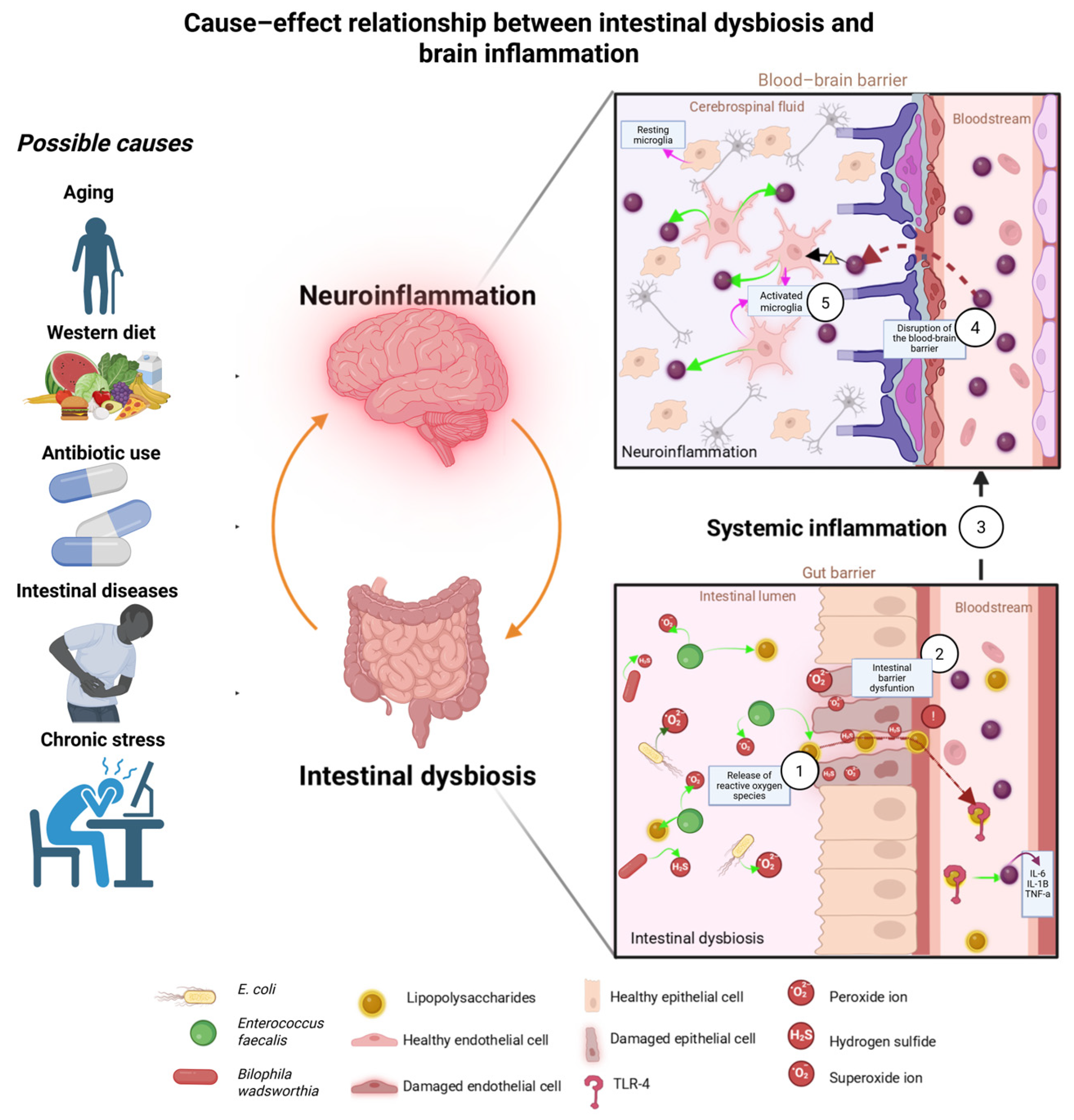
Microbiota–Gut–Brain Axis Disruption, Neuroinflammation, and Potential Antioxidant-Based Treatments in Metabolic Diseases

 ,
,  ,
,  , , ,
, , ,
Abstract
1. Introduction
2. Methodology
3. Pathophysiological Mechanisms Related to Neuroinflammation and Dysbiosis in Metabolic Diseases
3.1. Neuroinflammation in Obesity, T2DM, Dyslipidemia, and Metabolic Syndrome
3.2. Dysbiosis in Metabolic Disease
4. Antioxidant Strategies Targeting Gut Dysbiosis and Neuroinflammation in Metabolic Diseases
4.1. Redox-Modulating Bacteria: Pro-Oxidant vs. Antioxidant Profiles
4.2. Antioxidant Supplementation as a Therapeutic Strategy
4.3. Combined Antioxidant and Probiotic Strategies
5. Future Research Perspectives
6. Conclusions
Author Contributions
Funding
Institutional Review Board Statement
Informed Consent Statement
Data Availability Statement
Acknowledgments
Conflicts of Interest
Abbreviations
| APN | Adiponectin |
| AGEs | Advanced Glycation End Products |
| ATP | Adenosine Triphosphate |
| BAT | Adenosine Triphosphate |
| BBB | Blood–Brain Barrier |
| BDNF | Brain-Derived Neurotrophic Factor |
| CFU | Colony-Forming Units |
| CAT | Catalase |
| EPA/DHA | Eicosapentaenoic Acid/Docosahexaenoic Acid |
| FMT | Fecal Microbiota Transplantation |
| GLP-1 | Glucagon-Like Peptide-1 |
| GPR41 | G-Protein-Coupled Receptor 41 |
| GPR43 | G-Protein-Coupled Receptor 43 |
| GPCR | G-Protein-Coupled Receptor |
| GPx | Glutathione Peroxidase |
| GSH | Reduced Glutathione |
| H2O2 | Hydrogen Peroxide |
| H2S | Hydrogen Sulfide |
| HFD | High-Fat Diet |
| HDAC3 | Histone Deacetylase 3 |
| HDL | High-Density Lipoprotein |
| IL-1β | Interleukin-1 Beta |
| IL-6 | Interleukin-6 |
| IL-18 | Interleukin-18 |
| IRAK1/2 | Interleukin-1 Receptor-Associated Kinase 1/2 |
| JNK | c-Jun N-terminal Kinase |
| Keap1 | Kelch-like ECH-Associated Protein 1 |
| LPS | Lipopolysaccharide(s) |
| LDL | Low-Density Lipoprotein |
| MCP-1 | Monocyte Chemoattractant Protein-1 |
| MD-2 | Myeloid Differentiation Factor 2 |
| MGB | Microbiota–Gut–Brain Axis |
| MPO | Myeloperoxidase |
| MS | Metabolic Syndrome |
| MyD88 | Myeloid Differentiation Primary Response 88 |
| NF-κB | Nuclear Factor Kappa-Light-Chain-Enhancer of Activated B Cells |
| NLRP3 | NOD-Like Receptor Family, Pyrin Domain Containing 3 |
| NOX4 | NADPH Oxidase 4 |
| NPY | Neuropeptide Y |
| Nrf2 | Nuclear Factor Erythroid 2-Related Factor 2 |
| oxLDL | Oxidized Low-Density Lipoprotein |
| POMC | Proopiomelanocortin |
| PKC | Protein Kinase C |
| ROS | Reactive Oxygen Species |
| SCFAs | Short-Chain Fatty Acids |
| SOD | Superoxide Dismutase |
| STZ | Streptozotocin |
| TLR4 | Toll-Like Receptor 4 |
| TNF-α | Tumor Necrosis Factor Alpha |
| TIRAP | Toll/Interleukin-1 Receptor Domain-Containing Adaptor Protein |
| TRAF6 | TNF Receptor-Associated Factor 6 |
| VDR | Vitamin D Receptor |
| WAT | White Adipose Tissue |
References
- Clemente-Suárez, V.J.; Martín-Rodríguez, A.; Redondo-Flórez, L.; López-Mora, C.; Yáñez-Sepúlveda, R.; Tornero-Aguilera, J.F. New Insights and Potential Therapeutic Interventions in Metabolic Diseases. Int. J. Mol. Sci. 2023, 24, 10672. [Google Scholar] [CrossRef] [PubMed]
- Guillemot-Legris, O.; Muccioli, G.G. Obesity-Induced Neuroinflammation: Beyond the Hypothalamus. Trends Neurosci. 2017, 40, 237–253. [Google Scholar] [CrossRef] [PubMed]
- Kilian, M.; Chapple, I.L.C.; Hannig, M.; Marsh, P.D.; Meuric, V.; Pedersen, A.M.L.; Tonetti, M.S.; Wade, W.G.; Zaura, E. The Oral Microbiome—An Update for Oral Healthcare Professionals. Br. Dent. J. 2016, 221, 657–666. [Google Scholar] [CrossRef] [PubMed]
- Lynch, S.V. The Lung Microbiome and Airway Disease. Ann. Am. Thorac. Soc. 2016, 13, S462–S465. [Google Scholar] [CrossRef]
- de Lima Oliveira, B.C.; Bellozi, P.M.Q.; Reis, H.J.; de Oliveira, A.C.P. Inflammation as a Possible Link Between Dyslipidemia and Alzheimer’s Disease. Neuroscience 2018, 376, 127–141. [Google Scholar] [CrossRef]
- Scheithauer, T.P.M.; Rampanelli, E.; Nieuwdorp, M.; Vallance, B.A.; Verchere, C.B.; van Raalte, D.H.; Herrema, H. Gut Microbiota as a Trigger for Metabolic Inflammation in Obesity and Type 2 Diabetes. Front. Immunol. 2020, 11, 571731. [Google Scholar] [CrossRef]
- Strandwitz, P. Neurotransmitter Modulation by the Gut Microbiota. Brain Res. 2018, 1693, 128–133. [Google Scholar] [CrossRef]
- Van Dyken, P.; Lacoste, B. Impact of Metabolic Syndrome on Neuroinflammation and the Blood–Brain Barrier. Front. Neurosci. 2018, 12, 930. [Google Scholar] [CrossRef]
- Zatterale, F.; Longo, M.; Naderi, J.; Raciti, G.A.; Desiderio, A.; Miele, C.; Beguinot, F. Chronic Adipose Tissue Inflammation Linking Obesity to Insulin Resistance and Type 2 Diabetes. Front. Physiol. 2020, 10, 1607. [Google Scholar] [CrossRef]
- Bandala, C.; Cárdenas-Rodríguez, N.; Reyes-Long, S.; Cortes-Altamirano, J.L.; Garciadiego-Cázares, D.; Lara-Padilla, E.; Ibáñez-Cervantes, G.; Mancilla-Ramírez, J.; Gómez-Manzo, S.; Alfaro-Rodríguez, A. Trends in Gliosis in Obesity, and the Role of Antioxidants as a Therapeutic Alternative. Antioxidants 2022, 11, 1972. [Google Scholar] [CrossRef]
- Ma, B.; Barathan, M.; Ng, M.H.; Law, J.X. Oxidative Stress, Gut Microbiota, and Extracellular Vesicles: Interconnected Pathways and Therapeutic Potentials. Int. J. Mol. Sci. 2025, 26, 3148. [Google Scholar] [CrossRef] [PubMed]
- Bernstein, C.N. The Brain-Gut Axis and Stress in Inflammatory Bowel Disease. Gastroenterol. Clin. N. Am. 2017, 46, 839–846. [Google Scholar] [CrossRef] [PubMed]
- Konturek, S.J.; Konturek, J.W.; Pawlik, T.; Brzozowski, T. Brain-Gut Axis and Its Role in the Control of Food Intake. J. Physiol. Pharmacol. Off. J. Pol. Physiol. Soc. 2004, 55, 137–154. [Google Scholar]
- Taché, Y.; Vale, W.; Rivier, J.; Brown, M. Brain Regulation of Gastric Secretion: Influence of Neuropeptides. Proc. Natl. Acad. Sci. USA 1980, 77, 5515–5519. [Google Scholar] [CrossRef]
- Agustí, A.; García-Pardo, M.P.; López-Almela, I.; Campillo, I.; Maes, M.; Romaní-Pérez, M.; Sanz, Y. Interplay Between the Gut-Brain Axis, Obesity and Cognitive Function. Front. Neurosci. 2018, 12, 155. [Google Scholar] [CrossRef]
- Carabotti, M.; Scirocco, A.; Maselli, M.A.; Severi, C. The Gut-Brain Axis: Interactions between Enteric Microbiota, Central and Enteric Nervous Systems. Ann. Gastroenterol. 2015, 28, 203–209. [Google Scholar]
- Sarkar, A.; Lehto, S.M.; Harty, S.; Dinan, T.G.; Cryan, J.F.; Burnet, P.W.J. Psychobiotics and the Manipulation of Bacteria–Gut–Brain Signals. Trends Neurosci. 2016, 39, 763–781. [Google Scholar] [CrossRef]
- Dinan, T.G.; Cryan, J.F. Brain–Gut–Microbiota Axis—Mood, Metabolism and Behavior. Nat. Rev. Gastroenterol. Hepatol. 2017, 14, 69–70. [Google Scholar] [CrossRef]
- Gao, X.; Cao, Q.; Cheng, Y.; Zhao, D.; Wang, Z.; Yang, H.; Wu, Q.; You, L.; Wang, Y.; Lin, Y.; et al. Chronic Stress Promotes Colitis by Disturbing the Gut Microbiota and Triggering Immune System Response. Proc. Natl. Acad. Sci. USA 2018, 115, E2960–E2969. [Google Scholar] [CrossRef]
- Herrera-Quintana, L.; Iturbe-Sanz, P.; Olivares-Arancibia, J.; Vázquez-Lorente, H.; Plaza-Diaz, J. Interplay of Microbiome, Oxidative Stress and Inflammation in Health and Disease. Antioxidants 2026, 15, 222. [Google Scholar] [CrossRef]
- Yuan, Y.; Wang, X.; Huang, S.; Wang, H.; Shen, G. Low-Level Inflammation, Immunity, and Brain-Gut Axis in IBS: Unraveling the Complex Relationships. Gut Microbes 2023, 15, 2263209. [Google Scholar] [CrossRef]
- Choudhary, A.K. Neuroinflammation and Cognitive Health in Type 2 Diabetes. Med. Res. Arch. 2025, 13. [Google Scholar] [CrossRef]
- Tiwari, V.; Simons, M. Lipid Metabolism and Neuroinflammation: What Is the Link? J. Exp. Med. 2025, 222, e20241232. [Google Scholar] [CrossRef] [PubMed]
- Caliman-Sturdza, O.A.; Vaz, J.A.; Lupaescu, A.V.; Lobiuc, A.; Bran, C.; Gheorghita, R.E. Antioxidant and Anti-Inflammatory Activities of Probiotic Strains. Int. J. Mol. Sci. 2026, 27, 1079. [Google Scholar] [CrossRef] [PubMed]
- Rapti, E.; Adamantidi, T.; Efthymiopoulos, P.; Kyzas, G.Z.; Tsoupras, A. Potential Applications of the Anti-Inflammatory, Antithrombotic and Antioxidant Health-Promoting Properties of Curcumin: A Critical Review. Nutraceuticals 2024, 4, 562–595. [Google Scholar] [CrossRef]
- Martins-Gomes, C.; Nunes, F.M.; Silva, A.M. Natural Products as Dietary Agents for the Prevention and Mitigation of Oxidative Damage and Inflammation in the Intestinal Barrier. Antioxidants 2024, 13, 65. [Google Scholar] [CrossRef]
- Riaz Rajoka, M.S.; Thirumdas, R.; Mehwish, H.M.; Umair, M.; Khurshid, M.; Hayat, H.F.; Phimolsiripol, Y.; Pallarés, N.; Martí-Quijal, F.J.; Barba, F.J. Role of Food Antioxidants in Modulating Gut Microbial Communities: Novel Understandings in Intestinal Oxidative Stress Damage and Their Impact on Host Health. Antioxidants 2021, 10, 1563. [Google Scholar] [CrossRef]
- Yu, Z.; Muehleman, V. Eating Disorders and Metabolic Diseases. Int. J. Environ. Res. Public. Health 2023, 20, 2446. [Google Scholar] [CrossRef]
- Dyndał, K.; Pańczyszyn-Trzewik, P.; Sowa-Kućma, M. Metabolic Modulators in Depression: Emerging Molecular Mechanisms and Therapeutic Opportunities. Int. J. Mol. Sci. 2025, 26, 8755. [Google Scholar] [CrossRef]
- Purkayastha, S.; Cai, D. Neuroinflammatory Basis of Metabolic Syndrome. Mol. Metab. 2013, 2, 356–363. [Google Scholar] [CrossRef]
- Hotamisligil, G.S. Inflammation and Metabolic Disorders. Nature 2006, 444, 860–867. [Google Scholar] [CrossRef]
- Mostafavi Abdolmaleky, H.; Zhou, J.-R. Gut Microbiota Dysbiosis, Oxidative Stress, Inflammation, and Epigenetic Alterations in Metabolic Diseases. Antioxidants 2024, 13, 985. [Google Scholar] [CrossRef]
- Masenga, S.K.; Kabwe, L.S.; Chakulya, M.; Kirabo, A. Mechanisms of Oxidative Stress in Metabolic Syndrome. Int. J. Mol. Sci. 2023, 24, 7898. [Google Scholar] [CrossRef]
- Alahmari, A. Blood–Brain Barrier Overview: Structural and Functional Correlation. Neural Plast. 2021, 2021, 6564585. [Google Scholar] [CrossRef] [PubMed]
- Shimizu, F.; Nakamori, M. Blood–Brain Barrier Disruption in Neuroimmunological Disease. Int. J. Mol. Sci. 2024, 25, 10625. [Google Scholar] [CrossRef] [PubMed]
- Dama, A.; Shpati, K.; Daliu, P.; Dumur, S.; Gorica, E.; Santini, A. Targeting Metabolic Diseases: The Role of Nutraceuticals in Modulating Oxidative Stress and Inflammation. Nutrients 2024, 16, 507. [Google Scholar] [CrossRef] [PubMed]
- Cha, H.-J. Tight Junction Proteins at the Crossroads of Inflammation, Barrier Function, and Disease Modulation. Int. J. Mol. Sci. 2025, 26, 8115. [Google Scholar] [CrossRef]
- Coucha, M.; Abdelsaid, M.; Ward, R.; Abdul, Y.; Ergul, A. Impact of Metabolic Diseases on Cerebral Circulation: Structural and Functional Consequences. Compr. Physiol. 2018, 8, 773–799. [Google Scholar] [CrossRef]
- Zeng, J.; Cheong, L.Y.T.; Lo, C.H. Therapeutic Targeting of Obesity-Induced Neuroinflammation and Neurodegeneration. Front. Endocrinol. 2025, 15, 1456948. [Google Scholar] [CrossRef]
- Ly, M.; Yu, G.Z.; Mian, A.; Cramer, A.; Meysami, S.; Merrill, D.A.; Samara, A.; Eisenstein, S.A.; Hershey, T.; Babulal, G.M.; et al. Neuroinflammation: A Modifiable Pathway Linking Obesity, Alzheimer’s Disease, and Depression. Am. J. Geriatr. Psychiatry Off. J. Am. Assoc. Geriatr. Psychiatry 2023, 31, 853–866. [Google Scholar] [CrossRef]
- Le Thuc, O.; Stobbe, K.; Cansell, C.; Nahon, J.-L.; Blondeau, N.; Rovère, C. Hypothalamic Inflammation and Energy Balance Disruptions: Spotlight on Chemokines. Front. Endocrinol. 2017, 8, 197. [Google Scholar] [CrossRef]
- Uti, D.E.; Atangwho, I.J.; Omang, W.A.; Alum, E.U.; Obeten, U.N.; Udeozor, P.A.; Agada, S.A.; Bawa, I.; Ogbu, C.O. Cytokines as Key Players in Obesity Low Grade Inflammation and Related Complications. Obes. Med. 2025, 54, 100585. [Google Scholar] [CrossRef]
- Sodero, A.O. 24S-Hydroxycholesterol: Cellular Effects and Variations in Brain Diseases. J. Neurochem. 2021, 157, 899–918. [Google Scholar] [CrossRef] [PubMed]
- Madry, C.; Kyrargyri, V.; Arancibia-Cárcamo, I.L.; Jolivet, R.; Kohsaka, S.; Bryan, R.M.; Attwell, D. Microglial Ramification, Surveillance, and Interleukin-1β Release Are Regulated by the Two-Pore Domain K+ Channel THIK-1. Neuron 2018, 97, 299–312.e6. [Google Scholar] [CrossRef] [PubMed]
- Pellegrini, C.; Antonioli, L.; Colucci, R.; Blandizzi, C.; Fornai, M. Interplay among Gut Microbiota, Intestinal Mucosal Barrier and Enteric Neuro-Immune System: A Common Path to Neurodegenerative Diseases? Acta Neuropathol. 2018, 136, 345–361. [Google Scholar] [CrossRef]
- Asadi, A.; Shadab Mehr, N.; Mohamadi, M.H.; Shokri, F.; Heidary, M.; Sadeghifard, N.; Khoshnood, S. Obesity and Gut–Microbiota–Brain Axis: A Narrative Review. J. Clin. Lab. Anal. 2022, 36, e24420. [Google Scholar] [CrossRef]
- Megur, A.; Baltriukienė, D.; Bukelskienė, V.; Burokas, A. The Microbiota–Gut–Brain Axis and Alzheimer’s Disease: Neuroinflammation Is to Blame? Nutrients 2021, 13, 37. [Google Scholar] [CrossRef]
- Mruczyk, K.; Molska, M.; Wójciak, R.W.; Śliwicka, E.; Cisek-Woźniak, A. Associated between Cognition, Brain-Derived Neurotrophic Factor (BDNF) and Macronutrients in Normal and Overweight Postmenopausal Women. Exp. Gerontol. 2024, 192, 112449. [Google Scholar] [CrossRef]
- Thaler, J.P.; Yi, C.-X.; Schur, E.A.; Guyenet, S.J.; Hwang, B.H.; Dietrich, M.O.; Zhao, X.; Sarruf, D.A.; Izgur, V.; Maravilla, K.R.; et al. Obesity Is Associated with Hypothalamic Injury in Rodents and Humans. J. Clin. Investig. 2012, 122, 153–162. [Google Scholar] [CrossRef]
- Batarseh, N.; Khalil, R.; Al-Domi, H.A. Hypothalamic Neuroinflammation Induced by Obesity and the Effect of Liraglutide. J. Adv. Pharm. Educ. Res. 2022, 12, 46–55. [Google Scholar] [CrossRef]
- Lim, J.S.; Kwak, S.; Yu, M.-H.; Park, M.-N.; Baek, H.S.; Kang, J.; Hong, J.-H.; Kim, J.K.; Lee, H.W.; Lee, S.-W.; et al. Western Diet-Induced Visceral Adipose Tissue Inflammation Promotes Alzheimer’s Disease Pathology via Microglial Activation in a Mouse Model. Front. Aging Neurosci. 2025, 17, 1644988. [Google Scholar] [CrossRef] [PubMed]
- Pan, W.; Kastin, A.J. Adipokines and the Blood–Brain Barrier. Peptides 2007, 28, 1317–1330. [Google Scholar] [CrossRef] [PubMed]
- Watts, A.G.; Kanoski, S.E.; Sanchez-Watts, G.; Langhans, W. The Physiological Control of Eating: Signals, Neurons, and Networks. Physiol. Rev. 2022, 102, 689–813. [Google Scholar] [CrossRef] [PubMed]
- Baver, S.B.; Hope, K.; Guyot, S.; Bjørbaek, C.; Kaczorowski, C.; O’Connell, K.M.S. Leptin Modulates the Intrinsic Excitability of AgRP/NPY Neurons in the Arcuate Nucleus of the Hypothalamus. J. Neurosci. 2014, 34, 5486–5496. [Google Scholar] [CrossRef]
- Johansen, V.B.I.; Petersen, J.; Lund, J.; Mathiesen, C.V.; Fenselau, H.; Clemmensen, C. Brain Control of Energy Homeostasis: Implications for Anti-Obesity Pharmacotherapy. Cell 2025, 188, 4178–4212. [Google Scholar] [CrossRef]
- Jouque, V.; Miralpeix, C.; López-Gambero, A.J.; Nicolas, J.C.; Quarta, C.; Cota, D. Beyond Satiety: Unraveling the Complex Roles of POMC Neurons in Behavior and Metabolism. Rev. Endocr. Metab. Disord. 2025. [Google Scholar] [CrossRef]
- Kasbi, N.A.; Stopschinski, B.E.; Polyak, A.G.; Malladi, A.R.; Manouchehri, N.; Scherer, P.E.; Stuve, O. Leptin as a Potential Modifier of Neuroinflammation: Contrasting Roles in Alzheimer’s Disease and Multiple Sclerosis. Int. J. Mol. Sci. 2025, 27, 168. [Google Scholar] [CrossRef]
- Jiang, M.; He, J.; Sun, Y.; Dong, X.; Yao, J.; Gu, H.; Liu, L. Leptin Induced TLR4 Expression via the JAK2-STAT3 Pathway in Obesity-Related Osteoarthritis. Oxid. Med. Cell. Longev. 2021, 2021, 7385160. [Google Scholar] [CrossRef]
- Hayden, M.R. Overview of Neuroglia Activation, Chronic Neuroinflammation, Remodeling, and Impaired Cognition Due to Perivascular Adipose Tissue-Derived Extracellular Vesicle Exosomes in Obesity and Diabetes. Neuroglia 2022, 3, 112–138. [Google Scholar] [CrossRef]
- Song, M.; Bai, Y.; Song, F. High-Fat Diet and Neuroinflammation: The Role of Mitochondria. Pharmacol. Res. 2025, 212, 107615. [Google Scholar] [CrossRef]
- Sewaybricker, L.E.; Huang, A.; Chandrasekaran, S.; Melhorn, S.J.; Schur, E.A. The Significance of Hypothalamic Inflammation and Gliosis for the Pathogenesis of Obesity in Humans. Endocr. Rev. 2022, 44, 281–296. [Google Scholar] [CrossRef]
- Jiang, S.; Liu, H.; Li, C. Dietary Regulation of Oxidative Stress in Chronic Metabolic Diseases. Foods 2021, 10, 1854. [Google Scholar] [CrossRef] [PubMed]
- Lasker, S.; Rahman, M.M.; Parvez, F.; Zamila, M.; Miah, P.; Nahar, K.; Kabir, F.; Sharmin, S.B.; Subhan, N.; Ahsan, G.U.; et al. High-Fat Diet-Induced Metabolic Syndrome and Oxidative Stress in Obese Rats Are Ameliorated by Yogurt Supplementation. Sci. Rep. 2019, 9, 20026. [Google Scholar] [CrossRef] [PubMed]
- Leidmaa, E.; Zimmer, A.; Stein, V.; Gellner, A.-K. Acute High-Fat High-Sugar Diet Rapidly Increases Blood–Brain Barrier Permeability in Mice. J. Nutr. Health Aging 2025, 29, 100574. [Google Scholar] [CrossRef] [PubMed]
- Ubaldo-Reyes, L.M.; Espitia-Bautista, E.; Barajas-Martínez, A.; Martínez-Tapia, R.; Rodríguez-Mata, V.; Noriega-Navarro, R.; Escalona, R.; Castillo-Hernández, J.; Pérez-Torres, A.; Navarro, L. High-Fat Diet-Induced Blood–Brain Barrier Dysfunction: Impact on Allodynia and Motor Coordination in Rats. Int. J. Mol. Sci. 2024, 25, 11218. [Google Scholar] [CrossRef]
- Huwart, S.J.P.; Fayt, C.; Gangarossa, G.; Luquet, S.; Cani, P.D.; Everard, A. TLR4-Dependent Neuroinflammation Mediates LPS-Driven Food-Reward Alterations during High-Fat Exposure. J. Neuroinflamm. 2024, 21, 305. [Google Scholar] [CrossRef]
- Darwish, R.; Alcibahy, Y.; Bucheeri, S.; Albishtawi, A.; Tama, M.; Shetty, J.; Butler, A.E. The Role of Hypothalamic Microglia in the Onset of Insulin Resistance and Type 2 Diabetes: A Neuro-Immune Perspective. Int. J. Mol. Sci. 2024, 25, 13169. [Google Scholar] [CrossRef]
- Gao, C.; Jiang, J.; Tan, Y.; Chen, S. Microglia in Neurodegenerative Diseases: Mechanism and Potential Therapeutic Targets. Signal Transduct. Target. Ther. 2023, 8, 359. [Google Scholar] [CrossRef]
- Manu, D.R.; Slevin, M.; Barcutean, L.; Forro, T.; Boghitoiu, T.; Balasa, R. Astrocyte Involvement in Blood–Brain Barrier Function: A Critical Update Highlighting Novel, Complex, Neurovascular Interactions. Int. J. Mol. Sci. 2023, 24, 17146. [Google Scholar] [CrossRef]
- Varatharaj, A.; Galea, I. The Blood–Brain Barrier in Systemic Inflammation. Brain. Behav. Immun. 2017, 60, 1–12. [Google Scholar] [CrossRef]
- Inoue, D.S.; Monteiro, P.A.; Gerosa-Neto, J.; Santana, P.R.; Peres, F.P.; Edwards, K.M.; Lira, F.S. Acute Increases in Brain-Derived Neurotrophic Factor Following High or Moderate-Intensity Exercise Is Accompanied with Better Cognition Performance in Obese Adults. Sci. Rep. 2020, 10, 13493. [Google Scholar] [CrossRef]
- Katuri, R.B.; Gaur, G.S.; Sahoo, J.P.; Bobby, Z.; Shanmugavel, K. Association of Circulating Brain-Derived Neurotrophic Factor with Cognition among Adult Obese Population. J. Obes. Metab. Syndr. 2021, 30, 163–172. [Google Scholar] [CrossRef]
- Toader, C.; Serban, M.; Munteanu, O.; Covache-Busuioc, R.-A.; Enyedi, M.; Ciurea, A.V.; Tataru, C.P. From Synaptic Plasticity to Neurodegeneration: BDNF as a Transformative Target in Medicine. Int. J. Mol. Sci. 2025, 26, 4271. [Google Scholar] [CrossRef] [PubMed]
- Dutta, B.J.; Singh, S.; Seksaria, S.; Das Gupta, G.; Singh, A. Inside the Diabetic Brain: Insulin Resistance and Molecular Mechanism Associated with Cognitive Impairment and Its Possible Therapeutic Strategies. Pharmacol. Res. 2022, 182, 106358. [Google Scholar] [CrossRef] [PubMed]
- Rom, S.; Zuluaga-Ramirez, V.; Gajghate, S.; Seliga, A.; Winfield, M.; Heldt, N.A.; Kolpakov, M.A.; Bashkirova, Y.V.; Sabri, A.K.; Persidsky, Y. Hyperglycemia-Driven Neuroinflammation Compromises BBB Leading to Memory Loss in Both Diabetes Mellitus (DM) Type 1 and Type 2 Mouse Models. Mol. Neurobiol. 2019, 56, 1883–1896. [Google Scholar] [CrossRef] [PubMed]
- Canteiro, P.B.; Antero, D.C.; dos Santos Tramontin, N.; Simon, K.U.; Mendes, C.; Anastácio Borges Correa, M.E.; Silveira, P.C.L.; Muller, A.P. Insulin Treatment Protects the Brain against Neuroinflammation by Reducing Cerebral Cytokines and Modulating Mitochondrial Function. Brain Res. Bull. 2019, 149, 120–128. [Google Scholar] [CrossRef]
- Chen, W.; Liu, X.; Muñoz, V.R.; Kahn, C.R. Loss of Insulin Signaling in Microglia Impairs Cellular Uptake of Aβ and Neuroinflammatory Response Exacerbating AD-like Neuropathology. Proc. Natl. Acad. Sci. USA 2025, 122, e2501527122. [Google Scholar] [CrossRef]
- Vinuesa, A.; Pomilio, C.; Gregosa, A.; Bentivegna, M.; Presa, J.; Bellotto, M.; Saravia, F.; Beauquis, J. Inflammation and Insulin Resistance as Risk Factors and Potential Therapeutic Targets for Alzheimer’s Disease. Front. Neurosci. 2021, 15, 653651. [Google Scholar] [CrossRef]
- Salguero, M.V.; Al-Obaide, M.A.I.; Singh, R.; Siepmann, T.; Vasylyeva, T.L. Dysbiosis of Gram-Negative Gut Microbiota and the Associated Serum Lipopolysaccharide Exacerbates Inflammation in Type 2 Diabetic Patients with Chronic Kidney Disease. Exp. Ther. Med. 2019, 18, 3461–3469. [Google Scholar] [CrossRef]
- Botas Velasco, M.; Cervell Rodríguez, D.; Rodríguez Montalbán, A.I.; Vicente Jiménez, S.; Fernández de Valderrama Martínez, I. Actualización en el diagnóstico, tratamiento y prevención de la neuropatía diabética periférica. Angiología 2017, 69, 174–181. [Google Scholar] [CrossRef]
- Cao, F.; Yang, F.; Li, J.; Guo, W.; Zhang, C.; Gao, F.; Sun, X.; Zhou, Y.; Zhang, W. The Relationship between Diabetes and the Dementia Risk: A Meta-Analysis. Diabetol. Metab. Syndr. 2024, 16, 101. [Google Scholar] [CrossRef] [PubMed]
- Tong, S.-H.; Liu, D.-L.; Liao, P.; Zhang, S.-Y.; Zhou, J.; Zong, Y.; Zhang, C.-Q.; Huang, Y.-G.; Gao, J.-J. Emerging Role of Macrophages in Neuropathic Pain. J. Orthop. Transl. 2025, 51, 227–241. [Google Scholar] [CrossRef] [PubMed]
- O’Hagan, R.; Berg, A.R.; Hong, C.G.; Parel, P.M.; Mehta, N.N.; Teague, H.L. Systemic Consequences of Abnormal Cholesterol Handling: Interdependent Pathways of Inflammation and Dyslipidemia. Front. Immunol. 2022, 13, 972140. [Google Scholar] [CrossRef] [PubMed]
- Valdearcos, M.; Xu, A.W.; Koliwad, S.K. Hypothalamic Inflammation in the Control of Metabolic Function. Annu. Rev. Physiol. 2015, 77, 131–160. [Google Scholar] [CrossRef]
- Mosalmanzadeh, N.; Pence, B.D. Oxidized Low-Density Lipoprotein and Its Role in Immunometabolism. Int. J. Mol. Sci. 2024, 25, 11386. [Google Scholar] [CrossRef]
- Radford-Smith, D.E.; Yates, A.G.; Rizvi, L.; Anthony, D.C.; Probert, F. HDL and LDL Have Distinct, Opposing Effects on LPS-Induced Brain Inflammation. Lipids Health Dis. 2023, 22, 54. [Google Scholar] [CrossRef]
- Rong, X.; Wei, F.; Jiang, Y.; Ma, Q.; Wang, D.; Shen, J. Microglial Activation and Hypothalamic Structural Plasticity in HFD Obesity: Insights from Semaglutide and Minocycline. J. Lipid Res. 2024, 66, 100736. [Google Scholar] [CrossRef]
- Zhang, W.; Xiao, D.; Mao, Q.; Xia, H. Role of Neuroinflammation in Neurodegeneration Development. Signal Transduct. Target. Ther. 2023, 8, 267. [Google Scholar] [CrossRef]
- Adamu, A.; Li, S.; Gao, F.; Xue, G. The Role of Neuroinflammation in Neurodegenerative Diseases: Current Understanding and Future Therapeutic Targets. Front. Aging Neurosci. 2024, 16, 1347987. [Google Scholar] [CrossRef]
- Frentz, I.; Marcolini, S.; Schneider, C.C.I.; Ikram, M.A.; Mondragon, J.; De Deyn, P.P. Metabolic Syndrome Status Changes and Cognitive Functioning: Insights from the Lifelines Cohort Study. J. Prev. Alzheimers Dis. 2024, 11, 1283–1290. [Google Scholar] [CrossRef]
- Li, Z.; Jiang, Y.; Long, C.; Peng, X.; Tao, J.; Pu, Y.; Yue, R. Bridging Metabolic Syndrome and Cognitive Dysfunction: Role of Astrocytes. Front. Endocrinol. 2024, 15, 1393253. [Google Scholar] [CrossRef]
- Plakkot, B.; Di Agostino, A.; Subramanian, M. Implications of Hypothalamic Neural Stem Cells on Aging and Obesity-Associated Cardiovascular Diseases. Cells 2023, 12, 769. [Google Scholar] [CrossRef] [PubMed]
- Colombari, E.; Biancardi, V.C.; Colombari, D.S.A.; Katayama, P.L.; de Campos de Medeiros, F.; Aitken, A.V.; Xavier, C.H.; Pedrino, G.R.; Bragin, D.E. Hypertension, Blood–Brain Barrier Disruption and Changes in Intracranial Pressure. J. Physiol. 2025, 603, 2245–2261. [Google Scholar] [CrossRef] [PubMed]
- Young, C.N.; Davisson, R.L. Angiotensin-II, the Brain, and Hypertension: An Update. Hypertension 2015, 66, 920–926. [Google Scholar] [CrossRef] [PubMed]
- Cryan, J.F.; O’Riordan, K.J.; Cowan, C.S.M.; Sandhu, K.V.; Bastiaanssen, T.F.S.; Boehme, M.; Codagnone, M.G.; Cussotto, S.; Fulling, C.; Golubeva, A.V.; et al. The Microbiota-Gut-Brain Axis. Physiol. Rev. 2019, 99, 1877–2013. [Google Scholar] [CrossRef]
- Morais, L.H.; Schreiber, H.L.; Mazmanian, S.K. The Gut Microbiota–Brain Axis in Behavior and Brain Disorders. Nat. Rev. Microbiol. 2021, 19, 241–255. [Google Scholar] [CrossRef]
- Bandopadhyay, P.; Ganguly, D. Chapter Six—Gut Dysbiosis and Metabolic Diseases. In Progress in Molecular Biology and Translational Science; Das, B., Singh, V., Eds.; Human Microbiome in Health and Disease—Part A.; Academic Press: Cambridge, MA, USA, 2022; Volume 191, pp. 153–174. [Google Scholar] [CrossRef]
- Tilg, H.; Zmora, N.; Adolph, T.E.; Elinav, E. The Intestinal Microbiota Fuelling Metabolic Inflammation. Nat. Rev. Immunol. 2020, 20, 40–54. [Google Scholar] [CrossRef]
- Solanki, R.; Karande, A.; Ranganathan, P. Emerging Role of Gut Microbiota Dysbiosis in Neuroinflammation and Neurodegeneration. Front. Neurol. 2023, 14, 1149618. [Google Scholar] [CrossRef]
- Adak, A.; Khan, M.R. An Insight into Gut Microbiota and Its Functionalities. Cell. Mol. Life Sci. CMLS 2018, 76, 473–493. [Google Scholar] [CrossRef]
- Du, Y.; He, C.; An, Y.; Huang, Y.; Zhang, H.; Fu, W.; Wang, M.; Shan, Z.; Xie, J.; Yang, Y.; et al. The Role of Short Chain Fatty Acids in Inflammation and Body Health. Int. J. Mol. Sci. 2024, 25, 7379. [Google Scholar] [CrossRef]
- Maslowski, K.M.; Vieira, A.T.; Ng, A.; Kranich, J.; Sierro, F.; Yu, D.; Schilter, H.C.; Rolph, M.S.; Mackay, F.; Artis, D.; et al. Regulation of Inflammatory Responses by Gut Microbiota and Chemoattractant Receptor GPR43. Nature 2009, 461, 1282–1286. [Google Scholar] [CrossRef]
- Morrison, D.J.; Preston, T. Formation of Short Chain Fatty Acids by the Gut Microbiota and Their Impact on Human Metabolism. Gut Microbes 2016, 7, 189–200. [Google Scholar] [CrossRef] [PubMed]
- Ley, R.E.; Turnbaugh, P.J.; Klein, S.; Gordon, J.I. Human Gut Microbes Associated with Obesity. Nature 2006, 444, 1022–1023. [Google Scholar] [CrossRef] [PubMed]
- Riggen-Bueno, V.; Del Toro-Arreola, S.; Baltazar-Díaz, T.A.; Vega-Magaña, A.N.; Peña-Rodríguez, M.; Castaño-Jiménez, P.A.; Sánchez-Orozco, L.V.; Vera-Cruz, J.M.; Bueno-Topete, M.R. Intestinal Dysbiosis in Subjects with Obesity from Western Mexico and Its Association with a Proinflammatory Profile and Disturbances of Folate (B9) and Carbohydrate Metabolism. Metabolites 2024, 14, 121. [Google Scholar] [CrossRef] [PubMed]
- Everard, A.; Belzer, C.; Geurts, L.; Ouwerkerk, J.P.; Druart, C.; Bindels, L.B.; Guiot, Y.; Derrien, M.; Muccioli, G.G.; Delzenne, N.M.; et al. Cross-Talk between Akkermansia muciniphila and Intestinal Epithelium Controls Diet-Induced Obesity. Proc. Natl. Acad. Sci. USA 2013, 110, 9066–9071. [Google Scholar] [CrossRef]
- Liu, R.; Hong, J.; Xu, X.; Feng, Q.; Zhang, D.; Gu, Y.; Shi, J.; Zhao, S.; Liu, W.; Wang, X.; et al. Gut Microbiome and Serum Metabolome Alterations in Obesity and after Weight-Loss Intervention. Nat. Med. 2017, 23, 859–868. [Google Scholar] [CrossRef]
- Louis, P.; Flint, H.J. Diversity, Metabolism and Microbial Ecology of Butyrate-Producing Bacteria from the Human Large Intestine. FEMS Microbiol. Lett. 2009, 294, 1–8. [Google Scholar] [CrossRef]
- Byrne, C.S.; Chambers, E.S.; Morrison, D.J.; Frost, G. The Role of Short Chain Fatty Acids in Appetite Regulation and Energy Homeostasis. Int. J. Obes. 2015, 39, 1331–1338. [Google Scholar] [CrossRef]
- Ciesielska, A.; Matyjek, M.; Kwiatkowska, K. TLR4 and CD14 Trafficking and Its Influence on LPS-Induced pro-Inflammatory Signaling. Cell. Mol. Life Sci. 2020, 78, 1233–1261. [Google Scholar] [CrossRef]
- Yu, M.; Yu, B.; Chen, D. The Effects of Gut Microbiota on Appetite Regulation and the Underlying Mechanisms. Gut Microbes 2024, 16, 2414796. [Google Scholar] [CrossRef]
- Zhao, Z.; Ning, J.; Bao, X.; Shang, M.; Ma, J.; Li, G.; Zhang, D. Fecal Microbiota Transplantation Protects Rotenone-Induced Parkinson’s Disease Mice via Suppressing Inflammation Mediated by the Lipopolysaccharide-TLR4 Signaling Pathway through the Microbiota-Gut-Brain Axis. Microbiome 2021, 9, 226. [Google Scholar] [CrossRef]
- Rutsch, A.; Kantsjö, J.B.; Ronchi, F. The Gut-Brain Axis: How Microbiota and Host Inflammasome Influence Brain Physiology and Pathology. Front. Immunol. 2020, 11, 604179. [Google Scholar] [CrossRef] [PubMed]
- Alfadul, H.; Sabico, S.; Al-Daghri, N.M. The Role of Interleukin-1β in Type 2 Diabetes Mellitus: A Systematic Review and Meta-Analysis. Front. Endocrinol. 2022, 13, 901616. [Google Scholar] [CrossRef] [PubMed]
- Jourdan, T.; Godlewski, G.; Cinar, R.; Bertola, A.; Szanda, G.; Liu, J.; Tarn, J.; Han, T.; Mukhopadhyay, B.; Skarulis, M.C.; et al. Activation of the Nlrp3 Inflammasome in Infiltrating Macrophages by Endocannabinoids Mediates Beta Cell Loss in Type 2 Diabetes. Nat. Med. 2013, 19, 1132–1140. [Google Scholar] [CrossRef] [PubMed]
- Marcos, J.L.; Olivares-Barraza, R.; Ceballo, K.; Wastavino, M.; Ortiz, V.; Riquelme, J.; Martínez-Pinto, J.; Muñoz, P.; Cruz, G.; Sotomayor-Zárate, R. Obesogenic Diet-Induced Neuroinflammation: A Pathological Link between Hedonic and Homeostatic Control of Food Intake. Int. J. Mol. Sci. 2023, 24, 1468. [Google Scholar] [CrossRef]
- Noureldein, M.H.; Bitar, S.; Youssef, N.; Azar, S.; Eid, A.A. Butyrate Modulates Diabetes-Linked Gut Dysbiosis: Epigenetic and Mechanistic Modifications. J. Mol. Endocrinol. 2020, 64, 29–42. [Google Scholar] [CrossRef]
- Qiao, Y.; Sun, J.; Ding, Y.; Le, G.; Shi, Y. Alterations of the Gut Microbiota in High-Fat Diet Mice Is Strongly Linked to Oxidative Stress. Appl. Microbiol. Biotechnol. 2013, 97, 1689–1697. [Google Scholar] [CrossRef]
- Shandilya, S.; Kumar, S.; Kumar Jha, N.; Kumar Kesari, K.; Ruokolainen, J. Interplay of Gut Microbiota and Oxidative Stress: Perspective on Neurodegeneration and Neuroprotection. J. Adv. Res. 2022, 38, 223–244. [Google Scholar] [CrossRef]
- Misrani, A.; Tabassum, S.; Yang, L. Mitochondrial Dysfunction and Oxidative Stress in Alzheimer’s Disease. Front. Aging Neurosci. 2021, 13, 617588. [Google Scholar] [CrossRef]
- Kunst, C.; Schmid, S.; Michalski, M.; Tümen, D.; Buttenschön, J.; Müller, M.; Gülow, K. The Influence of Gut Microbiota on Oxidative Stress and the Immune System. Biomedicines 2023, 11, 1388. [Google Scholar] [CrossRef]
- Hong, Y.; Boiti, A.; Vallone, D.; Foulkes, N.S. Reactive Oxygen Species Signaling and Oxidative Stress: Transcriptional Regulation and Evolution. Antioxidants 2024, 13, 312. [Google Scholar] [CrossRef] [PubMed]
- Dominic, A.; Le, N.-T.; Takahashi, M. Loop Between NLRP3 Inflammasome and Reactive Oxygen Species. Antioxid. Redox Signal. 2022, 36, 784–796. [Google Scholar] [CrossRef] [PubMed]
- Kim, J.J.; Lee, S.B.; Park, J.K.; Yoo, Y.D. TNF-α-Induced ROS Production Triggering Apoptosis Is Directly Linked to Romo1 and Bcl-XL. Cell Death Differ. 2010, 17, 1420–1434. [Google Scholar] [CrossRef] [PubMed]
- Faraonio, R. Oxidative Stress and Cell Senescence Process. Antioxidants 2022, 11, 1718. [Google Scholar] [CrossRef]
- Caturano, A.; D’Angelo, M.; Mormone, A.; Russo, V.; Mollica, M.P.; Salvatore, T.; Galiero, R.; Rinaldi, L.; Vetrano, E.; Marfella, R.; et al. Oxidative Stress in Type 2 Diabetes: Impacts from Pathogenesis to Lifestyle Modifications. Curr. Issues Mol. Biol. 2023, 45, 6651–6666. [Google Scholar] [CrossRef]
- Rolo, A.P.; Teodoro, J.S.; Palmeira, C.M. Role of Oxidative Stress in the Pathogenesis of Nonalcoholic Steatohepatitis. Free Radic. Biol. Med. 2012, 52, 59–69. [Google Scholar] [CrossRef]
- Pizzino, G.; Irrera, N.; Cucinotta, M.; Pallio, G.; Mannino, F.; Arcoraci, V.; Squadrito, F.; Altavilla, D.; Bitto, A. Oxidative Stress: Harms and Benefits for Human Health. Oxid. Med. Cell. Longev. 2017, 2017, 8416763. [Google Scholar] [CrossRef]
- Semenova, N.; Garashchenko, N.; Kolesnikov, S.; Darenskaya, M.; Kolesnikova, L. Gut Microbiome Interactions with Oxidative Stress: Mechanisms and Consequences for Health. Pathophysiology 2024, 31, 309–330. [Google Scholar] [CrossRef]
- Braccia, D.J.; Jiang, X.; Pop, M.; Hall, A.B. The Capacity to Produce Hydrogen Sulfide (H2S) via Cysteine Degradation Is Ubiquitous in the Human Gut Microbiome. Front. Microbiol. 2021, 12, 705583. [Google Scholar] [CrossRef]
- Huycke, M.M.; Abrams, V.; Moore, D.R. Enterococcus faecalis Produces Extracellular Superoxide and Hydrogen Peroxide That Damages Colonic Epithelial Cell DNA. Carcinogenesis 2002, 23, 529–536. [Google Scholar] [CrossRef]
- Fei, N.; Bruneau, A.; Zhang, X.; Wang, R.; Wang, J.; Rabot, S.; Gérard, P.; Zhao, L. Endotoxin Producers Overgrowing in Human Gut Microbiota as the Causative Agents for Nonalcoholic Fatty Liver Disease. mBio 2020, 11, e03263-19. [Google Scholar] [CrossRef] [PubMed]
- Baldelli, V.; Scaldaferri, F.; Putignani, L.; Del Chierico, F. The Role of Enterobacteriaceae in Gut Microbiota Dysbiosis in Inflammatory Bowel Diseases. Microorganisms 2021, 9, 697. [Google Scholar] [CrossRef] [PubMed]
- Daca, A.; Jarzembowski, T. From the Friend to the Foe—Enterococcus faecalis Diverse Impact on the Human Immune System. Int. J. Mol. Sci. 2024, 25, 2422. [Google Scholar] [CrossRef] [PubMed]
- Zhang, L.; Deng, M.; Liu, J.; Zhang, J.; Wang, F.; Yu, W. The Pathogenicity of Vancomycin-Resistant Enterococcus faecalis to Colon Cancer Cells. BMC Infect. Dis. 2024, 24, 230. [Google Scholar] [CrossRef]
- Carbonero, F.; Benefiel, A.C.; Alizadeh-Ghamsari, A.H.; Gaskins, H.R. Microbial Pathways in Colonic Sulfur Metabolism and Links with Health and Disease. Front. Physiol. 2012, 3, 448. [Google Scholar] [CrossRef]
- Devkota, S.; Wang, Y.; Musch, M.W.; Leone, V.; Fehlner-Peach, H.; Nadimpalli, A.; Antonopoulos, D.A.; Jabri, B.; Chang, E.B. Dietary-Fat-Induced Taurocholic Acid Promotes Pathobiont Expansion and Colitis in Il10−/−Mice. Nature 2012, 487, 104–108. [Google Scholar] [CrossRef]
- Xu, J.; Lu, Y. The Microbiota-Gut-Brain Axis and Central Nervous System Diseases: From Mechanisms of Pathogenesis to Therapeutic Strategies. Front. Microbiol. 2025, 16, 1583562. [Google Scholar] [CrossRef]
- Yang, K.; Zhou, B.; Xu, Q.; Li, Y.; Lin, J.; Zhou, Y.; Liu, M.; Zhao, J.; Zhu, Y.; Dai, X. Comparing the Antioxidant Effects of Single and Binary Combinations of Lactiplantibacillus plantarum in Vitro and in Vivo and Their Application in Yogurt. J. Dairy Sci. 2025, 108, 2276–2292. [Google Scholar] [CrossRef]
- LeBlanc, J.G.; Milani, C.; de Giori, G.S.; Sesma, F.; van Sinderen, D.; Ventura, M. Bacteria as Vitamin Suppliers to Their Host: A Gut Microbiota Perspective. Curr. Opin. Biotechnol. 2013, 24, 160–168. [Google Scholar] [CrossRef]
- Nakagawa, H.; Miyazaki, T.; Nakagawa, H.; Miyazaki, T. Beneficial Effects of Antioxidative Lactic Acid Bacteria. AIMS Microbiol. 2017, 3, 1–7. [Google Scholar] [CrossRef]
- Pham, V.T.; Dold, S.; Rehman, A.; Bird, J.K.; Steinert, R.E. Vitamins, the Gut Microbiome and Gastrointestinal Health in Humans. Nutr. Res. 2021, 95, 35–53. [Google Scholar] [CrossRef] [PubMed]
- Cani, P.D.; Possemiers, S.; de Wiele, T.V.; Guiot, Y.; Everard, A.; Rottier, O.; Geurts, L.; Naslain, D.; Neyrinck, A.; Lambert, D.M.; et al. Changes in Gut Microbiota Control Inflammation in Obese Mice through a Mechanism Involving GLP-2-Driven Improvement of Gut Permeability. Gut 2009, 58, 1091–1103. [Google Scholar] [CrossRef] [PubMed]
- Sokol, H.; Pigneur, B.; Watterlot, L.; Lakhdari, O.; Bermúdez-Humarán, L.G.; Gratadoux, J.-J.; Blugeon, S.; Bridonneau, C.; Furet, J.-P.; Corthier, G.; et al. Faecalibacterium prausnitzii Is an Anti-Inflammatory Commensal Bacterium Identified by Gut Microbiota Analysis of Crohn Disease Patients. Proc. Natl. Acad. Sci. USA 2008, 105, 16731–16736. [Google Scholar] [CrossRef] [PubMed]
- Breyner, N.M.; Michon, C.; de Sousa, C.S.; Vilas Boas, P.B.; Chain, F.; Azevedo, V.A.; Langella, P.; Chatel, J.M. Microbial Anti-Inflammatory Molecule (MAM) from Faecalibacterium prausnitzii Shows a Protective Effect on DNBS and DSS-Induced Colitis Model in Mice through Inhibition of NF-κB Pathway. Front. Microbiol. 2017, 8, 114. [Google Scholar] [CrossRef]
- Tabatabaei, S.A.S.; Ghadim, H.Y.; Alaei, S.; Abdolvand, F.; Mazaheri, H.; Shamsi, F.; SarveAhrabi, Y.; Behrouzi, A. The Association between the Health of the Intestines and the Human Body with Akkermansia muciniphila. Microbe 2025, 7, 100352. [Google Scholar] [CrossRef]
- Hagi, T.; Belzer, C. The Interaction of Akkermansia muciniphila with Host-Derived Substances, Bacteria and Diets. Appl. Microbiol. Biotechnol. 2021, 105, 4833–4841. [Google Scholar] [CrossRef]
- Cárdenas-Rodríguez, N.; Bandala, C.; Vanoye-Carlo, A.; Ignacio-Mejía, I.; Gómez-Manzo, S.; Hernández-Cruz, E.Y.; Pedraza-Chaverri, J.; Carmona-Aparicio, L.; Hernández-Ochoa, B. Use of Antioxidants for the Neuro-Therapeutic Management of COVID-19. Antioxidants 2021, 10, 971. [Google Scholar] [CrossRef]
- Plamada, D.; Vodnar, D.C. Polyphenols—Gut Microbiota Interrelationship: A Transition to a New Generation of Prebiotics. Nutrients 2021, 14, 137. [Google Scholar] [CrossRef]
- Nemzer, B.V.; Al-Taher, F.; Kalita, D.; Yashin, A.Y.; Yashin, Y.I. Health-Improving Effects of Polyphenols on the Human Intestinal Microbiota: A Review. Int. J. Mol. Sci. 2025, 26, 1335. [Google Scholar] [CrossRef]
- Wang, X.; Qi, Y.; Zheng, H. Dietary Polyphenol, Gut Microbiota, and Health Benefits. Antioxidants 2022, 11, 1212. [Google Scholar] [CrossRef]
- Beytut, E.; Yilmaz, S.; Aksakal, M.; Polat, S. The Possible Protective Effects of Vitamin E and Selenium Administration in Oxidative Stress Caused by High Doses of Glucocorticoid Administration in the Brain of Rats. J. Trace Elem. Med. Biol. 2018, 45, 131–135. [Google Scholar] [CrossRef] [PubMed]
- Thomas, R.L.; Jiang, L.; Adams, J.S.; Xu, Z.Z.; Shen, J.; Janssen, S.; Ackermann, G.; Vanderschueren, D.; Pauwels, S.; Knight, R.; et al. Vitamin D Metabolites and the Gut Microbiome in Older Men. Nat. Commun. 2020, 11, 5997. [Google Scholar] [CrossRef] [PubMed]
- Singh, P.; Rawat, A.; Alwakeel, M.; Sharif, E.; Al Khodor, S. The Potential Role of Vitamin D Supplementation as a Gut Microbiota Modifier in Healthy Individuals. Sci. Rep. 2020, 10, 21641. [Google Scholar] [CrossRef] [PubMed]
- Charoenngam, N.; Shirvani, A.; Kalajian, T.A.; Song, A.; Holick, M.F. The Effect of Various Doses of Oral Vitamin D3 Supplementation on Gut Microbiota in Healthy Adults: A Randomized, Double-Blinded, Dose–Response Study. Anticancer Res. 2020, 40, 551–556. [Google Scholar] [CrossRef]
- Gawron-Skarbek, A.; Guligowska, A.; Prymont-Przymińska, A.; Nowak, D.; Kostka, T. The Anti-Inflammatory and Antioxidant Impact of Dietary Fatty Acids in Cardiovascular Protection in Older Adults May Be Related to Vitamin C Intake. Antioxidants 2023, 12, 267. [Google Scholar] [CrossRef]
- Gothandapani, D.; Makpol, S. Effects of Vitamin E on the Gut Microbiome in Aging and Its Relationship with Age-Related Diseases: A Review of the Current Literature. Int. J. Mol. Sci. 2023, 24, 14667. [Google Scholar] [CrossRef]
- Godos, J.; Romano, G.L.; Gozzo, L.; Laudani, S.; Paladino, N.; Dominguez Azpíroz, I.; Martínez López, N.M.; Giampieri, F.; Quiles, J.L.; Battino, M.; et al. Resveratrol and Vascular Health: Evidence from Clinical Studies and Mechanisms of Actions Related to Its Metabolites Produced by Gut Microbiota. Front. Pharmacol. 2024, 15, 1368949. [Google Scholar] [CrossRef]
- Cai, T.-T.; Ye, X.-L.; Li, R.-R.; Chen, H.; Wang, Y.-Y.; Yong, H.-J.; Pan, M.-L.; Lu, W.; Tang, Y.; Miao, H.; et al. Resveratrol Modulates the Gut Microbiota and Inflammation to Protect Against Diabetic Nephropathy in Mice. Front. Pharmacol. 2020, 11, 1249. [Google Scholar] [CrossRef]
- Candelario-Jalil, E.; de Oliveira, A.C.P.; Gräf, S.; Bhatia, H.S.; Hüll, M.; Muñoz, E.; Fiebich, B.L. Resveratrol Potently Reduces Prostaglandin E2 Production and Free Radical Formation in Lipopolysaccharide-Activated Primary Rat Microglia. J. Neuroinflamm. 2007, 4, 25. [Google Scholar] [CrossRef]
- Borsini, A.; Nicolaou, A.; Camacho-Muñoz, D.; Kendall, A.C.; Di Benedetto, M.G.; Giacobbe, J.; Su, K.-P.; Pariante, C.M. Omega-3 Polyunsaturated Fatty Acids Protect against Inflammation through Production of LOX and CYP450 Lipid Mediators: Relevance for Major Depression and for Human Hippocampal Neurogenesis. Mol. Psychiatry 2021, 26, 6773–6788. [Google Scholar] [CrossRef]
- Banaszak, M.; Dobrzyńska, M.; Kawka, A.; Górna, I.; Woźniak, D.; Przysławski, J.; Drzymała-Czyż, S. Role of Omega-3 Fatty Acids Eicosapentaenoic (EPA) and Docosahexaenoic (DHA) as Modulatory and Anti-Inflammatory Agents in Noncommunicable Diet-Related Diseases—Reports from the Last 10 Years. Clin. Nutr. ESPEN 2024, 63, 240–258. [Google Scholar] [CrossRef]
- Calder, P.C. Omega-3 Fatty Acids and Inflammatory Processes. Nutrients 2010, 2, 355–374. [Google Scholar] [CrossRef]
- Zhu, J.; He, L. The Modulatory Effects of Curcumin on the Gut Microbiota: A Potential Strategy for Disease Treatment and Health Promotion. Microorganisms 2024, 12, 642. [Google Scholar] [CrossRef] [PubMed]
- Enayati, A.; Soghi, A.; Butler, A.E.; Rizzo, M.; Sahebkar, A. The Effect of Curcumin on the Gut-Brain Axis: Therapeutic Implications. J. Neurogastroenterol. Motil. 2023, 29, 409–418. [Google Scholar] [CrossRef] [PubMed]
- Peng, Y.; Ao, M.; Dong, B.; Jiang, Y.; Yu, L.; Chen, Z.; Hu, C.; Xu, R. Anti-Inflammatory Effects of Curcumin in the Inflammatory Diseases: Status, Limitations and Countermeasures. Drug Des. Dev. Ther. 2021, 15, 4503–4525. [Google Scholar] [CrossRef] [PubMed]
- Khan, A.N.; Ghazanfar, S.; Hassan, M.N.; Ahmad, A.; Khan, N.; Khalid, S.; Yasmin, H. Probiotic Potential of Lactobacillus agilis against Oxidative, Inflammatory and Diabetic Stresses. J. King Saud Univ.-Sci. 2024, 36, 103144. [Google Scholar] [CrossRef]
- Zeng, Z.; Yuan, Q.; Yu, R.; Zhang, J.; Ma, H.; Chen, S. Ameliorative Effects of Probiotic Lactobacillus paracasei NL41 on Insulin Sensitivity, Oxidative Stress, and Beta-Cell Function in a Type 2 Diabetes Mellitus Rat Model. Mol. Nutr. Food Res. 2019, 63, e1900457. [Google Scholar] [CrossRef]
- Zeng, Z.; Yang, Y.; Zhong, X.; Dai, F.; Chen, S.; Tong, X. Ameliorative Effects of Lactobacillus paracasei L14 on Oxidative Stress and Gut Microbiota in Type 2 Diabetes Mellitus Rats. Antioxidants 2023, 12, 1515. [Google Scholar] [CrossRef]
- Pegah, A.; Abbasi-Oshaghi, E.; Khodadadi, I.; Mirzaei, F.; Tayebinai, H. Probiotic and Resveratrol Normalize GLP-1 Levels and Oxidative Stress in the Intestine of Diabetic Rats. Metab. Open 2021, 10, 100093. [Google Scholar] [CrossRef]
- Kumar, N.; Tomar, S.K.; Thakur, K.; Singh, A.K. The Ameliorative Effects of Probiotic Lactobacillus fermentum Strain RS-2 on Alloxan Induced Diabetic Rats. J. Funct. Foods 2017, 28, 275–284. [Google Scholar] [CrossRef]
- Song, H.; Xue, H.; Zhang, Z.; Wang, J.; Li, A.; Zhang, J.; Luo, P.; Zhan, M.; Zhou, X.; Chen, L.; et al. Amelioration of Type 2 Diabetes Using Four Strains of Lactobacillus probiotics: Effects on Gut Microbiota Reconstitution-Mediated Regulation of Glucose Homeostasis, Inflammation, and Oxidative Stress in Mice. J. Agric. Food Chem. 2023, 71, 20801–20814. [Google Scholar] [CrossRef]
- Hadi, A.; Arab, A.; Khalesi, S.; Rafie, N.; Kafeshani, M.; Kazemi, M. Effects of Probiotic Supplementation on Anthropometric and Metabolic Characteristics in Adults with Metabolic Syndrome: A Systematic Review and Meta-Analysis of Randomized Clinical Trials. Clin. Nutr. 2021, 40, 4662–4673. [Google Scholar] [CrossRef] [PubMed]
- Stadlbauer, V.; Leber, B.; Lemesch, S.; Trajanoski, S.; Bashir, M.; Horvath, A.; Tawdrous, M.; Stojakovic, T.; Fauler, G.; Fickert, P.; et al. Lactobacillus casei Shirota Supplementation Does Not Restore Gut Microbiota Composition and Gut Barrier in Metabolic Syndrome: A Randomized Pilot Study. PLoS ONE 2015, 10, e0141399. [Google Scholar] [CrossRef] [PubMed]
- Wang, J.; Tang, H.; Zhang, C.; Zhao, Y.; Derrien, M.; Rocher, E.; van-Hylckama Vlieg, J.E.; Strissel, K.; Zhao, L.; Obin, M.; et al. Modulation of Gut Microbiota during Probiotic-Mediated Attenuation of Metabolic Syndrome in High Fat Diet-Fed Mice. ISME J. 2015, 9, 1–15. [Google Scholar] [CrossRef] [PubMed]
- Ezendam, J.; de Klerk, A.; Gremmer, E.R.; van Loveren, H. Effects of Bifidobacterium animalis Administered during Lactation on Allergic and Autoimmune Responses in Rodents. Clin. Exp. Immunol. 2008, 154, 424–431. [Google Scholar] [CrossRef]
- Kobayashi, T.; Kato, I.; Nanno, M.; Shida, K.; Shibuya, K.; Matsuoka, Y.; Onoue, M. Oral Administration of Probiotic Bacteria, Lactobacillus casei and Bifidobacterium breve, Does Not Exacerbate Neurological Symptoms in Experimental Autoimmune Encephalomyelitis. Immunopharmacol. Immunotoxicol. 2010, 32, 116–124. [Google Scholar] [CrossRef]
- Lavasani, S.; Dzhambazov, B.; Nouri, M.; Fåk, F.; Buske, S.; Molin, G.; Thorlacius, H.; Alenfall, J.; Jeppsson, B.; Weström, B. A Novel Probiotic Mixture Exerts a Therapeutic Effect on Experimental Autoimmune Encephalomyelitis Mediated by IL-10 Producing Regulatory T Cells. PLoS ONE 2010, 5, e9009. [Google Scholar] [CrossRef]
- Liu, J.; Sun, J.; Wang, F.; Yu, X.; Ling, Z.; Li, H.; Zhang, H.; Jin, J.; Chen, W.; Pang, M.; et al. Neuroprotective Effects of Clostridium butyricum against Vascular Dementia in Mice via Metabolic Butyrate. BioMed Res. Int. 2015, 2015, 412946. [Google Scholar] [CrossRef]
- Ohland, C.L.; Kish, L.; Bell, H.; Thiesen, A.; Hotte, N.; Pankiv, E.; Madsen, K.L. Effects of Lactobacillus helveticus on Murine Behavior Are Dependent on Diet and Genotype and Correlate with Alterations in the Gut Microbiome. Psychoneuroendocrinology 2013, 38, 1738–1747. [Google Scholar] [CrossRef]
- Sun, J.; Ling, Z.; Wang, F.; Chen, W.; Li, H.; Jin, J.; Zhang, H.; Pang, M.; Yu, J.; Liu, J. Clostridium butyricum Pretreatment Attenuates Cerebral Ischemia/Reperfusion Injury in Mice via Anti-Oxidation and Anti-Apoptosis. Neurosci. Lett. 2016, 613, 30–35. [Google Scholar] [CrossRef]
- Myles, E.M.; O’Leary, M.E.; Smith, R.; MacPherson, C.W.; Oprea, A.; Melanson, E.H.; Tompkins, T.A.; Perrot, T.S. Supplementation with Combined Lactobacillus helveticus R0052 and Bifidobacterium longum R0175 Across Development Reveals Sex Differences in Physiological and Behavioral Effects of Western Diet in Long–Evans Rats. Microorganisms 2020, 8, 1527. [Google Scholar] [CrossRef] [PubMed]
- Abildgaard, A.; Elfving, B.; Hokland, M.; Wegener, G.; Lund, S. Probiotic Treatment Reduces Depressive-like Behavior in Rats Independently of Diet. Psychoneuroendocrinology 2017, 79, 40–48. [Google Scholar] [CrossRef] [PubMed]
- Chunchai, T.; Thunapong, W.; Yasom, S.; Wanchai, K.; Eaimworawuthikul, S.; Metzler, G.; Lungkaphin, A.; Pongchaidecha, A.; Sirilun, S.; Chaiyasut, C.; et al. Decreased Microglial Activation through Gut-Brain Axis by Prebiotics, Probiotics, or Synbiotics Effectively Restored Cognitive Function in Obese-Insulin Resistant Rats. J. Neuroinflamm. 2018, 15, 11. [Google Scholar] [CrossRef] [PubMed]
- Morshedi, M.; Saghafi-Asl, M.; Hosseinifard, E.-S. The Potential Therapeutic Effects of the Gut Microbiome Manipulation by Synbiotic Containing-Lactobacillus Plantarum on Neuropsychological Performance of Diabetic Rats. J. Transl. Med. 2020, 18, 18. [Google Scholar] [CrossRef]
- Lee, S.H.F.; Ahmad, S.R.; Lim, Y.C.; Zulkipli, I.N. The Use of Probiotic Therapy in Metabolic and Neurological Diseases. Front. Nutr. 2022, 9, 887019. [Google Scholar] [CrossRef]
- Li, G.; Feng, H.; Mao, X.-L.; Deng, Y.-J.; Wang, X.-B.; Zhang, Q.; Guo, Y.; Xiao, S.-M. The Effects of Probiotics Supplementation on Glycemic Control among Adults with Type 2 Diabetes Mellitus: A Systematic Review and Meta-Analysis of Randomized Clinical Trials. J. Transl. Med. 2023, 21, 442. [Google Scholar] [CrossRef]
- Moravejolahkami, A.R.; Shakibaei, M.; Fairley, A.M.; Sharma, M. Probiotics, Prebiotics, and Synbiotics in Type 1 Diabetes Mellitus: A Systematic Review and Meta-Analysis of Clinical Trials. Diabetes Metab. Res. Rev. 2024, 40, e3655. [Google Scholar] [CrossRef]
- Naseri, K.; Saadati, S.; Ashtary-Larky, D.; Asbaghi, O.; Ghaemi, F.; Pashayee-Khamene, F.; Yari, Z.; de Courten, B. Probiotics and Synbiotics Supplementation Improve Glycemic Control Parameters in Subjects with Prediabetes and Type 2 Diabetes Mellitus: A GRADE-Assessed Systematic Review, Meta-Analysis, and Meta-Regression of Randomized Clinical Trials. Pharmacol. Res. 2022, 184, 106399. [Google Scholar] [CrossRef]
- Wang, X.; Chen, L.; Zhang, C.; Shi, Q.; Zhu, L.; Zhao, S.; Luo, Z.; Long, Y. Effect of Probiotics at Different Intervention Time on Glycemic Control in Patients with Type 2 Diabetes Mellitus: A Systematic Review and Meta-Analysis. Front. Endocrinol. 2024, 15, 1392306. [Google Scholar] [CrossRef]
- Zhang, C.; Jiang, J.; Wang, C.; Li, S.; Yu, L.; Tian, F.; Zhao, J.; Zhang, H.; Chen, W.; Zhai, Q. Meta-Analysis of Randomized Controlled Trials of the Effects of Probiotics on Type 2 Diabetes in Adults. Clin. Nutr. 2022, 41, 365–373. [Google Scholar] [CrossRef]
- Nesci, A.; Carnuccio, C.; Ruggieri, V.; D’Alessandro, A.; Di Giorgio, A.; Santoro, L.; Gasbarrini, A.; Santoliquido, A.; Ponziani, F.R. Gut Microbiota and Cardiovascular Disease: Evidence on the Metabolic and Inflammatory Background of a Complex Relationship. Int. J. Mol. Sci. 2023, 24, 9087. [Google Scholar] [CrossRef]
- Duda-Chodak, A.; Tarko, T.; Satora, P.; Sroka, P. Interaction of Dietary Compounds, Especially Polyphenols, with the Intestinal Microbiota: A Review. Eur. J. Nutr. 2015, 54, 325–341. [Google Scholar] [CrossRef]
- Gwiazdowska, D.; Juś, K.; Jasnowska-Małecka, J.; Kluczyńska, K. The Impact of Polyphenols on Bifidobacterium Growth. Acta Biochim. Pol. 2015, 62, 895–901. [Google Scholar] [CrossRef] [PubMed]
- Haro, C.; Montes-Borrego, M.; Rangel-Zúñiga, O.A.; Alcalá-Díaz, J.F.; Gómez-Delgado, F.; Pérez-Martínez, P.; Delgado-Lista, J.; Quintana-Navarro, G.M.; Tinahones, F.J.; Landa, B.B.; et al. Two Healthy Diets Modulate Gut Microbial Community Improving Insulin Sensitivity in a Human Obese Population. J. Clin. Endocrinol. Metab. 2016, 101, 233–242. [Google Scholar] [CrossRef] [PubMed]
- Haro, C.; García-Carpintero, S.; Rangel-Zúñiga, O.A.; Alcalá-Díaz, J.F.; Landa, B.B.; Clemente, J.C.; Pérez-Martínez, P.; López-Miranda, J.; Pérez-Jiménez, F.; Camargo, A. Consumption of Two Healthy Dietary Patterns Restored Microbiota Dysbiosis in Obese Patients with Metabolic Dysfunction. Mol. Nutr. Food Res. 2017, 61, 1700300. [Google Scholar] [CrossRef] [PubMed]
- Fardet, A. New Hypotheses for the Health-Protective Mechanisms of Whole-Grain Cereals: What Is beyond Fiber? Nutr. Res. Rev. 2010, 23, 65–134. [Google Scholar] [CrossRef]
- Martemucci, G.; Khalil, M.; Di Luca, A.; Abdallah, H.; D’Alessandro, A.G. Comprehensive Strategies for Metabolic Syndrome: How Nutrition, Dietary Polyphenols, Physical Activity, and Lifestyle Modifications Address Diabesity, Cardiovascular Diseases, and Neurodegenerative Conditions. Metabolites 2024, 14, 327. [Google Scholar] [CrossRef]
- Velásquez-Jiménez, D.; Corella-Salazar, D.A.; Zuñiga-Martínez, B.S.; Domínguez-Avila, J.A.; Montiel-Herrera, M.; Salazar-López, N.J.; Rodrigo-Garcia, J.; Villegas-Ochoa, M.A.; González-Aguilar, G.A. Phenolic Compounds That Cross the Blood–Brain Barrier Exert Positive Health Effects as Central Nervous System Antioxidants. Food Funct. 2021, 12, 10356–10369. [Google Scholar] [CrossRef]
- Kurhaluk, N.; Kamiński, P.; Bilski, R.; Kołodziejska, R.; Woźniak, A.; Tkaczenko, H. Role of Antioxidants in Modulating the Microbiota–Gut–Brain Axis and Their Impact on Neurodegenerative Diseases. Int. J. Mol. Sci. 2025, 26, 3658. [Google Scholar] [CrossRef]
- Noori, M.; Shateri, Z.; Babajafari, S.; Eskandari, M.H.; Parastouei, K.; Ghasemi, M.; Afshari, H.; Samadi, M. The Effect of Probiotic-Fortified Kefir on Depression, Appetite, Oxidative Stress, and Inflammatory Parameters in Iranian Overweight and Obese Elderly: A Randomized, Double-Blind, Placebo-Controlled Clinical Trial. J. Health Popul. Nutr. 2025, 44, 30. [Google Scholar] [CrossRef]
- Raygan, F.; Ostadmohammadi, V.; Bahmani, F.; Asemi, Z. The Effects of Vitamin D and Probiotic Co-Supplementation on Mental Health Parameters and Metabolic Status in Type 2 Diabetic Patients with Coronary Heart Disease: A Randomized, Double-Blind, Placebo-Controlled Trial. Prog. Neuropsychopharmacol. Biol. Psychiatry 2018, 84, 50–55. [Google Scholar] [CrossRef] [PubMed]
- Ostadmohammadi, V.; Jamilian, M.; Bahmani, F.; Asemi, Z. Vitamin D and Probiotic Co-Supplementation Affects Mental Health, Hormonal, Inflammatory and Oxidative Stress Parameters in Women with Polycystic Ovary Syndrome. J. Ovarian Res. 2019, 12, 5. [Google Scholar] [CrossRef] [PubMed]
- Jamilian, M.; Mansury, S.; Bahmani, F.; Heidar, Z.; Amirani, E.; Asemi, Z. The Effects of Probiotic and Selenium Co-Supplementation on Parameters of Mental Health, Hormonal Profiles, and Biomarkers of Inflammation and Oxidative Stress in Women with Polycystic Ovary Syndrome. J. Ovarian Res. 2018, 11, 80. [Google Scholar] [CrossRef] [PubMed]
- Jamilian, H.; Ghaderi, A. The Effects of Probiotic and Selenium Co-Supplementation on Clinical and Metabolic Scales in Chronic Schizophrenia: A Randomized, Double-Blind, Placebo-Controlled Trial. Biol. Trace Elem. Res. 2021, 199, 4430–4438. [Google Scholar] [CrossRef]
- Moludi, J.; Alizadeh, M.; Mohammadzad, M.H.S.; Davari, M. The Effect of Probiotic Supplementation on Depressive Symptoms and Quality of Life in Patients After Myocardial Infarction: Results of a Preliminary Double-Blind Clinical Trial. Biopsychosoc. Sci. Med. 2019, 81, 770. [Google Scholar] [CrossRef]
- Browne, P.D.; Bolte, A.C.; Besseling-van der Vaart, I.; Claassen, E.; de Weerth, C. Probiotics as a Treatment for Prenatal Maternal Anxiety and Depression: A Double-Blind Randomized Pilot Trial. Sci. Rep. 2021, 11, 3051. [Google Scholar] [CrossRef]
- Louzada, E.R.; Ribeiro, S.M.L. Synbiotic Supplementation, Systemic Inflammation, and Symptoms of Brain Disorders in Elders: A Secondary Study from a Randomized Clinical Trial. Nutr. Neurosci. 2020, 23, 93–100. [Google Scholar] [CrossRef]
- Haghighat, N.; Rajabi, S.; Mohammadshahi, M. Effect of Synbiotic and Probiotic Supplementation on Serum Brain-Derived Neurotrophic Factor Level, Depression and Anxiety Symptoms in Hemodialysis Patients: A Randomized, Double-Blinded, Clinical Trial. Nutr. Neurosci. 2021, 24, 490–499. [Google Scholar] [CrossRef]
- Bañuls, C. New Dietary Intervention Strategies on the Intestinal Microbiota to Improve Mental Health Subjects with Obesity: Therapeutic Potential of a Synbiotic. 2025. Available online: https://clinicaltrials.gov/study/NCT06901739?tab=researcher (accessed on 14 January 2026).
- Hyży, A.; Rozenek, H.; Gondek, E.; Jaworski, M. Effect of Antioxidants on the Gut Microbiome Profile and Brain Functions: A Review of Randomized Controlled Trial Studies. Foods 2025, 14, 176. [Google Scholar] [CrossRef]
- Loh, J.S.; Mak, W.Q.; Tan, L.K.S.; Ng, C.X.; Chan, H.H.; Yeow, S.H.; Foo, J.B.; Ong, Y.S.; How, C.W.; Khaw, K.Y. Microbiota–Gut–Brain Axis and Its Therapeutic Applications in Neurodegenerative Diseases. Signal Transduct. Target. Ther. 2024, 9, 37. [Google Scholar] [CrossRef]

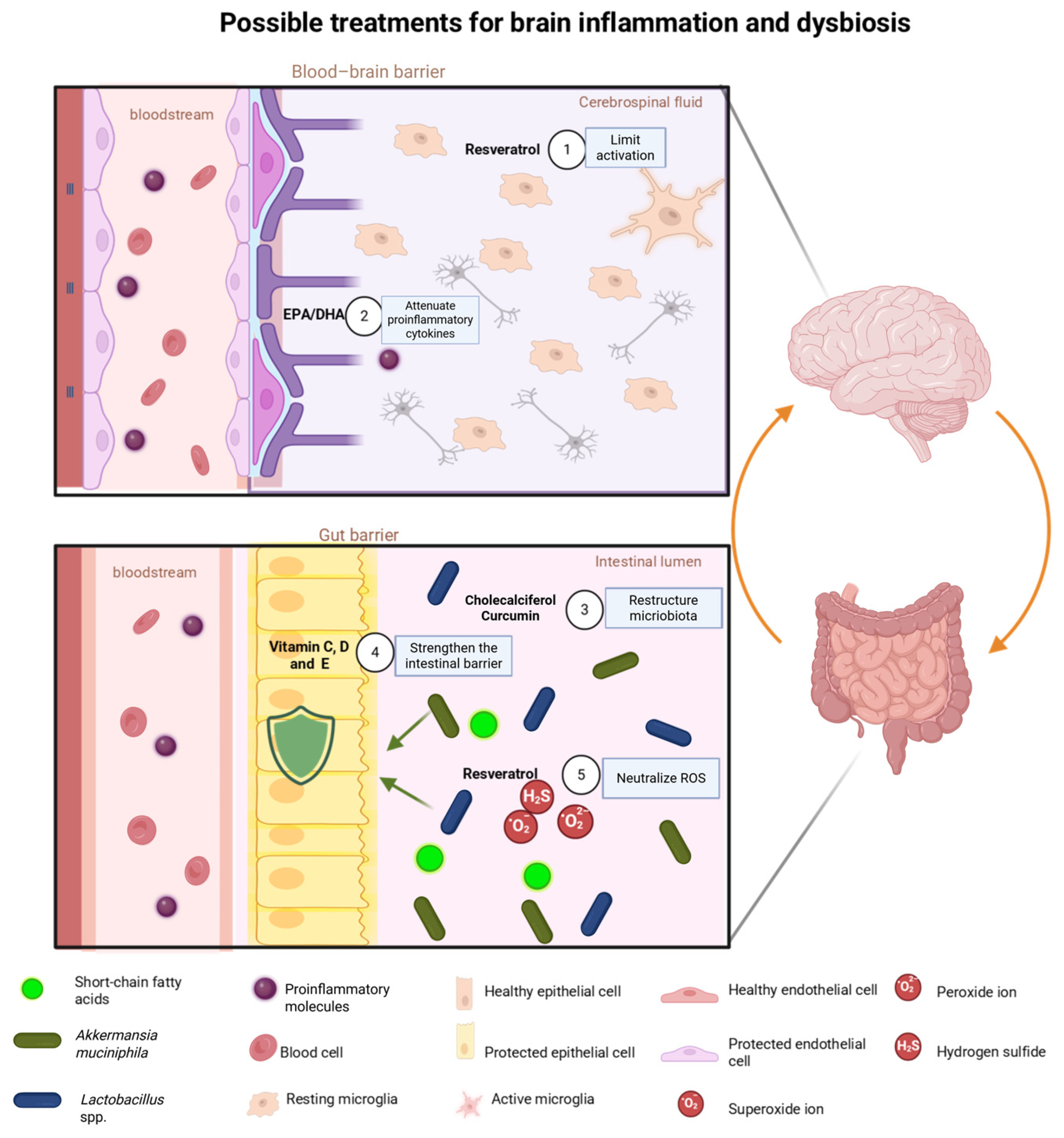

| Pro-Oxidant Bacteria | Oxidative Mechanism | Reported Effects |
|---|---|---|
| Enterobacteriaceae (e.g., Escherichia coli, Enterobacter cloacae) [132,133]. | Their endotoxin (LPS) binds to TLR4 in host cells and activates nicotinamide adenine dinucleotide Phosphate [NADPH] Oxidases (NOX) and inflammatory pathways, generating large amounts of ROS. | They aggravate systemic inflammation and contribute to metabolic dysfunction in obesity. |
| Enterococcus faecalis [131,134,135] | Produces extracellular O2●— and H2O2 to survive, which damages colonic cell DNA and induces the formation of hydroxyl radicals (●HO). | They promote genomic instability and are associated with colorectal cancer. |
| Sulfate-reducing bacteria (e.g., Bilophila wadsworthia, Desulfovibrio spp.) [130,136,137]. | They use sulfate/sulfite as final electron acceptors and generate H2S. In excess, H2S damages the mucosal barrier and activates proinflammatory Th1 responses. | They promote colitis and disruption of the intestinal barrier in susceptible hosts. |
| Antioxidant Bacteria | Antioxidant Mechanism | Reported Effects |
|---|---|---|
| Lactobacillus spp. (e.g., L. casei, L. fermentum, L. plantarum) [139,140,141]. | They produce SOD and use manganese complexes to neutralize ROS. Prevent ●HO radicals and suppress pro-oxidant intestinal bacteria. Generate GSH, reduce glycation and lipid peroxidation | They reinforce the antioxidant status of the intestinal epithelium and reduce oxidative damage. |
| Bifidobacterium spp. (e.g., B. longum, B. animalis) [142,143]. | They ferment dietary fiber, generating acetate and lactate, which may support barrier integrity and reduce permeability to proinflammatory and oxidative mediators. In obesity, they can decrease LPS, normalizing markers of oxidative stress. They provide B vitamins that act as cofactors in the host’s antioxidant pathways. | They improve mucosal integrity and reduce systemic oxidative inflammation. |
| Faecalibacterium prausnitzii (clostridia group IV) [144,145] | Main producer of butyrate, which nourishes colonocytes and reduces ROS generation by improving barrier function. Secrets microbial anti-inflammatory molecules (MAM), inhibiting NF-κB signaling | Contributes to an anti-inflammatory and antioxidant environment in the colon and improves insulin sensitivity. |
| Akkermansia muciniphila (Verrucomicrobia) [146,147] | Degrades mucin and strengthens the mucus layer, limiting the translocation of endotoxins. It is related to lower ROS in the intestinal lumen. | Promotes barrier integrity and reduces oxidative stress in the colon, improving metabolism. |
| Supplement | Effects on Microbiota, Oxidative Stress, and Neuroinflammation | Therapeutic Relevance |
|---|---|---|
| Vitamin D (cholecalciferol) [153,154,155]. | Restructures the microbiota increase diversity and beneficial genera such as Akkermansia muciniphila and Bifidobacterium. Reduces intestinal permeability and endotoxemia by strengthening tight junctions. In addition, it activates the vitamin D receptor (VDR) receptors in microglia, modulating the brain’s immune response and decreasing markers of neuroinflammation. | Improves the intestinal barrier, reduces systemic inflammation, and protects cognitive functions by attenuating neuroinflammation. |
| Vitamins C and E (classic antioxidants) [142,156,157]. | Both act as free radical scavengers at the systemic and intestinal levels. Vitamin C, in high doses, enhances SCFA production (e.g., butyrate) via microbiota. Vitamin E (α-tocopherol) promotes SCFA-producing commensals and strengthens the mucosal barrier. Together, they decrease proinflammatory cytokines and reduce neuronal oxidative stress in models of cerebral obesity and neuroinflammation. | They reinforce epithelial integrity, normalize redox metabolism, and preserve neuronal function by mitigating oxidative damage and neuroinflammation. |
| Polyphenols (e.g., resveratrol, grape polyphenols) [158,159,160]. | They directly neutralize ROS and regulate NF-κB, modulating inflammatory circuits. They function as prebiotics, increasing beneficial genera (Lactobacillus, Bifidobacterium, Akkermansia), reducing Enterobacteriaceae, and reducing barrier permeability. In models of metabolic syndrome, they limit microglia activation and decrease markers of neuroinflammation. | They restore the microbial ecosystem, improve insulin sensitivity, and protect cognitive functions by reducing oxidative stress and neuroinflammation. |
| Omega-3 fatty acids (Eicosapentaenoic Acid/Docosahexaenoic Acid (EPA/DHA)) [161,162,163]. | They inhibit proinflammatory pathways (e.g., NF-κB) and generate resolvins; they promote butyrate-producing bacteria and reduce pro-inflammatory pathogens. They strengthen tight junctions in the intestine and promote regulatory T cells. Metabolites cross the BBB to attenuate pro-inflammatory cytokines and decrease microglial activation. | They maintain intestinal homeostasis, reduce systemic inflammation, and preserve neurocognitive function by modulating the gut–brain axis. |
| Curcumin (turmeric polyphenol) [25,164,165,166]. | It is biotransformed in the colon and enhances beneficial genera (Lactobacillus, Bifidobacterium), suppressing Enterobacteriaceae and Prevotellaceae. It reduces permeability and circulating LPS. It crosses the BBB in low proportions, inhibits microglia and astroglia activation, and decreases markers of cerebral oxidative stress in models of neurodegeneration and obesity. | It optimizes barrier function, normalizes the inflammatory profile, and preserves memory and other cognitive functions by mitigating neuroinflammation and oxidative stress. |
Disclaimer/Publisher’s Note: The statements, opinions and data contained in all publications are solely those of the individual author(s) and contributor(s) and not of MDPI and/or the editor(s). MDPI and/or the editor(s) disclaim responsibility for any injury to people or property resulting from any ideas, methods, instructions or products referred to in the content. |
© 2026 by the authors. Licensee MDPI, Basel, Switzerland. This article is an open access article distributed under the terms and conditions of the Creative Commons Attribution (CC BY) license.
Share and Cite
Carro-Rodríguez, J.; Ibáñez-Cervantes, G.; Cárdenas-Rodríguez, N.; Ignacio-Mejía, I.; Albores-Méndez, E.M.; Pardo-Pacheco, B.R.; Fernández-Sánchez, V.; Balboa-Verduzco, A.M.; Adame, C.; Lara-Padilla, E.; et al. Microbiota–Gut–Brain Axis Disruption, Neuroinflammation, and Potential Antioxidant-Based Treatments in Metabolic Diseases. Antioxidants 2026, 15, 522. https://doi.org/10.3390/antiox15040522
Carro-Rodríguez J, Ibáñez-Cervantes G, Cárdenas-Rodríguez N, Ignacio-Mejía I, Albores-Méndez EM, Pardo-Pacheco BR, Fernández-Sánchez V, Balboa-Verduzco AM, Adame C, Lara-Padilla E, et al. Microbiota–Gut–Brain Axis Disruption, Neuroinflammation, and Potential Antioxidant-Based Treatments in Metabolic Diseases. Antioxidants. 2026; 15(4):522. https://doi.org/10.3390/antiox15040522
Chicago/Turabian StyleCarro-Rodríguez, Jazmín, Gabriela Ibáñez-Cervantes, Noemí Cárdenas-Rodríguez, Iván Ignacio-Mejía, Exsal Manuel Albores-Méndez, Blanca Rosalba Pardo-Pacheco, Verónica Fernández-Sánchez, Ana María Balboa-Verduzco, Cecilia Adame, Eleazar Lara-Padilla, and et al. 2026. "Microbiota–Gut–Brain Axis Disruption, Neuroinflammation, and Potential Antioxidant-Based Treatments in Metabolic Diseases" Antioxidants 15, no. 4: 522. https://doi.org/10.3390/antiox15040522
APA StyleCarro-Rodríguez, J., Ibáñez-Cervantes, G., Cárdenas-Rodríguez, N., Ignacio-Mejía, I., Albores-Méndez, E. M., Pardo-Pacheco, B. R., Fernández-Sánchez, V., Balboa-Verduzco, A. M., Adame, C., Lara-Padilla, E., Mancilla-Ramírez, J., Medina-Santillán, R., Montoya-Olvera, M., Cortes-Algara, A. L., Gómez-Manzo, S., Hernández-Ochoa, B., Moya-Amaya, H., & Bandala, C. (2026). Microbiota–Gut–Brain Axis Disruption, Neuroinflammation, and Potential Antioxidant-Based Treatments in Metabolic Diseases. Antioxidants, 15(4), 522. https://doi.org/10.3390/antiox15040522