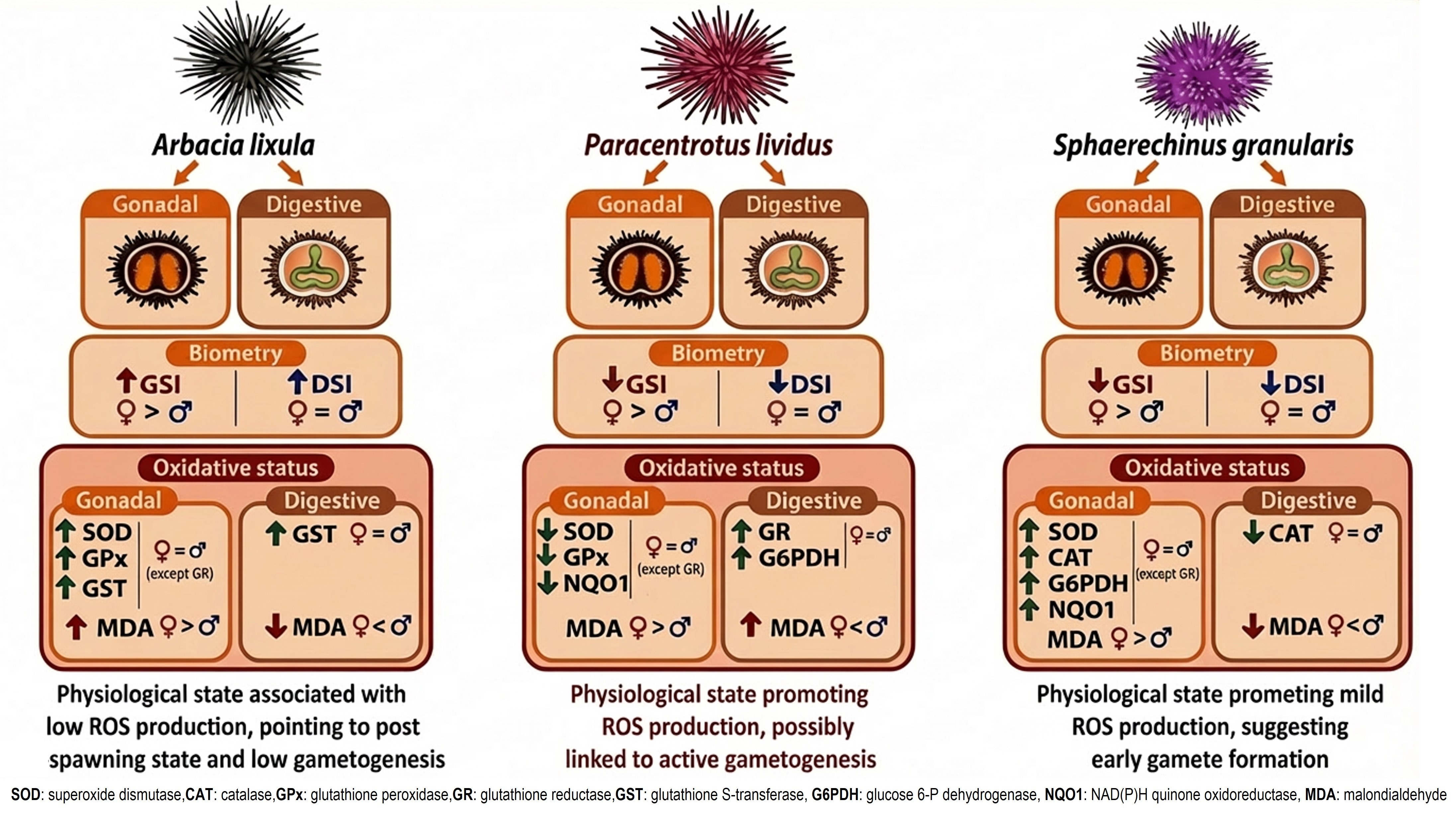
Oxidative Status as an Indicator of Gonadal Maturation in Three Species of Mediterranean Sea Urchin

 , , , ,
  ,
,  and
and 
Abstract
1. Introduction
2. Materials and Methods
2.1. Specimens and Sample Collection
2.2. Determination of Oxidative Status
2.3. Statistical Analysis
3. Results
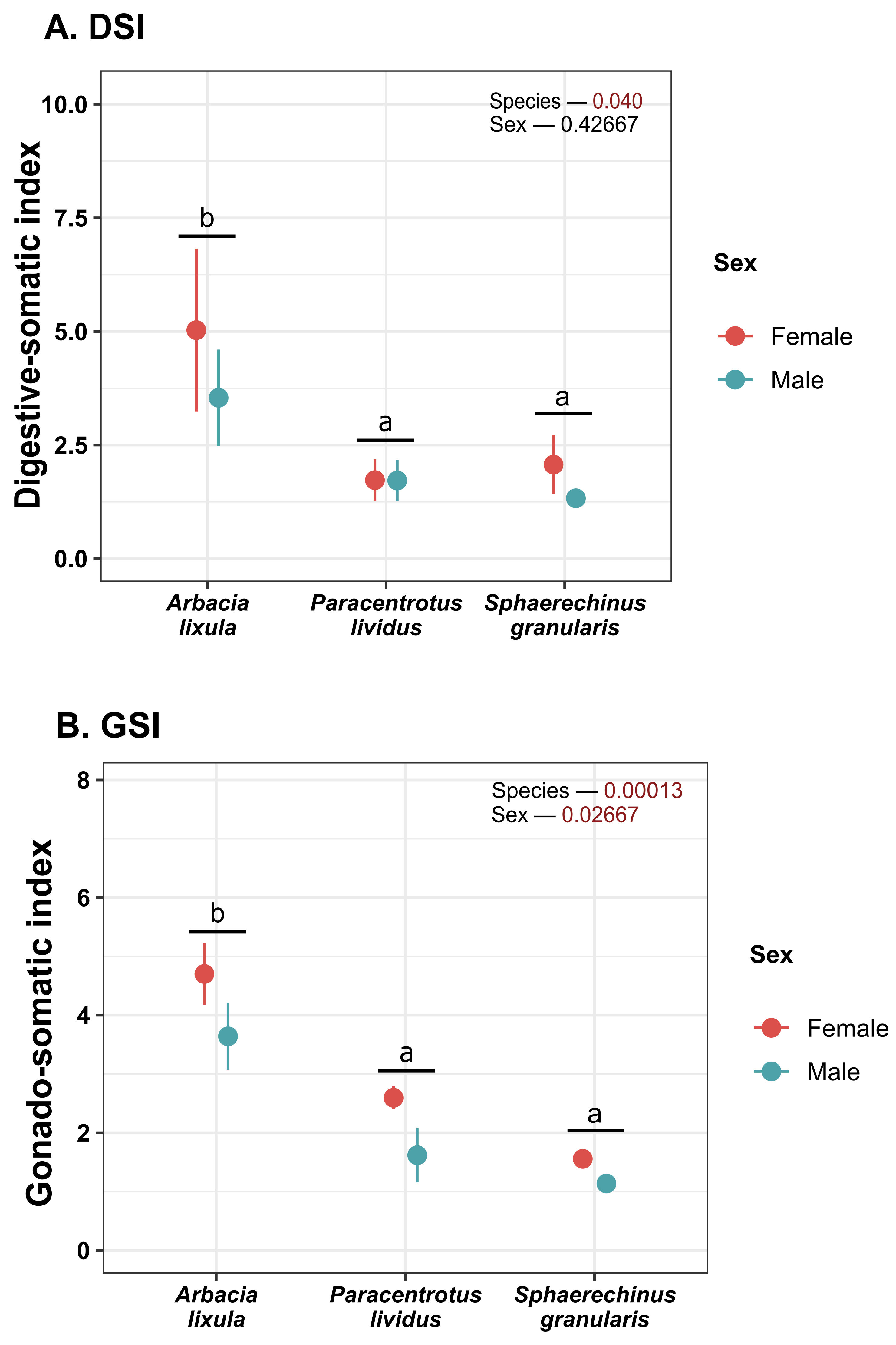
3.1. Gonadosomatic and Digestive Somatic Index
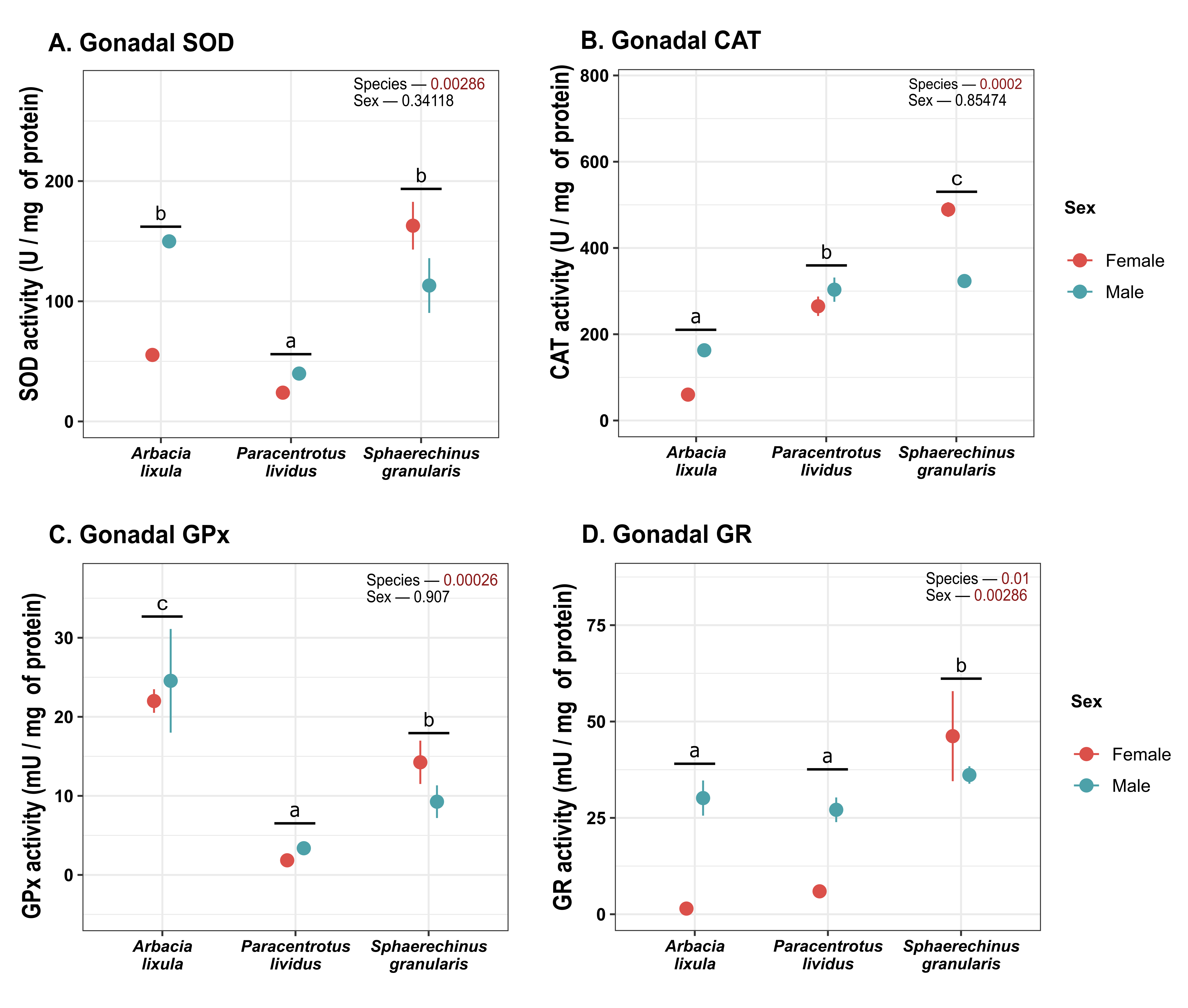
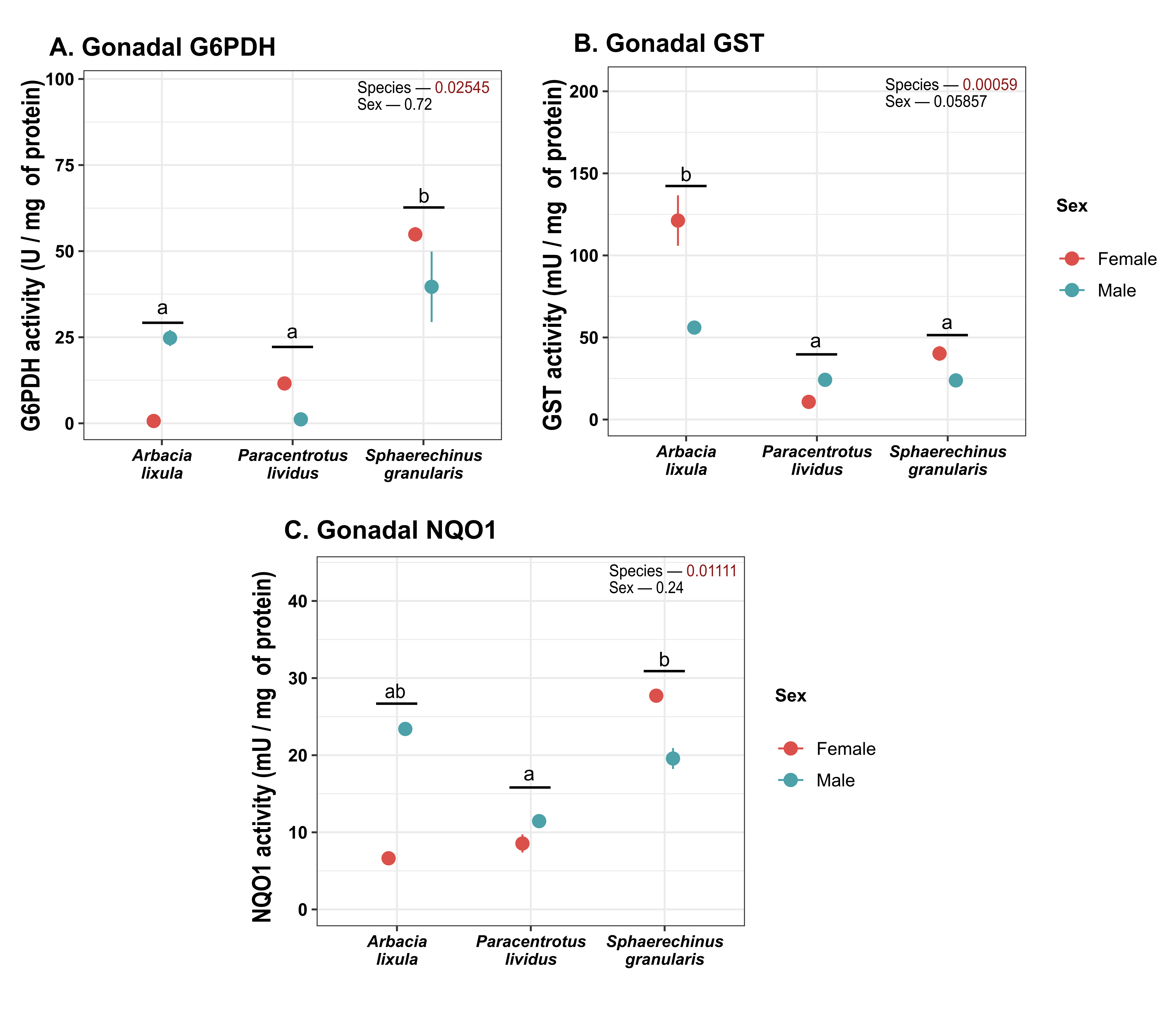
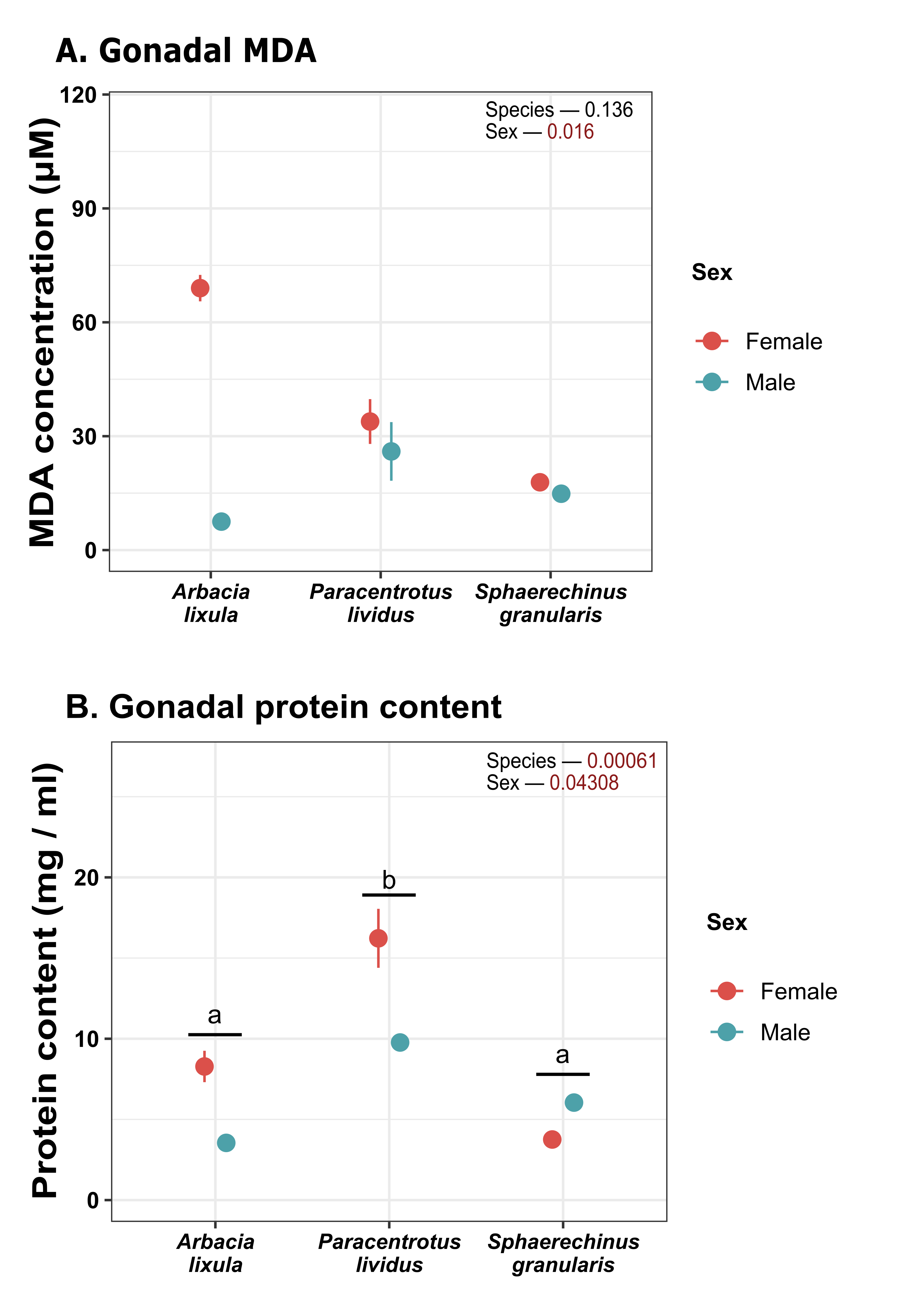
3.2. Gonadal Tissue Oxidative Status
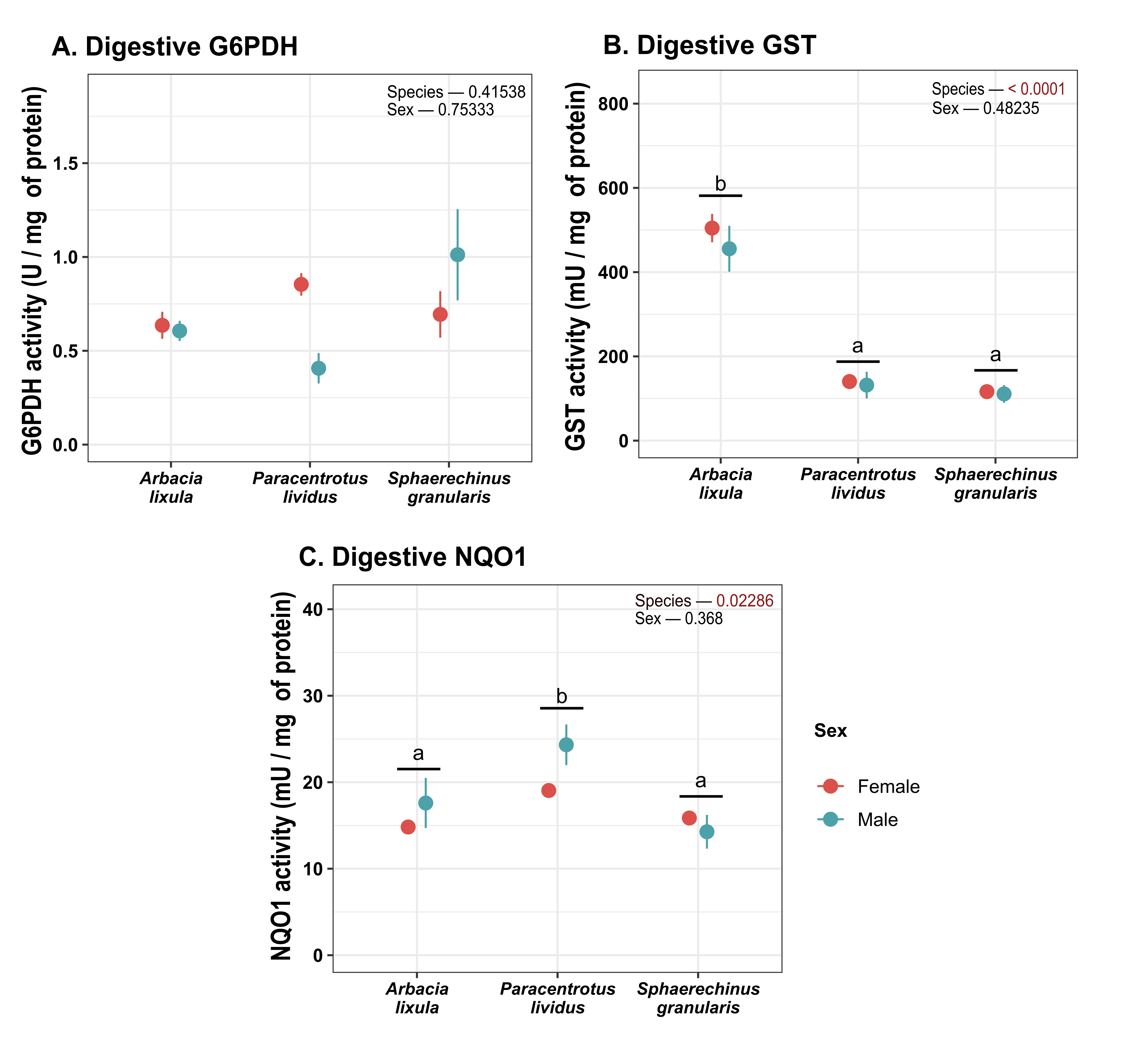
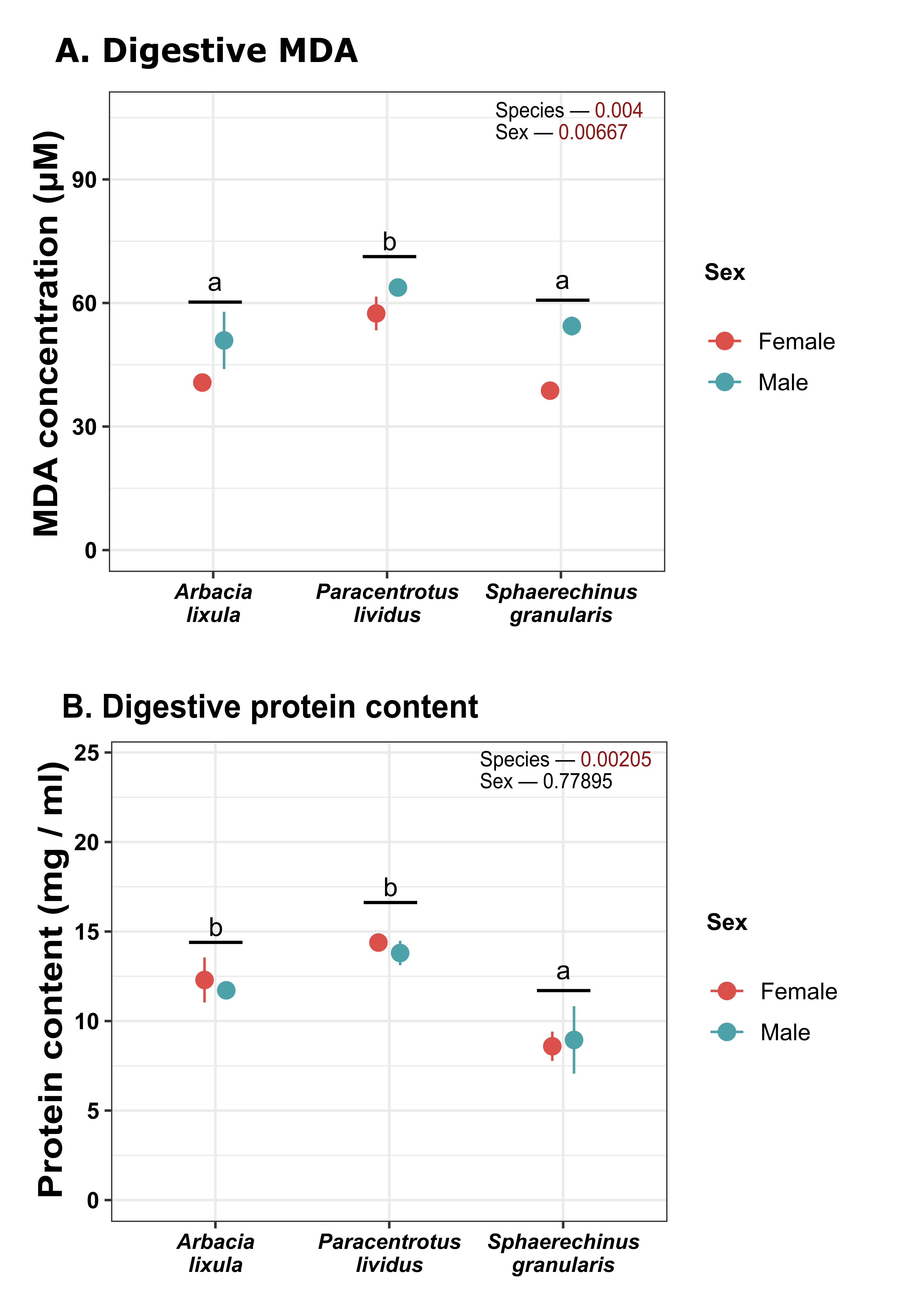
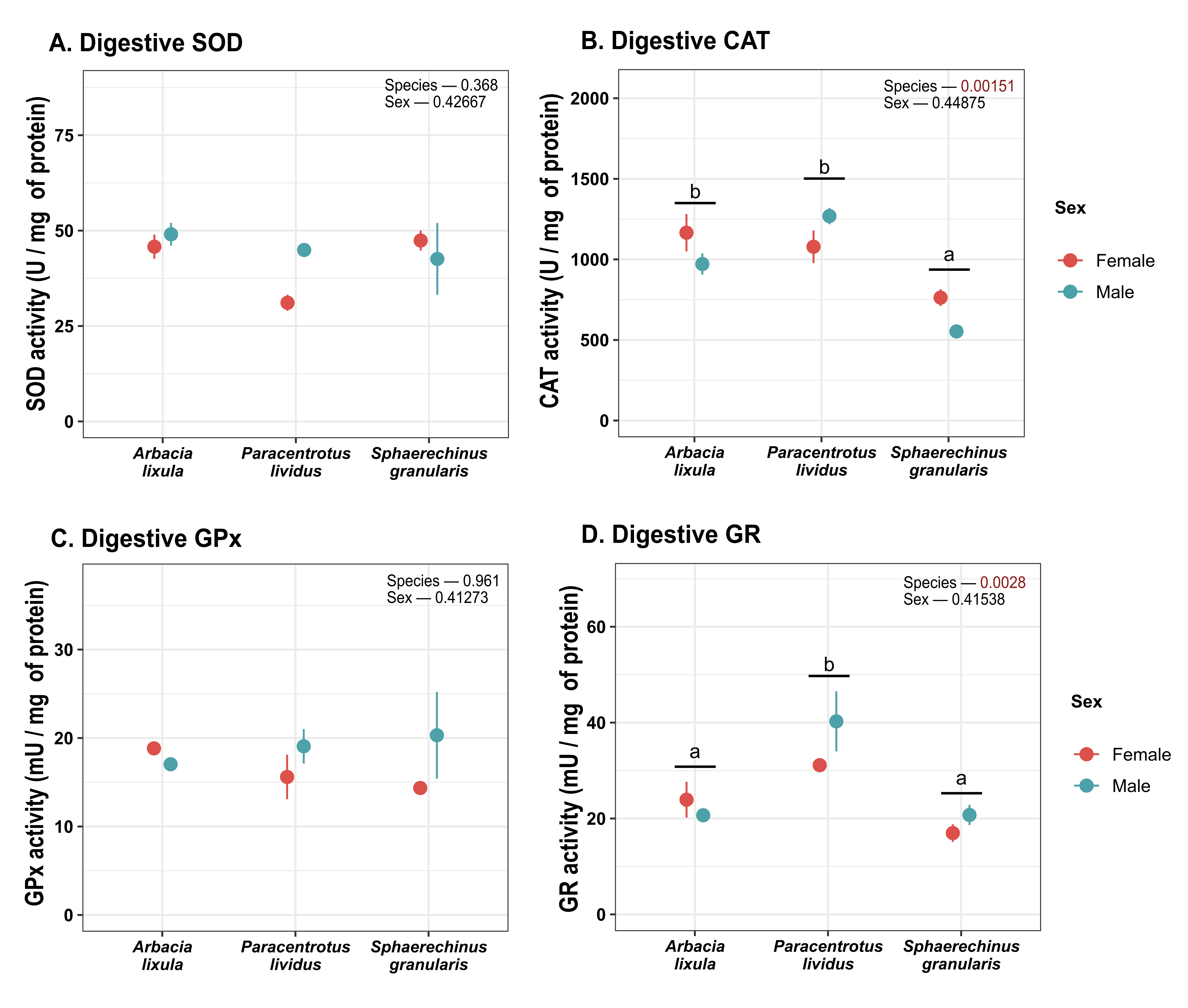
3.3. Digestive Tissue
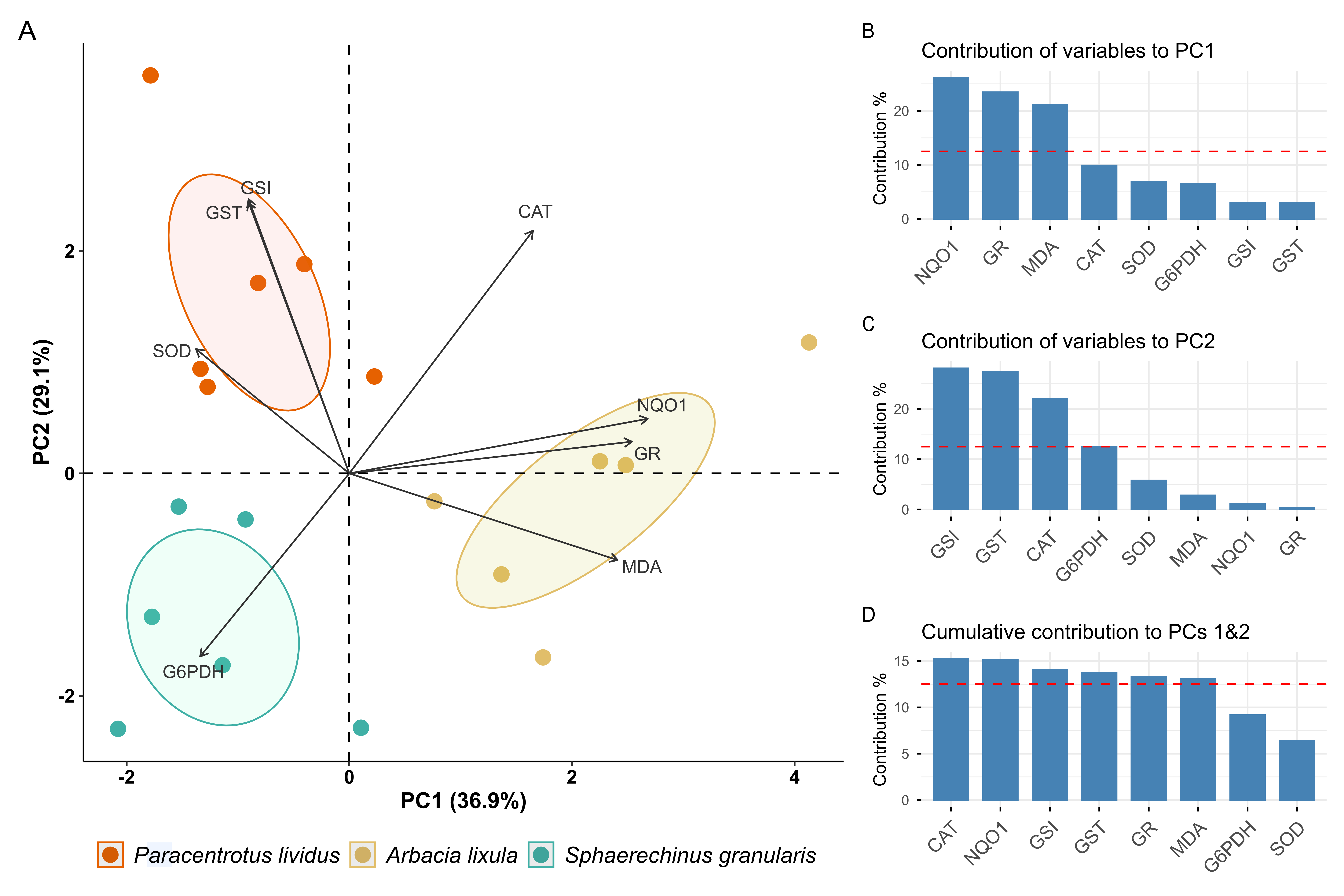
3.4. Principal Component Analysis
4. Discussion
5. Conclusions
Author Contributions
Funding
Institutional Review Board Statement
Informed Consent Statement
Data Availability Statement
Acknowledgments
Conflicts of Interest
Abbreviations
| ROS | Reactive oxygen species |
| SOD | Superoxide dismutase |
| CAT | Catalase |
| GPx | Glutathione peroxidase |
| GR | Glutathione reductase |
| GST | Glutathione s-transferase |
| G6PDH | Glucose 6-phosphate dehydrogenase |
| NQO1 | NAD(P)H: quinone oxidoreductase |
| MDA | Malondialdehyde |
| TBARS | Thiobarbituric acid reactive substances |
| GSI | Gonadosomatic index |
| DSI | Digestive somatic index |
| PCA | Principal Component Analysis |
References
- Borriglione, M.; Ruitton, S.; Boyer, F.; Thibault, D.; Blanfuné, A.; Guillemain, D.; Verlaque, M.; Boudouresque, C.F.; Thibaut, T. Impact of the invasive brown alga Rugulopteryx okamurae on the benthic communities in the Northwestern Mediterranean Sea. Estuar. Coast. Shelf Sci. 2024, 310, 109010. [Google Scholar] [CrossRef]
- Faria, J.; Prestes, A.C.; Moreu, I.; Martins, G.M.; Neto, A.I.; Cacabelos, E. Arrival and proliferation of the invasive seaweed Rugulopteryx okamurae in NE Atlantic islands. Bot. Mar. 2022, 65, 45–50. [Google Scholar] [CrossRef]
- García-Gómez, J.C.; Sempere-Valverde, J.; González, A.R.; Martínez-Chacón, M.; Olaya-Ponzone, L.; Sánchez-Moyano, E.; Ostalé-Valriberas, E.; Megina, C. From exotic to invasive in record time: The extreme impact of Rugulopteryx okamurae (Dictyotales, Ochrophyta) in the strait of Gibraltar. Sci. Total Environ. 2020, 704, 135408. [Google Scholar] [CrossRef] [PubMed]
- Johnstone, J.; Nash, S.; Hernandez, E.; Rahman, M.S. Effects of elevated temperature on gonadal functions, cellular apoptosis, and oxidative stress in Atlantic sea urchin Arbacia punculata. Mar. Environ. Res. 2019, 149, 40–49. [Google Scholar] [CrossRef] [PubMed]
- Bernal-Ibáñez, A.; Castilla-Gavilán, M.; Sumariva, E.G.; Hachero-Cruzado, I. Invasion context matters: Vulnerability of the sea urchin Paracentrotus lividus to ingestion of Rugulopteryx okamurae increases with invasion time. Mar. Pollut. Bull. 2025, 214, 117826. [Google Scholar] [CrossRef]
- Toso, A.; Necci, F.; Martines, A.; Lacorte, R.; Toso, Y.; Gianguzza, P.; Deidun, A.; Ungaro, N.; Costantino, G.; Caforio, M.; et al. Overfishing and sea warming drive the collapse of Paracentrotus lividus. Sci. Rep. 2025, 15, 18733. [Google Scholar] [CrossRef]
- BOJA. Orden de 17 de Octubre de 2023, por la Que se Cierra la Pesquería de Erizos y Anémonas en el Litoral de Andalucía, Debido a la Situación Crítica de Sus Poblaciones y el Impacto Generado por la Invasión del Alga Rugulopterix okamurae. Junta de Andalucía. 2023. Available online: https://www.juntadeandalucia.es/boja/2023/204/33 (accessed on 14 December 2025).
- FAO. Guidelines on Aquaculture Restocking and Stock Enhancement; FAO: Rome, Italy, 2023. [Google Scholar] [CrossRef]
- Asnicar, D.; Stranci, F.; Monti, S.; Badocco, D.; Marčeta, T.; Munari, M.; Marin, M.G. Investigating intraspecific variability in the biological responses of sea urchins (Paracentrotus lividus) to seawater acidification. Environ. Sci. Pollut. Res. 2024, 31, 51687–51701. [Google Scholar] [CrossRef]
- Amri, S.; Samar, M.F.; Sellem, F.; Ouali, K. Seasonal antioxidant responses in the sea urchin Paracentrotus lividus (Lamarck 1816) used as a bioindicator of the environmental contamination in the South-East Mediterranean. Mar. Pollut. Bull. 2017, 122, 392–402. [Google Scholar] [CrossRef]
- Leach, T.S.; Hofmann, G.E. Marine heatwave temperatures enhance larval performance but are meditated by paternal thermal history and inter-individual differences in the purple sea urchin, Strongylocentrotus purpuratus. Front. Physiol. 2023, 14, 1230590. [Google Scholar] [CrossRef]
- Abele, D.; Puntarulo, S. Formation of reactive species and induction of antioxidant defence systems in polar and temperate marine invertebrates and fish. Comp. Biochem. Physiol.-A Mol. Integr. Physiol. 2004, 138, 405–415. [Google Scholar] [CrossRef]
- Lesser, M.P. Oxidative stress in marine environments: Biochemistry and physiological ecology. Annu. Rev. Physiol. 2006, 68, 253–278. [Google Scholar] [CrossRef] [PubMed]
- Hughes, A.D.; Kelly, M.S.; Barnes, D.K.; Catarino, A.I.; Black, K.D. The dual functions of sea urchin gonads are reflected in the temporal variations of their biochemistry. Mar. Biol. 2006, 148, 789–798. [Google Scholar] [CrossRef]
- Beaulieu, M.; Costantini, D. Biomarkers of oxidative status: Missing tools in conservation physiology. Conserv. Physiol. 2014, 2, cou014. [Google Scholar] [CrossRef] [PubMed]
- Redza-Dutordoir, M.; Averill-Bates, D.A. Activation of apoptosis signalling pathways by reactive oxygen species. Biochim. Biophys. Acta-Mol. Cell Res. 2016, 1863, 2977–2992. [Google Scholar] [CrossRef]
- Do, T.; Vaculciakova, S.; Kluska, K.; Peris-Díaz, M.D.; Priborsky, J.; Guran, R.; Krężel, A.; Adam, V.; Zitka, O. Antioxidant-related enzymes and peptides as biomarkers of metallic nanoparticles (eco)toxicity in the aquatic environment. Chemosphere 2024, 364, 142988. [Google Scholar] [CrossRef]
- Ross, D.; Siegel, D. The diverse functionality of NQO1 and its roles in redox control. Redox Biol. 2021, 41, 101950. [Google Scholar] [CrossRef]
- Coll, A.; Rufino-Palomares, E.E.; Ramos-Barbero, M.; Ortiz-Maldonado, A.E.; Pantoja-Echevarría, L.M.; González-Ordóñez, I.; Pérez-Jiménez, A.; Trenzado, C.E. Effects of environmental factors on the oxidative status of Anemonia viridis in aquaculture systems. Comp. Biochem. Physiol. Part B Biochem. Mol. Biol. 2025, 275, 111042. [Google Scholar] [CrossRef]
- Martínez-Pita, I.; Sánchez-España, A.I.; García, F.J. Gonadal growth and reproduction in the sea urchin Sphaerechinus granularis (Lamarck 1816) (Echinodermata: Echinoidea) in southern Spain. Sci. Mar. 2008, 72, 603–611. [Google Scholar] [CrossRef]
- McCord, J.M.; Fridovich, I. Superoxide Dismutase: An enzymic function for erythrocuprein (hemocuprein). J. Biol. Chem. 1969, 244, 6049–6055. [Google Scholar] [CrossRef]
- Aebi, H. Catalase in vitro. Methods Enzymol. 1984, 105, 121–126. [Google Scholar] [CrossRef]
- Flohé, L.; Günzler, W.A. Assays of glutathione peroxidase. Methods Enzymol. 1984, 105, 114–120. [Google Scholar] [CrossRef]
- Carlberg, I.; Mannervik, B. Purification and characterization of the flavoenzyme glutathione reductase from rat liver. J. Biol. Chem. 1975, 250, 5475–5480. [Google Scholar] [CrossRef]
- Löhr, G.; Waller, H. Glucose-6-phosphate Dehydrogenase: (Zwischenferment). In Methods of Enzymatic Analysis; Academic Press: New York, NY, USA, 1965; pp. 744–751. [Google Scholar] [CrossRef]
- Frasco, M.F.; Guilhermino, L. Effects of dimethoate and beta-naphthoflavone on selected biomarkers of Poecilia reticulata. Fish Physiol. Biochem. 2002, 26, 149–156. [Google Scholar] [CrossRef]
- Lemaire, P.; Sturve, J.; Förlin, L.; Livingstone, D.R. Studies on aromatic hydrocarbon quinone metabolism and DT-Diaphorase function in liver of fish species. Mar. Environ. Res. 1996, 42, 317–321. [Google Scholar] [CrossRef]
- Bradford, M. A Rapid and Sensitive Method for the Quantitation of Microgram Quantities of Protein Utilizing the Principle of Protein-Dye Binding. Anal. Biochem. 1976, 72, 248–254. [Google Scholar] [CrossRef] [PubMed]
- Buege, J.A.; Aust, S.D. Microsomal Lipid Peroxidation. Methods Enzymol. 1978, 52, 302–310. [Google Scholar] [CrossRef]
- James, P.; Siikavuopio, S. A Guide to the Sea Urchin Reproductive Cycle and Staging Sea Urchin Gonad Samples; Nofima: Tromsø, Norway, 2018. [Google Scholar]
- Ling, S.D.; Scheibling, R.E.; Rassweiler, A.; Johnson, C.R.; Shears, N.; Connell, S.D.; Salomon, A.K.; Norderhaug, K.M.; Pérez-Matus, A.; Hernández, J.C.; et al. Global regime shift dynamics of catastrophic sea urchin overgrazing. Philos. Trans. R. Soc. B Biol. Sci. 2015, 370, 20130269. [Google Scholar] [CrossRef]
- Uthicke, S.; Schaffelke, B.; Byrne, M. A boom-bust phylum? Ecological and evolutionary consequences of density variations in echinoderms. Ecol. Monogr. 2009, 79, 3–24. [Google Scholar] [CrossRef]
- Zhadan, P.M.; Vaschenko, M.A.; Almyashova, T.N. Effects of Environmental Factors on Reproduction of the Sea Urchin Strongylocentrotus intermedius. In Sea Urchin—From Environment to Aquaculture and Biomedicine; IntechOpen: London, UK, 2017. [Google Scholar] [CrossRef]
- Tenuzzo, B.A.; Carata, E.; Mariano, S.; Dini, L. Morphological and Biochemical Profiles of the Gonadal Cycle in the Sea Urchin Paracentrotus lividus: Wild Type vs. Bred. In Sea Urchin—From Environment to Aquaculture and Biomedicine; IntechOpen: London, UK, 2017. [Google Scholar] [CrossRef][Green Version]
- Wangensteen, O.S.; Turon, X.; Casso, M.; Palacín, C. The reproductive cycle of the sea urchin Arbacia lixula in northwest Mediterranean: Potential influence of temperature and photoperiod. Mar. Biol. 2013, 160, 3157–3168. [Google Scholar] [CrossRef]
- Núñez-González, R.; Sarmiento-Lezcano, A.N.; Caballero, M.J.; Tilic, E.; Castro-Hernández, J.J. Locality matters: Variation in the reproductive cycle and population structure of subtropical sea urchins. PLoS ONE 2025, 20, e0328273. [Google Scholar] [CrossRef]
- Perez, A.; Malanga, G.; Puntarulo, S. Reproductive condition associated to changes in the liposoluble antioxidant capacity and the damage to lipids in the sea urchins Loxechinus albus (Echinodermata: Echinoidea). Rev. Cienc. Mar. Y Costeras 2011, 3, 183–194. [Google Scholar]
- Chainy, G.B.N.; Paital, B.; Dandapat, J. An Overview of Seasonal Changes in Oxidative Stress and Antioxidant Defence Parameters in Some Invertebrate and Vertebrate Species. Scientifica 2016, 20126, 6126570. [Google Scholar] [CrossRef] [PubMed]
- Malanga, G.; Perez, A.; Calvo, J.; Puntarulo, S. The effect of seasonality on oxidative metabolism in the sea urchin Loxechinus albus. Mar. Biol. 2009, 156, 763–770. [Google Scholar] [CrossRef]
- Pérez, A.F.; Boy, C.C.; Calcagno, J.; Malanga, G. Reproduction and oxidative metabolism in the brooding sea star Anasterias antarctica (Lütken, 1957). J. Exp. Mar. Biol. Ecol. 2015, 463, 150–157. [Google Scholar] [CrossRef]
- Anderson, M.E. Glutathione and Glutathione Delivery Compounds. Adv. Pharmacol. 1996, 38, 65–78. [Google Scholar] [CrossRef]
- Lubos, E.; Loscalzo, J.; Handy, D.E. Glutathione peroxidase-1 in health and disease: From molecular mechanisms to therapeutic opportunities. Antioxid. Redox Signal. 2011, 15, 1957–1997. [Google Scholar] [CrossRef]
- Yan, H.; Harding, J.J. Glycation-induced inactivation and loss of antigenicity of catalase and superoxide dismutase. Biochem. J. 1997, 328, 599–605. [Google Scholar] [CrossRef]
- Marsh, A.G.; Watts, S.A. Chapter 3 Biochemical and energy requirements of gonad development. In Developments in Aquaculture and Fisheries Science; Elsevier: Amsterdam, The Netherlands, 2007; Volume 37. [Google Scholar] [CrossRef]
- Küçükdermenci, A.; Lök, A.; Kırtık, A.; Kurtay, E.; Serdar, S.; Yiğitkurt, S. Reproductive pattern and biochemical composition of the sea urchin, Paracentrotus lividus (Lamarck, 1816) in west Aegean Sea-Türkiye. BMC Zool. 2026, 11, 6. [Google Scholar] [CrossRef]
- Shim, K.B. Seasonal variations in the biochemical composition of sea urchin (Hemicentrotus pulcherrimus) roe. Iran. J. Fish. Sci. 2024, 23, 457–471. [Google Scholar] [CrossRef]
- Rocha, F.; Baião, L.F.; Moutinho, S.; Reis, B.; Oliveira, A.; Arenas, F.; Maia, M.R.; Fonseca, A.J.; Pintado, M.; Valente, L.M. The effect of sex, season and gametogenic cycle on gonad yield, biochemical composition and quality traits of Paracentrotus lividus along the North Atlantic coast of Portugal. Sci. Rep. 2019, 9, 2994. [Google Scholar] [CrossRef]
- Alonso-Alvarez, C.; Bertrand, S.; Devevey, G.; Prost, J.; Faivre, B.; Sorci, G. Increased susceptibility to oxidative stress as a proximate cost of reproduction. Ecol. Lett. 2004, 7, 363–368. [Google Scholar] [CrossRef]
- Elakkermi, M.; Mezali, K.; Soualili, D.L. Interpopulation variability of the reproductive cycle of Arbacia lixula (Echinodermata: Echinoidea) in the Mostaganem shallow-water area (south-western Mediterranean). Reg. Stud. Mar. Sci. 2021, 45, 101810. [Google Scholar] [CrossRef]
- Fenaux, L. Maturation des gonades et cycle saisonnier des larves chez A. lixula, P. lividus et P. microtuberculatus (Echinides) à Villefranche-Sur-Mer. Vie Milieu Ser. A Biol. Mar. 1968, 19, 1–52. [Google Scholar]
- Solé, M.; Porte, C.; Albaigés, J. Seasonal variation in the mixed-function oxygenase system and antioxidant enzymes of the mussel Mytilus galloprovincialis. Environ. Toxicol. Chem. 1995, 14, 157–164. [Google Scholar] [CrossRef]
- de la Uz, S.; Carrasco, J.F.; Rodríguez, C. Temporal variability of spawning in the sea urchin Paracentrotus lividus from northern Spain. Reg. Stud. Mar. Sci. 2018, 23, 2–7. [Google Scholar] [CrossRef]
- Raposo, A.; Ferreira, S.M.; Ramos, R.; Anjos, C.; Gonçalves, S.C.; Santos, P.M.; Baptista, T.; Costa, J.L.; Pombo, A. Reproductive Cycle of the Sea Urchin Paracentrotus lividus (Lamarck, 1816) on the Central West Coast of Portugal: New Perspective on the Gametogenic Cycle. J. Mar. Sci. Eng. 2023, 11, 2366. [Google Scholar] [CrossRef]
- Vafidis, D.; Antoniadou, C.; Ioannidi, V. Population density, size structure, and reproductive cycle of the comestible sea urchin Sphaerechinus granularis (Echinodermata: Echinoidea) in the Pagasitikos gulf (Aegean sea). Animals 2020, 10, 1506. [Google Scholar] [CrossRef]
- Elmasry, E.; El-Sayed, A.F.M.; Abdelrazek, F.A. Gonadal growth and qualitative color assessment of the sea urchin Paracentrotus lividus Lamarck, 1816 (Echinodermata: Echinoidae) of the Southeastern Mediterranean Sea. Egypt. J. Aquat. Res. 2023, 49, 369–378. [Google Scholar] [CrossRef]
- Dolinar, D.; Edwards, M. The metabolic depression and revival of purple urchins (Strongylocentrotus purpuratus) in response to macroalgal availability. J. Exp. Mar. Biol. Ecol. 2021, 545, 151646. [Google Scholar] [CrossRef]
- Guillou, M.; Lumingas, L.J.; Michel, C. The effect of feeding or starvation on resource allocation to body components during the reproductive cycle of the sea urchin Sphaerechinus granularis (Lamarck). J. Exp. Mar. Biol. Ecol. 2000, 245, 183–196. [Google Scholar] [CrossRef]
- Klaoudatos, D.; Tziantziou, L.; Lolas, A.; Neofitou, N.; Vafidis, D. Population Characteristics of the Upper Infralittoral Sea Urchin Arbacia lixula (Linnaeus, 1758) in Eastern Mediterranean (Central Greece): An Indicator Species for Coastal Water Quality. J. Mar. Sci. Eng. 2022, 10, 395. [Google Scholar] [CrossRef]
- Jobling, M. The influences of feeding on the metabolic rate of fishes: A short review. J. Fish Biol. 1981, 18, 385–400. [Google Scholar] [CrossRef]
- Arafa, S.; Chouaibi, M.; Sadok, S.; Abed, A.E. The influence of season on the gonad index and biochemical composition of the sea urchin Paracentrotus lividus from the golf of Tunis. Sci. World J. 2012, 2012, 815935. [Google Scholar] [CrossRef]
- Carvalho-Neta, R.N.F.; Barbosa, G.L.; Torres, H.S.; Sousa, D.B.P.; da Silva Castro, J.; Santos, D.M.S.; Tchaicka, L.; da Silva de Almeida, Z.; Teixeira, E.G.; Torres, A.R. Changes in Glutathione S-Transferase Activity and Parental Care Patterns in a Catfish (Pisces, Ariidae) as a Biomarker of Anthropogenic Impact in a Brazilian Harbor. Arch. Environ. Contam. Toxicol. 2017, 72, 132–141. [Google Scholar] [CrossRef]
- Belmahi, Y.; Khati, W.; Derbal, F.; Belmahi, A.E.; Missawi, O.; Zitouni, N.; Rouane-Hacene, O.; Benabdi, M.; Banni, M. Multi-marker Approach in the Black Sea Urchin Arbacia lixula (Linnaeus, 1758) from Algerian West Coast. Thalassas 2023, 39, 697–713. [Google Scholar] [CrossRef]




Disclaimer/Publisher’s Note: The statements, opinions and data contained in all publications are solely those of the individual author(s) and contributor(s) and not of MDPI and/or the editor(s). MDPI and/or the editor(s) disclaim responsibility for any injury to people or property resulting from any ideas, methods, instructions or products referred to in the content. |
© 2026 by the authors. Licensee MDPI, Basel, Switzerland. This article is an open access article distributed under the terms and conditions of the Creative Commons Attribution (CC BY) license.
Share and Cite
Álvarez, P.A.; Coll, A.; Díaz-Casado, M.E.; Hidalgo, F.; Rufino-Palomares, E.E.; Pérez-Jiménez, A.; Trenzado, C.E. Oxidative Status as an Indicator of Gonadal Maturation in Three Species of Mediterranean Sea Urchin. Antioxidants 2026, 15, 516. https://doi.org/10.3390/antiox15040516
Álvarez PA, Coll A, Díaz-Casado ME, Hidalgo F, Rufino-Palomares EE, Pérez-Jiménez A, Trenzado CE. Oxidative Status as an Indicator of Gonadal Maturation in Three Species of Mediterranean Sea Urchin. Antioxidants. 2026; 15(4):516. https://doi.org/10.3390/antiox15040516
Chicago/Turabian StyleÁlvarez, Pedro A., Alberto Coll, María Elena Díaz-Casado, Félix Hidalgo, Eva E. Rufino-Palomares, Amalia Pérez-Jiménez, and Cristina E. Trenzado. 2026. "Oxidative Status as an Indicator of Gonadal Maturation in Three Species of Mediterranean Sea Urchin" Antioxidants 15, no. 4: 516. https://doi.org/10.3390/antiox15040516
APA StyleÁlvarez, P. A., Coll, A., Díaz-Casado, M. E., Hidalgo, F., Rufino-Palomares, E. E., Pérez-Jiménez, A., & Trenzado, C. E. (2026). Oxidative Status as an Indicator of Gonadal Maturation in Three Species of Mediterranean Sea Urchin. Antioxidants, 15(4), 516. https://doi.org/10.3390/antiox15040516