Molecular Networks of Redox Dysregulation in Fetal Alcohol Spectrum Disorders: Mechanisms and Therapeutic Prospects



Abstract
1. Introduction
2. Ethanol-Induced Redox Dysregulation in Developing Embryos
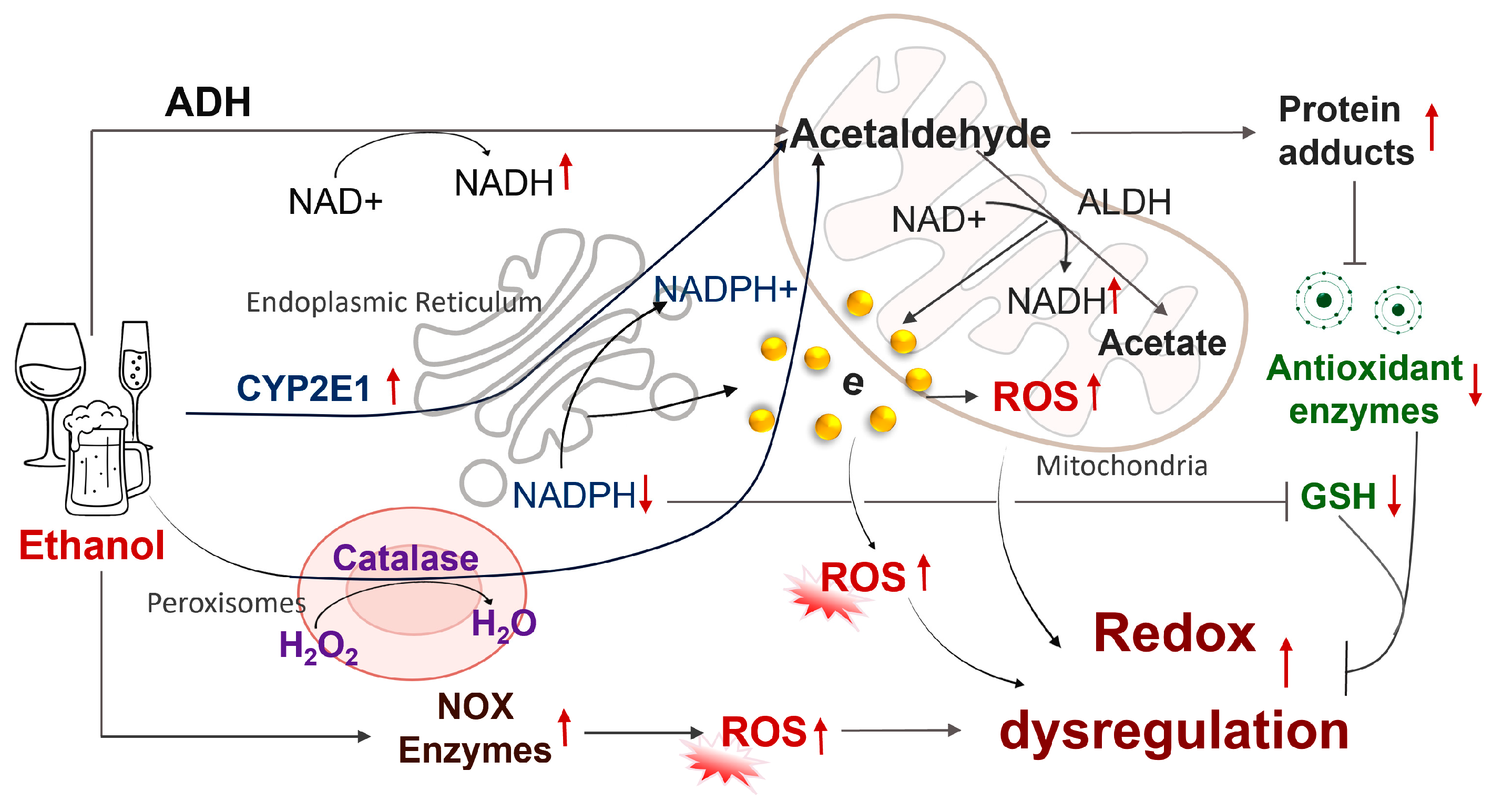
2.1. Pathways of Ethanol Metabolism and ROS Production
2.1.1. Alcohol Dehydrogenase (ADH) Pathway
2.1.2. Microsomal Ethanol-Oxidizing System (MEOS)
2.1.3. Catalase Pathway
2.1.4. NADPH Oxidase (NOX) Pathways and Other ROS-Generating Systems
2.2. Ethanol-Induced Redox Imbalance in the Developing Embryos
2.2.1. Ethanol Exposure Results in Excessive Generation of ROS in Developmental Embryos
2.2.2. Ethanol Exposure Suppresses and Depletes Endogenous Antioxidants in Developing Embryos
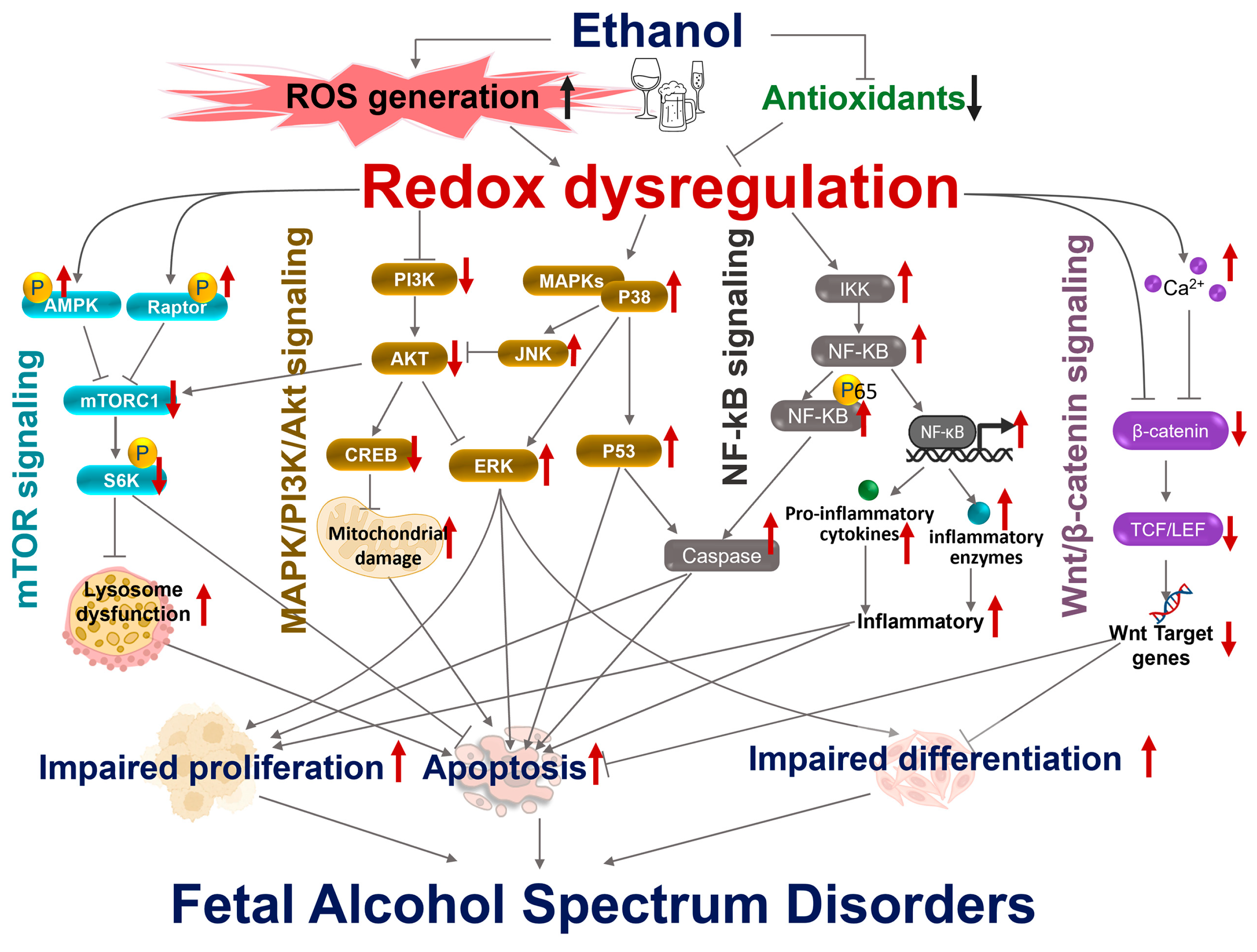
3. Molecular Networks of Redox Regulation Disrupted by Prenatal Ethanol Exposure in FASD Pathogenesis
3.1. Nrf2/Keap1 Signaling and Antioxidant Gene Regulation
3.2. ROS-Modulated MAPK and PI3K/Akt Signaling Pathways
3.2.1. Effects of ROS-Driven MAPK Activation on Cell Differentiation and Survival
3.2.2. Activation of PI3K/Akt Signaling by ROS in Cell Proliferation and Apoptosis
3.3. NF-κB Signaling as a Redox-Sensitive Transcriptional Integrator in Ethanol-Induced Developmental Injury
3.4. Disruption of Wnt/β-Catenin Signaling in Ethanol-Induced Developmental Impairment
3.5. mTOR Signaling in Ethanol-Induced Neural Crest Cell Impairment
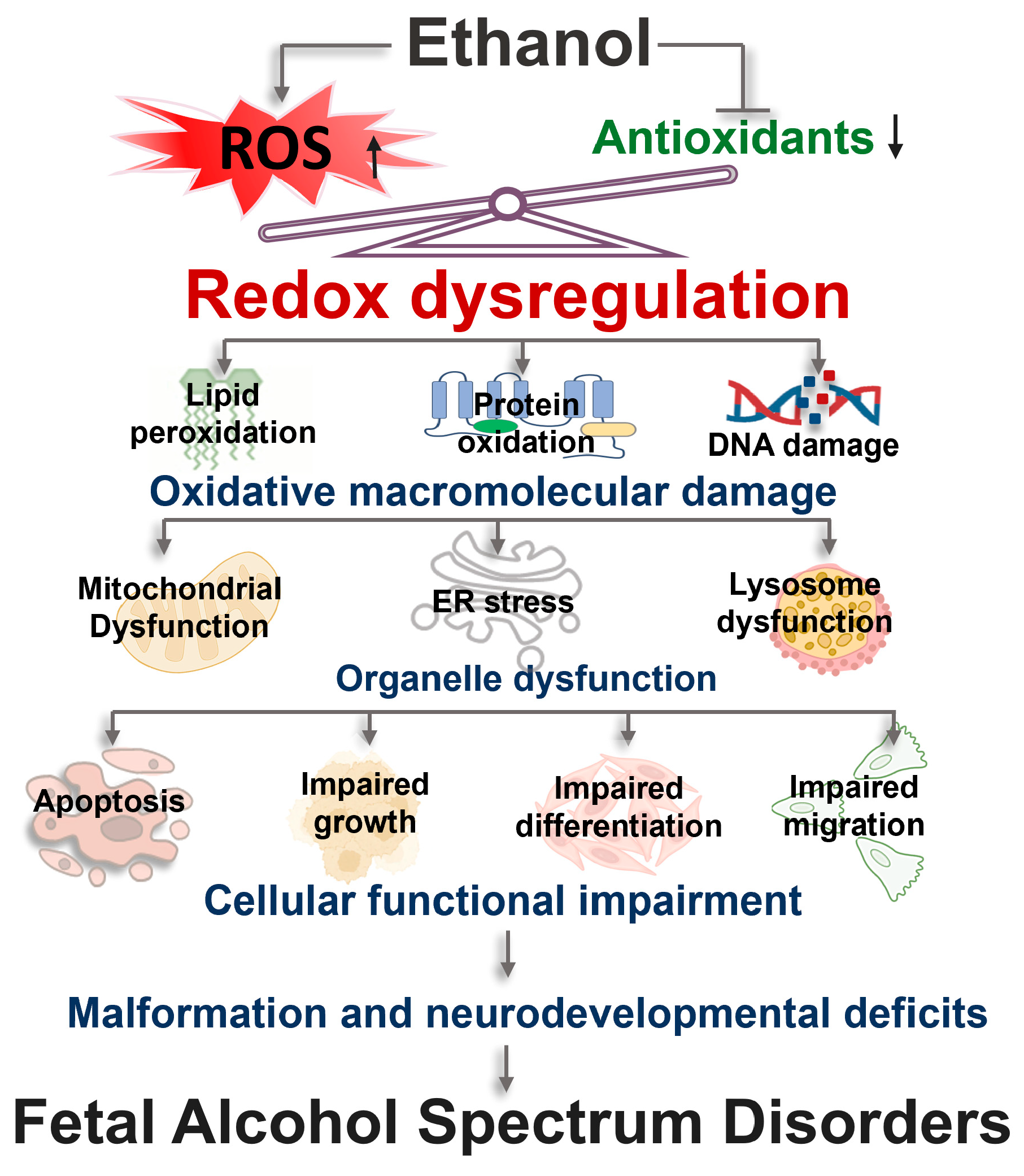
4. Multi-Level Oxidative Damage and Developmental Consequences of Ethanol-Induced Redox Dysregulation
4.1. Oxidative Macromolecular Damage
4.2. Redox Dysregulation Results in Organelle Dysfunction
4.2.1. Mitochondrial Dysfunction Induced by ROS
4.2.2. ER Stress Induced by ROS
4.2.3. Lysosome Dysfunction Induced by ROS
4.3. Redox Dysregulation Impairs Cellular Integrity and Functions in Developing Tissues
4.3.1. Redox Dysregulation Contributes to Apoptosis in Developing Tissues
4.3.2. Redox Dysregulation Disrupts Cell Proliferation, Migration, and Differentiation
4.4. The Contribution of Redox Dysregulation to Structural Abnormalities in FASD
4.5. Redox Dysregulation and Neurodevelopmental Deficits in FASD
5. Translational Implications: Targeting Redox Dysregulation for FASD Prevention and Treatment
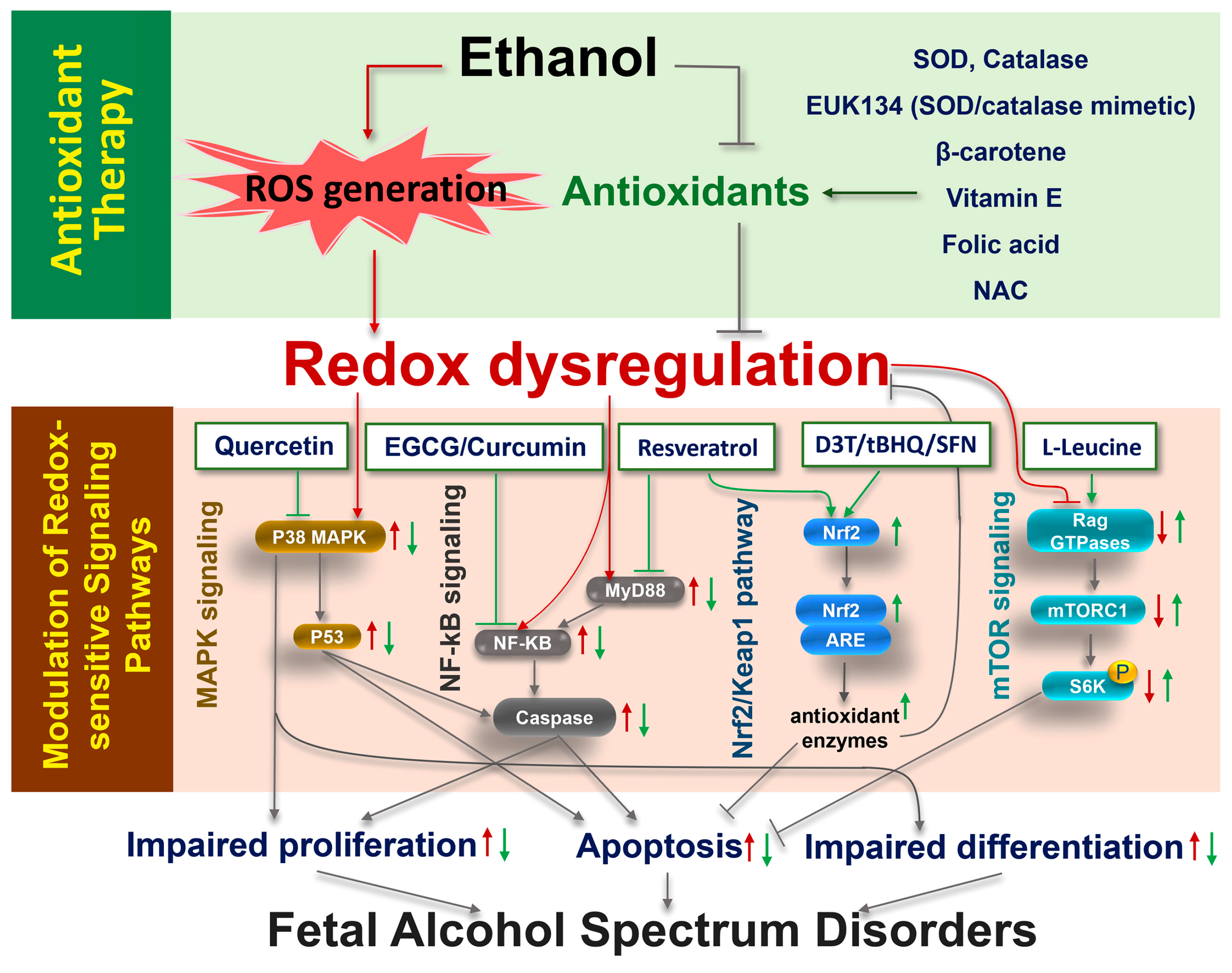
5.1. Antioxidant-Based Approaches for FASD Prevention and Intervention
5.2. Targeting Redox-Sensitive Signaling Pathways for FASD Prevention and Intervention
5.2.1. Nrf2-Mediated Antioxidant Response as a Central Preventive Target
5.2.2. Targeting NF-κB–Mediated Neuroinflammatory Signaling
5.2.3. Modulation of MAPK Signaling Pathways
5.3. Translational Challenges in Targeting Redox Dysregulation for FASD Prevention and Treatment

| Therapeutic Agents | Experimental Models | Key Findings/Outcomes | Refs |
|---|---|---|---|
| SOD | Mouse embryos | SOD diminished ethanol-induced superoxide production, lipid peroxidation, and cell death, and significantly reduced malformation in mouse embryos exposed to ethanol. | Kotch et al. [16] |
| SOD, CAT, α-tocopherol | Cranial neural crest cells | SOD, catalase, and α-tocopherol significantly reduced ethanol-induced NCC death. | Chen and Sulik [17] |
| EUK-134 | In vivo Mouse model | EUK-134, a synthetic SOD/CAT mimetic, significantly reduced apoptosis and the incidence of ethanol-induced forelimb malformations in mouse embryos exposed to ethanol in vivo. | Chen et al. [130] |
| NAC | Mouse NCCs | NAC treatment diminished ethanol-induced cytotoxicity in mouse NCCs. | Chen and Sulik [21] |
| In vivo mouse model | Dietary administration of NAC reduced ocular abnormalities in mouse embryos exposed to ethanol in vivo. | Parnell et al. [129] | |
| Folic acid | Rats | Folic acid supplementation significantly attenuated ethanol-induced oxidative alterations in the liver and pancreas of offspring, indicating a protective role for folic acid in mitigating ethanol-mediated oxidative damage. | Cano et al. [138] |
| β-Carotene | Embryonic rat hippocampal culture | Supplementation with β-Carotene ameliorated ethanol-induced neuronal loss in embryonic rat hippocampal culture. | Mitchell et al. [140] |
| Vitamin E | Neonatal rats | Dietary supplementation of Vitamin E prevented ethanol-induced Purkinje cell loss. | Heaton et al. [141] |
| Embryonic rat hippocampal culture | Vitamin E supplementation prevented ethanol-induced neuronal loss in the embryonic rat hippocampus. | Mitchell et al. [140] | |
| EGCG | In vivo mouse model | EGCG treatment ameliorated ethanol-induced fetal growth restriction, attenuated disruptions in placental angiogenesis, and partially restored neurodevelopmental outcomes. | Almeida-Toledano et al. [142] |
| In vivo mouse model | Postnatal EGCG therapy restored cardiac biomarkers and improved cardiac dysfunction in mice prenatally exposed to alcohol. | Andreu-Fernández et al. [143] | |
| Neonatal rat pups | EGCG significantly attenuated ethanol-induced cognitive impairment and biochemical/molecular alterations, including lower oxidative stress, inflammation, apoptotic markers, and improved antioxidant profiles. | Tiwari, Kuhad et al. [144] | |
| Rat fetal rhombencephalic neurons | EGCG prevented the ethanol-induced apoptosis in rat fetal rhombencephalic neurons. | Antonio and Druse [145] | |
| In vivo mouse model | Treatment with EGCG ameliorated ethanol-induced growth retardation, restored embryo size and neural marker gene expression, and inhibited increases in H2O2 and MDA. | Long et al. [146] | |
| Resveratrol | Rat fetal rhombencephalic neurons | Resveratrol reduced ethanol-induced apoptosis in rat fetal rhombencephalic neurons. | Antonio and Druse [145] |
| Postnatal rat pups | Resveratrol prevented ethanol-induced apoptosis in the cerebellar granule layer. This neuroprotection was associated with restoration of Nrf2 and downstream antioxidant targets in a rodent model of FASD. | Kumar et al. [157] | |
| CBD | In vivo mouse model | CBD treatment normalized prenatal ethanol-induced emotional and cognitive disturbances and restored gene expression, cellular, and metabolomic alterations in the hippocampus and prefrontal cortex. | Gasparyan et al. [149] |
| In vivo mouse model | CBD prevented cognitive impairments and neuroinflammation induced by early alcohol exposure in mice by restoring the ethanol-induced elevated TNF-α and IL-6 in the hippocampus. | Garcia-Baos et al. [150] | |
| D3T | In vivo mouse model | Treatment with D3T enhanced Nrf2 activation, antioxidant gene/protein expression, and antioxidant enzyme activities. D3T also significantly reduced ethanol-induced ROS generation and apoptosis in mouse embryos. | Dong et al. [47] |
| PC12 cells | D3T stabilized Nrf2 protein, promoted its nuclear accumulation, enhanced ARE-driven transcription, and suppressed ethanol-induced oxidative damage and cell death. | Dong et al. [155] | |
| tBHQ | Primary cultured mouse cranial NCCs | tBHQ treatment significantly enhanced Nrf2 and antioxidant enzyme levels, reduced ROS generation, and attenuated ethanol-induced apoptosis in NCCs. | Yan et al. [46] |
| SFN | NCCs | SFN restored Nrf2 signaling, increased antioxidant enzyme expression, and reduced ethanol-induced oxidative stress and apoptosis. | Chen et al. [49] |
| Zebrafish embryos | SFN attenuated ethanol-induced teratogenesis and vascular abnormalities in zebrafish embryos. | Wu et al. [156] | |
| Curcumin | Rat fetal rhombencephalic neurons | Curcumin prevented the ethanol-induced apoptosis in rat fetal rhombencephalic neurons. | Antonio and Druse [145] |
| Rat pups | Curcumin reduced oxidative stress markers, inflammatory cytokines, NF-κB activation, and apoptotic signaling in different brain regions and improved behavioral impairments in rat pups postnatally exposed to ethanol. | Tiwari and Chopra [158] | |
| In vivo mouse model | Curcumin improved ethanol-induced anxiety and memory deficits, and reduced neuroinflammatory responses. | Cantacorps et al. [159] |
6. Conclusions and Future Directions
Author Contributions
Funding
Institutional Review Board Statement
Informed Consent Statement
Data Availability Statement
Conflicts of Interest
Abbreviations
| FASD | Fetal alcohol spectrum disorders |
| ROS | Reactive oxygen species |
| FAS | Fetal alcohol syndrome |
| ARND | Alcohol-related neurodevelopmental disorder |
| ARBD | Alcohol-related birth defects |
| PAE | Prenatal ethanol exposure |
| ND-PAE | Neurobehavioral disorder associated with prenatal alcohol exposure |
| NCCs | Neural crest cells |
| Nrf2/Keap1 | Nuclear factor erythroid 2–related factor 2/Kelch-like ECH-associated protein 1 |
| MAPK | Mitogen-activated protein kinase |
| PI3K/Akt | Phosphoinositide 3-kinase/Protein kinase B |
| NF-κB | Nuclear factor kappa-light-chain-enhancer of activated B cells |
| Wnt/β-catenin | Wingless/Integrated/β-catenin |
| mTOR | Mechanistic target of rapamycin |
| ADH | Alcohol dehydrogenase |
| MEOS | Microsomal ethanol-oxidizing system |
| CYP2E1 | Cytochrome P450 2E1 |
| NOX | NADPH oxidase |
| SOD | Superoxide dismutase |
| GPx | Glutathione peroxidase |
| CAT | Catalase |
| GSH | Glutathione |
| MDA | Malondialdehyde |
| NADH | Nicotinamide adenine dinucleotide |
| tBHQ | Tert-butylhydroquinone |
| SFN | Sulforaphane |
| CaMKII | Ca2+/calmodulin-dependent protein kinase II |
| MPT | Mitochondrial permeability transition |
| 8-OHdG | 8-hydroxy-2′-deoxyguanosine |
| JNK | C-Jun N-terminal kinase |
| ERK | Extracellular signal-regulated kinase |
| IκB | Inhibitor of κB |
| IKK | IκB kinase |
| EGCG | Epigallocatechin gallate |
| ER | Endoplasmic reticulum |
| CBD | Cannabidiol |
| D3T | 3H-1,2-dithiole-3-thione |
References
- Chen, S.Y.; Kannan, M. Neural crest cells and fetal alcohol spectrum disorders: Mechanisms and potential targets for prevention. Pharmacol. Res. 2023, 194, 106855. [Google Scholar] [CrossRef] [PubMed]
- Ehrhart, F.; Roozen, S.; Verbeek, J.; Koek, G.; Kok, G.; van Kranen, H.; Evelo, C.T.; Curfs, L.M.G. Review and gap analysis: Molecular pathways leading to fetal alcohol spectrum disorders. Mol. Psychiatry 2019, 24, 10–17. [Google Scholar] [CrossRef] [PubMed]
- Smith, S.M.; Garic, A.; Flentke, G.R.; Berres, M.E. Neural crest development in fetal alcohol syndrome. Birth Defects Res. Part C Embryo Today Rev. 2014, 102, 210–220. [Google Scholar] [CrossRef] [PubMed]
- Popova, S.; Charness, M.E.; Burd, L.; Crawford, A.; Hoyme, H.E.; Mukherjee, R.A.S.; Riley, E.P.; Elliott, E.J. Fetal alcohol spectrum disorders. Nat. Rev. Dis. Primers 2023, 9, 11. [Google Scholar] [CrossRef]
- Astley, S.J.; Clarren, S.K. Diagnosing the full spectrum of fetal alcohol-exposed individuals: Introducing the 4-digit diagnostic code. Alcohol Alcohol. 2000, 35, 400–410. [Google Scholar] [CrossRef]
- Krzyzewska, I.M.; Lauffer, P.; Mul, A.N.; van der Laan, L.; Yim, A.; Cobben, J.M.; Niklinski, J.; Chomczyk, M.A.; Smigiel, R.; Mannens, M.; et al. Expression quantitative trait methylation analysis identifies whole blood molecular footprint in fetal alcohol spectrum disorder (FASD). Int. J. Mol. Sci. 2023, 24, 6601. [Google Scholar] [CrossRef]
- Mattson, S.N.; Bernes, G.A.; Doyle, L.R. Fetal alcohol spectrum disorders: A review of the neurobehavioral deficits associated with prenatal alcohol exposure. Alcohol. Clin. Exp. Res. 2019, 43, 1046–1062. [Google Scholar] [CrossRef]
- Hoyme, H.E.; Kalberg, W.O.; Elliott, A.J.; Blankenship, J.; Buckley, D.; Marais, A.S.; Manning, M.A.; Robinson, L.K.; Adam, M.P.; Abdul-Rahman, O.; et al. Updated clinical guidelines for diagnosing fetal alcohol spectrum disorders. Pediatrics 2016, 138, e20154256. [Google Scholar] [CrossRef]
- Lange, S.; Probst, C.; Gmel, G.; Rehm, J.; Burd, L.; Popova, S. Global prevalence of fetal alcohol spectrum disorder among children and youth: A systematic review and meta-analysis. JAMA Pediatr. 2017, 171, 948–956. [Google Scholar] [CrossRef]
- Tait, J.; Gibbs, A.; McCormack, J.; Wilson, H.; Chu, J.T.W. Fetal alcohol spectrum disorder: The caring and financial burden to caregivers-a scoping review. Drug Alcohol. Rev. 2025, 44, 1468–1479. [Google Scholar]
- FAQs, F. Fetal Alcohol Spectrum Disorders United. 2021. Available online: https://fasdunited.org/fasd-faqs/ (accessed on 1 February 2023).
- Greenmyer, J.R.; Klug, M.G.; Kambeitz, C.; Popova, S.; Burd, L. A multicountry updated assessment of the economic impact of fetal alcohol spectrum disorder: Costs for children and adults. J. Addict. Med. 2018, 12, 466–473. [Google Scholar] [CrossRef]
- Gonzalez-Flores, D.; Marquez, A.; Casimiro, I. Oxidative effects in early stages of embryo development due to alcohol consumption. Int. J. Mol. Sci. 2024, 25, 4100. [Google Scholar] [CrossRef] [PubMed]
- Bhatia, S.; Drake, D.M.; Miller, L.; Wells, P.G. Oxidative stress and DNA damage in the mechanism of fetal alcohol spectrum disorders. Birth Defects Res. 2019, 111, 714–748. [Google Scholar] [CrossRef] [PubMed]
- Terracina, S.; Tarani, L.; Ceccanti, M.; Vitali, M.; Francati, S.; Lucarelli, M.; Venditti, S.; Verdone, L.; Ferraguti, G.; Fiore, M. The impact of oxidative stress on the epigenetics of fetal alcohol spectrum disorders. Antioxidants 2024, 13, 410. [Google Scholar] [CrossRef] [PubMed]
- Kotch, L.E.; Chen, S.Y.; Sulik, K.K. Ethanol-induced teratogenesis: Free radical damage as a possible mechanism. Teratology 1995, 52, 128–136. [Google Scholar] [CrossRef]
- Chen, S.Y.; Sulik, K.K. Free radicals and ethanol-induced cytotoxicity in neural crest cells. Alcohol. Clin. Exp. Res. 1996, 20, 1071–1076. [Google Scholar] [CrossRef]
- Hansen, J.M. Oxidative stress as a mechanism of teratogenesis. Birth Defects Res. Part C Embryo Today Rev. 2006, 78, 293–307. [Google Scholar] [CrossRef]
- Hansen, J.M.; Jones, D.P.; Harris, C. The redox theory of development. Antioxid. Redox Signal 2020, 32, 715–740. [Google Scholar] [CrossRef]
- Wells, P.G.; Bhatia, S.; Drake, D.M.; Miller-Pinsler, L. Fetal oxidative stress mechanisms of neurodevelopmental deficits and exacerbation by ethanol and methamphetamine. Birth Defects Res. Part C Embryo Today Rev. 2016, 108, 108–130. [Google Scholar] [CrossRef]
- Chen, S.Y.; Sulik, K.K. Iron-mediated free radical injury in ethanol-exposed mouse neural crest cells. J. Pharmacol. Exp. Ther. 2000, 294, 134–140. [Google Scholar] [CrossRef]
- Burd, L.; Blair, J.; Dropps, K. Prenatal alcohol exposure, blood alcohol concentrations and alcohol elimination rates for the mother, fetus and newborn. J. Perinatol. 2012, 32, 652–659. [Google Scholar] [CrossRef]
- Lieber, C.S. The discovery of the microsomal ethanol oxidizing system and its physiologic and pathologic role. Drug Metab. Rev. 2004, 36, 511–529. [Google Scholar] [CrossRef] [PubMed]
- Jiang, Y.; Zhang, T.; Kusumanchi, P.; Han, S.; Yang, Z.; Liangpunsakul, S. Alcohol metabolizing enzymes, microsomal ethanol oxidizing system, cytochrome p450 2e1, catalase, and aldehyde dehydrogenase in alcohol-associated liver disease. Biomedicines 2020, 8, 50. [Google Scholar] [CrossRef] [PubMed]
- Lu, Y.; Cederbaum, A.I. CYP2E1 and oxidative liver injury by alcohol. Free Radic. Biol. Med. 2008, 44, 723–738. [Google Scholar] [CrossRef] [PubMed]
- Leung, T.M.; Nieto, N. CYP2E1 and oxidant stress in alcoholic and non-alcoholic fatty liver disease. J. Hepatol. 2013, 58, 395–398. [Google Scholar] [CrossRef]
- Howard, L.A.; Miksys, S.; Hoffmann, E.; Mash, D.; Tyndale, R.F. Brain CYP2E1 is induced by nicotine and ethanol in rat and is higher in smokers and alcoholics. Br. J. Pharmacol. 2003, 138, 1376–1386. [Google Scholar] [CrossRef]
- Heit, C.; Dong, H.; Chen, Y.; Thompson, D.C.; Deitrich, R.A.; Vasiliou, V.K. The role of CYP2E1 in alcohol metabolism and sensitivity in the central nervous system. Subcell. Biochem. 2013, 67, 235–247. [Google Scholar]
- Contreras-Zentella, M.L.; Villalobos-Garcia, D.; Hernandez-Munoz, R. Ethanol metabolism in the liver, the induction of oxidant stress, and the antioxidant defense system. Antioxidants 2022, 11, 1258. [Google Scholar] [CrossRef]
- Lai, W.; Zhang, J.; Sun, J.; Min, T.; Bai, Y.; He, J.; Cao, H.; Che, Q.; Guo, J.; Su, Z. Oxidative stress in alcoholic liver disease, focusing on proteins, nucleic acids, and lipids: A review. Int. J. Biol. Macromol. 2024, 278, 134809. [Google Scholar] [CrossRef]
- Wentzel, P.; Rydberg, U.; Eriksson, U.J. Antioxidative treatment diminishes ethanol-induced congenital malformations in the rat. Alcohol. Clin. Exp. Res. 2006, 30, 1752–1760. [Google Scholar] [CrossRef]
- Derme, M.; Piccioni, M.G.; Brunelli, R.; Crognale, A.; Denotti, M.; Ciolli, P.; Scomparin, D.; Tarani, L.; Paparella, R.; Terrin, G.; et al. Oxidative stress in a mother consuming alcohol during pregnancy and in her newborn: A case report. Antioxidants 2023, 12, 1216. [Google Scholar] [CrossRef] [PubMed]
- Hoek, J.B.; Pastorino, J.G. Ethanol, oxidative stress, and cytokine-induced liver cell injury. Alcohol 2002, 27, 63–68. [Google Scholar] [CrossRef] [PubMed]
- Aytacoglu, B.N.; Calikoglu, M.; Tamer, L.; Coskun, B.; Sucu, N.; Kose, N.; Aktas, S.; Dikmengil, M. Alcohol-induced lung damage and increased oxidative stress. Respiration 2006, 73, 100–104. [Google Scholar] [CrossRef] [PubMed]
- Das, S.K.; Vasudevan, D.M. Alcohol-induced oxidative stress. Life Sci. 2007, 81, 177–187. [Google Scholar] [CrossRef]
- Crabb, D.W.; Liangpunsakul, S. Acetaldehyde generating enzyme systems: Roles of alcohol dehydrogenase, CYP2E1 and catalase, and speculations on the role of other enzymes and processes. In Acetaldehyde-Related Pathology: Bridging the Trans-Disciplinary Divide; John Wiley & Sons: Hoboken, NJ, USA, 2006; pp. 4–22. [Google Scholar]
- Chater-Diehl, E.J.; Laufer, B.I.; Castellani, C.A.; Alberry, B.L.; Singh, S.M. Alteration of gene expression, DNA methylation, and histone methylation in free radical scavenging networks in adult mouse hippocampus following fetal alcohol exposure. PLoS ONE 2016, 11, e0154836. [Google Scholar] [CrossRef]
- Dong, J.; Sulik, K.K.; Chen, S.Y. The role of NOX enzymes in ethanol-induced oxidative stress and apoptosis in mouse embryos. Toxicol. Lett. 2010, 193, 94–100. [Google Scholar] [CrossRef]
- Assiri, M.A.; Roy, S.R.; Harris, P.S.; Ali, H.; Liang, Y.; Shearn, C.T.; Orlicky, D.J.; Roede, J.R.; Hirschey, M.D.; Backos, D.S.; et al. Chronic ethanol metabolism inhibits hepatic mitochondrial superoxide dismutase via lysine acetylation. Alcohol. Clin. Exp. Res. 2017, 41, 1705–1714. [Google Scholar] [CrossRef]
- Devi, B.G.; Schenker, S.; Mazloum, B.; Henderson, G.I. Ethanol-induced oxidative stress and enzymatic defenses in cultured fetal rat hepatocytes. Alcohol 1996, 13, 327–332. [Google Scholar] [CrossRef]
- Hill, A.J.; Drever, N.; Yin, H.; Tamayo, E.; Saade, G.; Bytautiene, E. The role of NADPH oxidase in a mouse model of fetal alcohol syndrome. Am. J. Obstet. Gynecol. 2014, 210, 466.e1–466.e5. [Google Scholar] [CrossRef]
- Drever, N.; Yin, H.; Kechichian, T.; Costantine, M.; Longo, M.; Saade, G.R.; Bytautiene, E. The expression of antioxidant enzymes in a mouse model of fetal alcohol syndrome. Am. J. Obstet. Gynecol. 2012, 206, 358.e19–358.e22. [Google Scholar] [CrossRef]
- Tuma, D.J.; Newman, M.R.; Donohue, T.M., Jr.; Sorrell, M.F. Covalent binding of acetaldehyde to proteins: Participation of lysine residues. Alcohol. Clin. Exp. Res. 1987, 11, 579–584. [Google Scholar] [CrossRef]
- Sapkota, M.; Wyatt, T.A. Alcohol, aldehydes, adducts and airways. Biomolecules 2015, 5, 2987–3008. [Google Scholar] [CrossRef] [PubMed]
- Sogut, I.; Oglakci, A.; Kartkaya, K.; Ol, K.K.; Sogut, M.S.; Kanbak, G.; Inal, M.E. Effect of boric acid on oxidative stress in rats with fetal alcohol syndrome. Exp. Ther. Med. 2015, 9, 1023–1027. [Google Scholar] [CrossRef] [PubMed]
- Yan, D.; Dong, J.; Sulik, K.K.; Chen, S.Y. Induction of the Nrf2-driven antioxidant response by tert-butylhydroquinone prevents ethanol-induced apoptosis in cranial neural crest cells. Biochem. Pharmacol. 2010, 80, 144–149. [Google Scholar] [CrossRef] [PubMed]
- Dong, J.; Sulik, K.K.; Chen, S.Y. Nrf2-mediated transcriptional induction of antioxidant response in mouse embryos exposed to ethanol in vivo: Implications for the prevention of fetal alcohol spectrum disorders. Antioxid. Redox Signal 2008, 10, 2023–2033. [Google Scholar] [CrossRef]
- Chen, X.; Liu, J.; Chen, S.Y. Over-expression of Nrf2 diminishes ethanol-induced oxidative stress and apoptosis in neural crest cells by inducing an antioxidant response. Reprod. Toxicol. 2013, 42, 102–109. [Google Scholar] [CrossRef]
- Chen, X.; Liu, J.; Chen, S.Y. Sulforaphane protects against ethanol-induced oxidative stress and apoptosis in neural crest cells by the induction of Nrf2-mediated antioxidant response. Br. J. Pharmacol. 2013, 169, 437–448. [Google Scholar] [CrossRef]
- Yuan, F.; Chen, X.; Liu, J.; Feng, W.; Wu, X.; Chen, S.Y. Up-regulation of Siah1 by ethanol triggers apoptosis in neural crest cells through p38 MAPK-mediated activation of p53 signaling pathway. Arch. Toxicol. 2017, 91, 775–784. [Google Scholar] [CrossRef]
- Peng, Y.; Kwok, K.H.; Yang, P.H.; Ng, S.S.; Liu, J.; Wong, O.G.; He, M.L.; Kung, H.F.; Lin, M.C. Ascorbic acid inhibits ROS production, NF-kappa B activation and prevents ethanol-induced growth retardation and microencephaly. Neuropharmacology 2005, 48, 426–434. [Google Scholar] [CrossRef]
- Flentke, G.R.; Garic, A.; Amberger, E.; Hernandez, M.; Smith, S.M. Calcium-mediated repression of beta-catenin and its transcriptional signaling mediates neural crest cell death in an avian model of fetal alcohol syndrome. Birth Defects Res. Part A Clin. Mol. Teratol. 2011, 91, 591–602. [Google Scholar] [CrossRef]
- Flentke, G.R.; Klingler, R.H.; Tanguay, R.L.; Carvan, M.J., 3rd; Smith, S.M. An evolutionarily conserved mechanism of calcium-dependent neurotoxicity in a zebrafish model of fetal alcohol spectrum disorders. Alcohol. Clin. Exp. Res. 2014, 38, 1255–1265. [Google Scholar] [CrossRef]
- Flentke, G.R.; Garic, A.; Hernandez, M.; Smith, S.M. CaMKII represses transcriptionally active beta-catenin to mediate acute ethanol neurodegeneration and can phosphorylate beta-catenin. J. Neurochem. 2014, 128, 523–535. [Google Scholar] [CrossRef] [PubMed]
- Lee, J.; Lunde-Young, R.; Naik, V.; Ramirez, J.; Orzabal, M.; Ramadoss, J. Chronic binge alcohol exposure during pregnancy alters mTOR system in rat fetal hippocampus. Alcohol. Clin. Exp. Res. 2020, 44, 1329–1336. [Google Scholar] [CrossRef] [PubMed]
- Huang, Y.; Flentke, G.R.; Smith, S.M. Alcohol induces p53-mediated apoptosis in neural crest by stimulating an AMPK-mediated suppression of TORC1, S6K, and ribosomal biogenesis. Reprod. Toxicol. 2024, 130, 108747. [Google Scholar] [CrossRef] [PubMed]
- McCarthy, N.; Wetherill, L.; Lovely, C.B.; Swartz, M.E.; Foroud, T.M.; Eberhart, J.K. Pdgfra protects against ethanol-induced craniofacial defects in a zebrafish model of FASD. Development 2013, 140, 3254–3265. [Google Scholar] [CrossRef]
- Hayes, J.D.; Dinkova-Kostova, A.T. The Nrf2 regulatory network provides an interface between redox and intermediary metabolism. Trends Biochem. Sci. 2014, 39, 199–218. [Google Scholar] [CrossRef]
- Itoh, K.; Wakabayashi, N.; Katoh, Y.; Ishii, T.; Igarashi, K.; Engel, J.D.; Yamamoto, M. Keap1 represses nuclear activation of antioxidant responsive elements by Nrf2 through binding to the amino-terminal Neh2 domain. Genes Dev. 1999, 13, 76–86. [Google Scholar] [CrossRef]
- Cuadrado, A.; Rojo, A.I.; Wells, G.; Hayes, J.D.; Cousin, S.P.; Rumsey, W.L.; Attucks, O.C.; Franklin, S.; Levonen, A.L.; Kensler, T.W.; et al. Therapeutic targeting of the NRF2 and KEAP1 partnership in chronic diseases. Nat. Rev. Drug Discov. 2019, 18, 295–317. [Google Scholar] [CrossRef]
- Dinkova-Kostova, A.T.; Holtzclaw, W.D.; Cole, R.N.; Itoh, K.; Wakabayashi, N.; Katoh, Y.; Yamamoto, M.; Talalay, P. Direct evidence that sulfhydryl groups of Keap1 are the sensors regulating induction of phase 2 enzymes that protect against carcinogens and oxidants. Proc. Natl. Acad. Sci. USA 2002, 99, 11908–11913. [Google Scholar] [CrossRef]
- Albert-Gasco, H.; Ros-Bernal, F.; Castillo-Gomez, E.; Olucha-Bordonau, F.E. MAP/ERK signaling in developing cognitive and emotional function and its effect on pathological and neurodegenerative processes. Int. J. Mol. Sci. 2020, 21, 4471. [Google Scholar] [CrossRef]
- Shi, Y.; Nikulenkov, F.; Zawacka-Pankau, J.; Li, H.; Gabdoulline, R.; Xu, J.; Eriksson, S.; Hedstrom, E.; Issaeva, N.; Kel, A.; et al. ROS-dependent activation of JNK converts p53 into an efficient inhibitor of oncogenes leading to robust apoptosis. Cell Death Differ. 2014, 21, 612–623. [Google Scholar] [CrossRef]
- Ku, B.M.; Lee, Y.K.; Jeong, J.Y.; Mun, J.; Han, J.Y.; Roh, G.S.; Kim, H.J.; Cho, G.J.; Choi, W.S.; Yi, G.S.; et al. Ethanol-induced oxidative stress is mediated by p38 MAPK pathway in mouse hippocampal cells. Neurosci. Lett. 2007, 419, 64–67. [Google Scholar] [CrossRef] [PubMed]
- Moon, Y.; Kwon, Y.; Yu, S. How does ethanol induce apoptotic cell death of SK-N-SH neuroblastoma cells. Neural Regen. Res. 2013, 8, 1853–1862. [Google Scholar] [PubMed]
- Vanhaesebroeck, B.; Guillermet-Guibert, J.; Graupera, M.; Bilanges, B. The emerging mechanisms of isoform-specific PI3K signalling. Nat. Rev. Mol. Cell Biol. 2010, 11, 329–341. [Google Scholar] [CrossRef] [PubMed]
- Mackova, V.; Raudenska, M.; Polanska, H.H.; Jakubek, M.; Masarik, M. Navigating the redox landscape: Reactive oxygen species in regulation of cell cycle. Redox Rep. 2024, 29, 2371173. [Google Scholar] [CrossRef]
- Chong, Z.Z.; Li, F.; Maiese, K. Activating Akt and the brain’s resources to drive cellular survival and prevent inflammatory injury. Histol. Histopathol. 2005, 20, 299–315. [Google Scholar]
- Luo, J. GSK3beta in ethanol neurotoxicity. Mol. Neurobiol. 2009, 40, 108–121. [Google Scholar] [CrossRef]
- Kumar, A.; LaVoie, H.A.; DiPette, D.J.; Singh, U.S. Ethanol neurotoxicity in the developing cerebellum: Underlying mechanisms and implications. Brain Sci. 2013, 3, 941–963. [Google Scholar] [CrossRef]
- Ren, J.; Babcock, S.A.; Li, Q.; Huff, A.F.; Li, S.Y.; Doser, T.A. Aldehyde dehydrogenase-2 transgene ameliorates chronic alcohol ingestion-induced apoptosis in cerebral cortex. Toxicol. Lett. 2009, 187, 149–156. [Google Scholar] [CrossRef]
- Liu, L.; Cao, J.X.; Sun, B.; Li, H.L.; Xia, Y.; Wu, Z.; Tang, C.L.; Hu, J. Mesenchymal stem cells inhibition of chronic ethanol-induced oxidative damage via upregulation of phosphatidylinositol-3-kinase/Akt and modulation of extracellular signal-regulated kinase 1/2 activation in PC12 cells and neurons. Neuroscience 2010, 167, 1115–1124. [Google Scholar] [CrossRef]
- Liu, R.; Sun, F.; Armand, L.C.; Wu, R.; Xu, C. Chronic ethanol exposure induces deleterious changes in cardiomyocytes derived from human induced pluripotent stem cells. Stem Cell Rev. Rep. 2021, 17, 2314–2331. [Google Scholar] [CrossRef] [PubMed]
- Singh, S.; Singh, T.G. Role of nuclear factor kappa B (NF-kappaB) signalling in neurodegenerative diseases: An mechanistic approach. Curr. Neuropharmacol. 2020, 18, 918–935. [Google Scholar] [CrossRef] [PubMed]
- Liu, T.; Zhang, L.; Joo, D.; Sun, S.C. NF-kappaB signaling in inflammation. Signal Transduct. Target. Ther. 2017, 2, 17023. [Google Scholar] [CrossRef] [PubMed]
- Akhtar, F.; Rouse, C.A.; Catano, G.; Montalvo, M.; Ullevig, S.L.; Asmis, R.; Kharbanda, K.; Maffi, S.K. Acute maternal oxidant exposure causes susceptibility of the fetal brain to inflammation and oxidative stress. J. Neuroinflammation 2017, 14, 195. [Google Scholar] [CrossRef]
- Kane, C.J.M.; Douglas, J.C.; Rafferty, T.; Johnson, J.W.; Niedzwiedz-Massey, V.M.; Phelan, K.D.; Majewska, A.K.; Drew, P.D. Ethanol modulation of cerebellar neuroinflammation in a postnatal mouse model of fetal alcohol spectrum disorders. J. Neurosci. Res. 2021, 99, 1986–2007. [Google Scholar] [CrossRef]
- Qin, L.; Crews, F.T. NADPH oxidase and reactive oxygen species contribute to alcohol-induced microglial activation and neurodegeneration. J. Neuroinflammation 2012, 9, 5. [Google Scholar] [CrossRef]
- Vetreno, R.P.; Lawrimore, C.J.; Rowsey, P.J.; Crews, F.T. Persistent adult neuroimmune activation and loss of hippocampal neurogenesis following adolescent ethanol exposure: Blockade by exercise and the anti-inflammatory drug indomethacin. Front. Neurosci. 2018, 12, 200. [Google Scholar] [CrossRef]
- Staehlke, S.; Haack, F.; Waldner, A.C.; Koczan, D.; Moerke, C.; Mueller, P.; Uhrmacher, A.M.; Nebe, J.B. ROS dependent Wnt/beta-catenin pathway and its regulation on defined micro-pillars-a combined in vitro and in silico study. Cells 2020, 9, 1784. [Google Scholar] [CrossRef]
- Rosso, S.B.; Inestrosa, N.C. Wnt signaling in neuronal maturation and synaptogenesis. Front. Cell Neurosci. 2013, 7, 103. [Google Scholar] [CrossRef]
- Ciani, L.; Salinas, P.C. Wnts in the vertebrate nervous system: From patterning to neuronal connectivity. Nat. Rev. Neurosci. 2005, 6, 351–362. [Google Scholar] [CrossRef]
- Inestrosa, N.C.; Arenas, E. Emerging roles of Wnts in the adult nervous system. Nat. Rev. Neurosci. 2010, 11, 77–86. [Google Scholar] [CrossRef] [PubMed]
- Li, V.S.; Ng, S.S.; Boersema, P.J.; Low, T.Y.; Karthaus, W.R.; Gerlach, J.P.; Mohammed, S.; Heck, A.J.; Maurice, M.M.; Mahmoudi, T.; et al. Wnt signaling through inhibition of beta-catenin degradation in an intact Axin1 complex. Cell 2012, 149, 1245–1256. [Google Scholar] [CrossRef] [PubMed]
- Toledo, E.M.; Inestrosa, N.C. Activation of Wnt signaling by lithium and rosiglitazone reduced spatial memory impairment and neurodegeneration in brains of an APPswe/PSEN1DeltaE9 mouse model of Alzheimer’s disease. Mol. Psychiatry 2010, 15, 272–285. [Google Scholar] [CrossRef] [PubMed]
- Laksitorini, M.D.; Yathindranath, V.; Xiong, W.; Parkinson, F.E.; Thliveris, J.A.; Miller, D.W. Impact of Wnt/beta-catenin signaling on ethanol-induced changes in brain endothelial cell permeability. J. Neurochem. 2021, 157, 1118–1137. [Google Scholar] [CrossRef]
- Garic, A.; Flentke, G.R.; Amberger, E.; Hernandez, M.; Smith, S.M. CaMKII activation is a novel effector of alcohol’s neurotoxicity in neural crest stem/progenitor cells. J. Neurochem. 2011, 118, 646–657. [Google Scholar] [CrossRef]
- Garic-Stankovic, A.; Hernandez, M.; Flentke, G.R.; Smith, S.M. Structural constraints for alcohol-stimulated Ca2+ release in neural crest, and dual agonist/antagonist properties of n-octanol. Alcohol. Clin. Exp. Res. 2006, 30, 552–559. [Google Scholar] [CrossRef]
- Garic-Stankovic, A.; Hernandez, M.R.; Chiang, P.J.; Debelak-Kragtorp, K.A.; Flentke, G.R.; Armant, D.R.; Smith, S.M. Ethanol triggers neural crest apoptosis through the selective activation of a pertussis toxin-sensitive G protein and a phospholipase Cbeta-dependent Ca2+ transient. Alcohol. Clin. Exp. Res. 2005, 29, 1237–1246. [Google Scholar] [CrossRef]
- Shiau, J.P.; Chuang, Y.T.; Cheng, Y.B.; Tang, J.Y.; Hou, M.F.; Yen, C.Y.; Chang, H.W. Impacts of oxidative stress and PI3K/AKT/mTOR on metabolism and the future direction of investigating fucoidan-modulated metabolism. Antioxidants 2022, 11, 911. [Google Scholar] [CrossRef]
- Lee, K.H.; Cha, M.; Lee, B.H. Crosstalk between neuron and glial cells in oxidative injury and neuroprotection. Int. J. Mol. Sci. 2021, 22, 13315. [Google Scholar] [CrossRef]
- Zhu, G.; Wang, X.; Chen, L.; Lenahan, C.; Fu, Z.; Fang, Y.; Yu, W. Crosstalk between the oxidative stress and glia cells after stroke: From mechanism to therapies. Front. Immunol. 2022, 13, 852416. [Google Scholar] [CrossRef]
- Butterfield, D.A.; Halliwell, B. Oxidative stress, dysfunctional glucose metabolism and Alzheimer disease. Nat. Rev. Neurosci. 2019, 20, 148–160. [Google Scholar] [CrossRef]
- Lehner, C.; Gehwolf, R.; Tempfer, H.; Krizbai, I.; Hennig, B.; Bauer, H.C.; Bauer, H. Oxidative stress and blood-brain barrier dysfunction under particular consideration of matrix metalloproteinases. Antioxid. Redox Signal 2011, 15, 1305–1323. [Google Scholar] [CrossRef] [PubMed]
- Ando, K.; Hirao, S.; Kabe, Y.; Ogura, Y.; Sato, I.; Yamaguchi, Y.; Wada, T.; Handa, H. A new APE1/Ref-1-dependent pathway leading to reduction of NF-kappaB and AP-1, and activation of their DNA-binding activity. Nucleic Acids Res. 2008, 36, 4327–4336. [Google Scholar] [CrossRef] [PubMed]
- Chatterjee, S.; Sil, P.C. ROS-influenced regulatory cross-talk with Wnt signaling pathway during perinatal development. Front. Mol. Biosci. 2022, 9, 889719. [Google Scholar] [CrossRef] [PubMed]
- Ngo, V.; Duennwald, M.L. Nrf2 and oxidative stress: A general overview of mechanisms and implications in human disease. Antioxidants 2022, 11, 2345. [Google Scholar] [CrossRef]
- Ayala, A.; Munoz, M.F.; Arguelles, S. Lipid peroxidation: Production, metabolism, and signaling mechanisms of malondialdehyde and 4-hydroxy-2-nonenal. Oxid. Med. Cell Longev. 2014, 2014, 360438. [Google Scholar] [CrossRef]
- Yadav, U.C.; Ramana, K.V. Regulation of NF-κB-induced inflammatory signaling by lipid peroxidation-derived aldehydes. Oxid. Med. Cell Longev. 2013, 2013, 690545. [Google Scholar] [CrossRef]
- Wu, K.L.; Wu, C.A.; Wu, C.W.; Chan, S.H.; Chang, A.Y.; Chan, J.Y. Redox-sensitive oxidation and phosphorylation of PTEN contribute to enhanced activation of PI3K/Akt signaling in rostral ventrolateral medulla and neurogenic hypertension in spontaneously hypertensive rats. Antioxid. Redox Signal 2013, 18, 36–50. [Google Scholar] [CrossRef]
- Walters, G.C.; Usachev, Y.M. Mitochondrial calcium cycling in neuronal function and neurodegeneration. Front. Cell Dev. Biol. 2023, 11, 1094356. [Google Scholar] [CrossRef]
- Choi, D.W. Calcium: Still center-stage in hypoxic-ischemic neuronal death. Trends Neurosci. 1995, 18, 58–60. [Google Scholar] [CrossRef]
- Goodlett, C.R.; Horn, K.H. Mechanisms of alcohol-induced damage to the developing nervous system. Alcohol. Res. Health 2001, 25, 175–184. [Google Scholar]
- Chung, K.S.; Yoo, C.B.; Lee, J.H.; Lee, H.H.; Park, S.E.; Han, H.S.; Lee, S.Y.; Kwon, B.M.; Choi, J.H.; Lee, K.T. Regulation of ROS-dependent JNK pathway by 2’-hydroxycinnamaldehyde inducing apoptosis in human promyelocytic HL-60 leukemia cells. Pharmaceutics 2021, 13, 1794. [Google Scholar] [CrossRef]
- Franklin, J.L. Redox regulation of the intrinsic pathway in neuronal apoptosis. Antioxid. Redox Signal 2011, 14, 1437–1448. [Google Scholar] [CrossRef]
- Heaton, M.B.; Paiva, M.; Siler-Marsiglio, K. Ethanol influences on Bax translocation, mitochondrial membrane potential, and reactive oxygen species generation are modulated by vitamin E and brain-derived neurotrophic factor. Alcohol. Clin. Exp. Res. 2011, 35, 1122–1133. [Google Scholar] [CrossRef]
- Cho, Y.E.; Song, B.J. Pomegranate prevents binge alcohol-induced gut leakiness and hepatic inflammation by suppressing oxidative and nitrative stress. Redox Biol. 2018, 18, 266–278. [Google Scholar] [CrossRef] [PubMed]
- Ruiter-Lopez, L.; Khan, M.A.S.; Wang, X.; Song, B.J. Roles of oxidative stress and autophagy in alcohol-mediated brain damage. Antioxidants 2025, 14, 302. [Google Scholar] [CrossRef] [PubMed]
- Fujii, C.; Zorumski, C.F.; Izumi, Y. Ethanol, neurosteroids and cellular stress responses: Impact on central nervous system toxicity, inflammation and autophagy. Neurosci. Biobehav. Rev. 2021, 124, 168–178. [Google Scholar] [CrossRef] [PubMed]
- He, C.; Klionsky, D.J. Regulation mechanisms and signaling pathways of autophagy. Annu. Rev. Genet. 2009, 43, 67–93. [Google Scholar] [CrossRef]
- Peng, H.; Qin, X.; Chen, S.; Ceylan, A.F.; Dong, M.; Lin, Z.; Ren, J. Parkin deficiency accentuates chronic alcohol intake-induced tissue injury and autophagy defects in brain, liver and skeletal muscle. Acta Biochim. Biophys. Sin. 2020, 52, 665–674. [Google Scholar]
- Lin, X.; Wang, H.; Zou, L.; Yang, B.; Chen, W.; Rong, X.; Zhang, X.; He, L.; Li, X.; Peng, Y. The NRF2 activator RTA-408 ameliorates chronic alcohol exposure-induced cognitive impairment and NLRP3 inflammasome activation by modulating impaired mitophagy initiation. Free Radic. Biol. Med. 2024, 220, 15–27. [Google Scholar] [CrossRef]
- Bian, H.; Wu, Y.; Cui, Z.; Zheng, H.; Li, Y.; Zou, D. Study on the autophagy-related mechanism of puerarin in improving the cognitive impairment induced by alcohol in female mice. Brain Inj. 2022, 36, 137–145. [Google Scholar] [CrossRef] [PubMed]
- Kurhaluk, N.; Tkachenko, H. Melatonin and alcohol-related disorders. Chronobiol. Int. 2020, 37, 781–803. [Google Scholar] [CrossRef] [PubMed]
- Chen, H.; Hinz, K.; Zhang, C.; Rodriguez, Y.; Williams, S.N.; Niu, M.; Ma, X.; Chao, X.; Frazier, A.L.; McCarson, K.E.; et al. Late-life alcohol exposure does not exacerbate age-dependent reductions in mouse spatial memory and brain tfeb activity. Biomolecules 2024, 14, 1537. [Google Scholar] [CrossRef] [PubMed]
- Pla, A.; Pascual, M.; Renau-Piqueras, J.; Guerri, C. TLR4 mediates the impairment of ubiquitin-proteasome and autophagy-lysosome pathways induced by ethanol treatment in brain. Cell Death Dis. 2014, 5, e1066. [Google Scholar] [CrossRef]
- Pierson, S.R.; Kolling, L.J.; James, T.D.; Pushpavathi, S.G.; Marcinkiewcz, C.A. Serotonergic dysfunction may mediate the relationship between alcohol consumption and Alzheimer’s disease. Pharmacol. Res. 2024, 203, 107171. [Google Scholar] [CrossRef]
- Page-Lariviere, F.; Campagna, C.; Sirard, M.A. Mechanisms involved in porcine early embryo survival following ethanol exposure. Toxicol. Sci. 2017, 156, 289–299. [Google Scholar] [CrossRef]
- Abbott, C.W.; Kozanian, O.O.; Kanaan, J.; Wendel, K.M.; Huffman, K.J. The impact of prenatal ethanol exposure on neuroanatomical and behavioral development in mice. Alcohol. Clin. Exp. Res. 2016, 40, 122–133. [Google Scholar] [CrossRef]
- Shirvan, A.; Ziv, I.; Zilkha-Falb, R.; Machlyn, T.; Barzilai, A.; Melamed, E. Expression of cell cycle-related genes during neuronal apoptosis: Is there a distinct pattern? Neurochem. Res. 1998, 23, 767–777. [Google Scholar] [CrossRef]
- Shirpoor, A.; Gaderi, R.; Naderi, R. Ethanol exposure in prenatal and early postnatal induced cardiac injury in rats: Involvement of oxidative stress, Hsp70, ERK 1/2, JNK, and apoptosis in a 3-month follow-up study. Cell Stress Chaperones 2019, 24, 917–926. [Google Scholar] [CrossRef]
- Liu, L.; Sun, T.; Xin, F.; Cui, W.; Guo, J.; Hu, J. Nerve growth factor protects against alcohol-induced neurotoxicity in PC12 cells via PI3K/Akt/mTOR pathway. Alcohol Alcohol. 2017, 52, 12–18. [Google Scholar] [CrossRef]
- Chen, Y.; Chen, L.; Yin, Q.; Gao, H.; Dong, P.; Zhang, X.; Kang, J. Reciprocal interferences of TNF-alpha and Wnt1/beta-catenin signaling axes shift bone marrow-derived stem cells towards osteoblast lineage after ethanol exposure. Cell Physiol. Biochem. 2013, 32, 755–765. [Google Scholar] [CrossRef]
- Gao, W.; Zhou, P.; Ma, X.; Tschudy-Seney, B.; Chen, J.; Magner, N.L.; Revzin, A.; Nolta, J.A.; Zern, M.A.; Duan, Y. Ethanol negatively regulates hepatic differentiation of hESC by inhibition of the MAPK/ERK signaling pathway in vitro. PLoS ONE 2014, 9, e112698. [Google Scholar] [CrossRef] [PubMed]
- Santillano, D.R.; Kumar, L.S.; Prock, T.L.; Camarillo, C.; Tingling, J.D.; Miranda, R.C. Ethanol induces cell-cycle activity and reduces stem cell diversity to alter both regenerative capacity and differentiation potential of cerebral cortical neuroepithelial precursors. BMC Neurosci. 2005, 6, 59. [Google Scholar] [CrossRef] [PubMed]
- Fan, H.; Li, Y.; Yuan, F.; Lu, L.; Liu, J.; Feng, W.; Zhang, H.G.; Chen, S.Y. Up-regulation of microRNA-34a mediates ethanol-induced impairment of neural crest cell migration in vitro and in zebrafish embryos through modulating epithelial-mesenchymal transition by targeting Snail1. Toxicol. Lett. 2022, 358, 17–26. [Google Scholar] [CrossRef] [PubMed]
- Baker, J.R.; Vuppusetty, C.; Colley, T.; Papaioannou, A.I.; Fenwick, P.; Donnelly, L.; Ito, K.; Barnes, P.J. Oxidative stress dependent microRNA-34a activation via PI3Kalpha reduces the expression of sirtuin-1 and sirtuin-6 in epithelial cells. Sci. Rep. 2016, 6, 35871. [Google Scholar] [CrossRef] [PubMed]
- Yuan, F.; Yun, Y.; Fan, H.; Li, Y.; Lu, L.; Liu, J.; Feng, W.; Chen, S.Y. MicroRNA-135a protects against ethanol-induced apoptosis in neural crest cells and craniofacial defects in zebrafish by modulating the siah1/p38/p53 pathway. Front. Cell Dev. Biol. 2020, 8, 583959. [Google Scholar] [CrossRef]
- Parnell, S.E.; Sulik, K.K.; Dehart, D.B.; Chen, S.Y. Reduction of ethanol-induced ocular abnormalities in mice through dietary administration of N-acetylcysteine. Alcohol 2010, 44, 699–705. [Google Scholar] [CrossRef]
- Chen, S.Y.; Dehart, D.B.; Sulik, K.K. Protection from ethanol-induced limb malformations by the superoxide dismutase/catalase mimetic, EUK-134. FASEB J. 2004, 18, 1234–1236. [Google Scholar] [CrossRef]
- McCarthy, N.; Eberhart, J.K. Gene-ethanol interactions underlying fetal alcohol spectrum disorders. Cell. Mol. Life Sci. 2014, 71, 2699–2706. [Google Scholar] [CrossRef]
- Bordt, E.A.; Polster, B.M. NADPH oxidase- and mitochondria-derived reactive oxygen species in proinflammatory microglial activation: A bipartisan affair? Free Radic. Biol. Med. 2014, 76, 34–46. [Google Scholar] [CrossRef]
- Peng, L.; Ji, Y.; Li, Y.; You, Y.; Zhou, Y. PRDX6-iPLA2 aggravates neuroinflammation after ischemic stroke via regulating astrocytes-induced M1 microglia. Cell Commun. Signal 2024, 22, 76. [Google Scholar] [CrossRef]
- Liddelow, S.A.; Guttenplan, K.A.; Clarke, L.E.; Bennett, F.C.; Bohlen, C.J.; Schirmer, L.; Bennett, M.L.; Munch, A.E.; Chung, W.S.; Peterson, T.C.; et al. Neurotoxic reactive astrocytes are induced by activated microglia. Nature 2017, 541, 481–487. [Google Scholar] [CrossRef]
- Kane, C.J.M.; Drew, P.D. Neuroinflammatory contribution of microglia and astrocytes in fetal alcohol spectrum disorders. J. Neurosci. Res. 2021, 99, 1973–1985. [Google Scholar] [CrossRef] [PubMed]
- Waddell, J.; Lin, S.; Carter, K.; Truong, T.; Hebert, M.; Ojeda, N.; Fan, L.W.; Bhatt, A.; Pang, Y. Early postnatal neuroinflammation produces key features of diffuse brain white matter injury in rats. Brain Sci. 2024, 14, 976. [Google Scholar] [CrossRef] [PubMed]
- Hutson, J.R.; Stade, B.; Lehotay, D.C.; Collier, C.P.; Kapur, B.M. Folic acid transport to the human fetus is decreased in pregnancies with chronic alcohol exposure. PLoS ONE 2012, 7, e38057. [Google Scholar] [CrossRef] [PubMed]
- Cano, M.J.; Ayala, A.; Murillo, M.L.; Carreras, O. Protective effect of folic acid against oxidative stress produced in 21-day postpartum rats by maternal-ethanol chronic consumption during pregnancy and lactation period. Free Radic. Res. 2001, 34, 1–8. [Google Scholar] [CrossRef]
- Serrano, M.; Han, M.; Brinez, P.; Linask, K.K. Fetal alcohol syndrome: Cardiac birth defects in mice and prevention with folate. Am. J. Obstet. Gynecol. 2010, 203, 75.e7–75.e15. [Google Scholar] [CrossRef]
- Mitchell, J.J.; Paiva, M.; Heaton, M.B. The antioxidants vitamin E and beta-carotene protect against ethanol-induced neurotoxicity in embryonic rat hippocampal cultures. Alcohol 1999, 17, 163–168. [Google Scholar] [CrossRef]
- Heaton, M.B.; Mitchell, J.J.; Paiva, M. Amelioration of ethanol-induced neurotoxicity in the neonatal rat central nervous system by antioxidant therapy. Alcohol. Clin. Exp. Res. 2000, 24, 512–518. [Google Scholar] [CrossRef]
- Almeida-Toledano, L.; Andreu-Fernandez, V.; Aras-Lopez, R.; Garcia-Algar, O.; Martinez, L.; Gomez-Roig, M.D. Epigallocatechin gallate ameliorates the effects of prenatal alcohol exposure in a fetal alcohol spectrum disorder-like mouse model. Int. J. Mol. Sci. 2021, 22, 715. [Google Scholar] [CrossRef]
- Andreu-Fernández, V.; Serra-Delgado, M.; Almeida-Toledano, L.; García-Meseguer, À.; Vieiros, M.; Ramos-Triguero, A.; Muñoz-Lozano, C.; Navarro-Tapia, E.; Martínez, L.; García-Algar, Ó.; et al. Effect of postnatal epigallocatechin-gallate treatment on cardiac function in mice prenatally exposed to alcohol. Antioxidants 2023, 12, 1067. [Google Scholar] [CrossRef]
- Tiwari, V.; Kuhad, A.; Chopra, K. Epigallocatechin-3-gallate ameliorates alcohol-induced cognitive dysfunctions and apoptotic neurodegeneration in the developing rat brain. Int. J. Neuropsychopharmacol. 2010, 13, 1053–1066. [Google Scholar] [CrossRef]
- Antonio, A.M.; Druse, M.J. Antioxidants prevent ethanol-associated apoptosis in fetal rhombencephalic neurons. Brain Res. 2008, 1204, 16–23. [Google Scholar] [CrossRef] [PubMed]
- Long, L.; Li, Y.; Wang, Y.D.; He, Q.Y.; Li, M.; Cai, X.D.; Peng, K.; Li, X.P.; Xie, D.; Wen, Y.L.; et al. The preventive effect of oral EGCG in a fetal alcohol spectrum disorder mouse model. Alcohol. Clin. Exp. Res. 2010, 34, 1929–1936. [Google Scholar] [CrossRef] [PubMed]
- Kletkiewicz, H.; Wojciechowski, M.S.; Rogalska, J. Cannabidiol effectively prevents oxidative stress and stabilizes hypoxia-inducible factor-1 alpha (HIF-1α) in an animal model of global hypoxia. Sci. Rep. 2024, 14, 15952. [Google Scholar] [CrossRef] [PubMed]
- Pereira, S.R.; Hackett, B.; O’Driscoll, D.N.; Sun, M.C.; Downer, E.J. Cannabidiol modulation of oxidative stress and signalling. Neuronal Signal 2021, 5, Ns20200080. [Google Scholar] [CrossRef]
- Gasparyan, A.; Navarro, D.; Navarrete, F.; Austrich-Olivares, A.; Scoma, E.R.; Hambardikar, V.D.; Acosta, G.B.; Solesio, M.E.; Manzanares, J. Cannabidiol repairs behavioral and brain disturbances in a model of fetal alcohol spectrum disorder. Pharmacol. Res. 2023, 188, 106655. [Google Scholar] [CrossRef]
- Garcia-Baos, A.; Puig-Reyne, X.; Garcia-Algar, O.; Valverde, O. Cannabidiol attenuates cognitive deficits and neuroinflammation induced by early alcohol exposure in a mice model. Biomed. Pharmacother. 2021, 141, 111813. [Google Scholar] [CrossRef]
- Andreu-Fernandez, V.; La Maida, N.; Marquina, M.; Mirahi, A.; Garcia-Algar, O.; Pichini, S.; Minutillo, A. Novel interventions on comorbidities in patients with fetal alcohol spectrum disorder (FASD): An integrative review. Biomedicines 2024, 12, 496. [Google Scholar] [CrossRef]
- Idrus, N.M.; Thomas, J.D. Fetal alcohol spectrum disorders: Experimental treatments and strategies for intervention. Alcohol. Res. Health 2011, 34, 76–85. [Google Scholar]
- Olivares-Costa, M.; Fabio, M.C.; De la Fuente-Ortega, E.; Haeger, P.A.; Pautassi, R. New therapeutics for the prevention or amelioration of fetal alcohol spectrum disorders: A narrative review of the preclinical literature. Am. J. Drug Alcohol. Abuse 2024, 50, 749–770. [Google Scholar] [CrossRef] [PubMed]
- Sessa, F.; Carotenuto, M.; Ferorelli, D.; Esposito, M.; Pomara, C.; Salerno, M. Genetic and epigenetic determinants of fetal alcohol spectrum disorders: Toward a precision medicine approach. Exp. Mol. Pathol. 2025, 144, 105002. [Google Scholar] [CrossRef] [PubMed]
- Dong, J.; Yan, D.; Chen, S.Y. Stabilization of Nrf2 protein by D3T provides protection against ethanol-induced apoptosis in PC12 cells. PLoS ONE 2011, 6, e16845. [Google Scholar] [CrossRef] [PubMed]
- Wu, Z.; Chen, S.Y.; Zheng, L. Sulforaphane attenuates ethanol-induced teratogenesis and dysangiogenesis in zebrafish embryos. Int. J. Mol. Sci. 2024, 25, 11529. [Google Scholar] [CrossRef]
- Kumar, A.; Singh, C.K.; Lavoie, H.A.; Dipette, D.J.; Singh, U.S. Resveratrol restores Nrf2 level and prevents ethanol-induced toxic effects in the cerebellum of a rodent model of fetal alcohol spectrum disorders. Mol. Pharmacol. 2011, 80, 446–457. [Google Scholar] [CrossRef]
- Tiwari, V.; Chopra, K. Attenuation of oxidative stress, neuroinflammation, and apoptosis by curcumin prevents cognitive deficits in rats postnatally exposed to ethanol. Psychopharmacology 2012, 224, 519–535. [Google Scholar] [CrossRef]
- Cantacorps, L.; Montagud-Romero, S.; Valverde, O. Curcumin treatment attenuates alcohol-induced alterations in a mouse model of foetal alcohol spectrum disorders. Prog. Neuropsychopharmacol. Biol. Psychiatry 2020, 100, 109899. [Google Scholar] [CrossRef]
- Qi, B.; Shi, C.; Meng, J.; Xu, S.; Liu, J. Resveratrol alleviates ethanol-induced neuroinflammation in vivo and in vitro: Involvement of TLR2-MyD88-NF-kappaB pathway. Int. J. Biochem. Cell Biol. 2018, 103, 56–64. [Google Scholar] [CrossRef]
- Xu, J.; Xu, S.; Luo, J.; Zhang, S.; Wu, D.; Yang, Q.; Fang, R.; Shi, C.; Liu, Q.; Zhao, J. Epigallocatechin-3-gallate alleviates ethanol-induced endothelia cells injury partly through alteration of NF-kappaB translocation and activation of the Nrf2 signaling pathway. Biol. Pharm. Bull. 2024, 47, 1248–1254. [Google Scholar] [CrossRef]
- Zhang, Y.; Wang, B.; Liu, L.; Huang, X.; Cai, Y.; Liao, L.; Min, X.; Gu, Y. The mechanistic study of quercetin in the treatment of alcoholic brain injury via the JNK/P38 MAPK signaling pathway. Apoptosis 2025, 30, 1875–1892. [Google Scholar] [CrossRef]
- Zeng, X.; Cai, Y.; Wu, M.; Chen, H.; Sun, M.; Yang, H. An overview of current advances in perinatal alcohol exposure and pathogenesis of fetal alcohol spectrum disorders. J. Neurodev. Disord. 2024, 16, 20. [Google Scholar] [CrossRef] [PubMed]
- Cohen-Kerem, R.; Koren, G. Antioxidants and fetal protection against ethanol teratogenicity. I. Review of the experimental data and implications to humans. Neurotoxicol. Teratol. 2003, 25, 1–9. [Google Scholar] [CrossRef] [PubMed]
- Zhang, Y.; Wang, H.; Li, Y.; Peng, Y. A review of interventions against fetal alcohol spectrum disorder targeting oxidative stress. Int. J. Dev. Neurosci. 2018, 71, 140–145. [Google Scholar] [CrossRef] [PubMed]
- Li, Y.; Fan, H.; Yuan, F.; Lu, L.; Liu, J.; Feng, W.; Zhang, H.G.; Chen, S.Y. Sulforaphane protects against ethanol-induced apoptosis in human neural crest cells through diminishing ethanol-induced hypermethylation at the promoters of the genes encoding the inhibitor of apoptosis proteins. Front. Cell Dev. Biol. 2021, 9, 622152. [Google Scholar] [CrossRef]
- Li, Y.; Cai, T.; Liu, H.; Liu, J.; Chen, S.Y.; Fan, H. Exosome-shuttled miR-126 mediates ethanol-induced disruption of neural crest cell-placode cell interaction by targeting SDF1. Toxicol. Sci. 2023, 195, 184–201. [Google Scholar] [CrossRef]
- Lü, L.; Yuan, F.; Fan, H.; Li, Y.; Liu, J.; Feng, W.; Zhang, H.G.; Chen, S.Y. Ethanol exposure disrupted the formation of radial glial processes and impaired the generation and migration of outer radial glial cells in forebrain organoids derived from human embryonic stem cells. Exp. Neurol. 2023, 362, 114325. [Google Scholar] [CrossRef]
- Lü, L.; Bai, M.; Wang, X.; Liu, J.; Wu, X.; Zhang, H.G.; Feng, W.; Chen, S.Y. Ethanol exposure impaired mitotic division in apical radial glial cells and disrupted early cortical development in human forebrain organoids: Implications for ethanol-induced microcephaly. Toxicology 2025, 517, 154244. [Google Scholar] [CrossRef]
- Micangeli, G.; Menghi, M.; Profeta, G.; Tarani, F.; Mariani, A.; Petrella, C.; Barbato, C.; Ferraguti, G.; Ceccanti, M.; Tarani, L.; et al. The impact of oxidative stress on pediatrics syndromes. Antioxidants 2022, 11, 1983. [Google Scholar] [CrossRef]


| Signaling Pathways | Models | Key Findings/Outcomes | Refs |
|---|---|---|---|
| Nrf2/Keap1 signaling | Mouse embryos | Maternal ethanol treatment increased Nrf2 protein levels and Nrf2-ARE binding in mouse embryos, leading to a moderate upregulation of both mRNA and protein expression of Nrf2 downstream detoxifying and antioxidant genes. Induction of Nrf2 by D3T increased antioxidant response, decreased ROS, and prevented apoptosis in mouse embryos. | Dong et al., [47] |
| NCCs | Exposure of NCCs to ethanol increased the protein expression of Nrf2 and catalytic activity of Nrf2 downstream antioxidants, SOD and catalase. tBHQ significantly increased Nrf2 and its downstream antioxidant expression, prevented oxidative stress and apoptosis in ethanol-exposed NCCs. | Yan et al., [46] | |
| NCCs | Overexpression of Nrf2 increased the protein expression and activities of Nrf2 downstream antioxidants in NCCs, significantly decreased ROS generation, and diminished apoptosis in ethanol-exposed NCCs. | Chen et al., [48] | |
| NCCs | Suppression of Nrf2 signaling in NCCs also significantly diminished SFN-mediated antioxidant response and the protective effects of SFN on ethanol-induced oxidative stress and apoptosis. | Chen et al., [49] | |
| MAPK and PI3K/Akt signaling | NCCs | Ethanol upregulated Siah1 and triggered apoptosis in NCCs via p38 MAPK-mediated activation of the p53 signaling pathway. | Yuan et al., [50] |
| NF-κB signaling | Xenopus embryos | Ethanol exposure increased ROS production and activated NF-κB signaling in Xenopus embryos, contributing to ethanol-induced microencephaly and growth retardation. | Peng et al., [51] |
| Wnt/β-catenin signaling | Chick NCCs | Ethanol exposure resulted in sustained repression of β-catenin transcriptional activity, accompanied by downregulation of critical downstream effectors required for neural crest development and survival. | Flentke et al., [52] |
| Zebrafish embryos | Calcium-dependent activation of CaMKII contributes to ethanol-induced apoptosis in zebrafish embryos. | Flentke et al., [53] | |
| Chick embryos | Ethanol exposure induced apoptosis in NCCs through an intracellular calcium transient that can activate CaMKII, which, in turn, destabilized transcriptionally active β-catenin. | Flentke et al., [54] | |
| mTOR signaling | Rat | Chronic binge ethanol exposure during pregnancy altered mTORC1 signaling in the fetal hippocampus. | Lee et al., [55] |
| Zebrafish embryos | Ethanol exposure in pdgfra mutant or heterozygous zebrafish embryos increased neural crest apoptosis and craniofacial defects, which could be mitigated by upregulating the mTOR pathway. | McCarthy et al., [57] | |
| Cranial NCC cell line | Ethanol disrupted ribosome biogenesis and triggered p53/MDM2-mediated apoptosis in NCCs by activating pAMPK, which suppresses TORC1/S6K-dependent ribosomal production through TSC2 and Raptor signaling. | Huang et al., [56] |
Disclaimer/Publisher’s Note: The statements, opinions and data contained in all publications are solely those of the individual author(s) and contributor(s) and not of MDPI and/or the editor(s). MDPI and/or the editor(s) disclaim responsibility for any injury to people or property resulting from any ideas, methods, instructions or products referred to in the content. |
© 2026 by the authors. Licensee MDPI, Basel, Switzerland. This article is an open access article distributed under the terms and conditions of the Creative Commons Attribution (CC BY) license.
Share and Cite
Wang, X.; Chen, S.-Y. Molecular Networks of Redox Dysregulation in Fetal Alcohol Spectrum Disorders: Mechanisms and Therapeutic Prospects. Antioxidants 2026, 15, 470. https://doi.org/10.3390/antiox15040470
Wang X, Chen S-Y. Molecular Networks of Redox Dysregulation in Fetal Alcohol Spectrum Disorders: Mechanisms and Therapeutic Prospects. Antioxidants. 2026; 15(4):470. https://doi.org/10.3390/antiox15040470
Chicago/Turabian StyleWang, Xiaoqing, and Shao-Yu Chen. 2026. "Molecular Networks of Redox Dysregulation in Fetal Alcohol Spectrum Disorders: Mechanisms and Therapeutic Prospects" Antioxidants 15, no. 4: 470. https://doi.org/10.3390/antiox15040470
APA StyleWang, X., & Chen, S.-Y. (2026). Molecular Networks of Redox Dysregulation in Fetal Alcohol Spectrum Disorders: Mechanisms and Therapeutic Prospects. Antioxidants, 15(4), 470. https://doi.org/10.3390/antiox15040470