Next-Generation Redox Mediators: Itaconate, Nitro-Fatty Acids, Reactive Sulfur Species and Succinate as Emerging Switches in Predictive Redox Medicine


Abstract
1. Introduction
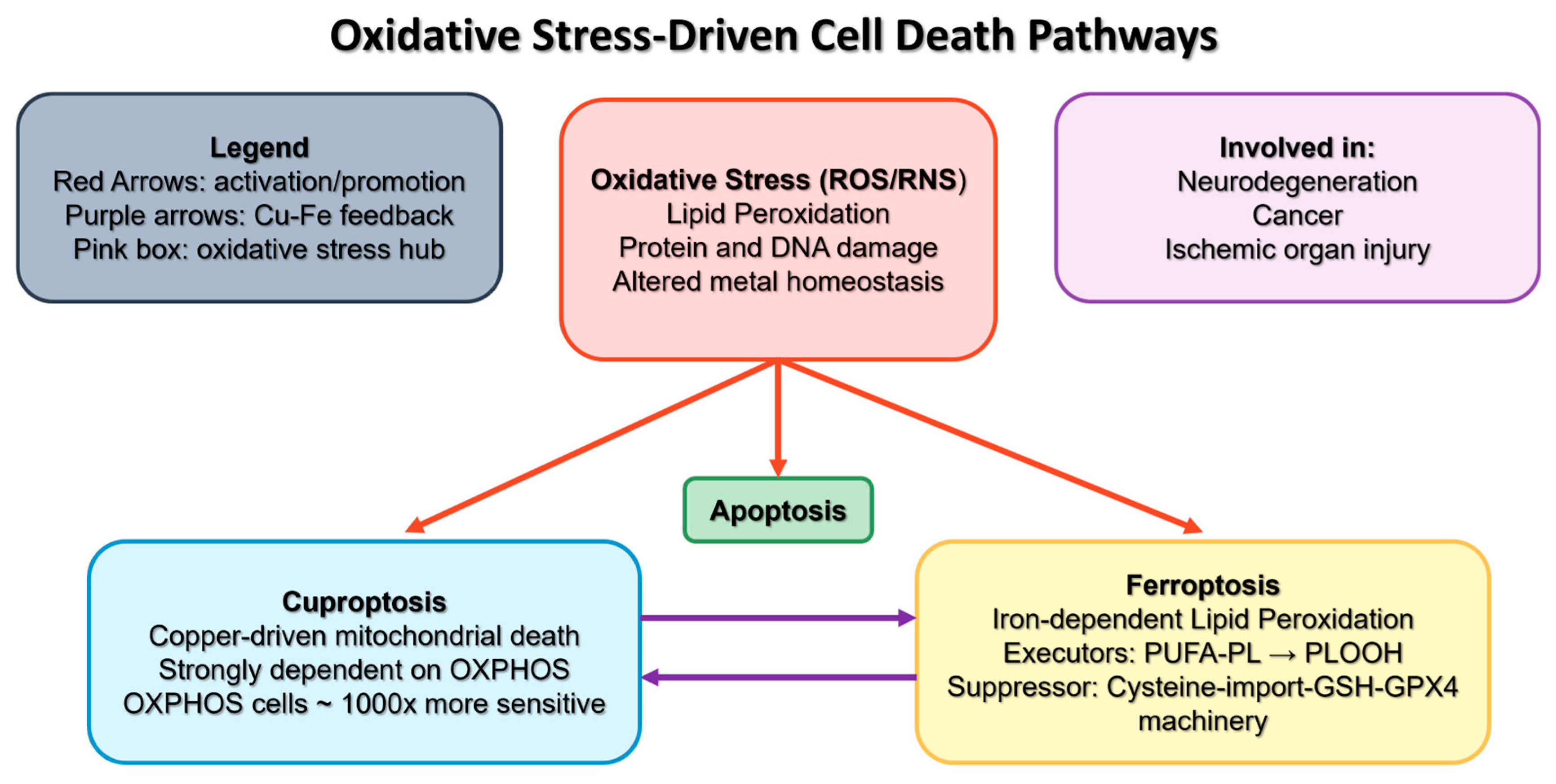
1.1. Oxidative Stress in Pathological Conditions: Its Role in Cell Death
1.2. Broader Pathophyhysiological Consequences Across Diseases
1.3. Redox-Dependent Regulated Cell Death: Ferroptosis and Cuproptosis as Specific Outcomes
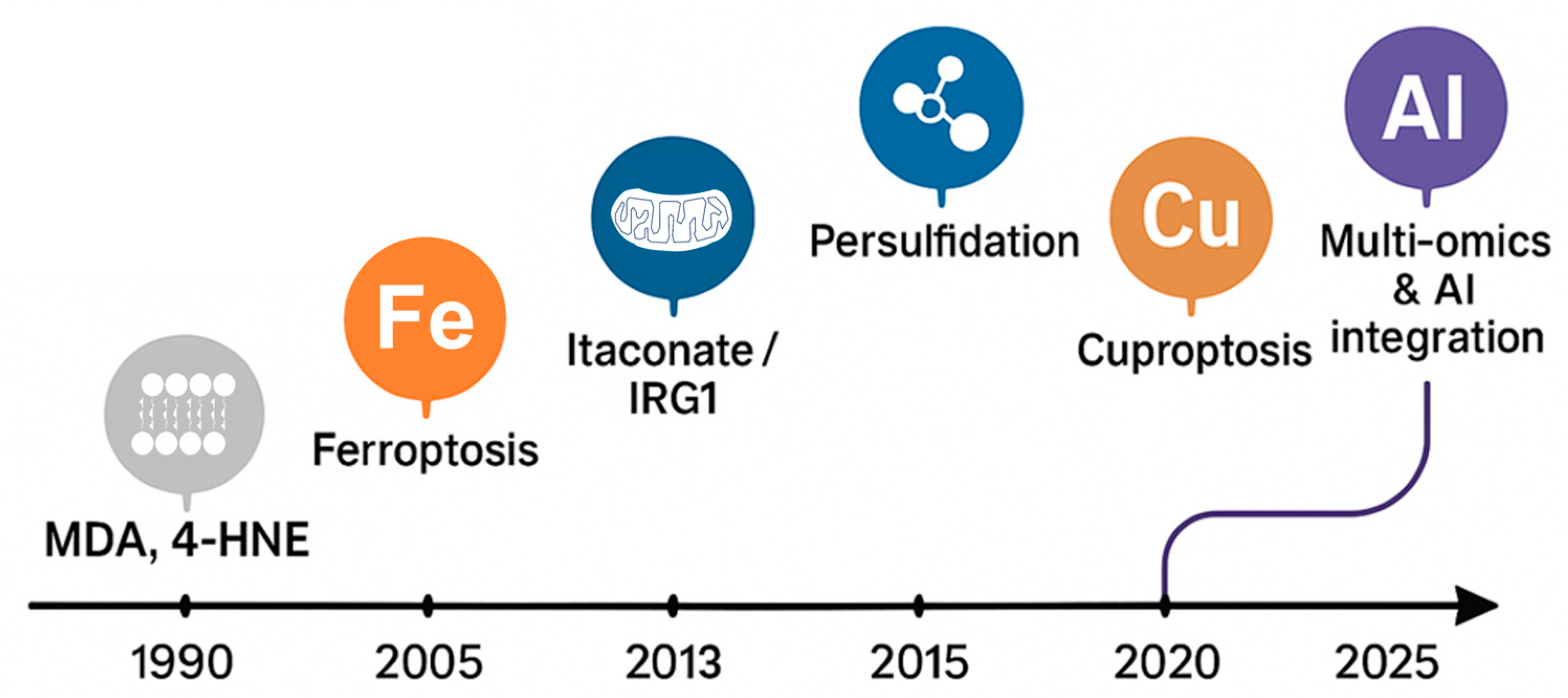
2. Itaconate, Inflammation and Antioxidant Response: From Metabolic By-Product to Redox Regulator
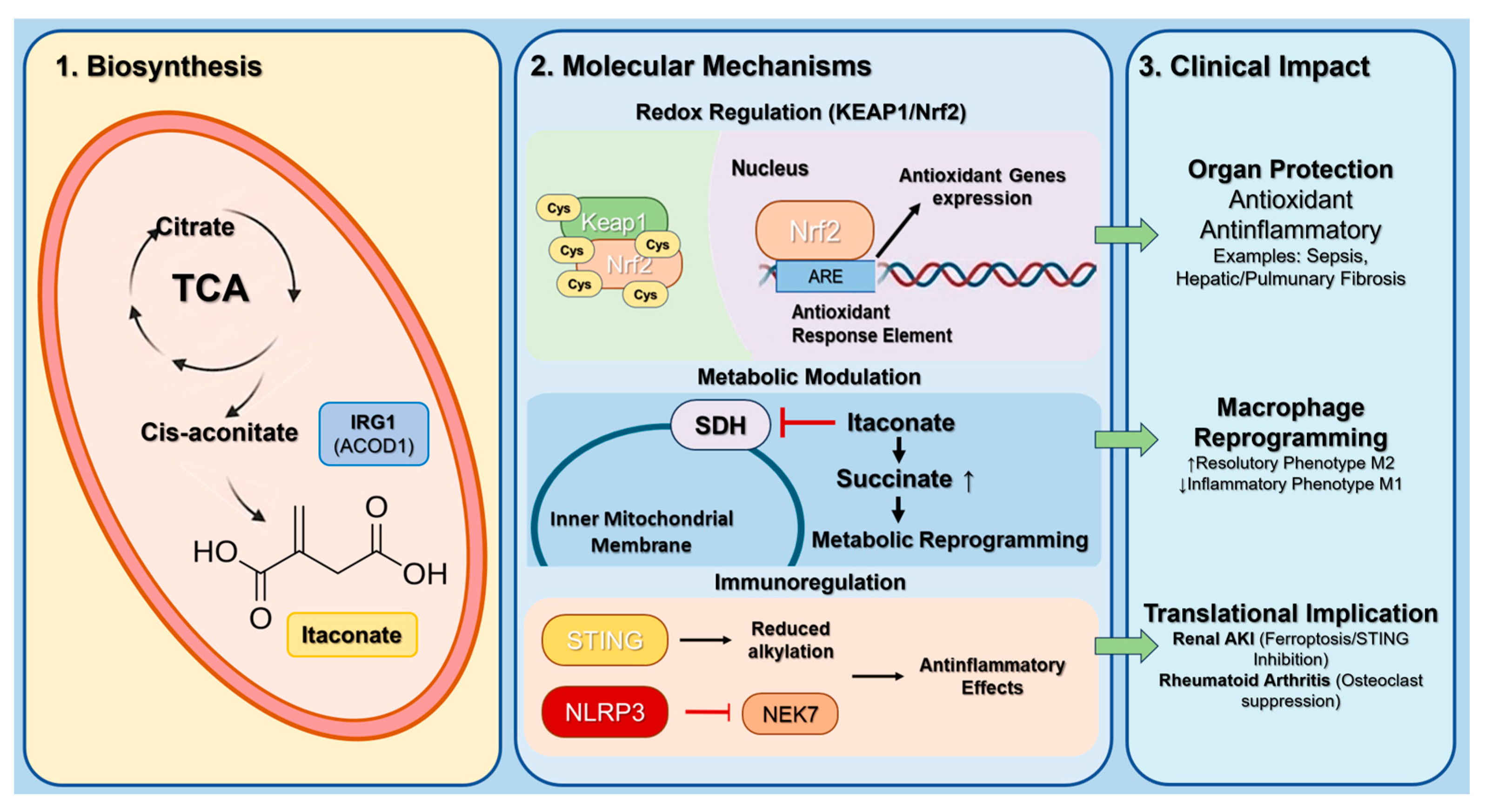
2.1. Core Mechanisms and Biological Rationale
2.1.1. Electrophilic Chemistry and Cysteine Targeting of Itaconate
2.1.2. Itaconate and Immunometabolic Modulation: Immunometabolic Reprogramming and Functional Consequences
2.2. Itaconate Translational Developments
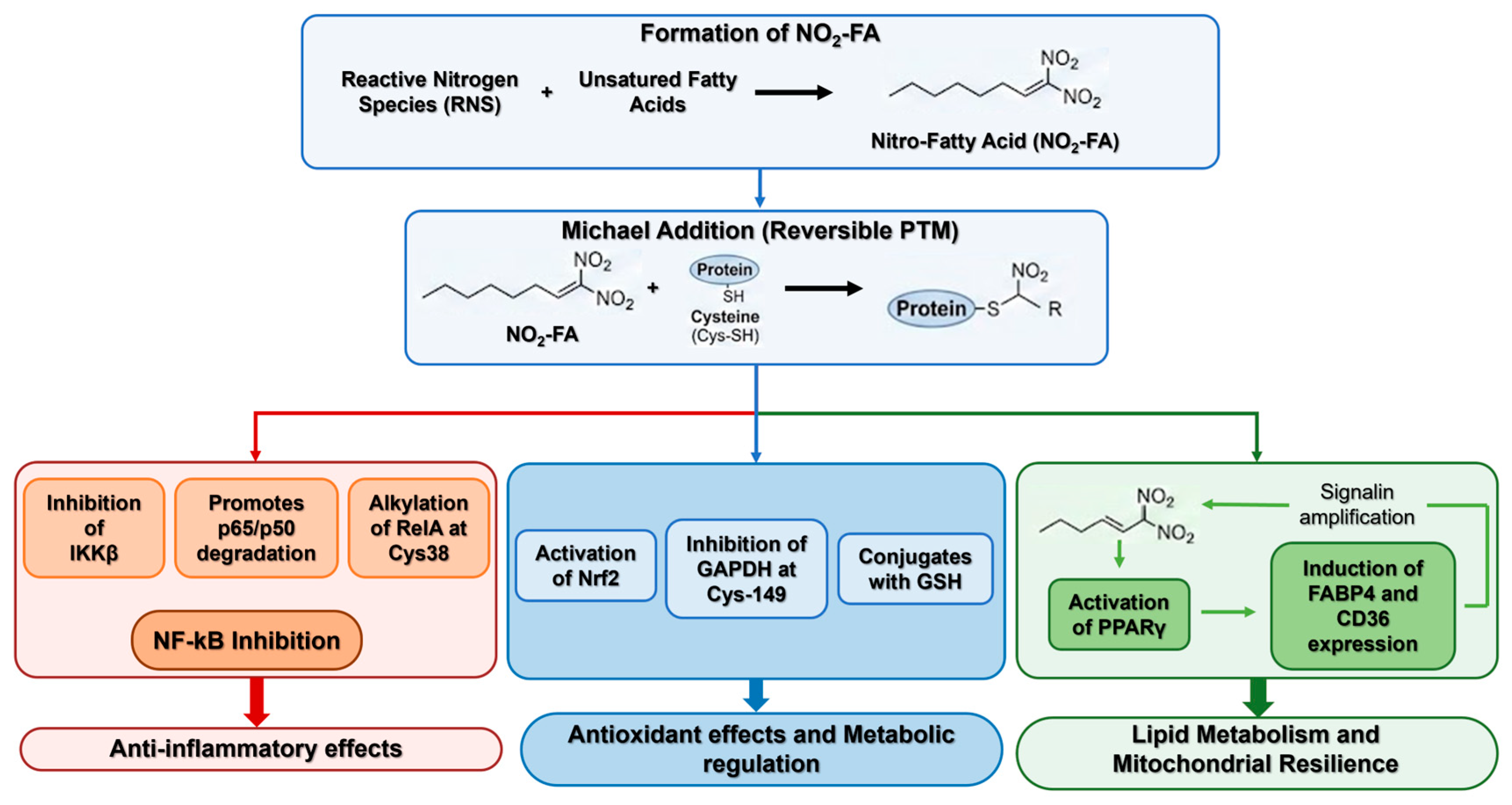
3. Nitro-Fatty Acids: Electrophilic Lipid Signalling
Translational Evidence
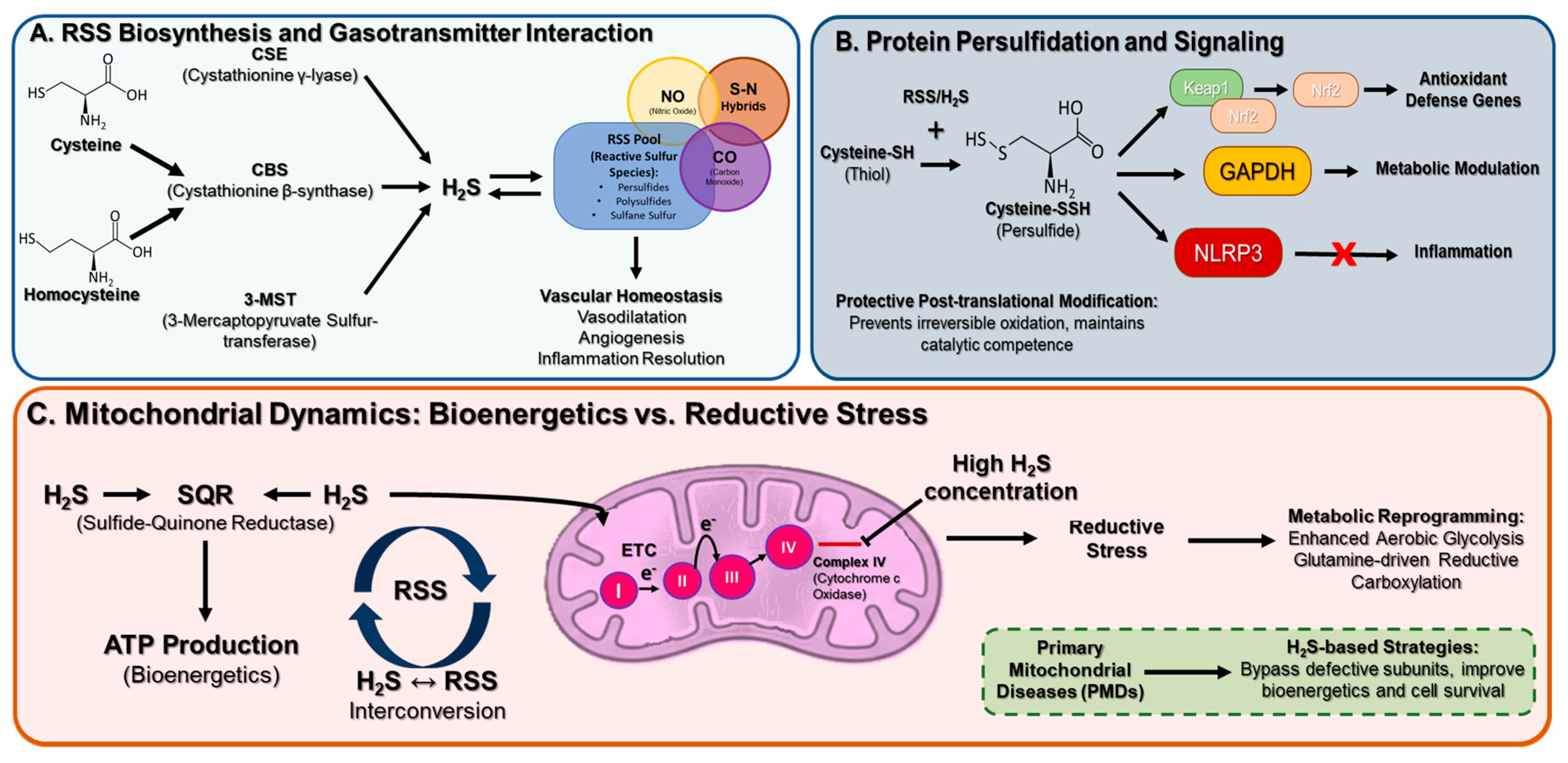
4. Reactive Sulfur Species (RSS) and Protein Persulfidation
RSS and Translational Developments
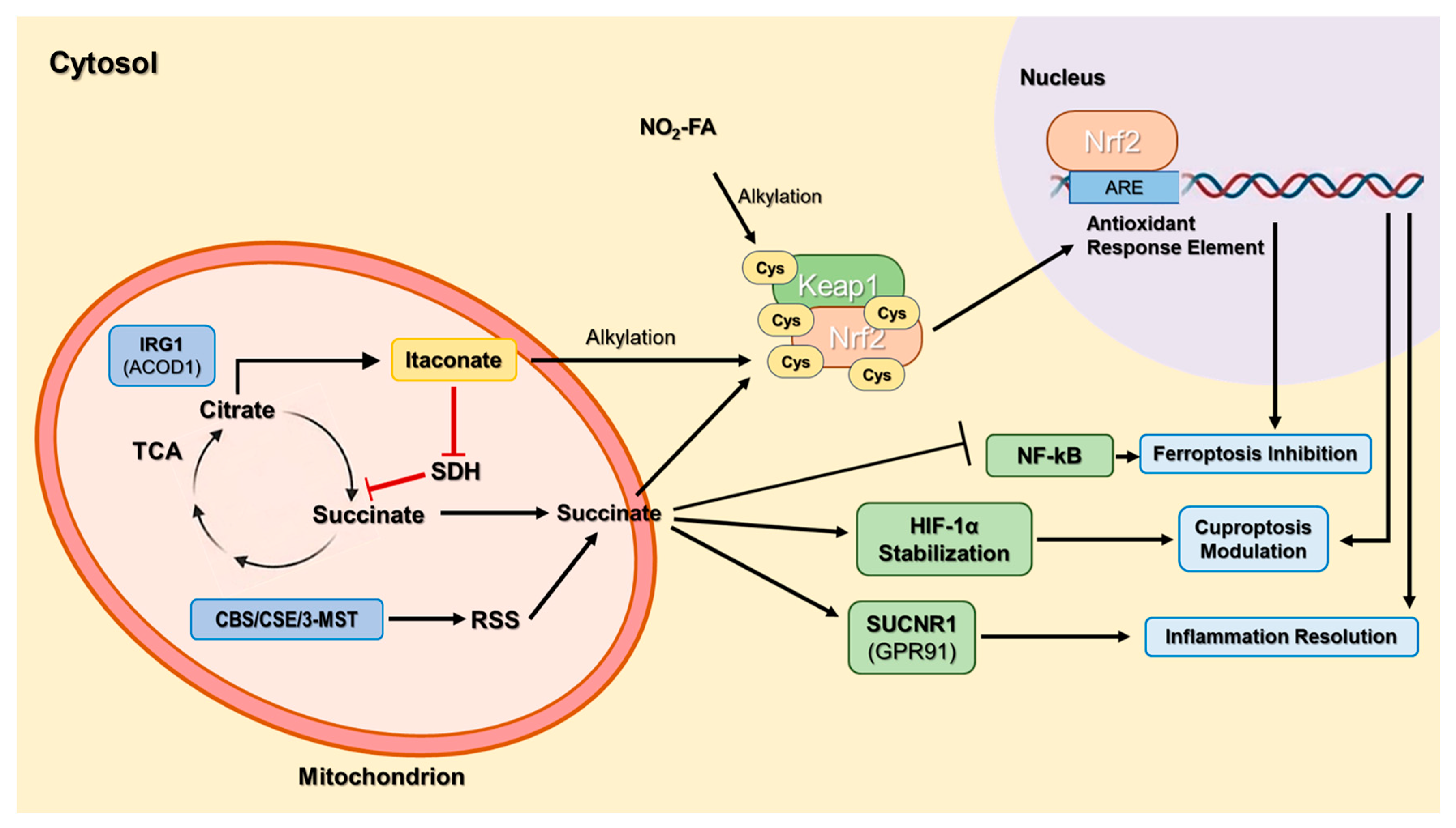
5. Succinate and Redox–Immune Signalling
6. Next-Generation Redox Mediators: Translational Biomarkers and Clinical Implications
6.1. From Single Markers to Integrated Redox Panels
6.2. Succinate and SUCNR1 as Redox–Metabolic Readouts
6.3. Electrophilic Lipids and Adductomics
7. Future Directions and Research Agenda
7.1. Standardization of Redox Biomarkers and Methodology
- Baseline (T0): measure MDA, 4-HNE, CRP, IL-6, Fe/Cu ratio, NADPH/NADP+, succinate, itaconate, NO2-FA, RSS.
- Classification: balanced/compensated/decompensated phenotype.
- Intervention: apply nutraceutical or pharmacological modulation (e.g., Nrf2 activators, omega-3, CoQ10).
- Monitoring: monthly reassessment with AI-based trend analysis.
- Outcome: composite score reduction ≥ 30% is proposed as a benchmark for redox improvement, providing a threshold that accounts for analytical noise and ensures clinical relevance.
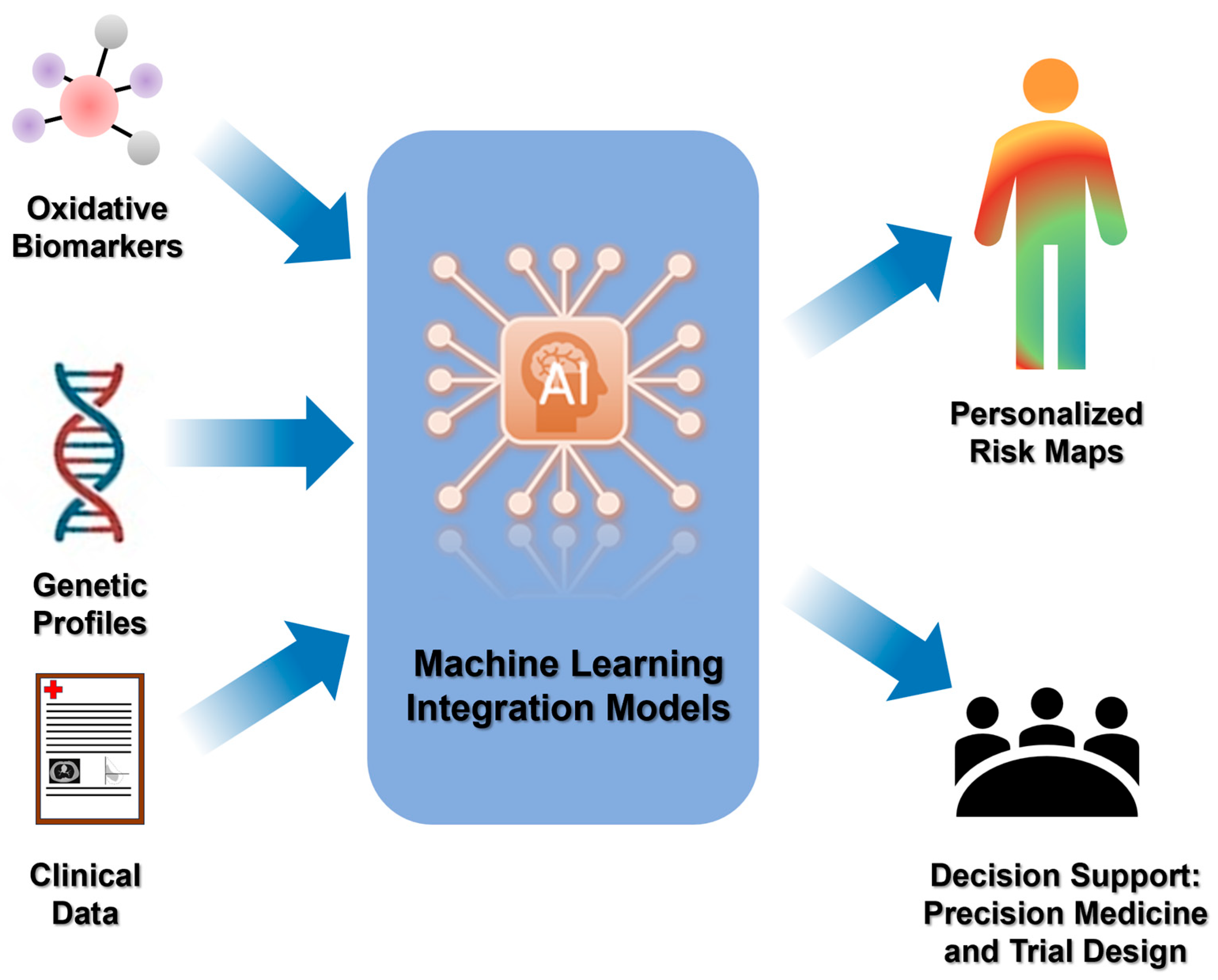
7.2. Artificial Intelligence and Predictive Modelling
7.3. Telemetry and Continuous Redox Monitoring
8. Conclusions
Author Contributions
Funding
Institutional Review Board Statement
Informed Consent Statement
Data Availability Statement
Acknowledgments
Conflicts of Interest
Abbreviations
| 4-EI | 4-ethyl Itaconate |
| 4-HNE | 4-hydroxynonenal |
| 4-OI | 4-octyl Itaconate |
| AAT | Alpha-1 Antitrypsin |
| AI | Artificial Intelligence |
| AOPP | Advanced Oxidation Protein Products |
| CBS | Cystathionine β-synthase |
| CMD | Cardiometabolic Disease |
| CSE | Cystathionine γ-lyase |
| DI | Dimethyl Itaconate |
| DKD | Diabetic Kidney Disease |
| ETC | Electron Transport Chain |
| GAPDH | Glyceraldehyde-3-phosphate Dehydrogenase |
| GSH | Glutathione |
| GSH-GPX4 | Glutathione Peroxidase 4 |
| MASLD | Metabolic Dysfunction-Associated Steatotic Liver Disease |
| MDA | Malondialdehyde |
| MPST | 3-mercaptopyruvate sulfur-transferase |
| NADPH | Nicotinamide Adenine Dinucleotide Phosphate |
| OXPHOS | Oxidative Phosphorylation |
| PBMCs | Peripheral Blood Mononuclear Cell |
| PEITC | Phenethyl Isothiocyanate |
| PHD | Prolyl Hydroxylase Domain |
| PLOOHs | Phospholipid Hydroperoxides |
| PTM | Post-translational Modification |
| PUFA | Polyunsaturated Fatty Acid |
| RET | Reverse Electron Transport |
| RNS | Reactive Nitrogen Species |
| ROS | Reactive Oxygen Species |
| RSS | Reactive Sulfur Species |
| SDH | Succinate Dehydrogenase |
| SQR | Sulfide-Quinone Reductase |
| SUCNR1 | Succinate Receptor 1 |
| TCA | Tricarboxylic-acid Cycle |
| TLR4 | Toll-like Receptor 4 |
| UDCA | Ursodeoxycholic Acid |
References
- Csala, M.; Kardon, T.; Legeza, B.; Lizák, B.; Mandl, J.; Margittai, É.; Puskás, F.; Száraz, P.; Szelényi, P.; Bánhegyi, G. On the Role of 4-Hydroxynonenal in Health and Disease. Biochim. Biophys. Acta (BBA)-Mol. Basis Dis. 2015, 1852, 826–838. [Google Scholar] [CrossRef] [PubMed]
- Živković, M.; Žarković, K.; Škrinjar, L.; Waeg, G.; Poljak-Blaži, M.; Borović Šunjić, S.; Jörg Schaur, R.; Žarković, N. A New Method for Detection of HNE-Histidine Conjugates in Rat Inflammatory Cells. Croat. Chem. Acta 2025, 78, 91–98. [Google Scholar]
- Cordiano, R.; Di Gioacchino, M.; Mangifesta, R.; Panzera, C.; Gangemi, S.; Minciullo, P.L. Malondialdehyde as a Potential Oxidative Stress Marker for Allergy-Oriented Diseases: An Update. Molecules 2023, 28, 5979. [Google Scholar] [CrossRef] [PubMed]
- Danieli, M.G.; Antonelli, E.; Piga, M.A.; Cozzi, M.F.; Allegra, A.; Gangemi, S. Oxidative Stress, Mitochondrial Dysfunction, and Respiratory Chain Enzyme Defects in Inflammatory Myopathies. Autoimmun. Rev. 2023, 22, 103308. [Google Scholar] [CrossRef]
- Pomi, F.L.; Gammeri, L.; Borgia, F.; Di Gioacchino, M.; Gangemi, S. Oxidative Stress and Skin Diseases: The Role of Lipid Peroxidation. Antioxidants 2025, 14, 555. [Google Scholar] [CrossRef]
- Morabito, F.; Cristani, M.; Saija, A.; Stelitano, C.; Callea, V.; Tomaino, A.; Minciullo, P.L.; Gangemi, S. Lipid Peroxidation and Protein Oxidation in Patients Affected by Hodgkin’s Lymphoma. Mediat. Inflamm. 2004, 13, 381–383. [Google Scholar] [CrossRef]
- Gangemi, S.; Allegra, A.; Alonci, A.; Cristani, M.; Russo, S.; Speciale, A.; Penna, G.; Spatari, G.; Cannavò, A.; Bellomo, G.; et al. Increase of Novel Biomarkers for Oxidative Stress in Patients with Plasma Cell Disorders and in Multiple Myeloma Patients with Bone Lesions. Inflamm. Res. 2012, 61, 1063–1067. [Google Scholar] [CrossRef]
- Milkovic, L.; Zarkovic, N.; Marusic, Z.; Zarkovic, K.; Jaganjac, M. The 4-Hydroxynonenal–Protein Adducts and Their Biological Relevance: Are Some Proteins Preferred Targets? Antioxidants 2023, 12, 856. [Google Scholar] [CrossRef]
- Jaganjac, M.; Cipak, A.; Schaur, R.J.; Zarkovic, N. Pathophysiology of Neutrophil-Mediated Extracellular Redox Reactions. Front. Biosci. (Landmark Ed.) 2016, 21, 839–855. [Google Scholar] [CrossRef]
- Poljšak, B.; Jamnik, P.; Kozyrev, D.; Slutsky, V. Methodology for Oxidative State Detection in Biological Systems. In Handbook of Free Radicals: Formation, Types and Effects; Cell Biology Research Progress Series; Nova Science: New York, NY, USA, 2010; pp. 421–448. [Google Scholar]
- Poljšak, B.; Jamnik, P.; Milisav, I. The Importance of Multifaceted Approach for Accurate and Comprehensive Evaluation of Oxidative Stress Status in Biological Systems. Antioxidants 2025, 14, 1083. [Google Scholar] [CrossRef]
- Poli, G.; Leonarduzzi, G.; Biasi, F.; Chiarpotto, E. Oxidative Stress and Cell Signalling. Curr. Med. Chem. 2004, 11, 1163–1182. [Google Scholar] [CrossRef]
- Thannickal, V.J.; Fanburg, B.L. Reactive Oxygen Species in Cell Signaling. Am. J. Physiol.-Lung Cell. Mol. Physiol. 2000, 279, L1005–L1028. [Google Scholar] [CrossRef]
- Dröge, W. Free Radicals in the Physiological Control of Cell Function. Physiol. Rev. 2002, 82, 47–95. [Google Scholar] [CrossRef] [PubMed]
- Storz, P. Reactive Oxygen Species in Tumor Progression. Front. Biosci. 2005, 10, 1881–1896. [Google Scholar] [CrossRef] [PubMed]
- Valko, M.; Leibfritz, D.; Moncol, J.; Cronin, M.T.D.; Mazur, M.; Telser, J. Free Radicals and Antioxidants in Normal Physiological Functions and Human Disease. Int. J. Biochem. Cell Biol. 2007, 39, 44–84. [Google Scholar] [CrossRef] [PubMed]
- Zhang, Z.; Zhang, M.; Jin, H.; Lv, S.; Li, Y.; Li, Y. Mitochondrial Quality Control and Cell Death. Int. J. Mol. Sci. 2025, 26, 11084. [Google Scholar] [CrossRef]
- Meng, Y.; Chen, Q.; Zhou, Z.; Li, M. Regulated Cell Death in Cancer: Mechanisms, Crosstalk, and Opportunities for Therapy. Cancer Lett. 2025, 635, 218077. [Google Scholar] [CrossRef]
- Wang, Y.; Hu, J.; Wu, S.; Fleishman, J.S.; Li, Y.; Xu, Y.; Zou, W.; Wang, J.; Feng, Y.; Chen, J.; et al. Targeting Epigenetic and Posttranslational Modifications Regulating Ferroptosis for the Treatment of Diseases. Signal Transduct. Target. Ther. 2023, 8, 449. [Google Scholar] [CrossRef]
- Fearnhead, H.O.; Vandenabeele, P.; Berghe, T.V. How Do We Fit Ferroptosis in the Family of Regulated Cell Death? Cell Death Differ. 2017, 24, 1991–1998. [Google Scholar] [CrossRef]
- Yan, H.F.; Zou, T.; Tuo, Q.Z.; Xu, S.; Li, H.; Belaidi, A.A.; Lei, P. Ferroptosis: Mechanisms and Links with Diseases. Signal Transduct. Target. Ther. 2021, 6, 49. [Google Scholar] [CrossRef]
- Jiang, X.; Stockwell, B.R.; Conrad, M. Ferroptosis: Mechanisms, Biology and Role in Disease. Nat. Rev. Mol. Cell Biol. 2021, 22, 266–282. [Google Scholar] [CrossRef]
- Tsvetkov, P.; Coy, S.; Petrova, B.; Dreishpoon, M.; Verma, A.; Abdusamad, M.; Rossen, J.; Joesch-Cohen, L.; Humeidi, R.; Spangler, R.D.; et al. Copper Induces Cell Death by Targeting Lipoylated TCA Cycle Proteins. Science 2022, 375, 1254–1261. [Google Scholar] [CrossRef]
- Wang, D.; Tian, Z.; Zhang, P.; Zhen, L.; Meng, Q.; Sun, B.; Xu, X.; Jia, T.; Li, S. The Molecular Mechanisms of Cuproptosis and Its Relevance to Cardiovascular Disease. Biomed. Pharmacother. 2023, 163, 114830. [Google Scholar] [CrossRef]
- Li Pomi, F.; Di Leo, G.; Genovese, S.; Borgia, F.; Gangemi, S. Redox Network Dysfunction: Integrating Ferroptosis and Cuproptosis Across Human Diseases. Antioxidants 2025, 15, 24. [Google Scholar] [CrossRef] [PubMed]
- Huang, L.; Zhu, J.; Wu, G.; Xiong, W.; Feng, J.; Yan, C.; Yang, J.; Li, Z.; Fan, Q.; Ren, B.; et al. A Strategy of “Adding Fuel to the Flames” Enables a Self-Accelerating Cycle of Ferroptosis-Cuproptosis for Potent Antitumor Therapy. Biomaterials 2024, 311, 122701. [Google Scholar] [CrossRef] [PubMed]
- Liu, G.; Tang, R.; Wang, C.; Yu, D.; Wang, Z.; Yang, H.; Wei, J.; Zhu, S.; Gao, F.; Yuan, F.; et al. Bimetallic Nanoconjugate Hijack Fe-S Clusters to Drive a Closed-Loop Cuproptosis-Ferroptosis Strategy for Osteosarcoma Inhibition. J. Colloid Interface Sci. 2026, 703, 139052. [Google Scholar] [CrossRef] [PubMed]
- Zhang, M.; Xu, H.; Wu, X.; Chen, B.; Gong, X.; He, Y. Engineering Dual-Responsive Nanoplatform Achieves Copper Metabolism Disruption and Glutathione Consumption to Provoke Cuproptosis/Ferroptosis/Apoptosis for Cancer Therapy. ACS Appl. Mater. Interfaces 2025, 17, 20726–20740. [Google Scholar] [CrossRef]
- Jomova, K.; Alomar, S.Y.; Valko, R.; Nepovimova, E.; Kuca, K.; Valko, M. The Role of Redox-Active Iron, Copper, Manganese, and Redox-Inactive Zinc in Toxicity, Oxidative Stress, and Human Diseases. EXCLI J. 2025, 24, 880–954. [Google Scholar] [CrossRef]
- Chen, H.; Li, D.; Zhang, H.; Zhang, M.; Lin, Y.; He, H.; Liu, A.; Shen, S.; Wang, Y.; Han, Z. Mechanisms of Copper Metabolism and Cuproptosis: Implications for Liver Diseases. Front. Immunol. 2025, 16, 1633711. [Google Scholar] [CrossRef]
- Wang, X.; Xue, Y.; Chang, L.; Zhu, X.; Liu, W.; Liang, T. The Regulation of Trace Metal Elements in Cancer Ferroptosis. Adv. Biol. 2025, 9, 2400821. [Google Scholar] [CrossRef]
- Meng, D.; Luo, G.; Liu, P. Copper Metabolism and Cuproptosis in Alzheimer’s Disease: Mechanisms and Therapeutic Potential. Biomed. Pharmacother. 2025, 190, 118354. [Google Scholar] [CrossRef]
- Ma, K.; Zhou, P.; Zhang, W.; Zeng, L.; Tao, K.; Zhang, P. Itaconic Acid: A Regulator of Immune Responses and Inflammatory Metabolism. Curr. Issues Mol. Biol. 2025, 47, 534. [Google Scholar] [CrossRef] [PubMed]
- Trostchansky, A.; Wood, I.; Rubbo, H. Regulation of Arachidonic Acid Oxidation and Metabolism by Lipid Electrophiles. Prostaglandins Other Lipid Mediat. 2021, 152, 106482. [Google Scholar] [CrossRef] [PubMed]
- Dillon, K.M.; Carrazzone, R.J.; Wang, Y.; Powell, C.R.; Matson, J.B. Polymeric Persulfide Prodrugs: Mitigating Oxidative Stress through Controlled Delivery of Reactive Sulfur Species. ACS Macro Lett. 2020, 9, 606–612. [Google Scholar] [CrossRef] [PubMed]
- Feng, M.L.; Li, Z.H.; Shi, B.B. Progress on 3-Nitropropionic Acid Derivatives. Biomolecules 2025, 15, 1066. [Google Scholar] [CrossRef]
- Zheng, C.M.; Hou, Y.C.; Liao, M.T.; Tsai, K.W.; Hu, W.C.; Yeh, C.C.; Lu, K.C. Potential Role of Molecular Hydrogen Therapy on Oxidative Stress and Redox Signaling in Chronic Kidney Disease. Biomed. Pharmacother. 2024, 176, 116802. [Google Scholar] [CrossRef]
- Han, X.; Liu, P.; Zheng, B.; Zhang, M.; Zhang, Y.; Xue, Y.; Liu, C.; Chu, X.; Wang, X.; Sun, S.; et al. 6-Gingerol Exerts a Protective Effect against Hypoxic Injury through the P38/Nrf2/HO-1 and P38/NF-ΚB Pathway in H9c2 Cells. J. Nutr. Biochem. 2022, 104, 108975. [Google Scholar] [CrossRef]
- Liu, M.; Wang, X.; Qu, X.; Wang, Y.; Shen, X.; Xu, L. Divergent Metabolic Rewiring Shapes Altered Innate Immunity. Cell. Immunol. 2025, 417, 105025. [Google Scholar] [CrossRef]
- Yang, W.; Wang, Y.; Tao, K.; Li, R. Metabolite Itaconate in Host Immunoregulation and Defense. Cell. Mol. Biol. Lett. 2023, 28, 100. [Google Scholar] [CrossRef]
- Li, Y.; Gong, W.; Li, W.; Liu, P.; Liu, J.; Jiang, H.; Zheng, T.; Wu, J.; Wu, X.; Zhao, Y.; et al. The IRG1-Itaconate Axis: A Regulatory Hub for Immunity and Metabolism in Macrophages. Int. Rev. Immunol. 2023, 42, 364–378. [Google Scholar] [CrossRef]
- Lang, R.; Siddique, M.N.A.A. Control of Immune Cell Signaling by the Immuno-Metabolite Itaconate. Front. Immunol. 2024, 15, 1352165. [Google Scholar] [CrossRef] [PubMed]
- O’Neill, L.A.J.; Artyomov, M.N. Itaconate: The Poster Child of Metabolic Reprogramming in Macrophage Function. Nat. Rev. Immunol. 2019, 19, 273–281. [Google Scholar] [CrossRef] [PubMed]
- Ahmed, S.M.U.; Luo, L.; Namani, A.; Wang, X.J.; Tang, X. Nrf2 Signaling Pathway: Pivotal Roles in Inflammation. Biochim. Biophys. Acta Mol. Basis Dis. 2017, 1863, 585–597. [Google Scholar] [CrossRef] [PubMed]
- Gao, H.; Ding, M.; Liu, Y.; Wang, Y.; Zhao, S.; Chen, J.; Chen, Z.; Wang, G. Reprogramming Immunity with Itaconate: Metabolic Mechanisms and Therapeutic Perspectives. Inflamm. Res. 2025, 74, 128. [Google Scholar] [CrossRef]
- Peace, C.G.; O’Neill, L.A.J. The Role of Itaconate in Host Defense and Inflammation. J. Clin. Investig. 2022, 132, 2. [Google Scholar] [CrossRef]
- Hooftman, A.; Angiari, S.; Hester, S.; Corcoran, S.E.; Runtsch, M.C.; Ling, C.; Ruzek, M.C.; Slivka, P.F.; McGettrick, A.F.; Banahan, K.; et al. The Immunomodulatory Metabolite Itaconate Modifies NLRP3 and Inhibits Inflammasome Activation. Cell Metab. 2020, 32, 468–478.e7. [Google Scholar] [CrossRef]
- Strelko, C.L.; Lu, W.; Dufort, F.J.; Seyfried, T.N.; Chiles, T.C.; Rabinowitz, J.D.; Roberts, M.F. Itaconic Acid Is a Mammalian Metabolite Induced during Macrophage Activation. J. Am. Chem. Soc. 2011, 133, 16386–16389. [Google Scholar] [CrossRef]
- Cordes, T.; Metallo, C.M. Itaconate Alters Succinate and Coenzyme A Metabolism via Inhibition of Mitochondrial Complex II and Methylmalonyl-CoA Mutase. Metabolites 2021, 11, 117. [Google Scholar] [CrossRef]
- Ackermann, W.W.; Potter, V.R. Enzyme Inhibition in Relation to Chemotherapy. Proc. Soc. Exp. Biol. Med. 1949, 72, 1–9. [Google Scholar] [CrossRef]
- Daniels, B.P.; Kofman, S.B.; Smith, J.R.; Norris, G.T.; Snyder, A.G.; Kolb, J.P.; Gao, X.; Locasale, J.W.; Martinez, J.; Gale, M.; et al. The Nucleotide Sensor ZBP1 and Kinase RIPK3 Induce the Enzyme IRG1 to Promote an Antiviral Metabolic State in Neurons. Immunity 2019, 50, 64–76.e4. [Google Scholar] [CrossRef]
- Heinz, A.; Nonnenmacher, Y.; Henne, A.; Khalil, M.A.; Bejkollari, K.; Dostert, C.; Hosseini, S.; Goldmann, O.; He, W.; Palorini, R.; et al. Itaconate Controls Its Own Synthesis via Feedback-Inhibition of Reverse TCA Cycle Activity at IDH2. Biochim. Biophys. Acta (BBA)-Mol. Basis Dis. 2022, 1868, 166530. [Google Scholar] [CrossRef] [PubMed]
- Shi, X.; Zhou, H.; Wei, J.; Mo, W.; Li, Q.; Lv, X. The Signaling Pathways and Therapeutic Potential of Itaconate to Alleviate Inflammation and Oxidative Stress in Inflammatory Diseases. Redox Biol. 2022, 58, 102553. [Google Scholar] [CrossRef] [PubMed]
- Li, Y.; Zhang, P.; Wang, C.; Han, C.; Meng, J.; Liu, X.; Xu, S.; Li, N.; Wang, Q.; Shi, X.; et al. Immune Responsive Gene 1 (IRG1) Promotes Endotoxin Tolerance by Increasing A20 Expression in Macrophages through Reactive Oxygen Species. J. Biol. Chem. 2013, 288, 16225–16234. [Google Scholar] [CrossRef] [PubMed]
- Mills, E.L.; Ryan, D.G.; Prag, H.A.; Dikovskaya, D.; Menon, D.; Zaslona, Z.; Jedrychowski, M.P.; Costa, A.S.H.; Higgins, M.; Hams, E.; et al. Itaconate Is an Anti-Inflammatory Metabolite That Activates Nrf2 via Alkylation of KEAP1. Nature 2018, 556, 113–117. [Google Scholar] [CrossRef]
- Swain, A.; Bambouskova, M.; Kim, H.; Andhey, P.S.; Duncan, D.; Auclair, K.; Chubukov, V.; Simons, D.M.; Roddy, T.P.; Stewart, K.M.; et al. Comparative Evaluation of Itaconate and Its Derivatives Reveals Divergent Inflammasome and Type I Interferon Regulation in Macrophages. Nat. Metab. 2020, 2, 594–602. [Google Scholar] [CrossRef]
- Bambouskova, M.; Gorvel, L.; Lampropoulou, V.; Sergushichev, A.; Loginicheva, E.; Johnson, K.; Korenfeld, D.; Mathyer, M.E.; Kim, H.; Huang, L.H.; et al. Electrophilic Properties of Itaconate and Derivatives Regulate the IκBζ-ATF3 Inflammatory Axis. Nature 2018, 556, 501–504. [Google Scholar] [CrossRef]
- Marrocco, A.; Frawley, K.; Pearce, L.L.; Peterson, J.; O’Brien, J.P.; Mullett, S.J.; Wendell, S.G.; St Croix, C.M.; Mischler, S.E.; Ortiz, L.A. Metabolic Adaptation of Macrophages as Mechanism of Defense against Crystalline Silica. J. Immunol. 2021, 207, 1627–1640. [Google Scholar] [CrossRef]
- Kobayashi, E.H.; Suzuki, T.; Funayama, R.; Nagashima, T.; Hayashi, M.; Sekine, H.; Tanaka, N.; Moriguchi, T.; Motohashi, H.; Nakayama, K.; et al. Nrf2 Suppresses Macrophage Inflammatory Response by Blocking Proinflammatory Cytokine Transcription. Nat. Commun. 2016, 7, 11624. [Google Scholar] [CrossRef]
- Du, Y.; Ma, Z.; Zheng, J.; Huang, S.; Yang, X.; Song, Y.; Dong, D.; Shi, L.; Xu, D. ATF3 Positively Regulates Antibacterial Immunity by Modulating Macrophage Killing and Migration Functions. Front. Immunol. 2022, 13, 839502. [Google Scholar] [CrossRef]
- Okamoto, K.; Iwai, Y.; Oh-Hora, M.; Yamamoto, M.; Morio, T.; Aoki, K.; Ohya, K.; Jetten, A.M.; Akira, S.; Muta, T.; et al. IkappaBzeta Regulates T(H)17 Development by Cooperating with ROR Nuclear Receptors. Nature 2010, 464, 1381–1385. [Google Scholar] [CrossRef]
- Morehouse, B.R.; Govande, A.A.; Millman, A.; Keszei, A.F.A.; Lowey, B.; Ofir, G.; Shao, S.; Sorek, R.; Kranzusch, P.J. STING Cyclic Dinucleotide Sensing Originated in Bacteria. Nature 2020, 586, 429–433. [Google Scholar] [CrossRef]
- Lv, M.; Chen, M.; Zhang, R.; Zhang, W.; Wang, C.; Zhang, Y.; Wei, X.; Guan, Y.; Liu, J.; Feng, K.; et al. Manganese Is Critical for Antitumor Immune Responses via CGAS-STING and Improves the Efficacy of Clinical Immunotherapy. Cell Res. 2020, 30, 966–979. [Google Scholar] [CrossRef] [PubMed]
- Olagnier, D.; Brandtoft, A.M.; Gunderstofte, C.; Villadsen, N.L.; Krapp, C.; Thielke, A.L.; Laustsen, A.; Peri, S.; Hansen, A.L.; Bonefeld, L.; et al. Nrf2 Negatively Regulates STING Indicating a Link between Antiviral Sensing and Metabolic Reprogramming. Nat. Commun. 2018, 9, 3506. [Google Scholar] [CrossRef] [PubMed]
- Li, W.; Li, Y.; Kang, J.; Jiang, H.; Gong, W.; Chen, L.; Wu, C.; Liu, M.; Wu, X.; Zhao, Y.; et al. 4-Octyl Itaconate as a Metabolite Derivative Inhibits Inflammation via Alkylation of STING. Cell Rep. 2023, 42, 112145. [Google Scholar] [CrossRef] [PubMed]
- Wang, J.; Long, R.; Han, Y. The Role of Exosomes in the Tumour Microenvironment on Macrophage Polarisation. Biochim. Biophys. Acta (BBA)-Mol. Basis Dis. 2022, 1877, 188811. [Google Scholar] [CrossRef]
- Wang, F.; Zhang, S.; Jeon, R.; Vuckovic, I.; Jiang, X.; Lerman, A.; Folmes, C.D.; Dzeja, P.D.; Herrmann, J. Interferon Gamma Induces Reversible Metabolic Reprogramming of M1 Macrophages to Sustain Cell Viability and Pro-Inflammatory Activity. EBioMedicine 2018, 30, 303–316. [Google Scholar] [CrossRef]
- Mommert, S.; Jahn, M.; Schaper-Gerhardt, K.; Gutzmer, R.; Werfel, T. Expression of Histamine Receptors H2R and H4R Are Predominantly Regulated via the IL-4/IL-13 Receptor Type II on Human M2 Macrophages. Allergy 2021, 76, 2886–2890. [Google Scholar] [CrossRef]
- Yuan, G.; Fu, C.; Yang, S.T.; Yuh, D.Y.; Hajishengallis, G.; Yang, S. RGS12 Drives Macrophage Activation and Osteoclastogenesis in Periodontitis. J. Dent. Res. 2022, 101, 448–457. [Google Scholar] [CrossRef]
- Runtsch, M.C.; Angiari, S.; Hooftman, A.; Wadhwa, R.; Zhang, Y.; Zheng, Y.; Spina, J.S.; Ruzek, M.C.; Argiriadi, M.A.; McGettrick, A.F.; et al. Itaconate and Itaconate Derivatives Target JAK1 to Suppress Alternative Activation of Macrophages. Cell Metab. 2022, 34, 487–501.e8. [Google Scholar] [CrossRef]
- Blanco, L.P.; Patino-Martinez, E.; Nakabo, S.; Zhang, M.; Pedersen, H.L.; Wang, X.; Carmona-Rivera, C.; Claybaugh, D.; Yu, Z.X.; Desta, E.; et al. Modulation of the Itaconate Pathway Attenuates Murine Lupus. Arthritis Rheumatol. 2022, 74, 1971–1983. [Google Scholar] [CrossRef]
- Ye, L.; Jiang, Y.; Zhang, M. Crosstalk between Glucose Metabolism, Lactate Production and Immune Response Modulation. Cytokine Growth Factor Rev. 2022, 68, 81–92. [Google Scholar] [CrossRef] [PubMed]
- Zhou, P.; Yang, L.; Li, R.; Yin, Y.; Xie, G.; Liu, X.; Shi, L.; Tao, K.; Zhang, P. IRG1/Itaconate Alleviates Acute Liver Injury in Septic Mice by Suppressing NLRP3 Expression and Its Mediated Macrophage Pyroptosis via Regulation of the Nrf2 Pathway. Int. Immunopharmacol. 2024, 135, 112277. [Google Scholar] [CrossRef] [PubMed]
- Zhou, P.; Yang, L.; Li, H.; Zeng, L.; Zhang, Y.; Zhong, Z.; Li, R.; Yin, Y.; Tao, K.; Zhang, P. IRG1/Itaconate Inhibits Hepatic Stellate Cells Ferroptosis and Attenuates TAA-Induced Liver Fibrosis by Regulating SLC39A14 Expression. Int. Immunopharmacol. 2025, 146, 113945. [Google Scholar] [CrossRef] [PubMed]
- Wang, Y.; Zhou, M.; Jiang, R.Y.; Zhu, C.L. Pharmacological Inhibition of STING-Mediated GPX4 Autophagic Degradation by 4-Octyl Itaconate Ameliorates Sepsis-Induced Acute Kidney Injury. Apoptosis 2025, 30, 1410–1423. [Google Scholar] [CrossRef]
- O’Carroll, S.M.; O’Neill, L.A.J. Targeting Immunometabolism to Treat COVID-19. Immunother. Adv. 2021, 1, ltab013. [Google Scholar] [CrossRef]
- Kuo, P.C.; Weng, W.T.; Scofield, B.A.; Paraiso, H.C.; Brown, D.A.; Wang, P.Y.; Yu, I.C.; Yen, J.H. Dimethyl Itaconate, an Itaconate Derivative, Exhibits Immunomodulatory Effects on Neuroinflammation in Experimental Autoimmune Encephalomyelitis. J. Neuroinflamm. 2020, 17, 138. [Google Scholar] [CrossRef]
- Rong, K.; Wang, D.; Pu, X.; Zhang, C.; Zhang, P.; Cao, X.; Zheng, J.; Yang, X.; Liu, K.; Shi, L.; et al. Inflammatory Macrophage-Derived Itaconate Inhibits DNA Demethylase TET2 to Prevent Excessive Osteoclast Activation in Rheumatoid Arthritis. Bone Res. 2025, 13, 60. [Google Scholar] [CrossRef]
- Yang, W.; Wang, Y.; Huang, Y.; Yu, J.; Wang, T.; Li, C.; Yang, L.; Zhang, P.; Shi, L.; Yin, Y.; et al. 4-Octyl Itaconate Inhibits Aerobic Glycolysis by Targeting GAPDH to Promote Cuproptosis in Colorectal Cancer. Biomed. Pharmacother. 2023, 159, 114301. [Google Scholar] [CrossRef]
- Huang, Y.; Yang, W.; Yang, L.; Wang, T.; Li, C.; Yu, J.; Zhang, P.; Yin, Y.; Li, R.; Tao, K. Nrf2 Inhibition Increases Sensitivity to Chemotherapy of Colorectal Cancer by Promoting Ferroptosis and Pyroptosis. Sci. Rep. 2023, 13, 14359. [Google Scholar] [CrossRef]
- Nan, Y.; O’keefe, S.; He, X.; Luo, Q.; Wu, X.; Ni, J.; Zou, Y.; Meade, J.M.; Li, Y.; Ji, R.; et al. IRG1/Itaconate/NRF2/GSH Axis in Tumor-Associated Macrophages Drives Therapy Resistance and Immune Evasion in BRCA1-Deficient Breast Cancer. bioRxiv 2025. [Google Scholar] [CrossRef]
- Liu, R.; Gong, Y.; Xia, C.; Cao, Y.; Zhao, C.; Zhou, M. Itaconate: A Promising Precursor for Treatment of Neuroinflammation Associated Depression. Biomed. Pharmacother. 2023, 167, 115521. [Google Scholar] [CrossRef]
- Buchan, G.J.; Bonacci, G.; Fazzari, M.; Salvatore, S.R.; Gelhaus Wendell, S. Nitro-Fatty Acid Formation and Metabolism. Nitric Oxide 2018, 79, 38–44. [Google Scholar] [CrossRef]
- Baker, P.R.S.; Schopfer, F.J.; Sweeney, S.; Freeman, B.A. Red Cell Membrane and Plasma Linoleic Acid Nitration Products: Synthesis, Clinical Identification, and Quantitation. Proc. Natl. Acad. Sci. USA 2004, 101, 11577–11582. [Google Scholar] [CrossRef]
- Tsikas, D.; Zoerner, A.A.; Mitschke, A.; Gutzki, F.M. Nitro-Fatty Acids Occur in Human Plasma in the Picomolar Range: A Targeted Nitro-Lipidomics GC-MS/MS Study. Lipids 2009, 44, 855–865. [Google Scholar] [CrossRef] [PubMed]
- Grippo, V.; Mojovic, M.; Pavicevic, A.; Kabelac, M.; Hubatka, F.; Turanek, J.; Zatloukalova, M.; Freeman, B.A.; Vacek, J. Electrophilic Characteristics and Aqueous Behavior of Fatty Acid Nitroalkenes. Redox Biol. 2021, 38, 101756. [Google Scholar] [CrossRef] [PubMed]
- Batthyany, C.; Schopfer, F.J.; Baker, P.R.S.; Durán, R.; Baker, L.M.S.; Huang, Y.; Cerveñansky, C.; Branchaud, B.P.; Freeman, B.A. Reversible Post-Translational Modification of Proteins by Nitrated Fatty Acids in Vivo. J. Biol. Chem. 2006, 281, 20450–20463. [Google Scholar] [CrossRef] [PubMed]
- Khoo, N.K.H.; Li, L.; Salvatore, S.R.; Schopfer, F.J.; Freeman, B.A. Electrophilic Fatty Acid Nitroalkenes Regulate Nrf2 and NF-ΚB Signaling:A Medicinal Chemistry Investigation of Structure-Function Relationships. Sci. Rep. 2018, 8, 2295. [Google Scholar] [CrossRef]
- Lamas Bervejillo, M.; Bonanata, J.; Franchini, G.R.; Richeri, A.; Marqués, J.M.; Freeman, B.A.; Schopfer, F.J.; Coitiño, E.L.; Córsico, B.; Rubbo, H.; et al. A FABP4-PPARγ Signaling Axis Regulates Human Monocyte Responses to Electrophilic Fatty Acid Nitroalkenes. Redox Biol. 2020, 29, 101376. [Google Scholar] [CrossRef]
- Sánchez-Calvo, B.; Cassina, A.; Mastrogiovanni, M.; Santos, M.; Trias, E.; Kelley, E.E.; Rubbo, H.; Trostchansky, A. Olive Oil-Derived Nitro-Fatty Acids: Protection of Mitochondrial Function in Non-Alcoholic Fatty Liver Disease. J. Nutr. Biochem. 2021, 94, 108646. [Google Scholar] [CrossRef]
- Oduro, P.K.; Zheng, X.; Wei, J.; Yang, Y.; Wang, Y.; Zhang, H.; Liu, E.; Gao, X.; Du, M.; Wang, Q. The CGAS-STING Signaling in Cardiovascular and Metabolic Diseases: Future Novel Target Option for Pharmacotherapy. Acta Pharm. Sin. B 2022, 12, 50–75. [Google Scholar] [CrossRef]
- Narala, V.R.; Thimmana, L.V.; Panati, K.; Kolliputi, N. Nitrated Fatty Acid, 10-Nitrooleate Protects against Hyperoxia-Induced Acute Lung Injury in Mice. Int. Immunopharmacol. 2022, 109, 108838. [Google Scholar] [CrossRef]
- Nettersheim, F.S.; Lemties, J.; Braumann, S.; Geißen, S.; Bokredenghel, S.; Nies, R.; Hof, A.; Winkels, H.; Freeman, B.A.; Klinke, A.; et al. Nitro-Oleic Acid Reduces Thoracic Aortic Aneurysm Progression in a Mouse Model of Marfan Syndrome. Cardiovasc. Res. 2022, 118, 2211–2225. [Google Scholar] [CrossRef] [PubMed]
- Villacorta, L.; Chang, L.; Salvatore, S.R.; Ichikawa, T.; Zhang, J.; Petrovic-Djergovic, D.; Jia, L.; Carlsen, H.; Schopfer, F.J.; A Freeman, B.; et al. Electrophilic Nitro-Fatty Acids Inhibit Vascular Inflammation by Disrupting LPS-Dependent TLR4 Signalling in Lipid Rafts. Cardiovasc. Res. 2013, 98, 116–124. [Google Scholar] [CrossRef] [PubMed]
- Romero, L.C.; Carrillo, R.; Montesinos-Pereira, D.; Luque, C.; Aroca, A.; Gotor, C. Protein Persulfidation: A Ubiquitous Modification Regulating a Broad Spectrum of Biological Processes. J. Exp. Bot. 2025, eraf464. [Google Scholar] [CrossRef] [PubMed]
- Yu, B.; Yuan, Z.; Yang, X.; Wang, B. Prodrugs of Persulfides, Sulfur Dioxide, and Carbon Disulfide: Important Tools for Studying Sulfur Signaling at Various Oxidation States. Antioxid. Redox Signal. 2020, 33, 1046–1059. [Google Scholar] [CrossRef]
- Deng, A.; Chen, L.; Huang, H.; Tang, Q.; Lu, Y.; Cao, J.; Liu, Y.; Wu, Y.; Pan, F.; Li, Y.; et al. Hydrogen Sulfide Regulation in Redox Homeostasis and Programmed Cell Death: Mechanistic Insights and Implications in Cancer. J. Adv. Res. 2025; in press. [CrossRef]
- Vu, G.H.; Kim, C.S. Redox Regulation of Endogenous Gasotransmitters in Vascular Health and Disease. Int. J. Mol. Sci. 2025, 26, 9037. [Google Scholar] [CrossRef]
- Andrés, C.M.C.; Lobo, F.; de la Lastra, J.M.P.; Munguira, E.B.; Juan, C.A.; Pérez Lebeña, E. Reactive Sulfur Species and Protein Persulfidation: An Emerging Redox Axis in Human Health and Disease. Curr. Issues Mol. Biol. 2025, 47, 765. [Google Scholar] [CrossRef]
- Dong, Y.; Ye, H.; Wang, B.; Ma, D.; Kang, X.; Liang, W.; Cai, X.; Liu, S.; Jiang, C.; Du, W.; et al. Intramolecular Thiol-Promoted Decomposition of Cysteine Ester (ITPDC): A General Platform for Controllable Release of Reactive Sulfur Species. Angew. Chem. Int. Ed. 2025, 64, e202422087. [Google Scholar] [CrossRef]
- Hanna, D.; Kumar, R.; Banerjee, R. A Metabolic Paradigm for Hydrogen Sulfide Signaling via Electron Transport Chain Plasticity. Antioxid. Redox Signal. 2023, 38, 57–67. [Google Scholar] [CrossRef]
- Conti, F.; Di Martino, S.; Drago, F.; Bucolo, C.; Micale, V.; Montano, V.; Siciliano, G.; Mancuso, M.; Lopriore, P. Red Flags in Primary Mitochondrial Diseases: What Should We Recognize? Int. J. Mol. Sci. 2023, 24, 16746. [Google Scholar] [CrossRef] [PubMed] [PubMed Central]
- Maldonado, E.M.; Taha, F.; Rahman, J.; Rahman, S. Systems Biology Approaches Toward Understanding Primary Mitochondrial Diseases. Front. Genet. 2019, 10, 19. [Google Scholar] [CrossRef] [PubMed] [PubMed Central]
- Murphy, B.; Bhattacharya, R.; Mukherjee, P. Hydrogen sulfide signaling in mitochondria and disease. FASEB J. 2019, 33, 13098–13125. [Google Scholar] [CrossRef] [PubMed] [PubMed Central]
- Yu, H.; Zhang, Y.; Zhong, H.; Zhang, Y.; He, S.; Zhang, Y.; Wang, Y.; Chen, J.; Guo, Y.; Shen, X.; et al. Superoxide-responsive mitochondria-targeting peptide-persulfide donor conjugate for retinal ganglion cells protection in glaucoma. Biomaterials 2026, 330, 124054. [Google Scholar] [CrossRef] [PubMed]
- Slade, L.; Deane, C.S.; Szewczyk, N.J.; Etheridge, T.; Whiteman, M. Hydrogen Sulfide Supplementation as a Potential Treatment for Primary Mitochondrial Diseases. Pharmacol. Res. 2024, 203, 107180. [Google Scholar] [CrossRef] [PubMed]
- Testai, L.; Montanaro, R.; Flori, L.; Pagnotta, E.; Vellecco, V.; Gorica, E.; Ugolini, L.; Righetti, L.; Brancaleone, V.; Bucci, M.; et al. Persulfidation of MitoKv7.4 Channels Contributes to the Cardioprotective Effects of the H2S-Donor Erucin against Ischemia/Reperfusion Injury. Biochem. Pharmacol. 2023, 215, 115728. [Google Scholar] [CrossRef] [PubMed]
- Vo, A.T.T.; Khan, U.; Liopo, A.V.; Mouli, K.; Olson, K.R.; McHugh, E.A.; Tour, J.M.; Pooparayil Manoj, M.; Derry, P.J.; Kent, T.A. Harshly Oxidized Activated Charcoal Enhances Protein Persulfidation with Implications for Neurodegeneration as Exemplified by Friedreich’s Ataxia. Nanomaterials 2024, 14, 2007. [Google Scholar] [CrossRef]
- Kimura, H. Hydrogen Sulfide/Polysulfides Signaling and Neuronal Diseases. Neurotherapeutics 2025, 22, e00711. [Google Scholar] [CrossRef]
- Zheng, H.; Chen, H.; Cai, Y.; Shen, M.; Li, X.; Han, Y.; Deng, X.; Cao, H.; Liu, J.; Li, H.; et al. Hydrogen Sulfide-Mediated Persulfidation Regulates Homocysteine Metabolism and Enhances Ferroptosis in Non-Small Cell Lung Cancer. Mol. Cell 2024, 84, 4016–4030.e6. [Google Scholar] [CrossRef]
- Erdelyi, K.; Ditroi, T.; Johansson, H.J.; Czikora, A.; Balog, N.; Silwal-Pandit, L.; Ida, T.; Olasz, J.; Hajdu, D.; Matrai, Z.; et al. Reprogrammed Transsulfuration Promotes Basal-like Breast Tumor Progression via Realigning Cellular Cysteine Persulfidation. Proc. Natl. Acad. Sci. USA 2021, 118, e2100050118. [Google Scholar] [CrossRef]
- Cao, Q.; Yang, M.; Chen, M. Metabolic Interactions: How Gut Microbial Metabolites Influence Colorectal Cancer. Front. Microbiol. 2025, 16, 1611698. [Google Scholar] [CrossRef]
- Murphy, M.P.; O’Neill, L.A.J. Krebs Cycle Reimagined: The Emerging Roles of Succinate and Itaconate as Signal Transducers. Cell 2018, 174, 780–784. [Google Scholar] [CrossRef] [PubMed]
- Tannahill, G.M.; Curtis, A.M.; Adamik, J.; Palsson-Mcdermott, E.M.; McGettrick, A.F.; Goel, G.; Frezza, C.; Bernard, N.J.; Kelly, B.; Foley, N.H.; et al. Succinate Is an Inflammatory Signal That Induces IL-1β through HIF-1α. Nature 2013, 496, 238–242. [Google Scholar] [CrossRef] [PubMed]
- Harber, K.J.; de Goede, K.E.; Verberk, S.G.S.; Meinster, E.; de Vries, H.E.; van Weeghel, M.; de Winther, M.P.J.; Van den Bossche, J. Succinate Is an Inflammation-Induced Immunoregulatory Metabolite in Macrophages. Metabolites 2020, 10, 372. [Google Scholar] [CrossRef] [PubMed]
- DeBerardinis, R.J.; Keshari, K.R. Metabolic Analysis as a Driver for Discovery, Diagnosis, and Therapy. Cell 2022, 185, 2678–2689. [Google Scholar] [CrossRef]
- Rubic, T.; Lametschwandtner, G.; Jost, S.; Hinteregger, S.; Kund, J.; Carballido-Perrig, N.; Schwärzler, C.; Junt, T.; Voshol, H.; Meingassner, J.G.; et al. Triggering the Succinate Receptor GPR91 on Dendritic Cells Enhances Immunity. Nat. Immunol. 2008, 9, 1261–1269. [Google Scholar] [CrossRef]
- Gilissen, J.; Jouret, F.; Pirotte, B.; Hanson, J. Insight into SUCNR1 (GPR91) Structure and Function. Pharmacol. Ther. 2016, 159, 56–65. [Google Scholar] [CrossRef]
- De Castro Fonseca, M.; Aguiar, C.J.; Da Rocha Franco, J.A.; Gingold, R.N.; Leite, M.F. GPR91: Expanding the Frontiers of Krebs Cycle Intermediates. Cell Commun. Signal. 2016, 14, 3. [Google Scholar] [CrossRef]
- Littlewood-Evans, A.; Sarret, S.; Apfel, V.; Loesle, P.; Dawson, J.; Zhang, J.; Muller, A.; Tigani, B.; Kneuer, R.; Patel, S.; et al. GPR91 Senses Extracellular Succinate Released from Inflammatory Macrophages and Exacerbates Rheumatoid Arthritis. J. Exp. Med. 2016, 213, 1655–1662. [Google Scholar] [CrossRef]
- Ko, S.H.; Choi, G.E.; Oh, J.Y.; Lee, H.J.; Kim, J.S.; Chae, C.W.; Choi, D.; Han, H.J. Succinate Promotes Stem Cell Migration through the GPR91-Dependent Regulation of DRP1-Mediated Mitochondrial Fission. Sci. Rep. 2017, 7, 12582. [Google Scholar] [CrossRef]
- Casey, A.M.; Ryan, D.G.; Prag, H.A.; Chowdhury, S.R.; Marques, E.; Turner, K.; Gruszczyk, A.V.; Yang, M.; Wolf, D.M.; Miljkovic, J.L.; et al. Pro-Inflammatory Macrophages Produce Mitochondria-Derived Superoxide by Reverse Electron Transport at Complex I That Regulates IL-1β Release during NLRP3 Inflammasome Activation. Nat. Metab. 2025, 7, 493–507. [Google Scholar] [CrossRef] [PubMed]
- Sorby-Adams, A.; Prime, T.A.; Miljkovic, J.L.; Prag, H.A.; Krieg, T.; Murphy, M.P. A Model of Mitochondrial Superoxide Production during Ischaemia-Reperfusion Injury for Therapeutic Development and Mechanistic Understanding. Redox Biol. 2024, 72, 103161. [Google Scholar] [CrossRef] [PubMed]
- Jia, Y.; Wang, L. From Mechanisms to Diseases: The Succinate-GPR91 Axis in Cardiometabolic Diseases. J. Cardiovasc. Transl. Res. 2025, 18, 1298–1311. [Google Scholar] [CrossRef] [PubMed]
- Marsal-Beltran, A.; Rodríguez-Castellano, A.; Astiarraga, B.; Calvo, E.; Rada, P.; Madeira, A.; Rodríguez-Peña, M.M.; Llauradó, G.; Núñez-Roa, C.; Gómez-Santos, B.; et al. Protective Effects of the Succinate/SUCNR1 Axis on Damaged Hepatocytes in NAFLD. Metabolism 2023, 145, 155630. [Google Scholar] [CrossRef]
- Fan, C.; Mei, Y.; Liu, H.; Chen, L.; Li, Z.; Wu, K.; Zhang, Y.; Li, H.; Xu, L. Sorafenib (SOR)/Simvastatin (SIM) Dual-Drug Self-Assembled Nanoparticles for Synergistic Induction of Tumor Ferroptosis. J. Colloid Interface Sci. 2026, 703, 139011. [Google Scholar] [CrossRef]
- Jain, C.; Essani, M.; Kumar, R.; Das, N.K.; Singhal, R.; Rossiter, N.J.; Chen, B.; Huang, W.; Lee, Z.H.; Solanki, S.; et al. Iron Addicted Colorectal Cancers Exploit Heme-Complex II Axis to Resist Oxidative Cell Death. bioRxiv 2025. [Google Scholar] [CrossRef]
- Li, M.; Wang, Y.; Li, X.; Xu, J.; Yan, L.; Tang, S.; Liu, C.; Shi, M.; Liu, R.; Zhao, Y.; et al. Pharmacological Targeting of the Mitochondrial Phosphatase PTPMT1 Sensitizes Hepatocellular Carcinoma to Ferroptosis. Cell Death Dis. 2025, 16, 257. [Google Scholar] [CrossRef]
- Lyu, H.; Hou, D.; Liu, Y.; Wang, J.; Sui, M. SUCLA2 Inhibited Lysine Succinylation of SHMT2 to Suppress Ferroptosis and Renal Interstitial Fibrosis. FASEB J. 2025, 39, e71314. [Google Scholar] [CrossRef]
- Wang, J.; Chao, J. Alveolar Epithelial Cell Dysfunction in Acute Respiratory Distress Syndrome: Mechanistic Insights and Targeted Interventions. Biomedicines 2025, 13, 2299. [Google Scholar] [CrossRef]
- Song, Y.; Cheng, W.; Tian, H.; Huang, Y.; Huang, C.; Jia, Y.; Xu, L. Nano-Purpurin-Cu Delivery via TPGS-Induced Macropinocytosis Enables Cuproptosis/Metabolic Synergy to Ablate Cancer Stemness and Boost Immunotherapy in Colorectal Cancer. Biomaterials 2026, 328, 123874. [Google Scholar] [CrossRef]
- Yan, C.; Lv, H.; Feng, Y.; Li, Y.; Zhao, Z. Inhalable Nanoparticles with Enhanced Cuproptosis and CGAS-STING Activation for Synergistic Lung Metastasis Immunotherapy. Acta Pharm. Sin. B 2024, 14, 3697–3710. [Google Scholar] [CrossRef] [PubMed]
- Abu-Serie, M.M.; Barakat, A.; Ramadan, S.; Habashy, N.H. Superior Cuproptotic Efficacy of Diethyldithiocarbamate-Cu4O3 Nanoparticles over Diethyldithiocarbamate-Cu2O Nanoparticles in Metastatic Hepatocellular Carcinoma. Front. Pharmacol. 2024, 15, 1388038. [Google Scholar] [CrossRef] [PubMed]
- Ma, Y.; Sun, W.; Ye, Z.; Liu, L.; Li, M.; Shang, J.; Xu, X.; Cao, H.; Xu, L.; Liu, Y.; et al. Oxidative Stress Biomarker Triggered Multiplexed Tool for Auxiliary Diagnosis of Atherosclerosis. Sci. Adv. 2023, 9, eadh1037. [Google Scholar] [CrossRef] [PubMed]
- Yang, Y.; More, S.; De Smet, F.; De Vleeschouwer, S.; Agostinis, P. Antioxidant Network-Based Signatures Cluster Glioblastoma into Distinct Redox-Resistant Phenotypes. Front. Immunol. 2024, 15, 1342977. [Google Scholar] [CrossRef]
- Winterhoff, M.; Chen, F.; Sahini, N.; Ebensen, T.; Kuhn, M.; Kaever, V.; Bähre, H.; Pessler, F. Establishment, Validation, and Initial Application of a Sensitive LC-MS/MS Assay for Quantification of the Naturally Occurring Isomers Itaconate, Mesaconate, and Citraconate. Metabolites 2021, 11, 270. [Google Scholar] [CrossRef]
- Daly, R.; Blackburn, G.; Best, C.; Goodyear, C.S.; Mudaliar, M.; Burgess, K.; Stirling, A.; Porter, D.; McInnes, I.B.; Barrett, M.P.; et al. Changes in Plasma Itaconate Elevation in Early Rheumatoid Arthritis Patients Elucidates Disease Activity Associated Macrophage Activation. Metabolites 2020, 10, 241. [Google Scholar] [CrossRef]
- Mossa, A.H.; Shamout, S.; Cammisotto, P.; Campeau, L. Urinary Metabolomics Predict the Severity of Overactive Bladder Syndrome in an Aging Female Population. Int. Urogynecol. J. 2020, 31, 1023–1031. [Google Scholar] [CrossRef]
- Chalifoux, O.; Dagostino, C.; Li, M.; Trezza, S.; Grayson, C.; De Sa Tavares Russo, M.; Avizonis, D.Z.; Michalak, M.; Agellon, L.B.; Mailloux, R.J. Accumulation of Succinate in the Blood Is a Potential Early Indicator of Metabolic Dysfunction-Associated Steatotic Liver Disease (MASLD). Free Radic. Biol. Med. 2025, 241, 220–235. [Google Scholar] [CrossRef]
- Peti-Peterdi, J. High Glucose and Renin Release: The Role of Succinate and GPR91. Kidney Int. 2010, 78, 1214–1217. [Google Scholar] [CrossRef]
- Ariza, A.C.; Deen, P.M.T.; Robben, J.H. The Succinate Receptor as a Novel Therapeutic Target for Oxidative and Metabolic Stress-Related Conditions. Front. Endocrinol. 2012, 3, 22. [Google Scholar] [CrossRef]
- Weinberg, J.M.; Venkatachalam, M.A.; Roeser, N.F.; Nissim, I. Mitochondrial Dysfunction during Hypoxia/Reoxygenation and Its Correction by Anaerobic Metabolism of Citric Acid Cycle Intermediates. Proc. Natl. Acad. Sci. USA 2000, 97, 2826–2831. [Google Scholar] [CrossRef] [PubMed]
- Toma, I.; Kang, J.J.; Sipos, A.; Vargas, S.; Bansal, E.; Hanner, F.; Meer, E.; Peti-Peterdi, J. Succinate Receptor GPR91 Provides a Direct Link between High Glucose Levels and Renin Release in Murine and Rabbit Kidney. J. Clin. Investig. 2008, 118, 2526–2534. [Google Scholar] [CrossRef] [PubMed]
- Jung, I.; Nam, S.; Lee, D.Y.; Park, S.Y.; Yu, J.H.; Seo, J.A.; Lee, D.H.; Kim, N.H. Association of Succinate and Adenosine Nucleotide Metabolic Pathways with Diabetic Kidney Disease in Patients with Type 2 Diabetes Mellitus. Diabetes Metab. J. 2024, 48, 1126–1134. [Google Scholar] [CrossRef] [PubMed]
- Feng, Q.; Li, Y.; Yang, Y.; Feng, J. Urine Metabolomics Analysis in Patients With Normoalbuminuric Diabetic Kidney Disease. Front. Physiol. 2020, 11, 578799. [Google Scholar] [CrossRef]
- Vogel, K.R.; Ainslie, G.R.; Jansen, E.E.W.; Salomons, G.S.; Gibson, K.M. Therapeutic Relevance of MTOR Inhibition in Murine Succinate Semialdehyde Dehydrogenase Deficiency (SSADHD), a Disorder of GABA Metabolism. Biochim. Biophys. Acta (BBA)-Mol. Basis Dis. 2017, 1863, 33–42. [Google Scholar] [CrossRef]
- Cao, M.; Zhang, X. DNA Adductomics: A Narrative Review of Its Development, Applications, and Future. Biomolecules 2024, 14, 1173. [Google Scholar] [CrossRef]
- Melo, T.; Montero-Bullón, J.F.; Domingues, P.; Domingues, M.R. Discovery of Bioactive Nitrated Lipids and Nitro-Lipid-Protein Adducts Using Mass Spectrometry-Based Approaches. Redox Biol. 2019, 23, 101106. [Google Scholar] [CrossRef]
- Harmon, G.S.; Lam, M.T.; Glass, C.K. PPARs and Lipid Ligands in Inflammation and Metabolism. Chem. Rev. 2011, 111, 6321–6340. [Google Scholar] [CrossRef]
- Proia, R.L.; Hla, T. Emerging Biology of Sphingosine-1-Phosphate: Its Role in Pathogenesis and Therapy. J. Clin. Investig. 2015, 125, 1379–1387. [Google Scholar] [CrossRef]
- Spite, M.; Serhan, C.N. Novel Lipid Mediators Promote Resolution of Acute Inflammation: Impact of Aspirin and Statins. Circ. Res. 2010, 107, 1170–1184. [Google Scholar] [CrossRef]
- Villacorta, L.; Gao, Z.; Schopfer, F.J.; Freeman, B.A.; Chen, Y.E. Nitro-Fatty Acids in Cardiovascular Regulation and Diseases: Characteristics and Molecular Mechanisms. Front. Biosci. (Landmark Ed.) 2016, 21, 873–889. [Google Scholar] [CrossRef] [PubMed]
- Murphy, M.P.; Bayir, H.; Belousov, V.; Chang, C.J.; Davies, K.J.A.; Davies, M.J.; Dick, T.P.; Finkel, T.; Forman, H.J.; Janssen-Heininger, Y.; et al. Guidelines for Measuring Reactive Oxygen Species and Oxidative Damage in Cells and in Vivo. Nat. Metab. 2022, 4, 651–662. [Google Scholar] [CrossRef] [PubMed]
- Stachteas, C.; Georgogiannis, N.; Nastos, G.G.; Chatzinikolaou, P.N.; Dinas, P.C.; Theodorou, A.A.; Paschalis, V.; Vrabas, I.S.; Kyparos, A.; Jamurtas, A.Z.; et al. Optimal Timing to Assess Exercise-Induced Oxidative Stress: A Systematic Review and Meta-Analysis. Exp. Physiol. 2025, 1–30. [Google Scholar] [CrossRef] [PubMed]
- Nikolaidis, M.G.; Margaritelis, N.V. Free Radicals and Antioxidants: Appealing to Magic. Trends Endocrinol. Metab. 2023, 34, 503–504. [Google Scholar] [CrossRef]
- Li, T.; Zhang, S.; He, J.; Li, H.; Kang, J. Multi-Omics and Experimental Validation Identify GPX7 and Glutathione-Associated Oxidative Stress as Potential Biomarkers in Ischemic Stroke. Antioxidants 2025, 14, 665. [Google Scholar] [CrossRef]
- Zhou, H.; Li, X.; Zhang, Y.; Wei, F.; Liu, Z.; Zhao, Y.; Zhuang, X.; Liu, X.; Zhou, H. Machine Learning Combined Multi-Omics Analysis to Explore Key Oxidative Stress Features in Systemic Lupus Erythematosus. Front. Immunol. 2025, 16, 1567466. [Google Scholar] [CrossRef]
- Liu, Y.; Li, B.; Hou, Y.; Zhou, L.; Yang, Q.; Zhang, C.; Li, H.; Zhu, J.; Jia, R. Integrated Metabolomics and Transcriptomics Reveals Metabolic Pathway Changes in Common Carp Muscle Under Oxidative Stress. Antioxidants 2025, 14, 1115. [Google Scholar] [CrossRef]
- Zhang, H.; Qian, Y.; Zhang, Y.; Zhou, X.; Shen, S.; Li, J.; Sun, Z.; Wang, W. Multi-Omics Analysis Deciphers Intercellular Communication Regulating Oxidative Stress to Promote Oral Squamous Cell Carcinoma Progression. NPJ Precis. Oncol. 2024, 8, 272. [Google Scholar] [CrossRef]
- Bellitto, D.; Bozzo, M.; Ravera, S.; Bertola, N.; Rosamilia, F.; Milia, J.; Barboro, P.; Vargas, G.C.; Di Lisa, D.; Pastorino, L.; et al. A Multi-Omics Approach Reveals Impaired Lipid Metabolism and Oxidative Stress in a Zebrafish Model of Alexander Disease. Redox Biol. 2025, 81, 103544. [Google Scholar] [CrossRef]
- Wang, T.; Yao, Y.; Zhang, M.; Luan, H.; Chang, X.; Liu, L.; Sun, C. PARK7 Is a Key Regulator of Oxidative Stress—Related Breast Cancer Risk: A Multi-Omics Study. J. Cancer 2025, 16, 2877–2889. [Google Scholar] [CrossRef]
- Yang, F.; Wendusubilige; Kong, J.; Zong, Y.; Wang, M.; Jing, C.; Ma, Z.; Li, W.; Cao, R.; Jing, S.; et al. Identifying Oxidative Stress-Related Biomarkers in Idiopathic Pulmonary Fibrosis in the Context of Predictive, Preventive, and Personalized Medicine Using Integrative Omics Approaches and Machine-Learning Strategies. EPMA J. 2023, 14, 417–442. [Google Scholar] [CrossRef]
- Liu, T.; Yao, Y.; Hu, Y.; Sun, L.; Zhang, G. Integrating Multi-Omics and Machine Learning to Decipher the Role of GSTP1 in Endocrine-Disrupting Chemical-Induced Prostate Cancer Pathogenesis. Eur. J. Pharmacol. 2025, 1008, 178335. [Google Scholar] [CrossRef]
- Sultana, A.; Bin Heyat, M.B.; Rahman, K.; Ahmed, Z.; Akhtar, F.; Shamim, A.U.; Khaleeq, K.; Muaad, A.Y. Therapeutic Efficacy of Botanicals in Psychological Disorders in Menopausal Women: A Systematic and Scoping Review. Front. Pharmacol. 2025, 16, 1661035. [Google Scholar] [CrossRef]
- Sun, S.; Wang, C.; Hu, J.; Zhao, P.; Wang, X.; Balch, W.E. Spatial Covariance Reveals Isothiocyanate Natural Products Adjust Redox Stress to Restore Function in Alpha-1-Antitrypsin Deficiency. Cell Rep. Med. 2025, 6, 101917. [Google Scholar] [CrossRef]
- Yamaguchi, H.; Yamaguchi, H. Oxidative and Glycation Stress Biomarkers: Advances in Detection Technologies and Point-of-Care Clinical Applications. Molecules 2025, 30, 4286. [Google Scholar] [CrossRef]
- Prow, T.W.; Sundh, D.; Lutty, G.A. Nanoscale Biosensor for Detection of Reactive Oxygen Species. In Methods in Molecular Biology; Humana Press: Totowa, NJ, USA, 2013; Volume 1028, pp. 3–14. [Google Scholar] [CrossRef]
- George, H.; Sun, Y.; Wu, J.; Yan, Y.; Wang, R.; Pesavento, R.P.; Mathew, M.T. Intelligent Salivary Biosensors for Periodontitis: In Vitro Simulation of Oral Oxidative Stress Conditions. Med. Biol. Eng. Comput. 2024, 62, 2409–2434. [Google Scholar] [CrossRef] [PubMed]
- Black, B.; Kussat, T.; Lee, C.W.J.; Qu, X.; Hu, G.; Caza, M.; Kronstad, J.W. Genetically Encoded Sensors for Monitoring Intracellular Redox Health of the Pathogenic Fungus Cryptococcus Neoformans. ACS Sens. 2025, 10, 9347–9358. [Google Scholar] [CrossRef] [PubMed]
- Nasiru, M.M.; Boateng, E.F.; Alnadari, F.; Nassarawa, S.S.; Bassey, A.P.; Feng, J.; Song, J.; Masisi, K.; Bunhok, T.; Roth, C.M.; et al. Deciphering Metabolomics Modulations in Peanut Induced by Nonthermal Plasma: A Quasi-Targeted Approach. Food Chem. 2025, 490, 145156. [Google Scholar] [CrossRef] [PubMed]


Disclaimer/Publisher’s Note: The statements, opinions and data contained in all publications are solely those of the individual author(s) and contributor(s) and not of MDPI and/or the editor(s). MDPI and/or the editor(s) disclaim responsibility for any injury to people or property resulting from any ideas, methods, instructions or products referred to in the content. |
© 2026 by the authors. Licensee MDPI, Basel, Switzerland. This article is an open access article distributed under the terms and conditions of the Creative Commons Attribution (CC BY) license.
Share and Cite
Gammeri, L.; Allegra, A.; Stagno, F.; Gangemi, S. Next-Generation Redox Mediators: Itaconate, Nitro-Fatty Acids, Reactive Sulfur Species and Succinate as Emerging Switches in Predictive Redox Medicine. Antioxidants 2026, 15, 427. https://doi.org/10.3390/antiox15040427
Gammeri L, Allegra A, Stagno F, Gangemi S. Next-Generation Redox Mediators: Itaconate, Nitro-Fatty Acids, Reactive Sulfur Species and Succinate as Emerging Switches in Predictive Redox Medicine. Antioxidants. 2026; 15(4):427. https://doi.org/10.3390/antiox15040427
Chicago/Turabian StyleGammeri, Luca, Alessandro Allegra, Fabio Stagno, and Sebastiano Gangemi. 2026. "Next-Generation Redox Mediators: Itaconate, Nitro-Fatty Acids, Reactive Sulfur Species and Succinate as Emerging Switches in Predictive Redox Medicine" Antioxidants 15, no. 4: 427. https://doi.org/10.3390/antiox15040427
APA StyleGammeri, L., Allegra, A., Stagno, F., & Gangemi, S. (2026). Next-Generation Redox Mediators: Itaconate, Nitro-Fatty Acids, Reactive Sulfur Species and Succinate as Emerging Switches in Predictive Redox Medicine. Antioxidants, 15(4), 427. https://doi.org/10.3390/antiox15040427