Synthetic Novel Flavonoids SZQ-4 Suppress Osteoclastogenesis and Ameliorate Osteoporosis via Inhibiting Reactive Oxygen Species and Regulating SIRT3

 , , and
Abstract
1. Introduction
2. Materials and Methods
2.1. Materials
2.2. Osteoclast Differentiation
2.3. Cytotoxicity Assay
2.4. Real-Time (RT)-PCR Analysis
2.5. F-Actin Ring Formation Assay
2.6. Mitochondria Functional and Morphological Imaging Assays
2.7. Adenosine Triphosphate (ATP) Detection Assay
2.8. Bone Resorption Assays
2.9. Total Antioxidant Capacity Assay
2.10. ROS Assay
2.11. DPPH-Radical Scavenging Assay
2.12. Mitochondrial Oxygen Respiration Measurement
2.13. RNA-Seq
2.14. Plasmid Interference and Cell Transfection
2.15. Western Blot (WB) Analysis
2.16. Animal Study Design
2.17. Micro-Computed Tomography (Micro-CT) Detection
2.18. Histomorphometric Analysis
2.19. Femoral Immuno-Fluorescence Staining
2.20. ROS Measurements In Vivo
2.21. Statistical Analysis
3. Results
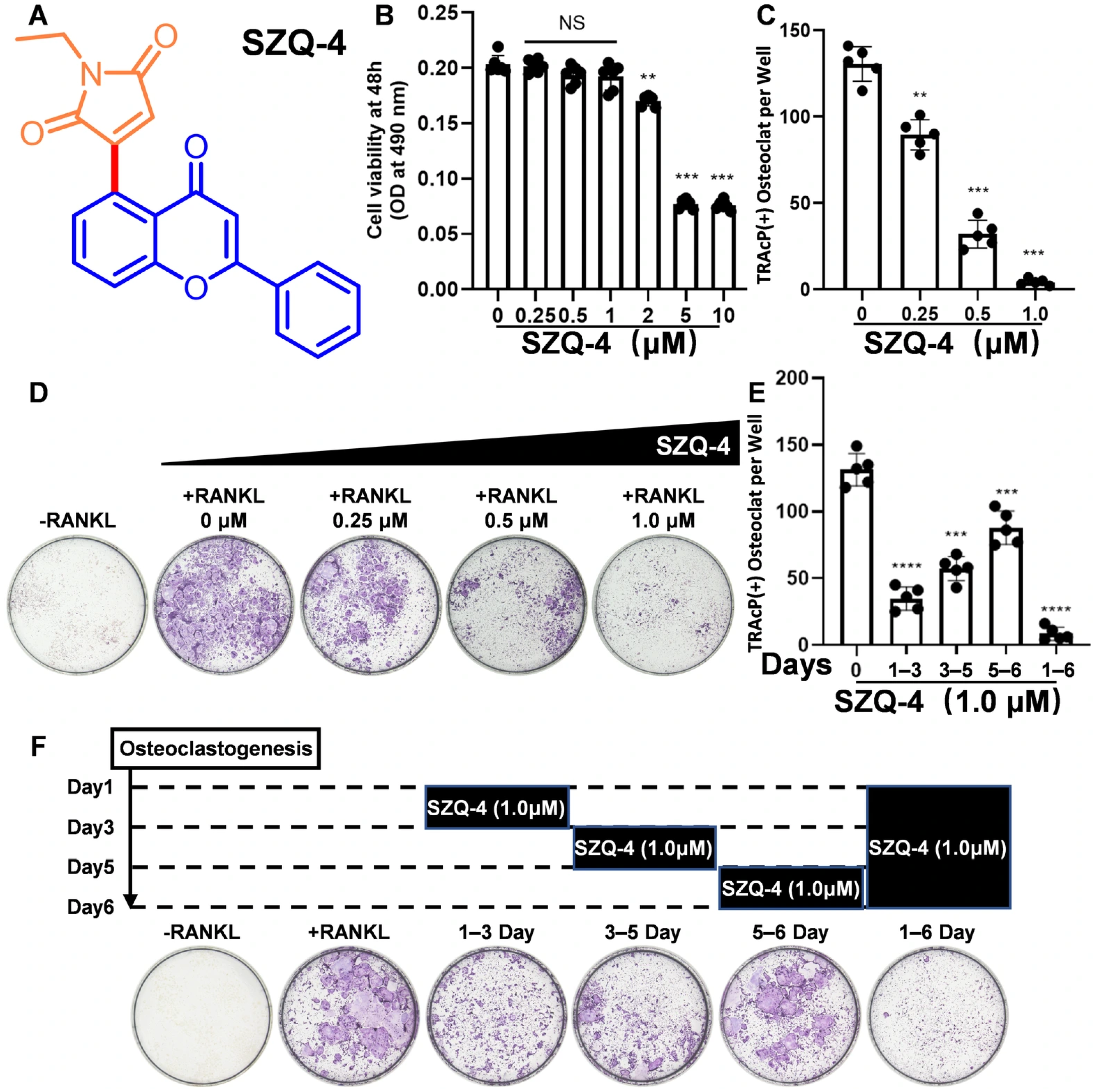
3.1. SZQ-4 Suppresses RANKL-Induced Osteoclastogenesis In Vitro
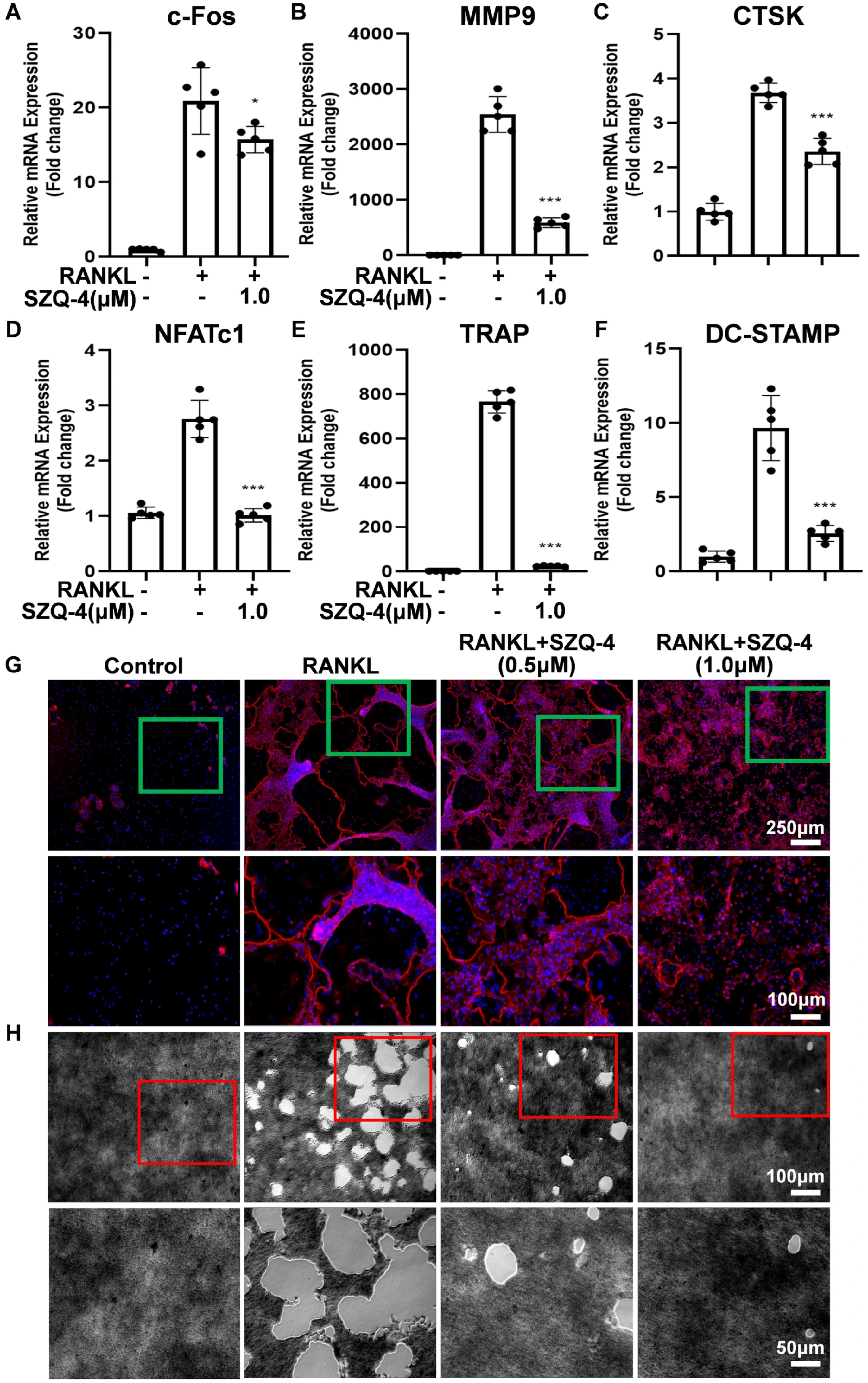
3.2. SZQ-4 Inhibits Osteoclast-Specific Gene Expression, Podosome Belt Formation, and Inhibits Osteoclast Resorptive Function
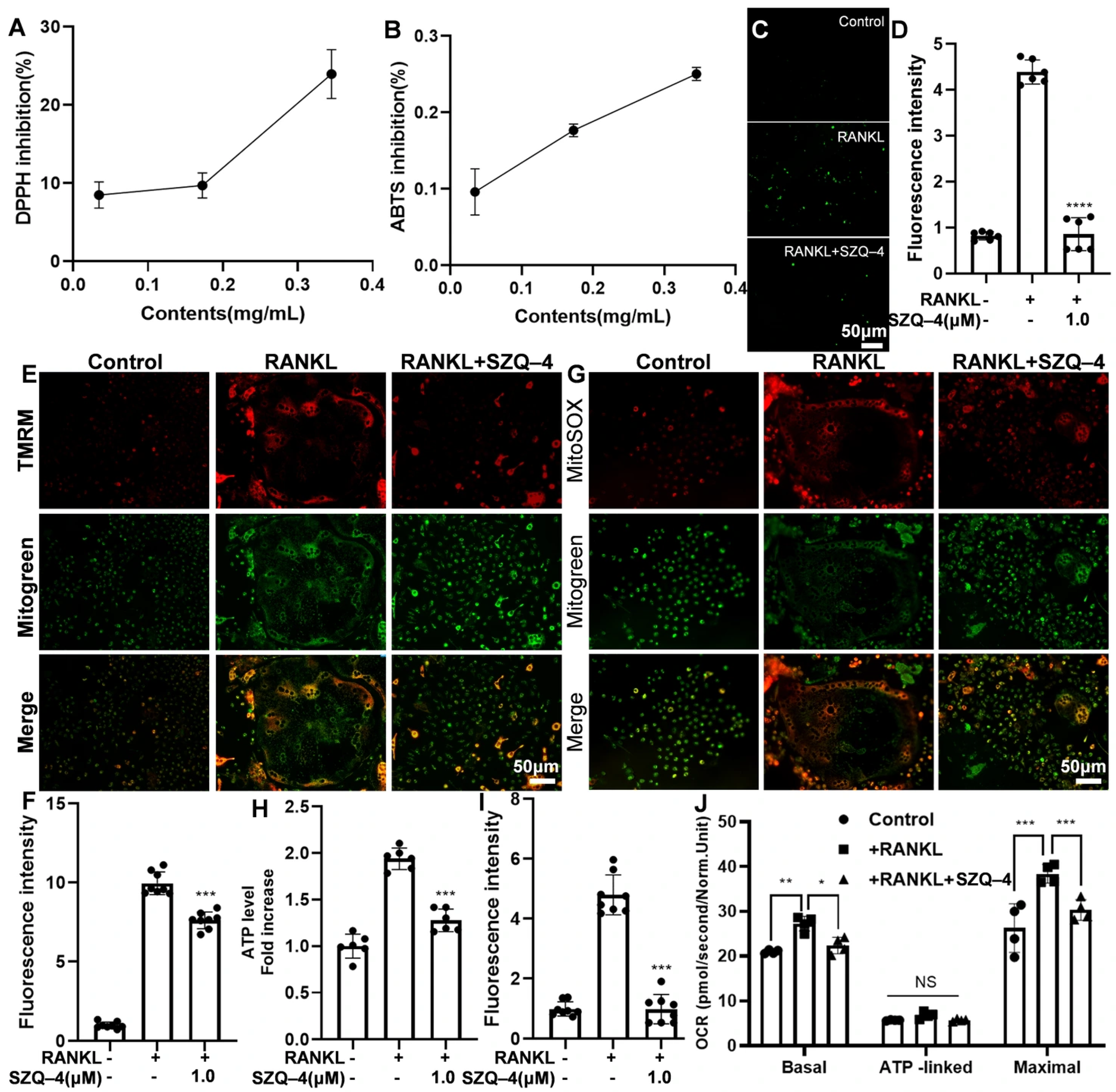
3.3. SZQ-4 Exhibits Concentration-Dependent Antioxidant Activities and Regulates Mitochondrial Function in Osteoclasts
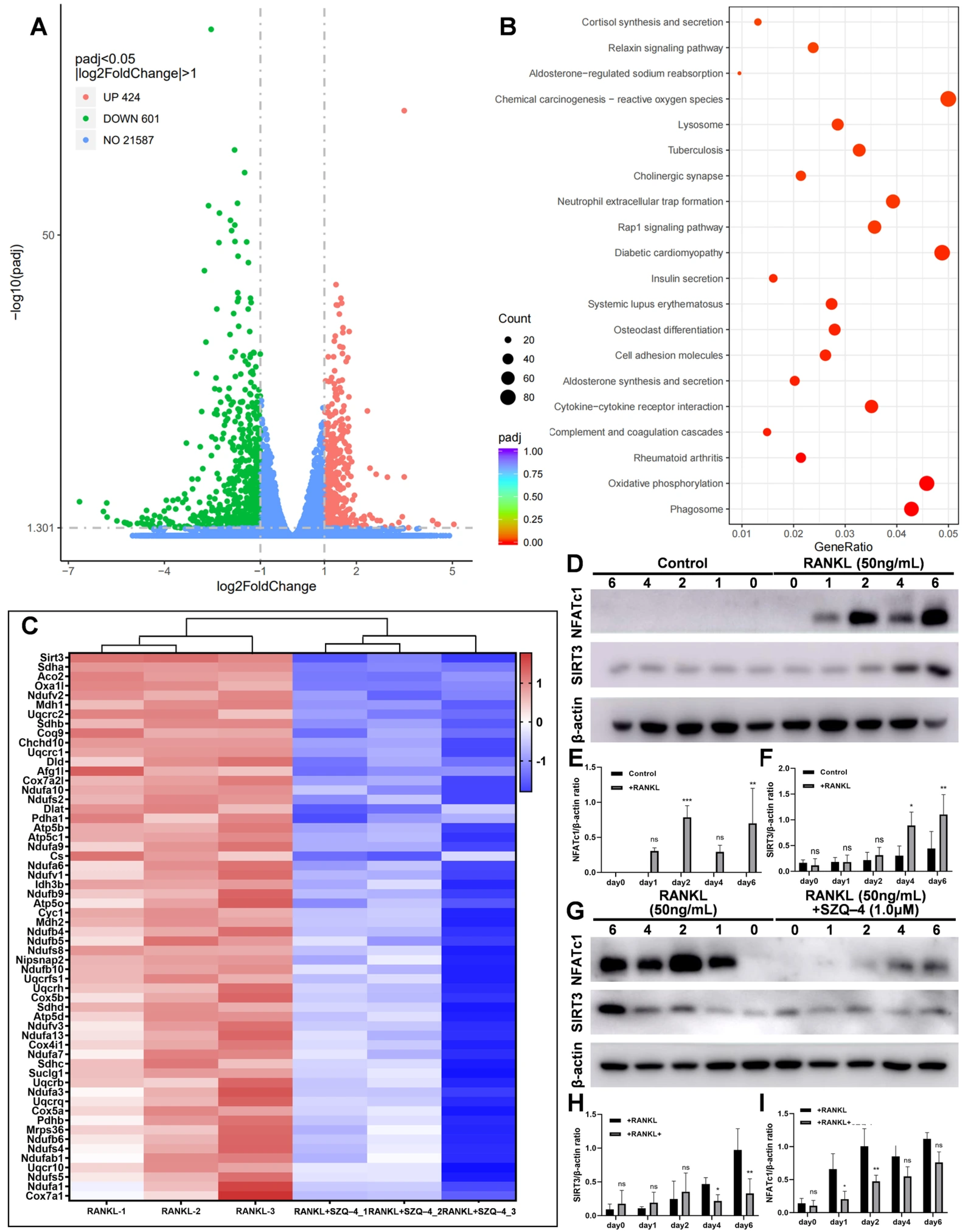
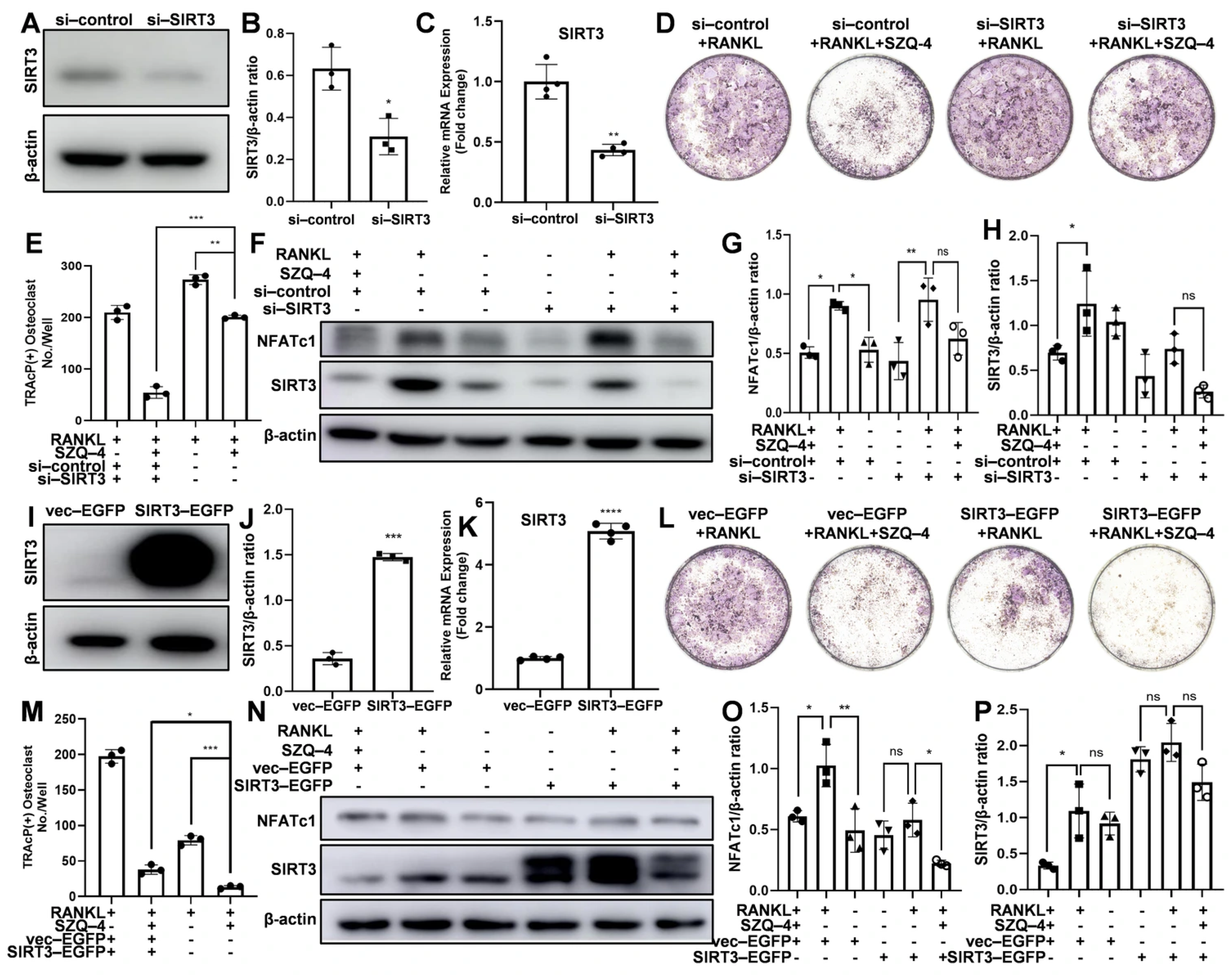
3.4. SIRT3 Plays a Significant Role in the Inhibition of Osteoclast Differentiation by SZQ-4
3.5. SZQ-4 Inhibits Osteoclast Differentiation Through SIRT3
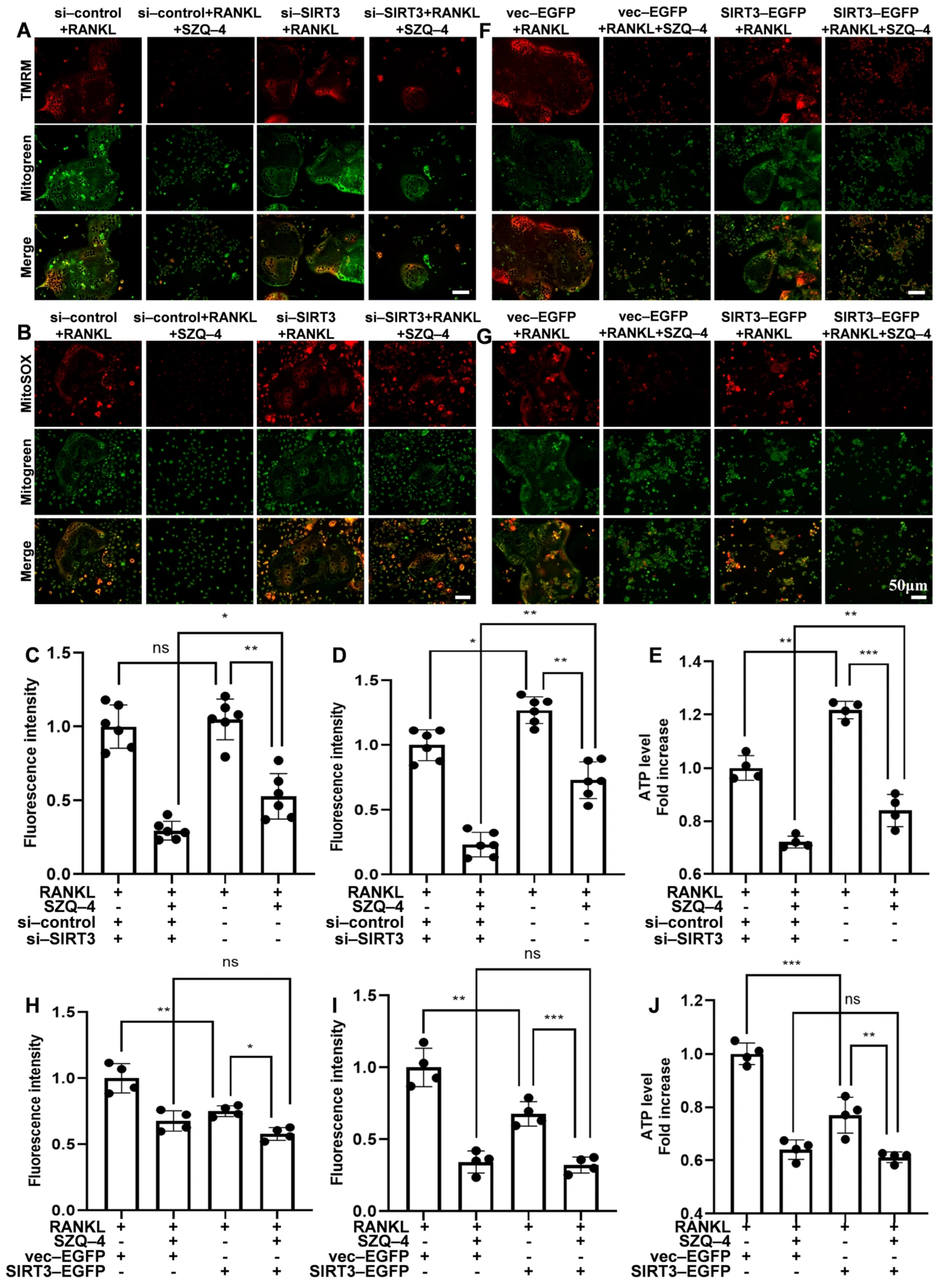
3.6. SZQ-4 Regulates Mitochondrial Function Through SIRT3
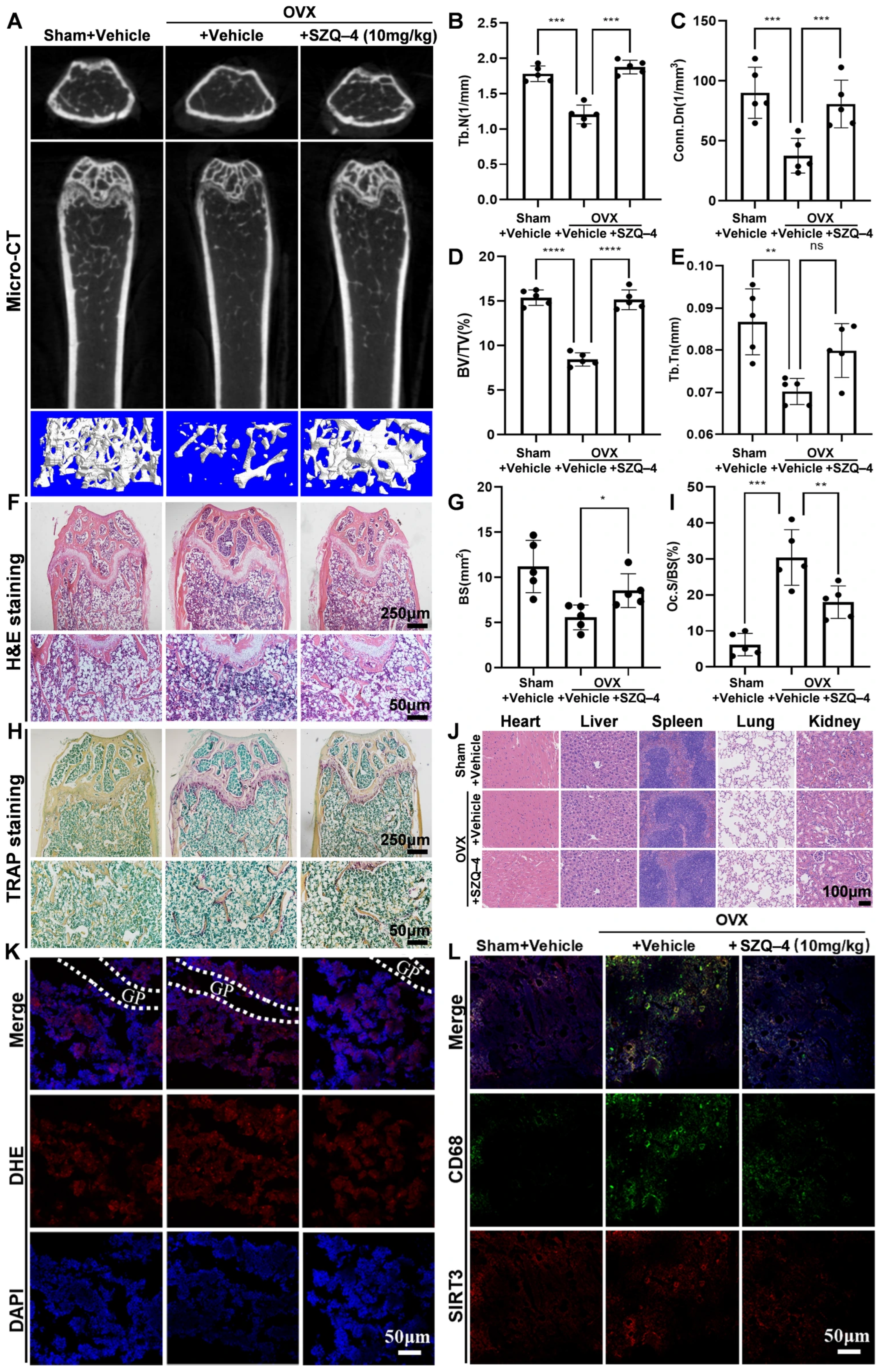
3.7. SZQ-4 Treatment Prevented OVX-Induced Bone Loss, Reduced Osteoclast Numbers, ROS Production, and SIRT3 Expression In Vivo
4. Discussion
5. Conclusions
Supplementary Materials
Author Contributions
Funding
Institutional Review Board Statement
Informed Consent Statement
Data Availability Statement
Acknowledgments
Conflicts of Interest
Abbreviations
| ABTS | 2,2′-Azinobis-(3-ethylbenzothiazoline-6-sulfonic acid) |
| ATP | Adenosine triphosphate |
| BMDMs | Bone marrow–derived macrophages |
| BV/TV | Bone volume per tissue volume |
| Conn.Dn | Connectivity density |
| CTSK | Cathepsin K |
| DC-STAMP | Dendritic cell–specific transmembrane protein |
| DHE | Dihydroethidium |
| DMSO | Dimethyl sulfoxide |
| DPPH | 2,2-Diphenyl-1-picrylhydrazyl |
| FCCP | Carbonyl cyanide-4-(trifluoromethoxy)phenylhydrazone |
| FBS | Fetal bovine serum |
| GO | Gene Ontology |
| H&E | Hematoxylin and eosin |
| IF | Immunofluorescence |
| M-CSF | Macrophage colony-stimulating factor |
| MMP | Mitochondrial membrane potential |
| mtROS | Mitochondrial reactive oxygen species |
| NFATc1 | Nuclear factor of activated T cells 1 |
| OCR | Oxygen consumption rate |
| OVX | Ovariectomy/ovariectomized |
| PGC-1β | Peroxisome proliferator-activated receptor gamma coactivator 1 beta |
| PMO | Postmenopausal osteoporosis |
| qPCR | Quantitative polymerase chain reaction |
| qRT-PCR | Quantitative real-time polymerase chain reaction |
| RANKL | Receptor activator of nuclear factor kappa-B ligand |
| ROS | Reactive oxygen species |
| siRNA | Small interfering RNA |
| SIRT3 | Sirtuin 3 |
| SOD2 | Superoxide dismutase 2 |
| SZQ-4 | Synthetic flavonoid compound SZQ-4 |
| Tb.N | Trabecular number |
| Tb.Th | Trabecular thickness |
| TRAP | Tartrate-resistant acid phosphatase |
References
- Ensrud, K.E.; Crandall, C.J. Osteoporosis. Ann. Intern. Med. 2017, 167, Itc17–Itc32, Erratum in Ann. Intern. Med. 2017, 167, 528. [Google Scholar] [CrossRef]
- Black, D.M.; Rosen, C.J. Clinical Practice. Postmenopausal Osteoporosis. N. Engl. J. Med. 2016, 374, 254–262, Erratum in N. Engl. J. Med. 2016, 374, 1797. [Google Scholar] [CrossRef] [PubMed]
- Ensrud, K.E.; Crandall, C.J. Bisphosphonates for Postmenopausal Osteoporosis. JAMA 2019, 322, 2017–2018. [Google Scholar] [CrossRef] [PubMed]
- Si, L.; Winzenberg, T.M.; Jiang, Q.; Chen, M.; Palmer, A.J. Projection of osteoporosis-related fractures and costs in China: 2010-2050. Osteoporos. Int. 2015, 26, 1929–1937. [Google Scholar] [CrossRef]
- Florencio-Silva, R.; Sasso, G.R.; Sasso-Cerri, E.; Simões, M.J.; Cerri, P.S. Biology of Bone Tissue: Structure, Function, and Factors That Influence Bone Cells. Biomed. Res. Int. 2015, 2015, 421746. [Google Scholar] [CrossRef] [PubMed]
- Sims, N.A.; Martin, T.J. Osteoclasts Provide Coupling Signals to Osteoblast Lineage Cells Through Multiple Mechanisms. Annu. Rev. Physiol. 2020, 82, 507–529. [Google Scholar] [CrossRef]
- Khosla, S.; Oursler, M.J.; Monroe, D.G. Estrogen and the skeleton. Trends Endocrinol. Metab. 2012, 23, 576–581. [Google Scholar] [CrossRef]
- Zhang, Y.; Rohatgi, N.; Veis, D.J.; Schilling, J.; Teitelbaum, S.L.; Zou, W. PGC1β Organizes the Osteoclast Cytoskeleton by Mitochondrial Biogenesis and Activation. J. Bone Miner. Res. 2018, 33, 1114–1125. [Google Scholar] [CrossRef]
- Udagawa, N.; Koide, M.; Nakamura, M.; Nakamichi, Y.; Yamashita, T.; Uehara, S.; Kobayashi, Y.; Furuya, Y.; Yasuda, H.; Fukuda, C.; et al. Osteoclast differentiation by RANKL and OPG signaling pathways. J. Bone Miner. Metab. 2021, 39, 19–26. [Google Scholar] [CrossRef] [PubMed]
- Elson, A.; Anuj, A.; Barnea-Zohar, M.; Reuven, N. The origins and formation of bone-resorbing osteoclasts. Bone 2022, 164, 116538. [Google Scholar] [CrossRef]
- Boyce, B.F. Advances in osteoclast biology reveal potential new drug targets and new roles for osteoclasts. J. Bone Miner. Res. 2013, 28, 711–722. [Google Scholar] [CrossRef] [PubMed]
- Eisner, V.; Picard, M.; Hajnóczky, G. Mitochondrial dynamics in adaptive and maladaptive cellular stress responses. Nat. Cell Biol. 2018, 20, 755–765. [Google Scholar] [CrossRef] [PubMed]
- Park-Min, K.H. Metabolic reprogramming in osteoclasts. Semin. Immunopathol. 2019, 41, 565–572. [Google Scholar] [CrossRef]
- Jin, Z.; Wei, W.; Yang, M.; Du, Y.; Wan, Y. Mitochondrial complex I activity suppresses inflammation and enhances bone resorption by shifting macrophage-osteoclast polarization. Cell Metab. 2014, 20, 483–498. [Google Scholar] [CrossRef]
- Wu, Q.J.; Zhang, T.N.; Chen, H.H.; Yu, X.F.; Lv, J.L.; Liu, Y.Y.; Liu, Y.S.; Zheng, G.; Zhao, J.Q.; Wei, Y.F.; et al. The sirtuin family in health and disease. Signal Transduct. Target. Ther. 2022, 7, 402. [Google Scholar] [CrossRef]
- Vaquero, A.; Scher, M.B.; Lee, D.H.; Sutton, A.; Cheng, H.L.; Alt, F.W.; Serrano, L.; Sternglanz, R.; Reinberg, D. SirT2 is a histone deacetylase with preference for histone H4 Lys 16 during mitosis. Genes Dev. 2006, 20, 1256–1261. [Google Scholar] [CrossRef]
- Lombard, D.B.; Alt, F.W.; Cheng, H.L.; Bunkenborg, J.; Streeper, R.S.; Mostoslavsky, R.; Kim, J.; Yancopoulos, G.; Valenzuela, D.; Murphy, A.; et al. Mammalian Sir2 homolog SIRT3 regulates global mitochondrial lysine acetylation. Mol. Cell Biol. 2007, 27, 8807–8814. [Google Scholar] [CrossRef]
- Giralt, A.; Villarroya, F. SIRT3, a pivotal actor in mitochondrial functions: Metabolism, cell death and aging. Biochem. J. 2012, 444, 1–10. [Google Scholar] [CrossRef] [PubMed]
- Ansari, A.; Rahman, M.S.; Saha, S.K.; Saikot, F.K.; Deep, A.; Kim, K.H. Function of the SIRT3 mitochondrial deacetylase in cellular physiology, cancer, and neurodegenerative disease. Aging Cell 2017, 16, 4–16. [Google Scholar] [CrossRef]
- Liu, Y.; Shen, X.; Pang, M.; Sun, Z.; Qian, Y.; Xue, W.; Wang, Z.; Li, L. Role of histone deacetylase Sirt3 in the development and regression of atherosclerosis. Life Sci. 2021, 272, 119178. [Google Scholar] [CrossRef]
- Flippo, K.H.; Strack, S. Mitochondrial dynamics in neuronal injury, development and plasticity. J. Cell Sci. 2017, 130, 671–681. [Google Scholar] [CrossRef]
- Chen, Y.; Zhang, J.; Lin, Y.; Lei, Q.; Guan, K.L.; Zhao, S.; Xiong, Y. Tumour suppressor SIRT3 deacetylates and activates manganese superoxide dismutase to scavenge ROS. EMBO Rep. 2011, 12, 534–541. [Google Scholar] [CrossRef]
- Son, M.J.; Kwon, Y.; Son, T.; Cho, Y.S. Restoration of Mitochondrial NAD(+) Levels Delays Stem Cell Senescence and Facilitates Reprogramming of Aged Somatic Cells. Stem Cells 2016, 34, 2840–2851. [Google Scholar] [CrossRef]
- Iolascon, G.; Moretti, A.; Toro, G.; Gimigliano, F.; Liguori, S.; Paoletta, M. Pharmacological Therapy of Osteoporosis: What’s New? Clin. Interv. Aging 2020, 15, 485–491. [Google Scholar] [CrossRef] [PubMed]
- Foessl, I.; Dimai, H.P.; Obermayer-Pietsch, B. Long-term and sequential treatment for osteoporosis. Nat. Rev. Endocrinol. 2023, 19, 520–533. [Google Scholar] [CrossRef]
- Sarkar, K.; Joedicke, L.; Westwood, M.; Burnley, R.; Wright, M.; McMillan, D.; Byrne, B. Modulation of PTH1R signaling by an extracellular binding antibody. Vitam. Horm. 2022, 120, 109–132. [Google Scholar] [CrossRef]
- Caires, E.L.P.; Bezerra, M.C.; Junqueira, A.; Fontenele, S.M.A.; Andrade, S.C.A.; d’Alva, C.B. Treatment of postmenopausal osteoporosis: A literature-based algorithm for use in the public health care system. Rev. Bras. Reumatol. Engl. Ed. 2017, 57, 254–263. [Google Scholar] [CrossRef] [PubMed]
- Cesareo, R.; Attanasio, R.; Caputo, M.; Castello, R.; Chiodini, I.; Falchetti, A.; Guglielmi, R.; Papini, E.; Santonati, A.; Scillitani, A.; et al. Italian Association of Clinical Endocrinologists (AME) and Italian Chapter of the American Association of Clinical Endocrinologists (AACE) Position Statement: Clinical Management of Vitamin D Deficiency in Adults. Nutrients 2018, 10, 546. [Google Scholar] [CrossRef]
- Deniz, F.; Eren, G.; Orhan, I.E. Flavonoids as Sirtuin Modulators. Curr. Top. Med. Chem. 2022, 22, 790–805. [Google Scholar] [CrossRef]
- Shen, N.; Wang, T.; Gan, Q.; Liu, S.; Wang, L.; Jin, B. Plant flavonoids: Classification, distribution, biosynthesis, and antioxidant activity. Food Chem. 2022, 383, 132531. [Google Scholar] [CrossRef] [PubMed]
- Kumar, S.; Pandey, A.K. Chemistry and biological activities of flavonoids: An overview. Sci. World J. 2013, 2013, 162750. [Google Scholar] [CrossRef]
- Hong, G.; Chen, Z.; Han, X.; Zhou, L.; Pang, F.; Wu, R.; Shen, Y.; He, X.; Hong, Z.; Li, Z.; et al. A novel RANKL-targeted flavonoid glycoside prevents osteoporosis through inhibiting NFATc1 and reactive oxygen species. Clin. Transl. Med. 2021, 11, e392. [Google Scholar] [CrossRef]
- Chaves, J.O.; de Souza, M.C.; da Silva, L.C.; Lachos-Perez, D.; Torres-Mayanga, P.C.; Machado, A.; Forster-Carneiro, T.; Vázquez-Espinosa, M.; González-de-Peredo, A.V.; Barbero, G.F.; et al. Extraction of Flavonoids From Natural Sources Using Modern Techniques. Front. Chem. 2020, 8, 507887. [Google Scholar] [CrossRef]
- Dias, M.C.; Pinto, D.; Silva, A.M.S. Plant Flavonoids: Chemical Characteristics and Biological Activity. Molecules 2021, 26, 5377. [Google Scholar] [CrossRef]
- Ramesh, P.; Jagadeesan, R.; Sekaran, S.; Dhanasekaran, A.; Vimalraj, S. Flavonoids: Classification, Function, and Molecular Mechanisms Involved in Bone Remodelling. Front. Endocrinol. 2021, 12, 779638. [Google Scholar] [CrossRef]
- Choi, E.M. Kaempferol protects MC3T3-E1 cells through antioxidant effect and regulation of mitochondrial function. Food Chem. Toxicol. 2011, 49, 1800–1805. [Google Scholar] [CrossRef]
- Ma, Z.; Qiu, S.; Chen, H.C.; Zhang, D.; Lu, Y.L.; Chen, X.L. Maleimide structure: A promising scaffold for the development of antimicrobial agents. J. Asian Nat. Prod. Res. 2022, 24, 1–14. [Google Scholar] [CrossRef] [PubMed]
- Zhang, Y.; Xu, Z.; Zhan, L.; Gao, Y.; Zheng, B.; Zhou, Y.; Sheng, Y.; Liang, G.; Song, Z. Design, synthesis and biological evaluation of novel chromone-maleimide hybrids as potent anti-inflammatory agents against LPS-induced acute lung injury. Bioorg Chem. 2022, 128, 106049. [Google Scholar] [CrossRef]
- Wong, S.K.; Chin, K.Y.; Ima-Nirwana, S. The Osteoprotective Effects Of Kaempferol: The Evidence From In Vivo And In Vitro Studies. Drug Des. Dev. Ther. 2019, 13, 3497–3514. [Google Scholar] [CrossRef] [PubMed]
- Imran, M.; Rauf, A.; Shah, Z.A.; Saeed, F.; Imran, A.; Arshad, M.U.; Ahmad, B.; Bawazeer, S.; Atif, M.; Peters, D.G.; et al. Chemo-preventive and therapeutic effect of the dietary flavonoid kaempferol: A comprehensive review. Phytother. Res. 2019, 33, 263–275. [Google Scholar] [CrossRef]
- Ledesma-Colunga, M.G.; Passin, V.; Lademann, F.; Hofbauer, L.C.; Rauner, M. Novel Insights into Osteoclast Energy Metabolism. Curr. Osteoporos. Rep. 2023, 21, 660–669. [Google Scholar] [CrossRef]
- Kim, Y.S.; Gupta Vallur, P.; Jones, V.M.; Worley, B.L.; Shimko, S.; Shin, D.H.; Crawford, L.C.; Chen, C.W.; Aird, K.M.; Abraham, T.; et al. Context-dependent activation of SIRT3 is necessary for anchorage-independent survival and metastasis of ovarian cancer cells. Oncogene 2020, 39, 1619–1633. [Google Scholar] [CrossRef]
- Decuypere, J.P.; Monaco, G.; Missiaen, L.; De Smedt, H.; Parys, J.B.; Bultynck, G. IP(3) Receptors, Mitochondria, and Ca Signaling: Implications for Aging. J. Aging Res. 2011, 2011, 920178. [Google Scholar] [CrossRef]
- Kim, H.; Lee, Y.D.; Kim, H.J.; Lee, Z.H.; Kim, H.H. SOD2 and Sirt3 Control Osteoclastogenesis by Regulating Mitochondrial ROS. J. Bone Miner. Res. 2017, 32, 397–406. [Google Scholar] [CrossRef]
- Carrico, C.; Meyer, J.G.; He, W.; Gibson, B.W.; Verdin, E. The Mitochondrial Acylome Emerges: Proteomics, Regulation by Sirtuins, and Metabolic and Disease Implications. Cell Metab. 2018, 27, 497–512. [Google Scholar] [CrossRef]
- Hodges, P.W.; Cresswell, A.G.; Daggfeldt, K.; Thorstensson, A. In vivo measurement of the effect of intra-abdominal pressure on the human spine. J. Biomech. 2001, 34, 347–353. [Google Scholar] [CrossRef] [PubMed]
- Mavropoulos, A.; Kiliaridis, S.; Bresin, A.; Ammann, P. Effect of different masticatory functional and mechanical demands on the structural adaptation of the mandibular alveolar bone in young growing rats. Bone 2004, 35, 191–197. [Google Scholar] [CrossRef]
- Bouxsein, M.L.; Boyd, S.K.; Christiansen, B.A.; Guldberg, R.E.; Jepsen, K.J.; Müller, R. Guidelines for assessment of bone microstructure in rodents using micro-computed tomography. J. Bone Miner. Res. 2010, 25, 1468–1486. [Google Scholar] [CrossRef]
- Procházková, D.; Boušová, I.; Wilhelmová, N. Antioxidant and prooxidant properties of flavonoids. Fitoterapia 2011, 82, 513–523. [Google Scholar] [CrossRef]
- Xu, Y.; Song, D.; Su, Y.; Chen, J.; Wu, L.; Lian, H.; Hai, N.; Li, J.; Jiang, J.; Zhao, J.; et al. Pharmacology-based molecular docking of 4-methylcatechol and its role in RANKL-mediated ROS/Keap1/Nrf2 signalling axis and osteoclastogenesis. Biomed. Pharmacother. 2023, 159, 114101. [Google Scholar] [CrossRef]


Disclaimer/Publisher’s Note: The statements, opinions and data contained in all publications are solely those of the individual author(s) and contributor(s) and not of MDPI and/or the editor(s). MDPI and/or the editor(s) disclaim responsibility for any injury to people or property resulting from any ideas, methods, instructions or products referred to in the content. |
© 2026 by the authors. Licensee MDPI, Basel, Switzerland. This article is an open access article distributed under the terms and conditions of the Creative Commons Attribution (CC BY) license.
Share and Cite
Zhou, R.; Zhang, Y.; Li, B.; Yi, M.; Tu, J.; Jiang, T.; Jiang, H.; Hu, C.; Ping, Y.; Wang, J.; et al. Synthetic Novel Flavonoids SZQ-4 Suppress Osteoclastogenesis and Ameliorate Osteoporosis via Inhibiting Reactive Oxygen Species and Regulating SIRT3. Antioxidants 2026, 15, 426. https://doi.org/10.3390/antiox15040426
Zhou R, Zhang Y, Li B, Yi M, Tu J, Jiang T, Jiang H, Hu C, Ping Y, Wang J, et al. Synthetic Novel Flavonoids SZQ-4 Suppress Osteoclastogenesis and Ameliorate Osteoporosis via Inhibiting Reactive Oxygen Species and Regulating SIRT3. Antioxidants. 2026; 15(4):426. https://doi.org/10.3390/antiox15040426
Chicago/Turabian StyleZhou, Runqi, Yichi Zhang, Bin Li, Mengjia Yi, Junhao Tu, Tianle Jiang, Haofu Jiang, Chaoming Hu, Yifan Ping, Jun Wang, and et al. 2026. "Synthetic Novel Flavonoids SZQ-4 Suppress Osteoclastogenesis and Ameliorate Osteoporosis via Inhibiting Reactive Oxygen Species and Regulating SIRT3" Antioxidants 15, no. 4: 426. https://doi.org/10.3390/antiox15040426
APA StyleZhou, R., Zhang, Y., Li, B., Yi, M., Tu, J., Jiang, T., Jiang, H., Hu, C., Ping, Y., Wang, J., Mao, Y., Chen, Y., Song, Z., Tong, X., Huang, S., & Zhao, S. (2026). Synthetic Novel Flavonoids SZQ-4 Suppress Osteoclastogenesis and Ameliorate Osteoporosis via Inhibiting Reactive Oxygen Species and Regulating SIRT3. Antioxidants, 15(4), 426. https://doi.org/10.3390/antiox15040426