L-Selenomethionine Alleviates Cryo-Induced Ferroptosis Through the NRF2–SLC7A11–GPX4 Pathway, Improving Post-Thaw In Vitro Quality of Dairy Goat Spermatozoa
 and
and
Abstract
1. Introduction
2. Materials and Methods
2.1. Semen Collection and Cryopreservation
2.2. Analysis of Sperm Quality by CASA System
2.3. Assessment of Sperm Acrosome Integrity and Plasma Membrane Integrity
2.4. Detection of MMP
2.5. Non-Targeted Metabolomics Plus Analysis
2.6. DIA Quantitative Proteomics Analysis
2.7. Assessment of Iron
2.8. Total ROS (tROS) Assay
2.9. Evaluation of Oxidative Damage
2.9.1. Malondialdehyde (MDA) Content Assay
2.9.2. Assessment of Superoxide Dismutase Activity
2.10. Measurement of ATP Content
2.11. Assessment of GSH Levels
2.12. Transmission Electron Microscopy (TEM)
2.13. Western Blot Analysis
2.14. Statistical Analysis
3. Results
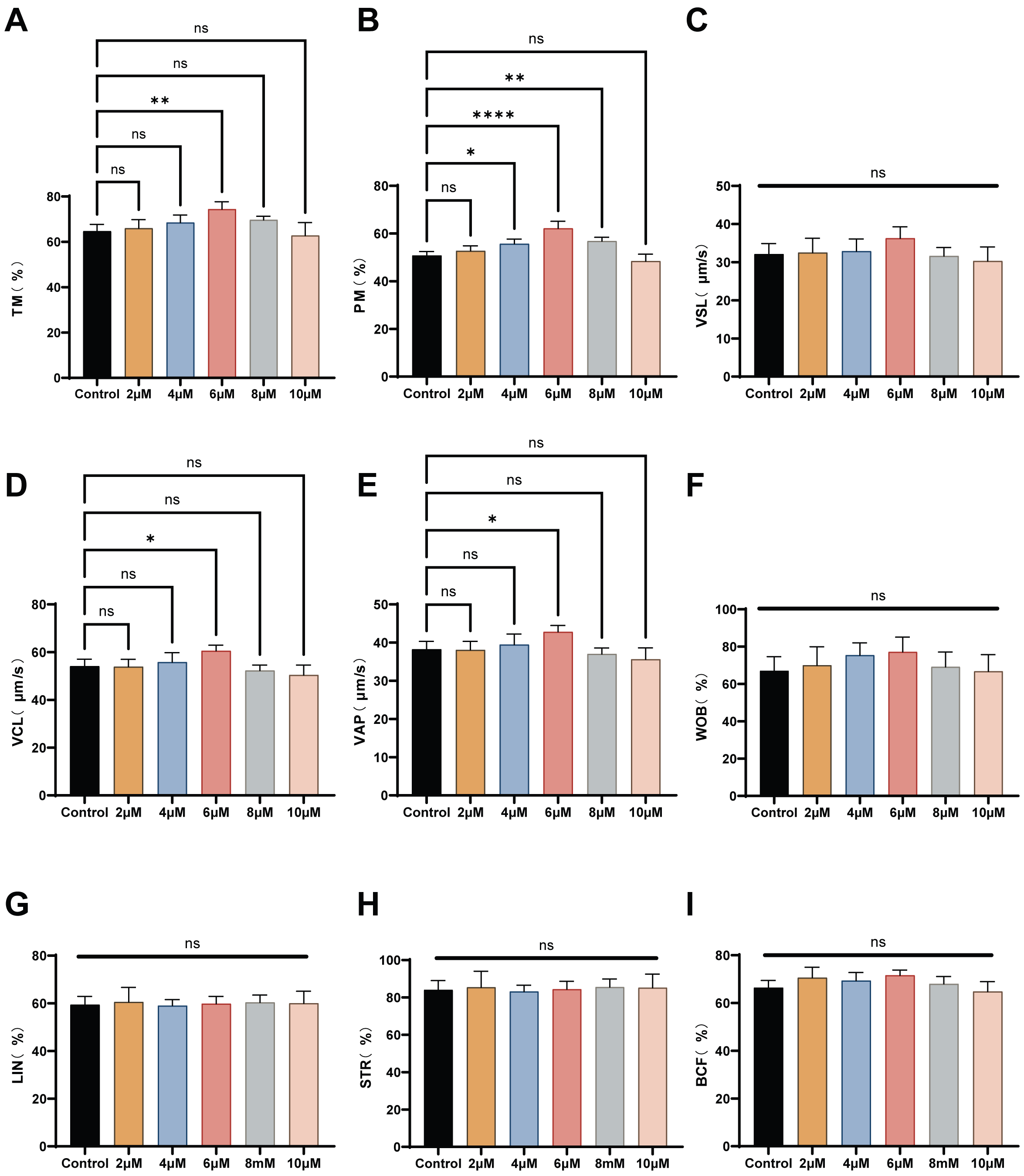
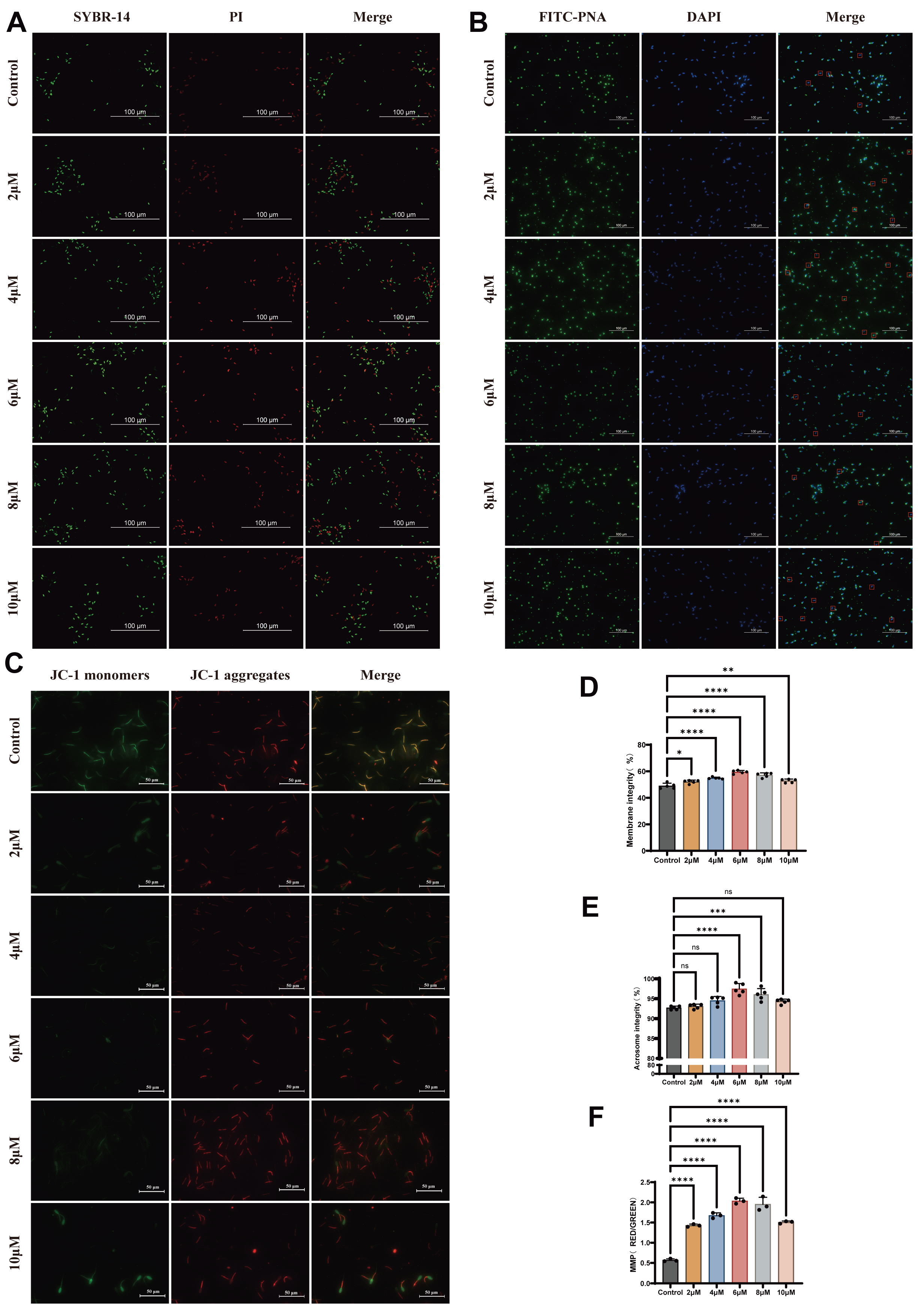
3.1. L-SeMet Enhances the Cryopreservation Efficiency of Dairy Goat Semen
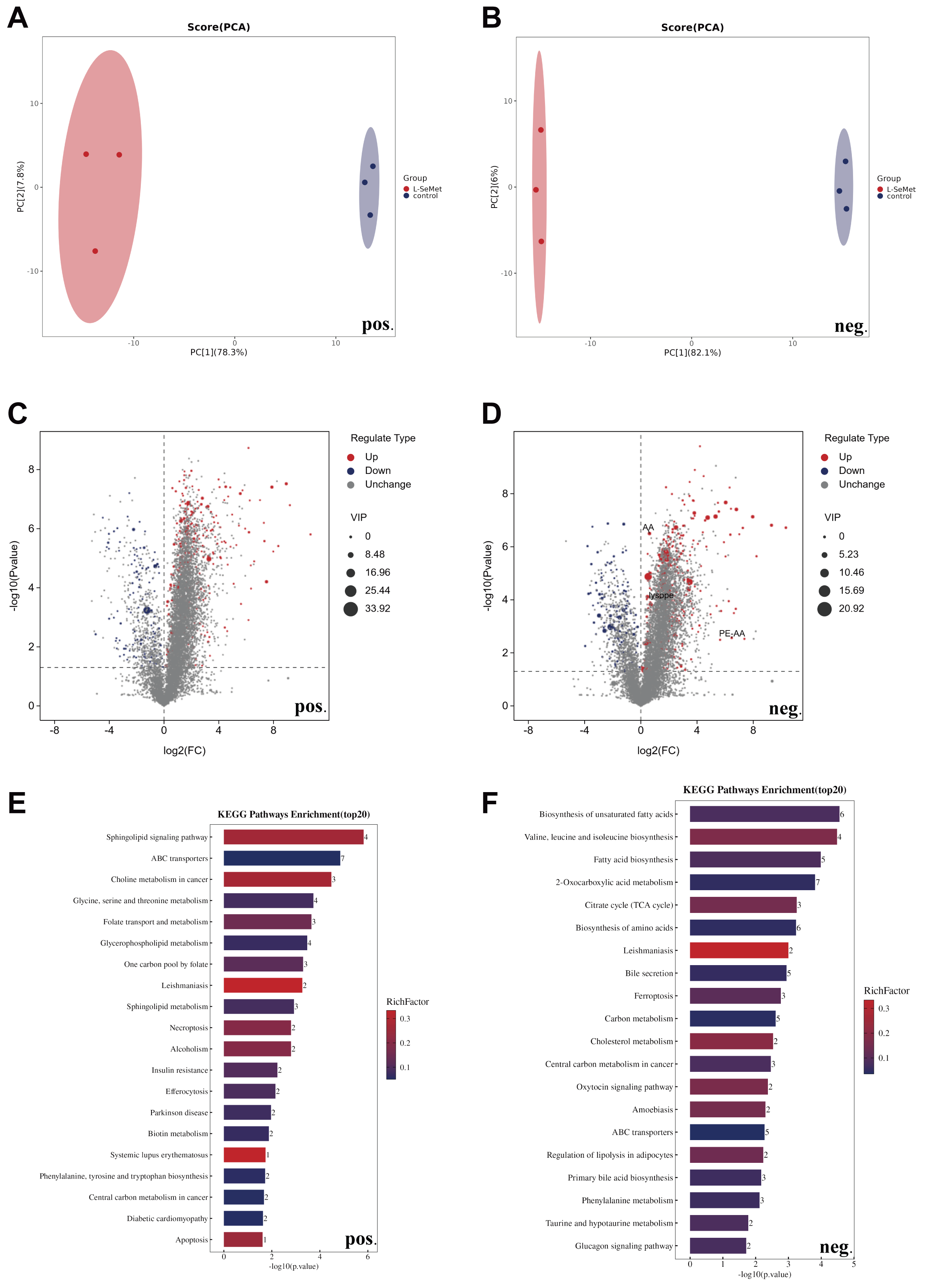
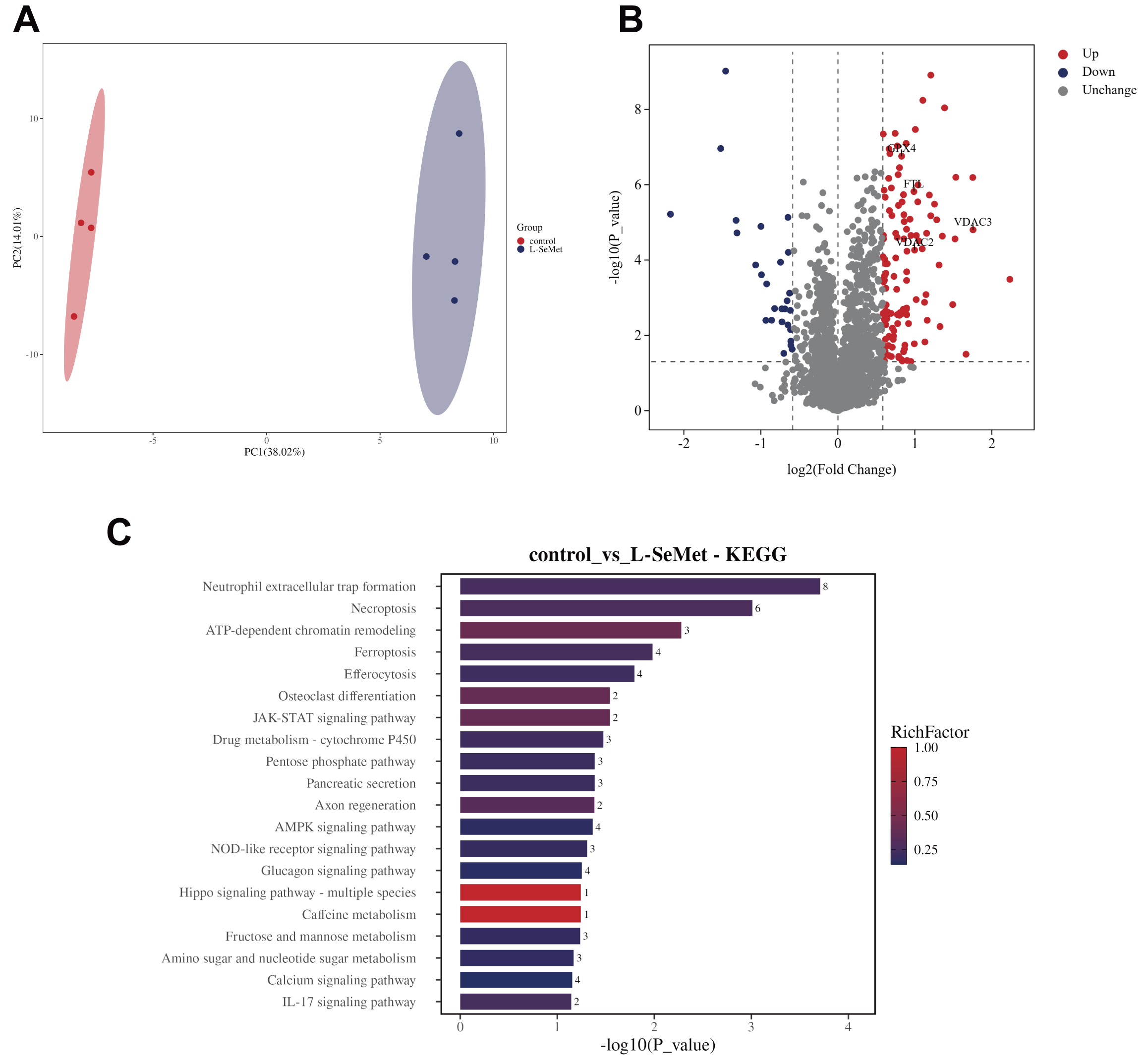
3.2. Multi-Omics Analyses Reveal the Key Mechanisms by Which L-Selenometionine Protects Spermatozoa
3.3. L-SeMet Protects Dairy Goat Spermatozoa from Cryo-Injury by Maintaining Mitochondrial Integrity and Activating the NRF2–SLC7A11–GPX4 Axis
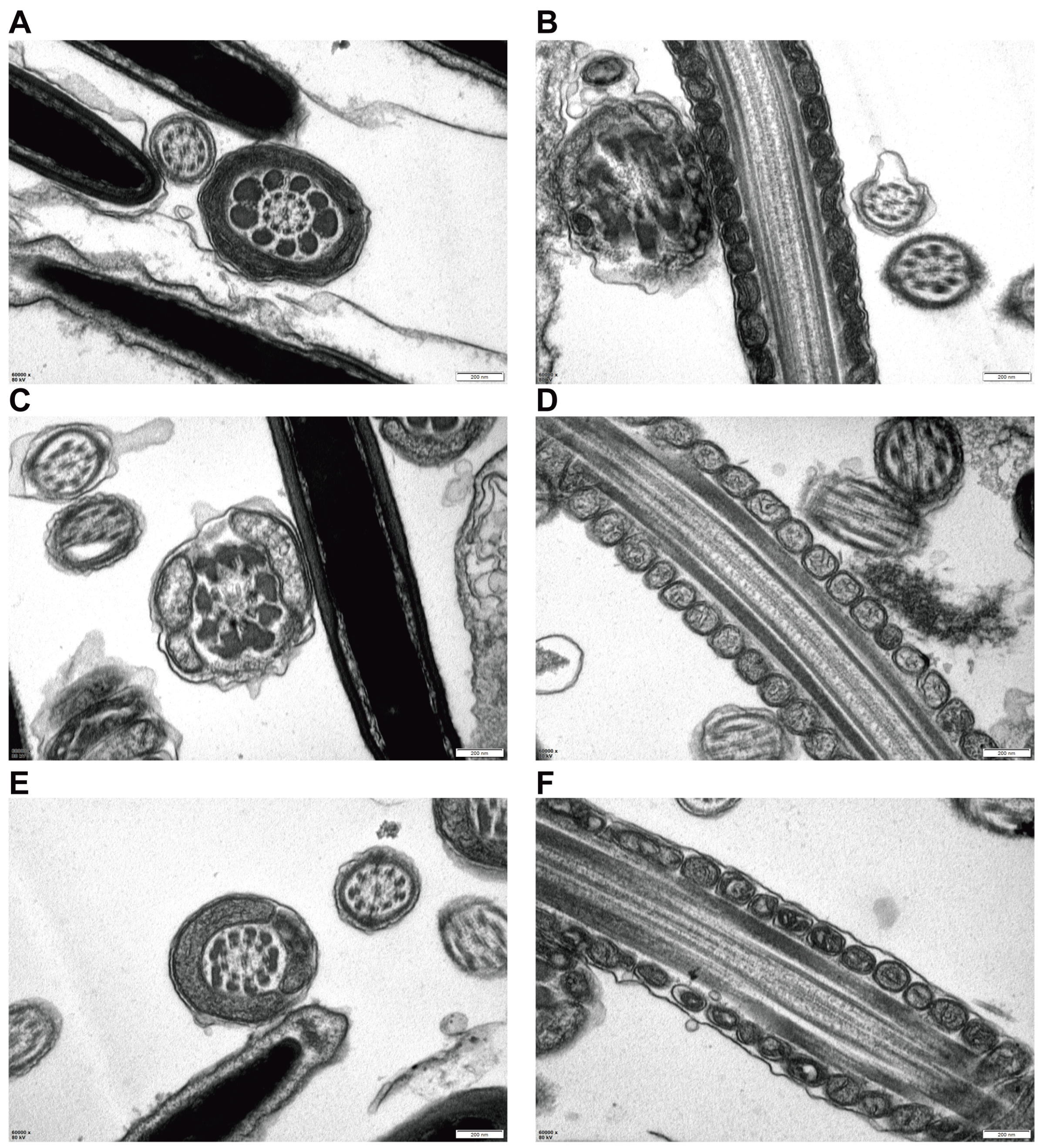
3.3.1. TEM Reveals That L-SeMet Preserves Mitochondrial Ultrastructure During Cryopreservation

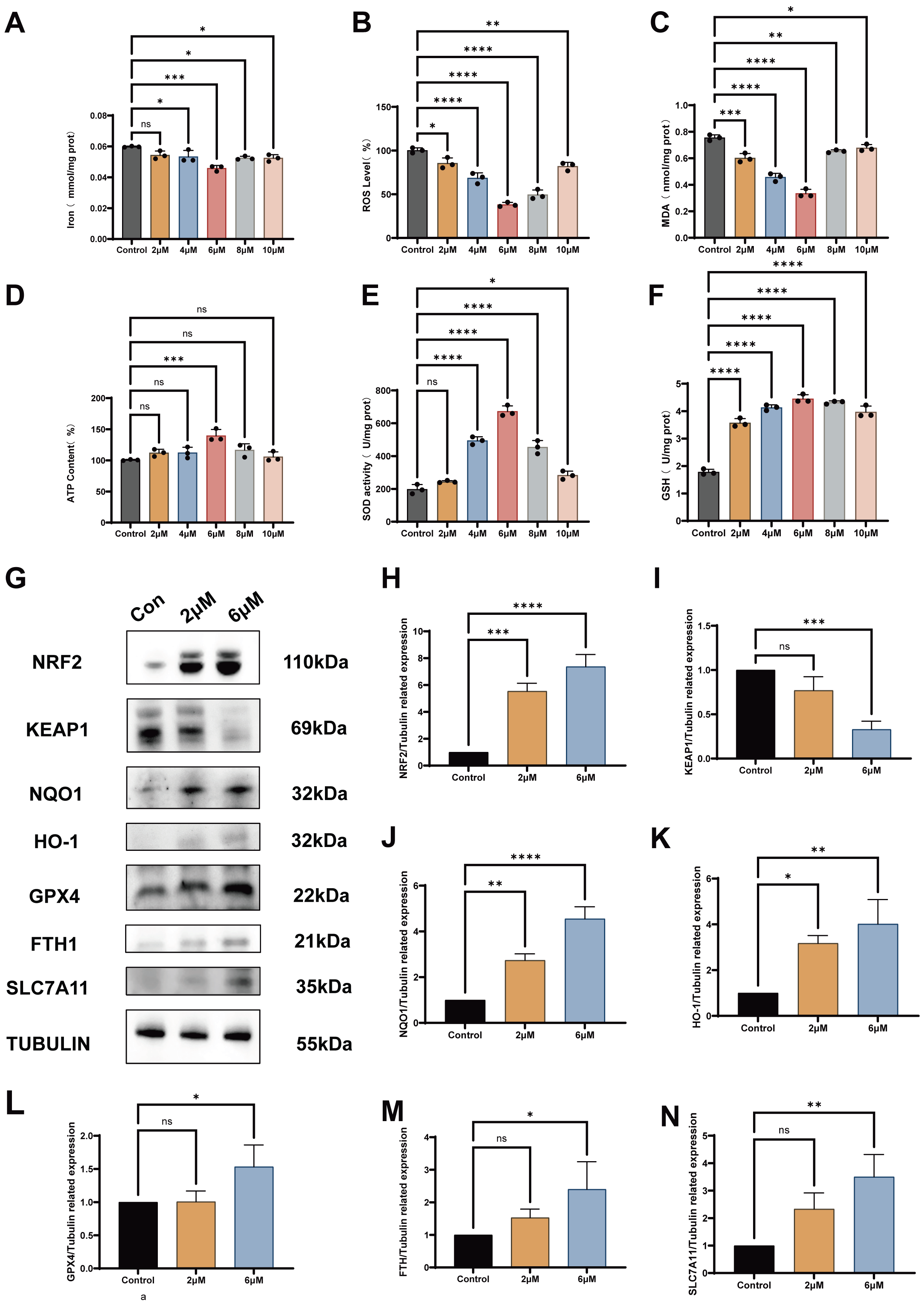
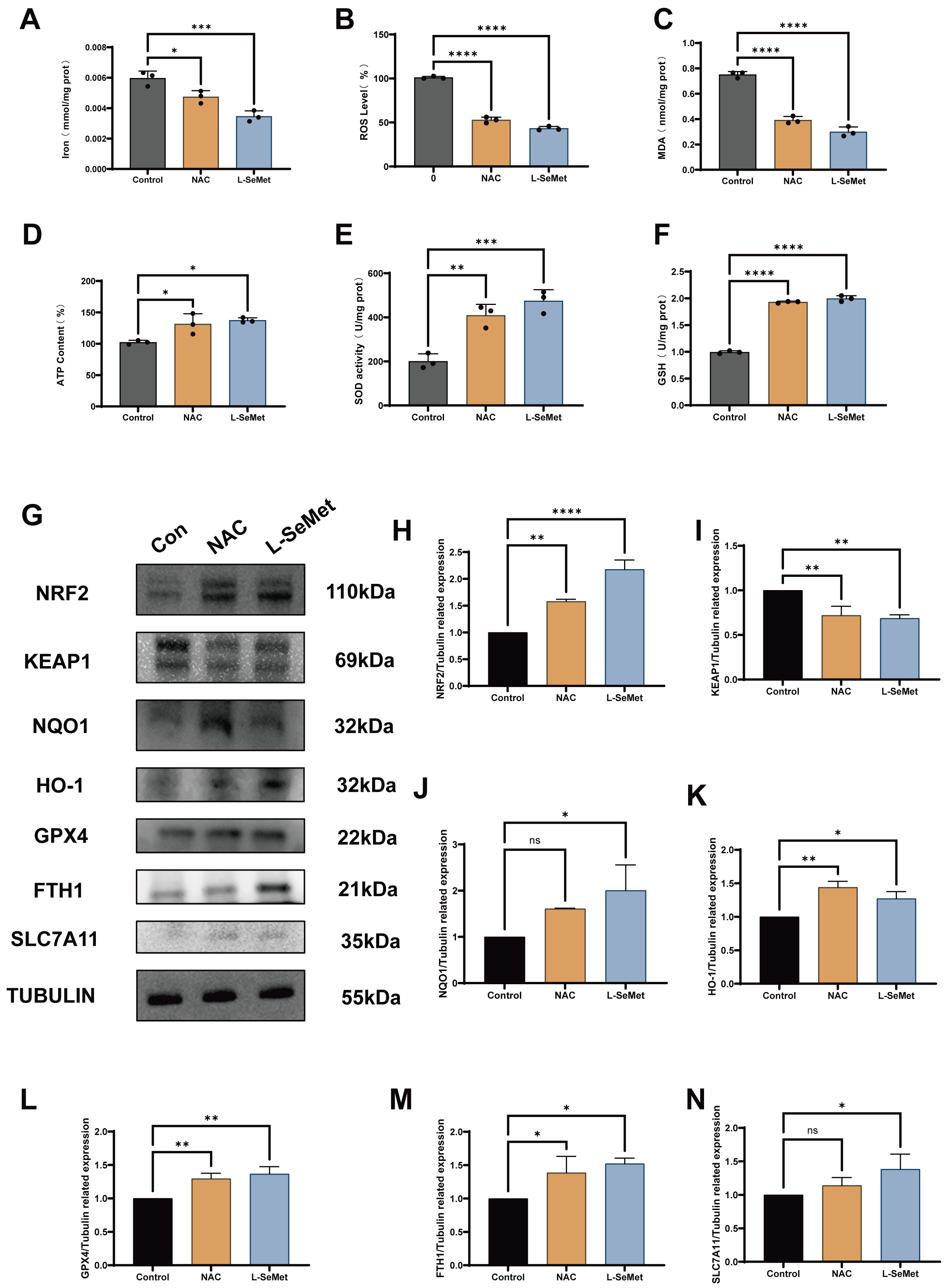
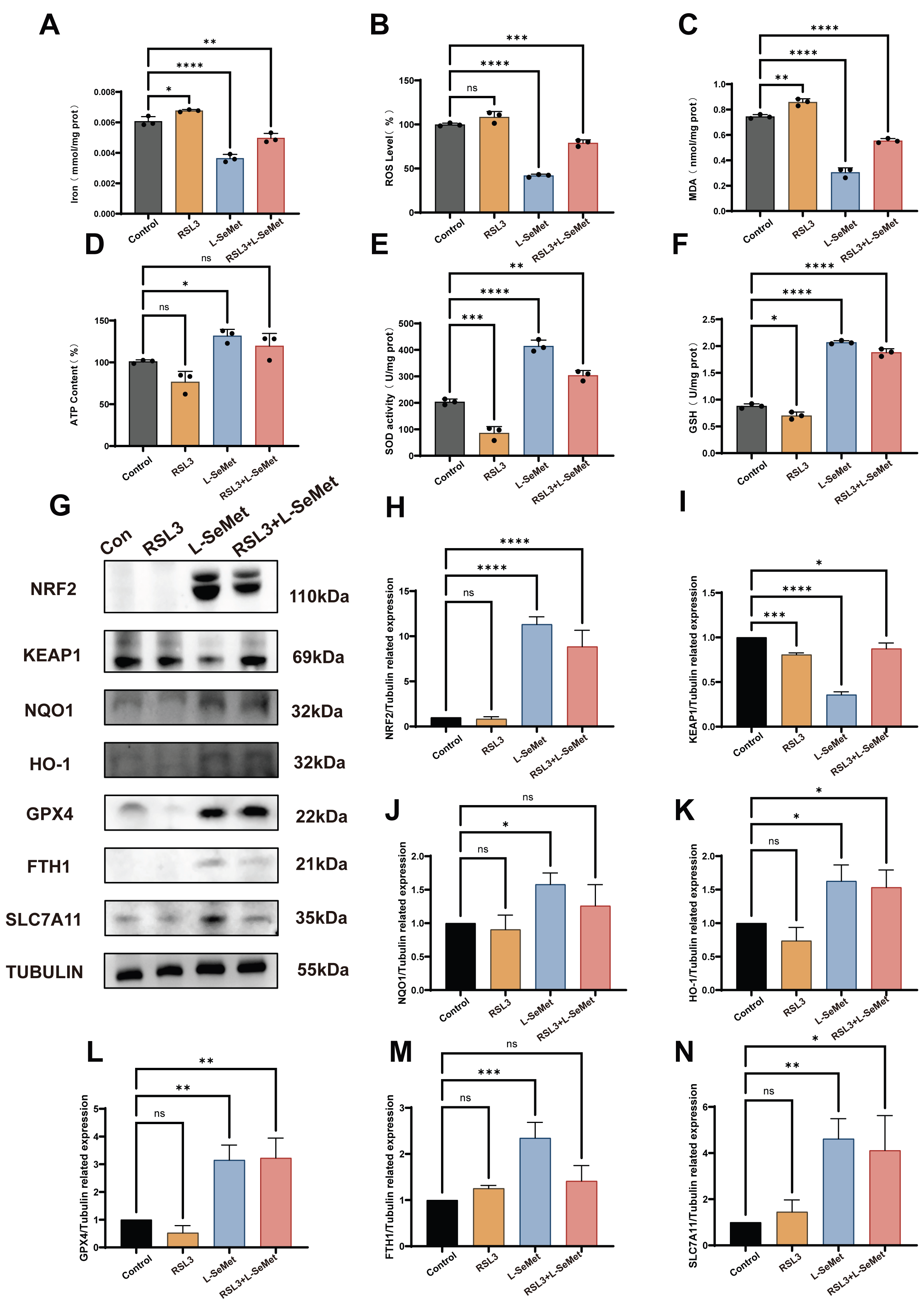
3.3.2. L-SeMet Improves Post-Thaw Sperm Quality in Dairy Goats by Suppressing Cryo-Induced Ferroptosis Through the NRF2–SLC7A11–GPX4 Signaling Axis
4. Discussion
5. Conclusions
Author Contributions
Funding
Institutional Review Board Statement
Informed Consent Statement
Data Availability Statement
Acknowledgments
Conflicts of Interest
References
- Bansal, A.K.; Bilaspuri, G.S. Impacts of oxidative stress and antioxidants on semen functions. Vet. Med. Int. 2011, 2011, 686137. [Google Scholar] [CrossRef]
- Fleming, S.D.; Thomson, L.K. The oxidative stress of human sperm cryopreservation. Antioxidants 2025, 14, 402. [Google Scholar] [CrossRef]
- Dixon, S.J.; Lemberg, K.M.; Lamprecht, M.R.; Skouta, R.; Zaitsev, E.M.; Gleason, C.E.; Patel, D.N.; Bauer, A.J.; Cantley, A.M.; Yang, W.S.; et al. Ferroptosis: An iron-dependent form of nonapoptotic cell death. Cell 2012, 149, 1060–1072. [Google Scholar] [CrossRef]
- Chen, F.; Kang, R.; Tang, D.; Liu, J. Ferroptosis: Principles and significance in health and disease. J. Hematol. Oncol. 2024, 17, 41. [Google Scholar] [CrossRef]
- Stockwell, B.R. Ferroptosis turns 10: Emerging mechanisms, physiological functions, and therapeutic applications. Cell 2022, 185, 2401–2421. [Google Scholar] [CrossRef]
- Moretti, E.; Signorini, C.; Liguori, L.; Corsaro, R.; Nerucci, F.; Fiorini, M.; Menchiari, S.; Collodel, G. Evaluation of known markers of ferroptosis in semen of patients with different reproductive pathologies and fertile men. Cells 2024, 13, 1490. [Google Scholar] [CrossRef]
- Yuan, W.; Sun, Z.; Ji, G.; Hu, H. Emerging roles of ferroptosis in male reproductive diseases. Cell Death Discov. 2023, 9, 358. [Google Scholar] [CrossRef]
- Dorostkar, K.; Alavi-Shoushtari, S.M.; Mokarizadeh, A. Effects of in vitro selenium addition to the semen extender on the spermatozoa characteristics before and after freezing in water buffaloes (Bubalus bubalis). Vet. Res. Forum 2012, 3, 263–268. [Google Scholar] [PubMed]
- Schneider, M.; Förster, H.; Boersma, A.; Seiler, A.; Wehnes, H.; Sinowatz, F.; Neumüller, C.; Deutsch, M.J.; Walch, A.; Hrabé de Angelis, M.; et al. Mitochondrial glutathione peroxidase 4 disruption causes male infertility. FASEB J. 2009, 23, 3233–3242. [Google Scholar] [CrossRef] [PubMed]
- Tian, H.; Chen, J.; Fan, S.; Cao, P.; Lin, L.; Zhao, H.; Zhao, Q.; Zhang, J.; Tang, C. Selenium–GPX4 axis relieves arachidonic acid-induced sperm damage. J. Agric. Food Chem. 2025, 73, 26356–26376. [Google Scholar] [CrossRef] [PubMed]
- Blanco-Prieto, O.; Mislei, B.; Martínez-Pastor, F.; Spinaci, M.; Mari, G.; Bucci, D. Study of mitochondrial function in thawed bull spermatozoa using selective electron transfer chain inhibitors. Theriogenology 2023, 208, 8–14. [Google Scholar] [CrossRef]
- Paoli, D.; Gallo, M.; Rizzo, F.; Baldi, E.; Francavilla, S.; Lenzi, A.; Lombardo, F.; Gandini, L. Mitochondrial membrane potential profile and its correlation with increasing sperm motility. Fertil. Steril. 2011, 95, 2315–2319. [Google Scholar] [CrossRef]
- Soria-Meneses, P.J.; Jurado-Campos, A.; Rubio de Juan, A.; Montoro Angulo, V.; Soler, A.J.; Garde, J.J.; Fernández, M.R.; Fernández-Santos, M.R. Effects of long-term cryopreservation on sperm quality and oxidative stress in Manchega rams (Ovis aries). Reproduction 2025, 170, e240402. [Google Scholar] [CrossRef]
- Berean, D.I.; Bogdan, L.M.; Cimpean, R. Advancements in understanding and enhancing antioxidant-mediated sperm cryopreservation in small ruminants: Challenges and perspectives. Antioxidants 2024, 13, 624. [Google Scholar] [CrossRef]
- Yan, R.; Lin, B.; Jin, W.; Tang, L.; Hu, S.; Cai, R. NRF2, a superstar of ferroptosis. Antioxidants 2023, 12, 1739. [Google Scholar] [CrossRef]
- Wang, X.; Luo, J.; Cao, M.; Ju, Y.; Long, Q.; Yang, R.; Ji, Q.; Zhou, G.; Zhang, J.; Li, R.; et al. Effects of different concentrations of N-acetylcysteine on the sperm quality, antioxidant enzyme activity, and antioxidant gene expression of cryopreserved goat semen. Theriogenology 2025, 234, 101–109. [Google Scholar] [CrossRef]
- Ren, F.; Feng, T.; Dai, G.; Wang, Y.; Zhu, H.; Hu, J. Lycopene and alpha-lipoic acid improve semen antioxidant enzyme activity and cashmere goat sperm function after cryopreservation. Cryobiology 2018, 84, 27–32. [Google Scholar] [CrossRef]
- He, W.-H.; Zhai, X.-H.; Duan, X.-J.; Di, H.-S. Effect of resveratrol treatment on apoptosis and apoptotic pathways during boar semen freezing. J. Zhejiang Univ. Sci. B 2020, 21, 485–494. [Google Scholar] [CrossRef]
- Hu, J.-H.; Sun, X.-Z.; Li, Q.-W.; Zhang, T.; Hu, X.-C.; Hu, J.-H.; Wang, L.-Q. The effect of Laminaria japonic polysaccharide on sperm characteristics and biochemical parameters in cryopreserved boar sperm. Anim. Reprod. Sci. 2013, 139, 95–100. [Google Scholar] [CrossRef]
- Lv, M.; Gong, Y.; Liu, X.; Wang, Y.; Wu, Q.; Chen, J.; Min, Q.; Zhao, D.; Li, X.; Chen, D.; et al. CDK7–YAP–LDHD Axis Promotes D-Lactate Elimination and Ferroptosis Defense to Support Cancer Stem Cell-Like Properties. Signal Transduct. Target. Ther. 2023, 8, 302. [Google Scholar] [CrossRef]
- Perez-Patiño, C.; Barranco, I.; Li, J.; Padilla, L.; Martinez, E.A.; Rodriguez-Martinez, H.; Roca, J.; Parrilla, I. Cryopreservation Differentially Alters the Proteome of Epididymal and Ejaculated Pig Spermatozoa. Int. J. Mol. Sci. 2019, 20, 1791. [Google Scholar] [CrossRef]
- Hai, E.; Li, B.; Zhang, J.; Zhang, J. Sperm Freezing Damage: The Role of Regulated Cell Death. Cell Death Discov. 2024, 10, 239. [Google Scholar] [CrossRef]
- Zhang, G.; Li, Y.; Zhang, Y.; Zhu, Z.; Yan, L.; Hu, X.; Xu, Y.; Wang, W.; Zhou, X. Sulforaphane Acts Through the NFE2L2/AMPK Signaling Pathway to Protect Boar Spermatozoa From Cryoinjury by Activating Antioxidant Defenses. Theriogenology 2024, 230, 330–340. [Google Scholar] [CrossRef]
- Hashimoto, E.H.; de Cassia Campos Pena, A.; da Cunha, M.A.A.; de Freitas Branco, R.; de Lima, K.P.; Couto, G.H.; Binder Pagnoncelli, M.G. Fermentation-Mediated Sustainable Development and Improvement of Quality of Plant-Based Foods: From Waste to a New Food. Syst. Microbiol. Biomanufacturing 2025, 5, 69–100. [Google Scholar] [CrossRef]
- Huang, Q.; Wang, S.; Yang, X.; Han, X.; Liu, Y.; Khan, N.A.; Tan, Z. Effects of Organic and Inorganic Selenium on Selenium Bioavailability, Growth Performance, Antioxidant Status and Meat Quality of a Local Beef Cattle in China. Front. Vet. Sci. 2023, 10, 1171751. [Google Scholar] [CrossRef]
- Shini, S.; Sultan, A.; Bryden, W.L. Selenium Biochemistry and Bioavailability: Implications for Animal Agriculture. Agriculture 2015, 5, 1277–1288. [Google Scholar] [CrossRef]
- Wei, C.; Lin, X.; Zhang, Y.; Wan, X.; Wu, H.; He, T.; Kang, K. Effects of Inorganic and Organic Selenium Sources on the Growth Performance of Broilers in China: A Meta-Analysis. Open Life Sci. 2021, 16, 31–38. [Google Scholar] [CrossRef]
- Allmang, C.; Wurth, L.; Krol, A. The Selenium to Selenoprotein Pathway in Eukaryotes: More Molecular Partners Than Anticipated. Biochim. Et Biophys. Acta—Gen. Subj. 2009, 1790, 1415–1423. [Google Scholar] [CrossRef]
- Kigawa, T.; Yamaguchi-Nunokawa, E.; Kodama, K.; Matsuda, T.; Yabuki, T.; Matsuda, N.; Ishitani, R.; Nureki, O.; Yokoyama, S. Selenomethionine Incorporation Into a Protein by Cell-Free Synthesis. J. Struct. Funct. Genom. 2002, 2, 29–35. [Google Scholar] [CrossRef]
- Shimada, B.K.; Swanson, S.; Toh, P.; Seale, L.A. Metabolism of Selenium, Selenocysteine, and Selenoproteins in Ferroptosis in Solid Tumor Cancers. Biomolecules 2022, 12, 1581. [Google Scholar] [CrossRef]
- Alves, F.; Lane, D.; Nguyen, T.P.M.; Bush, A.I.; Ayton, S. In defence of ferroptosis. Signal Transduct. Target. Ther. 2025, 10, 2. [Google Scholar] [CrossRef] [PubMed]
- Kagan, V.E.; Mao, G.; Qu, F.; Friedmann Angeli, J.P.; Doll, S.; St Croix, C.; Dar, H.H.; Liu, B.; Tyurin, V.A.; Ritov, V.B.; et al. Oxidized arachidonic and adrenic PEs navigate cells to ferroptosis. Nat. Chem. Biol. 2017, 13, 81–90. [Google Scholar] [CrossRef]
- Stockwell, B.R.; Friedmann Angeli, J.P.; Bayir, H.; Bush, A.I.; Conrad, M.; Dixon, S.J.; Fulda, S.; Gascon, S.; Hatzios, S.K.; Kagan, V.E.; et al. Ferroptosis: A regulated cell death nexus linking metabolism, redox biology, and disease. Cell 2017, 171, 273–285. [Google Scholar] [CrossRef]
- Choi, J.A.; Lee, E.H.; Cho, H.; Kim, J.-H. High-dose selenium induces ferroptotic cell death in ovarian cancer. Int. J. Mol. Sci. 2023, 24, 1918. [Google Scholar] [CrossRef]
- Krakowiak, A.; Pietrasik, S. New insights into oxidative and reductive stress responses and their relation to the anticancer activity of selenium-containing compounds as hydrogen selenide donors. Biology 2023, 12, 875. [Google Scholar] [CrossRef]
- Salimi, T.; Hajarian, H.; Karamishabankareh, H.; Soltani, L. Effects of sodium selenite, cysteamine, bacterially synthesized Se-NPs, and cysteamine loaded on Se-NPs on ram sperm cryopreservation. Sci. Rep. 2024, 14, 852. [Google Scholar] [CrossRef]
- Manafi, A.; Ebrahimnezhad, Y.; Aghdam Shahryar, H.; Shaddel Teli, A.; Gorbani, A.; Maheri-Sis, N. The effect of hydroxy-selenomethionine on the productive and reproductive performance of old broiler breeders. Vet. Med. Sci. 2024, 10, e1538. [Google Scholar] [CrossRef]
- Losano, J.D.A.; Padín, J.F.; Méndez-López, I.; Angrimani, D.S.R.; García, A.G.; Barnabe, V.H.; Nichi, M. The stimulated glycolytic pathway is able to maintain ATP levels and kinetic patterns of bovine epididymal sperm subjected to mitochondrial uncoupling. Oxid. Med. Cell. Longev. 2017, 2017, 1682393. [Google Scholar] [CrossRef]
- Shahandeh, E.; Ghorbani, M.; Mokhlesabadifarahani, T.; Bardestani, F. Melatonin and selenium supplementation in extenders improves the post-thaw quality parameters of rat sperm. Clin. Exp. Reprod. Med. 2022, 49, 87–92. [Google Scholar] [CrossRef]
- Agnihotri, S.K.; Agrawal, A.K.; Hakim, B.A.; Vishwakarma, A.L.; Narender, T.; Sachan, R.; Sachdev, M. Mitochondrial membrane potential (MMP) regulates sperm motility. Vitr. Cell. Dev. Biol. Anim. 2016, 52, 953–960. [Google Scholar] [CrossRef]
- Alamo, A.; De Luca, C.; Mongioì, L.M.; Barbagallo, F.; Cannarella, R.; La Vignera, S.; Calogero, A.E.; Condorelli, R.A. Mitochondrial membrane potential predicts 4-hour sperm motility. Biomedicines 2020, 8, 196. [Google Scholar] [CrossRef] [PubMed]
- Khalil, W.A.; El-Harairy, M.A.; Zeidan, A.E.B.; Hassan, M.A.E. Impact of selenium nano-particles in semen extender on bull sperm quality after cryopreservation. Theriogenology 2019, 126, 121–127. [Google Scholar] [CrossRef] [PubMed]
- Paul, D.R.; Talukdar, D.; Ahmed, F.A.; Lalrintluanga, K.; Kalita, G.; Tolenkhomba, T.C.; Chakravarty, H.; Katiyar, R.; Khargharia, G.; Deori, S. Effect of selenium nanoparticles on the quality and fertility of short-term preserved boar semen. Front. Vet. Sci. 2024, 10, 1333841. [Google Scholar] [CrossRef]
- Ding, K.; Liu, C.; Li, L.; Yang, M.; Jiang, N.; Luo, S.; Sun, L. Acyl-CoA synthase ACSL4: An essential target in ferroptosis and fatty acid metabolism. Chin. Med. J. 2023, 136, 2521–2537. [Google Scholar] [CrossRef] [PubMed]
- Anandhan, A.; Dodson, M.; Schmidlin, C.J.; Liu, P.; Zhang, D.D. Breakdown of an ironclad defense system: The critical role of NRF2 in mediating ferroptosis. Cell Chem. Biol. 2020, 27, 436–447. [Google Scholar] [CrossRef]
- Kim, J.W.; Lee, J.-Y.; Oh, M.; Lee, E.-W. An integrated view of lipid metabolism in ferroptosis revisited via lipidomic analysis. Exp. Mol. Med. 2023, 55, 1620–1631. [Google Scholar] [CrossRef]
- Yang, X.; Liu, Y.; Wang, Z.; Jin, Y.; Gu, W. Ferroptosis as a new tool for tumor suppression through lipid peroxidation. Commun. Biol. 2024, 7, 1475. [Google Scholar] [CrossRef]
- Ingold, I.; Berndt, C.; Schmitt, S.; Doll, S.; Poschmann, G.; Buday, K.; Roveri, A.; Peng, X.; Porto Freitas, F.; Seibt, T.; et al. Selenium utilization by GPX4 is required to prevent hydroperoxide-induced ferroptosis. Cell 2018, 172, 409–422.e21. [Google Scholar] [CrossRef]
- Ye, L.; Wen, X.; Qin, J.; Zhang, X.; Wang, Y.; Wang, Z.; Zhou, T.; Di, Y.; He, W. Metabolism-regulated ferroptosis in cancer progression and therapy. Cell Death Dis. 2024, 15, 196. [Google Scholar] [CrossRef]
- Guo, C.; Peng, J.; Cheng, P.; Yang, C.; Gong, S.; Zhang, L.; Zhang, T.; Peng, J. Mechanistic elucidation of ferroptosis and ferritinophagy: Implications for advancing our understanding of arthritis. Front. Physiol. 2024, 15, 1290234. [Google Scholar] [CrossRef]
- Conti Nibali, S.; Battiato, G.; Pappalardo, X.G.; De Pinto, V. Voltage-Dependent Anion Channels in Male Reproductive Cells: Players in Healthy Fertility? Biomolecules 2024, 14, 1290. [Google Scholar] [CrossRef] [PubMed]
- Reina, S.; Checchetto, V. Voltage-dependent anion selective channel 3: Unraveling structural and functional features of the least known porin isoform. Front. Physiol. 2021, 12, 784867. [Google Scholar]
- Sampson, M.J.; Decker, W.K.; Beaudet, A.L.; Ruitenbeek, W.; Armstrong, D.; Hicks, M.J.; Craigen, W.J. Immotile sperm and infertility in mice lacking mitochondrial voltage-dependent anion channel type 3. J. Biol. Chem. 2001, 276, 39206–39212. [Google Scholar] [CrossRef]
- Yang, Y.; Luo, M.; Zhang, K.; Zhang, J.; Gao, T.; O’Connell, D.; Yao, F.; Mu, C.; Cai, B.; Shang, Y.; et al. Nedd4 ubiquitylates VDAC2/3 to suppress erastin-induced ferroptosis in melanoma. Nat. Commun. 2020, 11, 433. [Google Scholar] [CrossRef]
- Zhang, L.; Sun, Y.; Jiang, C.; Sohail, T.; Sun, X.; Wang, J.; Li, Y. Damage to mitochondria during the cryopreservation, causing ROS leakage, leading to oxidative stress and decreased quality of ram sperm. Reprod. Domest. Anim. 2024, 59, e14737. [Google Scholar] [CrossRef]
- Ding, X.; Cui, L.; Mi, Y.; Hu, J.; Cai, Z.; Tang, Q.; Yang, L.; Yang, Z.; Wang, Q.; Li, H.; et al. Ferroptosis in cancer: Revealing the multifaceted functions of mitochondria. Cell. Mol. Life Sci. 2025, 82, 277. [Google Scholar] [CrossRef] [PubMed]
- Li, J.; Cao, F.; Yin, H.-L.; Huang, Z.-J.; Lin, Z.-T.; Mao, N.; Sun, B.; Wang, G. Ferroptosis: Past, present and future. Cell Death Dis. 2020, 11, 88. [Google Scholar] [CrossRef] [PubMed]
- Mehdipour, M.; Mohammadi, H.; Salih, S.A.; Rashidi, A. Mitochondrial specific antioxidant MitoPBN mitigates oxidative stress and improves mitochondrial function in cryopreserved ram sperm. Sci. Rep. 2025, 15, 10526. [Google Scholar] [CrossRef]
- Zezeski, A.L.; Hamilton, L.E.; Geary, T.W. Improved evaluation of mitochondrial membrane potential in bovine spermatozoa using JC-1 with flow cytometry. Biol. Reprod. 2025, 113, 141–153. [Google Scholar] [CrossRef]
- Hai, E.; Li, B.; Song, Y.; Zhang, J.; Zhang, J.X. Ferroptosis emerges as the predominant form of regulated cell death in goat sperm cryopreservation. J. Anim. Sci. Biotechnol. 2025, 16, 26. [Google Scholar] [CrossRef]
- Amini, M.R.; Kohram, H.; Zare-Shahaneh, A.; Zhandi, M.; Sharideh, H.; Nabi, M.M. The effects of different levels of catalase and superoxide dismutase in modified Beltsville extender on rooster post-thawed sperm quality. Cryobiology 2015, 70, 226–232. [Google Scholar] [CrossRef]
- Lu, Y.; Yang, Q.; Su, Y.; Ji, Y.; Li, G.; Yang, X.; Xu, L.; Lu, Z.; Dong, J.; Wu, Y.; et al. MYCN mediates TFRC-dependent ferroptosis and reveals vulnerabilities in neuroblastoma. Cell Death Dis. 2021, 12, 511. [Google Scholar] [CrossRef]
- Liu, J.; Ren, Z.; Yang, L.; Zhu, L.; Li, Y.; Bie, C.; Liu, H.; Ji, Y.; Chen, D.; Zhu, M.; et al. The NSUN5–FTH1/FTL pathway mediates ferroptosis in bone marrow-derived mesenchymal stem cells. Cell Death Discov. 2022, 8, 99. [Google Scholar] [CrossRef]
- Song, X.; Long, D. Nrf2 and ferroptosis: A new research direction for neurodegenerative diseases. Front. Neurosci. 2020, 14, 267. [Google Scholar] [CrossRef] [PubMed]
- Zhang, W.; Liu, Y.; Liao, Y.; Zhu, C.; Zou, Z. GPX4, ferroptosis, and diseases. Biomed. Pharmacother. 2024, 174, 116512. [Google Scholar] [CrossRef]
- Ju, J.; Song, Y.-N.; Wang, K. Mechanism of ferroptosis: A potential target for cardiovascular diseases treatment. Aging Dis. 2021, 12, 261–276. [Google Scholar] [CrossRef] [PubMed]
- Yang, W.S.; SriRamaratnam, R.; Welsch, M.E.; Shimada, K.; Skouta, R.; Viswanathan, V.S.; Cheah, J.H.; Clemons, P.A.; Shamji, A.F.; Clish, C.B.; et al. Regulation of ferroptotic cancer cell death by GPX4. Cell 2014, 156, 317–331. [Google Scholar] [CrossRef]
- Bromfield, E.G.; Walters, J.L.H.; Cafe, S.L.; Bernstein, I.R.; Stanger, S.J.; Anderson, A.L.; Aitken, R.J.; McLaughlin, E.A.; Dun, M.D.; Gadella, B.M.; et al. Differential cell death decisions in the testis: Evidence for an exclusive window of ferroptosis in round spermatids. Mol. Hum. Reprod. 2019, 25, 241–256. [Google Scholar] [CrossRef] [PubMed]
- Stockwell, B.R.; Jiang, X. The chemistry and biology of ferroptosis. Cell Chem. Biol. 2020, 27, 365–375. [Google Scholar] [CrossRef]
- Ma, J.; Chen, T.; Wu, S.; Yang, C.; Bai, M.; Shu, K.; Li, K.; Zhang, G.; Jin, Z.; He, F.; et al. iProX: An integrated proteome resource. Nucleic Acids Res. 2019, 47, D1211–D1217. [Google Scholar] [CrossRef]
- Chen, T.; Ma, J.; Liu, Y.; Chen, Z.; Xiao, N.; Lu, Y.; Fu, Y.; Yang, C.; Li, M.; Wu, S.; et al. iProX in 2021: Connecting proteomics data sharing with big data. Nucleic Acids Res. 2022, 50, D1522–D1527. [Google Scholar] [CrossRef] [PubMed]


Disclaimer/Publisher’s Note: The statements, opinions and data contained in all publications are solely those of the individual author(s) and contributor(s) and not of MDPI and/or the editor(s). MDPI and/or the editor(s) disclaim responsibility for any injury to people or property resulting from any ideas, methods, instructions or products referred to in the content. |
© 2026 by the authors. Licensee MDPI, Basel, Switzerland. This article is an open access article distributed under the terms and conditions of the Creative Commons Attribution (CC BY) license.
Share and Cite
Jiang, Z.-T.; Yang, S.-K.; Zhou, X.-D.; Zhang, X.; Hu, Z.-T.; Guo, S.-M.; Zhang, G.-Y.; Han, S.-Q.; Wen, F.; Chen, X.-X.; et al. L-Selenomethionine Alleviates Cryo-Induced Ferroptosis Through the NRF2–SLC7A11–GPX4 Pathway, Improving Post-Thaw In Vitro Quality of Dairy Goat Spermatozoa. Antioxidants 2026, 15, 392. https://doi.org/10.3390/antiox15030392
Jiang Z-T, Yang S-K, Zhou X-D, Zhang X, Hu Z-T, Guo S-M, Zhang G-Y, Han S-Q, Wen F, Chen X-X, et al. L-Selenomethionine Alleviates Cryo-Induced Ferroptosis Through the NRF2–SLC7A11–GPX4 Pathway, Improving Post-Thaw In Vitro Quality of Dairy Goat Spermatozoa. Antioxidants. 2026; 15(3):392. https://doi.org/10.3390/antiox15030392
Chicago/Turabian StyleJiang, Zi-Tao, Shun-Kai Yang, Xu-Dong Zhou, Xu Zhang, Zi-Tong Hu, Song-Mao Guo, Guo-Yu Zhang, Shuai-Qi Han, Fei Wen, Xiao-Xu Chen, and et al. 2026. "L-Selenomethionine Alleviates Cryo-Induced Ferroptosis Through the NRF2–SLC7A11–GPX4 Pathway, Improving Post-Thaw In Vitro Quality of Dairy Goat Spermatozoa" Antioxidants 15, no. 3: 392. https://doi.org/10.3390/antiox15030392
APA StyleJiang, Z.-T., Yang, S.-K., Zhou, X.-D., Zhang, X., Hu, Z.-T., Guo, S.-M., Zhang, G.-Y., Han, S.-Q., Wen, F., Chen, X.-X., & Hu, J.-H. (2026). L-Selenomethionine Alleviates Cryo-Induced Ferroptosis Through the NRF2–SLC7A11–GPX4 Pathway, Improving Post-Thaw In Vitro Quality of Dairy Goat Spermatozoa. Antioxidants, 15(3), 392. https://doi.org/10.3390/antiox15030392