Article

Comparative Study of B Vitamins in Multiple Tissues of Oilseed Crops and Leafty Vegetables Reveal Sesame as a Valuable Resource in Vitamin B3, B6 and B12


Key Laboratory of Biology and Genetic Improvement of Oil Crops of the Ministry of Agriculture and Rural Affairs, Oil Crops Research Institute of the Chinese Academy of Agricultural Sciences, Wuhan 430062, China
*
Authors to whom correspondence should be addressed.
Antioxidants 2026, 15(2), 224; https://doi.org/10.3390/antiox15020224
Submission received: 4 January 2026 / Revised: 28 January 2026 / Accepted: 6 February 2026 / Published: 9 February 2026
(This article belongs to the Collection Advances in Antioxidant Ingredients from Natural Products)

Abstract

B vitamins are essential micronutrients for human health with prominent antioxidant properties, capable of scavenging reactive oxygen species (ROS) and maintaining redox homeostasis, protecting cells from oxidative damage. To address global nutrient deficiencies and identify plant-based antioxidant sources, this study quantified seven B vitamins (B1, B2, B3, B5, B6, B9, B12) in seeds, leaves, and seedlings of five oilseeds (sesame, peanut, soybean, rapeseed, perilla) and two leafy vegetables (spinach, lettuce) via LC-MS/MS, revealing distinct species- and tissue-specific patterns. Notably, sesame seeds exhibited exceptional vitamin B3 (niacin, 39.3 μg/g), surpassing other oilseeds1.6–8.2-fold; its leaves contained outstanding vitamin B6 (2.88 μg/g), 2.57–8.31-fold higher than spinach (1.12 μg/g) and lettuce (0.34 μg/g), and vitamin B12 (0.44 μg/g) levels ~13–20 times higher than other leaf samples. Sesame seedlings recorded high vitamin B6 (1.6 μg/g) and B12 (0.1 μg/g) among the oilseed crops seedlings. These findings highlight sesame as a multifunctional B vitamin resource for antioxidant nutrition, supporting dietary optimization, crop biofortification, and mitigation of global B vitamin inadequacies via plant-based solutions.

1. Introduction

B vitamins are a group of water-soluble micronutrients encompassing thiamine (vitamin B1), riboflavin (vitamin B2), niacin (vitamin B3), pantothenic acid (vitamin B5), pyridoxine (vitamin B6), biotin (vitamin B7), folate (vitamin B9), and cobalamin (vitamin B12), indispensable for sustaining redox balance and mitigating oxidative stress, in addition to their canonical roles in energy metabolism, neurotransmitter synthesis, and DNA repair [1,2,3,4,5,6]. Many B vitamins serve as core cofactors or precursors for the body’s antioxidant system: for example, vitamin B2 supports the activity of glutathione reductase, an enzyme that regenerates the key antioxidant glutathione (GSH) [7]; vitamin B3 is converted to NAD(P)H, which fuels ROS-scavenging enzymes [6]; and vitamin B6 (pyridoxine) regulates the metabolism of ROS-scavenging amino acids [3]. Deficiencies in these vitamins disrupt redox homeostasis, exacerbating oxidative stress and increasing risks of disorders such as pellagra—which is due to vitamin B3 deficiency, characterized by oxidative damage to skin and neurons [8]—and fetal neural tube defects arising from vitamin B9 or vitamin B12 deficiency, which are linked to oxidative DNA damage [9], as well as neurological impairments reinforced by vitamin B1 deficiency, which are associated with mitochondrial ROS overproduction [10]. These issues are globally prevalent, particularly in populations relying on plant-based diets lacking adequate antioxidant-rich B vitamin sources [8,10,11,12].
While animal products have long been recognized as primary sources of B vitamins, plant-based foods are gaining prominence amid rising vegetarian and flexitarian trends, offering sustainable natural antioxidant reservoirs [13,14]. Plant-based B vitamin contents vary substantially by species, genotype, and tissue type, with many oilseeds and leafy vegetables underexplored for their antioxidant-linked B vitamin potential [15,16]. For instance, black soybean seeds show significant intraspecific variation in vitamin B6 content [14], and maize displays broad variability in B vitamin content such as vitamin B1 (1.08–2.65 μg/g), vitamin B3 (0.2–2.14 μg/g), and vitamin B6 (1.4–10.65 μg/g) [17]. Existing studies have predominantly focused on crops, such as rice and wheat, or individual vitamins, with limited attention to comparative analyses across multiple oilseed crops and leafy vegetables or to the influence of tissue type (seeds, leaves, seedlings) and genotype factors on vitamin accumulation, limiting the development of natural antioxidant sources [15,16,18,19,20]. However, B12 from plant sources has a lower bioavailability than B12 from animal sources, because its absorption is impeded by dietary matrix components (e.g., phytates, fiber) and requires the secretion of sufficient intrinsic factors in the human gut [21]. Nowadays, the way is also being opened for the effective provision of B12 in plant foods through novel technologies such as the production of the B12 precursor betaine using recombinant Pseudomonas aeruginosa [22].
Notably, sesame, a crop valued for its oil content, has been overlooked for its micronutrient and antioxidant potential, despite preliminary evidence of its B vitamin richness [23,24,25]. This oversight is significant, as sesame is widely cultivated across diverse agro-climatic zones globally, making it a potential candidate for targeted biofortification for nutritional security. Given that oxidative stress underlies numerous chronic diseases and that over two billion people face micronutrient deficiencies worldwide [26], identifying plant-based sources with high, tissue-specific antioxidant B vitamin content is critical for advancing natural antioxidant research and dietary interventions. Hence, thisstudy extends existing LC-MS/MS-based B vitamin surveys through three key innovations: a multi-tissue comparative design that integrates seed, leaf, and seedling tissues across five oilseed crops and two leafy greens, moving beyond the seeds focus of most prior studies to reveal comprehensive tissue-specific B vitamin partitioning patterns; the inclusion of seedlings, a largely understudied edible tissue, to uncover B vitamin dynamics during early plant development and expand dietary application scenarios; and a large-scale analysis of sesame germplasms to characterize genetic variability in B3 content, which provides a foundation for future biofortification programs. These findings have the potential to contribute to the scientific basis for optimizing dietary antioxidant intake, developing functional foods and designing crop biofortification strategies targeting B vitamin enrichment.

2. Materials and Methods

2.1. Plant Materials, Growth Conditions and Sample Collection

Seeds (Sesame, soybean, peanut, rapeseed, perilla), leaves (Sesame, rapeseed, perilla, lettuce and spinach), seedlings (Sesame, rapeseed, peanut) were used in the present study. Materials and tissues were selected based on their edible application value. Seeds were sourced from the National Medium-Term oilseed crops Gene Bank of China (Wuhan, China). Whereas, the leafy vegetables were purchased from local markets. Sesame, soybean, peanut, rapeseed and perilla were grown under natural conditions at the experimental station of the Oil Crops Research Institute of Chinese Academy of Agricultural Sciences (OCRI-CAAS, Wuhan, China) during 2024. Each material was planted with three cultivars. Field management of the trials were followed the standard agronomic practices for each crop. The experiment was conducted in a randomized complete area design, sampling in a 3-row area with a compartment width of 1.8 m, compartment furrows of 0.4 m, row spacing of 0.4 m, and plant spacing of 0.2 m. In order to avoid edge effects, seeds were harvested from the middle 10 plants of each plot, and each replicate was mixed to form a composite sample, and each composite was analyzed in three technical replicates. Fresh leaves of sesame, perilla and rapeseed were sampled from three-weeks-old plants. Seeds of sesame, soybean, peanut, rapeseed and perilla were harvested at physiological maturity stage. One-week-old seedlings of soybean, peanut, and sesame were sampled for further experiments. The study was conducted following with the local and national plant regulations.

2.2. Reagents and Instruments

Analytical standards for vitamins B1 (thiamine) (CAS 67-03-8, China), B2 (riboflavin) (CAS 83-88-5, China), B3 (niacin) (CAS 59-67-6, China), B5 (pantothenic acid) (CAS 137-08-6, China), B6 (pyridoxine) (CAS 58-56-0, China), B9 (folic acid) (CAS 59-30-3, China), and B12 (cobalamin) (CAS 68-19-9, China)were purchased from Shanghai Yuanye Biotechnology (Shanghai, China). HPLC-grade acetonitrile and formic acid were acquired from Merck (Darmstadt, Germany), and analytical-grade hydrochloric acid and sodium hydroxide were supplied by Cologne Chemicals (Chengdu, China). Ultrapure water (18.2 MΩ·cm) was generated using a Milli-Q system. Instruments included a Shimadzu ATY224 electronic balance (Kyoto, Japan), KQ3200DA ultrasonic cleaner (Kunshan, China), H3-18KR high-speed centrifuge, Sartorius pH meter, and AB Sciex QTRAP 5500 LC-MS/MS system (Marlborough, MA, USA).

2.3. Sample Preparation and Extraction

Samples were frozen in liquid nitrogen for 30 min, and the frozen samples were transferred to a freeze dryer (model: Alpha 1-2 LDplus, Christ, Germany) at 0.08 mbar, −55 °C for 48 h until constant weight for B vitamin determination. For B vitamins extraction, 0.5 g of sample was accurately weighed into a centrifuge tube, mixed with 4.5 mL ultrapure water, vortexed for 30 s, and sonicated in an ice bath for 30 min. The extract pH was adjusted to 4.5 with 6 M hydrochloric acid, incubated for 2 min, and neutralized to pH 7.0 with 2 M sodium hydroxide. After centrifugation at 10,000× g for 10 min, the supernatant was diluted to 10 mL, filtered through a 0.22-μm PTFE membrane, and stored at −20 °C prior to analysis.

2.4. LC-MS/MS Analysis

Chromatographic separation was performed on a Waters XSelect® HSS T3 column (Milford, MA, USA) (4.6 mm × 250 mm, 3.5 μm) at 30 °C using a mobile phase of 0.2% formic acid in water and acetonitrile. The gradient elution program was 5% acetonitrile for 2 min, increasing to 20% over 8 min, 95% over 2 min, held for 1 min, and returned to 5% over 1 min, at a flow rate of 0.40 mL/min with a 2-μL injection volume.
Mass spectrometry was conducted in ESI+ mode with MRM detection. Source parameters included a curtain gas of 30 psi, +4500 V spray voltage, 500 °C temperature, and 50 psi for nebulizer and auxiliary gases. Quantitative analysis used the following parent/daughter ion pairs: VB1 (265.0→122.0), VB2 (377.0→243.2), VB3 (124.0→80.0), VB5 (220.0→202.0), VB6 (170.0→152.0), VB9 (442.0→295.2), VB12 (678.0→147.0), with optimized collision energies (REF). Calibration curves (1–1000 ng/mL) were prepared in 50% methanol-water, and quality control samples were analyzed every 10 injections to ensure method reproducibility.

2.5. Statistical Analysis

All the experiments were performed with three biological replicates, and the presented values are the mean ± SD. Data processing was performed using IBM SPSS Statistics 27. Statistical significance was determined using analysis of variance (ANOVA) with Duncan’s multiple range test (p < 0.05) and Student’s t-test (*, p < 0.05 is considered significantly different, and **, p < 0.01 is considered highly significantly different). Heat maps were generated by GraphPad Prism 8 (standardization via mean centering and standard deviation).

3. Results and Discussion

3.1. B Vitamin Profiles in Oilseed Crop Seeds

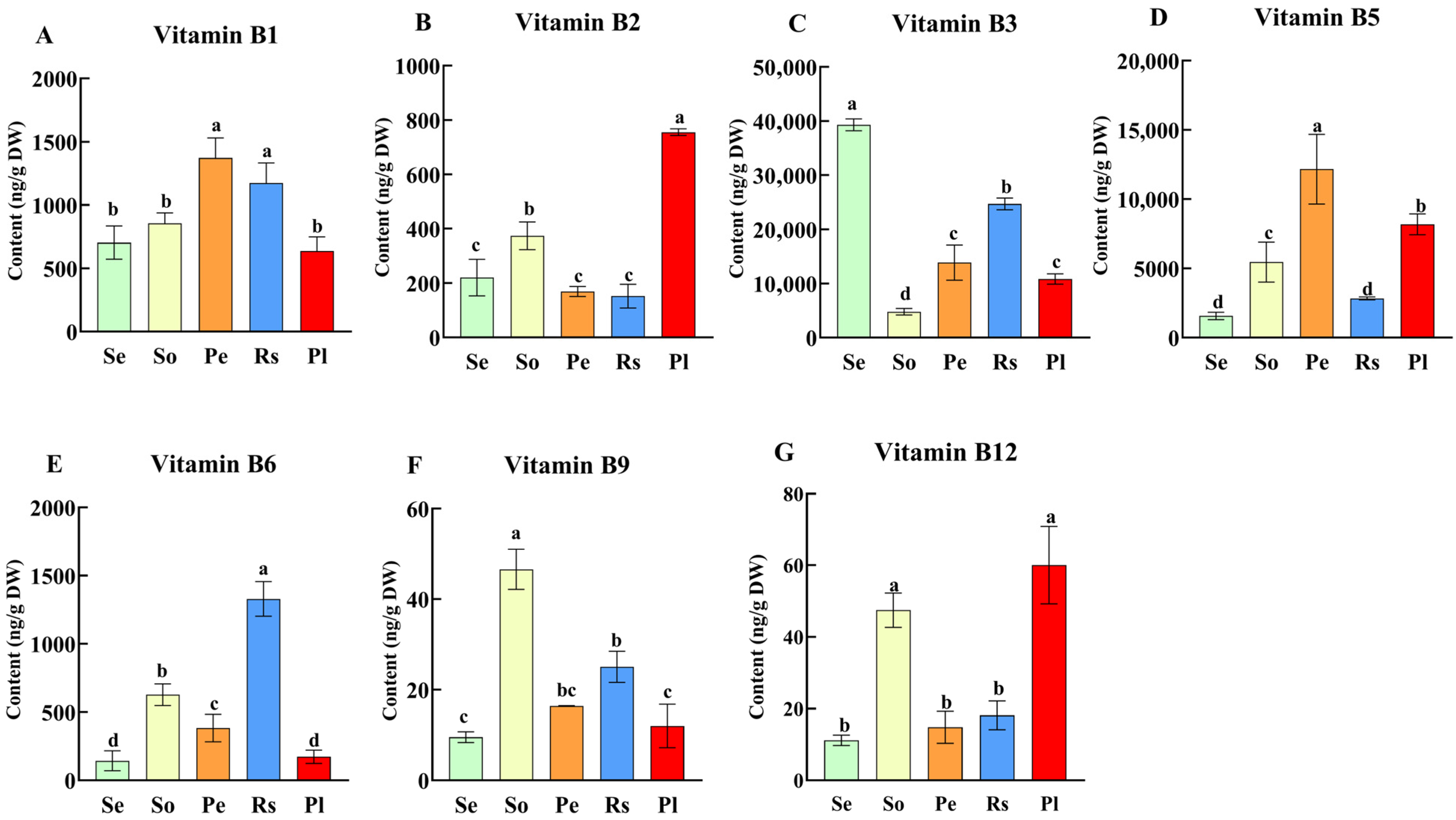
B vitamins are unable to be synthesized and stored by humans, and these micronutrients are essential for their daily diet [12]. Plants or plant-based foods are good sources of B vitamins, with natural variations in their contents contributing to diverse nutritional applications [16]. In the present study we detected the seven types of B vitamin complexes (vitamin B1, B2, B3, B5, B6, B9, and B12) in seeds of five oilseed crops such as sesame, soybean, peanut, rapeseed and perilla. Quantitative analysis revealed significant interspecific differences in B vitamin profiles across the five oilseed crops seeds (Figure 1). Sesame seeds exhibited the highest content of vitamin B3 (39.3 μg/g), 1.6-fold levels higher than rapeseed (24.7 μg/g), 2.8-fold higher than peanut (13.8 μg/g), 3.6-fold higher than perilla (10.8 μg/g) and 8.2-fold higher than soybean (4.78 μg/g). This exceptional vitamin B3 content not only positions sesame seeds as a superior natural functional ingredient for niacin supplementation but also their potential as a source of antioxidant-related nutrients, supported by their biochemical role. Specifically, vitamin B3 plays a critical role in maintaining cellular redox homeostasis by participating in the synthesis of nicotinamide adenine dinucleotide (NAD+) and nicotinamide adenine dinucleotide phosphate (NADP+), key cofactors involved in antioxidant defense and ROS scavenging [27]. The high content of B3 available in sesame seeds makes the crop ideal for incorporation into processed foods like bread, snacks, and plant-based meat alternatives to simultaneously enhance nutritional value and antioxidant capacity. Additionally, the higher sesame seeds’ B3 concentration in the present study exceeds that of major cereal crops: for instance, it is 22.9–245-fold higher than the bioavailable B3 in wheat (0.16–1.74 μg/g dw) [28] and 18.4–200-fold higher than the B3 range in maize (0.196–2.1375 μg/g) [17], highlighting sesame’s unique potential to enhance niacin intake, being particularly valuable for preventing pellagra, a B3 deficiency disorder, in regions reliant on cereal-dominated diets [8].
Among other oilseeds, peanut seeds revealed the highest vitamin B1 and vitamin B5 contents, with a value of 1.37 μg/g and 12.2 μg/g, respectively. These findings could benefit regions with rice-dominant diets, where thiamine (vitamin B1) deficiency contributes to beriberi disease, an effect potentially reinforced by vitamin B1’s role in protecting mitochondrial function against oxidative damage [29]. Moreover, rapeseed showed the highest vitamin B6, with a content of 1.33 μg/g. The vitamin B9 content in soybean (0.046 μg/g) was significantly higher compared to other crops. Perilla was recorded with higher in vitamin B2 (0.75 μg/g) and vitamin B12 (0.06 μg/g) contents than other crops. Among the seven studied B vitamin complex, vitamin B3 content was highly available in the five oilseed crops, ranging between 4.78 and 39.3 μg/g, emphasizing oilseeds as a collectively valuable resource for both nutritional supplementation and antioxidant defense. These variations indicated that different oilseeds might serve as complementary sources to meet specific B vitamin and antioxidant-related nutrition, diversifying seed-based nutritional strategies.

3.2. B Vitamin Profiles in Oilseed Crop Leaves and Leafy Vegetable Leaves

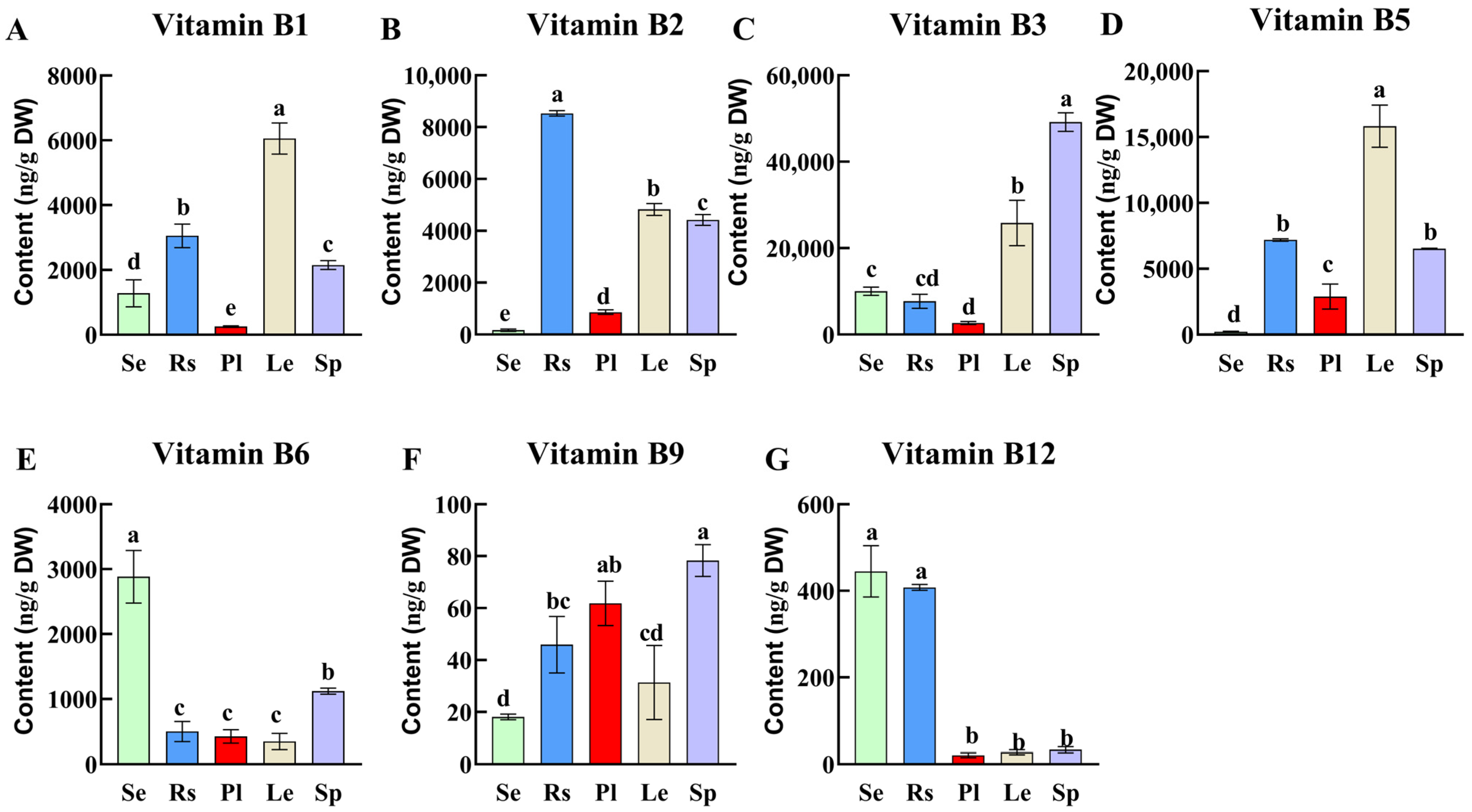
Based on quality and high preference for cooking oil production, we selected three edible oilseed crops, including sesame, rapeseed and perilla leaves, and two regularly consumed leafy vegetables (spinach and lettuce) to determine the B vitamin variations in the study (Figure 2). Of the leave samples, lettuce showed the highest vitamin B1 (6.05 μg/g) and vitamin B5 (15.83 μg/g). The highest vitamin B2, B3, and B6 values of 8.53 μg/g, 49.17 μg/g, and 2.88 μg/g were recorded in the leaves of rapeseed, spinach, and sesame, respectively. Similarly, higher values in vitamin B9 (0.08 μg/g) and B12 (0.44 μg/g) were recorded for spinach and sesame leaves, respectively.
Typically, the vitamin B6 content in sesame leaves was 2.57, 8.31, 5.76, and 6.8 times higher than in spinach, lettuce, rapeseed, and perilla, respectively. Vitamin B6 (pyridoxine) is a critical antioxidant cofactor that modulates the glutathione (GSH) system, an essential component of cellular antioxidant defense [30]. This function is particularly important because staple foods such as rice, wheat, and cassava often fail to meet recommended dietary intake of vitamin B6 when consumed as the primary source of nutrition. Given the known biochemical functions of vitamin B6, such dietary deficiencies might cellular antioxidant capacity and increase the risk of oxidative stress [3]. In contrast to the present finding, low B6 content (1.27–2.97 μg/g dw) reported by Shewry et al. [28] in wheat grains and sesame leaves could be a significant supplementary source for B6.
Moreover, sesame (0.44 μg/g) and rapeseed (0.4 μg/g) leaves contained the highest vitamin B12 levels, approximately 13-, 16-, and 20-fold higher than those of spinach, lettuce and perilla, respectively. Vitamin B12 is typically scarce in plant-based diets, and it exerts a key biochemical role in maintaining cellular redox homeostasis by lowering homocysteine levels—an imbalance of which is associated with elevated oxidative stress [31]. Notably, the B12 contents in sesame (0.44 μg/g) and rapeseed (0.4 μg/g) leaves exceed that of shiitake mushrooms, a plant source long recognized for its relatively high B12 content, with a reported range of 0.013 to 0.127 μg/g [20]. The relatively high and stable B12 concentration in sesame leaves addresses a critical nutritional gap in vegetarian diets, providing a reliable plant-based source of B12, which might help prevent megaloblastic anemia and support cellular redox balance, thereby reducing the risk of oxidative stress-induced DNA damage [31,32].
In contrast, lettuce leaves had approximately twice the B1 and B5 levels compared to sesame, rapeseed, perilla, and spinach. Collectively, these findings highlight the tissue-specific, distinct biochemical roles linked to cellular redox regulation, with sesame leaves emerging as a dual source of B6 and B12 for nutritional supplementation and the amelioration of redox imbalance associated with B vitamin deficiency—particularly valuable for vegetarians and populations at risk of oxidative damage related to inadequate B vitamin intake.

3.3. B Vitamin Profiles in Oilseed Crop Seedlings

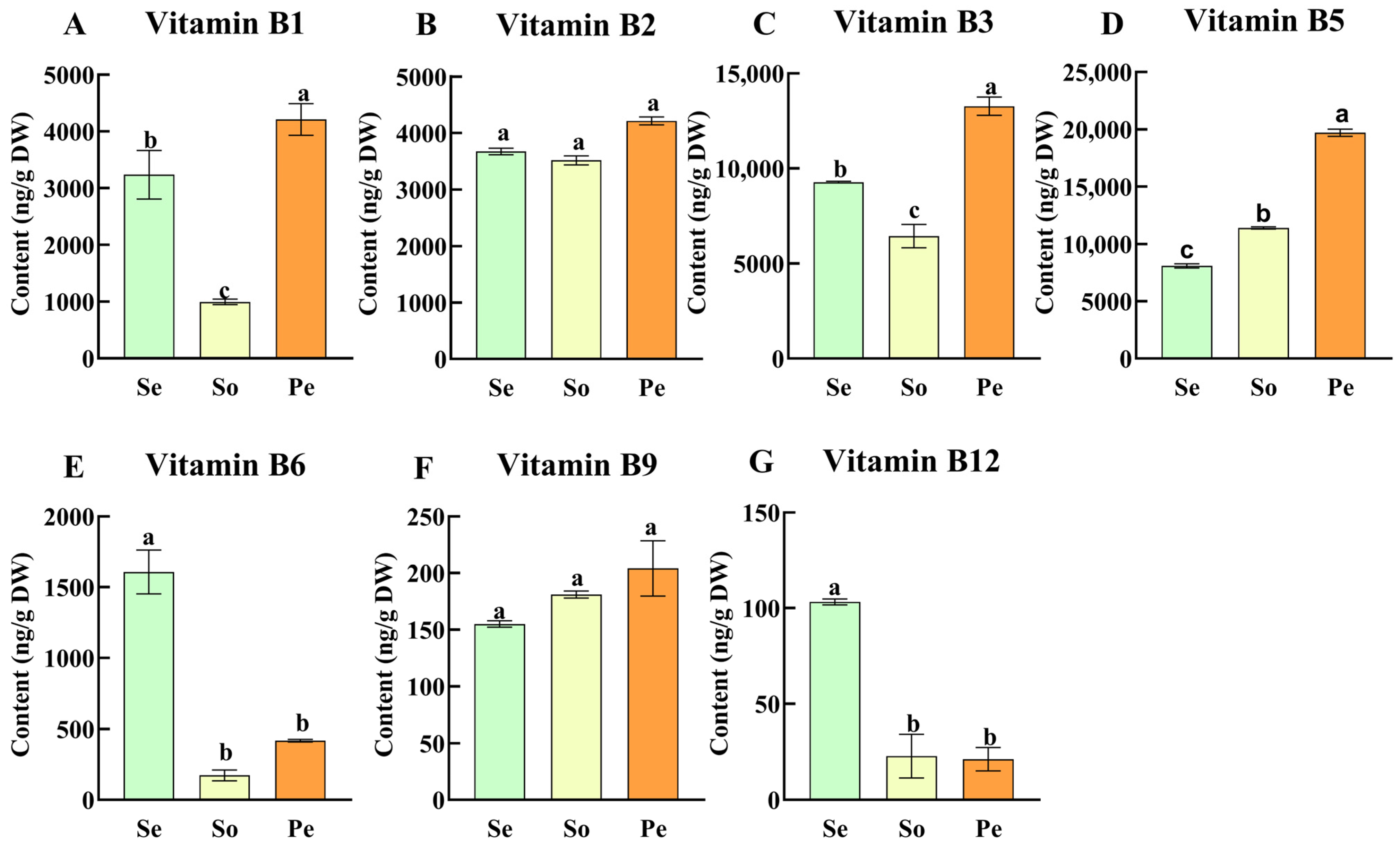
We also investigated the B vitamin variations in the seedlings of three edible oilseed crops, including sesame, peanut, and soybean (Figure 3). Results revealed that there were no significant differences in contents of vitamin B2 and B9, while remarkable variation occurred among the other five B vitamins (B1, B3, B5, B6, B12). Peanut seedlings were evidenced to be rich in vitamin B1 (4.21 μg/g), B3 (13.27 μg/g), and B5 (19.7 μg/g), while sesame seedlings followed with contents of 3.23 μg/g, 9.28 μg/g, and 8.08 μg/g, respectively. Sesame seedlings had stood out with the highest vitamin B6 (1.6 μg/g) and B12 (0.1 μg/g), reinforcing sesame’s multi-tissue potential as a source of antioxidant-related B vitamins.
Seedlings represent underutilized nutritional reservoirs, with their B vitamin profiles reflecting adaptations to early growth under oxidative stress. Vitamin B6 in sesame seedlings contributes to ROS scavenging and GSH maintenance [30], while B12 supports DNA integrity by reducing oxidative damage [31]. These properties make seedlings ideal for integration into urban farming and ready-to-eat products (e.g., salads, spreads), offering convenient sources of both nutrients and antioxidants for modern lifestyles. It should be noted, however, that plant-derived B12 exhibits inherently lower bioavailability than animal-derived forms, as its absorption is hindered by dietary matrix components (e.g., phytates, fiber) and requires sufficient intrinsic factor secretion in the human gut; additionally, both B6 and B12 are easily degraded under harsh food-processing and storage conditions (e.g., exposure to light, oxygen, extreme temperatures, and pH fluctuations), which may compromise their nutritional efficacy before consumption. The complementary B vitamin profiles of peanut, soybean, and sesame seedlings further enable diversified dietary strategies, where each crop’s seedlings can be leveraged to target specific antioxidant and nutritional needs [33].

3.4. Tissue-Specific Accumulation of B Vitamin in Different Oilseed Crops

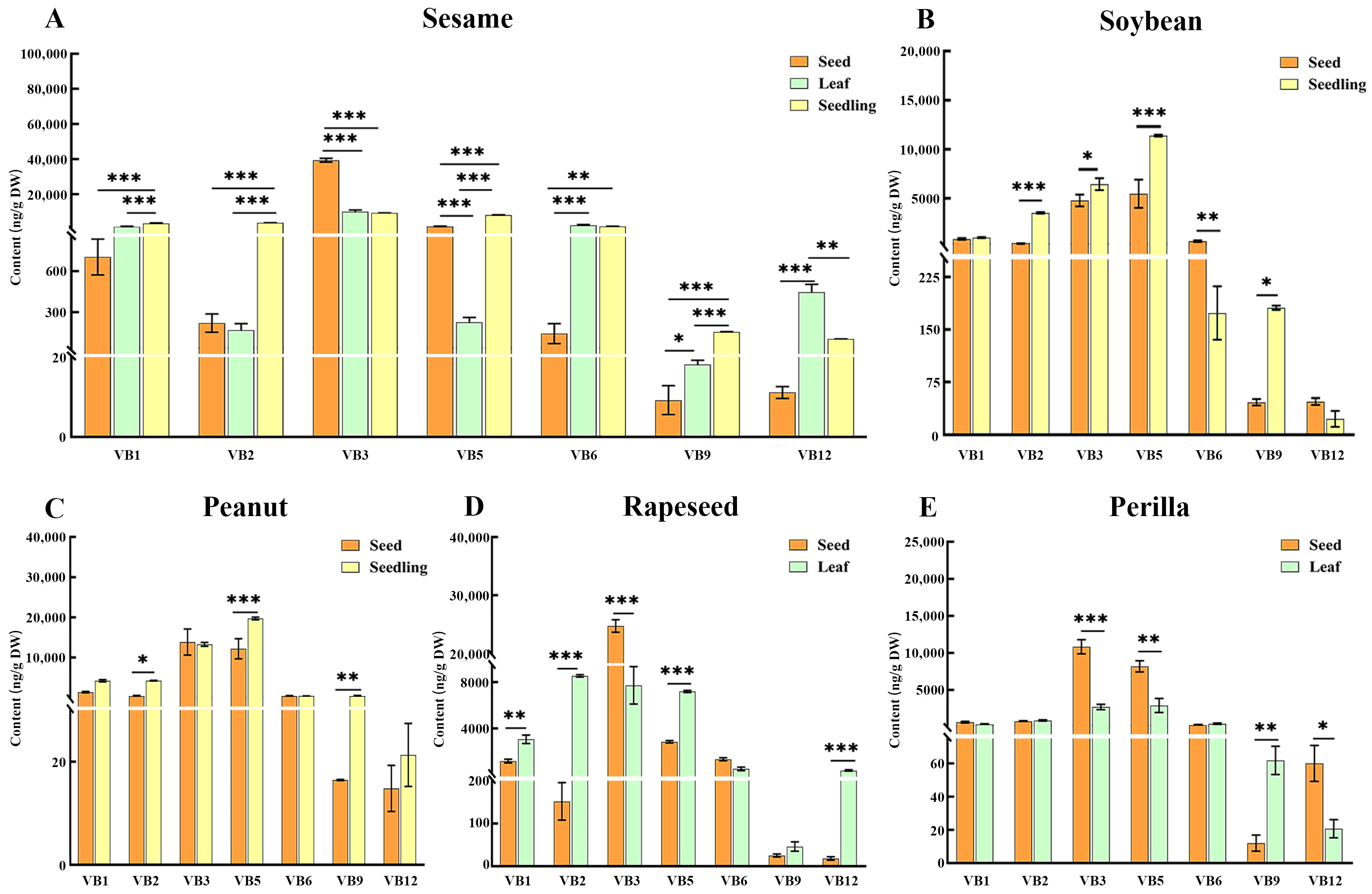
The vitamin B contents were compared between the seed and non-seed tissues (leaf, and seedling) in the five oilseed crops. Results revealed significant differences among the studied tissues of the oilseed crops in the present study, highlighting the need for comprehensive utilization of crop tissues for optimal B vitamin and antioxidant intake. Sesame exhibited the most pronounced tissue partitioning: seeds contained substantially higher B3 levels than leaves or seedlings, while leaves and seedlings had markedly elevated B6 and B12 concentrations relative to seeds (Figure 4A). This pattern aligns with functional roles of these vitamins: B3 (niacin) in seeds likely supports oxidative stress defense during long-term storage, whereas B6 and B12 in photosynthetic leaf tissues and actively growing seedlings are critical for ROS scavenging during photosynthesis and early development (Mangel et al., 2019) [34]. Additionally, vitamin B12 can influence the activity of superoxide dismutase (SOD) through direct or indirect mechanisms, thereby playing a central role in regulating the body’s redox homeostasis [35]. Studies indicate that vitamin B6 enhances ascorbic acid oxidase activity in coffee leaves, leading to increased chlorophyll content and improved photosynthetic capacity in plants. The mode of action of vitamin B6 in sesame leaves may be consistent with this mechanism [36]. Rapeseed leaves had 56 times higher vitamin B2 and 19 times higher vitamin B12 than seeds, while seeds had 3 times higher vitamin B3 than leaves (Figure 4B). Vitamin B2 (riboflavin) serves as a precursor for two crucial coenzymes—flavadenosine dinucleotide (FAD) and flavin mononucleotide (FMN)—which play vital roles in cellular energy metabolism and redox reactions. It reduces oxidative damage in plants by decreasing the levels of acetaldehyde, H2O2, hydroxyl radicals, and lipoxygenase activity. Rapeseed leaves may enhance their antioxidant activity through these mechanisms [37]. Perilla seeds had 4 times higher vitamin B3 and 2.5 times higher vitamin B5 than leaves, but vitamin B9 content in seeds was 5 times lower than that in leaves (Figure 4C). Soybean seedlings had 9 times higher vitamin B2, 1.3 times higher vitamin B3, and 3 times higher vitamin B9 than seeds (Figure 4D). Plant folic acid metabolism maintains REDOX balance by promoting the production of NADPH through a reaction catalyzed by methylenetetrahydrofolate dehydrogenase, enabling plants to cope with oxidative stress [38]. In peanuts, seedlings were significantly higher in vitamin B5 and vitamin B9 than seeds (Figure 4E). The results suggested the seeds of sesame and rapeseed are better resources for vitamin B3 than their leaves and seedlings; the leaves of sesame and rapeseed can supply more vitamin B12 than their seeds; Perilla seeds are good resources for vitamin B3 and vitamin B5 than its leaf; and rapeseed leaves and soybean seedlings are good resources for vitamin B2 than their seeds. The results revealed distinct tissue-specific patterns. These patterns challenge the traditional focus on seeds, emphasizing that non-seed tissues (leaves, seedlings) can be equally valuable for dietary B vitamin intake and antioxidant defense. Collectively, these findings support the comprehensive utilization of oilseed crops, where each tissue can be targeted for specific B vitamin and antioxidant applications.

3.5. B Vitamin Profiles in Black and White Sesame Seeds Across Tissues

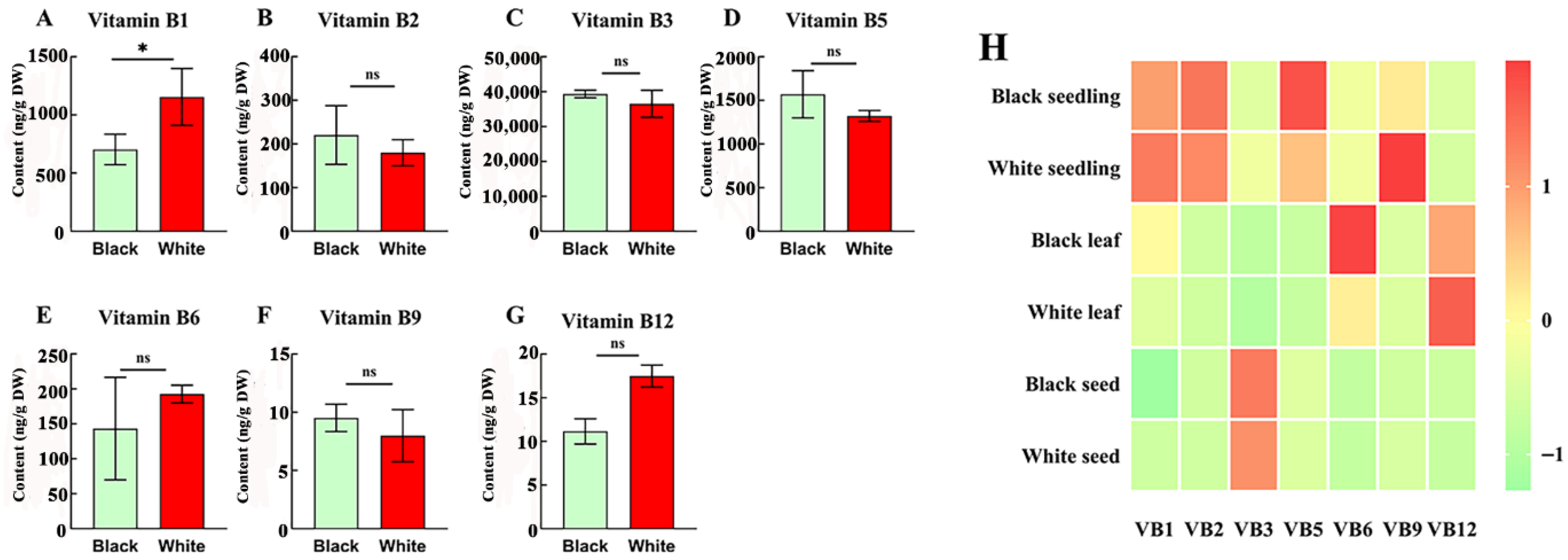
Black sesame seeds are usually considered to have high value for their antioxidative ability in the treatment of diverse diseases, while white seeds were valued in oil extraction [39]. Comparative analysis of black and white sesame seeds revealed tissue-specific B vitamin distributions, with seed coat color influencing only vitamin B1 content in seeds. White sesame seeds showed significant differences and had 1.5 times higher vitamin B1 content of 1.09 μg/g than black seeded sesame (0.7 μg/g) (Figure 5A), while there were no significant differences (ns) observed in the remaining B vitamins in the current study (Figure 5B–G). The heat map results showed both white and black sesame seedlings exhibited the highest vitamins B1 (3.23 and 2.36 μg/g,, respectively), B2, (3.67 and 3.65 μg/g, respectively), and B5 (8.1 and 10.5 μg/g, respectively), whereas seeds had peak vitamin B3 (35.5 and 39.3 μg/g, respectively). The leaves of both seed colors stood out with the highest vitamin B12 (0.44 and 0.48 μg/g respectively), but black sesame leaves showed 2.76–22-fold higher vitamin B6 levels than other two tissues (Figure 5H). These findings indicate that black sesame seeds may offer advantages for vitamin B5 in seedlings and vitamin B6 in leaves, supporting targeted utilization based on tissue and seed coat color.

3.6. Nutritional Evaluation of Colored Sesame Seeds: Implications for Targeted Dietary Utilization

Vitamin B3 (niacin) is a key nutrient that enhances cellular redox defense by promoting NAD(P)H-dependent ROS scavenging and inhibiting the biochemical process of lipid peroxidation [8]. To identify sesame germplasm with high vitamin B3 content and thereby expand vitamin B3 supply sources, we analyzed vitamin B3 variability across different sesame germplasms (Table 1). The results showed that vitamin B3 content in sesame germplasm exhibited substantial variability across the tested germplasms. Among 92 total samples, the content of vitamin B3 ranged from 23.57 to 82.25 μg/g, with a mean of 39.28 μg/g and a CV of 15.12%. White sesame showed a range of 23.57–55.87 μg/g, with a mean of 38.79 μg/g and a CV of 16.44%, while black sesame had a narrower distribution, ranging from 25.37 to 45.14 μg/g, with a mean of 38.7 μg/g and a CV of 13.93%. Notably, yellow sesame ranged from 26.24 to 82.25 μg/g, exhibiting the highest mean (40.66 μg/g) and greatest variability (CV = 32.83%, matching the overall maximum), whereas brown sesame displayed intermediate variation (24.08–48.64 μg/g; mean = 37.90 μg/g; CV = 18.94%). These results underscore the broad natural variation in vitamin B3 content across sesame germplasm, informing the screening of high-vitamin B3 accessions to boost vitamin B3 supply. This genetic diversity enables targeted breeding for high-B3 germplasms. The identification of germplasms with B3 contents enables the development of tailored fortification from daily staples to high-dose products and enhancing sesame’s role in addressing global niacin inadequacies and oxidative stress-related health issues.

3.7. Implications for Dietary Diversification, Biofortification and Antioxidant Defense

Globally, achieving a balanced and diverse diet remains a challenge for several people, attributable to micronutrient deficiencies, particularly in low-income settings [40]. A diversified diet implies the adequate intake of essential nutrients and antioxidants, and plant-based sources are increasingly recognized for their dual role in nutrition and oxidative stress mitigation [41]. Understanding the plant-based sources and profiles are essential for dietary diversification and fortification, contributing to nutrient deficiency globally. The distinct species- and tissue-specific B vitamin patterns highlight the potential of oilseeds, particularly sesame, as multifunctional resources. Sesame’s seeds (high B3), leaves (high B6, B12), and seedlings (high B6, B12) allow comprehensive dietary integration, from seed-based products to leafy greens and sprouts. These tissues collectively provide a spectrum of B vitamins, each of which may support antioxidant activity through pre-existing biochemical actions: B3 is involved in NAD(P)H synthesis, B6 for GSH maintenance, and B12 for homocysteine reduction [27,31]. Furthermore, sesame’s adaptability to diverse agro-climatic zones and compatibility with local diets in regions like South Asia and East Africa further enhance its utility as a sustainable solution for global nutritional and antioxidant needs.
Leveraging the observed variations, future efforts can focus on breeding high-B vitamin germplasms and promoting the inclusion of non-seed tissues in diets. These strategies hold promise for addressing global micronutrient deficiencies through sustainability. Additionally, integrating sesame into biofortification programs can enhance the antioxidant capacity of staple diets, reducing the risk of chronic diseases linked to oxidative stress (e.g., cardiovascular disease, neurological disorders) [1,4].

4. Conclusions

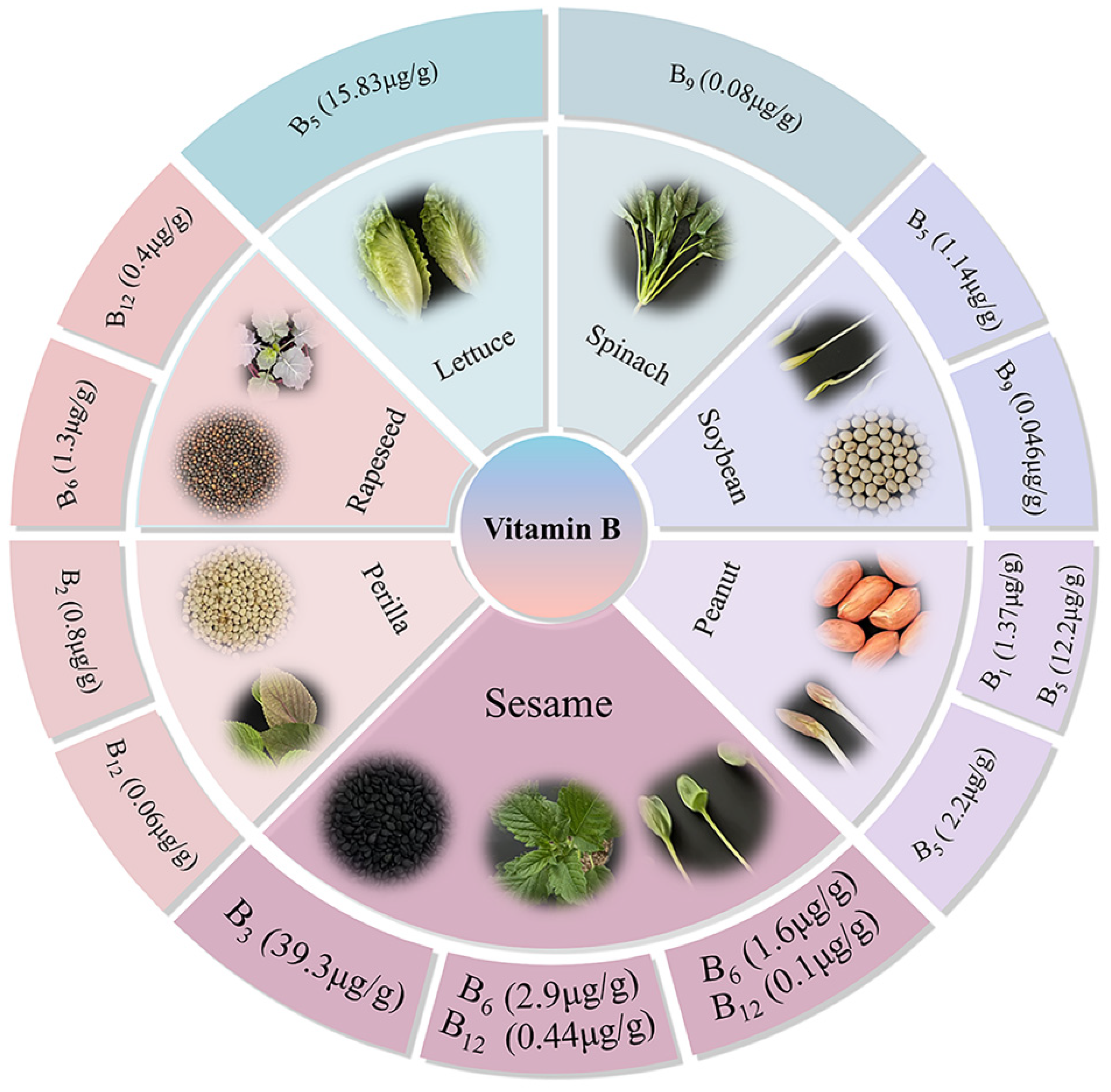
This study aims to characterize the interspecific and tissue-specific variations in B vitamin profiles across edible tissues of selected oilseed crops and leafy greens, as well as to assess vitamin B3 variations in sesame germplasms. Results revealed that significant interspecific differences in B vitamin variations across the five oilseed crop seeds and two leafy greens (Figure 6). Notably, sesame seeds exhibited exceptional vitamin B3 contents compared to other oilseeds crops, and this makes the crop regarded as a natural functional ingredient for niacin supplementation. Furthermore, sesame’s tissues such as leaves and seedlings are rich sources of vitamins B6 and B12. This multi-tissue potential of the crop allows for comprehensive dietary integration, from seed-based products to leafy greens and sprouted seedlings. Collectively, the unique B vitamin profile of sesame, along with genetic variability, offers the possibility of being an ideal candidate for a biofortification program—an approach that could contribute to efforts at addressing global B vitamin deficiencies and point to possible plant-based dietary solutions for the provision of antioxidant nutrients, based on the biochemical role of B vitamins in redox homeostasis. By leveraging the identified variations, future research should focus on vitamin bioavailability, processing effects, and genetic mechanisms underlying B vitamin accumulation to fully realize sesame’s potential as a functional crop. It is important to note that our tissue-specific comparisons were limited to the edible tissues for which viable samples were obtained, and they did not include all tissues of all six species. Future studies with comprehensive sampling of all species and tissues will further refine our understanding of B vitamin distribution across oilseed crops. And analytical limitations exist: the LC-MS/MS method used in this study cannot fully distinguish between biologically active B12 (cobalamin) and structurally similar inactive analogs (e.g., pseudocobalamin) commonly present in plants, potentially overestimating functionally available B12 levels [42].

Author Contributions

Y.Z., T.Z., and L.W. (Linhai Wang) conceived and designed the project and experiments. Y.Z. performed the experiments. Y.Z. analyzed the data, T.Z. and D.H.T. wrote the manuscript. Z.L., R.Z., and L.W. (Lei Wang) assisted in preparing the materials. J.Y., W.W. and H.L. assisted in data analyzing. L.W. (Linhai Wang) revised the manuscript. All authors have read and agreed to the published version of the manuscript.

Funding

This research was funded by the China Agriculture Research System (CARS-14), National Key R & D Program of China (2024YFD1600100), the Agricultural Science and Technology Innovation Program of the Chinese Academy of Agricultural Sciences (CAAS-ASTIP-2025-OCRI), Hubei International Science and Technology Cooperation Project (2024EHA055), Science and Technology Innovation Project of Hubei province (2025-620-000-001-031), Fundamental Research Funds for Central Non-profit Scientific Institution (1610172023003), and the National Center for Crops Germplasm Resources (NCCGR-2024-016).

Institutional Review Board Statement

Not applicable.

Informed Consent Statement

Not applicable.

Data Availability Statement

The original contributions presented in this study are included in the article. Further inquiries can be directed to the corresponding author.

Acknowledgments

We thank all of the laboratory members for their collaboration and constructive suggestions and Wuhan ProNets Testing Technology Co., Ltd. for B vitamins detection.

Conflicts of Interest

The authors declare that they have no known competing financial interests or personal relationships that could have appeared to influence the work reported in this paper.

References

  1. Ding, H.; Reiss, A.B.; Pinkhasov, A.; Kasselman, L.J. Plants, Plants, and More Plants: Plant-Derived Nutrients and Their Protective Roles in Cognitive Function, Alzheimer’s Disease, and Other Dementias. Medicina 2022, 58, 1025. [Google Scholar] [CrossRef]
  2. Fitzpatrick, T.B.; Chapman, L.M. The Importance of Thiamine (Vitamin B1) in Plant Health: From Crop Yield to Biofortification. J. Biol. Chem. 2020, 295, 12002–12013. [Google Scholar] [CrossRef]
  3. Hellmann, H.; Mooney, S. Vitamin B6: A Molecule for Human Health? Molecules 2010, 15, 442–459. [Google Scholar] [CrossRef] [PubMed]
  4. Kennedy, D. B Vitamins and the Brain: Mechanisms, Dose and Efficacy—A Review. Nutrients 2016, 8, 68. [Google Scholar] [CrossRef] [PubMed]
  5. Lee, M.-C.; Hsu, Y.-J.; Shen, S.-Y.; Ho, C.-S.; Huang, C.-C. A Functional Evaluation of Anti-Fatigue and Exercise Performance Improvement Following Vitamin B Complex Supplementation in Healthy Humans, a Randomized Double-Blind Trial. Int. J. Med. Sci. 2023, 20, 1272–1281. [Google Scholar] [CrossRef]
  6. Yang, Y.; Ke, Y.; Liu, X.; Zhang, Z.; Zhang, R.; Tian, F.; Zhi, L.; Zhao, G.; Lv, B.; Hua, S.; et al. Navigating the B Vitamins: Dietary Diversity, Microbial Synthesis, and Human Health. Cell Host Microbe 2024, 32, 12–18. [Google Scholar] [CrossRef]
  7. Asensi-Fabado, M.A.; Munné-Bosch, S. Vitamins in Plants: Occurrence, Biosynthesis and Antioxidant Function. Trends Plant Sci. 2010, 15, 582–592. [Google Scholar] [CrossRef]
  8. Hrubša, M.; Siatka, T.; Nejmanová, I.; Vopršalová, M.; Kujovská Krčmová, L.; Matoušová, K.; Javorská, L.; Macáková, K.; Mercolini, L.; Remião, F.; et al. Biological Properties of Vitamins of the B-Complex, Part 1: Vitamins B1, B2, B3, and B5. Nutrients 2022, 14, 484. [Google Scholar] [CrossRef]
  9. Degnan, P.H.; Taga, M.E.; Goodman, A.L. Vitamin B12 as a Modulator of Gut Microbial Ecology. Cell Metab. 2014, 20, 769–778. [Google Scholar] [CrossRef]
  10. Mkrtchyan, G.V.; Üçal, M.; Müllebner, A.; Dumitrescu, S.; Kames, M.; Moldzio, R.; Molcanyi, M.; Schaefer, S.; Weidinger, A.; Schaefer, U.; et al. Thiamine Preserves Mitochondrial Function in a Rat Model of Traumatic Brain Injury, Preventing Inactivation of the 2-Oxoglutarate Dehydrogenase Complex. Biochim. Biophys. Acta (BBA)-Bioenerg. 2018, 1859, 925–931. [Google Scholar] [CrossRef]
  11. Fitzpatrick, T.B.; Dalvit, I.; Chang, F.; Wang, K.; Fudge, J.B.; Chang, S.; Maillot, B.; Gruissem, W. Vitamin B1 Enhancement in the Endosperm of Rice through Thiamine Sequestration. Plant Biotechnol. J. 2024, 22, 2330–2332. [Google Scholar] [CrossRef]
  12. Liu, Z.; Farkas, P.; Wang, K.; Kohli, M.; Fitzpatrick, T.B. B Vitamin Supply in Plants and Humans: The Importance of Vitamer Homeostasis. Plant J. 2022, 111, 662–682. [Google Scholar] [CrossRef] [PubMed]
  13. Bonku, R.; Mikiashvili, N.; Yu, J. Impacts of Protease Treatment on the Contents of Tocopherols and B Vitamins in Peanuts. J. Food Res. 2020, 9, 1–12. [Google Scholar] [CrossRef]
  14. Kim, E.-H.; Jung, J.-W.; Yu, O.S.; Lee, S.-Y.; Kim, M.-J.; Lee, S.-G.; Park, H.-M.; Jo, Y.; Joo, Y.; Oh, S.-W. Natural Variation in Tocopherols, B Vitamins, and Isoflavones in Seeds of 13 Korean Conventional Soybean Varieties. Appl. Biol. Chem. 2024, 67, 51. [Google Scholar] [CrossRef]
  15. Garg, M.; Sharma, A.; Vats, S.; Tiwari, V.; Kumari, A.; Mishra, V.; Krishania, M. Vitamins in Cereals: A Critical Review of Content, Health Effects, Processing Losses, Bioaccessibility, Fortification, and Biofortification Strategies for Their Improvement. Front. Nutr. 2021, 8, 586815. [Google Scholar] [CrossRef]
  16. Lebiedzińska, A.; Szefer, P. Vitamins B in Grain and Cereal–Grain Food, Soy-Products and Seeds. Food Chem. 2006, 95, 116–122. [Google Scholar] [CrossRef]
  17. Safiul Azam, F.M.; Lian, T.; Liang, Q.; Wang, W.; Zhang, C.; Jiang, L. Variation of Vitamin B Contents in Maize Inbred Lines: Potential Genetic Resources for Biofortification. Front. Nutr. 2022, 9, 1029119. [Google Scholar] [CrossRef]
  18. Kim, G.-P.; Lee, J.; Ahn, K.-G.; Hwang, Y.-S.; Choi, Y.; Chun, J.; Chang, W.-S.; Choung, M.-G. Differential Responses of B Vitamins in Black Soybean Seeds. Food Chem. 2014, 153, 101–108. [Google Scholar] [CrossRef]
  19. Mangel, N.; Fudge, J.B.; Gruissem, W.; Fitzpatrick, T.B.; Vanderschuren, H. Natural Variation in Vitamin B1 and Vitamin B6 Contents in Rice Germplasm. Front. Plant Sci. 2022, 13, 856880. [Google Scholar] [CrossRef]
  20. Watanabe, F.; Yabuta, Y.; Bito, T.; Teng, F. Vitamin B12-Containing Plant Food Sources for Vegetarians. Nutrients 2014, 6, 1861–1873. [Google Scholar] [CrossRef]
  21. Vincenti, A.; Bertuzzo, L.; Limitone, A.; D’Antona, G.; Cena, H. Perspective: Practical Approach to Preventing Subclinical B12 Deficiency in Elderly Population. Nutrients 2021, 13, 1913. [Google Scholar] [CrossRef]
  22. Balabanova, L.; Pentekhina, I.; Nedashkovskaya, O.; Degtyarenko, A.; Grigorchuk, V.; Yugay, Y.; Vasyutkina, E.; Kudinova, O.; Seitkalieva, A.; Slepchenko, L.; et al. Shift of Choline/Betaine Pathway in Recombinant Pseudomonas for Cobalamin Biosynthesis and Abiotic Stress Protection. Int. J. Mol. Sci. 2022, 23, 13934. [Google Scholar] [CrossRef]
  23. Abdiani, N.; Kolahi, M.; Javaheriyan, M.; Sabaeian, M. Effect of Storage Conditions on Nutritional Value, Oil Content, and Oil Composition of Sesame Seeds. J. Agric. Food Res. 2024, 16, 101117. [Google Scholar] [CrossRef]
  24. Kefale, H.; Segla Koffi Dossou, S.; Li, F.; Jiang, N.; Zhou, R.; Wang, L.; Zhang, Y.; Li, D.; You, J.; Wang, L. Widely Targeted Metabolic Profiling Provides Insights into Variations in Bioactive Compounds and Antioxidant Activity of Sesame, Soybean, Peanut, and Perilla. Food Res. Int. 2023, 174, 113586. [Google Scholar] [CrossRef] [PubMed]
  25. Wang, D.; Zhang, L.; Huang, X.; Wang, X.; Yang, R.; Mao, J.; Wang, X.; Wang, X.; Zhang, Q.; Li, P. Identification of Nutritional Components in Black Sesame Determined by Widely Targeted Metabolomics and Traditional Chinese Medicines. Molecules 2018, 23, 1180. [Google Scholar] [CrossRef] [PubMed]
  26. Titcomb, T.J.; Tanumihardjo, S.A. Global Concerns with B Vitamin Statuses: Biofortification, Fortification, Hidden Hunger, Interactions, and Toxicity. Comp. Rev. Food Sci. Food Safe 2019, 18, 1968–1984. [Google Scholar] [CrossRef] [PubMed]
  27. Lindschinger, M.; Tatzber, F.; Schimetta, W.; Schmid, I.; Lindschinger, B.; Cvirn, G.; Stanger, O.; Lamont, E.; Wonisch, W. A Randomized Pilot Trial to Evaluate the Bioavailability of Natural versus Synthetic Vitamin B Complexes in Healthy Humans and Their Effects on Homocysteine, Oxidative Stress, and Antioxidant Levels. Oxidative Med. Cell. Longev. 2019, 2019, 6082613. [Google Scholar] [CrossRef]
  28. Shewry, P.R.; Van Schaik, F.; Ravel, C.; Charmet, G.; Rakszegi, M.; Bedo, Z.; Ward, J.L. Genotype and Environment Effects on the Contents of Vitamins B1, B2, B3, and B6 in Wheat Grain. J. Agric. Food Chem. 2011, 59, 10564–10571. [Google Scholar] [CrossRef]
  29. Nguyen, T.T.L.; Pham, T.M.N.; Ho, T.B.; Ly-Nguyen, B. Optimization of Vitamin B1, B2, and B6 Absorption in Nang Tay Dum Floating Rice Grains. Foods 2024, 13, 2650. [Google Scholar] [CrossRef]
  30. Bdeir, R.; Aljabali, S.M.; Banihani, S.A. Role of Pyridoxine and Oxidative Stress in Asthenozoospermia. Heliyon 2024, 10, e34799. [Google Scholar] [CrossRef]
  31. Firat, C.K.; Ozkan, B.N.; Guler, E.M. Beneficial Effects of Vitamin B12 Treatment in Pediatric Patients Diagnosed with Vitamin B12 Deficiency Regarding Total-Native Thiol, Oxidative Stress, and Mononuclear Leukocyte DNA Damage. Free Radic. Res. 2022, 56, 631–639. [Google Scholar] [CrossRef] [PubMed]
  32. Belal, A.; Mahmoud, R.; Mohamed, E.E.; Farghali, A.; Abo El-Ela, F.I.; Gamal, A.; Halfaya, F.M.; Khaled, E.; Farahat, A.A.; Hassan, A.H.E.; et al. A Novel Hydroxyapatite/Vitamin B12 Nanoformula for Treatment of Bone Damage: Preparation, Characterization, and Anti-Arthritic, Anti-Inflammatory, and Antioxidant Activities in Chemically Induced Arthritic Rats. Pharmaceuticals 2023, 16, 551. [Google Scholar] [CrossRef] [PubMed]
  33. Karoshi, V.R.; Nallamuthu, I.; Anand, T. Co-encapsulation of Vitamins B6 and B12 Using Zein/Gum Arabic Nanocarriers for Enhanced Stability, Bioaccessibility, and Oral Bioavailability. J. Food Sci. 2024, 89, 9766–9782. [Google Scholar] [CrossRef] [PubMed]
  34. Mangel, N.; Fudge, J.B.; Li, K.; Wu, T.; Tohge, T.; Fernie, A.R.; Szurek, B.; Fitzpatrick, T.B.; Gruissem, W.; Vanderschuren, H. Enhancement of Vitamin B6 Levels in Rice Expressing Arabidopsis Vitamin B6 Biosynthesis de Novo Genes. Plant J. 2019, 99, 1047–1065. [Google Scholar] [CrossRef]
  35. Suarez-Moreira, E.; Yun, J.; Birch, C.S.; Williams, J.H.H.; McCaddon, A.; Brasch, N.E. Vitamin B12 and Redox Homeostasis: Cob(II)Alamin Reacts with Superoxide at Rates Approaching Superoxide Dismutase (SOD). J. Am. Chem. Soc. 2009, 131, 15078–15079. [Google Scholar] [CrossRef]
  36. Vendruscolo, E.P.; de Souza, M.I.; Bastos, A.A.; Bortolheiro, F.P.d.A.P.; Seron, C.d.C.; Martins, M.B.; de Lima, S.F.; Alves, V.C.D. Vitamins Enhance the Physiological Characteristics of Coffee Cultivated in the Brazilian Cerrado. Vegetos 2025, 38, 1093–1099. [Google Scholar] [CrossRef]
  37. Kanwal, H.; Raza, S.H.; Ali, S.; Iqbal, M.; Shad, M.I. Effect of Riboflavin on Redox Balance, Osmolyte Accumulation, Methylglyoxal Generation and Nutrient Acquisition in Indian Squash (Praecitrullus fistulosus L.) under Chromium Toxicity. Environ. Sci. Pollut. Res. 2024, 31, 20881–20897. [Google Scholar] [CrossRef]
  38. Gorelova, V.; De Lepeleire, J.; Van Daele, J.; Pluim, D.; Meï, C.; Cuypers, A.; Leroux, O.; Rébeillé, F.; Schellens, J.H.M.; Blancquaert, D.; et al. Dihydrofolate Reductase/Thymidylate Synthase Fine-Tunes the Folate Status and Controls Redox Homeostasis in Plants. Plant Cell 2017, 29, 2831–2853. [Google Scholar] [CrossRef]
  39. Radchuk, V.; Borisjuk, L. Physical, Metabolic and Developmental Functions of the Seed Coat. Front. Plant Sci. 2014, 5, 510. [Google Scholar] [CrossRef]
  40. Bechoff, A.; De Bruyn, J.; Alpha, A.; Wieringa, F.; Greffeuille, V. Exploring the Complementarity of Fortification and Dietary Diversification to Combat Micronutrient Deficiencies: A Scoping Review. Curr. Dev. Nutr. 2023, 7, 100033. [Google Scholar] [CrossRef]
  41. Ray (Chakravarti), A.; Dutta, S. Dietary Diversification and Its Impact on Human Health. In Nanotechnology in Functional Foods; John Wiley & Sons, Ltd.: Hoboken, NJ, USA, 2022; pp. 223–242. ISBN 978-1-119-90505-9. [Google Scholar]
  42. Linda, K.; Rhishika, D.; Lusine, G.; Michal, S.-A.; Inna, K.-G.; Osnat, G. Cobalamin Production in Phototrophic and Mixotrophic Cultures of Nine Duckweed Species (Lemnaceae). bioRxiv 2023. [Google Scholar] [CrossRef]
Figure 1. B vitamin variations [B1 (A), B2 (B), B3 (C), B5 (D), B6 (E), B9 (F), and B12 (G)] in seeds of five oilseed crops (Se: sesame, So: soybean, Pe: peanut, Rs: rapeseed, and Pl: perilla). Different letters indicate significant differences in vitamin B content among seeds of different crops (P < 0.05).
Antioxidants 15 00224 g001
Figure 2. B vitamin variations [B1 (A), B2 (B), B3 (C), B5 (D), B6 (E), B9 (F), and B12 (G)] in leaves of three oilseed crops (Se: sesame, Rs: rapeseed, and Pl: perilla) and leafy vegetables (Le: lettuce and Sp: spinach). Different letters indicate significant differences in B vitamin content among plant leaves (p < 0.05).
Antioxidants 15 00224 g002
Figure 3. B vitamins variation [B1 (A), B2 (B), B3 (C), B5 (D), B6 (E), B9 (F), and B12 (G)] in seedlings of three oilseed crops (Se: sesame, So: soybean, and Pe: peanut). Different letters indicate significant differences in B vitamin content among seedlings of different crops (p < 0.05).
Antioxidants 15 00224 g003
Figure 4. Comparison of B vitamin content among different tissues of five oilseed crops. Sesame (A), soybean (B), peanut (C), rapeseed (D), and perilla (E). *, **, *** represent p < 0.05, p < 0.01, and p < 0.001, respectively.
Antioxidants 15 00224 g004
Figure 5. Comparison of the contents of B vitamins [B1 (A), B2 (B), B3 (C), B5 (D), B6 (E), B9 (F) and B12 (G)] in black and white sesame seeds. (H) Heat map of relative content of seven B vitamins in different tissues of black and white sesame seeds. * represents p < 0.05; ns represents no significant difference.
Antioxidants 15 00224 g005
Figure 6. Diagrammatical illustration of significant B vitamin contents across the studied materials.
Antioxidants 15 00224 g006
Table 1. Variation in vitamin B3 content among sesame germplasms.
Seed Coat ColorNumberVitamin B3 (μg/g) Content
MaxMinMeanSDCV
White3855.8723.5738.795.9416.44%
Black1845.1425.3738.705.4013.93%
Yellow1582.2526.2440.6613.3532.83%
Brown2148.6424.0837.907.1818.94%
Total9282.2523.5739.287.8615.12%
Min, minimum; Max, maximum; SD, standard deviation; CV, coefficient of variation.
Disclaimer/Publisher’s Note: The statements, opinions and data contained in all publications are solely those of the individual author(s) and contributor(s) and not of MDPI and/or the editor(s). MDPI and/or the editor(s) disclaim responsibility for any injury to people or property resulting from any ideas, methods, instructions or products referred to in the content.