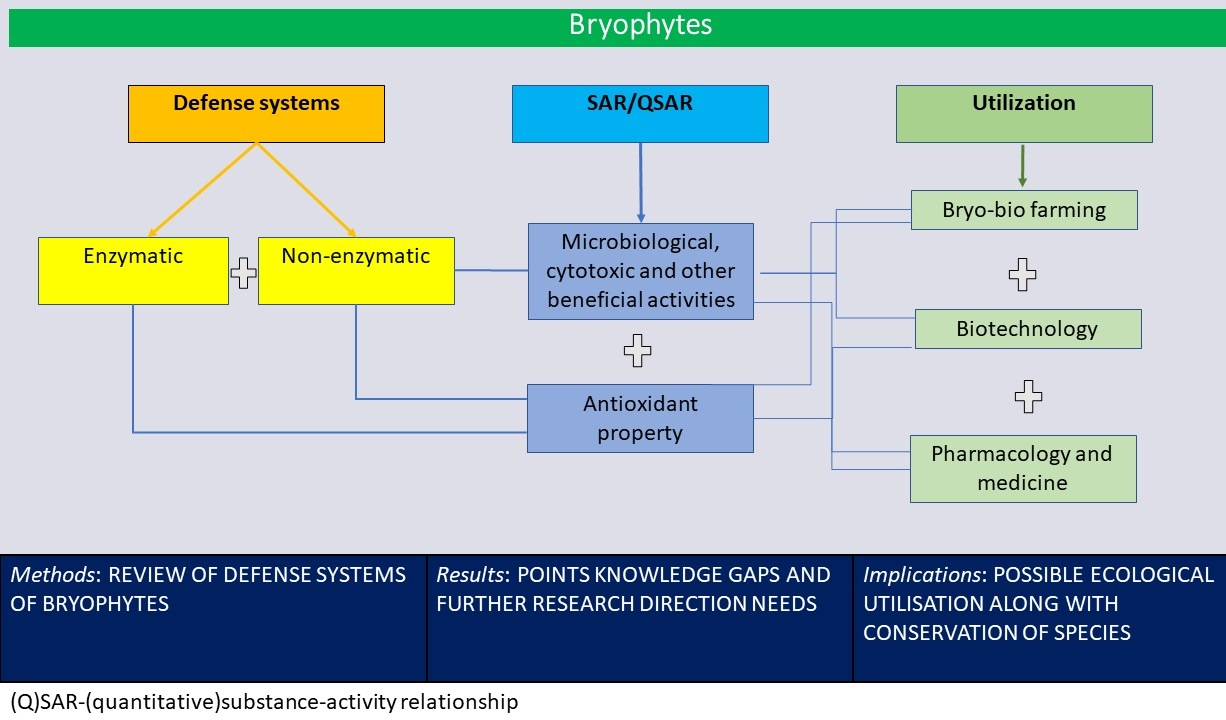
A Review of Bryophytes: Enzymatic and Non-Enzymatic Antioxidants as a Key for Their Pharmacological Potential and Green-Biotechnological Application



Abstract
1. Introduction
2. Materials and Methods
2.1. Data Sources and Search Strategy
- The publication is a peer-reviewed scientific article, review, dissertation, or academic report;
- Written in English;
- Contains relevant keywords in the title, abstract, keywords section, or full text;
- Provides information on phytochemical composition, biological activity, or medical/pharmaceutical application of any of the bryophyte species.
2.2. Data Extraction and Analysis
- Preliminary screening of titles and abstracts;
- Full-text review of eligible articles. Extraction and tabulation of relevant data, including identified BACs, reported pharmacological activities, and toxicological profiles, where available;
- Comparative analysis of the phytochemical profiles and documented applications.
2.3. Enzyme Classification
2.4. Chemical Structural Drawing
3. Antioxidant Defense Systems of Bryophytes
3.1. Classification and Mechanism
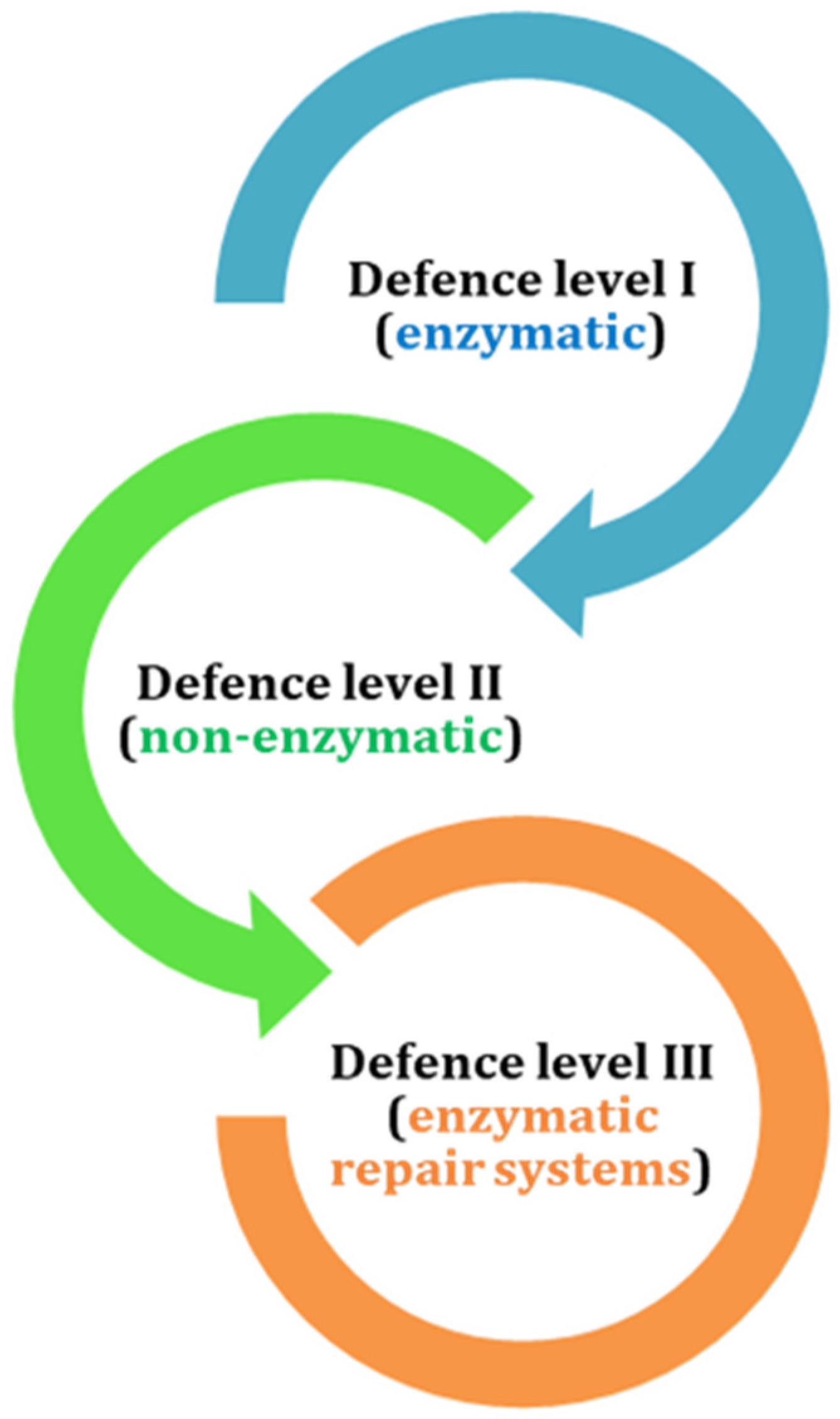
- Primary enzymatic defenses (e.g., SOD, CAT, GPx)—the most powerful;
- Secondary defenses from dietary or endogenous non-enzymatic antioxidants (e.g., vitamins A, C, E, flavonoids, GSH);
- Enzymatic repair systems that fix oxidative damage (Figure 1).
3.2. Enzymatic Antioxidants of Bryophytes
3.3. Common Antioxidant Enzymes of Bryophytes
3.4. Specific Antioxidant Enzymes of Bryophytes
- Adapt biochemically to conditions of desiccation, UV light, cold, and low-nutrient environments;
- Produce SMs which are absent in vascular plants;
- Employ different hormonal and signaling pathways (e.g., simplified auxin/cytokinin, modified jasmonate).
3.5. Non-Enzymatic Antioxidants of Bryophytes
3.5.1. Phenols
3.5.2. Isoprenes
3.5.3. Cannabinoids
3.5.4. Bibenzyls
3.5.5. Alkaloids
3.5.6. Vitamins
3.5.7. Oxylipins
4. Pharmacological Potential of Bryophytes
4.1. Phenols
4.2. Isoprenes
4.3. Cannabinoids
4.4. Bibenzyls
4.5. Alkaloids
4.6. Vitamins
4.7. Oxylipins
4.8. Antimicrobial Activity
4.9. Other Biological Activities
5. Biotechnological Potential of Bryophytes
- Expression of taxadiene synthase gene from Taxus brevifolia in P. patens to produce precursors for the anticancer diterpene, paclitaxel (Taxol™ is utilized for breast, ovarian, and lung cancer treatment) [162].
- The alternative medication for malaria treatment based on artemisinin (a sesquiterpene lactone) was produced through bioengineering of five artemisinin biosynthetic pathway genes into P. patens, achieving remarkable yield close to natural levels found in the original plant A. annua within a brief period of three days [163].
- The biotechnological approach is employed for the production of other terpenes from P. patens. A number of diterpene synthases (diTPS) enzymes were combined to generate industrially important diterpenes [164] and some sesquiterpenes that are valuable for the perfume industry (patchoulol and β-santalene), achieving high yields in a short duration [165].
6. Future Research Directions
- Antioxidant enzymes may play a role in antioxidant therapy, neuroprotection, and anti-inflammatory treatments;
- CATs and PXs can be utilized for their ability to break down hydrogen peroxide into water and oxygen, suitable for anti-aging care and total oxidative stress protection;
- UV-protective enzymes–photolyases can serve as sunscreen ingredients in pharmacology and cosmetics;
- DNA repair enzymes, along with their potential to enhance genome stability under stress, could be utilized in enhancing DNA repair pathways for the treatment of different congenital genetic malformations;
- Antimicrobial enzymes, such as chitinases and β-1,3-glucanases, which break down fungal cell walls, show potential for topical antifungal agents, food preservatives, and in medicine as a possible solution for antimicrobial resistance to conventional antifungal agents;
- Protease inhibitors could regulate inflammation or immune responses and may serve as a possible therapy for autoimmune diseases;
- Secondary metabolism-related enzymes–terpene synthases produce bioactive terpenoids recognized for their antimicrobial and anticancer activity, making them potential drug precursors;
- Polyphenol oxidases exhibiting antioxidant effects hold promise as natural therapeutic sources of antioxidants.
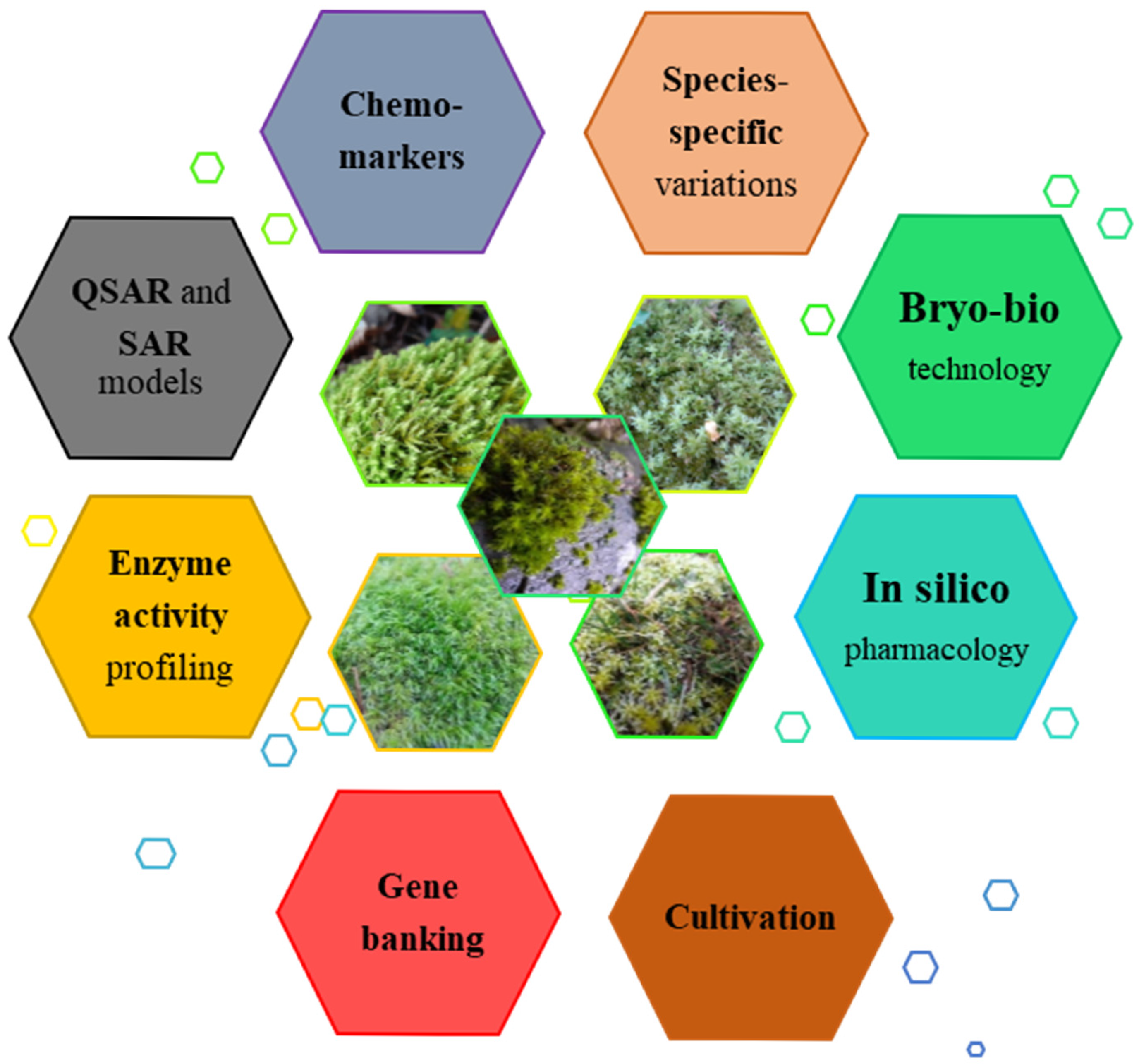
- Quantitative analysis of enzyme activity profiles, which will disclose the metabolic status and specific potential of species;
- Analysis of the huge seasonal and species-specific variation in antioxidant activity;
- Revealing additional chemotaxonomic markers for bryophyte genera and families, facilitating more accurate and reliable affiliation identification, thus alleviating one of the limitation factors for bryophyte investigation;
- Application of QSAR and SAR models for SMs research as a contemporary approach for exploration that avoids the extraction difficulties, the limitations of low content, and the requirements of a huge sample amount;
- Merging biotechnology (bryotechnology) with in silico pharmacology to discover new BACs and facilitate eco-friendly drug production, reducing cost- and time-consuming in vitro and in vivo testing;
- Gene banking that serves as a method to conserve “at risk”species and their cultivation.
7. Conclusions
Author Contributions
Funding
Institutional Review Board Statement
Informed Consent Statement
Data Availability Statement
Acknowledgments
Conflicts of Interest
Abbreviations
| AOX | alternative oxidase |
| APx | ascorbate peroxidase |
| BACs | bioactive compounds |
| C3 | C3 patway or Calvin cycle in the photosynthesis |
| C4 | C4 pathway or Hatch-Slack cycle in the photosynthesis |
| CAM | crassulacean acid metabolism |
| CAT | catalaze |
| CCD | carotenoid cleavage dioxygenases |
| CYP74 | cytochrome family |
| DNA | deoxyribonucleic acid |
| EC | Enzyme Commission number |
| ENA-ATP | exitus Na-type adenosine triphosphatases |
| FA | fatty acid |
| FAAH | fatty acid amide hydrolase |
| FNS | flavon synthase |
| G+ | Gramm positive |
| G− | Gramm negative |
| GA | gallic acid |
| GLVs | green leaf volatiles |
| GPx | glutathione peroxidase |
| GR | glutathione reductase |
| GSH | glutathione redused |
| GSSG | glutathione oxidized |
| GT/GST | glutathione transferase/glutathione S-transferase |
| HPL | hydroperoxide lyase |
| HPLC | high-performance liquid chromatography |
| KO | kaurene oxidase |
| MAX1 P450 | family of cytochrome P450 enzymes |
| MPK | molecular pathway kinase |
| NR | nitrate reductase |
| PAL | phenylalanine ammonia lyase |
| PX | peroxidase |
| PUFAs | polyunsaturated fatty acids |
| QSAR | quantitative structure activity relationship |
| ROS | reactive oxygen species |
| RNS | reactive nitrogen species |
| SAR | structure activity relationship |
| SL | strigolactone |
| SM | secondary metabolite |
| SOD | superoxide dismutase |
| THC | tetrahydrocannabinol |
| TPS | terpene synthase |
| UV | ultraviolet |
| WHO | World Health Organization |
References
- Nenkova, I.; Kozuharova, E.; Kamusheva, M.; Kamusheva, A. Awareness of herbal medicine within the Bulgarian population—A pilot study. Pharmacia 2025, 72, 1–8. [Google Scholar] [CrossRef]
- Khan, H. Medicinal Plants in Light of History: Recognized Therapeutic Modality. J. Evid.-Based Complement. Altern. Med. 2014, 19, 216–219. [Google Scholar] [CrossRef]
- Carocho, M.; Heleno, S.; Barros, L. Natural Secondary Metabolites. In From Nature, Through Science, to Industry; e-Book; Springer Nature: Cham, Switzerland, 2023. [Google Scholar] [CrossRef]
- Deepali, P.; Supriya, K.; Neeta, B.; Meena, K.; Aditi, M.; Yashwant, I.; Varsha, D. Antioxidant Defence System. Oral. Max Path J. 2013, 4, 309–315. [Google Scholar]
- British Bryological Society. Available online: https://www.britishbryologicalsociety.org.uk/learning/about-bryophytes (accessed on 12 November 2005).
- Benek, A.; Canlı, K.; Altuner, E. Traditional Medicinal Uses of Mosses. Anatol. Bryol. 2022, 8, 57–65. [Google Scholar] [CrossRef]
- Motti, R.; Palma, A.D.; de Falco, B. Bryophytes Used in Folk Medicine: An Ethnobotanical Overview. Horticulturae 2023, 9, 137. [Google Scholar] [CrossRef]
- Baik, O.L.; Kyyak, N.Y.; Humeniuk, O.M.; Humeniuk, V.V. Oxidative stress in moss Bryum caespiticium (Bryaceae) under the influence of high temperature and light intensity in a technogenically transformed environment. Regul. Mech. Biosyst. 2021, 12, 710–717. [Google Scholar] [CrossRef]
- Peters, K.; Treutler, H.; Döll, S.; Kindt, A.S.D.; Hankemeier, T.; Neumann, S. Chemical Diversity and Classification of Secondary Metabolites in Nine Bryophyte Species. Metabolites 2019, 9, 222. [Google Scholar] [CrossRef]
- Verhoeven, A.; García-Plazaola, J.I.; Fernández-Marín, B. Hared mechanisms of photoprotection in photosynthetic organisms tolerant to desiccation or to low temperature. Environ. Exp. Bot. 2018, 154, 66–79. [Google Scholar] [CrossRef]
- Von Reuß, S.H.; König, W.A. Olefinic Isothiocyanates and Iminodithiocarbonates from the Liverwort Corsinia coriandrina. Eur. J. Org. Chem. 2005, 1184–1188. [Google Scholar] [CrossRef]
- Zhang, H.; Yang, Q.; Wang, L.; Liu, H.; Zhang, D.; Duan, C.G.; Li, X. Moss-pathogen interactions: A review of the current status and future opportunities. Front. Genet. 2025, 16, 1539311. [Google Scholar] [CrossRef]
- Charles, M.; Proctor, F.; Oliver, M.J.; Wood, A.J.; Mishler, B.D. Desiccation-tolerance in bryophytes: A review. Bryologist 2009, 110, 595–621. [Google Scholar] [CrossRef]
- Nomenclature Database /ENZYME/. Available online: https://enzyme.expasy.org (accessed on 8 November 2025).
- Wise, R.; Hanson, D.T.; Rice, S.K. (Eds.) Photosynthesis in bryophytes and early land plants. Photosynth. Res. 2015, 127, 277–279. [Google Scholar] [CrossRef]
- Mousavi, S.S.; Otaghvari, A.; Aghajanzadeh, T.; Zare, H. Morphometric analysis and zymogram patterns of peroxidase and superoxide dismutase enzymes in populations of mosses in north of Iran. J. Plant Mol. Breed. 2019, 2, 1–11. [Google Scholar] [CrossRef]
- Krywult, M.; Salachna, A.; Chmura, D.; Zarnowiec, J. Nitrate Reductase Activity in Chosen Mosses: A Case Of Study in Skalny Colliery Waste Tip. Chem.-Didact.-Ecol.-Metrol. 2013, 18, 61–68. [Google Scholar] [CrossRef]
- Medina-Andrés, R.; Lira-Ruan, V. In silico characterization of a nitrate reductase gene family and analysis of the predicted proteins from the moss Physcomitrella patens. Commun. Integr. Biol. 2012, 5, 19–25. [Google Scholar] [CrossRef] [PubMed]
- Ramyashree, C.; Banupriya, T.G.; Yathisha, N.S.; Sharathchandra, R.G. Desiccation Tolerance in the Moss Hyophila propagulifera: Coordinated Physiological and Biochemical Responses during Desiccation and Recovery. Ann. Biol. 2021, 37, 1–9. [Google Scholar]
- Dhindsa, R. Drought Stress, Enzymes of Glutathione Metabolism, Oxidation Injury, and Protein Synthesis in Tortula ruralis. Plant Physiol. 1991, 95, 648–651. [Google Scholar] [CrossRef]
- Dhinsa, R.S.; Matowe, W. Drought Tolerance in Two Mosses: Correlated with Enzymatic Defence Against Lipid Peroxidation. J. Exp. Bot. 1981, 32, 79–91. [Google Scholar] [CrossRef]
- Liang, Y.; Li, X..; Zhang, J.; Zhuo, L.; Liu, X.; Yang, R.; Zhang, D. Dehydration rates impact physiological, biochemical and molecular responses in desert moss Bryum argenteum. Environ. Exp. Bot. 2021, 183, 104346. [Google Scholar] [CrossRef]
- Onele, A.O.; Chasov, A.; Viktorova, L.; Beckett, R.P.; Trifonova, T.; Minibayeva, F. Biochemical characterization of peroxidases from the moss Dicranum scoparium. S. Afr. J. Bot. 2018, 119, 132–141. [Google Scholar] [CrossRef]
- Meyer, M.W.; Angerman, C. Enzymes in the Moss Funaria Hygrometrica: Phenylalanine Ammonia Lyase and Its Control. Bryologist 1973, 76, 361–365. [Google Scholar] [CrossRef]
- Yamahara, T.; Shiono, T.; Suzuki, T.; Tanaka, K.; Takio, S.; Sato, K.; Yamazaki, S.; Satoh, T. Isolation of a germin-like protein with manganese superoxide dismutase activity from cells of a moss, Barbula unguiculata. J. Biol. Chem. 1999, 274, 33274–33278. [Google Scholar] [CrossRef] [PubMed]
- Rensing, S.A.; Lang, D.; Zimmer, A.D.; Terry, A.; Salamov, A.; Shapiro, H.; Nishiyama, T.; Perroud, P.F.; Lindquist, E.A.; Kamisugi, Y.; et al. The Physcomitrella Genome Reveals Evolutionary Insights into the Conquest of Land by Plants. Science 2008, 319, 64–69. [Google Scholar] [CrossRef]
- Decker, E.L.; Alder, A.; Hunn, S.; Ferguson, J.; Lehtonen, M.T.; Scheler, B.; Kerres, K.L.; Wiedemann, G.; Safavi-Rizi, V.; Nordzieke, S.; et al. Strigolactone biosynthesis is evolutionarily conserved, regulated by phosphate starvation and contributes to resistance against phytopathogenic fungi in a moss, Physcomitrella patens. New Phytol. 2017, 216, 455–468. [Google Scholar] [CrossRef]
- Kaewsuwan, S.; Cahoon, E.B.; Perroud, P.F.; Wiwat, C.; Panvisavas, N.; Quatrano, R.S.; Cove, D.J.; Bunyapraphatsara, N. Identification and Functional Characterization of the Moss Physcomitrella patens 5-Desaturase Gene Involved in Arachidonic and Eicosapentaenoic Acid Biosynthesis. J. Biol. Chem. 2006, 281, 21988–21997. [Google Scholar] [CrossRef]
- Sperling, P.; Lee, M.; Girke, T.; Zähringer, U.; Stymne, S.; Heinz, E. A bifunctional Δ6-fatty acyl acetylenase/desaturase from the moss Ceratodon purpureus, A new member of the cytochrome b5 superfamily. Eur. J. Biochem. 2003, 267, 3801–3811. [Google Scholar] [CrossRef]
- Wang, H.; Liu, S.; Wang, T.; Liu, H.; Xu, X.; Chen, K.; Zhang, P. The moss flavone synthase I positively regulates the tolerance of plants to drought stress and UV-B radiation. Plant Sci. 2020, 298, 110591. [Google Scholar] [CrossRef]
- Liu, Y.; Han, X.; Ren, L.; Yang, H.; Zeng, Q. Functional Divergence of the Glutathione S-Transferase Supergene Family in Physcomitrella patens Reveals Complex Patterns of Large Gene Family Evolution in Land Plants. Plant Physiol. 2013, 161, 773–786. [Google Scholar] [CrossRef]
- Bressendorff, S.; Azevedo, R.; Kenchappa, C.S.; Ponce de León, I.; Olsen, J.V.; Rasmussen, M.W.; Erbs, G.; Newman, M.A.; Petersen, M.; Mundy, J. An Innate Immunity Pathway in the Moss Physcomitrella patens. Plant Cell 2016, 28, 1328–1342. [Google Scholar] [CrossRef] [PubMed]
- Haq, I.; Kilaru, A. An endocannabinoid catabolic enzyme FAAH and its paralogs in an early land plant reveal evolutionary and functional relationship with eukaryotic orthologs. Sci. Rep. 2020, 10, 3115. [Google Scholar] [CrossRef]
- Scholz, J.; Brodhun, F.; Hornung, E.; Herrfurth, C.; Stumpe, M.; Beike, A.K. Biosynthesis of allene oxides in Physcomitrella patens. BMC Plant Biol. 2012, 12, 228. [Google Scholar] [CrossRef]
- Fraile-Escanciano, A.; Garciadeblás, B.; Rodríguez-Navarro, A.; Benito, B. Role of ENA ATPase in Na(+) efflux at high pH in bryophytes. Plant Mol. Biol. 2009, 71, 599–608. [Google Scholar] [CrossRef]
- Vaish, S.; Gupta, D.; Mehrotra, R.; Mehrotra, S.; Basantani, M.K. Glutathione S-transferase: A versatile protein family. 3 Biotech 2020, 10, 321. [Google Scholar] [CrossRef]
- Dixon, D.P.; Lapthorn, A.; Edwards, R. Plant glutathione transferases. Genome Biol. 2002, 3, reviews3004-1. [Google Scholar] [CrossRef]
- Onele, A.O.; Chasov, A.V.; Viktorova, L.V.; Minibayeva, F.V.; Beckett, R.P. Characterization and expression analysis of ascorbate peroxidase from the moss Dicranum scoparium during abiotic stresses. Bryologist 2021, 124, 68–84. [Google Scholar] [CrossRef]
- Rzepka, A.; Krupa, J.; Lesak, I. Effect of hypoxia on photosynthetic activity and antioxidative response in gametophores of Mnium undulatum. Acta Physiol. Plant 2005, 27, 205–212. [Google Scholar] [CrossRef]
- Baik, O.L. Changes in moss enzymes of antioxidant defense under the action of copper and zinc ions. Stud. Biol. 2009, 3, 83–88. [Google Scholar] [CrossRef]
- Çöteli, E.; Alataş, M.; Batan, N. Comparing of Glutathione Ingredients of Syntrichia ruralis and Syntrichia montana (Pottiaceae) Taxa. Anatol. Bryol. 2017, 3, 25–30. [Google Scholar] [CrossRef]
- Kashyap, R.; Csintalan, Z.; Veres, K.; Péli, E. Seasonal variation of antioxidant enzymatic responses in the desiccation-tolerant bryophyte Syntrichia ruralis (Hedw.) Web. & Mohr. COLUMELLA–J. Agric. Environ. Sci. 2021, 8, 37–50. [Google Scholar] [CrossRef]
- Wadavkar, D.S.; Murumkar, C.V.; Deokule, S.S.; Chavan, S.J. Secondary metabolite and enzyme activity on some moss species from Western Ghats, Maharashtra, India. Biosci. Discov. 2017, 8, 716–719. Available online: https://jbsd.in (accessed on 13 November 2025).
- Çöteli, E.; Alataş, M.; Batan, N.; Hazer, Y. Bazı Bryaceae (Bryophyta) Türlerinin Glutatyon İçeriklerinin Karşılaştırılması. Anatol. Bryol. 2019, 5, 15–21. [Google Scholar] [CrossRef]
- Stanojković, J.N.; Ćosić, M.V.; Božović, D.P.; Sabovljević, A.D.; Sabovljević, M.S.; Čučulović, A.A.; Vujičić, M.M. Effects of Cesium on Physiological Traits of the Catherine’s Moss Atrichum undulatum Hedw. Plants 2023, 13, 54. [Google Scholar] [CrossRef]
- Aparato, V.P.M.; Rabbi, F.; Madarash, T.; Brisbourne, W.A.; Barker, E.I.; Suh, D.-Y. Genome-Wide Analysis of the Class III Peroxidase Gene Family in Physcomitrium patens and a Search for Clues to Ancient Class III Peroxidase Functions. Int. J. Plant Biol. 2024, 15, 1141–1161. [Google Scholar] [CrossRef]
- Ponce De León, I.; Schmelz, E.A.; Gaggero, C.; Castro, A.; Álvarez, A.; Montesano, M. Physcomitrella patens activates reinforcement of the cell wall, programmed cell death and accumulation of evolutionary conserved defence signals, such as salicylic acid and 12-oxo-phytodienoic acid, but not jasmonic acid, upon Botrytis cinerea infection. Mol. Plant Pathol. 2012, 13, 960–974. [Google Scholar] [CrossRef] [PubMed]
- Proust, H.; Hoffmann, B.; Xie, X.; Rameau, C. Strigolactones regulate protonema branching and act as a quorum sensing-like signal in the moss Physcomitrella patens. Development 2011, 138, 1531–1539. [Google Scholar] [CrossRef]
- Wu, G.; Li, S.; Li, X.; Liu, Y.; Zhao, S.; Liu, B.; Zhou, H.; Lin, H. A Functional Alternative Oxidase Modulates Plant Salt Tolerance in Physcomitrella patens. Plant Cell Physiol. 2019, 60, 1829–1841. [Google Scholar] [CrossRef] [PubMed]
- Beike, A.K.; Jaeger, C.; Zink, F.; Decker, E.L.; Reski, R. High contents of very long-chain polyunsaturated fatty acids in different moss species. Plant Cell Rep. 2014, 33, 245–254. [Google Scholar] [CrossRef]
- Girke, T.; Schmidt, H.; Zähringer, U.; Reski, R.; Heinz, E. Identification of a novel delta 6-acyl-group desaturase by targeted gene disruption in Physcomitrella patens. Plant J. 1998, 15, 39–48. [Google Scholar] [CrossRef]
- Scala, A.; Allmann, S.; Mirabella, R.; Haring, M.A.; Schuurink, R.C. Green Leaf Volatiles: A Plant’s Multifunctional Weapon against Herbivores and Pathogens. Int. J. Mol. Sci. 2013, 14, 17781–17811. [Google Scholar] [CrossRef]
- Stumpe, M.; Bode, J.; Göbel, C.; Wichard, T.; Schaaf, A.; Frank, W.; Frank, M.; Reski, R.; Pohnert, G.; Feussner, I. Biosynthesis of C9-aldehydes in the moss Physcomitrella patens. Biochim. Biophys. Acta 2006, 1761, 301–312. [Google Scholar] [CrossRef]
- Haro, R.; Garciadeblas, B.; Rodriguez-Navarro, A. A novel P-type ATPase from yeast involved in sodium transport. FEBS Lett. 1991, 291, 189–191. [Google Scholar] [CrossRef] [PubMed]
- Rodríguez-Navarro, A.; Benito, B. Sodium or potassium efflux ATPase a fungal, bryophyte, and protozoal ATPase. Biochim. Biophys. Acta 2010, 1798, 1841–1853. [Google Scholar] [CrossRef]
- Dick, C.F.; Meyer-Fernandes, J.R.; Vieyra, A. The Functioning of Na+-ATPases from Protozoan Parasites: Are These Pumps Targets for Antiparasitic Drugs? Cells 2020, 9, 2225. [Google Scholar] [CrossRef]
- Sun, C.; Liu, L.; Wang, L.; Li, B.; Jin, C.; Lin, X. Melatonin: A master regulator of plant development and stress responses. J. Integr. Plant Biol. 2021, 63, 126–145. [Google Scholar] [CrossRef]
- Hu, W.Y.; Mao, H.T.; Yin, X.Y.; Chen, J.Y.; He, A.Q.; Huang, L.Y.; Zhang, Z.W.; Yuan, S.; Yuan, M.; Su, Y.Q.; et al. Melatonin alleviates Hg toxicity by modulating redox homeostasis and the urea cycle in moss. Sci. Total Environ. 2024, 907, 167958. [Google Scholar] [CrossRef]
- Heijden, E.; Boon, J.J.; Rasmussen, S.; Rudolph, H. Sphagnum acid and its decarboxylation product isopropenylphenol as biomarkers for fossilised sphagnum in peats. Ancient Biomol. 1997, 1, 93–107. [Google Scholar]
- Jocković, N.; Andrade, P.B.; Valentão, P.; Sabovljević, M. HPLC-DAD of Phenolics in Bryophytes Lunularia Cruciata, Brachytheciastrum Velutinum and Kindbergia Praelonga. J. Serb. Chem. Soc. 2008, 73, 1161–1167. [Google Scholar] [CrossRef]
- Deora, G.S.; Suhalka, D. Estimation of quercetin by high performance chromatography and antifungal activity of moss Philonotis revoluta. Int. J. Pharm. Sci. Res. 2017, 8, 294–300. [Google Scholar] [CrossRef]
- Petkova, Z.; Teneva, O.; Antova, G.; Angelova-Romova, M.; Gecheva, G.; Dimitrova-Dyulgerova, I. Chemical Composition, Lipid-Soluble Bioactive Compounds and Potential Health Benefits of the Moss Hypnum cupressiforme Hedw. Plants 2023, 12, 4190. [Google Scholar] [CrossRef]
- Zheng, G.Q.; Chang, C.J.; Stout, T.J.; Clardy, J.; Cassady, J.M. Ohioensin-A: A novel Benzonaphthoxanthenone from Polytrichum ohioense. J. Am. Chem. Soc. 1989, 111, 5500–5501. [Google Scholar] [CrossRef]
- Zheng, G.Q.; Chang, C.J.; Stout, T.J.; Clardy, J.; Ho, D.K.; Cassady, J.M. Ohioensins: Novel Benzonaphthoxanthenones from Polytrichum ohioense. J. Org. Chem. 1993, 58, 366–372. [Google Scholar] [CrossRef]
- Seo, C.; Choi, Y.H.; Sohn, J.H.; Ahn, J.S.; Yim, J.H.; Lee, H.K.; Oh, H. Ohioensins F and G: Protein tyrosine phosphatase 1B inhibitory benzonaphthoxanthenones from the Antarctic moss Polytrichastrum alpinum. Bio. Med. Chem. Lett. 2008, 18, 772–775. [Google Scholar] [CrossRef]
- Fu, P.; Lin, S.; Shan, L.; Lu, M.; Shen, Y.H.; Tang, J.; Liu, R.H.; Zhang, X.; Zhu, R.L.; Zhang, W.D. Constituents of the moss Polytrichum commune. J. Nat. Products 2009, 72, 1335–1337. [Google Scholar] [CrossRef] [PubMed]
- Vassão, D.G.; Kim, K.; Davin, L.B.; Lewis, N.G. 1.23—Lignans (Neolignans) and Allyl/Propenyl Phenols: Biogenesis, Structural Biology, and Biological/Human Health Considerations, Comprehensive Natural Products II; Elsevier: Amsterdam, The Netherlands, 2010; pp. 815–928. ISBN 9780080453828. [Google Scholar] [CrossRef]
- Scher, J.M.; Zapp, J.; Becker, H. Lignan derivatives from the liverwort Bazzania trilobata. Phytochemistry 2003, 62, 769–777. [Google Scholar] [CrossRef]
- Csupor, D.; Kurtán, T.; Vollár, M.; Kúsz, N.; Kövér, K.E.; Mándi, A.; Szűcs, P.; Marschall, M.; Tahaei, S.A.S.; Zupkó, I.; et al. Pigments of the Moss Paraleucobryum longifolium: Isolation and Structure Elucidation of Prenyl-Substituted 8,8′-Linked 9,10-Phenanthrenequinone Dimers. ACS J. Nat. Prod. 2020, 83, 268–276, Erratum in J. Nat. Prod. 2020, 83, 1355. [Google Scholar] [CrossRef]
- Estébanez, B.; Ron, E.; Alfayate, C.; González, A.; Bermejo, J. The Occurrence of Lipidic Storage Compounds in Grimmia (Bryopsida). Bryologist 2004, 107, 501–504. [Google Scholar] [CrossRef]
- Ohta, Y.; Andersen, N.H.; Liu, C.-B. Sesquiterpene constituents of two liverworts of genus diplophyllum: Novel eudesmanolides and cytotoxicity studies for enantiomeric methylene lactones. Tetrahedron 1977, 33, 617–628. [Google Scholar] [CrossRef]
- Adio, A.M.; Paul, C.; König, W.A.; Muhle, H. Volatile components from European liverworts Marsupella emarginata, M. aquatica and M. alpina. Phytochemistry 2002, 61, 79–91. [Google Scholar] [CrossRef]
- Yin, H.; Perera-Castro, A.V.; Randall, K.L.; Turnbull, J.D.; Waterman, M.J.; Dunn, J.; Robinson, S.A. Basking in the sun: How mosses photosynthesise and survive in Antarctica. Photosynth. Res. 2023, 158, 151–169. [Google Scholar] [CrossRef] [PubMed]
- Yokota, T.; Ohnishi, T.; Shibata, K.; Asahina, M.; Nomura, T.; Fujita, T.; Ishizaki, K.; Kohchi, T. Occurrence of brassinosteroids in non-flowering land plants, liverwort, moss, lycophyte and fern. Phytochemistry 2017, 136, 46–55. [Google Scholar] [CrossRef] [PubMed]
- Asakawa, Y.; Nagashima, F.; Ludwiczuk, A. Distribution of Bibenzyls, Prenyl Bibenzyls, Bis-bibenzyls, and Terpenoids in the Liverwort Genus Radula. J. Nat. Prod. 2020, 83, 756–769. [Google Scholar] [CrossRef]
- Haq, I.; Kilaru, A. Discovering the Role of Anandamide in Physcomitrella patens. In Illuminated Magazine; School of Graduate Studies, East Tennessee State University: Johnson City, TN, USA, 2019; Volume 9, p. 1. Available online: https://dc.etsu.edu/illuminated/17 (accessed on 13 November 2025).
- Asakawa, Y. Biologically active compounds from bryophytes. Pure Appl. Chem. 2007, 79, 557–580. [Google Scholar] [CrossRef]
- Sabovljević, M.S.; Vujičić, M.; Wang, X.; Garraffo, H.M.; Bewley, C.A.; Sabovljević, A. Production of the Macrocyclic Bis-Bibenzyls in Axenically Farmed and Wild Liverwort Marchantia polymorpha L Subsp. ruderalis Bischl. et Boisselier. Plant Biosyst. 2017, 151, 414–418. [Google Scholar] [CrossRef]
- Ivković, I.; Novaković, M.; Veljić, M.; Mojsin, M.; Stevanović, M.; Marin, P.D.; Bukvički, D. Bis-Bibenzyls from the Liverwort Pellia endiviifolia and Their Biological Activity. Plants 2021, 10, 1063. [Google Scholar] [CrossRef]
- Qu, J.; Xie, C.; Guo, H.; Yu, W.; Lou, H. Antifungal dibenzofuran bis(bibenzyl)s from the liverwort Asterella angusta. Phytochemistry 2007, 68, 1767–1774. [Google Scholar] [CrossRef] [PubMed]
- Hashimoto, T.; Tori, M.; Asakawa, Y.; Fukazawa, Y. Plagiochins A, B, C, and D, new type of macrocyclic bis(bibenzyls) having a biphenyl linkage between the ortho positions to the benzyl methylenes, from the liverwort Plagiochila acanthophylla subsp. Japonica. Tetrahedron Lett. 1987, 28, 6295–6298. [Google Scholar] [CrossRef]
- Wu, X.Z.; Cheng, A.X.; Sun, L.M.; Lou, H.X. Effect of plagiochin E, an antifungal macrocyclic bis(bibenzyl), on cell wall chitin synthesis in Candida albicans. Acta Pharmacol. Sin. 2008, 29, 1478–1485. [Google Scholar] [CrossRef]
- Onbasli, D.; Yuvali, G. In vitro medicinal potentials of Bryum capillare, a moss sample, from Turkey. Saudi J. Biol. Sci. 2021, 28, 478–483. [Google Scholar] [CrossRef] [PubMed]
- Badridze, G.; Chkhubianishvili, E.; Rapava, L.; Kikvidze, M.; Chigladze, L.; Tsiklauri, N.; Tsilosani, K.; Chanishvili, S. Content of Active Metabolites in Some Species of Mosses of Georgia. Bull. Georg. Natl. Acad. Sci. 2020, 14, 127–131. [Google Scholar]
- Novakovic, M.; Ludwiczuk, A.; Bukvicki, D.; Asakawa, Y. Phytochemicals form bryophytes. J. Serb. Chem. Soc. 2021, 86, 1139–1175. [Google Scholar] [CrossRef]
- Asakawa, Y. Phytochemistry of Bryophytes: Biologically Active Compounds and Their Uses as Cosmetics, Foods, and in Drug Development. Prog. Chem. Org. Nat. Prod. 2025, 126, 1–399. [Google Scholar] [CrossRef] [PubMed]
- Gachet, M.S.; Schubert, A.; Calarco, S.; Boccard, J.; Gertsch, J. Targeted metabolomics shows plasticity in the evolution of signaling lipids and uncovers old and new endocannabinoids in the plant kingdom. Sci. Rep. 2017, 7, 41177. [Google Scholar] [CrossRef]
- Liu, Y.; Li, X.; Sui, S.; Tang, J.; Chen, D.; Kang, Y.; Xie, K.; Liu, J.; Lan, J.; Wu, L.; et al. Structural diversification of bioactive bibenzyls through modular co-culture leading to the discovery of a novel neuroprotective agent. Acta Pharm. Sin. B 2023, 13, 1771–1785. [Google Scholar] [CrossRef]
- Chandra, S.; Chandra, D.; Khajuria, A.K. Ohioensins: A Potential Therapeutic Drug for Curing Diseases. In Bryophyte; IntechOpen: London, UK, 2019. [Google Scholar] [CrossRef]
- Bryan, L.; Shaw, R.; Schoonover, E.; Koehl, A.; DeVries-Zimmerman, S.; Philben, M. Sphagnan in Sphagnum-dominated peatlands: Bioavailability and effects on organic matter stabilization. Biogeochemistry 2024, 167, 665–680. [Google Scholar] [CrossRef]
- Tzanova, M. Development, Validation and Application of New Liquid Chromatographic Methods for the Quantification of Natural Antioxidants in Samples of Plant and Animal Origin. Ph.D. Thesis, Trakia University, Stara Zagora, Bulgaria, 2024. [Google Scholar]
- Sova, M. Antioxidant and antimicrobial activities of cinnamic acid derivatives. Mini Rev. Med. Chem. 2012, 12, 749–767. [Google Scholar] [CrossRef] [PubMed]
- Burgberger, M.; Mierziak, J.; Augustyniak, B.; Wojtasik, W.; Kulma, A. The Power of Lignans: Plant Compounds with Multifaceted Health-Promoting Effects. Metabolites 2025, 15, 589. [Google Scholar] [CrossRef]
- Nair, S.S.; Vayalil, S.R.V.; Sarayu, M.G. Phytochemical Profiling of Bryum argenteum Hedw. and Dumortiera hirsuta (Sw.) Nees. Asian J. Biol. Life Sci. 2024, 13, 215. [Google Scholar] [CrossRef]
- Mannino, G.; Pernici, C.; Serio, G.; Gentile, C.; Bertea, C.M. Melatonin and Phytomelatonin: Chemistry, Biosynthesis, Metabolism, Distribution and Bioactivity in Plants and Animals—An Overview. Int. J. Mol. Sci. 2021, 22, 9996. [Google Scholar] [CrossRef]
- Ponce de León, I.; Hamberg, M.; Castresana, C. Oxylipins in moss development and defense. Front. Plant Sci. Sec. Plant Pathog. Interact. 2015, 6, 483. [Google Scholar] [CrossRef] [PubMed]
- Thomas, B.; Rajendran, A. Less Known Ethnomedicinal Plants Used by Kurichar Tribe of Wayanad District, Southern Western Ghats Kerala, India. Bot. Res. Int. 2013, 6, 32–35. [Google Scholar] [CrossRef]
- Pandey, K.B.; Rizvi, S.I. Plant polyphenols as dietary antioxidants in human health and disease. Oxid. Med. Cell Longev. 2009, 2, 270–278. [Google Scholar] [CrossRef] [PubMed]
- Kumar, S.; Pandey, A.K. Chemistry and biological activities of flavonoids: An overview. Sci. World J. 2013, 2013, 162750. [Google Scholar] [CrossRef]
- Painter, T.J. Concerning the wound-healing properties of Sphagnum holocellulose: The Maillard reaction in pharmacology. J. Ethnopharmacol. 2003, 88, 145–148. [Google Scholar] [CrossRef]
- Wang, L.; Wang, H.; Huang, J.; Chu, T.; Peng, C.; Zhang, H.; Chen, H.; Xiong, Y.; Tan, Y. Review of lignans from 2019 to 2021: Newly reported compounds, diverse activities, structure-activity relationships and clinical applications. Phytochemistry 2022, 202, 113326. [Google Scholar] [CrossRef]
- Gu, D.; Zhang, W. Chapter Fifteen—Engineered biosynthesis of alkyne-tagged polyketides. In Methods in Enzymology; Academic Press: Cambridge, MA, USA, 2022; Volume 665, pp. 347–373. [Google Scholar] [CrossRef]
- Li, L.; Aslam, M.; Rabbi, F.; Vanderwel, M.C.; Ashton, N.W.; Suh, D.Y. PpORS, an ancient type III polyketide synthase, is required for integrity of leaf cuticle and resistance to dehydration in the moss, Physcomitrella patens. Planta 2018, 247, 527–541. [Google Scholar] [CrossRef]
- Khanam, S.; Mishra, P.; Faruqui, T.; Alam, P.; Albalawi, T.; Siddiqui, F.; Rafi, Z.; Khan, S. Plant-based secondary metabolites as natural remedies: A comprehensive review on terpenes and their therapeutic applications. Front. Pharmacol. Sec. Ethnopharmacol. 2025, 16, 1587215. [Google Scholar] [CrossRef]
- Shakeel, A.; Noor, J.J.; Jan, U.; Gul, A.; Handoo, Z.; Ashraf, N. Saponins, the Unexplored Secondary Metabolites in Plant Defense: Opportunities in Integrated Pest Management. Plants 2025, 14, 861. [Google Scholar] [CrossRef] [PubMed]
- Asakawa, Y.; Ludwiczuk, A.; Nagashima, F. Phytochemical and biological studies of bryophytes. Phytochemistry 2013, 91, 52–80. [Google Scholar] [CrossRef] [PubMed]
- Sadava, D.; Chen, S. Castasterone, a Plant Steroid Hormone, Affects Human Small-Cell Lung Cancer Cells and Reverses Multi-Drug Resistance. Pharmaceuticals 2023, 16, 170. [Google Scholar] [CrossRef]
- Stahl, W.; Sies, H. Antioxidant activity of carotenoids. Mol. Asp. Med. 2003, 24, 345–351. [Google Scholar] [CrossRef]
- González-Peña, M.A.; Ortega-Regules, A.E.; Anaya de Parrodi, C.; Lozada-Ramírez, J.D. Chemistry, Occurrence, Properties, Applications, and Encapsulation of Carotenoids—A Review. Plants 2023, 12, 313. [Google Scholar] [CrossRef] [PubMed]
- Naisi, S.; Bayat, M.; Zahraei Salehi, T.; Rahimian Zarif, B.; Yahyaraeyat, R. Antimicrobial and anti-biofilm effects of carotenoid pigment extracted from Rhodotorula glutinis strain on food-borne bacteria. Iran. J. Microbiol. 2023, 15, 79–88. [Google Scholar] [CrossRef] [PubMed]
- Chicca, A.; Schafroth, M.A.; Reynoso-Moreno, I.; Erni, R.; Petrucci, V.; Carreira, E.M.; Gertsch, J. Uncovering the psychoactivity of a cannabinoid from liverworts associated with a legal high. Sci. Adv. 2018, 4, eaat2166. [Google Scholar] [CrossRef]
- Kiprina, A.; Teichmann, T.; Giménez, V.M.; Xu, W.; Sailer, F.; Windbergs, M.; Manucha, W.; Weigert, A.; Brandes, R.P. The endocannabinoid anandamide prevents TH17 programming of activated T lymphocytes while preserving TH1 responses. Front. Pharmacol. 2024, 15, 1528759. [Google Scholar] [CrossRef] [PubMed]
- Dhondiyal, P.B. Bryophytes: Source of Herbal Remedies and Antibiotic Production. Int. J. Trend Sci. Res. Dev. 2022, 6, 141–147. Available online: www.ijtsrd.com/papers/ijtsrd51838.pdf (accessed on 13 November 2025).
- Arnao, M.B.; Hernández-Ruiz, J. Functions of melatonin in plants: A review. J. Pineal Res. 2015, 59, 133–150. [Google Scholar] [CrossRef]
- Misheva, M.; Johnson, J.; McCullagh, J. Role of Oxylipins in the Inflammatory-Related Diseases NAFLD, Obesity, and Type 2 Diabetes. Metabolites 2022, 12, 1238. [Google Scholar] [CrossRef]
- Kanzaki, H.; Suzuki, S.; Tabata, T.; Suzuki, T.; Seto, Y.; Kaneko, K. Plant hormone jasmonic acid reduces anxiety behavior in mice. Sci. Rep. 2025, 15, 11424. [Google Scholar] [CrossRef]
- Jarocka-Karpowicz, I.; Markowska, A. Therapeutic Potential of Jasmonic Acid and Its Derivatives. Int. J. Mol. Sci. 2021, 22, 8437. [Google Scholar] [CrossRef]
- Dziwak, M.; Wróblewska, K.; Szumny, A.; Galek, R. Modern Use of Bryophytes as a Source of Secondary Metabolites. Agronomy 2022, 12, 1456. [Google Scholar] [CrossRef]
- Klavina, L.; Springe, G.; Nikolajeva, V.; Martsinkevich, I.; Nakurte, I.; Dzabijeva, D.; Steinberga, I. Chemical Composition Analysis, Antimicrobial Activity and Cytotoxicity Screening of Moss Extracts (Moss Phytochemistry). Molecules 2015, 20, 17221–17243. [Google Scholar] [CrossRef] [PubMed]
- Vollár, M.; Gyovai, A.; Szűcs, P.; Zupkó, I.; Marschall, M.; Csupor-Löffler, B.; Bérdi, P.; Vecsernyés, A.; Csorba, A.; Liktor-Busa, E.; et al. Antiproliferative and Antimicrobial Activities of Selected Bryophytes. Molecules 2018, 23, 1520. [Google Scholar] [CrossRef] [PubMed]
- Bodade, R.G.; Borkar, P.S.; Arfeen, S.; Khobragade, C.N. In vitro Screening of Bryophytes for Antimicrobial Activity. J. Med. Plants 2008, 7, 23–28. [Google Scholar]
- Semerjyan, I.; Semerjyan, G.; Semerjyan, H.; Trchounian, A. Antibacterial Properties and Flavonoids Content of Some Mosses Common in Armenia. Iran. J. Pharm. Sci. 2020, 16, 31–42. [Google Scholar]
- Yücel, T.B.; Erata, H. Antimicrobial and antioxidant activities and volatile constituents of Eurhynchium angustirete (Broth.) T. J. Kop. And Isothecium alopecuroides (Lam. ex Dubois) Isov. from Turkey. Nat. Volatiles Essent. Oils 2021, 8, 64–74. [Google Scholar] [CrossRef]
- Kabadere, S.; Birgi, F.; Oztopcu-Vatan, P.; Iscen, C.F.; Ilhan, S. Some Biological Activities of the Moss Brachythecium populeum (Hedw.), Bruch, Schimp. & W.Gumbel (Bryophyta). GU J. Sci. 2021, 34, 327–333. [Google Scholar] [CrossRef]
- Sen, K.; Khan, M.I.; Paul, R.; Ghoshal, U.; Asakawa, Y. Recent Advances in the Phytochemistry of Bryophytes: Distribution, Structures and Biological Activity of Bibenzyl and Bisbibenzyl Compounds. Plants 2023, 12, 4173. [Google Scholar] [CrossRef]
- Sabovljevic, A.; Sokovic, M.; Glamo, J.; Ciric, A.; Vujic, M.; Pejin, B.; Sabovljevic, M. Comparison of extract bio-activities of in-situ and invitro grown selected bryophyte species. Afr. J. Microbiol. Res. 2010, 4, 808–812. Available online: https://www.researchgate.net/publication/257829101 (accessed on 13 November 2025).
- Veljic, M.; Tarbuk, M.; Martin, P.D.; Ciric, A.; Sokovic, M.; Marin, M. Antimicrobial Activity of Methanol Extracts of Mosses from Serbia. Pharm. Biol. 2008, 46, 871–875. [Google Scholar] [CrossRef]
- WHO Bacterial Priority Pathogens List, 2024; World Health Organization: Geneva, Switzerland, 2024; ISBN 978-92-4-009346-1. Available online: https://www.who.int/publications/i/item/9789240093461 (accessed on 13 November 2025).
- WHO Fungal Priority Pathogens List, 2022; World Health Organization: Geneva, Switzerland, 2022; ISBN 978-92-4-006024-1. Available online: https://www.who.int/publications/i/item/9789240060241 (accessed on 13 November 2025).
- Karpiński, T.; Adamczak, A. Antibacterial activity of ethanolic extracts of some moss species. Herba Pol. 2017, 63, 11–17. [Google Scholar] [CrossRef]
- Dulger, B.; Yayintas, O.T.; Gonuz, A. Antimicrobial activity of some mosses from Turkey. Fitoterapia 2005, 76, 730–732. Available online: https://www.elsevier.com/locate/fitote (accessed on 13 November 2025). [CrossRef] [PubMed]
- Uyar, G.; Koçaş, S.; Aslan, N.; Vural, G.; Balaban, Z.M. Investigation of the Antimicrobial and Antifungal Activities of Some Moss Species (Scleropodium touretii (Brid.) L.F.Koch, Hypnum cupressiforme Hedw.var. lacunosum Brid., Brachythecium glareosum (Bruch ex Spruce) Schimp. Anatol. Bryol. 2025, 11, 72–82. [Google Scholar] [CrossRef]
- Nair, A.R.K.; Brijithlal, N.D. Antimicrobial activity of Taxithelium nepalense (Schwägr) Broth in various solvents by agar well diffusion method. Int. J. Life Sci. Res. 2019, 7, 272–278. Available online: https://www.researchpublish.com (accessed on 13 November 2025).
- Ertür, K.Ö.; Sahin, H.; Ertrük, E.Y.; Hotaman, H.E.; Koz, B.; Özdemir, Ö. The antimicrobial and antioxidant activities of extracts obtained from some moss species in Turkey. Herba Pol. 2015, 61, 4. [Google Scholar] [CrossRef]
- Singh, M.; Singh, S.; Nath, V.; Sahu, V.; Rawat, A.K.S. Antibacterial activity of some bryophytes used traditionally for the treatment of burn infections. Pharm. Biol. 2011, 49, 526–530. [Google Scholar] [CrossRef]
- Borel, C.; Welti, D.H.; Fernandez, I.; Colmenares, M. Dicranin, an antimicrobial and 15-lipoxygenase inhibitor from the moss Dicranum scoparium. J. Nat. Prod. 1993, 56, 1071–1077. [Google Scholar] [CrossRef]
- Montenegro, G.; Portaluppi, M.C.; Salas, F.A.; Diaz, M.D. Biological properties of the Chilean native moss Sphagnum magellanicum. Biol. Res. 2009, 42, 233–237. [Google Scholar] [CrossRef]
- Sabovljevic, A.; Sokovic, M.; Sabovljevic, M.; Grubisic, D. Antimicrobial activity of Bryum argenteum. Fitoterapia 2006, 77, 144–145. [Google Scholar] [CrossRef]
- Subhisha, S.; Subramoniam, A. Antifungal activities of a steroid from Pallavicinia lyellii, a liverwort. Indian J. Pharmacol. 2005, 37, 304–308. [Google Scholar] [CrossRef]
- Scher, J.M.; Schinkovitz, A.; Zapp, J.; Wang, Y.; Franzblau, S.G.; Becker, H.; Lankin, D.C.; Pauli, G.F. Structure and anti-TB activity of trachylobanes from the liverwort Jungermannia exsertifolia ssp. cordifolia. J. Nat. Prod. 2010, 73, 656–663. [Google Scholar] [CrossRef]
- Savaroglu, F.; Vatan, P.O.; Kabadere, S.; Ozturk, N.; Ilhan, S.; Iscen, C.F. Screening of antimicrobial, cytotoxic effects and phenolic compounds of the moss Dicranum scoparium. Biol. Divers. Conserv. 2018, 11, 87–94. [Google Scholar]
- Rol, C.K.; Joon, T.Y.; Yoke, C.M.; Shun, T.J.; Abbasiliasi, S.; Kee, W.K.; Hock, O.G. Preliminary assessment of Polytrichum commune extract as antimicrobial soap ingredient. J. Exp. Biol. Agric. Sci. 2022, 10, 894–901. [Google Scholar] [CrossRef]
- Savaroglu, F.; Ilhan, S.; Iscen, C.F. An evaluation of the antimicrobial activity of some Turkish mosses. J. Med. Plants Res. 2011, 5, 3286–3292. [Google Scholar]
- Vatan, P.; Savaroglu, F.; Iscen, F.C.; Kabadere, S.; Ilhan, S.; Uyar, R. Antimicrobial and antiproliferative activities of homalothecium sericeum (hedw.) schimp. extracts. Fresenius Environ. Bull. 2011, 20, 461–466. [Google Scholar]
- Basile, A.; Giordan, O.S.; López-Sáe, J.A.; Cobianchi, R.C. Antibacterial activity of pure flavonoids isolated from mosses. Phytochemistry 1999, 52, 1479–1482. [Google Scholar] [CrossRef]
- Setyati, D.; Luthfiah, L.; Arimurti, S. Antibacterial Activity of Liverworts of Dumortierahirsute (Sw.) Nees Ethyl Acetate Extract Against Pathogenic Bacteria. Berk. Sainstek 2021, 9, 75–80. [Google Scholar] [CrossRef]
- Saxena, K.; Yadav, U. In vitro assessment of antimicrobial activity of aqueous and alcoholic extracts of moss Atrichum undulatum (Hedw.) P. Beauv. Physiol. Mol. Biol. Plants 2018, 24, 1203–1208. [Google Scholar] [CrossRef] [PubMed]
- Schinkovitz, A.; Scher, J.M.; Zapp, J.; Pauli, G. Evaluation of the anti-TB potential of bryophytes. Planta Medica 2007, 73, 1203–1208. [Google Scholar] [CrossRef]
- Valeeva, L.R.; Dague, A.L.; Hall, M.H.; Tikhonova, A.E.; Sharipova, M.R.; Valentovic, M.A.; Bogomolnaya, L.M.; Shakirov, E.V. Antimicrobial Activities of Secondary Metabolites from Model Mosses. Antibiotics 2022, 11, 1004. [Google Scholar] [CrossRef] [PubMed]
- Dague, A.L.; Valeeva, L.R.; McCann, N.M.; Sharipova, M.R.; Valentovic, M.A.; Bogomolnaya, L.M.; Shakirov, E.V. Identification and Analysis of Antimicrobial Activities from a Model Moss Ceratodon purpureus. Metabolites 2023, 13, 350. [Google Scholar] [CrossRef]
- Bukvicki, D.; Veljic, M.; Sokovic, M.; Grujic, S.; Marin, P.D. Antimicrobial Activity of Methanol Extracts of Abietinella abietina, Neckera crispa, Platyhypnidium riparoides, Cratoneuron filicinum and Campylium protensum Mosses. Arch. Biol. Sci. 2012, 64, 911–916. [Google Scholar] [CrossRef]
- Nikolajeva, V.; Liepina, L.; Petrina, Z.; Krumina, G.; Grube, M.; Muiznieks, I. Antibacterial activity of extracts from some Bryophytes. Adv. Microbiol. 2012, 2, 345–353. [Google Scholar] [CrossRef]
- Kang, S.J.; Kim, S.H.; Liu, P.; Jovel, E.; Towers, G.H.N. Antibacterial activities of some mosses including Hylocomium splendens from South Western British Columbia. Fitoterapia 2007, 78, 5. [Google Scholar] [CrossRef]
- Guo, L.; Wu, J.; Han, T.; Cao, T.; Rahman, K.; Qin, L. Chemical Composition, Antifungal and Antitumor Properties of Ether Extracts of Scapania verrucosa Heeg. and its Endophytic Fungus Chaetomium fusiforme. Molecules 2008, 13, 2114–2125. [Google Scholar] [CrossRef]
- Sabovljevic, A.; Sokovie, M.; Glamoclija, J.; Ciric, A.; Vujicie, M.; Pejin, B.; Sabovljevic, M. Bio-activities of extracts from some axenically farmed and naturally grown bryophytes. J. Med. Plants Res. 2011, 5, 565–571. [Google Scholar]
- Subhisha, S.; Subramoniam, A. In vivo efficacy of an antifungal fraction from Pallavicinia lyellii, a liverwort. Indian. J. Pharmacol. 2006, 38, 211–212. [Google Scholar] [CrossRef]
- Cianciullo, P.; Cimmino, F.; Maresca, V.; Sorbo, S.; Bontempo, P.; Basile, A. Anti-Tumour Activities from Secondary Metabolites and Their Derivatives in Bryophytes: A Brief Review. Appl. Biosci. 2022, 1, 73–94. [Google Scholar] [CrossRef]
- Decker, E.L.; Reski, R. Current achievements in the production of complex biopharmaceuticals with moss bioreactors. Bioprocess. Biosyst. Eng. 2008, 31, 3–9. [Google Scholar] [CrossRef]
- Büttner-Mainik, A.; Parsons, J.; Jérôme, H.; Hartmann, A.; Lamer, S.; Schaaf, A.; Schlosser, A.; Zipfel, P.F.; Reski, R.; Decker, E.L. Production of biologically active recombinant human factor H in Physcomitrella. Plant Biotechnol. J. 2011, 9, 373–383. [Google Scholar] [CrossRef] [PubMed]
- Reski, R.; Parsons, J.; Decker, E.L. Moss-made pharmaceuticals: From bench to bedside. Plant Biotechnol. J. 2015, 13, 1191–1198. [Google Scholar] [CrossRef]
- Dabrowska-Schlepp, P.; Busch, A.; Shen, J.S.; Cheong, R.Y.; Madsen, L.B.; Mascher, D.; Schiffmann, R.; Schaaf, A. Comparison of efficacy between subcutaneous and intravenous application of moss-aGal in the mouse model of Fabry disease. JIMD Rep. 2023, 64, 460–467. [Google Scholar] [CrossRef] [PubMed]
- Anterola, A.; Shanle, E.; Perroud, P.F.; Quatrano, R. Production of taxa-4(5),11(12)-diene by transgenic Physcomitrella patens. Transgenic Res. 2009, 18, 655–660. [Google Scholar] [CrossRef]
- Khairul Ikram, N.; Beyraghdar Kashkooli, A.; Peramuna, A.; Krol, A.; Bouwmeester, H.; Simonsen, H.T. Stable Production of the Antimalarial Drug Artemisinin in the Moss Physcomitrella patens. Front. Bioeng. Biotechnol. 2017, 5, 47. [Google Scholar] [CrossRef] [PubMed]
- Banerjee, A.; Arnesen, J.; Moser, D.; Motsa, B.; Johnson, S.; Hamberger, B. Engineering modular diterpene biosynthetic pathways in Physcomitrella patens. Planta 2019, 249, 221–233. [Google Scholar] [CrossRef]
- Zhan, X.; Zhang, Y.; Chen, D.F.; Simonsen, H.T. Metabolic engineering of the moss Physcomitrella patens to produce the sesquiterpenoids patchoulol and α/β-santalene. Front. Plant Sci. 2014, 5, 636. [Google Scholar] [CrossRef] [PubMed]
- Müller, C.A.; Hollauf, S.N.; Berg, G. Discovery of Enzymes and Natural Products in the Moss Microbiome. In Proceedings of the VAAM Annual Meeting, Jena, Germany, 13–16 March 2016. [Google Scholar]
- Bastikar, V.; Bastikar, A.; Gupta, P. Quantitative structure–activity relationship-based computational approaches. In Computational Approaches for Novel Therapeutic and Diagnostic Designing to Mitigate SARS-CoV-2 Infection; Elsevier: Amsterdam, The Netherlands, 2022; pp. 191–205. [Google Scholar] [CrossRef]
- Sippl, W.; Ntie-Kang, F. Structure-Activity Relationships (SAR) of Natural Products. Molecules 2021, 26, 250. [Google Scholar] [CrossRef]
- Papadia, P.; Barozzi, F.; Migoni, D.; Rojas, M.; Fanizzi, F.P.; Sansebastiano, G.P. Aquatic Mosses as Adaptable Bio-Filters for Heavy Metal Removal from Contaminated Water. Int. J. Mol. Sci. 2020, 21, 4769. [Google Scholar] [CrossRef]
- Hristozova, G.; Marinova, S.; Svozilík, V.; Nekhoroshkov, P.; Frontasyeva, M.V. Biomonitoring of elemental atmospheric deposition: Spatial distributions in the 2015/2016 moss survey in Bulgaria. J. Radioanal. Nucl. Chem. 2019, 323, 839–849. [Google Scholar] [CrossRef]
- Hodgetts, N.; Cálix, M.; Englefield, E.; Fettes, N.; Criado, M.G.; Patin, L.; Nieto, A.; Bergamini, A.; Bisang, I.; Baisheva, E.; et al. A Miniature World in Decline: European Red List of Mosses, Liverworts and Hornworts; IUCN: Brussels, Belgium, 2019. [Google Scholar] [CrossRef]



| Enzyme/EC Number | Activity | Bryophyta Species Investigated | Reference |
|---|---|---|---|
| Common enzymes | |||
| NR-nitrate reductase (family; number depends on the electron donor) EC 1.7.1.1-3 (NADPH) | Reduces nitrate to nitrite | Brachythecium rutabulum (Hedw.) Schimp., Plagiomnium undulatum (Hedw.) T.J.Kop., Physcomitrella patens (Hedw.) Mitt. | [17] [18] |
| GR-glutathione reductase EC 1.8.1.7 | Transform oxidized glutathione (GSSG) to its active reduced form (GSH) in presence of hydrogen NADH+ | Hyophila propagulifera Broth. Tortula ruralis (Hedw.) G. Gaertn., B. Mey. & Scherb. | [19] [20] |
| CAT-catalase EC 1.11.1.6 | Decomposition of H2O2 with the release of singlet oxygen | H. propagulifera, Cratoneuron filicinum (Hedw.) Spruce, T. ruralis | [19] [21] |
| PXs-peroxidases EC 1.11.1.7 | Scavenging ROS | H. propagulifera, Bryum caespiticium Hedw. Bryum argenteum Hedw. Dicranum scoparium Hedw. | [19] [8] [22] [23] |
| GPx-glutathione peroxidase EC 1.11.1.9 | Catalyze reduction (e.g., scavenging of peroxides) | T. ruralis | [20] |
| SOD–superoxide dismutase EC 1.15.1.1 | Convert superoxides to H2O2 and O2 | H. propagulifera, C. filicinum; T. ruralis | [19] [21] |
| GST-glutathione transferase EC 2.5.1.18 | Scavenge xenobiotics | T. ruralis | [20] |
| PAL-phenylalanine ammonia lyase EC 4.3.1.5 | Initiats the phenylpro-panoid pathway in the synthesis of lignins and flavonoids | Funaria hygrometrica Hedw. | [24] |
| Specific enzymes | |||
| Mn-SOD | ROS scavenger and stress response | Barbula unguiculata Hedw., Marchantia paleacea Bertol. | [25] |
| AOX-alternative oxidase EC 1.10.3.11 | Stress tolerance and cross-organelle redox balance | P. patens | [26] |
| Carotenoid cleavage dioxygenases CCD7 EC 1.13.11.68 CCD8 EC 1.13.11.69/70 * acc. substrate | initiates strigolactone (SL) biosynthesis | P. patens | [27] |
| KO-kaurene oxidase (ent-kaurene oxidase) EC 1.14.13.78 | Involved in terpene biosynthesis | P. patens | [26] |
| Δ6-desaturases EC 1.14.19.3 | Involved in fatty acid modification | P. patens, Ceratodon purpureus (Hedw.) Brid., | [28] [29] |
| FNS-flavon synthase EC 1.14.20.5 | Involved in flavone synthesis | Pohlia nutans (Hedw.) Lindb. | [30] |
| GST–iota GST-Hemerythrin EC 2.5.1.18 | Involved in ROS defense and detox | P. patens | [31] |
| MPK-molecular pathway kinase EC 2.7.11.24 | Involved in fungal pathogen response | P. patens | [32] |
| FAAH-fatty acid amide hydrolase EC 3.5.1.99 | Hydrolyzes anandamide | P. patens | [33] |
| HPL-hydroperoxide lyase EC 4.2.99 * | fatty acid oxidation to green leaf volatiles (GLVs) | P. patens | [34] |
| ENA-ATPase– exitus Na-type adenosine triphosphatase EC 7.2.2.13 | Related to Na+ export at high pH- salt tolerance | P. patens, Marchantia polymorpha L. | [35] |
| Compound Class/ Subclass | Specific Representative | Bryophyte spp. | Reference |
|---|---|---|---|
| Phenols | |||
| Phenolic acids | Sphagnum acid | Sphagnum spp. | [59] |
Salicylic acid | Sphagnum spp. | [59] | |
| Flavonoids | Quercetin | Lunularia cruciate (L.) Dumort. ex Lindb., Philonotis revoluta Bosch & Sande Lac., Hypnum cupresiforme Hedw. | [60] [61] [62] |
Ohioensins (Ohioensin A) | Polytrichum ohioense (Ren. & Card.) G.L. Sm., Polytrichum commune Hedw., Polytrichastrum alpinum (Hedw.) G.L.Sm. | [63,64] [65] [66] | |
| Lignans | Epiphyllic acid  | Calypogeia azurea Stotler & Crotz, Lophocolea heterophylla (Schrad.) Dumort., Aneura pinguis (L.) Dumort., Haplomitrium mnioides (Lindb.) R.M.Schust, Jamesoniella autumnalis DC., Marsupella emarginata (Ehrh.) Dumort. | [67,68] |
Jamesopyrone | J. autumnalis, M. emarginata, Bazzania trilobata (L.) Gray | ||
| Aromatic pigments | Leucobryns (Leucobryn A) | Paraleucobryum longifolium Hedw. | [69] |
| Isoprenes | |||
| Terpenes | α-Amyrin | Grimmia spp. | [70] |
Diplophyllin | Diplophyllum spp. | [71] | |
Marsupellon | M. emarginata | [72] | |
| Carotenoids | Zeaxanthin  | Bryum pseudotriquetrum (Hedw.) G.Gaertn., B.Mey. & Scherb., C. purpureus, Schistidium antarctici (Cardot) L. Savic. & Smirn | [73] |
| Steroids | Castasteron (brassinosteroid) | M. polymorpha, P. patens | [74] |
| Cannabinoids | |||
| Cannabinoids | Perrottetinene | Radula perrottetii Gottsche, Radula marginata (Hook.f. & Taylor) Gottsche, Lindenb. & Nees and other Radula spp. | [75] |
| Endocanabinoids | Anandamide | P. patens | [76] |
| Bibenzyls | |||
| Bibenzyls | Marchantins Marchantin A  | M. polymorpha | [77,78] |
Riccardins (Riccardin A) | Riccardia multifida (L.) Gray | [77,79] | |
Asterelins (Asterelin A) | Asterella angusta (Steph.) Pandé, K.P.Srivast. & Sultan Khan | [80] | |
Plagiochins (Plagiochin E) | M. polymorha Plagiochasm intermedium Lindenberg. & Gottsche | [81] [82] | |
| Alkaloids | |||
| Indols | Melatonin | Taxiphyllum taxirameum (Mitt.) M.Fleisch | [58] |
| Vitamins | |||
| Water-soluble | Vitamin C (L-ascorbic acid) | Bryum capillare Hedw., H. cupressiforme | [83] [84] |
Vitamin B2 (Riboflavin) | Barbella pendula (Sull.) M. Fleisch, Braunfelsia enervis (Dozy & Molk.) Paris, Floribundaria nipponica Nog., Hypnum plumaeforme Wilson, Neckeropsis nitidula (Mitt.) M.Fleisch. | [85,86] | |
| Fat-solible | Vitamin E- (α-tocopherol) | A. undulatum; Mnium hornum Hedw., Radula sp. | [75,85,86] |
| Oxylipins | |||
| Plant hormone | Jasmonic acid | Anthoceros agrestis Paton, A. punctatus L., Phaeoceros laevis (L.) Prosk.; F. hygrometrica, Polytrichum juniperinum Hedw., Hedwigia ciliata (Hedw.) P.Beauv., Conocephalum conicum (L.) Dumort, M. polymorpha | [87] |
| Susceptible Microbial Species | Active Bryophyte Species | References |
|---|---|---|
| Bacteria | ||
| Klebsiella pneumoniae (G−) | Dryptodon pulvinatus (Hedw.) Brid., D. scoparium, B. argenteum, Schistidium crassipilum H.H.Blom, Orthotrichum anomalum Hedw. | [130] |
| P. undulatum | [130,131] | |
| Brachythecium glareosum (Bruch ex Spruce) Schimp., Scleropodium touretii (Brid.) L.F.Koch, H. cupressiforme | [132] | |
| Taxithelium nepalense (Schwägr) Broth | [133] | |
| H. cupressiforme, Homalothecium sericeum (Hedw.) Schimp., H. lutescens (Hedw.) H.Rob., Ctenidium molluscum (Hedw.) Mitt., Thuidium delicatulum (Hedw.) Schimp., Leucodon sciuroides (Hedw.) Schwägr., Eurhynchium striatulum (Spruce) M.Fleisch. | [134] | |
| B. argenteum, Plagiochasma appendiculatum Lehm. & Lindenb., Mnium marginatum (Dicks.) P.Beauv., C. conicum | [135] | |
| Escherichia coli (G−) | D. pulvinatus, B. argenteum, S. crassipilum, O. anomalum | [130] |
| P. undulatum | [130,131] | |
| H. cupressiforme, H. sericeum | [131] | |
| D. scoparium | [130,136] | |
| B. glareosum, S. touretii, H. cupressiforme | [132] | |
| Sphagnum magellanicum Brid. | [137] | |
| T. nepalense | [133] | |
| Homalothecium nitens (Hedw.) H.Rob., C. molluscum, E. striatulum, H. cupressiforme, H. sericeum, T. delicatulum, H. lutescens, L. sciuroides | [134] | |
| B. argenteum | [138] | |
| A. undulatum | [126] | |
| B. argenteum, P. appendiculatum, M. marginatum | [135] | |
| Pallavicinia lyellii (Hook.) Carruth. | [139] | |
| Jungermannia exsertifolia subsp. Cordifolia (Dumort.) Vána | [140] | |
| Shigella sonnei (G−) | T. nepalense | [133] |
| H. sericeum, L. sciuroides, C. molluscum, T. delicatulum, H. lutescens, E. striatulum | [134] | |
| Pseudomonas aeruginosa (G−) | D. scoparium | [141] |
| B. glareosum, S. touretii, H. cupressiforme | [132] | |
| T. delicatulum, C. molluscum, H. sericeum, H. lutescens, L. sciuroides, E. striatulum, H. cupressiforme | [134] | |
| P. commune | [142] | |
| Tortella tortuosa (Hedw.) Limpr. | [143] | |
| H. sericeum | [144] | |
| Leptodictum riparium (Hedw.) Warnst. | [145] | |
| Grimmia pulvinata (Hedw.) Sm., Tortula subulata Hedw., Weisia controversa Hedw., L. sciuroides, H. cupressiforme, H. sericeum, Neckera complanata (Hedw.) Huebener, M. undulatum | [131] | |
| H. splendens, P. schreberi | [119] | |
| A. undulatum | [126] | |
| B. argenteum, P. appendiculatum, M. marginatum, C. conicum | [135] | |
| Salmonella typhi (G−) | S. magellanicum | [137] |
| D. hirsuta | [146] | |
| A. undulatum | [147] | |
| Mycobacterium tuberculosis (G+) | Thuidium recognitum (Hedw.) Lindb., Leucobryum glaucum (Hedw.) Ångstr. | [148] |
| Enterococcus faecium (G+) | P. patens | [149] |
| C. purpureus | [150] | |
| S. aureus (G+) | P. undulatum | [120,130] |
| Plagiomnium cuspidatum (Hedw.) T.J.Kop. | [120] | |
| Neckera crispa Hedw., Platyhypnidium riparioides (Hedw.) Dixon, Abietinella abietina (Hedw.) M.Fleisch., C. filicinum, Campylium protensum (Brid.) Kindb. | [151] | |
| A. undulatum | [126,152] | |
| D. scoparium | [152] | |
| B. argenteum | [130,138] | |
| B. argenteum, P. appendiculatum, M. marginatum | [135] | |
| C. purpureus, Bartramia pomiformis Hedw., D. scoparium, Eurhynchium pulchellum (Hedw.) Jenn., H. splendens, Leucolepsis canthoneuron (Schwaegr.) Lindb., Neckera douglasii Hook., P. schreberi, Rhacomitrium lanuginosum (Hedw.) Brid. | [153] | |
| P. commune | [119] | |
| Rhytidiadelphus squarrosus (Hedw.) Warnst. | [152] | |
| Rhytidium rugosum (Hedw.) Kindb., Palustriella commutata (Hedw.) Ochyra, Homalothecium philippeanum (Spruce) Schimp., Anomodon attenuatus (Hedw.) Ignatov & Fedosov, H. splendens | [127] | |
| C. purpureus | [150] | |
| D. pulvinatus, S. crassipilum, O. anomalum, D. scoparium, P. juniperinum, P. piliferum | [130] | |
| G. pulvinata, T. subulata, W. controversa, L. sciuroides, H. cupressiforme, H. sericeum, N. complanata, M. undulatum | [131] | |
| Fungi | ||
| Cryptococcus neoformans | Scapania verrucosa Heeg. | [154] |
| Candida albicans | H. lutescens, H. cupressiforme, H. sericeum, T. delicatulum, H. nitens, C. molluscum, E. striatulum | [134] |
| T. subulata, L. sciuroides, H. cupressiforme, H. sericeum, M. undulatum | [131] | |
| B. argenteum | [138] | |
| A. angusta | [80] | |
| P. lyellii | [139] | |
| Aspergillus fumigatus | D. scoparium | [141] |
| M. polymorpha, A. undulatum, P. patens | [155] | |
| S. verrucosa | [154] | |
| P. lyellii | [139,156] | |
Disclaimer/Publisher’s Note: The statements, opinions and data contained in all publications are solely those of the individual author(s) and contributor(s) and not of MDPI and/or the editor(s). MDPI and/or the editor(s) disclaim responsibility for any injury to people or property resulting from any ideas, methods, instructions or products referred to in the content. |
© 2025 by the authors. Licensee MDPI, Basel, Switzerland. This article is an open access article distributed under the terms and conditions of the Creative Commons Attribution (CC BY) license.
Share and Cite
Ginin, S.; Dinev, T.; Grozeva, N.; Memdueva, N.; Tzanova, M. A Review of Bryophytes: Enzymatic and Non-Enzymatic Antioxidants as a Key for Their Pharmacological Potential and Green-Biotechnological Application. Antioxidants 2026, 15, 16. https://doi.org/10.3390/antiox15010016
Ginin S, Dinev T, Grozeva N, Memdueva N, Tzanova M. A Review of Bryophytes: Enzymatic and Non-Enzymatic Antioxidants as a Key for Their Pharmacological Potential and Green-Biotechnological Application. Antioxidants. 2026; 15(1):16. https://doi.org/10.3390/antiox15010016
Chicago/Turabian StyleGinin, Stela, Toncho Dinev, Neli Grozeva, Neli Memdueva, and Milena Tzanova. 2026. "A Review of Bryophytes: Enzymatic and Non-Enzymatic Antioxidants as a Key for Their Pharmacological Potential and Green-Biotechnological Application" Antioxidants 15, no. 1: 16. https://doi.org/10.3390/antiox15010016
APA StyleGinin, S., Dinev, T., Grozeva, N., Memdueva, N., & Tzanova, M. (2026). A Review of Bryophytes: Enzymatic and Non-Enzymatic Antioxidants as a Key for Their Pharmacological Potential and Green-Biotechnological Application. Antioxidants, 15(1), 16. https://doi.org/10.3390/antiox15010016