

Cuspidatyl Ferulate, a Novel Phenolic Acid from Hyssopus cuspidatus Borris, Protects Hepatocytes Against Oxidative Damage via Keap1 Interaction

 , ,
, ,
Abstract
1. Introduction
2. Materials and Methods
2.1. Cell Culture and Treatment
2.2. Plant Material and Preparation of Cuspidatyl Ferulate (CuF)
2.3. Free Fatty Acids (FFAs) Solution Preparation
2.4. RNA Isolation and Quantitative Reverse Transcription PCR Experiments
2.5. Western Blot Analysis
2.6. Co-Immunoprecipitation (Co-IP) Assay
2.7. Immunofluorescence (IF) Assay
2.8. Cell Viability Assay
2.9. Intracellular ROS Measurement
2.10. Antioxidant Enzyme and Lipid Peroxidation Assays
2.11. Oil Red O Staining
2.12. Lipid Analysis
2.13. Molecular Docking and Molecular Dynamics Simulation (MDS)
2.14. Expression, Purification and Validation of Recombinant Human Keap1 and Keap1-Mut Proteins
2.15. Capillary Electrophoresis (CE) Analysis
2.16. Statistical Analysis
3. Results
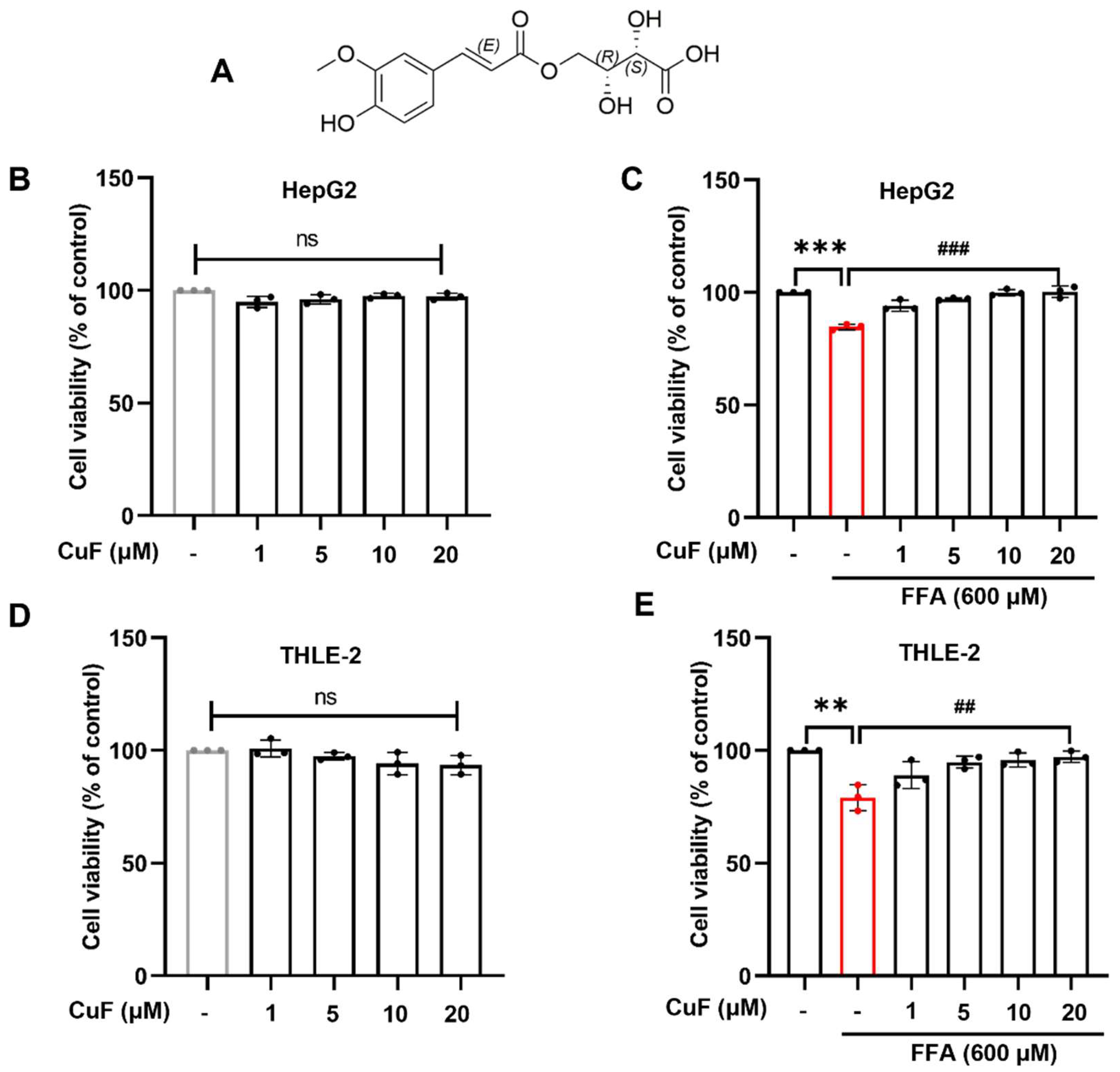
3.1. CuF Mitigates FFA-Induced Viability Loss in HepG2 and THLE-2 Cells
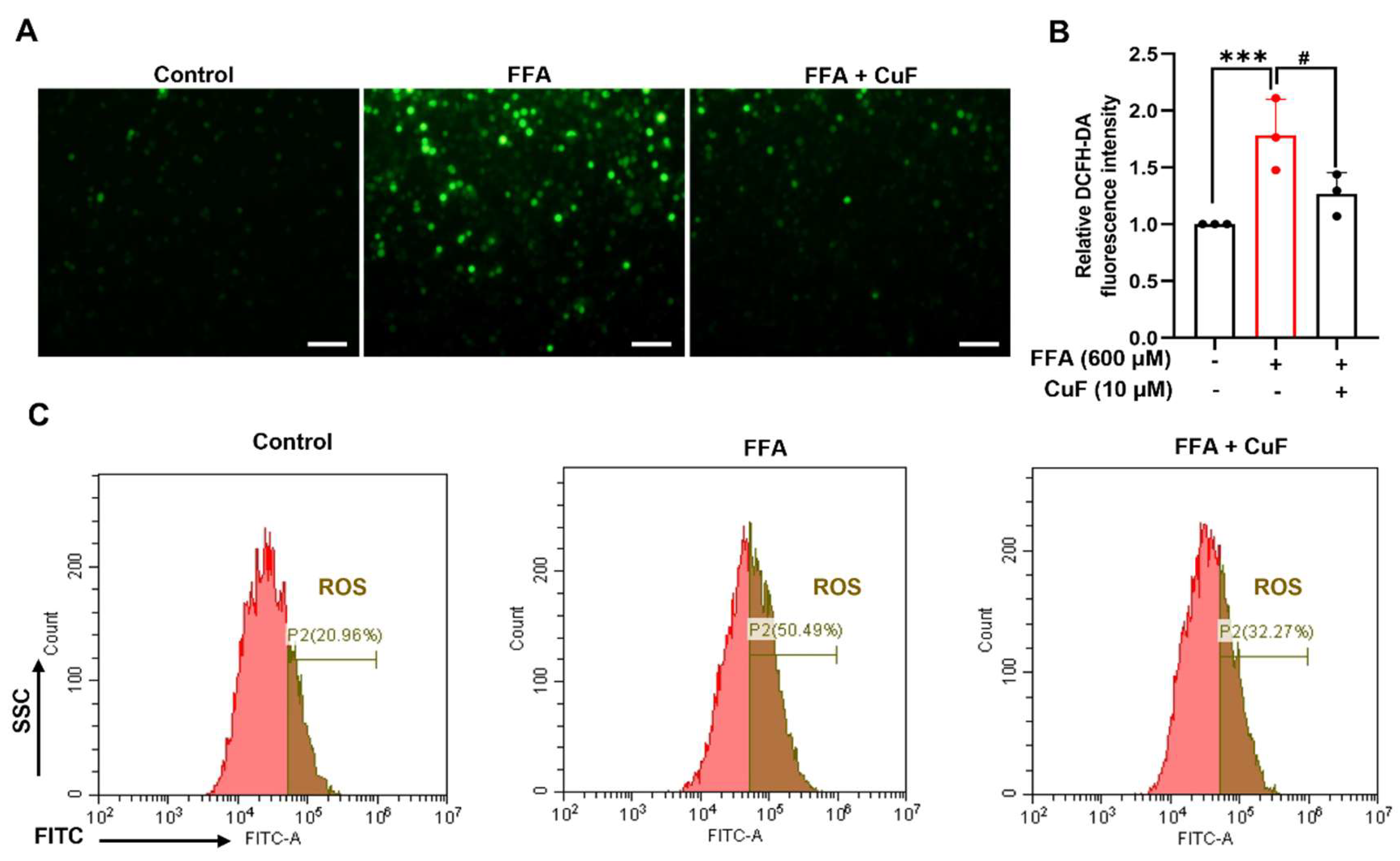
3.2. CuF Attenuates FFA-Induced ROS Generation in HepG2 Cells
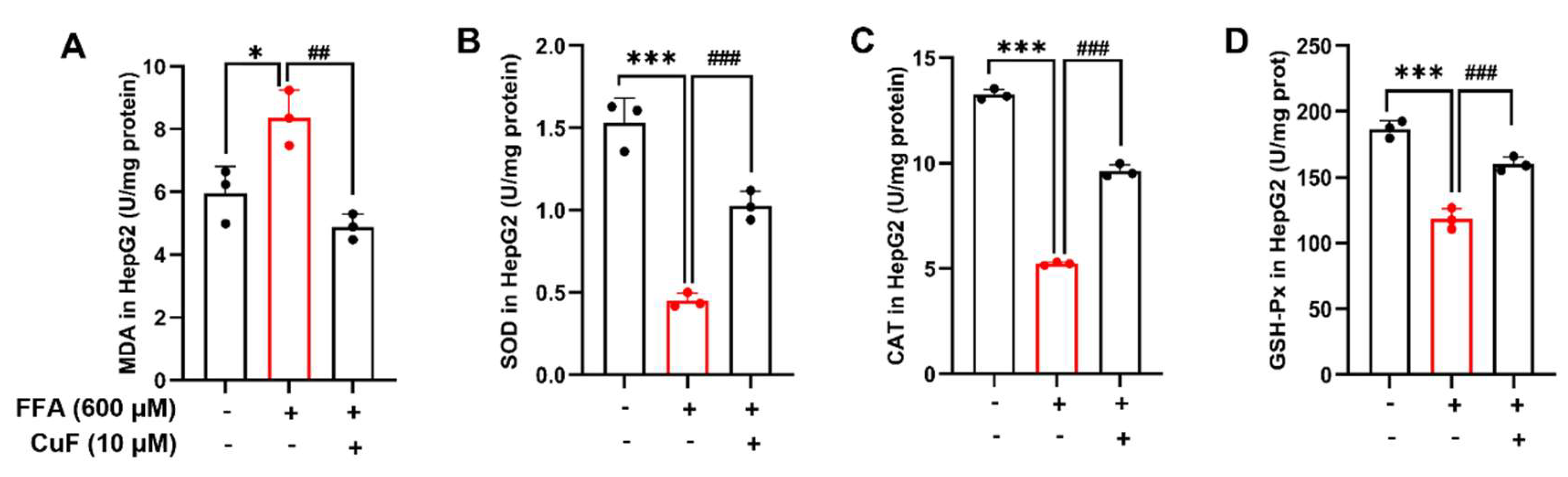
3.3. CuF Restores Antioxidant Defense in HepG2 Cells Under FFA-Induced Oxidative Stress
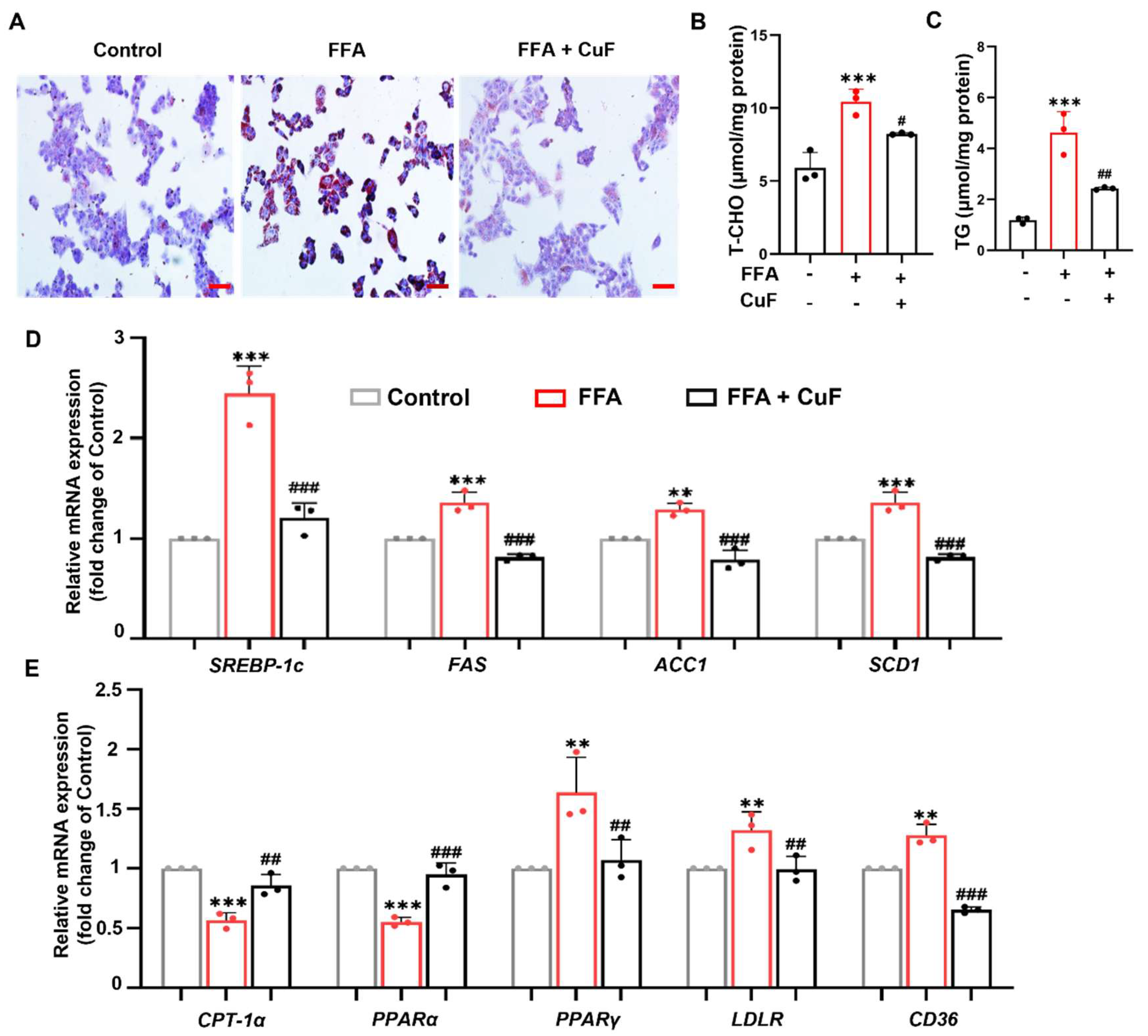
3.4. CuF Protects HepG2 Cells from FFA-Induced Lipotoxicity by Rebalancing Fatty Acid Metabolism
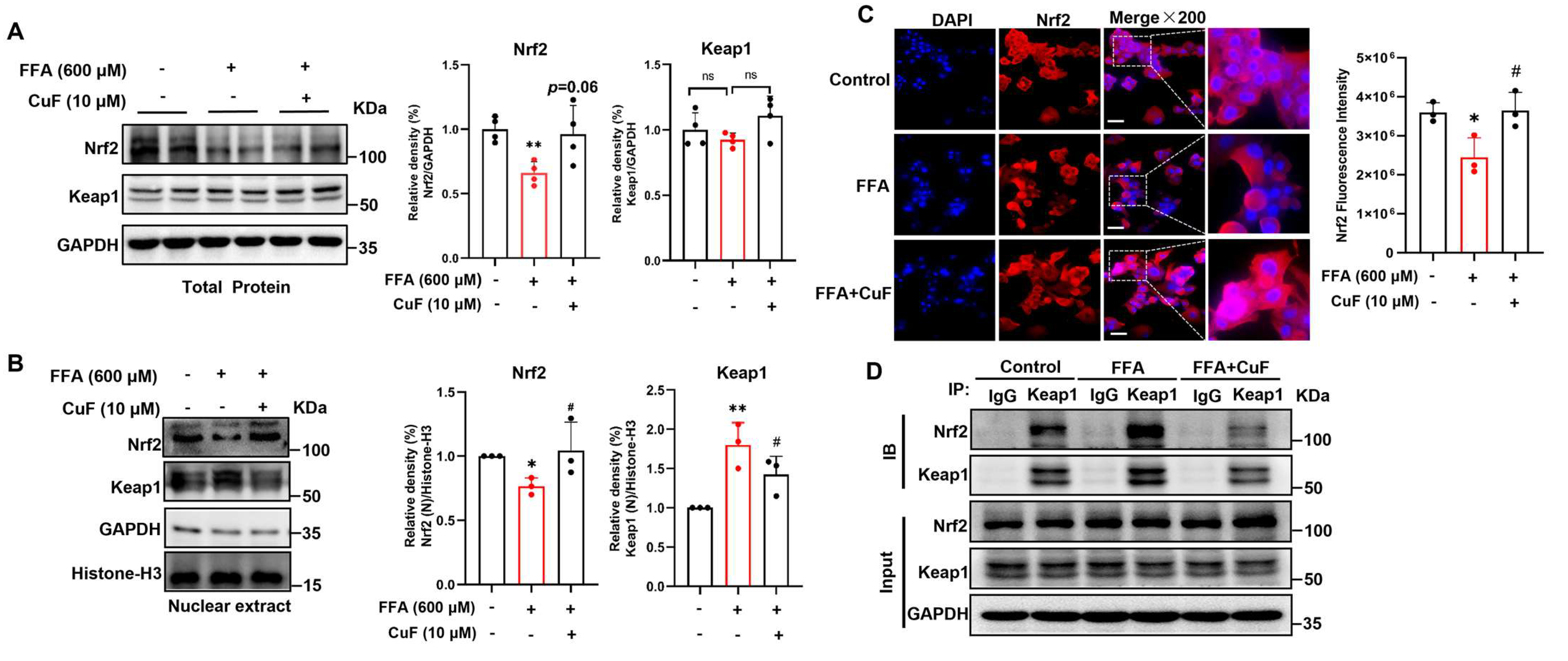
3.5. CuF Activates the Nrf2–Keap1 Pathway to Mitigate FFA-Induced Oxidative Stress in HepG2 Cells
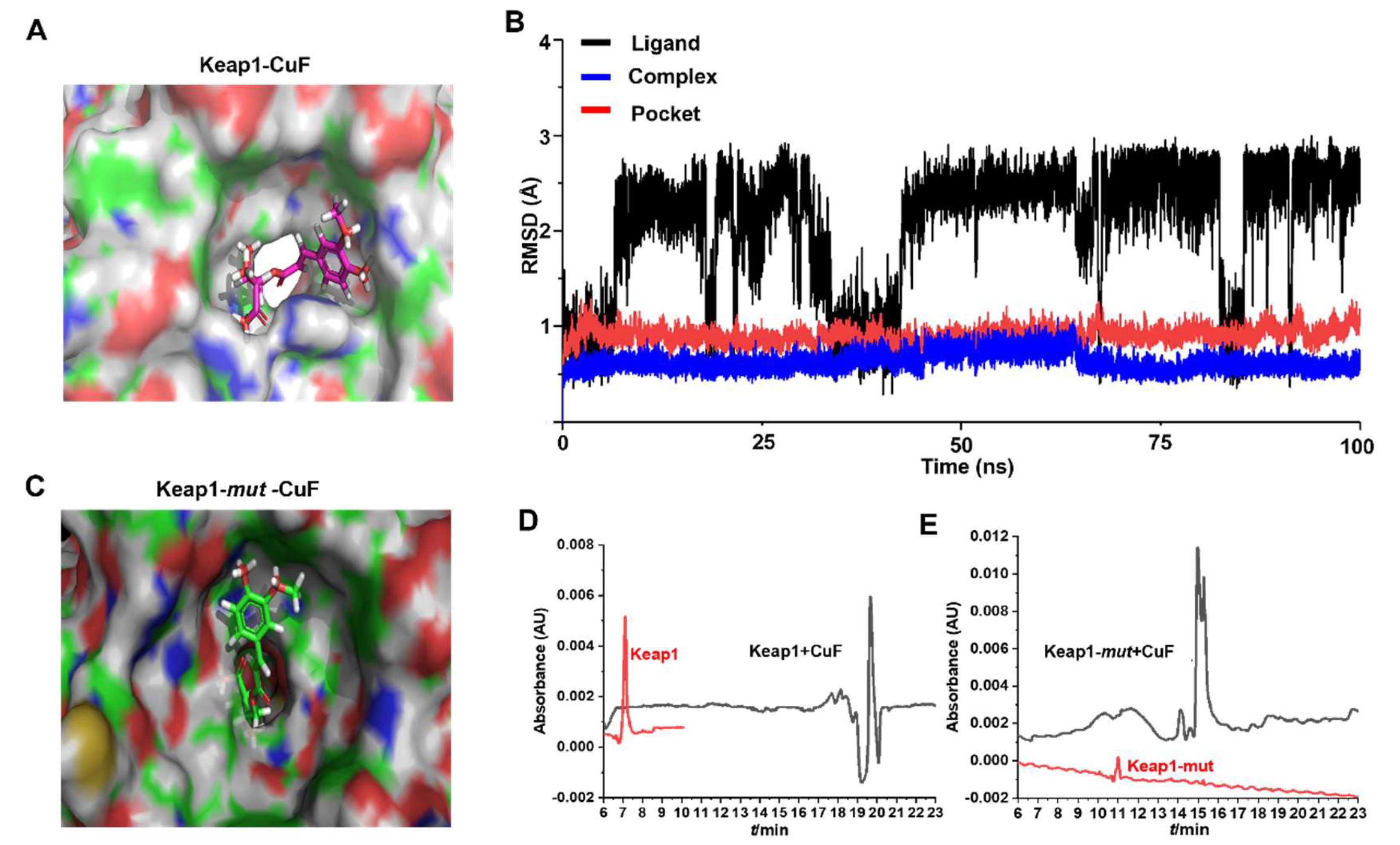
3.6. CuF Specifically Binds Keap1 and Disrupts the Nrf2–Keap1 Interaction
4. Discussion
5. Conclusions
Supplementary Materials
Author Contributions
Funding
Institutional Review Board Statement
Informed Consent Statement
Data Availability Statement
Conflicts of Interest
Abbreviations
| ACC1 | Acetyl-CoA carboxylase 1 |
| ARE | Antioxidant Response Element |
| BSA | Bovine Serum Albumin |
| CAT | Catalase |
| CE | Capillary Electrophoresis |
| Co-IP | Co-immunoprecipitation |
| CPT1α | Carnitine palmitoyltransferase 1 alpha |
| CuF | Cuspidatyl ferulate (2,3-dihydroxy-4-carboxylic butyl (E)-4-[3-(4-hydroxy-3-methoxyphenyl)-2-propenoate]) |
| DMEM | Dulbecco’s Modified Eagle Medium |
| ECL | Enhanced Chemiluminescence |
| FAS | Fatty acid synthase |
| FFA | Free Fatty Acid |
| FBS | Fetal Bovine Serum |
| GSH-Px | Glutathione Peroxidase |
| H. cuspidatus | Hyssopus cuspidatus Borris |
| IP | Immunofluorescence |
| IPTG | β-D-1-thiogalactopyranoside |
| Keap1 | Kelch-like ECH-associated Protein 1 |
| LDLR | Low-density lipoprotein receptor |
| MASH | Metabolic Dysfunction-Associated Steatohepatitis |
| MASLD | Metabolic Dysfunction-Associated Steatotic Liver Disease |
| MDS | Molecular Dynamics Simulation |
| MTT | [3-(4,5-dimethylthiazol-2-yl)-2,5-diphenyltetrazolium bromide] |
| NAFLD | Nonalcoholic Fatty Liver Disease |
| Nrf2/NRF2 | Nuclear Factor Erythroid 2–Related Factor 2 |
| PMA | Phorbol 12-myristate 13-acetate |
| PPARG | Peroxisome proliferator-activated receptor gamma |
| PPARA | Peroxisome proliferator-activated receptor alpha |
| ROS | Reactive Oxygen Species |
| SCD1 | Stearoyl-CoA desaturase 1 |
| SOD | Superoxide Dismutase |
| SREBP1 | Sterol regulatory element-binding protein 1 |
| TC | Total Cholesterol |
| TG | Triglyceride |
| CD36 | Cluster of differentiation 36 |
| 18s RNA | 18S ribosomal RNA |
References
- Younossi, Z.M.; Golabi, P.; Paik, J.M.; Henry, A.; Van Dongen, C.; Henry, L. The Global Epidemiology of Nonalcoholic Fatty Liver Disease (NAFLD) and Nonalcoholic Steatohepatitis (NASH): A Systematic Review. Hepatology 2023, 77, 1335–1347. [Google Scholar] [CrossRef]
- Huang, D.Q.; El-Serag, H.B.; Loomba, R. Global Epidemiology of NAFLD-Related HCC: Trends, Predictions, Risk Factors and Prevention. Nat. Rev. Gastroenterol. Hepatol. 2021, 18, 223–238. [Google Scholar] [CrossRef]
- Bechmann, L.P.; Hannivoort, R.A.; Gerken, G.; Hotamisligil, G.S.; Trauner, M.; Canbay, A. The Interaction of Hepatic Lipid and Glucose Metabolism in Liver Diseases. J. Hepatol. 2012, 56, 952–964. [Google Scholar] [CrossRef]
- Leamy, A.K.; Egnatchik, R.A.; Young, J.D. Molecular Mechanisms and the Role of Saturated Fatty Acids in the Progression of Non-Alcoholic Fatty Liver Disease. Prog. Lipid Res. 2013, 52, 165–174. [Google Scholar] [CrossRef] [PubMed]
- Neuschwander-Tetri, B.A. Hepatic Lipotoxicity and the Pathogenesis of Nonalcoholic Steatohepatitis: The Central Role of Nontriglyceride Fatty Acid Metabolites. Hepatology 2010, 52, 774–788. [Google Scholar] [CrossRef] [PubMed]
- Chen, Z.; Tian, R.; She, Z.; Cai, J.; Li, H. Corrigendum to “Role of Oxidative Stress in the Pathogenesis of Nonalcoholic Fatty Liver Disease” [Free Radic. Biol. Med. 152 (2020) 116-141]. Free Radic. Biol. Med. 2021, 162, 174. [Google Scholar] [CrossRef]
- Serviddio, G.; Bellanti, F.; Vendemiale, G. Free Radical Biology for Medicine: Learning from Nonalcoholic Fatty Liver Disease. Free Radic. Biol. Med. 2013, 65, 952–968. [Google Scholar] [CrossRef]
- Abed, D.A.; Goldstein, M.; Albanyan, H.; Jin, H.; Hu, L. Discovery of Direct Inhibitors of Keap1-Nrf2 Protein-Protein Interaction as Potential Therapeutic and Preventive Agents. Acta Pharm. Sin. B 2015, 5, 285–299. [Google Scholar] [CrossRef]
- Abenavoli, L.; Larussa, T.; Corea, A.; Procopio, A.C.; Boccuto, L.; Dallio, M.; Federico, A.; Luzza, F. Dietary Polyphenols and Non-Alcoholic Fatty Liver Disease. Nutrients 2021, 13, 494. [Google Scholar] [CrossRef]
- Li, J.-Z.; Chen, N.; Ma, N.; Li, M.-R. Mechanism and Progress of Natural Products in the Treatment of NAFLD-Related Fibrosis. Molecules 2023, 28, 7936. [Google Scholar] [CrossRef]
- Grosso, G.; Stepaniak, U.; Topor-Mądry, R.; Szafraniec, K.; Pająk, A. Estimated Dietary Intake and Major Food Sources of Polyphenols in the Polish Arm of the HAPIEE Study. Nutrition 2014, 30, 1398–1403. [Google Scholar] [CrossRef]
- Zhao, L.; Ji, Z.; Li, K.; Wang, B.; Tian, S. HPLC-DAD Analysis of Hyssopus Cuspidatus Boriss Extract and Mensuration of Its Antioxygenation Property. BMC Complement. Med. Ther. 2020, 20, 228. [Google Scholar] [CrossRef] [PubMed]
- Guo, Y.-D.; Zhang, M.-X.; Yu, Q.-Y.; Wang, L.-L.; Han, Y.-X.; Gao, T.-L.; Lin, Y.; Tie, C.; Jiang, J.-D. Hyssopus Cuspidatus Boriss Volatile Extract (SXC): A Dual-Action Antioxidant and Antifungal Agent Targeting Candida Albicans Pathogenicity and Vulvovaginal Candidiasis via Host Oxidative Stress Modulation and Fungal Metabolic Reprogramming. Antioxidants 2025, 14, 1046. [Google Scholar] [CrossRef] [PubMed]
- Atazhanova, G.; Ishmuratova, M.; Levaya, Y.; Smagulov, M.; Lakomkina, Y. The Genus Hyssopus: Traditional Use, Phytochemicals and Pharmacological Properties. Plants 2024, 13, 1683. [Google Scholar] [CrossRef] [PubMed]
- Liu, X.; Wang, G.; Lv, C.; Song, Z.; Bao, Y.; Wang, S.; Huang, Y. Two New Phenolic Acids and One New Phenolic Glycoside from Hyssopus Cuspidatus Boriss and Their Anti-Inflammatory Activities. Phytochem. Lett. 2021, 46, 15–20. [Google Scholar] [CrossRef]
- Han, J.-H.; Park, M.-H.; Myung, C.-S. Garcinia Cambogia Ameliorates Non-Alcoholic Fatty Liver Disease by Inhibiting Oxidative Stress-Mediated Steatosis and Apoptosis through NRF2-ARE Activation. Antioxidants 2021, 10, 1226. [Google Scholar] [CrossRef]
- Zhang, R.; Qi, J.; Zhou, M.; Pan, T.; Zhang, Z.; Yao, Y.; Han, H.; Han, Y. Upregulation of Nrf2 Attenuates Oxidative Stress-Induced, Complement Activation-Associated Endothelial Injury and Apoptosis in Transplant-Associated Thrombotic Microangiopathy. Transplant. Cell Ther. 2021, 27, 758.e1–758.e8. [Google Scholar] [CrossRef]
- Yao, H.; Zhang, W.; Yang, F.; Ai, F.; Du, D.; Li, Y. Discovery of Caffeoylisocitric Acid as a Keap1-Dependent Nrf2 Activator and Its Effects in Mesangial Cells under High Glucose. J. Enzyme Inhib. Med. Chem. 2022, 37, 178–188. [Google Scholar] [CrossRef]
- Senthil, K.K.J.; Gokila, V.M.; Wang, S.-Y. Activation of Nrf2-Mediated Anti-Oxidant Genes by Antrodin C Prevents Hyperglycemia-Induced Senescence and Apoptosis in Human Endothelial Cells. Oncotarget 2017, 8, 96568–96587. [Google Scholar] [CrossRef]
- Zhang, Y.; Yan, T.; Sun, D.; Xie, C.; Wang, T.; Liu, X.; Wang, J.; Wang, Q.; Luo, Y.; Wang, P.; et al. Rutaecarpine Inhibits KEAP1-NRF2 Interaction to Activate NRF2 and Ameliorate Dextran Sulfate Sodium-Induced Colitis. Free Radic. Biol. Med. 2020, 148, 33–41. [Google Scholar] [CrossRef]
- Berman, H.M.; Westbrook, J.; Feng, Z.; Gilliland, G.; Bhat, T.N.; Weissig, H.; Shindyalov, I.N.; Bourne, P.E. The Protein Data Bank. Nucleic Acids Res. 2000, 28, 235–242. [Google Scholar] [CrossRef]
- Morris, G.M.; Huey, R.; Lindstrom, W.; Sanner, M.F.; Belew, R.K.; Goodsell, D.S.; Olson, A.J. AutoDock4 and AutoDockTools4: Automated Docking with Selective Receptor Flexibility. J. Comput. Chem. 2009, 30, 2785–2791. [Google Scholar] [CrossRef]
- Schrödinger Inc. The PyMOL Molecular Graphics System; Version 2.5; Schrödinger Inc.: New York, NY, USA, 2021. [Google Scholar]
- Friesner, R.A.; Murphy, R.B.; Repasky, M.P.; Frye, L.L.; Greenwood, J.R.; Halgren, T.A.; Sanschagrin, P.C.; Mainz, D.T. Extra Precision Glide: Docking and Scoring Incorporating a Model of Hydrophobic Enclosure for Protein-Ligand Complexes. J. Med. Chem. 2006, 49, 6177–6196. [Google Scholar] [CrossRef]
- Case, D.; Belfon, K.; Ben-Shalom, I.; Brozell, S.R.; Cerutti, D.; Cheatham, T.; Cruzeiro, I.I.I.; Darden, T.; Duke, R.; Giambasu, G.; et al. Amber20. 2020. Available online: https://www.amberlite.eu/en/products/amber20?srsltid=AfmBOooUVhzxGorNCl1ti-zd4viDMk5ooGUrEukXexIV0EnCZvuUUidx (accessed on 1 March 2021).
- Wang, J.; Wolf, R.M.; Caldwell, J.W.; Kollman, P.A.; Case, D.A. Development and Testing of a General Amber Force Field. J. Comput. Chem. 2004, 25, 1157–1174. [Google Scholar] [CrossRef]
- Maier, J.A.; Martinez, C.; Kasavajhala, K.; Wickstrom, L.; Hauser, K.E.; Simmerling, C. Ff14SB: Improving the Accuracy of Protein Side Chain and Backbone Parameters from Ff99SB. J. Chem. Theory Comput. 2015, 11, 3696–3713. [Google Scholar] [CrossRef] [PubMed]
- Frisch, M.J.; Trucks, G.; Schlegel, H.B.; Scuseria, G.E.; Robb, M.A.; Cheeseman, J.; Scalmani, G.; Barone, V.; Mennucci, B.; Petersson, G.A.; et al. Gaussian 09 Revision; Version A.1; Gaussian Inc.: Wallingford, CT, USA, 2009. [Google Scholar]
- CCDC. GOLD Suite; Version 5.2; The Cambridge Crystallographic Data Centre: Cambridge, UK, 2015. [Google Scholar]
- Jones, G.; Willett, P.; Glen, R.C. Molecular Recognition of Receptor Sites Using a Genetic Algorithm with a Description of Desolvation. J. Mol. Biol. 1995, 245, 43–53. [Google Scholar] [CrossRef] [PubMed]
- Studier, F.W. Protein Production by Auto-Induction in High Density Shaking Cultures. Protein Expr. Purif. 2005, 41, 207–234. [Google Scholar] [CrossRef] [PubMed]
- Bornhorst, J.A.; Falke, J.J. Purification of Proteins Using Polyhistidine Affinity Tags. Methods Enzymol. 2000, 326, 245–254. [Google Scholar] [CrossRef]
- Voeten, R.L.C.; Ventouri, I.K.; Haselberg, R.; Somsen, G.W. Capillary Electrophoresis: Trends and Recent Advances. Anal. Chem. 2018, 90, 1464–1481. [Google Scholar] [CrossRef]
- Wiederschain, G. Handbook of Capillary and Microchip Electrophoresis and Associated Microtechnics. Biochem.-Biochem. TR 2008, 73, 1350. [Google Scholar] [CrossRef]
- Agilent Technologies Inc. Agilent ChemStation Software; Version 2011; Agilent Technologies Inc.: Santa Clara, CA, USA, 2011. [Google Scholar]
- García-Pérez, E.; Ryu, D.; Lee, C.; Lee, H.J. Ochratoxin A Induces Oxidative Stress in HepG2 Cells by Impairing the Gene Expression of Antioxidant Enzymes. Toxins 2021, 13, 271. [Google Scholar] [CrossRef] [PubMed]
- Rida, R.; Kreydiyyeh, S. Effect of FTY720P on Lipid Accumulation in HEPG2 Cells. Sci. Rep. 2023, 13, 19716. [Google Scholar] [CrossRef]
- Li, Y.; Xu, S.; Mihaylova, M.M.; Zheng, B.; Hou, X.; Jiang, B.; Park, O.; Luo, Z.; Lefai, E.; Shyy, J.Y.; et al. AMPK Phosphorylates and Inhibits SREBP Activity to Attenuate Hepatic Steatosis and Atherosclerosis in Diet-Induced Insulin-Resistant Mice. Cell Metab. 2011, 13, 376–388. [Google Scholar] [CrossRef]
- Baird, L.; Yamamoto, M. The Molecular Mechanisms Regulating the KEAP1-NRF2 Pathway. Mol. Cell Biol. 2020, 40, e00099-20. [Google Scholar] [CrossRef]
- Ma, Q. Role of Nrf2 in Oxidative Stress and Toxicity. Annu. Rev. Pharmacol. Toxicol. 2013, 53, 401–426. [Google Scholar] [CrossRef]
- Wang, Q.; Wei, Y.; Wang, Y.; Yu, Z.; Qin, H.; Zhao, L.; Cheng, J.; Shen, B.; Jin, M.; Feng, H. Total Flavonoids of Broussonetia Papyrifera Alleviate Non-Alcohol Fatty Liver Disease via Regulating Nrf2/AMPK/MTOR Signaling Pathways. Biochim. Biophys. Acta (BBA)-Mol. Cell Biol. Lipids 2024, 1869, 159497. [Google Scholar] [CrossRef]
- Katsaros, I.; Sotiropoulou, M.; Vailas, M.; Kapetanakis, E.I.; Valsami, G.; Tsaroucha, A.; Schizas, D. Quercetin’s Potential in MASLD: Investigating the Role of Autophagy and Key Molecular Pathways in Liver Steatosis and Inflammation. Nutrients 2024, 16, 3789. [Google Scholar] [CrossRef]
- Wan, X.; Ma, J.; Bai, H.; Hu, X.; Ma, Y.; Zhao, M.; Liu, J.; Duan, Z. Drug Advances in NAFLD: Individual and Combination Treatment Strategies of Natural Products and Small-Synthetic-Molecule Drugs. Biomolecules 2025, 15, 140. [Google Scholar] [CrossRef]
- Inoue, T.; Fu, B.; Nishio, M.; Tanaka, M.; Kato, H.; Tanaka, M.; Itoh, M.; Yamakage, H.; Ochi, K.; Ito, A.; et al. Novel Therapeutic Potentials of Taxifolin for Obesity-Induced Hepatic Steatosis, Fibrogenesis, and Tumorigenesis. Nutrients 2023, 15, 350. [Google Scholar] [CrossRef] [PubMed]
- Cui, S.; Pan, X.-J.; Ge, C.-L.; Guo, Y.-T.; Zhang, P.-F.; Yan, T.-T.; Zhou, J.-Y.; He, Q.-X.; Cheng, L.-H.; Wang, G.-J.; et al. Silybin Alleviates Hepatic Lipid Accumulation in Methionine-Choline Deficient Diet-Induced Nonalcoholic Fatty Liver Disease in Mice via Peroxisome Proliferator-Activated Receptor α. Chin. J. Nat. Med. 2021, 19, 401–411. [Google Scholar] [CrossRef] [PubMed]
- He, Y.; Wang, H.; Lin, S.; Chen, T.; Chang, D.; Sun, Y.; Wang, C.; Liu, Y.; Lu, Y.; Song, J.; et al. Advanced Effect of Curcumin and Resveratrol on Mitigating Hepatic Steatosis in Metabolic Associated Fatty Liver Disease via the PI3K/AKT/MTOR and HIF-1/VEGF Cascade. Biomed. Pharmacother. 2023, 165, 115279. [Google Scholar] [CrossRef]
- Karimi, M.; Abiri, B.; Guest, P.C.; Vafa, M. Therapeutic Effects of Resveratrol on Nonalcoholic Fatty Liver Disease Through Inflammatory, Oxidative Stress, Metabolic, and Epigenetic Modifications. Methods Mol. Biol. 2022, 2343, 19–35. [Google Scholar] [CrossRef]
- Salomone, F.; Godos, J.; Zelber-Sagi, S. Natural Antioxidants for Non-Alcoholic Fatty Liver Disease: Molecular Targets and Clinical Perspectives. Liver Int. Off. J. Int. Assoc. Study Liver 2016, 36, 5–20. [Google Scholar] [CrossRef]
- Sun, Y.; He, L.; Wang, W.; Wang, T.; Hua, W.; Li, T.; Wang, L.; Gao, T.; Chen, F.; Tang, L. Polyphenols from Penthorum Chinense Pursh. Attenuates High Glucose-Induced Vascular Inflammation through Directly Interacting with Keap1 Protein. J. Ethnopharmacol. 2021, 268, 113617. [Google Scholar] [CrossRef]
- Yao, H.; Zhang, N.; Zhang, W.; Li, J.; Hua, H.; Li, Y. Discovery of Polypodiside as a Keap1-Dependent Nrf2 Activator Attenuating Oxidative Stress and Accumulation of Extracellular Matrix in Glomerular Mesangial Cells under High Glucose. Bioorganic Med. Chem. 2020, 28, 115833. [Google Scholar] [CrossRef]
- Li, M.; Xu, T.; Zhou, F.; Wang, M.; Song, H.; Xiao, X.; Lu, B. Neuroprotective Effects of Four Phenylethanoid Glycosides on H2O2-Induced Apoptosis on PC12 Cells via the Nrf2/ARE Pathway. Int. J. Mol. Sci. 2018, 19, 1135. [Google Scholar] [CrossRef]



| Gene Symbol | Full Name | Forward Primer (5′–3′) | Reverse Primer (5′–3′) |
|---|---|---|---|
| ACC1 | Acetyl-CoA carboxylase 1 | TTGATTCCTGGCTCTACCC | TCACTGCCTCTGAATACACA |
| PPARG | Peroxisome proliferator-activated receptor gamma | CTCATATCCGAGGGCCAAGG | TTGCCAAGTCGCTGTCATCT |
| PPARA | Peroxisome proliferator-activated receptor alpha | GCTTCGCAAACTTGGACCTG | ACCAGCATCCCGTCTTTGTT |
| NRF2 | Nuclear factor erythroid 2–related factor 2 | GAGCAAGTTTGGGAGGAGCT | TGGCTTCTGGACTTGGAACCC |
| LDLR | Low-density lipoprotein receptor | ATGACTGCCCAACTCCCATG | ACTGATGGGTGAAGTGCTGG |
| SCD1 | Stearoyl-CoA desaturase 1 | TTGATTCCTGGCTCTACCC | TCACTGCCTCTGAATACACA |
| FAS | Fatty acid synthase | CTTGGTCTTCTTTATTGGCAT | AGGAAAATTACAAATGGCCTT |
| SREBP1 | Sterol regulatory element-binding protein 1 | GCACTGAGGCAAAGCTGAAT | CCGACACCAGATCCTTCAGA |
| CD36 | Cluster of differentiation 36 | AACCTATTGGTCAAGCCAT | ATGTTTGCCTTCTCATCACC |
| CPT1α | Carnitine palmitoyltransferase 1 alpha | TGAGTGACTGGTGGGAGGAA | GCAGAGCAGAGGGGAATTGT |
| 18s RNA | 18S ribosomal RNA | GGAAGGGCACCACCAGGAGT | TGCAGCCCCGGACATCTAAG |
| Target | Gold Score Value | ASP Value |
|---|---|---|
| Keap1 | 66.04 | 26.07 |
| Keap1-mut | 42.97 | 11.23 |
Disclaimer/Publisher’s Note: The statements, opinions and data contained in all publications are solely those of the individual author(s) and contributor(s) and not of MDPI and/or the editor(s). MDPI and/or the editor(s) disclaim responsibility for any injury to people or property resulting from any ideas, methods, instructions or products referred to in the content. |
© 2025 by the authors. Licensee MDPI, Basel, Switzerland. This article is an open access article distributed under the terms and conditions of the Creative Commons Attribution (CC BY) license (https://creativecommons.org/licenses/by/4.0/).
Share and Cite
Liu, X.; Zhang, Z.; Gao, D.; Yang, X.; Liu, L.; Wang, G.; Song, Z.; Fang, W.; Wang, S. Cuspidatyl Ferulate, a Novel Phenolic Acid from Hyssopus cuspidatus Borris, Protects Hepatocytes Against Oxidative Damage via Keap1 Interaction. Antioxidants 2025, 14, 1449. https://doi.org/10.3390/antiox14121449
Liu X, Zhang Z, Gao D, Yang X, Liu L, Wang G, Song Z, Fang W, Wang S. Cuspidatyl Ferulate, a Novel Phenolic Acid from Hyssopus cuspidatus Borris, Protects Hepatocytes Against Oxidative Damage via Keap1 Interaction. Antioxidants. 2025; 14(12):1449. https://doi.org/10.3390/antiox14121449
Chicago/Turabian StyleLiu, Xingyu, Zhao Zhang, Denghui Gao, Xiaoguang Yang, Lei Liu, Guannan Wang, Zhenbo Song, Weiwei Fang, and Shuyue Wang. 2025. "Cuspidatyl Ferulate, a Novel Phenolic Acid from Hyssopus cuspidatus Borris, Protects Hepatocytes Against Oxidative Damage via Keap1 Interaction" Antioxidants 14, no. 12: 1449. https://doi.org/10.3390/antiox14121449
APA StyleLiu, X., Zhang, Z., Gao, D., Yang, X., Liu, L., Wang, G., Song, Z., Fang, W., & Wang, S. (2025). Cuspidatyl Ferulate, a Novel Phenolic Acid from Hyssopus cuspidatus Borris, Protects Hepatocytes Against Oxidative Damage via Keap1 Interaction. Antioxidants, 14(12), 1449. https://doi.org/10.3390/antiox14121449