Article

Cardioprotective Antioxidant and Anti-Inflammatory Mechanisms Induced by Intermittent Hypobaric Hypoxia

by
Alejandro González-Candia
1,
Alejandro A. Candia
2,3,
Adolfo Paz
2,
Fuad Mobarec
2,
Rodrigo Urbina-Varela
4,
Andrea del Campo
4,
Emilio A. Herrera
2,5,* and
Rodrigo L. Castillo
6,7,*
1
Institute of Health Sciences, University of O’Higgins, Rancagua 2820000, Chile
2
Laboratory of Vascular Function & Reactivity, Pathophysiology Program, ICBM, Faculty of Medicine, Universidad de Chile, Santiago 7500922, Chile
3
Department for the Woman and Newborn Health Promotion, Universidad de Chile, Santiago 7500922, Chile
4
Laboratorio de Fisiología y Bioenergética Celular, Facultad de Química y de Farmacia, Pontificia Universidad Católica de Chile, Santiago 7820436, Chile
5
International Center for Andean Studies (INCAS), University of Chile, Putre 1070000, Chile
6
Departamento de Medicina Interna Oriente, Facultad de Medicina, Universidad de Chile, Santiago 7500922, Chile
7
Unidad de Paciente Crítico, Hospital del Salvador, Santiago 7500922, Chile
*
Authors to whom correspondence should be addressed.
Antioxidants 2022, 11(6), 1043; https://doi.org/10.3390/antiox11061043

Submission received: 17 April 2022 / Revised: 5 May 2022 / Accepted: 6 May 2022 / Published: 25 May 2022
(This article belongs to the Special Issue Oxidative Stress in Cardiac Disease)

Abstract

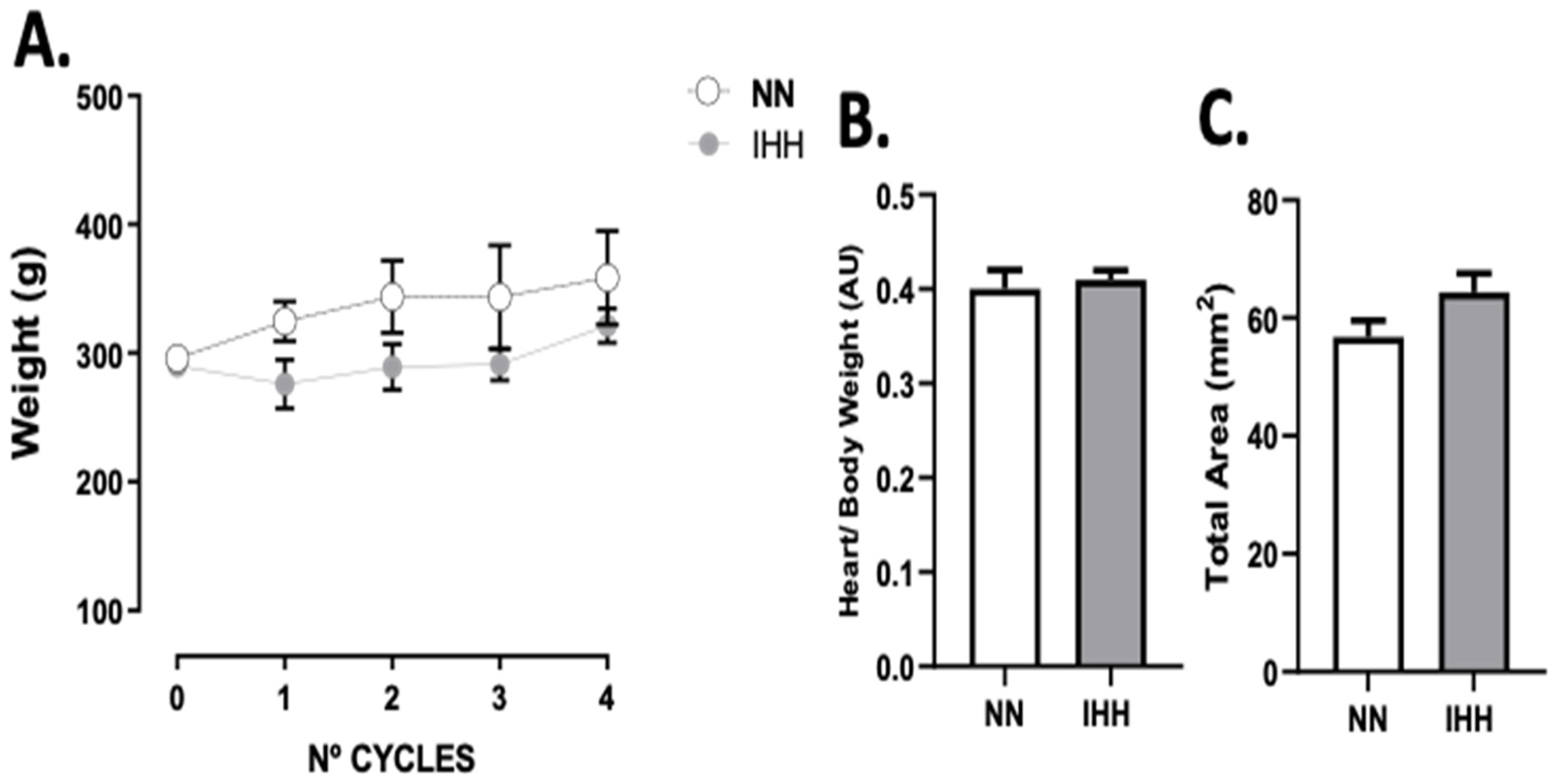
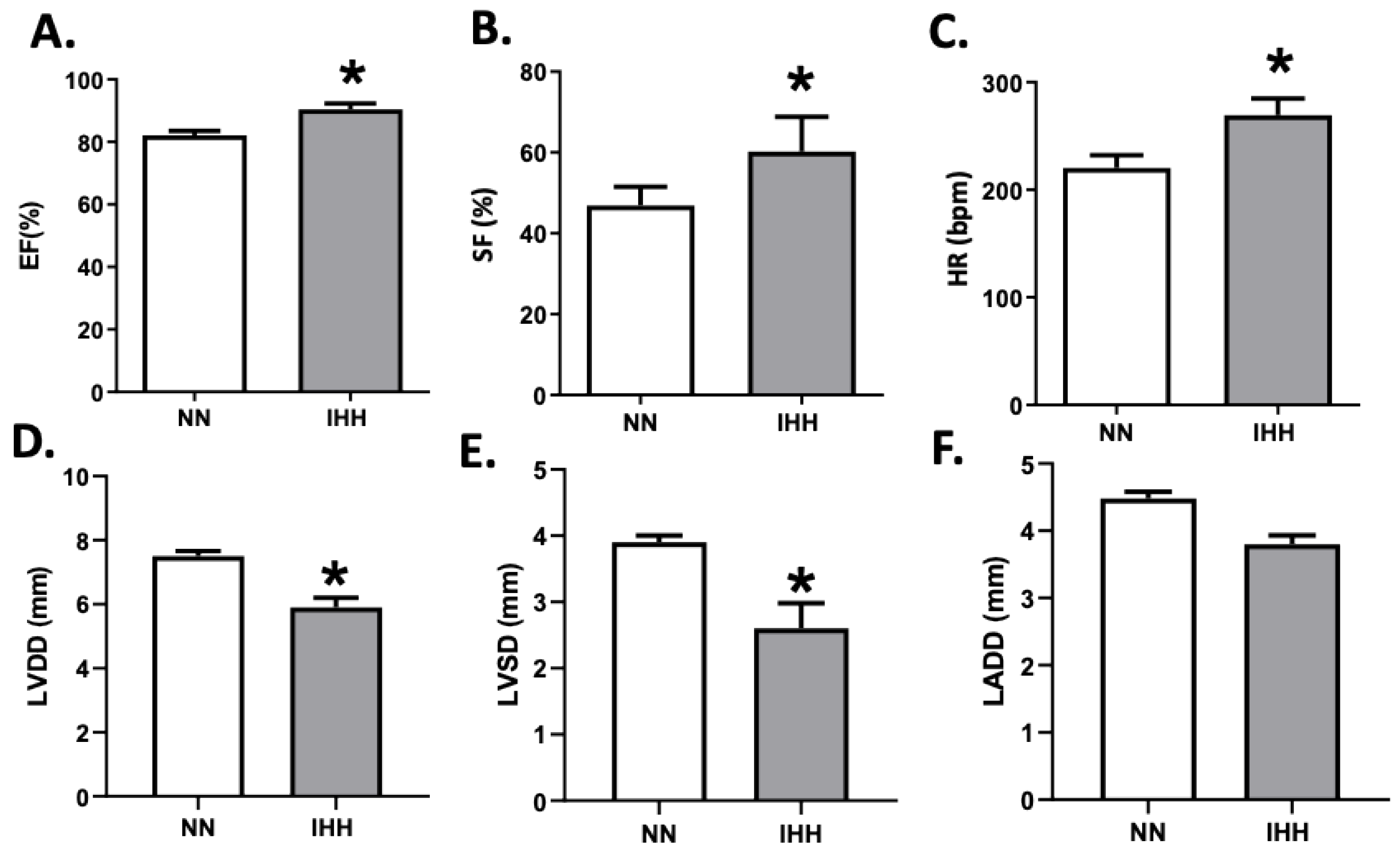
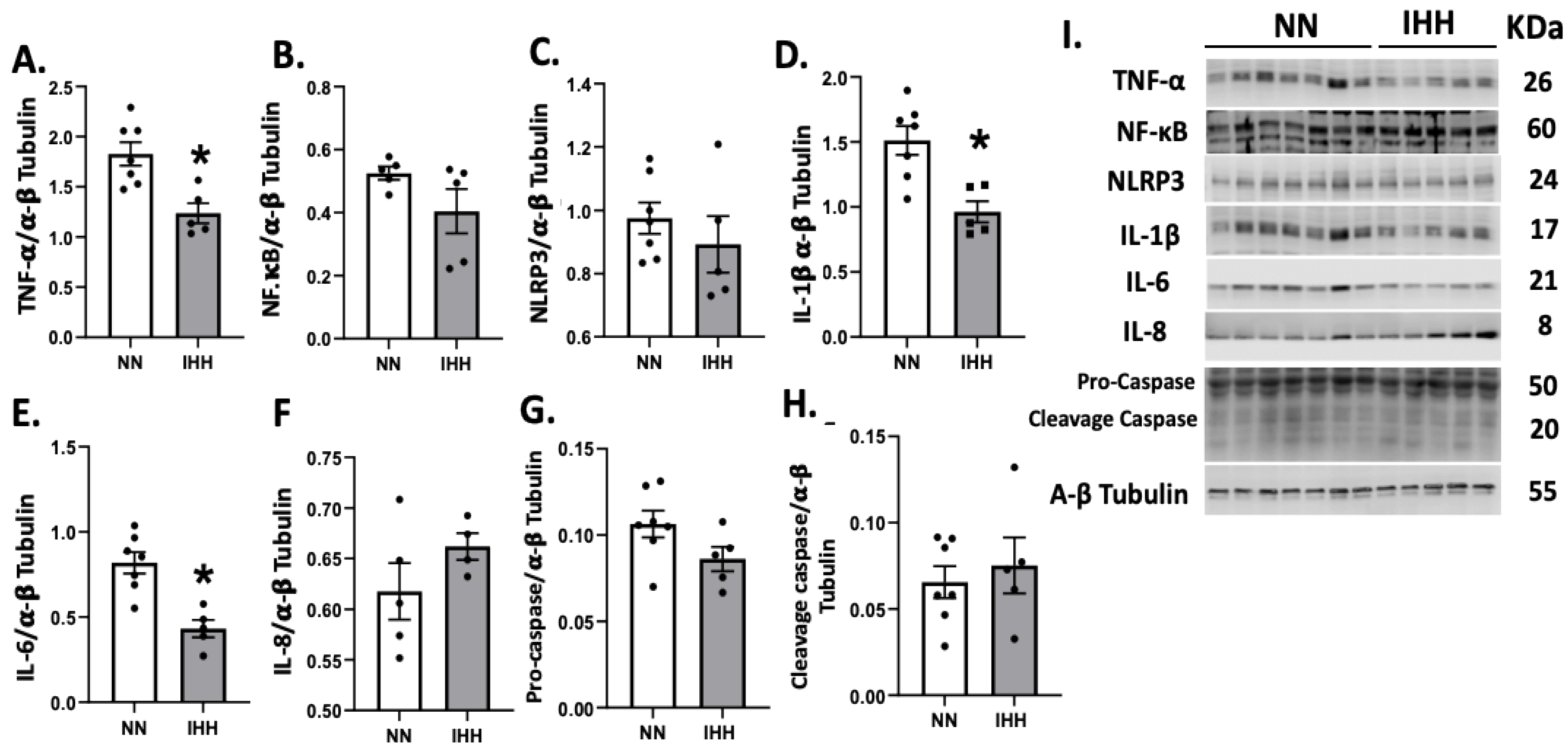
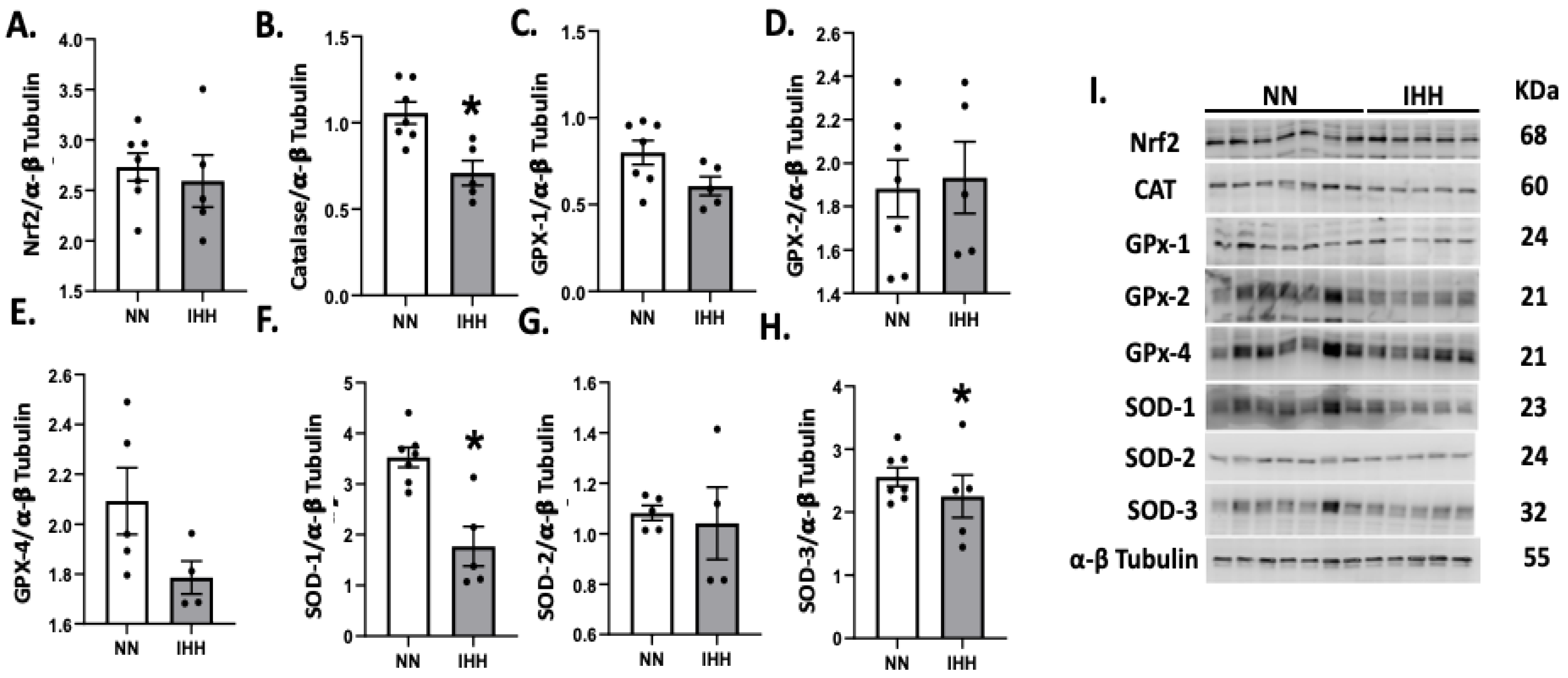
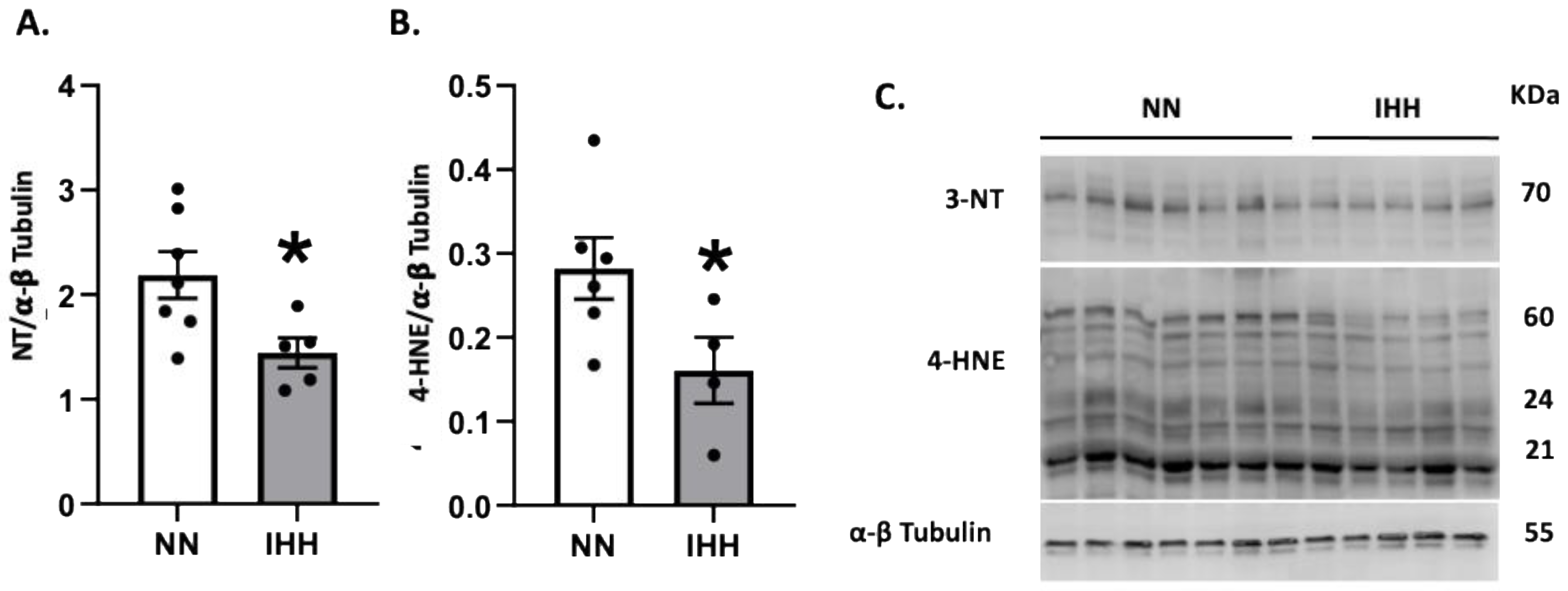
More than 80 million people live and work (in a chronic or intermittent form) above 2500 masl, and 35 million live in the Andean Mountains. Furthermore, in Chile, it is estimated that 100,000 people work in high-altitude shifts, where stays in the lowlands are interspersed with working visits in the highlands. Acute exposure to high altitude has been shown to induce oxidative stress in healthy human lowlanders due to increased free radical formation and decreased antioxidant capacity. However, intermittent hypoxia (IH) induces preconditioning in animal models, generating cardioprotection. Here, we aim to describe the responses of a cardiac function to four cycles of intermittent hypobaric hypoxia (IHH) in a rat model. The twelve adult Wistar rats were randomly divided into two equal groups, a four-cycle of IHH and a normobaric hypoxic control. Intermittent hypoxia was induced in a hypobaric chamber in four continuous cycles (1 cycle = 4 days of hypoxia + 4 days of normoxia), reaching a barometric pressure equivalent to 4600 m of altitude (428 Torr). At the end of the fourth cycle, cardiac structural and functional variables were also determined by echocardiography; furthermore, cardiac oxidative stress biomarkers (4-Hydroxynonenal, HNE; nitrotyrosine, NT), antioxidant enzymes, and NLRP3 inflammasome panel expression are also determined. Our results show a higher ejection and a shortening fraction of the left ventricle function by the end of the fourth cycle. Furthermore, cardiac tissue presented a decreased expression of antioxidant proteins. However, a decrease in IL-1β, TNF-αn, and oxidative stress markers is observed in IHH compared to normobaric hypoxic controls. Non-significant differences were found in protein levels of NLRP3 and caspase-1. IHH exposure determines structural and functional heart changes. These findings suggest that initial states of IHH are beneficial for cardiovascular function and protection.
Keywords: intermittent hypoxia; NLRP3 inflammasome; antioxidant defenses; NF-kappaB; cardioprotection intermittent hypoxia; NLRP3 inflammasome; antioxidant defenses; NF-kappaB; cardioprotection