Opinion

Potential Mechanisms of the Improvement of Glucose Homeostasis in Type 2 Diabetes by Pomegranate Juice

by
Carlos Olvera-Sandoval
1,
Héctor Enrique Fabela-Illescas
2,
Eduardo Fernández-Martínez
3,
María Araceli Ortiz-Rodríguez
4,
Raquel Cariño-Cortés
3,
José Alberto Ariza-Ortega
5,
Juan Carlos Hernández-González
6,
Diana Olivo
5,
Carmen Valadez-Vega
7,
Helen Belefant-Miller
8 and
Gabriel Betanzos-Cabrera
9,*
1
Facultad de Medicina Mexicali, Universidad Autónoma de Baja California, Mexicali 21000, Mexico
2
Programa de Enfermedades Cardiometabólicas, Jurisdicción Sanitaria II Tulancingo, Servicios de Salud de Hidalgo, Pachuca 43679, Mexico
3
Laboratory of Medicinal Chemistry and Pharmacology, Centro de Investigación en Biología de la Reproducción, Área Académica de Medicina, Instituto de Ciencias de la Salud, Universidad Autónoma del Estado de Hidalgo, Pachuca 42090, Mexico
4
Facultad de Nutrición, Universidad Autónoma del Estado de Morelos, Mexico Iztaccíhuatl 100 Col. Los Volcanes, Morelos, Cuernavaca 62350, Mexico
5
Área Académica de Nutrición, Instituto de Ciencias de la Salud, Universidad Autónoma del Estado de Hidalgo, Ex-Hacienda de la Concepción, Tilcuautla, Pachuca de Soto 42080, Mexico
6
Área Académica de Medicina Veterinaria y Zootecnia, Instituto de Ciencias Agropecuarias, Universidad Autónoma del Estado de Hidalgo, Av. Universidad km 1 Exhacienda de Aquetzalpa A.P. 32, Tulancingo 43600, Mexico
7
Área Académica de Medicina, Instituto de Ciencias de la Salud, Universidad Autónoma del Estado de Hidalgo, Ex-Hacienda de la Concepción, Tilcuautla, Pachuca de Soto 42080, Mexico
8
Dale Bumpers National Rice Research Center, Stuttgart, AR 72160, USA
9
Área Académica de Nutrición y Medicina, Instituto de Ciencias de la Salud, Universidad Autónoma del Estado de Hidalgo, Ex-Hacienda de la Concepción, Tilcuautla, Pachuca de Soto 42080, Mexico
*
Author to whom correspondence should be addressed.
Antioxidants 2022, 11(3), 553; https://doi.org/10.3390/antiox11030553

Submission received: 18 February 2022 / Accepted: 10 March 2022 / Published: 15 March 2022

Abstract

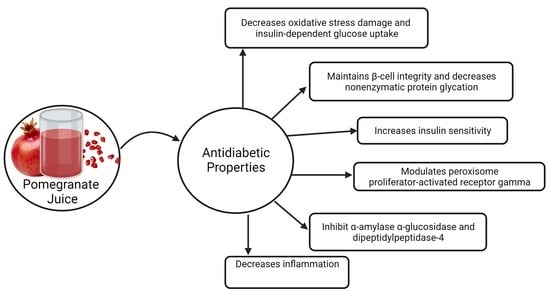
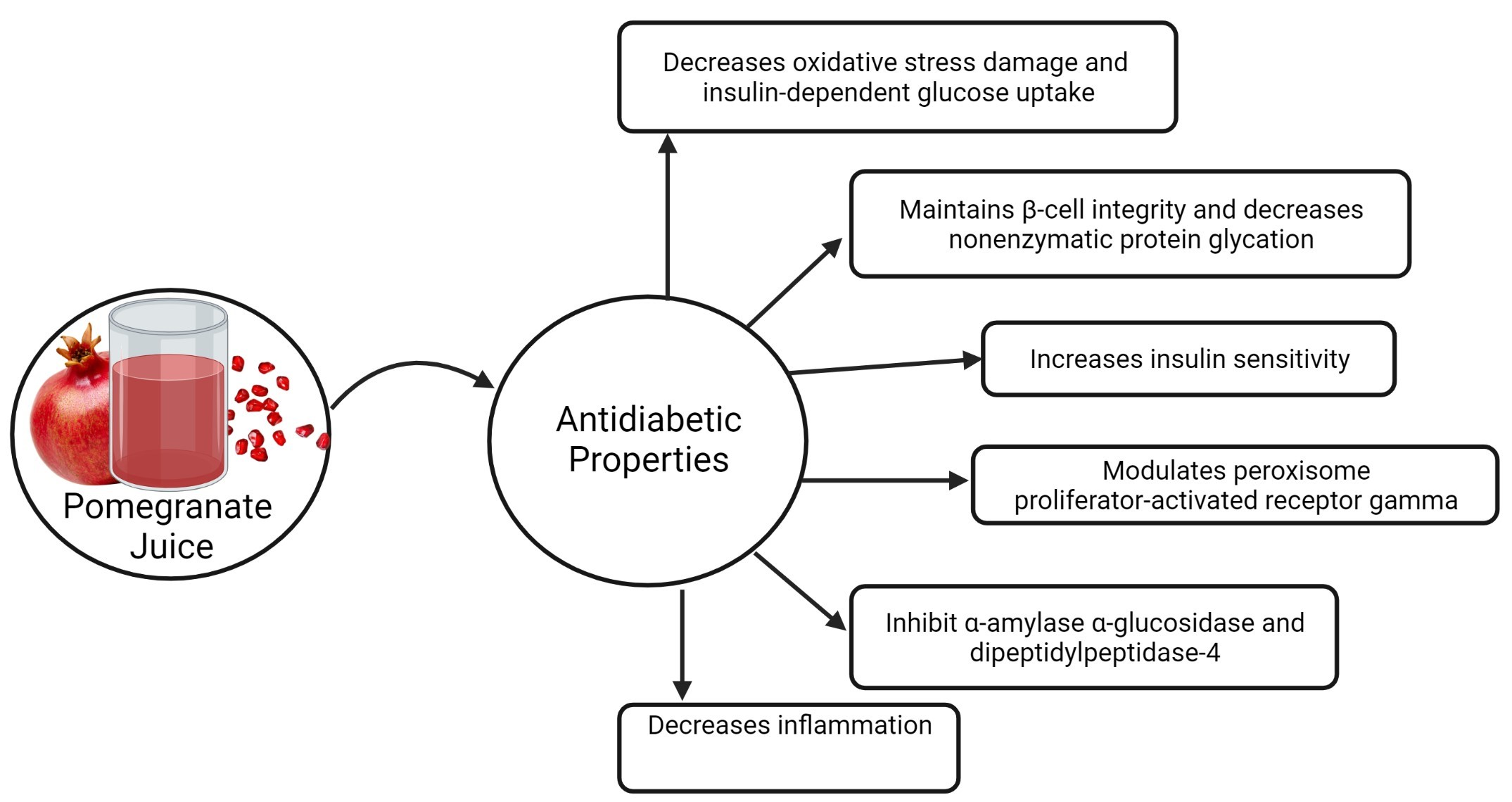
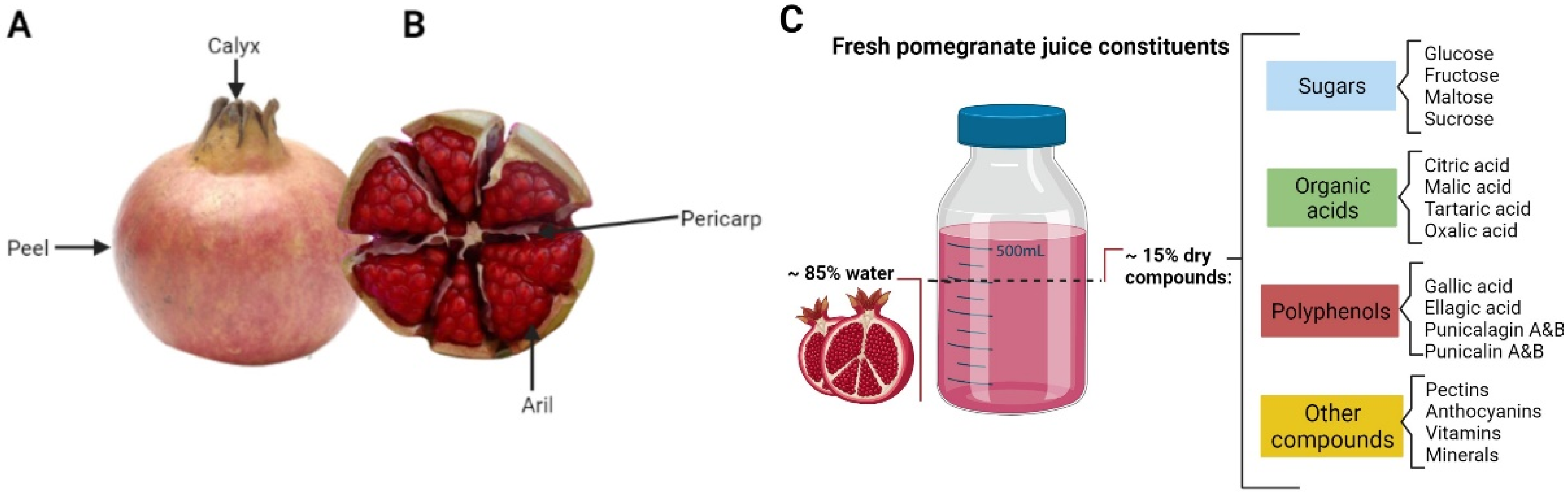
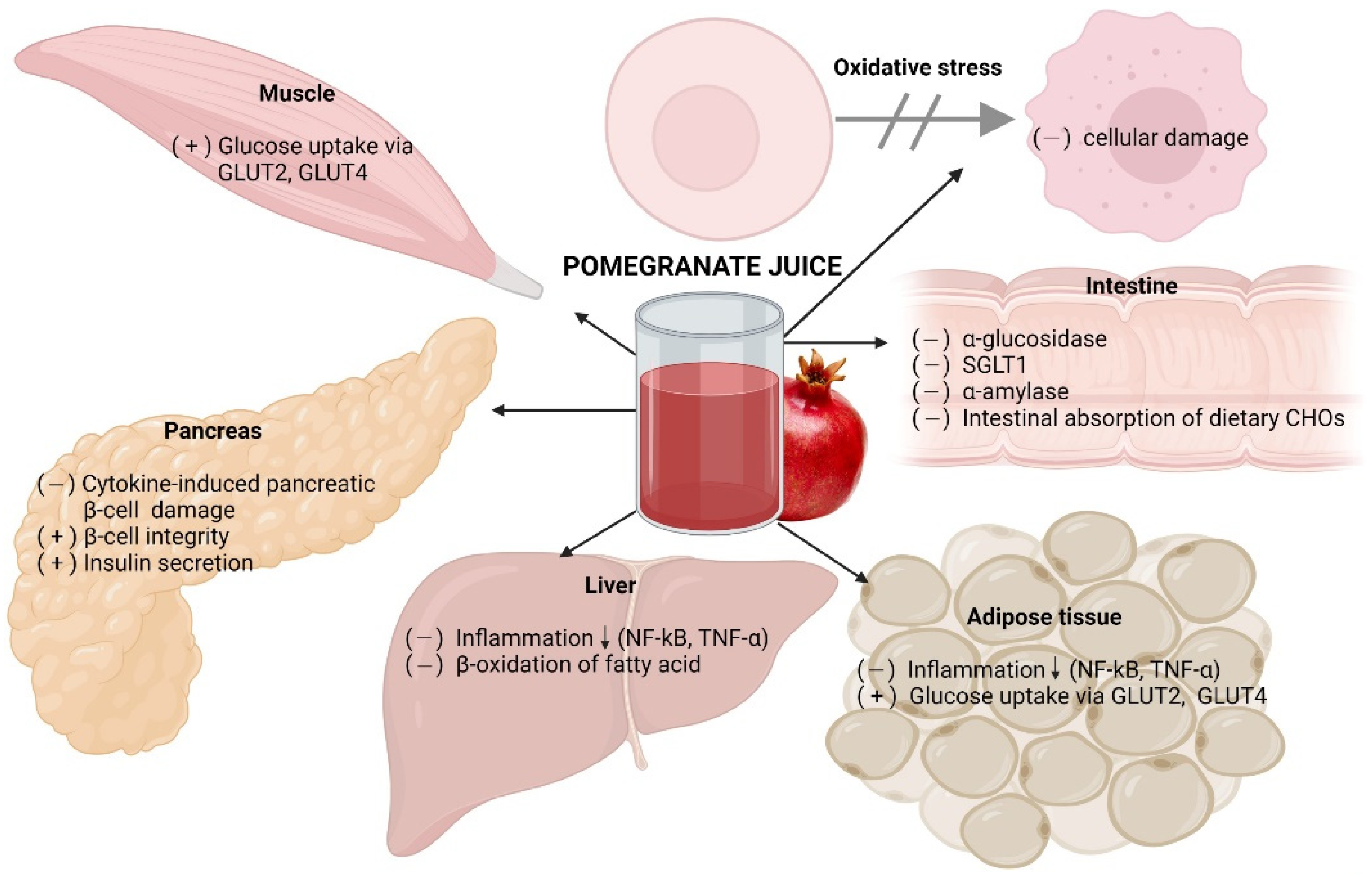
Pomegranate is a polyphenol-rich fruit. Studies have shown that extracts prepared from its juice or from different parts of the pomegranate plant have various biological activities including antioxidant, antimicrobial, anti-inflammatory, anticarcinogenic, cardioprotective, and antidiabetic. The therapeutic potential has been attributed to various phytochemicals, including ellagic acid, punicic acid, flavonoids, anthocyanidins, anthocyanins, flavonols, and flavones. This review focuses on the scientific evidence of pomegranate juice as hypoglycemic, emphasizing the chemical composition and the possible mechanisms of action associated with this effect. Studies were identified using the PubMed, Scopus, and ISI Web of Science databases to identify relevant articles focused on the hypoglycemic effect of pomegranate juice. The physiological responses to pomegranate juice are reported here, including a decrease of oxidative stress damage, an increase of insulin-dependent glucose uptake, maintenance of β-cell integrity, inhibition of nonenzymatic protein glycation, an increase of insulin sensitivity, modulation of peroxisome proliferator-activated receptor-gamma, inhibition of α-amylase, inhibition of α-glucosidase and dipeptidyl peptidase-4, and decreases in inflammation. Overall, we found a significant hypoglycemic effect of pomegranate in in vitro and in vivo studies and we summarize the potential mechanisms of action.
Keywords: type 2 diabetes; hypoglycemic; polyphenols; pomegranate juice type 2 diabetes; hypoglycemic; polyphenols; pomegranate juice
Graphical Abstract