


Comparative Analysis of Three Trypanosomatid Catalases of Different Origin
 , , and
Abstract
1. Introduction
2. Materials and Methods
2.1. Trypanosomatid Isolates and Cultivation
2.2. Phylogenetic Inferences
2.3. Analysis of Gene Copy Number
2.4. Sequence Analysis of Catalase
2.5. Expression and Purification of Recombinant Catalases
2.6. Catalase In-gel Activity Staining
2.7. Catalase Activity Assays
2.8. Protein Structure Prediction
3. Results
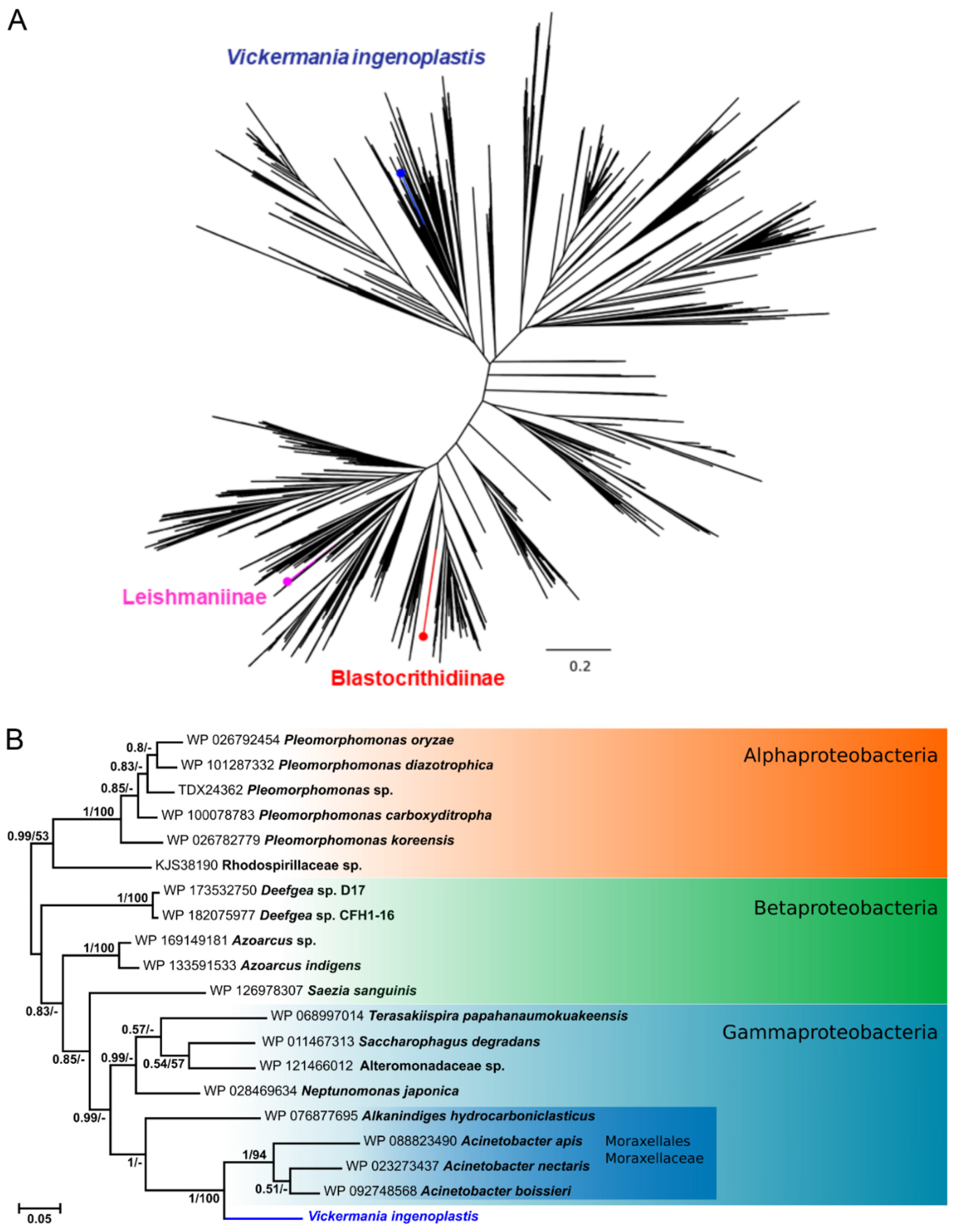
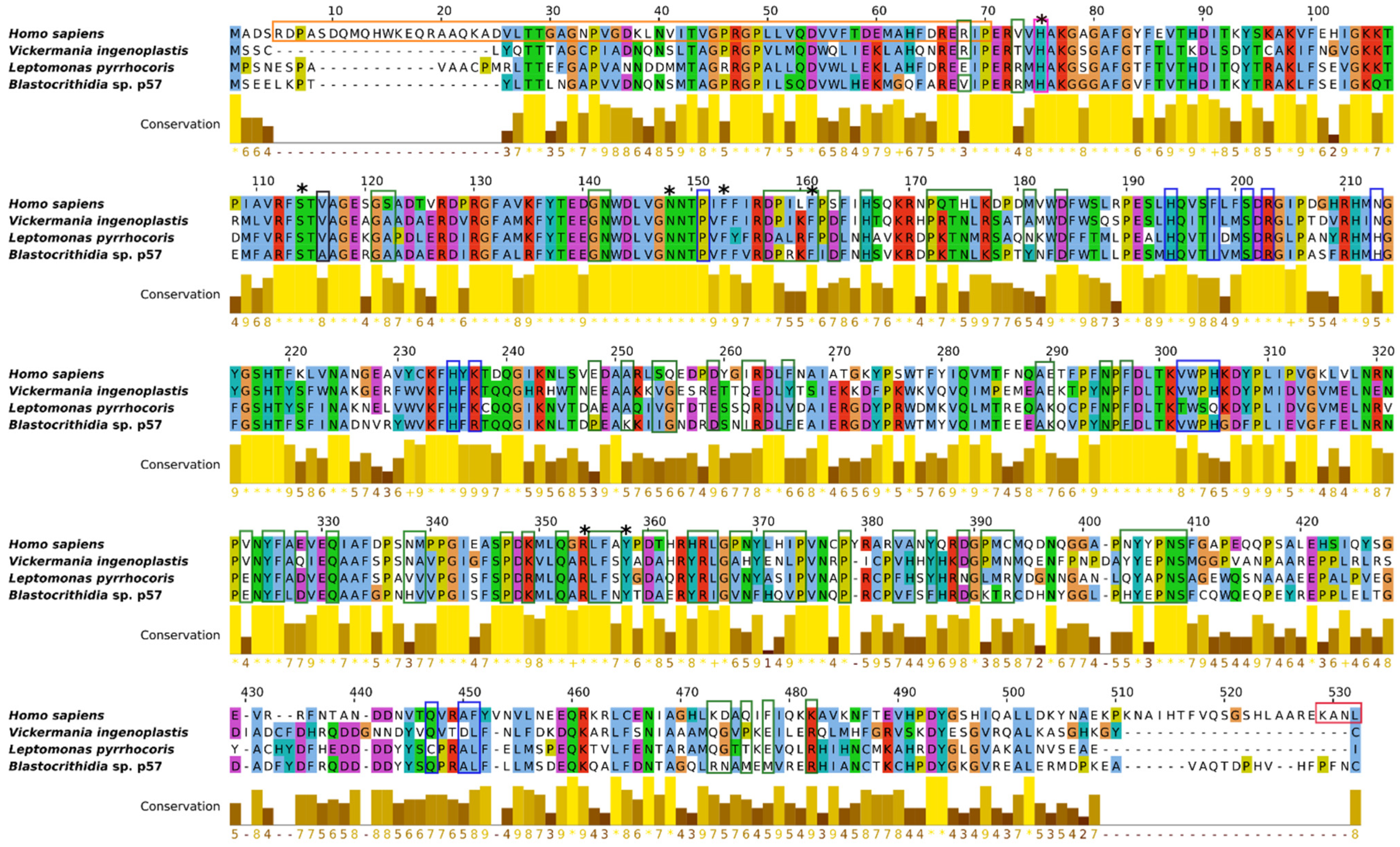
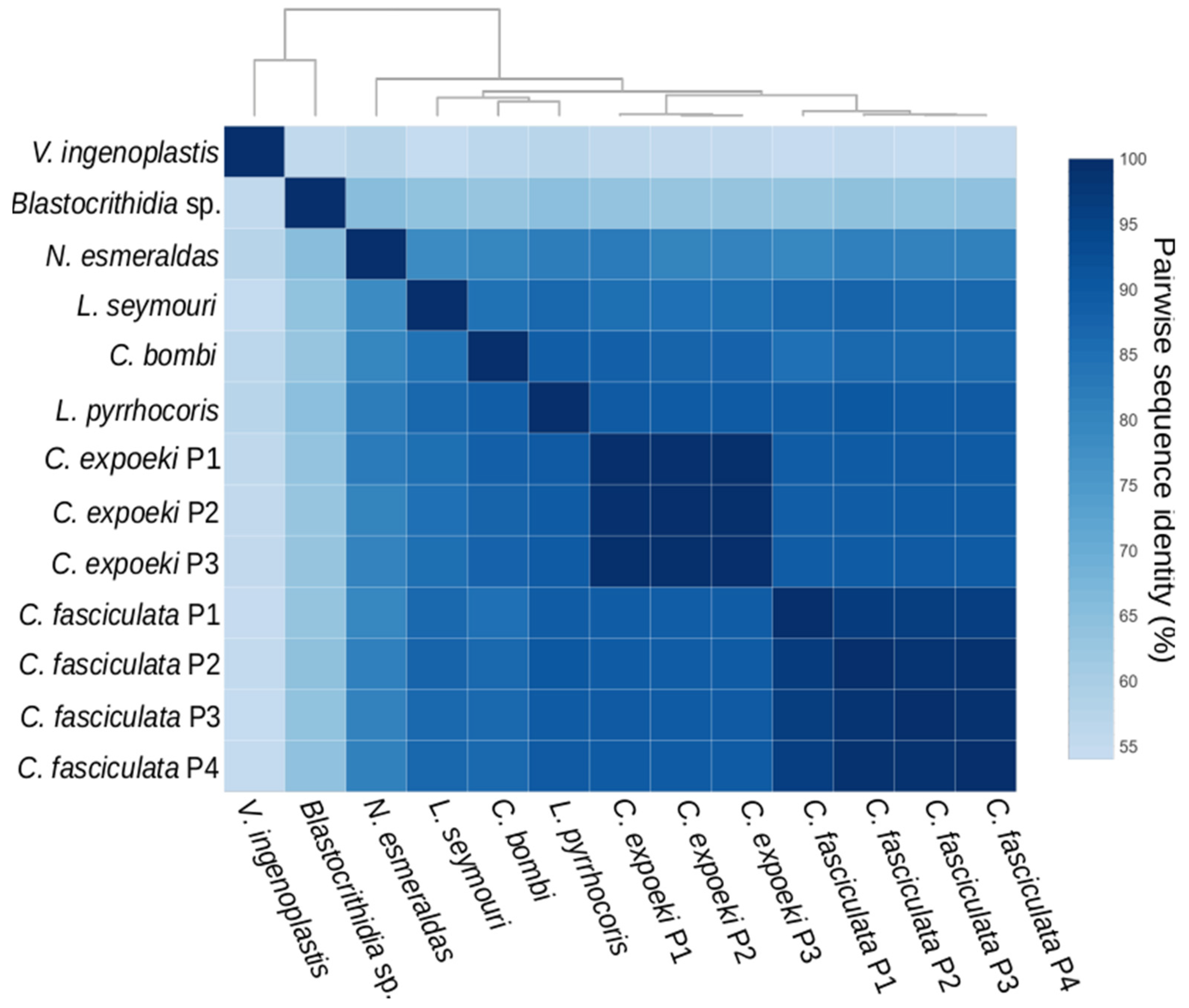
3.1. Phylogenetic Inferences, Analyses of Sequences and Gene Copy Number
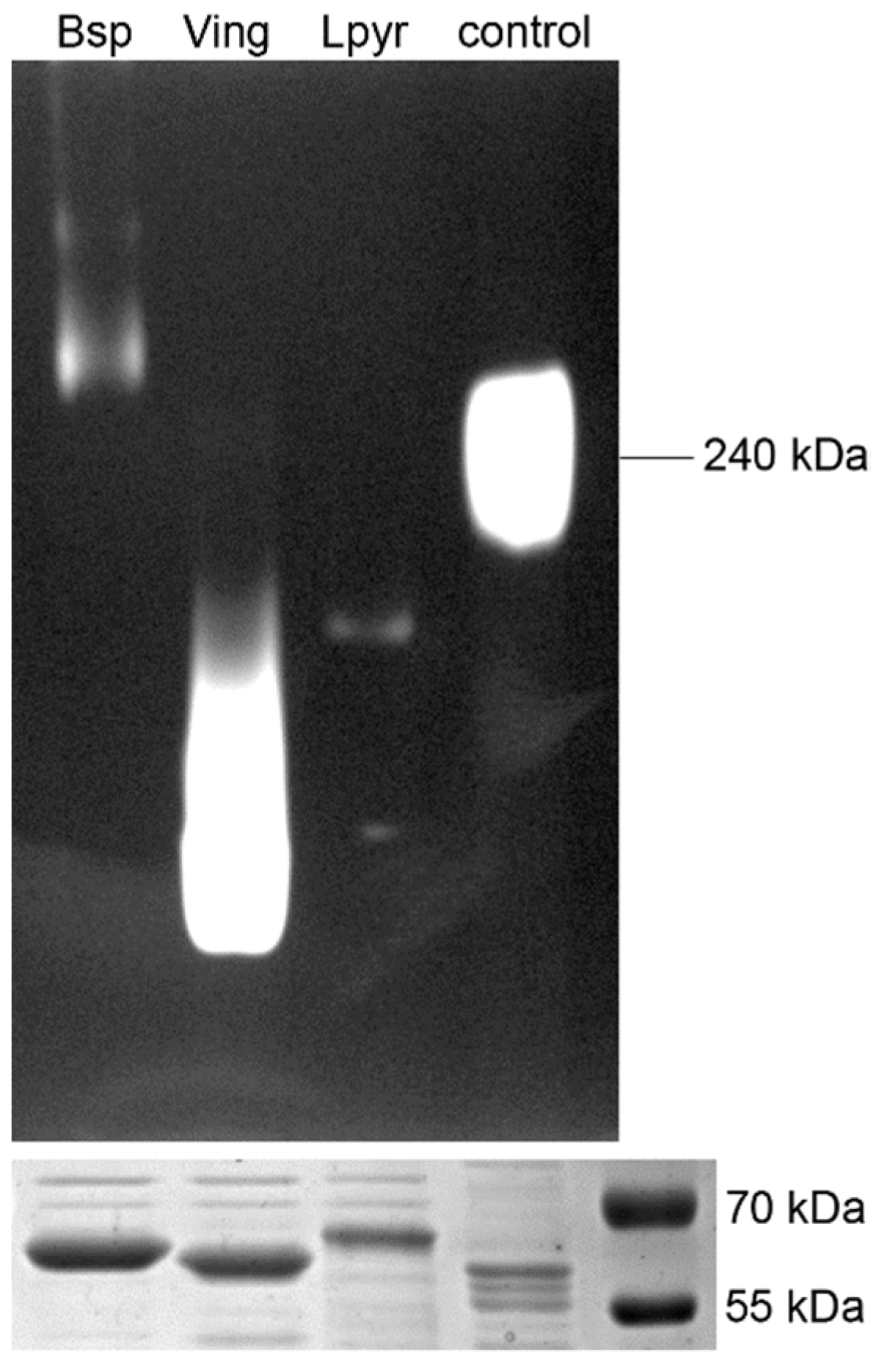
3.2. Biochemical Characterization of Trypanosomatid Catalases
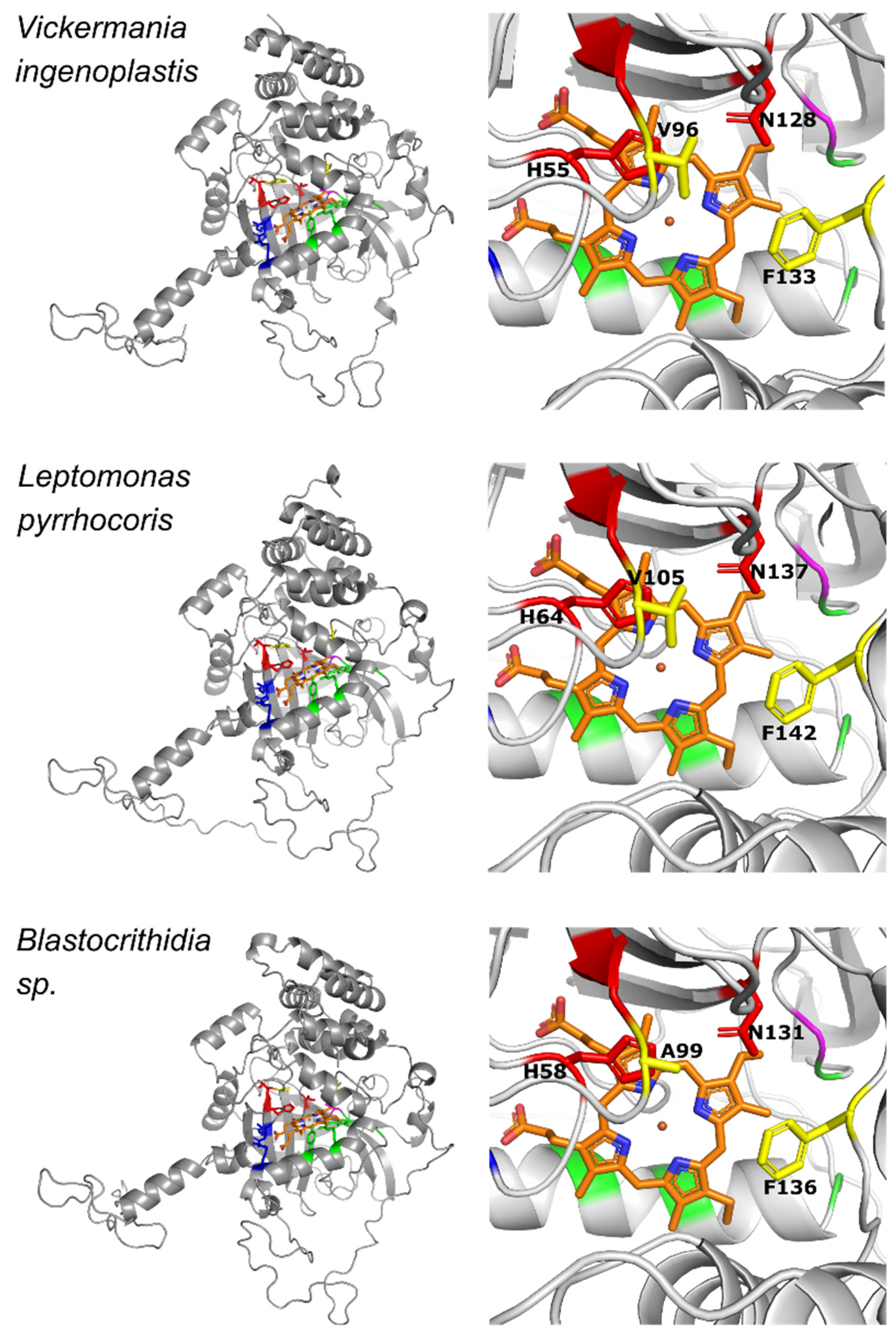
3.3. Structural Insight into Trypanosomatid Catalases
4. Discussion
5. Conclusions
Supplementary Materials
Author Contributions
Funding
Institutional Review Board Statement
Informed Consent Statement
Data Availability Statement
Acknowledgments
Conflicts of Interest
References
- Zámocký, M.; Furtmüller, P.G.; Obinger, C. Evolution of catalases from bacteria to humans. Antioxid. Redox Signal. 2008, 10, 1527–1548. [Google Scholar] [CrossRef]
- Zámocký, M.; Koller, F. Understanding the structure and function of catalases: Clues from molecular evolution and in vitro mutagenesis. Prog. Biophys. Mol. Biol. 1999, 72, 19–66. [Google Scholar] [CrossRef]
- Nicholls, P.; Fita, I.; Loewen, P.C. Enzymology and structure of catalases. Adv. Inorg. Chem. 2000, 51, 51–106. [Google Scholar]
- Glorieux, C.; Calderon, P.B. Catalase, a remarkable enzyme: Targeting the oldest antioxidant enzyme to find a new cancer treatment approach. Biol. Chem. 2017, 398, 1095–1108. [Google Scholar] [CrossRef]
- Alfonso-Prieto, M.; Biarnés, X.; Vidossich, P.; Rovira, C. The molecular mechanism of the catalase reaction. J. Am. Chem. Soc. 2009, 131, 11751–11761. [Google Scholar] [CrossRef]
- Sies, H.; Jones, D.P. Reactive oxygen species (ROS) as pleiotropic physiological signalling agents. Nat. Rev. Mol. Cell Biol. 2020, 21, 363–383. [Google Scholar] [CrossRef]
- Halliwell, B. Antioxidant defence mechanisms: From the beginning to the end (of the beginning). Free Radic. Res. 1999, 31, 261–272. [Google Scholar] [CrossRef]
- Loew, O. Catalase, a New Enzym of General Occurrence, with Special Reference to the Tobacco Plant; US Department of Africulture Reports; Goverment Printing Office: Washington, DC, USA, 1901; Volume 68, p. 44.
- Murthy, M.R.; Reid, T.J., 3rd; Sicignano, A.; Tanaka, N.; Rossmann, M.G. Structure of beef liver catalase. J. Mol. Biol. 1981, 152, 465–499. [Google Scholar] [CrossRef]
- Vainshtein, B.K.; Melik-Adamyan, W.R.; Barynin, V.V.; Vagin, A.A.; Grebenko, A.I. Three-dimensional structure of the enzyme catalase. Nature 1981, 293, 411–412. [Google Scholar] [CrossRef] [PubMed]
- Maté, M.J.; Zámocký, M.; Nykyri, L.M.; Herzog, C.; Alzari, P.M.; Betzel, C.; Koller, F.; Fita, I. Structure of catalase—A from Saccharomyces cerevisiae. J. Mol. Biol. 1999, 286, 135–149. [Google Scholar]
- Faguy, D.M.; Doolittle, W.F. Horizontal transfer of catalase-peroxidase genes between archaea and pathogenic bacteria. Trends Genet. 2000, 16, 196–197. [Google Scholar] [CrossRef]
- Škodová-Sveráková, I.; Záhonová, K.; Bučková, B.; Füssy, Z.; Yurchenko, V.; Lukeš, J. Catalase and ascorbate peroxidase in euglenozoan protists. Pathogens 2020, 9, 317. [Google Scholar]
- Kraeva, N.; Horáková, E.; Kostygov, A.; Kořený, L.; Butenko, A.; Yurchenko, V.; Lukeš, J. Catalase in Leishmaniinae: With me or against me? Infect. Genet. Evol. 2017, 50, 121–127. [Google Scholar] [CrossRef] [PubMed]
- Keeling, P.J.; Palmer, J.D. Horizontal gene transfer in eukaryotic evolution. Nat. Rev. Genet. 2008, 9, 605–618. [Google Scholar] [CrossRef] [PubMed]
- Husnik, F.; McCutcheon, J.P. Functional horizontal gene transfer from bacteria to eukaryotes. Nat. Rev. MicroBiol. 2018, 16, 67–79. [Google Scholar] [CrossRef]
- Thomas, C.M.; Nielsen, K.M. Mechanisms of, and barriers to, horizontal gene transfer between bacteria. Nat. Rev. MicroBiol. 2005, 3, 711–721. [Google Scholar] [CrossRef]
- Bliven, K.A.; Maurelli, A.T. Evolution of bacterial pathogens within the human host. MicroBiol. Spectr. 2016, 4, 4–11. [Google Scholar] [CrossRef]
- Emamalipour, M.; Seidi, K.; Zununi Vahed, S.; Jahanban-Esfahlan, A.; Jaymand, M.; Majdi, H.; Amoozgar, Z.; Chitkushev, L.T.; Javaheri, T.; Jahanban-Esfahlan, R.; et al. Horizontal gene transfer: From evolutionary flexibility to disease progression. Front. Cell Dev. Biol. 2020, 8, 229. [Google Scholar] [CrossRef]
- Husnik, F. Host-symbiont-pathogen interactions in blood-feeding parasites: Nutrition, immune cross-talk and gene exchange. Parasitology 2018, 145, 1294–1303. [Google Scholar] [CrossRef]
- Schönknecht, G.; Weber, A.P.; Lercher, M.J. Horizontal gene acquisitions by eukaryotes as drivers of adaptive evolution. Bioessays 2014, 36, 9–20. [Google Scholar] [CrossRef]
- Gilbert, C.; Cordaux, R. Viruses as vectors of horizontal transfer of genetic material in eukaryotes. Curr. Opin. Virol. 2017, 25, 16–22. [Google Scholar] [CrossRef]
- Daubin, V.; Szollosi, G.J. Horizontal gene transfer and the history of life. Cold Spring Harb. Perspect Biol. 2016, 8, a018036. [Google Scholar] [CrossRef]
- Schott, E.J.; Di Lella, S.; Bachvaroff, T.R.; Amzel, L.M.; Vasta, G.R. Lacking catalase, a protistan parasite draws on its photosynthetic ancestry to complete an antioxidant repertoire with ascorbate peroxidase. BMC Evol. Biol. 2019, 19, 146. [Google Scholar] [CrossRef]
- Butenko, A.; Hammond, M.; Field, M.C.; Ginger, M.L.; Yurchenko, V.; Lukeš, J. Reductionist pathways for parasitism in euglenozoans? Expanded datasets provide new insights. Trends Parasitol. 2021, 37, 100–116. [Google Scholar]
- Lukeš, J.; Butenko, A.; Hashimi, H.; Maslov, D.A.; Votýpka, J.; Yurchenko, V. Trypanosomatids are much more than just trypanosomes: Clues from the expanded family tree. Trends Parasitol. 2018, 34, 466–480. [Google Scholar] [CrossRef]
- Maslov, D.A.; Opperdoes, F.R.; Kostygov, A.Y.; Hashimi, H.; Lukeš, J.; Yurchenko, V. Recent advances in trypanosomatid research: Genome organization, expression, metabolism, taxonomy and evolution. Parasitology 2019, 146, 1–27. [Google Scholar] [CrossRef] [PubMed]
- Kostygov, A.Y.; Karnkowska, A.; Votýpka, J.; Tashyreva, D.; Maciszewski, K.; Yurchenko, V.; Lukeš, J. Euglenozoa: Taxonomy, diversity and ecology, symbioses and viruses. Open Biol. 2021, 11, 200407. [Google Scholar] [CrossRef]
- Bianchi, C.; Kostygov, A.Y.; Kraeva, N.; Záhonová, K.; Horáková, E.; Sobotka, R.; Lukeš, J.; Yurchenko, V. An enigmatic catalase of Blastocrithidia. Mol. BioChem. Parasitol. 2019, 232, 111199. [Google Scholar]
- Opperdoes, F.R.; Butenko, A.; Zakharova, A.; Gerasimov, E.S.; Zimmer, S.L.; Lukeš, J.; Yurchenko, V. The remarkable metabolism of Vickermania ingenoplastis: Genomic predictions. Pathogens 2021, 10, 68. [Google Scholar] [CrossRef] [PubMed]
- Albanaz, A.T.S.; Gerasimov, E.S.; Shaw, J.J.; Sádlová, J.; Lukeš, J.; Volf, P.; Opperdoes, F.R.; Kostygov, A.Y.; Butenko, A.; Yurchenko, V. Genome analysis of Endotrypanum and Porcisia spp., closest phylogenetic relatives of Leishmania, highlights the role of amastins in shaping pathogenicity. Genes 2021, 12, 444. [Google Scholar]
- Freire, A.C.G.; Alves, C.L.; Goes, G.R.; Resende, B.C.; Moretti, N.S.; Nunes, V.S.; Aguiar, P.H.N.; Tahara, E.B.; Franco, G.R.; Macedo, A.M.; et al. Catalase expression impairs oxidative stress-mediated signalling in Trypanosoma cruzi. Parasitology 2017, 144, 1498–1510. [Google Scholar] [CrossRef]
- Sádlová, J.; Podešvová, L.; Bečvář, T.; Bianchi, C.; Gerasimov, E.S.; Saura, A.; Glanzová, K.; Leštinová, T.; Matveeva, N.S.; Chmelová, L.; et al. Catalase impairs Leishmania mexicana development and virulence. Virulence 2021, 12, 852–867. [Google Scholar]
- Horáková, E.; Faktorová, D.; Kraeva, N.; Kaur, B.; Van Den Abbeele, J.; Yurchenko, V.; Lukeš, J. Catalase compromises the development of the insect and mammalian stages of Trypanosoma brucei. FEBS J. 2020, 287, 964–977. [Google Scholar]
- Votýpka, J.; Klepetková, H.; Yurchenko, V.Y.; Horák, A.; Lukeš, J.; Maslov, D.A. Cosmopolitan distribution of a trypanosomatid Leptomonas pyrrhocoris. Protist 2012, 163, 616–631. [Google Scholar]
- Kostygov, A.; Frolov, A.O.; Malysheva, M.N.; Ganyukova, A.I.; Chistyakova, L.V.; Tashyreva, D.; Tesařová, M.; Spodareva, V.V.; Režnarová, J.; Macedo, D.H.; et al. Vickermania gen. nov., trypanosomatids that use two joined flagella to resist midgut peristaltic flow within the fly host. BMC Biol. 2020, 18, 187. [Google Scholar]
- Lukeš, J.; Tesařová, M.; Yurchenko, V.; Votýpka, J. Characterization of a new cosmopolitan genus of trypanosomatid parasites, Obscuromonas gen. nov. (Blastocrithidiinae subfam. nov.). Eur. J. Protistol. 2021, 79, 125778. [Google Scholar] [CrossRef] [PubMed]
- Yurchenko, V.; Lukeš, J.; Jirků, M.; Maslov, D.A. Selective recovery of the cultivation-prone components from mixed trypanosomatid infections: A case of several novel species isolated from Neotropical Heteroptera. Int. J. Syst. Evol. MicroBiol. 2009, 59, 893–909. [Google Scholar] [CrossRef]
- Sayers, E.W.; Agarwala, R.; Bolton, E.E.; Brister, J.R.; Canese, K.; Clark, K.; Connor, R.; Fiorini, N.; Funk, K.; Hefferon, T.; et al. Database resources of the National Center for Biotechnology Information. Nucleic Acids Res. 2019, 47, D23–D28. [Google Scholar] [CrossRef]
- Katoh, K.; Standley, D.M. MAFFT multiple sequence alignment software version 7: Improvements in performance and usability. Mol. Biol. Evol. 2013, 30, 772–780. [Google Scholar] [CrossRef] [PubMed]
- Matson, F.A. Seqmagick. 2021. Available online: https://fhcrc.github.io/seqmagick/ (accessed on 1 November 2021).
- Price, M.N.; Dehal, P.S.; Arkin, A.P. FastTree 2—Approximately maximum-likelihood trees for large alignments. PLoS ONE 2010, 5, e9490. [Google Scholar] [CrossRef]
- Nguyen, L.T.; Schmidt, H.A.; von Haeseler, A.; Minh, B.Q. IQ-TREE: A fast and effective stochastic algorithm for estimating maximum-likelihood phylogenies. Mol. Biol. Evol. 2015, 32, 268–274. [Google Scholar] [CrossRef] [PubMed]
- Ronquist, F.; Teslenko, M.; van der Mark, P.; Ayres, D.L.; Darling, A.; Hohna, S.; Larget, B.; Liu, L.; Suchard, M.A.; Huelsenbeck, J.P. MrBayes 3.2: Efficient Bayesian phylogenetic inference and model choice across a large model space. Syst. Biol. 2012, 61, 539–542. [Google Scholar] [PubMed]
- Kalyaanamoorthy, S.; Minh, B.Q.; Wong, T.K.F.; von Haeseler, A.; Jermiin, L.S. ModelFinder: Fast model selection for accurate phylogenetic estimates. Nat. Methods 2017, 14, 587–589. [Google Scholar] [CrossRef] [PubMed]
- Yurchenko, V.; Butenko, A.; Kostygov, A.Y. Genomics of Trypanosomatidae: Where we stand and what needs to be done? Pathogens 2021, 10, 1124. [Google Scholar] [CrossRef]
- Marchler-Bauer, A.; Derbyshire, M.K.; Gonzales, N.R.; Lu, S.; Chitsaz, F.; Geer, L.Y.; Geer, R.C.; He, J.; Gwadz, M.; Hurwitz, D.I.; et al. CDD: NCBI’s conserved domain database. Nucleic Acids Res. 2015, 43, D222–D226. [Google Scholar] [CrossRef]
- Lu, S.; Wang, J.; Chitsaz, F.; Derbyshire, M.K.; Geer, R.C.; Gonzales, N.R.; Gwadz, M.; Hurwitz, D.I.; Marchler, G.H.; Song, J.S.; et al. CDD/SPARCLE: The conserved domain database in 2020. Nucleic Acids Res. 2020, 48, D265–D268. [Google Scholar] [CrossRef]
- Eddy, S.R. Accelerated profile HMM searches. PLoS Comput. Biol. 2011, 7, e1002195. [Google Scholar] [CrossRef]
- Sievers, F.; Wilm, A.; Dineen, D.; Gibson, T.J.; Karplus, K.; Li, W.; Lopez, R.; McWilliam, H.; Remmert, M.; Soding, J.; et al. Fast, scalable generation of high-quality protein multiple sequence alignments using Clustal Omega. Mol. Syst. Biol. 2011, 7, 539. [Google Scholar] [CrossRef]
- Valverde, S. DisplayR: Easy and Quick Data Exploration. 2021. Available online: http://www.displayr.com (accessed on 1 November 2021).
- Valverde, S.; Záhonová, K.; Kostygov, A.; Ševčíková, T.; Yurchenko, V.; Eliáš, M. An unprecedented non-canonical nuclear genetic code with all three termination codons reassigned as sense codons. Curr. Biol. 2016, 26, 2364–2369. [Google Scholar]
- Woodbury, W.; Spencer, A.K.; Stahman, M.A. An improved procedure using ferricyanide for detecting catalase isozymes. Anal. BioChem. 1971, 44, 301–305. [Google Scholar] [CrossRef]
- Noble, R.W.; Gibson, Q.H. The reaction of ferrous horseradish peroxidase with hydrogen peroxide. J. Biol. Chem. 1970, 245, 2409–2413. [Google Scholar] [CrossRef]
- Leatherbarrow, R.J. Using linear and non-linear regression to fit biochemical data. Trends BioChem. Sci. 1990, 15, 455–458. [Google Scholar] [CrossRef]
- Switala, J.; Loewen, P.C. Diversity of properties among catalases. Arch. BioChem. Biophys. 2002, 401, 145–154. [Google Scholar] [CrossRef]
- Jumper, J.; Evans, R.; Pritzel, A.; Green, T.; Figurnov, M.; Ronneberger, O.; Tunyasuvunakool, K.; Bates, R.; Zidek, A.; Potapenko, A.; et al. Highly accurate protein structure prediction with AlphaFold. Nature 2021, 596, 583–589. [Google Scholar] [CrossRef] [PubMed]
- Mirdita, M.; Ovchinnikov, S.; Steinegger, M. ColabFold—Making protein folding accessible to all. BioRxiv 2021. [Google Scholar] [CrossRef]
- Wheeler, R.J. A resource for improved predictions of Trypanosoma and Leishmania protein three-dimensional structure. PLoS ONE 2021, 16, e0259871. [Google Scholar] [CrossRef]
- DeLano, W.L. The PyMOL Molecular Graphics System. 2021. Available online: http://pymol.sourceforge.net/ (accessed on 1 November 2021).
- Mishra, S.; Imlay, J. Why do bacteria use so many enzymes to scavenge hydrogen peroxide? Arch. BioChem. Biophys. 2012, 525, 145–160. [Google Scholar] [CrossRef]
- Putnam, C.D.; Arvai, A.S.; Bourne, Y.; Tainer, J.A. Active and inhibited human catalase structures: Ligand and NADPH binding and catalytic mechanism. J. Mol. Biol. 2000, 296, 295–309. [Google Scholar] [CrossRef]
- Ivens, A.C.; Peacock, C.S.; Worthey, E.A.; Murphy, L.; Aggarwal, G.; Berriman, M.; Sisk, E.; Rajandream, M.A.; Adlem, E.; Aert, R.; et al. The genome of the kinetoplastid parasite, Leishmania major. Science 2005, 309, 436–442. [Google Scholar] [CrossRef] [PubMed]
- Beverley, S.M. Gene amplification in Leishmania. Annu. Rev. MicroBiol. 1991, 45, 417–444. [Google Scholar] [CrossRef] [PubMed][Green Version]
- Vera, A.; Gonzalez-Montalban, N.; Aris, A.; Villaverde, A. The conformational quality of insoluble recombinant proteins is enhanced at low growth temperatures. Biotechnol. Bioeng 2007, 96, 1101–1106. [Google Scholar] [CrossRef]
- Al-Mustafa, J.; Sykora, M.; Kincaid, J.R. Resonance Raman investigation of cyanide ligated beef liver and Aspergillus niger catalases. J. Biol. Chem. 1995, 270, 10449–10460. [Google Scholar] [CrossRef]
- Jha, V.; Chelikani, P.; Carpena, X.; Fita, I.; Loewen, P.C. Influence of main channel structure on H2O2 access to the heme cavity of catalase KatE of Escherichia coli. Arch. BioChem. Biophys. 2012, 526, 54–59. [Google Scholar] [CrossRef] [PubMed]
- Fita, I.; Rossmann, M.G. The active center of catalase. J. Mol. Biol. 1985, 185, 21–37. [Google Scholar] [CrossRef]
- Kalko, S.G.; Gelpi, J.L.; Fita, I.; Orozco, M. Theoretical study of the mechanisms of substrate recognition by catalase. J. Am. Chem. Soc. 2001, 123, 9665–9672. [Google Scholar] [CrossRef] [PubMed]
- Chelikani, P.; Fita, I.; Loewen, P.C. Diversity of structures and properties among catalases. Cell Mol. Life Sci. 2004, 61, 192–208. [Google Scholar] [CrossRef] [PubMed]
- Chelikani, P.; Donald, L.J.; Duckworth, H.W.; Loewen, P.C. Hydroperoxidase II of Escherichia coli exhibits enhanced resistance to proteolytic cleavage compared to other catalases. Biochemistry 2003, 42, 5729–5735. [Google Scholar] [CrossRef]
- Chelikani, P.; Carpena, X.; Fita, I.; Loewen, P.C. An electrical potential in the access channel of catalases enhances catalysis. J. Biol. Chem. 2003, 278, 31290–31296. [Google Scholar] [CrossRef] [PubMed]
- Frolov, A.O.; Kostygov, A.Y.; Yurchenko, V. Development of monoxenous trypanosomatids and phytomonads in insects. Trends Parasitol. 2021, 37, 538–551. [Google Scholar] [CrossRef]
- Iancu, L.; Angelescu, I.R.; Paun, V.I.; Henríquez-Castillo, C.; Lavin, P.; Purcarea, C. Microbiome pattern of Lucilia sericata (Meigen) (Diptera: Calliphoridae) and feeding substrate in the presence of the foodborne pathogen Salmonella enterica. Sci. Rep. 2021, 11, 15296. [Google Scholar] [CrossRef]
- Bai, S.; Yao, Z.; Raza, M.F.; Cai, Z.; Zhang, H. Regulatory mechanisms of microbial homeostasis in insect gut. Insect Sci. 2021, 28, 286–301. [Google Scholar] [CrossRef] [PubMed]
- Fredensborg, B.L.; Fossdal, I.K.I.; Johannesen, T.B.; Stensvold, C.R.; Nielsen, H.V.; Kapel, C.M.O. Parasites modulate the gut-microbiome in insects: A proof-of-concept study. PLoS ONE 2020, 15, e0227561. [Google Scholar] [CrossRef] [PubMed]
- Opperdoes, F.R.; Butenko, A.; Flegontov, P.; Yurchenko, V.; Lukeš, J. Comparative metabolism of free-living Bodo saltans and parasitic trypanosomatids. J. Eukaryot. MicroBiol. 2016, 63, 657–678. [Google Scholar] [CrossRef] [PubMed]
- Prakash, K.; Prajapati, S.; Ahmad, A.; Jain, S.K.; Bhakuni, V. Unique oligomeric intermediates of bovine liver catalase. Protein. Sci. 2002, 11, 46–57. [Google Scholar] [CrossRef] [PubMed]
- Rafikov, R.; Kumar, S.; Aggarwal, S.; Hou, Y.; Kangath, A.; Pardo, D.; Fineman, J.R.; Black, S.M. Endothelin-1 stimulates catalase activity through the PKCdelta-mediated phosphorylation of serine 167. Free Radic. Biol. Med. 2014, 67, 255–264. [Google Scholar] [CrossRef] [PubMed]
- Johnston, M.A.; Delwiche, E.A. Isolation and characterization of the cyanide-resistant and azide-resistant catalase of Lactobacillus plantarum. J. Bacteriol. 1965, 90, 352–356. [Google Scholar] [CrossRef]
- Loewen, P.C.; Switala, J. Purification and characterization of spore-specific catalase-2 from Bacillus subtilis. BioChem. Cell Biol. 1988, 66, 707–714. [Google Scholar] [CrossRef]
- Thompson, V.S.; Schaller, K.D.; Apel, W.A. Purification and characterization of a novel thermo-alkali-stable catalase from Thermus brockianus. Biotechnol. Prog. 2003, 19, 1292–1299. [Google Scholar] [CrossRef]
- Ray, M.; Mishra, P.; Das, P.; Sabat, S.C. Expression and purification of soluble bio-active rice plant catalase-A from recombinant Escherichia coli. J. Biotechnol. 2012, 157, 12–19. [Google Scholar] [CrossRef]
- Vatsyayan, P.; Goswami, P. Acidic pH conditions induce dissociation of the haem from the protein and destabilise the catalase isolated from Aspergillus terreus. Biotechnol. Lett. 2011, 33, 347–351. [Google Scholar] [CrossRef]
- Lineweaver, H.; Burk, D. The determination of enzyme dissociation constants. J. Am. Chem. Soc. 1934, 56, 658–666. [Google Scholar] [CrossRef]

| Catalase | VMAX Calculated | VMAX Observed | KM Calculated | KM Observed |
|---|---|---|---|---|
| L. pyrrhocoris | 3077 ± 97 | 3448 | 9.40 ± 1.39 | 13.95 |
| V. ingenoplastis | 3890 ± 316 | 3922 | 8.14 ± 0.9 | 9.96 |
| Blastocrithidia sp. | 4543 ± 158 | 4036 | 22.80 ± 2.5 | 24.63 |
| Catalase | KCN | 3-AT |
|---|---|---|
| L. pyrrhocoris | 51.5 | 10.40 |
| V. ingenoplastis | 4.34 | 11.43 |
| Blastocrithidia sp. | >1200 | 15.59 |
Publisher’s Note: MDPI stays neutral with regard to jurisdictional claims in published maps and institutional affiliations. |
© 2021 by the authors. Licensee MDPI, Basel, Switzerland. This article is an open access article distributed under the terms and conditions of the Creative Commons Attribution (CC BY) license (https://creativecommons.org/licenses/by/4.0/).
Share and Cite
Chmelová, Ľ.; Bianchi, C.; Albanaz, A.T.S.; Režnarová, J.; Wheeler, R.; Kostygov, A.Y.; Kraeva, N.; Yurchenko, V. Comparative Analysis of Three Trypanosomatid Catalases of Different Origin. Antioxidants 2022, 11, 46. https://doi.org/10.3390/antiox11010046
Chmelová Ľ, Bianchi C, Albanaz ATS, Režnarová J, Wheeler R, Kostygov AY, Kraeva N, Yurchenko V. Comparative Analysis of Three Trypanosomatid Catalases of Different Origin. Antioxidants. 2022; 11(1):46. https://doi.org/10.3390/antiox11010046
Chicago/Turabian StyleChmelová, Ľubomíra, Claretta Bianchi, Amanda T. S. Albanaz, Jana Režnarová, Richard Wheeler, Alexei Yu. Kostygov, Natalya Kraeva, and Vyacheslav Yurchenko. 2022. "Comparative Analysis of Three Trypanosomatid Catalases of Different Origin" Antioxidants 11, no. 1: 46. https://doi.org/10.3390/antiox11010046
APA StyleChmelová, Ľ., Bianchi, C., Albanaz, A. T. S., Režnarová, J., Wheeler, R., Kostygov, A. Y., Kraeva, N., & Yurchenko, V. (2022). Comparative Analysis of Three Trypanosomatid Catalases of Different Origin. Antioxidants, 11(1), 46. https://doi.org/10.3390/antiox11010046

