Article

Functionalization of Betulinic Acid with Polyphenolic Fragments for the Development of New Amphiphilic Antioxidants


by
Joana L. C. Sousa
1,2,*,
Cristiana Gonçalves
1,
Ricardo M. Ferreira
1,
Susana M. Cardoso
1,
Carmen S. R. Freire
2,
Armando J. D. Silvestre
2 and
Artur M. S. Silva
1,*
1
LAQV-REQUIMTE, Department of Chemistry, University of Aveiro, 3810-193 Aveiro, Portugal
2
Department of Chemistry, CICECO–Aveiro Institute of Materials, University of Aveiro, 3810-193 Aveiro, Portugal
*
Authors to whom correspondence should be addressed.
Antioxidants 2021, 10(2), 148; https://doi.org/10.3390/antiox10020148

Submission received: 6 December 2020 / Revised: 11 January 2021 / Accepted: 15 January 2021 / Published: 20 January 2021
(This article belongs to the Section Natural and Synthetic Antioxidants)

Abstract

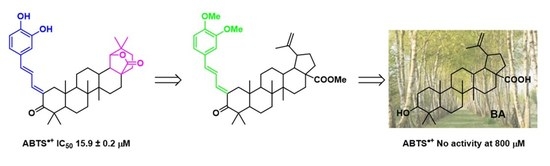
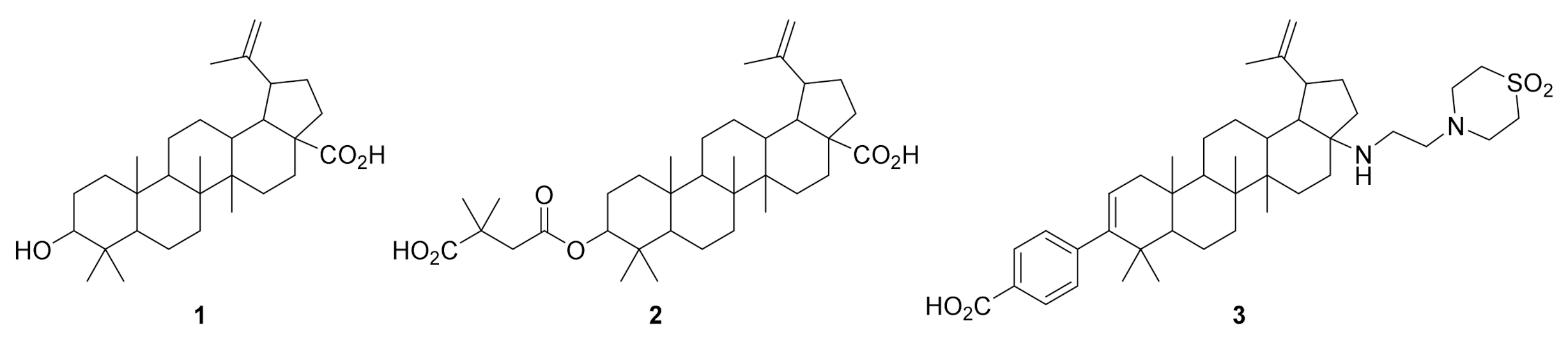
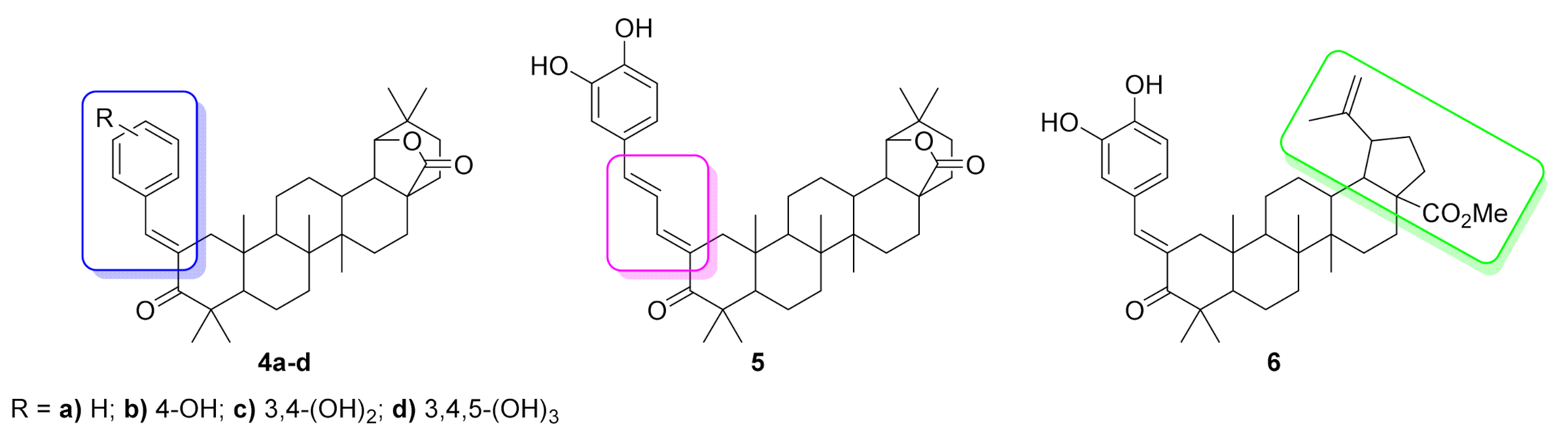
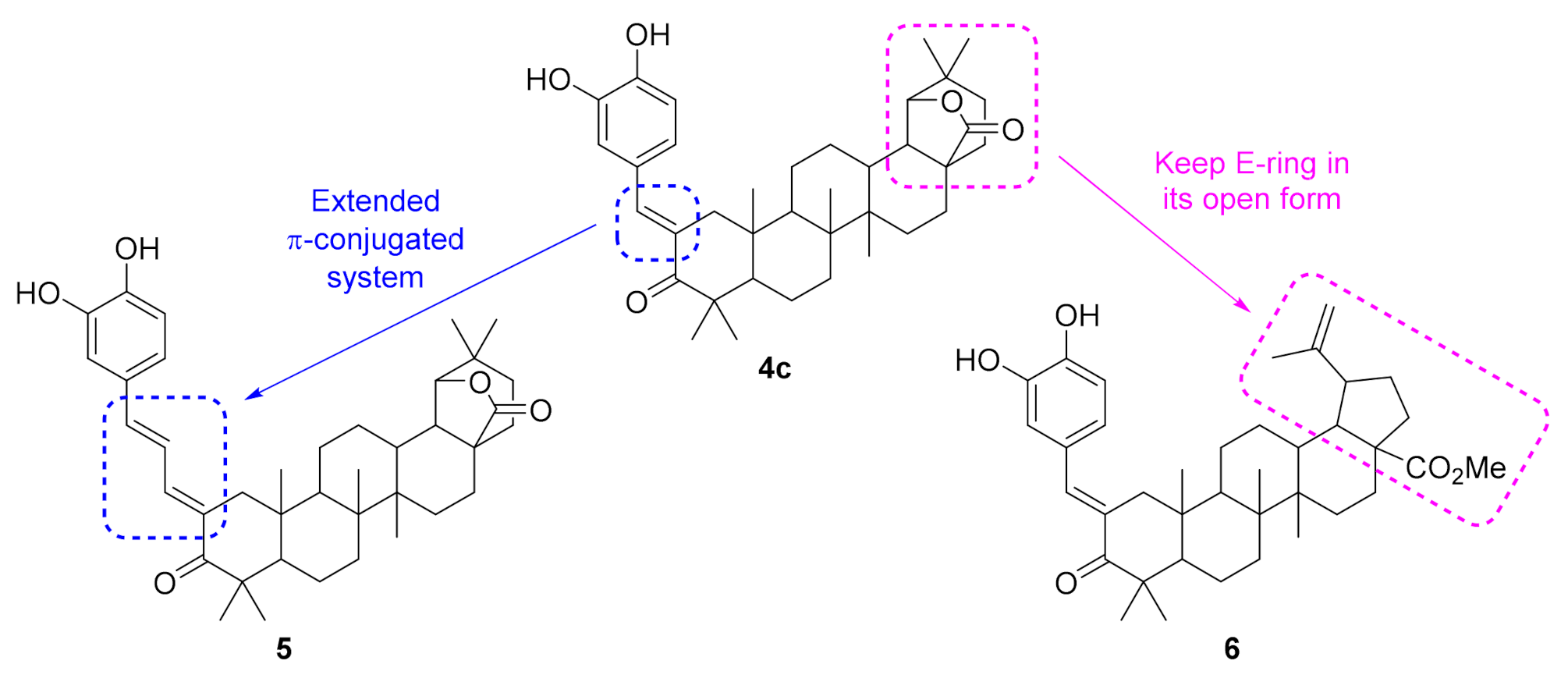
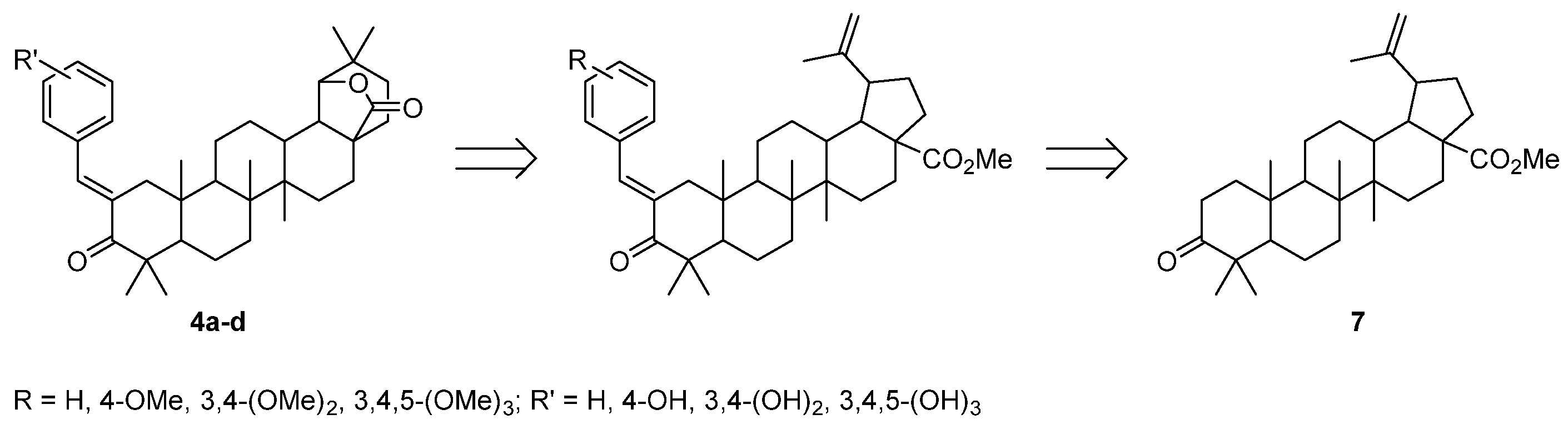
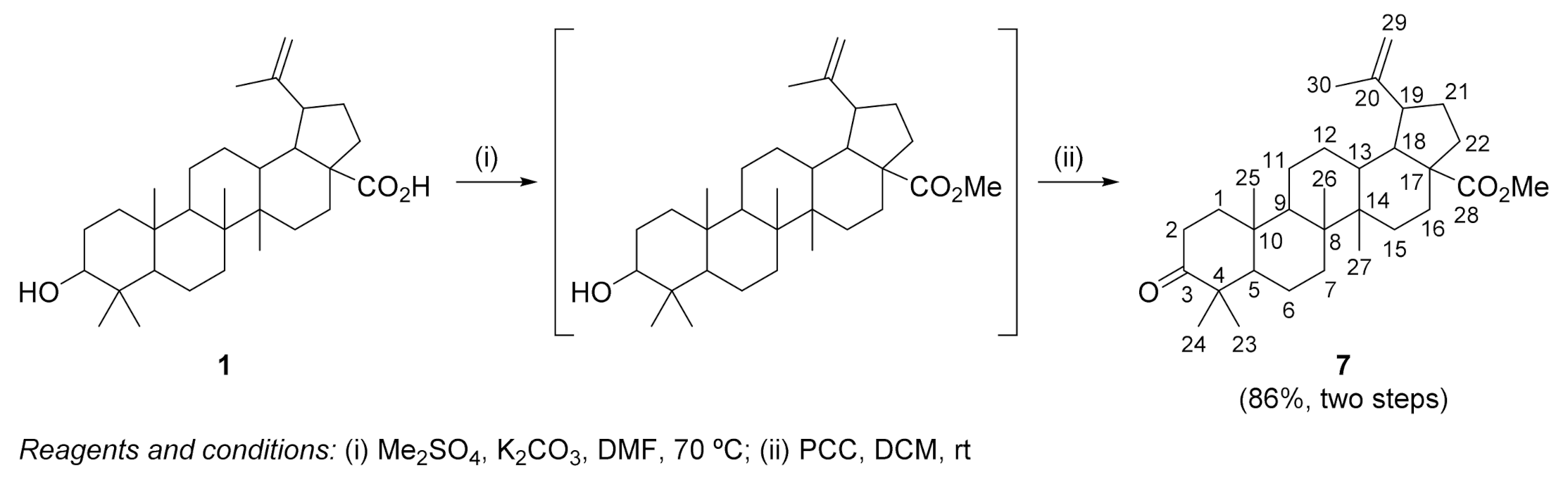
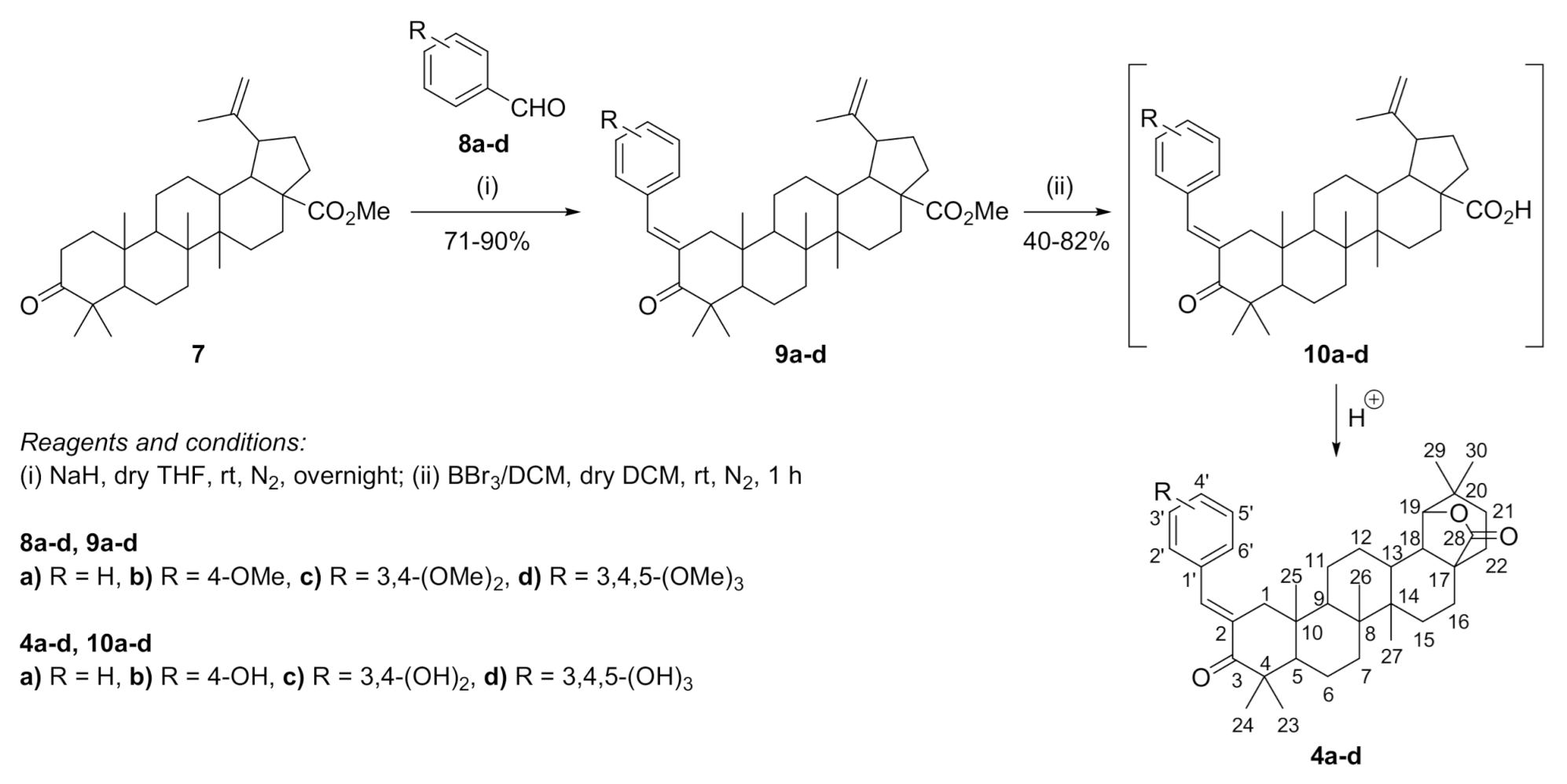
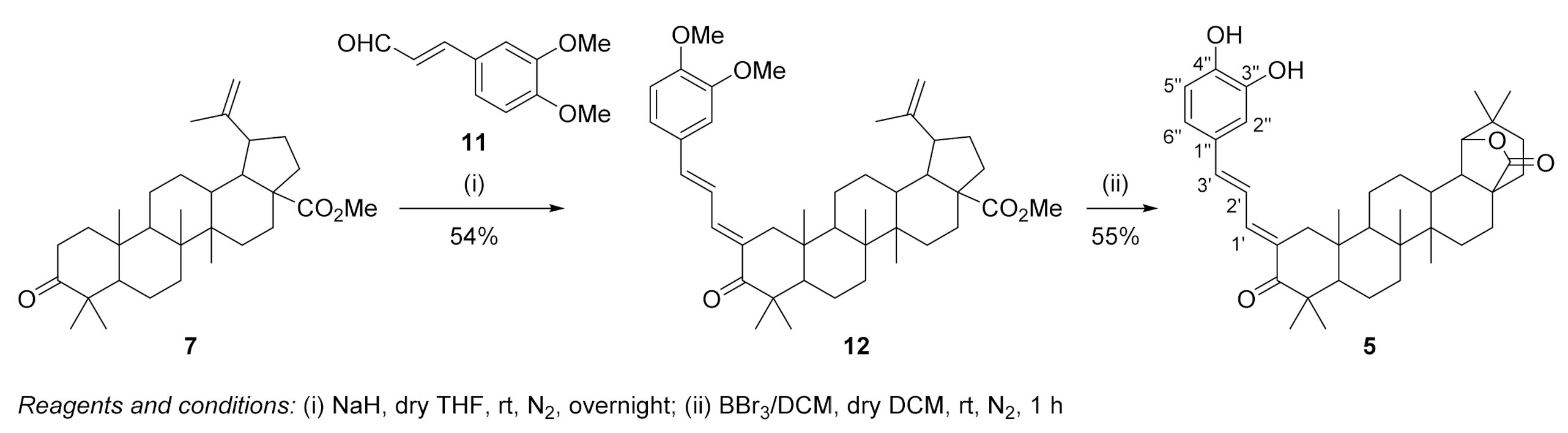
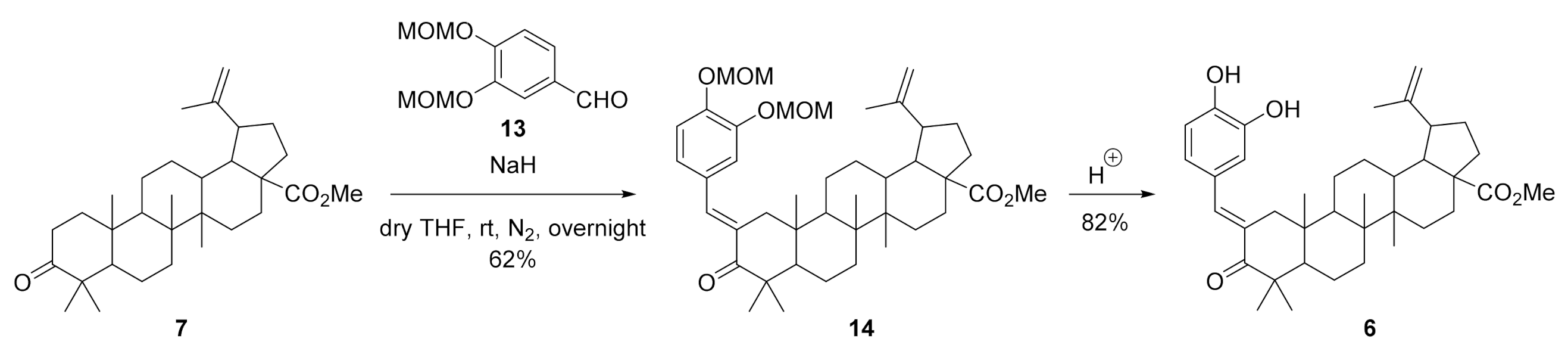
The present work aimed at the valorization of biomass derived compounds by their transformation into new added-value compounds with enhanced antioxidant properties. In this context, betulinic acid (BA) was decorated with polyphenolic fragments, and polyhydroxylated (E)-2-benzylidene-19,28-epoxyoleanane-3,28-diones 4ad were obtained. For that, the synthetic strategy relied on base-promoted aldol condensation reactions of methyl betulonate, which was previously prepared from natural BA, with appropriate benzaldehydes, followed by cleavage of the methyl protecting groups with BBr3. It is noteworthy that the HBr release during the work-up of the cleavage reactions led to the rearrangement of the lupane-type skeleton of the expected betulonic acid derivatives into oleanane-type compounds 4ad. The synthesized compounds 4ad were designed to have specific substitution patterns at C-2 of the triterpene scaffold, allowing the establishment of a structure-activity relationship. The radical scavenging ability of 4ad was evaluated using the 2,2-diphenyl-1-picrylhydrazyl radical (DPPH) and 2,2′-azino-bis(3-ethylbenzothiazoline-6-sulfonic acid radical cation (ABTS•+) scavenging assays. In particular, derivative 4c, bearing a catechol unit, revealed to be the most efficient scavenger against both free radicals DPPH and ABTS•+. Subsequently, we designed two analogues of the hit derivative 4c in order to achieve more potent antioxidant agents: (i) the first analogue carries an additional unsaturation in its lateral chain at C-2 (analogue 5) and (ii) in the second analogue, E-ring was kept in its open form (analogue 6). It was observed that the presence of an extended π-conjugated system at C-2 contributed to an increased scavenging effect, since analogue 5 was more active than 6, α-tocopherol, and 4c in the ABTS•+ assay.
Keywords: betulinic acid; oleanane-type compounds; polyhydroxylated compounds; amphiphilic antioxidants; radical scavenging activity; antioxidant activity betulinic acid; oleanane-type compounds; polyhydroxylated compounds; amphiphilic antioxidants; radical scavenging activity; antioxidant activity
Graphical Abstract