


Phenolic Analysis and In Vitro Biological Activity of Red Wine, Pomace and Grape Seeds Oil Derived from Vitis vinifera L. cv. Montepulciano d’Abruzzo

 ,
, 

 ,
,  ,
,  , and
, and 
Abstract
:1. Introduction
2. Materials and Methods
2.1. Wine, Grape Skin, and Seeds Samples
2.2. Preparation of Extracts for Analyses
2.3. Determination of Total Phenols and Flavonoids Content
2.4. Chromatographic Analyses of Extracts
Identification of Individual Phenolic Compounds by HPLC-ESI-MS Method
2.5. HPLC-DAD Resveratrol Quantification
2.6. Determination of Fatty Acid Methyl Ester (FAME) Profile in Grape Seed Oil
2.7. Biological Assays
2.7.1. Antioxidant Assays
2.7.2. Enzyme Inhibitory Assays
2.7.3. Antimicrobial and Antifungal Activity
2.7.4. In Vitro Cell Assay
2.7.5. Lipooxygenase (5-LOX) Inhibition Assay
2.8. Statistical Analysis
3. Results and Discussion
3.1. Extraction Yields
3.2. Phytochemical Composition
3.3. Chromatographic Characterization of Phytochemicals
3.4. Trans-Resveratrol Quantification
3.5. Fatty Acid Composition
3.6. Antioxidant Properties
3.7. Enzyme Inhibition Assays
3.8. In Vitro Assay
3.8.1. Antimicrobial and Antifungal Activity Assays
3.8.2. Anti-Inflammatory Activity on LPS-Stimulated Macrophage and Lipoxygenase (5-LOX) Inhibition
4. Conclusions
Supplementary Materials
Author Contributions
Funding
Institutional Review Board Statement
Informed Consent Statement
Data Availability Statement
Acknowledgments
Conflicts of Interest
References
- Haseeb, S.; Alexander, B.; Santi, R.L.; Liprandi, A.S.; Baranchuk, A. What’s in wine? A clinician’s perspective. Trends Cardiovasc. Med. 2019, 29, 97–106. [Google Scholar] [CrossRef]
- Haseeb, S.; Alexander, B.; Baranchuk, A. Wine and cardiovascular health: Acomprehensive review. Circulation 2017, 136, 1434–1448. [Google Scholar] [CrossRef]
- Van Leeuw, R.; Kevers, C.; Pincemail, J.; Defraigne, J.O.; Dommes, J. Antioxidant capacity and phenolic composition of red wines from various grape varieties: Specificity of Pinot Noir. J. Food Compos. Anal. 2014, 36, 40–50. [Google Scholar] [CrossRef]
- dos Santos Lima, M.; de Souza Veras Silani, I.; Toaldo, I.M.; Corrêa, L.C.; Telles Biasoto, A.C. Phenolic Compounds, organic acids and antioxidant activity of grape juices produced from new Brazilian varieties planted in the Northeast Region of Brazil. Food Chem. 2014, 161, 94–103. [Google Scholar] [CrossRef] [Green Version]
- Granato, D.; de Magalhães Carrapeiro, M.; Fogliano, V.; van Ruth, S.M. Effects of geographical origin, varietal and farming system on the chemical composition and functional properties of purple grape juices: A review. Trends Food Sci. Technol. 2016, 52, 31–48. [Google Scholar] [CrossRef]
- Scola, G.; Conte, D.; Wilmsen Dalla-Santa Spada, P.; Dani, C.; Vanderlinde, R.; Funchal, C.; Salvador, M. Flavan-3-ol Compounds from Wine Wastes with in Vitro and in Vivo Antioxidant Activity. Nutrients 2010, 2, 1048–1059. [Google Scholar] [CrossRef] [PubMed] [Green Version]
- Manfra, M.; Nisco, M.D.; Bolognese, A.; Nuzzo, V.; Sofo, A.; Scopa, A.; Santi, L.; Tenore, G.C.; Novellino, E. Anthocyanin composition and extractability in berry skin and wine of Vitis vinifera L. cv. Aglianico. J. Sci. Food Agric. 2011, 91, 2749–2755. [Google Scholar] [CrossRef]
- Martin, M.E.; Grao-Cruces, E.; Millan-Linares, M.C.; Montserrat-De la Paz, S. Grape (Vitis vinifera L.) Seed Oil: A Functional Food from the Winemaking Industry. Foods 2020, 9, 1360. [Google Scholar] [CrossRef] [PubMed]
- Gambacorta, G.; Trani, A.; Fasciano, C.; Paradiso, V.M.; Faccia, M. Effects of prefermentative cold soak on polyphenols and volatiles of Aglianico, Primitivo and Nero di Troia red wines. Food Sci Nutr. 2019, 7, 483–491. [Google Scholar] [CrossRef] [Green Version]
- Clouatre, D.L.; Kandaswami, C.; Connolly, K.M. Grape seed extract. In Encyclopedia of Dietary Supplements, 2nd ed.; Coates, P.M., Betz, J.M., Blackman, M.R., Cragg, G.M., Levine, M., Moss, J., White, J.D., Eds.; Informa Healthcare: New York, NY, USA, 2010; pp. 391–401. [Google Scholar]
- Asbaghi, O.; Nazarian, B.; Reiner, Ž.; Amirani, E.; Kolahdooz, F.; Chamani, M.; Asemi, Z. The effects of grape seed extract on glycemic control, serum lipoproteins, inflammation, and body weight: A systematic review and meta-analysis of randomized controlled trials. Phytother. Res. 2020, 34, 239–253. [Google Scholar] [CrossRef]
- Katiyar, S.K. Grape seed proanthocyanidines and skin cancer prevention: Inhibition of oxidative stress and protection of immune system. Mol. Nutr. Food Res. 2008, 52, 71–76. [Google Scholar] [CrossRef] [PubMed] [Green Version]
- Phase 2 Study to Examine Grape Seed Extract as an Anti-Oligomerization Agent in Alzheimer’s Disease (AD). 2014, Hillel Grossman, Icahn School of Medicine at Mount Sinai; National Center for Complementary and Integrative Health (NCCIH). Available online: https://clinicaltrials.gov/ct2/show/NCT02033941 (accessed on 23 September 2021).
- Zhang, H.; Liu, S.; Li, L.; Liu, S.; Liu, S.; Mi, J.; Tian, G. The impact of grape seed extract treatment on blood pressure changes: A meta-analysis of 16 randomized controlled trials. Medicine 2016, 95, 4247. [Google Scholar] [CrossRef]
- Sabel, A.; Bredefeld, S.; Schlander, M.; Claus, H. Wine phenolic Compounds: Antimicrobial properties against yeasts, lactic acid and acetic acid bacteria. Beverages 2017, 3, 29. [Google Scholar] [CrossRef] [Green Version]
- Cueva, C.; Mingo, S.; Munoz-Gonzalez, I.; Bustos, I.; Requena, T.; del Campo, R.; Martín-Álvarez, P.J.; Bartolomé, B.; Moreno-Arribas, M.V. Antimicrobial activity ofwine phenolic Compounds and oenological extracts against potential respiratory pathogens. Lett. Appl. Microbiol. 2012, 54, 557–563. [Google Scholar] [CrossRef] [PubMed] [Green Version]
- Sun, Y.; Xiu, C.; Lui, W.; Yan, T.; Wang, J.; Qu, Y. Grape seed proanthocyanidin extract protects the retina against early diabetic injury by activating the Nrf2 pathway. Exp. Med. 2016, 11, 1253–1258. [Google Scholar] [CrossRef] [Green Version]
- Sagratini, G.; Maggi, F.; Caprioli, G.; Cristalli, G.; Ricciutelli, M.; Torregiani, E.; Vittori, S. Comparative study of aroma profile and phenolic content of Montepulciano monovarietal red wines from the Marches and Abruzzo regions of Italy using HS-SPME-GC-MS and HPLC-MS. J. Food Sci. 2011, 75, 322–326. [Google Scholar] [CrossRef]
- Cichelli, A.; Damiani, F.; Murmura, F.; Simonetti, M.S.; Odoardi, M.; Damiani, P. Classification of Montepulciano d’Abruzzo wine by linear discrimination analysis and artificial neural networks. Am. J. Enol. Vitic. 2000, 51, 108–114. [Google Scholar]
- Annunziata, G.; Maisto, M.; Schisano, C.; Ciampaglia, R.; Narciso, V.; Tenore, G.C.; Novellino, E. Effects of Grape Pomace Polyphenolic Extract (Taurisolo®) in Reducing TMAO Serum Levels in Humans: Preliminary Results from a Randomized, Placebo-Controlled, Cross-Over Study. Nutrients 2019, 11, 139. [Google Scholar] [CrossRef] [Green Version]
- Ghiselli, A.; Nardini, M.; Baldi, A.; Scaccini, C. Antioxidant Activity of Different Phenolic Fractions Separated from an Italian Red Wine. J. Agric. Food Chem. 1998, 46, 361–367. [Google Scholar] [CrossRef] [PubMed]
- Di Martino, M.; Ciavardelli, D.; Di Giacomo, F.; Civitarese, C.; Cichelli, A. ICP-MS analysis for the characterization of the origins of wines. Agro Food Ind. Hi Tech 2013, 24, 30–34. [Google Scholar]
- Mocan, A.; Zengin, G.; Simirgiotis, M.; Schafberg, M.; Mollica, A.; Vodnar, D.C.; Crişan, G.; Rohn, S. Functional constituents of wild and cultivated Goji (L. barbarum L.) leaves: Phytochemical characterization, biological profile, and computational studies. J. Enzym. Inhib. Med. Chem. 2017, 32, 153–168. [Google Scholar] [CrossRef] [Green Version]
- Della Valle, A.; Dimmito, M.P.; Zengin, G.; Pieretti, S.; Mollica, A.; Locatelli, M.; Cichelli, A.; Novellino, E.; Ak, G.; Yerlikaya, S.; et al. Exploring the nutraceutical potential of dried pepper Capsicum Annuum L. on Market from Altino in Abruzzo Region. Antioxidants 2020, 9, 400. [Google Scholar] [CrossRef] [PubMed]
- Stefanucci, A.; Zengin, G.; Llorent-Martinez, E.J.; Dimmito, M.P.; Della Valle, A.; Pieretti, S.; Ak, G.; Sinan, K.I.; Mollica, A. Chemical characterization, antioxidant properties and enzyme inhibition of Rutabaga root’s pulp and peel (Brassica napus L.). Arab. J. Chem. 2020, 13, 7078–7086. [Google Scholar] [CrossRef]
- Zengin, G.; Stefanucci, A.; Rodrigues, M.J.; Mollica, A.; Custodio, L.; Zakariyyah Aumeeruddy, M.; Mahomoodally, M.F. Scrophularia lucida L. as a valuable source of bioactive Compounds for pharmaceutical applications: In vitro antioxidant, anti-inflammatory, enzyme inhibitory properties, in silico studies, and HPLC profiles. J. Pharm. Biomed. Anal. 2019, 162, 225–233. [Google Scholar] [CrossRef] [PubMed]
- Cvetkovic, Z.S.; Nikolic, V.D.; Savic, I.M.; Savic-Gajic, I.M.; Nikolic, L.B. Development and validation of an RP-HPLC method for quantification of trans-resveratrol in the plant extracts. Hem. Ind. 2015, 69, 679–687. [Google Scholar] [CrossRef] [Green Version]
- Zengin, G.; Sarikurkcu, C.; Aktumsek, A.; Ceylan, R. Sideritis galatica Bornm.: A source of multifunctional agents for the management of oxidative damage, Alzheimer’s and diabetes mellitus. J. Funct. Foods 2014, 11, 538–547. [Google Scholar] [CrossRef]
- Savran, A.; Zengin, G.; Aktumsek, A.; Mocan, A.; Glamoćlija, J.; Ćirić, A.; Soković, M. Phenolic Compounds and biological effects of edible Rumex scutatus and Pseudosempervivum sempervivum: Potential sources of natural agents with health benefits. Food Funct. 2016, 7, 3252–3262. [Google Scholar] [CrossRef]
- Zengin, G.; Nithiyanantham, S.; Locatelli, M.; Ceylan, R.; Uysal, S.; Aktumsek, A.; Selvi, P.K.; Maskovic, P. Screening of in vitro antioxidant and enzyme inhibitory activities of different extracts from two uninvestigated wild plants: Centranthus longiflorus subsp. longiflorus and Cerinthe minor subsp. Auriculata. Eur. J. Int. Med. 2016, 8, 286–292. [Google Scholar] [CrossRef]
- Clinical and Laboratory Standards Institute (CLSI). Methods for Dilution Antimicrobial Susceptibility Tests for Bacteria that Grow Aerobically. Approved Standard-Ninth Edition; CLSI: Pittsburgh, PA, USA, 2012. [Google Scholar]
- Clinical and Laboratory Standards Institute (CLSI). Reference Method for Broth Dilution Antifungal Susceptibility Testing of Yeasts. Approved Standards-Second Edition, in CLSI Document M27-2A 2002; CLSI: Pittsburgh, PA, USA, 2002. [Google Scholar]
- Munoz-Bernal, Ó.A.; de la Rosa, L.A.; Rodrigo-Garcia, J.; Martinez-Ruiz, N.R.; Sáyago-Ayerdi, S.; Rodriguez, L.; Fuentes, E.; Palomo, I.; Alvarez-Parrilla, E. Phytochemical Characterization and Antiplatelet Activity of Mexican Red Wines and Their By-products. S. Afr. J. Enol. Vitic. 2021, 42, 77–90. [Google Scholar] [CrossRef]
- Palombo, E.A. Traditional Medicinal Plant Extracts and Natural Products with Activity against Oral Bacteria: Potential Application in the Prevention and Treatment of Oral Diseases. Evid. Based Complement. Alternat. Med. 2011, 2011, 680354. [Google Scholar] [CrossRef] [Green Version]
- Kelber, O.; Bauer, R.; Kubelka, W. Phytotherapy in Functional Gastrointestinal Disorders. Dig Dis. 2017, 35, 36–42. [Google Scholar] [CrossRef]
- Sun, C.; Ridderstråle, K.; Höglund, A.-S.; Larsson, L.-G.; Jansson, C. Sweet delivery-sugar translocators as ports of entry for antisense oligodeoxynucleotides in plant cells. Plant J. 2007, 52, 1192–1198. [Google Scholar] [CrossRef] [PubMed]
- He, Z.; Xia, W. Analysis of phenolic Compounds in Chinese olive (Canarium album L.) fruit by RPHPLC-DAD-ESI-MS. Food Chem. 2007, 105, 1307–1311. [Google Scholar] [CrossRef]
- Pati, S.; Crupi, P.; Benucci, I.; Antonacci, D.; Di Luccia, A.; Esti, M. HPLC-DAD-MS/MS characterization of phenolic Compounds in white wine stored without added sulfite. Food Res. Int. 2014, 66, 207–215. [Google Scholar] [CrossRef]
- Llorent-Martínez, E.J.; Spínola, V.; Castilho, P.C. Phenolic profiles of Lauraceae plant species endemic to Laurisilva forest: A chemotaxonomic survey. Ind. Crop. Prod. 2017, 107, 1–12. [Google Scholar] [CrossRef]
- Ruiz, P.; Izquierdo, P.M.; Seseña, S.; Palop, M.L. Selection of autochthonous Oenococcus oeni strains according to their oenological properties and vinification results. Int. J. Food Microbiol. 2010, 137, 230–235. [Google Scholar] [CrossRef]
- Verardo, V.; Ferioli, F.; Riciputi, Y.; Iafelice, G.; Marconi, E.; Caboni, M.F. Evaluation of lipid oxidation in spaghetti pasta enriched with long chain n-3 polyunsaturated fatty acids under different storage conditions. Food Chem. 2009, 114, 472–477. [Google Scholar] [CrossRef]
- Fraternale, A.; Brundu, S.; Magnani, M. Polarization and Repolarization of Macrophages. J. Clin. Cell Immunol. 2015, 6, 319. [Google Scholar] [CrossRef] [Green Version]
- Papetti, A.; Maietta, M.; Corana, F.; Marrubini, G.; Gazzani, G. Polyphenolic profile of green/red spotted Italian Cichorium intybus salads by RP-HPLC-PDA-ESI-MSn. J. Food Compos. Anal. 2017, 63, 189–197. [Google Scholar] [CrossRef]
- Peixoto, C.M.; Dias, M.I.; Alves, M.J.; Calhelha, R.C.; Barros, L.; Pinho, S.P.; Ferreira, I.C.F.R. Grape pomace as a source of phenolic Compounds and diverse bioactive properties. Food Chem. 2018, 253, 132–138. [Google Scholar] [CrossRef] [Green Version]
- Castaldo, L.; Narváez, A.; Izzo, L.; Graziani, G.; Gaspari, A.; Di Minno, G.; Ritieni, A. Red Wine Consumption and Cardiovascular Health. Molecules 2019, 24, 3626. [Google Scholar] [CrossRef] [Green Version]
- Khan, Z.S.; Mandal, A.; Maske, S.; Shabeer, T.A.; Gaikwad, N.; Shaikh, S.; Banerjee, K. Evaluation of fatty acid profile in seed and oil of Manjari Medika, a novel Indian grape cultivar and its comparison with Cabernet Sauvignon and Sauvignon Blanc. Sustain. Chem. Pharm. 2020, 16, 100253. [Google Scholar] [CrossRef]
- Pérez-Navarro, J.; Da Ros, A.; Masuero, D.; Izquierdo-Cañas, P.M.; Hermosín-Gutiérrez, I.; Gómez-Alonso, S.; Vrhovsek, U. UPLC-MS/MS analysis of free fatty acid composition and other lipids in skins and seeds of Vitis vinifera grape cultivars. Food Res. Int. 2019, 125, 108556. [Google Scholar] [CrossRef] [PubMed]
- Li, H.; Fu, X.; Deng, G.; David, A.; Huang, L. Extraction of oil from grape seeds (Vitis vinifera L.) using recyclable CO2-expanded ethanol. Chem. Eng. Process. Process Intensif. 2020, 157, 108147. [Google Scholar] [CrossRef]
- Kaseke, T.; Opara, U.L.; Fawole, O.A. Fatty acid composition, bioactive phytochemicals, antioxidant properties and oxidative stability of edible fruit seed oil: Effect of preharvest and processing factors. Heliyon 2020, 6, e04962. [Google Scholar] [CrossRef] [PubMed]
- Lutterodt, H.; Slavin, M.; Whent, M.; Turner, E.; Yu, L.L. Fatty acid composition, oxidative stability, antioxidant and antiproliferative properties of selected cold-pressed grape seed oils and flours. Food Chem. 2011, 128, 391–399. [Google Scholar] [CrossRef] [PubMed]
- Simirgiotis, M.J.; Benites, J.; Areche, C.; Sepúlveda, B. Antioxidant Capacities and Analysis of Phenolic Compounds in Three Endemic Nolana Species by HPLC-PDA-ESI-MS. Molecules 2015, 20, 11490–11507. [Google Scholar] [CrossRef] [PubMed] [Green Version]
- Ky, I.; Lorrain, B.; Kolbas, N.; Crozier, A.; Teissedre, P.L. Wine by-products: Phenolic characterization and antioxidant activity evaluation of grapes and grape pomaces from six di erent French grape varieties. Molecules 2014, 19, 482–506. [Google Scholar] [CrossRef] [Green Version]
- García-Falcón, M.S.; Pérez-Lamela, C.; Martínez-Carballo, E.; Simal-Gándara, J. Determination of phenolic Compounds in wines: Influence of bottle storage of young red wines on their evolution. Food Chem. 2007, 105, 248–259. [Google Scholar] [CrossRef]
- Chen, J.; Yang, J.; Ma, L.; Li, J.; Shahzad, N.; Kim, C.K. Structure-antioxidant activity relationship of methoxy, phenolic hydroxyl, and carboxylic acid groups of phenolic acids. Sci. Rep. 2020, 10, 1–9. [Google Scholar]
- Stefanucci, A.; Zengin, G.; Llorent-Martinez, E.J.; Dimmito, M.P.; Della Valle, A.; Pieretti, S.; Ak, G.; Sinan, K.I.; Mollica, A. Viscum album L. homogenizer-assisted and ultrasound-assisted extracts as potential sources of bioactive Compounds Comparative study of Viscum album L. J. Food Biochem. 2020, 44, e13377. [Google Scholar] [CrossRef]
- Luchian, C.E.; Cotea, V.V.; Vlase, L.; Toiu, A.M.; Colibaba, L.C.; Răschip, I.E.; Nadăş, G.; Gheldiu, A.M.; Tuchiluş, C.L. Antioxidant and antimicrobial effects of grape pomace extracts. Rotaru Bio Web Conf. 2019, 15, 04006. [Google Scholar] [CrossRef]
- Vergara-Salinas, J.R.; Bulnes, P.; Zúñiga, M.C.; Pérez-Jiménez, J.; Torres, J.L.; Mateos-Martín, M.L.; Agosin, E.; Pérez-Correa, J.R. Effect of pressurized hot water extraction on antioxidants from grape pomace before and after enological fermentation. J. Agric. Food Chem. 2013, 61, 6929–6936. [Google Scholar] [CrossRef]
- Gonçalves, S.; Romano, A. Inhibitory Properties of Phenolic Compounds Against Enzymes Linked with Human Diseases, Phenolic Compounds—Biological Activity, Marcos Soto-Hernandez, Mariana Palma-Tenango and Maria del Rosario Garcia-Mateos, IntechOpen. 2017. Available online: https://www.intechopen.com/chapters/53576 (accessed on 12 September 2021).
- Caruana, M.; Cauchi, R.; Vassallo, N. Putative Role of Red Wine Polyphenols against Brain Pathology in Alzheimer’s and Parkinson’s Disease. Front. Nutr. 2016, 3, 31. [Google Scholar] [CrossRef] [Green Version]
- Zengin, G.; Uysal, S.; Ceylan, R.; Aktumsek, A. Phenolic constituent, antioxidative and tyrosinase inhibitory activity of Ornithogalum narbonense L. from Turkey: A phytochemical study. Ind. Crop. Prod. 2015, 70, 1–6. [Google Scholar] [CrossRef]
- Millan-Linares, M.C.; Bermudez, B.; Martin, M.E.; Muñoz, E.; Abia, R.; Millan, F.; Montserrat-de la Paz, S. Unsaponifiable fraction isolated from grape (Vitis vinifera L.) seed oil attenuates oxidative and inflammatory responses in human primary monocytes. Food Funct. 2018, 9, 2517–2523. [Google Scholar] [CrossRef] [Green Version]
- Gomez-Cordove’s, C.; Bartolome´, B.; Vieira, W.; Virador, V.M. Effects of wine phenolics and sorghum tannins on tyrosinase activity and growth of melanoma cells. J. Agric. Food Chem. 2001, 49, 1620–1624. [Google Scholar] [CrossRef]
- Rotava, R.; Zanella, I.; Silva, L.P.D.; Manfron, M.P.; Ceron, C.S.; Alves, S.H.; Karkow, A.K.; Santos, J.P.A. Antibacterial, antioxidant and tanning activity of grape by product. Cienc. Rural 2009, 39, 941–944. [Google Scholar] [CrossRef]
- Solano, F. Melanin and Melanin-related polymers as materials with biomedical and biotechnological applications-Cuttlefish Ink and mussel foot proteins as inspired biomolecules. Int. J. Mol. Sci. 2017, 18, 1561. [Google Scholar] [CrossRef]
- De Monte, C.; Carradori, S.; Bizzarri, B.; Bolasco, A.; Caprara, F.; Mollica, A.; Rivanera, D.; Mari, E.; Zicari, A.; Akdemir, A.; et al. Anti-Candida activity and cytotoxicity of a large library of new N-substituted-1,3-thiazolidin-4-one derivatives. Eur. J. Med. Chem. 2016, 107, 82–96. [Google Scholar] [CrossRef] [PubMed]
- Boban, N.; Tonkic, M.; Budimir, D.; Modun, D.; Sutlovic, D.; Punda-Polic, V.; Boban, M. Antimicrobial effects of wine: Separating the role of polyphenols, pH, ethanol, and other wine components. J. Food Sci. 2010, 75, 322–326. [Google Scholar] [CrossRef]
- Xia, E.-Q.; Deng, G.-F.; Guo, Y.-J.; Li, H.B. Biological activities of polyphenols from grapes. Int. J. Mol. Sci. 2010, 11, 622–646. [Google Scholar] [CrossRef] [PubMed]
- Xu, Y.; Burton, S.; Kim, C.; Sismour, E. Phenolic Compounds, antioxidant, and antimicrobial properties of pomace extracts from four Virginia-grown grape varieties. Food Sci. Nutr. 2016, 4, 125–133. [Google Scholar] [CrossRef]
- WO/2013/042149. Extracts Obtained from Vitis vinifera Seeds and/or Pomace and/or Green Grapes and/or Stalks and Uses Thereof as Antifungal Agents. WO2013042149. Available online: https://patentscope.wipo.int/search/en/detail.jsf?docId=WO2013042149&recNum=7&docAn=IT2011000400&queryString=&maxRec=1056558 (accessed on 20 October 2021).
- RO135039 (A2). Association of Grape Waste Extract with Plant Extracts for Preparing Dermocosmetic Products. 2019000919. Available online: https://patentscope.wipo.int/search/en/detail.jsf?docId=RO330923063 (accessed on 20 October 2021).
- EP 3 052 077 B1. Topical Preparations Comprising Grape Seed Extract. 14850602.5. Available online: https://data.epo.org/publication-server/document?iDocId=5710657&iFormat=0.20/10/2021 (accessed on 7 October 2021).
- Calixto, J.B.; Campos, M.M.; Otuki, M.F.; Santos, A.R. Anti-Inflammatory Compounds of Plant Origin. Part II. Modulation of Pro-Inflammatory Cytokines, Chemokines and Adhesion Molecules. Planta Med. 2004, 70, 93–103. [Google Scholar]
- Rossol, M.; Heine, H.; Meusch, U.; Quandt, D.; Klein, C.; Sweet, M.J.; Hauschildt, S. LPS-induced cytokine production in human monocytes and macrophages. Crit. Rev. Immunol. 2011, 31, 379–446. [Google Scholar] [CrossRef]
- Banez, M.J.; Geluz, M.I.; Chandra, A.; Hamdan, T.; Biswas, O.S.; Bryan, N.S.; Von Schwarz, E.R. A systemic review on the antioxidant and anti-inflammatory effects of resveratrol, curcumin, and dietary nitric oxide supplementation on human cardiovascular health. Nutr. Res. 2020, 78, 11–26. [Google Scholar] [CrossRef]
- Decendit, A.; Mamani-Matsuda, M.; Aumont, V.; Waffo-Teguo, P.; Moynet, D.; Boniface, K.; Richard, E.; Krisa, S.; Rambert, J.; Mérillon, J.M.; et al. Malvidin-3-O-β glucoside, major grape anthocyanin, inhibits human macrophage-derived inflammatory mediators and decreases clinical scores in arthritic rats. Biochem. Pharmacol. 2013, 86, 1461–1467. [Google Scholar] [CrossRef]
- Kutil, Z.; Temml, V.; Maghradze, D.; Pribylova, M.; Dvorakova, M.; Schuster, D.; Vanek, T.; Landa, P. Impact of wines and wine constituents on cyclooxygenase-1, cyclooxygenase-2, and 5-lipoxygenase catalytic activity. Mediat. Inflamm. 2014, 178931. [Google Scholar] [CrossRef] [PubMed]
- Murias, M.; Handler, N.; Erker, T.; Pleban, K.; Ecker, G.; Saiko, P.; Szekeres, T.; Jäger, W. Resveratrol analogues as selective cyclooxygenase-2 inhibitors: Synthesis and structure-activity relationship. Bioorg. Med. Chem. 2004, 12, 5571–5578. [Google Scholar] [CrossRef]
- Fechtner, S.; Singh, A.; Chourasia, M.; Ahmed, S. Molecular insights into the differences in anti-inflammatory activities of green tea catechins on IL-1β signaling in rheumatoid arthritis synovial fibroblasts. Toxicol. Appl. Pharmacol. 2017, 329, 112–120. [Google Scholar] [CrossRef] [PubMed]
- Peng, G.; Dixon, D.A.; Muga, S.J.; Smith, T.J.; Wargovich, M.J. Green tea polyphenol (−)-epigallocatechin-3-gallate inhibits cyclooxygenase-2 expression in colon carcinogenesis. Mol. Carcinog. 2006, 45, 309–319. [Google Scholar] [CrossRef] [PubMed]
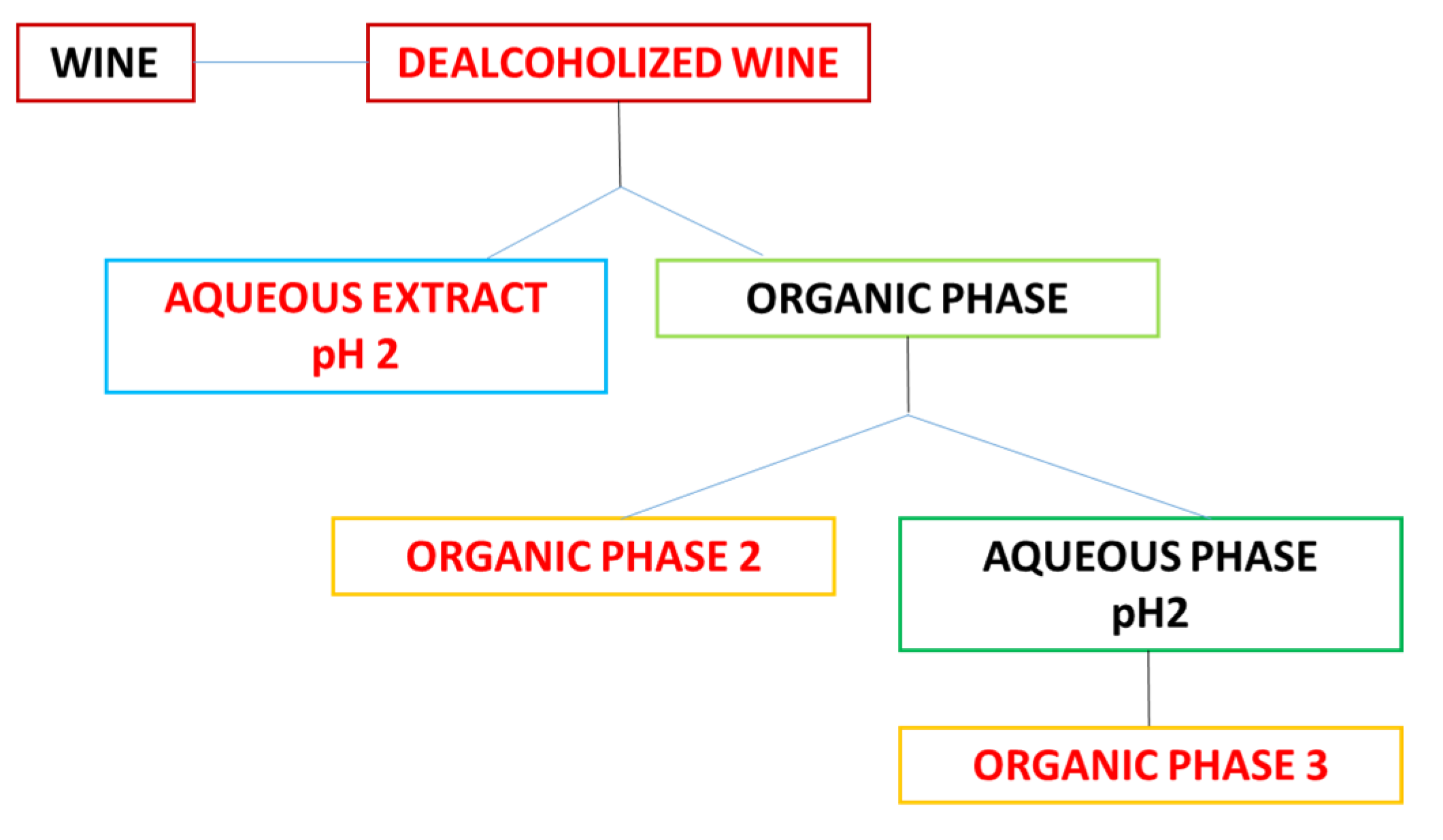
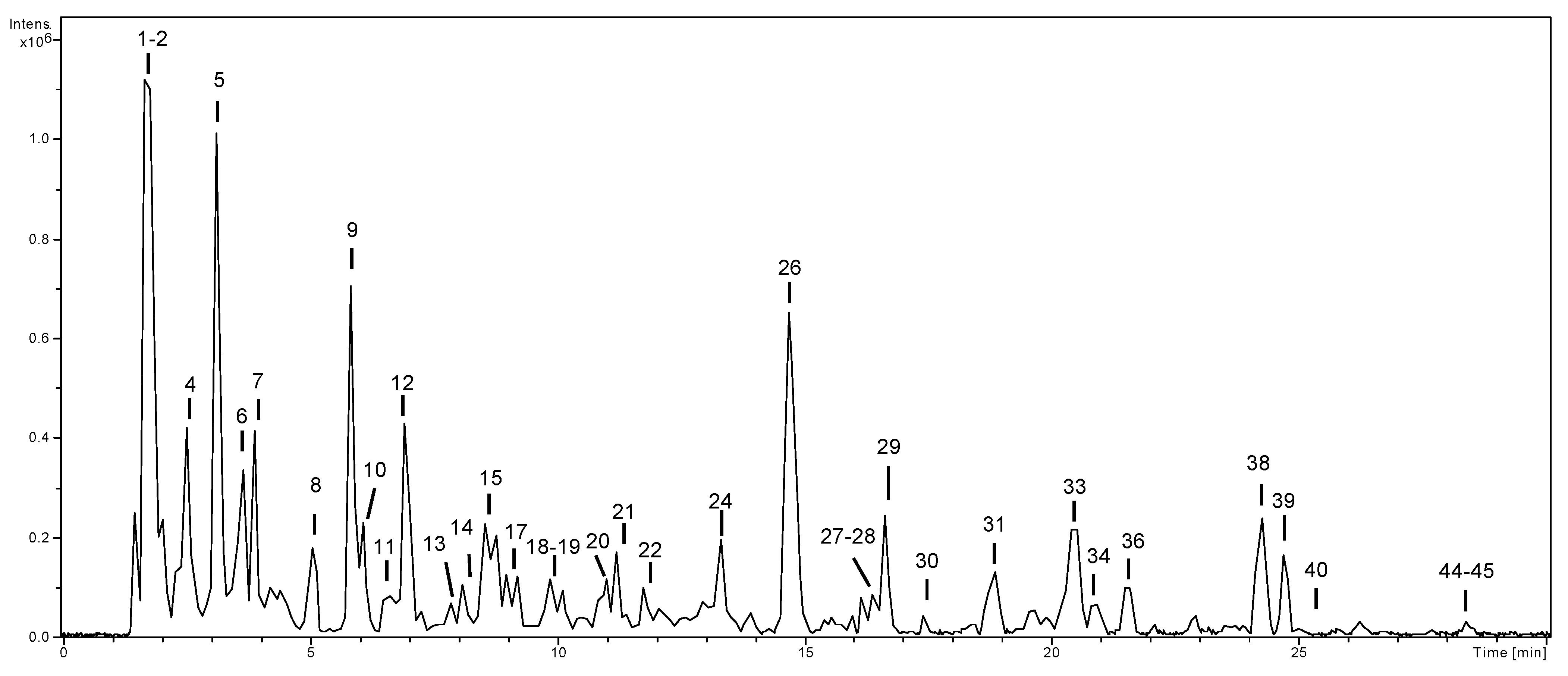
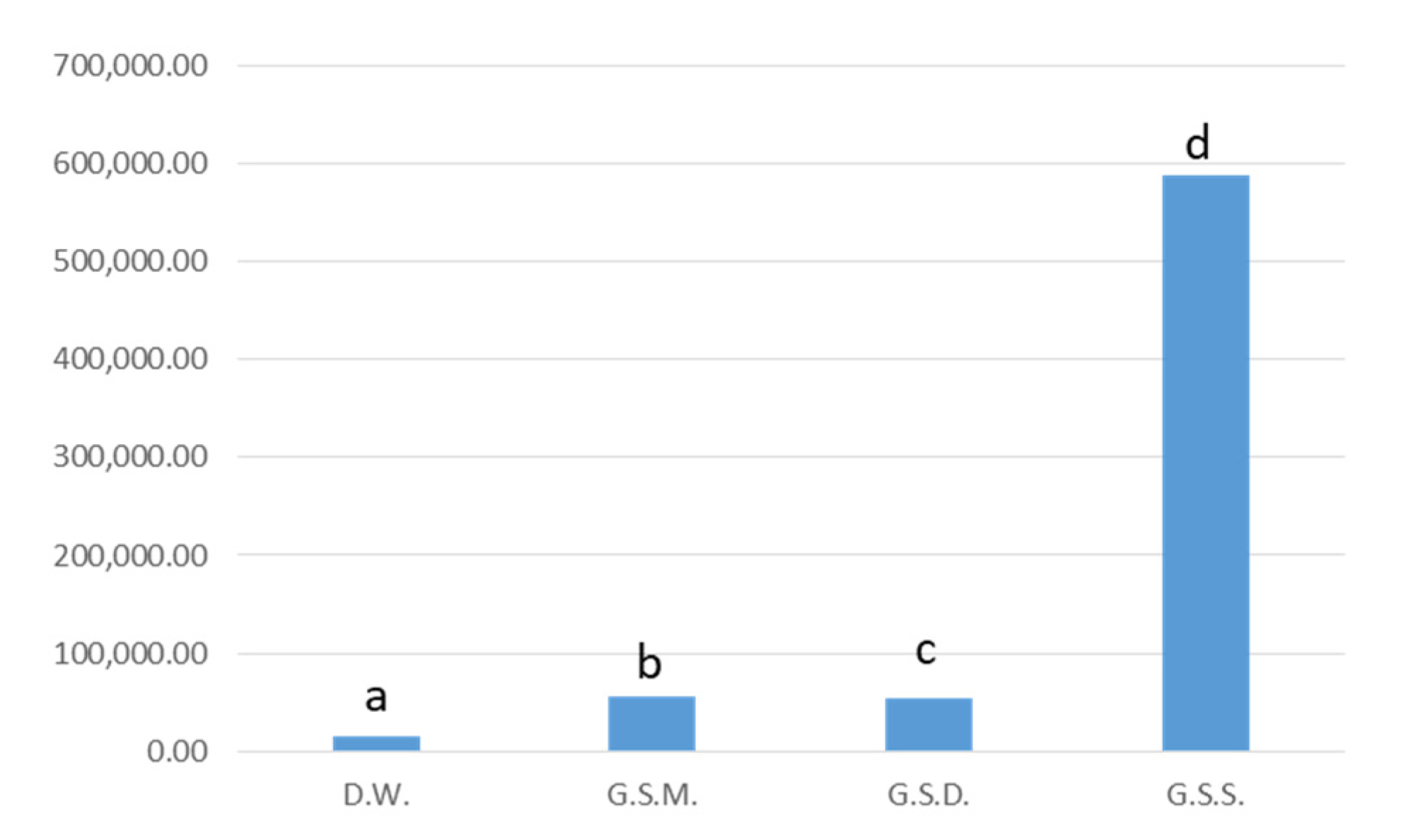

| Extracts | Extract Yield (% w/w) ± S.D. |
|---|---|
| Wine-aqueous extract | 46.9 ± 0.1 |
| Organic phase 2 | 6.5 ± 0.2 |
| Organic phase 3 | 2.5 ± 0.2 |
| Grape skin MW | 43.1 ± 0.1 |
| Grape skin decoction | 26.5 ± 0.1 |
| Grape skin soxhlet | 43.3 ± 0.1 |
| Seeds oil | 9.9 ± 0.3 |
| Samples | Total Phenolic Content (mgGAE/g) | Total Flavonoid Content (mgRE/g) |
|---|---|---|
| Dealcoholized wine | 51.86 ± 0.80 c | 2.27 ± 0.04 d |
| Wine-aqueous extract | 67.57 ± 0.16 b | 0.93 ± 0.09 e |
| Wine-organic extract 2 | 199.31 ± 7.21 a | 22.76 ± 0.63 a |
| Wine-organic extract 3 | 60.78 ± 0.52 b | 3.41 ± 0.03 c |
| Decoction | 29.88 ± 0.37 d | 6.81 ± 0.08 b |
| Decoction-MW | 27.04 ± 0.13 d | 6.86 ± 0.14 b |
| Soxhlet | 31.56 ± 0.27 d | 6.42 ± 0.05 b |
| Oil | 12.03 ± 0.07 e | 0.09 ± 0.01 f |
| Fatty Acids (Common Names) | Oil |
|---|---|
| C 14:0 (myristic acid) | 0.06 ± 0.01 |
| C 15:0 (pentadesilik acid) | 0.01 ± 0.01 |
| C 16:0 (palmitic acid) | 7.69 ± 0.02 |
| C 17:0 (margaric acid) | 0.09 ± 0.01 |
| C 18:0 (stearic acid) | 3.75 ± 0.04 |
| ΣSFA | 11.58 ± 0.07 |
| C 14:1 ω5 (myristoleic acid) | 0.01 ± 0.01 |
| C 15:1 ω5 (pentadecanoic acid) | 0.01 ± 0.01 |
| C 16:1 ω7 (palmitoleic acid) | 0.03 ± 0.01 |
| C 17:1 ω8 (margarioleic acid) | 0.08 ± 0.01 |
| C 18:1 ω9 (oleic acid) | 18.57 ± 0.01 |
| ΣMUFA | 18.70 ± 0.01 |
| C 18:2 ω6 (linoleic acid) | 69.29 ± 0.04 |
| C 18:3 ω6 (γ-linolenic acid) | 0.16 ± 0.02 |
| C 18:3 ω3 (α-linolenic acid) | 0.30 ± 0.02 |
| ΣPUFA | 69.74 ± 0.08 |
| ΣUFA | 88.43 ± 0.08 |
| ΣEFA | 69.58 ± 0.01 |
| Samples | DPPH (mg TE/g) | ABTS (mg TE/g) | CUPRAC (mg TE/g) | FRAP (mg TE/g) | Metal Chelating (mg EDTAE/g) | PPBD (mmol TE/g) |
|---|---|---|---|---|---|---|
| Dealcoholized wine | 76.28 ± 0.73 c | 136.65 ± 0.41 c | 192.73 ± 0.45 d | 134.03 ± 0.40 c | 1.25 ± 0.30 e | 1.11 ± 0.06c |
| Wine-aqueous extract | 89.90 ± 1.15 b | 115.93 ± 0.40 d | 210.44 ± 0.83 c | 173.63 ± 1.91 b | na | 1.52 ± 0.11 b |
| Wine-organic extract 2 | 417.02 ± 6.83 a | 733.41 ± 4.74 a | 1036.98 ± 14.01 a | 885.71 ± 20.02 a | na | 3.74 ± 0.19 a |
| Wine-organic extract 3 | 85.39 ± 1.93 b | 144.83 ± 1.25 b | 235.78 ± 2.64 b | 164.29 ± 0.59 b | 2.06 ± 0.10 d | 1.27 ± 0.24 bc |
| Decoction | 47.22 ± 0.10 d | 99.04 ± 0.95 e | 127.24 ± 2.50 f | 71.59 ± 0.32 d | 5.36 ± 0.16 b | 1.04 ± 0.06 c |
| Decoction-MW | 44.80 ± 0.31 d | 91.15 ± 1.03 f | 115.36 ± 0.59 f | 61.27 ± 0.17 e | 4.70 ± 0.35 c | 0.94 ± 0.01 c |
| Soxhlet | 48.37 ± 0.84 d | 101.25 ± 0.78 e | 142.71 ± 1.32 e | 78.16 ± 0.29 d | 6.12 ± 0.04 a | 1.11 ± 0.04 c |
| Oil | na | na | 37.37±0.70 g | 14.28±0.16 f | 5.54±0.32 a,b | 0.51±0.13 d |
| TPC | TFC | DPPH | ABTS | CUPRAC | FRAP | MCA | PBD | |
|---|---|---|---|---|---|---|---|---|
| TPC | 1.00 | 0.85 | 0.99 | 0.98 | 0.99 | 0.99 | −0.71 | 0.99 |
| TFC | 0.85 | 1.00 | 0.90 | 0.93 | 0.91 | 0.90 | −0.28 | 0.89 |
| DPPH | 0.99 | 0.90 | 1.00 | 1.00 | 1.00 | 1.00 | −0.64 | 0.99 |
| ABTS | 0.98 | 0.93 | 1.00 | 1.00 | 1.00 | 0.99 | −0.58 | 0.99 |
| CUPRAC | 0.99 | 0.91 | 1.00 | 1.00 | 1.00 | 1.00 | −0.61 | 0.99 |
| FRAP | 0.99 | 0.90 | 1.00 | 0.99 | 1.00 | 1.00 | −0.63 | 0.99 |
| MCA | −0.71 | −0.28 | −0.64 | −0.58 | −0.61 | −0.63 | 1.00 | −0.65 |
| PBD | 0.99 | 0.89 | 0.99 | 0.99 | 0.99 | 0.99 | −0.65 | 1.00 |
| Samples | AChE Inhibition (mgGALAE/g) | BChE Inhibition (mgGALAE/g) | Tyrosinase Inhibition (mgKAE/g) | Amylase Inhibition (mmolACAE/g) | Glucosidase Inhibition (mmolACAE/g) |
|---|---|---|---|---|---|
| Dealcoholized wine | 8.62 ± 0.01 b | 4.16 ± 0.19 b,c | 139.28 ± 0.23 b | 0.37 ± 0.01 c | 20.62 ± 0.23 a |
| Wine-aqueous extract | 8.27 ± 0.02 c | 4.66 ± 0.17 b | 7.64 ± 0.31 e | 0.09 ± 0.01 d | 19.81 ± 0.03 b |
| Wine-organic extract 2 | 8.89 ± 0.05 a | 8.11 ± 0.11 a | 151.30 ± 1.20 a | 0.77 ± 0.04 a | na |
| Wine-organic extract 3 | 8.95 ± 0.03 a | 7.71 ± 0.04 a | 137.89 ± 0.89 b | 0.76 ± 0.02 a | na |
| Decoction | 2.58 ± 0.03 d | 3.25 ± 0.45 d | 69.36 ± 0.23 c | 0.46 ± 0.02 b | na |
| Decoction-MW | 2.52 ± 0.02 d | 3.93 ± 0.22 c | 68.11 ± 0.44 c | 0.45 ± 0.01 b | na |
| Soxhlet | 2.53 ± 0.03 d | 3.16 ± 0.11 d | 68.40 ± 0.16 c | 0.46 ± 0.02 b | na |
| Oil | 0.98 ± 0.04 e | 2.29 ± 0.07 e | 24.86 ± 0.84 d | 0.35 ± 0.02 c | na |
| Staphylococcus aureus ATCC 6538 | Staphylococcus epidermidis PCM 2532 | Escherichia coli ATCC 25922 | Candida albicans ATCC 10231 | |
|---|---|---|---|---|
| Dealcoholized red wine | >1024 µg/mL | 1024 µg/mL | >1024 µg/mL | 512 µg/mL |
| Aqueous extract | >1024 µg/mL | >1024 µg/mL | >1024 µg/mL | 512 µg/mL |
| Organic extract 2 | >1024 µg/mL | 1024 µg/mL | >1024 µg/mL | 512 µg/mL |
| Organic extract 3 | >1024 µg/mL | 1024 µg/mL | >1024 µg/mL | 512 µg/mL |
| Decoction | 512 µg/mL | 512 µg/mL | 512 µg/mL | 256 µg/mL |
| Decoction-MW | 1024 µg/mL | 512 µg/mL | 1024 µg/mL | 1024 µg/mL |
| Soxhlet | >1024 µg/mL | 1024 µg/mL | 1024 µg/mL | 1024 µg/mL |
| Oil | >1024 µg/mL | 1024 µg/mL | >1024 µg/mL | 1024 µg/mL |
| Sample (µg/mL) | Cell Viability-MTT (%) (Mean ± SEM) | IL-6 Release (%) (Mean ± SEM) | TNF-α Release (%) (Mean ± SEM) | IL-1β Release (%) (Mean ± SEM) |
|---|---|---|---|---|
| Dealcoholized wine (25) | 94.0 ± 6.0 | 72.0 ± 7.2 a | 88.7 ± 5.4 | 85.3 ± 7.6 |
| Dealcoholized wine (50) | 86.5 ± 5.8 | 40.0 ± 4.3 d | 86.5 ± 6.1 | 58.5 ± 9.5 b |
| Dealcoholized wine (100) | 95.1 ± 6.5 | 26.5 ± 2.2 d | 49.8 ± 6.4 c | 35.0 ± 2.3 d |
| Wine-aqueous extract (25) | 99.6 ± 3.3 | 75.2 ± 7.1 | 89.5 ± 5.2 | 80.5 ± 7.6 |
| Wine-aqueous extract (50) | 100.0 ± 10 | 36.3 ± 5.7 d | 81.7 ± 4.7 | 43.5 ± 5.3 d |
| Wine-aqueous extract (100) | 74.9 ± 2.1 | 27.5 ± 4.6 d | 46.2 ± 4.3 d | 39.0 ± 3.1 d |
| Wine-organic extract 2 (25) | 98.3 ± 3.8 | 58.7 ± 9.3 b | 73.5 ± 10.3 | 55.1 ± 7.2 a |
| Wine-organic extract 2 (50) | 100.0 ± 12.3 | 21.3 ± 3.3 d | 49.5 ± 6.6 b | 34.8 ± 4.4 b |
| Wine-organic extract 2 (100) | 91.7 ± 4.8 | 10.7 ± 1.1 d | 29.0 ± 3.0 d | 19.0 ± 2.8 b |
| Wine-organic extract 3 (25) | 100.0 ± 6.4 | 67.7 ± 8.7 a | 81.5 ± 4.9 | 65.6 ± 8.2 a |
| Wine-organic extract 3 (50) | 100.0 ± 6.5 | 44.2 ± 6.0 c | 52.0 ± 5.4 c | 35.6 ± 4.4 d |
| Wine-organic extract 3 (100) | 93.9 ± 8.0 | 18.0 ± 2.0 d | 28.2 ± 3.7 d | 26.6 ± 3.8 d |
| Decoction (25) | 92.8 ± 2.8 | 92.3 ± 3.2 | 96.4 ± 3.6 | 91.7 ± 5.2 |
| Decoction (50) | 96.5 ± 2.4 | 90.1 ± 5.6 | 91.6 ± 6.2 | 90.8 ± 5.2 |
| Decoction (100) | 92.5 ± 3.4 | 86.2 ± 5.7 | 74.2 ± 6.8 b | 82.3 ± 6.7 |
| Decoction-MW (25) | 94.2 ± 3.4 | 95.6 ± 1.9 | 93.5 ± 3.8 | 95.7 ± 2.7 |
| Decoction-MW (50) | 91.4 ± 4.6 | 96.1 ± 1.6 | 92.3 ± 4.5 | 97.8 ± 0.9 |
| Decoction-MW (100) | 94.2 ± 2.9 | 89.9 ± 5.9 | 96.0 ± 2.6 | 80.7 ± 8.1 a |
| Soxhlet (25) | 98.3 ± 1.2 | 96.2 ± 3.5 | 96.4 ± 2.4 | 92.5 ± 3.6 |
| Soxhlet (50) | 97.4 ± 1.6 | 88.6 ± 5.2 | 85.4 ± 4.7 | 91.2 ± 4.5 |
| Soxhlet (100) | 94.2 ± 2.9 | 75.2 ± 6.4 b | 76.0 ± 4.2 b | 74.1 ± 6.7 b |
| Oil (25) | 92.2 ± 4.2 | 97.8 ± 1.9 | 98.7 ± 1.1 | 95.8 ± 2.2 |
| Oil (50) | 96.7 ± 2.1 | 96.8 ± 2.1 | 94.3 ± 3.9 | 93.1 ± 2.1 |
| Oil (100) | 94.3 ± 3.5 | 96.4 ± 2.3 | 97.7 ± 2.0 | 96.7 ± 3.7 |
| Sample (µg/mL) | Inhibition % |
|---|---|
| Dealcoholized wine (10) | 35 ± 0.7 |
| Dealcoholized wine (100) | 100 ± 1.3 |
| Wine-aqueous extract (10) | 45 ± 1.3 |
| Wine-aqueous extract (100) | 100 ± 0.6 |
| Wine-organic extract 2 (10) | 50 ± 4.4 |
| Wine-organic extract 2 (100) | 100 ± 1.3 |
| Wine-organic extract 3 (10) | 50 ± 5.0 |
| Wine-organic extract 3 (100) | 100 ± 1.7 |
| Decoction (10) | 34 ± 5.3 |
| Decoction (100) | 47 ± 6.3 |
| Decoction-MW (10) | 23 ± 2.1 |
| Decoction-MW (100) | 35 ± 4.5 |
| Soxhlet (10) | 28 ± 3.8 |
| Soxhlet (100) | 44 ± 7.5 |
| Oil (10) | 15 ± 0.7 |
| Oil (100) | 24 ± 3.2 |
Publisher’s Note: MDPI stays neutral with regard to jurisdictional claims in published maps and institutional affiliations. |
© 2021 by the authors. Licensee MDPI, Basel, Switzerland. This article is an open access article distributed under the terms and conditions of the Creative Commons Attribution (CC BY) license (https://creativecommons.org/licenses/by/4.0/).
Share and Cite
Mollica, A.; Scioli, G.; Della Valle, A.; Cichelli, A.; Novellino, E.; Bauer, M.; Kamysz, W.; Llorent-Martínez, E.J.; Fernández-de Córdova, M.L.; Castillo-López, R.; et al. Phenolic Analysis and In Vitro Biological Activity of Red Wine, Pomace and Grape Seeds Oil Derived from Vitis vinifera L. cv. Montepulciano d’Abruzzo. Antioxidants 2021, 10, 1704. https://doi.org/10.3390/antiox10111704
Mollica A, Scioli G, Della Valle A, Cichelli A, Novellino E, Bauer M, Kamysz W, Llorent-Martínez EJ, Fernández-de Córdova ML, Castillo-López R, et al. Phenolic Analysis and In Vitro Biological Activity of Red Wine, Pomace and Grape Seeds Oil Derived from Vitis vinifera L. cv. Montepulciano d’Abruzzo. Antioxidants. 2021; 10(11):1704. https://doi.org/10.3390/antiox10111704
Chicago/Turabian StyleMollica, Adriano, Giuseppe Scioli, Alice Della Valle, Angelo Cichelli, Ettore Novellino, Marta Bauer, Wojciech Kamysz, Eulogio J. Llorent-Martínez, Maria Luisa Fernández-de Córdova, R. Castillo-López, and et al. 2021. "Phenolic Analysis and In Vitro Biological Activity of Red Wine, Pomace and Grape Seeds Oil Derived from Vitis vinifera L. cv. Montepulciano d’Abruzzo" Antioxidants 10, no. 11: 1704. https://doi.org/10.3390/antiox10111704
APA StyleMollica, A., Scioli, G., Della Valle, A., Cichelli, A., Novellino, E., Bauer, M., Kamysz, W., Llorent-Martínez, E. J., Fernández-de Córdova, M. L., Castillo-López, R., Ak, G., Zengin, G., Pieretti, S., & Stefanucci, A. (2021). Phenolic Analysis and In Vitro Biological Activity of Red Wine, Pomace and Grape Seeds Oil Derived from Vitis vinifera L. cv. Montepulciano d’Abruzzo. Antioxidants, 10(11), 1704. https://doi.org/10.3390/antiox10111704

