Additive Effects of Cognitive Remediation and Physical Exercise in Patients with Schizophrenia: Cognitive Improvements

 ,
,
Highlights
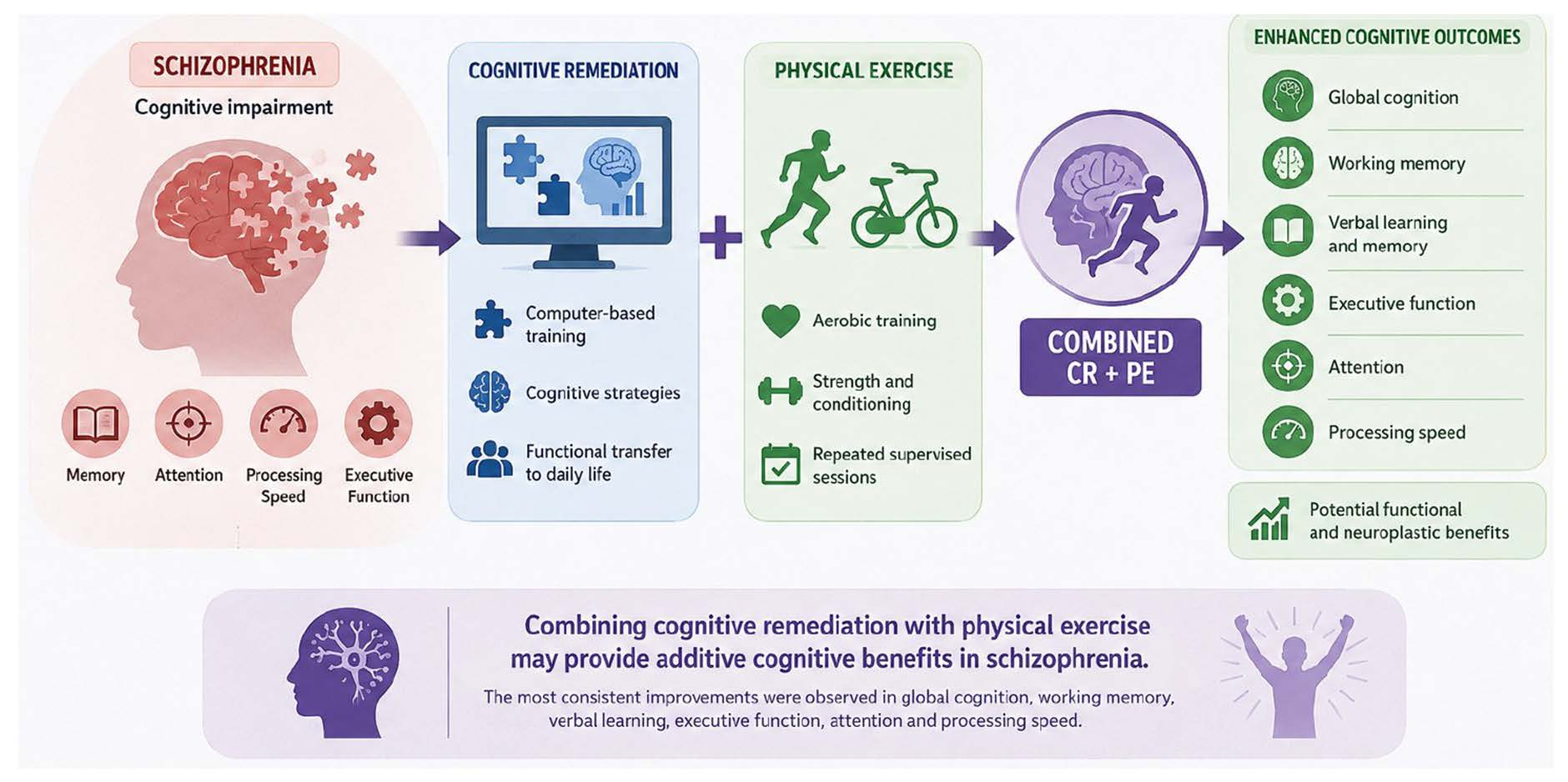
- Combining cognitive remediation and physical exercise seems to provide better cognitive results than each intervention by itself.
- This observation was found for global cognitive composite scores and some cognitive domains, such as verbal memory and executive function.
- Future guidelines could recommend combining cognitive remediation and physical exercise for better cognitive outcomes, as this is not yet the current standard clinical practice.
- Potential shared molecular mechanisms should be studied, as both cognitive remediation and physical exercise can increase the expression of brain-derived neurotrophic factor (BDNF).
Abstract
1. Introduction
2. Materials and Methods
2.1. Protocol and Registration
2.2. Eligibility Criteria
2.3. Information Sources and Search Strategy
2.4. Selection Process
2.5. Data Extraction
2.6. Synthesis Methods
2.7. Risk-of-Bias Assessment
3. Results
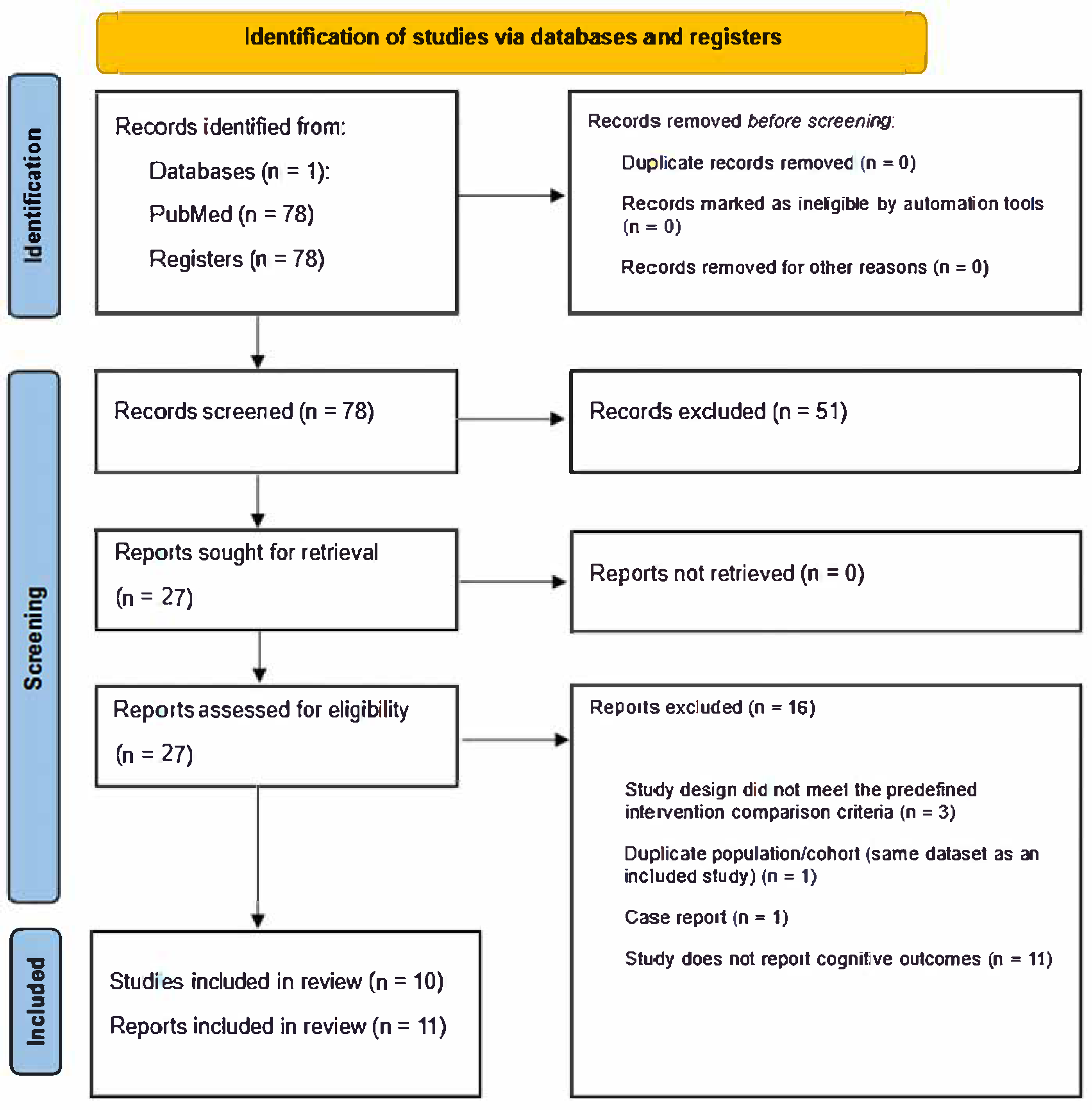
3.1. Study Selection
3.2. Combined CR and PE Versus CR Alone
3.3. Combined CR and PE Versus PE Alone
3.4. Combined Cognitive Remediation and Physical Exercise in a Three-Arm Design
3.5. Risk of Bias
4. Discussion
Supplementary Materials
Author Contributions
Funding
Institutional Review Board Statement
Informed Consent Statement
Data Availability Statement
Conflicts of Interest
References
- American Psychiatric Association. Diagnostic and Statistical Manual of Mental Disorders, 5th ed.; American Psychiatric Association: Washington, DC, USA, 2013. [Google Scholar] [CrossRef] [Scilit]
- Kahn, R.S.; Sommer, I.E.; Murray, R.M.; Meyer-Lindenberg, A.; Weinberger, D.R.; Cannon, T.D.; O’Donovan, M.; Correll, C.U.; Kane, J.M.; van Os, J.; et al. Schizophrenia. Nat. Rev. Dis. Primers 2015, 1, 15067. [Google Scholar] [CrossRef] [Scilit] [PubMed]
- Owen, M.; Sawa, A.; Mortensen, P. Schizophrenia. Lancet 2016, 388, 86–97. [Google Scholar] [PubMed]
- Schaefer, J.; Giangrande, E.; Weinberger, D.R.; Dickinson, D. The global cognitive impairment in schizophrenia: Consistent over decades and around the world. Schizophr. Res. 2013, 150, 42–50. [Google Scholar] [CrossRef] [Scilit] [PubMed] [PubMed Central]
- Czepielewski, L.S.; Alliende, L.M.; Castañeda, C.P.; Castro, M.; Guinjoan, S.M.; Massuda, R.; Berberian, A.A.; Fonseca, A.O.; Gadelha, A.; Bressan, R.; et al. Effects of socioeconomic status in cognition of people with schizophrenia: Results from a Latin American collaboration network with 1175 subjects. Psychol. Med. 2022, 52, 2177–2188. [Google Scholar] [CrossRef] [Scilit] [PubMed]
- Kuo, S.S.; Almasy, L.; Gur, R.C.; Prasad, K.; Roalf, D.R.; Gur, R.E.; Nimgaonkar, V.L.; Pogue-Geile, M.F. Cognition and community functioning in schizophrenia: The nature of the relationship. J. Abnorm. Psychol. 2018, 127, 216–227. [Google Scholar] [CrossRef] [Scilit] [PubMed] [PubMed Central]
- Keefe, R.S.; Bilder, R.M.; Davis, S.M.; Harvey, P.D.; Palmer, B.W.; Gold, J.M.; Meltzer, H.Y.; Green, M.F.; Capuano, G.; Stroup, T.S.; et al. CATIE Investigators; Neurocognitive Working Group. Neurocognitive effects of antipsychotic medications in patients with chronic schizophrenia in the CATIE Trial. Arch. Gen. Psychiatry 2007, 64, 633–647. [Google Scholar] [CrossRef] [Scilit] [PubMed]
- Bowie, C.R.; Bell, M.D.; Fiszdon, J.M.; Johannesen, J.K.; Lindenmayer, J.P.; McGurk, S.R.; Medalia, A.A.; Penadés, R.; Saperstein, A.M.; Twamley, E.W.; et al. Cognitive remediation for schizophrenia: An expert working group white paper on core techniques. Schizophr. Res. 2020, 215, 49–53. [Google Scholar] [CrossRef] [Scilit] [PubMed]
- Vita, A.; Barlati, S.; Ceraso, A.; Nibbio, G.; Ariu, C.; Deste, G.; Wykes, T. Effectiveness, Core Elements, and Moderators of Response of Cognitive Remediation for Schizophrenia: A Systematic Review and Meta-analysis of Randomized Clinical Trials. JAMA Psychiatry 2021, 78, 848–858. [Google Scholar] [CrossRef] [Scilit] [PubMed] [PubMed Central]
- McCleery, A.; Nuechterlein, K.H. Cognitive impairment in psychotic illness: Prevalence, profile of impairment, developmental course, and treatment considerations. Dialogues Clin. Neurosci. 2019, 21, 239–248. [Google Scholar] [CrossRef] [Scilit] [PubMed] [PubMed Central]
- Medalia, A.; Choi, J. Cognitive remediation in schizophrenia. Neuropsychol. Rev. 2009, 19, 353–364. [Google Scholar] [CrossRef] [Scilit] [PubMed]
- Deste, G.; Corbo, D.; Nibbio, G.; Italia, M.; Dell’Ovo, D.; Calzavara-Pinton, I.; Lisoni, J.; Barlati, S.; Gasparotti, R.; Vita, A. Impact of Physical Exercise Alone or in Combination with Cognitive Remediation on Cognitive Functions in People with Schizophrenia: A Qualitative Critical Review. Brain Sci. 2023, 13, 320. [Google Scholar] [CrossRef] [Scilit] [PubMed]
- Yang, Y.; Yuan, Y.; Zhang, H.; Fu, X.; Wang, T.; Wang, J.; Fang, C.C. Optimal exercise dose and type for improving schizophrenia symptoms in adults: A systematic review and Bayesian network meta-analysis. Neurosci. Biobehav. Rev. 2024, 167, 105896. [Google Scholar] [CrossRef] [Scilit] [PubMed]
- Nuechterlein, K.H.; Ventura, J.; McEwen, S.C.; Gretchen-Doorly, D.; Vinogradov, S.; Subotnik, K.L. Enhancing cognitive training through aerobic exercise after a first schizophrenia episode: Theoretical conception and pilot study. Schizophr. Bull. 2016, 42, S44–S52. [Google Scholar] [CrossRef] [Scilit] [PubMed]
- Campos, C.; Rocha, N.B.F.; Lattari, E.; Nardi, A.E.; Machado, S. Exercise induced neuroplasticity to enhance therapeutic outcomes of cognitive remediation in schizophrenia: Analyzing the role of brain-derived neurotrophic factor. CNS Neurol. Disord. Drug Targets 2017, 16, 638–651. [Google Scholar] [CrossRef] [Scilit] [PubMed]
- Nieto, R.R.; Carrasco, A.; Corral, S.; Castillo, R.; Gaspar, P.A.; Bustamante, M.L.; Silva, H. BDNF as a Biomarker of Cognition in Schizophrenia/Psychosis: An Updated Review. Front. Psychiatry 2021, 12, 662407. [Google Scholar] [CrossRef] [Scilit] [PubMed]
- Page, M.J.; McKenzie, J.E.; Bossuyt, P.M.; Boutron, I.; Hoffmann, T.C.; Mulrow, C.D.; Shamseer, L.; Tetzlaff, J.M.; Akl, E.A.; Brennan, S.E.; et al. The PRISMA 2020 statement: An updated guideline for reporting systematic reviews. BMJ 2021, 372, n71. [Google Scholar] [CrossRef] [Scilit] [PubMed]
- Takahashi, S.; Keeser, D.; Rauchmann, B.S.; Schneider-Axmann, T.; Keller-Varady, K.; Maurus, I.; Dechent, P.; Wobrock, T.; Hasan, A.; Schmitt, A.; et al. Effect of aerobic exercise combined with cognitive remediation on cortical thickness and prediction of social adaptation in patients with schizophrenia. Schizophr. Res. 2020, 216, 397–407. [Google Scholar] [CrossRef] [Scilit] [PubMed]
- Malchow, B.; Keller, K.; Hasan, A.; Dörfler, S.; Schneider-Axmann, T.; Hillmer-Vogel, U.; Honer, W.G.; Schulze, T.G.; Niklas, A.; Wobrock, T.; et al. Effects of Endurance Training Combined With Cognitive Remediation on Everyday Functioning, Symptoms, and Cognition in Multiepisode Schizophrenia Patients. Schizophr. Bull. 2015, 41, 847–858. [Google Scholar] [CrossRef] [Scilit] [PubMed] [PubMed Central]
- Nuechterlein, K.H.; McEwen, S.C.; Ventura, J.; Subotnik, K.L.; Turner, L.R.; Boucher, M.; Casaus, L.R.; Distler, M.G.; Hayata, J.N. Aerobic exercise enhances cognitive training effects in first-episode schizophrenia: Randomized clinical trial demonstrates cognitive and functional gains. Psychol. Med. 2023, 53, 4751–4761. [Google Scholar] [CrossRef] [Scilit] [PubMed]
- McGurk, S.R.; Otto, M.W.; Fulford, D.; Cutler, Z.; Mulcahy, L.P.; Talluri, S.S.; Qiu, W.Q.; Gan, Q.; Tran, I.; Turner, L.; et al. A randomized controlled trial of exercise on augmenting the effects of cognitive remediation in persons with severe mental illness. J. Psychiatr. Res. 2021, 139, 38–46. [Google Scholar] [CrossRef] [Scilit] [PubMed]
- Oertel-Knöchel, V.; Mehler, P.; Thiel, C.; Steinbrecher, K.; Malchow, B.; Tesky, V.; Ademmer, K.; Prvulovic, D.; Banzer, W.; Zopf, Y.; et al. Effects of aerobic exercise on cognitive performance and individual psychopathology in depressive and schizophrenia patients. Eur. Arch. Psychiatry Clin. Neurosci. 2014, 264, 589–604. [Google Scholar] [CrossRef] [Scilit] [PubMed]
- Dai, Y.; Ding, H.; Lu, X.; Wu, X.; Xu, C.; Jiang, T.; Ming, L.; Xia, Z.; Song, C.; Shen, H.; et al. CCRT and aerobic exercise: A randomised controlled study of processing speed, cognitive flexibility, and serum BDNF expression in schizophrenia. Schizophrenia 2022, 8, 84. [Google Scholar] [CrossRef] [Scilit] [PubMed]
- Dubreucq, J.; Gabayet, F.; Ycart, B.; Faraldo, M.; Melis, F.; Lucas, T.; Arnaud, B.; Bacconnier, M.; Bakri, M.; Cambier, G.; et al. Improving social function with real-world social-cognitive remediation in schizophrenia: Results from the RemedRugby quasi-experimental trial. Eur. Psychiatry 2020, 63, e41. [Google Scholar] [CrossRef] [Scilit] [PubMed]
- Shimada, T.; Ito, S.; Yamanushi, A.; Koizumi, A.; Kobayashi, M. Effect of aerobic exercise versus cognitive remediation versus a combination of both on cognition among patients with schizophrenia: A three-arm, randomized controlled study. Psychiatry Res. 2025, 348, 116454. [Google Scholar] [CrossRef] [Scilit] [PubMed]
- Choi, J.; Taylor, B.; Fiszdon, J.M.; Kurtz, M.M.; Tek, C.; Dewberry, M.J.; Haber, L.C.; Shagan, D.; Assaf, M.; Pearlson, G.D. The synergistic benefits of physical and cognitive exercise in schizophrenia: Promoting motivation to enhance community effectiveness. Schizophr. Res. Cogn. 2019, 19, 100147. [Google Scholar] [CrossRef] [Scilit] [PubMed] [PubMed Central]
- Agostoni, G.; Repaci, F.; Bechi, M.; Calzavara Pinton, I.; Buonocore, M.; Spangaro, M.; Sapienza, J.; Martini, F.; D’Antoni, E.; Giglio, B.; et al. Two is Better Than One: Potentiating Cognitive Remediation With Aerobic Exercise to Improve Cognition in Schizophrenia With a Randomized Controlled Trial. Actas Esp. Psiquiatr. 2025, 53, 648–657. [Google Scholar] [CrossRef] [Scilit] [PubMed] [PubMed Central]
- Jahshan, C.; Rassovsky, Y.; Green, M.F. Enhancing neuroplasticity to augment cognitive remediation in schizophrenia. Front. Psychiatry 2017, 8, 191. [Google Scholar] [CrossRef] [Scilit] [PubMed]

| Author | Country | Design | Participants | Exercise Methods | Cognitive Remediation Methods | Assessment Instruments | Main Results |
|---|---|---|---|---|---|---|---|
| Nuechterlein et al. (2016) [14] | United States | Controlled, prospective, two-group feasibility pilot study. Cognitive training plus aerobic exercise, CT&E; Cognitive training alone, CT. | 16 patients with recent-onset schizophrenia: CT: n = 9; CT&E: n = 7. Mean time from onset of psychosis to program entry: 9.2 +/− 6.6 months. | 10-week aerobic exercise and calisthenics program. Applied only to the CT&E group. Total dose: 150 min per week; distributed over 4 days per week. Frequency: 2 clinic sessions of 45 min; 2 home sessions of 30 min. | Both groups received the same Posit Science computerized cognitive training program. Duration: 10 weeks. Frequency: 2 days per week; 2 h per day; 4 h per week in total. Total dose: 20 h of neurocognitive training; 20 h of social cognition training. First 5 weeks: neurocognitive training with the Brain Fitness Program. Second 5 weeks: social-cognitive training with the Targeted Affect Remediation Application, TARA. | (1) Cognition MATRICS Consensus Cognitive Battery, MCCB. (2) Functioning Role Functioning Scale, RFS. (3) Biomarkers Serum BDNF, measured by ELISA in a subsample. (4) Clinical symptoms Brief Psychiatric Rating Scale, BPRS, used to characterize baseline clinical stability. | The CT&E group showed greater improvement than CT in the MCCB global composite score: Cohen f = 0.48, a large effect size. The domains with the largest differential gains favoring CT&E were: social cognition; working memory; processing speed; attention/vigilance. In functioning, CT&E showed greater improvement than CT in: independent living, a very large effect; family relationships; work productivity. In a subsample of 4 CT&E participants, serum BDNF increased: mean change +4220 +/− 4110 pg/mL. |
| Nuechterlein et al. (2023) [20] | United States | Randomized controlled trial, two groups, with intention-to-treat analysis. Two parallel groups: Cognitive training plus exercise, CT&E; Cognitive training alone, CT. | 47 outpatients with a first episode of schizophrenia or related disorders. CT&E: n = 24. CT: n = 23. Mean time since onset of psychosis: 8.9 months. | Progressive 24-week aerobic exercise and physical conditioning program. Frequency: 2 clinic sessions per week; 2 home sessions per week. Overall target: 150 min per week of moderate aerobic activity. | Posit Science computerized cognitive training, common to both groups. Frequency: 2 h per day, 2 days per week. Weekly dose: 4 h. Total duration: 24 weeks. First 12 weeks: Neurocognitive training with BrainHQ; 48 h in total. Second 12 weeks: Social cognition training with SocialVille; 48 h in total. | (1) Cognition MATRICS Consensus Cognitive Battery, MCCB. (2) Functioning Global Functioning Scale. (3) Biomarkers Serum BDNF, measured by ELISA. (4) Clinical symptoms Brief Psychiatric Rating Scale, BPRS. | The MCCB global composite score showed a significant group x time interaction over the 6 months: F = 3.33; p = 0.04, favoring CT&E. During the first 3 months, cognitive improvement was significantly greater in CT&E than in CT. Work and school functioning improved significantly more with CT&E. Social functioning improved in both groups, but without a significant between-group difference. BDNF increased over time in both groups. Cognitive improvement at 3 months predicted improvement in work and school functioning at 6 months. The amount of exercise completed was associated with greater benefits, both cognitive improvement and work and school improvement. |
| McGurk et al. (2021) [21] | United States | Randomized controlled trial with two parallel groups. Intervention duration: 10 weeks. Groups: Cognitive remediation plus aerobic exercise, CR + E; Cognitive remediation alone, CR-Only. | 34 participants with serious mental illness: CR + E: n = 17; CR-Only: n = 17. Diagnoses included according to DSM-5: schizophrenia; schizoaffective disorder; schizophreniform disorder; bipolar I disorder; bipolar II disorder. Proportion with a schizophrenia spectrum diagnosis: approximately 65%. | Supervised aerobic exercise program over 10 weeks. Applied exclusively to the CR + E group. Frequency: 3 sessions per week. Duration: 50 minu per session. | Both groups received computerized cognitive remediation with COGPACK, version 8.0. Total duration: up to 30 h. Frequency: 1 hour per session; 3 times per week; over 10 weeks. | (1) Cognition MATRICS Consensus Cognitive Battery, MCCB, adapted. (2) Biomarkers Total serum BDNF. Mature BDNF. Mature/total BDNF ratio. Methods: Aviscera-Bioscience ELISA for mature BDNF; Quantikine Total BDNF Immunoassay for total BDNF. (3) Clinical symptoms Expanded Brief Psychiatric Rating Scale, BPRS. Montgomery-Asberg Depression Rating Scale, MADRS. | Global cognition Both groups improved significantly in the cognitive composite score: main effect of time: p < 0.001. There was no significant group x time interaction. Domain-level results Significant effects of time, with improvement in both groups, were observed in 8 of the 11 individual tests: TMT-A: p < 0.001. Symbol Coding: p = 0.021. HVLT verbal learning: p = 0.003. Letter-Number Span: p = 0.049. BVMT visual learning: p = 0.006. Delayed visual memory: p = 0.036. Category fluency: p = 0.004. Attention on the CPT: p = 0.008. Between-group comparison No group x time interaction was statistically significant. Only a trend favoring CR + E was observed on TMT-B: group x time interaction: p = 0.099. BDNF No differences were observed between CR + E and CR-Only. There were no significant effects of: group; time; group x time interaction. |
| Oertel-Knochel et al. (2014) [22] | Germany. | Randomized controlled trial with three parallel groups, including inpatients with schizophrenia and major depressive disorder. Main groups: Cognitive training plus aerobic exercise. Cognitive training plus mental relaxation. Waiting list without intervention. | 51 inpatients completed the study: Schizophrenia: n = 29; Major depressive disorder: n = 22. Distribution of the main sample: Exercise: n = 16; Relaxation: n = 17; Waiting list: n = 18. Distribution of patients with schizophrenia: Exercise: n = 8; Relaxation: n = 11; Waiting list: n = 10. | Group aerobic exercise program combined with circuit training. Frequency: 3 sessions per week. Duration: 45 min per session; over 4 weeks; 12 sessions in total. | Both active groups received a combined program based on COGPACK. Frequency: 3 sessions per week; 30 min per session; over 4 weeks. Total dose: 12 sessions; approximately 6 h of cognitive training. | (1) Cognition MATRICS-based battery. Clinical symptoms and quality of life State-Trait Anxiety Inventory, STAI, state anxiety subscale. SF-12, mental health subscale, for subjective perception of psychological well-being. In schizophrenia: Positive and Negative Syndrome Scale, PANSS; Revised Hallucination Scale, RHS. In major depression: Beck Depression Inventory-II. | Processing speed A significant improvement was observed between pre- and post-treatment: main effect of time: p < 0.001. There was no significant effect of intervention group and no diagnosis x intervention x time interaction. Working memory Significant effects were found for: time; diagnosis; intervention group. There was a significant interaction: intervention x diagnosis x time p < 0.01. Post hoc analysis showed a greater improvement in working memory in the patients with schizophrenia of the exercise group: intervention x time interaction: p < 0.001. Visual learning A significant improvement was observed: p = 0.004. There was also an effect of diagnosis p = 0.01. Patients with schizophrenia had lower baseline scores and greater subsequent improvement. Verbal learning There were no significant effects of: time; diagnosis; intervention group; interactions. Verbal learning did not improve significantly under any condition. Cognitive effect sizes Exercise group: processing speed, working memory and verbal learning: d = 0.47–0.57, moderate effects; visual learning: d = 0.91, large effect. Relaxation group: processing speed and visual learning: d = 0.43–0.47; working memory and verbal learning: d = 0.18–0.24. Waiting list: processing speed: d = 0.50; remaining domains: d = 0.23–0.35. Schizophrenia symptoms Positive symptoms: no significant changes were observed. Negative symptoms: significant effect of the intervention: p = 0.02; group x time interaction: p = 0.04. Negative symptoms decreased in both: exercise plus cognitive training; relaxation plus cognitive training. |
| Takahashi et al. (2020) [18] | Germany. | Longitudinal, controlled, non-randomized study with three parallel groups. Groups: Patients with schizophrenia undergoing aerobic exercise, SCZ-EX. Patients with schizophrenia who played table soccer as an active control, SCZ-EXCONT. Healthy controls undergoing aerobic exercise, HC-EX. | 65 participants: SCZ-EX: n = 21; SCZ-EXCONT: n = 21; HC-EX: n = 23. | Aerobic training on a cycle ergometer. Duration: 12 weeks. Frequency: 3 sessions per week. Session duration: 30 min. Active control The SCZ-EXCONT group played table soccer: 30 min; 3 times per week; over 12 weeks. | Computerized COGPACK program, versions 8.19 D/8.30 DE. Administered to all three groups: SCZ-EX; SCZ-EXCONT; HC-EX. Start: after the first 6 weeks of exercise or table soccer. Duration: weeks 6 to 12; 6 weeks in total. Frequency: 2 sessions per week. Duration: 30 min per session. | (1) Neuroimaging 3-tesla structural magnetic resonance imaging. T1 MPRAGE sequence. Processing with FreeSurfer 6.0. Regions of interest: left and right entorhinal cortex; left and right parahippocampal cortex; left and right lateral prefrontal cortex; left and right medial prefrontal cortex. (2) Functioning and social adjustment Global Assessment of Functioning, GAF. Social Adjustment Scale-II, SAS-II. (3) Clinical symptoms Positive and Negative Syndrome Scale, PANSS. Clinical Global Impression-Severity, CGI-S. Calgary Depression Scale for Schizophrenia, CDSS. (4) Cognition Verbal Learning and Memory Test, VLMT. Trail Making Test A, TMT-A. Trail Making Test B, TMT-B. Wisconsin Card Sorting Test, WCST. | Cortical thickness The SCZ-EX group showed a significant increase in the thickness of the right entorhinal cortex at week 6; the increase was not maintained. No significant longitudinal changes were observed in: left entorhinal cortex; parahippocampal cortex; lateral prefrontal cortex; medial prefrontal cortex. The SCZ-EXCONT and HC-EX groups showed no significant changes in cortical thickness after correction for multiple comparisons. Prediction of social adjustment In SCZ-EX, a greater baseline thickness of the right lateral prefrontal cortex was associated with a greater improvement in overall social adjustment: p = 0.005. No significant associations were found between baseline cortical thickness and: GAF; SAS-II social/leisure; cognitive outcomes. No equivalent correlations were found in SCZ-EXCONT or HC-EX. Global functioning The SCZ-EX group showed a significant improvement in GAF. SCZ-EXCONT showed no change. Social adjustment In SCZ-EX the following improved: SAS-II social/leisure: p = 0.006; SAS-II overall: p = 0.003. There was no significant improvement in the work domain. The SCZ-EXCONT group showed no significant changes in the social adjustment subscales. Cognition SCZ-EX showed no significant improvements. SCZ-EXCONT showed an improvement in TMT-A: p = 0.001. The improvement in short-term memory and TMT-B in the table soccer group did not reach the corrected threshold. Clinical symptoms In SCZ-EX there were no significant changes in: PANSS; CGI-S; CDSS. SCZ-EXCONT showed nominal reductions in: PANSS positive: p = 0.040; PANSS total: p = 0.014; but these did not exceed the corrected threshold of p < 0.00833. |
| Malchow et al. (2015) [19] | Germany. | Longitudinal, controlled, single-center, non-randomized study with three parallel groups. Groups: Patients with schizophrenia undergoing endurance training plus cognitive remediation. Patients with schizophrenia who played table soccer plus cognitive remediation. Healthy controls undergoing endurance training plus cognitive remediation. | 64 patients with schizophrenia and 36 healthy controls were initially assessed. Sample included in the main analyses: Schizophrenia + endurance training: n = 22; Schizophrenia + table soccer: n = 21; Healthy controls + endurance training: n = 23. Total analyzed: 66 participants, although some analyses used 65 because of missing data. | Continuous endurance training on a cycle ergometer. Duration: 3 months. Frequency: 3 sessions per week. Duration: 30 min per session. Active control The control group played table soccer: 30 min; 3 times per week; over 3 months. | Computerized COGPACK program, versions 8.19 D/8.30 DE. Administered to all three groups. Start: after the first 6 weeks of exercise or table soccer. Duration: 6 weeks. Frequency: 2 sessions per week. Duration: 30 min per session. Approximate total dose: 12 sessions; 6 h of training. | (1) Global functioning Global Assessment of Functioning, GAF. (2) Social adjustment Social Adjustment Scale-II, SAS-II. (3) Clinical symptoms Positive and Negative Syndrome Scale, PANSS. Clinical Global Impression-Severity, CGI-S. Calgary Depression Scale for Schizophrenia, CDSS. (4) Cognition Verbal Learning Memory Test, VLMT. Trail Making Test A, TMT-A. Trail Making Test B, TMT-B. Wisconsin Card Sorting Test, WCST. | Global functioning The GAF showed: a significant main effect of time; a time x group interaction. In the exercise plus cognitive remediation group, GAF improved by +16.6% from baseline to month 3. The table soccer plus cognitive remediation group showed no significant improvement. Social adjustment In the exercise group the SAS-II overall score decreased, p = 0.003. The following also improved: social and leisure activities; household functioning. The table soccer group showed no significant changes. Clinical symptoms The following were observed: a main effect of time on PANSS total; a main effect of time on PANSS negative; a time x group interaction on PANSS positive; a time x group interaction on PANSS negative. In the exercise group, negative symptoms decreased. The table soccer group showed reductions in: PANSS positive and PANSS total. Verbal memory Short-term memory: main effect of time; time x group interaction. In the exercise group it improved significantly between week 6 and month 3; in the table soccer group it improved significantly between baseline and week 6. Long-term memory: main effect of time; the exercise group improved significantly between week 6 and month 3. The table soccer group showed no significant changes. Processing speed and attentional set-shifting TMT-A: main effect of time; time x group interaction. The table soccer group improved significantly from week 6 to month 3 and from baseline to month 3. TMT-B: main effect of time; the table soccer group improved significantly from week 6 to month 3 and from baseline to month 3. The exercise group showed no significant changes on TMT-A or TMT-B. Cognitive flexibility In the exercise group, the WCST improved significantly between week 6 and month 3. There was no significant improvement relative to baseline. The table soccer group showed no significant changes. |
| Dai et al. (2022) [23] | China | Longitudinal, randomized, controlled, single-blind trial with three parallel groups. Treatment as usual, or control group; Aerobic exercise, AE; Computerized cognitive remediation plus aerobic exercise, CAE. | 96 inpatients with schizophrenia and cognitive impairment were initially randomized. Fourteen participants withdrew before receiving the interventions: control: 1; CAE: 6; AE: 7. Sample included in the final analysis: 82 participants: control: n = 31; CAE: n = 26; AE: n = 25. | Supervised aerobic exercise program over 8 weeks. Applied to the AE and CAE groups. Frequency: 5 days per week, Monday to Friday. Duration: 45 min per session. | Computerized Cognitive Remediation Therapy, CCRT. Administered only to the CAE group. Duration: 8 weeks. Frequency: 2 sessions per week. Session duration: 30 min. Total dose: 16 sessions; approximately 8 h of training. | (1) Cognitive screening Montreal Cognitive Assessment, MoCA, Chinese version. (2) Processing speed Trail Making Test, Part A, TMT-A. Brief Assessment of Cognition in Schizophrenia: Symbol Coding Test, SCT. (3) Cognitive flexibility Stroop Colour-Word Test, SCWT. (4) Clinical symptoms Positive and Negative Syndrome Scale, PANSS. (5) Biomarkers Serum BDNF, determined by ELISA. | The combination of CCRT and aerobic exercise produced a significantly greater improvement in processing speed than exercise alone and treatment as usual. TMT-A, baseline to week 8 change Comparisons: CAE versus AE: p = 0.040; CAE versus control: p = 0.002; no differences between AE and control. Symbol Coding Test, baseline to week 8 change: CAE versus AE: p = 0.008; CAE versus control: p < 0.001; no differences between AE and control. Cognitive flexibility, week 8 The CAE group was significantly superior to both AE and control on both tests. There were no significant between-group differences in the Stroop Colour-Word condition, which assesses interference inhibition. Clinical symptoms The reduction in negative symptoms differed significantly between groups: CAE showed greater improvement than the control group: p = 0.015. No significant between-group differences were found in: PANSS positive; general psychopathology; PANSS total. Serum BDNF Baseline to week 8 change: Both CAE and AE showed a significantly greater increase than control: both comparisons p < 0.001. There were no significant differences between CAE and AE. No significant correlations were found between BDNF changes and cognitive improvements. Correlations A greater reduction in negative symptoms was related to better cognitive change. |
| Dubreucq et al. (2020) [24] | France | Quasi-experimental, controlled, multicenter, prospective, interventional and exploratory trial. Two groups: RemedRugby, RR: integrated social-cognitive remediation intervention enriched with Touch Rugby. Touch Rugby, TR: active control based on collective physical activity alone. | 87 clinically stable participants with schizophrenia spectrum disorders according to DSM-5. Distribution: RR: n = 57; TR: n = 30. | Collective physical activity through Touch Rugby. RemedRugby group Twelve weekly 2-hour sessions, held at local rugby clubs. In each session approximately 15 min were devoted to supervised Touch Rugby practice. In addition, there was one specific session focused on Touch Rugby. Participation in three full-day tournaments bringing together patients and professionals from the different centers. Touch Rugby control group Twelve 2-hour Touch Rugby sessions. Three full-day tournaments. | RemedRugby program, a manualized and ecological group intervention for social-cognitive remediation. Duration: 12 weekly 2-hour sessions; one introductory session; thematic sessions; one final session; three full-day tournaments. 1. Social-cognitive remediation and social skills training Training in communication and social problem solving. Role-playing and group feedback. 2. Social-cognitive remediation through a blog Writing e-mails, questions, comments, compliments and criticism. 3. Cognitive remediation of executive functions Planning and organization of tournaments. Task allocation and paired work. Problem-solving training. 4. Psychoeducation and stigma reduction Psychoeducation on stigma and self-stigma. Activities aimed at destigmatization. | (1) Social functioning Personal and Social Performance Scale, PSP. Social Cognition-Functional Outcomes Scale, ERF-CS. (2) Social cognition Movie for the Assessment of Social Cognition, MASC. PerSo, assessment of social perception and social knowledge. Ambiguous Intentions and Hostility Questionnaire, AIHQ. Questionnaire of Cognitive and Affective Empathy, QCAE. ACSo, self-assessment of social cognition difficulties. (3) Neurocognition WAIS-IV Coding, processing speed. WAIS-IV Similarities, verbal abstraction. Trail Making Test A, processing speed. Trail Making Test B, cognitive flexibility. Shopping Test-Revised, planning. BEM-144, immediate and delayed verbal memory. French National Adult Reading Test, f-NART, premorbid intelligence. (4) Clinical symptoms Positive and Negative Syndrome Scale, PANSS. Self-stigma, self-esteem and recovery Internalized Stigma of Mental Illness Scale, ISMI. Self-Esteem Rating Scale-Short Form, SERS-SF. Boston University Empowerment Scale, BUES. Stage of Recovery Instrument, STORI. | The RR group showed a significantly greater improvement in personal and social functioning than the TR group. The effect on social functioning remained significant at follow-up in the RR group. Clinical symptoms RR showed a significantly greater improvement than TR in: PANSS total: p < 0.001; PANSS positive: p = 0.009; PANSS negative: p < 0.001; general psychopathology: p < 0.001. Symptom improvements persisted over the 6-month follow-up. The TR control group showed, on average, a worsening of symptoms and social functioning during the intervention period. Social cognition RR was superior to TR in the reduction of aggression bias. RR produced a greater improvement in components of social cognition-related disability. RR was superior to TR in verbal abstraction, measured with WAIS-IV Similarities. No significant between-group differences were observed in: processing speed on TMT-A; cognitive flexibility on TMT-B; WAIS-IV Coding; immediate or delayed verbal memory; planning on the Shopping Test. Self-stigma RR showed a greater improvement than TR in: stereotype endorsement: p = 0.019; discrimination experience: p = 0.047. |
| Shimada et al. (2025) [25] | Japan | Randomized controlled trial with three parallel arms and single blinding. Aerobic exercise, AE; Cognitive remediation, CR; Aerobic exercise plus cognitive remediation, AE + CR. | 59 patients with schizophrenia: AE: n = 19. CR: n = 19. AE + CR: n = 21. | Combined individual and group aerobic exercise program, led by occupational therapists. Duration: 12 weeks. Frequency: 2 sessions per week: one individual session; one group session. Duration: 60 min per session. | Computerized cognitive remediation program with RehaCom, Japanese version. Modality: individual computerized sessions; individual verbal sessions aimed at transferring the cognitive gains to everyday functioning. Computerized sessions: twice per week; 60 min per session; 24 sessions; over 12 weeks. Verbal sessions: once per week; 60 min; over 12 weeks. | (1) Cognition Brief Assessment of Cognition in Schizophrenia, BACS. (2) Intrinsic motivation Three items from the Quality of Life Scale, QLS. (3) Clinical symptoms Positive and Negative Syndrome Scale, PANSS. (4) Functioning Modified Global Assessment of Functioning for Social Functioning, mGAF-F. | Cognition AE + CR versus AE The combined intervention produced a significantly greater improvement in: verbal memory; executive function; BACS composite score. There were no significant differences in: working memory; motor speed; verbal fluency; attention. AE + CR versus CR The combined intervention was significantly superior in: verbal memory; working memory; attention and processing speed; executive function; BACS composite score. There were no significant differences in: motor speed and verbal fluency. AE versus CR No significant differences were observed between AE and CR in any BACS domain or in the composite score. Intrinsic motivation No significant between-group differences were observed in QLS score change. Social functioning No significant differences were observed in mGAF-F. |
| Choi et al. (2020) [26] | United States | Randomized community effectiveness study with three parallel groups. Physical exercise alone, PE; Cognitive training alone, CT; Physical exercise plus cognitive training, PE + CT. | 85 outpatients with a clinical diagnosis of schizophrenia or schizoaffective disorder. Distribution: PE: n = 29; CT: n = 27; PE + CT: n = 29. | Self-determined, choice-based physical exercise program designed to increase motivation and adherence. At the start of each session participants selected an activity from a menu that included: treadmill; elliptical machine; rowing machine; stationary bicycle; strength exercises on Nautilus machines; free weights; basketball; brisk outdoor walking. PE group: 30 min per session; 3 times per week; 18 h in total. PE + CT group: exercise 30 min; 2 times per week; combined with one weekly CT session; 18 h in total across both interventions. | Cognitive training delivered on Android tablets. Specifically targeted at: processing speed; working memory; visual scanning efficiency. Participants could choose among different tasks and game themes, promoting autonomy and motivation. Difficulty was adjusted individually according to: performance; cognitive load estimated by pupillometry. CT group: 30 min; 3 times per week; 18 h in total. PE + CT group: CT 30 min; once per week; combined with two weekly exercise sessions. | (1) Cognition Wechsler Adult Intelligence Scale, Fourth Edition, WAIS-IV: Working Memory Index, WMI; Processing Speed Index, PSI. (2) Clinical symptoms Brief Psychiatric Rating Scale, BPRS. (3) Motivation Intrinsic Motivation Inventory for Schizophrenia Research, IMI-SR. | Both PE and PE + CT improved working memory significantly more than CT. The PE group showed a significantly greater improvement in processing speed than CT and PE + CT. There was no significant post-treatment difference between CT and PE + CT in processing speed. At follow-up, only the PE + CT group maintained the gains in: working memory; processing speed. Although a pre-post reduction in negative symptoms was observed in PE and PE + CT, there were no significant between-group differences in BPRS change at post-treatment or at follow-up. Analyses by motivation indicated that: participants with higher baseline motivation tended to obtain greater cognitive benefits; participants in the PE + CT group showed improvements in negative symptoms and processing speed regardless of their initial motivation level. |
| Agostoni et al. (2025) [27] | Italy | Randomized, multicenter, single-blind clinical trial with three parallel arms. Cognitive remediation, CR. Aerobic exercise, AE. Cognitive remediation plus aerobic exercise, CR + AE. | 60 patients with a DSM-5 diagnosis of schizophrenia. CR: n = 20. AE: n = 20. CR + AE: n = 20. | Group aerobic exercise program on a stationary bicycle. Applied to: AE; CR + AE. Duration: 3 months. Frequency: 2 sessions per week. Total duration: 1 h per session. | Computerized COGPACK program. Applied to: CR; CR + AE. Duration: 3 months. Frequency: 2 sessions per week. Duration: 1 h per session. | (1) Cognition MATRICS Consensus Cognitive Battery, MCCB. | Approximate sample available at post-treatment: CR + AE: 16; AE: 15; CR: 11. Approximate sample available at follow-up: CR + AE: 15; AE: 14; CR: 7. CR + AE versus CR at post-treatment The combined intervention produced significantly greater improvements in: attention; working memory; verbal learning. CR + AE versus AE at post-treatment The combined intervention was significantly superior in: processing speed; working memory; verbal learning. Domains without significant post-treatment differences No significant differences were reported between CR + AE and the single-modality groups in: visual learning; reasoning; social cognition at post-treatment. Three-month follow-up In the CR + AE versus CR comparison, differences were reported in: social cognition p = 0.01; processing speed p = 0.03; result favoring CR. The gains achieved by CR + AE after the intervention remained stable in the remaining domains. In the CR + AE versus AE comparison, no additional significant changes were observed between post-treatment and follow-up; the gains obtained by CR + AE remained stable. |
Disclaimer/Publisher’s Note: The statements, opinions and data contained in all publications are solely those of the individual author(s) and contributor(s) and not of MDPI and/or the editor(s). MDPI and/or the editor(s) disclaim responsibility for any injury to people or property resulting from any ideas, methods, instructions or products referred to in the content. |
© 2026 by the authors. Licensee MDPI, Basel, Switzerland. This article is an open access article distributed under the terms and conditions of the Creative Commons Attribution (CC BY) license.
Share and Cite
Berrezueta, D.; Espinoza, J.P.; Arroyo, R.; Cartes, B.; Venegas, K.; Nieto, R.R. Additive Effects of Cognitive Remediation and Physical Exercise in Patients with Schizophrenia: Cognitive Improvements. Brain Sci. 2026, 16, 933. https://doi.org/10.3390/brainsci16090933
Berrezueta D, Espinoza JP, Arroyo R, Cartes B, Venegas K, Nieto RR. Additive Effects of Cognitive Remediation and Physical Exercise in Patients with Schizophrenia: Cognitive Improvements. Brain Sciences. 2026; 16(9):933. https://doi.org/10.3390/brainsci16090933
Chicago/Turabian StyleBerrezueta, Diego, Juan P. Espinoza, Ricardo Arroyo, Benjamín Cartes, Karina Venegas, and Rodrigo R. Nieto. 2026. "Additive Effects of Cognitive Remediation and Physical Exercise in Patients with Schizophrenia: Cognitive Improvements" Brain Sciences 16, no. 9: 933. https://doi.org/10.3390/brainsci16090933
APA StyleBerrezueta, D., Espinoza, J. P., Arroyo, R., Cartes, B., Venegas, K., & Nieto, R. R. (2026). Additive Effects of Cognitive Remediation and Physical Exercise in Patients with Schizophrenia: Cognitive Improvements. Brain Sciences, 16(9), 933. https://doi.org/10.3390/brainsci16090933