Article

More than Just a Game: A Longitudinal Pilot Study on the Outcome Effects of Home-Based Digital Cognitive Rehabilitation in Outpatients with Mild Cognitive Impairment


1
Department of Psychology, Catholic University of the Sacred Heart, 20123 Milan, Italy
2
Department of Psychology, Sigmund Freud University, 20143 Milan, Italy
3
Psychology Unit, Montescano Institute, Istituti Clinici Scientifici Maugeri IRCCS, 27040 Montescano, Italy
4
Department of Biomedical Engineering, Montescano Institute, Istituti Clinici Scientifici Maugeri IRCCS, 27040 Montescano, Italy
5
Neuropsychophysiology Unit, Montescano Institute, Istituti Clinici Scientifici Maugeri IRCCS, 27040 Montescano, Italy
*
Author to whom correspondence should be addressed.
These authors contributed equally to this work.
Brain Sci. 2026, 16(6), 582; https://doi.org/10.3390/brainsci16060582

Submission received: 24 April 2026 / Revised: 22 May 2026 / Accepted: 26 May 2026 / Published: 29 May 2026
(This article belongs to the Special Issue Outcome Measures in Rehabilitation)

Abstract

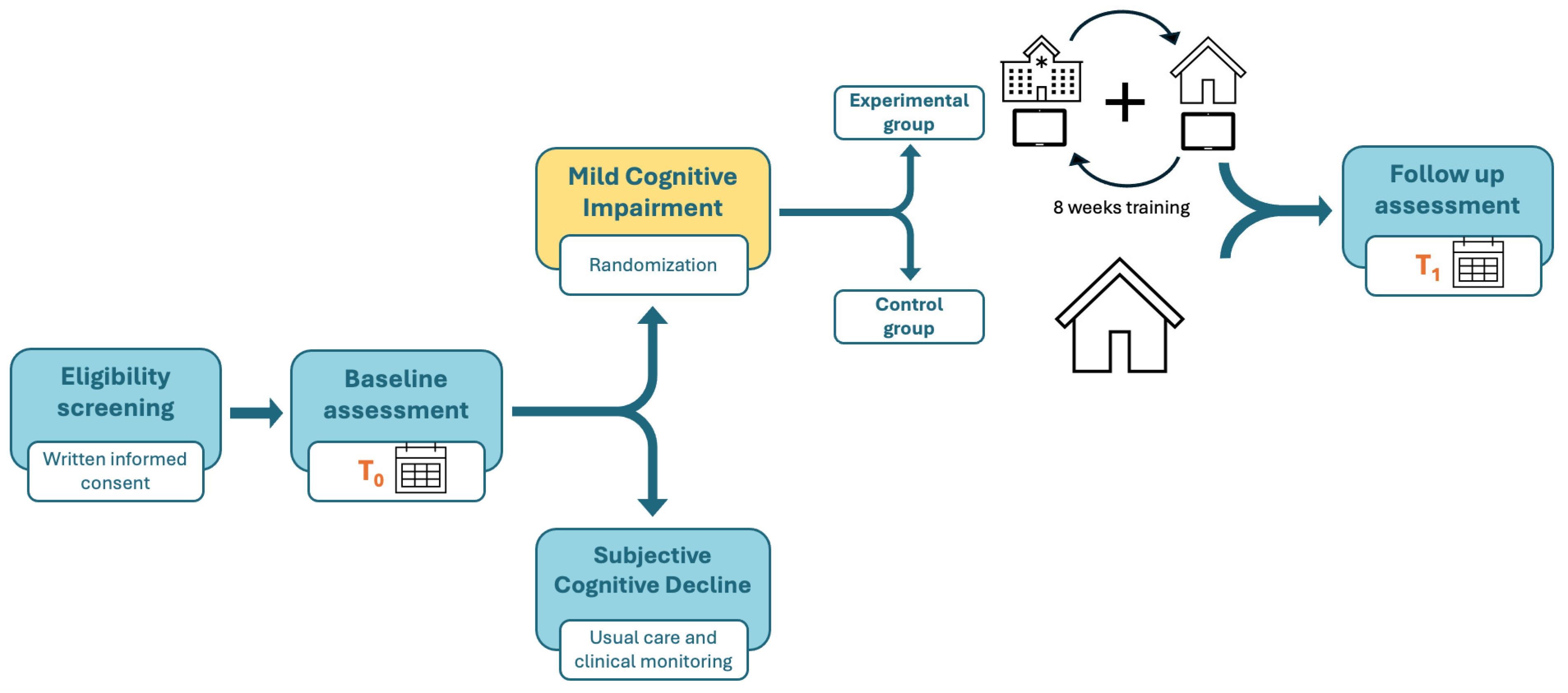
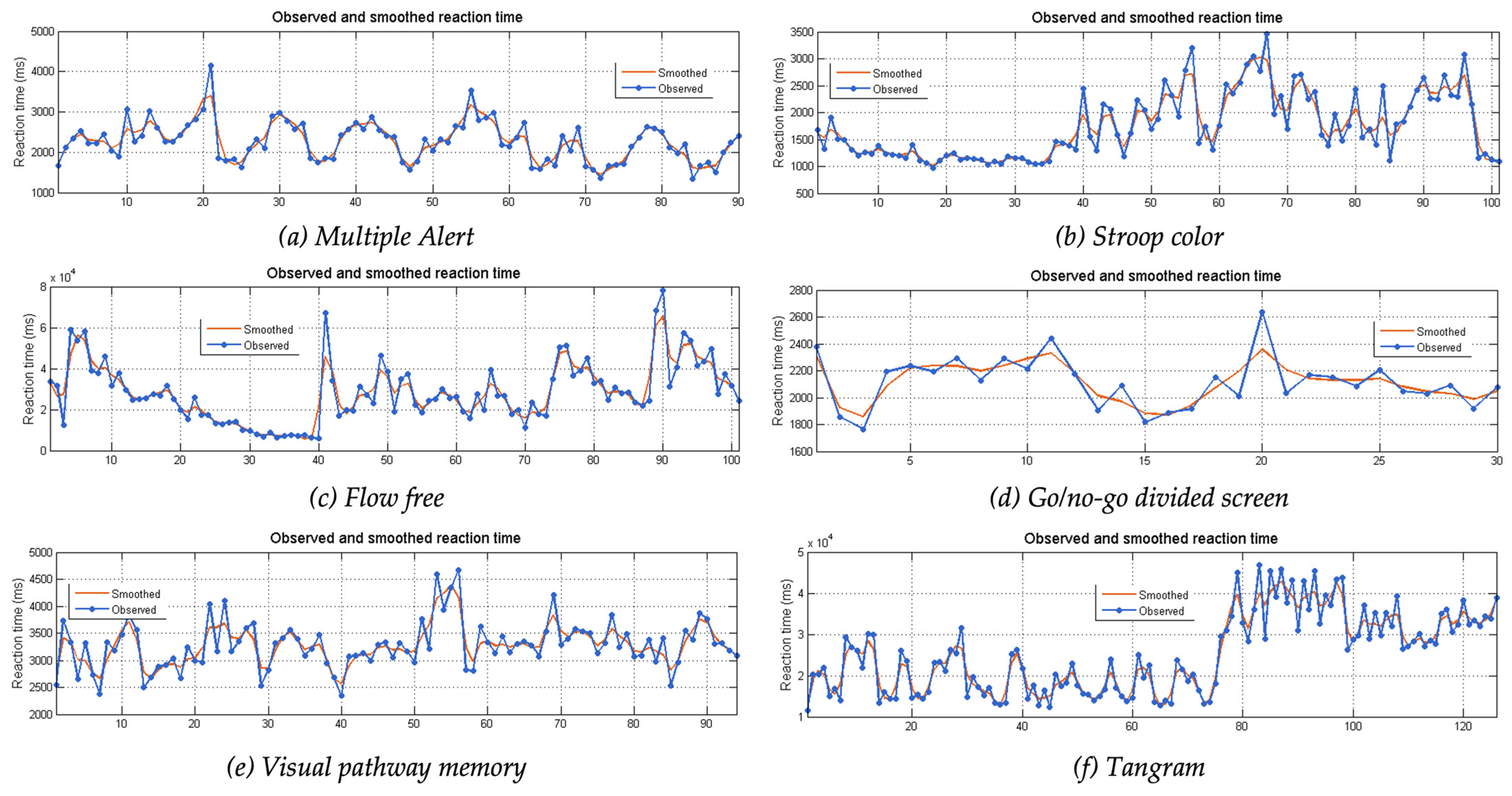
Background: This pilot study investigated the potential effects of an individualized home-based cognitive training program delivered through the Neurotablet® in individuals with Mild Cognitive Impairment (MCI). Methods: Fourteen outpatients were assigned to the experimental group (n = 7) or to the waiting-list control group (n = 7). Standardized neuropsychological and psychological measures were collected at baseline and follow-up. Outpatients of the experimental group completed an eight-week personalized home-based digital rehabilitation protocol targeting multiple cognitive domains. Longitudinal changes in standardized outcomes were analyzed using generalized linear mixed models. In addition, individual MCI trajectories were examined qualitatively by comparing MCI subtype between baseline and follow-up, whereas training performance was analyzed using within-participant linear regression models. Results: Standardized neuropsychological outcomes remained overall stable over time, with no significant differences between groups. By contrast, analyses of training performance revealed heterogeneous patterns across participants, with significant session-related changes emerging in some individuals. In particular, some tasks showed reductions in reaction times across sessions, suggesting changes in task efficiency with repeated practice. These findings highlight the heterogeneity of cognitive trajectories in MCI and suggest that individualized digital training may be associated with measurable changes in task performance, even in the absence of detectable changes in standardized neuropsychological measures. Conclusions: Despite the presence of limitations, digital cognitive interventions may offer a feasible approach to support the delivery of individualized cognitive rehabilitation in individuals reporting cognitive complaints. Further studies with larger samples, more detailed monitoring of training variables and engagement are needed to better clarify the potential cognitive impact of such interventions.
Keywords: digital cognitive rehabilitation; home-based intervention; subjective cognitive decline; mild cognitive impairment; neuropsychological assessment; cognitive and psychological outcomes; reaction times digital cognitive rehabilitation; home-based intervention; subjective cognitive decline; mild cognitive impairment; neuropsychological assessment; cognitive and psychological outcomes; reaction times