Paper to Pixels: Enhancing Unilateral Neglect Assessment Using the New Computer Vision-Based Tool CANDO
 , , ,
, , ,
Abstract
1. Introduction
2. Part 1: Diagnostic Shortcomings in the Evaluation of the BIT-c and Its German Adaptation
2.1. Materials and Methods
2.1.1. Participants
2.1.2. Stimuli and Materials
2.1.3. Procedure
2.1.4. Data Analysis
2.2. Results
2.2.1. Differences in Diagnoses Based on the Total Sum Score
2.2.2. Differences in Diagnoses Between First and Second Rating
2.2.3. Agreement Between Raters on Different Subtests
2.2.4. Differences Between First and Second Ratings on Different Subtests
2.2.5. Differences Between Rater Groups
2.2.6. Self-Rated vs. Actual Consistency
2.2.7. Efficiency
2.3. Interim Discussion
3. Part 2: Utilizing Computer Vision for Reliable Evaluations of the BIT-c
3.1. Materials and Methods
3.1.1. Sample Description
3.1.2. Data Preparation
3.1.3. Technical Implementation: Overview
3.1.4. Technical Implementation: Line Crossing
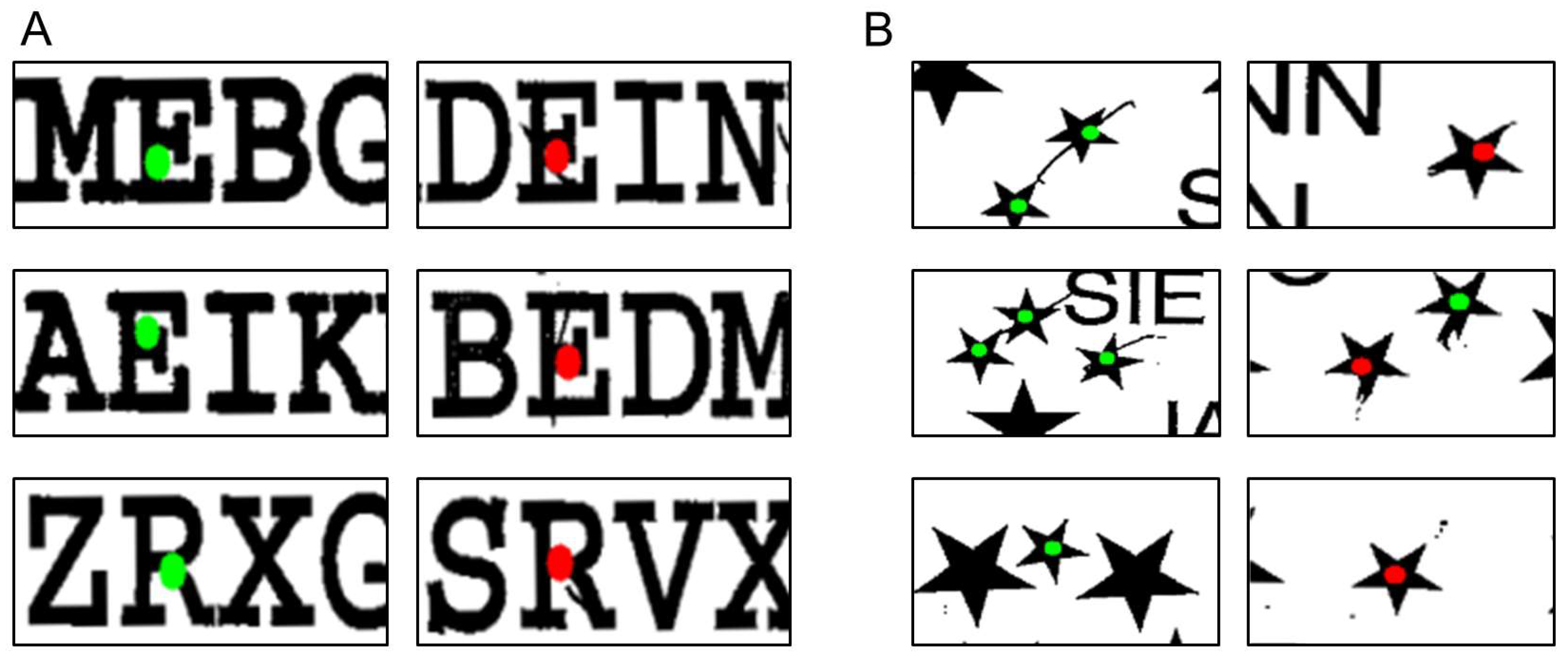
3.1.5. Technical Implementation: Letter Cancellation
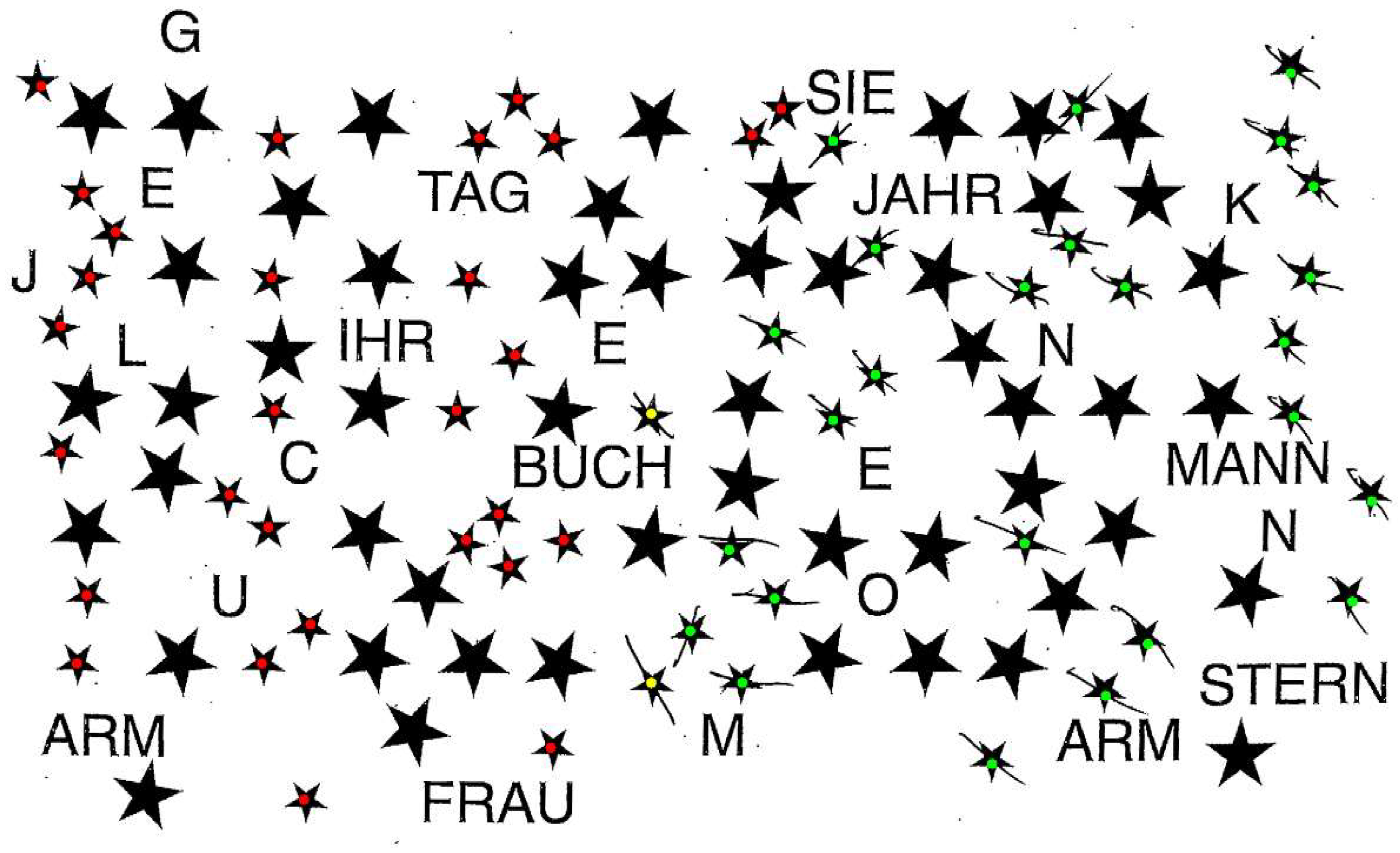
3.1.6. Technical Implementation: Star Cancellation
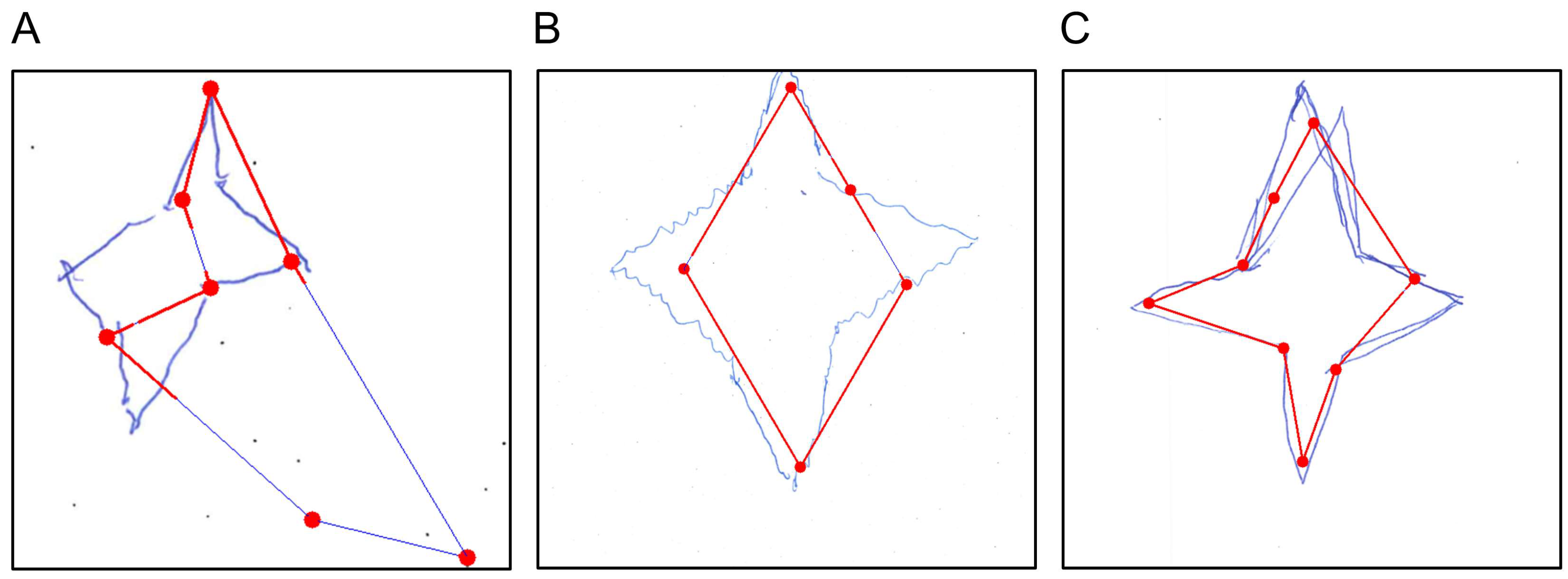
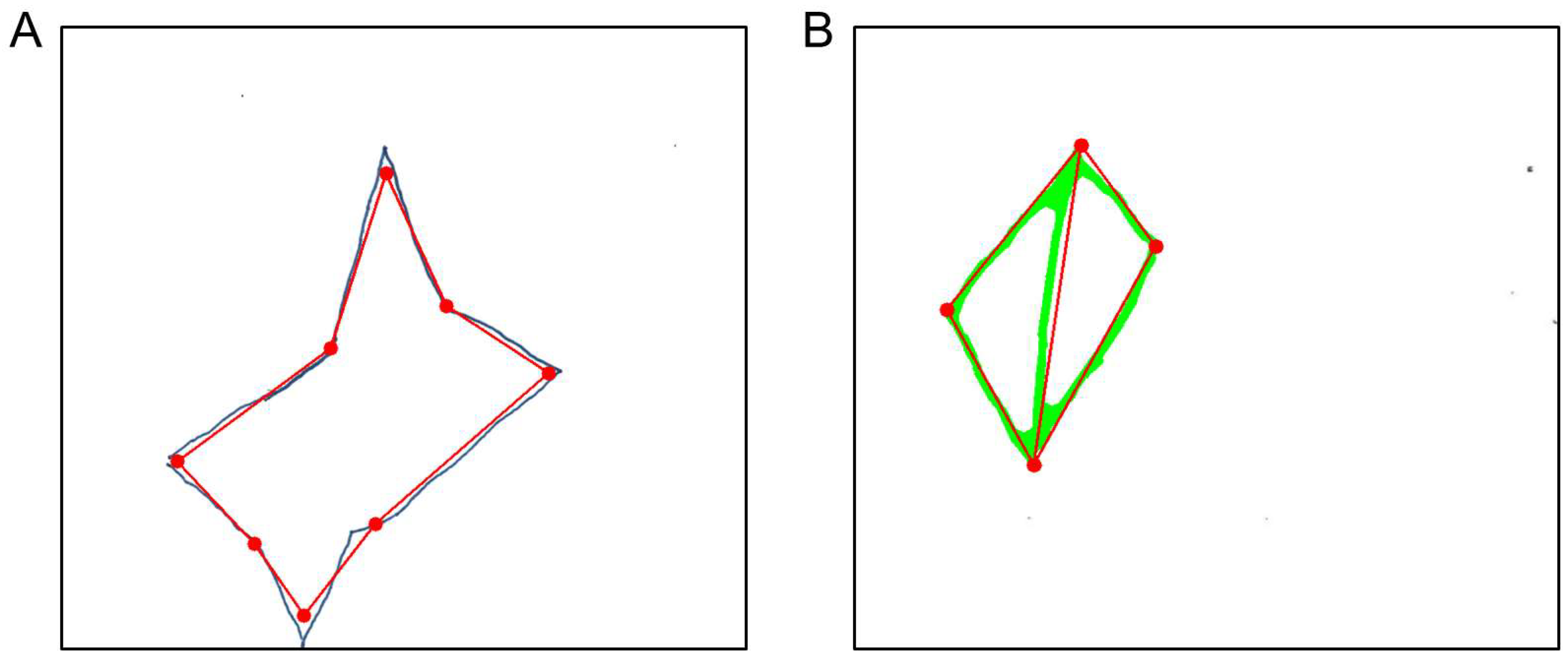
3.1.7. Technical Implementation: Copying Star
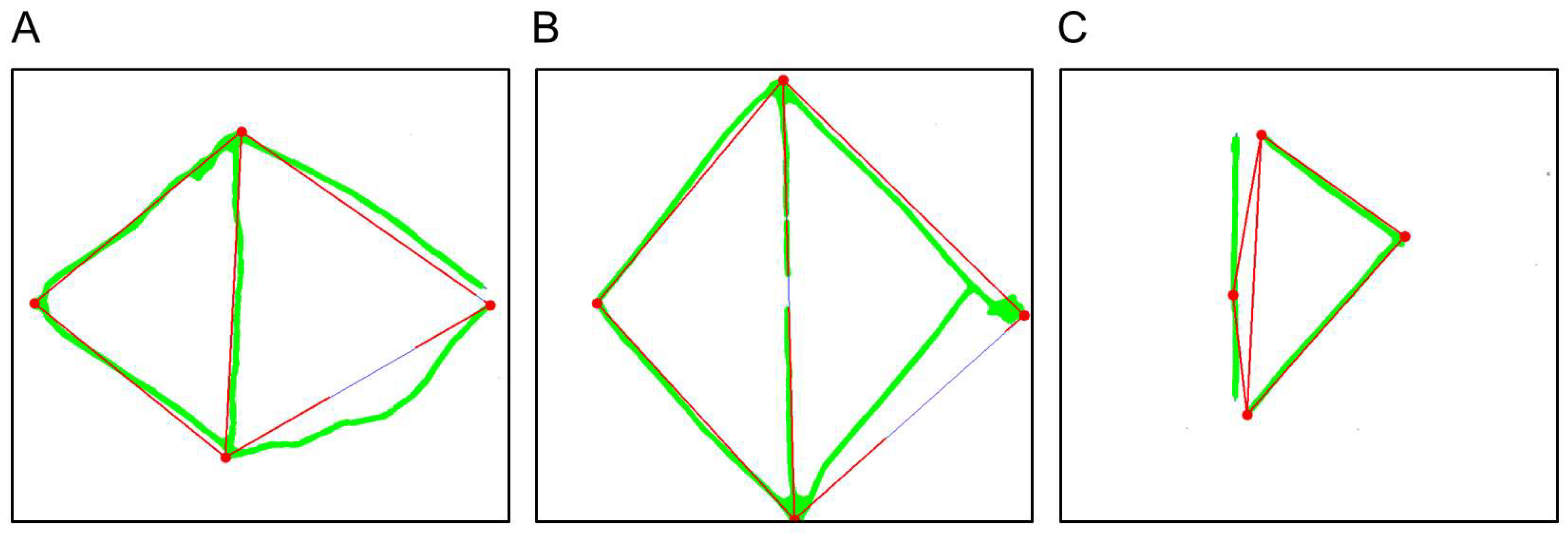
3.1.8. Technical Implementation: Copying Diamond
3.1.9. Technical Implementation: Line Bisection
3.2. Results
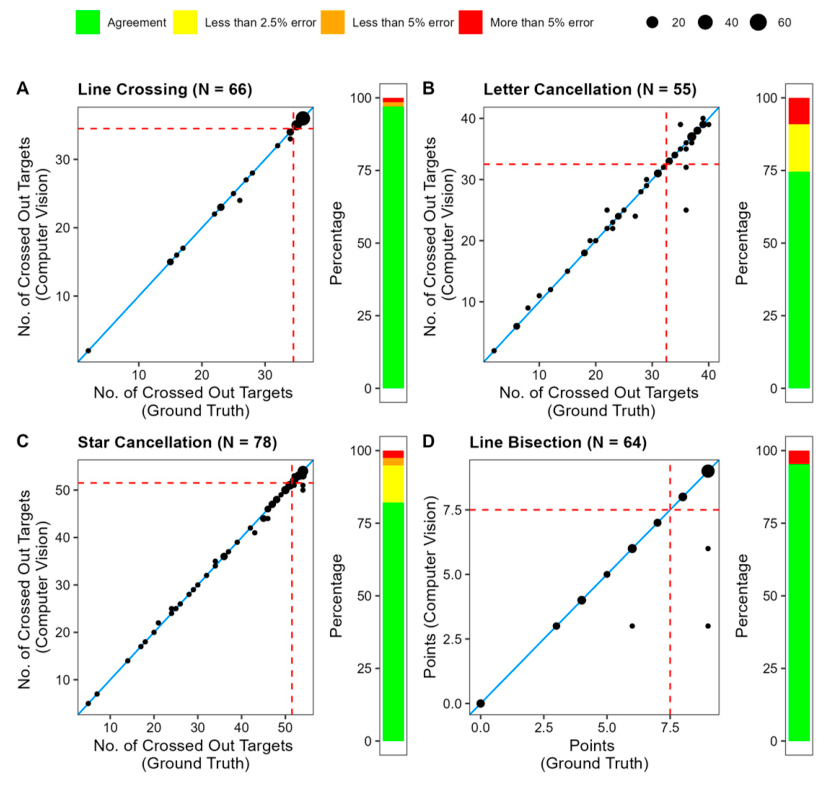
3.2.1. Line Crossing
3.2.2. Letter Cancellation
3.2.3. Star Cancellation
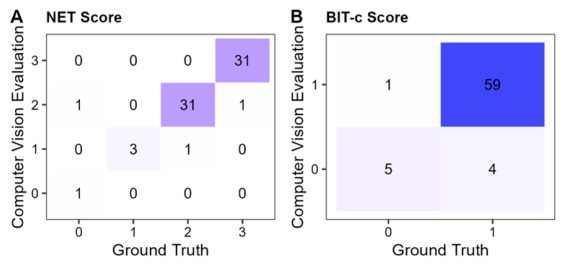
3.2.4. Line Bisection
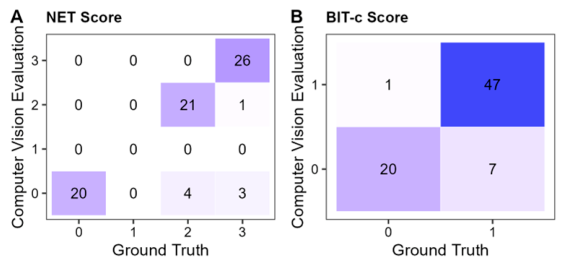
3.2.5. Star Copying
3.2.6. Diamond Copying
3.2.7. Influence on Diagnosis
3.2.8. Evaluation on an Independent Holdout Cohort
3.2.9. Agreement Between Human Raters and CANDO
3.3. Interim Discussion
4. General Discussion
4.1. Problems with Manual Evaluation—Lack of Specificity and Subjectivity in Evaluating the Copying and Drawing Subtests
4.2. Minimum Acceptable Accuracy
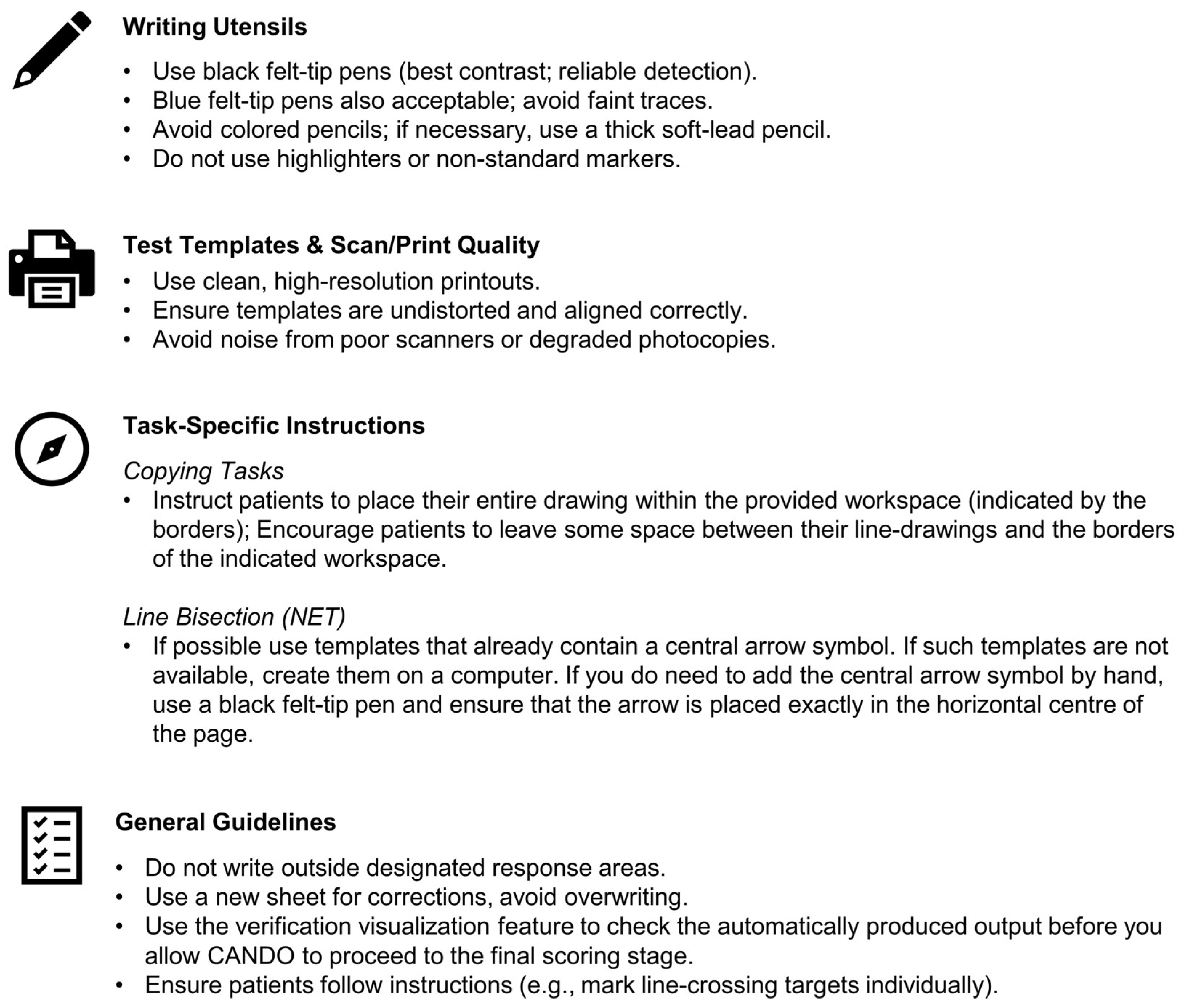
4.3. Best-Practice Suggestions
4.4. Limitations and Future Directions
5. Conclusions
Supplementary Materials
Author Contributions
Funding
Institutional Review Board Statement
Informed Consent Statement
Data Availability Statement
Acknowledgments
Conflicts of Interest
Abbreviations
| AI | Artificial intelligence |
| AUC | Area under the curve |
| BIT | Behavioural Inattention Test |
| BIT-c | Conventional subtests of the BIT |
| BIT-b | Behavioral subtests of the BIT |
| CANDO | Computer-based Analysis of Neglect Deficits On paper |
| CI | Confidence interval |
| CoC | Center-of-cancellation |
| CV | Computer vision |
| ICC | Intraclass correlation coefficient |
| M | Mean |
| Mdn | Median |
| ML | Machine learning |
| NET | Neglect Test |
| N+ | Neglect patients |
| N− | Non-neglect patients |
| ROC | Receiver operating characteristics |
| VFD | Visual field defects |
References
- Danckert, J.; Ferber, S. Revisiting Unilateral Neglect. Neuropsychologia 2006, 44, 987–1006. [Google Scholar] [CrossRef] [Scilit] [PubMed]
- Esposito, E.; Shekhtman, G.; Chen, P. Prevalence of Spatial Neglect Post-Stroke: A Systematic Review. Ann. Phys. Rehabil. Med. 2021, 64, 101459. [Google Scholar] [CrossRef] [Scilit]
- Chen, P.; Hreha, K.; Kong, Y.; Barrett, A.M. Impact of Spatial Neglect on Stroke Rehabilitation: Evidence From the Setting of an Inpatient Rehabilitation Facility. Arch. Phys. Med. Rehabil. 2015, 96, 1458–1466. [Google Scholar] [CrossRef] [Scilit]
- Chen, P.; Ward, I.; Khan, U.; Liu, Y.; Hreha, K. Spatial Neglect Hinders Success of Inpatient Rehabilitation in Individuals with Traumatic Brain Injury. Neurorehabilit. Neural Repair 2016, 30, 451–460. [Google Scholar] [CrossRef] [Scilit]
- Czernuszenko, A.; Czlonkowska, A. Risk Factors for Falls in Stroke Patients during Inpatient Rehabilitation. Clin. Rehabil. 2009, 23, 176–188. [Google Scholar] [CrossRef] [Scilit]
- Kortte, K.B.; Hillis, A.E. Recent Trends in Rehabilitation Interventions for Visual Neglect and Anosognosia for Hemiplegia Following Right Hemisphere Stroke. Future Neurol. 2011, 6, 33–43. [Google Scholar] [CrossRef] [Scilit]
- Luengo-Fernandez, R.; Li, L.; Silver, L.; Gutnikov, S.; Beddows, N.C.; Rothwell, P.M. Long-Term Impact of Urgent Secondary Prevention after Transient Ischemic Attack and Minor Stroke: Ten-Year Follow-Up of the EXPRESS Study. Stroke 2022, 53, 488–496. [Google Scholar] [CrossRef] [Scilit]
- Otokita, S.; Uematsu, H.; Kunisawa, S.; Sasaki, N.; Fushimi, K.; Imanaka, Y. Impact of Rehabilitation Start Time on Functional Outcomes after Stroke. J. Rehabil. Med. 2021, 53, 1–8. [Google Scholar] [CrossRef] [Scilit] [PubMed]
- Alqahtani, D.A.; Rotgans, J.I.; Mamede, S.; Alalwan, I.; Magzoub, M.E.M.; Altayeb, F.M.; Mohamedani, M.A.; Schmidt, H.G. Does Time Pressure Have a Negative Effect on Diagnostic Accuracy? Acad. Med. 2016, 91, 710–716. [Google Scholar] [CrossRef] [Scilit] [PubMed]
- Norman, G.R.; Monteiro, S.D.; Sherbino, J.; Ilgen, J.S.; Schmidt, H.G.; Mamede, S. The Causes of Errors in Clinical Reasoning: Cognitive Biases, Knowledge Deficits, and Dual Process Thinking. Acad. Med. 2017, 92, 23–30. [Google Scholar] [CrossRef] [Scilit]
- Wilson, B.; Cockburn, J.; Halligan, P. Behavioural Inattention Test Manual; Thames Valley Test Company: Bury St Edmunds, UK, 1987. [Google Scholar]
- Sánchez-Cabeza, Á.; Huertas-Hoyas, E.; Máximo-Bocanegra, N.; Martínez-Piédrola, R.M.; Pérez-de-Heredia-Torres, M.; Alegre-Ayala, J. Spanish Transcultural Adaptation and Validity of the Behavioral Inattention Test. Occup. Ther. Int. 2017, 2017, 1423647. [Google Scholar] [CrossRef] [Scilit]
- Fels, M.; Geissner, E. Neglect-Test:(NET); Ein Verfahren Zur Erfassung Visueller Neglectphänomene; Deutsche Überarbeitete Adaptation Des Behavioural Inattention Test (Wilson, Cockburn & Halligan 1987); Handanweisung. 2., korr. Aufl.; Hogrefe, Verl. für Psychologie: Göttingen, Germany, 1997. [Google Scholar]
- Ishiai, S. Behavoural Inattention Test. Japanese Edition; Shinkoh Igaku Shuppan Company Limited: Tokyo, Japan, 1999. [Google Scholar]
- Rorden, C.; Karnath, H.O. A Simple Measure of Neglect Severity. Neuropsychologia 2010, 48, 2758–2763. [Google Scholar] [CrossRef] [Scilit]
- Pedroli, E.; Serino, S.; Cipresso, P.; Pallavicini, F.; Riva, G. Assessment and Rehabilitation of Neglect Using Virtual Reality: A Systematic Review. Front. Behav. Neurosci. 2015, 9, 1–15. [Google Scholar] [CrossRef] [Scilit]
- Giannakou, I.; Lin, D.; Punt, D. Computer-Based Assessment of Unilateral Spatial Neglect: A Systematic Review. Front. Neurosci. 2022, 16, 1–14. [Google Scholar] [CrossRef] [Scilit]
- Terruzzi, S.; Albini, F.; Massetti, G.; Etzi, R.; Gallace, A.; Vallar, G. The Neuropsychological Assessment of Unilateral Spatial Neglect Through Computerized and Virtual Reality Tools: A Scoping Review. Neuropsychol. Rev. 2024, 34, 363–401. [Google Scholar] [CrossRef] [Scilit]
- Vaes, N.; Lafosse, C.; Nys, G.; Schevernels, H.; Dereymaeker, L.; Oostra, K.; Hemelsoet, D.; Vingerhoets, G. Capturing Peripersonal Spatial Neglect: An Electronic Method to Quantify Visuospatial Processes. Behav. Res. Methods 2015, 47, 27–44. [Google Scholar] [CrossRef] [Scilit]
- Jee, H.; Kim, J.; Kim, C.; Kim, T.; Park, J. Feasibility of a Semi-Computerized Line Bisection Test for Unilateral Visual Neglect Assessment. Appl. Clin. Inform. 2015, 6, 400–417. [Google Scholar] [CrossRef] [Scilit] [PubMed]
- Buxbaum, L.J.; Dawson, A.M.; Linsley, D. Reliability and Validity of the Virtual Reality Lateralized Attention Test in Assessing Hemispatial Neglect in Right-Hemisphere Stroke. Neuropsychology 2012, 26, 430–441. [Google Scholar] [CrossRef] [Scilit] [PubMed]
- Fordell, H.; Bodin, K.; Bucht, G.; Malm, J. A Virtual Reality Test Battery for Assessment and Screening of Spatial Neglect. Acta Neurol. Scand. 2011, 123, 167–174. [Google Scholar] [CrossRef] [Scilit]
- Uimonen, J.; Villarreal, S.; Laari, S.; Arola, A.; Ijäs, P.; Salmi, J.; Hietanen, M. Virtual Reality Tasks with Eye Tracking for Mild Spatial Neglect Assessment: A Pilot Study with Acute Stroke Patients. Front. Psychol. 2024, 15, 1–17. [Google Scholar] [CrossRef] [Scilit]
- Stammler, B.; Lambert, M.; Schuster, T.; Flammer, K.; Karnath, H.O. Using Augmented Reality to Assess Spatial Neglect: The Free Exploration Test (FET). J. Int. Neuropsychol. Soc. 2024, 30, 635–642. [Google Scholar] [CrossRef] [Scilit]
- Kirkham, R.; Kooijman, L.; Albertella, L.; Myles, D.; Yücel, M.; Rotaru, K. Immersive Virtual Reality-Based Methods for Assessing Executive Functioning: Systematic Review. JMIR Serious Games 2024, 12, 1–26. [Google Scholar] [CrossRef] [Scilit]
- Williams, L.J.; Loetscher, T.; Hillier, S.; Hreha, K.; Bowen, A.; Kernot, J.; Williams, L.J.; Loetscher, T.; Hillier, S.; Hreha, K.; et al. Identifying Spatial Neglect—An Updated Systematic Review of the Psychometric Properties of Assessment Tools in Adults Post-Stroke. Neuropsychol. Rehabil. 2024, 35, 628–667. [Google Scholar] [CrossRef] [Scilit]
- Albert, M.L. A Simple Test of Visual Neglect. Neurology 1973, 23, 658–664. [Google Scholar] [CrossRef] [Scilit]
- Bonato, M. Neglect and Extinction Depend Greatly on Task Demands: A Review. Front. Hum. Neurosci. 2012, 6, 1–13. [Google Scholar] [CrossRef] [Scilit]
- Orbach, J.; Ehrlich, D.; Heath, H.A. Reversibility of the Necker Cube: I. An Examination of the Concept of “Satiation of Orientation”. Percept. Mot. Ski. 1963, 17, 439–458. [Google Scholar] [CrossRef] [Scilit]
- Seki, K.; Ishiai, S.; Koyama, Y.; Sato, S.; Hirabayashi, H.; Inaki, K. Why Are Some Patients with Severe Neglect Able to Copy a Cube? The Significance of Verbal Intelligence. Neuropsychologia 2000, 38, 1466–1472. [Google Scholar] [CrossRef] [Scilit]
- Oonuma, J.; Kasai, M.; Meguro, M.; Akanuma, K.; Yamaguchi, S.; Meguro, K. Necker Cube Copying May Not Be Appropriate as an Examination of Dementia: Reanalysis from the Tajiri Project. Psychogeriatrics 2016, 16, 298–304. [Google Scholar] [CrossRef] [Scilit]
- Shimada, Y.; Meguro, K.; Kasai, M.; Shimada, M.; Ishii, H.; Yamaguchi, S.; Yamadori, A. Necker Cube Copying Ability in Normal Elderly and Alzheimer’s Disease. A Community-Based Study: The Tajiri Project. Psychogeriatrics 2006, 6, 4–9. [Google Scholar] [CrossRef] [Scilit]
- Halligan, P.W.; Cockburn, J.; Wilson, B.A. The Behavioural Assessment of Visual Neglect. Neuropsychol. Rehabil. 1991, 1, 5–32. [Google Scholar] [CrossRef] [Scilit]
- Wilson, B.; Cockburn, J.; Halligan, P. Development of a Behavioral Test of Visuospatial Neglect. Arch. Phys. Med. Rehabil. 1987, 68, 98–102. [Google Scholar]
- Hannaford, S.; Gower, G.; Potter, J.; Guest, R.; Fairhurst, M. Assessing Visual Inattention: Study of Inter-Rater Reliability. Br. J. Ther. Rehabil. 2003, 10, 72–75. [Google Scholar] [CrossRef] [Scilit]
- Krippendorff, K. Content Analysis: An Introduction to Its Methodology; SAGE Publications, Inc.: Thousand Oaks, CA, USA, 2019; ISBN 9781506395661. [Google Scholar]
- Marzi, G.; Balzano, M.; Marchiori, D. K-Alpha Calculator–Krippendorff’s Alpha Calculator: A User-Friendly Tool for Computing Krippendorff’s Alpha Inter-Rater Reliability Coefficient. MethodsX 2024, 12, 102545. [Google Scholar] [CrossRef] [Scilit] [PubMed]
- Hooftman, J.; Olson, A.P.J.; McQuade, C.N.; Mamede, S.; Wagner, C.; Zwaan, L. Time Pressure in Diagnosing Written Clinical Cases: An Experimental Study on Time Constraints and Perceived Time Pressure. Diagnosis 2025, 12, 74–81. [Google Scholar] [CrossRef] [Scilit] [PubMed]
- Langer, N.; Weber, M.; Hebling Vieira, B.; Strzelczyk, D.; Wolf, L.; Pedroni, A.; Heitz, J.; Müller, S.; Schultheiss, C.; Troendle, M.; et al. A Deep Learning Approach for Automated Scoring of the Rey-Osterrieth Complex Figure. Elife 2024, 13, 1–17. [Google Scholar] [CrossRef] [Scilit]
- Wall, C.; Powell, D.; Young, F.; Zynda, A.J.; Stuart, S.; Covassin, T.; Godfrey, A. A Deep Learning-Based Approach to Diagnose Mild Traumatic Brain Injury Using Audio Classification. PLoS ONE 2022, 17, e0274395. [Google Scholar] [CrossRef] [Scilit]
- Chen, S.; Stromer, D.; Alabdalrahim, H.A.; Schwab, S.; Weih, M.; Maier, A. Automatic Dementia Screening and Scoring by Applying Deep Learning on Clock-Drawing Tests. Sci. Rep. 2020, 10, 20854. [Google Scholar] [CrossRef]
- Vaccaro, M.G.; Sarica, A.; Quattrone, A.; Chiriaco, C.; Salsone, M.; Morelli, M.; Quattrone, A. Neuropsychological Assessment Could Distinguish among Different Clinical Phenotypes of Progressive Supranuclear Palsy: A Machine Learning Approach. J. Neuropsychol. 2021, 15, 301–318. [Google Scholar] [CrossRef] [Scilit]
- O’Mahony, N.; Campbell, S.; Carvalho, A.; Harapanahalli, S.; Hernandez, G.V.; Krpalkova, L.; Riordan, D.; Walsh, J. Deep Learning vs. Traditional Computer Vision. In Advances in Intelligent Systems and Computing; Springer: London, UK, 2020; Volume 943, pp. 128–144. [Google Scholar]
- LeCun, Y.; Bengio, Y.; Hinton, G. Deep Learning. Nature 2015, 521, 436–444. [Google Scholar] [CrossRef] [Scilit]
- Landis, J.R.; Koch, G.G. The Measurement of Observer Agreement for Categorical Data. Biometrics 1977, 33, 159. [Google Scholar] [CrossRef] [Scilit] [PubMed]
- Koo, T.K.; Li, M.Y. A Guideline of Selecting and Reporting Intraclass Correlation Coefficients for Reliability Research. J. Chiropr. Med. 2016, 15, 155–163. [Google Scholar] [CrossRef] [Scilit]
- Cabitza, F.; Campagner, A.; Del Zotti, F.; Ravizza, A.; Sternini, F. All You Need Is Higher Accuracy? On the Quest for Minimum Acceptable Accuracy for Medical Artificial Intelligence. In Proceedings of the 12th International Conference on e-Health, Online, 21–25 July 2020; pp. 159–166. [Google Scholar] [CrossRef] [Scilit]
- Shulman, K.I. Clock-Drawing: Is It the Ideal Cognitive Screening Test? Int. J. Geriatr. Psychiatry 2000, 15, 548–561. [Google Scholar] [CrossRef] [PubMed]
- Borson, S.; Scanlan, J.M.; Chen, P.; Ganguli, M. The Mini-Cog as a Screen for Dementia: Validation in a Population-Based Sample. J. Am. Geriatr. Soc. 2003, 51, 1451–1454. [Google Scholar] [CrossRef] [Scilit]
- Ishiai, S.; Sugishita, M.; Ichikawa, T.; Gono, S.; Watabiki, S. Clock-Drawing Test and Unilateral Spatial Neglect. Neurology 1993, 43, 106–110. [Google Scholar] [CrossRef] [Scilit]
- Kirby, M.; Denihan, A.; Bruce, I.; Coakley, D.; Lawlor, B.A. The Clock Drawing Test in Primary Care: Sensitivity in Dementia Detection and Specificity against Normal and Depressed Elderly. Int. J. Geriatr. Psychiatry 2001, 16, 935–940. [Google Scholar] [CrossRef] [Scilit] [PubMed]
- McIntosh, R.D.; Schindler, I.; Birchall, D.; Milner, A.D. Weights and Measures: A New Look at Bisection Behaviour in Neglect. Cogn. Brain Res. 2005, 25, 833–850. [Google Scholar] [CrossRef] [Scilit]
- McIntosh, R.D.; Ietswaart, M.; Milner, A.D. Weight and See: Line Bisection in Neglect Reliably Measures the Allocation of Attention, but Not the Perception of Length. Neuropsychologia 2017, 106, 146–158. [Google Scholar] [CrossRef] [Scilit]






| BIT-c | NET | ||
|---|---|---|---|
| Subtest | Evaluation | Changes in Subtest | Changes in Evaluation |
| Line crossing | No. of crossed-out targets | Identical | Identical * |
| Letter cancellation | No. of crossed-out targets | Identical | Identical * |
| Star cancellation | No. of crossed-out targets | German distractor words | Identical * |
| Figure and shape copying (a): star, Necker cube, flower | Scoring (0 or 1) based on completeness per figure | Necker Cube is replaced by a diamond | Scoring on three criteria per figure: (1) gestalt, (2) details, (3) arrangement |
| Figure and shape copying (b): geometric shapes | Scoring (0 or 1) based on completeness per figure | Not included | Not included |
| Line bisection | deviation from true center based on scoring templates | Identical | Identical * |
| Representational drawing: (a) clockface with numbers, (b) simple drawing of a man or woman, (c) simple drawing of a butterfly | Scoring (0 or 1) based on completeness per figure | Parts (b) and (c) are not included | Scoring on three criteria per figure: (1) gestalt, (2) details, (3) correctness |
| All | N+ | N− | |
|---|---|---|---|
| Total | 101 | 54 | 47 |
| Gender (% male) | 54.46 | 59.26 | 48.94 |
| Age (years) | 63.25 | 67.42 | 58.45 |
| Lesion site (% right) | 78.22 | 88.88 | 65.96 |
| Visual field defects (%) | 28.72 | 11.11 | 48.94 |
| Subtest | Comparison | Exact Agreement (%) | Agreement Within ± 1 (%) | Mean Absolute Difference | ICC [95% CI] |
|---|---|---|---|---|---|
| Line crossing | LB vs. DS | 96.97 | 96.97 | 0.06 | 0.998 [0.997, 0.999] |
| LB vs. CANDO | 93.94 | 96.97 | 0.09 | 0.998 [0.997, 0.999] | |
| DS vs. CANDO | 90.91 | 93.94 | 0.15 | 0.997 [0.994, 0.999] | |
| Letter cancellation | LB vs. DS | 93.94 | 100.00 | 0.06 | 1.000 [0.999, 1.000] |
| LB vs. CANDO | 72.73 | 93.94 | 0.64 | 0.969 [0.938, 0.984] | |
| DS vs. CANDO | 66.67 | 93.94 | 0.70 | 0.968 [0.938, 0.984] | |
| Star cancellation | LB vs. DS | 87.88 | 100.00 | 0.12 | 1.000 [0.999, 1.000] |
| LB vs. CANDO | 81.82 | 93.94 | 0.24 | 1.000 [1.000, 1.000] | |
| DS vs. CANDO | 78.79 | 93.94 | 0.30 | 0.998 [0.996, 0.999] | |
| Line bisection * | LB vs. DS | 96.97 | 100.00 | 0.03 | 0.998 [0.997, 0.999] |
| LB vs. CANDO | 90.91 | 96.97 | 0.15 | 0.982 [0.964, 0.991] | |
| DS vs. CANDO | 87.88 | 96.97 | 0.18 | 0.980 [0.961, 0.990] |
| Subtest | Comparison | Exact Agreement (%) | Mean Absolute Difference | Weighted Kappa |
|---|---|---|---|---|
| Star copying (NET) | LB vs. DS | 45.45 | 0.67 | 0.678 |
| LB vs. CANDO | 81.82 | 0.21 | 0.898 | |
| DS vs. CANDO | 42.42 | 0.82 | 0.547 | |
| Star copying (NET), arrangement excluded | LB vs. DS | 81.82 | 0.24 | 0.747 |
| LB vs. CANDO | 90.91 | 0.12 | 0.895 | |
| DS vs. CANDO | 75.76 | 0.36 | 0.633 | |
| Star copying (BIT) | LB vs. DS | 100.00 | 0.00 | 1.000 |
| LB vs. CANDO | 96.97 | 0.03 | 0.933 | |
| DS vs. CANDO | 96.97 | 0.03 | 0.933 | |
| Diamond copying (NET) | LB vs. DS | 39.39 | 0.64 | 0.375 |
| LB vs. CANDO | 84.85 | 0.15 | 0.813 | |
| DS vs. CANDO | 48.48 | 0.55 | 0.402 | |
| Diamond copying (NET), arrangement excluded | LB vs. DS | 93.94 | 0.06 | 0.764 |
| LB vs. CANDO | 90.91 | 0.09 | 0.615 | |
| DS vs. CANDO | 90.91 | 0.09 | 0.615 | |
| Diamond copying (BIT) | LB vs. DS | 94.97 | 0.03 | 0.891 |
| LB vs. CANDO | 93.94 | 0.06 | 0.766 | |
| DS vs. CANDO | 90.91 | 0.09 | 0.615 |
Disclaimer/Publisher’s Note: The statements, opinions and data contained in all publications are solely those of the individual author(s) and contributor(s) and not of MDPI and/or the editor(s). MDPI and/or the editor(s) disclaim responsibility for any injury to people or property resulting from any ideas, methods, instructions or products referred to in the content. |
© 2026 by the authors. Licensee MDPI, Basel, Switzerland. This article is an open access article distributed under the terms and conditions of the Creative Commons Attribution (CC BY) license.
Share and Cite
Beckmann, L.; Donohoe, R.; Schmid, D.; Kiphuth, I.C.; Ludwig, K.; Schenk, T. Paper to Pixels: Enhancing Unilateral Neglect Assessment Using the New Computer Vision-Based Tool CANDO. Brain Sci. 2026, 16, 541. https://doi.org/10.3390/brainsci16050541
Beckmann L, Donohoe R, Schmid D, Kiphuth IC, Ludwig K, Schenk T. Paper to Pixels: Enhancing Unilateral Neglect Assessment Using the New Computer Vision-Based Tool CANDO. Brain Sciences. 2026; 16(5):541. https://doi.org/10.3390/brainsci16050541
Chicago/Turabian StyleBeckmann, Lisa, Rylan Donohoe, Doris Schmid, Ines C. Kiphuth, Karin Ludwig, and Thomas Schenk. 2026. "Paper to Pixels: Enhancing Unilateral Neglect Assessment Using the New Computer Vision-Based Tool CANDO" Brain Sciences 16, no. 5: 541. https://doi.org/10.3390/brainsci16050541
APA StyleBeckmann, L., Donohoe, R., Schmid, D., Kiphuth, I. C., Ludwig, K., & Schenk, T. (2026). Paper to Pixels: Enhancing Unilateral Neglect Assessment Using the New Computer Vision-Based Tool CANDO. Brain Sciences, 16(5), 541. https://doi.org/10.3390/brainsci16050541