Surgical Management of Traumatic Brain Injury Based on Intracranial Compliance: Toward Personalized Decision-Making

 , , ,
, , , 
Highlights
- •
- The framework of surgical management of the intracranial compartment syndrome shifts surgical reasoning from lesion-centered thresholds to physiology-centered management.
- •
- What ultimately drives the neurosurgical intervention are not numerical values, but the loss of intracranial compliance and the physiological consequences that follow.
- •
- This framework proposes a surgical shift from traditional approaches to new models based on physiopathology instead of primary injury size.
- •
- This compliance-based surgical model does not challenge randomized evidence but offers a physiological lens through which existing surgical outcome data can be interpreted more coherently, helping explain outcome variability, refining patient selection, and guiding future trial design.
Abstract
1. Introduction: Why Neurosurgeons Need a New Decision Framework
2. Surgical Problem: What Surgeons Are Actually Targeting in TBI
3. Intracranial Compartment Syndrome for Surgeons
4. Compliance Assessment and Intracranial Compartment Syndrome Staging
5. Surgical Principles for Intracranial Compartment Syndrome Stage
5.1. Stage 1: Structural Injury with Preserved Compliance
- •
- Infection control (e.g., penetrating injuries, post-traumatic cerebrospinal fluid leaks);
- •
- Anatomical restoration (e.g., depressed skull fractures);
- •
- Neuromonitoring procedures (e.g., intraparenchymal monitoring, EVD).
5.2. Stage 2: Compliance Failure with Preserved Oxygenation
- •
- Surgical indication is physiology-driven rather than volume-based or dictated by fixed ICP cutoffs;
- •
- Space-occupying lesions may require evacuation below classical thresholds if they affect the intracranial compliance;
- •
- Surgical treatment of intracranial hypertension may be required when medical management fails, and compliance remains compromised;
- •
- Procedures are selected according to the dominant mechanism of compliance failure: focal mass effect, regional loss of buffering, or impaired CSF circulation. It can start with a simple ventriculostomy or a cisternostomy approach to a craniotomy procedure;
- •
- At this stage, delay converts a correctable physiology into irreversible injury.
- •
- Midline shift ≥5 mm;
- •
- Peri mesencephalic cistern effacement (Grade III edema);
- •
- Acute subdural hematoma with Zumkeller Index > 3;
- •
- Compromised cerebral autoregulation;
- •
- Penetrating brain injury.
5.3. Stage 3: Compliance Failure with Impaired Oxygenation
- •
- Surgical intervention is mandatory once compliance failure is accompanied by impaired cerebral oxygenation not attributable to extracranial causes.
- •
- Definitive and aggressive decompression is favored over temporizing or partial procedures that risk transient or incomplete restoration of cerebral perfusion. The threshold for cranial decompression should remain low.
- •
- Apparent intraoperative brain relaxation must not be interpreted as restored compliance or as justification to avoid decompression. Surgical planning must anticipate delayed edema secondary to ischemia–hypoxia injury.
- •
- At this stage, surgery is not preventive; it looks for partial or total brain tissue recovery. Delay converts an ischemic brain into an infarcted brain.
- •
- Procedures include expansion craniotomy (hinge craniotomy) or full decompression.
6. A Practical Surgical Decision-Making Framework
7. Selected Scenarios (Pearls and Pitfalls)
7.1. Decompressive Craniectomy
- •
- ICCS Stage 3 is driven by any combination of primary injuries, particularly refractory cerebral edema despite optimized medical and prior surgical management;
- •
- Prolonged hypoxic–ischemic injury of any origin, even in the absence of marked swelling at the time of intervention, anticipating delayed cerebral edema;
- •
- Presence of high-risk modifiers (e.g., severe midline shift, cisternal obliteration, Zumkeller index > 3).
- •
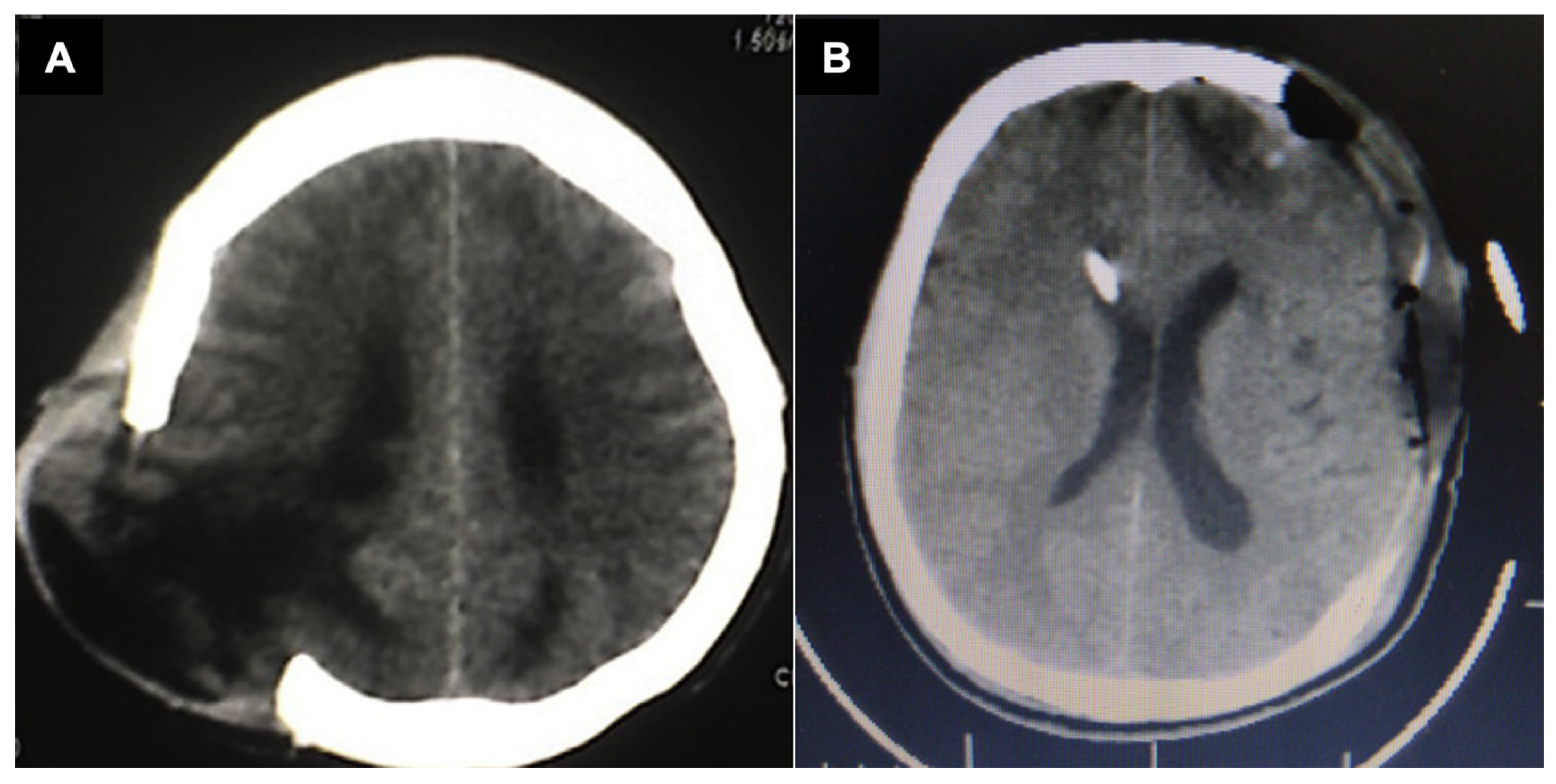
- Insufficient bone removal leading to incomplete decompression, particularly along the middle cranial fossa floor (see Figure 4);
- •
- Misinterpreting transient intraoperative brain relaxation as evidence of sustained compliance restoration;
- •
- Delayed decompression after irreversible cerebral hypoperfusion and infarction have already occurred;
- •
- Inadequate or overly tight duroplasty that limits postoperative expansion.
- •
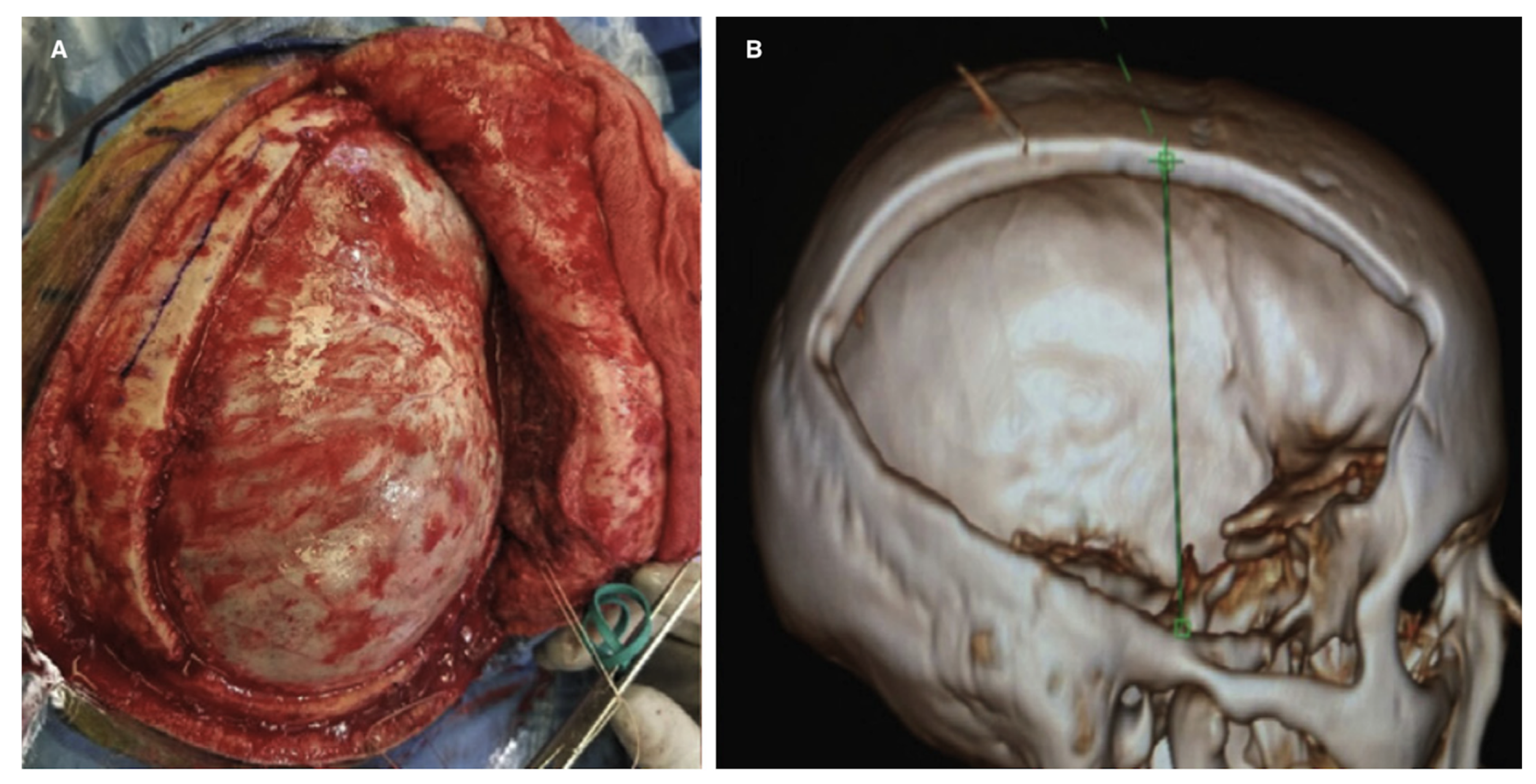
- Favor wide frontal-temporal-parietal craniectomies (≥12–15 cm) over limited exposures (see Figure 5);
- •
- Ensure adequate decompression of the frontal base and temporal floor to maximize volumetric gain;
- •
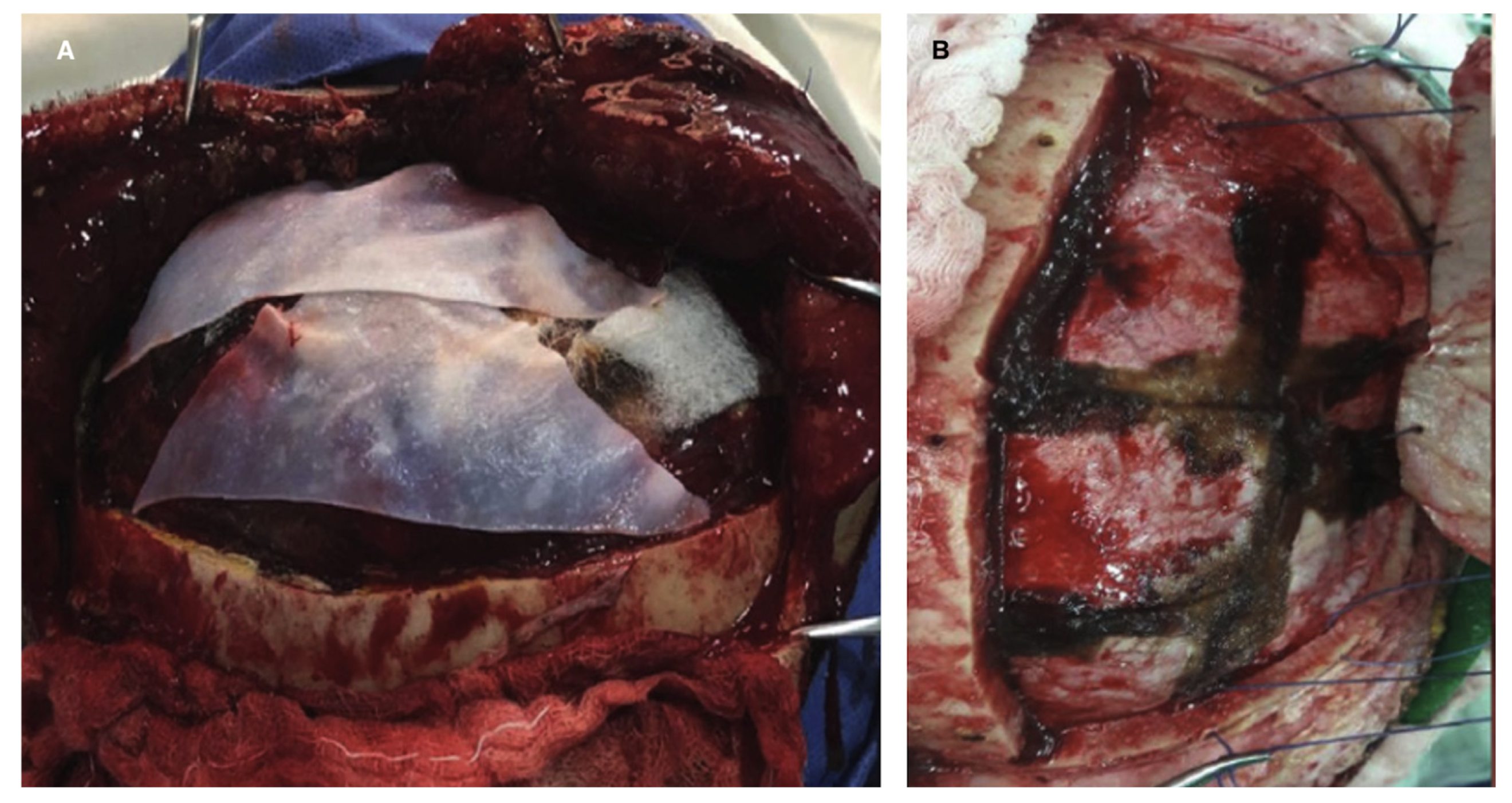
- Choose dural opening patterns that maximize surface exposure and relaxation. C-shaped and stellate durotomies provide superior decompression by allowing uniform cortical expansion and minimizing residual dural constraint compared to limited linear or H-shaped incisions (see Figure 6);
- •
- Match dural expansion to the extent of bone removal; avoid constrictive duroplasty;
- •
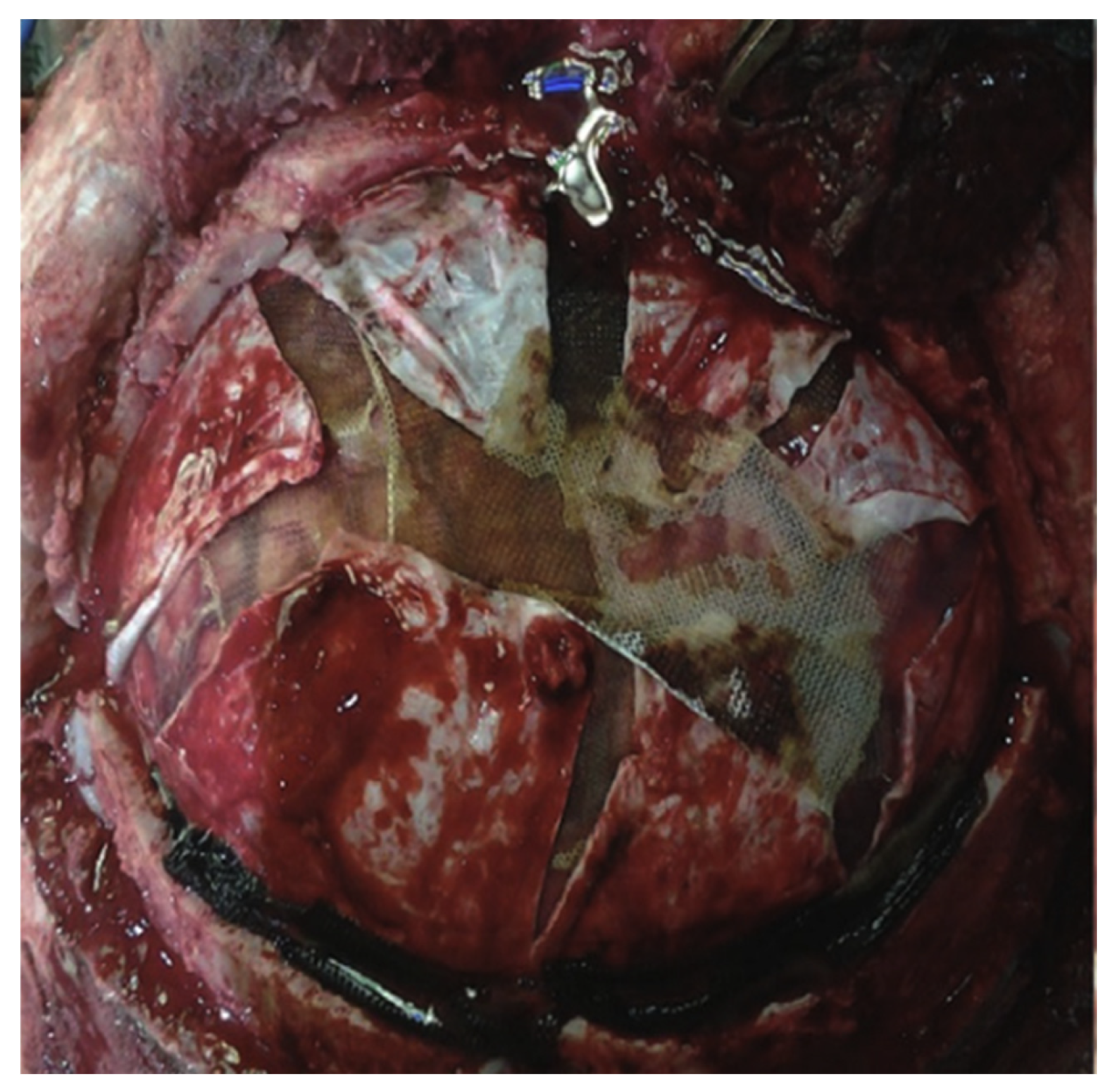
- Watertight dural closure will not always be possible. Dural substitutes or hemostatic wraps may be used to provide cortical protection without restricting postoperative expansion (see Figure 7);
- •
- Anticipate postoperative edema: minimal brain bulge intraoperatively does not predict postoperative compliance.


7.2. Expansion Craniotomy
- •
- ICCS Stage 2 driven entirely or in part by mild to moderate refractory cerebral edema despite optimized medical and prior surgical management.
- •
- Underestimating the required volumetric expansion, resulting in insufficient compliance gain;
- •
- Fixating the bone flap too close to its original plane, eliminating the intended space for cerebral expansion;
- •
- Mistaking transient intraoperative brain relaxation for long-term physiological improvement when prolonged ischemia has occurred;
- •
- Delaying conversion to decompressive craniectomy when compliance continues to deteriorate.
- •
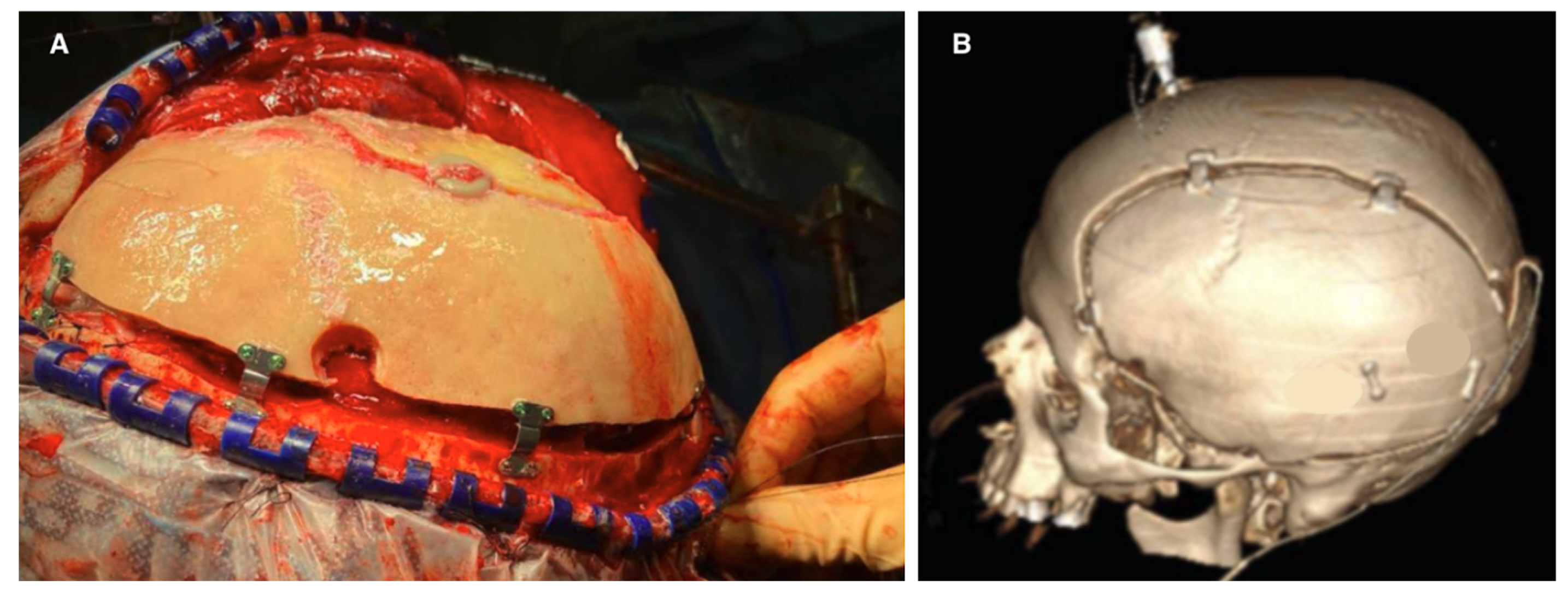
- In cases of expansion craniotomy or hinge craniotomy, elevate the bone flap at least 10–15 mm above the external table cranial edge to achieve meaningful volume expansion;
- •
- Secure rigid fixation (plates or hinges) that maintains stable outward displacement (see Figure 8);
- •
- Avoid watertight or constrictive duroplasty; dural slack is essential for effectiveness;
- •
- Re-evaluate intraoperatively: if expansion is insufficient, escalate promptly to decompressive craniectomy.

7.3. Cisternostomy
- •
- ICCS Stage 2 driven by basal cisternal crowding by tSAH with suspected obstruction of CSF flow.
- •
- Using cisternostomy in the setting of established ischemia and hypoxia as a substitute for decompressive craniectomy. Cisternostomy should be considered a compliance-modifying strategy, not a decompressive alternative;
- •
- Attempting the procedure without sufficient microsurgical experience or inadequate surgical exposure.
- •
- •
- Irrigation should be performed gently to avoid secondary injury while facilitating clearance of subarachnoid blood;
- •
- The goal is not drainage alone, but restoration of CSF circulation and perivascular flow;
- •
- Failure to observe physiological improvement should prompt treatment escalation.
7.4. External Ventricular Drain
- •
- ICCS Stage 2, when intracranial compliance is impaired but cerebral oxygenation remains preserved;
- •
- Patients in whom CSF diversion is expected to contribute meaningfully to intracranial hypertension control, such as those with post-traumatic hydrocephalus, intraventricular hemorrhage, or ventricular contribution to compliance failure;
- •
- As an early therapeutic intervention for intracranial hypertension when indicated, provided it does not delay urgent decompressive or lesion-directed surgery.
- •
- Using ventriculostomy as a definitive strategy in ICCS Stage 3, where compliance failure is associated with cerebral hypoxia and requires aggressive decompression;
- •
- Relying on absolute ICP reduction without improvement in waveform morphology or global physiological response;
- •
- Excessive or uncontrolled CSF drainage leads to ventricular collapse, hemorrhage, or misleading transient improvement;
- •
- Delayed escalation when compliance continues to deteriorate despite adequate ventricular drainage.
- •
- Prefer Kocher’s point; adjust only when anatomy or prior surgery mandates deviation;
- •
- Depth is physiology-guided, not metric-guided: CSF return defines ventricular entry;
- •
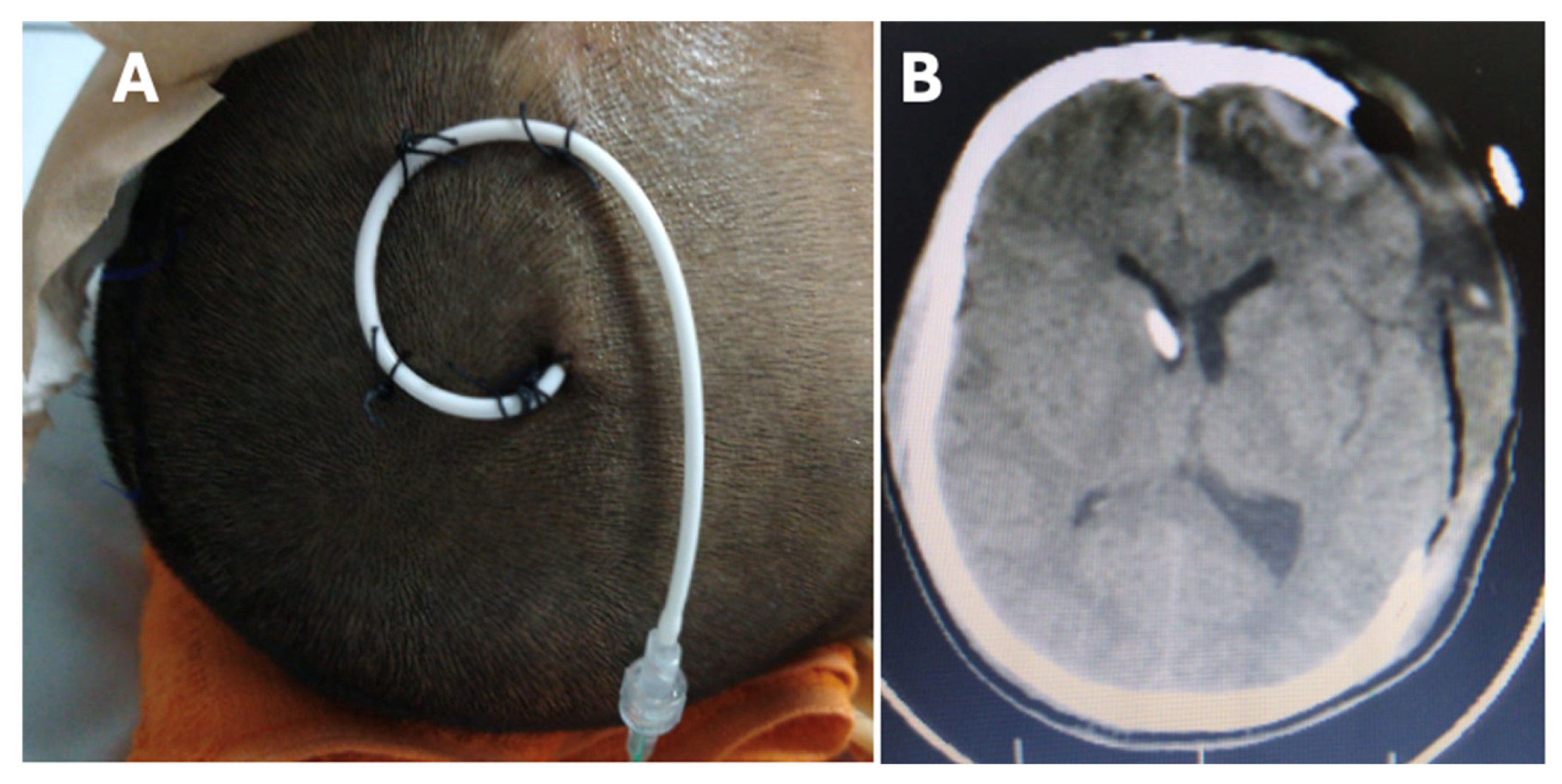
- Secure long subcutaneous tunneling (≥10 cm) to reduce infection and accidental displacement (see Figure 9);
- •
- Initiate gradual CSF drainage; avoid rapid decompression that may precipitate ventricular collapse or hemorrhage;
- •
- Always correlate drainage efficacy with ICP waveform pulsatility, not ICP values alone;
- •
- Absence of drainage or waveform oscillation should trigger immediate patency assessment before imaging or escalation;
- •
- When precise and continuous ICP assessment is essential, ventricular drainage should be complemented by an intraparenchymal ICP sensor, as ventricular drainage transducers alone may be unreliable.

8. Future Directions in Surgical Management of TBI
9. Conclusions
Author Contributions
Funding
Institutional Review Board Statement
Informed Consent Statement
Data Availability Statement
Conflicts of Interest
Correction Statement
References
- Dewan, M.C.; Rattani, A.; Gupta, S.; Baticulon, R.E.; Hung, Y.C.; Punchak, M.; Agrawal, A.; Adeleye, A.O.; Shrime, M.G.; Rubiano, A.M.; et al. Estimating the global incidence of traumatic brain injury. J. Neurosurg. 2019, 130, 1080–1097. [Google Scholar] [CrossRef] [PubMed]
- Global Burden of Disease Study 2013 Collaborators. Global, regional, and national incidence, prevalence, and years lived with disability for 301 acute and chronic diseases and injuries in 188 countries, 1990–2013: A systematic analysis for the Global Burden of Disease Study 2013. Lancet 2015, 386, 743–800.
- Godoy, D.A.; Lubillo, S.; Rabinstein, A.A. Pathophysiology and Management of Intracranial Hypertension and Tissular Brain Hypoxia After Severe Traumatic Brain Injury: An Integrative Approach. Neurosurg. Clin. N. Am. 2018, 29, 195–212. [Google Scholar] [CrossRef] [PubMed]
- Goldman, L.; Siddiqui, E.M.; Khan, A.; Jahan, S.; Rehman, M.U.; Mehan, S.; Sharma, R.; Budkin, S.; Kumar, S.N.; Sahu, A.; et al. Understanding Acquired Brain Injury: A Review. Biomedicines 2022, 10, 2167. [Google Scholar] [CrossRef]
- Carney, N.; Totten, A.M.; O’Reilly, C.; Ullman, J.S.; Hawryluk, G.W.J.; Bell, M.J.; Bratton, S.L.; Chesnut, R.; Harris, O.A.; Kissoon, N.; et al. Guidelines for the Management of Severe Traumatic Brain Injury, Fourth Edition. Neurosurgery 2017, 80, 6–15. [Google Scholar] [CrossRef]
- Manley, G.T. (Ed.) Best Practices Guidelines on the Management of Traumatic Brain Injury; American College of Surgeons: Chicago, IL, USA, 2024; Available online: https://www.facs.org/media/vgfgjpfk/best-practices-guidelines-traumatic-brain-injury.pdf (accessed on 10 December 2025).
- Chesnut, R.; Aguilera, S.; Buki, A.; Bulger, E.; Citerio, G.; Cooper, D.J.; Arrastia, R.D.; Diringer, M.; Figaji, A.; Gao, G.; et al. A management algorithm for adult patients with both brain oxygen and intracranial pressure monitoring: The Seattle International Severe Traumatic Brain Injury Consensus Conference (SIBICC). Intensive Care Med. 2020, 46, 919–929. [Google Scholar] [CrossRef]
- Hawryluk, G.W.J.; Aguilera, S.; Buki, A.; Bulger, E.; Citerio, G.; Cooper, D.J.; Arrastia, R.D.; Diringer, M.; Figaji, A.; Gao, G.; et al. A management algorithm for patients with intracranial pressure monitoring: The Seattle International Severe Traumatic Brain Injury Consensus Conference (SIBICC). Intensive Care Med. 2019, 45, 1783–1794. [Google Scholar] [CrossRef]
- Wilson, M.H. Monro-Kellie 2.0: The dynamic vascular and venous pathophysiological components of intracranial pressure. J. Cereb. Blood Flow Metab. 2016, 36, 1338–1350. [Google Scholar] [CrossRef]
- Brasil, S.; Patriota, G.C.; Godoy, D.A.; Paranhos, J.L.; Rubiano, A.M.; Paiva, W.S. Monro-Kellie 4.0: Moving from intracranial pressure to intracranial dynamics. Crit. Care 2025, 29, 229. [Google Scholar] [CrossRef]
- Al Masri, M.; Corell, A.; Michaëlsson, I.; Jakola, A.S.; Skoglund, T. The glymphatic system for neurosurgeons: A scoping review. Neurosurg. Rev. 2024, 47, 61. [Google Scholar] [CrossRef]
- Ferrara, M.; Bertozzi, G.; Volonnino, G.; Di Fazio, N.; Frati, P.; Cipolloni, L.; La Russa, R.; Fineschi, V. Glymphatic System a Window on TBI Pathophysiology: A Systematic Review. Int. J. Mol. Sci. 2022, 23, 9138. [Google Scholar] [CrossRef] [PubMed]
- Zeiler, F.A.; Aries, M.; Czosnyka, M.; Smielewski, P. Cerebral Autoregulation Monitoring in Traumatic Brain Injury: An Overview of Recent Advances in Personalized Medicine. J. Neurotrauma 2022, 39, 1477–1494. [Google Scholar] [CrossRef] [PubMed]
- Dietvorst, S.; Depreitere, B.; Meyfroidt, G. Beyond intracranial pressure: Monitoring cerebral perfusion and autoregulation in severe traumatic brain injury. Curr. Opin. Crit. Care 2023, 29, 85–88. [Google Scholar] [CrossRef]
- Coccolini, F.; Malbrain, M.L.N.G.; Kirkpatrick, A.W.; Gamberini, E. (Eds.) Compartment Syndrome (Hot Topics in Acute Care Surgery and Trauma), 1st ed.; Springer Nature: Cham, Switzerland, 2021; 229p. [Google Scholar]
- Rubiano, A.M.; Figaji, A.; Hawryluk, G.W. Intracranial pressure management: Moving beyond guidelines. Curr. Opin. Crit. Care 2022, 28, 101–110. [Google Scholar] [CrossRef] [PubMed]
- Godoy, D.A.; Brasil, S.; Rubiano, A.M. Further support for the intracranial compartmental syndrome concept. Crit. Care 2024, 28, 311. [Google Scholar] [CrossRef]
- Pelah, A.I.; Kazimierska, A.; Czosnyka, M.; Hawryluk, G.W.J. Optimal Cerebral Perfusion Pressure in Brain Injury: Physiological Relationships and Outcome. Neurosurgery 2025, 97, 863–872. [Google Scholar] [CrossRef]
- Bögli, S.Y.; Olakorede, I.; Beqiri, E.; Chen, X.; Lavinio, A.; Hutchinson, P.; Smielewski, P. Cerebral perfusion pressure targets after traumatic brain injury: A reappraisal. Crit. Care 2025, 29, 207. [Google Scholar] [CrossRef]
- Hutchinson, P.J.; Kolias, A.G.; Timofeev, I.S.; Corteen, E.A.; Czosnyka, M.; Timothy, J.; Anderson, I.; Bulters, D.O.; Belli, A.; Eynon, C.A.; et al. Trial of Decompressive Craniectomy for Traumatic Intracranial Hypertension. N. Engl. J. Med. 2016, 375, 1119–1130. [Google Scholar] [CrossRef]
- Cooper, D.J.; Rosenfeld, J.V.; Murray, L.; Arabi, Y.M.; Davies, A.R.; D’Urso, P.; Kossmann, T.; Ponsford, J.; Seppelt, I.; Reilly, P.; et al. Decompressive craniectomy in diffuse traumatic brain injury. N. Engl. J. Med. 2011, 364, 1493–1502. [Google Scholar] [CrossRef]
- Lazaridis, C.; DeSantis, S.M.; Smielewski, P.; Menon, D.K.; Hutchinson, P.; Pickard, J.D.; Czosnyka, M. Patient-specific thresholds of intracranial pressure in severe traumatic brain injury. J. Neurosurg. 2014, 120, 893–900. [Google Scholar] [CrossRef]
- Stein, K.Y.; Froese, L.; Gomez, A.; Sainbhi, A.S.; Vakitbilir, N.; Ibrahim, Y.; Zeiler, F.A. Intracranial Pressure Monitoring and Treatment Thresholds in Acute Neural Injury: A Narrative Review of the Historical Achievements, Current State, and Future Perspectives. Neurotrauma Rep. 2023, 4, 478–494. [Google Scholar] [CrossRef]
- Mathur, R.; Cheng, L.; Lim, J.; Azad, T.D.; Dziedzic, P.; Belkin, E.; Joseph, I.; Bhende, B.; Yellapantula, S.; Potu, N.; et al. Evolving concepts in intracranial pressure monitoring—From traditional monitoring to precision medicine. Neurotherapeutics 2025, 22, e00507. [Google Scholar] [CrossRef]
- Nourallah, B.; Zeiler, F.A.; Calviello, L.; Smielewski, P.; Czosnyka, M.; Menon, D.K. Critical thresholds for intracranial pressure vary over time in non-craniectomised traumatic brain injury patients. Acta Neurochir. 2018, 160, 1315–1324. [Google Scholar] [CrossRef]
- Lazaridis, C.; Desai, M.; Damoulakis, G.; Zeiler, F.A. Intracranial Pressure Threshold Heuristics in Traumatic Brain Injury: One, None, Many! Neurocrit. Care 2020, 32, 672–676. [Google Scholar] [CrossRef]
- Giammattei, L.; Messerer, M.; Oddo, M.; Borsotti, F.; Levivier, M.; Daniel, R.T. Cisternostomy for Refractory Posttraumatic Intracranial Hypertension. World Neurosurg. 2018, 109, 460–463. [Google Scholar] [CrossRef]
- Cherian, I.; Bernardo, A.; Grasso, G. Cisternostomy for Traumatic Brain Injury: Pathophysiologic Mechanisms and Surgical Technical Notes. World Neurosurg. 2016, 89, 51–57. [Google Scholar] [CrossRef] [PubMed]
- Shahrom, I.; Mat Nayan, S.A.; Abdullah, J.M.; Ghani, A.R.I.; Hasnol Basri, N.F.; Idris, Z. Intracranial pressure changes in traumatic brain injury patients undergoing unilateral decompressive craniectomy with dural expansion. World Neurosurg. X 2024, 24, 100405. [Google Scholar] [CrossRef] [PubMed]
- Olivecrona, M.; Rodling-Wahlström, M.; Naredi, S.; Koskinen, L.O.D. Effective ICP reduction by decompressive craniectomy in patients with severe traumatic brain injury treated by an ICP-targeted therapy. J. Neurotrauma 2007, 24, 927–935. [Google Scholar] [CrossRef] [PubMed]
- Rubiano, A.M.; Godoy, D. The Intracranial Compartment Syndrome: A New Approach for Diagnosis and Treatment of Traumatic Brain Injury. Brain Inj. Prof. 2023, 20, 18–19. [Google Scholar]
- Godoy, D.A.; Brasil, S.; Iaccarino, C.; Paiva, W.; Rubiano, A.M. The intracranial compartmental syndrome: A proposed model for acute brain injury monitoring and management. Crit. Care 2023, 27, 137. [Google Scholar] [CrossRef]
- Brasil, S.; Solla, D.J.F.; de Carvalho Nogueira, R.; Jacobsen Teixeira, M.; Malbouisson, L.M.S.; Paiva, W.S. Intracranial Compliance Assessed by Intracranial Pressure Pulse Waveform. Brain Sci. 2021, 11, 971. [Google Scholar] [CrossRef]
- Brasil, S.; Godoy, D.A.; Hawryluk, G.W.J. A Point-of-Care Noninvasive Technique for Surrogate ICP Waveforms Application in Neurocritical Care. Neurocrit. Care 2024, 40, 170–176. [Google Scholar] [CrossRef]
- Robba, C.; Picetti, E.; Vásquez-García, S.; Abulhasan, Y.B.; Ain, A.; Adeleye, A.O.; Aries, M.; Brasil, S.; Badenes, R.; Bertuccio, A.; et al. The Brussels consensus for non-invasive ICP monitoring when invasive systems are not available in the care of TBI patients (the B-ICONIC consensus, recommendations, and management algorithm). Intensive Care Med. 2025, 51, 4–20. [Google Scholar] [CrossRef] [PubMed]
- Cherian, I.; Burhan, H.; Dashevskiy, G.; Motta, S.J.H.; Parthiban, J.; Wang, Y.; Tong, H.; Torregrossa, F.; Grasso, G. Cisternostomy: A Timely Intervention in Moderate to Severe Traumatic Brain Injuries: Rationale, Indications, and Prospects. World Neurosurg. 2019, 131, 385–390. [Google Scholar] [CrossRef] [PubMed]
- Hoz, S.S.; Alramadan, A.H.; Hadi, A.Q.; Moscote Salazar, L.R. Cisternostomy in Neurosurgery: A New Proposed General Classification Based on Mechanism and Indications of the Cisternostomy Proper. J. Neurosci. Rural Pract. 2018, 9, 650–652. [Google Scholar] [CrossRef]
- Brasil, S.; Ben-Hur, I.; Cardim, D.; Czosnyka, M.; Paiva, W.S.; Frigieri, G. Validation of a noninvasive approach for cerebrospinal compliance monitoring. Neurocrit. Care 2025, 43, 186–194. [Google Scholar] [CrossRef]
- Islam, A.; Marquez, I.; Froese, L.; Vakitbilir, N.; Gomez, A.; Stein, K.Y.; Bergmann, T.; Sainbhi, A.S.; Zeiler, F.A. Association of RAP compensatory reserve index with continuous multimodal monitoring cerebral physiology, neuroimaging, and patient outcome in adult acute traumatic neural injury: A scoping review. Neurotrauma Rep. 2024, 5, 813–823. [Google Scholar] [CrossRef]



| Stage | Characteristics |
|---|---|
| Stage 1 | Abnormal CT scan (brain edema or intracranial hemorrhage) Normal ICP waveform Normal brain oxygenation (NIRS > 50% or PbtO2 > 20 mmHg) NPi/QPi > 3 ONSD < 6 mm MCA TCD PI < 1.3 |
| Stage 2 | Abnormal CT scan (brain edema or intracranial hemorrhage) Abnormal ICP waveform (P2 > P1) Normal brain oxygenation (NIRS > 50% or PbtO2 > 20 mmHg) NPi/QPi < 3 ONSD > 6 mm MCA TCD PI > 1.3 with FVd < 20 cm/sec |
| Stage 3 | Abnormal CT scan (brain edema or intracranial hemorrhage) Abnormal ICP waveform (P2 > P1) Abnormal brain oxygenation (NIRS < 50% or PbtO2 < 20 mmHg) NPi/QPi < 3 ONSD > 6 mm MCA TCD PI > 1.3 with FVd < 20 cm/sec |
Disclaimer/Publisher’s Note: The statements, opinions and data contained in all publications are solely those of the individual author(s) and contributor(s) and not of MDPI and/or the editor(s). MDPI and/or the editor(s) disclaim responsibility for any injury to people or property resulting from any ideas, methods, instructions or products referred to in the content. |
© 2026 by the authors. Licensee MDPI, Basel, Switzerland. This article is an open access article distributed under the terms and conditions of the Creative Commons Attribution (CC BY) license.
Share and Cite
Cardona-Collazos, S.; Loaiza-Cardona, L.M.; Salazar-Restrepo, A.; Berra, L.V.; Rubiano, A.M. Surgical Management of Traumatic Brain Injury Based on Intracranial Compliance: Toward Personalized Decision-Making. Brain Sci. 2026, 16, 538. https://doi.org/10.3390/brainsci16050538
Cardona-Collazos S, Loaiza-Cardona LM, Salazar-Restrepo A, Berra LV, Rubiano AM. Surgical Management of Traumatic Brain Injury Based on Intracranial Compliance: Toward Personalized Decision-Making. Brain Sciences. 2026; 16(5):538. https://doi.org/10.3390/brainsci16050538
Chicago/Turabian StyleCardona-Collazos, Santiago, Laura M. Loaiza-Cardona, Andres Salazar-Restrepo, Luigi Valentino Berra, and Andres M. Rubiano. 2026. "Surgical Management of Traumatic Brain Injury Based on Intracranial Compliance: Toward Personalized Decision-Making" Brain Sciences 16, no. 5: 538. https://doi.org/10.3390/brainsci16050538
APA StyleCardona-Collazos, S., Loaiza-Cardona, L. M., Salazar-Restrepo, A., Berra, L. V., & Rubiano, A. M. (2026). Surgical Management of Traumatic Brain Injury Based on Intracranial Compliance: Toward Personalized Decision-Making. Brain Sciences, 16(5), 538. https://doi.org/10.3390/brainsci16050538