Article

Bimanual Force Production at 90-Degree Relative Phase with Lissajous Feedback

Graduate School of Rehabilitation Science, Osaka Metropolitan University, 2-1-132 Morinomiya, Joto-ku, Osaka 536-8525, Japan
*
Author to whom correspondence should be addressed.
Brain Sci. 2026, 16(5), 462; https://doi.org/10.3390/brainsci16050462

Submission received: 25 March 2026 / Revised: 23 April 2026 / Accepted: 23 April 2026 / Published: 25 April 2026

Abstract

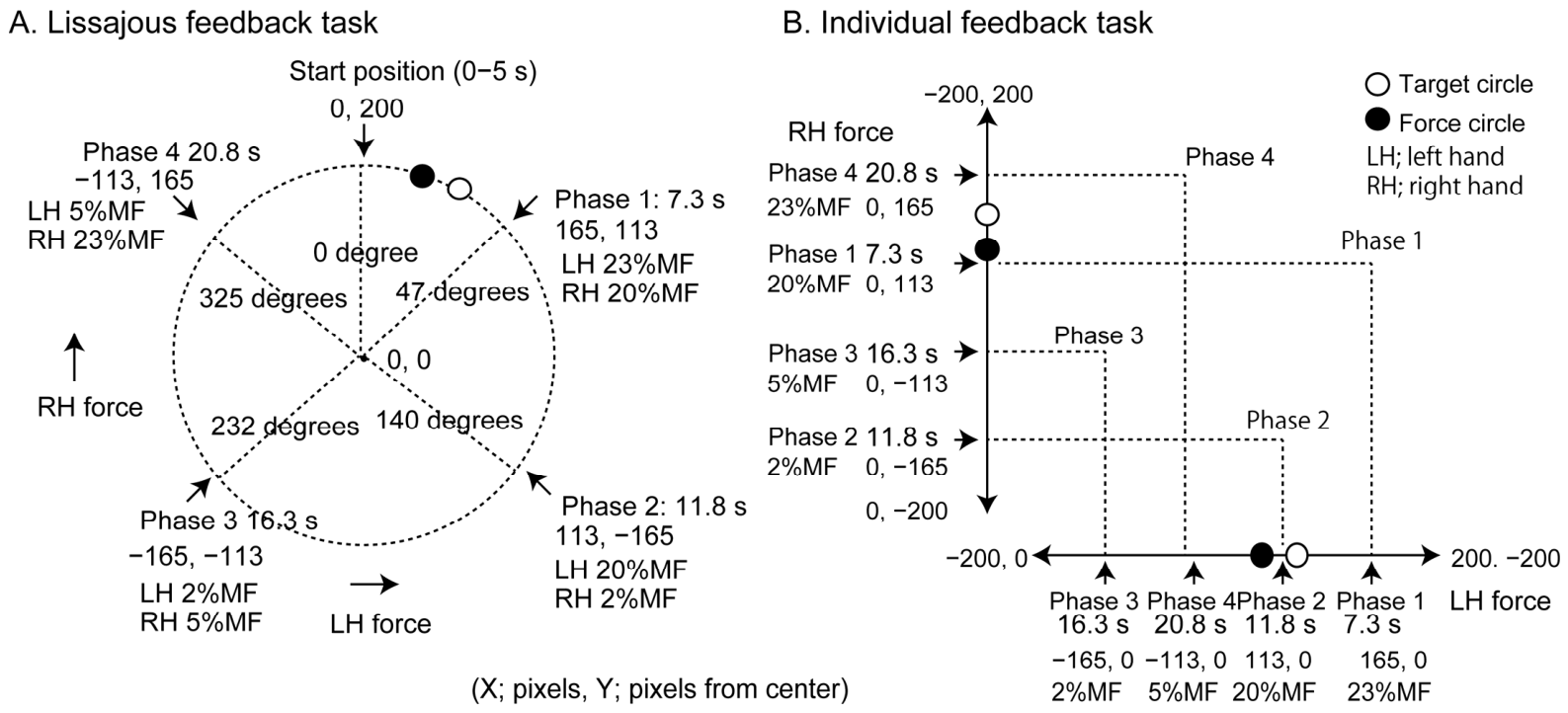
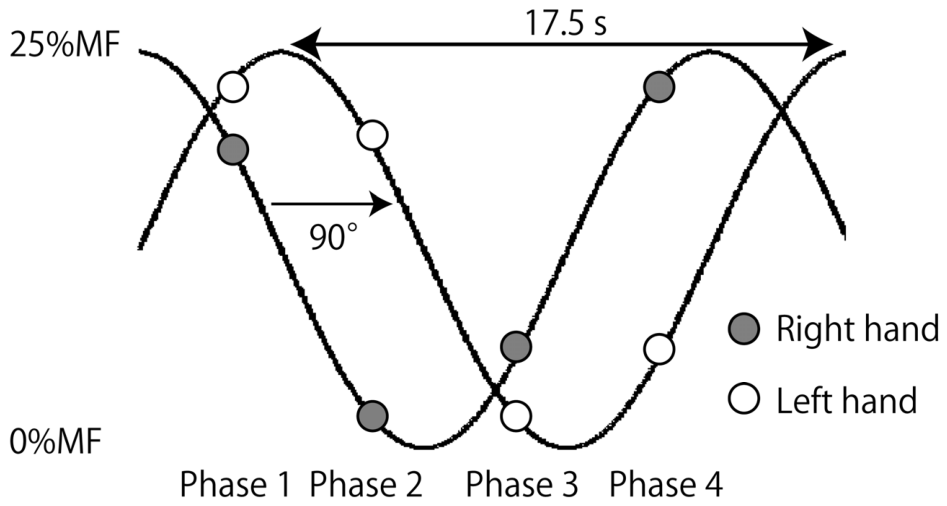
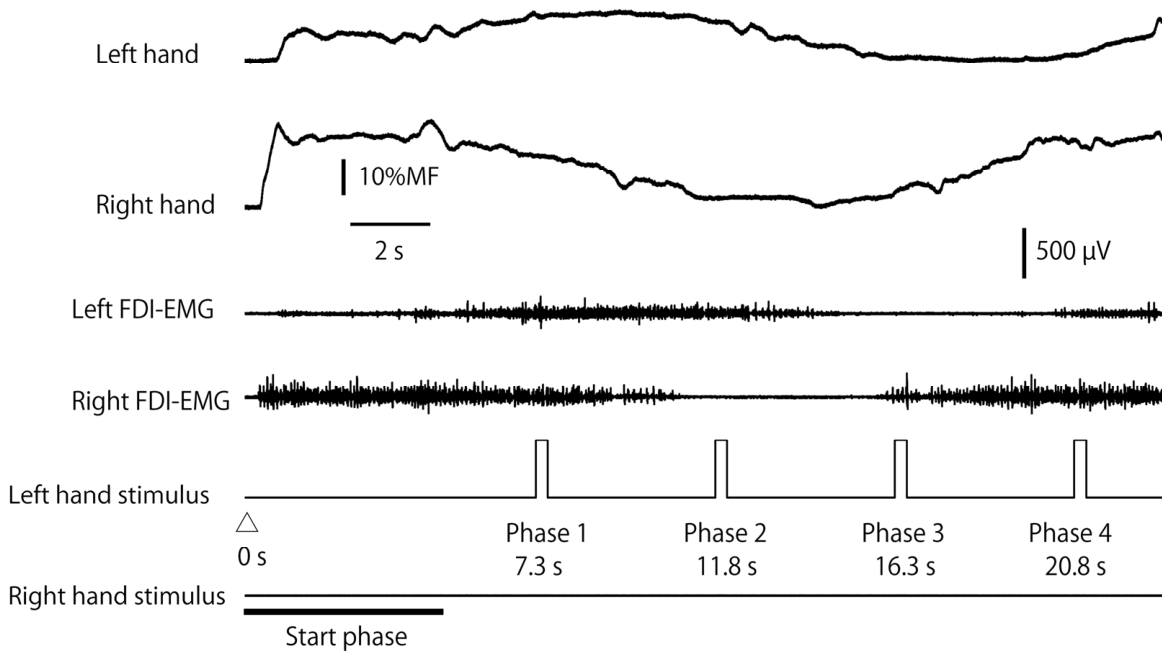
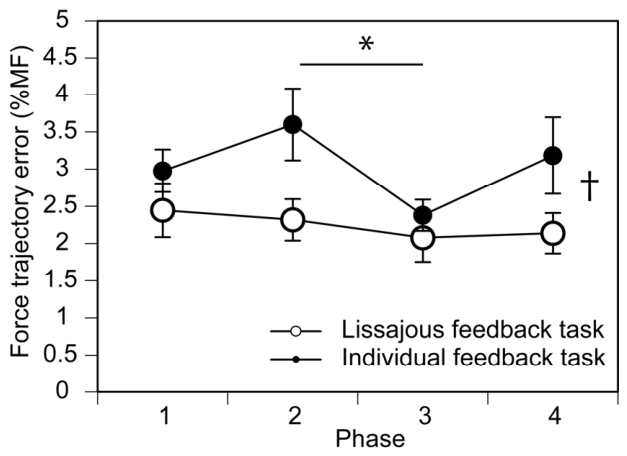
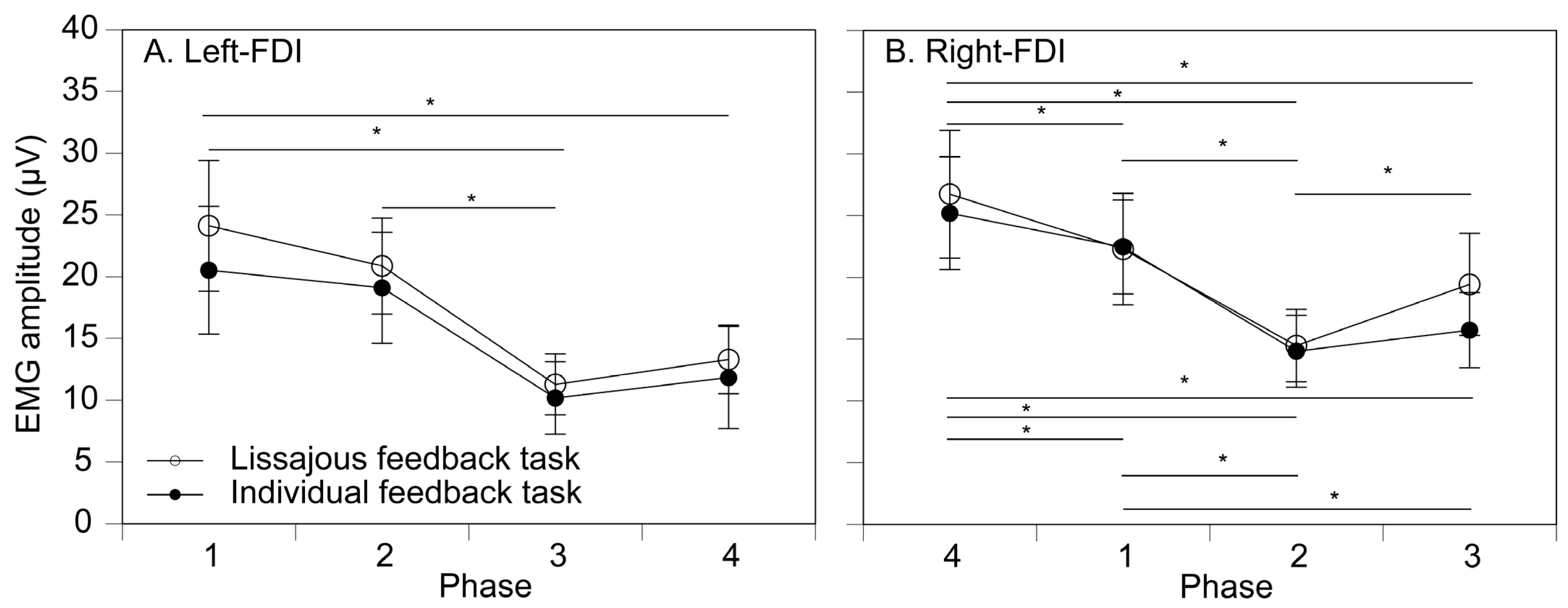
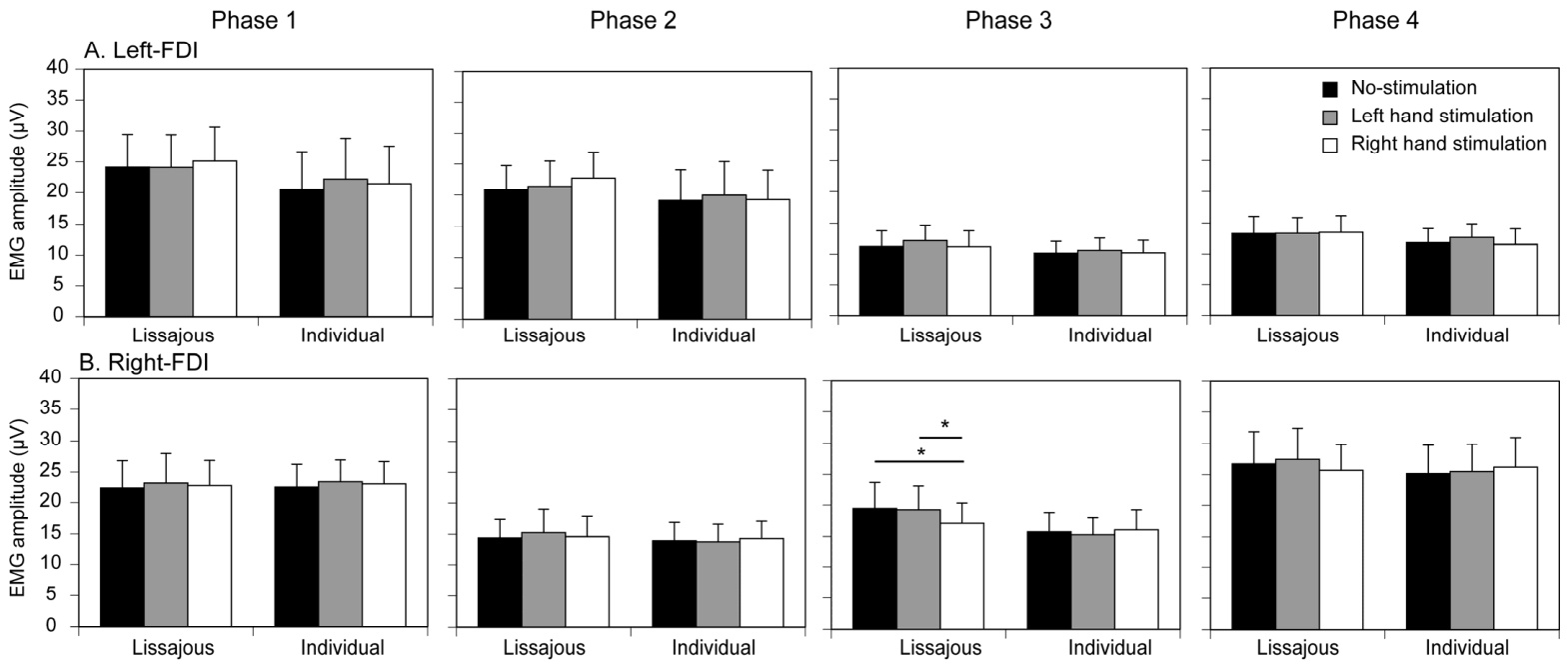
Background/Objectives: Bimanual movements with a 90° relative phase are typically unstable but can be facilitated by Lissajous visual feedback, which integrates the movements of the two hands into a single visual representation. We examined whether such visual integration leads to a unified sensorimotor representation by testing whether unilateral tactile stimulation suppresses motor output bilaterally during bimanual force production. Methods: Fifteen healthy participants produced rhythmic bimanual index finger flexion with a 90° relative phase under two feedback conditions: Lissajous feedback and individual visual feedback. In each trial, vibrotactile stimulation was applied to either hand or not applied at one of four phases of the force cycle. Force trajectory error and post-stimulus electromyographic (EMG) activity of the first dorsal interosseous muscle were analyzed. Results and Discussion: Lissajous feedback reduced force trajectory error compared with individual feedback. Tactile stimulation did not produce bilateral suppression of motor output. This indicates that visual integration of bimanual movements does not lead to global bilateral suppression of motor output induced by unilateral tactile stimulation. A significant reduction in post-stimulus EMG amplitude was observed only when the right hand was stimulated during one phase of the Lissajous feedback task. This suppression may reflect the unmasking of the tactile stimulus-induced inhibition within sensorimotor processes in the left hemisphere when visual feedback of the two hands is merged into a single representation.
Keywords: bimanual coordination; relative phase; motor binding; tactile stimulation; Lissajous plot feedback bimanual coordination; relative phase; motor binding; tactile stimulation; Lissajous plot feedback