Systematic Review

A Systematic Review of How Cardiopulmonary Bypass Parameters Influence Electroencephalogram Signals

1
Key Laboratory of Brain, Cognition and Education Sciences, Ministry of Education, Center for Studies of Psychological Application, School of Psychology, South China Normal University, Guangzhou 510631, China
2
Department of Anaesthesia, Zhujiang Hospital of Southern Medical University, Guangzhou 510010, China
3
Mind, Brain Imaging and Neuroethics Research Unit, The Royal’s Institute of Mental Health Research, University of Ottawa, Ottawa, ON K1Z 7K4, Canada
4
Center of Sleep and Brain Medicine, Shenzhen Hospital, Southern Medical University, 13 Xinhu Road, Baoan District, Shenzhen 518000, China
5
Pazhou Lab, Guangzhou 510330, China
*
Authors to whom correspondence should be addressed.
Brain Sci. 2026, 16(4), 412; https://doi.org/10.3390/brainsci16040412

Submission received: 4 March 2026 / Revised: 31 March 2026 / Accepted: 10 April 2026 / Published: 13 April 2026

Abstract

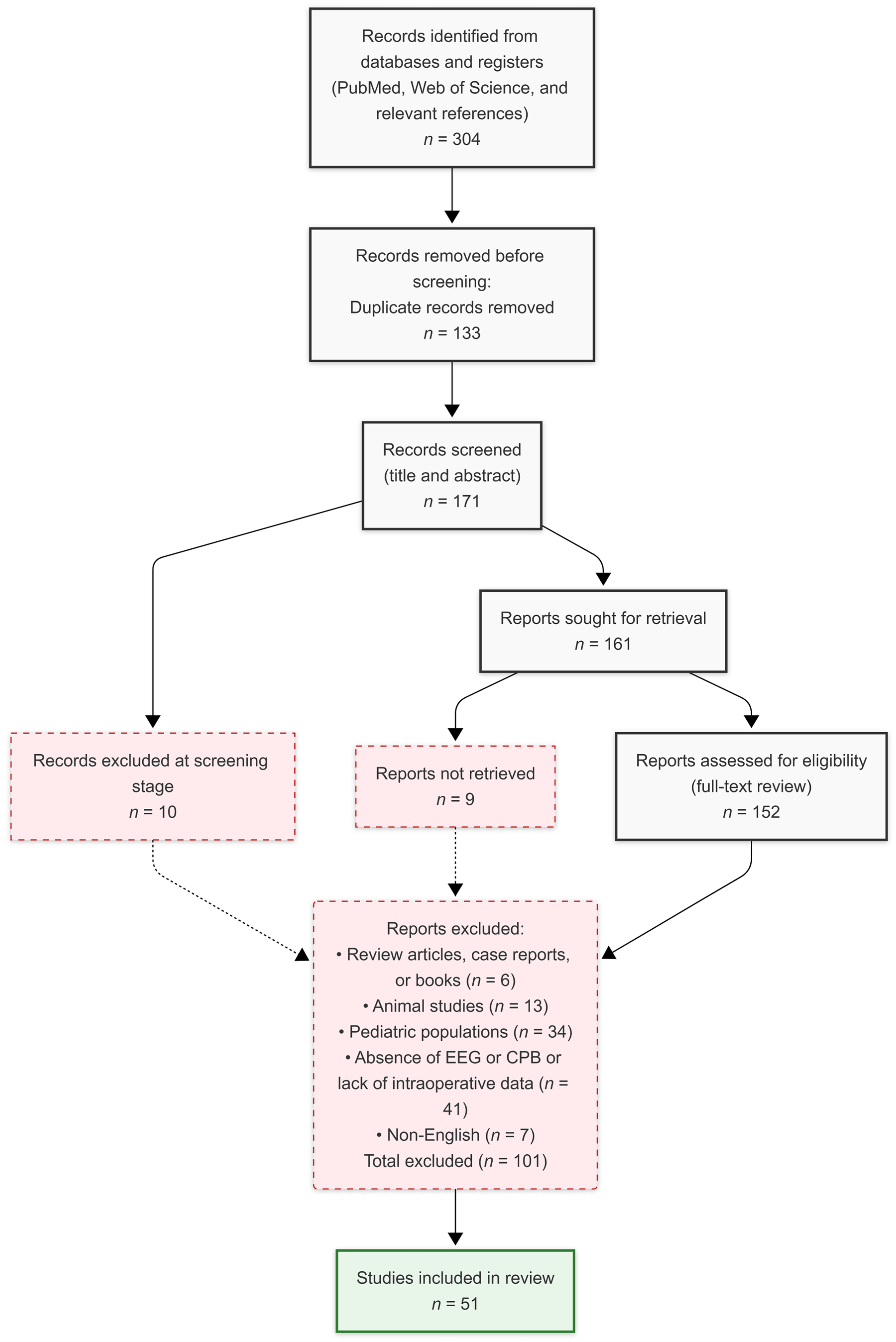
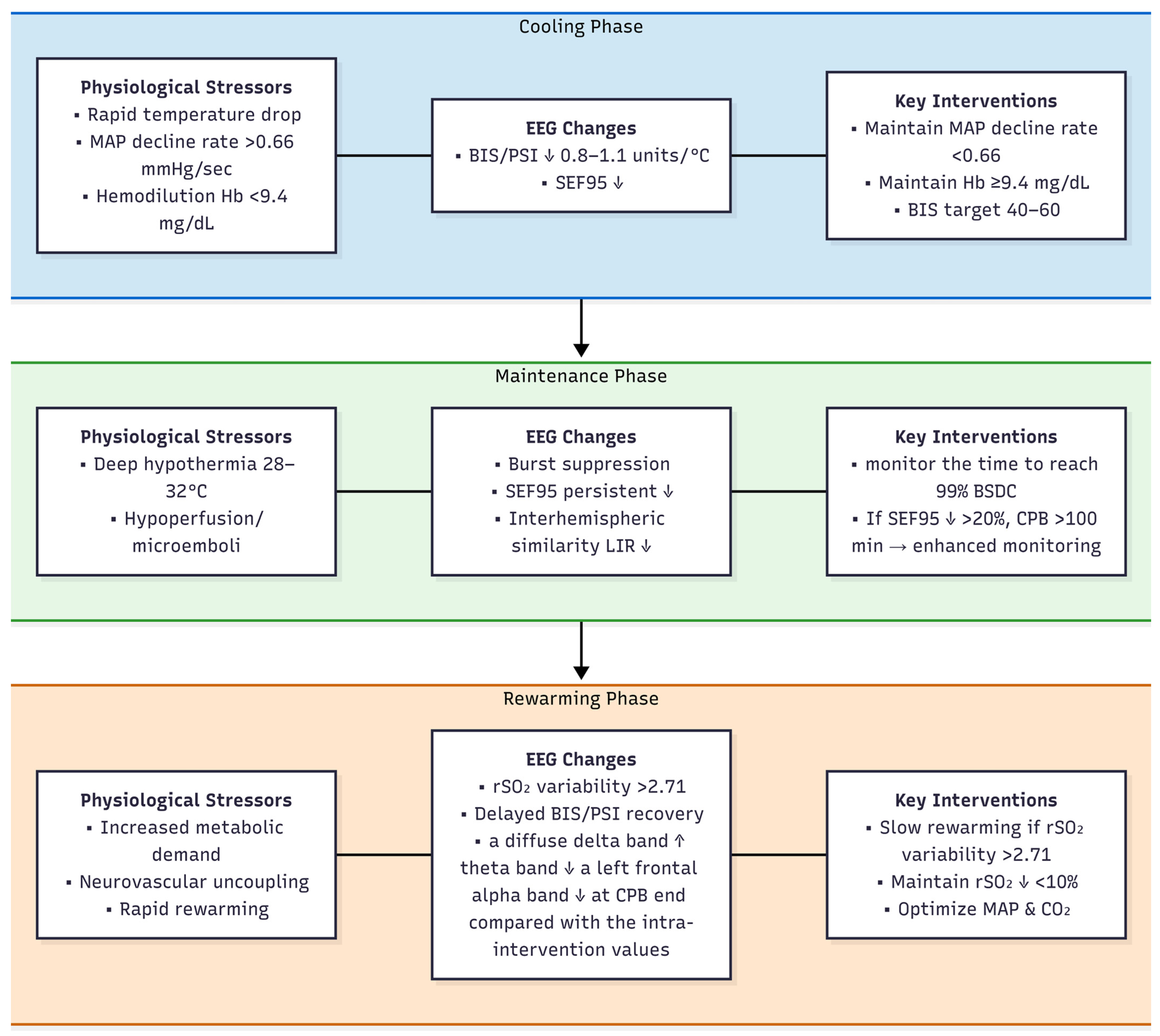
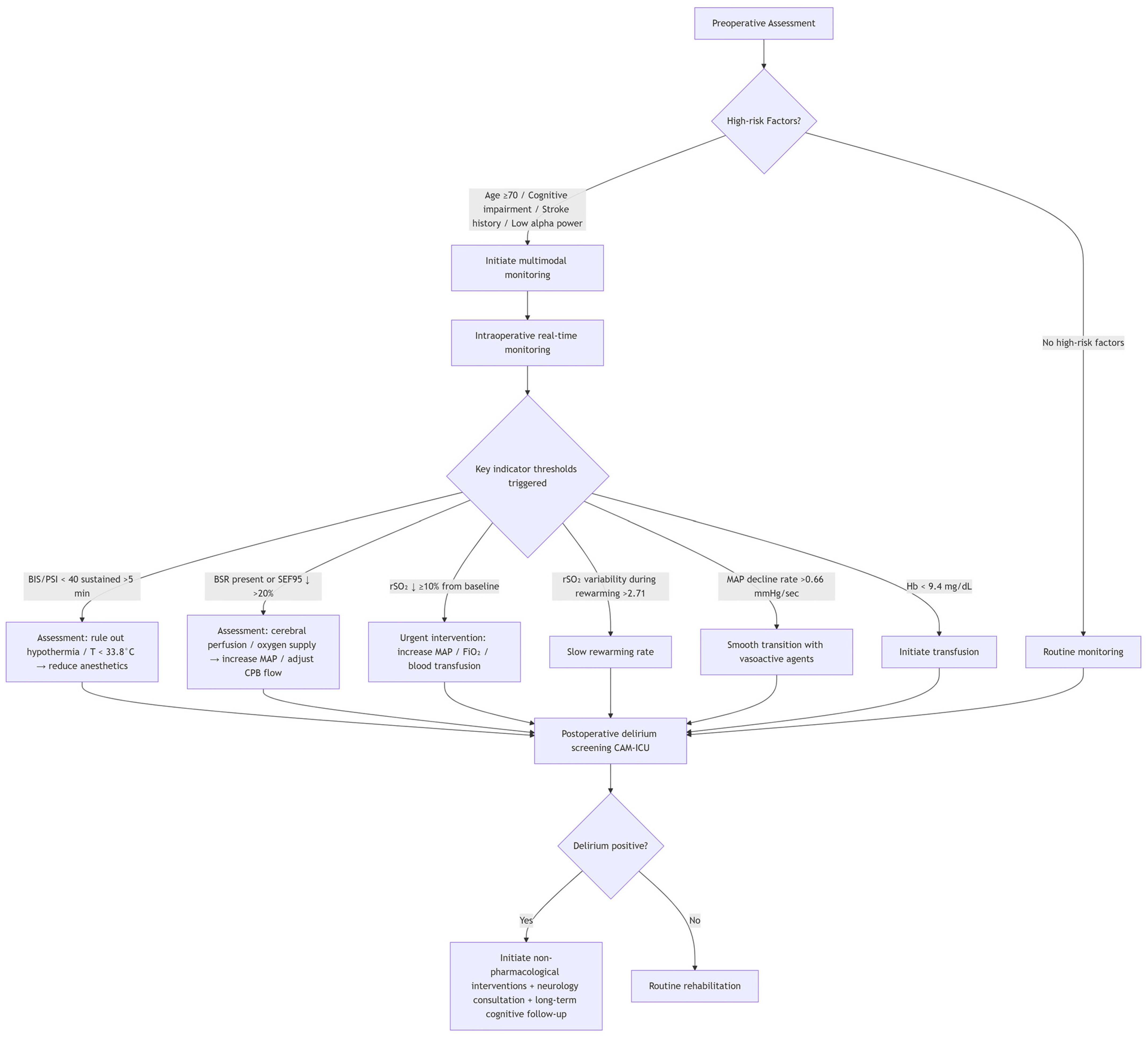
Background: Cardiopulmonary bypass (CPB) is an essential technique for cardiac surgery but significantly increases the risk of perioperative neurological complications. Electroencephalography (EEG) enables real-time monitoring of brain function and provides sensitive biomarkers for early detection of cerebral injury. However, a systematic synthesis of how CPB-related physiological, pharmacological, and technical factors influence EEG signals, and how these insights can be integrated into clinical decision-making, is still lacking. Objective: To systematically review the effects of temperature management, mean arterial pressure (MAP), hemodilution, anesthetic agents, embolization, and systemic inflammatory response during CPB on EEG parameters (including frequency bands, Bispectral Index (BIS), quantitative EEG metrics such as burst suppression ratio (BSR), spectral edge frequency (SEF), etc.), and to evaluate the associations between EEG changes and postoperative delirium (POD) and stroke. Methods: Following the PRISMA 2020 guidelines, we searched PubMed, Web of Science, and related databases for original English-language articles published between February 1974 and September 2025. Inclusion criteria: adult patients (≥18 years) undergoing cardiac surgery with CPB and intraoperative EEG monitoring (raw or processed). Exclusion criteria: reviews, case reports, animal studies, pediatric populations, and articles with inaccessible full texts. Two reviewers independently screened the literature and extracted data; a narrative synthesis was performed. Results: Fifty-one studies were included. Main findings: (1) Hypothermia: BIS decreases linearly with temperature (≈1.12 units/°C); electrocerebral silence occurs during deep hypothermic circulatory arrest; EEG recovery dynamics during rewarming predict POD. (2) MAP and cerebral perfusion: The rate of MAP decline (≥0.66 mmHg/s) is a stronger predictor of EEG abnormalities than the absolute MAP value; under fixed pump flow, some patients exhibit coexisting cerebral overperfusion and metabolic suppression. (3) Hemodilution: Maintaining hemoglobin ≥9.4 g/dL prevents EEG slowing; a drop below 9.2 g/dL significantly increases the risk of slowing. A ≥10% decrease in regional cerebral oxygen saturation (rSO2) is associated with a 1.5-fold increased risk of burst suppression. (4) Anesthetic agents: Propofol maintains flow-metabolism coupling, and BSR reflects deep anesthesia better than BIS; sevoflurane and isoflurane impair autoregulation and suppress EEG. (5) Embolization and inflammation: EEG epileptiform discharges increase the risk of POD five-fold; a decrease in LIR predicts stroke (AUC 0.771) and POD (AUC 0.779); persistent EEG changes increase the risk of POD 2.65-fold. Conclusions: CPB-related factors affect EEG signals through distinct mechanisms, and specific EEG patterns (slowing, burst suppression, asymmetry, epileptiform discharges) are significantly associated with postoperative neurological complications. Multimodal monitoring (EEG + cerebral oximetry + hemodynamics) with clear intervention thresholds facilitates individualized brain protection. Future interventional studies using real-time EEG feedback are needed to confirm improvements in long-term neurological outcomes.
Keywords: cardiopulmonary bypass; electroencephalography; neurological outcomes; intraoperative neuromonitoring cardiopulmonary bypass; electroencephalography; neurological outcomes; intraoperative neuromonitoring