Targeting Sigma-1 and Sigma-2 Receptors in Neuropathic Pain: Pharmacology, Ligand Development, and Translational Progress


Highlights
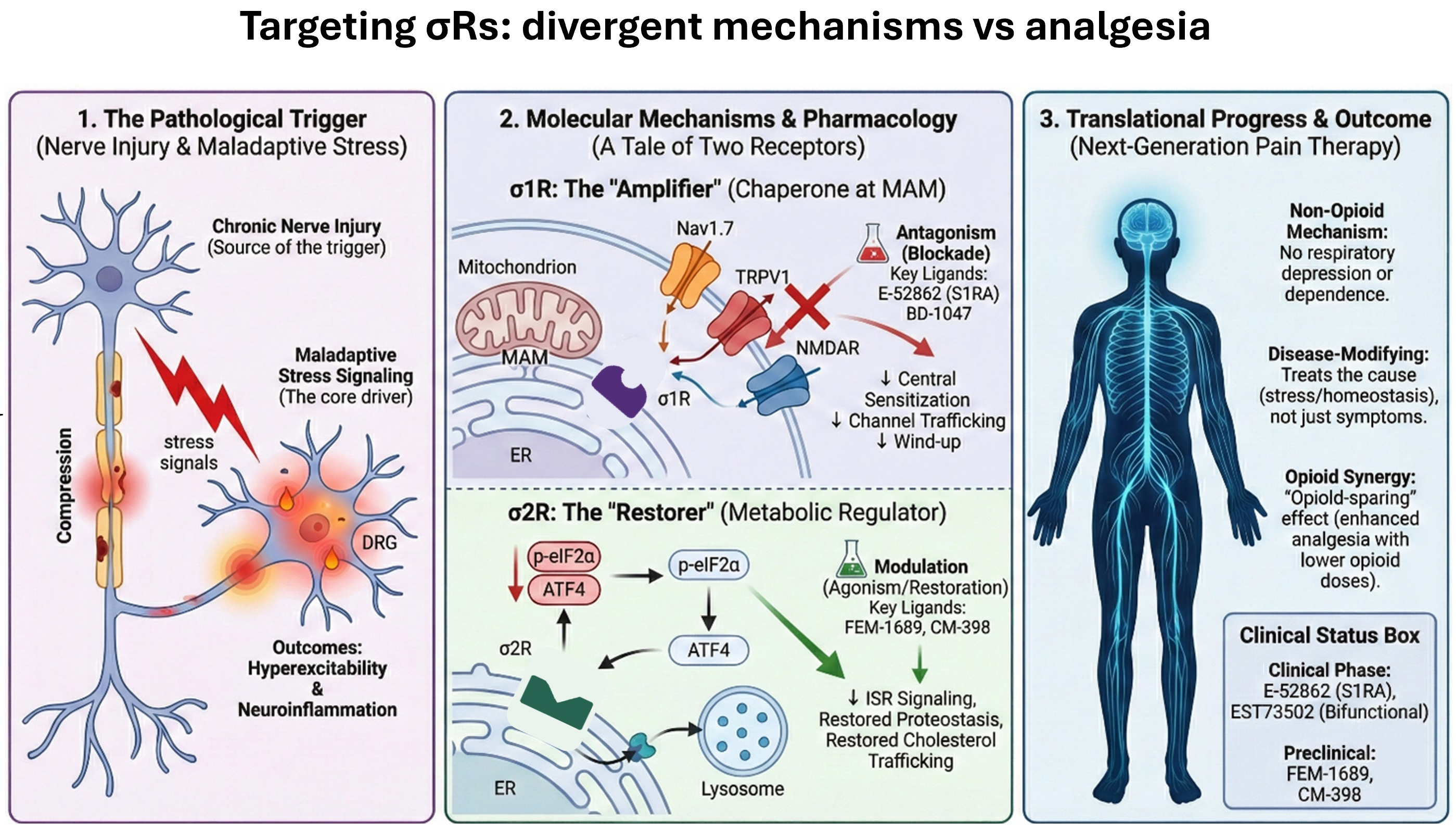
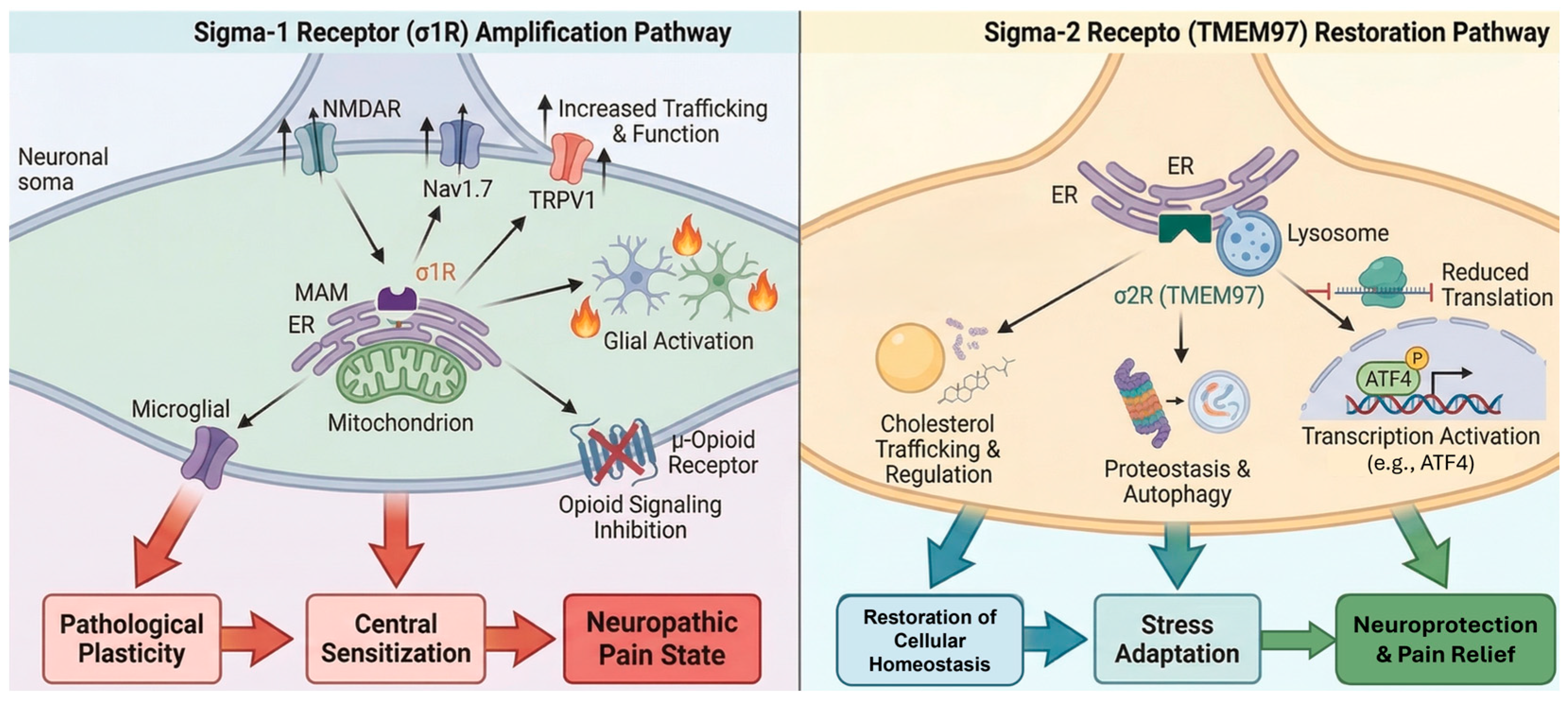
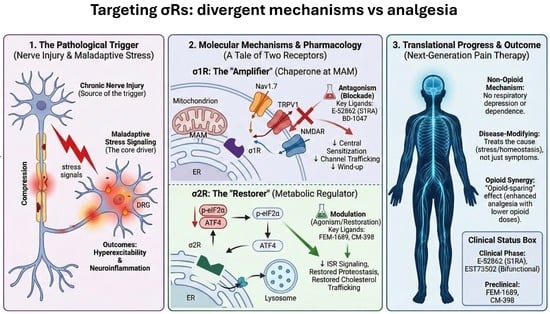
- Sigma-1 and sigma-2 receptors act as key intracellular modulators of neuropathic pain, with sigma-1 antagonism specifically attenuating peripheral and central sensitization.
- Sigma-2 receptor/TMEM97 interaction restores proteostatic balance and reduces neuronal vulnerability driven by the integrated stress response (ISR).
- Targeting these receptors suppresses neuroinflammation and restores opioid analgesic efficacy, offering a multifaceted approach to pain management.
- The development of clinical candidates like E-52862 (S1RA) demonstrates the feasibility of structure-guided, next-generation therapies for chronic neuropathic pain.
Abstract
1. Introduction
2. Methods
3. Sigma-1 Receptor
3.1. Distribution and Molecular Architecture
3.2. Involvement of Sigma-1 Receptor in Neuropathic Pain Mechanisms
3.2.1. Modulation of Ion Channels and Neurotransmission
3.2.2. Peripheral Sensitization: DRG-Level Modulation
3.2.3. Central Sensitization: NMDA Receptor Potentiation
3.3. Modulation of Opioid Analgesia
3.4. Sigma-1 Receptor Ligands
3.4.1. Foundational Probes and the Agonist-Antagonist Paradigm
3.4.2. Classical Antagonists and Analytical Ligands
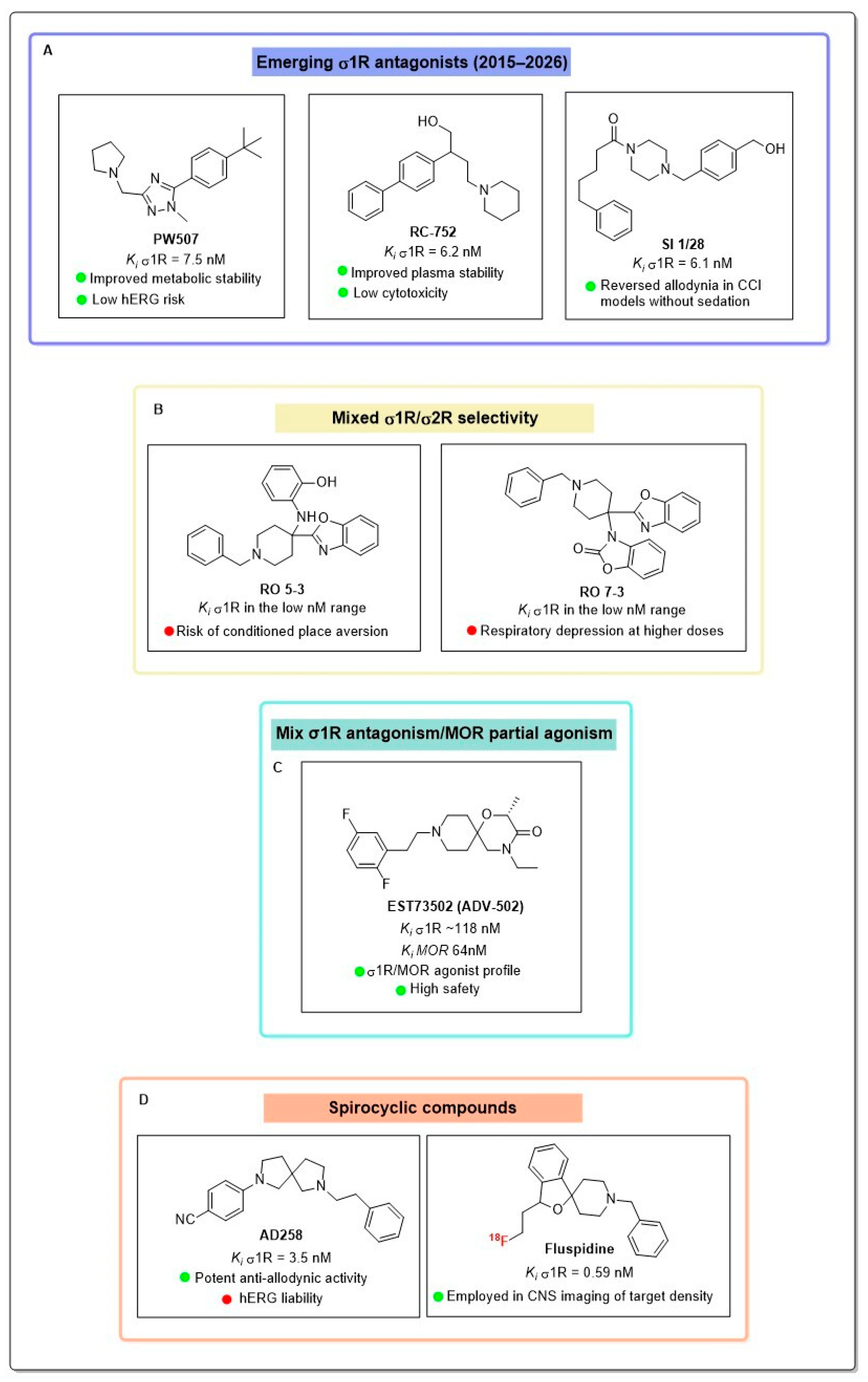
3.4.3. Advancement in Sigma 1 Receptor Antagonists (2015–2026)
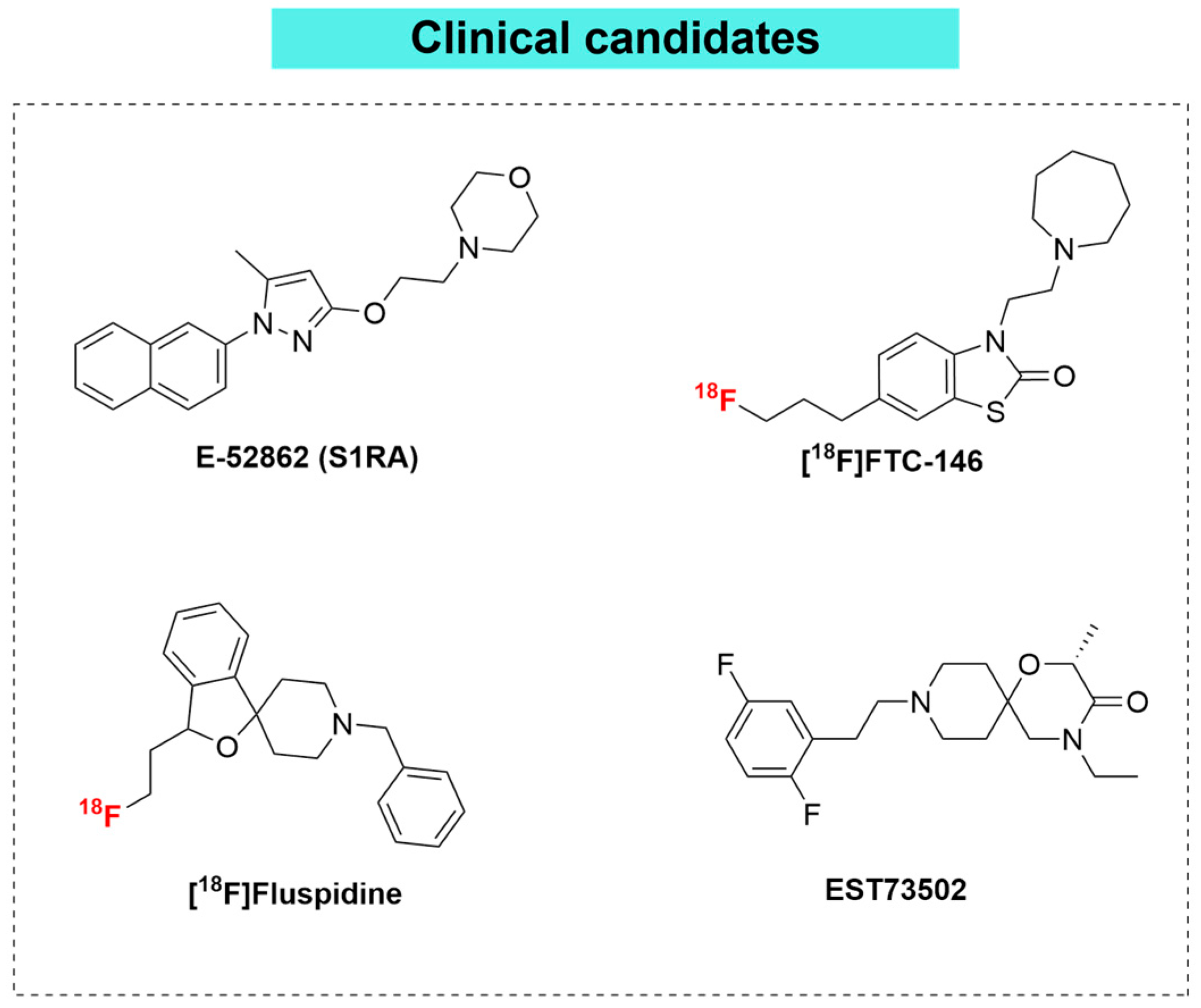
3.5. Clinical Candidates: From Bench to Bedside
3.6. Pharmacokinetics and Safety of Sigma-1 Receptor Antagonists
4. Sigma-2 Receptor
4.1. Distribution and Molecular Architecture
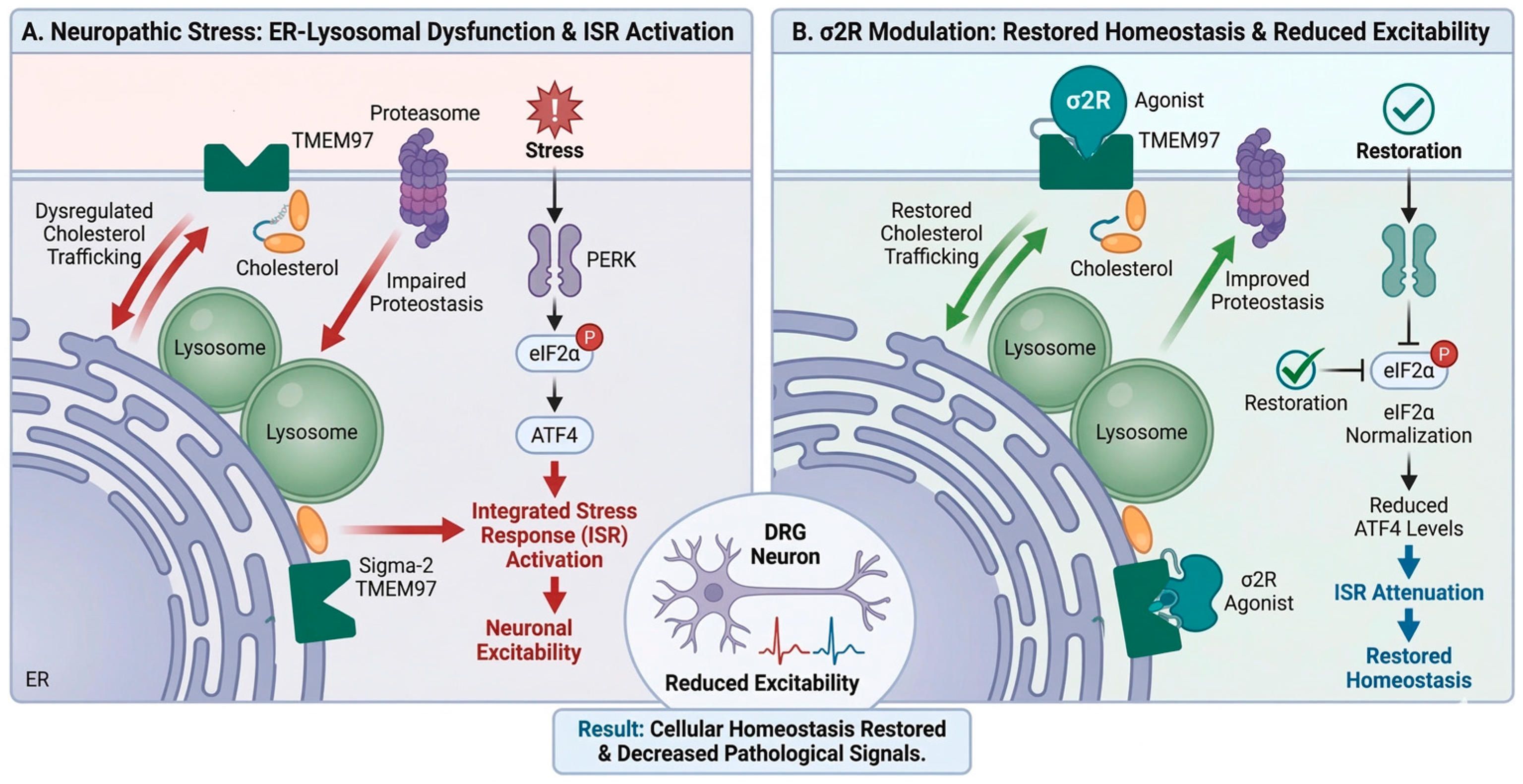
4.2. Sigma 2 Receptor as a Regulator of Proteostasis and the Integrated Stress Response
4.3. Sigma 2 Receptor Ligands
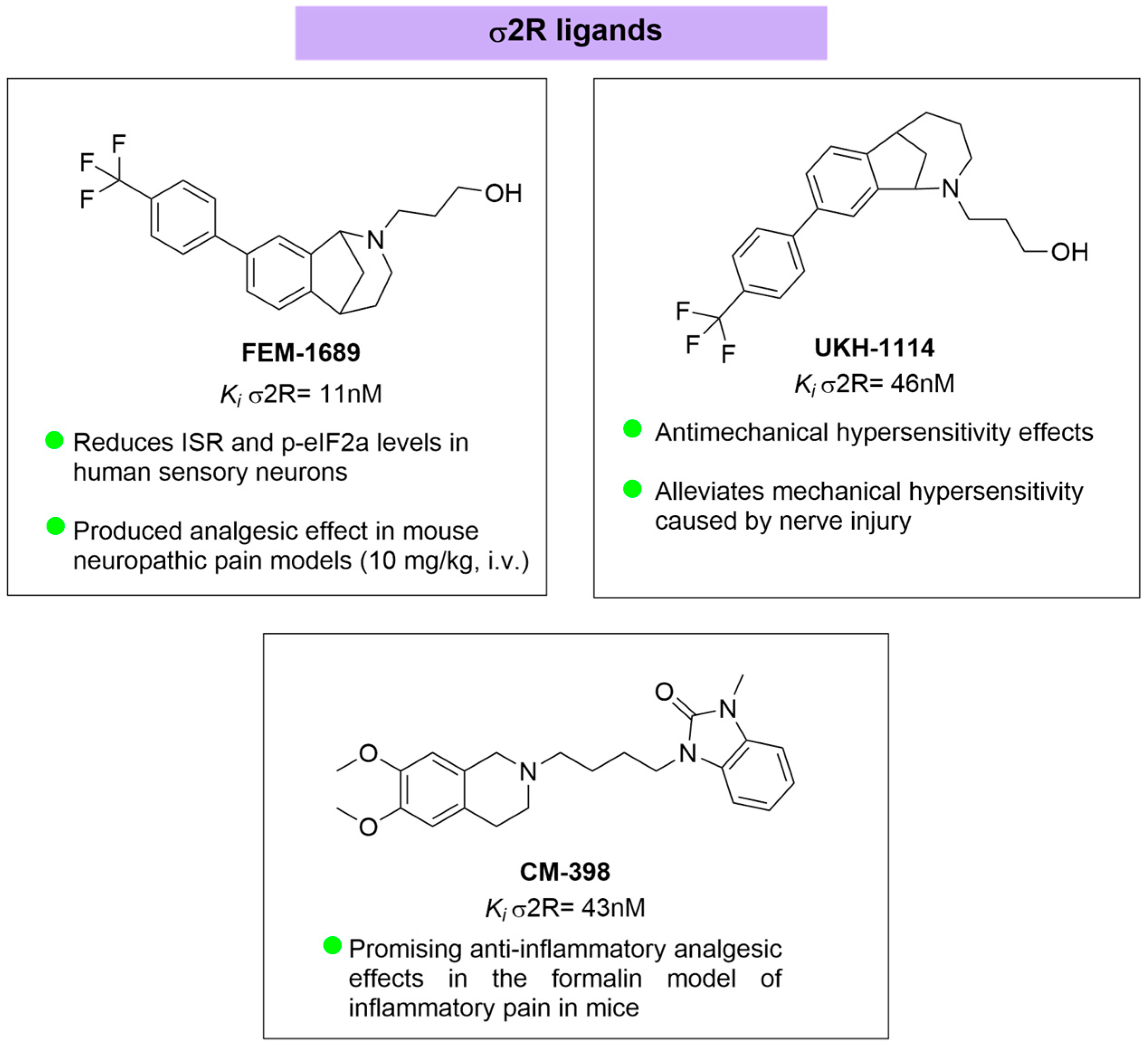
- FEM-1689 is the most extensively characterized σ2R/TMEM97 ligand (Ki = 11 nM) and provides definitive evidence of σ2R/TMEM97-dependent analgesia. Its efficacy is abolished in σ2R/TMEM97-knockout mice, establishing strict receptor dependence. FEM-1689 acts as a σ2R/TMEM97-dependent ISR suppressor, reducing p-eIF2α and ATF4 in DRG neurons and reversing SNI-induced mechanical allodynia [102].
- UKH-1114 (Ki = 46 nM) displays potent anti-allodynic efficacy with an unusually long duration of action (>48 h), suggesting engagement of slow metabolic or transcriptional pathways [103]. It functions as a homeostatic σ2R/TMEM97 modulator, not as an agonist or antagonist, and exemplifies the capacity of σ2R/TMEM97 modulation to induce durable analgesia.
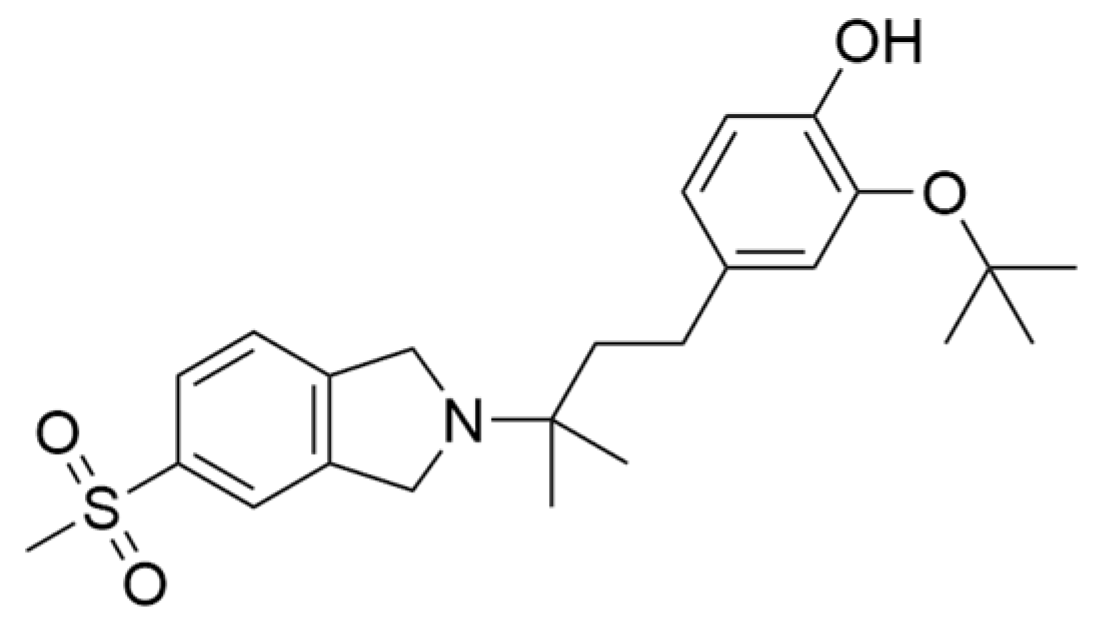
- CM-398 (Ki = 43 nM) exhibits strong CNS penetration and robust analgesic activity in multiple neuropathic models (CCI, SNI), without sedation or motor impairment [111]. Although modestly σ1R-active, its functional profile is dominated by σ2R/TMEM97-mediated modulation of metabolic and proteostatic pathways, making it a leading translational candidate (Figure 7).
4.4. Clinical Translation of σ2R Modulation
5. Comparative Integration of σ1R and σ2R in Neuropathic Pain
5.1. Biological Functions and Downstream Pathways
5.2. Role in Neuropathic Pain
6. Therapeutic Outlook
Author Contributions
Funding
Data Availability Statement
Conflicts of Interest
References
- Leoni, M.L.G.; Mercieri, M.; Viswanath, O.; Cascella, M.; Rekatsina, M.; Pasqualucci, A.; Caruso, A.; Varrassi, G. Neuropathic Pain: A Comprehensive Bibliometric Analysis of Research Trends, Contributions, and Future Directions. Curr. Pain Headache Rep. 2025, 29, 73. [Google Scholar] [CrossRef] [PubMed]
- Kaye, A.D.; Armistead, G.; Amedio, L.S.; Manthei, M.E.; Ahmadzadeh, S.; Bernhardt, B.; Shekoohi, S. Evolving Treatment Strategies for Neuropathic Pain: A Narrative Review. Medicina 2025, 61, 1063. [Google Scholar] [CrossRef] [PubMed]
- Pergolizzi, J., Jr.; Varrassi, G. The Emerging Role of Sigma Receptors in Pain Medicine. Cureus 2023, 15, e42626. [Google Scholar] [CrossRef] [PubMed]
- Martin-Fardon, R.; Maurice, T.; Aujla, H.; Bowen, W.D.; Weiss, F. Differential effects of sigma1 receptor blockade on self-administration and conditioned reinstatement motivated by cocaine vs natural reward. Neuropsychopharmacology 2007, 32, 1967–1973. [Google Scholar] [CrossRef]
- Peng, Y.; Zhang, Q.; Chen, S. Sigma-1 receptor as an emerging target for painful diabetic neuropathy—A review. Explor. Neurosci. 2025, 4, 100680. [Google Scholar] [CrossRef]
- Aydar, E.; Cobos, E.J.; Maurice, T.; Murell-Lagnado, R.D.; Safrany, S.T. Editorial: Sigma Receptors. Front. Pharmacol. 2020, 11, 590519. [Google Scholar] [CrossRef]
- Sharma, N.; Patel, C.; Shenkman, M.; Kessel, A.; Ben-Tal, N.; Lederkremer, G.Z. The Sigma-1 receptor is an ER-localized type II membrane protein. J. Biol. Chem. 2021, 297, 101299. [Google Scholar] [CrossRef]
- Pergolizzi, J.; Varrassi, G.; Coleman, M.; Breve, F.; Christo, D.K.; Christo, P.J.; Moussa, C. The Sigma Enigma: A Narrative Review of Sigma Receptors. Cureus 2023, 15, e35756. [Google Scholar] [CrossRef]
- Schmidt, H.R.; Betz, R.M.; Dror, R.O.; Kruse, A.C. Structural basis for σ1 receptor ligand recognition. Nat. Struct. Mol. Biol. 2018, 25, 981–987. [Google Scholar] [CrossRef]
- Schmidt, H.R.; Zheng, S.; Gurpinar, E.; Koehl, A.; Manglik, A.; Kruse, A.C. Crystal structure of the human σ1 receptor. Nature 2016, 532, 527–530. [Google Scholar] [CrossRef]
- Mavlyutov, T.A.; Duellman, T.; Kim, H.T.; Epstein, M.L.; Leese, C.; Davletov, B.A.; Yang, J. Sigma-1 receptor expression in the dorsal root ganglion: Reexamination using a highly specific antibody. Neuroscience 2016, 331, 148–157. [Google Scholar] [CrossRef] [PubMed]
- Jerčić, L.; Kostić, S.; Vitlov Uljević, M.; Vukušić Pušić, T.; Vukojević, K.; Filipović, N. Sigma-1 Receptor Expression in DRG Neurons During a Carrageenan-Provoked Inflammation. Anat. Rec. 2019, 302, 1620–1627. [Google Scholar] [CrossRef]
- Choi, S.R.; Han, H.J.; Beitz, A.J.; Lee, J.H. Intrathecal interleukin-1β decreases sigma-1 receptor expression in spinal astrocytes in a murine model of neuropathic pain. Biomed. Pharmacother. 2021, 144, 112272. [Google Scholar] [CrossRef] [PubMed]
- Choi, S.R.; Roh, D.H.; Yoon, S.Y.; Choi, H.S.; Kang, S.Y.; Han, H.J.; Beitz, A.J.; Lee, J.H. Spinal cytochrome P450c17 plays a key role in the development of neuropathic mechanical allodynia: Involvement of astrocyte sigma-1 receptors. Neuropharmacology 2019, 149, 169–180. [Google Scholar] [CrossRef]
- Wang, S.M.; Goguadze, N.; Kimura, Y.; Yasui, Y.; Pan, B.; Wang, T.Y.; Nakamura, Y.; Lin, Y.T.; Hogan, Q.H.; Wilson, K.L.; et al. Genomic Action of Sigma-1 Receptor Chaperone Relates to Neuropathic Pain. Mol. Neurobiol. 2021, 58, 2523–2541. [Google Scholar] [CrossRef]
- Choi, J.G.; Choi, S.R.; Kang, D.W.; Kim, J.; Park, J.B.; Lee, J.H.; Kim, H.W. Sigma-1 receptor increases intracellular calcium in cultured astrocytes and contributes to mechanical allodynia in a model of neuropathic pain. Brain Res. Bull. 2022, 178, 69–81. [Google Scholar] [CrossRef]
- Shin, S.M.; Wang, F.; Qiu, C.; Itson-Zoske, B.; Hogan, Q.H.; Yu, H. Sigma-1 receptor activity in primary sensory neurons is a critical driver of neuropathic pain. Gene Ther. 2022, 29, 1–15. [Google Scholar]
- Bangaru, M.L.; Weihrauch, D.; Tang, Q.-B.; Zoga, V.; Hogan, Q.; Wu, H.-E. Sigma-1 receptor expression in sensory neurons and the effect of painful peripheral nerve injury. Mol. Pain 2013, 9, 47. [Google Scholar] [CrossRef]
- Mei, J.; Pasternak, G.W. Modulation of brainstem opiate analgesia in the rat by sigma 1 receptors: A microinjection study. J. Pharmacol. Exp. Ther. 2007, 322, 1278–1285. [Google Scholar] [CrossRef]
- de la Puente, B.; Zamanillo, D.; Romero, L.; Carceller, A.; Vela, J.M.; Merlos, M.; Portillo-Salido, E. Comprehensive Preclinical Assessment of Sensory, Functional, Motivational-Affective, and Neurochemical Outcomes in Neuropathic Pain: The Case of the Sigma-1 Receptor. ACS Pharmacol. Transl. Sci. 2022, 5, 240–254. [Google Scholar] [CrossRef]
- Minett, M.S.; Falk, S.; Santana-Varela, S.; Bogdanov, Y.D.; Nassar, M.A.; Heegaard, A.M.; Wood, J.N. Pain without nociceptors? Nav1.7-independent pain mechanisms. Cell Rep. 2014, 6, 301–312. [Google Scholar] [CrossRef]
- Song, Y.; Xu, Z.; Zhang, L.; Gao, L. Sigma-1 Receptor Modulates CFA-Induced Inflammatory Pain via Sodium Channels in Small DRG Neurons. Biomolecules 2025, 15, 73. [Google Scholar] [CrossRef]
- Cortés-Montero, E.; Rodríguez-Muñoz, M.; Ruiz-Cantero, M.D.C.; Cobos, E.J.; Sánchez-Blázquez, P.; Garzón-Niño, J. Calmodulin Supports TRPA1 Channel Association with Opioid Receptors and Glutamate NMDA Receptors in the Nervous Tissue. Int. J. Mol. Sci. 2020, 22, 229. [Google Scholar] [CrossRef]
- Ruiz-Cantero, M.C.; Cortés-Montero, E.; Jain, A.; Montilla-García, Á.; Bravo-Caparrós, I.; Shim, J.; Sánchez-Blázquez, P.; Woolf, C.J.; Baeyens, J.M.; Cobos, E.J. The sigma-1 receptor curtails endogenous opioid analgesia during sensitization of TRPV1 nociceptors. Br. J. Pharmacol. 2023, 180, 1148–1167. [Google Scholar] [CrossRef] [PubMed]
- Rodríguez-Muñoz, M.; Cortés-Montero, E.; Onetti, Y.; Sánchez-Blázquez, P.; Garzón-Niño, J. The σ1 Receptor and the HINT1 Protein Control α2δ1 Binding to Glutamate NMDA Receptors: Implications in Neuropathic Pain. Biomolecules 2021, 11, 1681. [Google Scholar] [CrossRef] [PubMed]
- Bravo-Caparrós, I.; Ruiz-Cantero, M.C.; Perazzoli, G.; Cronin, S.J.F.; Vela, J.M.; Hamed, M.F.; Penninger, J.M.; Baeyens, J.M.; Cobos, E.J.; Nieto, F.R. Sigma-1 receptors control neuropathic pain and macrophage infiltration into the dorsal root ganglion after peripheral nerve injury. FASEB J. Off. Publ. Fed. Am. Soc. Exp. Biol. 2020, 34, 5951–5966. [Google Scholar] [CrossRef]
- Tejada, M.A.; Montilla-García, A.; Cronin, S.J.; Cikes, D.; Sánchez-Fernández, C.; González-Cano, R.; Ruiz-Cantero, M.C.; Penninger, J.M.; Vela, J.M.; Baeyens, J.M.; et al. Sigma-1 receptors control immune-driven peripheral opioid analgesia during inflammation in mice. Proc. Natl. Acad. Sci. USA 2017, 114, 8396–8401. [Google Scholar] [CrossRef] [PubMed]
- Puente, B.; Nadal, X.; Portillo-Salido, E.; Sánchez-Arroyos, R.; Ovalle, S.; Palacios, G.; Muro, A.; Romero, L.; Entrena, J.M.; Baeyens, J.M.; et al. Sigma-1 receptors regulate activity-induced spinal sensitization and neuropathic pain after peripheral nerve injury. Pain 2009, 145, 294–303. [Google Scholar] [CrossRef]
- Balasuriya, D.; Stewart, A.P.; Edwardson, J.M. The σ-1 receptor interacts directly with GluN1 but not GluN2A in the GluN1/GluN2A NMDA receptor. J. Neurosci. Off. J. Soc. Neurosci. 2013, 33, 18219–18224. [Google Scholar] [CrossRef]
- Kim, H.W.; Roh, D.H.; Yoon, S.Y.; Seo, H.S.; Kwon, Y.B.; Han, H.J.; Kim, K.W.; Beitz, A.J.; Lee, J.H. Activation of the spinal sigma-1 receptor enhances NMDA-induced pain via PKC- and PKA-dependent phosphorylation of the NR1 subunit in mice. Br. J. Pharmacol. 2008, 154, 1125–1134. [Google Scholar] [CrossRef]
- Roh, D.H.; Choi, S.R.; Yoon, S.Y.; Kang, S.Y.; Moon, J.Y.; Kwon, S.G.; Han, H.J.; Beitz, A.J.; Lee, J.H. Spinal neuronal NOS activation mediates sigma-1 receptor-induced mechanical and thermal hypersensitivity in mice: Involvement of PKC-dependent GluN1 phosphorylation. Br. J. Pharmacol. 2011, 163, 1707–1720. [Google Scholar] [CrossRef]
- Martina, M.; Turcotte, M.E.; Halman, S.; Bergeron, R. The sigma-1 receptor modulates NMDA receptor synaptic transmission and plasticity via SK channels in rat hippocampus. J. Physiol. 2007, 578, 143–157. [Google Scholar] [CrossRef]
- Sánchez-Blázquez, P.; Rodríguez-Muñoz, M.; Herrero-Labrador, R.; Burgueño, J.; Zamanillo, D.; Garzón, J. The calcium-sensitive Sigma-1 receptor prevents cannabinoids from provoking glutamate NMDA receptor hypofunction: Implications in antinociception and psychotic diseases. Int. J. Neuropsychopharmacol. 2014, 17, 1943–1955. [Google Scholar] [CrossRef]
- Romero, L.; Zamanillo, D.; Nadal, X.; Sánchez-Arroyos, R.; Rivera-Arconada, I.; Dordal, A.; Montero, A.; Muro, A.; Bura, A.; Segalés, C.; et al. Pharmacological properties of S1RA, a new sigma-1 receptor antagonist that inhibits neuropathic pain and activity-induced spinal sensitization. Br. J. Pharmacol. 2012, 166, 2289–2306. [Google Scholar] [CrossRef] [PubMed]
- Kim, F.J.; Kovalyshyn, I.; Burgman, M.; Neilan, C.; Chien, C.C.; Pasternak, G.W. Sigma 1 receptor modulation of G-protein-coupled receptor signaling: Potentiation of opioid transduction independent from receptor binding. Mol. Pharmacol. 2010, 77, 695–703. [Google Scholar] [CrossRef] [PubMed]
- Vidal-Torres, A.; de la Puente, B.; Rocasalbas, M.; Touriño, C.; Bura, S.A.; Fernández-Pastor, B.; Romero, L.; Codony, X.; Zamanillo, D.; Buschmann, H.; et al. Sigma-1 receptor antagonism as opioid adjuvant strategy: Enhancement of opioid antinociception without increasing adverse effects. Eur. J. Pharmacol. 2013, 711, 63–72. [Google Scholar] [CrossRef]
- Zolali, E.; Burns, M.; Intagliata, S.; Patel, A.; Ho, N.P.; Restrepo, L.F.; Gamez-Jimenez, L.R.; Alvarez, M.A.; Wilson, L.L.; Cutler, S.J.; et al. The Sigma1 receptor antagonist CM304 potentiates the antinociceptive effects of the cannabinoid receptor agonist delta9-tetrahydrocannabinol in rats and mice. Pharmacol. Rep. 2026, 78, 431–445. [Google Scholar] [CrossRef]
- Rodríguez-Muñoz, M.; Sánchez-Blázquez, P.; Herrero-Labrador, R.; Martínez-Murillo, R.; Merlos, M.; Vela, J.M.; Garzón, J. The σ1 receptor engages the redox-regulated HINT1 protein to bring opioid analgesia under NMDA receptor negative control. Antioxid. Redox Signal. 2015, 22, 799–818. [Google Scholar] [CrossRef]
- Montilla-García, Á.; Tejada, M.; Ruiz-Cantero, M.C.; Bravo-Caparrós, I.; Yeste, S.; Zamanillo, D.; Cobos, E.J. Modulation by Sigma-1 Receptor of Morphine Analgesia and Tolerance: Nociceptive Pain, Tactile Allodynia and Grip Strength Deficits During Joint Inflammation. Front. Pharmacol. 2019, 10, 136. [Google Scholar] [CrossRef]
- Ligeza, A.; Wawrzczak-Bargiela, A.; Kaminska, D.; Korostynski, M.; Przewlocki, R. Regulation of ERK1/2 phosphorylation by acute and chronic morphine—Implications for the role of cAMP-responsive element binding factor (CREB)-dependent and Ets-like protein-1 (Elk-1)-dependent transcription; small interfering RNA-based strategy. FEBS J. 2008, 275, 3836–3849. [Google Scholar] [CrossRef] [PubMed]
- Miao, Z.; Zhong, Y.; Gan, Y.; Fu, K.; Liu, W.; Cao, Z.; Zhao, T.; Li, Z.; Hai, A.; Peng, Y.; et al. A Novel Bifunctional μOR Agonist and σ(1)R Antagonist with Potent Analgesic Responses and Reduced Adverse Effects. J. Med. Chem. 2023, 66, 16257–16275. [Google Scholar] [CrossRef]
- Denaro, S.; Pasquinucci, L.; Turnaturi, R.; Alberghina, C.; Longhitano, L.; Giallongo, S.; Costanzo, G.; Spoto, S.; Grasso, M.; Zappalà, A.; et al. Sigma-1 Receptor Inhibition Reduces Mechanical Allodynia and Modulate Neuroinflammation in Chronic Neuropathic Pain. Mol. Neurobiol. 2024, 61, 2672–2685. [Google Scholar] [CrossRef] [PubMed]
- Ruiz-Cantero, M.C.; Huerta, M.; Tejada, M.; Santos-Caballero, M.; Fernández-Segura, E.; Cañizares, F.J.; Entrena, J.M.; Baeyens, J.M.; Cobos, E.J. Sigma-1 receptor agonism exacerbates immune-driven nociception: Role of TRPV1 + nociceptors. Biomed. Pharmacother. 2023, 167, 115534. [Google Scholar] [CrossRef]
- Knowles, L.G.; Armanious, A.J.; Peng, Y.; Welsh, W.J.; James, M.H. Recent advances in drug discovery efforts targeting the sigma 1 receptor system: Implications for novel medications designed to reduce excessive drug and food seeking. Addict. Neurosci. 2023, 8, 100126. [Google Scholar] [CrossRef]
- Lisak, R.P.; Nedelkoska, L.; Benjamins, J.A. Sigma-1 receptor agonists as potential protective therapies in multiple sclerosis. J. Neuroimmunol. 2020, 342, 577188. [Google Scholar] [CrossRef]
- Maurice, T.; Su, T.P. The pharmacology of sigma-1 receptors. Pharmacol. Ther. 2009, 124, 195–206. [Google Scholar] [CrossRef]
- Kulkarni, S.K.; Dhir, A. sigma-1 receptors in major depression and anxiety. Expert Rev. Neurother. 2009, 9, 1021–1034. [Google Scholar] [CrossRef]
- Penke, B.; Fulop, L.; Szucs, M.; Frecska, E. The Role of Sigma-1 Receptor, an Intracellular Chaperone in Neurodegenerative Diseases. Curr. Neuropharmacol. 2018, 16, 97–116. [Google Scholar] [CrossRef]
- Matsuno, K.; Nakazawa, M.; Okamoto, K.; Kawashima, Y.; Mita, S. Binding properties of SA4503, a novel and selective sigma 1 receptor agonist. Eur. J. Pharmacol. 1996, 306, 271–279. [Google Scholar] [CrossRef] [PubMed]
- Kawamura, K.; Ishiwata, K.; Shimada, Y.; Kimura, Y.; Kobayashi, T.; Matsuno, K.; Homma, Y.; Senda, M. Preclinical evaluation of [11C]SA4503: Radiation dosimetry, in vivo selectivity and PET imaging of sigma1 receptors in the cat brain. Ann. Nucl. Med. 2000, 14, 285–292. [Google Scholar] [CrossRef] [PubMed]
- Bravo-Caparrós, I.; Perazzoli, G.; Yeste, S.; Cikes, D.; Baeyens, J.M.; Cobos, E.J.; Nieto, F.R. Sigma-1 Receptor Inhibition Reduces Neuropathic Pain Induced by Partial Sciatic Nerve Transection in Mice by Opioid-Dependent and -Independent Mechanisms. Front. Pharmacol. 2019, 10, 613. [Google Scholar] [CrossRef] [PubMed]
- Ventura-Martínez, R.; Ángeles-López, G.E.; González-Ugalde, D.; Domínguez-Páez, T.; Navarrete-Vázquez, G.; Jaimez, R.; Déciga-Campos, M. Antinociceptive effect of LMH-2, a new sigma-1 receptor antagonist analog of haloperidol, on the neuropathic pain of diabetic mice. Biomed. Pharmacother. 2024, 174, 116524. [Google Scholar] [CrossRef]
- Espinosa-Juárez, J.V.; Jaramillo-Morales, O.A.; López-Muñoz, F.J. Haloperidol Decreases Hyperalgesia and Allodynia Induced by Chronic Constriction Injury. Basic Clin. Pharmacol. Toxicol. 2017, 121, 471–479. [Google Scholar] [CrossRef] [PubMed]
- Kwon, Y.B.; Jeong, Y.C.; Kwon, J.K.; Son, J.S.; Kim, K.W. The Antinociceptive Effect of Sigma-1 Receptor Antagonist, BD1047, in a Capsaicin Induced Headache Model in Rats. Korean J. Physiol. Pharmacol. Off. J. Korean Physiol. Soc. Korean Soc. Pharmacol. 2009, 13, 425–429. [Google Scholar] [CrossRef][Green Version]
- Zhu, S.; Wang, C.; Han, Y.; Song, C.; Hu, X.; Liu, Y. Sigma-1 Receptor Antagonist BD1047 Reduces Mechanical Allodynia in a Rat Model of Bone Cancer Pain through the Inhibition of Spinal NR1 Phosphorylation and Microglia Activation. Mediat. Inflamm. 2015, 2015, 265056. [Google Scholar] [CrossRef] [PubMed]
- Tejada, M.A.; Montilla-García, A.; Sánchez-Fernández, C.; Entrena, J.M.; Perazzoli, G.; Baeyens, J.M.; Cobos, E.J. Sigma-1 receptor inhibition reverses acute inflammatory hyperalgesia in mice: Role of peripheral sigma-1 receptors. Psychopharmacology 2014, 231, 3855–3869. [Google Scholar] [CrossRef]
- Ventura-Martínez, R.; Ángeles-López, G.E.; Domínguez-Páez, T.; Navarrete-Vázquez, G.; Arratia-Damián, W.; González-Trujano, M.E.; Déciga-Campos, M. Involvement of TRPV1 and MOR-NMDAR complex on the antiallodynic effect of LMH-2, a sigma-1 receptor antagonist, in mouse model of diabetic neuropathy—A behavioral approach. Pharmacol. Rep. 2025, 77, 1011–1023. [Google Scholar] [CrossRef]
- Amata, E.; Rescifina, A.; Prezzavento, O.; Arena, E.; Dichiara, M.; Pittalà, V.; Montilla-García, Á.; Punzo, F.; Merino, P.; Cobos, E.J.; et al. (+)-Methyl (1R,2S)-2-{[4-(4-Chlorophenyl)-4-hydroxypiperidin-1-yl]methyl}-1-phenylcyclopropanecarboxylate [(+)-MR200] Derivatives as Potent and Selective Sigma Receptor Ligands: Stereochemistry and Pharmacological Properties. J. Med. Chem. 2018, 61, 372–384. [Google Scholar] [CrossRef]
- Marrazzo, A.; Parenti, C.; Scavo, V.; Ronsisvalle, S.; Scoto, G.M.; Ronsisvalle, G. In vivo evaluation of (+)-MR200 as a new selective sigma ligand modulating MOP, DOP and KOP supraspinal analgesia. Life Sci. 2006, 78, 2449–2453. [Google Scholar] [CrossRef]
- Parenti, C.; Marrazzo, A.; Aricò, G.; Cantarella, G.; Prezzavento, O.; Ronsisvalle, S.; Scoto, G.M.; Ronsisvalle, G. Effects of a selective sigma 1 antagonist compound on inflammatory pain. Inflammation 2014, 37, 261–266. [Google Scholar] [CrossRef]
- Denaro, S.; D’Aprile, S.; Torrisi, F.; Zappalà, A.; Marrazzo, A.; Al-Khrasani, M.; Pasquinucci, L.; Vicario, N.; Parenti, R.; Parenti, C. Sigma-1 receptor targeting inhibits connexin 43 based intercellular communication in chronic neuropathic pain. Inflamm. Res. 2024, 73, 1711–1726. [Google Scholar] [CrossRef]
- Díaz, J.L.; Cuberes, R.; Berrocal, J.; Contijoch, M.; Christmann, U.; Fernández, A.; Port, A.; Holenz, J.; Buschmann, H.; Laggner, C.; et al. Synthesis and Biological Evaluation of the 1-Arylpyrazole Class of σ1 Receptor Antagonists: Identification of 4-{2-[5-Methyl-1-(naphthalen-2-yl)-1H-pyrazol-3-yloxy]ethyl}morpholine (S1RA, E-52862). J. Med. Chem. 2012, 55, 8211–8224. [Google Scholar] [CrossRef] [PubMed]
- Vidal-Torres, A.; Fernández-Pastor, B.; Carceller, A.; Vela, J.M.; Merlos, M.; Zamanillo, D. Supraspinal and Peripheral, but Not Intrathecal, σ(1)R Blockade by S1RA Enhances Morphine Antinociception. Front. Pharmacol. 2019, 10, 422. [Google Scholar] [CrossRef]
- Gris, G.; Portillo-Salido, E.; Aubel, B.; Darbaky, Y.; Deseure, K.; Vela, J.M.; Merlos, M.; Zamanillo, D. The selective sigma-1 receptor antagonist E-52862 attenuates neuropathic pain of different aetiology in rats. Sci. Rep. 2016, 6, 24591. [Google Scholar] [CrossRef]
- Rossino, G.; Marra, A.; Listro, R.; Peviani, M.; Poggio, E.; Curti, D.; Pellavio, G.; Laforenza, U.; Dondio, G.; Schepmann, D.; et al. Discovery of RC-752, a Novel Sigma-1 Receptor Antagonist with Antinociceptive Activity: A Promising Tool for Fighting Neuropathic Pain. Pharmaceuticals 2023, 16, 962. [Google Scholar] [CrossRef] [PubMed]
- Peng, Y.; Zhang, A.H.; Wei, L.; Welsh, W.J. Preclinical Evaluation of Sigma 1 Receptor Antagonists as a Novel Treatment for Painful Diabetic Neuropathy. ACS Pharmacol. Transl. Sci. 2024, 7, 2358–2368. [Google Scholar] [CrossRef]
- Pellavio, G.; Rossino, G.; Gastaldi, G.; Rossi, D.; Linciano, P.; Collina, S.; Laforenza, U. Sigma-1 Receptor Agonists Acting on Aquaporin-Mediated H(2)O(2) Permeability: New Tools for Counteracting Oxidative Stress. Int. J. Mol. Sci. 2021, 22, 9790. [Google Scholar] [CrossRef] [PubMed]
- Raffa, R.B.; Pergolizzi, J.V., Jr. Bispecific Sigma1R-Antagonist/MOR-Agonist Compounds for Pain. Cureus 2024, 16, e59837. [Google Scholar] [CrossRef]
- Wilson, L.L.; Eans, S.O.; Ramadan-Siraj, I.; Modica, M.N.; Romeo, G.; Intagliata, S.; McLaughlin, J.P. Examination of the Novel Sigma-1 Receptor Antagonist, SI 1/28, for Antinociceptive and Anti-allodynic Efficacy against Multiple Types of Nociception with Fewer Liabilities of Use. Int. J. Mol. Sci. 2022, 23, 615. [Google Scholar] [CrossRef]
- Shinouchi, R.; Turgutalp, B.; Ople, R.S.; Eans, S.O.; Williams, A.K.; Hammond, H.R.; Varadi, A.; Dardashti, R.N.; Majumdar, S.; McLaughlin, J.P. Characterization of Novel Sigma Receptor Ligands Derived from Multicomponent Reactions as Efficacious Treatments for Neuropathic Pain. Pharmaceuticals 2026, 19, 117. [Google Scholar] [CrossRef]
- Vidal-Torres, A.; Fernández-Pastor, B.; García, M.; Ayet, E.; Cabot, A.; Burgueño, J.; Monroy, X.; Aubel, B.; Codony, X.; Romero, L.; et al. Bispecific sigma-1 receptor antagonism and mu-opioid receptor partial agonism: WLB-73502, an analgesic with improved efficacy and safety profile compared to strong opioids. Acta Pharm. Sin. B 2023, 13, 82–99. [Google Scholar] [CrossRef]
- Gillis, A.; Kliewer, A.; Kelly, E.; Henderson, G.; Christie, M.J.; Schulz, S.; Canals, M. Critical Assessment of G Protein-Biased Agonism at the μ-Opioid Receptor. Trends Pharmacol. Sci. 2020, 41, 947–959. [Google Scholar] [CrossRef]
- García, M.; Virgili, M.; Alonso, M.; Alegret, C.; Farran, J.; Fernández, B.; Bordas, M.; Pascual, R.; Burgueño, J.; Vidal-Torres, A.; et al. Discovery of EST73502, a Dual μ-Opioid Receptor Agonist and σ1 Receptor Antagonist Clinical Candidate for the Treatment of Pain. J. Med. Chem. 2020, 63, 15508–15526. [Google Scholar] [CrossRef]
- Dichiara, M.; Ambrosio, F.A.; Lee, S.M.; Ruiz-Cantero, M.C.; Lombino, J.; Coricello, A.; Costa, G.; Shah, D.; Costanzo, G.; Pasquinucci, L.; et al. Discovery of AD258 as a Sigma Receptor Ligand with Potent Antiallodynic Activity. J. Med. Chem. 2023, 66, 11447–11463. [Google Scholar] [CrossRef] [PubMed]
- Ludwig, F.A.; Laurini, E.; Schmidt, J.; Pricl, S.; Deuther-Conrad, W.; Wünsch, B. [(18)F]Fluspidine-A PET Tracer for Imaging of σ(1) Receptors in the Central Nervous System. Pharmaceuticals 2024, 17, 166. [Google Scholar] [CrossRef] [PubMed]
- Bruna, J.; Videla, S.; Argyriou, A.A.; Velasco, R.; Villoria, J.; Santos, C.; Nadal, C.; Cavaletti, G.; Alberti, P.; Briani, C.; et al. Efficacy of a Novel Sigma-1 Receptor Antagonist for Oxaliplatin-Induced Neuropathy: A Randomized, Double-Blind, Placebo-Controlled Phase IIa Clinical Trial. Neurotherapeutics 2018, 15, 178–189. [Google Scholar] [CrossRef]
- Gálvez, R.; Mayoral, V.; Cebrecos, J.; Medel, F.J.; Morte, A.; Sust, M.; Vaqué, A.; Montes-Pérez, A.; Neira-Reina, F.; Cánovas, L.; et al. E-52862-A selective sigma-1 receptor antagonist, in peripheral neuropathic pain: Two randomized, double-blind, phase 2 studies in patients with chronic postsurgical pain and painful diabetic neuropathy. Eur. J. Pain 2025, 29, e4755. [Google Scholar] [CrossRef]
- Déciga-Campos, M.; Villafán-Gutiérrez, R.; Espinosa-Juárez, J.V.; Jaramillo-Morales, O.A.; López-Muñoz, F.J. Synergistic interaction between haloperidol and gabapentin in a model of neuropathic nociception in rat. Eur. J. Pharmacol. 2021, 891, 173702. [Google Scholar] [CrossRef]
- Baal, J.D.; Ghimire, P.; Wagle, S.; Lewis, M.; Xu, Y.; Tawfik, V.L.; Davidzon, G.; McCurdy, C.R.; Biswal, S.; Yoon, D. Identification of peripheral pain generators with sigma-1 receptor Positron Emission Tomography/Magnetic Resonance Imaging in complex regional pain syndrome: Initial study in a prospective trial. Pain 2026. [Google Scholar] [CrossRef]
- Hjørnevik, T.; Cipriano, P.W.; Shen, B.; Park, J.H.; Gulaka, P.; Holley, D.; Gandhi, H.; Yoon, D.; Mittra, E.S.; Zaharchuk, G.; et al. Biodistribution and Radiation Dosimetry of (18)F-FTC-146 in Humans. J. Nucl. Med. Off. Publ. Soc. Nucl. Med. 2017, 58, 2004–2009. [Google Scholar]
- Ayet, E.; Yeste, S.; Reinoso, R.F.; Pretel, M.J.; Balada, A.; Serafini, M.T. Preliminary in vitro approach to evaluate the drug-drug interaction potential of EST73502, a dual µ-opioid receptor partial agonist and σ1 receptor antagonist. Xenobiotica 2021, 51, 501–512. [Google Scholar] [CrossRef]
- Popa, R.; Kamble, S.H.; Kanumuri, R.S.; King, T.I.; Berthold, E.C.; Intagliata, S.; Sharma, A.; McCurdy, C.R. UPLC-MS/MS method for the quantification of MCI-77, a novel sigma-1 receptor ligand, and its application to pharmacokinetic studies. J. Chromatogr. B 2022, 1196, 123187. [Google Scholar] [CrossRef]
- Popa, R.; Kamble, S.H.; Kanumuri, R.S.; King, T.I.; Berthold, E.C.; Intagliata, S.; Sharma, A.; McCurdy, C.R. Bioanalytical method development and pharmacokinetics of MCI-92, a sigma-1 receptor ligand. J. Pharm. Biomed. Anal. 2020, 191, 113610. [Google Scholar] [CrossRef]
- Rabiner, E.A.; Smith, K.; Bennett, C.; Rizzo, G.; Lewis, Y.; Mundin, G.; Dooner, H.; Oksche, A. Pharmacokinetics and brain σ1 receptor occupancy of MR309, a selective σ1 receptor antagonist. Br. J. Clin. Pharmacol. 2022, 88, 1644–1654. [Google Scholar] [CrossRef] [PubMed]
- Mastropasqua, F.; Ludwig, F.A.; Abate, C. A Full-Spectrum Evaluation of Sigma-1 Receptor (S1R) Positron Emission Tomography (PET) Radioligands from Binding Affinity to Clinical Imaging. Molecules 2025, 30, 4296. [Google Scholar] [CrossRef] [PubMed]
- Sadeghzadeh, M.; Wenzel, B.; Nikodemus, J.; Florea, A.; Hertel, F.; Kopka, K.; Vogg, A.T.J.; Kiessling, F.; Mottaghy, F.M. Improved protocol for the radiosynthesis of [(18)F]FTC-146: A potent and selective sigma-1 receptor radioligand. J. Label. Compd. Radiopharm. 2023, 66, 116–125. [Google Scholar] [CrossRef]
- Shen, B.; Behera, D.; James, M.L.; Reyes, S.T.; Andrews, L.; Cipriano, P.W.; Klukinov, M.; Lutz, A.B.; Mavlyutov, T.; Rosenberg, J.; et al. Visualizing Nerve Injury in a Neuropathic Pain Model with [(18)F]FTC-146 PET/MRI. Theranostics 2017, 7, 2794–2805. [Google Scholar] [CrossRef]
- Cirino, T.J.; Eans, S.O.; Medina, J.M.; Wilson, L.L.; Mottinelli, M.; Intagliata, S.; McCurdy, C.R.; McLaughlin, J.P. Characterization of Sigma 1 Receptor Antagonist CM-304 and Its Analog, AZ-66: Novel Therapeutics Against Allodynia and Induced Pain. Front. Pharmacol. 2019, 10, 678. [Google Scholar] [CrossRef]
- Abadias, M.; Escriche, M.; Vaqué, A.; Sust, M.; Encina, G. Safety, tolerability and pharmacokinetics of single and multiple doses of a novel sigma-1 receptor antagonist in three randomized phase I studies. Br. J. Clin. Pharmacol. 2013, 75, 103–117. [Google Scholar] [CrossRef] [PubMed]
- Davis, M.P. Sigma-1 receptors and animal studies centered on pain and analgesia. Expert Opin. Drug Discov. 2015, 10, 885–900. [Google Scholar] [CrossRef]
- Sachau, J.; Bruckmueller, H.; Gierthmühlen, J.; Magerl, W.; Kaehler, M.; Haenisch, S.; Binder, A.; Caliebe, A.; Maier, C.; Treede, R.D.; et al. SIGMA-1 Receptor Gene Variants Affect the Somatosensory Phenotype in Neuropathic Pain Patients. J. Pain 2019, 20, 201–214. [Google Scholar] [CrossRef]
- Castany, S.; Codony, X.; Zamanillo, D.; Merlos, M.; Verdú, E.; Boadas-Vaello, P. Repeated Sigma-1 Receptor Antagonist MR309 Administration Modulates Central Neuropathic Pain Development After Spinal Cord Injury in Mice. Front. Pharmacol. 2019, 10, 222. [Google Scholar] [CrossRef] [PubMed]
- Castany, S.; Gris, G.; Vela, J.M.; Verdú, E.; Boadas-Vaello, P. Critical role of sigma-1 receptors in central neuropathic pain-related behaviours after mild spinal cord injury in mice. Sci. Rep. 2018, 8, 3873. [Google Scholar] [CrossRef]
- Mena-Valdés, L.C.; Blanco-Hernández, Y.; Espinosa-Juárez, J.V.; López-Muñoz, F.J. Haloperidol potentiates antinociceptive effects of morphine and disrupt opioid tolerance. Eur. J. Pharmacol. 2021, 893, 173825. [Google Scholar] [CrossRef]
- Sánchez-Blázquez, P.; Cortés-Montero, E.; Rodríguez-Muñoz, M.; Merlos, M.; Garzón-Niño, J. The Sigma 2 receptor promotes and the Sigma 1 receptor inhibits mu-opioid receptor-mediated antinociception. Mol. Brain 2020, 13, 150. [Google Scholar] [CrossRef]
- Zhuang, T.; Xiong, J.; Hao, S.; Du, W.; Liu, Z.; Liu, B.; Zhang, G.; Chen, Y. Bifunctional μ opioid and σ(1) receptor ligands as novel analgesics with reduced side effects. Eur. J. Med. Chem. 2021, 223, 113658. [Google Scholar] [CrossRef]
- Szczepańska, K.; Karcz, T.; Dichiara, M.; Mogilski, S.; Kalinowska-Tłuścik, J.; Pilarski, B.; Leniak, A.; Pietruś, W.; Podlewska, S.; Popiołek-Barczyk, K.; et al. Dual Piperidine-Based Histamine H(3) and Sigma-1 Receptor Ligands in the Treatment of Nociceptive and Neuropathic Pain. J. Med. Chem. 2023, 66, 9658–9683. [Google Scholar] [CrossRef]
- Alon, A.; Schmidt, H.R.; Wood, M.D.; Sahn, J.J.; Martin, S.F.; Kruse, A.C. Identification of the gene that codes for the σ(2) receptor. Proc. Natl. Acad. Sci. USA 2017, 114, 7160–7165. [Google Scholar] [CrossRef]
- Yousuf, M.S.; Sahn, J.J.; Yang, H.; David, E.T.; Shiers, S.; Moreno, M.M.; Iketem, J.; Royer, D.M.; Garcia, C.D.; Zhang, J.; et al. Highly specific σ(2)R/TMEM97 ligand alleviates neuropathic pain and inhibits the integrated stress response. bioRxiv 2023. [Google Scholar] [CrossRef]
- Oyer, H.M.; Sanders, C.M.; Kim, F.J. Small-Molecule Modulators of Sigma1 and Sigma2/TMEM97 in the Context of Cancer: Foundational Concepts and Emerging Themes. Front. Pharmacol. 2019, 10, 1141. [Google Scholar] [CrossRef] [PubMed]
- Khoutorsky, A.; Sorge, R.E.; Prager-Khoutorsky, M.; Pawlowski, S.A.; Longo, G.; Jafarnejad, S.M.; Tahmasebi, S.; Martin, L.J.; Pitcher, M.H.; Gkogkas, C.G.; et al. eIF2α phosphorylation controls thermal nociception. Proc. Natl. Acad. Sci. USA 2016, 113, 11949–11954. [Google Scholar] [CrossRef] [PubMed]
- Yousuf, M.S.; Sahn, J.J.; Yang, H.; David, E.T.; Shiers, S.; Mancilla, M.M.; Iketem, J.; Royer, D.M.; Garcia, C.D.; Zhang, J.; et al. Highly specific σ(2)R/TMEM97 ligand FEM-1689 alleviates neuropathic pain and inhibits the integrated stress response. Proc. Natl. Acad. Sci. USA 2023, 120, e2306090120. [Google Scholar] [CrossRef]
- Sahn, J.J.; Mejia, G.L.; Ray, P.R.; Martin, S.F.; Price, T.J. Sigma 2 Receptor/Tmem97 Agonists Produce Long Lasting Antineuropathic Pain Effects in Mice. ACS Chem. Neurosci. 2017, 8, 1801–1811. [Google Scholar] [CrossRef]
- Hong, V.M.; Rade, A.D.; Yan, S.M.; Bhaskara, A.; Yousuf, M.S.; Chen, M.; Martin, S.F.; Liebl, D.J.; Price, T.J.; Kolber, B.J. Loss of Sigma-2 Receptor/TMEM97 Is Associated with Neuropathic Injury-Induced Depression-Like Behaviors in Female Mice. eNeuro 2024, 11, ENEURO-0488. [Google Scholar] [CrossRef]
- Parente, M.; Tonini, C.; Caputo, S.; Fiocchetti, M.; Pallottini, V. Mechanisms of Sigma-2/TMEM97 Involvement in Cholesterol Metabolism. J. Cell. Biochem. 2024, 125, e30645. [Google Scholar] [CrossRef] [PubMed]
- Zeng, C.; Riad, A.; Mach, R.H. The Biological Function of Sigma-2 Receptor/TMEM97 and Its Utility in PET Imaging Studies in Cancer. Cancers 2020, 12, 1877. [Google Scholar] [CrossRef]
- Yang, K.; Zeng, C.; Wang, C.; Sun, M.; Yin, D.; Sun, T. Sigma-2 Receptor-A Potential Target for Cancer/Alzheimer’s Disease Treatment via Its Regulation of Cholesterol Homeostasis. Molecules 2020, 25, 5439. [Google Scholar] [CrossRef]
- Riad, A.; Lengyel-Zhand, Z.; Zeng, C.; Weng, C.C.; Lee, V.M.; Trojanowski, J.Q.; Mach, R.H. The Sigma-2 Receptor/TMEM97, PGRMC1, and LDL Receptor Complex Are Responsible for the Cellular Uptake of Aβ42 and Its Protein Aggregates. Mol. Neurobiol. 2020, 57, 3803–3813. [Google Scholar] [CrossRef]
- Li, L.; Li, T.; Qu, X.; Sun, G.; Fu, Q.; Han, G. Stress/cell death pathways, neuroinflammation, and neuropathic pain. Immunol. Rev. 2024, 321, 33–51. [Google Scholar] [CrossRef]
- Raffa, R.B.; Pergolizzi, J.V., Jr. Recent Developments in Sigma-2 Receptor Compounds for Pain. Cureus 2024, 16, e59882. [Google Scholar] [CrossRef] [PubMed]
- Wilson, L.L.; Alleyne, A.R.; Eans, S.O.; Cirino, T.J.; Stacy, H.M.; Mottinelli, M.; Intagliata, S.; McCurdy, C.R.; McLaughlin, J.P. Characterization of CM-398, a Novel Selective Sigma-2 Receptor Ligand, as a Potential Therapeutic for Neuropathic Pain. Molecules 2022, 27, 3617. [Google Scholar] [CrossRef]
- Galvin, J.E.; Tolea, M.I.; Scharre, D.W.; Hamby, M.E.; Iaci, J.F.; Grundman, M.; Caggiano, A.O. Phase 2 study of zervimesine (CT1812) in participants with mild-to-moderate dementia with Lewy bodies (DLB). Alzheimer’s Dement. 2025, 21, e71004. [Google Scholar] [CrossRef]
- Grundman, M.; Morgan, R.; Lickliter, J.D.; Schneider, L.S.; DeKosky, S.; Izzo, N.J.; Guttendorf, R.; Higgin, M.; Pribyl, J.; Mozzoni, K.; et al. A phase 1 clinical trial of the sigma-2 receptor complex allosteric antagonist CT1812, a novel therapeutic candidate for Alzheimer’s disease. Alzheimer’s Dement. 2019, 5, 20–26. [Google Scholar] [CrossRef] [PubMed]
- Abate, C.; Maurice, T. The Intriguing Sigma-1 and Sigma-2 Receptors and Their Potential Therapeutic Roles 2.0. Int. J. Mol. Sci. 2023, 24, 15868. [Google Scholar] [CrossRef]
- Ryskamp, D.A.; Korban, S.; Zhemkov, V.; Kraskovskaya, N.; Bezprozvanny, I. Neuronal Sigma-1 Receptors: Signaling Functions and Protective Roles in Neurodegenerative Diseases. Front. Neurosci. 2019, 13, 862. [Google Scholar] [CrossRef]
- Drewes, N.; Fang, X.; Gupta, N.; Nie, D. Pharmacological and Pathological Implications of Sigma-1 Receptor in Neurodegenerative Diseases. Biomedicines 2025, 13, 1409. [Google Scholar] [CrossRef]
- Shi, M.; Chen, F.; Chen, Z.; Yang, W.; Yue, S.; Zhang, J.; Chen, X. Sigma-1 Receptor: A Potential Therapeutic Target for Traumatic Brain Injury. Front. Cell. Neurosci. 2021, 15, 685201. [Google Scholar] [CrossRef]
- Xu, J.; Zeng, C.; Chu, W.; Pan, F.; Rothfuss, J.M.; Zhang, F.; Tu, Z.; Zhou, D.; Zeng, D.; Vangveravong, S.; et al. Identification of the PGRMC1 protein complex as the putative sigma-2 receptor binding site. Nat. Commun. 2011, 2, 380. [Google Scholar] [CrossRef]
- Li, J.; Félix-Soriano, E.; Wright, K.R.; Shen, H.; Baer, L.A.; Stanford, K.I.; Guo, L.W. Differential Responses to Sigma-1 or Sigma-2 Receptor Ablation in Adiposity, Fat Oxidation, and Sexual Dimorphism. Int. J. Mol. Sci. 2022, 23, 10846. [Google Scholar] [CrossRef] [PubMed]
- Hosszu, A.; Antal, Z.; Veres-Szekely, A.; Lenart, L.; Balogh, D.B.; Szkibinszkij, E.; Illesy, L.; Hodrea, J.; Banki, N.F.; Wagner, L.; et al. The role of Sigma-1 receptor in sex-specific heat shock response in an experimental rat model of renal ischaemia/reperfusion injury. Transpl. Int. 2018, 31, 1268–1278. [Google Scholar] [CrossRef] [PubMed]
- Munguia-Galaviz, F.J.; Miranda-Diaz, A.G.; Gutierrez-Mercado, Y.K.; Ku-Centurion, M.; Gonzalez-Gonzalez, R.A.; Portilla-de Buen, E.; Echavarria, R. The Sigma-1 Receptor Exacerbates Cardiac Dysfunction Induced by Obstructive Nephropathy: A Role for Sexual Dimorphism. Biomedicines 2024, 12, 1908. [Google Scholar] [CrossRef]



| Anatomical Region/Circuit | Cellular Localization of σ1R | Functional Contribution to the Pain Process | Implications for Targeted σ1R Modulation | Species (Sex) |
|---|---|---|---|---|
| Dorsal root ganglia (DRG) | Small–medium primary sensory neurons; satellite glial cells | Stress-induced pro-excitatory chaperone activity enhances nociceptor excitability and peripheral neuroinflammation | σ1R antagonists reduce ion-channel trafficking, dampen inflammation, and prevent peripheral sensitization. | Rat (Male/ Female) |
| Peripheral nerve/Schwann cells | Myelinating and non-myelinating Schwann cells | Injury-induced glial activation sustaining a pro-nociceptive peri- axonal environment | σ1R blockade limits Schwann cell reactivity and ectopic nociceptive input | Rat (Male/ Female) |
| Spinal dorsal horn (laminae I–II) | Postsynaptic neurons; activated astrocytes and microglia | Facilitation of central sensitization via enhanced excitation and reduced inhibition | σ1R antagonists suppress wind-up and restore excitatory/inhibitory balance | Rat (Male) |
| PAG/RVM | Descending modulatory neurons | Negative modulation of endogenous opioid- mediated analgesia | σ1R antagonism enhances descending analgesia and opioid efficacy | Rat (Male) |
| Anterior cingulate cortex (ACC) | Pyramidal neurons; cortical microglia | Regulation of pain unpleasantness and affective amplification | σ1R modulation attenuates affective and cognitive pain comorbidities | Mouse (Unspecified) |
| Amygdala | Basolateral and central nuclei | Promotion of pain-related fear and aversive memory | σ1R antagonists reduce anxiety and fear responses linked to pain | Mouse (Unspecified) |
| Nucleus accumbens (NAc) | Medium spiny neurons; dopaminergic terminals | Dysregulation of reward and motivation in chronic pain | σ1R antagonism restores motivational and affective balance | Mouse (Female) |
| Ligand | Structural Class | Receptor Affinity (Ki) | Selectivity Profile | Key Behavioral Outcomes in NP Models |
|---|---|---|---|---|
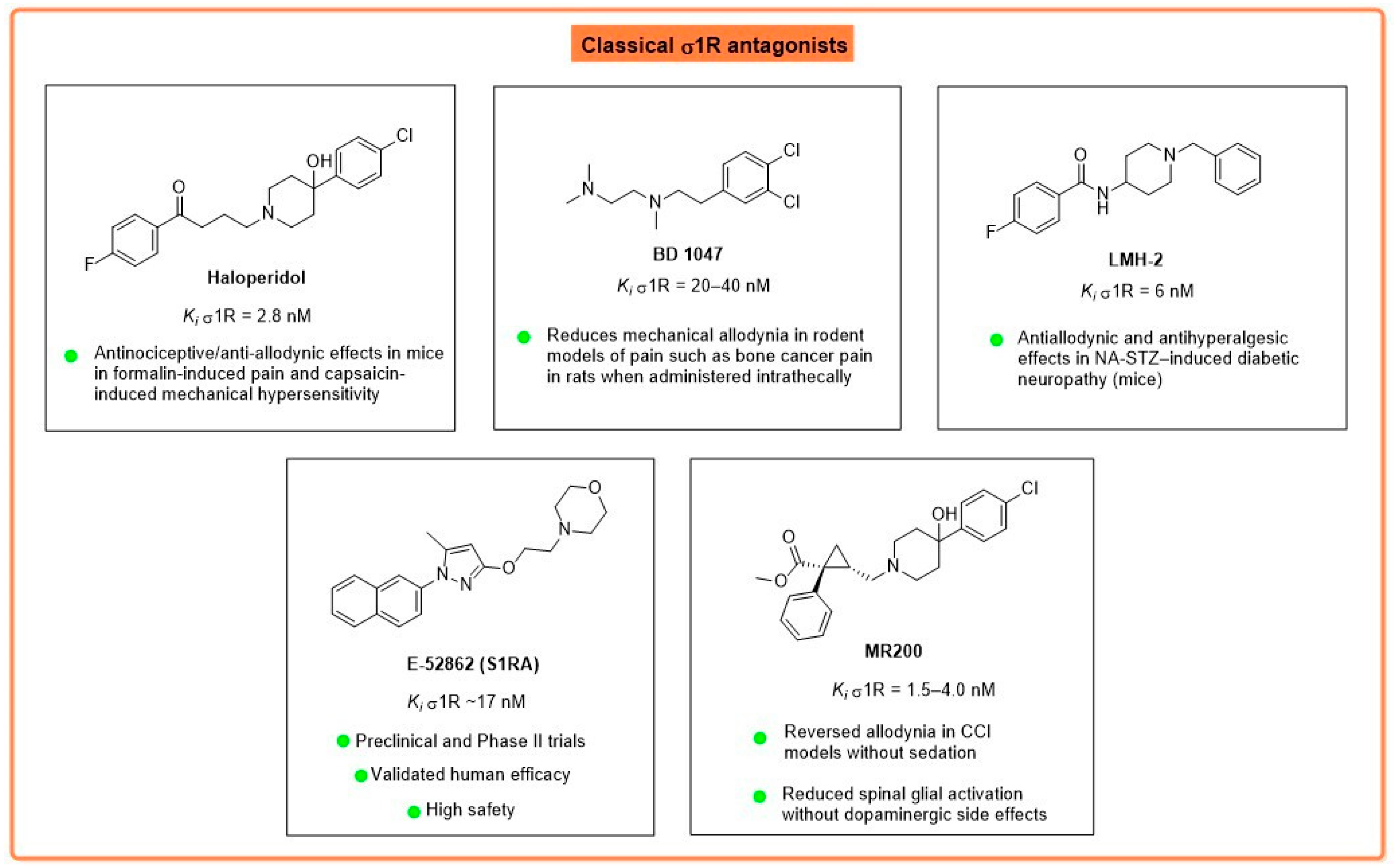
| Haloperidol | Butyrophenone | σ1R = 2–6 nM | Non-selective; high affinity for dopamine D2 receptors | Reduces mechanical allodynia/hyperalgesia in CCI and STZ-DPN models; limited by extrapyramidal side effects |
| BD 1047 | Phenylaminoethyl-piperazine | σ1R = 0.9 nM | Highly selective over dopaminergic and opioid receptors | Reduces allodynia in bone cancer pain, SNL, and CCD models; inhibits spinal microglial activation |
| LMH-2 | Haloperidol analog | σ1R = 6.0 nM | 58-fold lower affinity for D2 compared to HAL; potential TRPV1 interaction | Antiallodynic/. antihyperalgesic efficacy superior to gabapentin in NA-STZ mice without motor side effects |
| (+)-MR200 | Cyclopropyl- methyl-piperidine | σ1R = 1.5–4.0 nM | Highly selective; lacks dopaminergic affinity | Reverses allodynia and hyperalgesia in CCI and carrageenan models; normalizes Connexin 43 expression |
| E-52862 (S1RA) | 1-Arylpyrazole | σ1R = 17 nM | Exceptional selectivity (σ1R/σ2R > 550); negligible affinity for 170+ targets | Inhibits spinal wind-up and pro-inflammatory cytokine expression; effective in OIN, STZ-DPN, and nerve injury models |
| Anatomical Region/Circuit | Cellular Localization of TMEM97 | Functional Contribution to Pain Processing | Implications for σ2R Targeted Modulation | Species (Sex) |
|---|---|---|---|---|
| Dorsal Root Ganglia (DRG) | Small- and medium-diameter nociceptors (C- and Aδ-fibers); satellite glial cells | High vulnerability to metabolic and proteostatic stress; initiation of peripheral sensitization | σ2R ligands reduce ISR hyperactivation and restore neuronal homeostasis, lowering nociceptor excitability | Mouse, Human (Male, Female) |
| Peripheral Nerve/Schwann Cells | Myelinating and non- myelinating Schwann cells | Axonal metabolism, lipid regulation, and trophic support; involvement in neuropathic nerve remodeling | σ2R modulators stabilize glial–axonal interactions and reduce stress-induced Schwann cell dysfunction | Mouse (Male, Female) |
| Spinal Dorsal Horn (Laminae I–II) | Presynaptic nociceptor terminals; interneurons (including inhibitory populations) | Synaptic integration of nociceptive input; central sensitization and disinhibition | σ2R activation restores proteostatic balance, dampens synaptic hyperexcitability, and supports inhibitory circuit function | Mouse, Human (Male, Female) |
| Thalamus | Relay nuclei involved in sensory-discriminative pain processing | Transmission and amplification of nociceptive signals to the cortex | σ2R modulation normalizes thalamic stress responses and reduces sensory amplification | Mouse (Unspecified) |
| Periaqueductal Gray (PAG) | Neurons in descending modulatory pathways | Coordination of endogenous analgesic responses; descending facilitation under chronic pain | σ2R ligands may rebalance descending modulation by reducing ISR-driven maladaptation | Mouse (Male, Female) |
| Anterior Cingulate Cortex (ACC) | Excitatory neurons; limbic integrative circuits | Affective-motivational pain components; cognitive modulation of nociception | σ2R modulation reduces stress-related affective amplification and maladaptive emotional weighting of pain | Mouse (Unspecified) |
| Amygdala | Basolateral and central nuclei | Pain-related fear, anxiety, aversion, and emotional memory | σ2R ligands counteract ISR-driven affective sensitization and stress-related hypervigilance | Mouse (Male, Female) |
| Insular Cortex | Granular and dysgranular regions | Interoception, pain unpleasantness, and integration of sensory and affective signals | σ2R modulation may attenuate chronic pain– induced dysregulation of interoceptive salience | Mouse (Male, Female) |
Disclaimer/Publisher’s Note: The statements, opinions and data contained in all publications are solely those of the individual author(s) and contributor(s) and not of MDPI and/or the editor(s). MDPI and/or the editor(s) disclaim responsibility for any injury to people or property resulting from any ideas, methods, instructions or products referred to in the content. |
© 2026 by the authors. Licensee MDPI, Basel, Switzerland. This article is an open access article distributed under the terms and conditions of the Creative Commons Attribution (CC BY) license.
Share and Cite
Reale, C.; Costanzo, G.; Pasquinucci, L.; Parenti, C. Targeting Sigma-1 and Sigma-2 Receptors in Neuropathic Pain: Pharmacology, Ligand Development, and Translational Progress. Brain Sci. 2026, 16, 371. https://doi.org/10.3390/brainsci16040371
Reale C, Costanzo G, Pasquinucci L, Parenti C. Targeting Sigma-1 and Sigma-2 Receptors in Neuropathic Pain: Pharmacology, Ligand Development, and Translational Progress. Brain Sciences. 2026; 16(4):371. https://doi.org/10.3390/brainsci16040371
Chicago/Turabian StyleReale, Carlo, Giuliana Costanzo, Lorella Pasquinucci, and Carmela Parenti. 2026. "Targeting Sigma-1 and Sigma-2 Receptors in Neuropathic Pain: Pharmacology, Ligand Development, and Translational Progress" Brain Sciences 16, no. 4: 371. https://doi.org/10.3390/brainsci16040371
APA StyleReale, C., Costanzo, G., Pasquinucci, L., & Parenti, C. (2026). Targeting Sigma-1 and Sigma-2 Receptors in Neuropathic Pain: Pharmacology, Ligand Development, and Translational Progress. Brain Sciences, 16(4), 371. https://doi.org/10.3390/brainsci16040371