


Assessing Motivation in Cerebral Palsy During Rehabilitation: A Systematic Review

 ,
,  , and
, and 
Abstract
1. Introduction
2. Materials and Methods
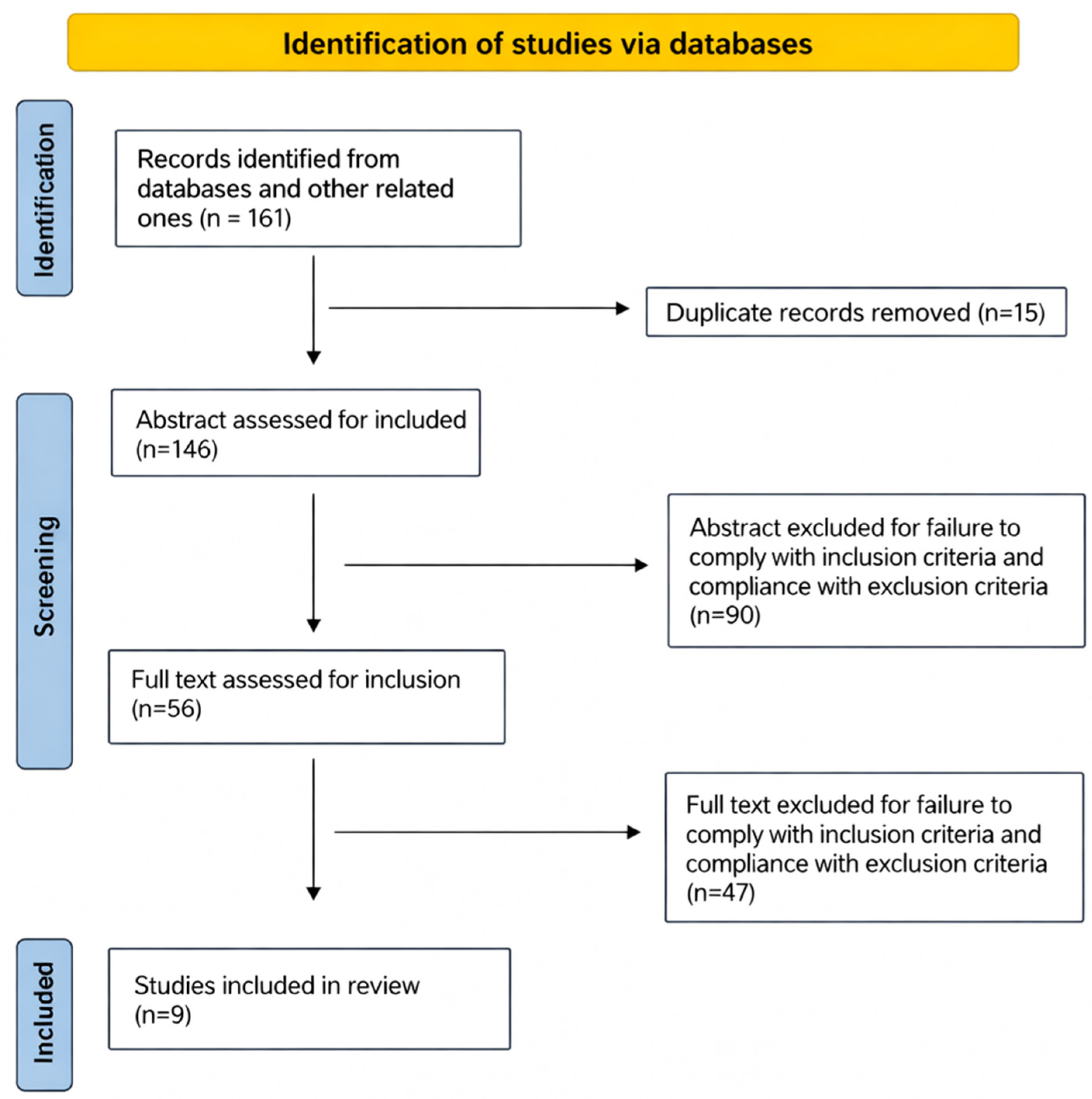
3. Results
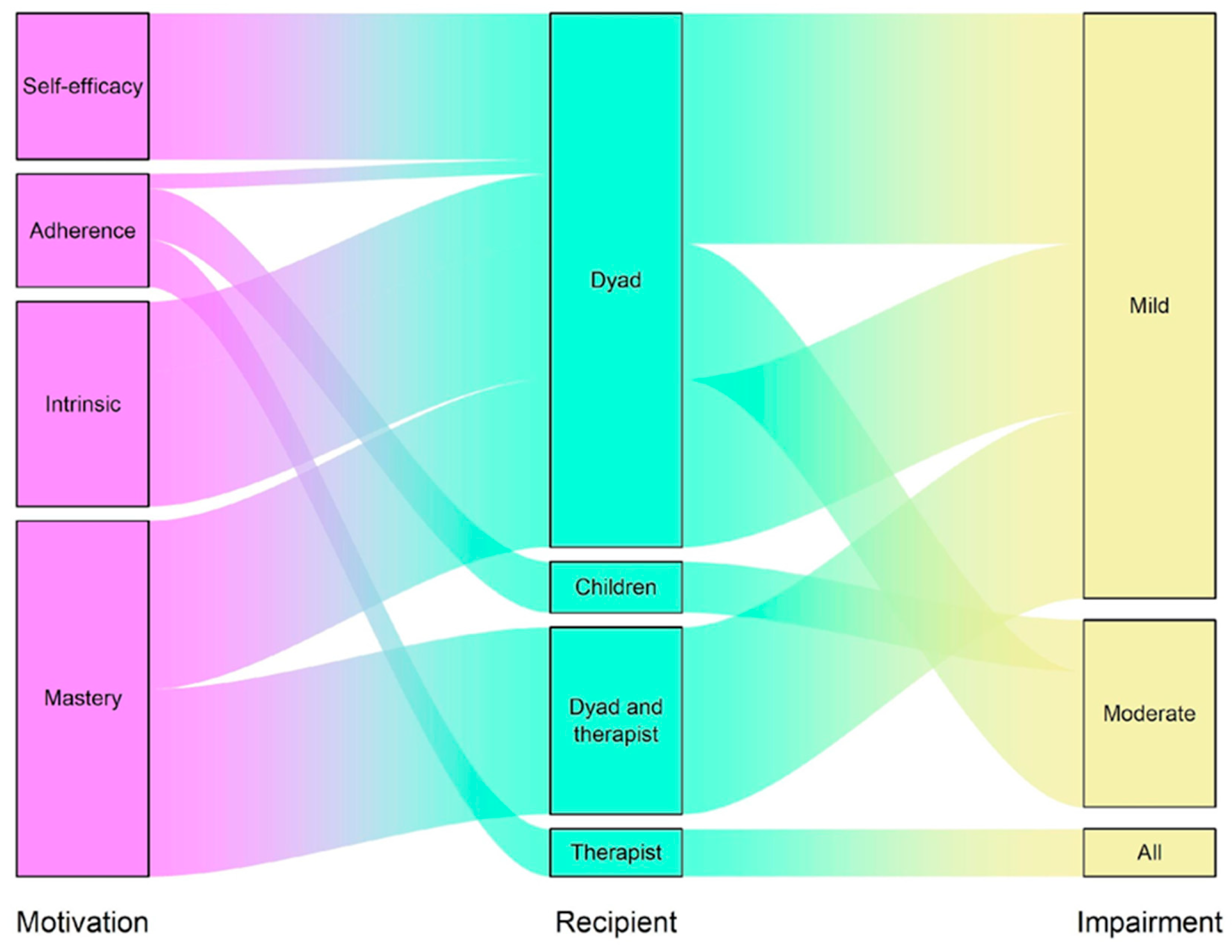
3.1. Motivation-Related Constructs Measures
3.2. Quality Assessment and Risk of Bias Analysis
3.3. Strengths and Limitations of the Identified Motivation Measures
4. Discussion
5. Conclusions
Supplementary Materials
Author Contributions
Funding
Institutional Review Board Statement
Informed Consent Statement
Data Availability Statement
Conflicts of Interest
References
- Dan, B.; Rosenbaum, P.; Carr, L.; Gough, M.; Coughlan, J.; Nweke, N. Proposed updated description of cerebral palsy. Dev. Med. Child Neurol. 2025, 67, 700–709. [Google Scholar] [CrossRef] [PubMed]
- Novak, I.; Jackman, M.; Finch-Edmondson, M.; Fahey, M. Cerebral palsy. Lancet 2025, 406, 174–188. [Google Scholar] [CrossRef] [PubMed]
- Salomon, I. Neurobiological insights into cerebral palsy: A review of the mechanisms and therapeutic strategies. Brain Behav. 2024, 14, e70065. [Google Scholar] [CrossRef] [PubMed]
- Wittenberg, G.F. Neural plasticity and treatment across the lifespan for motor deficits in cerebral palsy. Dev. Med. Child Neurol. 2009, 51, 130–133. [Google Scholar] [CrossRef]
- Verrienti, G.; Raccagni, C.; Lombardozzi, G.; De Bartolo, D.; Iosa, M. Motivation as a measurable outcome in stroke rehabilitation: A systematic review of the literature. Int. J. Environ. Res. Public Health 2023, 20, 4187. [Google Scholar] [CrossRef] [PubMed]
- Majnemer, A.; Shevell, M.; Law, M.; Poulin, C.; Rosenbaum, P. Level of motivation in mastering challenging tasks in children with cerebral palsy. Dev. Med. Child Neurol. 2010, 52, 1120–1126. [Google Scholar] [CrossRef]
- Bartlett, D.J.; Palisano, R.J. Physical therapists’ perceptions of factors influencing the acquisition of motor abilities of children with cerebral palsy: Implications for clinical reasoning. Phys. Ther. 2002, 82, 237–248. [Google Scholar] [CrossRef]
- Heckhausen, J.; Heckhausen, H. Development of motivation. In Motivation and Action; Springer International Publishing: Cham, Switzerland, 2018; pp. 679–743. [Google Scholar]
- Ryan, R.M.; Deci, E.L. Intrinsic and extrinsic motivations: Classic definitions and new directions. Contemp. Educ. Psychol. 2000, 25, 54–67. [Google Scholar] [CrossRef]
- Page, M.J.; McKenzie, J.E.; Bossuyt, P.M.; Boutron, I.; Hoffmann, T.C.; Mulrow, C.D.; Shamseer, L.; Tetzlaff, J.M.; Akl, E.A.; Brennan, S.E.; et al. The PRISMA 2020 statement: An updated guideline for reporting systematic reviews. BMJ 2021, 372, n71. [Google Scholar] [CrossRef]
- Sterne, J.A.C.; Savović, J.; Page, M.J.; Elbers, R.G.; Blencowe, N.S.; Boutron, I.; Cates, C.J.; Cheng, H.-Y.; Corbett, M.S.; Eldridge, S.M.; et al. RoB 2: A revised tool for assessing risk of bias in randomised trials. BMJ 2019, 366, l4898. [Google Scholar] [CrossRef]
- Munn, Z.; Barker, T.H.; Moola, S.; Tufanaru, C.; Stern, C.; McArthur, A.; Stephenson, M.; Aromataris, E. Methodological quality of case series studies: An introduction to the JBI critical appraisal tool. JBI Evid. Synth. 2020, 18, 2127–2133. [Google Scholar] [CrossRef]
- Gunel, M.K.; Mutlu, A.; Tarsuslu, T.; Livanelioglu, A. Relationship among the Manual Ability Classification System (MACS), the Gross Motor Function Classification System (GMFCS), and functional status (WeeFIM) in children with spastic cerebral palsy. Eur. J. Pediatr. 2009, 168, 477–485. [Google Scholar] [CrossRef] [PubMed]
- Eliasson, A.-C.; Krumlinde-Sundholm, L.; Rösblad, B.; Beckung, E.; Arner, M.; Öhrvall, A.-M.; Rosenbaum, P. The Manual Ability Classification System (MACS) for children with cerebral palsy: Scale development and evidence of validity and reliability. Dev. Med. Child Neurol. 2006, 48, 549–554. [Google Scholar] [CrossRef]
- Saussez, G.; Bailly, R.; Araneda, R.; Paradis, J.; Ebner-Karestinos, D.; Klöcker, A.; Sogbossi, E.S.; Riquelme, I.; Brochard, S.; Bleyenheuft, Y. Efficacy of integrating a semi-immersive virtual device in the HABIT-ILE intervention for children with unilateral cerebral palsy: A non-inferiority randomized controlled trial. J. Neuroeng. Rehabil. 2023, 20, 98. [Google Scholar] [CrossRef] [PubMed]
- Chan-Víquez, D.; Khan, A.; Munce, S.; Fehlings, D.; Wright, F.V.; Biddiss, E. Understanding a videogame home intervention for children with hemiplegia: A mixed methods multi-case study. Front. Med. Technol. 2023, 5, 1217797. [Google Scholar] [CrossRef]
- Malick, W.H.; Butt, R.; Awan, W.A.; Ashfaq, M.; Mahmood, Q. Effects of augmented reality interventions on upper extremity function and balance in children with spastic hemiplegic cerebral palsy: A randomized clinical trial. Front. Neurol. 2022, 13, 895055. [Google Scholar] [CrossRef]
- MacIntosh, A.; Desailly, E.; Vignais, N.; Vigneron, V.; Biddiss, E. A biofeedback-enhanced therapeutic exercise video game intervention for young people with cerebral palsy: A randomized single-case experimental design feasibility study. PLoS ONE 2020, 15, e0234767. [Google Scholar] [CrossRef]
- Hung, J.W.; Chang, Y.J.; Chou, C.X.; Wu, W.C.; Howell, S.; Lu, W.P. Developing a suite of motion-controlled games for upper extremity training in children with cerebral palsy: A proof-of-concept study. Games Health J. 2018, 7, 327–334. [Google Scholar] [PubMed]
- Reedman, S.E.; Boyd, R.N.; Trost, S.G.; Elliott, C.; Sakzewski, L. Efficacy of participation-focused therapy on performance of physical activity participation goals and habitual physical activity in children with cerebral palsy: A randomized controlled trial. Arch. Phys. Med. Rehabil. 2019, 100, 676–686. [Google Scholar] [CrossRef]
- Miller, L.; Ziviani, J.; Ware, R.S.; Boyd, R.N. Does context matter? Mastery motivation and therapy engagement of children with cerebral palsy. Phys. Occup. Ther. Pediatr. 2016, 36, 155–170. [Google Scholar] [CrossRef]
- Miller, L.; Ziviani, J.; Ware, R.S.; Boyd, R.N. Mastery motivation: A way of understanding therapy outcomes for children with unilateral cerebral palsy. Disabil. Rehabil. 2015, 37, 1439–1445. [Google Scholar] [CrossRef] [PubMed]
- Reubens, R.; Silkwood-Sherer, D.J. Intervention for an adolescent with cerebral palsy during a period of accelerated growth. Pediatr. Phys. Ther. 2016, 28, 117–125. [Google Scholar] [CrossRef]
- Morgan, G.A.; Busch-Rossnagel, N.A.; Barrett, K.C.; Wang, J. The Dimensions of Mastery Questionnaire (DMQ): A Manual About Its Development, Psychometrics, and Use; Colorado State University: Fort Collins, CO, USA, 2009. [Google Scholar]
- King, G.; Batorowicz, B.; Rigby, P.; McMain-Klein, M.; Thompson, L.; Pinto, M. Development of a measure to assess youth self-reported experiences of activity settings (SEAS). Int. J. Disabil. Dev. Educ. 2014, 61, 44–66. [Google Scholar] [CrossRef]
- Basu, S.; Kafkes, A.; Schatz, R.; Kiraly, A.; Kielhofner, G. A User’s Manual for the Pediatric Volitional Questionnaire, 2.1st ed.; Model of Human Occupation Clearinghouse, Department of Occupational Therapy, University of Illinois of Chicago: Chicago, IL, USA, 2008. [Google Scholar]
- Lenze, E.J.; Munin, M.C.; Quear, T.; Dew, M.A.; Rogers, J.C.; Begley, A.E.; Reynolds, C.F., III. The Pittsburgh Rehabilitation Participation Scale: Reliability and validity of a clinician-rated measure of participation in acute rehabilitation. Arch. Phys. Med. Rehabil. 2004, 85, 380–384. [Google Scholar] [CrossRef]
- Law, M.; Baptiste, S.; McColl, M.; Opzoomer, A.; Polatajko, H.; Pollock, N. The Canadian Occupational Performance Measure: An outcome measure for occupational therapy. Can. J. Occup. Ther. 1990, 57, 82–87. [Google Scholar] [CrossRef]
- Ziviani, J.; Poulsen, A.A.; Kotaniemi, K.; Law, M. The Belief in Goal Self-Competence Scale (Bi GSS)–Exploring a new way to support individual goal pursuit and document occupational therapy outcomes in paediatric practice. Aust. Occup. Ther. J. 2014, 61, 316–324. [Google Scholar] [CrossRef]
- Miller, L.; Ziviani, J.; Boyd, R.N. A systematic review of clinimetric properties of measurements of motivation for children aged 5-16 years with a physical disability or motor delay. Phys. Occup. Ther. Pediatr. 2014, 34, 90–111. [Google Scholar] [CrossRef]
- Verkerk, G.J.; Wolf, M.J.; Louwers, A.M.; Meester-Delver, A.; Nollet, F. The reproducibility and validity of the Canadian Occupational Performance Measure in parents of children with disabilities. Clin. Rehabil. 2006, 20, 980–988. [Google Scholar] [CrossRef]
- Verkerk, G.J.Q.; van der Molen-Meulmeester, L.; Alsem, M.W. How children and their parents value using the Canadian Occupational Performance Measure (COPM) with children themselves. J. Pediatr. Rehabil. Med. 2021, 14, 7–17. [Google Scholar] [CrossRef] [PubMed]
- Iosa, M.; Galeoto, G.; De Bartolo, D.; Russo, V.; Ruotolo, I.; Spitoni, G.F.; Ciancarelli, I.; Tramontano, M.; Antonucci, G.; Paolucci, S.; et al. Italian Version of the Pittsburgh Rehabilitation Participation Scale: Psychometric Analysis of Validity and Reliability. Brain Sci. 2021, 11, 626. [Google Scholar] [CrossRef] [PubMed]
- Zheng, Q.; Chi, A.; Shi, B.; Wang, Y.; Ma, Q.; Zhou, F.; Guo, X.; Zhou, M.; Lin, B.; Ning, K. Differential features of early childhood motor skill development and working memory processing: Evidence from fNIRS. Front. Behav. Neurosci. 2023, 17, 1279648. [Google Scholar] [CrossRef]
- Constantinidis, C.; Ahmed, A.A.; Wallis, J.D.; Batista, A.P. Common mechanisms of learning in motor and cognitive systems. J. Neurosci. 2023, 43, 7523–7529. [Google Scholar] [CrossRef]
- Lequerica, A.H.; Kortte, K. Therapeutic engagement: A proposed model of engagement in medical rehabilitation. Am. J. Phys. Med. Rehabil. 2010, 89, 415–422. [Google Scholar] [CrossRef]
- Butler, C.; Darrah, J. Effects of neurodevelopmental treatment (NDT) for cerebral palsy: An AACPDM evidence report. Dev. Med. Child Neurol. 2001, 43, 778–790. [Google Scholar] [CrossRef]
- Maggio, M.G.; Valeri, M.C.; De Luca, R.; Di Iulio, F.; Ciancarelli, I.; De Francesco, M.; Calabrò, R.S.; Morone, G. The role of immersive virtual reality interventions in pediatric cerebral palsy: A systematic review across motor and cognitive domains. Brain Sci. 2024, 14, 490. [Google Scholar] [CrossRef] [PubMed]
- Bonnechère, B.; Jansen, B.; Omelina, L.; Degelaen, M.; Wermenbol, V.; Rooze, M.; Van Sint Jan, S. Can serious games be incorporated with conventional treatment of children with cerebral palsy? A review. Res. Dev. Disabil. 2014, 35, 1899–1913. [Google Scholar] [CrossRef]
- Meyns, P.; Roman de Mettelinge, T.; van der Spank, J.; Coussens, M.; Van Waelvelde, H. Motivation in pediatric motor rehabilitation: A systematic search of the literature using the self-determination theory as a conceptual framework. Dev. Neurorehabil. 2018, 21, 371–390. [Google Scholar] [CrossRef]
- Schoenmaker, J.; Houdijk, H.; Steenbergen, B.; Reinders-Messelink, H.A.; Schoemaker, M.M. Effectiveness of different extrinsic feedback forms on motor learning in children with cerebral palsy: A systematic review. Disabil. Rehabil. 2023, 45, 1271–1284. [Google Scholar] [CrossRef] [PubMed]
- Majnemer, A.; Limperopoulos, C. Importance of outcome determination in pediatric rehabilitation. Dev. Med. Child Neurol. 2002, 44, 773–777. [Google Scholar] [CrossRef] [PubMed]




| First Author (Year) | Country | Study Design | Sample: Size and Age Range (Years) | Participant Levels (GMFCS/MACS) | Intervention Type and Side | Duration of Treatment | Outcome Measure |
|---|---|---|---|---|---|---|---|
| Saussez et al. (2023) [15] | Belgium | RCT | 40 (5–18) | I–II | VR technology (UE) | 2 weeks | COPM, unstructured open questions |
| Chan-Víquez et al. (2023) [16] | Canada | Case series | 4 (7–17) | I–II | Exergame (UE) | 14 weeks | Semi-structured interview |
| Malick et al. (2022) [17] | Pakistan | RCT | 30 (6–12) | I–II | Augmented Reality (LE) | 8 weeks | Unstructured open questions |
| MacIntosh et al. (2020) [18] | Canada | Case series | 19 (8–18) | I–II | VR technology (UE) | 4 weeks | SEAS |
| Hung et al. (2018) [19] | Taiwan | Case series | 13 (5–15) | I–V | Exergame (UE) | 12 weeks | PPRS |
| Reedman et al. (2019) [20] | New Zealand | RCT | 37 (8–12) | I–III | Goal oriented physiotherapy (UE) | 16 weeks | BiGSS, COPM |
| Miller et al. (2016) [21] | Australia | RCT | 44 (5–16) | I–II | mCIMT (UE) | 26 weeks | DMQ, PVQ |
| Miller et al. (2015) [22] | Australia | RCT | 46 (5–16) | I–II | mCIMT (UE) | 13 weeks | DMQ |
| Reubens et al. (2016) [23] | USA | Case series | 1 (13) | I–II | Hippotherapy | 10 weeks | DMQ |
| Study | JBI Items Met (Out of 10) | Overall Risk of Bias | Main Strengths | Main Limitations |
|---|---|---|---|---|
| Chan-Víquez et al., 2023 [16] | 3/10 | High | Clear description of intervention; rich qualitative insight into motivational processes. | No clear inclusion criteria; non-consecutive sampling; small sample; outcomes not standardized; short duration; descriptive analysis only. |
| MacIntosh et al., 2020 [18] | 4/10 | High | Use of validated measures (SEAS, COPM, and AHA); detailed reporting of participant characteristics; structured single-case design. | Single participant; absence of comparator; short follow-up; limited external validity; no inferential statistics. |
| Reubens & Silkwood-Sherer, 2016 [23] | 4/10 | High | Clear clinical description; use of standardized motivation measure (DMQ-17); detailed intervention reporting. | Case report (N = 1); no inclusion criteria or series structure; limited follow-up; inability to separate intervention effects from natural variation. |
| Hung et al., 2018 [19] | 3/10 | High | Good feasibility data; detailed reporting of engagement and participation during training. | Lack of standardized motivation measures; no consecutive or complete inclusion; short intervention; descriptive analysis; early motivational “novelty effect” not controlled. |
Disclaimer/Publisher’s Note: The statements, opinions and data contained in all publications are solely those of the individual author(s) and contributor(s) and not of MDPI and/or the editor(s). MDPI and/or the editor(s) disclaim responsibility for any injury to people or property resulting from any ideas, methods, instructions or products referred to in the content. |
© 2026 by the authors. Licensee MDPI, Basel, Switzerland. This article is an open access article distributed under the terms and conditions of the Creative Commons Attribution (CC BY) license.
Share and Cite
De Bartolo, D.; Iosa, M.; Simigliani, S.; Di Iulio, F.; Ciancarelli, I.; Morone, G. Assessing Motivation in Cerebral Palsy During Rehabilitation: A Systematic Review. Brain Sci. 2026, 16, 291. https://doi.org/10.3390/brainsci16030291
De Bartolo D, Iosa M, Simigliani S, Di Iulio F, Ciancarelli I, Morone G. Assessing Motivation in Cerebral Palsy During Rehabilitation: A Systematic Review. Brain Sciences. 2026; 16(3):291. https://doi.org/10.3390/brainsci16030291
Chicago/Turabian StyleDe Bartolo, Daniela, Marco Iosa, Sara Simigliani, Fulvia Di Iulio, Irene Ciancarelli, and Giovanni Morone. 2026. "Assessing Motivation in Cerebral Palsy During Rehabilitation: A Systematic Review" Brain Sciences 16, no. 3: 291. https://doi.org/10.3390/brainsci16030291
APA StyleDe Bartolo, D., Iosa, M., Simigliani, S., Di Iulio, F., Ciancarelli, I., & Morone, G. (2026). Assessing Motivation in Cerebral Palsy During Rehabilitation: A Systematic Review. Brain Sciences, 16(3), 291. https://doi.org/10.3390/brainsci16030291