Article

Establishing a Sex-Specific Cut-Off for Temporal Bone Thickness in Transcranial Color-Coded Duplex Sonography


1
Department of Radiology and Nuclear Medicine, Nuremberg Hospital Campus North, Paracelsus Medical University (PMU), Prof.-Ernst-Nathan-Str. 1, 90419 Nuremberg, Germany
2
Department of Neurology, Nuremberg Hospital Campus South, Paracelsus Medical University (PMU), Breslauer Str. 201, 90471 Nuremberg, Germany
3
Core Facility Biostatistics, Paracelsus Medical University (PMU), Strubergasse 21, 5020 Salzburg, Austria
4
Technische Hochschule Nürnberg Georg Simon Ohm, Keßlerpl. 12, 90489 Nuremberg, Germany
5
Applied Mathematics, Physics and Humanities, Nuremberg Institute of Technology, Keßlerpl. 12, 90489 Nuremberg, Germany
6
Institute of Medical Physics, Nuremberg Hospital Campus North, Paracelsus Medical University (PMU), Prof.-Ernst-Nathan-Str. 1, 90419 Nuremberg, Germany
*
Author to whom correspondence should be addressed.
Brain Sci. 2026, 16(3), 279; https://doi.org/10.3390/brainsci16030279

Submission received: 16 January 2026 / Revised: 17 February 2026 / Accepted: 26 February 2026 / Published: 28 February 2026
(This article belongs to the Section Neurotechnology and Neuroimaging)

Abstract

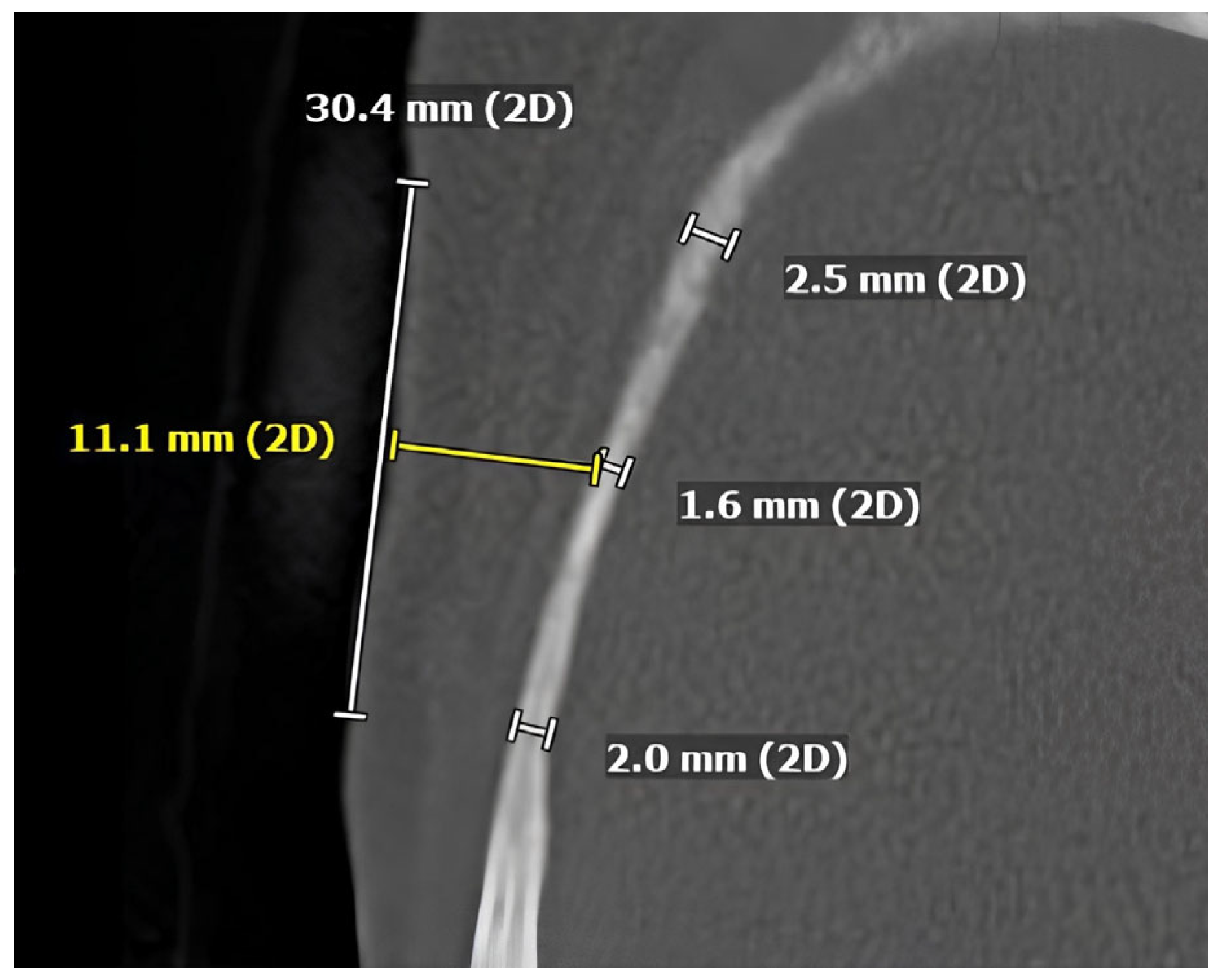
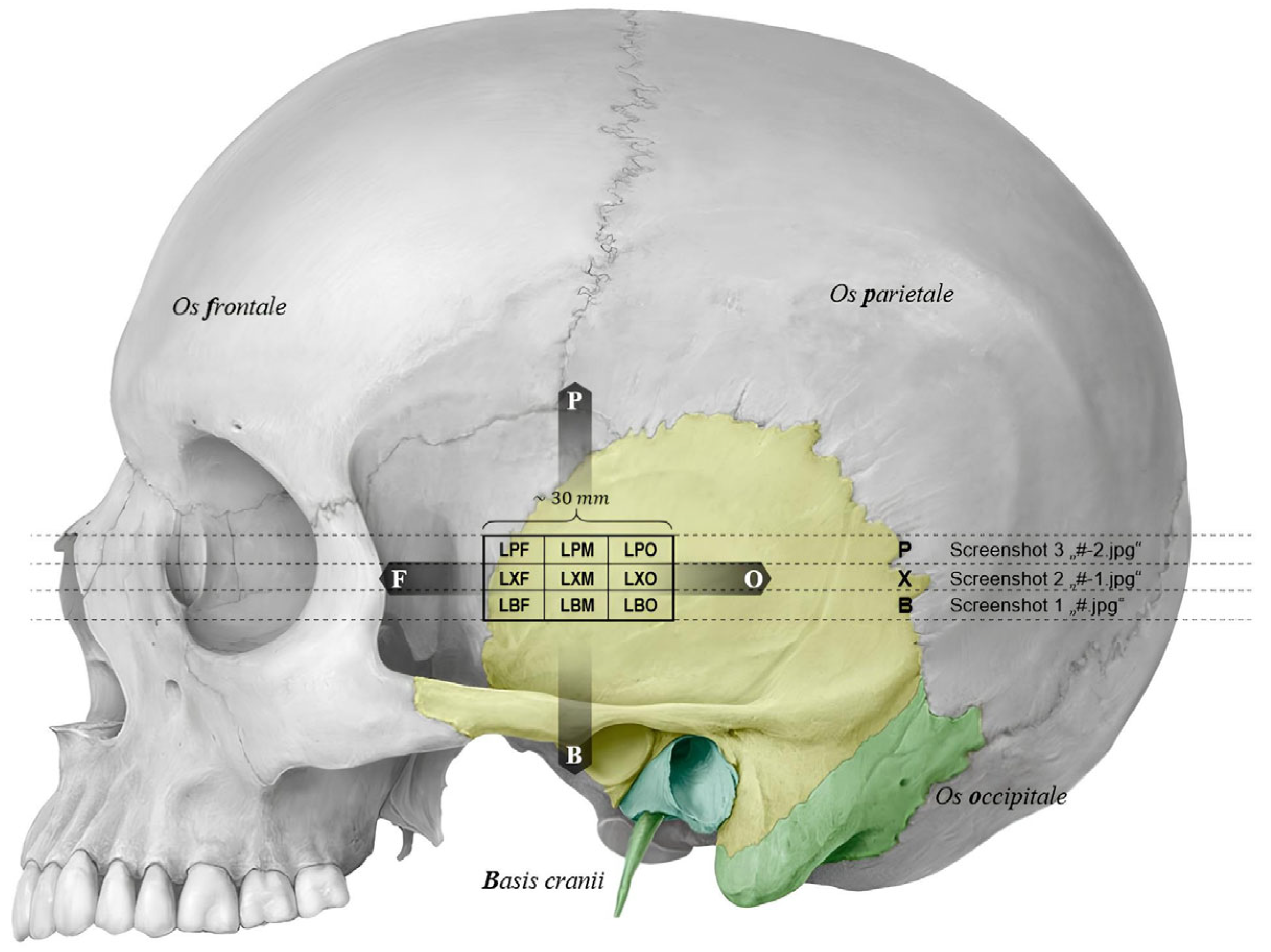
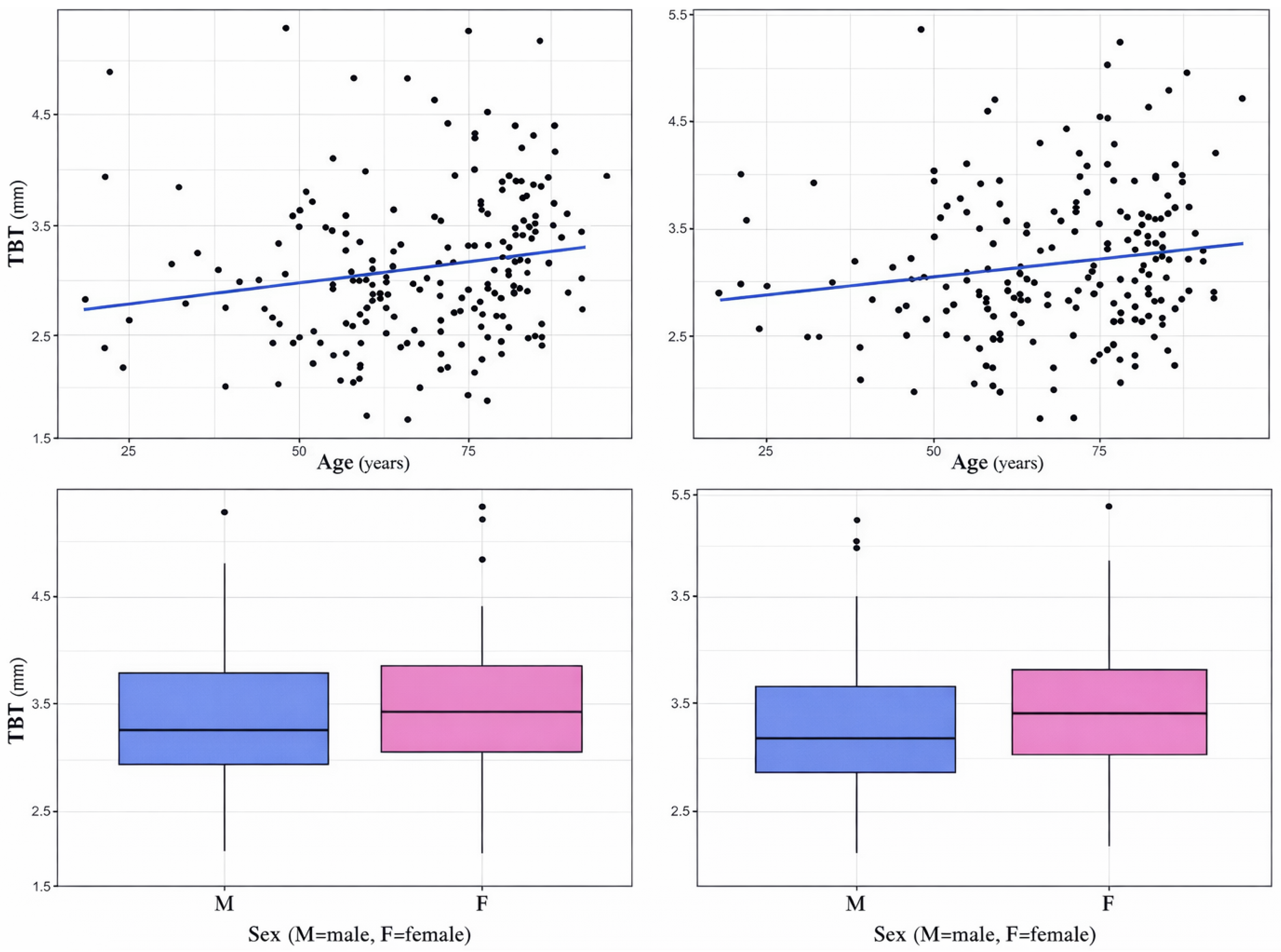
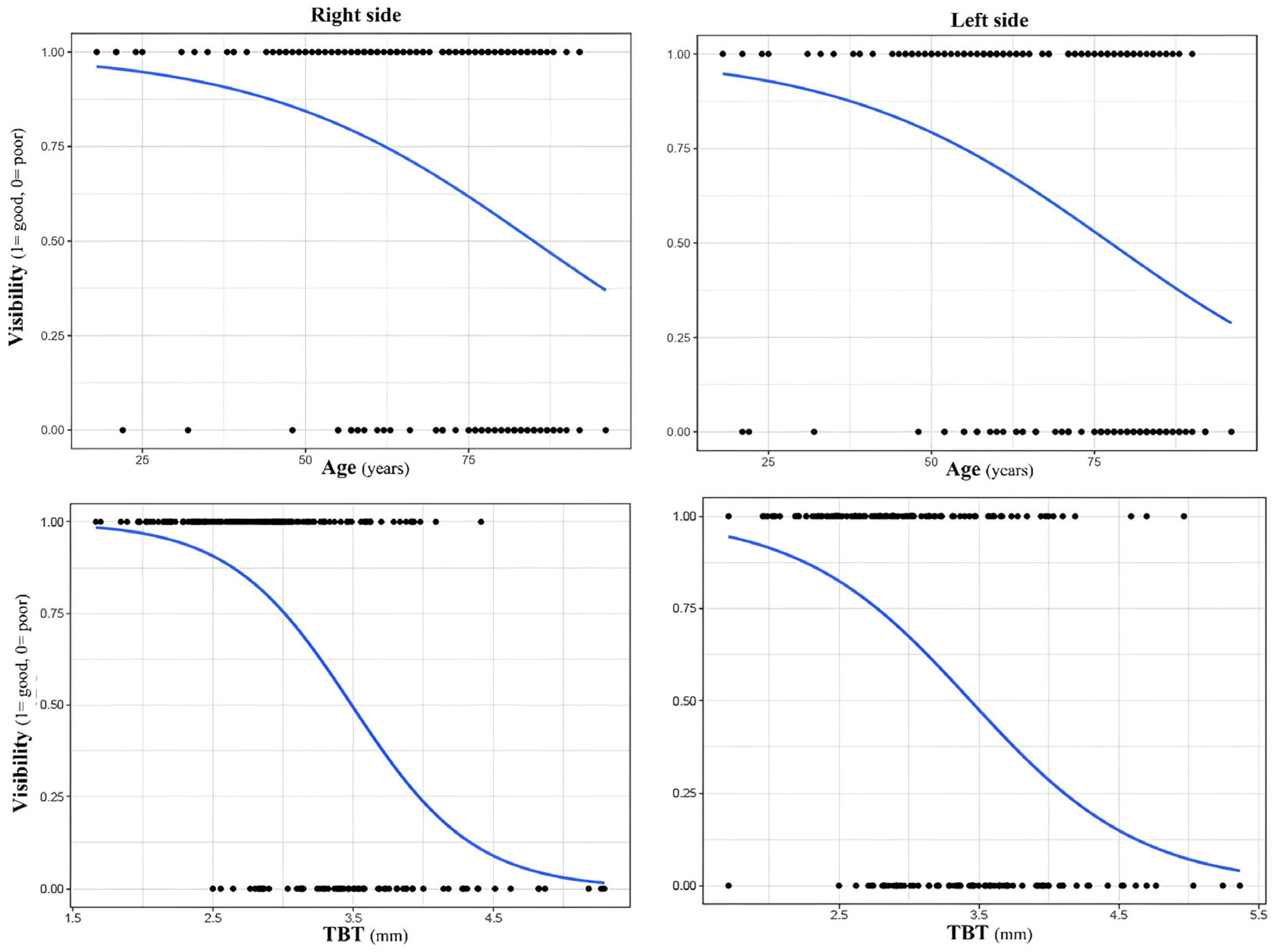
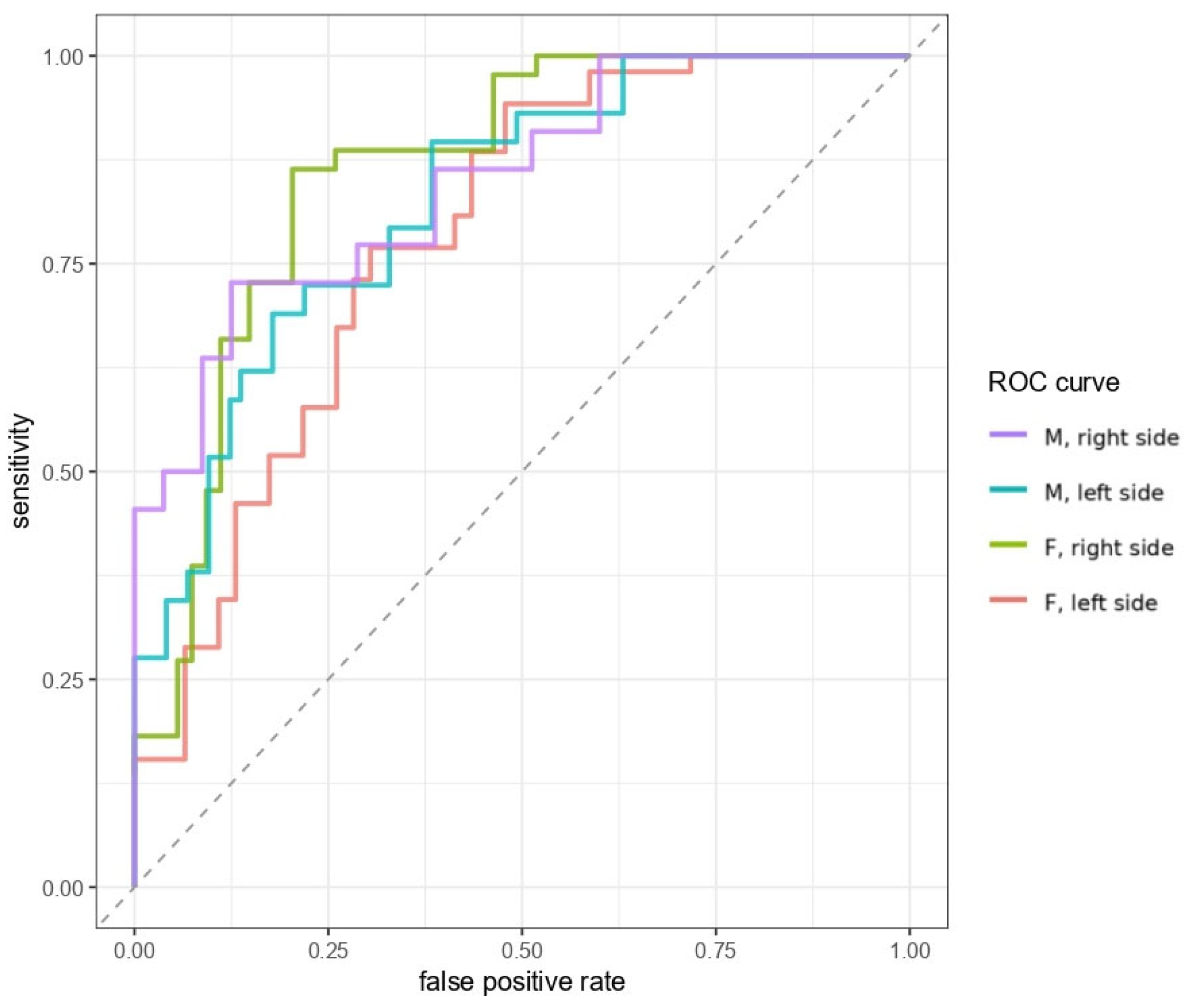
Background/Objectives: The aim of this study was to identify predictors of temporal window failure (TWF) in transcranial color-coded duplex sonography (TCCS) based on demographical and computed tomography (CT)-based parameters such as temporal bone thickness (TBT), and to define sex-specific thresholds for predicting TWF. Methods: We retrospectively analyzed a series of adult patients who underwent cranial CT and TCCS. Bitemporal TBT was measured in nine standardized regions on CT, and mean TBT per side was calculated. Temporal bone window (TBW) quality was graded with two semiquantitative TCCS scores assessing the visibility of the middle cerebral artery (MCA), contralateral temporal bone, mesencephalon, and ipsilateral sphenoid bone. Associations between TBT, sex, age, and TBW visibility were analyzed by correlation, chi-square tests, and logistic regression. Results: 200 patients (102 men, 98 women; mean age 68 ± 16 years) were enrolled. Mean TBT was 3.1 ± 0.7 mm (right) and 3.2 ± 0.7 mm (left). TBT correlated weakly with age (r = 0.15–0.18, p < 0.05) and was higher in women (p < 0.05). Age and sex influenced TBW visibility (p < 0.05) with small effect sizes. Increased TBT strongly predicted poor TBW (β ≈ –1.7, p < 0.001). Optimal TBT cut-offs predicting adequate TBW were 3.8 mm (men) and 3.3 mm (women), maximizing specificity (men: 0.95, women: 0.85) and negative predictive value (men: 0.87, women: 0.66). Conclusions: Advanced age and female sex were both associated with TWF. CT-assessed TBT represents a robust predictor of TCCS feasibility. Implementation of sex-specific TBT threshold values may facilitate patient pre-selection and improve procedural efficiency in neurosonographic diagnostics.
Keywords: transcranial ultrasound; Bedside Imaging; computed tomography transcranial ultrasound; Bedside Imaging; computed tomography