Advancing Neurological Rehabilitation: The BRAIN Framework for Clinical Reasoning in Neurophysiotherapy




Highlights
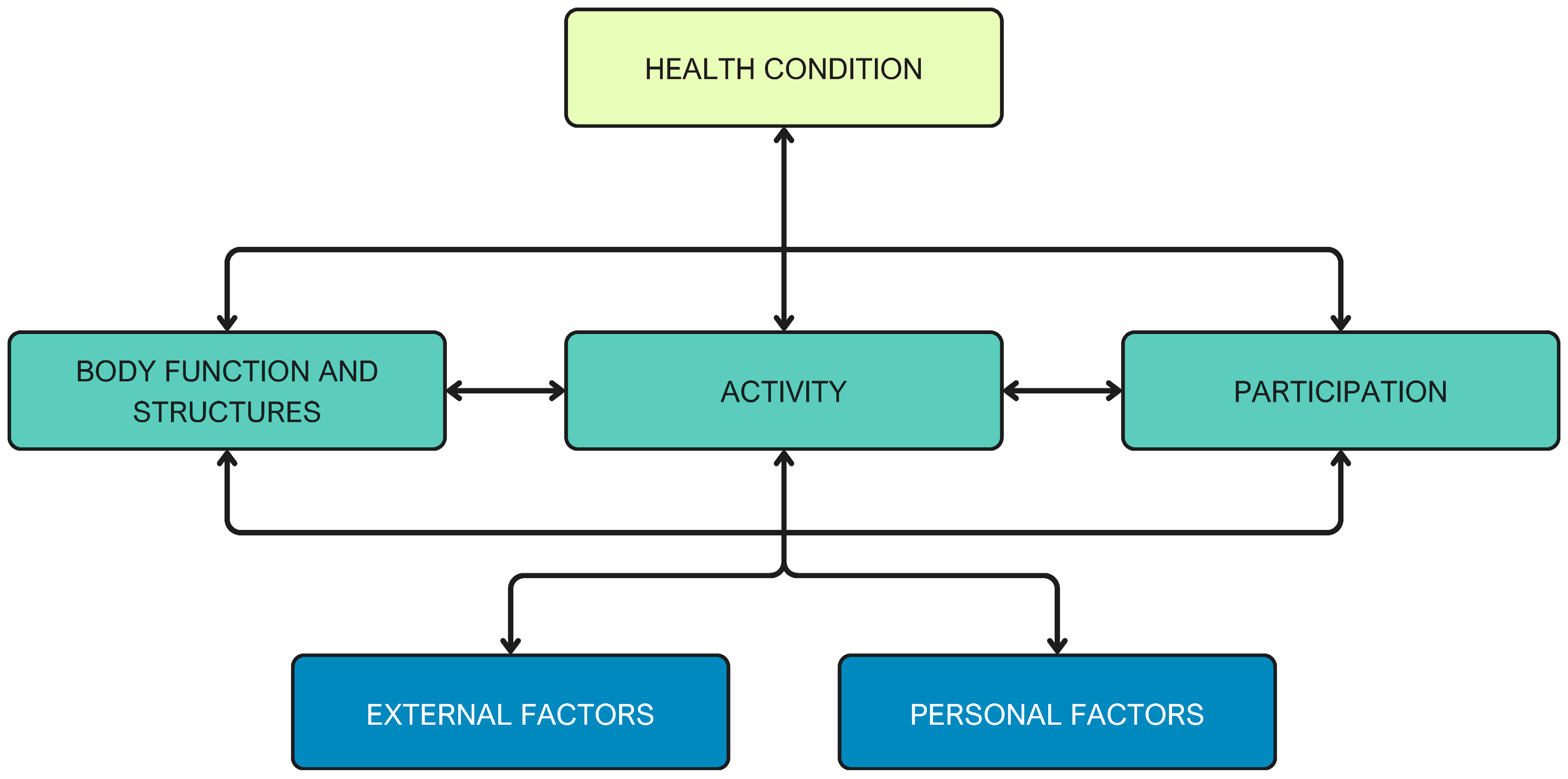
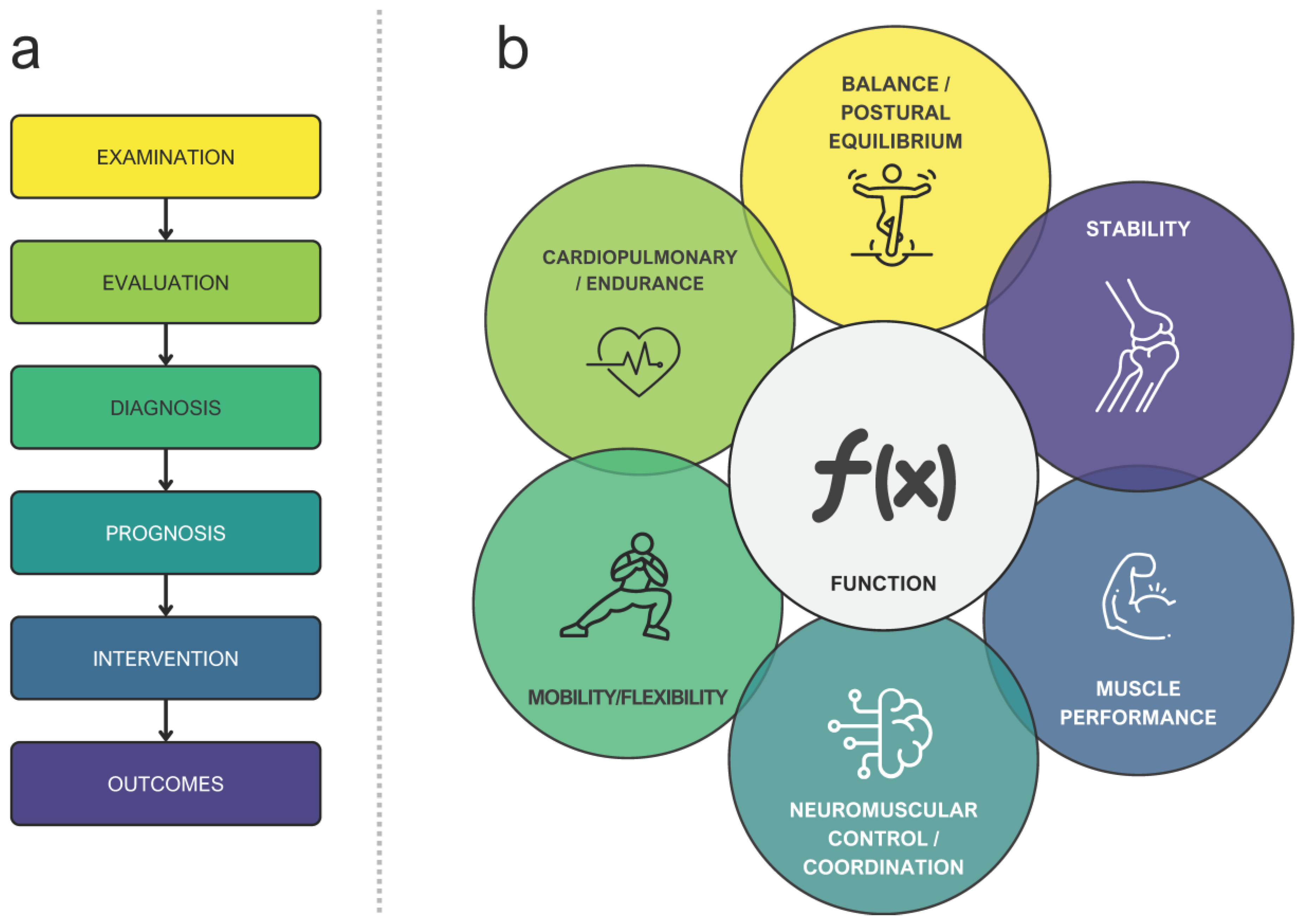
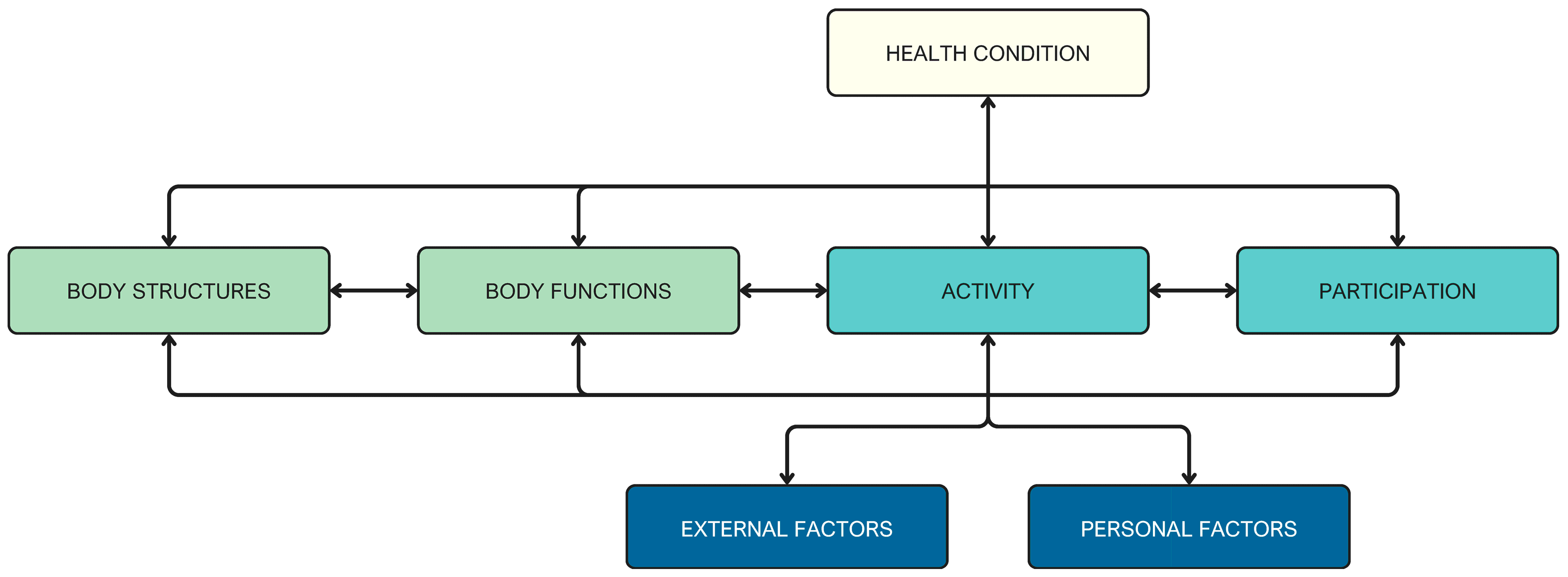
- The BRAIN (framework is proposed as a clinical reasoning model for neurophysiotherapy that integrates the ICF, the APTA patient-management process, and adapted physical-function domains.
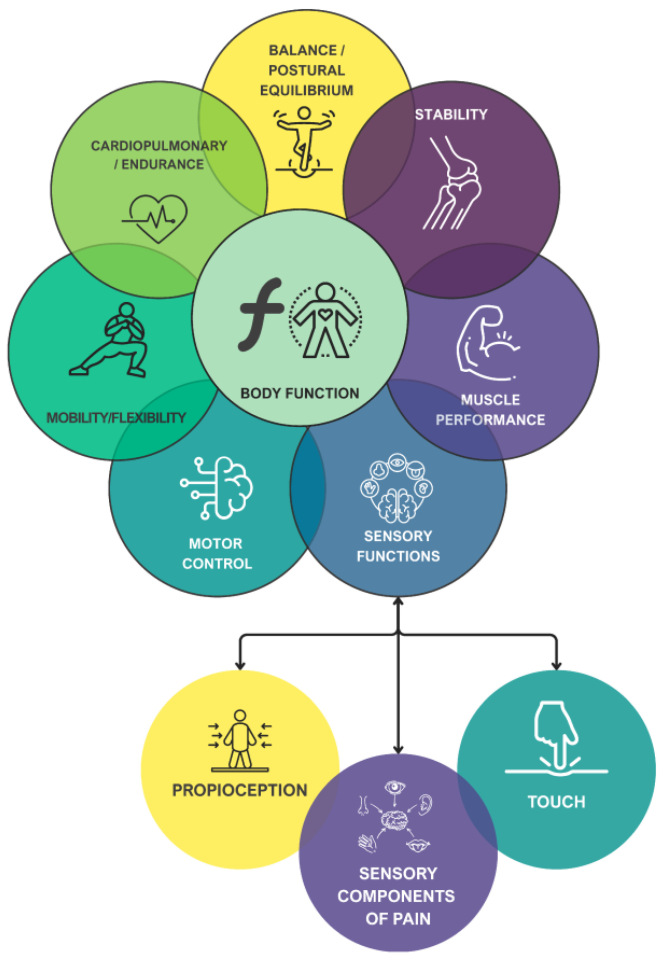
- The framework translates biopsychosocial, goal-oriented reasoning into a structured workflow by linking key impairment domains (e.g., motor control, sensory functions, hyperresistance) with standardized assessment options across activity and participation.
- The model provides a consistent, shared language that can strengthen interdisciplinary communication, documentation, and clinical decision-making in complex neurological rehabilitation.
- BRAIN offers a teachable template to support clinician training and future validation studies (e.g., expert consensus and real-world implementation pilots), with the potential to optimize functional, patient-centered outcomes.
Abstract
1. Introduction
2. Foundations and Development of Clinical Reasoning Models in Physiotherapy
3. Current Framework for Clinical Reasoning in Physiotherapy
3.1. Body Functions: Impairment-Level Domains
3.2. Activity and Participation Assessment
3.3. Clinical Reasoning Workflow
4. Novel Contributions of the BRAIN Framework
5. Limitations
6. Conclusions
Supplementary Materials
Author Contributions
Funding
Institutional Review Board Statement
Informed Consent Statement
Data Availability Statement
Conflicts of Interest
Abbreviations
| 10MWT | 10 Meter Walking Test |
| 5TST | 5 Times Sit to Stand Test |
| 6MWT | 6 Minutes Walking Test |
| APTA | American Physical Therapy Association |
| ARAT | Action Research Arm Test |
| ABC | Activities-specific Balance Confidence Scale |
| BBS | Berg Balance Scale |
| BBT | Box and Block Test |
| BRAIN | Biopsychosocial Reasoning Approach In Neurophysiotherapy |
| ESO | European Stroke Organization |
| FAC | Functional Ambulation Category |
| FGA | Functional Gait Assessment |
| FMA | Fugl-Meyer Assessment |
| GAS | Goal Attainment Scale |
| ICF | International Classification of Functioning, Disability and Health |
| MAL | Motor Activity Log |
| MAS | Modified Ashworth Scale |
| MTS | Modified Tardieu Scale |
| NDT | Neurodevelopmental Therapies |
| NHPT | Nine-Hole Peg Test |
| NRS | Numeric Rating Scale |
| QST | Quantitative Sensory Testing |
| SMART | Specific, Measurable, Achievable/Attainable, Realistic/Relevant, Timed |
| SW | Semmes-Weinstein |
| TPD | Two-Point Discrimination Test |
| VAS | Visual Analogue Scale |
| VO2max | Maximum Oxygen Consumption |
| WHO | World Health Organisation |
| WMFT | Wolf Motor Function Test |
References
- Mattingly, C. What is Clinical Reasoning? Am. J. Occup. Ther. 1991, 45, 979–986. [Google Scholar] [CrossRef] [PubMed]
- Pelaccia, T.; Tardif, J.; Triby, E.; Charlin, B. An analysis of clinical reasoning through a recent and comprehensive approach: The dual-process theory. Med. Educ. Online 2011, 16, 5890. [Google Scholar] [CrossRef] [PubMed]
- Charlin, B.; Tardif, J.; Boshuizen, H.P.A. Scripts and Medical Diagnostic Knowledge: Theory and Applications for Clinical Reasoning Instruction and Research. Acad. Med. 2000, 75, 182–190. [Google Scholar] [CrossRef] [PubMed]
- Huhn, K.; Gilliland, S.J.; Black, L.L.; Wainwright, S.F.; Christensen, N. Clinical Reasoning in Physical Therapy: A Concept Analysis. Phys. Ther. 2019, 99, 440–456. [Google Scholar] [CrossRef]
- Bowen, J.L.; Ten Cate, O. Prerequisites for Learning Clinical Reasoning. In Principles and Practice of Case-Based Clinical Reasoning Education; Ten Cate, O., Custers, E.J.F.M., Durning, S.J., Eds.; Springer International Publishing: Cham, Switzerland, 2018; pp. 47–63. [Google Scholar]
- Durning, S.J.; Artino, A.R.; Schuwirth, L.; Van Der Vleuten, C. Clarifying Assumptions to Enhance Our Understanding and Assessment of Clinical Reasoning. Acad. Med. 2013, 88, 442–448. [Google Scholar] [CrossRef]
- Fischer, R. Public Relations Problem Solving: Heuristics and Expertise. J. Public Relat. Res. 1998, 10, 137–153. [Google Scholar] [CrossRef]
- Custers, E.J.F.M. Medical Education and Cognitive Continuum Theory: An Alternative Perspective on Medical Problem Solving and Clinical Reasoning. Acad. Med. 2013, 88, 1074–1080. [Google Scholar] [CrossRef]
- Kassirer, J.P. Teaching Clinical Reasoning: Case-Based and Coached. Acad. Med. 2010, 85, 1118–1124. [Google Scholar] [CrossRef]
- Shin, H.S. Reasoning processes in clinical reasoning: From the perspective of cognitive psychology. Korean J. Med. Educ. 2019, 31, 299–308. [Google Scholar] [CrossRef]
- Ajjawi, R.; Higgs, J. Core components of communication of clinical reasoning: A qualitative study with experienced Australian physiotherapists. Adv. Health Sci. Educ. 2012, 17, 107–119. [Google Scholar] [CrossRef]
- Partridge, C.; Edwards, S. The bases of practice--neurological physiotherapy. Physiother. Res. Int. 1996, 1, 205–208. [Google Scholar] [CrossRef]
- Lexell, J.; Brogårdh, C. The use of ICF in the neurorehabilitation process. NRE 2015, 36, 5–9. [Google Scholar] [CrossRef] [PubMed]
- Sahrmann, S.A. The Human Movement System: Our Professional Identity. Phys. Ther. 2014, 94, 1034–1042. [Google Scholar] [CrossRef] [PubMed]
- Vaughan-Graham, J.; Patterson, K.; Zabjek, K.; Cott, C.A. Conceptualizing movement by expert Bobath instructors in neurological rehabilitation. Eval. Clin. Pract. 2017, 23, 1153–1163. [Google Scholar] [CrossRef] [PubMed]
- Dorsch, S.; Carling, C.; Cao, Z.; Fanayan, E.; Graham, P.L.; McCluskey, A.; Schurr, K.; Scrivener, K.; Tyson, S. Bobath therapy is inferior to task-specific training and not superior to other interventions in improving arm activity and arm strength outcomes after stroke: A systematic review. J. Physiother. 2023, 69, 15–22. [Google Scholar] [CrossRef]
- Scrivener, K.; Dorsch, S.; McCluskey, A.; Schurr, K.; Graham, P.L.; Cao, Z.; Shepherd, R.; Tyson, S. Bobath therapy is inferior to task-specific training and not superior to other interventions in improving lower limb activities after stroke: A systematic review. J. Physiother. 2020, 66, 225–235. [Google Scholar] [CrossRef]
- Walston, Z.; Whelehan, D.F.; O’Shea, N. Clinical decision making in physical therapy—Exploring the ‘heuristic’ in clinical practice. Musculoskelet. Sci. Pract. 2022, 62, 102674. [Google Scholar] [CrossRef]
- Graham, I.D.; Tetroe, J.; Straus, S.E. (Eds.) Knowledge Translation in Health Care: Moving from Evidence to Practice; Wiley-Blackwell/BMJ: Chichester, UK; Hoboken, NJ, USA, 2009. [Google Scholar] [CrossRef]
- Nelson, M.L.A.; Hanna, E.; Hall, S.; Calvert, M. What Makes Stroke Rehabilitation Patients Complex? Clinician Perspectives and the Role of Discharge Pressure. J. Comorb. 2016, 6, 35–41. [Google Scholar] [CrossRef]
- Lee, C.-Y.; Lee, C.-H.; Yau, S.-Y.; Lai, H.-Y.; Chen, P.-J.; Chen, M.-M. Enhancing collaborative clinical reasoning among multidisciplinary healthcare teams in a neurosurgery ICU: Insights from video-reflexive ethnography. BMC Med. Educ. 2025, 25, 207. [Google Scholar] [CrossRef]
- Brunnstrom, S. Movement Therapy in Hemiplegia: A Neurophysiological Approach, 1st ed.; Lippincott Williams and Wilkins: Philadelphia, PA, USA, 1970. [Google Scholar]
- Sherrington, C.S. Decerebrate Rigidity, and Reflex Coordination of Movements. J. Physiol. 1898, 22, 319–332. [Google Scholar] [CrossRef]
- Walshe, F.M.R. On the Genesis and Physiological Significance of Spasticity and Other Disorders of Motor Innervation: With a Consideration of the Functional Relationships of the Pyramidal System. Brain 1919, 42, 1–28. [Google Scholar] [CrossRef]
- Walshe, F.M.R. On the Role of the Pyramidal System in Willed Movements. Brain 1947, 70, 329–354. [Google Scholar] [CrossRef] [PubMed]
- Krakauer, J.W.; Carmichael, S.T. Broken Movement: The Neurobiology of Motor Recovery After Stroke; The MIT Press: Cambridge, MA, USA, 2017; p. 30. [Google Scholar]
- Etoom, M.; Khraiwesh, Y.; Lena, F.; Hawamdeh, M.; Hawamdeh, Z.; Centonze, D.; Foti, C. Effectiveness of Physiotherapy Interventions on Spasticity in People with Multiple Sclerosis: A Systematic Review and Meta-Analysis. Am. J. Phys. Med. Rehabil. 2018, 97, 793–807. [Google Scholar] [CrossRef] [PubMed]
- Brusola, G.; Garcia, E.; Albosta, M.; Daly, A.; Kafes, K.; Furtado, M. Effectiveness of physical therapy interventions on post-stroke spasticity: An umbrella review. NRE 2023, 52, 349–363. [Google Scholar] [CrossRef] [PubMed]
- Barbosa, P.H.F.D.A.; Glinsky, J.V.; Fachin-Martins, E.; Harvey, L.A. Physiotherapy interventions for the treatment of spasticity in people with spinal cord injury: A systematic review. Spinal Cord 2021, 59, 236–247. [Google Scholar] [CrossRef]
- Bobath, B. Adult Hemiplegia Evaluation and Treatment, 3rd ed.; Butterworth-Heinemann: Oxford, UK, 1990. [Google Scholar]
- Raine, S. Defining the Bobath concept using the Delphi technique. Physiother. Res. Int. 2006, 11, 4–13. [Google Scholar] [CrossRef]
- Vaughan-Graham, J.; Cott, C.; Holland, A.; Michielsen, M.; Magri, A.; Suzuki, M.; Brooks, D. Developing a revised definition of the Bobath concept. Physiother. Res. Int. 2019, 24, e1762. [Google Scholar] [CrossRef]
- Vaughan-Graham, J.; Cott, C.; Wright, F.V. The Bobath (NDT) concept in adult neurological rehabilitation: What is the state of the knowledge? A scoping review. Part I: Conceptual perspectives. Disabil. Rehabil. 2015, 37, 1793–1807. [Google Scholar] [CrossRef]
- Shumway-Cook, A.; Woollacott, M. Motor Control: Translating Research into Clinical Practice, 5th ed.; International Edition; Wolters Kluwer: Philadelphia, PA, USA; Baltimore, MD, USA; New York, NY, USA; London, UK; Buenos Aires, Argentina; Hong Kong, China; Sydney, Australia; Tokyo, Japan, 2017. [Google Scholar]
- Vahdat, S.; Darainy, M.; Ostry, D.J. Structure of Plasticity in Human Sensory and Motor Networks Due to Perceptual Learning. J. Neurosci. 2014, 34, 2451–2463. [Google Scholar] [CrossRef]
- Intercollegiate Stroke Working Party. National Clinical Guideline for Stroke for the UK and Ireland. 4 May 2023. Available online: www.strokeguideline.org (accessed on 5 May 2025).
- Guadagnoli, M.A.; Lee, T.D. Challenge Point: A Framework for Conceptualizing the Effects of Various Practice Conditions in Motor Learning. J. Mot. Behav. 2004, 36, 212–224. [Google Scholar] [CrossRef]
- Hayward, K.S.; Kramer, S.F.; Dalton, E.J.; Hughes, G.R.; Brodtmann, A.; Churilov, L.; Cloud, G.; Corbett, D.; Jolliffe, L.; Kaffenberger, T.; et al. Timing and Dose of Upper Limb Motor Intervention After Stroke: A Systematic Review. Stroke 2021, 52, 3706–3717. [Google Scholar] [CrossRef] [PubMed]
- Kwakkel, G.; Stinear, C.; Essers, B.; Munoz-Novoa, M.; Branscheidt, M.; Cabanas-Valdés, R.; Lakičević, S.; Lampropoulou, S.; Luft, A.R.; Marque, P.; et al. Motor rehabilitation after stroke: European Stroke Organisation (ESO) consensus-based definition and guiding framework. Eur. Stroke J. 2023, 8, 880–894. [Google Scholar] [CrossRef] [PubMed]
- Bickenbach, J.E.; Chatterji, S.; Badley, E.M.; Üstün, T.B. Models of disablement, universalism and the international classification of impairments, disabilities and handicaps. Soc. Sci. Med. 1999, 48, 1173–1187. [Google Scholar] [CrossRef] [PubMed]
- World Health Organization. Towards a Common Language for Functioning, Disability and Health: ICF; World Health Organization: Geneva, Switzerland, 2002. [Google Scholar]
- Maart, S.; Sykes, C. Expanding on the use of The International Classification of Functioning, Disability and Health: Examples and resources. S. Afr. J. Physiother. 2022, 78, a1614. [Google Scholar] [CrossRef]
- Vargus-Adams, J.N.; Majnemer, A. International Classification of Functioning, Disability and Health (ICF) as a Framework for Change: Revolutionizing Rehabilitation. J. Child Neurol. 2014, 29, 1030–1035. [Google Scholar] [CrossRef]
- Campos, T.F.; De Melo, L.P.; Dantas, A.A.T.S.G.; De Oliveira, D.C.; Oliveira, R.A.N.D.S.; Cordovil, R.; Silveira Fernandes, A.B.G. Functional activities habits in chronic stroke patients: A perspective based on ICF framework. NRE 2019, 45, 79–85. [Google Scholar] [CrossRef]
- Alford, V.M.; Ewen, S.; Webb, G.R.; McGinley, J.; Brookes, A.; Remedios, L.J. The use of the International Classification of Functioning, Disability and Health to understand the health and functioning experiences of people with chronic conditions from the person perspective: A systematic review. Disabil. Rehabil. 2015, 37, 655–666. [Google Scholar] [CrossRef]
- Rosewilliam, S.; Roskell, C.A.; Pandyan, A. A systematic review and synthesis of the quantitative and qualitative evidence behind patient-centred goal setting in stroke rehabilitation. Clin. Rehabil. 2011, 25, 501–514. [Google Scholar] [CrossRef]
- Bovend’Eerdt, T.J.; Botell, R.E.; Wade, D.T. Writing SMART rehabilitation goals and achieving goal attainment scaling: A practical guide. Clin. Rehabil. 2009, 23, 352–361. [Google Scholar] [CrossRef]
- Bard-Pondarré, R.; Villepinte, C.; Roumenoff, F.; Lebrault, H.; Bonnyaud, C.; Pradeau, C.; Bensmail, D.; Isner-Horobeti, M.-E.; Krasny-Pacini, A. Goal Attainment Scaling in rehabilitation: An educational review providing a comprehensive didactical tool box for implementing Goal Attainment Scaling. J. Rehabil. Med. 2023, 55, jrm6498. [Google Scholar] [CrossRef]
- Malec, J.F. Goal Attainment Scaling in Rehabilitation. Neuropsychol. Rehabil. 1999, 9, 253–275. [Google Scholar] [CrossRef]
- American Physical Therapy Association. A Guide to Physical Therapist Practice, Volume I: A Description of Patient Management. Phys. Ther. 1995, 75, 707–764. [Google Scholar] [CrossRef] [PubMed][Green Version]
- American Physical Therapy Association. Guide to Physical Therapist Practice. Second Edition. American Physical Therapy Association. Phys Ther 2001, 81, 9–746. [Google Scholar]
- American Physical Therapy Association. APTA Guide to Physical Therapist Practice 4.0; APTA: Alexandria, VA, USA, 2023. [Google Scholar]
- Kisner, C.; Colby, L.A. Therapeutic Exercise: Foundations and Techniques, 5th ed.; F.A. Davis: Philadelphia, PA, USA, 2007. [Google Scholar]
- Bertrand, A.M.; Mercier, C.; Bourbonnais, D.; Desrosiers, J.; Gravel, D. Reliability of maximal static strength measurements of the arms in subjects with hemiparesis. Clin. Rehabil. 2007, 21, 248–257. [Google Scholar] [CrossRef]
- Aguiar, L.T.; Martins, J.C.; Quintino, L.F.; De Brito, S.A.F.; Teixeira-Salmela, L.F.; De Morais Faria, C.D.C. A Single Trial May Be Used for Measuring Muscle Strength with Dynamometers in Individuals with Stroke: A Cross-Sectional Study. PMR 2019, 11, 372–378. [Google Scholar] [CrossRef]
- American College of Sports Medicine; Liguori, G.; Feito, Y.; Fountaine, C.J.; Roy, B. (Eds.) ACSM’s Guidelines for Exercise Testing and Prescription, 11th ed.; Wolters Kluwer: Philadelphia, PA, USA; Baltimore, MD, USA; New York, NY, USA; London, UK; Buenos Aires, Argentina; Hong Kong, China; Sydney, Australia; Tokyo, Japan, 2022. [Google Scholar]
- Kostka, J.; Niwald, M.; Guligowska, A.; Kostka, T.; Miller, E. Muscle power, contraction velocity and functional performance after stroke. Brain Behav. 2019, 9, e01243. [Google Scholar] [CrossRef]
- Kispert, C.P. Clinical Measurements to Assess Cardiopulmonary Function. Phys. Ther. 1987, 67, 1886–1890. [Google Scholar] [CrossRef]
- Eng, J.J.; Dawson, A.S.; Chu, K.S. Submaximal exercise in persons with stroke: Test-retest reliability and concurrent validity with maximal oxygen consumption. Arch. Phys. Med. Rehabil. 2004, 85, 113–118. [Google Scholar] [CrossRef]
- Bashardoust Tajali, S.; MacDermid, J.C.; Grewal, R.; Young, C. Reliability and Validity of Electro-Goniometric Range of Motion Measurements in Patients with Hand and Wrist Limitations. Open Orthop. J. 2016, 10, 190–205. [Google Scholar] [CrossRef]
- Jung, I.-G.; Yu, I.-Y.; Kim, S.-Y.; Lee, D.-K.; Oh, J.-S. Reliability of ankle dorsiflexion passive range of motion measurements obtained using a hand-held goniometer and Biodex dynamometer in stroke patients. J. Phys. Ther. Sci. 2015, 27, 1899–1901. [Google Scholar] [CrossRef]
- Li, Y.-Y.; Liu, W.; Luo, C.-L.; Feng, S.-F.; Wu, H.-D.; Li, L.; Chen, S.-C.; Ma, C.Z.-H. Reliability of muscle architecture assessment using clinical ultrasound in post-stroke patients: A systematic review. BMC Musculoskelet. Disord. 2025, 26, 1050. [Google Scholar] [CrossRef]
- Puce, L.; Currà, A.; Marinelli, L.; Mori, L.; Capello, E.; Di Giovanni, R.; Bodrero, M.; Solaro, C.; Cotellessa, F.; Fattapposta, F.; et al. Spasticity, spastic dystonia, and static stretch reflex in hypertonic muscles of patients with multiple sclerosis. Clin. Neurophysiol. Pract. 2021, 6, 194–202. [Google Scholar] [CrossRef] [PubMed]
- Van Den Noort, J.C.; Bar-On, L.; Aertbeliën, E.; Bonikowski, M.; Braendvik, S.M.; Broström, E.W.; Buizer, A.I.; Burridge, J.H.; Van Campenhout, A.; Dan, B.; et al. European consensus on the concepts and measurement of the pathophysiological neuromuscular responses to passive muscle stretch. Eur. J. Neurol. 2017, 24, 981. [Google Scholar] [CrossRef] [PubMed]
- Pollock, A.S.; Durward, B.R.; Rowe, P.J.; Paul, J.P. What is balance? Clin. Rehabil. 2000, 14, 402–406. [Google Scholar] [CrossRef] [PubMed]
- Pérennou, D.; Chauvin, A.; Piscicelli, C.; Hugues, A.; Dai, S.; Christiaens, A.; Folmer, O.; Clarac, E.; Lemaire, C.; Chrispin, A.; et al. Determining an optimal posturography dataset to identify standing behaviors in the post-stroke subacute phase. Cross-sectional study. Ann. Phys. Rehabil. Med. 2023, 66, 101707. [Google Scholar] [CrossRef]
- Pickering, G.T.; Fine, N.F.; Knapper, T.D.; Giddins, G.E.B. The reliability of clinical assessment of distal radioulnar joint instability. J. Hand Surg. Eur. Vol. 2022, 47, 375–378. [Google Scholar] [CrossRef]
- Beynon, A.; Le May, S.; Theroux, J. Reliability and validity of physical examination tests for the assessment of ankle instability. Chiropr. Man. Ther. 2022, 30, 58. [Google Scholar] [CrossRef]
- Riemann, B.L.; Lephart, S.M. The sensorimotor system, part I: The physiologic basis of functional joint stability. J. Athl. Train. 2002, 37, 71–79. [Google Scholar]
- Dukelow, S.P.; Herter, T.M.; Bagg, S.D.; Scott, S.H. The independence of deficits in position sense and visually guided reaching following stroke. J. Neuroeng. Rehabil. 2012, 9, 72. [Google Scholar] [CrossRef]
- Suda, M.; Kawakami, M.; Okuyama, K.; Ishii, R.; Oshima, O.; Hijikata, N.; Nakamura, T.; Oka, A.; Kondo, K.; Liu, M. Validity and Reliability of the Semmes-Weinstein Monofilament Test and the Thumb Localizing Test in Patients with Stroke. Front. Neurol. 2021, 11, 625917. [Google Scholar] [CrossRef]
- Wolny, T.; Linek, P.; Michalski, P. Inter-rater reliability of two-point discrimination in acute stroke patients. NeuroRehabilitation 2017, 41, 127–134. [Google Scholar] [CrossRef] [PubMed]
- Heller, G.Z.; Manuguerra, M.; Chow, R. How to analyze the Visual Analogue Scale: Myths, truths and clinical relevance. Scand. J. Pain 2016, 13, 67–75. [Google Scholar] [CrossRef] [PubMed]
- Mücke, M.; Cuhls, H.; Radbruch, L.; Baron, R.; Maier, C.; Tölle, T.; Treede, R.-D.; Rolke, R. Quantitative sensory testing (QST). Schmerz 2021, 35, 153–160. [Google Scholar] [CrossRef] [PubMed]
- Bäckryd, E. Pain assessment 3 × 3: A clinical reasoning framework for healthcare professionals. Scand. J. Pain 2023, 23, 268–272. [Google Scholar] [CrossRef]
- Fugl-Meyer, A.R.; Jääskö, L.; Leyman, I.; Olsson, S.; Steglind, S. The post-stroke hemiplegic patient. 1. A method for evaluation of physical performance. Scand. J. Rehabil. Med. 1975, 7, 13–31. [Google Scholar] [CrossRef]
- Madroñero-Miguel, B.; Cuesta-García, C. Spanish consensus of occupational therapists on upper limb assessment tools in stroke. Br. J. Occup. Ther. 2023, 86, 648–658. [Google Scholar] [CrossRef]
- Lephart, S.; Swanik, C.B.; Fu, F. Reestablishing Neuromuscular Control. In Rehabilitation Techniques for Sports Medicine and Athletic Training, 5th ed.; Prentice, W.E., Ed.; McGraw-Hill: New York, NY, USA, 2011; pp. 122–143. [Google Scholar]
- Abbas, J. Neuromuscular Control Systems, Models of neuromotor control. In Encyclopedia of Computational Neuroscience; Jaeger, D., Jung, R., Eds.; Springer: New York, NY, USA, 2014; pp. 1–9. [Google Scholar]
- Danion, F.; Latash, M.L. (Eds.) Motor Control: Theories, Experiments, and Applications; Oxford University Press: New York, NY, USA, 2011. [Google Scholar]
- Kandel, E.R.; Koester, J.; Mack, S.; Siegelbaum, S. (Eds.) Principles of Neural Science, 6th ed.; McGraw Hill: New York, NY, USA, 2021. [Google Scholar]
- McMorland, A.J.C.; Runnalls, K.D.; Byblow, W.D. A Neuroanatomical Framework for Upper Limb Synergies after Stroke. Front. Hum. Neurosci. 2015, 9, 82. [Google Scholar] [CrossRef]
- Israely, S.; Leisman, G.; Carmeli, E. Neuromuscular synergies in motor control in normal and poststroke individuals. Rev. Neurosci. 2018, 29, 593–612. [Google Scholar] [CrossRef]
- Zaaimi, B.; Edgley, S.A.; Soteropoulos, D.S.; Baker, S.N. Changes in descending motor pathway connectivity after corticospinal tract lesion in macaque monkey. Brain 2012, 135, 2277–2289. [Google Scholar] [CrossRef]
- McPherson, J.G.; Chen, A.; Ellis, M.D.; Yao, J.; Heckman, C.J.; Dewald, J.P.A. Progressive recruitment of contralesional cortico-reticulospinal pathways drives motor impairment post stroke. J. Physiol. 2018, 596, 1211–1225. [Google Scholar] [CrossRef]
- Schwerin, S.; Dewald, J.P.A.; Haztl, M.; Jovanovich, S.; Nickeas, M.; MacKinnon, C. Ipsilateral versus contralateral cortical motor projections to a shoulder adductor in chronic hemiparetic stroke: Implications for the expression of arm synergies. Exp. Brain Res. 2008, 185, 509–519. [Google Scholar] [CrossRef] [PubMed]
- Casey, K.L. The introduction and current status of the multidimensional model of pain neurobiology. Front. Pain Res. 2023, 4, 1161877. [Google Scholar] [CrossRef] [PubMed]
- Gupta, S.; Jaiswal, A.; Norman, K.; DePaul, V. Heterogeneity and Its Impact on Rehabilitation Outcomes and Interventions for Community Reintegration in People with Spinal Cord Injuries: An Integrative Review. Top. Spinal Cord Inj. Rehabil. 2019, 25, 164–185. [Google Scholar] [CrossRef] [PubMed]
- Greenland, J.C.; Williams-Gray, C.H.; Barker, R.A. The clinical heterogeneity of Parkinson’s disease and its therapeutic implications. Eur. J. Neurosci. 2019, 49, 328–338. [Google Scholar] [CrossRef]
- Han, E.; Kim, T.H.; Koo, H.; Yoo, J.; Heo, J.H.; Nam, H.S. Heterogeneity in costs and prognosis for acute ischemic stroke treatment by comorbidities. J. Neurol. 2019, 266, 1429–1438. [Google Scholar] [CrossRef]
- Muir, K.W. Heterogeneity of Stroke Pathophysiology and Neuroprotective Clinical Trial Design. Stroke 2002, 33, 1545–1550. [Google Scholar] [CrossRef]
- Mehrholz, J.; Wagner, K.; Rutte, K.; Meiβner, D.; Pohl, M. Predictive Validity and Responsiveness of the Functional Ambulation Category in Hemiparetic Patients After Stroke. Arch. Phys. Med. Rehabil. 2007, 88, 1314–1319. [Google Scholar] [CrossRef]
- Holden, M.K.; Gill, K.M.; Magliozzi, M.R. Gait Assessment for Neurologically Impaired Patients. Phys. Ther. 1986, 66, 1530–1539. [Google Scholar] [CrossRef]
- Moore, J.L.; Potter, K.; Blankshain, K.; Kaplan, S.L.; O’Dwyer, L.C.; Sullivan, J.E. A Core Set of Outcome Measures for Adults with Neurologic Conditions Undergoing Rehabilitation: A Clinical Practice Guideline. J. Neurol. Phys. Ther. 2018, 42, 174–220. [Google Scholar] [CrossRef]
- Gustavsen, M.; Aamodt, G.; Marit Mengshoel, A. Measuring balance in sub-acute stroke rehabilitation. Adv. Physiother. 2006, 8, 15–22. [Google Scholar] [CrossRef]
- Lemay, J.-F.; Nadeau, S. Standing balance assessment in ASIA D paraplegic and tetraplegic participants: Concurrent validity of the Berg Balance Scale. Spinal Cord 2010, 48, 245–250. [Google Scholar] [CrossRef] [PubMed]
- Leddy, A.L.; Crowner, B.E.; Earhart, G.M. Functional Gait Assessment and Balance Evaluation System Test: Reliability, Validity, Sensitivity, and Specificity for Identifying Individuals with Parkinson Disease Who Fall. Phys. Ther. 2011, 91, 102–113. [Google Scholar] [CrossRef] [PubMed]
- Paltamaa, J.; Sarasoja, T.; Leskinen, E.; Wikström, J.; Mälkiä, E. Measuring Deterioration in International Classification of Functioning Domains of People with Multiple Sclerosis Who Are Ambulatory. Phys. Ther. 2008, 88, 176–190. [Google Scholar] [CrossRef] [PubMed]
- Lin, J.-H.; Hsu, M.-J.; Hsu, H.-W.; Wu, H.-C.; Hsieh, C.-L. Psychometric Comparisons of 3 Functional Ambulation Measures for Patients with Stroke. Stroke 2010, 41, 2021–2025. [Google Scholar] [CrossRef]
- Alghwiri, A.A.; Khalil, H.; Al-Sharman, A.; El-Salem, K. Psychometric properties of the Arabic Activities-specific Balance Confidence scale in people with multiple sclerosis: Reliability, validity, and minimal detectable change. NRE 2020, 46, 119–125. [Google Scholar] [CrossRef]
- Ishige, S.; Wakui, S.; Miyazawa, Y.; Naito, H. Reliability and validity of the Activities-specific Balance Confidence scale-Japanese (ABC-J) in community-dwelling stroke survivors. Phys Ther Res 2020, 23, 15–22. [Google Scholar] [CrossRef]
- Shah, G.; Oates, A.R.; Arora, T.; Lanovaz, J.L.; Musselman, K.E. Measuring balance confidence after spinal cord injury: The reliability and validity of the Activities-specific Balance Confidence Scale. J. Spinal Cord Med. 2017, 40, 768–776. [Google Scholar] [CrossRef]
- Rossier, P.; Wade, D.T. Validity and reliability comparison of 4 mobility measures in patients presenting with neurologic impairment. Arch. Phys. Med. Rehabil. 2001, 82, 9–13. [Google Scholar] [CrossRef]
- Perera, S.; Mody, S.H.; Woodman, R.C.; Studenski, S.A. Meaningful Change and Responsiveness in Common Physical Performance Measures in Older Adults. J. Am. Geriatr. Soc. 2006, 54, 743–749. [Google Scholar] [CrossRef]
- Scivoletto, G.; Tamburella, F.; Laurenza, L.; Foti, C.; Ditunno, J.F.; Molinari, M. Validity and reliability of the 10-m walk test and the 6-min walk test in spinal cord injury patients. Spinal Cord 2011, 49, 736–740. [Google Scholar] [CrossRef]
- Learmonth, Y.C.; Dlugonski, D.D.; Pilutti, L.A.; Sandroff, B.M.; Motl, R.W. The reliability, precision and clinically meaningful change of walking assessments in multiple sclerosis. Mult. Scler. 2013, 19, 1784–1791. [Google Scholar] [CrossRef]
- Paul, S.S.; Canning, C.G.; Sherrington, C.; Fung, V.S.C. Reproducibility of measures of leg muscle power, leg muscle strength, postural sway and mobility in people with Parkinson’s disease. Gait Posture 2012, 36, 639–642. [Google Scholar] [CrossRef] [PubMed]
- Fernández-Solana, J.; Pardo-Hernández, R.; González-Bernal, J.J.; Sánchez-González, E.; González-Santos, J.; Soto-Cámara, R.; Santamaría-Pelaez, M. Psychometric Properties of the Action Research Arm Test (ARAT) Scale in Post-Stroke Patients—Spanish Population. Int. J. Environ. Res. Public Health 2022, 19, 14918. [Google Scholar] [CrossRef] [PubMed]
- Platz, T.; Pinkowski, C.; Van Wijck, F.; Kim, I.-H.; Di Bella, P.; Johnson, G. Reliability and validity of arm function assessment with standardized guidelines for the Fugl-Meyer Test, Action Research Arm Test and Box and Block Test: A multicentre study. Clin. Rehabil. 2005, 19, 404–411. [Google Scholar] [CrossRef] [PubMed]
- Chen, H.-M.; Chen, C.C.; Hsueh, I.-P.; Huang, S.-L.; Hsieh, C.-L. Test-Retest Reproducibility and Smallest Real Difference of 5 Hand Function Tests in Patients with Stroke. Neurorehabil. Neural Repair 2009, 23, 435–440. [Google Scholar] [CrossRef]
- Oña, E.D.; Sánchez-Herrera, P.; Cuesta-Gómez, A.; Martinez, S.; Jardón, A.; Balaguer, C. Automatic Outcome in Manual Dexterity Assessment Using Colour Segmentation and Nearest Neighbour Classifier. Sensors 2018, 18, 2876. [Google Scholar] [CrossRef]
- Ekstrand, E.; Lexell, J.; Brogårdh, C. Test−Retest Reliability and Convergent Validity of Three Manual Dexterity Measures in Persons with Chronic Stroke. PMR 2016, 8, 935–943. [Google Scholar] [CrossRef]
- Proud, E.L.; Bilney, B.; Miller, K.J.; Morris, M.E.; McGinley, J.L. Measuring Hand Dexterity in People with Parkinson’s Disease: Reliability of Pegboard Tests. Am. J. Occup. Ther. 2019, 73, 7304205050p1–7304205050p8. [Google Scholar] [CrossRef]
- Hervault, M.; Balto, J.M.; Hubbard, E.A.; Motl, R.W. Reliability, precision, and clinically important change of the Nine-Hole Peg Test in individuals with multiple sclerosis. Int. J. Rehabil. Res. 2017, 40, 91–93. [Google Scholar] [CrossRef]
- Duncan, P.W.; Bode, R.K.; Min Lai, S.; Perera, S. Rasch analysis of a new stroke-specific outcome scale: The stroke impact scale. Arch. Phys. Med. Rehabil. 2003, 84, 950–963. [Google Scholar] [CrossRef]
- Phipps, S.; Richardson, P. Occupational Therapy Outcomes for Clients with Traumatic Brain Injury and Stroke Using the Canadian Occupational Performance Measure. Am. J. Occup. Ther. 2007, 61, 328–334. [Google Scholar] [CrossRef]
- Santamaría-Peláez, M.; Pardo-Hernández, R.; González-Bernal, J.J.; Soto-Cámara, R.; González-Santos, J.; Fernández-Solana, J. Reliability and Validity of the Motor Activity Log (MAL-30) Scale for Post-Stroke Patients in a Spanish Sample. Int. J. Environ. Res. Public Health 2022, 19, 14964. [Google Scholar] [CrossRef]
- Michielsen, M.; Vaughan-Graham, J.; Holland, A.; Magri, A.; Suzuki, M. The Bobath concept—A model to illustrate clinical practice. Disabil. Rehabil. 2019, 41, 2080–2092. [Google Scholar] [CrossRef]
- Hattab, G.; Rhyne, T.-M.; Heider, D. Ten simple rules to colorize biological data visualization. PLoS Comput. Biol. 2020, 16, e1008259. [Google Scholar] [CrossRef]


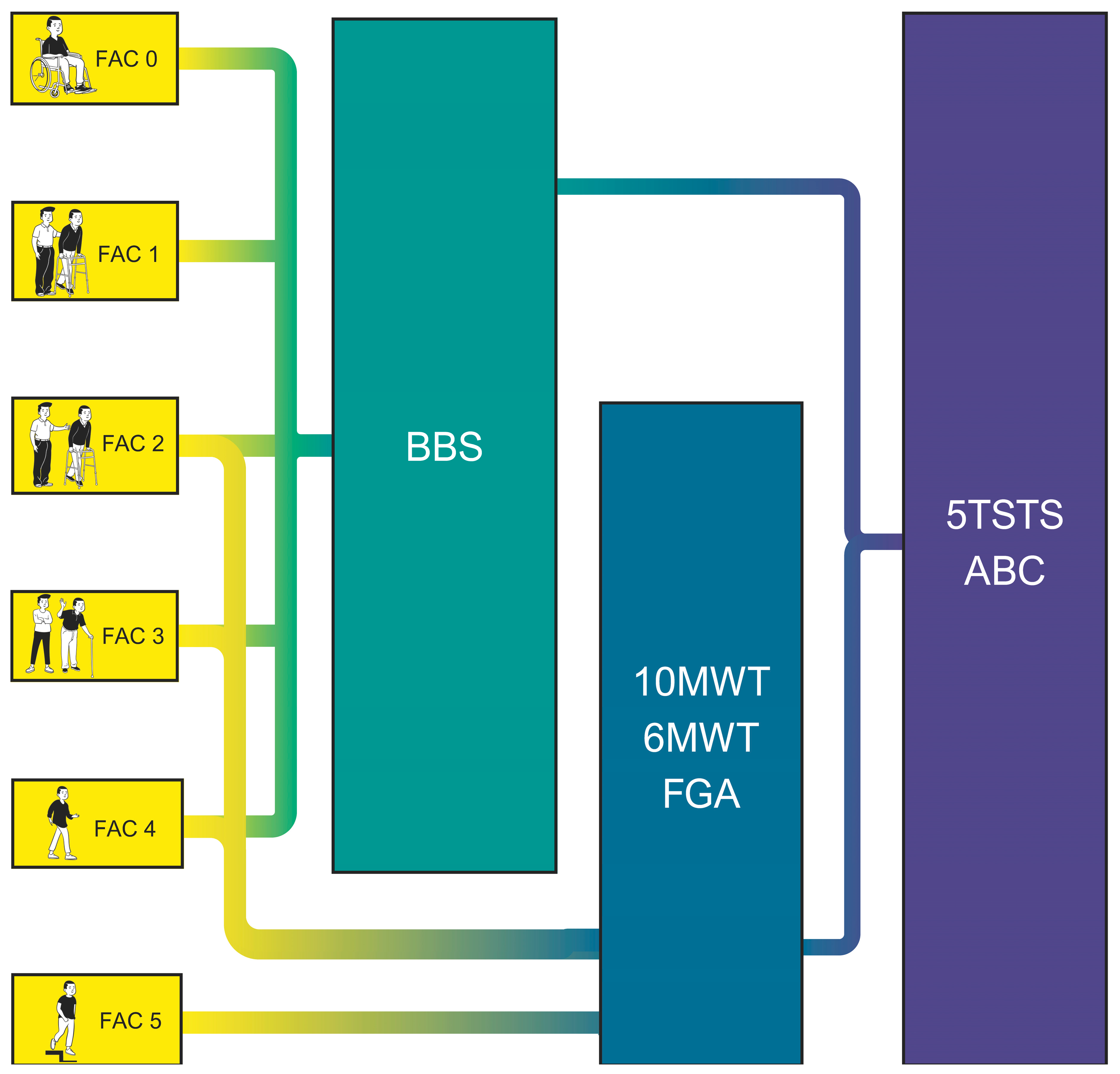
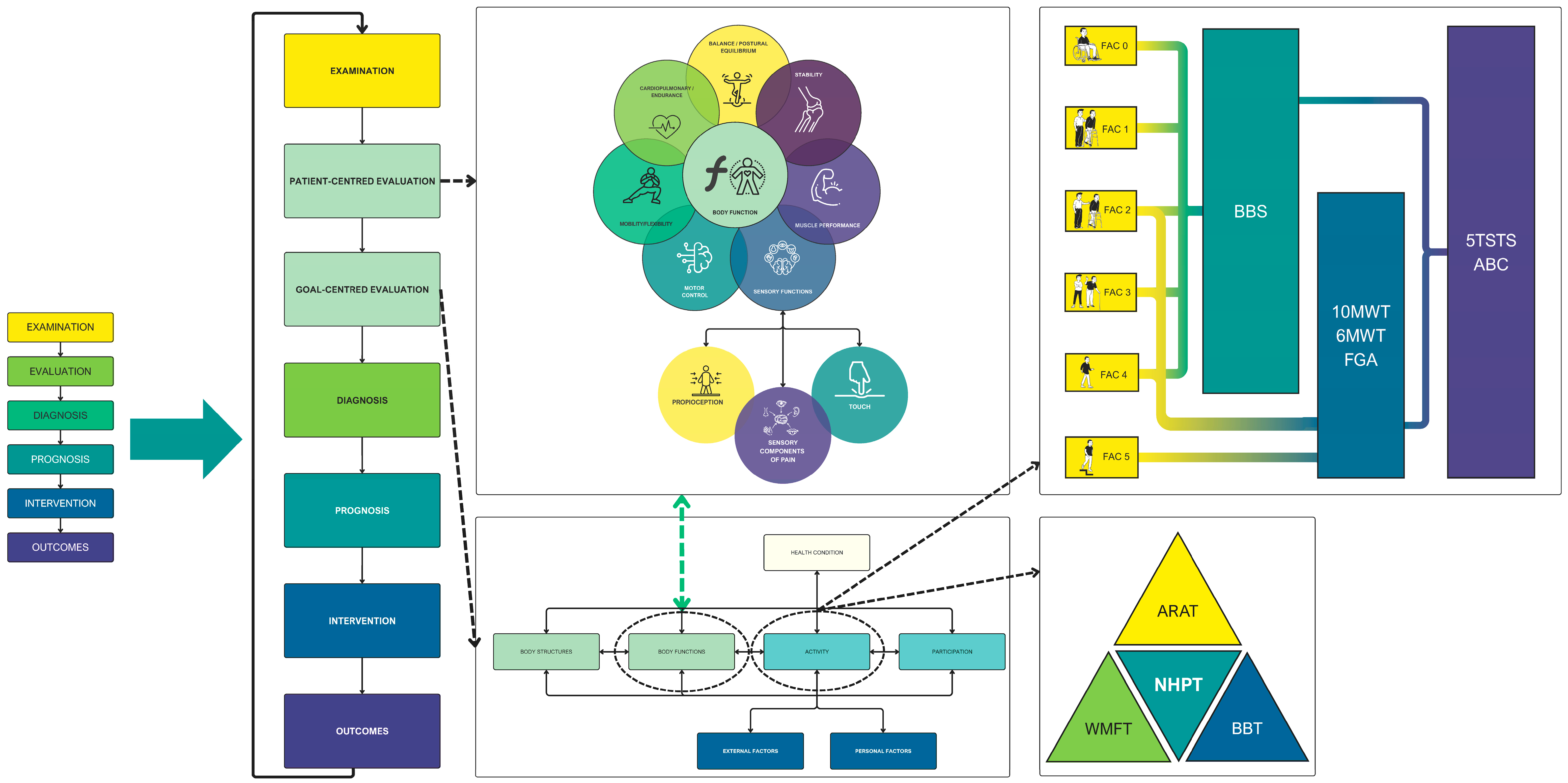

| Domain | Subcomponent | Operational Definition | Assessment Tools | References |
|---|---|---|---|---|
| Muscle Performance | Strength | Capacity of muscle to produce tension and generate force | Handheld dynamometry, Manual Muscle Testing | [52,53,54,55,56] |
| Power | Ability to produce force rapidly (strength × velocity) | Isokinetic dynamometry | [52,53,56,57] | |
| Cardiopulmonary Endurance | — | Ability of cardiovascular and pulmonary systems to support sustained physical activity | Submaximal exercise tests obtain a value of VO2max | [58,59] |
| Mobility and Flexibility | Range of Motion | Available joint excursion (outcome measure) | Goniometry, electrogoniometry | [60,61] |
| Structural limitation | Movement restriction due to joint capsule, muscle length, or connective tissue changes | End-feel assessment, muscle length tests, | [61,62] | |
| Neural hyperresistance | Velocity-dependent (spasticity) and velocity-independent (dystonia, rigidity) resistance to passive movement | MAS 1, MTS 2 | [63,64] | |
| Balance | — | Ability to distribute the body mass during functions | Posturography | [65,66] |
| Stability | Structural integrity | Anatomical and biomechanical integrity of joint structures | Clinical joint examination, stress tests | [67,68] |
| Functional stability | Neuromuscular capacity to maintain joint stability during movement | Dynamic stability tests | [69] | |
| Sensory Functions | Proprioception | Awareness of joint position and movement in space | Mirror Test, Proprioceptive subscale of FMA 3 | [70] |
| Touch | Perception of external stimuli | SW 4, TPD 5 | [71,72] | |
| Pain | Nociceptive processing and pain perception | VAS 6, NRS 7, QST 8 | [73,74,75] | |
| Motor control * | — | Capacity for selective, independent joint movement; ability to activate muscles in isolation outside obligatory synergy patterns | FMA 3, kinematic or Electromyographic analysis | [26,76,77] |
| FAC Level | Ambulation Capacity | Description |
|---|---|---|
| 0 | Nonfunctional ambulator | The patient is not able to walk at all or needs the help of two therapists |
| 1 | Ambulator dependent on physical assistance (level II) | The patient requires continuous manual contact to support body weight as well as to maintain balance or to assist coordination |
| 2 | Ambulator dependent on physical assistance (level I) | The patient requires intermittent or continuous light touch to assist balance or coordination |
| 3 | Ambulator, dependent on supervision | The patient can ambulate on a level surface without manual contact of another person, but requires standby guarding of one person either for safety or for verbal cueing |
| 4 | Ambulator, independent | Level surface only: the patient can ambulate independently but requires supervision to negotiate (e.g., stairs, inclines, nonlevel surfaces) |
| 5 | Ambulator, independent | The patient can walk everywhere independently, including stairs |
Disclaimer/Publisher’s Note: The statements, opinions and data contained in all publications are solely those of the individual author(s) and contributor(s) and not of MDPI and/or the editor(s). MDPI and/or the editor(s) disclaim responsibility for any injury to people or property resulting from any ideas, methods, instructions or products referred to in the content. |
© 2026 by the authors. Licensee MDPI, Basel, Switzerland. This article is an open access article distributed under the terms and conditions of the Creative Commons Attribution (CC BY) license.
Share and Cite
Lerín-Calvo, A.; Ferrer-Peña, R.; Lerma-Lara, S. Advancing Neurological Rehabilitation: The BRAIN Framework for Clinical Reasoning in Neurophysiotherapy. Brain Sci. 2026, 16, 235. https://doi.org/10.3390/brainsci16020235
Lerín-Calvo A, Ferrer-Peña R, Lerma-Lara S. Advancing Neurological Rehabilitation: The BRAIN Framework for Clinical Reasoning in Neurophysiotherapy. Brain Sciences. 2026; 16(2):235. https://doi.org/10.3390/brainsci16020235
Chicago/Turabian StyleLerín-Calvo, Alfredo, Raúl Ferrer-Peña, and Sergio Lerma-Lara. 2026. "Advancing Neurological Rehabilitation: The BRAIN Framework for Clinical Reasoning in Neurophysiotherapy" Brain Sciences 16, no. 2: 235. https://doi.org/10.3390/brainsci16020235
APA StyleLerín-Calvo, A., Ferrer-Peña, R., & Lerma-Lara, S. (2026). Advancing Neurological Rehabilitation: The BRAIN Framework for Clinical Reasoning in Neurophysiotherapy. Brain Sciences, 16(2), 235. https://doi.org/10.3390/brainsci16020235