Abstract
Background/Objectives: Rapid postural reactions are critical for preventing falls, yet the neural systems supporting these responses are not fully understood, particularly with respect to aging and neurological disorders. Understanding how the brain detects, interprets, and responds to balance disturbances is essential for developing new interventions. This scoping review aimed to synthesize evidence from neuroimaging studies to identify the cortical and subcortical mechanisms underlying reactive balance and to characterize how these mechanisms are altered by aging and pathology. Methods: A structured search of EMBASE, PubMed, and CINAHL (7 November 2024) identified studies examining neural activity during experimentally induced balance perturbations. Sixty-one studies met inclusion criteria (EEG n = 45; MRI n = 9; fNIRS n = 8; PET n = 1) and were analyzed for patterns of regional activation and age- or disease-related differences. Results: Evidence converges on a distributed network supporting reactive balance. Sensorimotor, premotor, supplementary motor, and prefrontal cortices show consistent involvement, while cerebellar, brainstem, and basal ganglia structures contribute to rapid, automatic responses. Aging and neurological conditions commonly heighten cortical activation, suggesting reduced automaticity and increased reliance on compensatory control. Conclusions: Reactive balance emerges from coordinated activity across cortico-subcortical systems that are altered by aging and pathology. Further research incorporating multimodal imaging approaches and more ecologically realistic perturbation paradigms is needed to clarify mechanistic pathways and inform precision-based fall-prevention strategies.
1. Introduction
Falls are ubiquitous and have become a major public health concern for communities around the world [1]. Alarmingly, as many as one in three individuals over the age of 65 falls annually, and this number increases among individuals with chronic conditions, such as neurological injury or disease [2,3]. Additionally, falls bring with them a host of negative consequences, including injury, mortality [1], post-fall anxiety syndromes, and activity restriction [2,4]. While falls and fall injuries increase with age, younger individuals are not immune to falls or their consequences [4]. Taken together, the management of falls and fall risk is paramount. Balance plays a prominent role in falls [2] and consists of several sub-domains [5,6]. For example, prior to a balance-challenging task, individuals may release an “anticipatory postural adjustment” to prepare for the impending loss of balance [5,6]. On the other hand, after the task, a reactive or “automatic postural response” may be released to prevent a loss of balance [5,6]. While many aspects of balance control are needed for safe engagement in daily activities, reactive balance deficits strongly contribute to falls and their downstream consequences [7,8]. This is of particular importance in high fall risk populations such as older adults and those with neurological pathology. Despite this, uncertainty remains regarding many of the neural contributions to reactive balance responses [9]. Clarifying the neural mechanisms underlying reactive balance is essential for informing the development of more effective assessment tools and rehabilitation strategies aimed at reducing falls.
The brain regions and networks that facilitate reactive balance responses have been studied frequently over the past two decades [9,10]. Work from human and animal studies indicates the involvement of the brainstem in this response [10,11,12]. More recently, behavioral and neurophysiological evidence has demonstrated involvement of cortical regions [9]. However, the specific mechanisms through which these neural substrates contribute to reactive balance control have not been well described [9]. Additionally, subcortical brain regions with potential involvement appear to be poorly described, such as the thalamus, cerebellum, and basal ganglia structures. Moreover, the neural control of reactive balance responses may be influenced by aging, neurologic disease, or injury [13,14,15,16]. Once more, however, the precise nature of the influence of aging or a specific neurological pathology on reactive balance control remains unclear.
There has been considerable interest in the neural control of reactive balance, evidenced by a recent systematic review on the topic [9]. This review provided insights into the current evidence for cortical involvement in reactive balance. However, it was limited in scope, focusing primarily on mobile neuroimaging approaches, such as electroencephalography (EEG) and functional near-infrared spectroscopy (fNIRS) [9]. Since that time, several additional studies have been conducted, including several focused specifically on factors that influence the neural control for this task. As such, the purpose of this study was to systematically review the current state of the literature regarding the neural contributions to reactive balance control. Specifically, we aim to provide clarity for the following questions: (1) Which cortical and subcortical structures are involved in reactive balance responses, and how do they interact to facilitate reactive balance control? (2) Does aging influence the neural control of reactive balance? (3) Do the neural contributions to reactive balance change with neurologic pathologies? (4) What methodological challenges exist that limit the current literature in this area? Additionally, this review sought to understand each of these questions separately across different imaging modalities: EEG, fNIRS, magnetic resonance (MR) imaging, and positron emission tomography (PET). Addressing these questions will help identify potential therapeutic targets for interventions aimed at improving reactive balance control, ultimately contributing to reduced fall risk.
2. Materials and Methods
The reporting for this systematic review was guided by the five steps to conducting a systematic review [17] and followed the guidelines for Preferred Reporting Items for Systematic Reviews and Meta-Analyses extension for Scoping Reviews (PRISMA-ScR) [18]. Given the intention of this review to map the literature across a broad topic, a scoping review was selected [19,20]. As the purpose of this review was to explore the general scope of research conducted on the topic, quality appraisal of studies was not performed. An a priori protocol was designed in consultation with a research librarian, and the review was registered on Open Science Framework [21].
Literature searches were conducted in EMBASE, PubMed, and CINAHL to identify relevant studies from the inception of databases to 7 December 2024. Search algorithms had the following format: automatic postural response AND neuroimaging. Keywords, along with their associated medical subject headings (MeSH), terms, and CINAHL complete subject headings, were used as appropriate to identify relevant articles. A complete search algorithm for PubMed is given as an example in Appendix A. Reference lists of relevant studies were manually reviewed to identify additional articles not captured by our database searches. Search duplicates were removed using Covidence systematic review software (Veritas Health Innovation, Melbourne, Australia).
Searches were designed to include all possible relevant studies that might contribute data for the review but exclude letters, editorials, comments, case reports, historical articles, reports, protocols, withdrawals, retractions of publications, retracted publications, replies, published errata, conference abstracts, dissertations, book chapters, conference proceedings, and studies on children or animals only using database built-in filters. Non-English articles were also excluded from the searches due to constraints on translation capability. All study types of adults with both a neuroimaging outcome and exposure to an acute unexpected balance challenge or an unpredictable postural perturbation were included. Studies including only visual perturbations were excluded. Studies that tested an intervention were included only if they presented baseline neuroimaging and reactive balance data.
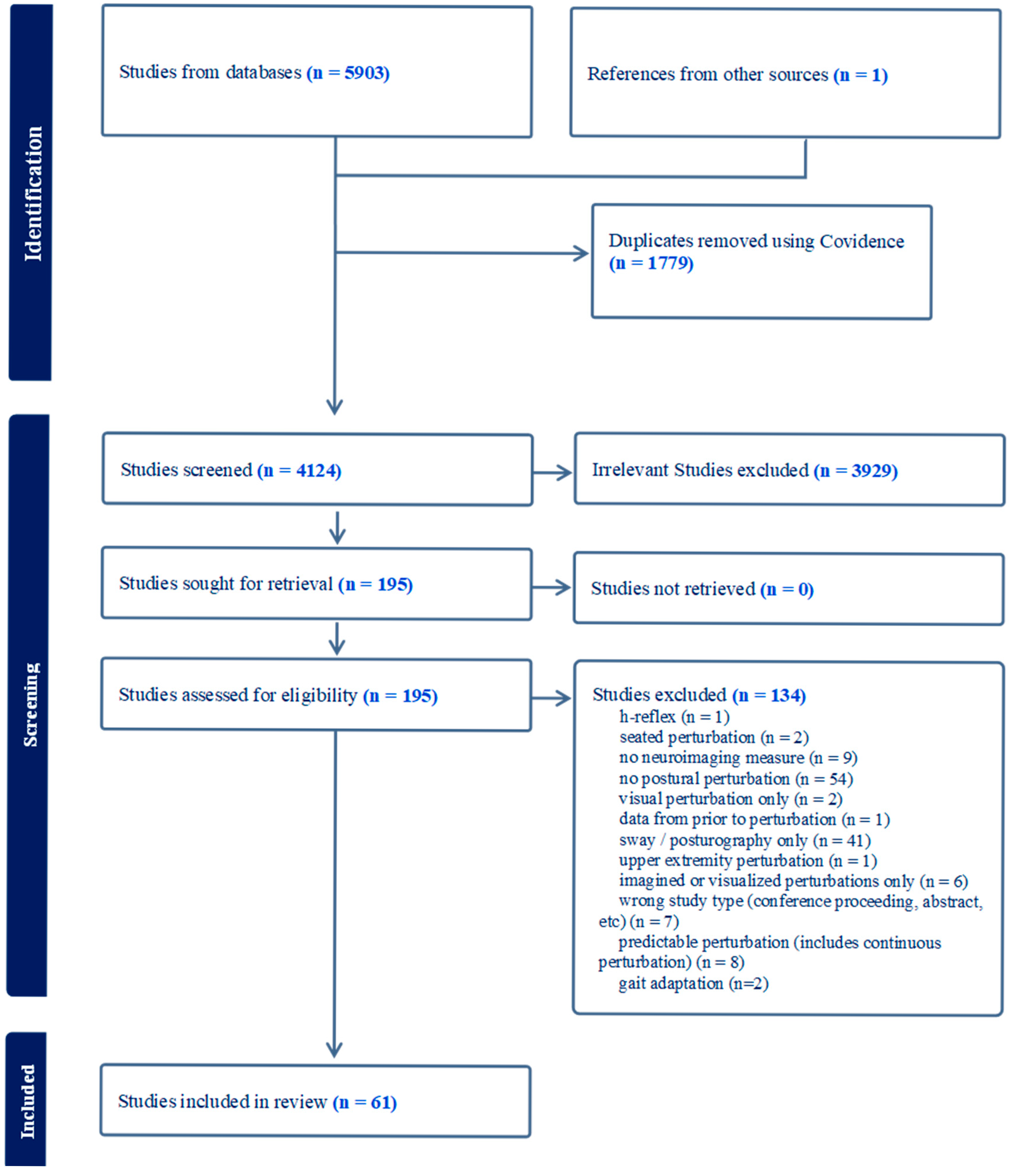
A total of 4124 studies underwent two rounds of screening using Covidence based on their (1) title and abstract and (2) full text. Each round of screening, eligibility assessment, and data extraction was performed by independent investigators (JL, AM, NF, TT, EO, DP), with any discrepancies resolved through discussion and consensus. Sixty-one articles, including data obtained from EEG, MRI, fNIRS, and PET imaging, were selected for data extraction and analysis using Excel. The number of included and excluded studies is reported in the PRISMA (the Preferred Reporting Items for Systematic Reviews and Meta-Analysis) (Figure 1).
Figure 1.
PRISMA diagram.
Data was extracted manually and charted using Microsoft Excel. Data elements included the following: citation, sample characteristics, sample size, imaging modality, approaches for application of imaging modality (e.g., coordinate system and location of electrodes for EEG), characteristics of analyses, description of data processing procedures, perturbation characteristics (e.g., type and direction), imaging results related to perturbation or reactive postural control, and included brain regions. Results were organized and presented by imaging modality (EEG, fNIRS, MRI, and PET). Within each modality, the studies were summarized regarding the following topics: the findings related directly to reactive balance generally, the findings related to aging and neurologic disease, and methodological approaches for EEG and fNIRS. Critical appraisal of the quality of each of the articles was not undertaken in this review. Results were summarized narratively and in tabular format.
3. Results
Out of 5903 studies identified, 1779 duplicates were identified, leaving a total of 4124 unique articles that were identified by the search strategy as potentially relevant to the purpose of this study. During title and abstract screening, 3929 of these were identified as not applicable to this review and were excluded. A total of 195 studies underwent full-text review, of which 61 were deemed relevant and included in this review. Of the 61 articles included, 45 included data obtained via EEG, nine included data obtained via MRI, eight included data obtained via fNIRS, and one article included PET imaging. Two articles included data obtained from multiple imaging modalities.
3.1. EEG Overview
EEG was used to assess neural response to reactive balance paradigms in 45 included studies (Table 1). Among those studies, 39 included healthy young adults (HYA) [13,16,22,23,24,25,26,27,28,29,30,31,32,33,34,35,36,37,38,39,40,41,42,43,44,45,46,47,48,49,50,51,52,53,54,55,56,57,58], ten included healthy older adults (HOA) [13,27,44,50,58,59,60,61,62,63], five included samples of individuals with neurologic injury or disease (traumatic brain injury (TBI), n = 2; Parkinson’s disease (PD), n = 1; cerebrovascular accident (CVA), n = 2) [16,24,30,60,62], one study included a sample of individuals with high fall risk [59], and one included young adults with low back pain [64]. The direction of perturbations delivered varied across 7 studies that administered perturbations in multiple directions [13,16,22,23,59,60,64]; 34 studies delivered perturbations in the sagittal plane (anterior–posterior) only [13,24,25,26,27,28,29,30,31,32,33,34,35,38,39,40,41,42,43,44,47,48,49,50,51,52,53,54,55,56,57,58,61,62,63], 4 studies utilized only coronal plane (medial-lateral) perturbations [36,37,45,46], and 2 utilized pitch perturbations [13,64]. Other perturbation parameters (amplitudes, accelerations, and velocities, etc.) were not consistent across included studies. The type of EEG analysis approaches also varied among studies; 18 utilized event-related potential (ERP) analysis [22,23,27,31,32,39,40,41,42,43,44,47,48,60,62,63,64], 8 employed spectral/time-frequency (including event-related spectral perturbation) analysis [25,35,53,55,57,58,59], 6 used independent component analysis (ICA) decompositions [16,24,33,38,51,52], and 8 used connectivity analyses [13,30,36,45,50,54,56,61]. Additionally, five studies included source localization approaches [26,29,34,37,46].
Table 1.
Electroencephalography (EEG) studies.
3.1.1. EEG Findings Related to Reactive Balance
Studies using ERP analysis consistently noted reactive balance-related activity in fronto-central cortical regions, particularly the supplementary motor area (SMA), which may reflect early sensory processing or error detection of postural perturbations, as indexed by the N1 component. N1 amplitude and latency are influenced by attentional state, predictability, and task relevance [22,23,31,39,41,42]. P2 responses, although less frequently examined, were linked to SMA and parietal sources and may reflect later-stage performance monitoring [40,64]. Spectral analyses consistently reveal theta synchronization across midfrontal and parietal regions during balance challenges, in line with action monitoring and postural adaptation [36,46,52,53]. Alpha desynchronization and beta rebound fluctuate with cognitive load and threat level [50,59], supporting the notion that reactive balance engages a distributed cortical network involving sensorimotor, parietal, and prefrontal regions [25,28,50,51].
3.1.2. Influence of Aging and Neurologic Injury or Disease for EEG Analyses
Aging and neurologic disease alter both the timing and topography of EEG responses to postural perturbations. Older adults show delayed and attenuated early ERPs (P1, N1) during perturbations, consistent with slowed sensory processing [27,63]. Spectral studies in HOA report increased frontal theta and parieto-occipital beta/gamma power scaling with challenge, reflecting compensatory recruitment [50,59]. In TBI survivors, N1 amplitude is reduced [24], and functional connectivity is disrupted [30], indicating network segregation deficits. PD alters N1 metrics compared to age-matched peers [62]. Participants post-CVA exhibit smaller, delayed N1 responses [16,60], and participants with chronic low back pain (LBP) show enlarged P2 amplitudes with delayed postural muscle onsets [64].
3.1.3. EEG Methodologic Approaches
Artifact contamination from eye movements and postural muscle activity presents a significant challenge; several studies utilize ICA combined with artifact subspace reconstruction for artifact rejection [30,51,52]. Scalp-based source localization provides cortical mapping but lacks the resolution for deeper structures [34,46]. Small, cross-sectional cohorts, sometimes as few as three to four patients [16,35], limit the generalizability of findings. Most research employs tightly controlled support-surface translations; only a few studies implement more naturalistic perturbations, such as virtual reality [59] or unexpected treadmill slips [35]. The heterogeneity in perturbation types, EEG montages, and analysis pipelines further complicates direct comparisons. Future advancements, such as high-density EEG with individualized MR source models [29], standardized preprocessing procedures, and real-world paradigms, are expected to improve spatial precision and translational relevance.
3.2. fNIRS Overview
Eight studies were included that utilized fNIRS to assess neural response to a postural perturbation (Table 2) [14,65,66,67,68,69,70,71]. Among those studies, five included HYA [14,65,66,67,68], one study included HOA [14], and three studies included samples of individuals with neurologic injury or disease (PD n = 1, CVA n = 2) [69,70,71]. In regard to perturbation parameters, seven studies employed support surface translations, one of these while walking [65], while one study utilized an anterior mechanical pull [14]. The direction of the perturbation varied, with six studies delivering anterior perturbations [14,66,68,69,70,71], five delivering posterior perturbations [65,66,68,70,71], one delivering coronal plane perturbations [68], and one study utilizing a rotary perturbation [67]. While six studies designed perturbations to require in-place automatic postural responses [66,67,68,69,70,71], two studies designed perturbations to require stepping responses [14,65]. Specific perturbation parameters (amplitudes, accelerations, and velocities, etc.) were not consistent across studies.
Table 2.
Functional near-infrared spectroscopy (fNIRS) studies.
3.2.1. fNIRS Findings Related to Reactive Balance
Across studies, perturbations consistently elicited increased activation in prefrontal regions [14,65,66,68,69,70,71]. Several studies reported that this activation was strongest during the initial perturbations and diminished with repeated exposures. An exception was the orbitofrontal cortex, where activation remained stable over time [65]. Additionally, increases in activation were observed in the SMA [66,70], premotor cortex (PMC) [14,66,71], primary motor cortex [66], and superior parietal cortex [66,71]. No pattern of hypoactivation with perturbation was reported across any of the studies. One study noted increased PFC activation associated with transcranial direct current stimulation during perturbation compared to perturbation with sham stimulation [69]. In contrast to the other studies, one study found no difference in the hemodynamic signal during the period during and immediately following perturbation compared to the rest condition [67].
3.2.2. Influence of Aging and Neurologic Injury or Disease for fNIRS Analyses
Age-related differences were examined in one study, noting that PFC and PMC activation associated with perturbations was increased in older adults compared to young adults [14]. Another study found that individuals with PD exhibited increased PFC activation [69], consistent with patterns observed in other neurologic groups. Two additional studies involving individuals post-CVA reported increased activation in the PFC [70,71], SMA [70], PMC [71], and superior parietal cortex activation [71] in response to perturbations. Notably, only one of these post-CVA studies identified hemispheric differences in activation patterns [71]. None of the three studies that included neurologic populations included a comparison group.
3.2.3. fNIRS Methodologic Approaches
To better understand the methodological challenges and opportunities in the utilization of perturbation paradigms and reactive balance research, data regarding fNIRS methodologies were extracted. Among the seven studies that utilized fNIRS, there was a wide variety in both cortical regions observed and methodologies utilized for data processing. All studies utilized montages that included portions of the frontal lobe; however, five also included parietal regions [14,66,68,70,71], while two studies utilized montages that were restricted to only the PFC [65,69]. Considering the recently published guidelines for the use of fNIRS in posture and gait research [72], the review team also examined the methods for artifact removal, data processing approach, and outcome measures reported. Regarding artifact removal, there was very little consistency in methods reported among the studies (see Table 2). Additionally, one study reported no information regarding artifact removal [67]. Notably, only one study [68] utilized short separation channels, which are a powerful tool to remove extracerebral hemodynamic artifacts [72]. Lastly, all studies reported only oxygenated hemoglobin as the primary outcome.
3.3. MR Overview
Nine studies were included, which utilized magnetic resonance imaging (MRI) to assess neural response to a postural perturbation (Table 3) [15,30,73,74,75,76,77,78]. Among those studies, one included HYA [73], two studies included HOA [15,74], and eight studies included samples of individuals with neurologic injury or disease (PD n = 2; TBI n = 1; multiple sclerosis (MS) n = 2; mild cognitive impairment (MCI) n = 2) [15,30,74,75,76,77,78]. In regard to perturbation parameters, six studies employed support surface translations, one of these while walking [73], and five while the participant was standing [30,75,76,77,78]. Two studies used a push-and-release paradigm [15,74]. Seven studies examined cross-sectional relationships among MRI and reactive balance [15,30,74,75,76,77,78], while one study delivered slip perturbation training programs and examined pre/post differences [73]. The direction of the perturbation varied, with five studies delivering anterior perturbations [30,73,76,77,78] and five delivering posterior perturbations [15,30,74,75,76]. While one study designed perturbations to require in-place automatic postural responses [77], five studies designed perturbations to require stepping responses [15,73,74,75,78], and two did not specify a response [30,76]. Specific perturbation parameters (amplitudes, accelerations, velocities, etc.) were not consistent across studies.
Table 3.
Magnetic resonance (MR) or positron emission tomography (PET) studies.
3.3.1. MR Findings Related to Reactive Balance
fMRI
Only one study examined task-based fMRI [73]. In this study, HYA performed 3 days of treadmill-slip perturbation training. Pre- and post-intervention, participants underwent a task-based fMRI with an imagined (i.e., mental imagery) slipping and imagined walking paradigm. At baseline, compared to rest, imagined slipping resulted in increased activation in frontal, parietal, and limbic regions, including the superior frontal gyrus (SMA and BA6), inferior frontal gyrus, inferior parietal lobule, parahippocampal gyrus, cingulate gyrus, and posterior cerebellum. After 3 days of training, imagined slipping resulted in increased activation of frontal, parietal, occipital, and lingual areas (Table 3). There were also significant differences between imagined slipping and imagined walking, with imagined slipping resulting in increased activation of cerebellar, temporal, and frontal areas, including SMA and parahippocampal gyrus (Table 3). Notably, fMRI was not directly compared to behavioral performance on the perturbation task, which perhaps explains the large number of activated brain areas observed during imagined slipping [73].
Brain Volume
Two studies examined whole brain volume [74,75]. In older persons [74], better postural control, as measured by step height, was associated with greater volume in brainstem, cerebellar, and parietal areas, which aligns with work in older adults with MCI [75], demonstrating that better postural control, as measured by postural center of mass, was linked with higher gray matter volume in brainstem and cerebellar areas.
Diffusion Tensor Imaging (DTI) Connectivity
Four studies examined DTI connectivity [30,75,76,77]. Across studies, poorer stepping [75,79] and longer latencies in the tibialis anterior [76,77] with perturbations were associated with lower fractional anisotropy (FA) in the spinal cord [76] and brainstem (pedunculopontine nucleus) [77] regions, as well as corticospinal [75], corticostriatal [75], corticothalamic [75], frontopontine [75], and parietopontine tracts [75]. Interestingly, Handiru et al. found no relationship between center of pressure displacement to platform perturbations at a small amplitude and global DTI metrics [30]. Finally, Monaghan and colleagues assessed relationships between MR and changes in reactive stepping through training. Although associations with baseline stepping were not run (and therefore this study was not included in Table 3 above), results suggested that retention of step length increases following perturbation training was associated with higher FA in anterior thalamic radiation, posterior thalamic radiation, superior longitudinal fasciculus, and inferior longitudinal fasciculus [80].
Resting State
Two studies examined resting state [15,78]. Among persons with PD, cerebellar connectivity was related to reactive balance, as measured by step length. This relationship was not observed in age-matched control subjects [15]. Similar findings were also observed in individuals with MCI, suggesting cerebello–cortical connectivity is associated with greater reactive balance stability [78]. The finding that brainstem/cerebellar connectivity was related to reactive balance is generally consistent with the brainstem and cerebellar contributions noted in human studies utilizing brain volume and DTI (see Sections Brain Volume and Diffusion Tensor Imaging (DTI) Connectivity) and animal literature [81,82]. It is notable that the relevant cerebellar connectivity was with auditory and visual regions in people with PD [15]. The role of the cerebellar vermis in integrating sensory inputs could provide some rationale for this finding [15].
3.3.2. Influence of Aging and Neurologic Injury or Disease for MR Analyses
Several investigations included neurological populations [15,74,76,77] and some also included analyses of control groups [15,74]. However, while these studies identified some key findings regarding neural control of reactive balance, none of these studies directly examined age-related or pathology-related differences in reactive balance control. As such, there is little evidence on whether age or neurologic injury/disease impacts the neural mechanisms of reactive balance.
3.4. PET
Only one study was included, which utilized PET imaging to assess neural response to a postural perturbation (see Table 3) [79]. The association between striatal dopamine denervation, related to aging, and reactive balance response to slip perturbations during gait was investigated among a sample of 50 adults ranging from 20 to 86 years of age in this cross-sectional study. Slip perturbations were achieved during gait by having participants walk across a floor that was unexpectedly contaminated with glycerol solution. Greater dopamine denervation in the caudate nucleus, but not the putamen, was associated with a greater magnitude of slipping, leading to the conclusion that age-related striatal dopamine depletion may impact the ability to recover from a large perturbation during walking. Additionally, the involvement of the caudate specifically may implicate the frontostriatal pathways involved in the executive control of gait when large perturbations challenge postural control [83,84]. However, this result was only present among participants who walked fast (greater than 1.2 m/s). The authors postulate that the slow walkers may have adopted cautious gait behavior to limit their exposure to fall risk and thus blunt the relationship with striatal dopamine denervation. This study provided initial evidence of the influences of the dopaminergic system and aging on reactive balance control, but further evidence is needed to understand these relationships more fully.
4. Discussion
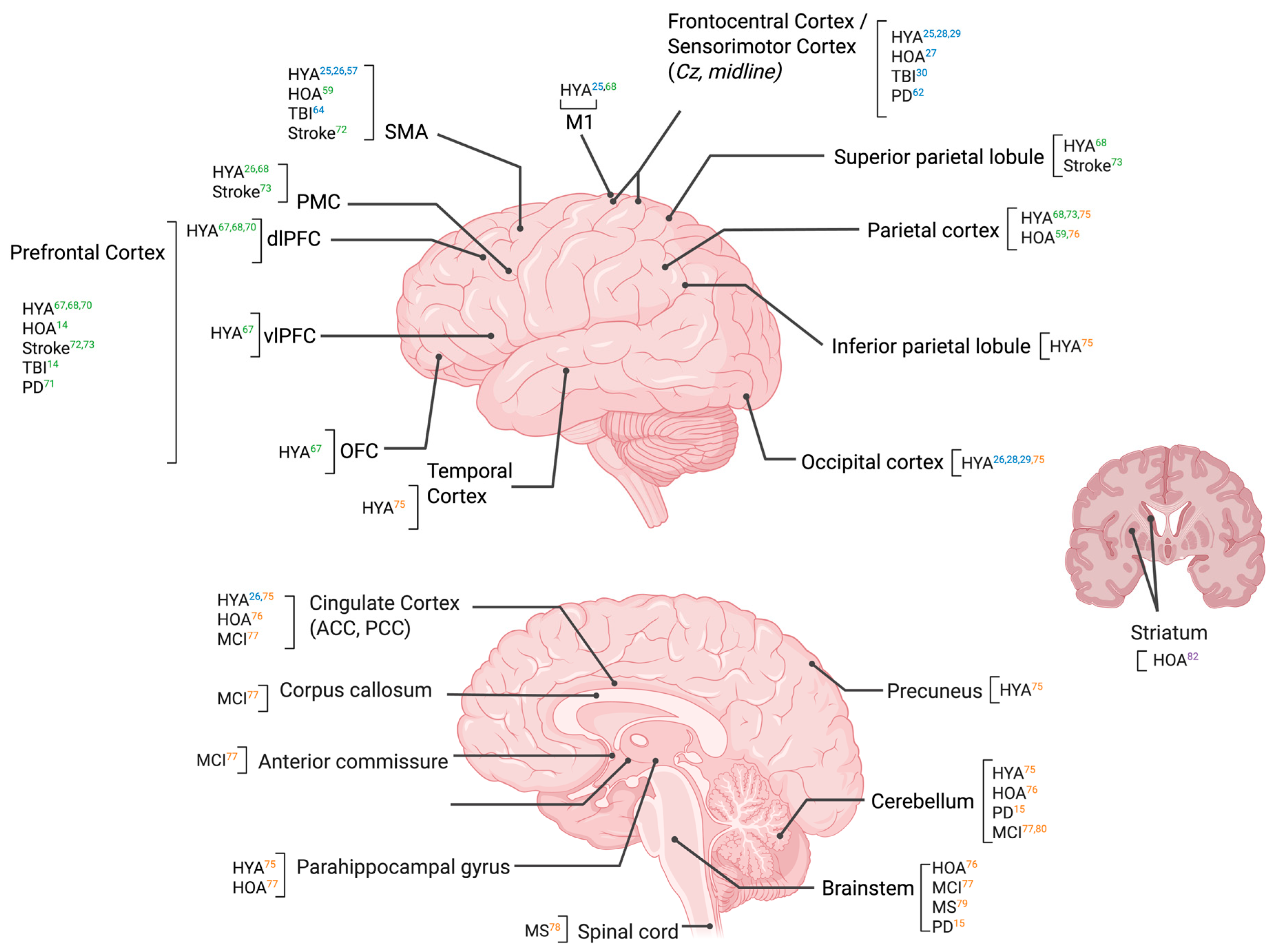
This review sought to understand the current state of literature regarding the neural contributions to reactive balance control. The results of this review suggest that reactive balance is influenced by a multifaceted processing involving cortical and subcortical brain regions; see Figure 2. Further, both aging and neurologic pathologies likely influence the neural mechanisms that underlie reactive balance control. Additionally, several methodological challenges were identified, and recommendations for future investigations were observed. Notably, the results of this review expand upon the findings from the previous review by Purohit and Bhatt [9] in several notable ways. While their work focused primarily on mobile neuroimaging (EEG and fNIRS) and cortical responses, our synthesis incorporates evidence from MRI and PET studies, revealing structural and neurochemical contributions of subcortical regions such as the cerebellum, brainstem, and basal ganglia. This broader scope highlights that reactive balance is not solely a cortical phenomenon but emerges from integrated cortico-subcortical networks. Additionally, we examined aging and neurological conditions alongside healthy young adults, identifying compensatory cortical recruitment and connectivity changes that were not addressed previously. Finally, this review emphasizes methodological challenges and opportunities, including artifact removal, ecological validity, and the need for multimodal imaging to advance mechanistic understanding.
Figure 2.
Neural regions supporting reactive balance control. The numbers shown in the figure correspond to the sequence numbers of the references listed in the caption. Color indicates the imaging modality providing evidence for each region: blue (EEG) = cortical electrophysiological activity (ERPs, oscillations); green (fNIRS) = hemodynamic activation in frontal and parietal cortices; orange (MRI) = structural and connectivity correlates in cortical–subcortical networks; and purple (PET) = dopaminergic contributions to reactive balance. Abbreviations: PFC = prefrontal cortex; SMA = supplementary motor area; PMC = premotor cortex; M1 = primary motor cortex; SPL/IPL = superior/inferior parietal lobule; ACC = anterior cingulate cortex. References: [14] R. Zhuang, S. Zhu, Y. Sui, M. Zhou, T. Yang, C. Wang, T. Zhang, J. Wang, C. Kan, Y. Shen, T. Wang, C. Guo, Age-Related Differences in Stepping Reactions to a Balance Perturbation: A Functional Near-Infrared Spectroscopy and Surface Electromyography Study, Brain Sci 2022, 12(11). [15] A. Ragothaman, M. Mancini, J.G. Nutt, D.A. Fair, O. Miranda-Dominguez, F.B. Horak, Resting state functional networks predict different aspects of postural control in Parkinson’s disease, Gait & Posture 2022, 97, 122-129. [25] S. Boebinger, A. Payne, G. Martino, K. Kerr, J. Mirdamadi, J.L. McKay, M. Borich, L. Ting, Precise cortical contributions to sensorimotor feedback control during reactive balance, PLoS Comput Biol 2024, 20(4), e1011562. [26] M.D. Bogost, P.I. Burgos, C.E. Little, M.H. Woollacott, B.H. Dalton, Electrocortical Sources Related to Whole-Body Surface Translations during a Single- and Dual-Task Paradigm, Front Hum Neurosci 2016, 10, 524. [27] R.B. Duckrow, K. Abu-Hasaballah, R. Whipple, L. Wolfson, Stance perturbation-evoked potentials in old people with poor gait and balance, Clin Neurophysiol 1999, 110(12), 2026-32. [28] N.J. Ghosn, J.A. Palmer, M.R. Borich, L.H. Ting, A.M. Payne, Cortical Beta Oscillatory Activity Evoked during Reactive Balance Recovery Scales with Perturbation Difficulty and Individual Balance Ability, Brain Sci 2020, 10(11). [29] R. Goel, R.A. Ozdemir, S. Nakagome, J.L. Contreras-Vidal, W.H. Paloski, P.J. Parikh, Effects of speed and direction of perturbation on electroencephalographic and balance responses, Exp Brain Res 2018, 236(7) 2073-2083. [30] V. Shenoy Handiru, A. Alivar, A. Hoxha, S. Saleh, E.S. Suviseshamuthu, G.H. Yue, D. Allexandre, Graph-theoretical analysis of EEG functional connectivity during balance perturbation in traumatic brain injury: A pilot study, Hum Brain Mapp 2021, 42(14), 4427-4447. [57] J.P. Varghese, A. Marlin, K.B. Beyer, W.R. Staines, G. Mochizuki, W.E. McIlroy, Frequency characteristics of cortical activity associated with perturbations to upright stability, Neurosci Lett 2014, 578, 33-8. [59] C.J. Chang, T.F. Yang, S.W. Yang, J.S. Chern, Cortical Modulation of Motor Control Biofeedback among the Elderly with High Fall Risk during a Posture Perturbation Task with Augmented Reality, Front Aging Neurosci 2016, 8, 80. [62] A.M. Payne, J.L. McKay, L.H. Ting, The cortical N1 response to balance perturbation is associated with balance and cognitive function in different ways between older adults with and without Parkinson’s disease, Cereb Cortex Commun 2022, 3(3). [24] D. Allexandre, A. Hoxha, V.S. Handiru, S. Saleh, S.E. Selvan, G.H. Yue, Altered Cortical and Postural Response to Balance Perturbation in Traumatic Brain Injury - An EEG Pilot Study, Annu Int Conf IEEE Eng Med Biol Soc 2019, 1543-1546. [65] B.C. Lee, J. Choi, B.J. Martin, Roles of the prefrontal cortex in learning to time the onset of pre-existing motor programs, PLoS One 2020, 15(11), e0241562. [66] M. Mihara, I. Miyai, M. Hatakenaka, K. Kubota, S. Sakoda, Role of the prefrontal cortex in human balance control, Neuroimage 2008, 43(2), 329-36. [68] R. Nishimoto, S. Fujiwara, Y. Kutoku, T. Ogata, M. Mihara, Effect of dual-task interaction combining postural and visual perturbations on cortical activity and postural control ability, NeuroImage 2023, 120352. [69] V.S. Beretta, R. Vitório, P. Nóbrega-Sousa, N.R. Conceição, D. Orcioli-Silva, M.P. Pereira, L.T.B. Gobbi, Effect of Different Intensities of Transcranial Direct Current Stimulation on Postural Response to External Perturbation in Patients With Parkinson’s Disease, Neurorehabil Neural Repair 2020, 34(11), 1009-1019. [70] H. Fujimoto, M. Mihara, N. Hattori, M. Hatakenaka, T. Kawano, H. Yagura, I. Miyai, H. Mochizuki, Cortical changes underlying balance recovery in patients with hemiplegic stroke, Neuroimage 2014, 85(1), 547-54. [71] M. Mihara, I. Miyai, N. Hattori, M. Hatakenaka, H. Yagura, T. Kawano, K. Kubota, Cortical control of postural balance in patients with hemiplegic stroke, Neuroreport 2012, 23(5), 314-9. [73] P.J. Patel, T. Bhatt, S.R. DelDonno, S.A. Langenecker, S. Dusane, Examining Neural Plasticity for Slip-Perturbation Training: An fMRI Study, Front Neurol 2018, 9, 1181. [74] A. Ragothaman, O. Miranda-Dominguez, B.H. Brumbach, A. Giritharan, D.A. Fair, J.G. Nutt, M. Mancini, F.B. Horak, Relationship Between Brain Volumes and Objective Balance and Gait Measures in Parkinson’s Disease, J Parkinsons Dis 2022, 12(1), 283-294. [75] L. Kannan, T. Bhatt, A. Zhang, O. Ajilore, Association of balance control mechanisms with brain structural integrity in older adults with mild cognitive impairment, Neurosci Lett 2022, 783, 136699. [76] C.Y. Lee, J.M. Huisinga, I.Y. Choi, S.G. Lynch, P. Lee, Correlation between spinal cord diffusion tensor imaging and postural response latencies in persons with multiple sclerosis: A pilot study, Magn Reson Imaging 2020, 66, 226-231. [77] D.S. Peterson, G. Gera, F.B. Horak, B.W. Fling, Supraspinal control of automatic postural responses in people with multiple sclerosis, Gait Posture 2016, 47, 92-5. [78] L. Kannan, T. Bhatt, O. Ajilore, Cerebello-cortical functional connectivity may regulate reactive balance control in older adults with mild cognitive impairment, Front Neurol 2023, 14, 1041434. [80] R. Cham, S. Perera, S.A. Studenski, N.I. Bohnen, Age-related striatal dopaminergic denervation and severity of a slip perturbation, J Gerontol A Biol Sci Med Sci 2011, 66(9), 980-5.
4.1. Regional Neural Control of Reactive Balance
4.1.1. Cortical Involvement in Reactive Balance
The findings from this review demonstrate that reactive balance control engages a broad network of cortical regions, underscoring the importance of cerebral cortical processing in response to postural perturbations (see Figure 2). The frontal cortex, particularly the PFC and SMA, emerged as the most consistently involved regions across imaging modalities, with additional contributions from parietal and, to a lesser extent, occipital areas. EEG studies have provided robust evidence for cortical involvement through ERP components such as the N1 and P2. The N1 potential, typically originating from frontal, premotor, and supplementary motor regions [38], reflects rapid sensory processing of balance perturbations and is sensitive to factors like threat, predictability, and task demands. The P2 component, often localized to the anterior cingulate cortex, is thought to reflect performance monitoring and error processing during postural corrections. Beyond these findings, broader prefrontal involvement has also been implicated. Specifically, the dorsolateral PFC has been observed during balance recovery [65,66,68]. This has also been observed during other challenging balance tasks, particularly when those tasks impose higher cognitive demands, suggesting that these regions may contribute to executive control and potentially a compensatory role of cognitive control resources when short-latency automatic balance responses are insufficient alone [85,86].
Beyond ERPs, time-frequency has revealed increased theta and beta band power following balance disturbances [46,53,54,55]. These oscillatory dynamics are proposed to support sensorimotor integration and attentional control, particularly under conditions requiring flexible postural response patterns [46,87]. fNIRS studies further support these findings, showing increased hemodynamic responses in the PFC and SMA during perturbations [14,66,68,69,71], with some studies indicating modulation based on exposure or task repetition [65,70], suggesting a role in learning and adaptation.
Collectively, these results suggest that cortical regions are not only involved in high-level modulation of balance but may also be engaged in medium-to-long latency responses to destabilizing events. This is consistent with contemporary understanding of neural recruitment during balance corrections [10]. Evidence suggests that short latency responses are facilitated via activation of a mono- or oligosynaptic spinal circuit [10,88,89]. Whereas medium and long latency responses likely arise from the brainstem, which communicates sensory information to the cortex, particularly the SMA, PFC, and PMC, and other subcortical regions (basal ganglia and cerebellum) [10,82,90]. While the short latency response may not involve the cortex, evidence suggests that cortical loops are likely involved in shaping and adapting postural responses [10,91]. The evidence presented for cortical involvement supports an integrated model of reactive balance control in which cortical sensory, motor, and association areas dynamically interact to evaluate threat, contextual demands, and task relevance in order to guide appropriate balance corrections [9,10,92]. These insights have important implications for understanding age-related and disease-related changes in balance control, where increased cortical recruitment may reflect compensatory mechanisms in response to diminished subcortical or peripheral efficiency.
4.1.2. Subcortical Involvement in Reactive Balance
Subcortical structures, including the brainstem, cerebellum, basal ganglia, and thalamus, are active during reactive balance control, particularly in the rapid integration of sensory inputs and initiation of motor responses following postural perturbations. Structural MRI and DTI studies from this review consistently demonstrate associations between subcortical integrity and reactive balance performance, providing correlational evidence for their involvement in this task [78,79]. For example, decreased fractional anisotropy, indicative of poorer microstructural integrity, in the pedunculopontine nucleus, a key brainstem region implicated in locomotor and postural regulation, was associated with delayed muscle response latencies in persons with MS, suggesting impaired timing of automatic postural responses [77]. Similarly, in individuals with MCI, diminished structural integrity in corticostriatal, corticospinal, corticothalamic, and frontopontine tracts was correlated with poorer postural control [75], suggesting a role for projection fibers in effective balance reactions.
The cerebellum has also been linked to reactive balance, with several studies reporting that reduced cerebellar volume or connectivity is associated with poorer reactive stepping or postural control. In HOA, larger cerebellar and brainstem volumes were associated with greater reactive step height [74], an indicator of effective postural correction. Resting-state fMRI further demonstrated that cerebellar connectivity with visual and auditory networks was predictive of reactive balance performance in individuals with PD [15,73], potentially reflecting the cerebellum’s role in integrating sensory inputs and guiding adaptive responses. Additionally, PET imaging findings indicated that dopamine denervation in the caudate nucleus was associated with poorer reactive balance in older adults, implicating basal ganglia circuits in the modulation of rapid postural corrections during dynamic tasks such as gait [80]. Taken together, these findings reinforce the notion that reactive balance control relies not only on cortical contributions but also critically on the structural and functional integrity of subcortical systems.
4.1.3. Cortical and Subcortical Interaction in Reactive Balance
Findings from this review suggest that reactive balance control relies on coordinated activity between cortical and subcortical regions. Cortical areas, including the PFC and SMA, consistently show increased activation during postural perturbations, particularly under conditions requiring cognitive engagement or adaptation [52,61,66,68,70,71]. At the same time, subcortical structures such as the cerebellum, brainstem, and basal ganglia are implicated in the medium latency components of balance responses, with multiple studies showing that reduced structural integrity or connectivity in these regions is associated with delayed or less effective motor outputs [75,77]. Notably, multimodal findings from Handiru and colleagues demonstrated that reduced white matter integrity was associated with altered cortical functional connectivity during balance tasks, suggesting that subcortical pathways may directly influence cortical network organization and efficiency [30]. Together, these findings support the concept of a distributed cortico-subcortical network in which subcortical structures provide fast, automatic responses, while cortical regions may be recruited for modulation, adaptation, or compensation.
4.2. The Influence of Aging on Neural Control of Reactive Balance
There is limited evidence regarding age-related changes to the neural control of balance responses following perturbations. Only three of the included studies included analyses comparing older and younger adults on perturbation-related neuroimaging measures (EEG [13,50] and fNIRS [14]). Taken together, the findings of these studies indicate that as individuals age, there is a greater neural response to loss of balance in the PFC and PMC [14], and perhaps across the area spanning the frontoparietal region [13,50]. These increases in neural activation appear to be associated with increased cognitive engagement and utilization of attentional resources for balance correction [93,94]. One possible explanation of this finding is that aging results in decreased speed, efficiency, and consistency of recruitment of postural responses and the associated motor units [95]. In this case, the increase in neural and cognitive resources associated with a loss of balance may be a compensatory response to maintain appropriate and timely balance responses [96]. This approach is consistent with previous work examining brain activity during walking across age and neurological conditions [97,98]. Spectral EEG findings further support this hypothesis, showing reduced alpha and beta power in older adults, indicative of impaired sensorimotor integration and altered cortical dynamics following perturbations [50]. However, due to the small number of studies directly comparing age groups and the variability in experimental designs, these findings should be interpreted with caution. Clarifying how aging may impact neural mechanisms supporting reactive balance will be essential for informing preventative and rehabilitative approaches to reduce falls in older populations.
4.3. The Influence of Neurologic Pathology on Neural Control of Reactive Balance
There remains limited evidence of the impact of different neurological pathologies on the neural correlates of automatic postural responses. This review found few articles that compared neural responses to balance perturbations between individuals with neurologic pathology and healthy controls [15,16,24,30,60,62,74]. Among these, differences in cortical and subcortical involvement were observed across populations with PD, stroke, TBI, and MCI. For example, in people with PD, but not non-PD older adult peers, resting-state cerebellar connectivity was associated with reactive stepping responses [15], suggesting disease-specific alterations in cerebellar contributions to postural control. In stroke survivors, N1 responses are slower and smaller and associated with balance performance [60], potentially reflecting delayed sensorimotor error detection, reduced cortical excitability, and impaired ability to quickly engage neural resources that contribute to balance recovery. In TBI, reduced N1 amplitudes and weakened EEG functional connectivity during perturbations may indicate impaired sensory processing and reduced network efficiency [30]. Additionally, individuals with MCI exhibited reduced structural integrity in subcortical white matter tracts (e.g., corticospinal and corticostriatal) associated with diminished postural control, as measured by center of mass displacement [75]. Although these findings collectively support the notion that neurologic pathology alters both cortical and subcortical contributions to reactive balance, the small number of studies, heterogeneity in pathology types, and methodological variability limit definitive conclusions. However, these results do underscore the broad regions that contribute to reactive balance. Further research with larger samples and inclusion of individuals with neurological pathologies is necessary to delineate the unique and shared neural mechanisms underlying balance impairments across neurologic conditions.
4.4. Methodologic Challenges
Investigating the neural correlates of reactive balance using neuroimaging techniques presents numerous methodological challenges that limit consistency, comparability, and generalizability across studies. Some of these challenges reflect inherent strengths and limitations of each modality, while others arise from methodological choices that could be standardized or refined. One major issue lies in the variability related to experimental design, such as differences in perturbation parameters, task demands, and response requirements, which complicate the synthesis of findings across studies. These design inconsistencies are further compounded by the inherent strengths and limitations of each imaging modality. EEG provides excellent temporal resolution to capture rapid cortical responses, but is inherently vulnerable to contamination from eye and muscle artifacts and has poor spatial resolution. Careful artifact removal and standardized task paradigms could help mitigate these influences. fNIRS offers fair to good spatial resolution in addition to portability, supporting its ecological validity for reactive balance tasks. However, fNIRS has limited penetration depth, is sensitive to extracerebral hemodynamics, and has limited temporal specificity, which may be insufficient for certain applications regarding activation sequences associated with rapid, discrete behaviors (such as reactive balance). Notably, adopting consistent preprocessing procedures and incorporating short-separation channels can improve data quality. MR approaches provide high spatial resolution and can be applied across the entire brain; however, MR possesses poor temporal resolution, and, in contrast to EEG and fNIRS, balance tasks cannot be conducted during MR acquisition, which hinders interpretations. These limitations can be partially mitigated by study design choices and employing multimodal imaging to fill inherent gaps. PET imaging uniquely captures neurochemical contributions to reactive balance but is inherently constrained by low temporal resolution [79]. Moving forward, addressing these methodological challenges requires standardization of experimental paradigms, consistent artifact removal methods and data processing strategies, and larger, more diverse patient samples across all imaging modalities [72,99]. Additionally, multimodal imaging approaches can help mitigate the challenges associated with a particular imaging modality. Overcoming these challenges is essential for advancing our understanding of the neural control of reactive balance and improving clinical applications in balance rehabilitation and fall prevention.
4.5. Clinical Recommendations
The growing evidence of cortical and subcortical involvement in medium- and long-latency reactive balance responses suggests that reactive postural control relies on virtually all aspects of the neural axis, and different aspects of the postural response can be influenced by cognitive, attentional, and executive processes. This highlights the potential value of dual-task assessments and interventions that challenge both cognitive and motor systems simultaneously as potential tools to assess and train reactive balance. Interventions targeting frontal network engagement, such as task-specific training, balance under cognitive load, or neuromodulation, may be particularly relevant for older adults or individuals with neurologic conditions. Moreover, clinicians should be aware that increased cortical recruitment observed in aging and disease may reflect compensatory mechanisms, and, thus, balance deficits in these populations may not be due solely to physical deconditioning but also to neural inefficiency or reorganization. Finally, it is notable that most of the work on this topic has focused on cortical activation due to methodological challenges of assessing contributions of deep brain structures (particularly the brainstem) to reactive balance. However, as noted above, seminal work in animal studies underscores the contributions of these structures in reactive balance [82,88,89,90,91]. Further, clinical approaches exist to directly target deep brain structures (e.g., deep brain stimulation, DBS). While the effects of DBS on balance, in general, are varied [100,101], effects on reactive balance in particular are less common and require additional investigation [101,102].
4.6. Limitations
This scoping review has several limitations that should be acknowledged. While we aimed for comprehensive coverage, the search strategy was restricted to articles published in English, potentially introducing language bias and excluding relevant studies in other languages. Additionally, the review did not formally assess the methodological quality or risk of bias of included studies; therefore, the strength of evidence cannot be fully evaluated. Lastly, the included studies were conducted in controlled laboratory settings, which may not adequately represent real-world reactive balance scenarios.
5. Conclusions
This review underscores the complexity of neural control underlying reactive balance, revealing contributions from both cortical and subcortical systems. In healthy young adults, the most frequently studied population, reactive balance engages a distributed cortical network, including the PFC, SMA, and parietal regions, alongside subcortical structures such as the cerebellum and brainstem. EEG and fNIRS findings indicate that these cortical regions support rapid sensory integration and adaptive control, while oscillatory dynamics (e.g., theta and beta power) reflect flexible engagement of attentional and motor processes. MR evidence further highlights the role of subcortical integrity in shaping automatic responses. These results suggest that even in young adults, reactive balance is not purely automatic but involves higher-order cortical contributions. Across modalities, aging and neurological pathology are associated with heightened cortical activation and disrupted network efficiency, suggesting compensatory recruitment. However, methodological heterogeneity and limited ecological validity remain significant barriers. Standardized protocols and multimodal imaging approaches are essential to advance mechanistic understanding and translate findings into targeted interventions that enhance reactive balance for fall-risk reduction across the lifespan.
Author Contributions
Conceptualization, J.K.L., N.E.F., D.S.P., and E.O.; methodology, J.K.L., N.E.F., and W.W.; resources, W.W.; writing—original draft preparation, J.K.L. and A.S.M.; writing—review and editing, T.T., E.O., D.S.P., W.W., and N.E.F.; visualization, A.S.M. and T.T.; supervision, J.K.L., N.E.F., and D.S.P.; project administration, J.K.L. and N.E.F. All authors have read and agreed to the published version of the manuscript.
Funding
This research received no external funding.
Conflicts of Interest
The authors declare no conflicts of interest.
Abbreviations
The following abbreviations are used in this manuscript:
| 2AFC | Two alternative forced choice |
| ACC | Anterior cingulate cortex |
| AP | Anterior–posterior |
| ASR | Artifact subspace reconstruction |
| BA | Brodmann area |
| cm | Centimeters |
| cm/s | Centimeters per second |
| CMC | Cortico–muscular coherence |
| CNV | Contingent negative variation |
| COM | Center of mass |
| COP | Center of pressure |
| CVA | Cerebrovascular accident |
| dDTF | Direct directed transfer function |
| DIPFIT | Dipole fitting |
| dlPFC | Dorsolateral prefrontal cortex |
| DTI | Diffusion tensor imaging |
| EEG | Electroencephalography |
| ERP | Event-related potential |
| ERPC | Event-related phase coherence |
| ERSP | Event-related spectral perturbation |
| FA | Fractional anisotropy |
| FC | Functional connectivity |
| fMRI | Functional magnetic resonance imaging |
| fNIRS | Functional near-infrared spectroscopy |
| FOOOF | Fitting oscillations and one over F |
| GM | Gray matter |
| HbO | Oxygenated hemoglobin |
| HOA | Healthy older adults |
| HYA | Healthy younger adults |
| ICA | Independent component analysis |
| iCoh | Imaginary coherence |
| IPL | Inferior parietal lobe |
| ITC | Inter-trial coherence |
| L | Left |
| LBP | Low back pain |
| M1 | Primary motor cortex |
| MA | Mode of anisotropy |
| MCI | Mild cognitive impairment |
| MD | Mean diffusivity |
| MeSH | Medical subject headings |
| MR | Magnetic resonance |
| MRI | Magnetic resonance imaging |
| MS | Multiple sclerosis |
| ms | Milliseconds |
| MSC | Magnitude squared coherence |
| PD | Parkinson’s disease |
| PEP | Perturbation evoked potential |
| PET | Positron emission tomography |
| PFC | Prefrontal cortex |
| PMC | Premotor cortex |
| PPN | Pedunculopontine nucleus |
| PRISMA-ScR | Preferred Reporting Items for Systematic Reviews and Meta- Analyses extension for Scoping Reviews |
| PSD | Power spectral density |
| R | Right |
| RMS | Root mean square |
| ROI | Region of interest |
| S1 | Primary somatosensory cortex |
| SMA | Supplementary motor area |
| SPL | Superior parietal lobe |
| SRM | Stimulus-selective response modulation |
| TBI | Traumatic brain injury |
| VR | Virtual reality |
Appendix A
Table A1.
PUBMED search algorithm.
Table A1.
PUBMED search algorithm.
| Searches | Search Terms | Search Results |
|---|---|---|
| Search 1: Automatic postural response(s) | “Automatic Postural Response” [tiab] OR APRs [tiab] OR “Reactive Balance” [tiab] OR “reactive stepping” [tiab] OR “Compensatory stepping” [tiab] OR “compensatory balance” [tiab] OR “postural perturbation” [tiab] OR “protective stepping” [tiab] OR Postural balance[mesh] OR “postural balance” [tiab] OR “body equilibrium” [tiab] OR “perturbed gait” [tiab] OR “perturbed stance” [tiab] OR slips [tiab] OR trips[tiab] | 36,377 |
| Search 2: Neuroimaging | Neuroimaging [tiab] OR “Magnetic resonance imaging” [tiab] OR “MRI” [tiab] OR “fMRI” [tiab] OR “Diffusion Tensor imaging” [tiab] OR DTI [tiab] OR “Positron Emission Tomography” [tiab] OR PET [tiab] OR Electroencephalography [tiab] OR EEG [tiab] OR Electroencephalogram [tiab] OR “near infrared spectroscopy” [tiab] OR NIRS [tiab] OR fNIRS [tiab] OR “diffuse optical tomography” [tiab] OR DOT [tiab] OR Magnetoencephalography [tiab] OR MEG [tiab] OR “single-photon emission computed tomography” [tiab] OR SPECT [tiab] OR Electromyography [tiab] OR Electrooculography OR “Functional Neuroimaging” [MeSH] OR Neuroradiography [tiab] OR Neuroradiography [MeSH] OR Electroencephalography [MeSH] OR Electromyography [MeSH] OR Electrooculography [MeSH] OR “resting state” [tiab] OR “Brain Cortical Thickness” [tiab] OR Brain Cortical Thickness [MeSH] OR “Brain Mapping” [tiab] OR “Brain Mapping” [MeSH] OR Connectome [tiab] OR Connectome[MeSH] OR “cortical activit*” [tiab] OR “cortical activation” [tiab] OR “cortical potential*” [tiab] OR “brain activit*” [tiab] OR “neural activit*” [tiab] | 1,109,061 |
| Search 3: | # 1 AND #2 | 3148 |
| Search 4: | #3 NOT (“Animals” [Mesh] NOT (“Animals” [Mesh] AND “Humans” [Mesh])) | 2904 |
| Search 5: | #4 NOT (“child” [Mesh] NOT (“child” [Mesh] AND “adult” [Mesh])) | 2832 |
| Search 6: | #5 NOT (LETTER [PT] OR EDITORIAL [PT] OR COMMENT [PT] OR CASE REPORTS [PT] OR HISTORICAL ARTICLE [PT] OR REPORT [TI] OR (PROTOCOL [TI] OR PROTOCOLS [TI]) OR WITHDRAWN [TI] OR RETRACTION OF PUBLICATION [PT] OR RETRACTION OF PUBLICATION AS TOPIC [MESH] OR RETRACTED PUBLICATION [PT] OR REPLY [TI] OR PUBLISHED ERRATUM [PT]) | 2697 |
| Search 7: | #6 Filters: English | 2580 |
References
- Hartholt, K.A.; van Beeck, E.F.; Polinder, S.; van der Velde, N.; Van Lieshout, E.M.; Panneman, M.J.; van der Cammen, T.J.; Patka, P. Societal consequences of falls in the older population: Injuries, healthcare costs, and long-term reduced quality of life. J. Trauma. 2011, 71, 748–753. [Google Scholar] [CrossRef]
- Hopewell, S.; Adedire, O.; Copsey, B.J.; Boniface, G.J.; Sherrington, C.; Clemson, L.; Close, J.C.; Lamb, S.E. Multifactorial and multiple component interventions for preventing falls in older people living in the community. Cochrane Database Syst. Rev. 2018, 7, Cd012221. [Google Scholar] [CrossRef] [PubMed]
- Cuevas-Trisan, R. Balance Problems and Fall Risks in the Elderly. Phys. Med. Rehabil. Clin. N. Am. 2017, 28, 727–737. [Google Scholar] [CrossRef]
- Peel, N.M. Epidemiology of falls in older age. Can. J. Aging 2011, 30, 7–19. [Google Scholar] [CrossRef]
- Sousa, A.S.P.; Silva, A.; Tavares, J.M.R.S. Biomechanical and neurophysiological mechanisms related to postural control and efficiency of movement: A review. Somatosens. Mot. Res. 2012, 29, 131–143. [Google Scholar] [CrossRef]
- Horak, F.B. Postural orientation and equilibrium: What do we need to know about neural control of balance to prevent falls? Age Ageing 2006, 35, ii7–ii11. [Google Scholar] [CrossRef]
- McCrum, C.; Bhatt, T.S.; Gerards, M.H.G.; Karamanidis, K.; Rogers, M.W.; Lord, S.R.; Okubo, Y. Perturbation-based balance training: Principles, mechanisms and implementation in clinical practice. Front. Sports Act. Living 2022, 4, 1015394. [Google Scholar] [CrossRef] [PubMed]
- McCrum, C.; Gerards, M.H.G.; Karamanidis, K.; Zijlstra, W.; Meijer, K. A systematic review of gait perturbation paradigms for improving reactive stepping responses and falls risk among healthy older adults. Eur. Rev. Aging Phys. Act. 2017, 14, 3. [Google Scholar] [CrossRef] [PubMed]
- Purohit, R.; Bhatt, T. Mobile Brain Imaging to Examine Task-Related Cortical Correlates of Reactive Balance: A Systematic Review. Brain Sci. 2022, 12, 1487. [Google Scholar] [CrossRef] [PubMed]
- Jacobs, J.V.; Horak, F.B. Cortical control of postural responses. J. Neural Transm. 2007, 114, 1339. [Google Scholar] [CrossRef]
- Stapley, P.J.; Drew, T. The pontomedullary reticular formation contributes to the compensatory postural responses observed following removal of the support surface in the standing cat. J. Neurophysiol. 2009, 101, 1334–1350. [Google Scholar] [CrossRef]
- Carpenter, M.G.; Allum, J.H.; Honegger, F. Directional sensitivity of stretch reflexes and balance corrections for normal subjects in the roll and pitch planes. Exp. Brain. Res. 1999, 129, 93–113. [Google Scholar] [CrossRef]
- Ozdemir, R.A.; Contreras-Vidal, J.L.; Paloski, W.H. Cortical control of upright stance in elderly. Mech. Ageing Dev. 2018, 169, 19–31. [Google Scholar] [CrossRef]
- Zhuang, R.; Zhu, S.; Sui, Y.; Zhou, M.; Yang, T.; Wang, C.; Zhang, T.; Wang, J.; Kan, C.; Shen, Y.; et al. Age-Related Differences in Stepping Reactions to a Balance Perturbation: A Functional Near-Infrared Spectroscopy and Surface Electromyography Study. Brain Sci. 2022, 12, 1479. [Google Scholar] [CrossRef]
- Ragothaman, A.; Mancini, M.; Nutt, J.G.; Fair, D.A.; Miranda-Dominguez, O.; Horak, F.B. Resting state functional networks predict different aspects of postural control in Parkinson’s disease. Gait Posture 2022, 97, 122–129. [Google Scholar] [CrossRef] [PubMed]
- Solis-Escalante, T.; De Kam, D.; Weerdesteyn, V. Classification of Rhythmic Cortical Activity Elicited by Whole-Body Balance Perturbations Suggests the Cortical Representation of Direction-Specific Changes in Postural Stability. IEEE Trans. Neural. Syst. Rehabil. Eng. 2020, 28, 2566–2574. [Google Scholar] [CrossRef] [PubMed]
- Khan, K.S.; Kunz, R.; Kleijnen, J.; Antes, G. Five steps to conducting a systematic review. J. R. Soc. Med. 2023, 96, 118–121. [Google Scholar] [CrossRef]
- Tricco, A.C.; Lillie, E.; Zarin, W.; O’Brien, K.K.; Colquhoun, H.; Levac, D.; Moher, D.; Peters, M.D.J.; Horsley, T.; Weeks, L.; et al. PRISMA Extension for Scoping Reviews (PRISMA-ScR): Checklist and Explanation. Ann. Intern. Med. 2018, 169, 467–473. [Google Scholar] [CrossRef] [PubMed]
- Levac, D.; Colquhoun, H.; O’Brien, K.K. Scoping studies: Advancing the methodology. Implement. Sci. 2010, 5, 69. [Google Scholar] [CrossRef]
- Arksey, H.; O’Malley, L. Scoping studies: Towards a methodological framework. Int. J. Soc. Res. Methodol. 2005, 8, 19–32. [Google Scholar] [CrossRef]
- Longhurst, J.K.; Peterson, D.S.; Fritz, N.E.; Ofori, E. The neural correlates of automatic postural responses: A scoping review. OSF 2023. [Google Scholar] [CrossRef]
- Adkin, A.L.; Quant, S.; Maki, B.E.; McIlroy, W.E. Cortical responses associated with predictable and unpredictable compensatory balance reactions. Exp. Brain Res. 2006, 172, 85–93. [Google Scholar] [CrossRef]
- Adkin, A.L.; Campbell, A.D.; Chua, R.; Carpenter, M.G. The influence of postural threat on the cortical response to unpredictable and predictable postural perturbations. Neurosci. Lett. 2008, 435, 120–125. [Google Scholar] [CrossRef]
- Allexandre, D.; Hoxha, A.; Handiru, V.S.; Saleh, S.; Selvan, S.E.; Yue, G.H. Altered Cortical and Postural Response to Balance Perturbation in Traumatic Brain Injury—An EEG Pilot Study. In Proceedings of the 2019 41st Annual International Conference of the IEEE Engineering in Medicine and Biology Society (EMBC), Berlin, Germany, 23–27 July 2019; pp. 1543–1546. [Google Scholar]
- Boebinger, S.; Payne, A.; Martino, G.; Kerr, K.; Mirdamadi, J.; McKay, J.L.; Borich, M.; Ting, L. Precise cortical contributions to sensorimotor feedback control during reactive balance. PLoS Comput. Biol. 2024, 20, e1011562. [Google Scholar] [CrossRef]
- Bogost, M.D.; Burgos, P.I.; Little, C.E.; Woollacott, M.H.; Dalton, B.H. Electrocortical Sources Related to Whole-Body Surface Translations during a Single- and Dual-Task Paradigm. Front. Hum. Neurosci. 2016, 10, 524. [Google Scholar] [CrossRef] [PubMed]
- Duckrow, R.B.; Abu-Hasaballah, K.; Whipple, R.; Wolfson, L. Stance perturbation-evoked potentials in old people with poor gait and balance. Clin. Neurophysiol. 1999, 110, 2026–2032. [Google Scholar] [CrossRef] [PubMed]
- Ghosn, N.J.; Palmer, J.A.; Borich, M.R.; Ting, L.H.; Payne, A.M. Cortical Beta Oscillatory Activity Evoked during Reactive Balance Recovery Scales with Perturbation Difficulty and Individual Balance Ability. Brain Sci. 2020, 10, 860. [Google Scholar] [CrossRef] [PubMed]
- Goel, R.; Ozdemir, R.A.; Nakagome, S.; Contreras-Vidal, J.L.; Paloski, W.H.; Parikh, P.J. Effects of speed and direction of perturbation on electroencephalographic and balance responses. Exp. Brain Res. 2018, 236, 2073–2083. [Google Scholar] [CrossRef] [PubMed]
- Handiru, V.S.; Alivar, A.; Hoxha, A.; Saleh, S.; Suviseshamuthu, E.S.; Yue, G.H.; Allexandre, D. Graph-theoretical analysis of EEG functional connectivity during balance perturbation in traumatic brain injury: A pilot study. Hum. Brain Mapp. 2021, 42, 4427–4447. [Google Scholar] [CrossRef]
- Jacobs, J.V.; Fujiwara, K.; Tomita, H.; Furune, N.; Kunita, K.; Horak, F.B. Changes in the activity of the cerebral cortex relate to postural response modification when warned of a perturbation. Clin. Neurophysiol. 2008, 119, 1431–1442. [Google Scholar] [CrossRef] [PubMed]
- Little, C.E.; Woollacott, M. EEG measures reveal dual-task interference in postural performance in young adults. Exp. Brain Res. 2015, 233, 27–37. [Google Scholar] [CrossRef]
- Magruder, R.D.; Kukkar, K.K.; Contreras-Vidal, J.L.; Parikh, P.J. Cross-Task Differences in Frontocentral Cortical Activations for Dynamic Balance in Neurotypical Adults. Sensors 2024, 24, 6645. [Google Scholar] [CrossRef]
- Marlin, A.; Mochizuki, G.; Staines, W.R.; McIlroy, W.E. Localizing evoked cortical activity associated with balance reactions: Does the anterior cingulate play a role? J. Neurophysiol. 2014, 111, 2634–2643. [Google Scholar] [CrossRef]
- Mezzina, G.; Aprigliano, F.; Micera, S.; Monaco, V.; Venuto, D. Cortical reactive balance responses to unexpected slippages while walking: A pilot study. In Proceedings of the Annual International Conference of the IEEE Engineering in Medicine and Biology Society, Berlin, Germany, 23–27 July 2019; pp. 6868–6871. [Google Scholar]
- Mierau, A.; Pester, B.; Hülsdünker, T.; Schiecke, K.; Strüder, H.K.; Witte, H. Cortical Correlates of Human Balance Control. Brain Topogr. 2017, 30, 434–446. [Google Scholar] [CrossRef] [PubMed]
- Mierau, A.; Hülsdünker, T.; Strüder, H.K. Changes in cortical activity associated with adaptive behavior during repeated balance perturbation of unpredictable timing. Front. Behav. Neurosci. 2015, 9, 272. [Google Scholar] [CrossRef] [PubMed]
- Mirdamadi, J.L.; Ting, L.H.; Borich, M.R. Distinct Cortical Correlates of Perception and Motor Function in Balance Control. J. Neurosci. 2024, 44, e1520232024. [Google Scholar] [CrossRef] [PubMed]
- Mochizuki, G.; Boe, S.G.; Marlin, A.; McIlroy, W.E. Performance of a concurrent cognitive task modifies pre- and post-perturbation-evoked cortical activity. Neuroscience 2017, 348, 143–152. [Google Scholar] [CrossRef]
- Mochizuki, G.; Sibley, K.M.; Cheung, H.J.; Camilleri, J.M.; McIlroy, W.E. Generalizability of perturbation-evoked cortical potentials: Independence from sensory, motor and overall postural state. Neurosci. Lett. 2009, 451, 40–44. [Google Scholar] [CrossRef] [PubMed]
- Mochizuki, G.; Sibley, K.M.; Esposito, J.G.; Camilleri, J.M.; McIlroy, W.E. Cortical responses associated with the preparation and reaction to full-body perturbations to upright stability. Clin. Neurophysiol. 2008, 119, 1626–1637. [Google Scholar] [CrossRef]
- Payne, A.M.; Ting, L.H. Worse balance is associated with larger perturbation-evoked cortical responses in healthy young adults. Gait Posture 2020, 80, 324–330. [Google Scholar] [CrossRef]
- Payne, A.M.; Ting, L.H. Balance perturbation-evoked cortical N1 responses are larger when stepping and not influenced by motor planning. J. Neurophysiol. 2020, 124, 1875–1884. [Google Scholar] [CrossRef]
- Payne, A.M.; Ting, L.H.; Hajcak, G. Do sensorimotor perturbations to standing balance elicit an error-related negativity? Psychophysiology 2019, 56, e13359. [Google Scholar] [CrossRef]
- Peterson, S.M.; Ferris, D.P. Group-level cortical and muscular connectivity during perturbations to walking and standing balance. Neuroimage 2019, 198, 93–103. [Google Scholar] [CrossRef] [PubMed]
- Peterson, S.M.; Ferris, D.P. Differentiation in Theta and Beta Electrocortical Activity between Visual and Physical Perturbations to Walking and Standing Balance. Eneuro 2018, 5, 207–218. [Google Scholar] [CrossRef] [PubMed]
- Quant, S.; Adkin, A.L.; Staines, W.R.; Maki, B.E.; McIlroy, W.E. The effect of a concurrent cognitive task on cortical potentials evoked by unpredictable balance perturbations. BMC Neurosci. 2004, 5, 18. [Google Scholar] [CrossRef] [PubMed]
- Quant, S.; Maki, B.E.; McIlroy, W.E. The association between later cortical potentials and later phases of postural reactions evoked by perturbations to upright stance. Neurosci. Lett. 2005, 381, 269–274. [Google Scholar] [CrossRef] [PubMed]
- Sibley, K.M.; Mochizuki, G.; Frank, J.S.; McIlroy, W.E. The relationship between physiological arousal and cortical and autonomic responses to postural instability. Exp. Brain Res. 2010, 203, 533–540. [Google Scholar] [CrossRef]
- Saadat, Z.; Sinaei, E.; Pirouzi, S.; Ghofrani, M.; Nami, M. Cortical Activity During Postural Recovery in Response to Predictable and Unpredictable Perturbations in Healthy Young and Older Adults: A Quantitative EEG Assessment. Basic Clin. Neurosci. 2021, 12, 291–300. [Google Scholar] [CrossRef]
- Solis-Escalante, T.; Stokkermans, M.; Cohen, M.X.; Weerdesteyn, V. Cortical responses to whole-body balance perturbations index perturbation magnitude and predict reactive stepping behavior. Eur. J. Neurosci. 2021, 54, 8120–8138. [Google Scholar] [CrossRef] [PubMed]
- Solis-Escalante, T.; van der Cruijsen, J.; de Kam, D.; van Kordelaar, J.; Weerdesteyn, V.; Schouten, A.C. Cortical dynamics during preparation and execution of reactive balance responses with distinct postural demands. Neuroimage 2019, 188, 557–571. [Google Scholar] [CrossRef]
- Stokkermans, M.; Staring, W.; Cohen, M.X.; Solis-Escalante, T.; Weerdesteyn, V. Cortical midfrontal theta dynamics following foot strike may index response adaptation during reactive stepping. Sci. Rep. 2022, 12, 17748. [Google Scholar] [CrossRef]
- Stokkermans, M.; Solis-Escalante, T.; Cohen, M.X.; Weerdesteyn, V. Distinct cortico-muscular coupling between step and stance leg during reactive stepping responses. Front. Neurol. 2023, 14, 1124773. [Google Scholar] [CrossRef] [PubMed]
- Stokkermans, M.; Solis-Escalante, T.; Cohen, M.X.; Weerdesteyn, V. Midfrontal theta dynamics index the monitoring of postural stability. Cereb. Cortex 2023, 33, 3454–3466. [Google Scholar] [CrossRef] [PubMed]
- Varghese, J.P.; Staines, W.R.; McIlroy, W.E. Activity in Functional Cortical Networks Temporally Associated with Postural Instability. Neuroscience 2019, 401, 43–58. [Google Scholar] [CrossRef] [PubMed]
- Varghese, J.P.; Marlin, A.; Beyer, K.B.; Staines, W.R.; Mochizuki, G.; McIlroy, W.E. Frequency characteristics of cortical activity associated with perturbations to upright stability. Neurosci. Lett. 2014, 578, 33–38. [Google Scholar] [CrossRef]
- Wang, Z.; Graci, V.; Seacrist, T.; Guez, A.; Keshner, E.A. Localizing EEG Recordings Associated With a Balance Threat During Unexpected Postural Translations in Young and Elderly Adults. IEEE Trans. Neural. Syst. Rehabil. Eng. 2023, 31, 4514–4520. [Google Scholar] [CrossRef] [PubMed]
- Chang, C.J.; Yang, T.F.; Yang, S.W.; Chern, J.S. Cortical Modulation of Motor Control Biofeedback among the Elderly with High Fall Risk during a Posture Perturbation Task with Augmented Reality. Front. Aging Neurosci. 2016, 8, 80. [Google Scholar] [CrossRef] [PubMed]
- Palmer, J.A.; Payne, A.M.; Mirdamadi, J.L.; Ting, L.H.; Borich, M.R. Delayed Cortical Responses During Reactive Balance After Stroke Associated With Slower Kinetics and Clinical Balance Dysfunction. Neurorehabil. Neural Repair 2025, 39, 16–30. [Google Scholar] [CrossRef] [PubMed]
- Palmer, J.A.; Payne, A.M.; Ting, L.H.; Borich, M.R. Cortical Engagement Metrics During Reactive Balance Are Associated With Distinct Aspects of Balance Behavior in Older Adults. Front. Aging Neurosci. 2021, 13, 684743. [Google Scholar] [CrossRef]
- Payne, A.M.; McKay, J.L.; Ting, L.H. The cortical N1 response to balance perturbation is associated with balance and cognitive function in different ways between older adults with and without Parkinson’s disease. Cereb Cortex Commun. 2022, 3, tgac030. [Google Scholar] [CrossRef]
- Payne, A.M.; Palmer, J.A.; McKay, J.L.; Ting, L.H. Lower Cognitive Set Shifting Ability Is Associated With Stiffer Balance Recovery Behavior and Larger Perturbation-Evoked Cortical Responses in Older Adults. Front. Aging Neurosci. 2021, 13, 742243. [Google Scholar] [CrossRef]
- Jacobs, J.V.; Roy, C.L.; Hitt, J.R.; Popov, R.E.; Henry, S.M. Neural mechanisms and functional correlates of altered postural responses to perturbed standing balance with chronic low back pain. Neuroscience 2016, 339, 511–524. [Google Scholar] [CrossRef]
- Lee, B.C.; Choi, J.; Martin, B.J. Roles of the prefrontal cortex in learning to time the onset of pre-existing motor programs. PLoS ONE 2020, 15, e0241562. [Google Scholar] [CrossRef]
- Mihara, M.; Miyai, I.; Hatakenaka, M.; Kubota, K.; Sakoda, S. Role of the prefrontal cortex in human balance control. Neuroimage 2008, 43, 329–336. [Google Scholar] [CrossRef] [PubMed]
- Mitsutake, T.; Sakamoto, M.; Horikawa, E. Effect of neck and trunk rotation speeds on cerebral cortex activity and standing postural stability: A functional near-infrared spectroscopy study. J. Phys. Ther. Sci. 2015, 27, 2817–2819. [Google Scholar] [CrossRef] [PubMed]
- Nishimoto, R.; Fujiwara, S.; Kutoku, Y.; Ogata, T.; Mihara, M. Effect of dual-task interaction combining postural and visual perturbations on cortical activity and postural control ability. NeuroImage 2023, 280, 120352. [Google Scholar] [CrossRef]
- Beretta, V.S.; Vitório, R.; Nóbrega-Sousa, P.; Conceição, N.R.; Orcioli-Silva, D.; Pereira, M.P.; Gobbi, L.T.B. Effect of Different Intensities of Transcranial Direct Current Stimulation on Postural Response to External Perturbation in Patients With Parkinson’s Disease. Neurorehabil. Neural Repair 2020, 34, 1009–1019. [Google Scholar] [CrossRef]
- Fujimoto, H.; Mihara, M.; Hattori, N.; Hatakenaka, M.; Kawano, T.; Yagura, H.; Miyai, I.; Mochizuki, H. Cortical changes underlying balance recovery in patients with hemiplegic stroke. Neuroimage 2014, 85, 547–554. [Google Scholar] [CrossRef] [PubMed]
- Mihara, M.; Miyai, I.; Hattori, N.; Hatakenaka, M.; Yagura, H.; Kawano, T.; Kubota, K. Cortical control of postural balance in patients with hemiplegic stroke. Neuroreport 2012, 23, 314–319. [Google Scholar] [CrossRef] [PubMed]
- Menant, J.C.; Maidan, I.; Alcock, L.; Al-Yahya, E.; Cerasa, A.; Clark, D.J.; de Bruin, E.D.; Fraser, S.; Gramigna, V.; Hamacher, D.; et al. A consensus guide to using functional near-infrared spectroscopy in posture and gait research. Gait Posture 2020, 82, 254–265. [Google Scholar] [CrossRef]
- Patel, P.J.; Bhatt, T.; DelDonno, S.R.; Langenecker, S.A.; Dusane, S. Examining Neural Plasticity for Slip-Perturbation Training: An fMRI Study. Front. Neurol. 2018, 9, 1181. [Google Scholar] [CrossRef] [PubMed]
- Ragothaman, A.; Miranda-Dominguez, O.; Brumbach, B.H.; Giritharan, A.; Fair, D.A.; Nutt, J.G.; Mancini, M.; Horak, F.B. Relationship Between Brain Volumes and Objective Balance and Gait Measures in Parkinson’s Disease. J. Parkinsons. Dis. 2022, 12, 283–294. [Google Scholar] [CrossRef] [PubMed]
- Kannan, L.; Bhatt, T.; Zhang, A.; Ajilore, O. Association of balance control mechanisms with brain structural integrity in older adults with mild cognitive impairment. Neurosci. Lett. 2022, 783, 136699. [Google Scholar] [CrossRef] [PubMed]
- Lee, C.Y.; Huisinga, J.M.; Choi, I.Y.; Lynch, S.G.; Lee, P. Correlation between spinal cord diffusion tensor imaging and postural response latencies in persons with multiple sclerosis: A pilot study. Magn. Reason. Imaging 2020, 66, 226–231. [Google Scholar] [CrossRef] [PubMed]
- Peterson, D.S.; Gera, G.; Horak, F.B.; Fling, B.W. Supraspinal control of automatic postural responses in people with multiple sclerosis. Gait Posture 2016, 47, 92–95. [Google Scholar] [CrossRef]
- Kannan, L.; Bhatt, T.; Ajilore, O. Cerebello-cortical functional connectivity may regulate reactive balance control in older adults with mild cognitive impairment. Front. Neurol. 2023, 14, 1041434. [Google Scholar] [CrossRef] [PubMed]
- Cham, R.; Perera, S.; Studenski, S.A.; Bohnen, N.I. Age-related striatal dopaminergic denervation and severity of a slip perturbation. J. Gerontol. A Biol. Sci. Med. Sci. 2011, 66, 980–985. [Google Scholar] [CrossRef] [PubMed]
- Monaghan, A.S.; Ofori, E.; Fling, B.W.; Peterson, D.S. Associating white matter microstructural integrity and improvements in reactive stepping in people with Parkinson’s Disease. Brain Imaging Behav. 2024, 18, 852–862. [Google Scholar] [CrossRef]
- Takakusaki, K. Functional Neuroanatomy for Posture and Gait Control. J. Mov. Disord. 2017, 10, 1–17. [Google Scholar] [CrossRef]
- Honeycutt, C.F.; Nichols, T.R. The decerebrate cat generates the essential features of the force constraint strategy. J. Neurophysiol. 2010, 103, 3266–3273. [Google Scholar] [CrossRef] [PubMed]
- Alexander, G.E.; DeLong, M.R.; Strick, P.L. Parallel organization of functionally segregated circuits linking basal ganglia and cortex. Annu. Rev. Neurosci. 1986, 9, 357–381. [Google Scholar] [CrossRef] [PubMed]
- Yogev-Seligmann, G.; Hausdorff, J.M.; Giladi, N. The role of executive function and attention in gait. Mov. Disord. 2008, 23, 329–342. [Google Scholar] [CrossRef]
- Fujita, H.; Kasubuchi, K.; Wakata, S.; Hiyamizu, M.; Morioka, S. Role of the Frontal Cortex in Standing Postural Sway Tasks While Dual-Tasking: A Functional Near-Infrared Spectroscopy Study Examining Working Memory Capacity. BioMed Res. Int. 2016, 2016, 7053867. [Google Scholar] [CrossRef]
- Xu, G.; Zhou, M.; Wang, J.; Mao, D.; Sun, W. The effect of sensory manipulation on the static balance control and prefrontal cortex activation in older adults with mild cognitive impairment: A functional near-infrared spectroscopy (fNIRS) study. BMC Geriatr. 2024, 24, 1020. [Google Scholar] [CrossRef]
- Hu, Y.; Petruzzello, S.J.; Hernandez, M.E. Beta cortical oscillatory activities and their relationship to postural control in a standing balance demanding test: Influence of aging. Front. Aging Neurosci. 2023, 15, 1126002. [Google Scholar] [CrossRef]
- Ackermann, H.; Dichgans, J.; Guschlbauer, B. Influence of an acoustic preparatory signal on postural reflexes of the distal leg muscles in humans. Neurosci. Lett. 1991, 127, 242–246. [Google Scholar] [CrossRef] [PubMed]
- Macpherson, J.M.; Fung, J.; Jacobs, R. Postural orientation, equilibrium, and the spinal cord. Adv. Neurol. 1997, 72, 227–232. [Google Scholar] [PubMed]
- Honeycutt, C.F.; Nichols, T.R. The mechanical actions of muscles predict the direction of muscle activation during postural perturbations in the cat hindlimb. J. Neurophysiol. 2014, 111, 900–907. [Google Scholar] [CrossRef] [PubMed]
- Taube, W.; Schubert, M.; Gruber, M.; Beck, S.; Faist, M.; Gollhofer, A. Direct corticospinal pathways contribute to neuromuscular control of perturbed stance. J. Appl. Physiol. 2006, 101, 420–429. [Google Scholar] [CrossRef] [PubMed]
- Bolton, D.A.E. The role of the cerebral cortex in postural responses to externally induced perturbations. Neurosci. Biobehav. Rev. 2015, 57, 142–155. [Google Scholar] [CrossRef]
- Jensen, O.; Mazaheri, A. Shaping functional architecture by oscillatory alpha activity: Gating by inhibition. Front. Hum. Neurosci. 2010, 4, 186. [Google Scholar] [CrossRef]
- Wang, X.J. Neurophysiological and computational principles of cortical rhythms in cognition. Physiol. Rev. 2010, 90, 1195–1268. [Google Scholar] [CrossRef]
- Hunter, S.K.; Pereira, H.M.; Keenan, K.G. The aging neuromuscular system and motor performance. J. Appl. Physiol. 2016, 121, 982–995. [Google Scholar] [CrossRef]
- Melo-Alonso, M.; Murillo-Garcia, A.; Leon-Llamas, J.L.; Villafaina, S.; Gomez-Alvaro, M.C.; Morcillo-Parras, F.A.; Gusi, N. Classification and Definitions of Compensatory Protective Step Strategies in Older Adults: A Scoping Review. J. Clin. Med. 2024, 13, 635. [Google Scholar] [CrossRef] [PubMed]
- Kim, H.; Fraser, S. Neural correlates of dual-task walking in people with central neurological disorders: A systematic review. J. Neurol. 2022, 269, 2378–2402. [Google Scholar] [CrossRef]
- Pelicioni, P.H.S.; Tijsma, M.; Lord, S.R.; Menant, J. Prefrontal cortical activation measured by fNIRS during walking: Effects of age, disease and secondary task. PeerJ 2019, 7, e6833. [Google Scholar] [CrossRef] [PubMed]
- Gorgolewski, K.J.; Auer, T.; Calhoun, V.D.; Craddock, R.C.; Das, S.; Duff, E.P.; Flandin, G.; Ghosh, S.S.; Glatard, T.; Halchenko, Y.O.; et al. The brain imaging data structure, a format for organizing and describing outputs of neuroimaging experiments. Sci. Data 2016, 3, 160044. [Google Scholar] [CrossRef]
- Wang, J.W.; Zhang, Y.Q.; Zhang, X.H.; Wang, Y.P.; Li, J.P.; Li, Y.J. Deep Brain Stimulation of Pedunculopontine Nucleus for Postural Instability and Gait Disorder After Parkinson Disease: A Meta-Analysis of Individual Patient Data. World Neurosurg 2017, 102, 72–78. [Google Scholar] [CrossRef]
- Lonergan, B.; Seemungal, B.M.; Ciocca, M.; Tai, Y.F. The Effects of Deep Brain Stimulation on Balance in Parkinson’s Disease as Measured Using Posturography—A Narrative Review. Brain Sci. 2025, 15, 535. [Google Scholar] [CrossRef]
- George, R.J.S.; Carlson-Kuhta, P.; Burchiel, K.J.; Hogarth, P.; Frank, N.; Horak, F.B. The effects of subthalamic and pallidal deep brain stimulation on postural responses in patients with Parkinson disease: Laboratory investigation. J. Neurosurg. 2012, 116, 1347–1356. [Google Scholar] [CrossRef] [PubMed]
Disclaimer/Publisher’s Note: The statements, opinions and data contained in all publications are solely those of the individual author(s) and contributor(s) and not of MDPI and/or the editor(s). MDPI and/or the editor(s) disclaim responsibility for any injury to people or property resulting from any ideas, methods, instructions or products referred to in the content. |
© 2025 by the authors. Licensee MDPI, Basel, Switzerland. This article is an open access article distributed under the terms and conditions of the Creative Commons Attribution (CC BY) license (https://creativecommons.org/licenses/by/4.0/).