Brain Age Acceleration on MRI Due to Poor Sleep: Associations, Mechanisms, and Clinical Implications
 , , , , , , and
Abstract
1. Introduction
2. Associations and Evidence
2.1. Large-Scale Population Studies
2.2. Critical Evaluation of Contradictory Evidence
2.3. Experimental Evidence and Reversibility
2.4. Effect Size Contextualization
3. Sleep Parameter-Specific Associations with Brain Structure
3.1. Distinguishing Sleep-Specific from Shared Mechanisms
3.2. Sleep Fragmentation and Efficiency: The Sleep-Specific Vascular Pathway
3.3. Sleep Duration
3.4. Insomnia and Subjective Sleep Quality
3.5. Sleep Architecture: Stage-Specific Vulnerability
3.6. Obstructive Sleep Apnea (OSA)
3.7. Sex-Specific Associations
4. Functional Connectivity and Regional Activity Disruption
4.1. Network-Level Alterations
4.2. Regional Activity Alterations
4.3. Clinical Implications and Limitations
4.4. Key Points Related to Functional Connectivity and Regional Activity
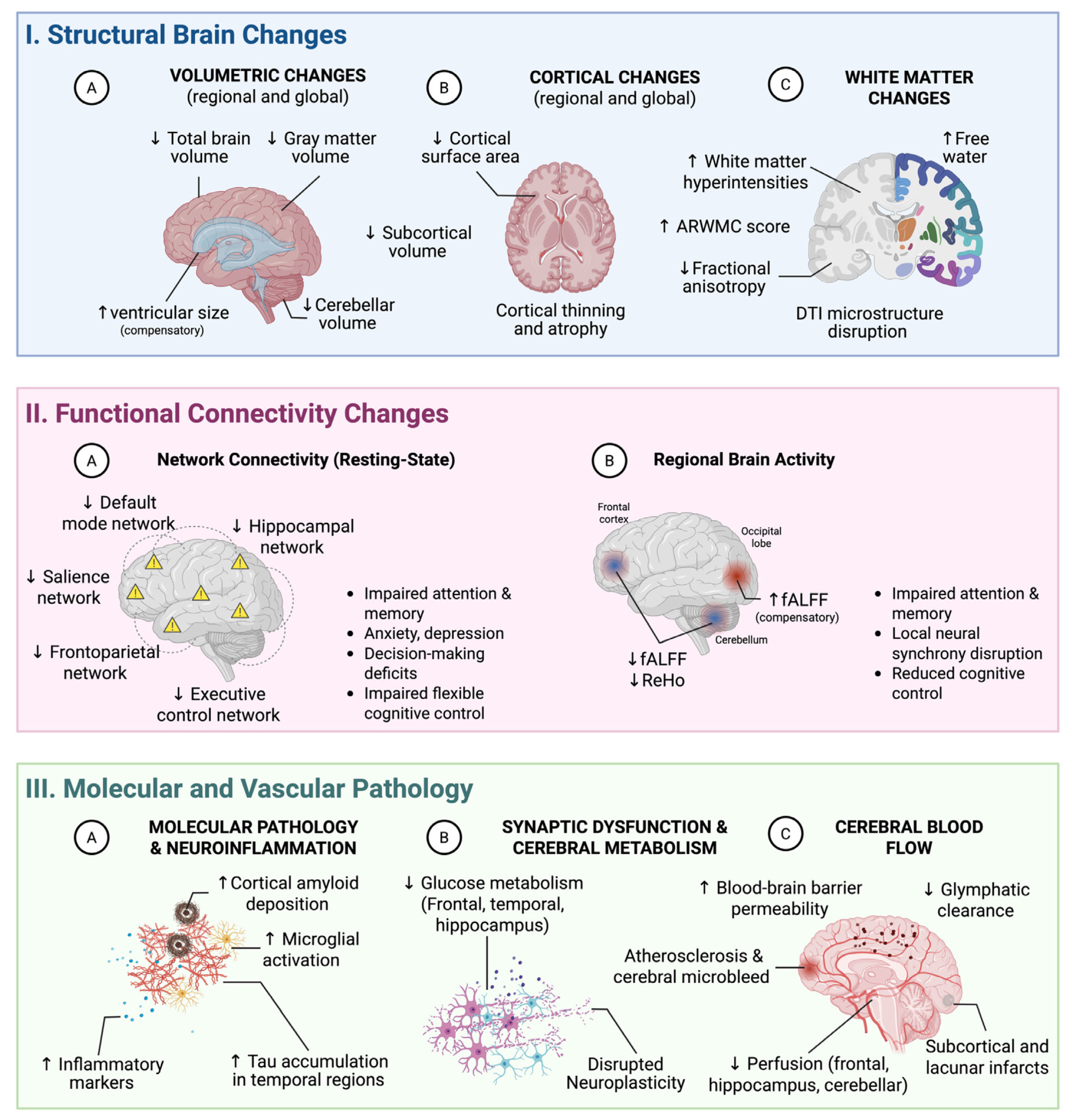
- Sleep deprivation and chronic sleep disorders disrupt large-scale networks (DMN, salience, executive, frontoparietal, hippocampal), in patterns that align with cognitive decline and dementia vulnerability.
- These network and regional activity changes affect frontal, parietal, hippocampal, and cerebellar hubs that substantially contribute to MRI-derived brain age estimates, implying that functional disconnection is likely to accompany or amplify brain age acceleration.
- Functional connectivity and activity alterations often emerge before overt structural atrophy and may be at least partially reversible with sleep restoration, suggesting a window in which interventions could modify both BAG and future dementia risk.
- Cross-sectional designs and heterogeneous fMRI methodologies currently limit causal inference and comparability; standardized functional protocols integrated with brain age models and longitudinal cognitive outcomes are needed to define the clinical utility of these markers.
5. Mechanisms
5.1. Neuroinflammation
5.2. Glymphatic System Dysfunction
5.3. Vascular Mechanisms
5.4. Synaptic and Metabolic Pathways
5.5. Key Points (Mechanisms)
- Glymphatic, inflammatory, vascular, and synaptic–metabolic pathways each contribute to sleep-related brain changes, but together explain only a minority of the observed association between poor sleep and MRI-derived brain age.
- DTI-ALPS and CSF biomarker studies provide converging evidence that sleep enhances glymphatic clearance of amyloid-β and tau, suggesting a plausible route by which inadequate sleep could accelerate brain aging and dementia pathology.
- Vascular injury, reflected in WMH burden, arteriolosclerosis, and microstructural white matter damage, is tightly linked to adverse sleep patterns and likely mediates part of the sleep–BAG association, particularly for fragmentation and OSA.
- Synaptic and metabolic mechanisms are strongly implicated by experimental and epidemiological data, but require integrated multimodal and longitudinal brain age studies to quantify their specific contributions to brain age acceleration and dementia risk.
6. Clinical Implications
6.1. Risk Stratification
6.2. Intervention Trials
6.3. Public Health Implications
7. Critical Gaps and Limitations
7.1. Methodological Limitations Requiring Resolution
7.2. Mechanistic Gaps Limiting Translational Potential
7.3. Clinical Translation Barriers
7.4. Future Research Priorities and Roadmap
7.5. Essential Immediate Priorities
7.6. Advanced Mechanistic Questions
7.7. Clinical Implementation Research
8. Conclusions
Supplementary Materials
Funding
Institutional Review Board Statement
Informed Consent Statement
Data Availability Statement
Acknowledgments
Conflicts of Interest
Abbreviations
| Aβ | Amyloid beta |
| ALFF | Amplitude of Low-Frequency Fluctuations |
| AD | Alzheimer’s disease |
| ADNI | Alzheimer’s Disease Neuroimaging Initiative |
| AHI | Apnea–hypopnea index |
| ALPS | Analysis along the perivascular space |
| ARIC | Atherosclerosis Risk in Communities |
| ARWMC | Age-related white matter change |
| BAG | Brain age gap |
| CARDIA | Coronary Artery Risk Development in Young Adults |
| CBF | Cerebral blood flow |
| CNN | Convolutional neural network |
| CPAP | Continuous positive airway pressure |
| CRP | C-reactive protein |
| CSF | Cerebrospinal fluid |
| DMN | Default mode network |
| DTI | Diffusion tensor imaging |
| FA | Fractional anisotropy |
| fALFF | Fractional amplitude of low-frequency fluctuation |
| FHS | Framingham Heart Study |
| fMRI | Functional MRI |
| G/L | Granulocyte-to-lymphocyte |
| GM | Gray matter |
| GMC | Gray matter concentration |
| GMV | Gray matter volume |
| HABS-HD | Harvard Aging Brain Study-Health Disparities |
| MAE | Mean absolute error |
| MD | Mean diffusivity |
| ML | Machine learning |
| MMSE | Mini-Mental State Examination |
| MRI | Magnetic Resonance Imaging |
| N2 | Stage 2 non-REM sleep |
| OSA | Obstructive sleep apnea |
| PLT | Platelet |
| PSG | Polysomnography |
| PSQI | Pittsburgh Sleep Quality Index |
| RCT | Randomized controlled trial |
| ReHO | Regional Homogeneity |
| REM | Rapid eye movement |
| RST | Randomized controlled trial |
| SF | Sleep fragmentation |
| SPM | Statistical Parametric Mapping |
| SWS | Slow-wave sleep |
| TBSS | Tract-based spatial statistics |
| TSD | Total sleep deprivation |
| TST | Total sleep time |
| WASO | Wake after sleep onset |
| WBC | white blood cell |
| WM | White matter |
| WMH | White matter hyperintensity |
References
- Li, Z.; Li, J.; Li, J.; Wang, M.; Xu, A.; Huang, Y.; Yu, Q.; Zhang, L.; Li, Y.; Li, Z.; et al. Development and Validation of a Brain Aging Biomarker in Middle-Aged and Older Adults: Deep Learning Approach. JMIR Aging 2025, 8, e73004. [Google Scholar] [CrossRef]
- Cole, J.H.; Ritchie, S.J.; Bastin, M.E.; Valdés Hernández, M.C.; Muñoz Maniega, S.; Royle, N.; Corley, J.; Pattie, A.; Harris, S.E.; Zhang, Q.; et al. Brain age predicts mortality. Mol. Psychiatry 2018, 23, 1385–1392. [Google Scholar] [CrossRef]
- Depypere, H.; Mosconi, L.; Brinton, R.D.; Hampel, H. Dementia prevention, intervention, and care: Comments on the 2024 report of the Lancet standing Commission. Maturitas 2025, 195, 108217. [Google Scholar] [CrossRef] [PubMed]
- Gottesman, R.F.; Lutsey, P.L.; Benveniste, H.; Brown, D.L.; Full, K.M.; Lee, J.M.; Osorio, R.S.; Pase, M.P.; Redeker, N.S.; Redline, S.; et al. Impact of Sleep Disorders and Disturbed Sleep on Brain Health: A Scientific Statement From the American Heart Association. Stroke 2024, 55, e61–e76. [Google Scholar] [CrossRef]
- Miao, Y.; Wang, J.; Li, X.; Guo, J.; Ekblom, M.M.; Sindi, S.; Zhang, Q.; Dove, A. Poor sleep health is associated with older brain age: The role of systemic inflammation. EBioMedicine 2025, 120, 105941. [Google Scholar] [CrossRef]
- Cavaillès, C.; Dintica, C.; Habes, M.; Leng, Y.; Carnethon, M.R.; Yaffe, K. Association of Self-Reported Sleep Characteristics with Neuroimaging Markers of Brain Aging Years Later in Middle-Aged Adults. Neurology 2024, 103, e209988. [Google Scholar] [CrossRef]
- Fjell, A.M.; Sørensen, Ø.; Wang, Y.; Amlien, I.K.; Baaré, W.F.C.; Bartrés-Faz, D.; Bertram, L.; Boraxbekk, C.J.; Brandmaier, A.M.; Demuth, I.; et al. No phenotypic or genotypic evidence for a link between sleep duration and brain atrophy. Nat. Hum. Behav. 2023, 7, 2008–2022. [Google Scholar] [CrossRef] [PubMed]
- Chu, C.; Holst, S.C.; Elmenhorst, E.M.; Foerges, A.L.; Li, C.; Lange, D.; Hennecke, E.; Baur, D.M.; Beer, S.; Hoffstaedter, F.; et al. Total Sleep Deprivation Increases Brain Age Prediction Reversibly in Multisite Samples of Young Healthy Adults. J. Neurosci. 2023, 43, 2168–2177. [Google Scholar] [CrossRef] [PubMed]
- Castronovo, V.; Scifo, P.; Castellano, A.; Aloia, M.S.; Iadanza, A.; Marelli, S.; Cappa, S.F.; Strambi, L.F.; Falini, A. White matter integrity in obstructive sleep apnea before and after treatment. Sleep 2014, 37, 1465–1475. [Google Scholar] [CrossRef]
- Maresky, H.S.; Shpirer, I.; Klar, M.M.; Levitt, M.; Sasson, E.; Tal, S. Continuous positive airway pressure alters brain microstructure and perfusion patterns in patients with obstructive sleep apnea. Sleep Med. 2019, 57, 61–69. [Google Scholar] [CrossRef]
- Liu, X.; Wei, Z.; Chen, L.; Duan, W.; Li, H.; Kong, L.; Shu, Y.; Li, P.; Li, K.; Xie, W.; et al. Effects of 3-month CPAP therapy on brain structure in obstructive sleep apnea: A diffusion tensor imaging study. Front. Neurol. 2022, 13, 913193. [Google Scholar] [CrossRef]
- Xiong, Y.; Zhou, X.J.; Nisi, R.A.; Martin, K.R.; Karaman, M.M.; Cai, K.; Weaver, T.E. Brain white matter changes in CPAP-treated obstructive sleep apnea patients with residual sleepiness. J. Magn. Reson. Imaging 2017, 45, 1371–1378. [Google Scholar] [CrossRef]
- Lyckenvik, T.; Olsson, M.; Forsberg, M.; Wasling, P.; Zetterberg, H.; Hedner, J.; Hanse, E. Sleep reduces CSF concentrations of beta-amyloid and tau: A randomized crossover study in healthy adults. Fluids Barriers CNS 2025, 22, 84. [Google Scholar] [CrossRef]
- Baril, A.A.; Kojis, D.J.; Himali, J.J.; Decarli, C.S.; Sanchez, E.; Johnson, K.A.; El Fakhri, G.; Thibault, E.; Yiallourou, S.R.; Himali, D.; et al. Association of Sleep Duration and Change over Time with Imaging Biomarkers of Cerebrovascular, Amyloid, Tau, and Neurodegenerative Pathology. Neurology 2024, 102, e207807. [Google Scholar] [CrossRef]
- Lim, A.S.; Yu, L.; Schneider, J.A.; Bennett, D.A.; Buchman, A.S. Sleep Fragmentation, Cerebral Arteriolosclerosis, and Brain Infarct Pathology in Community-Dwelling Older People. Stroke 2016, 47, 516–518. [Google Scholar] [CrossRef] [PubMed]
- André, C.; Tomadesso, C.; de Flores, R.; Branger, P.; Rehel, S.; Mézenge, F.; Landeau, B.; Sayette, V.; Eustache, F.; Chételat, G.; et al. Brain and cognitive correlates of sleep fragmentation in elderly subjects with and without cognitive deficits. Alzheimer’s Dement. 2019, 11, 142–150. [Google Scholar] [CrossRef]
- Clocchiatti-Tuozzo, S.; Rivier, C.A.; Renedo, D.; Torres Lopez, V.M.; Geer, J.H.; Miner, B.; Yaggi, H.K.; de Havenon, A.; Payabvash, S.; Sheth, K.N.; et al. Suboptimal Sleep Duration Is Associated with Poorer Neuroimaging Brain Health Profiles in Middle-Aged Individuals Without Stroke or Dementia. J. Am. Heart Assoc. 2024, 13, e031514. [Google Scholar] [CrossRef]
- Grumbach, P.; Opel, N.; Martin, S.; Meinert, S.; Leehr, E.J.; Redlich, R.; Enneking, V.; Goltermann, J.; Baune, B.T.; Dannlowski, U.; et al. Sleep duration is associated with white matter microstructure and cognitive performance in healthy adults. Hum. Brain Mapp. 2020, 41, 4397–4405. [Google Scholar] [CrossRef] [PubMed]
- Tai, X.Y.; Chen, C.; Manohar, S.; Husain, M. Impact of sleep duration on executive function and brain structure. Commun. Biol. 2022, 5, 201. [Google Scholar] [CrossRef] [PubMed]
- Gonzalez, K.A.; Tarraf, W.; Stickel, A.M.; Kaur, S.; Agudelo, C.; Redline, S.; Gallo, L.C.; Isasi, C.R.; Cai, J.; Daviglus, M.L.; et al. Sleep duration and brain MRI measures: Results from the SOL-INCA MRI study. Alzheimer’s Dement. J. Alzheimer’s Assoc. 2024, 20, 641–651. [Google Scholar] [CrossRef]
- Wang, Z.; Li, X.; Wang, J.; Yang, W.; Dove, A.; Lu, W.; Qi, X.; Sindi, S.; Xu, W. Association of past and current sleep duration with structural brain differences: A large population-based study from the UK Biobank. Sleep Med. 2024, 119, 179–186. [Google Scholar] [CrossRef]
- Ning, J.; Zhang, W.; Chen, S.F.; Li, H.Q.; Wang, R.Z.; Feng, J.; Cheng, W.; Dong, Q.; Yu, J.T. Association of sleep behaviors with white matter hyperintensities and microstructural injury: A cross-sectional and longitudinal analysis of 26 354 participants. Sleep 2023, 46, zsad020. [Google Scholar] [CrossRef] [PubMed]
- Namsrai, T.; Northey, J.M.; Ambikairajah, A.; Ahmed, O.; Alateeq, K.; Espinoza Oyarce, D.A.; Burns, R.; Rattray, B.; Cherbuin, N. Sleep characteristics and brain structure: A systematic review with meta-analysis. Sleep Med. 2025, 129, 316–329. [Google Scholar] [CrossRef]
- Carvalho, D.Z.; McCarter, S.J.; St Louis, E.K.; Przybelski, S.A.; Johnson Sparrman, K.L.; Somers, V.K.; Boeve, B.F.; Petersen, R.C.; Jack, C.R., Jr.; Graff-Radford, J.; et al. Association of Polysomnographic Sleep Parameters with Neuroimaging Biomarkers of Cerebrovascular Disease in Older Adults with Sleep Apnea. Neurology 2023, 101, e125–e136. [Google Scholar] [CrossRef]
- Wang, J.; Wang, Z.; Wang, X.; Ji, L.; Li, Y.; Cheng, C.; Su, T.; Wang, E.; Han, F.; Chen, R. Altered brain dynamic functional connectivity in patients with obstructive sleep apnea and its association with cognitive performance. Sleep Med. 2025, 128, 174–182. [Google Scholar] [CrossRef]
- Khoroushi, F.; Davoodi, Y.; Fathabadi, A.; Bakhshi, R.; Sharifian, Y.; Salehi, M.; Ghofranyha, L.; Hassannejad, E.; Kharaghani, F. Evaluation of brain white matter changes on MRI in patients newly diagnosed with obstructive sleep apnea compared with the control group. Egypt. J. Bronchol. 2024, 18, 9. [Google Scholar] [CrossRef]
- Ricciardiello, A.; McKinnon, A.C.; Mowszowski, L.; LaMonica, H.M.; Schrire, Z.M.; Haroutonian, C.; Lam, A.; Hickie, I.B.; D’Rozario, A.; Naismith, S.L. Assessing sleep architecture and cognition in older adults with depressive symptoms attending a memory clinic. J. Affect. Disord. 2024, 348, 35–43. [Google Scholar] [CrossRef]
- Elvsåshagen, T.; Norbom, L.B.; Pedersen, P.; Quraishi, S.H.; Bjørnerud, A.; Malt, U.F.; Groote, I.R.; Westlye, L.T. Widespread changes in white matter microstructure after a day of waking and sleep deprivation. PLoS ONE 2015, 10, e0127351. [Google Scholar] [CrossRef]
- Baril, A.A.; Beiser, A.S.; Mysliwiec, V.; Sanchez, E.; DeCarli, C.S.; Redline, S.; Gottlieb, D.J.; Maillard, P.; Romero, J.R.; Satizabal, C.L.; et al. Slow-Wave Sleep and MRI Markers of Brain Aging in a Community-Based Sample. Neurology 2021, 96, e1462–e1469. [Google Scholar] [CrossRef]
- Kegyes-Brassai, A.C.; Pierson-Bartel, R.; Bolla, G.; Kamondi, A.; Horvath, A.A. Disruption of sleep macro- and microstructure in Alzheimer’s disease: Overlaps between neuropsychology, neurophysiology, and neuroimaging. Geroscience 2025, 47, 3647–3664. [Google Scholar] [CrossRef] [PubMed]
- Wu, K.; Gan, Q.; Pi, Y.; Wu, Y.; Zou, W.; Su, X.; Zhang, S.; Wang, X.; Li, X.; Zhang, N. Obstructive sleep apnea and structural and functional brain alterations: A brain-wide investigation from clinical association to genetic causality. BMC Med. 2025, 23, 42. [Google Scholar] [CrossRef] [PubMed]
- Macey, P.M.; Woo, M.A.; Kumar, R.; Cross, R.L.; Harper, R.M. Relationship between obstructive sleep apnea severity and sleep, depression and anxiety symptoms in newly-diagnosed patients. PLoS ONE 2010, 5, e10211. [Google Scholar] [CrossRef]
- Stankeviciute, L.; Tort-Colet, N.; Fernández-Arcos, A.; Sánchez-Benavides, G.; Minguillón, C.; Fauria, K.; Holst, S.C.; Garcés, P.; Mueggler, T.; Zetterberg, H.; et al. Associations between objective sleep metrics and brain structure in cognitively unimpaired adults: Interactions with sex and Alzheimer’s biomarkers. Alzheimer’s Dement. 2025, 21, e70353. [Google Scholar] [CrossRef]
- Tsiknia, A.A.; Parada, H., Jr.; Banks, S.J.; Reas, E.T. Sleep quality and sleep duration predict brain microstructure among community-dwelling older adults. Neurobiol. Aging 2023, 125, 90–97. [Google Scholar] [CrossRef]
- Macey, P.M.; Haris, N.; Kumar, R.; Thomas, M.A.; Woo, M.A.; Harper, R.M. Obstructive sleep apnea and cortical thickness in females and males. PLoS ONE 2018, 13, e0193854. [Google Scholar] [CrossRef]
- Zhang, Q.; Hou, Y.Z.; Ding, H.; Shu, Y.P.; Li, J.; Chen, X.Z.; Li, J.L.; Lou, Q.; Wang, D.X. Alterations of sleep deprivation on brain function: A coordinate-based resting-state functional magnetic resonance imaging meta-analysis. World J. Psychiatry 2024, 14, 315–329. [Google Scholar] [CrossRef]
- Reimann, G.M.; Hoseini, A.; Koçak, M.; Beste, M.; Küppers, V.; Rosenzweig, I.; Elmenhorst, D.; Pires, G.N.; Laird, A.R.; Fox, P.T.; et al. Distinct Convergent Brain Alterations in Sleep Disorders and Sleep Deprivation: A Meta-Analysis. JAMA Psychiatry 2025, 82, 681–691. [Google Scholar] [CrossRef]
- Gujar, N.; Yoo, S.S.; Hu, P.; Walker, M.P. The unrested resting brain: Sleep deprivation alters activity within the default-mode network. J. Cogn. Neurosci. 2010, 22, 1637–1648. [Google Scholar] [CrossRef]
- Chee, M.W.; Zhou, J. Functional connectivity and the sleep-deprived brain. Progress. Brain Res. 2019, 246, 159–176. [Google Scholar]
- Killgore, W.D.S.; Jankowski, S.; Henderson-Arredondo, K.; Lucas, D.A.; Patel, S.I.; Hildebrand, L.L.; Huskey, A.; Dailey, N.S. Functional connectivity of the default mode network predicts subsequent polysomnographically measured sleep in people with symptoms of insomnia. Neuroreport 2023, 34, 734–740. [Google Scholar] [CrossRef] [PubMed]
- Tashjian, S.M.; Goldenberg, D.; Monti, M.M.; Galván, A. Sleep quality and adolescent default mode network connectivity. Social. Cogn. Affect. Neurosci. 2018, 13, 290–299. [Google Scholar] [CrossRef]
- Cheng, Y.; Xue, T.; Dong, F.; Hu, Y.; Zhou, M.; Li, X.; Huang, R.; Lu, X.; Yuan, K.; Yu, D. Abnormal functional connectivity of the salience network in insomnia. Brain Imaging Behav. 2022, 16, 930–938. [Google Scholar] [CrossRef] [PubMed]
- Menon, V.; D’Esposito, M. The role of PFC networks in cognitive control and executive function. Neuropsychopharmacol. Off. Publ. Am. Coll. Neuropsychopharmacol. 2022, 47, 90–103. [Google Scholar] [CrossRef] [PubMed]
- Gao, J.; Zhang, L.; Zhu, J.; Guo, Z.; Lin, M.; Bai, L.; Zheng, P.; Liu, W.; Huang, J.; Liu, Z. Prefrontal Cortex Hemodynamics and Functional Connectivity Changes during Performance Working Memory Tasks in Older Adults with Sleep Disorders. Brain Sci. 2023, 13, 497. [Google Scholar] [CrossRef]
- Rao, Y.L.; Ganaraja, B.; Murlimanju, B.V.; Joy, T.; Krishnamurthy, A.; Agrawal, A. Hippocampus and its involvement in Alzheimer’s disease: A review. 3 Biotech 2022, 12, 55. [Google Scholar] [CrossRef]
- Aleman-Zapata, A.; Morris, R.G.M.; Genzel, L. Sleep deprivation and hippocampal ripple disruption after one-session learning eliminate memory expression the next day. Proc. Natl. Acad. Sci. USA 2022, 119, e2123424119. [Google Scholar] [CrossRef]
- Whitney, P.; Kurinec, C.A.; Hinson, J.M. Temporary amnesia from sleep loss: A framework for understanding consequences of sleep deprivation. Front. Neurosci. 2023, 17, 1134757. [Google Scholar] [CrossRef]
- Lucey, B.P. It’s complicated: The relationship between sleep and Alzheimer’s disease in humans. Neurobiol. Dis. 2020, 144, 105031. [Google Scholar] [CrossRef] [PubMed]
- Ercolano, E.; Bencivenga, L.; Palaia, M.E.; Carbone, G.; Scognamiglio, F.; Rengo, G.; Femminella, G.D. Intricate relationship between obstructive sleep apnea and dementia in older adults. GeroScience 2024, 46, 99–111. [Google Scholar] [CrossRef]
- Niazi, N.U.K.; Jiang, J.; Ou, H.; Chen, R.; Yang, Z. Sleep Deprivation and Alzheimer’s Disease: A Review of the Bidirectional Interactions and Therapeutic Potential of Omega-3. Brain Sci. 2025, 15, 641. [Google Scholar] [CrossRef]
- Bai, J.; Wen, H.; Tai, J.; Peng, Y.; Li, H.; Mei, L.; Ji, T.; Li, X.; Li, Y.; Ni, X.; et al. Altered Spontaneous Brain Activity Related to Neurologic and Sleep Dysfunction in Children with Obstructive Sleep Apnea Syndrome. Front. Neurosci. 2021, 15, 595412. [Google Scholar] [CrossRef]
- Xie, W.; Shu, Y.; Liu, X.; Li, K.; Li, P.; Kong, L.; Yu, P.; Huang, L.; Long, T.; Zeng, L.; et al. Abnormal Spontaneous Brain Activity and Cognitive Impairment in Obstructive Sleep Apnea. Nat. Sci. Sleep 2022, 14, 1575–1587. [Google Scholar] [CrossRef]
- Song, Y.; Yang, H.; Gu, S.; Zhu, Y.; Dai, Z.; Pan, P.; Zhang, X. Network localization of regional homogeneity alterations in Parkinson’s disease. Front. Aging Neurosci. 2025, 17, 1607691. [Google Scholar] [CrossRef]
- Li, Z.; Chen, L.; Huang, Y.; Yan, L.; Liang, J.; Peng, M.; Zhou, Y.; Fang, J.; Li, M.; Zhou, P. A surface-based cross-sectional fMRI study on brain function differences between comorbid mild or moderate depression and insomnia. Front. Neurosci. 2025, 19, 1554287. [Google Scholar] [CrossRef] [PubMed]
- Rokicki, J.; Wolfers, T.; Nordhøy, W.; Tesli, N.; Quintana, D.S.; Alnaes, D.; Richard, G.; de Lange, A.G.; Lund, M.J.; Norbom, L.; et al. Multimodal imaging improves brain age prediction and reveals distinct abnormalities in patients with psychiatric and neurological disorders. Hum. Brain Mapp. 2021, 42, 1714–1726. [Google Scholar] [CrossRef] [PubMed]
- Burke, S.; Grudzien, A.; Li, T.; Abril, M.; Spadola, C.; Barnes, C.; Hanson, K.; Grandner, M.; DeKosky, S. Correlations between sleep disturbance and brain structures associated with neurodegeneration in the National Alzheimer’s Coordinating Center Uniform Data Set. J. Clin. Neurosci. 2022, 106, 204–212. [Google Scholar] [CrossRef] [PubMed]
- Brito, D.V.C.; Esteves, F.; Rajado, A.T.; Silva, N.; Andrade, R.; Apolónio, J.; Calado, S.; Faleiro, L.; Matos, C.; Marques, N.; et al. Assessing cognitive decline in the aging brain: Lessons from rodent and human studies. npj Aging 2023, 9, 23. [Google Scholar] [CrossRef]
- Holland, C.; Dravecz, N.; Owens, L.; Benedetto, A.; Dias, I.; Gow, A.; Broughton, S. Understanding exogenous factors and biological mechanisms for cognitive frailty: A multidisciplinary scoping review. Ageing Res. Rev. 2024, 101, 102461. [Google Scholar] [CrossRef]
- Komleva, Y.; Shpiliukova, K.; Bondar, N.; Salmina, A.; Khilazheva, E.; Illarioshkin, S.; Piradov, M. Decoding brain aging trajectory: Predictive discrepancies, genetic susceptibilities, and emerging therapeutic strategies. Front. Aging Neurosci. 2025, 17, 1562453. [Google Scholar] [CrossRef]
- Antal, B.B.; van Nieuwenhuizen, H.; Chesebro, A.G.; Strey, H.H.; Jones, D.T.; Clarke, K.; Weistuch, C.; Ratai, E.-M.; Dill, K.A.; Mujica-Parodi, L.R. Brain aging shows nonlinear transitions, suggesting a midlife “critical window” for metabolic intervention. Proc. Natl. Acad. Sci. USA 2025, 122, e2416433122. [Google Scholar] [CrossRef] [PubMed]
- Azarias, F.R.; Almeida, G.; de Melo, L.F.; Rici, R.E.G.; Maria, D.A. The Journey of the Default Mode Network: Development, Function, and Impact on Mental Health. Biology 2025, 14, 395. [Google Scholar] [CrossRef] [PubMed]
- Aggleton, J.P.; Vann, S.D.; O’Mara, S.M. Converging diencephalic and hippocampal supports for episodic memory. Neuropsychologia 2023, 191, 108728. [Google Scholar] [CrossRef]
- Ramduny, J.; Bastiani, M.; Huedepohl, R.; Sotiropoulos, S.N.; Chechlacz, M. The association between inadequate sleep and accelerated brain ageing. Neurobiol. Aging 2022, 114, 1–14. [Google Scholar] [CrossRef]
- Mattoni, M.; Smith, D.V.; Chein, J.; Olino, T.M. Functional connectivity heterogeneity and consequences for clinical and cognitive prediction: Stage 2 registered report. Imaging Neurosci. 2025, 3, IMAG.a.107. [Google Scholar] [CrossRef] [PubMed]
- Taoka, T.; Masutani, Y.; Kawai, H.; Nakane, T.; Matsuoka, K.; Yasuno, F.; Kishimoto, T.; Naganawa, S. Evaluation of glymphatic system activity with the diffusion MR technique: Diffusion tensor image analysis along the perivascular space (DTI-ALPS) in Alzheimer’s disease cases. Jpn. J. Radiol. 2017, 35, 172–178. [Google Scholar] [CrossRef]
- Lee, H.-J.; Lee, D.A.; Shin, K.J.; Park, K.M. Glymphatic system dysfunction in obstructive sleep apnea evidenced by DTI-ALPS. Sleep Med. 2022, 89, 176–181. [Google Scholar] [CrossRef]
- Zhuo, J.; Raghavan, P.; Li, J.; Roys, S.; Njonkou Tchoquessi, R.L.; Chen, H.; Wickwire, E.M.; Parikh, G.Y.; Schwartzbauer, G.T.; Grattan, L.M. Longitudinal assessment of glymphatic changes following mild traumatic brain injury: Insights from perivascular space burden and DTI-ALPS imaging. Front. Neurol. 2024, 15, 1443496. [Google Scholar] [CrossRef]
- Shang, Y.; Yu, L.; Xing, H.; Chang, Y.; Dong, K.; Xiao, Y.; Liu, Y.; Feng, M.; Qin, Y.; Dai, H. Diffusion tensor imaging analysis along the perivascular space (DTI-ALPS) demonstrates that sleep disorders exacerbate glymphatic circulatory impairment and cognitive impairment in patients with alzheimer’s disease. Nat. Sci. Sleep 2024, 16, 2205–2215. [Google Scholar] [CrossRef]
- Schammel, N.C.; VandeWater, T.; Self, S.; Wilson, C.; Schammel, C.M.G.; Cowley, R.; Gault, D.B.; Madeline, L.A. Obstructive sleep apnea and white matter hyperintensities: Correlation or causation? Brain Imaging Behav. 2022, 16, 1671–1683. [Google Scholar] [CrossRef]
- Yin, F.; Zeng, B.; Nie, L.; Ding, S.; Luo, D.; Zeng, P.; Li, B.; Shi, Z.; Li, Y.; Luo, T. Aging as a Key Determinant of Glymphatic System Function in older adults. J. Gerontol. A Biol. Sci. Med. Sci. 2025, 80, glaf176. [Google Scholar] [CrossRef]
- Hauglund, N.L.; Andersen, M.; Tokarska, K.; Radovanovic, T.; Kjaerby, C.; Sørensen, F.L.; Bojarowska, Z.; Untiet, V.; Ballestero, S.B.; Kolmos, M.G.; et al. Norepinephrine-mediated slow vasomotion drives glymphatic clearance during sleep. Cell 2025, 188, 606–622.e617. [Google Scholar] [CrossRef]
- Ma, J.; Chen, M.; Liu, G.H.; Gao, M.; Chen, N.H.; Toh, C.H.; Hsu, J.L.; Wu, K.Y.; Huang, C.M.; Lin, C.M.; et al. Effects of sleep on the glymphatic functioning and multimodal human brain network affecting memory in older adults. Mol. Psychiatry 2025, 30, 1717–1729. [Google Scholar] [CrossRef]
- Owen, J.E.; Veasey, S.C. Impact of sleep disturbances on neurodegeneration: Insight from studies in animal models. Neurobiol. Dis. 2020, 139, 104820. [Google Scholar] [CrossRef]
- Covassin, N.; Bukartyk, J.; Singh, P.; Calvin, A.D.; St Louis, E.K.; Somers, V.K. Effects of Experimental Sleep Restriction on Ambulatory and Sleep Blood Pressure in Healthy Young Adults: A Randomized Crossover Study. Hypertension 2021, 78, 859–870. [Google Scholar] [CrossRef]
- Kamal, F.; Morrison, C.; Dadar, M. Investigating the relationship between sleep disturbances and white matter hyperintensities in older adults on the Alzheimer’s disease spectrum. Alzheimer’s Dement. Diagn. Assess. Dis. Monit. 2024, 16, e12553. [Google Scholar] [CrossRef]
- Bushey, D.; Tononi, G.; Cirelli, C. Sleep and synaptic homeostasis: Structural evidence in Drosophila. Science 2011, 332, 1576–1581. [Google Scholar] [CrossRef]
- Tan, W.Y.; Huang, X.; Huang, J.; Robert, C.; Cui, J.; Chen, C.; Hilal, S. Role of Brain Age Gap as a Mediator in the Relationship Between Cognitive Impairment Risk Factors and Cognition. Neurology 2025, 105, e213815. [Google Scholar] [CrossRef] [PubMed]
- Stoitsas, K.; Bakx, P.; Voortman, T.; Yu, J.; Roshchupkin, G.; Bos, D. Contributions of lifestyle, education, and cardiovascular risk factors to the brain age gap. Aging Brain 2025, 8, 100149. [Google Scholar] [CrossRef] [PubMed]
- Stolicyn, A.; Lyall, L.M.; Lyall, D.M.; Høier, N.K.; Adams, M.J.; Shen, X.; Cole, J.H.; McIntosh, A.M.; Whalley, H.C.; Smith, D.J. Comprehensive assessment of sleep duration, insomnia, and brain structure within the UK Biobank cohort. Sleep 2024, 47, zsad274. [Google Scholar] [CrossRef] [PubMed]
- Wu, C.; Xu, W. Does Inflammation Mediate the Association Between Sleep Duration and Incident Dementia Among Older Adults? Innov. Aging 2020, 4, 119. [Google Scholar] [CrossRef]
- Zhu, Y.; Wu, T.; Jiao, Q.; Chai, H.; Wang, Y.; Tian, C.; Xue, Q.; Li, K.; Wang, P.; Li, Z.; et al. Acute REM sleep deprivation alleviated depression-like behavior mediated by inhibiting VIP neurons in the mPFC. Sci. Adv. 2025, 11, eadx2666. [Google Scholar] [CrossRef]
- Cowen, M.H.; Raizen, D.M.; Hart, M.P. Structural neuroplasticity after sleep loss modifies behavior and requires neurexin and neuroligin. iScience 2024, 27, 109477. [Google Scholar] [CrossRef] [PubMed]
- Parhizkar, S.; Holtzman, D.M. The night’s watch: Exploring how sleep protects against neurodegeneration. Neuron 2025, 113, 817–837. [Google Scholar] [CrossRef] [PubMed]



| Study | Year | Population (N) | Sleep Assessment | Brain Age Method | Brain Age Gap Finding | Effect Size |
|---|---|---|---|---|---|---|
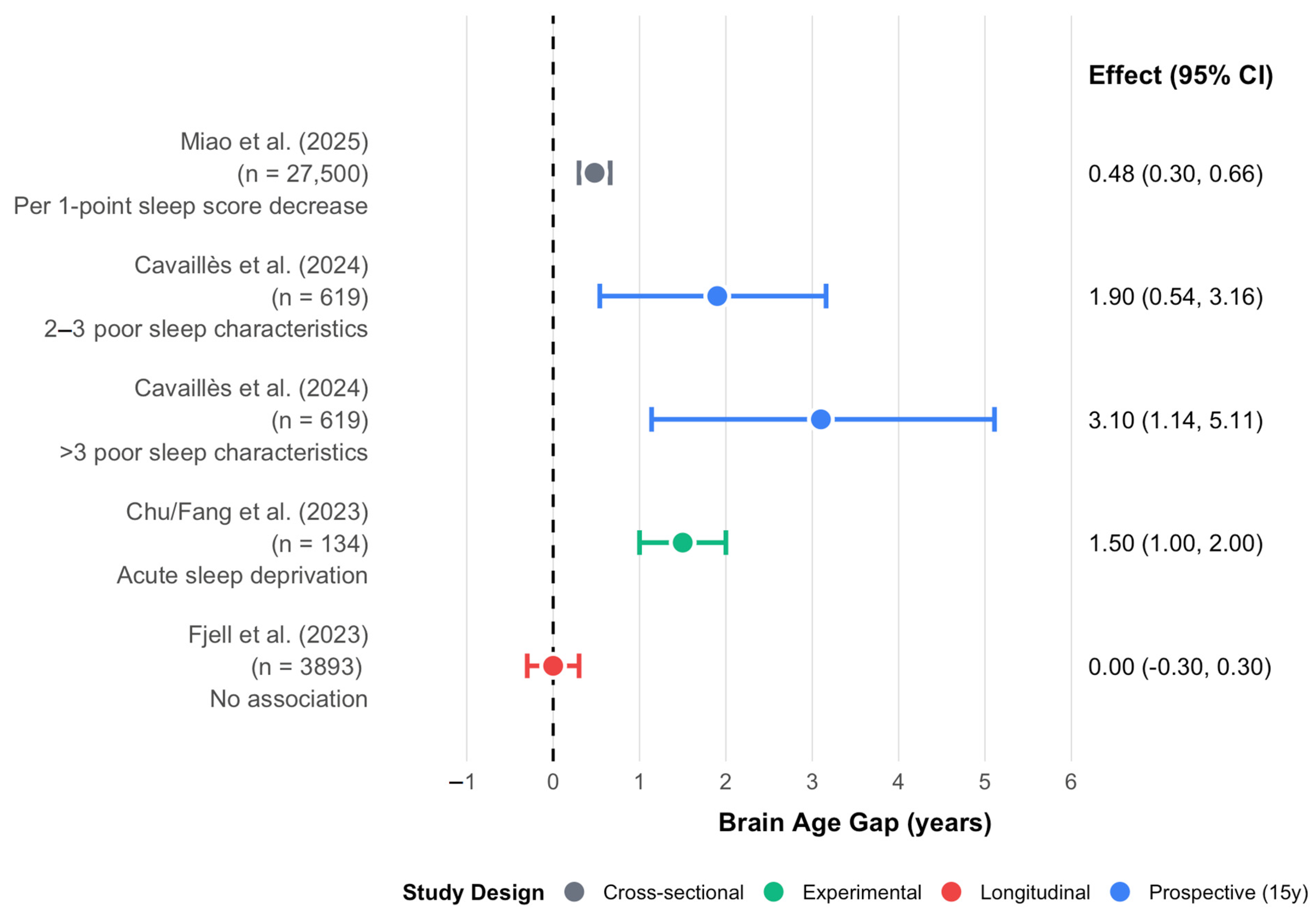
| Miao et al. [5] | 2025 | UK Biobank (27,500; age 54.7 ± 8 y) | Composite score: chronotype, duration, insomnia, snoring, sleepiness | ML on 1079 MRI phenotypes | Poor sleep (≤1 pt): +0.99 y; Intermediate (2–3 pts): +0.62 y | 0.48 y per point decrease; Inflammation mediates 7–10% |
| Cavaillès et al. [6] | 2024 | CARDIA (619; age 40 → 55 y, 15 y follow-up) | Self-report: 6 characteristics | ML-based brain age | 2–3 poor sleep characteristics: +1.9 y (0.54–3.16); >3: +3.1 y (1.14–5.11) | Prospective design strengthens causality |
| Fjell et al. [7] | 2023 | Lifebrain (8153 MRIs; 3893 adults) | Self-report duration | Longitudinal atrophy trajectories | No association (phenotypic or genetic) | Cross-sectional U-shape: 6.5 h optimal |
| Chu et al. [8] | 2023 | Multi-site (134; age 19–39 y) | Total sleep deprivation (>24 h) | T1-weighted prediction model | Acute TSD: +1–2 y BAG | Reversible with recovery sleep |
| Study | Algorithm Architecture | Training Dataset | N (Training) | Age Range (Training) | MRI Modalities | Preprocessing Pipeline | Validation MAE | Clinical Outcome Validation |
|---|---|---|---|---|---|---|---|---|
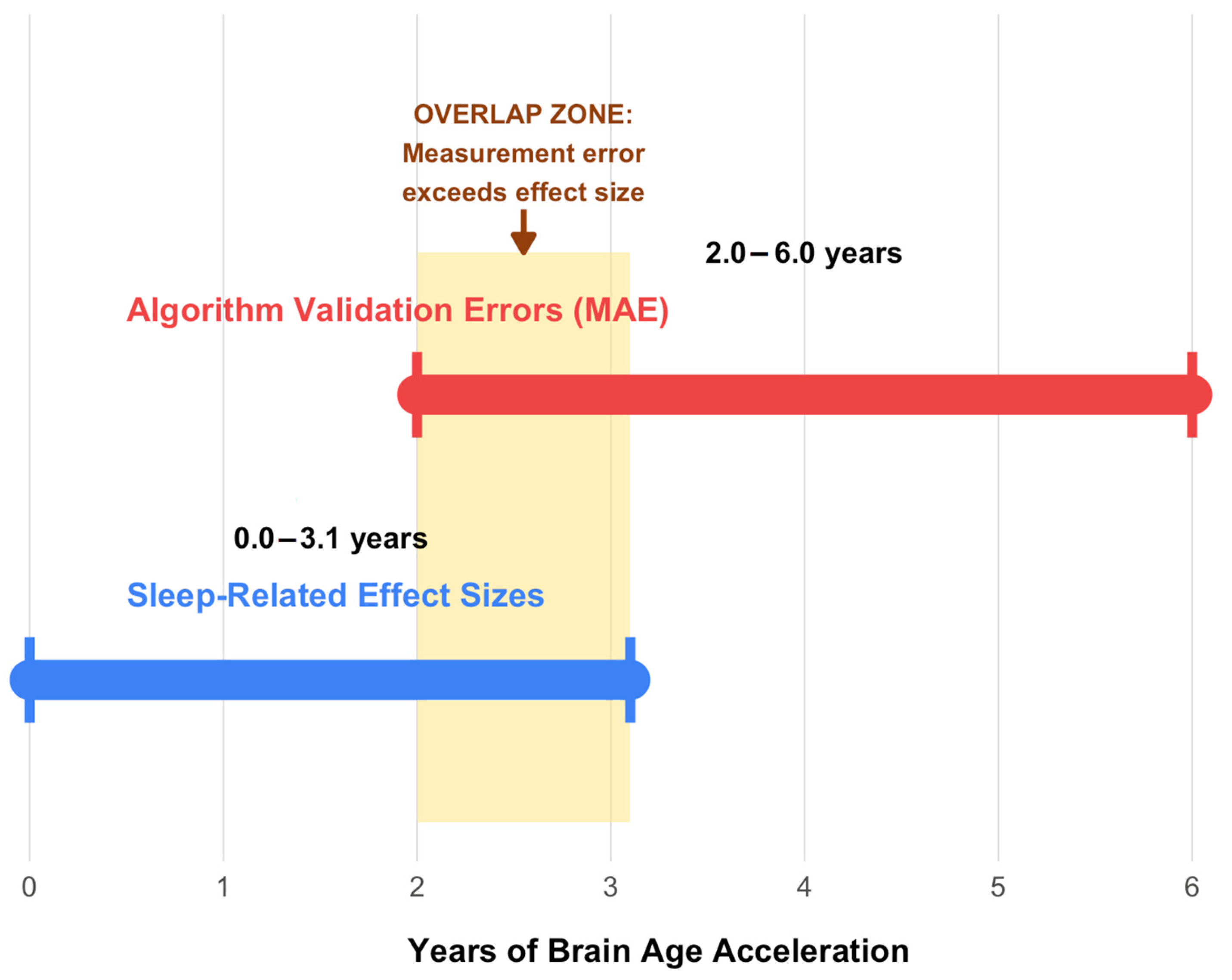
| Li et al. (2025) [1] | Deep learning approach | UK Biobank + validation cohorts | Large sample | Middle-aged to older adults | T1-weighted, DTI, other | Deep neural network | 2.4–2.5 y | Validated: predicts mortality |
| Cole et al. (2018) [2] | Gaussian Processes Regression | Multiple cohorts | >2000 | 18–90 y | T1-weighted | SPM-based features | ~5 y | Validated: BAG predicts mortality |
| Miao et al. (2025) [5] | Machine learning (not specified) | 1079 MRI phenotypes | UK Biobank subset | 40–69 y | Multimodal features | UK Biobank pipeline | Not reported | Not validated against dementia incidence |
| Cavaillès et al. (2024) [6] | Machine learning on T1 MRI | CARDIA-specific | 619 | 40–55 y | T1-weighted | FreeSurfer-based | Not reported | Not validated against clinical outcomes |
| Fjell et al. (2023) [7] | Longitudinal atrophy trajectories | Lifebrain cohort | 3893 (8153 scans) | Adult range | T1-weighted | FreeSurfer longitudinal pipeline | Not brain age (atrophy-based) | NULL FINDING for sleep-atrophy |
| Chu/Fang et al. (2023) [8] | T1-weighted prediction model | Multisite validation | 134 | 19–39 y | T1-weighted | Standardized across sites | ~2.4–2.5 y | Not applicable (acute study) |
| General deep learning approaches | CNN, ResNet, 3D-CNN architectures | Variable (IXI, UK Biobank, ADNI, others) | 1000–50,000+ | Variable | T1-weighted primarily, some multimodal | Highly variable (FSL, FreeSurfer, SPM, custom) | 2–6 y | Rarely validated against dementia incidence |
| Intervention | Study (Year) | Design | N | Duration | MRI Outcome | Main Finding | Reversibility |
|---|---|---|---|---|---|---|---|
| CPAP for OSA | |||||||
| Sleep recovery | Chu et al. (2023) [8] | Experimental | 134 young adults | Post-TSD | Brain age model | TSD + 1–2 y BAG; reversed with recovery | Yes (acute) |
| CPAP | Castronovo et al. (2014) [9] | Prospective | 17 severe OSA vs. 15 controls | 3 and 12 months | DTI white matter | 3 mo: limited WM recovery; 12 mo: near-complete reversal + cognitive gains | Yes (requires 12 mo) |
| CPAP | Maresky et al. (2019) [10] | Prospective | 7 OSA | 6 weeks | DTI + perfusion | ↑ FA, ↑ CBF (hippocampus, temporal); ↓ MD | Partial (short-term) |
| CPAP | Liu et al. (2022) [11] | Prospective | 20 severe OSA | 3 months | DTI-TBSS | No significant WM changes despite clinical improvement | No (at 3 mo) |
| CPAP | Xiong et al. (2017) [12] | Prospective | 29 OSA (≥6 h/night adherent) | ≥30 days | DTI-TBSS | 30% residual sleepers: persistent ↑ MD in 17.8% WM tracts | Incomplete in the subset |
| Sleep Manipulation | |||||||
| Sleep vs. Deprivation | Lyckenvik et al. (2025) [13] | RCT crossover | Healthy adults | Single night | CSF Aβ and tau | Sleep reduces CSF Aβ and tau | Acute effect |
| CBT-I | — | — | — | — | — | No published RCTs with MRI outcomes | Unknown |
| Study (Year) | Sleep Parameter | N | Assessment Method | MRI Findings | Brain Regions Affected | Clinical Correlation |
|---|---|---|---|---|---|---|
| DURATION | ||||||
| Tai et al., 2022 [19] | Short (≤5 h) and Long (≥9 h) | 479,420 | Self-report | ↓ Cortical/subcortical volumes; ↑ WMH; ↓ FA | Global, widespread | U-shaped; 7 h optimal for cognition |
| Gonzalez et al., 2024 [20] | >9 h | 2334 | Self-report | ↓ Total brain (β = −0.05/h); ↓ GM (β = −0.17/h) | Global, gray matter | Hispanic/Latino cohort; dose–response |
| Wang et al., 2024 [21] | Short/Long | Large UK Biobank | Self-report | ↓ Cortical/subcortical volumes | Multiple regions | Cross-sectional and longitudinal |
| Fjellet al., 2023 [7] | Duration (general) | 8153 MRIs | Self-report | No association with atrophy | N/A | NULL FINDING—no phenotypic/genetic link |
| Ning et al., 2023 [22] | Duration + WM | 26,354 | Self-report + DTI | ↑ WMH; microstructural injury | White matter, global | Cross-sectional and longitudinal validation |
| FRAGMENTATION | ||||||
| André et al., 2019 [16] | ↑ SF intensity | 66 | Actigraphy | Mediates hypometabolism → executive dysfunction | Frontohippocampal | Cognitively normal only |
| Lim et al., 2016 [15] | ↑ Fragmentation index | 315 | Actigraphy → autopsy | Arteriolosclerosis (OR 1.27, 95% CI: 1.11–1.45); subcortical infarcts (OR 1.31, 95% CI: 1.01–1.71) | Subcortical WM | Autopsy-confirmed neuropathology |
| ARCHITECTURE (PSG) | ||||||
| Baril et al., 2021 [23] | ↓ Slow-wave sleep | 492 | PSG | ↓ Total brain (β = −4.21 cm3/1% SWS); ↓ frontal cortex volume | Global, frontal | FHS Offspring; 17-year prospective |
| Carvalho et al., 2023 [24] | ↑ REM latency and ↑ Light sleep % (N2) | 842 | WatchPAT (home sleep test) | ↓ AD-signature cortical thickness; ↑ WMH volume | Temporal, parietal, WM | Diverse cohort (HABS-HD); REM-specific effects and Inverse: ↑ deep sleep % = ↑ thickness (protective) |
| OSA | ||||||
| Li et al., 2025 [25] | ↑ AHI severity | 40 | PSG + fMRI | ↓ fALFF/ReHo (cerebellum/frontal); ↑ occipital activity | Cerebellum, frontal, occipital | Mendelian randomization supports causality |
| Macey et al., 2010 [24] | Moderate-severe OSA | 67 | PSG (AHI 52.5 ± 5.3/h) | ↓ GMC in the frontal, cingulate, thalamus, and hippocampus | Multiple cortical/subcortical | No GMV differences despite GMC changes |
| Khoroushi et al., 2024 [26] | OSA severity | 40 | PSG (AHI-based) | ↑ White matter changes (ARWMC score, p < 0.001) | Global white matter | Independent of vascular risk factors |
| Carvalho et al., 2023 [24] | REM-specific AHI | 842 | WatchPAT | ↑ WMH volume | Subcortical WM | REM apnea shows distinct WM vulnerability |
| Xiong et al., 2017 [12] | CPAP non-responders | 29 | PSG + DTI (≥30 d adherent) | Persistent ↑ MD in 17.8% WM tracts despite treatment | Widespread WM | 30% incomplete structural recovery |
| Mechanism | Ref. | N | Method | Key Finding | Sleep Association | Clinical Implication |
|---|---|---|---|---|---|---|
| Glymphatic Clearance | ||||||
| DTI-ALPS index | [65] | 31 AD | DTI perivascular diffusivity | ↓ ALPS in AD correlates with MMSE | N/A | Validates the DTI-ALPS method |
| DTI-ALPS index | [66] | OSA cohort | PSG + DTI-ALPS | ↓ ALPS correlates with AHI severity | OSA impairs the glymphatic | Dose–response relationship |
| DTI-ALPS index | [67] | 72 (36 insomnia) | PSG + DTI-ALPS | ↓ ALPS in insomnia correlates with TST | Total sleep time is critical | Affects memory |
| DTI-ALPS index | [67] | Mild TBI cohort | PSQI, clinical symptoms | ALPS increases from acute → chronic as sleep improves | Sleep recovery → glymphatic recovery | Demonstrates reversibility |
| DTI-ALPS index | [68] | AD with/without sleep disorders | Sleep disorder diagnosis | Sleep disorders exacerbate glymphatic impairment in AD | Combined AD + sleep disorder → worse ALPS | Synergistic negative effects |
| CSF clearance | [13] | Healthy adults | Randomized crossover | Sleep ↓ CSF Aβ and tau vs. wakefulness | Sleep enhances clearance | Direct mechanistic evidence |
| Neuro-inflammation | ||||||
| CRP, WBC, PLT, G/L ratio | [5] | 27,500 | Composite sleep score + biomarkers | Inflammation mediates 7–10% of sleep-BAG | Poor sleep → inflammation → BAG | 90% mechanistically unexplained |
| Vascular | ||||||
| WMH burden | Carvalho et al. (2023) [24] | 842 | WatchPAT + MRI | ↑ REM-AHI → ↑ WMH volume | REM-specific apnea effect | Small vessel disease pathway |
| Arteriolosclerosis | Lim et al. (2016) [15] | 315 | Actigraphy → autopsy | ↑ Fragmentation → arteriolosclerosis (OR 1.27) | Chronic fragmentation | Neuropathological confirmation |
| WM microstructure | Ning et al. (2023) [22] | 26,354 | Self-report + DTI | Sleep behaviors → WMH and microstructural injury | Cross-sectional and longitudinal validation | Multiple sleep parameters contribute |
| Endothelial dysfunction | Schammel et al. (2022) [69] | Review/meta | OSA + WMH correlation | OSA is associated with WMH burden | Unclear if causation or correlation | Requires intervention trials |
| Study Cohort | Primary Studies Using Cohort | N | Ethnicity Distribution | Geographic Location | Age Range | SES Indicators | Generalizability Limitations |
|---|---|---|---|---|---|---|---|
| UK Biobank | Miao et al. [5], Tai et al. [19], Wang et al. (2024) [21], multiple others | 27,500–479,420 | ~95% White European, ~5% other | United Kingdom | 40–69 y | Higher education (>50% degree holders) is associated with better health than the general population. | Selection bias, limited ethnic diversity, and healthy volunteer bias |
| CARDIA | Cavaillès et al. (2024) [6] | 619 | 48% Black, 52% White | USA (4 cities) | 40 → 55 y (15 y follow-up) | Diverse SES; community-based | Better diversity than UK Biobank; moderate sample size |
| HABS-HD (Dormir) | Carvalho et al. (2023) [24] | 842 | Diverse (Hispanic, African American, White) | USA (California) | 55–80 y | Diverse SES | Best diversity among major cohorts |
| SOL-INCA | Gonzalez et al. (2024) [20] | 1005–2334 | 100% Hispanic/Latino (diverse backgrounds) | USA (4 cities) | 35–85 y | Diverse SES; immigrant populations | Excellent Hispanic/Latino representation; limited to one ethnic group |
| Lifebrain | Fjell et al. (2023) [7] | 3893 (8153 MRIs) | Predominantly European | Multisite European | Adult range | Generally higher SES | European-centric; selection bias |
Disclaimer/Publisher’s Note: The statements, opinions and data contained in all publications are solely those of the individual author(s) and contributor(s) and not of MDPI and/or the editor(s). MDPI and/or the editor(s) disclaim responsibility for any injury to people or property resulting from any ideas, methods, instructions or products referred to in the content. |
© 2025 by the authors. Licensee MDPI, Basel, Switzerland. This article is an open access article distributed under the terms and conditions of the Creative Commons Attribution (CC BY) license (https://creativecommons.org/licenses/by/4.0/).
Share and Cite
Toraih, E.A.; Hussein, M.H.; Alali, A.O.A.; Alanazi, A.F.K.; Almjlad, N.R.; Alanazi, T.H.D.; Alanazi, R.A.T.; Fawzy, M.S. Brain Age Acceleration on MRI Due to Poor Sleep: Associations, Mechanisms, and Clinical Implications. Brain Sci. 2025, 15, 1325. https://doi.org/10.3390/brainsci15121325
Toraih EA, Hussein MH, Alali AOA, Alanazi AFK, Almjlad NR, Alanazi THD, Alanazi RAT, Fawzy MS. Brain Age Acceleration on MRI Due to Poor Sleep: Associations, Mechanisms, and Clinical Implications. Brain Sciences. 2025; 15(12):1325. https://doi.org/10.3390/brainsci15121325
Chicago/Turabian StyleToraih, Eman A., Mohammad H. Hussein, Abdulrahman Omar A. Alali, Asseel Farhan K. Alanazi, Nasser Rakan Almjlad, Turki Helal D. Alanazi, Rawaf Awadh T. Alanazi, and Manal S. Fawzy. 2025. "Brain Age Acceleration on MRI Due to Poor Sleep: Associations, Mechanisms, and Clinical Implications" Brain Sciences 15, no. 12: 1325. https://doi.org/10.3390/brainsci15121325
APA StyleToraih, E. A., Hussein, M. H., Alali, A. O. A., Alanazi, A. F. K., Almjlad, N. R., Alanazi, T. H. D., Alanazi, R. A. T., & Fawzy, M. S. (2025). Brain Age Acceleration on MRI Due to Poor Sleep: Associations, Mechanisms, and Clinical Implications. Brain Sciences, 15(12), 1325. https://doi.org/10.3390/brainsci15121325