Exploring Brain Dynamics Within the Approach–Avoidance Bias




Abstract
1. Introduction
2. Methods
2.1. Participants
2.2. Stimuli
2.3. Apparatus
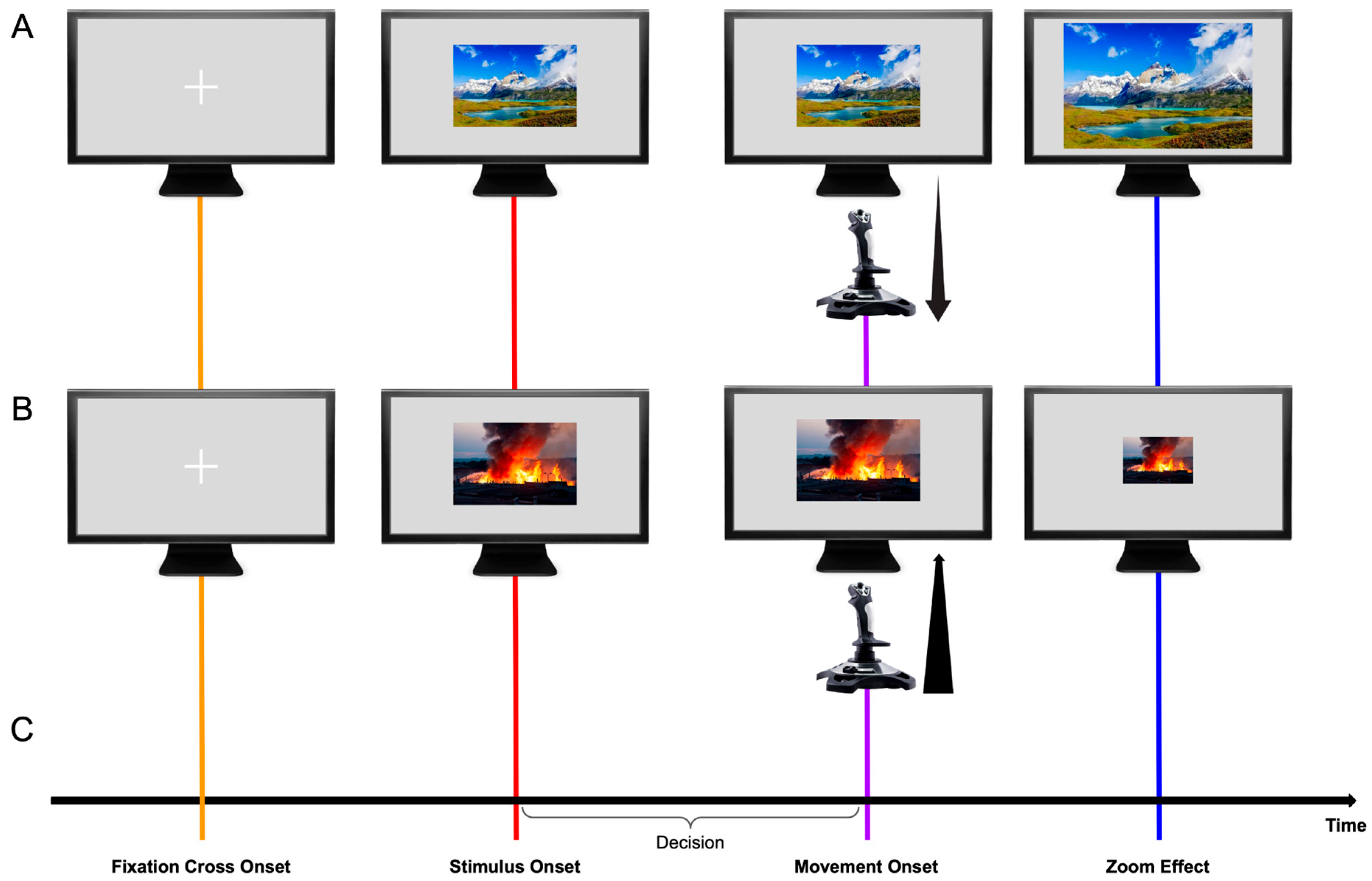
2.4. Procedure and Design
3. Preprocessing
3.1. Preprocessing of Behavioral Data
3.2. EEG Data
4. Analyses
4.1. Behavioral Analysis
4.2. EEG Analysis: Time Series Domain
4.3. EEG Analysis: Frontal Alpha Asymmetry (FAA)
5. Results
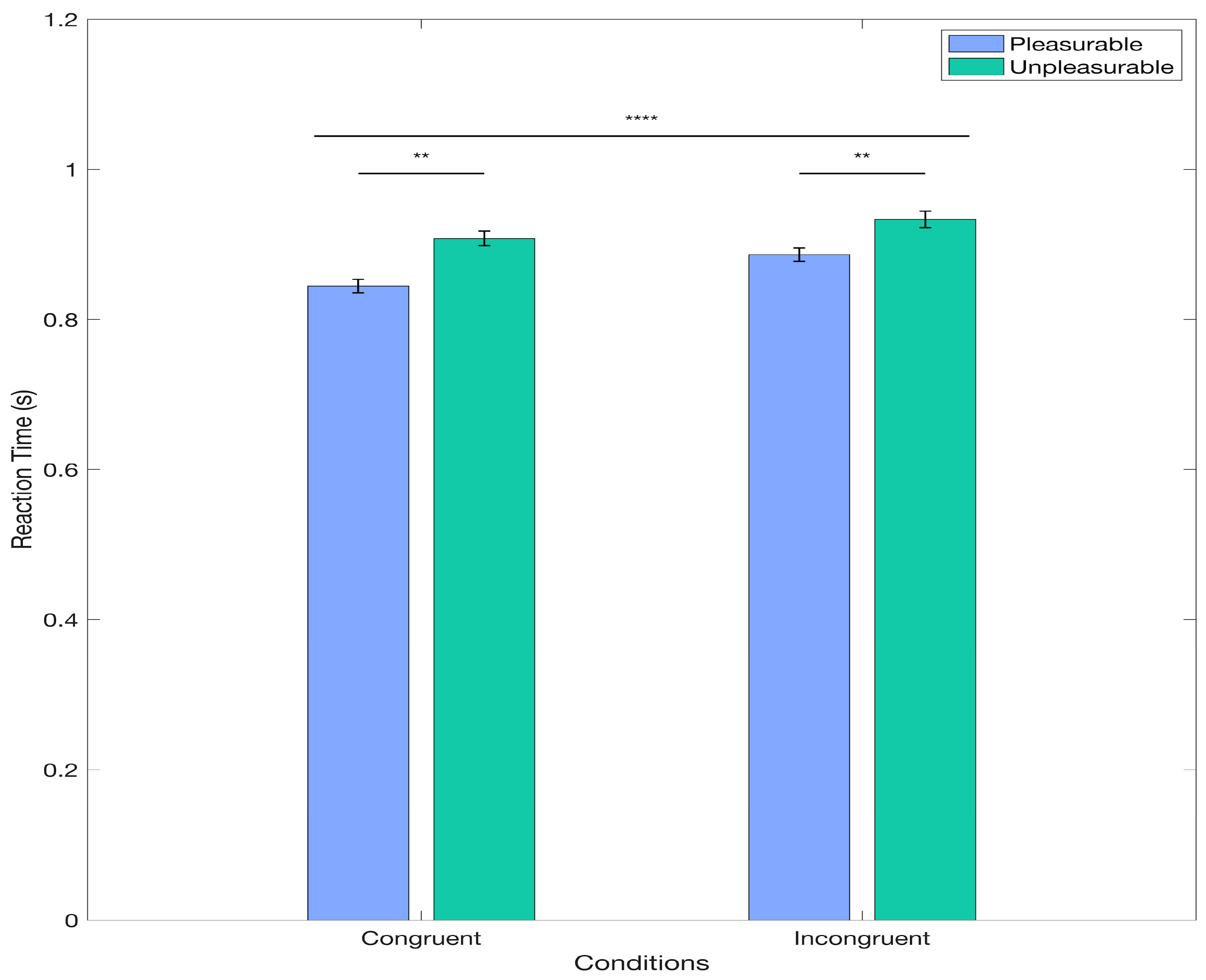
5.1. Behavioral Data

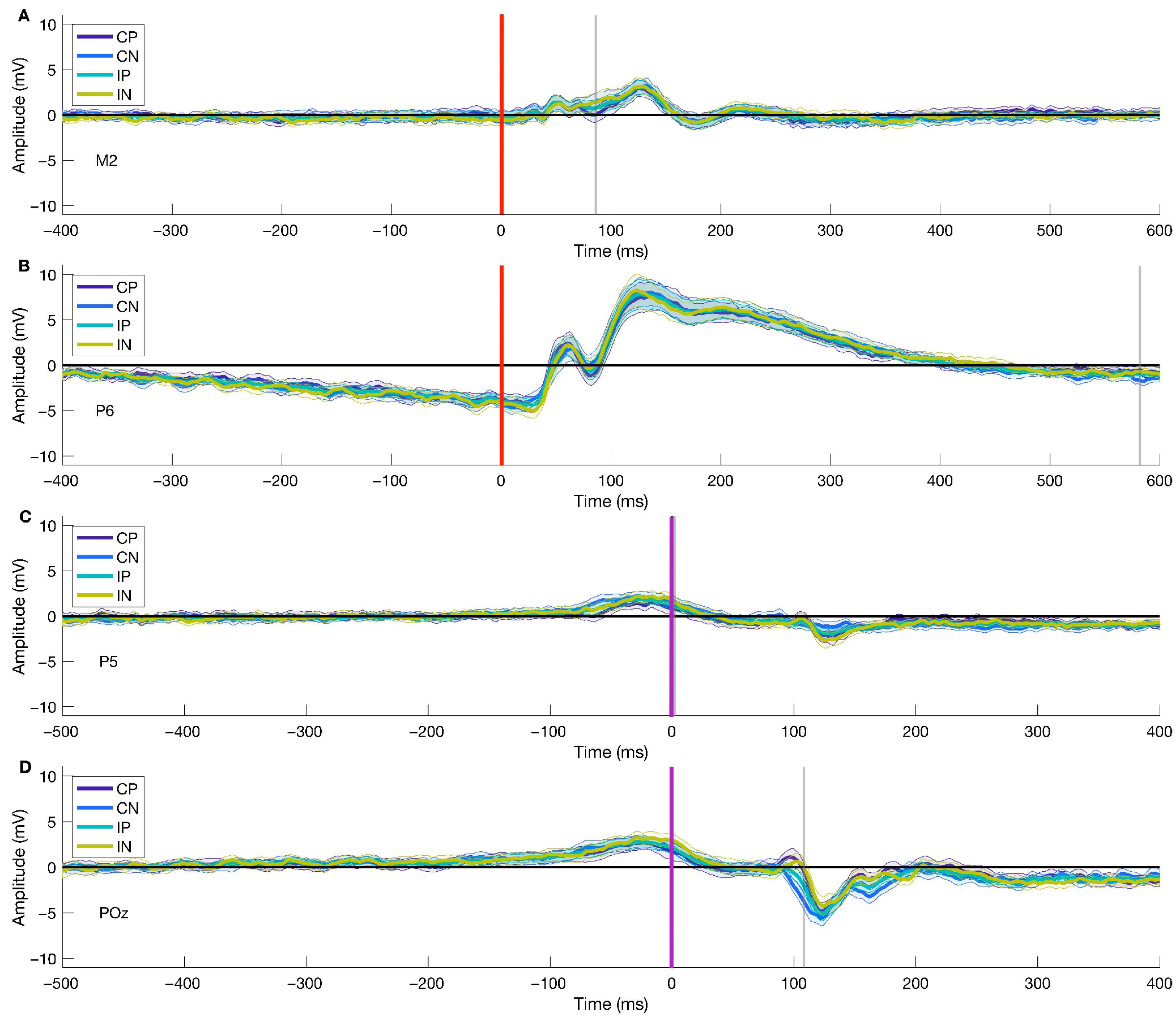
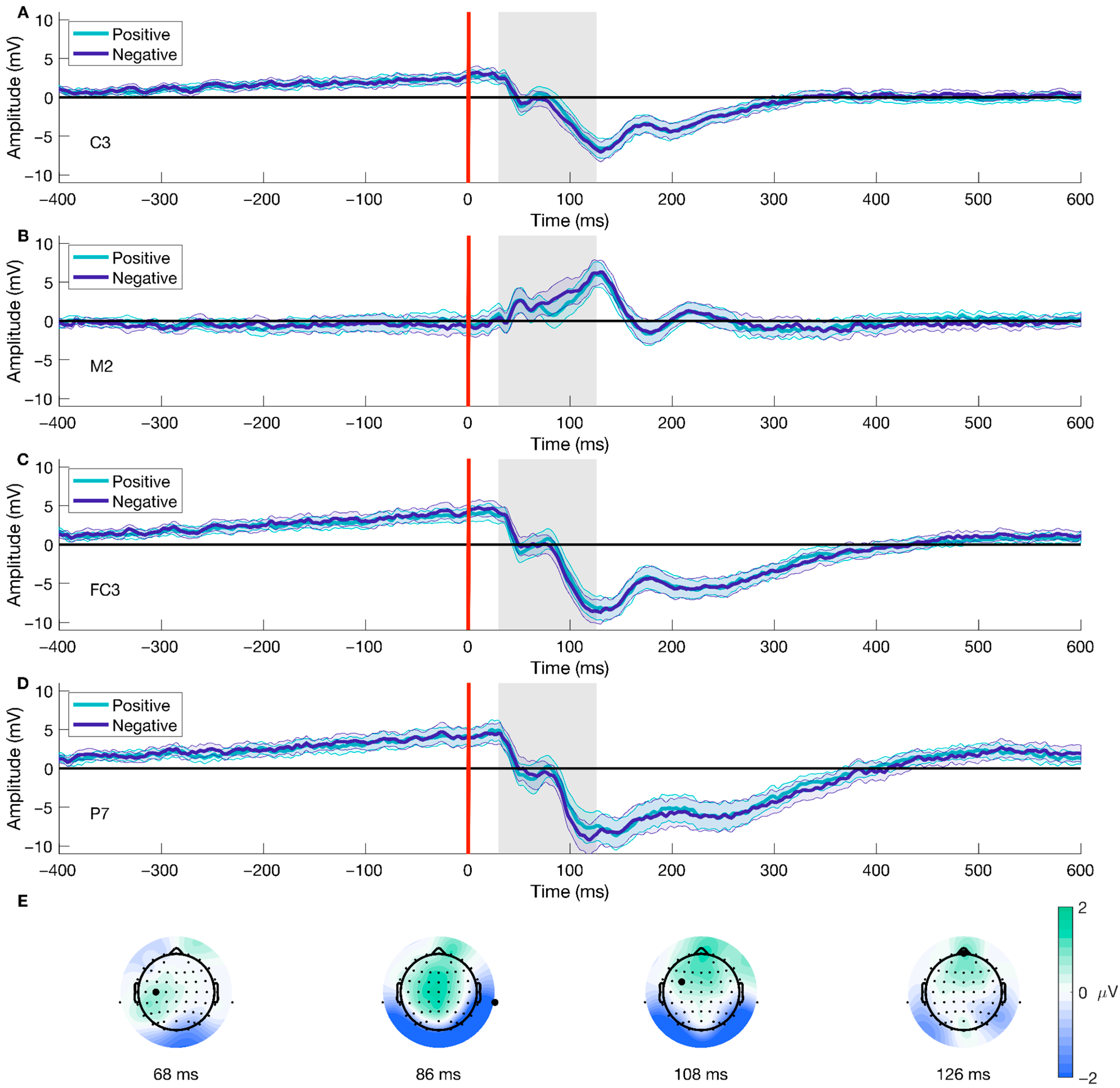
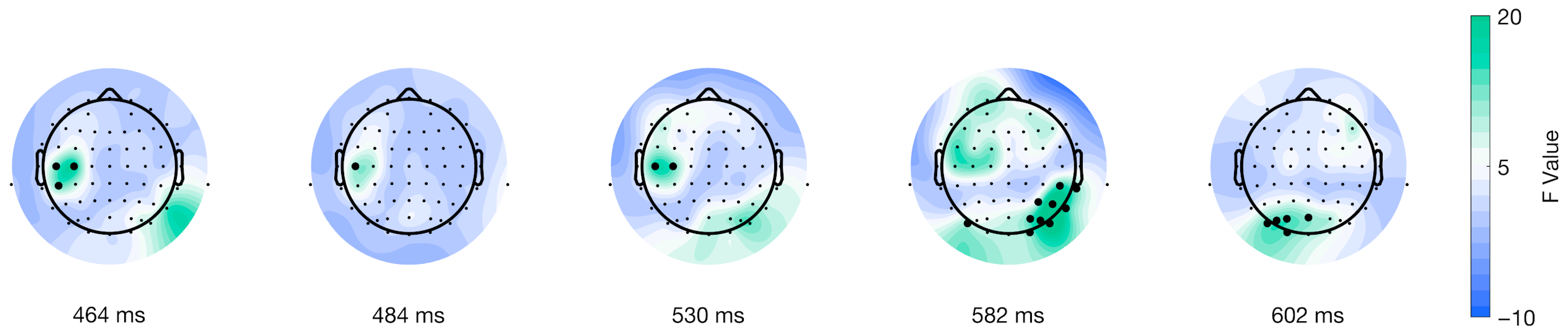
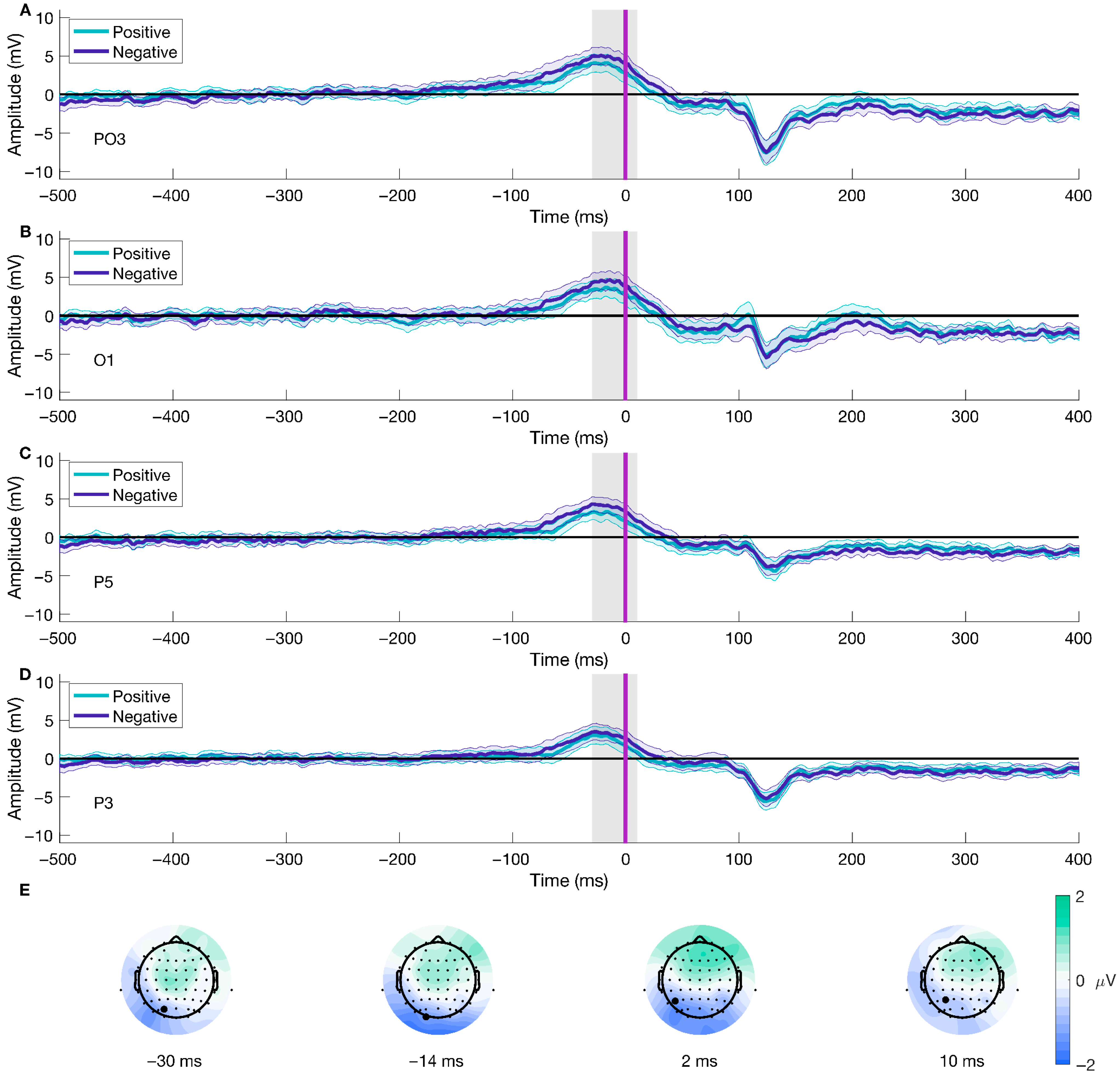
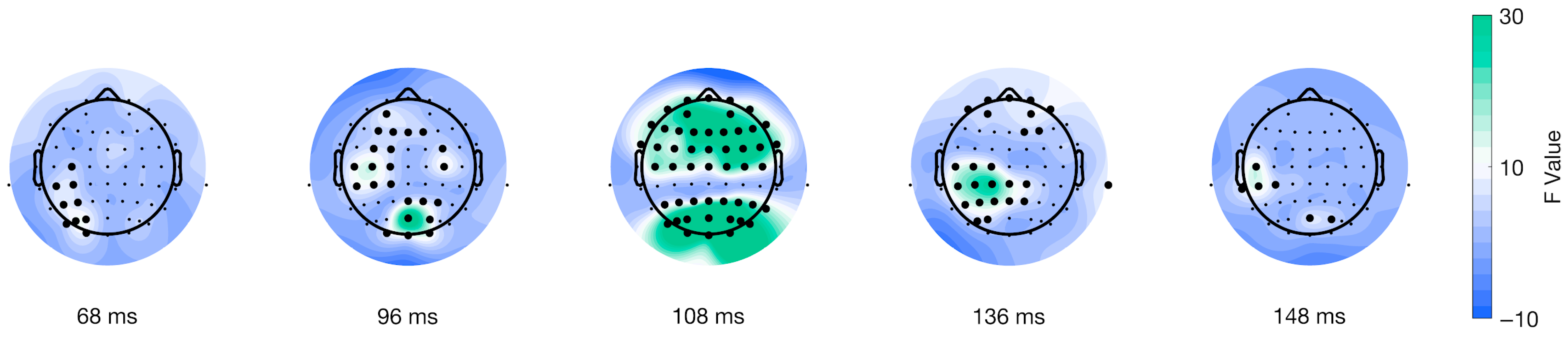
5.2. EEG Analysis: Time Series Domain
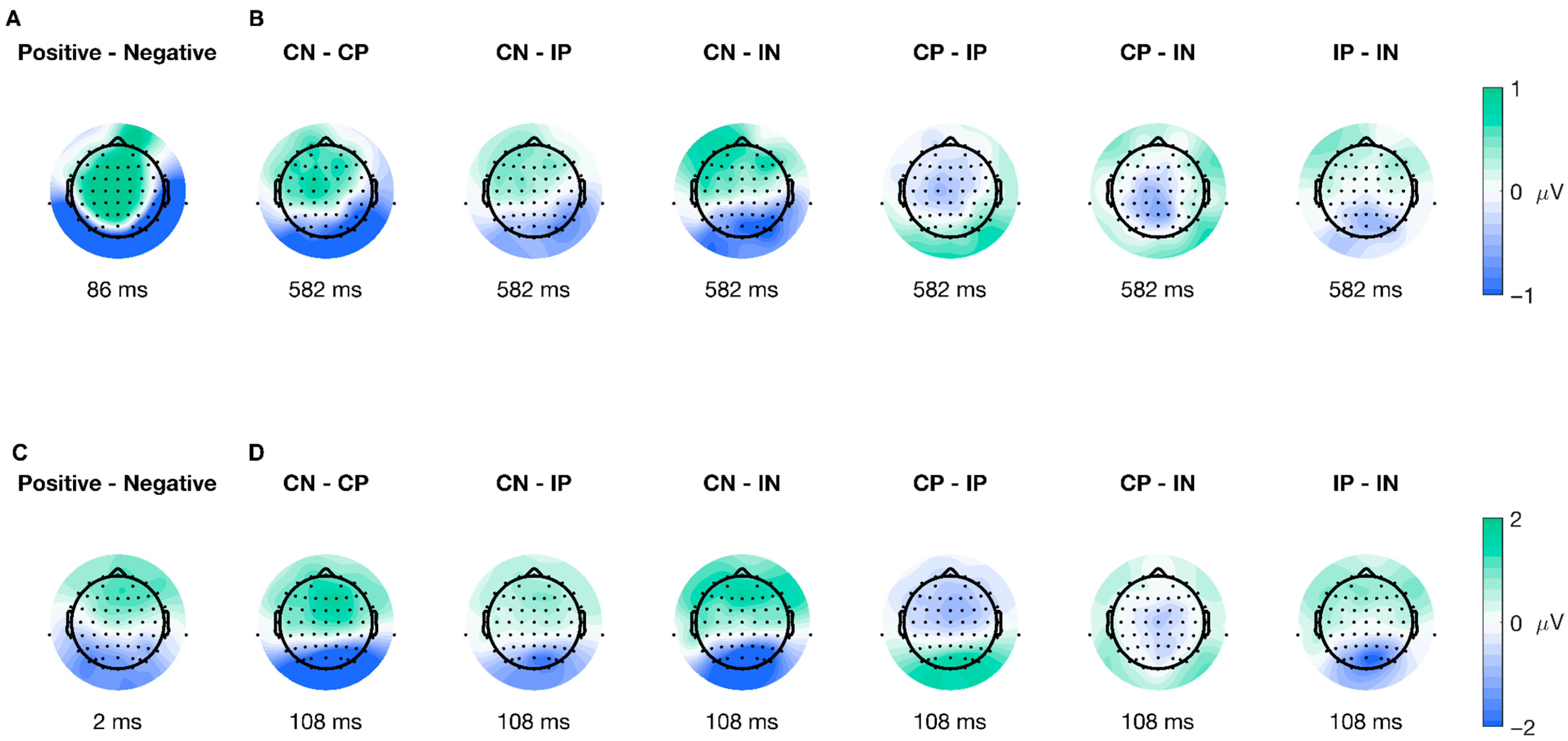
5.3. Stimulus-Locked Cluster Characteristics
5.4. Movement-Locked Cluster Characteristics


5.5. EEG Analysis: Frontal Alpha Asymmetry (FAA)
6. Discussion
7. Limitations
8. Conclusions
Author Contributions
Funding
Institutional Review Board Statement
Data Availability Statement
Acknowledgments
Conflicts of Interest
References
- Degner, J.; Steep, L.; Schmidt, S.; Steinicke, F. Assessing Automatic Approach-Avoidance Behavior in an Immersive Virtual Environment. Front. Virtual Real. 2021, 2, 761142. [Google Scholar] [CrossRef]
- McNaughton, N.; DeYoung, C.G.; Corr, P.J. Chapter 2—Approach/Avoidance. In Neuroimaging Personality, Social Cognition, and Character; Absher, J.R., Cloutier, J., Eds.; Academic Press: San Diego, CA, USA, 2016; pp. 25–49. ISBN 9780128009352. [Google Scholar]
- Renton, A.I.; Painter, D.R.; Mattingley, J.B. Differential Deployment of Visual Attention During Interactive Approach and Avoidance Behavior. Cereb. Cortex 2019, 29, 2366–2383. [Google Scholar] [CrossRef]
- Elliot, A.J. The Hierarchical Model of Approach-Avoidance Motivation. Motiv. Emot. 2006, 30, 111–116. [Google Scholar] [CrossRef]
- Lang, P.J. The Emotion Probe. Studies of Motivation and Attention. Am. Psychol. 1995, 50, 372–385. [Google Scholar] [CrossRef] [PubMed]
- Bradley, M.; Codispoti, M.; Cuthbert, B.; Lang, P. Emotion and Motivation I: Defensive and Appetitive Reactions in Picture Processing. Emotion 2001, 1, 276–298. [Google Scholar] [CrossRef]
- Aupperle, R.L.; Melrose, A.J.; Francisco, A.; Paulus, M.P.; Stein, M.B. Neural Substrates of Approach-Avoidance Conflict Decision-Making. Hum. Brain Mapp. 2015, 36, 449–462. [Google Scholar] [CrossRef]
- Fridland, E.; Wiers, C.E. Addiction and Embodiment. Phenomenol. Cogn. Sci. 2018, 17, 15–42. [Google Scholar] [CrossRef]
- Eiler, T.J.; Grünewald, A.; Machulska, A.; Klucken, T.; Jahn, K.; Niehaves, B.; Gethmann, C.F.; Brück, R. A Preliminary Evaluation of Transferring the Approach Avoidance Task into Virtual Reality. In Proceedings of the Information Technology in Biomedicine, Kamien Slaski, Poland, 17–19 June 2019; Springer International Publishing: Cham, Switzerland, 2019; pp. 151–163. [Google Scholar]
- Kenrick, D.T.; Shiota, M.N. Approach and Avoidance Motivation(s): An Evolutionary Perspective. In Handbook of Approach and Avoidance Motivation; Elliot, A.J., Ed.; Psychology Press: New York, NY, USA, 2008; Volume 664, pp. 273–288. [Google Scholar]
- Krieglmeyer, R.; De Houwer, J.; Deutsch, R. On the Nature of Automatically Triggered Approach–avoidance Behavior. Emot. Rev. 2013, 5, 280–284. [Google Scholar] [CrossRef]
- Phaf, R.H.; Mohr, S.E.; Rotteveel, M.; Wicherts, J.M. Approach, Avoidance, and Affect: A Meta-Analysis of Approach-Avoidance Tendencies in Manual Reaction Time Tasks. Front. Psychol. 2014, 5, 378. [Google Scholar] [CrossRef]
- Zech, H.G.; Rotteveel, M.; van Dijk, W.W.; van Dillen, L.F. A Mobile Approach-Avoidance Task. Behav. Res. Methods 2020, 52, 2085–2097. [Google Scholar] [CrossRef] [PubMed]
- Chen, M.; Bargh, J.A. Consequences of Automatic Evaluation: Immediate Behavioral Predispositions to Approach or Avoid the Stimulus. Pers. Soc. Psychol. Bull. 1999, 25, 215–224. [Google Scholar] [CrossRef]
- Czeszumski, A.; Albers, F.; Walter, S.; König, P. Let Me Make You Happy, and I’ll Tell You How You Look Around: Using an Approach-Avoidance Task as an Embodied Emotion Prime in a Free-Viewing Task. Front. Psychol. 2021, 12, 604393. [Google Scholar] [CrossRef]
- Solzbacher, J.; Czeszumski, A.; Walter, S.; König, P. Evidence for the Embodiment of the Automatic Approach Bias. Front. Psychol. 2022, 13, 797122. [Google Scholar] [CrossRef]
- Lender, A.; Wirtz, J.; Kronbichler, M.; Kahveci, S.; Kühn, S.; Blechert, J. Differential Orbitofrontal Cortex Responses to Chocolate Images While Performing an Approach–Avoidance Task in the MRI Environment. Nutrients 2023, 15, 244. [Google Scholar] [CrossRef]
- Zorowitz, S.; Rockhill, A.P.; Ellard, K.K.; Link, K.E.; Herrington, T.; Pizzagalli, D.A.; Widge, A.S.; Deckersbach, T.; Dougherty, D.D. The Neural Basis of Approach-Avoidance Conflict: A Model Based Analysis. eNeuro 2019, 6, 1–12. [Google Scholar] [CrossRef]
- Wiers, C.E.; Stelzel, C.; Park, S.Q.; Gawron, C.K.; Ludwig, V.U.; Gutwinski, S.; Heinz, A.; Lindenmeyer, J.; Wiers, R.W.; Walter, H.; et al. Neural Correlates of Alcohol-Approach Bias in Alcohol Addiction: The Spirit Is Willing but the Flesh Is Weak for Spirits. Neuropsychopharmacology 2014, 39, 688–697. [Google Scholar] [CrossRef] [PubMed]
- Ironside, M.; Amemori, K.-I.; McGrath, C.L.; Pedersen, M.L.; Kang, M.S.; Amemori, S.; Frank, M.J.; Graybiel, A.M.; Pizzagalli, D.A. Approach-Avoidance Conflict in Major Depressive Disorder: Congruent Neural Findings in Humans and Nonhuman Primates. Biol. Psychiatry 2020, 87, 399–408. [Google Scholar] [CrossRef] [PubMed]
- Kaldewaij, R.; Koch, S.B.J.; Volman, I.; Toni, I.; Roelofs, K. On the Control of Social Approach–Avoidance Behavior: Neural and Endocrine Mechanisms. In Social Behavior from Rodents to Humans: Neural Foundations and Clinical Implications; Wöhr, M., Krach, S., Eds.; Springer International Publishing: Cham, Switzerland, 2017; pp. 275–293. ISBN 9783319474298. [Google Scholar]
- Radke, S.; Volman, I.; Mehta, P.; van Son, V.; Enter, D.; Sanfey, A.; Toni, I.; de Bruijn, E.R.A.; Roelofs, K. Testosterone Biases the Amygdala toward Social Threat Approach. Sci. Adv. 2015, 1, e1400074. [Google Scholar] [CrossRef] [PubMed]
- Roelofs, K.; van Peer, J.; Berretty, E.; de Jong, P.; Spinhoven, P.; Elzinga, B.M. Hypothalamus–Pituitary–Adrenal Axis Hyperresponsiveness Is Associated with Increased Social Avoidance Behavior in Social Phobia. Biol. Psychiatry 2009, 65, 336–343. [Google Scholar] [CrossRef]
- Volman, I.; Toni, I.; Verhagen, L.; Roelofs, K. Endogenous Testosterone Modulates Prefrontal–Amygdala Connectivity during Social Emotional Behavior. Cereb. Cortex 2011, 21, 2282–2290. [Google Scholar] [CrossRef]
- Sergerie, K.; Chochol, C.; Armony, J.L. The Role of the Amygdala in Emotional Processing: A Quantitative Meta-Analysis of Functional Neuroimaging Studies. Neurosci. Biobehav. Rev. 2008, 32, 811–830. [Google Scholar] [CrossRef]
- Andrewes, D.G.; Jenkins, L.M. The Role of the Amygdala and the Ventromedial Prefrontal Cortex in Emotional Regulation: Implications for Post-Traumatic Stress Disorder. Neuropsychol. Rev. 2019, 29, 220–243. [Google Scholar] [CrossRef]
- Ramnani, N.; Owen, A.M. Anterior Prefrontal Cortex: Insights into Function from Anatomy and Neuroimaging. Nat. Rev. Neurosci. 2004, 5, 184–194. [Google Scholar] [CrossRef]
- Loijen, A.; Vrijsen, J.N.; Egger, J.I.M.; Becker, E.S.; Rinck, M. Biased Approach-Avoidance Tendencies in Psychopathology: A Systematic Review of Their Assessment and Modification. Clin. Psychol. Rev. 2020, 77, 101825. [Google Scholar] [CrossRef]
- Strack, F.; Deutsch, R. Reflection and Impulse as Determinants of Conscious and Unconscious Motivation. Soc. Motiv. Conscious Unconscious Process. 2004, 5, 91–112. [Google Scholar]
- Strack, F.; Deutsch, R. Reflective and Impulsive Determinants of Social Behavior. Pers. Soc. Psychol. Rev. 2004, 8, 220–247. [Google Scholar] [CrossRef] [PubMed]
- Ochsner, K.N.; Gross, J.J. The Cognitive Control of Emotion. Trends Cogn. Sci. 2005, 9, 242–249. [Google Scholar] [CrossRef]
- Wager, T.D.; Davidson, M.L.; Hughes, B.L.; Lindquist, M.A.; Ochsner, K.N. Prefrontal-Subcortical Pathways Mediating Successful Emotion Regulation. Neuron 2008, 59, 1037–1050. [Google Scholar] [CrossRef] [PubMed]
- Parsons, S.; Kruijt, A.-W.; Fox, E. A Cognitive Model of Psychological Resilience. J. Exp. Psychopathol. 2016, 7, 296–310. [Google Scholar] [CrossRef]
- Lacey, M.F.; Gable, P.A. Frontal Asymmetry in an Approach-Avoidance Conflict Paradigm. Psychophysiology 2021, 58, e13780. [Google Scholar] [CrossRef] [PubMed]
- Vecchio, A.; Pascalis, V. EEG Resting Asymmetries and Frequency Oscillations in Approach/avoidance Personality Traits: A Systematic Review. Symmetry 2020, 12, 1712. [Google Scholar] [CrossRef]
- Sege, C.T.; Lopez, J.W.; Hellman, N.M.; McTeague, L.M. Assessing Motivational Biases in Brain and Behavior: Event-Related Potential and Response Time Concomitants of the Approach-Avoidance Task. Psychophysiology 2024, 61, e14700. [Google Scholar] [CrossRef]
- Bamford, S.; Broyd, S.J.; Benikos, N.; Ward, R.; Wiersema, J.R.; Sonuga-Barke, E. The Late Positive Potential: A Neural Marker of the Regulation of Emotion-Based Approach-Avoidance Actions? Biol. Psychol. 2015, 105, 115–123. [Google Scholar] [CrossRef] [PubMed]
- Fechtner, J. The Role of Cognitive Control and Approach-Avoidance Motivation in the Relationship Between Stress and Aggression—A Psychophysiological Investigation. Ph.D. Thesis, Universität Trier, Trier, Germany, 2013. [Google Scholar]
- Ellis, A.J.; Salgari, G.; Miklowitz, D.J.; Loo, S.K. The Role of Avoidance Motivation in the Relationship between Reward Sensitivity and Depression Symptoms in Adolescents: An ERP Study. Psychiatry Res. 2019, 279, 345–349. [Google Scholar] [CrossRef] [PubMed]
- Lang, P.J.; Bradley, M.M.; Cuthbert, B.N. International Affective Picture System (IAPS): Technical Manual and Affective Ratings. NIMH Cent. Study Emot. Atten. 1997, 1, 3. [Google Scholar]
- Kaspar, K.; Gameiro, R.R.; König, P. Feeling Good, Searching the Bad: Positive Priming Increases Attention and Memory for Negative Stimuli on Webpages. Comput. Human Behav. 2015, 53, 332–343. [Google Scholar] [CrossRef]
- Lang, P.J.; Greenwald, M.K.; Bradley, M.M.; Hamm, A.O. Looking at Pictures: Affective, Facial, Visceral, and Behavioral Reactions. Psychophysiology 1993, 30, 261–273. [Google Scholar] [CrossRef]
- Lang, P.J.; Bradley, M.M.; Fitzsimmons, J.R.; Cuthbert, B.N.; Scott, J.D.; Moulder, B.; Nangia, V. Emotional Arousal and Activation of the Visual Cortex: An fMRI Analysis. Psychophysiology 1998, 35, 199–210. [Google Scholar] [CrossRef]
- McManis, M.H.; Bradley, M.M.; Berg, W.K.; Cuthbert, B.N.; Lang, P.J. Emotional Reactions in Children: Verbal, Physiological, and Behavioral Responses to Affective Pictures. Psychophysiology 2001, 38, 222–231. [Google Scholar] [CrossRef]
- Branco, D.; Gonçalves, Ó.F.; Badia, S.B. A Systematic Review of International Affective Picture System (IAPS) around the World. Sensors 2023, 23, 3866. [Google Scholar] [CrossRef]
- Kleiner, M.; Brainard, D.; Pelli, D. What’s New in Psychtoolbox-3? 2007. Available online: https://pure.mpg.de/rest/items/item_1790332/component/file_3136265/content (accessed on 1 October 2025).
- Solarz, A.K. Latency of Instrumental Responses as a Function of Compatibility with the Meaning of Eliciting Verbal Signs. J. Exp. Psychol. 1960, 59, 239–245. [Google Scholar] [CrossRef]
- Van Dessel, P.; De Houwer, J.; Gast, A.; Smith, C.T.; De Schryver, M. Instructing Implicit Processes: When Instructions to Approach or Avoid Influence Implicit but Not Explicit Evaluation. J. Exp. Soc. Psychol. 2016, 63, 1–9. [Google Scholar] [CrossRef]
- Grasso-Cladera, A.; Madrid-Carvajal, J.; Walter, S.; König, P. Approach-avoidance Bias in Virtual and Real-World Simulations: Insights from a Systematic Review of Experimental Setups. Brain Sci. 2024, 15, 103. [Google Scholar] [CrossRef]
- Rousselet, G.A.; Wilcox, R.R. Reaction Times and Other Skewed Distributions: Problems with the Mean and the Median. bioRxiv 2018. [Google Scholar] [CrossRef]
- Morís Fernández, L.; Vadillo, M.A. Flexibility in Reaction Time Analysis: Many Roads to a False Positive? R. Soc. Open Sci. 2020, 7, 190831. [Google Scholar] [CrossRef] [PubMed]
- Jain, A.; Bansal, R.; Kumar, A.; Singh, K.D. A Comparative Study of Visual and Auditory Reaction Times on the Basis of Gender and Physical Activity Levels of Medical First Year Students. Int. J. Appl. Basic Med. Res. 2015, 5, 124–127. [Google Scholar] [CrossRef]
- Otaki, M.; Shibata, K. The Effect of Different Visual Stimuli on Reaction Times: A Performance Comparison of Young and Middle-Aged People. J. Phys. Ther. Sci. 2019, 31, 250–254. [Google Scholar] [CrossRef]
- Delorme, A.; Makeig, S. EEGLAB: An Open Source Toolbox for Analysis of Single-Trial EEG Dynamics Including Independent Component Analysis. J. Neurosci. Methods 2004, 134, 9–21. [Google Scholar] [CrossRef] [PubMed]
- Schmidt, V.; Nolte, D. EEG_Preprocessing_Scripts. 2024. Available online: https://github.com/debnolte/EEG_preprocessing_scripts (accessed on 16 December 2024).
- Klug, M.; Jeung, S.; Wunderlich, A.; Gehrke, L.; Protzak, J.; Djebbara, Z.; Argubi-Wollesen, A.; Wollesen, B.; Gramann, K. The BeMoBIL Pipeline for Automated Analyses of Multimodal Mobile Brain and Body Imaging Data. bioRxiv 2022. [Google Scholar] [CrossRef]
- Klug, M.; Berg, T.; Gramann, K. Optimizing EEG ICA Decomposition with Data Cleaning in Stationary and Mobile Experiments. Sci. Rep. 2024, 14, 14119. [Google Scholar] [CrossRef] [PubMed]
- Klug, M.; Gramann, K. Identifying Key Factors for Improving ICA-Based Decomposition of EEG Data in Mobile and Stationary Experiments. Eur. J. Neurosci. 2021, 54, 8406–8420. [Google Scholar] [CrossRef]
- Bigdely-Shamlo, N.; Mullen, T.; Kothe, C.; Su, K.-M.; Robbins, K.A. The PREP Pipeline: Standardized Preprocessing for Large-Scale EEG Analysis. Front. Neuroinform. 2015, 9, 16. [Google Scholar] [CrossRef]
- Widmann, A.; Schröger, E.; Maess, B. Digital Filter Design for Electrophysiological Data—A Practical Approach. J. Neurosci. Methods 2015, 250, 34–46. [Google Scholar] [CrossRef]
- Klug, M.; Kloosterman, N.A. Zapline-plus: A Zapline Extension for Automatic and Adaptive Removal of Frequency-Specific Noise Artifacts in M/EEG. Hum. Brain Mapp. 2022, 43, 2743–2758. [Google Scholar] [CrossRef]
- de Cheveigné, A. ZapLine: A Simple and Effective Method to Remove Power Line Artifacts. Neuroimage 2020, 207, 116356. [Google Scholar] [CrossRef]
- Kothe, C.; Shirazi, S.Y.; Stenner, T.; Medine, D.; Boulay, C.; Grivich, M.I.; Artoni, F.; Mullen, T.; Delorme, A.; Makeig, S. The lab streaming layer for synchronized multimodal recording. Imaging Neurosci. 2025, 3, IMAG-a.136. [Google Scholar] [CrossRef]
- Palmer, J.A.; Kreutz-Delgado, K.; Makeig, S. AMICA: An Adaptive Mixture of Independent Component Analyzers with Shared Components; Swartz Center for Computational Neuroscience: San Diego, CA, USA, 2012; Volume 35. [Google Scholar]
- Dimigen, O. Optimizing the ICA-based removal of ocular EEG artifacts from free viewing experiments. NeuroImage 2020, 207, 116117. [Google Scholar] [CrossRef] [PubMed]
- Pion-Tonachini, L.; Kreutz-Delgado, K.; Makeig, S. ICLabel: An automated electroencephalographic independent component classifier, dataset, and website. NeuroImage 2019, 198, 181–197. [Google Scholar] [CrossRef] [PubMed]
- Ehinger, B.V.; Dimigen, O. Unfold: An Integrated Toolbox for Overlap Correction, Non-Linear Modeling, and Regression-Based EEG Analysis. PeerJ 2018, 7, e7838. [Google Scholar] [CrossRef]
- Marmolejo-Ramos, F.; Cousineau, D.; Benites, L.; Maehara, R. On the Efficacy of Procedures to Normalize Ex-Gaussian Distributions. Front. Psychol. 2014, 5, 1548. [Google Scholar] [CrossRef] [PubMed]
- Cohen, J. Statistical Power Analysis for the Behavioral Sciences, 2nd ed.; Lawrence Erlbaum Associates: Mahwah, NJ, USA, 1988; ISBN 9780805802832. [Google Scholar]
- Goulet-Pelletier, J.C.; Cousineau, D. A Review of Effect Sizes and Their Confidence Intervals, Part I: The Cohen’sd Family. Quant. Methods Psychol. 2018, 14, 242–265. [Google Scholar] [CrossRef]
- Durlak, J. How to Select, Calculate, and Interpret Effect Sizes. J. Pediatr. Psychol. 2009, 34, 917–928. [Google Scholar] [CrossRef]
- Te Grotenhuis, M.; Pelzer, B.; Eisinga, R.; Nieuwenhuis, R.; Schmidt-Catran, A.; Konig, R. When Size Matters: Advantages of Weighted Effect Coding in Observational Studies. Int. J. Public Health 2017, 62, 163–167. [Google Scholar] [CrossRef]
- Mensen, A.; Khatami, R. Advanced EEG Analysis Using Threshold-Free Cluster-Enhancement and Non-Parametric Statistics. NeuroImage 2013, 67, 111–118. [Google Scholar] [CrossRef]
- Fox, N.A.; Rubin, K.H.; Calkins, S.D.; Marshall, T.R.; Coplan, R.J.; Porges, S.W.; Long, J.M.; Stewart, S. Frontal Activation Asymmetry and Social Competence at Four Years of Age. Child Dev. 1995, 66, 1770–1784. [Google Scholar] [CrossRef]
- Winward, S.B.; Siklos-Whillans, J.; Itier, R.J. Impact of Face Outline, Parafoveal Feature Number and Feature Type on Early Face Perception in a Gaze-Contingent Paradigm: A Mass-Univariate Re-Analysis of ERP Data. Neuroimage Rep. 2022, 2, 100148. [Google Scholar] [CrossRef] [PubMed]
- Rousselet, G.A.; Pernet, C.R. Quantifying the Time Course of Visual Object Processing Using ERPs: It’s Time to up the Game. Front. Psychol. 2011, 2, 107. [Google Scholar] [CrossRef] [PubMed]
- Stropahl, M.; Debener, S. Auditory Cross-Modal Reorganization in Cochlear Implant Users Indicates Audio-Visual Integration. Neuroimage Clin. 2017, 16, 514–523. [Google Scholar] [CrossRef]
- Vincent, K.M.; Xie, W.; Nelson, C.A. Using Different Methods for Calculating Frontal Alpha Asymmetry to Study Its Development from Infancy to 3 Years of Age in a Large Longitudinal Sample. Dev. Psychobiol. 2021, 63, e22163. [Google Scholar] [CrossRef] [PubMed]
- Lang, P.J.; Bradley, M.M.; Cuthbert, B.N. Emotion, Attention, and the Startle Reflex. Psychol. Rev. 1990, 97, 377–395. [Google Scholar] [CrossRef]
- Shibasaki, H.; Hallett, M. What Is the Bereitschaftspotential? Clin. Neurophysiol. 2006, 117, 2341–2356. [Google Scholar] [CrossRef]
- Colebatch, J.G. Bereitschaftspotential and Movement-Related Potentials: Origin, Significance, and Application in Disorders of Human Movement. Mov. Disord. 2007, 22, 601–610. [Google Scholar] [CrossRef] [PubMed]
- Schurger, A.; Hu, P.; Pak, J.; Roskies, A.L. What Is the Readiness Potential? Trends Cogn. Sci. 2021, 25, 558–570. [Google Scholar] [CrossRef] [PubMed]
- Lui, K.K.; Nunez, M.D.; Cassidy, J.M.; Vandekerckhove, J.; Cramer, S.C.; Srinivasan, R. Timing of Readiness Potentials Reflect a Decision-Making Process in the Human Brain. Comput. Brain Behav. 2021, 4, 264–283. [Google Scholar] [CrossRef]
- Alexander, P.; Schlegel, A.A.; Sinnott-Armstrong, W.; Roskies, A.; Tse, P.; Wheatley, T. Dissecting the Readiness Potential. Surround. Free. Will Philos. Psychol. Neurosci. 2014, 203–230. [Google Scholar] [CrossRef]
- Pourtois, G.; Grandjean, D.; Sander, D.; Vuilleumier, P. Electrophysiological Correlates of Rapid Spatial Orienting towards Fearful Faces. Cereb. Cortex 2004, 14, 619–633. [Google Scholar] [CrossRef]
- Bublatzky, F.; Schupp, H.T. Pictures Cueing Threat: Brain Dynamics in Viewing Explicitly Instructed Danger Cues. Soc. Cogn. Affect. Neurosci. 2012, 7, 611–622. [Google Scholar] [CrossRef] [PubMed]
- Gerdes, A.B.M.; Wieser, M.J.; Bublatzky, F.; Kusay, A.; Plichta, M.M.; Alpers, G.W. Emotional Sounds Modulate Early Neural Processing of Emotional Pictures. Front. Psychol. 2013, 4, 741. [Google Scholar] [CrossRef]
- Ding, R.; Li, P.; Wang, W.; Luo, W. Emotion Processing by ERP Combined with Development and Plasticity. Neural Plast. 2017, 2017, 5282670. [Google Scholar] [CrossRef]
- Smith, N.K.; Cacioppo, J.T.; Larsen, J.T.; Chartrand, T.L. May I Have Your Attention, Please: Electrocortical Responses to Positive and Negative Stimuli. Neuropsychologia 2003, 41, 171–183. [Google Scholar] [CrossRef]
- Kornhuber, H.H.; Deecke, L. Brain Potential Changes in Voluntary and Passive Movements in Humans: Readiness Potential and Reafferent Potentials. Pflugers Arch. 2016, 468, 1115–1124. [Google Scholar] [CrossRef] [PubMed]
- Zhou, J.; Arshad, S.Z.; Luo, S.; Chen, F. Effects of Uncertainty and Cognitive Load on User Trust in Predictive Decision Making. In Human-Computer Interaction—INTERACT 2017; Lecture Notes in Computer Science; Springer International Publishing: Cham, Switzerland, 2017; pp. 23–39. ISBN 9783319680583. [Google Scholar]
- Jackson, S.A.; Kleitman, S.; Aidman, E. Low Cognitive Load and Reduced Arousal Impede Practice Effects on Executive Functioning, Metacognitive Confidence and Decision Making. PLoS ONE 2014, 9, e115689. [Google Scholar] [CrossRef]
- Ernst, L.H.; Ehlis, A.-C.; Dresler, T.; Tupak, S.V.; Weidner, A.; Fallgatter, A.J. N1 and N2 ERPs Reflect the Regulation of Automatic Approach Tendencies to Positive Stimuli. Neurosci. Res. 2013, 75, 239–249. [Google Scholar] [CrossRef]
- Cheval, B.; Tipura, E.; Burra, N.; Frossard, J.; Chanal, J.; Orsholits, D.; Radel, R.; Boisgontier, M.P. Avoiding Sedentary Behaviors Requires More Cortical Resources than Avoiding Physical Activity: An EEG Study. Neuropsychologia 2018, 119, 68–80. [Google Scholar] [CrossRef]
- Marrero, H.; Yagual, S.N.; Lemus, A.; García-Marco, E.; Díaz, J.M.; Gámez, E.; Urrutia, M.; Beltrán, D. Social Approach and Avoidance in Language: N400-like ERP Negativity Indexes Congruency and Theta Rhythms the Conflict. Cereb. Cortex 2023, 33, 1300–1309. [Google Scholar] [CrossRef] [PubMed]
- Briesemeister, B.B.; Tamm, S.; Heine, A.; Jacobs, A. Approach the Good, Withdraw from the bad—A Review on Frontal Alpha Asymmetry Measures in Applied Psychological Research. Psychology 2013, 4, 261–267. [Google Scholar] [CrossRef]
- Sabu, P.; Stuldreher, I.V.; Kaneko, D.; Brouwer, A.-M. A Review on the Role of Affective Stimuli in Event-Related Frontal Alpha Asymmetry. Front. Comput. Sci. 2022, 4, 869123. [Google Scholar] [CrossRef]
- Schöne, B.; Schomberg, J.; Gruber, T.; Quirin, M. Event-Related Frontal Alpha Asymmetries: Electrophysiological Correlates of Approach Motivation. Exp. Brain Res. 2016, 234, 559–567. [Google Scholar] [CrossRef]
- Huster, R.J.; Stevens, S.; Gerlach, A.L.; Rist, F. A Spectralanalytic Approach to Emotional Responses Evoked through Picture Presentation. Int. J. Psychophysiol. 2009, 72, 212–216. [Google Scholar] [CrossRef]
- Zhao, G.; Zhang, Y.; Ge, Y.; Zheng, Y.; Sun, X.; Zhang, K. Asymmetric Hemisphere Activation in Tenderness: Evidence from EEG Signals. Sci. Rep. 2018, 8, 8029. [Google Scholar] [CrossRef] [PubMed]
- Papousek, I.; Weiss, E.M.; Schulter, G.; Fink, A.; Reiser, E.M.; Lackner, H.K. Prefrontal EEG Alpha Asymmetry Changes While Observing Disaster Happening to Other People: Cardiac Correlates and Prediction of Emotional Impact. Biol. Psychol. 2014, 103, 184–194. [Google Scholar] [CrossRef]
- Olszewska-Guizzo, A.; Sia, A.; Fogel, A.; Ho, R. Can Exposure to Certain Urban Green Spaces Trigger Frontal Alpha Asymmetry in the Brain?—Preliminary Findings from a Passive Task EEG Study. Int. J. Environ. Res. Public Health 2020, 17, 394. [Google Scholar] [CrossRef] [PubMed]
- Knott, V.J.; Naccache, L.; Cyr, E.; Fisher, D.J.; McIntosh, J.F.; Millar, A.M.; Villeneuve, C.M. Craving-Induced EEG Reactivity in Smokers: Effects of Mood Induction, Nicotine Dependence and Gender. Neuropsychobiology 2008, 58, 187–199. [Google Scholar] [CrossRef]
- Miller, A.; Tomarken, A.J. Task-dependent Changes in Frontal Brain Asymmetry: Effects of Incentive Cues, Outcome Expectancies, and Motor Responses. Psychophysiology 2001, 38, 500–511. [Google Scholar] [CrossRef]
- Rodrigues, J.; Müller, M.; Mühlberger, A.; Hewig, J. Mind the Movement: Frontal Asymmetry Stands for Behavioral Motivation, Bilateral Frontal Activation for Behavior. Psychophysiology 2018, 55, e12908. [Google Scholar] [CrossRef]
- Schöne, B. Commentary: A Review on the Role of Affective Stimuli in Event-Related Frontal Alpha Asymmetry. Front. Comput. Sci. 2022, 4, 994071. [Google Scholar] [CrossRef]
- Welsch, R.; von Castell, C.; Hecht, H. Interpersonal Distance Regulation and Approach-Avoidance Reactions Are Altered in Psychopathy. Clin. Psychol. Sci. 2020, 8, 211–225. [Google Scholar] [CrossRef]
- Solzbacher, J.; Koenig, P.; Walter, S. Embodying “good” and “bad”: The Emergent Bodily Meaning of Approach- and Avoidance-Behavior. Philos. Psychol. 2025, 1–32. [Google Scholar] [CrossRef]
- Nuel, I.; Fayant, M.-P.; Alexopoulos, T. “Science Manipulates the Things and Lives in Them”: Reconsidering Approach-Avoidance Operationalization through a Grounded Cognition Perspective. Front. Psychol. 2019, 10, 1418. [Google Scholar] [CrossRef]
- Elliot, A.J.; Harackiewicz, J.M. Approach and Avoidance Achievement Goals and Intrinsic Motivation: A Mediational Analysis. J. Pers. Soc. Psychol. 1996, 70, 461–475. [Google Scholar] [CrossRef]
- Elliot, A.J. Approach and Avoidance Motivation and Achievement Goals. Educ. Psychol. 1999, 34, 169–189. [Google Scholar] [CrossRef]
- Eder, A.B.; Elliot, A.J.; Harmon-Jones, E. Approach and Avoidance Motivation: Issues and Advances. Emot. Rev. 2013, 5, 227–229. [Google Scholar] [CrossRef]
- Luck, S.J. An Introduction to the Event-Related Potential Technique; MIT Press: Cambridge, MA, USA, 2014. [Google Scholar]
- Cohen, M.X. Analyzing Neural Time Series Data: Theory and Practice; MIT Press: Cambridge, MA, USA, 2014; ISBN 9780262319560. [Google Scholar]
- Boudewyn, M.A.; Luck, S.J.; Farrens, J.L.; Kappenman, E.S. How Many Trials Does It Take to Get a Significant ERP Effect? It Depends. Psychophysiology 2018, 55, e13049. [Google Scholar] [CrossRef] [PubMed]
- Orban, M.; Zhang, X.; Lu, Z.; Zhang, Y.; Li, H. An Approach for Accurate Pattern Recognition of Four Hand Gestures Based on sEMG Signals. In Proceedings of the 2019 2nd International Conference on Control and Robot Technology, Phuket, Thailand, 25–27 October 2019; ACM: New York, NY, USA, 2019; pp. 145–150. [Google Scholar]
- Luck, S.J.; Stewart, A.X.; Simmons, A.M.; Rhemtulla, M. Standardized Measurement Error: A Universal Metric of Data Quality for Averaged Event-Related Potentials. Psychophysiology 2021, 58, e13793. [Google Scholar] [CrossRef]
- Darmani, G.; Bergmann, T.O.; Butts Pauly, K.; Caskey, C.F.; de Lecea, L.; Fomenko, A.; Fouragnan, E.; Legon, W.; Murphy, K.R.; Nandi, T.; et al. Non-Invasive Transcranial Ultrasound Stimulation for Neuromodulation. Clin. Neurophysiol. 2022, 135, 51–73. [Google Scholar] [CrossRef]
- Tufail, Y.; Yoshihiro, A.; Pati, S.; Li, M.M.; Tyler, W. Ultrasonic Neuromodulation by Brain Stimulation with Transcranial Ultrasound. Nat. Protoc. 2011, 6, 1453–1470. [Google Scholar] [CrossRef] [PubMed]
- di Biase, L.; Falato, E.; Di Lazzaro, V. Transcranial Focused Ultrasound (tFUS) and Transcranial Unfocused Ultrasound (tUS) Neuromodulation: From Theoretical Principles to Stimulation Practices. Front. Neurol. 2019, 10, 549. [Google Scholar] [CrossRef] [PubMed]


Disclaimer/Publisher’s Note: The statements, opinions and data contained in all publications are solely those of the individual author(s) and contributor(s) and not of MDPI and/or the editor(s). MDPI and/or the editor(s) disclaim responsibility for any injury to people or property resulting from any ideas, methods, instructions or products referred to in the content. |
© 2025 by the authors. Licensee MDPI, Basel, Switzerland. This article is an open access article distributed under the terms and conditions of the Creative Commons Attribution (CC BY) license (https://creativecommons.org/licenses/by/4.0/).
Share and Cite
Grasso-Cladera, A.; Solzbacher, J.; Nolte, D.; König, P. Exploring Brain Dynamics Within the Approach–Avoidance Bias. Brain Sci. 2025, 15, 1276. https://doi.org/10.3390/brainsci15121276
Grasso-Cladera A, Solzbacher J, Nolte D, König P. Exploring Brain Dynamics Within the Approach–Avoidance Bias. Brain Sciences. 2025; 15(12):1276. https://doi.org/10.3390/brainsci15121276
Chicago/Turabian StyleGrasso-Cladera, Aitana, Johannes Solzbacher, Debora Nolte, and Peter König. 2025. "Exploring Brain Dynamics Within the Approach–Avoidance Bias" Brain Sciences 15, no. 12: 1276. https://doi.org/10.3390/brainsci15121276
APA StyleGrasso-Cladera, A., Solzbacher, J., Nolte, D., & König, P. (2025). Exploring Brain Dynamics Within the Approach–Avoidance Bias. Brain Sciences, 15(12), 1276. https://doi.org/10.3390/brainsci15121276