Article

Collateral Status Evaluation Using CT Angiography and Perfusion Source Images in Acute Stroke Patients


by
Heitor C. B. R. Alves
1,2,*,†,
Bruna G. Dutra
1,2,†,
Vivian Gagliardi
3,
Rubens J. Gagliardi
3,
Felipe T. Pacheco
3,4,
Antonio C. M. Maia, Jr.
2,3 and
Antônio J. da Rocha
3,4
1
Department of Radiology and Oncology, Universidade de São Paulo, São Paulo 05508-060, SP, Brazil
2
Fleury Group, São Paulo 04344-070, SP, Brazil
3
Irmandade Santa Casa de Misericórdia de São Paulo, São Paulo 01221-020, SP, Brazil
4
DASA Group, São Paulo 06455-010, SP, Brazil
*
Author to whom correspondence should be addressed.
These authors contributed equally to this work.
Brain Sci. 2025, 15(10), 1092; https://doi.org/10.3390/brainsci15101092
Submission received: 21 August 2025 / Revised: 28 September 2025 / Accepted: 2 October 2025 / Published: 9 October 2025
(This article belongs to the Special Issue Stroke: Epidemiology, Diagnosis, Etiology, Treatment, and Prevention)

Abstract

Background/Objectives: Single-phase CT angiography (sCTA) is widely used to assess collateral circulation in acute ischemic stroke, but its static nature can lead to an underestimation of collateral flow. Our study aimed to develop and validate a direct, qualitative dynamic CTA (dCTA) collateral score based on CTP source images, without the need for post-processing software, to provide a more accurate prognostic tool. Methods: We retrospectively analyzed 112 patients with anterior circulation ischemic stroke from a prospective registry who underwent non-contrast CT, sCTA, and CTP within 8 h of onset. Collateral circulation was graded using a 4-point sCTA score and our novel 4-point dCTA score, which incorporates temporal filling patterns. We used linear regression to compare the association of both scores with CTP-derived core/hypoperfusion volumes, infarct growth, and final infarct volume. Results: The dCTA method frequently reclassified patients with poor collaterals on sCTA to good collaterals on dCTA (n = 23), while the reverse was rare (n = 5). A better collateral score was significantly associated with smaller core volume for both sCTA and dCTA, but the dCTA score demonstrated a superior model fit (R2 = 0.36 vs. 0.32). Similar superior correlations for dCTA were observed for hypoperfusion, infarct growth, and final infarct volumes. Critically, only the dCTA score significantly modified the association between core volume and time since stroke onset (p for interaction = 0.04). Conclusions: A collateral score derived from CTP source images (dCTA) offers a more reliable prediction of infarct lesion sizes and progression than conventional sCTA. By incorporating temporal resolution without requiring extra software, dCTA provides a robust correlation with stroke temporal evolution and represents a readily implementable tool to enhance patient selection in acute stroke.

1. Introduction

Recent randomized clinical trials have underscored the benefits of endovascular treatment up to 24 h post-stroke onset, leading to significant shifts in acute ischemic stroke treatment over the past decade [1,2]. However, the diverse selection criteria used in these studies have raised questions regarding the optimal imaging approach, including the role of advanced techniques like computed tomography perfusion (CTP), and whether thrombectomy could benefit a broader patient population [3,4,5]. In this context, evaluating collateral status on computed tomography angiography (CTA) has emerged as a crucial approach for patient selection, particularly in low-resource centers where access to advanced software can be limited [6,7,8].
The status of collateral circulation is a powerful predictor of infarct growth, final lesion size, and patient outcome [9,10,11,12,13,14]. Despite its importance, a significant challenge in the field has been the proliferation of different methods and grading systems for its assessment [15,16]. Single-phase CTA (sCTA) is the most used technique, evaluating collateral status by measuring the filling of distal vessels [8,17]. While simple and fast, the static nature of sCTA is a key limitation, as it lacks the temporal resolution to fully capture vessel dynamics. In contrast, multiphase CTA and dynamic CTP data provide more comprehensive information on the extent and speed of collateral filling, leading to better predictions of clinical outcome and infarct volume [18,19,20]. However, these advanced methods often require dedicated post-processing software to extract quantitative collateral maps, which has limited their widespread adoption [9,21,22].
This creates a critical gap in clinical practice: a need for a collateral scoring system that combines the temporal advantages of dynamic imaging with the practical simplicity of sCTA. As CTP becomes more mainstream following the DAWN and DEFUSE-3 trials [9,23,24,25], its role has expanded beyond patient selection. Perfusion parameters are increasingly recognized for their ability to predict not only final infarct volume but also other crucial outcomes, such as the risk of subsequent hemorrhagic transformation. This highlights the richness of CTP data, which is often underutilized [26]. We hypothesized that its source images could be leveraged for a direct, fast, and qualitative dynamic CTA (dCTA) score without needing extra software. Our aim was therefore to develop this dCTA score and compare its association with CT perfusion maps, infarct volumes, and infarct temporal evolution against the traditional sCTA score. Our findings indicate that the dCTA score offers a more robust prediction of stroke progression, providing a readily accessible tool to refine patient selection.

2. Materials and Methods

2.1. Study Design and Patient Population

This study was a retrospective analysis of a prospective institutional registry at Santa Casa de São Paulo. The registry includes all patients suspected of having an ischemic stroke between July 2011 and December 2018. The study protocol was approved by the local ethics board (Protocol: 533111116.7.0000.5479).
We included patients aged 18 years or older with an anterior circulation ischemic stroke who underwent CTA and CTP within the first 8 h of symptom onset. Exclusion criteria were: unavailable baseline clinical data, motion artifacts or excessive noise on imaging, poor contrast opacification, isolated anterior cerebral artery occlusion, bilateral or isolated cervical occlusions, and the absence of a thrombus on sCTA.

2.2. Image Acquisition and Processing

All patients underwent a standardized imaging protocol on a 64-channel multislice CT scanner ((Brilliance CT 64 Channel, Philips Medical, Eindhoven, The Netherlands)). The protocol consisted of a thin-slice (≤2.5 mm) baseline non-contrast computed tomography, followed by sCTA and CTP, all acquired within a 10 min window. CTP imaging was performed after the sCTA with a z-axis coverage of 4 cm. CTP images were post-processed using Olea Sphere® software, version 3.0 (Olea Medical Solutions, La Ciotat, France) with a Bayesian deconvolution method. A follow-up non-contrast CT was typically performed within 24 to 72 h if the patient’s condition was stable.

2.3. Imaging Analyses

All imaging analyses were performed independently by two neuroradiologists (B.D. and H.A., each with eight years of stroke research experience), who were blinded to all clinical data.
The collateral score on sCTA was graded on a 4-point scale [14,17]: score 0 indicated absent collateral supply; score 1, filling > 0% but <50%; score 2, filling > 50% but <100%; and score 3, 100% collateral supply.
The novel dCTA collateral score was evaluated on CTP source images by assessing the progression of collateral filling on 20 mm axial maximum intensity projections. This was graded on a 4-point subjective scale adapted from van den Wijngaard et al. [19]: score 0 indicated poor collateral extension and slow filling; score 1, poor extension and fast filling; score 2, good extension but slow filling; and score 3, good extension and fast filling. Representative video examples of each dCTA score are provided in the Online Supplementary Materials. For analysis, a “good” collateral status on both sCTA and dCTA was defined as scores 2 or 3, while “poor” status included scores 0 and 1.
The ischemic core was defined as a relative cerebral blood flow of <40% and a time-to-maximum (Tmax) of >2 s. Hypoperfused tissue was defined as Tmax > 6 s [27]. The final infarct volume was measured manually on the first follow-up scan. Infarct growth was the difference between the final infarct and the initial core volume. The acute infarct growth rate was the core volume divided by the time from symptom onset to imaging. The clot burden score was assessed on sCTA as described by Puetz et al. [28].

2.4. Statistical Analyses

Patient baseline characteristics were compared between good and poor collateral groups (for both sCTA and dCTA) using chi-squared, ANOVA, or Kruskal–Wallis tests as appropriate. Interrater agreement for the collateral scores was calculated using weighted Cohen’s kappa coefficients.
Univariable and multivariable linear regression models were used to assess the associations between sCTA and dCTA scores and the primary outcomes. The multivariable models were adjusted for baseline NIHSS and clot burden score, as these were key clinical and imaging variables that were significantly different between collateral groups at baseline and are known predictors of stroke outcome. To explore the interrelationships between all parameters, a correlation matrix was generated for key clinical and imaging variables. The results were visualized as a heatmap with variables reordered by hierarchical clustering. Multiplicative interaction terms were used to test whether collateral status (good vs. poor) modified the evolution of infarct size over time. All statistical analyses were performed using R software (version 4.1.2, R Foundation for Statistical Computing, Vienna, Austria).

2.5. Generative AI Disclosure

The authors declare that no generative artificial intelligence (GenAI) was used for the generation of text, data, or graphics, nor for assistance in study design, data collection, analysis, or interpretation in this paper.

3. Results

3.1. Patient Population

From an initial registry of 502 patients with suspected ischemic stroke, 155 met the initial inclusion criteria. After excluding 43 patients due to factors such as unavailable data (n = 18), imaging artifacts (n = 12), or specific occlusion types (n = 13), the final analysis cohort comprised 112 patients with confirmed anterior circulation ischemic stroke.
As detailed in Table 1, patients with good collateral status on either sCTA or dCTA generally had more favorable clinical and imaging profiles, including lower baseline and 24 h NIHSS, better ASPECTS, more distal occlusions, and a smaller thrombus burden.

3.2. Comparison and Reliability of sCTA and dCTA Scores

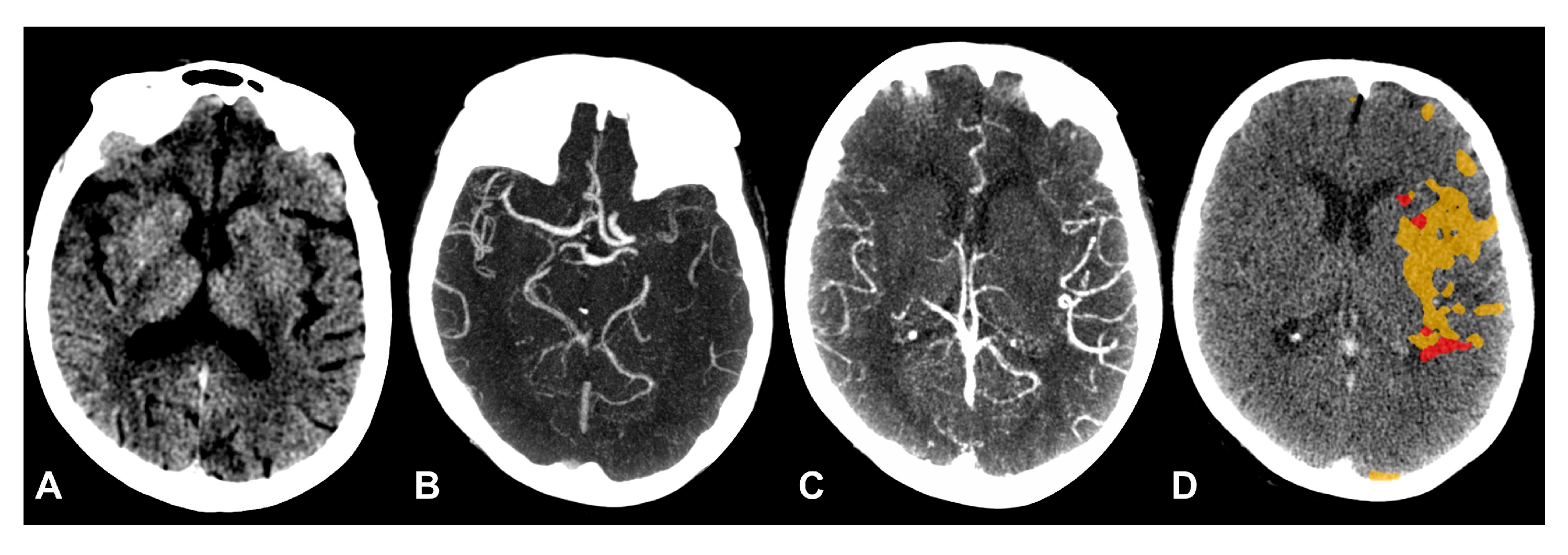
We observed a significant reclassification of collateral status between the two methods (Table 2; Figure 1). The most common shift was an upgrade from poor collaterals on sCTA to good collaterals on dCTA. For instance, 24 patients with a score of 2 on sCTA were upgraded to a score of 3 on dCTA. Furthermore, many patients initially classified as having poor collaterals on sCTA were found to have good but slow-filling collaterals, resulting in a dCTA score of 2 (Figure 2). The interrater agreement was strong and comparable for both scoring systems, with a weighted kappa statistic of 0.76 for sCTA and 0.80 for dCTA.

3.3. Association of Collateral Scores with Imaging Outcomes

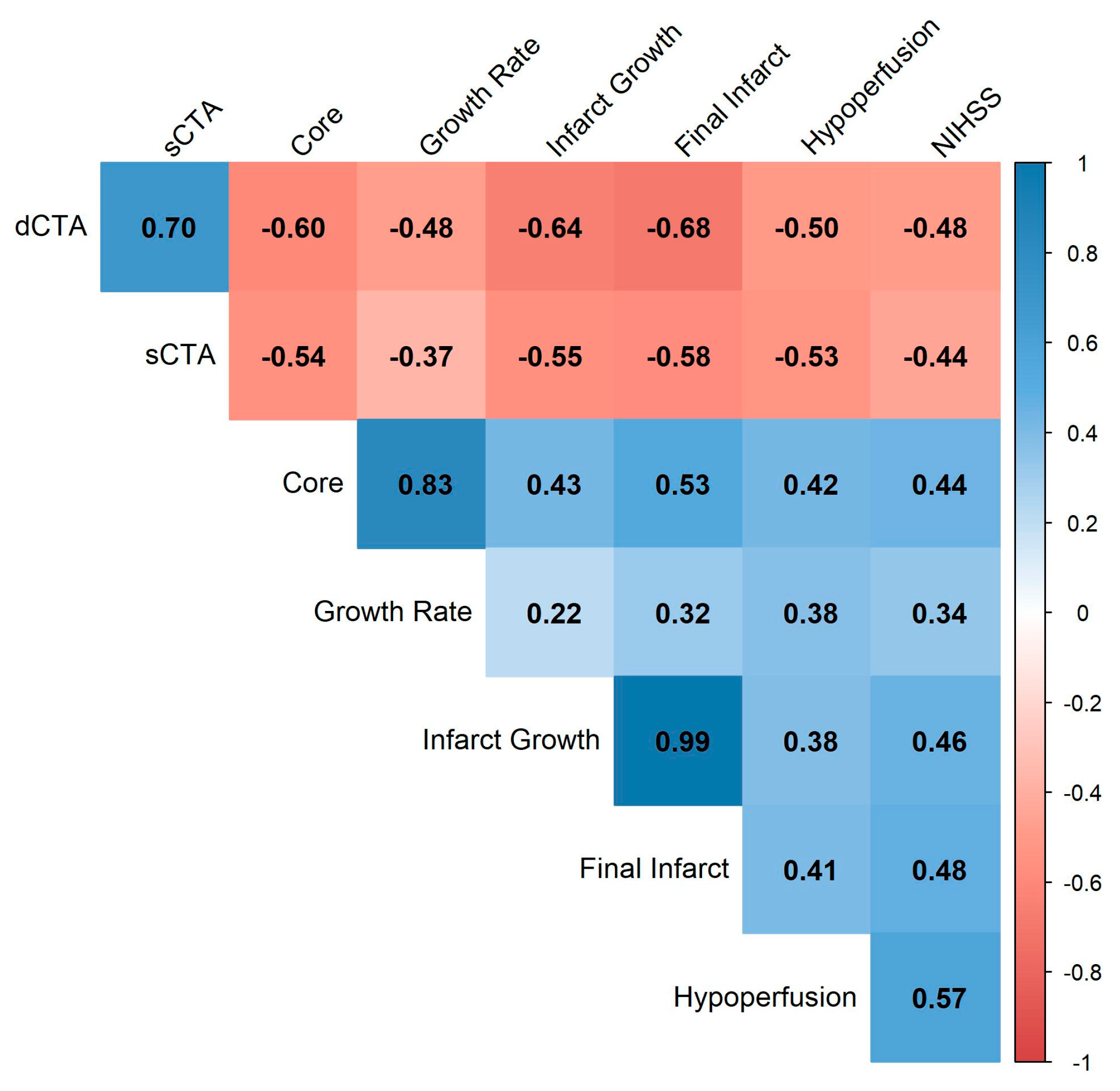
As detailed in Table 3, patients with good collateral status on both sCTA and dCTA had significantly smaller median core, hypoperfusion, infarct growth, and final infarct volumes compared to patients with poor collaterals. In the univariable linear regression analysis, a better collateral score on both sCTA and dCTA was significantly associated with all imaging outcomes (Table 4). After adjusting for baseline NIHSS and clot burden score, the prognostic value of the dCTA score remained robust, showing a significant association with smaller infarct growth (β = −48.88), final infarct volume (β = −49.29), and acute growth rate (β = −6.59). In contrast, the predictive value of the sCTA score was attenuated after adjustment, becoming non-significant for infarct growth volume. To further explore the relationships, we performed a correlation analysis, presented as a heatmap in Figure 3. The analysis confirmed strong negative correlations between better collateral scores and measures of infarct size. Notably, the dCTA score demonstrated consistently stronger negative correlations with core volume (−0.60), infarct growth (−0.64), and final infarct volume (−0.68) compared to the sCTA score (−0.54, −0.55, and −0.58, respectively).

3.4. Impact of Collaterals on Infarct Temporal Evolution

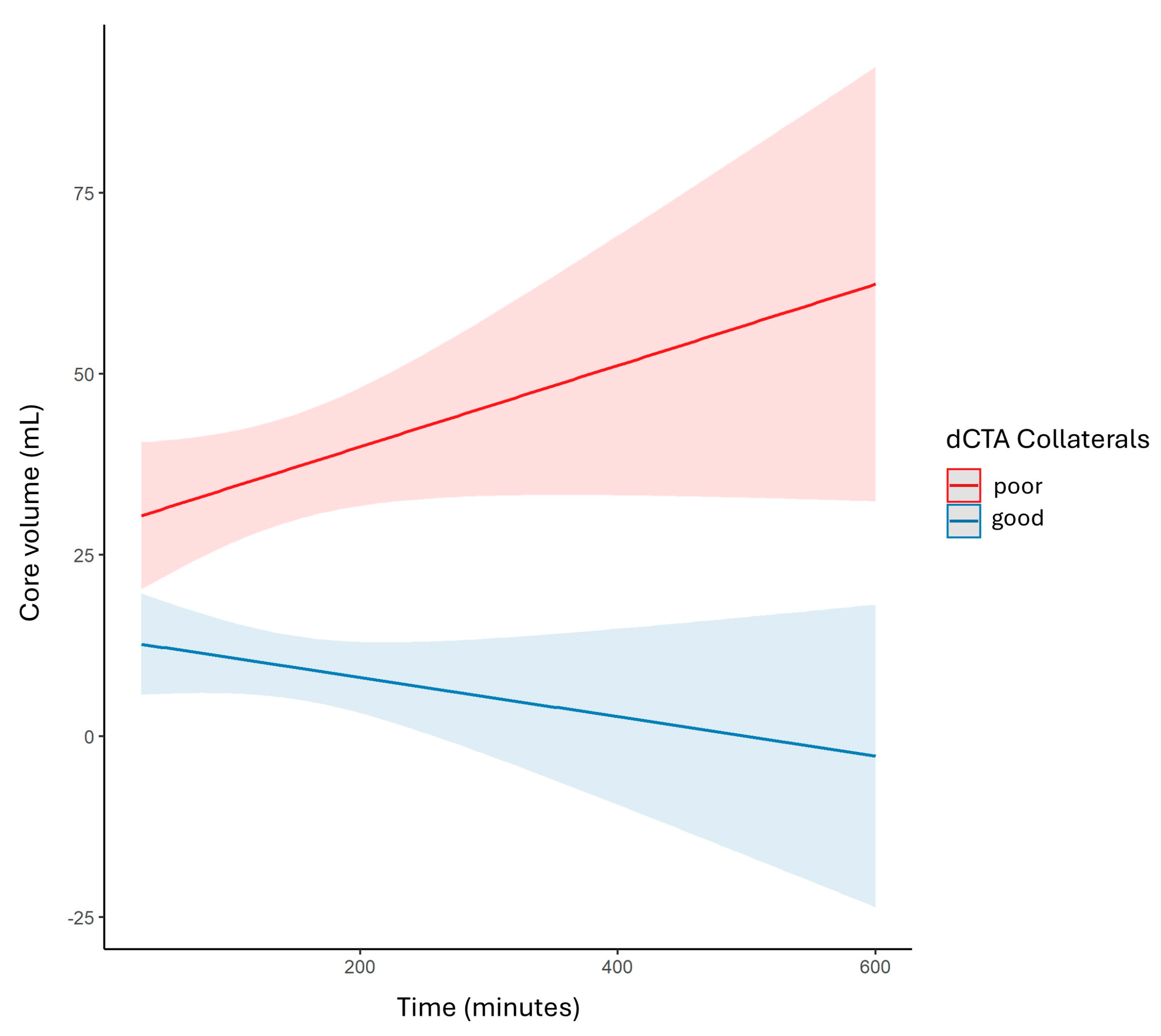
The most significant difference between the two scores was their relationship with stroke progression over time. The collateral status as defined by dCTA significantly modified the association between time since stroke onset and the resulting core volume (p-value for interaction = 0.04). As illustrated in Figure 4, patients with poor dCTA collaterals exhibited rapid core volume progression, whereas those with good dCTA collaterals had a smaller and more stable core over time. In contrast, the sCTA score did not significantly modify this association (p-value for interaction = 0.32). Neither collateral score significantly modified the association between time and hypoperfusion volume.

4. Discussion

In this study, we demonstrate that a direct, qualitative collateral score derived from CTP source images (dCTA) is a more reliable predictor of infarct lesion size and progression than conventional sCTA. This conclusion is supported by three key lines of evidence from our analysis. First, in multivariable regression models, the dCTA score remained a strong, independent predictor of final infarct volume and infarct growth after adjusting for initial stroke severity (NIHSS) and clot burden score, whereas the predictive value of sCTA was attenuated. Second, this superior predictive capacity was visually supported by our correlation analysis, which demonstrated consistently stronger negative correlations between the dCTA score and adverse outcomes like core volume, infarct growth, and final infarct volume. Finally, our most significant finding was that only dCTA status (good vs. poor) fundamentally altered the relationship between time since symptom onset and ischemic core volume, providing a more robust link to the underlying pathophysiology of stroke evolution.
A key reason for dCTA’s superior performance is its incorporation of a temporal dimension, which helps overcome a major limitation of sCTA: the underestimation of collateral flow [29]. Our results confirm this, showing that many patients classified as having poor collaterals on a static sCTA image were reclassified as having good, albeit delayed, collaterals on dCTA. This aligns with previous work demonstrating that dynamic imaging, either through multiphase CTA or dynamic CTA, better predicts clinical outcomes and infarct volumes [18,19]. Our dCTA method is conceptually based on the work by Van den Wijngaard et al. [19], but it innovates by leveraging CTP source images directly, a novel approach.
Our general finding that better collaterals are associated with smaller core volumes is consistent with data from major trials, such as the analysis by Vagal et al. from the IMS III trial [30]. However, the literature on the relationship between sCTA collaterals and perfusion-defined penumbra has been inconsistent, highlighting the complexity of the field and the need for more refined assessment tools [31,32,33,34,35,36]. By showing a stronger and more consistent correlation with core, hypoperfusion, and final infarct volumes, our dCTA score provides a more stable and reliable assessment. This improved accuracy has significant clinical implications. For example, trials like RESILIENT exclusively enrolled patients with good collaterals [6]. Our data suggests that a dynamic assessment could identify more patients with functional, slow-filling collaterals who might otherwise be excluded from treatment based on a misleading sCTA.
The primary contribution of this work is the introduction of a simple, accessible method to improve collateral assessment. To our knowledge, this is the first study to show that a collateral score can significantly modify the relationship between core volume and time, reinforcing its validity. Crucially, it is also the first collateral score derived from CTP that does not require any post-processing software. This feature dramatically increases its applicability, especially in centers that now routinely perform both CTA and CTP. Our findings bolster the argument that when both scans are available, collateral status should be evaluated on the dynamic CTP source images.
This study has several limitations. Firstly, it is a single-center, retrospective analysis with a relatively modest sample size. Secondly, our clinical outcome data was limited, particularly regarding the 90-day modified Rankin Scale. Thirdly, the study was conducted within the Brazilian public healthcare system, where rates of endovascular treatment were low; however, this may also enhance the reproducibility of our findings in similar healthcare settings in developing countries. Finally, the 4 cm z-axis coverage of our CTP protocol may have underestimated the total ischemic volumes, though care was taken to center the slab on the affected territory. Future prospective, multi-center studies are needed to validate the dCTA score and its impact on clinical outcomes.

5. Conclusions

Our study demonstrates that a collateral score derived from CTP source images (dCTA) offers a more reliable prediction of infarct lesion sizes compared to conventional sCTA. By significantly modifying the association between core volume and time since stroke onset, the dCTA score provides a more robust correlation with the temporal evolution of stroke. As a direct, qualitative method that requires no additional software, dCTA is a readily implementable tool that can enhance the accuracy of imaging-based patient selection, contributing to a better understanding of stroke progression and informing future treatment strategies.

Supplementary Materials

The following supporting information can be downloaded at: https://www.mdpi.com/article/10.3390/brainsci15101092/s1; Video S1: dCTA score of 0, demonstrating poor collateral extension and slow filling; Video S2: dCTA score of 1, demonstrating poor collateral extension and fast filling; Video S3: dCTA score of 2, demonstrating good collateral extension but slow filling; Video S4: dCTA score of 3, demonstrating good collateral extension and fast filling.

Author Contributions

Conceptualization, H.C.B.R.A., B.G.D. and A.J.d.R.; methodology, H.C.B.R.A. and B.G.D.; investigation, H.C.B.R.A.; data curation, V.G.; writing—original draft preparation, H.C.B.R.A.; writing—review and editing, H.C.B.R.A., B.G.D. and F.T.P.; visualization, F.T.P.; supervision, R.J.G., A.C.M.M.J. and A.J.d.R. All authors have read and agreed to the published version of the manuscript.

Funding

This research was funded by Fundo de Amparo à Pesquisa (FAP), Faculdade de Ciências Médicas da Santa Casa de São Paulo.

Institutional Review Board Statement

The study was conducted in accordance with the Declaration of Helsinki and approved INCT-HPV/Santa Casa de Misericórdia de São Paulo School of Medical Sciences (53311116.7.0000.5479, 2021-03-02).

Informed Consent Statement

Informed consent was obtained from all subjects involved in the study.

Data Availability Statement

The datasets generated and analyzed during the current study are not publicly available because they contain sensitive clinical information from patients. Public sharing of this data would compromise patient confidentiality and violate the terms of our ethics approval. However, de-identified data may be made available from the corresponding author upon reasonable request and subject to a data sharing agreement and ethics board approval.

Conflicts of Interest

Bruna G. Dutra, Heitor CBR. Alves, and Antonio C. M. Maia, Jr. are part of the Fleury Group, São Paulo. Felipe T. Pacheco and Antônio J. da Rocha are part of the DASA Group, São Paulo. The companies were not involved in the design, execution, interpretation, or writing of the study. The remaining authors declare that they have no conflicts of interest.

Abbreviations

The following abbreviations are used in this manuscript:
AISacute ischemic stroke
CTPcomputed tomography perfusion
dCTAdynamic computed tomography angiography
sCTAsingle-phase computed tomography angiography

References

  1. Powers, W.J.; Rabinstein, A.A.; Ackerson, T.; Adeoye, O.; Bambakidis, N.C.; Becker, K.; Biller, J.; Brown, M.; Demaerschalk, B.M.; Hoh, B.; et al. Guidelines for the Early Management of Patients With Acute Ischemic Stroke: 2019 Update to the 2018 Guidelines for the Early Management of Acute Ischemic Stroke: A Guideline for Healthcare Professionals From the American Heart Association/American Stroke Association. Stroke 2019, 50, E344–E418. [Google Scholar] [CrossRef]
  2. Nguyen, T.N.; Castonguay, A.C.; Siegler, J.E.; Nagel, S.; Lansberg, M.G.; de Havenon, A.; Sheth, S.A.; Abdalkader, M.; Tsai, J.P.; Albers, G.W.; et al. Mechanical Thrombectomy in the Late Presentation of Anterior Circulation Large Vessel Occlusion Stroke: A Guideline From the Society of Vascular and Interventional Neurology Guidelines and Practice Standards Committee. Stroke Vasc. Interv. Neurol. 2023, 3, 512. [Google Scholar] [CrossRef]
  3. Jovin, T.G.; Nogueira, R.G.; Lansberg, M.G.; Demchuk, A.M.; Martins, S.O.; Mocco, J.; Ribo, M.; Jadhav, A.P.; Ortega-Gutierrez, S.; Hill, M.D.; et al. Thrombectomy for anterior circulation stroke beyond 6 h from time last known well (AURORA): A systematic review and individual patient data meta-analysis. Lancet 2022, 399, 249–258. [Google Scholar] [CrossRef] [PubMed]
  4. Goyal, M.; Menon, B.K.; Van Zwam, W.H.; Dippel, D.W.; Mitchell, P.J.; Demchuk, A.M.; Dávalos, A.; Majoie, C.B.; van Der Lugt, A.; De Miquel, M.A.; et al. Endovascular thrombectomy after large-vessel ischaemic stroke: A meta-analysis of individual patient data from five randomised trials. Lancet 2016, 387, 1723–1731. [Google Scholar] [CrossRef] [PubMed]
  5. Turc, G. Mechanical Thrombectomy in Late-Time Windows: Time to Treat More Patients. Stroke 2023, 54, 731–732. [Google Scholar] [CrossRef]
  6. Martins, S.O.; Mont’Alverne, F.; Rebello, L.C.; Abud, D.G.; Silva, G.S.; Lima, F.O.; Parente, B.S.; Nakiri, G.S.; Faria, M.B.; Frudit, M.E.; et al. Thrombectomy for Stroke in the Public Health Care System of Brazil. N. Engl. J. Med. 2020, 382, 2316–2326. [Google Scholar] [CrossRef]
  7. Goyal, M.; Demchuk, A.M.; Menon, B.K.; Eesa, M.; Rempel, J.L.; Thornton, J.; Roy, D.; Jovin, T.G.; Willinsky, R.A.; Sapkota, B.L.; et al. Randomized Assessment of Rapid Endovascular Treatment of Ischemic Stroke. N. Engl. J. Med. 2015, 372, 1019–1030. [Google Scholar] [CrossRef]
  8. Olthuis, S.G.; Pirson, F.A.V.; Pinckaers, F.M.; Hinsenveld, W.H.; Nieboer, D.; Ceulemans, A.; Knapen, R.R.; Robbe, M.Q.; Berkhemer, O.A.; van Walderveen, M.A.; et al. Endovascular treatment versus no endovascular treatment after 6–24 h in patients with ischaemic stroke and collateral flow on CT angiography (MR CLEAN-LATE) in the Netherlands: A multicentre, open-label, blinded-endpoint, randomised, controlled, phase 3 trial. Lancet 2023, 401, 1371–1380. [Google Scholar] [CrossRef]
  9. Lyndon, D.; van den Broek, M.; Niu, B.; Yip, S.; Rohr, A.; Settecase, F. Hypoperfusion Intensity Ratio Correlates with CTA Collateral Status in Large-Vessel Occlusion Acute Ischemic Stroke. AJNR Am. J. Neuroradiol. 2021, 42, 1380–1386. [Google Scholar] [CrossRef]
  10. Christoforidis, G.A.; Vakil, P.; Ansari, S.A.; Dehkordi, F.H.; Carroll, T.J. Impact of pial collaterals on infarct growth rate in experimental acute ischemic stroke. AJNR Am. J. Neuroradiol. 2017, 38, 270–275. [Google Scholar] [CrossRef] [PubMed]
  11. Liebeskind, D.S. Collateral circulation. Stroke 2003, 34, 2279–2284. [Google Scholar] [CrossRef]
  12. Bang, O.Y.; Goyal, M.; Liebeskind, D.S. Collateral Circulation in Ischemic Stroke: Assessment Tools and Therapeutic Strategies. Stroke 2015, 46, 3302–3309. [Google Scholar] [CrossRef] [PubMed]
  13. Alves, H.C.B.; Pacheco, F.T.; Rocha, A.J. Collateral blood vessels in acute ischemic stroke: A physiological window to predict future outcomes. Arq. Neuropsiquiatr. 2016, 74, 662–670. [Google Scholar] [CrossRef] [PubMed]
  14. Boers, A.M.; Jansen, I.G.; Berkhemer, O.A.; Yoo, A.J.; Lingsma, H.F.; Slump, C.H.; Roos, Y.B.; van Oostenbrugge, R.J.; Dippel, D.W.; van der Lugt, A.; et al. Collateral status and tissue outcome after intra-arterial therapy for patients with acute ischemic stroke. J. Cereb. Blood Flow. Metab. 2017, 37, 3589–3598. [Google Scholar] [CrossRef]
  15. Heit, J.J.; Zaharchuk, G.; Wintermark, M. Advanced Neuroimaging of Acute Ischemic Stroke. Neuroimaging Clin. N. Am. 2018, 28, 585–597. [Google Scholar] [CrossRef]
  16. Seker, F.; Potreck, A.; Möhlenbruch, M.; Bendszus, M.; Pham, M. Comparison of four different collateral scores in acute ischemic stroke by CT angiography. J. Neurointerv. Surg. 2016, 8, 1116–1118. [Google Scholar] [CrossRef]
  17. Tan, I.Y.L.; Demchuk, A.M.; Hopyan, J.; Zhang, L.; Gladstone, D.; Wong, K.; Martin, M.; Symons, S.P.; Fox, A.J.; Aviv, R.I. CT angiography clot burden score and collateral score: Correlation with clinical and radiologic outcomes in acute middle cerebral artery infarct. AJNR Am. J. Neuroradiol. 2009, 30, 525–531. [Google Scholar] [CrossRef]
  18. Menon, B.K.; d’Esterre, C.D.; Qazi, E.M.; Almekhlafi, M.; Hahn, L.; Demchuk, A.M.; Goyal, M. Multiphase CT Angiography: A New Tool for the Imaging Triage of Patients with Acute Ischemic Stroke. Radiology 2015, 275, 510–520. [Google Scholar] [CrossRef]
  19. Van Den Wijngaard, I.R.; Boiten, J.; Holswilder, G.; Algra, A.; Dippel, D.W.; Velthuis, B.K.; Wermer, M.J.; Van Walderveen, M.A. Impact of collateral status evaluated by dynamic computed tomographic angiography on clinical outcome in patients with ischemic stroke. Stroke 2015, 46, 3398–3404. [Google Scholar] [CrossRef] [PubMed]
  20. Van Den Wijngaard, I.R.; Holswilder, G.; Wermer, M.J.H.; Boiten, J.; Algra, A.; Dippel, D.W.J.; Dankbaar, J.W.; Velthuis, B.K.; Boers, A.M.M.; Majoie, C.B.L.M.; et al. Assessment of collateral status by dynamic ct angiography in acute mca stroke: Timing of acquisition and relationship with final infarct volume. AJNR Am. J. Neuroradiol. 2016, 37, 1231–1236. [Google Scholar] [CrossRef]
  21. Potreck, A.; Scheidecker, E.; Weyland, C.S.; Neuberger, U.; Herweh, C.; Möhlenbruch, M.A.; Chen, M.; Nagel, S.; Bendszus, M.; Seker, F. RAPID CT Perfusion–Based Relative CBF Identifies Good Collateral Status Better Than Hypoperfusion Intensity Ratio, CBV-Index, and Time-to-Maximum in Anterior Circulation Stroke. AJNR Am. J. Neuroradiol. 2022, 43, 960–965. [Google Scholar] [CrossRef] [PubMed]
  22. McDougall, C.C.; Chan, L.; Sachan, S.; Guo, J.; Sah, R.G.; Menon, B.K.; Demchuk, A.M.; Hill, M.D.; Forkert, N.D.; d’Esterre, C.D.; et al. Dynamic CTA-Derived Perfusion Maps Predict Final Infarct Volume: The Simple Perfusion Reconstruction Algorithm. AJNR Am. J. Neuroradiol. 2020, 41, 2034–2040. [Google Scholar] [CrossRef]
  23. Nguyen, T.N.; Klein, P.; Berberich, A.; Nagel, S.; Abdalkader, M.; Herning, A.; Chen, Y.; Huo, X.; Miao, Z.; Sheth, S.A.; et al. Late Window Imaging Selection for Endovascular Therapy of Large Vessel Occlusion Stroke: An International Survey. Stroke Vasc. Interv. Neurol. 2023, 3, e000595. [Google Scholar] [CrossRef]
  24. Nogueira, R.G.; Jadhav, A.P.; Haussen, D.C.; Bonafe, A.; Budzik, R.F.; Bhuva, P.; Yavagal, D.R.; Ribo, M.; Cognard, C.; Hanel, R.A.; et al. Thrombectomy 6 to 24 Hours after Stroke with a Mismatch between Deficit and Infarct. N. Engl. J. Med. 2018, 378, 11–21. [Google Scholar] [CrossRef] [PubMed]
  25. Albers, G.W.; Marks, M.P.; Kemp, S.; Christensen, S.; Tsai, J.P.; Ortega-Gutierrez, S.; McTaggart, R.A.; Torbey, M.T.; Kim-Tenser, M.; Leslie-Mazwi, T.; et al. Thrombectomy for Stroke at 6 to 16 Hours with Selection by Perfusion Imaging. N. Engl. J. Med. 2018, 378, 708–718. [Google Scholar] [CrossRef]
  26. Xu, J.; Dai, F.; Wang, B.; Wang, Y.; Li, J.; Pan, L.; Liu, J.; Liu, H.; He, S. Predictive Value of CT Perfusion in Hemorrhagic Transformation after Acute Ischemic Stroke: A Systematic Review and Meta-Analysis. Brain Sci. 2023, 13, 156. [Google Scholar] [CrossRef]
  27. Bivard, A.; Levi, C.; Spratt, N.; Parsons, M. Perfusion CT in acute stroke: A comprehensive analysis of infarct and penumbra. Radiology 2013, 267, 543–550. [Google Scholar] [CrossRef] [PubMed]
  28. Puetz, V.; Dzialowski, I.; Hill, M.D.; Subramaniam, S.; Sylaja, P.N.; Krol, A.; O'Reilly, C.; Hudon, M.E.; Hu, W.Y.; Coutts, S.B.; et al. Intracranial thrombus extent predicts clinical outcome, final infarct size and hemorrhagic transformation in ischemic stroke: The clot burden score. Int. J. Stroke 2008, 3, 230–236. [Google Scholar] [CrossRef]
  29. Nael, K.; Sakai, Y.; Larson, J.; Goldstein, J.; Deutsch, J.; Awad, A.J.; Pawha, P.; Aggarwal, A.; Fifi, J.; Deleacy, R.; et al. CT Perfusion collateral index in assessment of collaterals in acute ischemic stroke with delayed presentation: Comparison to single phase CTA. J. Neuroradiol. 2022, 49, 198–204. [Google Scholar] [CrossRef] [PubMed]
  30. Vagal, A.; Menon, B.K.; Foster, L.D.; Livorine, A.; Yeatts, S.D.; Qazi, E.; d’Esterre, C.; Shi, J.; Demchuk, A.M.; Hill, M.D.; et al. Association between CT Angiogram Collaterals and CT Perfusion in the Interventional Management of Stroke III Trial. Stroke 2016, 47, 535–538. [Google Scholar] [CrossRef]
  31. Nannoni, S.; Cereda, C.W.; Sirimarco, G.; Lambrou, D.; Strambo, D.; Eskandari, A.; Dunet, V.; Wintermark, M.; Michel, P. Collaterals are a major determinant of the core but not the penumbra volume in acute ischemic stroke. Neuroradiology 2019, 61, 971–978. [Google Scholar] [CrossRef] [PubMed]
  32. Shah, V.S.; Eaton, R.G.; Cua, S.; Dornbos, I.I.I.D.; Hoang, N.; Schunemann, V.; Nimjee, S.; Youssef, P.; Powers, C.J. Scoring of Middle Cerebral Artery Collaterals Predicts RAPID CT-Perfusion Analysis and Short-Term Outcomes in Acute Ischemic Stroke Patients Undergoing Thrombectomy. World Neurosurg. 2020, 135, e494–e499. [Google Scholar] [CrossRef] [PubMed]
  33. Voleti, S.; Aziz, Y.N.; Vidovich, J.; Corcoran, B.; Zhang, B.; Mistry, E.; Khandwala, V.; Khatri, P.; Tomsick, T.; Wang, L.; et al. Association Between CT Angiogram Collaterals and CT Perfusion in Delayed Time Windows for Large Vessel Occlusion Ischemic Strokes. J. Stroke Cerebrovasc. Dis. 2022, 31, 106263. [Google Scholar] [CrossRef]
  34. Olivot, J.M.; Mlynash, M.; Inoue, M.; Marks, M.P.; Wheeler, H.M.; Kemp, S.; Straka, M.; Zaharchuk, G.; Bammer, R.; Lansberg, M.G.; et al. Hypoperfusion intensity ratio predicts infarct progression and functional outcome in the DEFUSE 2 cohort. Stroke 2014, 45, 1018–1023. [Google Scholar] [CrossRef]
  35. Lu, S.S.; Zhang, X.; Xu, X.Q.; Cao, Y.Z.; Zhao, L.B.; Liu, Q.H.; Wu, F.Y.; Liu, S.; Shi, H.B. Comparison of CT angiography collaterals for predicting target perfusion profile and clinical outcome in patients with acute ischemic stroke. Eur. Radiol. 2019, 29, 4922–4929. [Google Scholar] [CrossRef]
  36. Tian, H.; Chen, C.; Garcia-Esperon, C.; Parsons, M.W.; Lin, L.; Levi, C.R.; Bivard, A. Dynamic CT but Not Optimized Multiphase CT Angiography Accurately Identifies CT Perfusion Target Mismatch Ischemic Stroke Patients. Front Neurol. 2019, 10, 1130. [Google Scholar] [CrossRef] [PubMed]
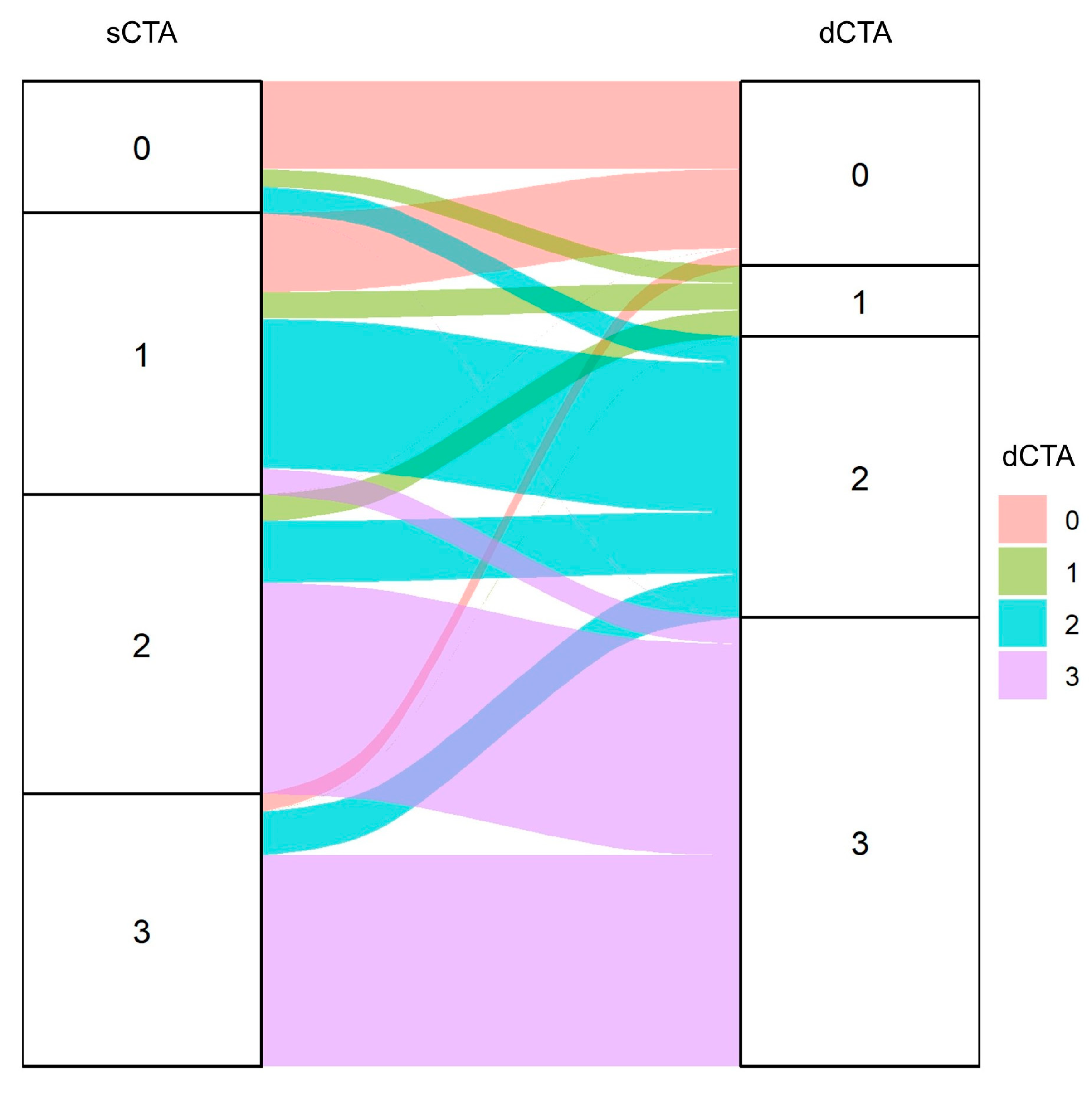
Figure 1. Alluvial plot illustrates the distribution and shifts in collateral scores between sCTA and dCTA. The width of each band represents the proportion of patients with a given dCTA score.
Brainsci 15 01092 g001
Figure 2. Patient with aphasia and right hemiparesis, last seen well two hours ago. There is subtle hypoattenuation on left lentiform nucleus (A). On CTA (B), there was poor filling of distal branches in MCA territory (sCTA 1). The venous phase extracted from CTP source-images (C) demonstrates good and delayed collateral filling (dCTA 2). The patient had a small core (red) and large penumbra (orange) volumes on CTP (D).
Brainsci 15 01092 g002
Figure 3. Correlation Heatmap of Stroke Parameters. The heatmap illustrates the Pearson correlation coefficients between variables. The strength and direction of the correlation are indicated by the color and the number within each square. Positive correlations are shown in blue, while negative correlations are shown in red. The intensity of the color corresponds to the strength of the correlation, as indicated by the scale bar. Variables have been reordered using hierarchical clustering to group parameters with similar correlation patterns. Abbreviations: dCTA, dynamic computed tomography angiography; sCTA, single-phase computed tomography angiography; NIHSS, National Institutes of Health Stroke Scale.
Brainsci 15 01092 g003
Figure 4. Linear regression plot illustrates significant interactions between collateral status and time on infarct core volume. Patients with poor collaterals (shown in red) exhibit a faster increase in infarct volume than patients with good collaterals (shown in blue).
Brainsci 15 01092 g004
Table 1. Baseline characteristics. Group comparisons were evaluated using Chi-squared, Kruskal–Wallis and student t tests.
Single-Phase CTA CollateralsCTP Source Images Collaterals
PoorGoodp ValuePoorGoodp Value
Number (n)4765 2983
Age, median [IQR]64 [56, 77]62 [51, 73]0.2658 [51, 71]64 [56, 76]0.12
Sex, male (%)27 (57.4)32 (49.2)0.5019 (65.5)40 (48.2)0.16
Intravenous alteplase, n (%)13 (27.7)17 (26.2)1.007 (24.1)23 (27.7)0.90
Endovascular treatment, n (%)1 (2.1)1 (1.5)1.000 (0.0)2 (2.4)0.98
Ictus in minutes, median [IQR]120 [67, 180]120 [60, 210]0.64120 [60, 180]135 [72, 210]0.57
NIHSS, median [IQR]15 [13, 17]9 [6, 14]<0.00115 [13, 16]12 [6, 15]0.01
24 h NIHSS, median [IQR]12 [7, 14]5 [3, 9]<0.00113 [10, 14]5 [2, 10]<0.001
SBP—mean mm Hg (SD)150 [134, 180]150 [130, 160]0.11148 [120, 200]150 [135, 166]0.93
DBP—mean mm Hg (SD)90 [80, 100]90 [80, 100]0.1990 [77, 100]90 [80, 100]0.97
Baseline glucose, median [IQR]143 [123, 202]120 [99, 147]<0.001143 [121, 213]126 [104, 162]0.074
     Medical history
Atrial fibrillation—n. (%)14 (30.4)10 (16.4)0.176 (21.4)18 (22.8)1.00
Diabetes mellitus—n. (%)13 (28.3)12 (19.7)0.429 (32.1)16 (20.3)0.31
Hypertension—n. (%)35 (76.1)35 (57.4)0.0718 (64.3)52 (65.8)1.00
Dyslipidemia, n. (%)3 (6.5)4 (6.6)1.000 (0.0)7 (8.9)0.236
Ischemic stroke—n. (%)4 (8.7)7 (11.5)0.882 (7.1)9 (11.4)0.78
Myocardial infarction—n. (%)5 (10.9)5 (8.2)0.893 (10.7)7 (8.9)1.00
Peripheral artery disease—n. (%)2 (4.3)2 (3.3)1.003 (10.7)1 (1.3)0.09
       Imaging
Occlusion level on CTA, n (%) <0.001 <0.001
ICA-I3 (6.4)4 (6.2) 2 (6.9)5 (6.0)
ICA-T17 (36.2)5 (7.7) 12 (41.4)10 (12.0)
M1 proximal13 (27.7)7 (10.8) 7 (24.1)13 (15.7)
M1 distal9 (19.1)12 (18.5) 3 (10.3)18 (21.7)
M25 (10.6)18 (27.7) 5 (17.2)18 (21.7)
M30 (0.0)16 (24.6) 0 (0.0)16 (19.3)
M40 (0.0)3 (4.6) 0 (0.0)3 (3.6)
Clot Burden Score, median [IQR]4 [2, 6]9 [6, 10]<0.0014 [2, 6]7 [5, 9]<0.001
Hyperdense artery sign, n. (%)38 (80.9)25 (39.1)<0.00122 (75.9)41 (50.0)0.03
Thrombus length in mm, median [IQR]18.25 [13.32, 24.63]9.09 [4.36, 12.90]<0.00115.40 [10.84, 22.50]11.73 [5.52, 17.93]0.02
Tandem occlusion, n. (%)5 (11.6)2 (3.3)0.205 (18.5)2 (2.6)0.01
Abbreviations:ASPECTS indicates Alberta Stroke Program Early CT Score; CTA, computed tomography angiography; CTP, computed tomography perfusion; DBP, diastolic blood pressure; ICA-I, intracranial internal carotid artery; IQR, interquartile range; NIHSS, National Institutes of Health Stroke Scale; SBP, systolic blood pressure; SD, standard deviation.
Table 2. Dynamic computed tomography angiography (dCTA) collateral score stratified by the single-phase computed tomography angiography (sCTA).
sCTAdCTA
0123
010230
193173
203724
320524
Table 3. Imaging Outcomes Based on sCTA and dCTA Collateral Status.
Single-Phase CTA CollateralsCTP Source Images Collaterals
PoorGoodp ValuePoorGoodp Value
Number (n)4765 2983
Core volume (mL), median [IQR]21.5 [8.8, 36.0]3.9 [1.1, 7.6]<0.00127.1 [11.0, 66.8]4.63 [1.3, 11.8]<0.001
Hypoperfusion volume (mL), median [IQR]113.3 [82.3, 135.7]33.9 [13.3, 81.2]<0.001123.3 [83.6, 151.8]51.4 [22.1, 99.1]<0.001
Infarct growth volume (mL), median [IQR]118.6 [48.4, 290.5]24.9 [7.6, 42.9]<0.001182.6 [107.6, 345.4]27.5 [11.8, 78.3]<0.001
Final infarct volume (mL), median [IQR]120.6 [53.1, 303.4]25.4 [12.2, 44.9]<0.001176.0 [101.3, 350.1]27.3 [13.1, 92.0]<0.001
Acute growth rate (mL/min), median [IQR]1.41 [0.1, 6.0]0.0 [0.0, 0.16]<0.0012.3 [0.4, 13.1]0.0 [0.0, 1.1]<0.001
IQR, Abbreviations, interquartile range.
Table 4. Univariable and Multivariable Linear Regression Analyses of Collateral Scores and Imaging Outcomes.
sCTAdCTA
OutcomesModelβ (95% CI)R-Squaredp-Valueβ (95% CI)R-Squaredp-Value
Core volumeunadjusted−13.22 (−16.97 to −9.46)0.32<0.01−12.68 (−15.92 to −9.44)0.36<0.01
Adjusted *−10.17 (−16.48 to −3.86)0.32<0.01−9.08 (−14.61 to −3.55)0.33<0.01
Hypoperfusion volumeUnadjusted−29.64 (−39.06 to −20.21)0.27<0.01−30.96 (−38.82 to −23.09)0.37<0.01
Adjusted *−8.25 (−23.9 to 7.39)0.420.29−11.56 (−23.93 to 0.81)0.440.07
Infarct growth volumeUnadjusted−62.25 (−87.56 to −36.93)0.24<0.01−65.88 (−87.22 to −44.54)0.33<0.01
Adjusted *−34.89 (−71.7 to 1.92)0.360.06−48.88 (−79.2 to −18.56)0.43<0.01
Final infarct volumeUnadjusted−68.07 (−93.35 to −42.80)0.26<0.01−68.38 (−89.98 to −46.78)0.33<0.01
Adjusted *−45.69 (−78.6 to −12.78)0.40<0.01−49.29 (−80.25 to −18.33)0.43<0.01
Acute growth rateUnadjusted−3.73 (−6.39 to −1.06)0.07<0.01−4.76 (−7.02 to −2.49)0.15<0.01
Adjusted *−5.28 (−11.46 to 0.9)0.120.09−6.59 (−11.39 to −1.79)0.19<0.01
* Adjusted models include baseline NIHSS and clot burden score as covariates.
Disclaimer/Publisher’s Note: The statements, opinions and data contained in all publications are solely those of the individual author(s) and contributor(s) and not of MDPI and/or the editor(s). MDPI and/or the editor(s) disclaim responsibility for any injury to people or property resulting from any ideas, methods, instructions or products referred to in the content.