Article

Hierarchical Principal Components for Data-Driven Multiresolution fMRI Analyses

1
Department of Psychiatry, School of Medicine, University of Colorado Anschutz Medical Campus, Aurora, CO 80045, USA
2
Department of Biostatistics and Informatics, Colorado School of Public Health, University of Colorado Anschutz Medical Campus, Aurora, CO 80045, USA
3
Research Service, Rocky Mountain Regional VA Medical Center, Aurora, CO 80045, USA
*
Author to whom correspondence should be addressed.
Brain Sci. 2024, 14(4), 325; https://doi.org/10.3390/brainsci14040325

Submission received: 1 February 2024 / Revised: 14 March 2024 / Accepted: 26 March 2024 / Published: 28 March 2024
(This article belongs to the Special Issue Brain Network Connectivity Analysis in Neuroscience)

Abstract

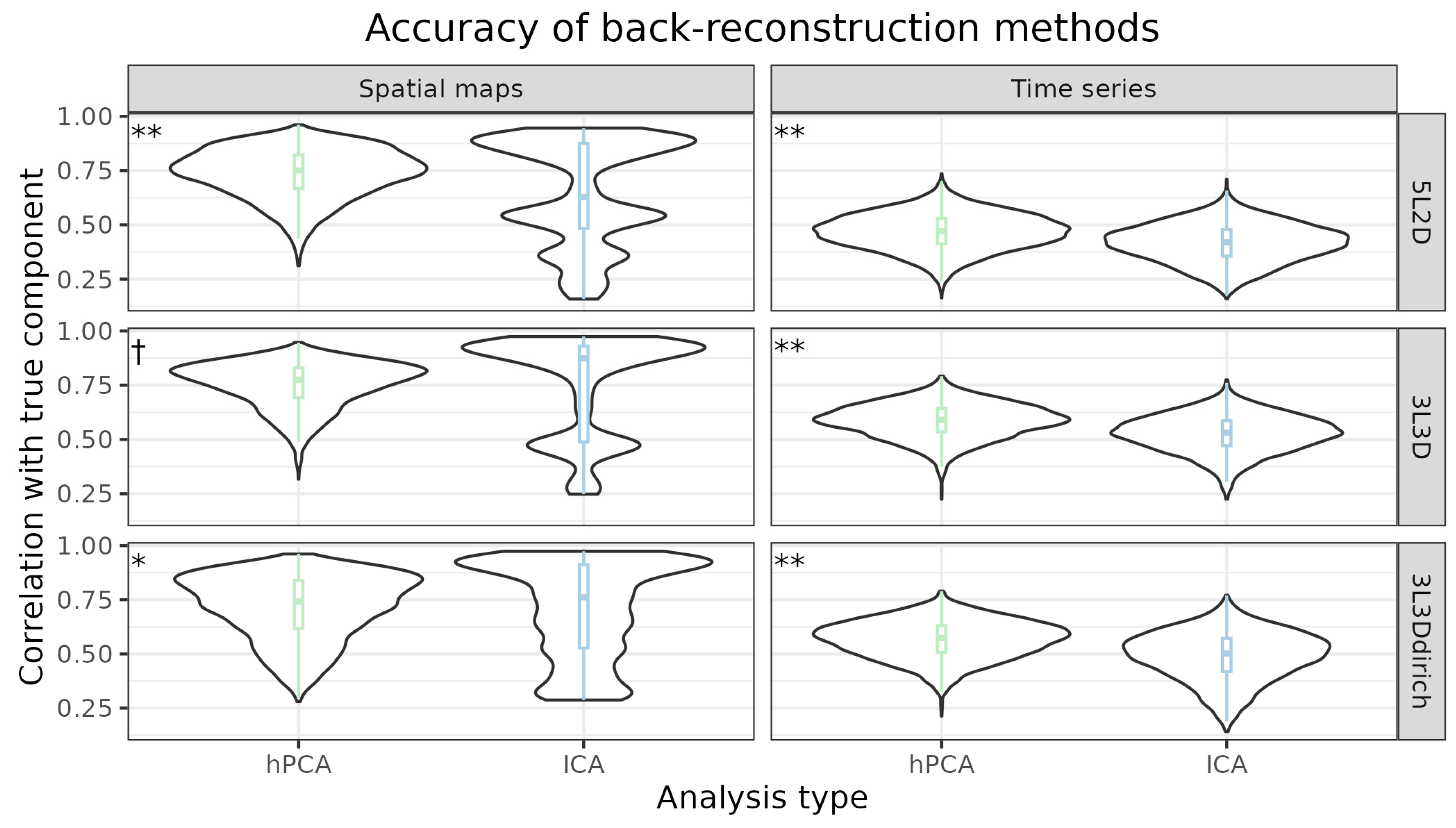
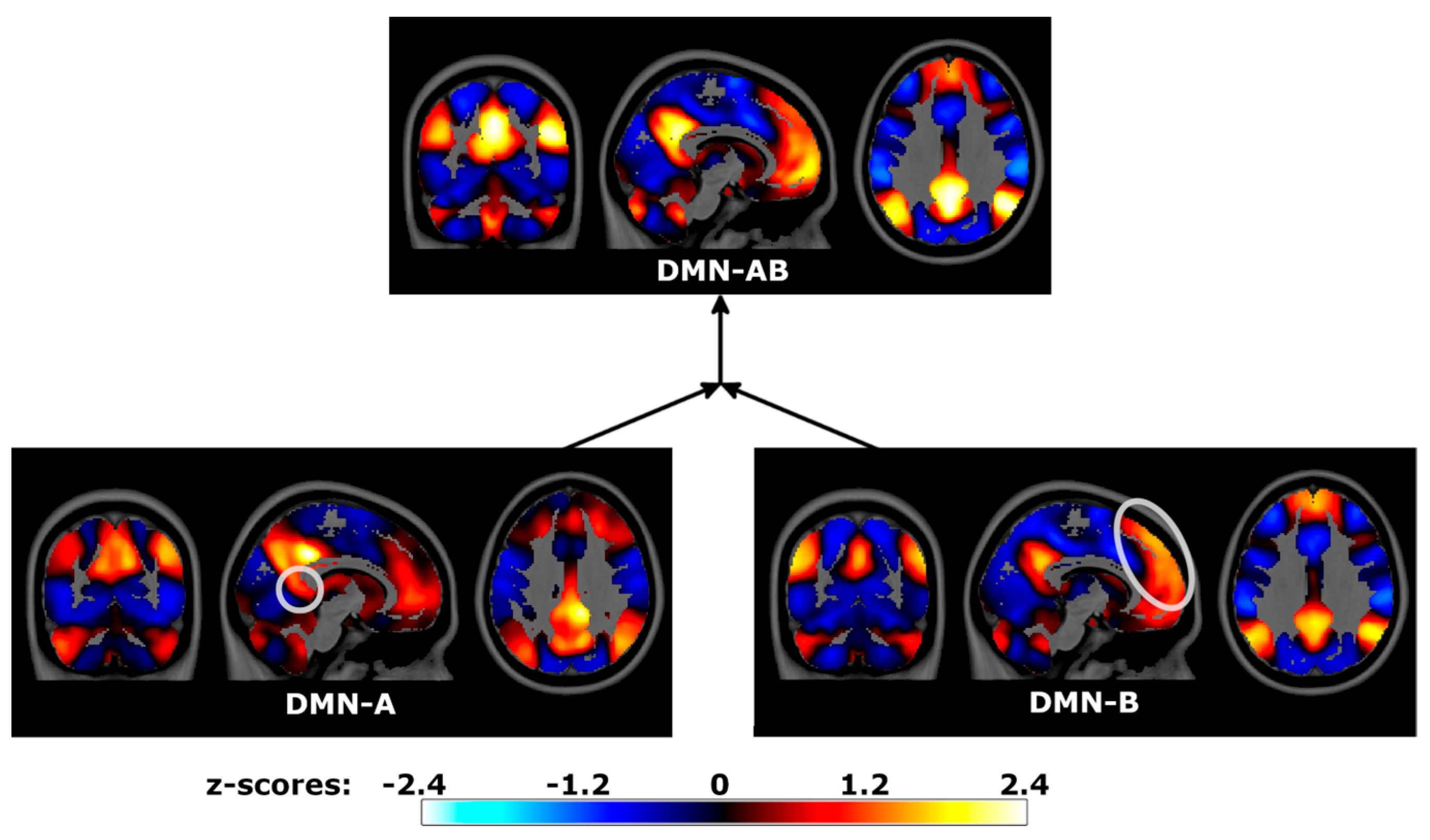
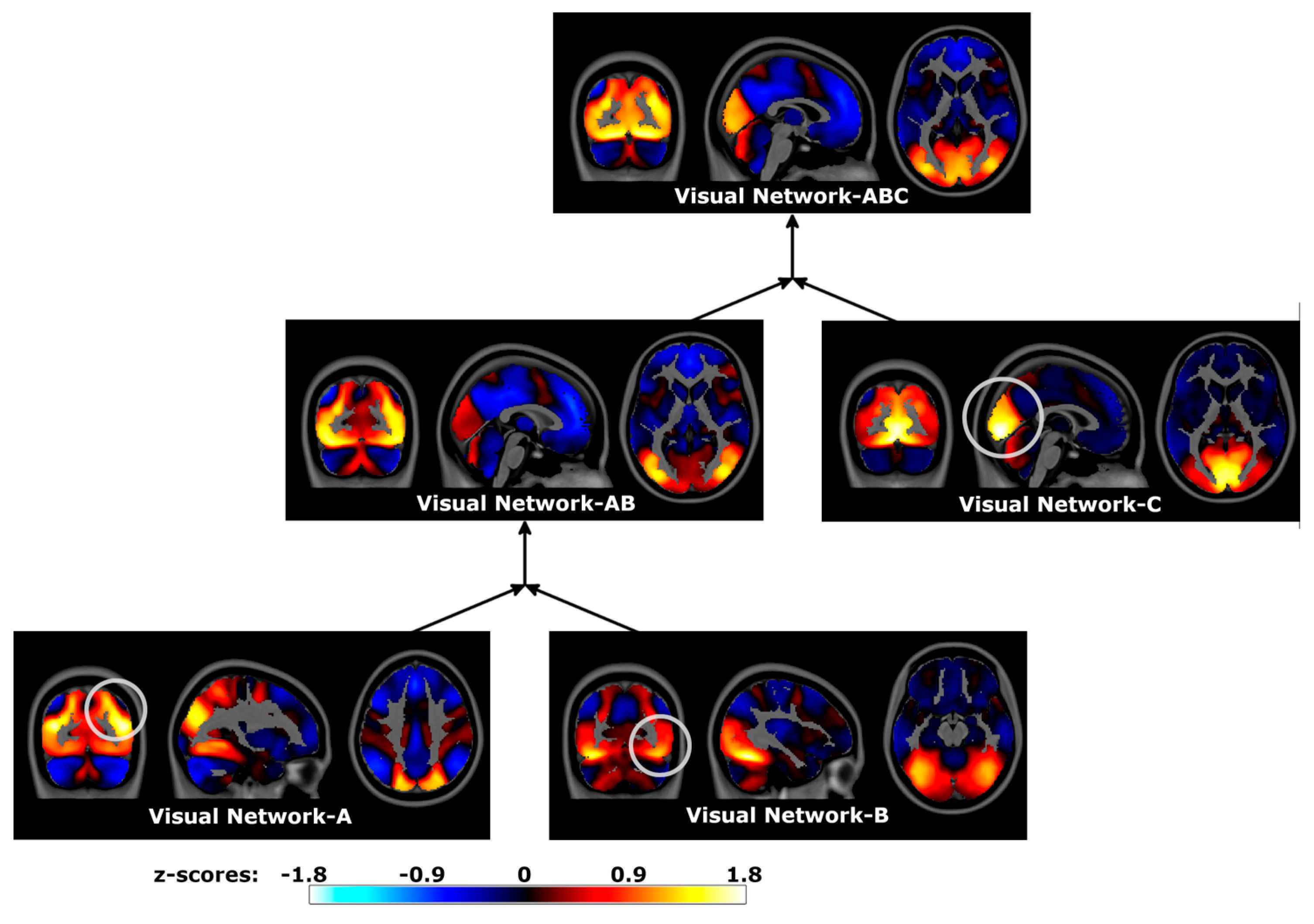
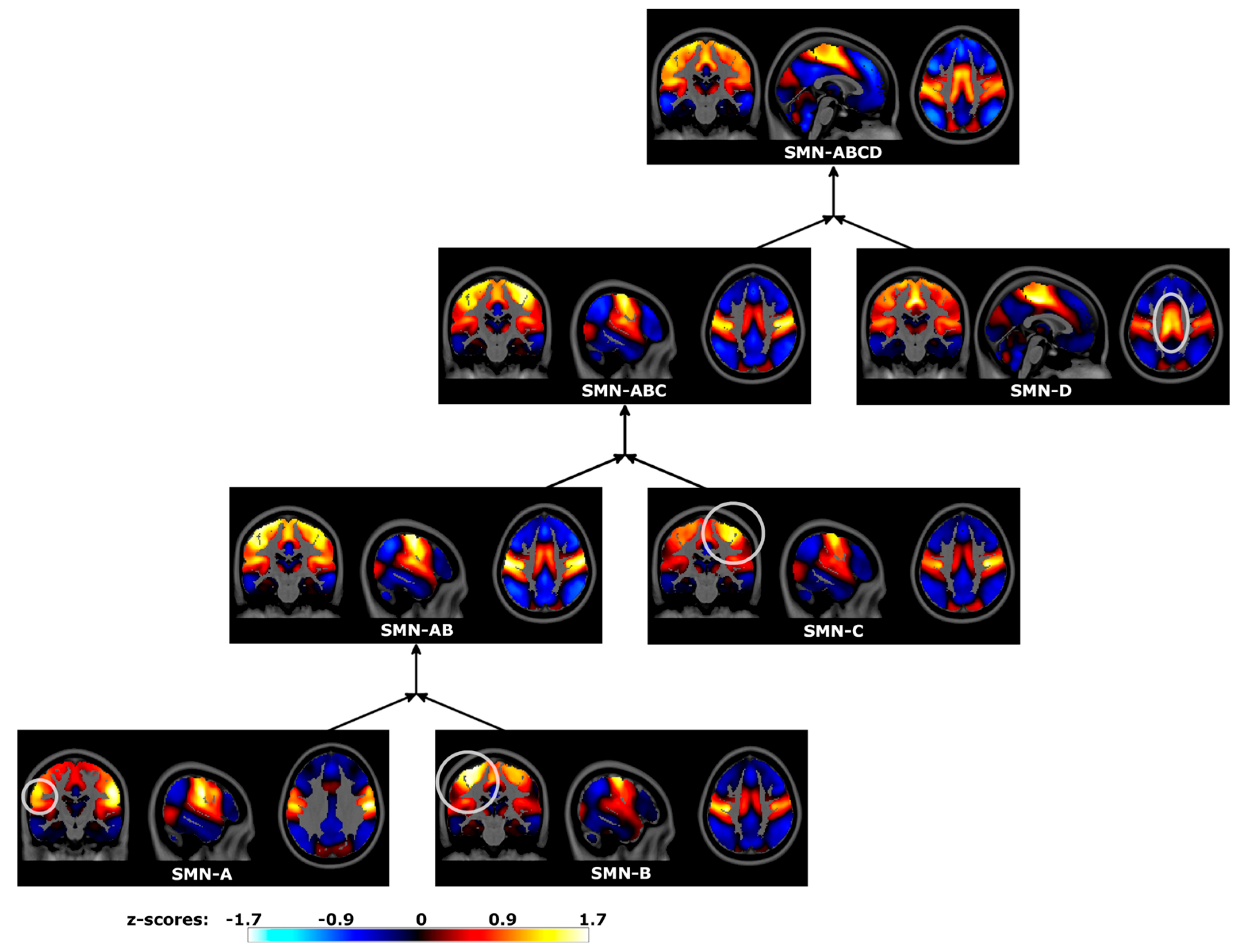
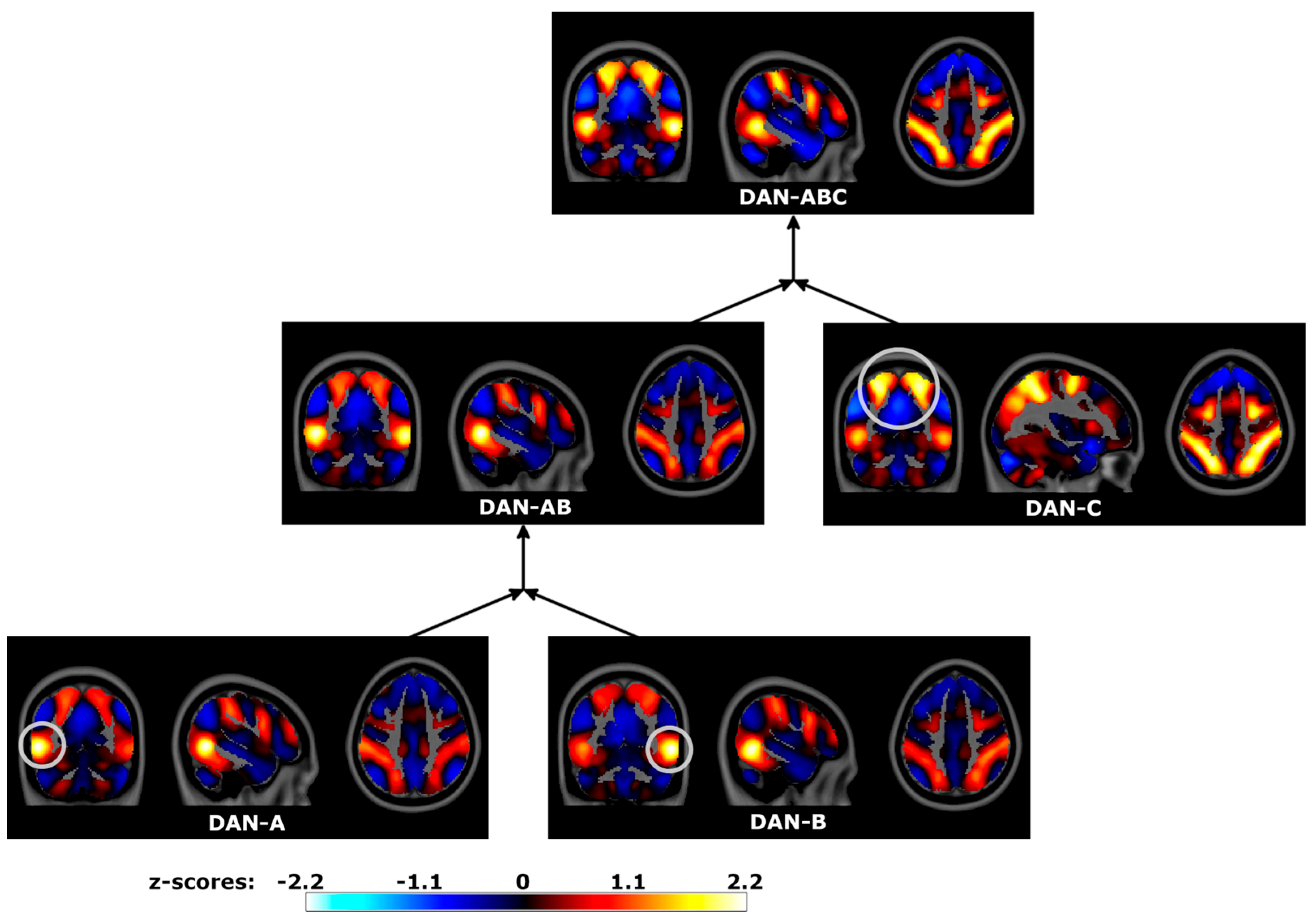
Understanding the organization of neural processing is a fundamental goal of neuroscience. Recent work suggests that these systems are organized as a multiscale hierarchy, with increasingly specialized subsystems nested inside general processing systems. Current neuroimaging methods, such as independent component analysis (ICA), cannot fully capture this hierarchy since they are limited to a single spatial scale. In this manuscript, we introduce multiresolution hierarchical principal components analysis (hPCA) and compare it to ICA using simulated fMRI datasets. Furthermore, we describe a parametric statistical filtering method developed to focus analyses on biologically relevant features. Lastly, we apply hPCA to the Human Connectome Project (HCP) to demonstrate its ability to estimate a hierarchy from real fMRI data. hPCA accurately estimated spatial maps and time series from networks with diverse hierarchical structures. Simulated hierarchies varied in the degree of branching, such as two-way or three-way subdivisions, and the total number of levels, with varying equal or unequal subdivision sizes at each branch. In each case, as well as in the HCP, hPCA was able to reconstruct a known hierarchy of networks. Our results suggest that hPCA can facilitate more detailed and comprehensive analyses of the brain’s network of networks and the multiscale regional specializations underlying neural processing and cognition.
Keywords: treelets; hPCA; independent component analysis; simulation; multiscale; hierarchy; functional connectivity treelets; hPCA; independent component analysis; simulation; multiscale; hierarchy; functional connectivity