Article

Familiarity Is Key: Exploring the Effect of Familiarity on the Face-Voice Correlation

1
School of Psychology, University of Southampton, Southampton SO17 1BJ, UK
2
Department of Psychological Sciences and Health, University of Strathclyde, Glasgow G1 1QE, UK
*
Author to whom correspondence should be addressed.
Brain Sci. 2024, 14(2), 112; https://doi.org/10.3390/brainsci14020112

Submission received: 24 December 2023 / Revised: 15 January 2024 / Accepted: 19 January 2024 / Published: 23 January 2024
(This article belongs to the Special Issue People Recognition through Face, Voice, Name and Their Interactions)

Abstract

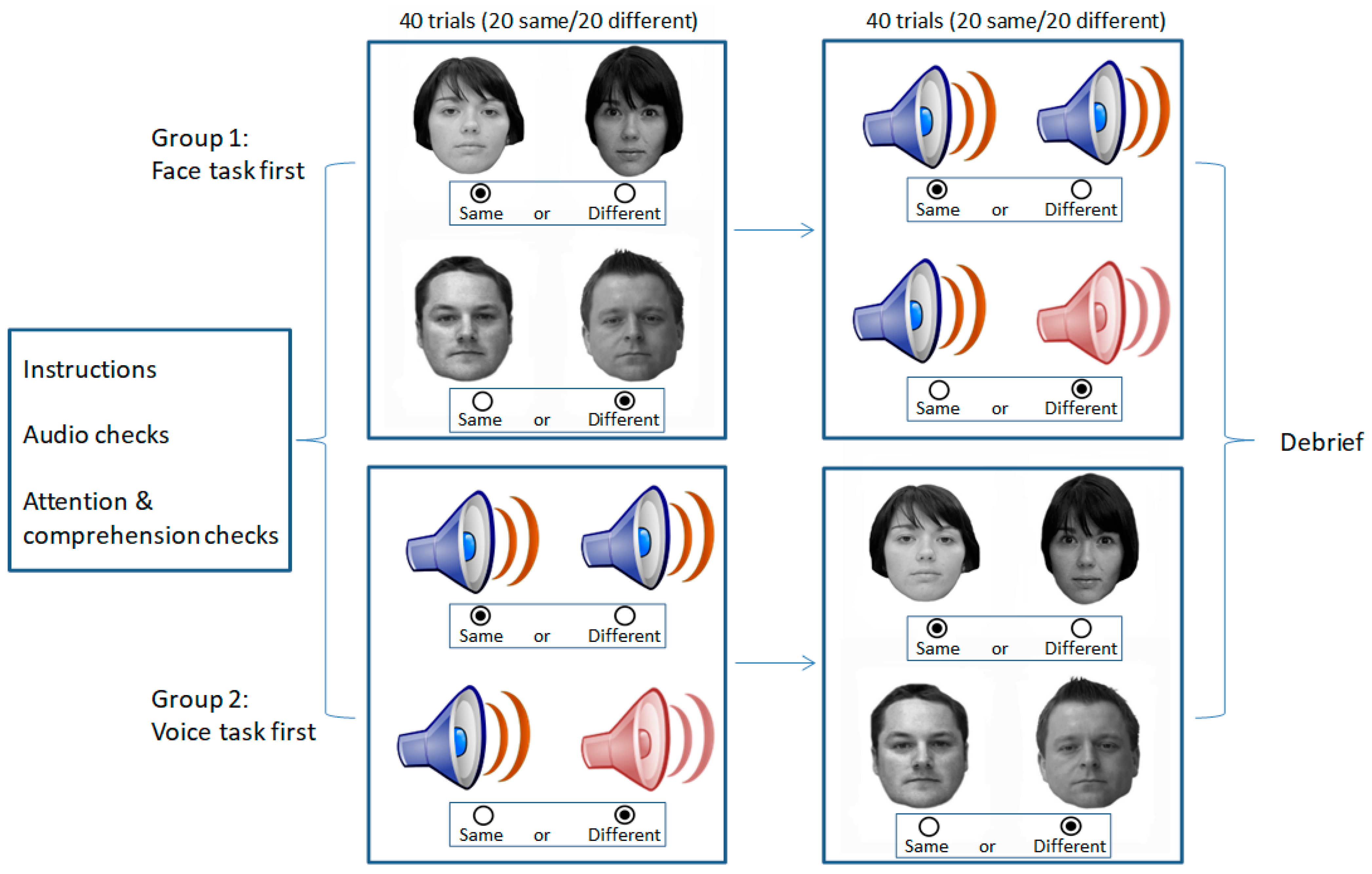
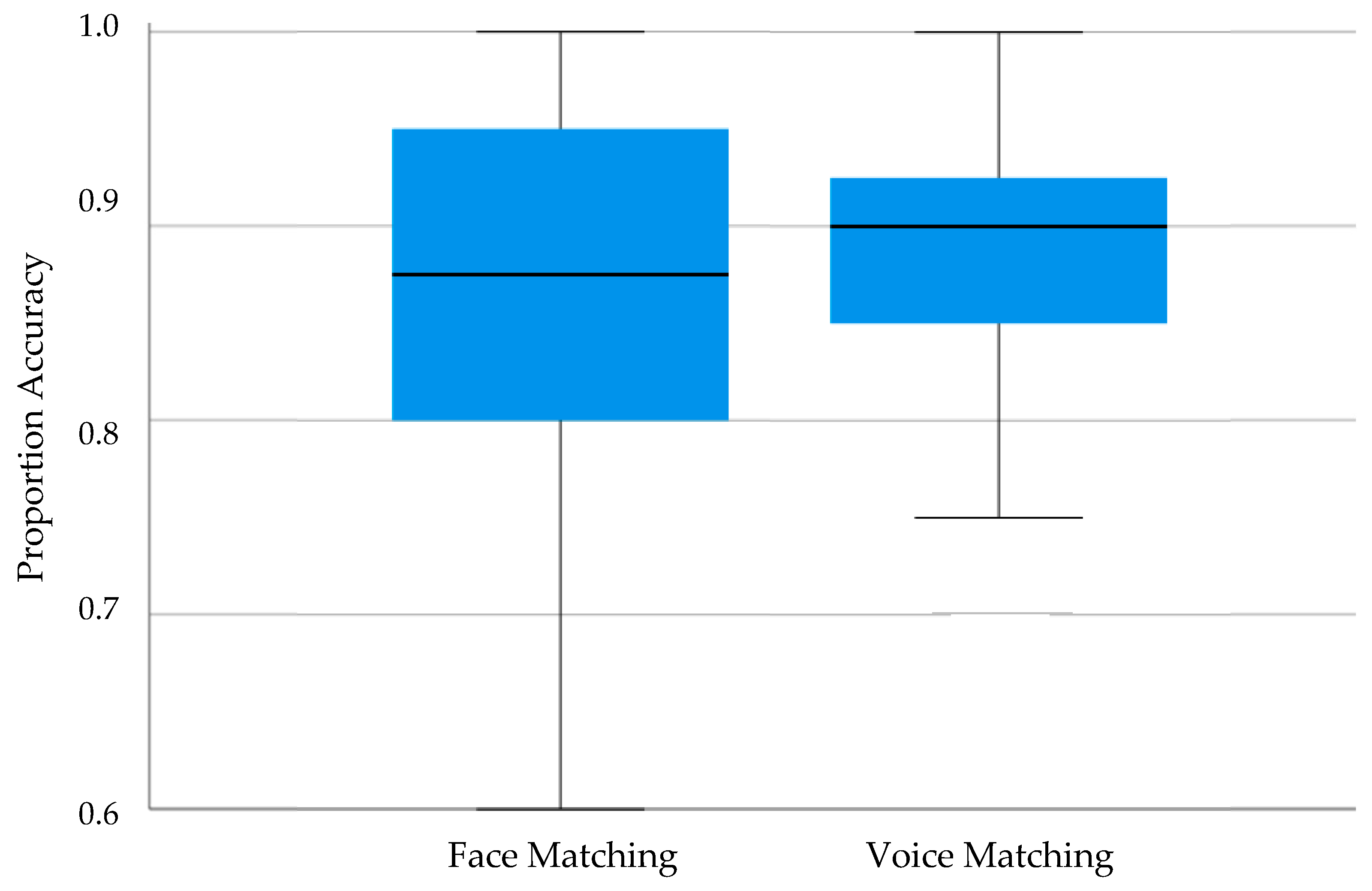
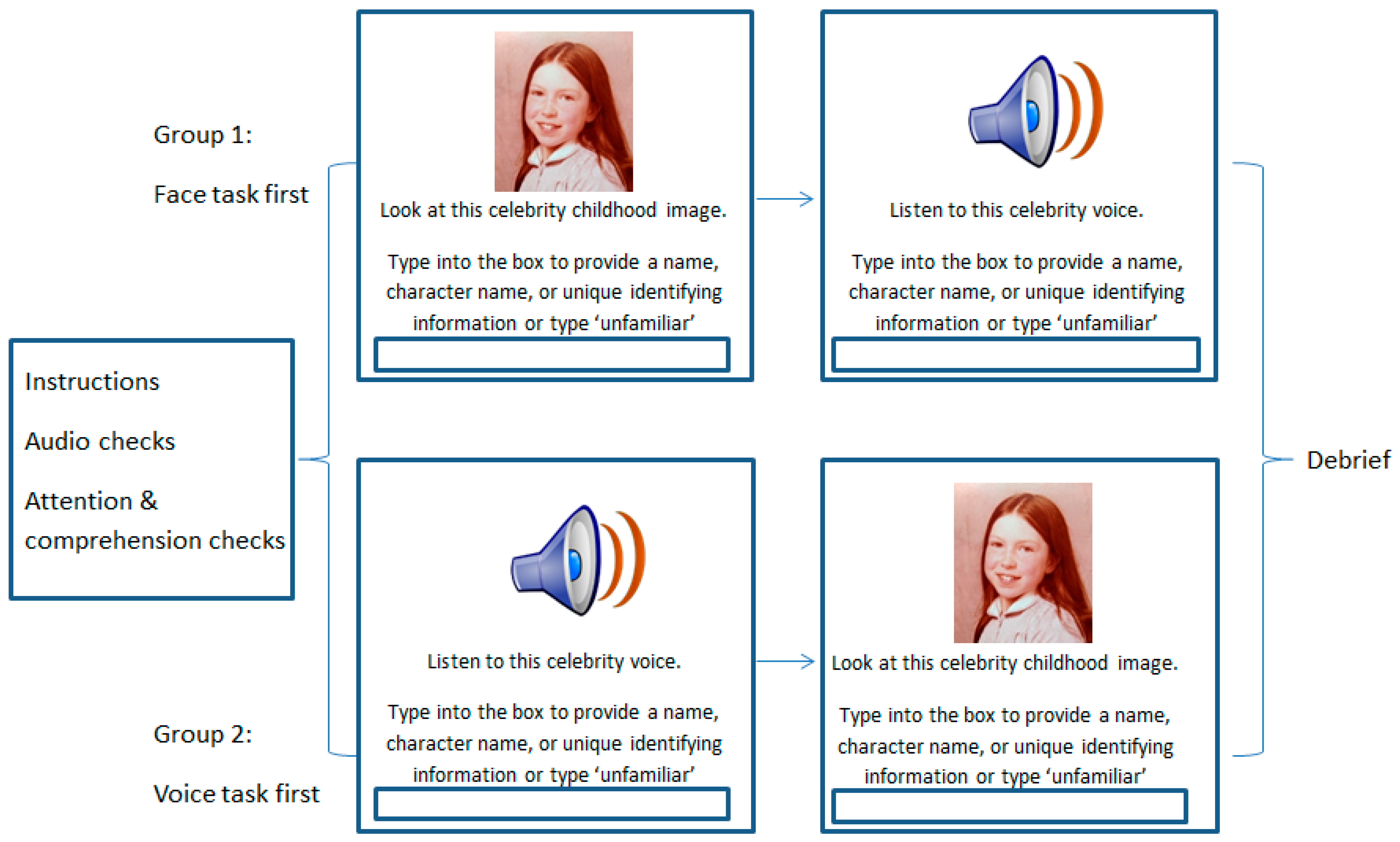
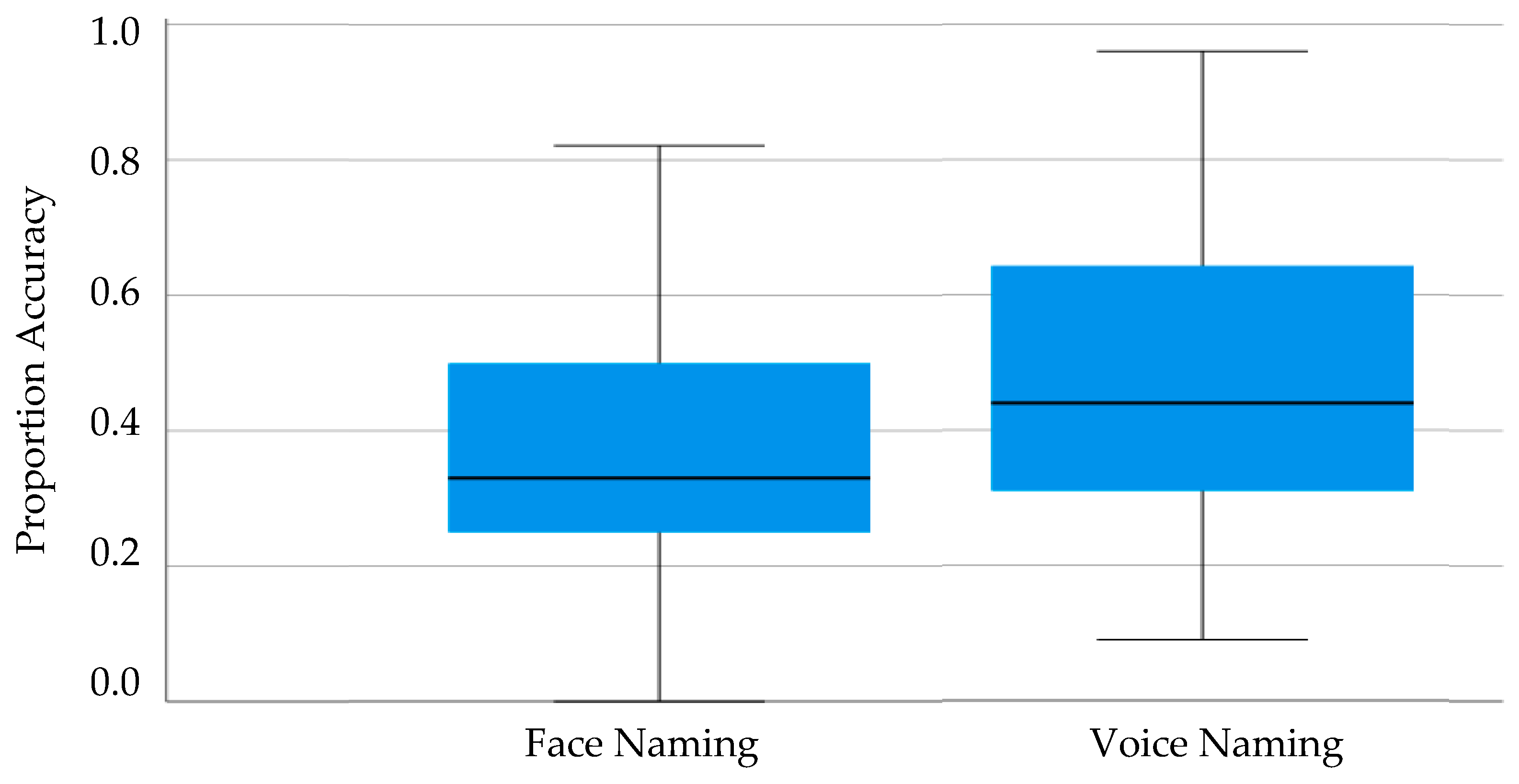
Recent research has examined the extent to which face and voice processing are associated by virtue of the fact that both tap into a common person perception system. However, existing findings do not yet fully clarify the role of familiarity in this association. Given this, two experiments are presented that examine face-voice correlations for unfamiliar stimuli (Experiment 1) and for familiar stimuli (Experiment 2). With care being taken to use tasks that avoid floor and ceiling effects and that use realistic speech-based voice clips, the results suggested a significant positive but small-sized correlation between face and voice processing when recognizing unfamiliar individuals. In contrast, the correlation when matching familiar individuals was significant and positive, but much larger. The results supported the existing literature suggesting that face and voice processing are aligned as constituents of an overarching person perception system. However, the difference in magnitude of their association here reinforced the view that familiar and unfamiliar stimuli are processed in different ways. This likely reflects the importance of a pre-existing mental representation and cross-talk within the neural architectures when processing familiar faces and voices, and yet the reliance on more superficial stimulus-based and modality-specific analysis when processing unfamiliar faces and voices.
Keywords: face processing; voice processing; familiarity; person perception face processing; voice processing; familiarity; person perception