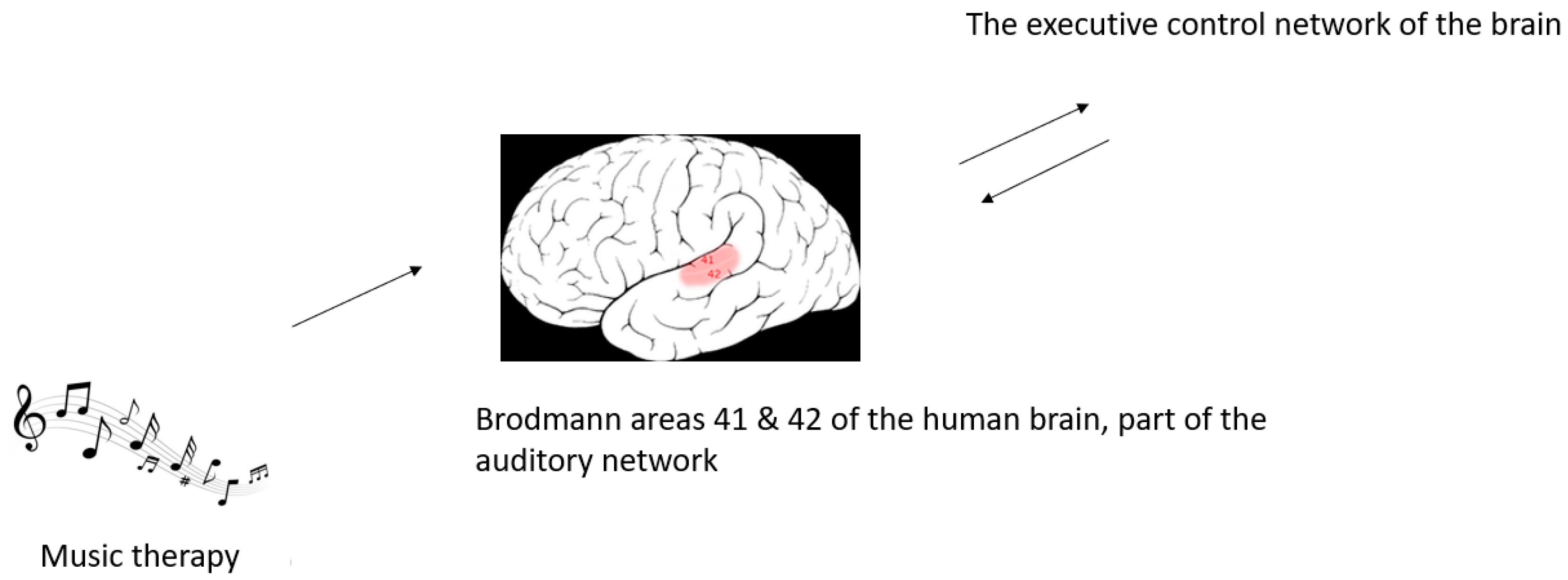
Music Therapy for Gait and Speech Deficits in Parkinson’s Disease: A Mini-Review

Abstract
Share and Cite
Fan, L.; Hu, E.Y.; Hey, G.E.; Hu, W. Music Therapy for Gait and Speech Deficits in Parkinson’s Disease: A Mini-Review. Brain Sci. 2023, 13, 993. https://doi.org/10.3390/brainsci13070993
Fan L, Hu EY, Hey GE, Hu W. Music Therapy for Gait and Speech Deficits in Parkinson’s Disease: A Mini-Review. Brain Sciences. 2023; 13(7):993. https://doi.org/10.3390/brainsci13070993
Chicago/Turabian StyleFan, Leon, Ellen Y. Hu, Grace E. Hey, and Wei Hu. 2023. "Music Therapy for Gait and Speech Deficits in Parkinson’s Disease: A Mini-Review" Brain Sciences 13, no. 7: 993. https://doi.org/10.3390/brainsci13070993
APA StyleFan, L., Hu, E. Y., Hey, G. E., & Hu, W. (2023). Music Therapy for Gait and Speech Deficits in Parkinson’s Disease: A Mini-Review. Brain Sciences, 13(7), 993. https://doi.org/10.3390/brainsci13070993