Article

Multisensory Enhancement of Cognitive Control over Working Memory Capture of Attention in Children with ADHD


1
Department of Psychology, Research Center for Psychology and Behavioral Sciences, Soochow University, Suzhou 215123, China
2
Department of Child and Adolescent Healthcare, Children’s Hospital of Soochow University, Suzhou 215025, China
*
Authors to whom correspondence should be addressed.
These authors contributed equally to this work.
Brain Sci. 2023, 13(1), 66; https://doi.org/10.3390/brainsci13010066

Submission received: 7 December 2022 / Revised: 24 December 2022 / Accepted: 27 December 2022 / Published: 29 December 2022
(This article belongs to the Special Issue Advances in ADHD)

Abstract

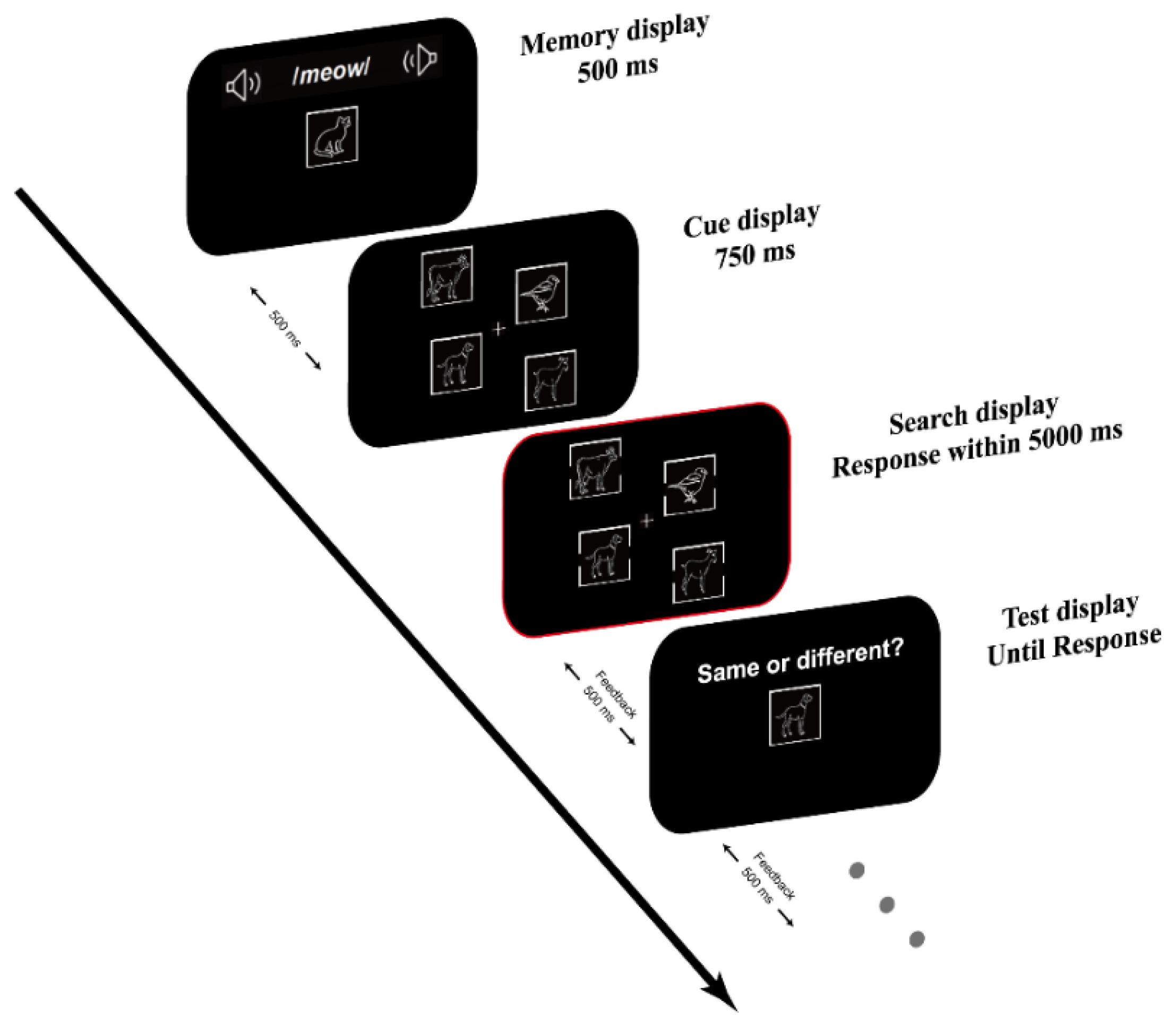
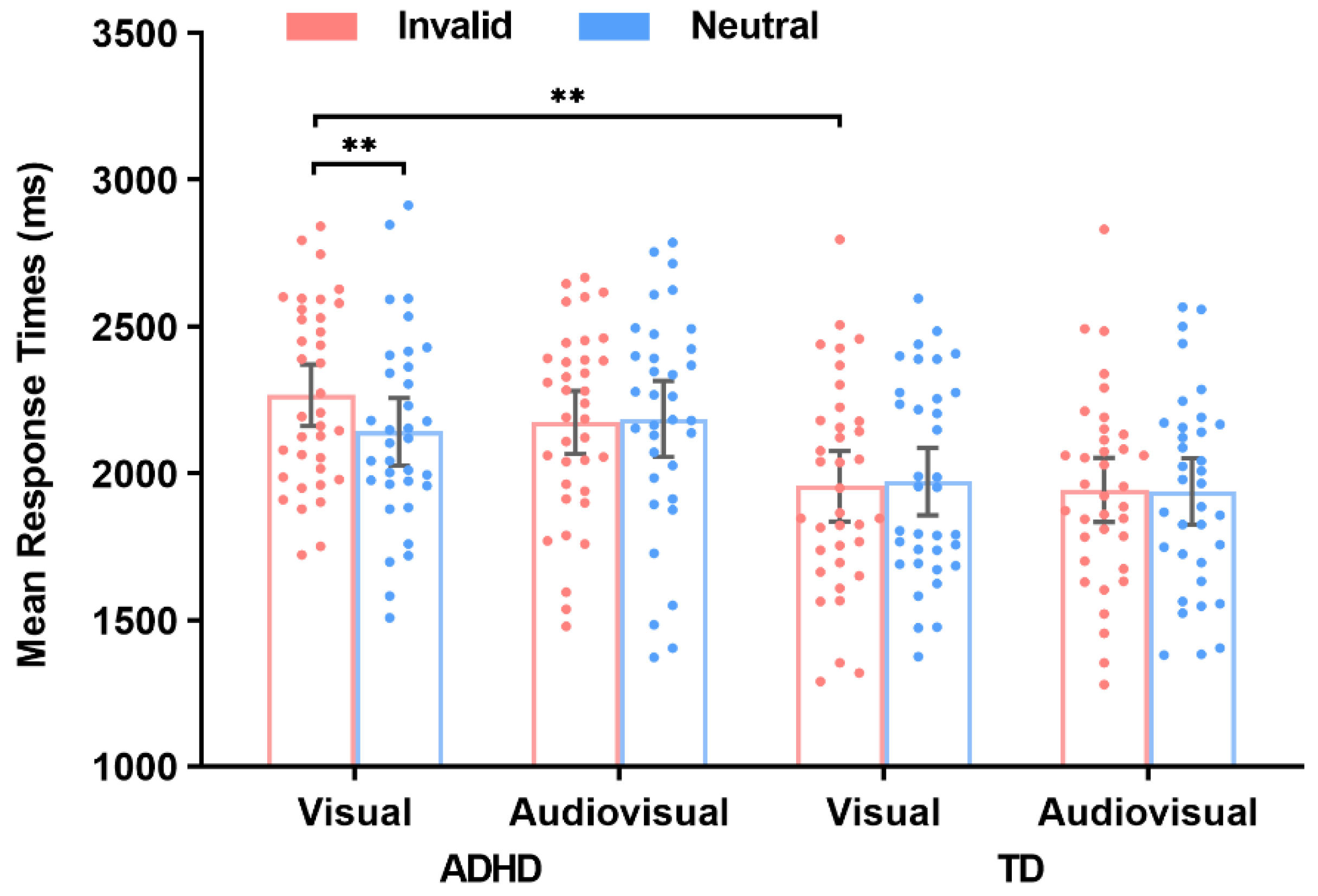
Attention deficit hyperactivity disorder (ADHD) is a common neurodevelopmental disorder in school-age children. Although it has been well documented that children with ADHD are associated with impairment of executive functions including working memory (WM) and inhibitory control, there is not yet a consensus as to the relationship between ADHD and memory-driven attentional capture (i.e., representations in WM bias attention toward the WM-matched distractors). The present study herein examined whether children with ADHD have sufficient cognitive control to modulate memory-driven attentional capture. 73 school-age children (36 with ADHD and 37 matched typically developing (TD) children) were instructed to perform a visual search task while actively maintaining an item in WM. In such a paradigm, the modality and the validity of the memory sample were manipulated. The results showed that under the visual WM encoding condition, no memory-driven attentional capture was observed in TD children, but significant capture was found in children with ADHD. In addition, under the audiovisual WM encoding condition, memory-matched distractors did not capture the attention of both groups. The results indicate a deficit of cognitive control over memory-driven attentional capture in children with ADHD, which can be improved by multisensory WM encoding. These findings enrich the relationship between ADHD and cognitive control and provide new insight into the influence of cross-modal processing on attentional guidance.
Keywords: ADHD; cognitive control; working memory; attentional capture; multisensory processing ADHD; cognitive control; working memory; attentional capture; multisensory processing