1. Introduction
The seismic attribute is a useful tool for hydrocarbon prediction, which is important in the petroleum industry. Many methods are proposed for hydrocarbon prediction from both reflectivity and impedance domains. The fluid factor in the reflectivity domain is one of the most popular and useful tools although it was introduced for more than 20 years ago. The fluid factor is defined as the difference between measured and estimated P wave velocity [
1]. Its expressions are as follows:
where
and
are the coefficients related to the Mudrock line [
2] and fluid substitution, respectively.
A recent work has been called “new fluid factor (
)” [
3]. It is based on the J attribute [
4] which is proposed to reduce the ambiguity using the amplitude versus offset (AVO) method in hydrocarbon prediction. To relate seismic amplitudes to geology, it is necessary to understand all the physical factors that influence seismic amplitudes [
5]. Seismic amplitude is affected by pore fluid, rock matrix and porosity. J attribute is proven to be able to eliminate the porosity effect and enhance the accuracy in hydrocarbon prediction. The new fluid factor modified the equation of J attribute with consideration of the effect of the rock matrix. Mathematically, the new fluid factor is expressed as follows:
where,
where
is the new fluid factor,
is the
J attribute, and
is the correct term related to the rock matrix. The new fluid factor
is improved for hydrocarbon prediction with lower uncertainty. The brine responses are close to zero. Hydrocarbons are obviously separated from brine. The uncertainty of the new fluid factor value in the various
cases are reduced to an acceptable degree without mixing between brine and hydrocarbons. The new fluid factor is stable in this scenario with various porosity and
[
3].
In the impedance domain, there are two popular methods to utilize the well log data or the inversion result. One is the cross plot of acoustic impedance (
) and
, which is introduced by Ødegaard and Avseth [
6]. The brine sands and the shales in the sedimentary basin have a trend with the depth: low
and high
in the shallow, and high
and high
in the shallow. The response of brines and shales in the cross plot of
vs.
is called the “background trend”. Both
and
shift towards lower values from the background trend when the rock contains hydrocarbons. Thus, this cross plot can be used to identify the hydrocarbon by the anomaly selection.
Another technique is the Lambda–Mu–Rho (
-
-
) to improve fluid dictation and lithology discrimination, where
is 1st Lamé parameters,
is 2nd Lamé parameters or shear modulus, and
ρ is density [
7]. Mathematically,
can be represented by bulk modulus
and shear modulus
. The common attributes in the
-
-
technique (
and
) can be linked with acoustic impedance and shear wave impedance (
). Generally, the hydrocarbon reservoir can be identified because it has lower
than brine sands.
and
are defined as follows:
The above methods work successfully in many hydrocarbon reservoirs, in particular, gas layers. Although these two methods have been proposed for more than 10 years, they are still applied in recent works [
8,
9,
10].
A new method is named “delta K
” [
11]. It is defined as the difference of bulk modulus between the real case (
) and water-substituted rock (
) as follows:
The definition of conventional fluid factor contains the information of shear modulus and density, which are affected by porosity, rock matrix and pore fluid, simultaneously. However, delta K only focuses on bulk modulus, which is more sensitive to fluid changing. Furthermore, the consideration of the water-substituted case in the definition makes the delta K more precise.
Uncertainty exists in the hydrocarbon prediction. The uncertainty is defined as the estimated amount or percentage by which an observed or calculated value may differ from the true value [
12]. In the fluid prediction, it refers to the proportion of match or not match between predicted or true fluid types. Uncertainty is quantitatively analysed using five metric parameters (precision, recall, accuracy, F-measure and the area under the curve (AUC) in this study.
2. Research Methodology
The Monte Carlo method is a useful algorithm that has been applied in many aspects. It consists of repeated random sampling to generate a series of data. Then, these data are input into a model/system to obtain a numerical result. In principle, the Monte Carlo method takes advantage of its stochastic nature to solve complex problems. The typical application of the Monte Carlo method includes sampling, estimation and optimization [
13]. This method has been applied in the field of petroleum exploration, including seismic processing, inversion, reservoir identification and uncertainty quantification [
14,
15,
16,
17].
The Monte Carlo method is used in the forwarding model in this study. The range of random sampling can be adjusted conveniently, and the combination of the variables can cover most scenarios when the number of samples is sufficient. The responses of these scenarios can be visualized and analysed in the different methods of hydrocarbon prediction.
Some empirical equations are used for Monte Carlo modelling. Three empirical relationships [
18] are used to derive
Vp,
Vs, and the density of sand in this model for the sand layer:
In addition, the equations for the shale layer which is used for the analysis of the interface-domain attribute are as follows:
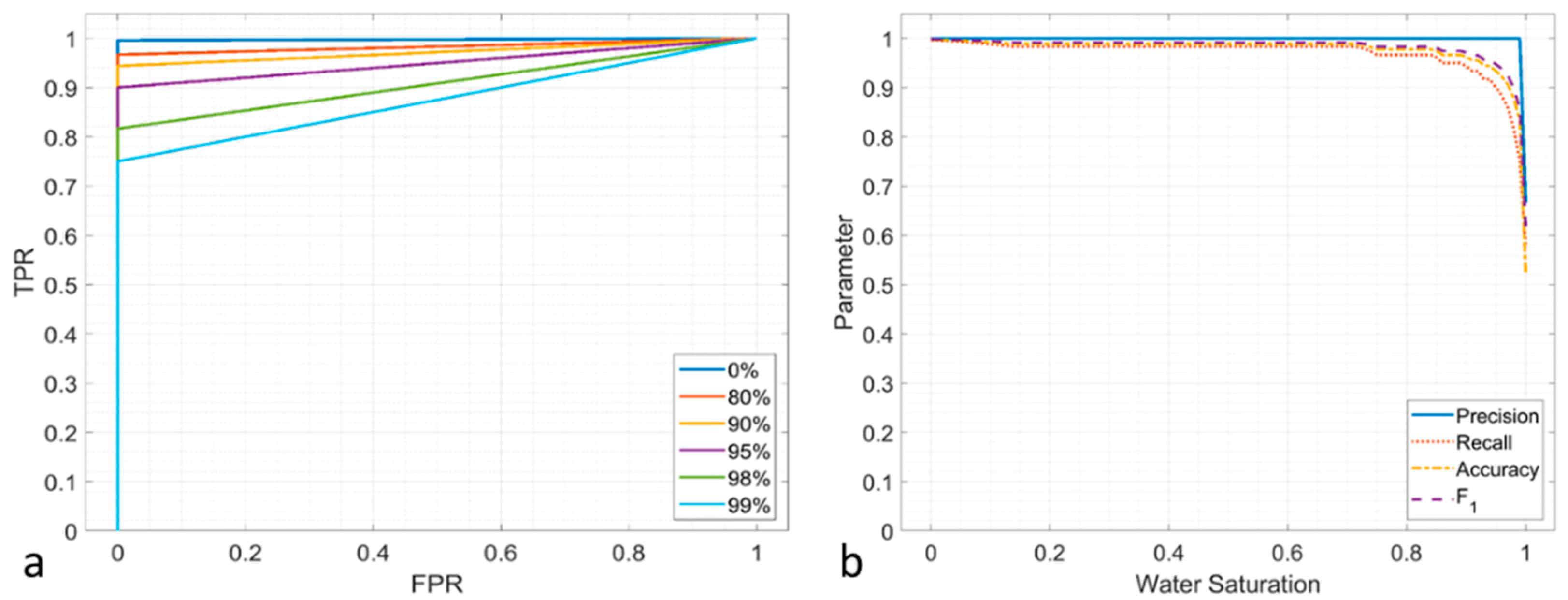
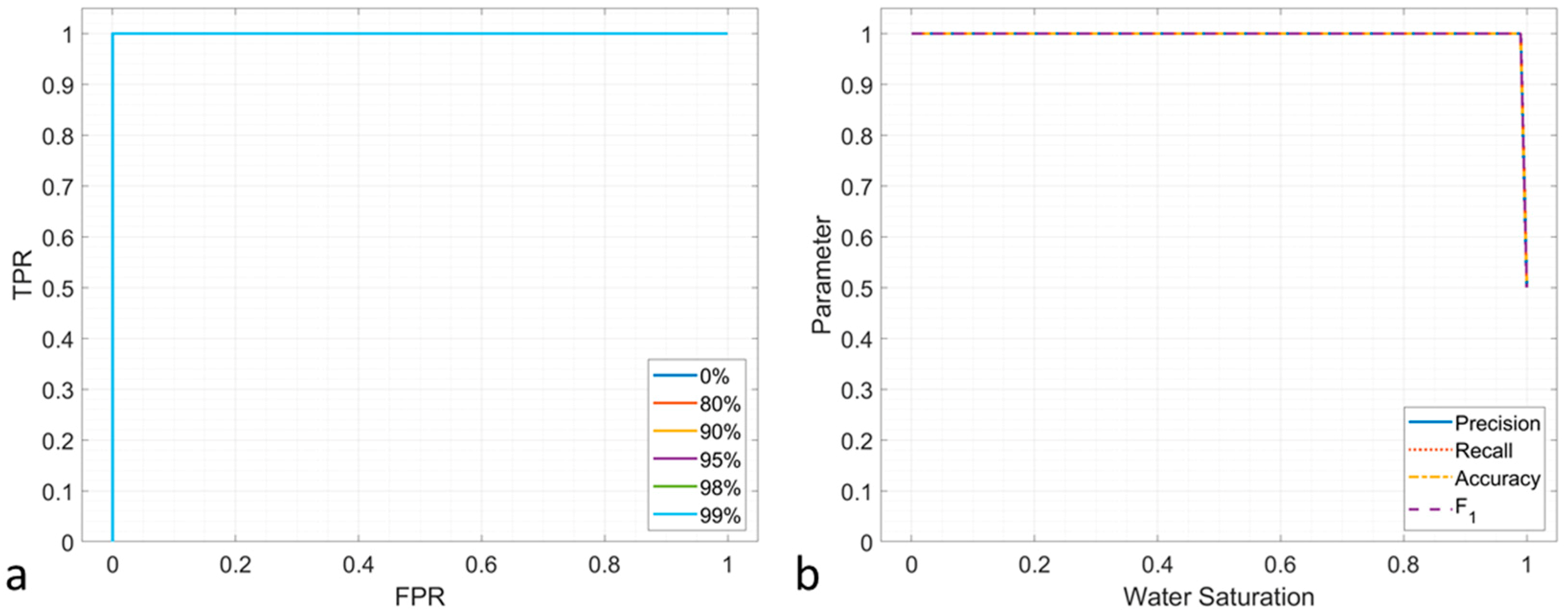
Hydrocarbon prediction can be regarded as binary classification which contains bool values, true and false. One of the standard ways to judge the performance is the confusion matrix. A confusion matrix consists of the counts of each predicted label: true positive (TP), false positive (FP), false negative (FN) and true negative (TN). TP and TN refer to correct predictions, and FP and FN are incorrect predictions. The metrics which are usually used are the precision, recall, accuracy and F-measure as shown in
Table 1. Each metric ranges from 0 to 1, with 1 representing best performance.
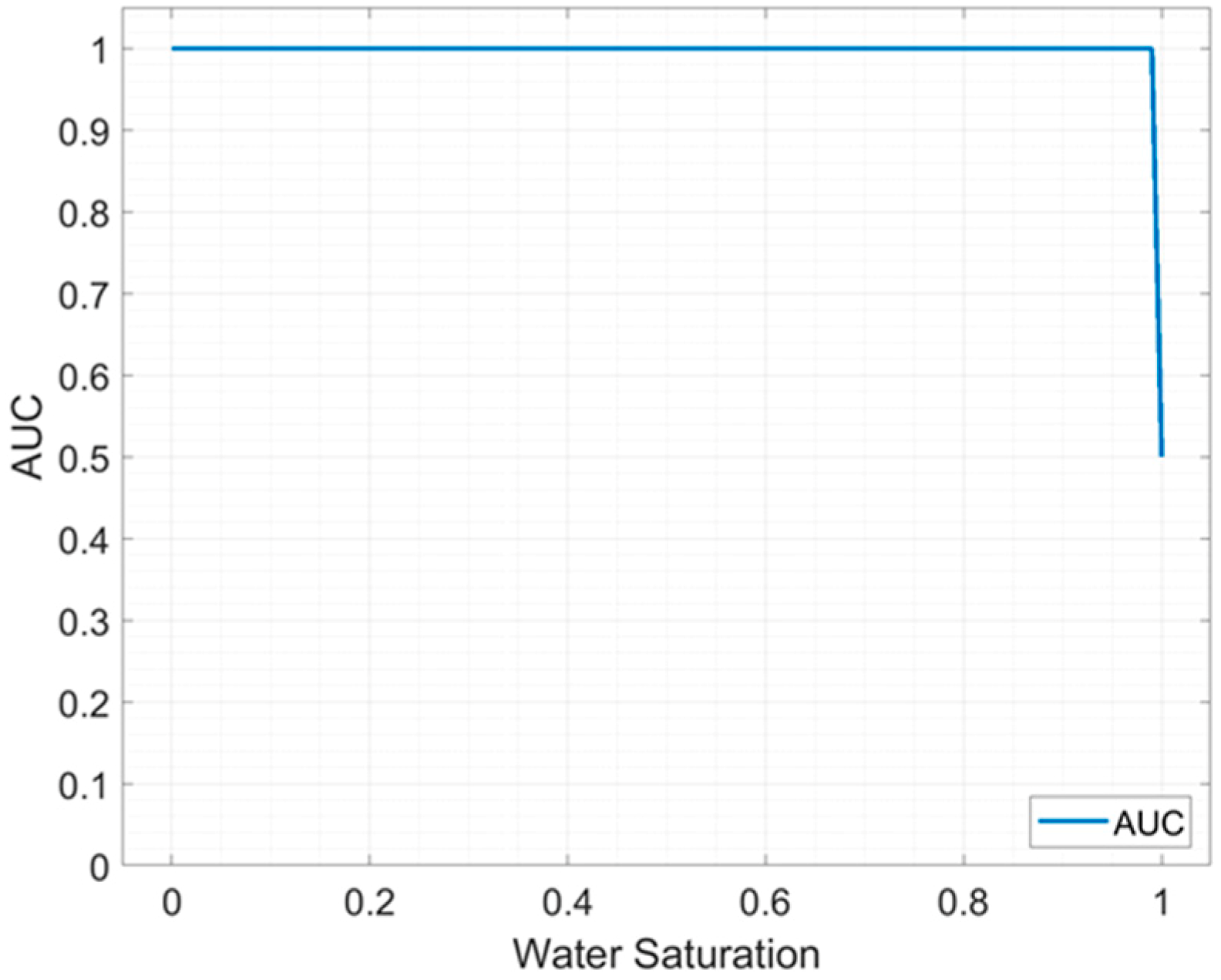
The receiver operating characteristic (ROC) curve is usually used to evaluate the binary classifier. The AUC is equal to the probability that a classifier will rank a randomly chosen positive instance higher than a randomly chosen negative one (assuming ‘positive’ ranks higher than ‘negative’) [
19]. The AUC which equals 1 means the best prediction. A good classifier has the ROC which is above the line of no-discrimination (a line from the left bottom to the top right corner, also called ‘random guess line’). The ROC and AUC analysis, which are based on the evaluation metrics and confusion matrix, output a threshold for a specific binary classification problem.
3.2. Uncertainty Analysis under Different Noise Conditions
Noise is unavoidable in the analysis of rock physics. Hence, the uncertainty under noise conditions is an essential ability of the proposed methods. Noise can be ambient or source generated, coherent or random [
20]. In a broader sense, noise can be from the uncertainty of the measurement or seismic inversion results. The real data, including well log data, seismic data and inversion data, cannot be noise-free.
Seismic inversion, simultaneous inversion in particular, is a useful tool in quantitative interpretation, although it was not involved in the previous discussion. This technique converts the data from the reflectivity (or interface) domain to the impedance domain, which is more geologically meaningful. Simultaneous inversion can provide information on the P-wave and S-wave velocities and the density in a large area. The accuracy of simultaneous inversion is limited, although it can achieve high accuracy in theory. Its accuracy is dominated by the quality of the input pre-stack seismic data and the well log, the seismic-well tie, and the extracted wavelet together. In a real application, the correlation coefficient between the inverted and real log maybe is not as high as the expectation. Hence, there are errors between the inverted data and the real value. The errors can be regarded as noise when applying the inverted data as the input.
The commonly used unit of noise level is decibel (dB). By definition, the noise level (
) can be derived by the ratio of energy (
) or amplitude (
) between noise and signal as follows:
In this section, the noise levels are set at −20 dB, −10 dB and −7 dB which correspond the energy ratio is 0.01, 0.1 and 0.2. The noise analysis is performed with different water saturation conditions.
3.2.1. FFnew
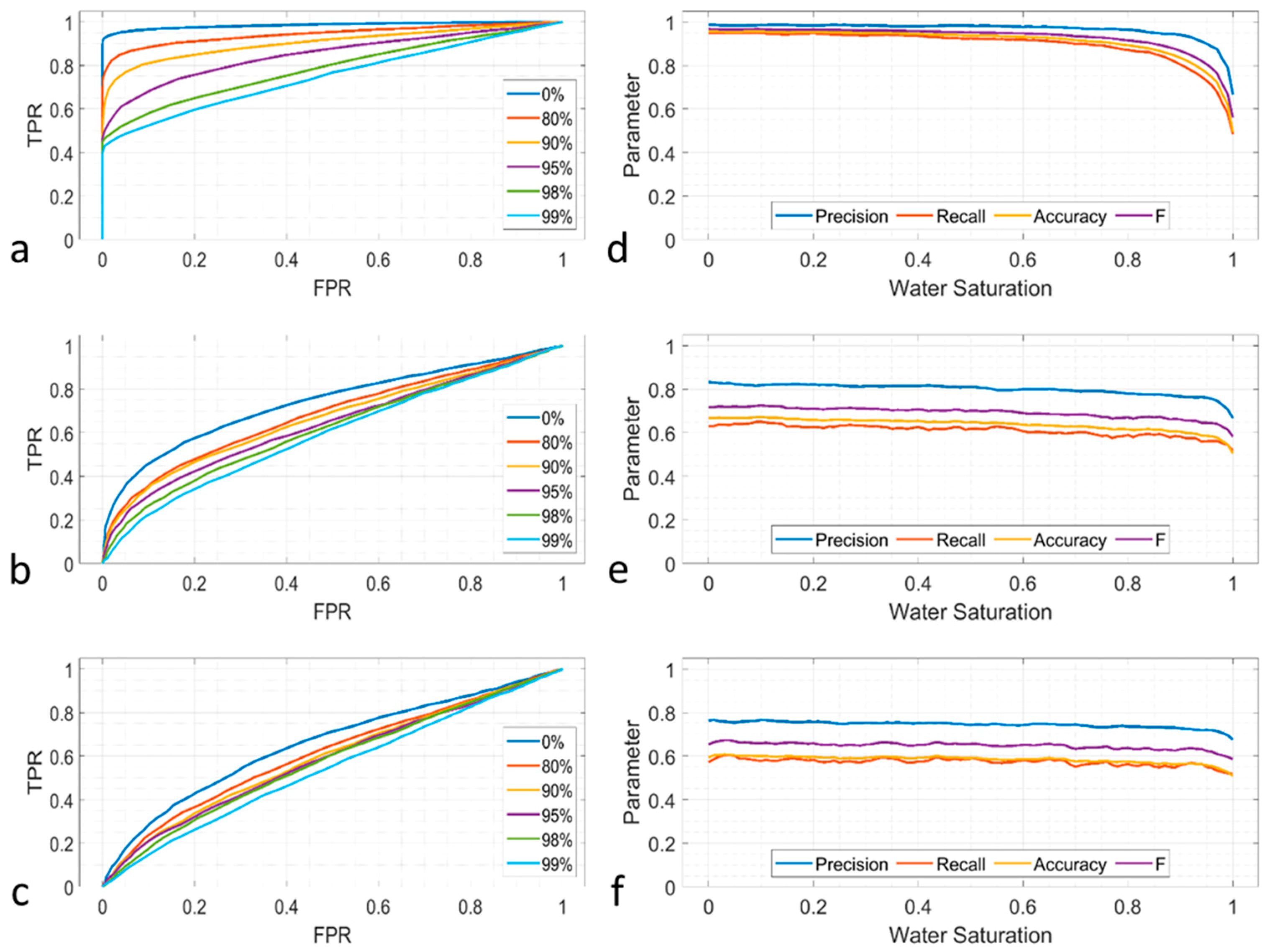
The ROC curves of
under different noise levels are shown in
Figure 9. The performances of the
are high when the noise is relatively low (−20 dB), as shown in
Figure 9a. The true prediction ratio decreases when the noise is −20 dB. Furthermore, the performances are worse with increasing noise at −10 dB and −7 dB, as shown in
Figure 9b,c. Compared with the −20 dB case, the ROC curves shift towards the random guess line. The ROC curve is close to the random line when the noise reaches −7 dB. which indicates that the
performance in a high-noise situation is poor. The evaluation metrics of the
are shown in
Figure 9d–f. The parameters are above 0.8 when the noise is −20 dB and the water saturation is less than 80%. When the noise is −10 dB, the metrics decrease: the precision is approximately 0.8, whereas the recall, accuracy and F
1 are approximately 0.6 to 0.7. When the noise is −7 dB, the parameters reduce continuously. The precision remains at approximately 0.8, whereas the other three parameters are approximately 0.6. Note that the recall is close to 0.5, which indicates that the performance is near that of the random guess.
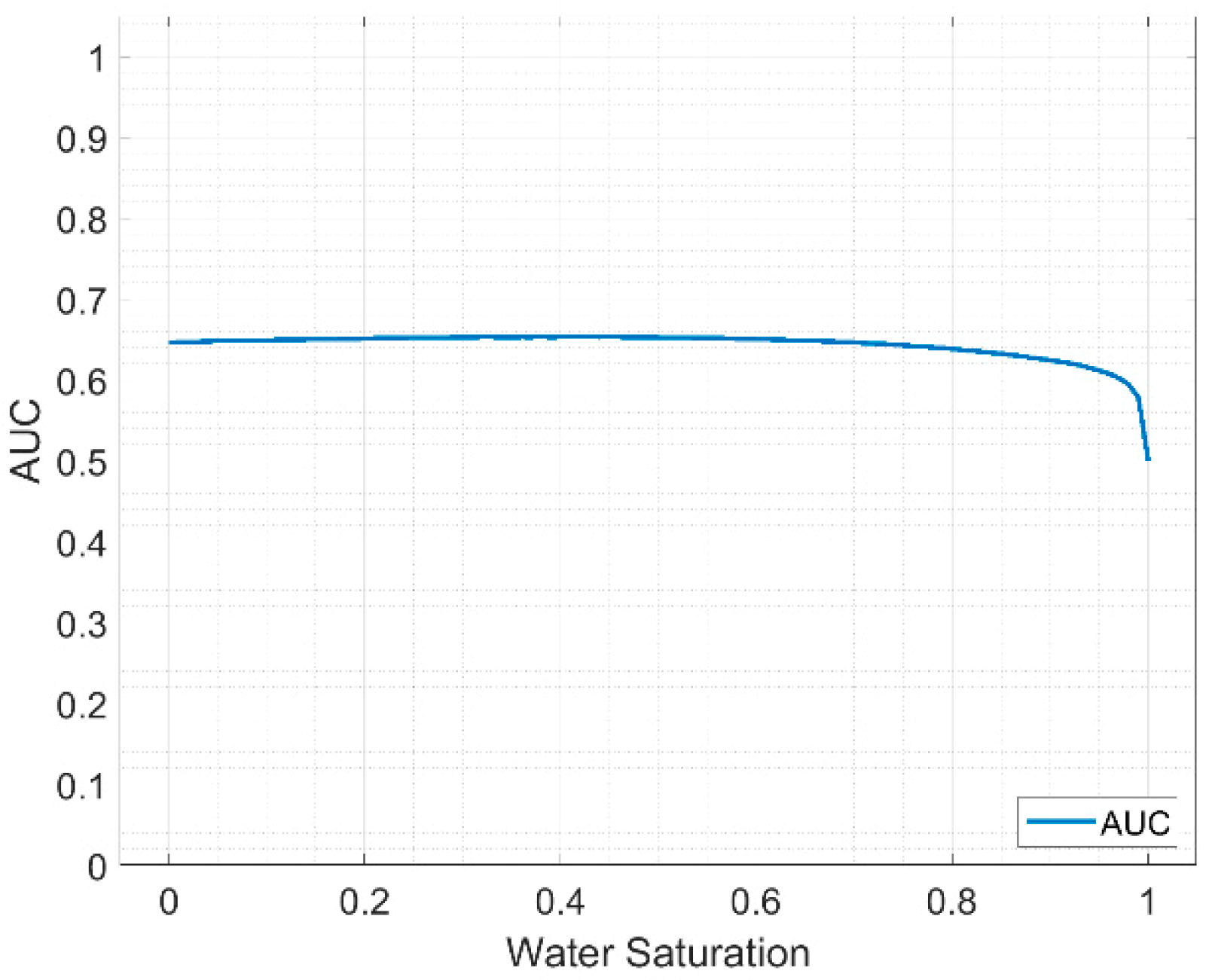
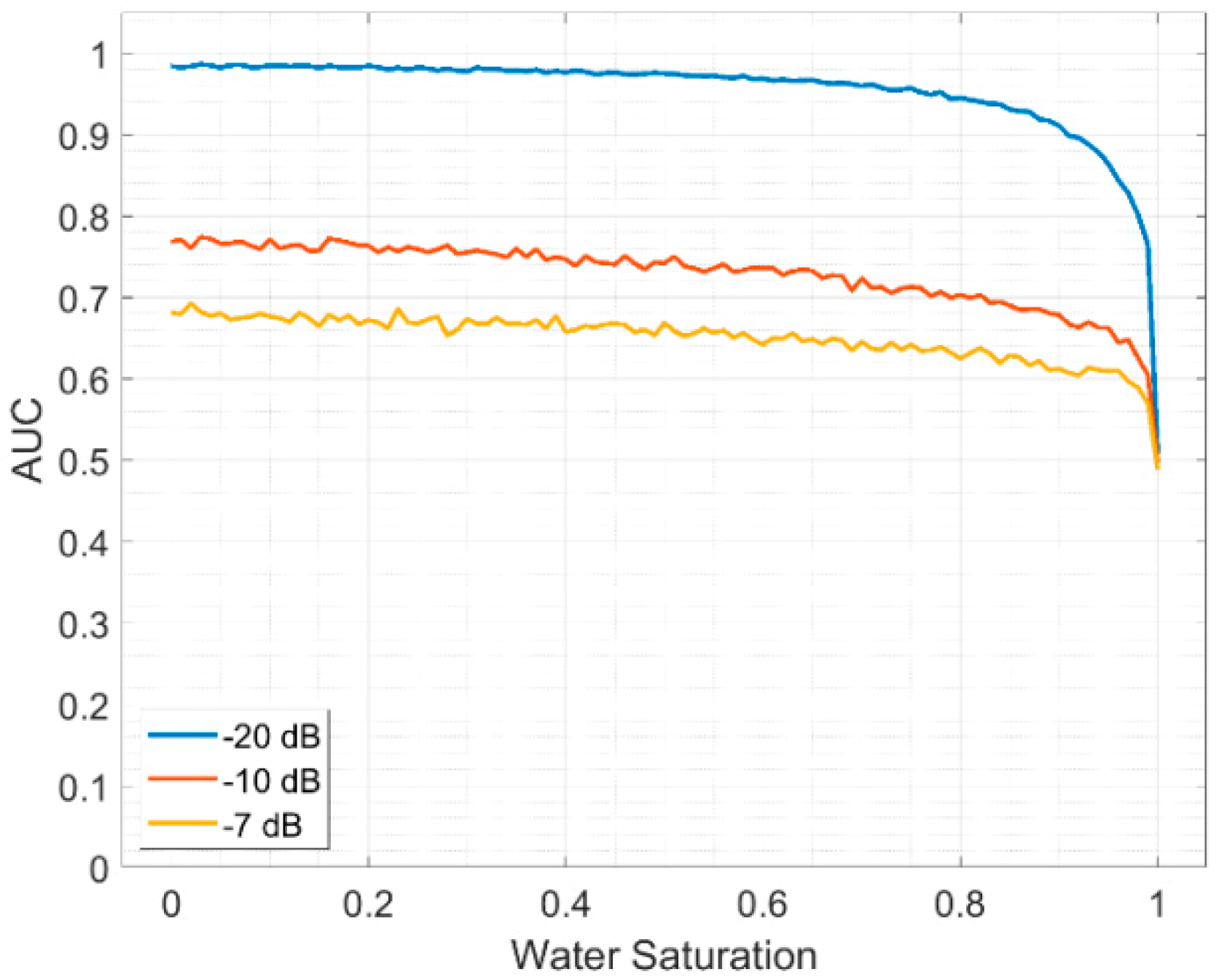
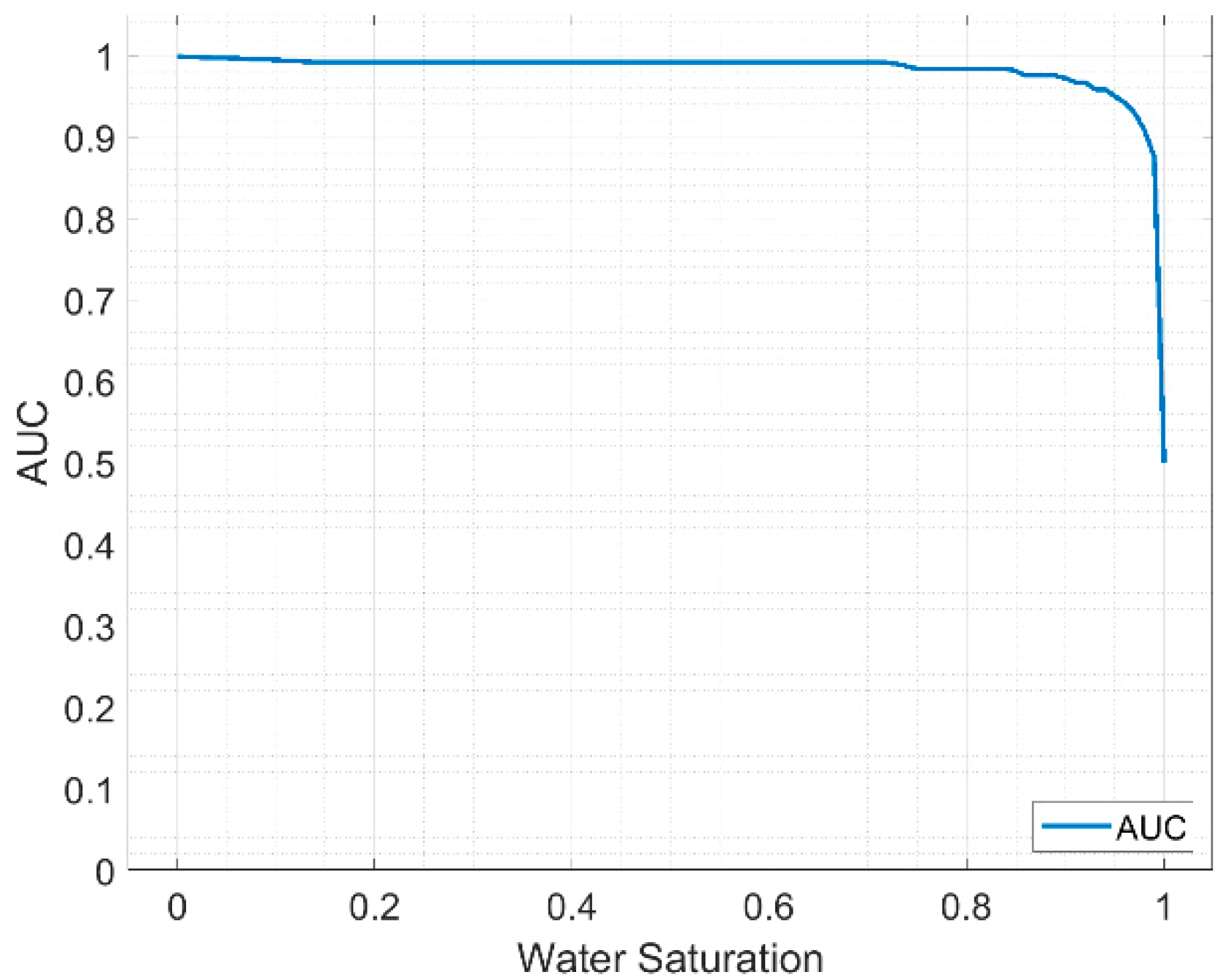
The AUC curves are plotted in
Figure 10. The performances in the cases of −20 dB, −10 dB and −7 dB are represented in blue, red and yellow, respectively. The AUC reaches 0.9 when the noise is low. The AUCs decrease with increasing noise. The AUCs are approximately 0.7 and 0.65, respectively, when the noise is −10 dB and −7 dB.
3.2.2. Delta K
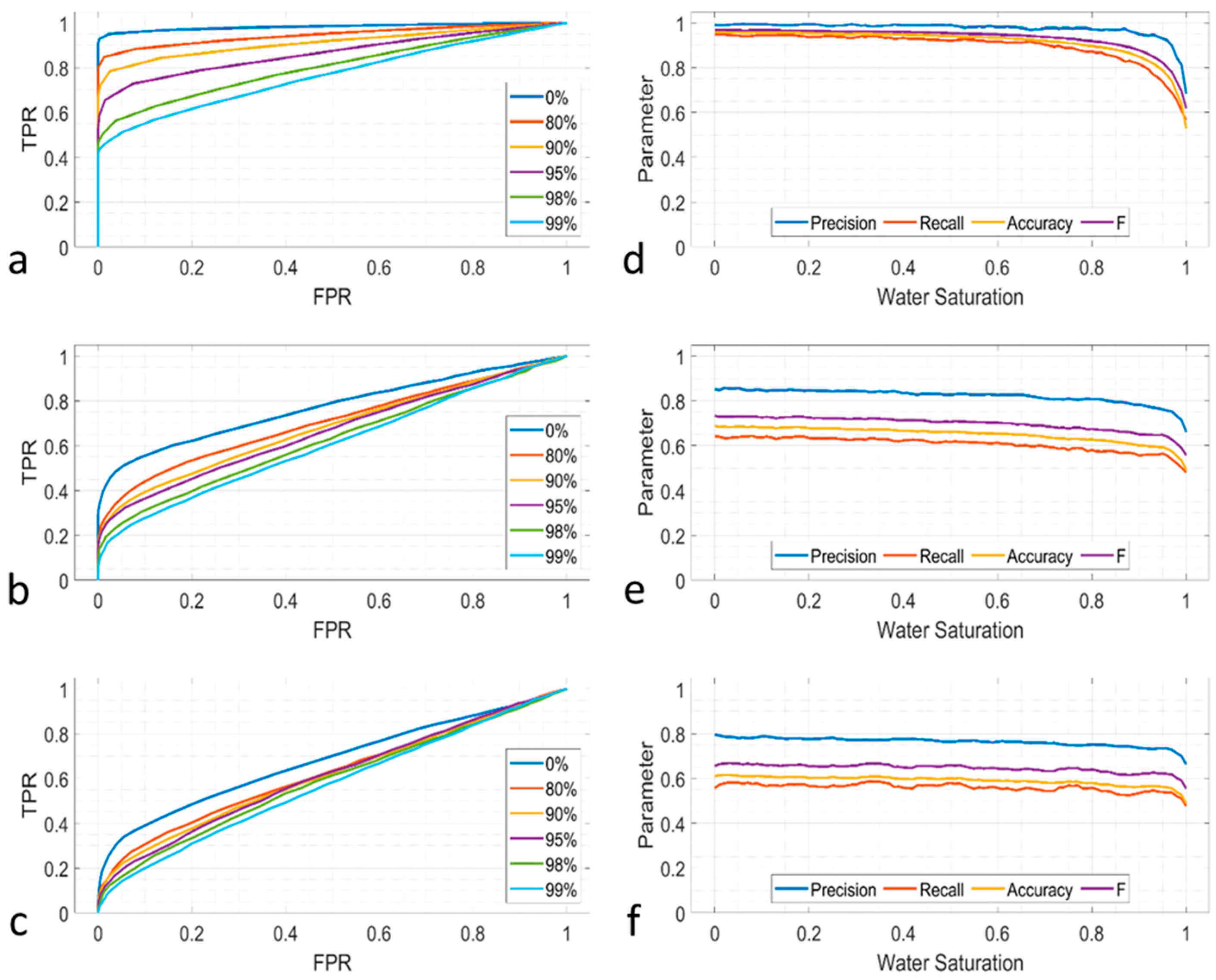
The ROC curves of
are shown in
Figure 11. This parameter performs well when the noise is low (−20 dB), as shown in
Figure 11a. The ROC curve is close to the top left corner, which indicates that the prediction reaches a high performance. The TPR is approximately 0.6 even when the water saturation is high (98% and 99%). When the noise is −10 dB, the performance of ROC is worse, as shown in
Figure 11b. The lowest TPR is 0.75 when the fluid is saturated hydrocarbon, whereas the TPR values range from 0.4 to 0.6 when the water saturation is higher than 80%. The lowest TPR reduces to 0.6 in the −7 dB noise situation (shown in
Figure 11c) when the fluid is saturated hydrocarbon. For cases of high water saturation, the TPR is only 0.2 to 0.4. The evaluation metrics are plotted in
Figure 11. The parameters are close to one when the water saturation is low, and the noise is −20 dB, as shown in
Figure 11d. The results illustrate that the
parameter has good performance when the noise is low. In the scenario where the noise is −10 dB, as shown in
Figure 11e, the parameters reduce to different degrees. The precision remains above 0.9, whereas the others range mainly between 0.7 and 0.9. When the noise is −7 dB, the parameters reduce further, as shown in
Figure 11f. The precision is between 0.85 and 0.9, whereas the others range from 0.65 to 0.75.
The comparison of the AUC curves in the scenarios where the noise is −20 dB, −10 dB and −7 dB is shown in
Figure 12. The performance of
decreases with increasing noise. The approximate ranges of the AUC are 0.97 to 1, 0.8 to 0.9 and 0.75 to 0.8 when the noise is −20 dB (blue), −10 dB (red) and −7 dB (yellow), respectively.
3.2.3. FFSmith
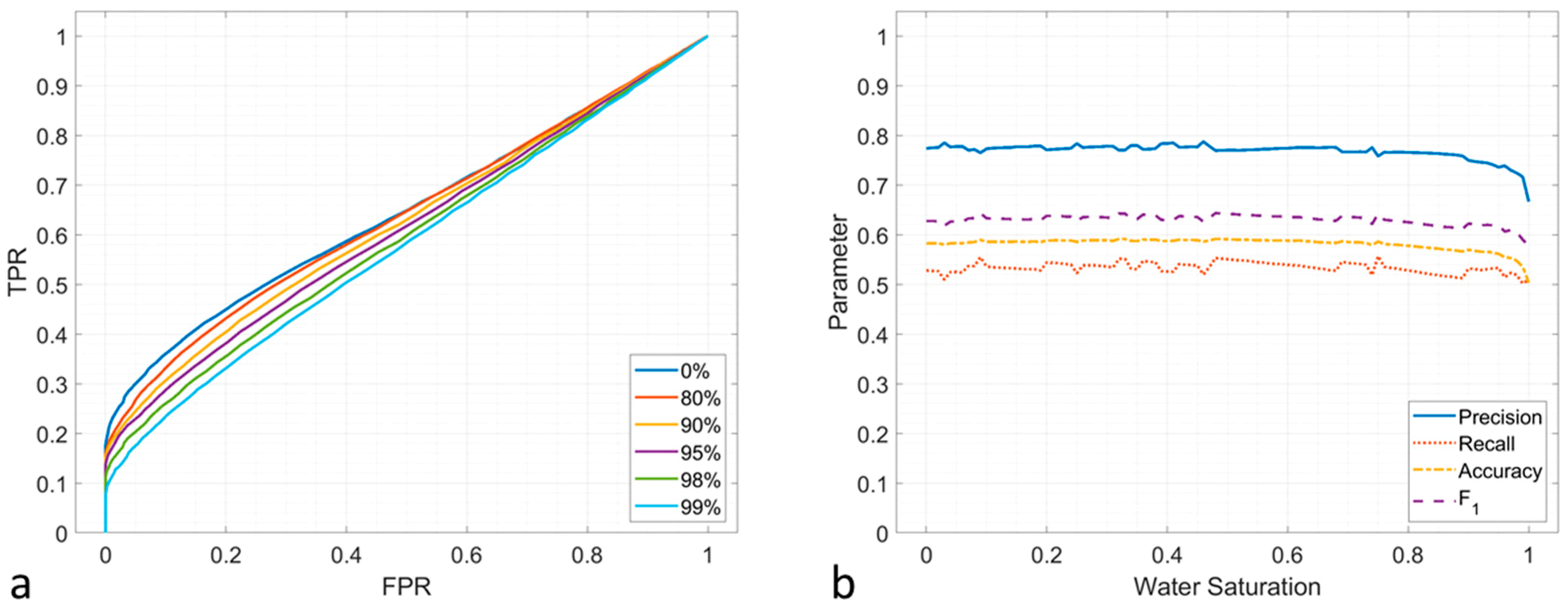
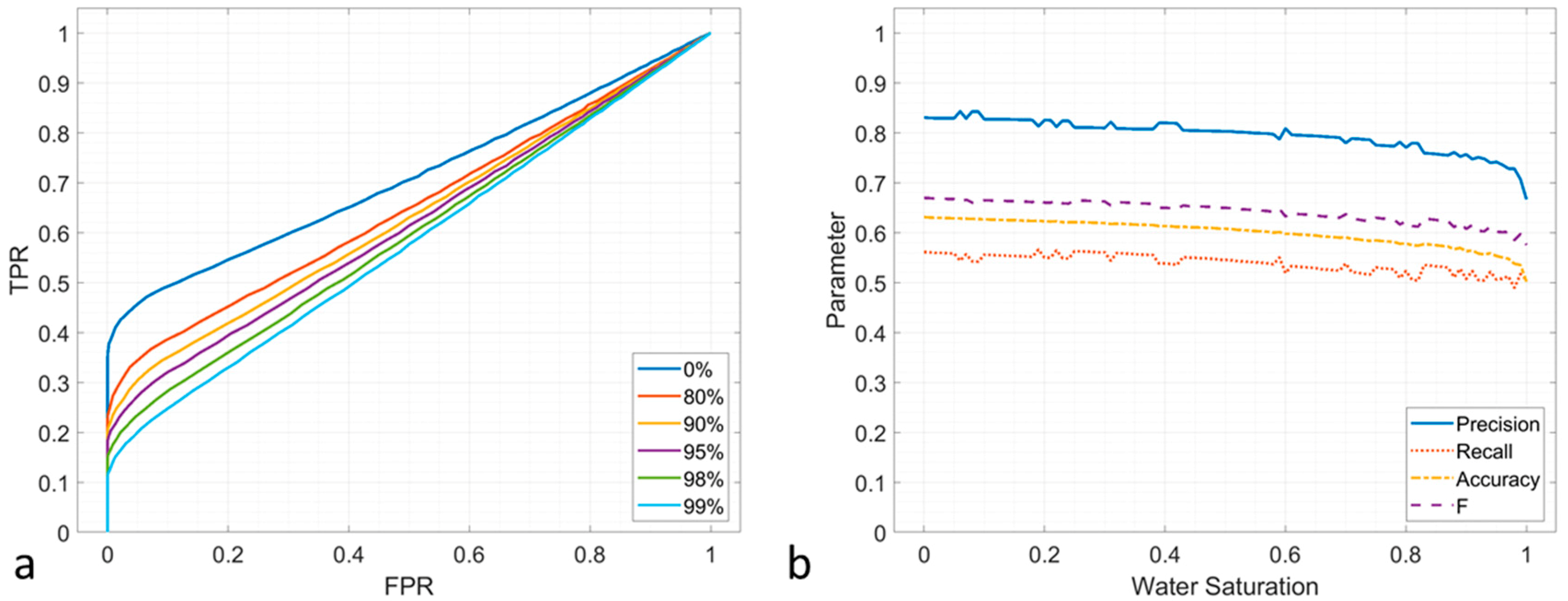
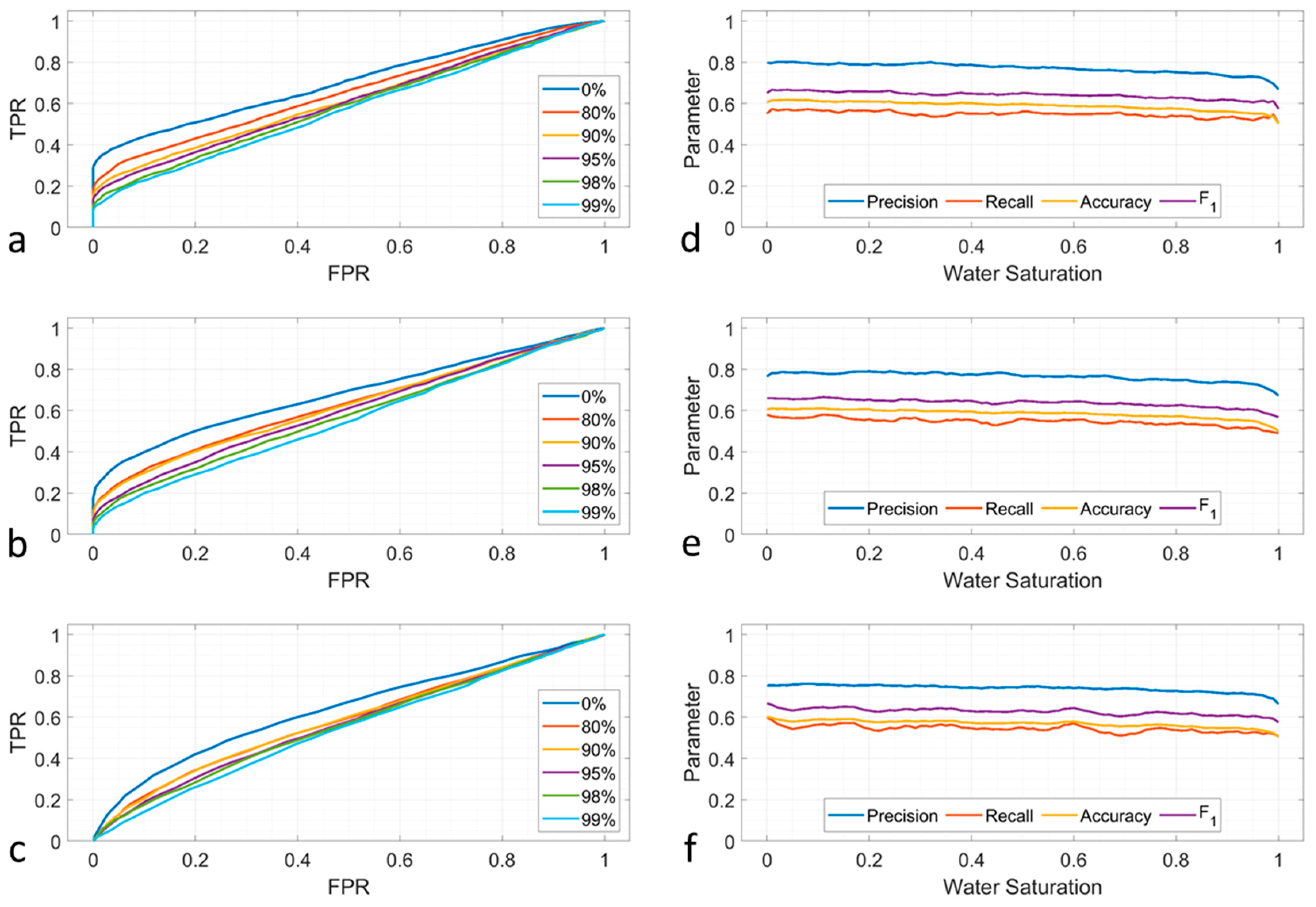
The ROC curves of
under different noise conditions (−20 dB, −10 dB and −7 dB) are shown in
Figure 13a–c, respectively. The shapes of ROC curves are similar, which indicates
is less affected by noise. However, the performance of
is poor that all the curves gather near the random guess line. The evaluation metrics are plotted in
Figure 13d–f. The precision is close to 0.8 when the noise is −20 dB, while the other metrics are less than 0.7 as shown in
Figure 13d. The results in −10 dB and −7 dB (
Figure 13e and f) are similar to the −20 dB scenario.
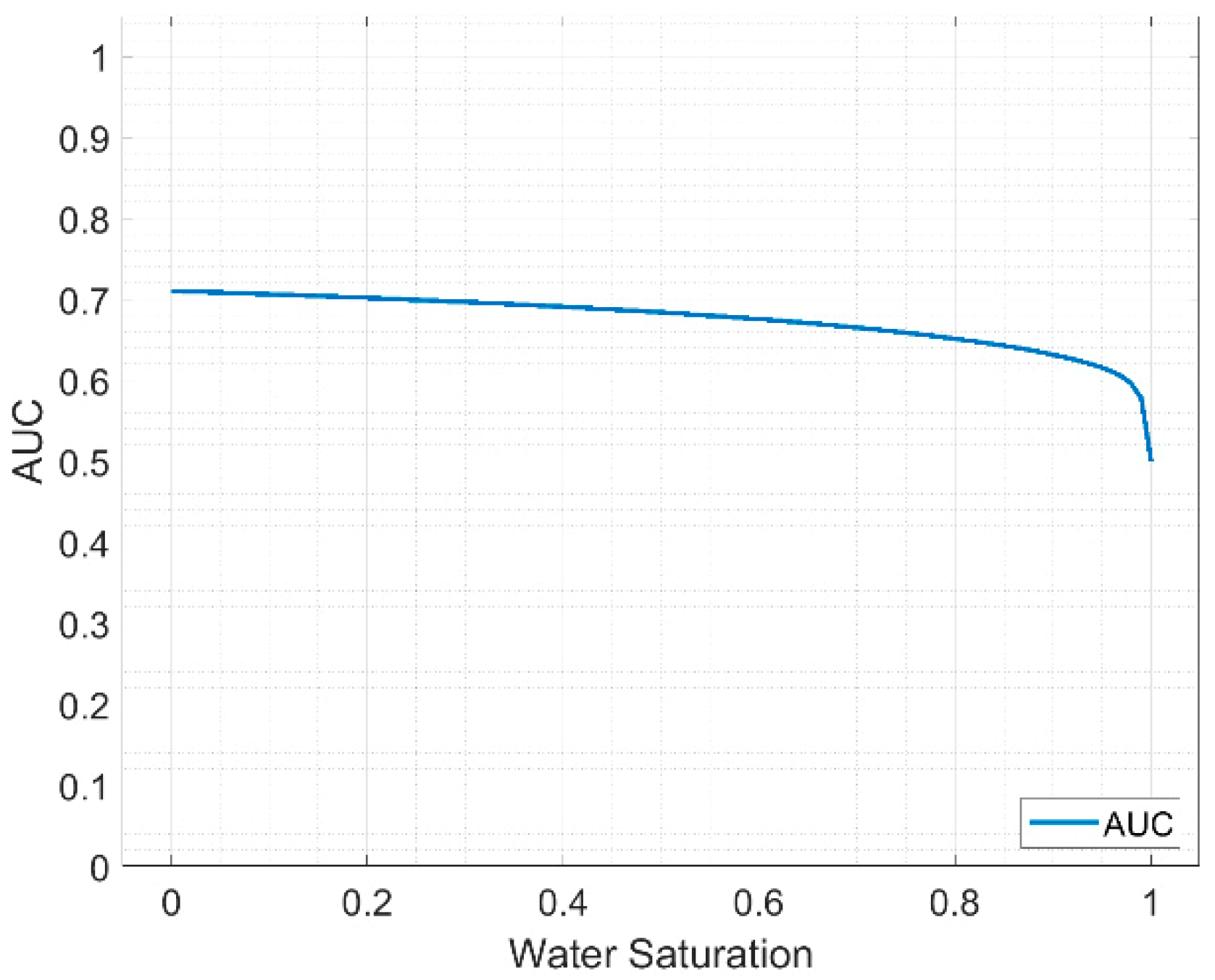
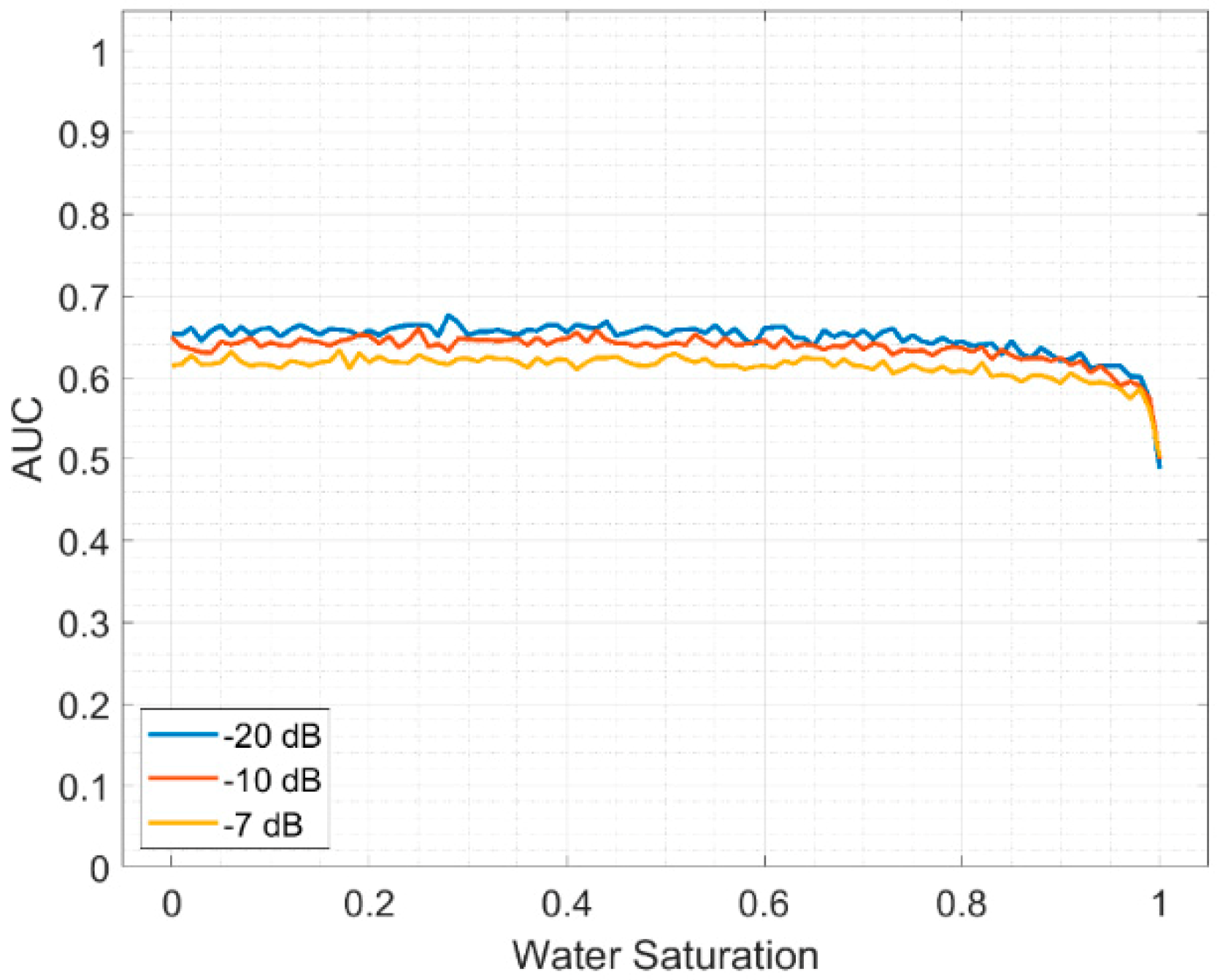
The comparison of the AUC curves in the scenarios where the noise is −20 dB, −10 dB and −7 dB is shown in
Figure 14. The performance of
decreases with increasing noise. The approximate ranges of the AUC are 0.6 to 0.7 when the noise is −20 dB (blue), −10 dB (red) and −7 dB (yellow), respectively.
3.2.4.
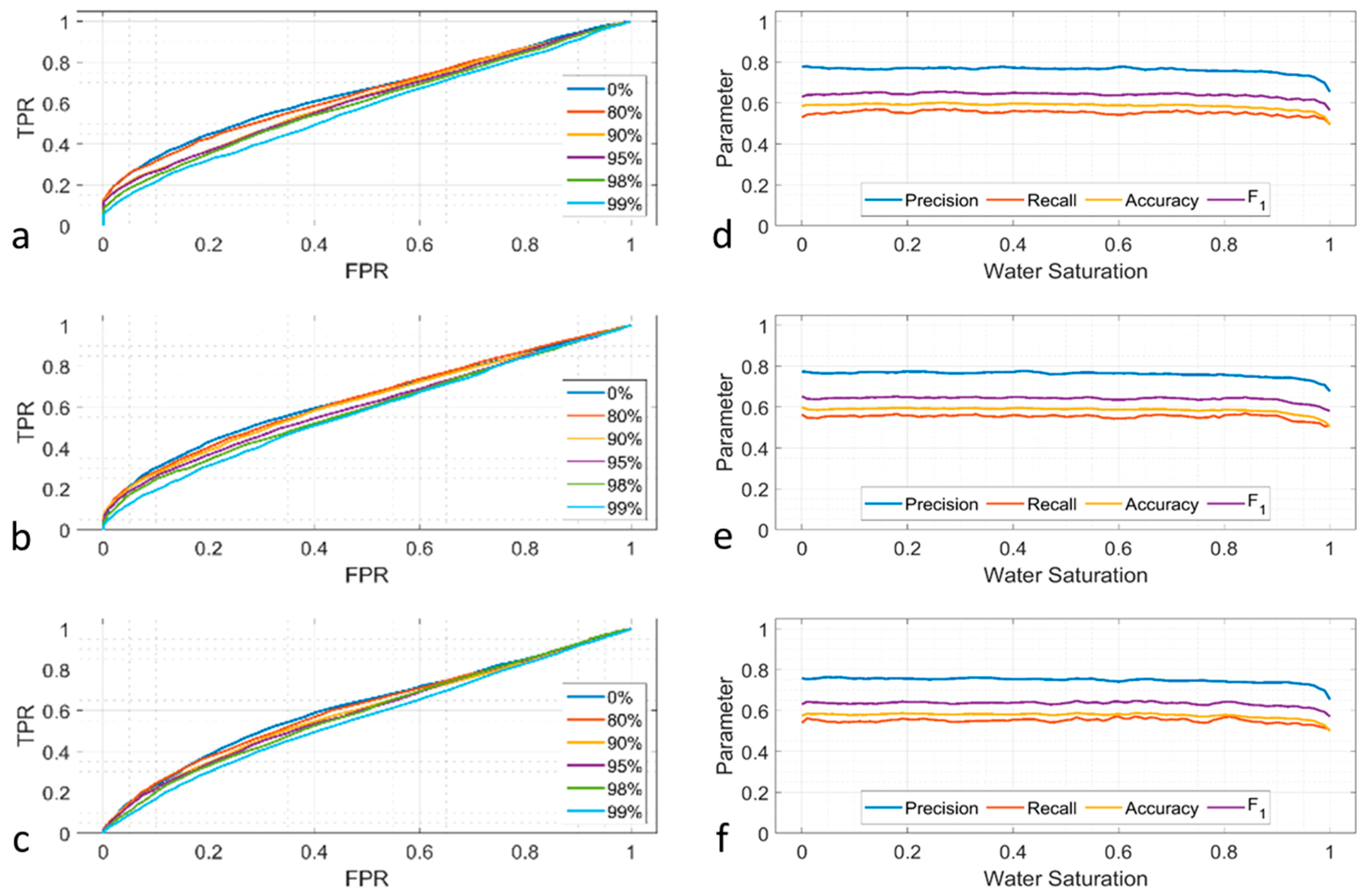
The ROC curves of
under different noise conditions (−20 dB, −10 dB and −7 dB) are shown in
Figure 15a–c, respectively. The ROC curves shift towards the random guess line with the increasing noise level. The evaluation metrics are given in
Figure 15d–f. The precision is close to 0.8 and the other metrics are less than 0.7. The results in −10 dB and −7 dB (
Figure 15e,f) are similar to the −20 dB scenario.
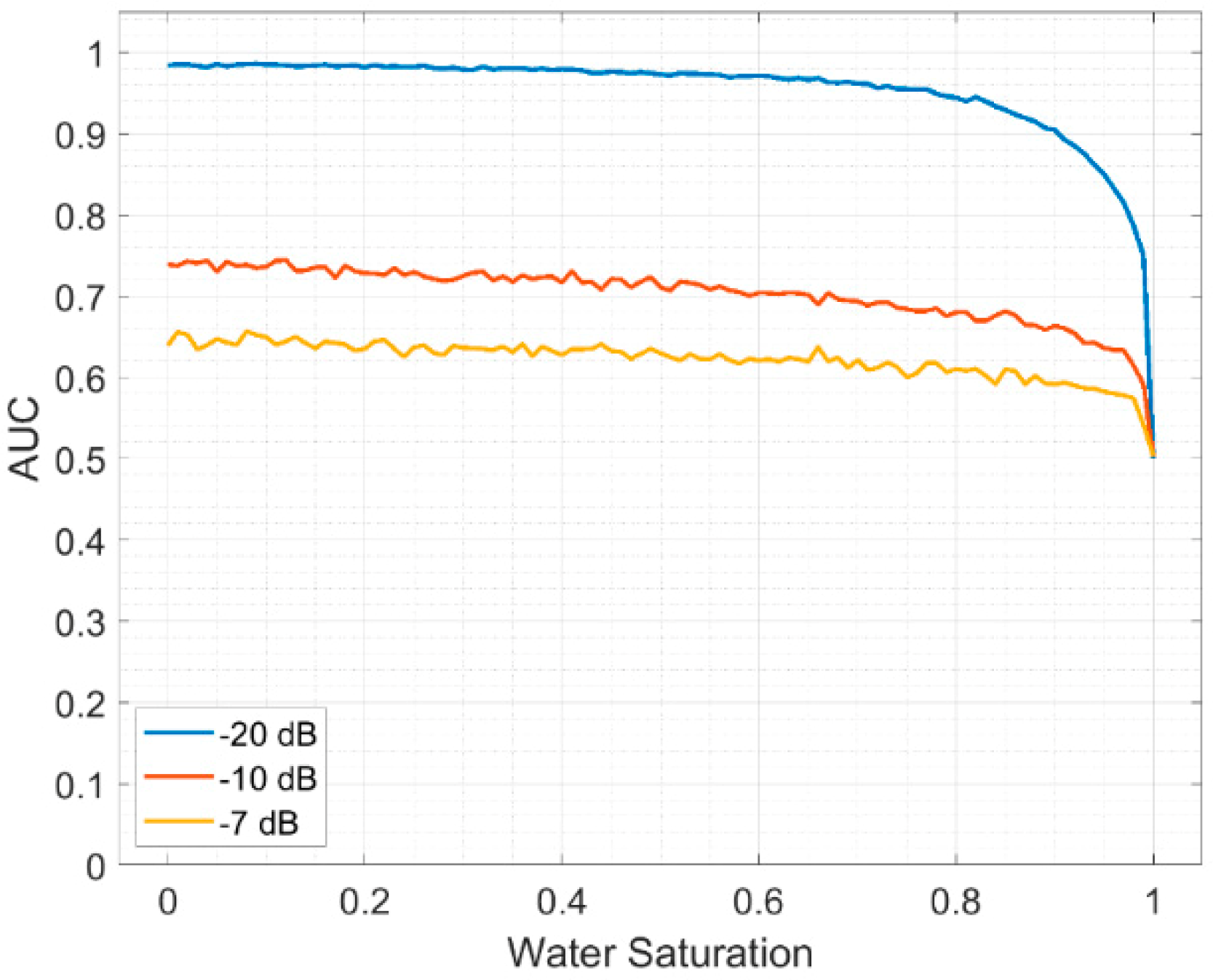
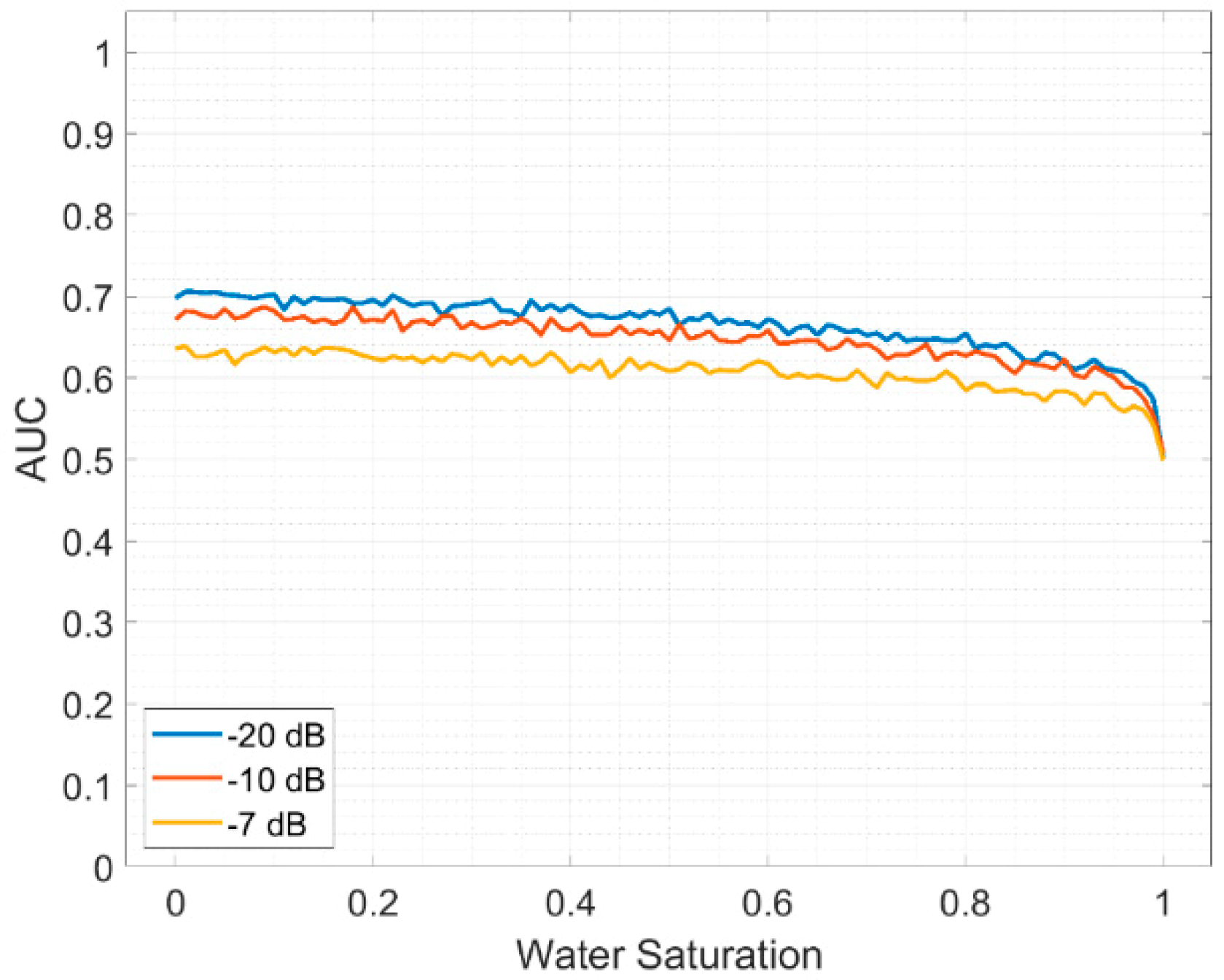
The comparison of the AUC curves in the scenarios where the noise is −20 dB, −10 dB and −7 dB is shown in
Figure 16. The performance decreases with increasing noise. The approximate ranges of the AUC are 0.6 to 0.7, 0.58 to 0.68 and 0.55 to 0.65 when the noise is −20 dB (blue), −10 dB (red) and −7 dB (yellow), respectively.
4. Conclusions
Two methods (
and
) have recently been proposed for hydrocarbon prediction. This study analyzes the uncertainty under different-water saturation and noise conditions of these methods, which are not included in the original works [
3,
11].
Both
and
keep good performance when water saturation is changed from 0% to 95%. The values of the related metric parameters (precision, recall, accuracy, F-measure and AUC) are greater than 0.9. On the one hand, it illustrates the stability of these methods in hydrocarbon prediction even in a high water saturation scenario. On the other hand, they cannot distinguish low water-saturation reservoirs from high water-saturation reservoirs which is a problem that the industry is facing. A solution of high-water saturation identification is the combination of seismic and controlled-source electromagnetic (CSEM) methods [
21].
Noise is another essential factor. In the analysis of this study, the noise levels are set to be −20 dB, −10 dB and −7 dB. The has good performance (the parameters are generally above 0.8) when the level of the noise is low (−20 dB). The AUCs decrease with increasing noise. The AUCs remain above 0.85 when the noise is −10 dB and remain above 0.75 when the noise is −7 dB. The , which is in the interface domain, is more sensitive to noise than the impedance-domain methods. The AUC is approximately 0.7 to 0.75 and 0.6 to 0.65 when the noise is −10 dB and −7 dB, respectively. Although the two attributes have different values for noise sensitivity, the trend is consistent, that is, the stronger the noise, the worse the performance. The attributes in the interface domain are more sensitive to noise. Noise is required to be suppressed to get good results in the application.
In addition, two widely used traditional methods ( and ) are analyzed as comparisons in the reflectivity and impedance domains, respectively. and have much higher precision, recall, accuracy and F1 compared to the traditional methods. and under high noise condition (−7 dB) are still better than the traditional methods, even though and are relatively insensitive to noise.