Article

Decomposition of Multicomponent Micro-Doppler Signals Based on HHT-AMD

State Key Laboratory of Complex Electromagnetic Environment Effects on Electronic and Information System, National University of Defense Technology, Changsha 410073, China
*
Author to whom correspondence should be addressed.
Appl. Sci. 2018, 8(10), 1801; https://doi.org/10.3390/app8101801
Submission received: 30 August 2018 / Revised: 15 September 2018 / Accepted: 21 September 2018 / Published: 2 October 2018

Abstract

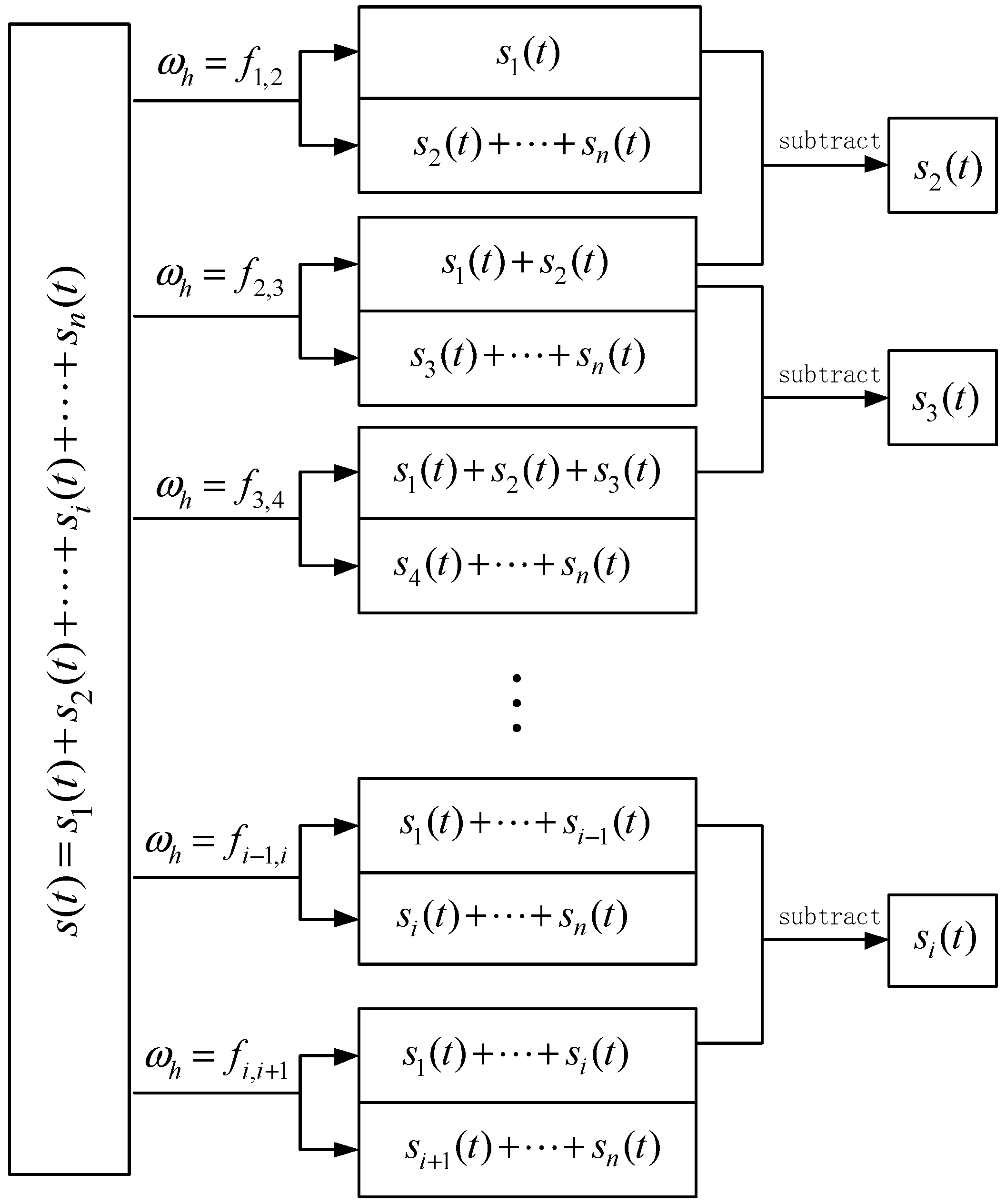
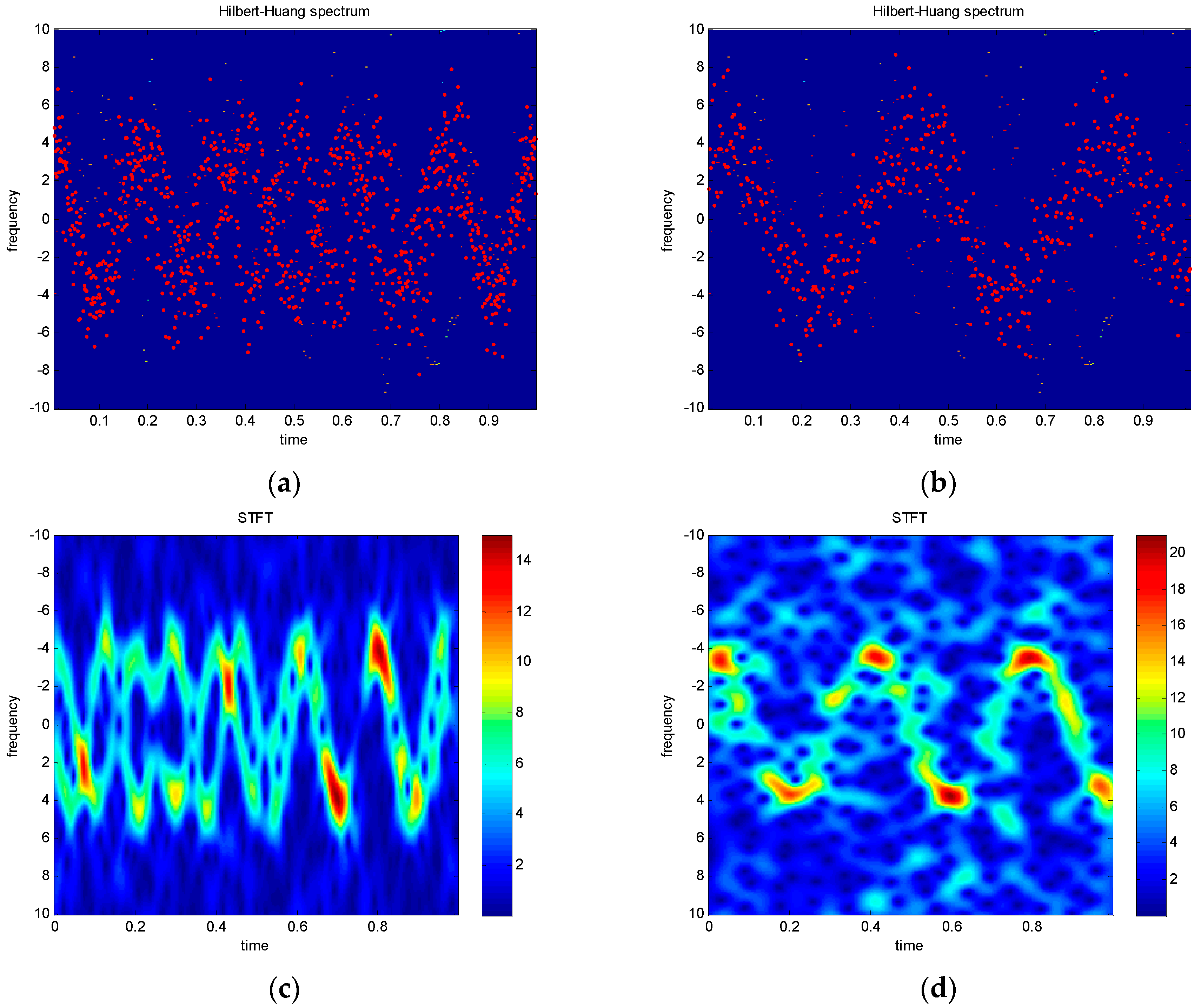
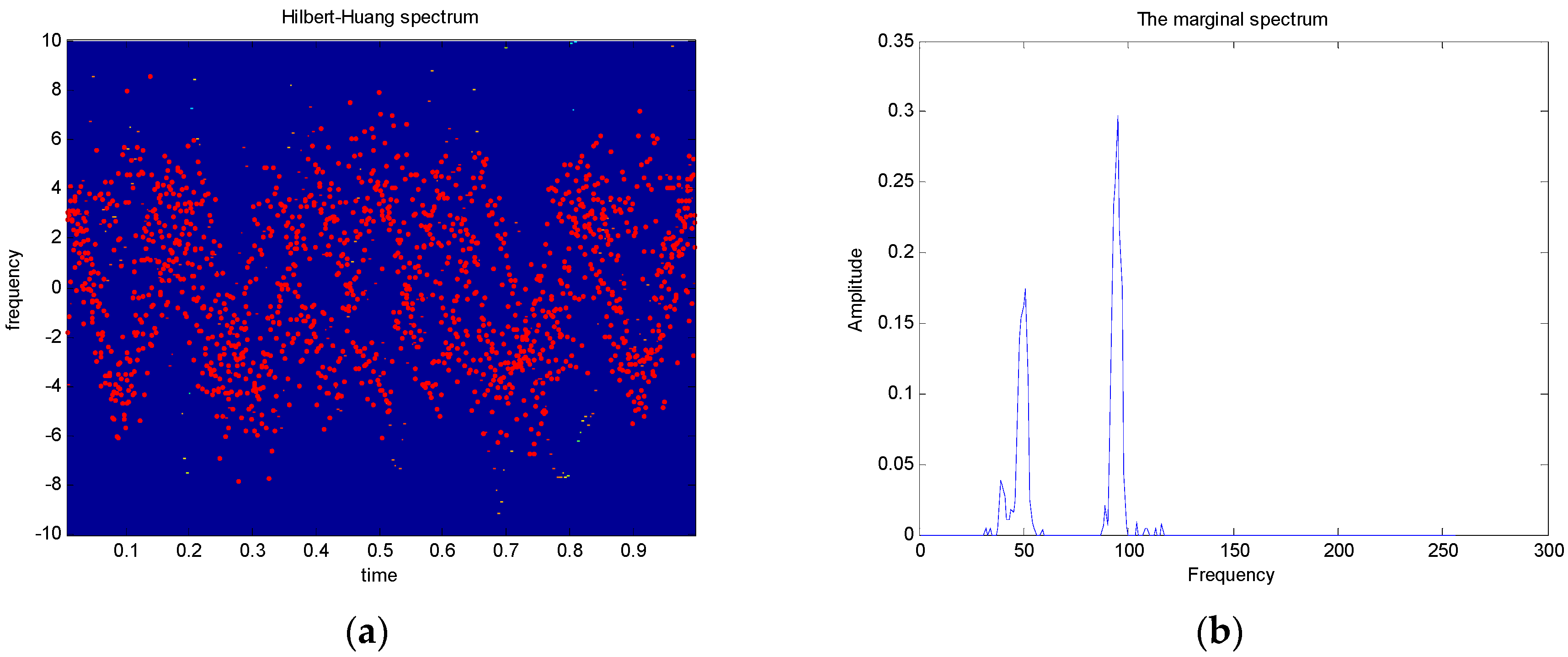
Micro-Doppler signals analysis has been emerging as an important topic in target identification, and relative research has been focusing on features extraction and separation of the radar signals. As a time-frequency representation, the Hilbert-Huang transform (HHT) could extract the accurate instantaneous micro-Doppler signature from the radar signals by empirical mode decomposition and Hilbert transform. However, HHT has the shortcoming that it cannot decompose the signals with close-frequency components. To solve this problem, an innovative decomposition method for multicomponent micro-Doppler signals based on Hilbert–Huang transform and analytical mode decomposition (HHT-AMD) is proposed. In this method, the multicomponent micro-Doppler signals are firstly decomposed by empirical mode decomposition, and the decomposed signal components are transformed by Hilbert transform to get the Hilbert-Huang spectrum and marginal spectrum. Through the spectrum processing, we get the frequency distribution of each signal component. The next step is to judge whether there exists frequency aliasing in each signal component. If there is aliasing, the AMD method is used to decompose the signal until all the decomposed signals are mono-component signals. Evaluation considerations are covered with numerical simulations and experiments on measured radar data. The results demonstrate that compared with conventional HHT, the proposed method yields accurate decomposition for multicomponent micro-Doppler signals and improves the robustness of decomposition. The method presented here can also be applied in various settings of non-stationary signal analysis and filtering.
Keywords: micro-Doppler; feature extraction; time-frequency; HHT; AMD; signal decomposition micro-Doppler; feature extraction; time-frequency; HHT; AMD; signal decomposition