Article

Adaptive RBF Neural Network-Based Self-Tuning PID Control for BLDC Motor-Driven Robotic Joints

School of Computer Science and Artificial Intelligence, Changzhou University, Changzhou 213000, China
*
Author to whom correspondence should be addressed.
Appl. Sci. 2026, 16(9), 4469; https://doi.org/10.3390/app16094469
Submission received: 2 April 2026 / Revised: 24 April 2026 / Accepted: 30 April 2026 / Published: 2 May 2026
(This article belongs to the Special Issue Advanced Robotics, Mechatronics, and Automation)

Abstract

Accurate and robust control of robotic joints is essential for high-performance robotic systems. However, conventional proportional–integral–derivative (PID) controllers suffer from limited adaptability when applied to brushless direct current (BLDC) motor-driven joints operating under nonlinear and time-varying conditions. To address this issue, this paper proposes a Radial Basis Function (RBF) neural network-enhanced self-tuning PID control strategy. The RBF neural network serves as an online identifier to approximate the nonlinear dynamics of the BLDC motor and to estimate the system Jacobian online. Based on the estimated Jacobian, the PID gains (Kp, Ki, and Kd) are adaptively updated using a gradient descent mechanism, enabling continuous adjustment to varying operating conditions. Simulation and experimental results demonstrate that the proposed method achieves negligible overshoot, faster settling performance, and improved steady-state accuracy compared with conventional PID and PI controllers. In addition, the proposed controller exhibits enhanced disturbance rejection capability and robust performance under abrupt speed variations and start–stop conditions. The proposed approach effectively combines the simplicity of PID control with the adaptability of neural networks, providing a practical and efficient solution for high-precision robotic joint control.

1. Introduction

With the rapid advancement of artificial intelligence and automation technologies, robotic manipulators are increasingly deployed in diverse applications, including healthcare, agriculture, aerospace, and service industries [1,2,3]. In the service sector, robotic manipulators can perform tasks such as cleaning, material handling, and customer assistance [4]; in the medical field, they enable applications including precision surgery and rehabilitation training [5,6]. As the core actuating component of a robotic manipulator, the joint is typically composed of a brushless DC (BLDC) motor, a driver, and a reducer, and its motion control accuracy and stability directly determine the overall operational performance of the manipulator [7,8,9,10].
PID control remains the most widely used method for BLDC motor control due to its simplicity and ease of implementation. It regulates system output by combining proportional, integral, and derivative actions based on the control error. However, BLDC motors in robotic joints inherently exhibit multivariable, strongly coupled, and nonlinear characteristics, and are susceptible to load disturbances and external electromagnetic interference under complex industrial conditions, making it difficult for fixed-parameter PID controllers to adapt to dynamic variations across the full speed range, different loads, and varying operating conditions, resulting in inherent limitations such as slow response, large overshoot, and weak disturbance rejection.
To overcome the limitations of conventional PID control, numerous studies have been conducted. Zhang et al. designed a fractional-order PID control system based on FPGA, improving control flexibility and disturbance rejection by optimizing the PWM duty cycle [11]. Mahmud et al. proposed an adaptive PID controller that introduces an inverse control signal with an additional error term to address nonlinearity and parameter variations in BLDC motor drive systems [12]. De Viaene et al. proposed a PID algorithm based on estimated load angle control, which generates sinusoidal currents without position feedback and ensures accurate tracking of the speed trajectory [13]. However, these methods still rely on fixed-parameter design principles and fail to fundamentally address the mismatch between controller parameters and dynamic operating conditions, making it difficult to meet the requirements of high-precision motion control.
To overcome this technical bottleneck, researchers have combined artificial neural networks with PID control strategies, leveraging their nonlinear mapping, self-learning, and online approximation capabilities to achieve adaptive tuning of PID parameters, which has become an important research direction in intelligent PID control. Mamadapur et al. developed a neural network-based BLDC motor speed control system that effectively eliminates overshoot and reduces settling time, yielding responses closer to the ideal reference trajectory [14]. Sridhar et al. utilized the nonlinear mapping capability of a BP neural network to design a PI parameter tuning method, significantly improving motor speed control performance [15]. Lu et al. proposed a neural network-based feedback control method that adjusts PID parameters in real time based on electromechanical output signals, enabling output-based adaptive feedback control [16]. Farrag et al. designed an online Radial Basis Function (RBF)neural network controller, which demonstrates faster response, smaller overshoot, and stronger disturbance rejection compared with conventional PI controllers [17].
Among neural network approaches combined with PID control, BP neural networks are widely used but suffer from inherent drawbacks such as low learning efficiency and susceptibility to local minima; in contrast, RBF neural networks possess global approximation capability, enabling them to approximate arbitrary nonlinear functions with arbitrary accuracy, while featuring a simple structure and fast convergence, thereby effectively overcoming these limitations [18,19]. Therefore, this paper considers the BLDC motor in robotic joints as the control object and develops an RBF neural network-based self-tuning PID control system, where the RBF neural network performs online identification of the nonlinear motor dynamics and provides Jacobian information to adaptively tune the proportional, integral, and derivative gains of the PID controller online, thereby addressing the limitations of fixed parameters and poor adaptability in conventional PID control, and further improving the control accuracy and operational stability of robotic joints.
The main contributions of this paper can be summarized as follows:
(1)
A dynamic-stage-aware modeling framework for BLDC motor startup is established, where the coupling mechanism between current and speed is explicitly analyzed and utilized for controller design.
(2)
An RBF neural network-based online identification mechanism is developed to estimate the Jacobian information of the motor dynamics in real time, enabling adaptive tuning of PID parameters without requiring an explicit system model.
(3)
A self-tuning PID control strategy based on Jacobian-driven gradient descent is proposed, which achieves smooth transient response with negligible overshoot and strong robustness under time-varying operating conditions.
(4)
A hardware-implemented robotic joint platform is developed to validate the effectiveness of the proposed method under practical conditions, including abrupt start–stop and disturbance scenarios.
The remainder of this paper is organized as follows. Section 2 presents the structural composition of the robotic joint and establishes the mathematical model of the BLDC motor and joint dynamics, providing the foundation for controller design. Section 3 details the proposed RBF neural network-based self-tuning PID controller, including the online identification mechanism, Jacobian estimation, adaptive tuning law, and Lyapunov-based stability analysis. Section 4 presents comparative simulation studies with quantitative performance metrics to evaluate both dynamic and steady-state characteristics. Section 5 provides comprehensive experimental validation on a hardware platform, including steady-state operation, start–stop tests, step response analysis, and quantitative performance evaluation, as well as computational efficiency assessment, demonstrating the effectiveness and real-time applicability of the proposed method. Finally, Section 6 concludes the paper and outlines future research directions.

2. Structure of the Robotic Joint and Motor Starting Characteristics

2.1. Structure of the Robotic Joint

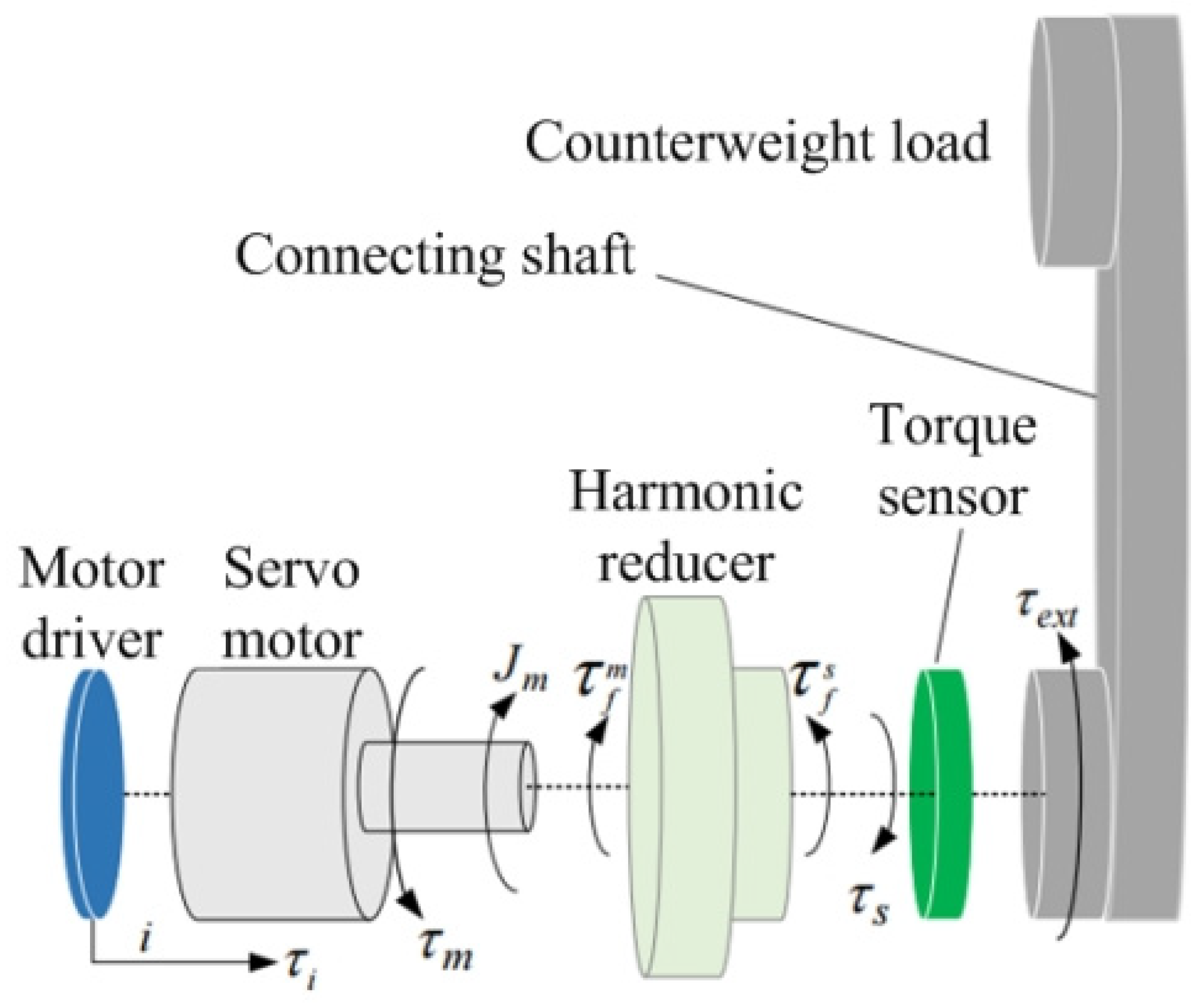
The robotic joint structure designed in this study is primarily applied in robotic and mechanical transmission systems. It consists of a motor driver, a brushless DC (BLDC) motor, a harmonic reducer, a torque sensor, a counterweight load, and a transmission shaft. The motor driver provides the input torque τ i , which is transmitted through the BLDC motor to generate a high-precision output torque τ m . The harmonic reducer is used for speed reduction and torque amplification, increasing the output torque τ s while reducing the rotational speed and enhancing the output power. The torque sensor measures the external load torque τ e x t in real time, providing accurate feedback for system state regulation. The counterweight load is used to balance the system forces and ensure stable joint operation. The transmission shaft transfers torque and power among components to the final load, ensuring coordinated operation of the mechanical system. The internal structure and power transmission relationships of the joint are illustrated in Figure 1.

2.2. Mathematical Model of the BLDC Motor

To provide a rigorous foundation for controller design, the mathematical model of the BLDC motor is formulated based on its electrical and mechanical dynamics.
The electrical dynamics of the BLDC motor can be described as:
u = R i + L d i d t + e
where u is the stator voltage, i is the phase current, R and L denote the stator resistance and inductance, respectively, and e represents the back electromotive force (EMF), which is proportional to the motor speed:
e = K e ω
where K e is the back-EMF constant and ω is the angular velocity of the motor.
The electromagnetic torque generated by the motor is given by:
T e = K t i
where K t is the torque constant.
The mechanical dynamics of the motor shaft can be expressed as:
J d ω d t = T e T L B ω
where J is the rotor inertia, T L is the load torque, and B is the viscous friction coefficient.
Combining the above equations, the BLDC motor can be described as a nonlinear dynamic system with strong coupling between electrical and mechanical variables, which poses challenges for conventional fixed-parameter PID control.

2.3. Dynamic Model of the Robotic Joint

The robotic joint system consists of a BLDC motor, a harmonic reducer, and a load mechanism. The reducer introduces a transmission ratio N , which transforms the motor-side variables to the joint side.
The relationship between motor speed and joint speed is given by:
ω j = ω N
Similarly, the torque transformation is:
T j = N η T e
where ω j and T j denote the joint angular velocity and output torque, respectively, and η is the transmission efficiency.
Considering the load dynamics, the joint-side motion equation can be expressed as:
J e q d ω j d t = T j T L
where J e q is the equivalent inertia of the joint, which includes both motor-side inertia and load-side inertia reflected through the reducer.
Due to the presence of nonlinear friction, load variations, and transmission uncertainties, the robotic joint system exhibits strong nonlinear and time-varying characteristics. Therefore, it is difficult to obtain an accurate analytical model for controller design, which motivates the use of data-driven approaches such as RBF neural networks for online identification.

2.4. Dynamic Characteristics Analysis of the Motor Starting Process

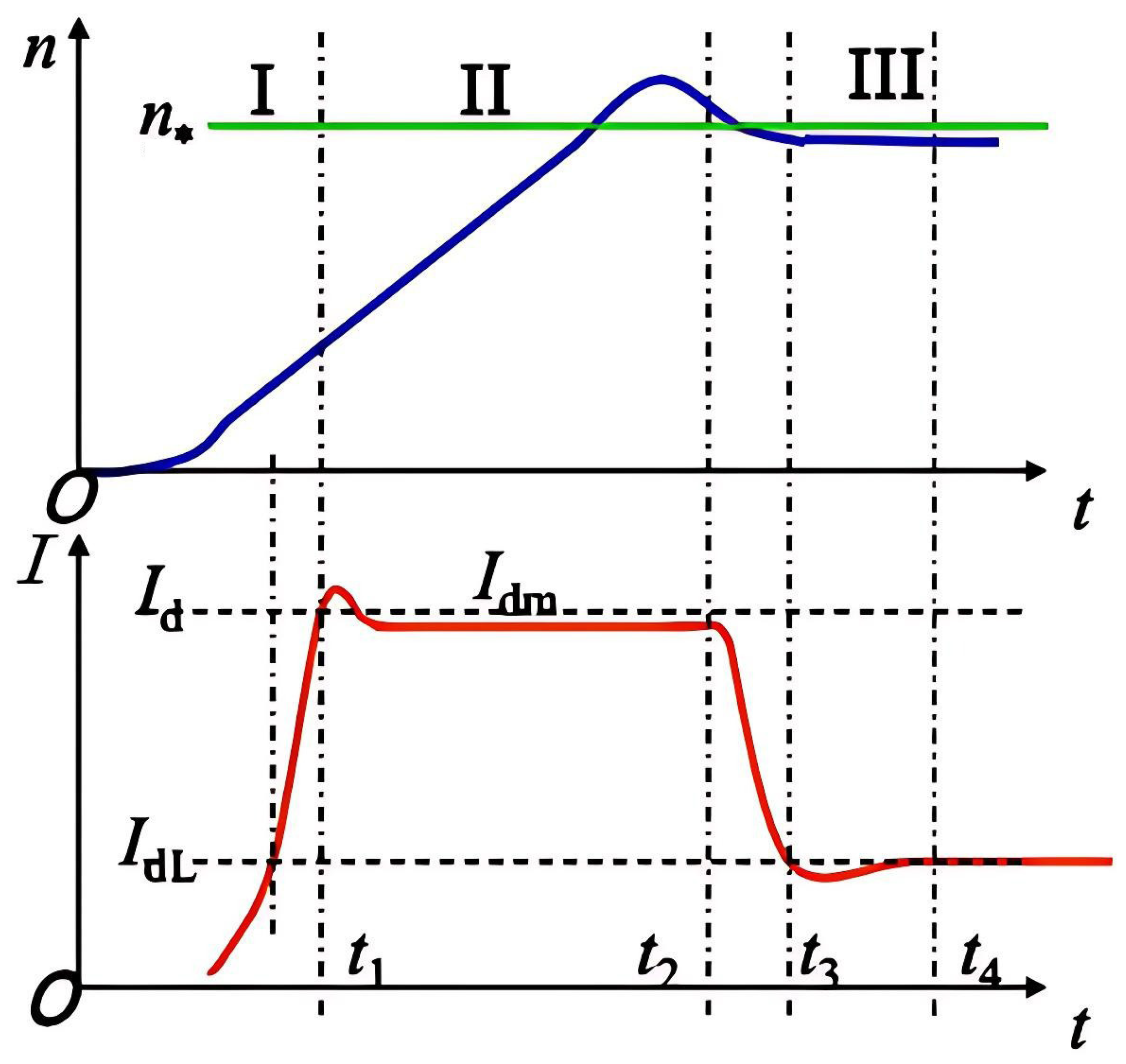
Based on the above mathematical model, the dynamic characteristics of the BLDC motor during startup can be further analyzed as follows. This study focuses on the BLDC motor control system of a modular two-degree-of-freedom robotic spherical joint, which employs a speed–current dual closed-loop control architecture. In practical operation, the motor is required to achieve rapid startup and stable steady-state performance. Therefore, the dynamic responses of speed and current during the startup process provide a critical basis for controller design. The corresponding speed and current profiles are shown in Figure 2.
Based on the coupled characteristics of the speed–time (n–t) and current–time (I–t) curves shown in Figure 2, the motor startup process can be clearly divided into three stages (marked by Roman numerals I, II, and III). In the figure, the blue line represents the motor speed n , the green line denotes the reference speed n * , and the red line indicates the armature current I d . The interaction between current and speed in each stage is described as follows:
Stage I: Rapid Current Rise and Startup Preparation Stage (0–t1). Upon application of the reference speed signal, both the speed loop and current loop respond rapidly. Due to motor inertia, the initial speed is zero, and the speed controller operates in saturation because of the large control error, resulting in a maximum input to the current controller and a rapid increase in the armature current I d . When I d exceeds the load current I d L and reaches the startup threshold, the motor begins to rotate. The key feature of this stage is that I d rapidly rises to the maximum allowable current I d m , providing sufficient torque for motor startup.
Stage II: Constant-Current Acceleration and Linear Synchronization Stage (t1–t2). When the armature current I d reaches I d m , it is limited by the current controller and remains constant. At this stage, the speed loop effectively operates in an open-loop manner, and the system accelerates linearly with constant acceleration. As the speed increases, the back EMF increases accordingly, and the input voltage must increase linearly to maintain a constant armature current. This stage achieves time-optimal acceleration, with the speed curve exhibiting a nearly linear and steep rise until it approaches the reference speed n * .
Stage III: Overshoot Suppression and Steady-State Convergence Stage (t2–t4). When the speed first reaches the reference value n * , although the speed error becomes zero, the output of the speed controller does not immediately return to zero due to integral saturation, and the motor continues to accelerate, resulting in a transient overshoot. Subsequently, the controller exits saturation, the error becomes negative, and the current I d rapidly decreases below I d L . The reduction in current decreases the braking torque, causing the speed to gradually decline and stabilize at n * , and the system enters steady-state operation.
In summary, Figure 2 illustrates the dynamic nature of motor startup under dual closed-loop control: rapid startup is achieved with a high constant current, while overshoot is mitigated through dynamic correction of the integral term. This process indicates that fixed-parameter PID control cannot adequately adapt to the nonlinear characteristics of different stages. Therefore, an adaptive tuning mechanism is required to balance rapid startup and operational stability.

3. Controller Design

This section presents the theoretical foundation of the proposed control strategy. First, the limitations of conventional PID control are briefly revisited. Then, an RBF neural network-based online identification mechanism is introduced. Finally, a Jacobian-driven adaptive PID tuning law is derived, followed by a Lyapunov-based stability analysis.

3.1. Principles and Limitations of Conventional PID Control

3.1.1. Basic Control Principle

For speed control of BLDC motors in robotic joints, the conventional PID controller takes the error between the actual and reference speeds as input and generates the control signal through proportional, integral, and derivative actions to achieve closed-loop speed regulation. The discrete-time control law is given by (1).
u ( k ) = K p e ( k ) + K i i = 0 k e ( i ) T + K d e ( k ) e ( k 1 ) T
where u ( k ) is the control output at time step k , e ( k ) is the speed error, K p , K i , and K d are the proportional, integral, and derivative gains, respectively, and T is the sampling period.
The roles of the three components are summarized as follows: The proportional gain accelerates the response but may induce overshoot; the integral gain eliminates steady-state error but may cause saturation; and the derivative gain improves stability by predicting system trends but increases sensitivity to disturbances.

3.1.2. Application Limitations

The primary limitation of conventional PID control lies in the fixed nature of the gains K p , K i , and K d , which lack online self-tuning capability:
(1)
It cannot effectively accommodate the multivariable, strongly coupled, and nonlinear dynamics of the motor, making it difficult to maintain optimal control performance across the full operating range;
(2)
It exhibits limited robustness to load disturbances and external electromagnetic interference, leading to fluctuations in control performance;
(3)
During dynamic processes such as motor startup and speed transients, delayed parameter adaptation may result in degraded control accuracy.
These limitations fundamentally arise from the lack of online identification and adaptive parameter tuning in conventional PID controllers, which prevents real-time tracking of dynamic model variations. Therefore, incorporating intelligent algorithms to enable real-time adaptive tuning of PID parameters is essential to address these issues.

3.2. Design of an RBF Neural Network-Enhanced Self-Tuning PID Controller

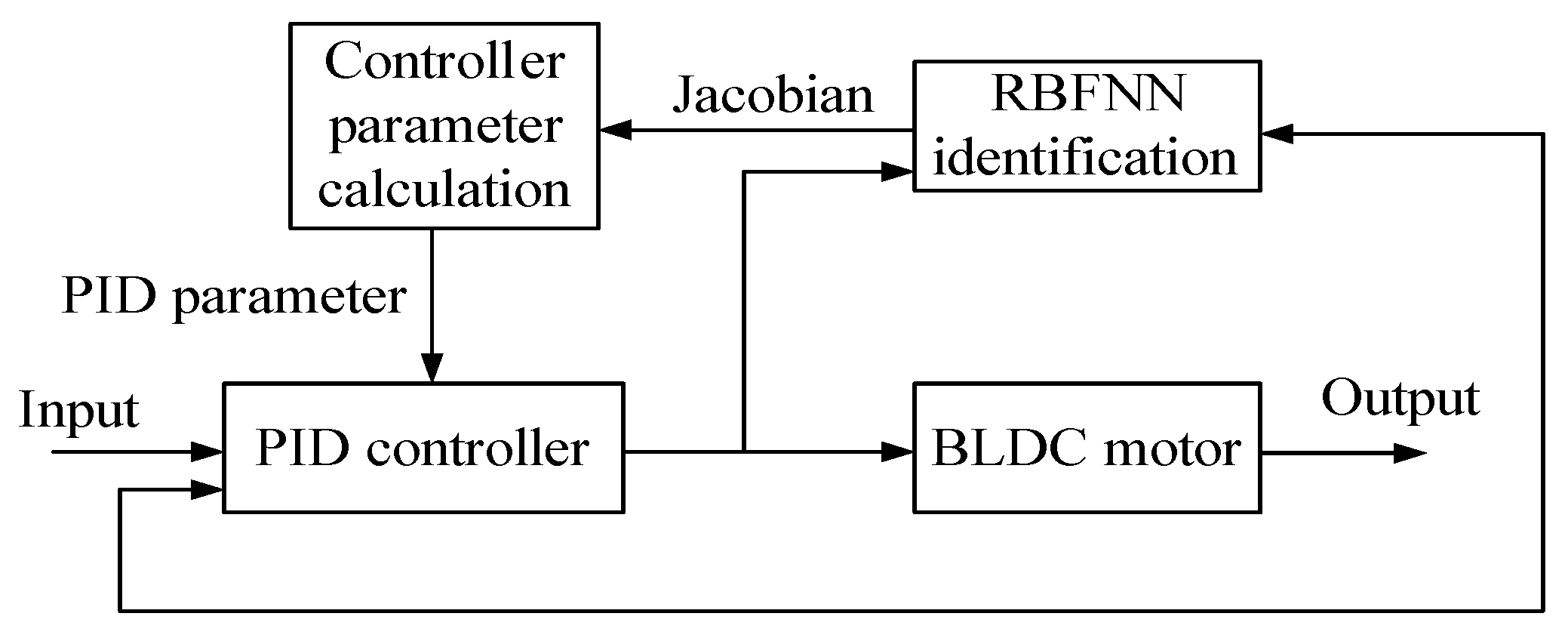
The proposed RBF neural network-enhanced self-tuning PID control system is based on the coordinated operation of an RBF neural network and a PID controller. The RBF neural network acts as an online identifier to obtain dynamic model information of the motor, including Jacobian information. Based on this information, the PID controller adaptively tunes its parameters and outputs the optimal control signal to regulate motor operation.
The overall system structure is shown in Figure 3. The control procedure can be summarized as follows: the RBF neural network performs online identification of the controlled plant, outputs the Jacobian information of the motor dynamics, and the PID gains K p , K i , and K d are updated adaptively using a gradient descent algorithm. The tuned PID controller then generates the control signal to drive the motor.

3.2.1. Structure and Mathematical Model of the RBF Neural Network

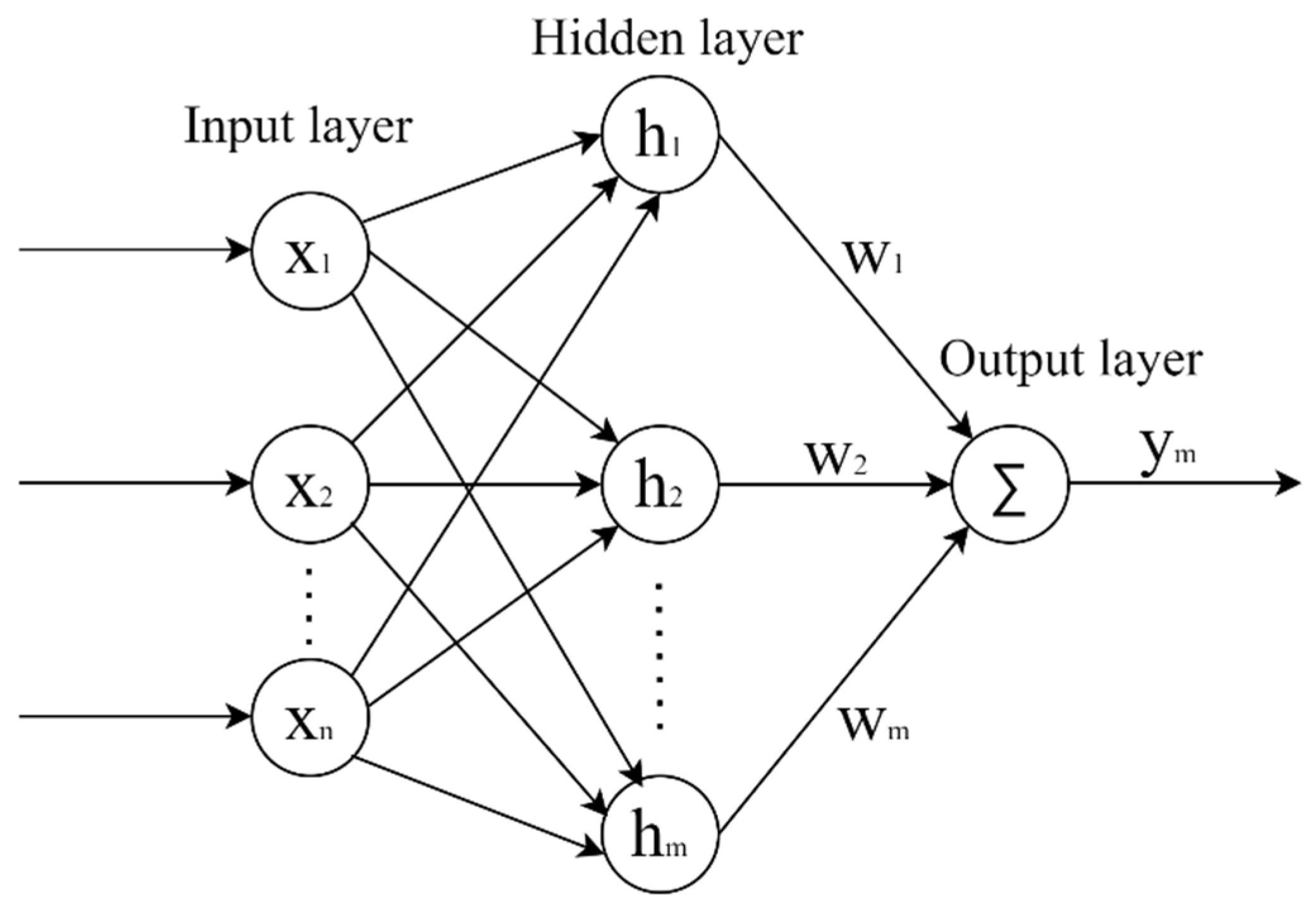
The RBF neural network is a three-layer feedforward structure with strong nonlinear approximation capability, fast convergence, and a simple architecture, making it particularly suitable for online identification of controlled plants. It consists of an input layer, a hidden layer, and an output layer, as shown in Figure 4.
The mathematical models and functions of each layer are described as follows:
Input layer: The input layer receives external data, represented by the input vector x = [ x 1 , x 2 , , x n ] . In this study, the inputs include the speed error e ( k ) , error change rate e c ( k ) , and control output u ( k ) , which reflect the real-time operating state of the motor.
Hidden layer: The hidden layer is the core of the network and employs radial basis functions as activation functions to achieve nonlinear mapping from the input space to the hidden space. The output of the j -th neuron is given by (2):
h j = exp ( x c j 2 2 b j 2 )
where x = [ x 1 , x 2 , , x n ] is the input vector, c j = [ c j 1 , c j 2 , , c j n ] is the center vector, b j is the width parameter determining the receptive field, and x c j denotes the Euclidean distance; j = 1 , 2 , , m .
Output layer: The output layer performs a linear mapping from the hidden space to the output space. The network output corresponds to the estimated motor speed y m ( k ) , as defined in (3):
y m ( k ) = w · H = j = 1 m w j · h j
where w = [ w 1 , w 2 , , w m ] is the weight vector and H = [ h 1 , h 2 , , h m ] is the hidden layer output vector.

3.2.2. Core Function and Working Mechanism of the RBF Neural Network

In the proposed control framework, the RBF neural network serves as an online identifier that captures the nonlinear dynamics of the motor and provides Jacobian information in real time. Instead of replacing the PID controller, it enhances the controller by supplying accurate dynamic model information for adaptive parameter tuning, thereby overcoming the inherent limitation of conventional PID control, which lacks real-time model awareness.
The working mechanism of the RBF neural network consists of three stages: (i) definition of the online identification objective, (ii) iterative updating of network parameters, and (iii) real-time extraction of Jacobian information for PID gain adaptation.
(1)
Definition of the Performance Index and Identification Objective
The identification objective is to minimize the error between the estimated speed y m ( k ) produced by the neural network and the actual motor speed y o u t ( k ) . The performance index is defined as:
J 1 = 1 2 × ( y o u t ( k ) y m ( k ) ) 2 = 1 2 × e ( k ) 2
where e ( k ) denotes the identification error. Equation (4) characterizes the identification accuracy of the neural network. By continuously minimizing J 1 , the estimated output y m ( k ) approaches the actual output y o u t ( k ) , enabling accurate online identification of the motor’s dynamic model. This formulation facilitates gradient-based learning and provides a foundation for deriving the Jacobian information required for adaptive PID tuning.
(2)
Iterative Update of Network Parameters Based on Gradient Descent
To minimize the performance index J 1 , the gradient descent algorithm is employed to iteratively update the three key parameters of the RBF neural network, namely the output weights, hidden layer centers, and width parameters. The learning rate η controls the update step size, while the momentum factor α is introduced to accelerate convergence and avoid local minima. The update rules are given by (5)–(7), and the corresponding parameter increments are defined in (8)–(10).
Update of Output Layer Weights:
w j ( k ) = w j ( k 1 ) + η Δ w j + α ( w j ( k 1 ) w j ( k 2 ) )
Update of Hidden Layer Centers:
c j i ( k ) = c j i ( k 1 ) + η Δ c j i + α ( c j i ( k 1 ) c j i ( k 2 ) )
Update of Width Parameters:
b j ( k ) = b j ( k 1 ) + η Δ b j + α ( b j ( k 1 ) b j ( k 2 ) )
where
Δ w j = e ( k ) · h j
Δ c j i = e ( k ) · w j · h j · x i c j i b j 2
Δ b j = e ( k ) · w j · h j · x c j 2 2 b j 3
Through these iterative updates, the RBF neural network is capable of tracking the dynamic variations in the motor model continuously while maintaining high identification accuracy. Even under dynamic conditions such as startup, load disturbances, and reference speed changes, the network can still provide accurate estimates of the motor speed y m ( k ) . This adaptive learning mechanism enables the RBF network to provide accurate Jacobian information for real-time PID parameter tuning.
(3)
Extraction of Jacobian Information of the Motor Dynamics
The Jacobian information ϑ y ( k ) / ϑ u ( k ) of the controlled plant represents the sensitivity of the motor speed y ( k ) with respect to the control input u ( k ) , and serves as a key parameter for characterizing the motor dynamics. It directly determines the direction and magnitude of PID parameter adjustments.
Since the exact mathematical model of the motor is unknown, this Jacobian cannot be computed directly. Therefore, it is approximated using the identification result of the RBF neural network as:
ϑ y ( k ) ϑ u ( k ) ϑ y m ( k ) ϑ u ( k )
By taking u ( k ) as the first input x 1 of the RBF neural network, the Jacobian can be derived as:
ϑ y m ( k ) ϑ u ( k ) = j = 1 m w j · h j c j 1 x 1 b j 2
By providing this Jacobian information in real time, the RBF neural network effectively quantifies the nonlinear dynamic characteristics of the motor into a measurable index that can be directly used for PID parameter tuning, thereby providing real-time and accurate support for adaptive PID tuning. This mechanism is fundamental to the performance enhancement of the PID controller. This approach avoids explicit modeling of the motor while retaining high adaptability to nonlinear and time-varying dynamics.

3.2.3. RBF Neural Network-Based Self-Tuning Mechanism for PID Parameters

The PID gains K p , K i , and K d are the key control variables of the controller. The RBF neural network does not replace the proportional, integral, and derivative actions of the PID controller, but instead adaptively tunes these parameters in real time based on the Jacobian information using a gradient descent algorithm, enabling the PID controller to continuously adapt to the nonlinear dynamics of the motor.
The tuning principles are summarized as follows:
(1)
When the Jacobian magnitude is large (i.e., the motor speed is highly sensitive to control input), K p and K i are reduced, while K d is appropriately increased to suppress overshoot and oscillations;
(2)
When the Jacobian magnitude is small (i.e., the motor speed is less sensitive to control input), K p and K i are increased, while K d is reduced to improve response speed and eliminate steady-state error;
(3)
During dynamic processes such as motor startup and reference speed changes, the gains K p , K i , and K d are rapidly adjusted according to real-time variations in the Jacobian to achieve fast response with minimal or no overshoot;
(4)
Under load disturbances and external interference, the Jacobian information enables real-time perception of model variations, allowing timely tuning of PID parameters to enhance disturbance rejection capability.
Through this mechanism, the conventional fixed-parameter PID controller is transformed into an adaptive intelligent PID controller, which retains the simplicity and robustness of traditional PID control while overcoming its lack of online identification and adaptability. This approach achieves a deep integration of PID control and RBF neural networks, combining the engineering practicality of PID control with the intelligent adaptability of neural networks. The tuning process is inherently data-driven and does not rely on an explicit motor model, making it particularly suitable for complex and time-varying systems.

3.3. Stability Analysis of the Proposed Control System

To investigate the stability of the proposed control system, a Lyapunov-based method is employed. Due to the unknown nonlinear dynamics of the BLDC motor, the analysis is performed under an adaptive control framework with function approximation. By incorporating the Jacobian information estimated by the RBF neural network, the boundedness of the closed-loop system is established.
Assumptions:
To facilitate the stability analysis, the following standard assumptions are introduced:
  • The reference speed r ( k ) is bounded;
  • The Jacobian J ( k ) = ϑ y ( k ) / ϑ u ( k ) , estimated by the RBF neural network, is bounded;
  • The approximation error of the RBF neural network is bounded.
(1)
Error Definition
Define the speed tracking error at time step k as the deviation between the reference speed and the actual output speed of the BLDC motor:
e ( k ) = r ( k ) y ( k )
where r ( k ) denotes the reference speed signal and y ( k ) is the actual motor speed.
(2)
Parameter Vector Definition
Define the PID parameter vector:
θ ( k ) = [ K p ( k ) , K i ( k ) , K d ( k ) ] T
Let θ * denote the ideal parameter vector, and define the estimation error:
θ ~ ( k ) = θ ( k ) θ *
(3)
Lyapunov Function
Choose the Lyapunov candidate function as:
V ( k ) = 1 2 e 2 ( k ) + 1 2 γ θ ~ T ( k ) θ ~ ( k )
where γ > 0 is the learning rate.
(4)
Error Dynamics
Considering the unknown nonlinear system, the output can be locally approximated as:
y ( k + 1 ) = y ( k ) + J ( k ) u ( k ) + ε ( k )
where ε ( k ) represents the bounded approximation error.
(5)
Adaptive Law
The PID parameters are updated using a gradient descent rule:
θ ( k + 1 ) = θ ( k ) γ ϑ e ( k ) ϑ θ ( k ) e ( k )
Using the chain rule:
ϑ e ( k ) ϑ θ ( k ) = J ( k ) ϑ u ( k ) ϑ θ ( k )
(6)
Lyapunov Difference Analysis
The Lyapunov difference is defined as:
Δ V ( k ) = V ( k + 1 ) V ( k )
By substituting the error dynamics and adaptive law, it can be shown that:
Δ V ( k ) α e 2 ( k ) + β θ ~ ( k ) 2 + δ
where α depends on the learning rate and Jacobian bounds; β is related to parameter coupling effects; δ is a bounded term induced by approximation error ε ( k ) .
Stability Conclusion:
Under the above assumptions and with a properly selected learning rate γ , the Lyapunov function V ( k ) is bounded. Consequently, the tracking error e ( k ) and parameter estimation error θ ~ ( k ) remain bounded.
According to Lyapunov stability theory, the closed-loop system is uniformly ultimately bounded (UUB), and the tracking error converges to a small neighborhood around zero.
Therefore, the proposed RBF neural network-based self-tuning PID control system ensures stable operation and reliable tracking performance under time-varying and nonlinear conditions.

4. Simulation and Analysis of the Control System

To comprehensively evaluate the performance of the proposed RBF neural network-based self-tuning PID control strategy, simulation models of both a conventional dual-loop PI controller and the proposed controller are established under realistic operating conditions. Comparative studies are conducted under two representative scenarios: step response and sudden changes in reference speed.
A set of key performance metrics, including rise time, overshoot, steady-state accuracy, and disturbance rejection capability, are employed to systematically assess and compare the dynamic and steady-state behaviors of the two control systems. The results provide a quantitative validation of the effectiveness and superiority of the proposed control method. To ensure a fair comparison, all simulation conditions and system parameters are kept identical except for the control strategy.

4.1. Step Response Analysis

To quantitatively evaluate the control performance of the proposed method, several key dynamic and steady-state performance indices are introduced, including rise time, settling time, overshoot, steady-state error, and tracking error.
The rise time is defined as the time required for the response to increase from 10% to 90% of the reference value. The settling time is defined as the time required for the response to remain within ±2% of the steady-state value. The overshoot is defined as the maximum deviation from the reference value relative to the reference value, expressed as a percentage. The steady-state error is defined as the absolute difference between the final output and the reference value. In addition, the tracking error is evaluated using the root mean square (RMS) value over the response period.
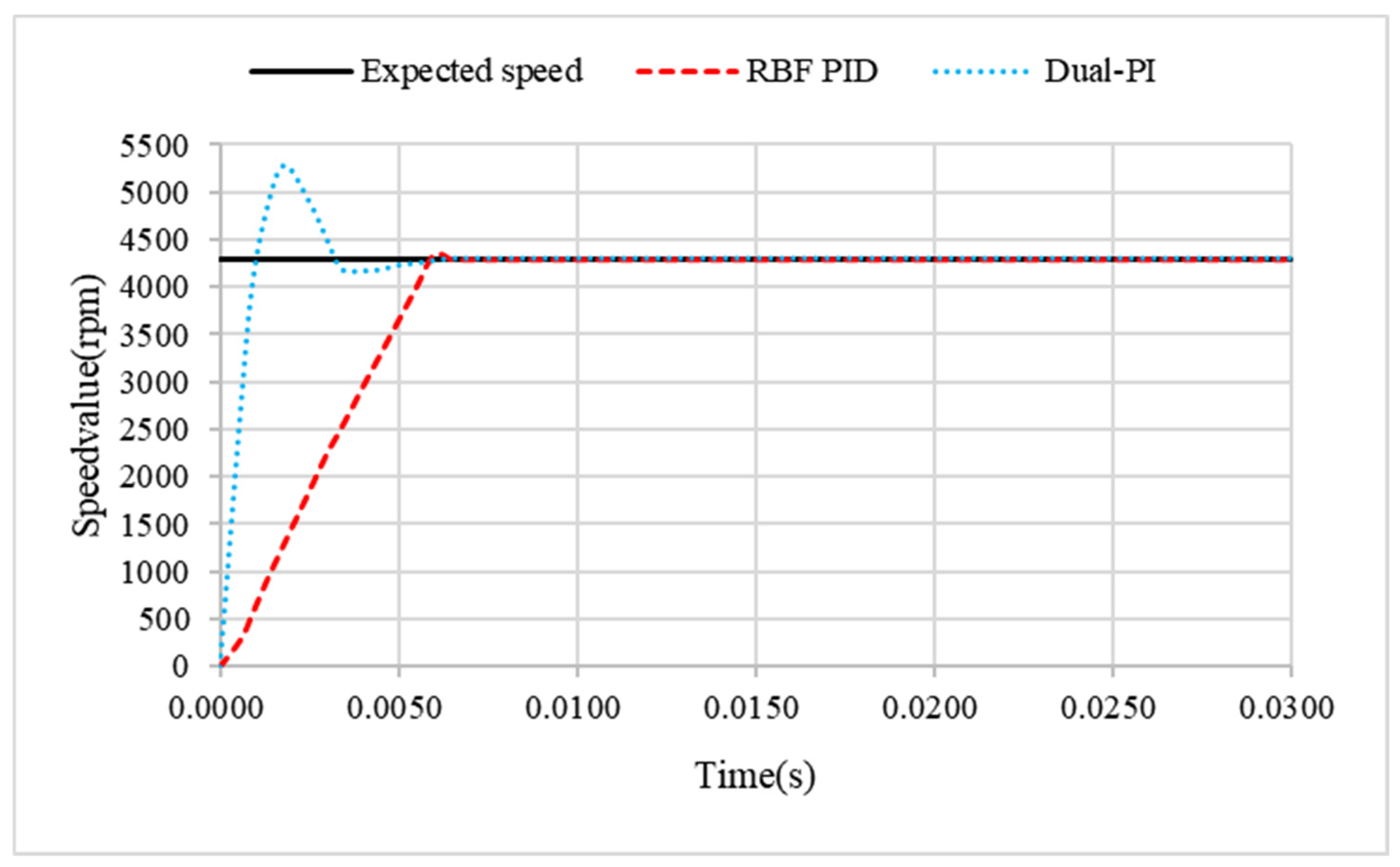
The step response is a key metric for assessing the dynamic performance of motor control systems. In this study, the reference speed is set to 4300 rpm. Simulation models of both a conventional dual-loop PI controller and the proposed RBF neural network-based self-tuning PID controller are established under identical conditions. Comparative simulations are conducted, and the results are presented in Figure 5.
The simulation results of the step response are shown in Figure 5. The conventional dual-loop PI control system exhibits a rapid initial response; however, a significant overshoot and noticeable oscillations are observed during the transient process, indicating limited damping capability and reduced control stability.
In contrast, the proposed RBF-PID self-tuning control system demonstrates a relatively smoother response during the rising phase, with no observable overshoot. The motor speed gradually approaches the reference value of 4300 rpm and settles within a short time, achieving stable steady-state performance without oscillations.
The improved transient behavior of the proposed method can be attributed to the real-time adaptive tuning of PID parameters based on the Jacobian information provided by the RBF neural network. This mechanism effectively regulates the control input during the startup process, preventing excessive control action and suppressing oscillatory behavior, thereby enhancing both stability and control accuracy.
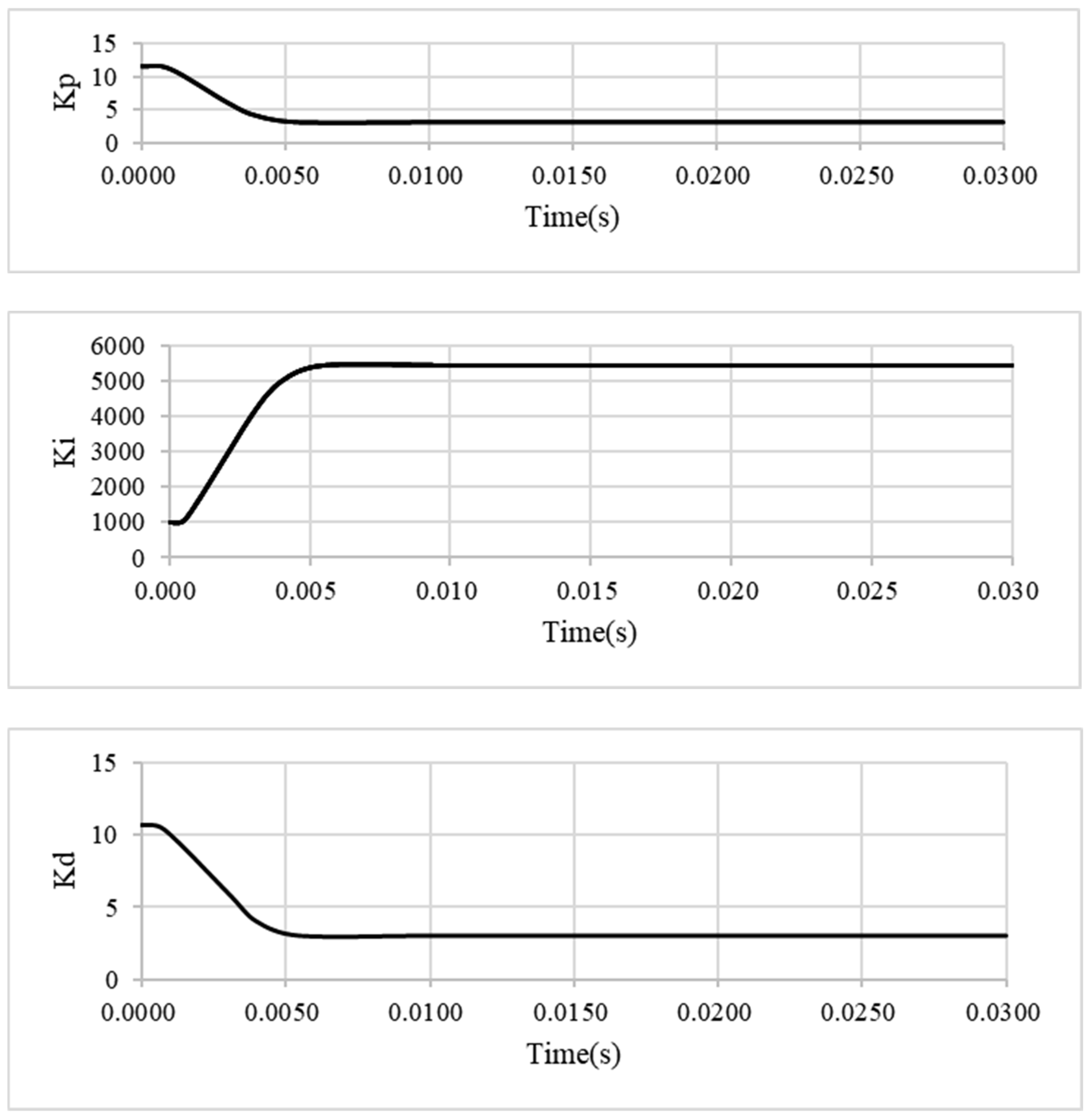
The tuning trajectories of the PID parameters are shown in Figure 6, where K p , K i , and K d are rapidly adjusted within the first 0.006 s during motor startup and then converge to stable values, enabling precise adaptation to the motor startup dynamics.

4.2. Simulation Analysis Under Sudden Changes in Reference Speed

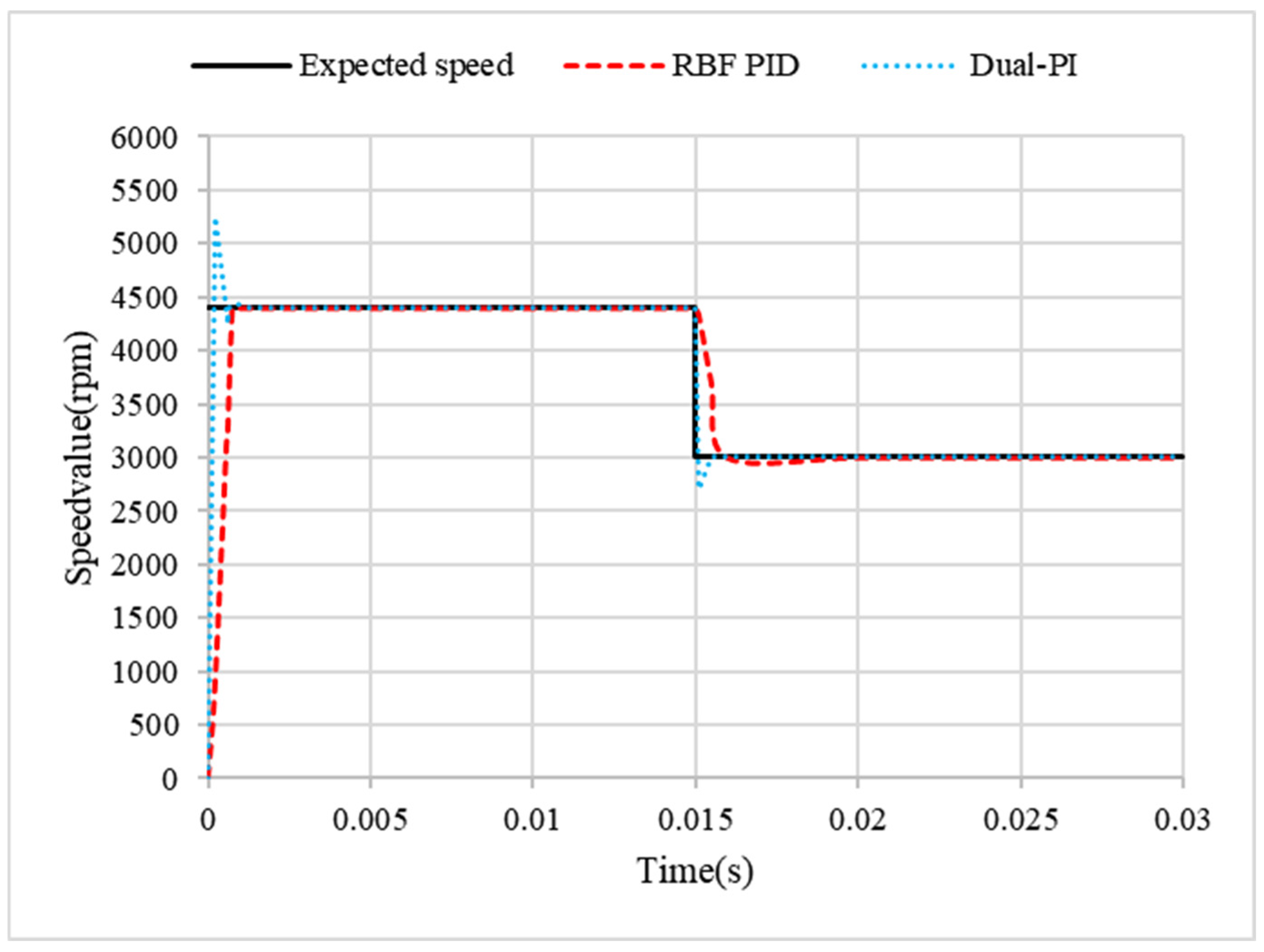
In practical applications, the reference speed of robotic joint motors frequently experiences abrupt variations, posing stringent requirements on both dynamic response and disturbance rejection performance of the control system. In this study, a sudden change in reference speed from 4300 rpm to 3000 rpm is introduced as a representative operating condition. Comparative simulations of the conventional dual-loop PI controller and the proposed RBF-PID self-tuning controller are conducted, and the results are presented in Figure 7. This scenario is used to evaluate the adaptability and robustness of the proposed control strategy under time-varying operating conditions.
As shown in Figure 7, the dynamic response characteristics of the control system during the startup process can be clearly observed. Under the conventional dual-loop PI control strategy, the motor speed increases rapidly at the initial stage; however, a pronounced overshoot and subsequent oscillations are present before reaching steady state. This indicates that the fixed-parameter PI controller lacks sufficient adaptability to the nonlinear and time-varying dynamics of the robotic joint BLDC motor, leading to excessive control action during transient conditions.
In contrast, the proposed RBF-PID self-tuning control method exhibits a significantly smoother response throughout the entire transient process. The motor speed increases in a gradual and monotonic manner toward the reference value, without noticeable oscillations. This demonstrates that the controller effectively regulates the control effort during startup, avoiding aggressive responses and improving system stability.
The superior performance of the proposed method can be attributed to the real-time adaptive tuning mechanism based on the RBF neural network. By continuously estimating the system’s dynamic sensitivity, the controller is able to adjust PID parameters online, thereby constraining the control input within a suitable range. This results in improved transient behavior, enhanced robustness, and more reliable steady-state performance under varying operating conditions.
This improvement highlights the effectiveness of incorporating model-free adaptive mechanisms in addressing the nonlinear and time-varying characteristics of robotic joint systems.
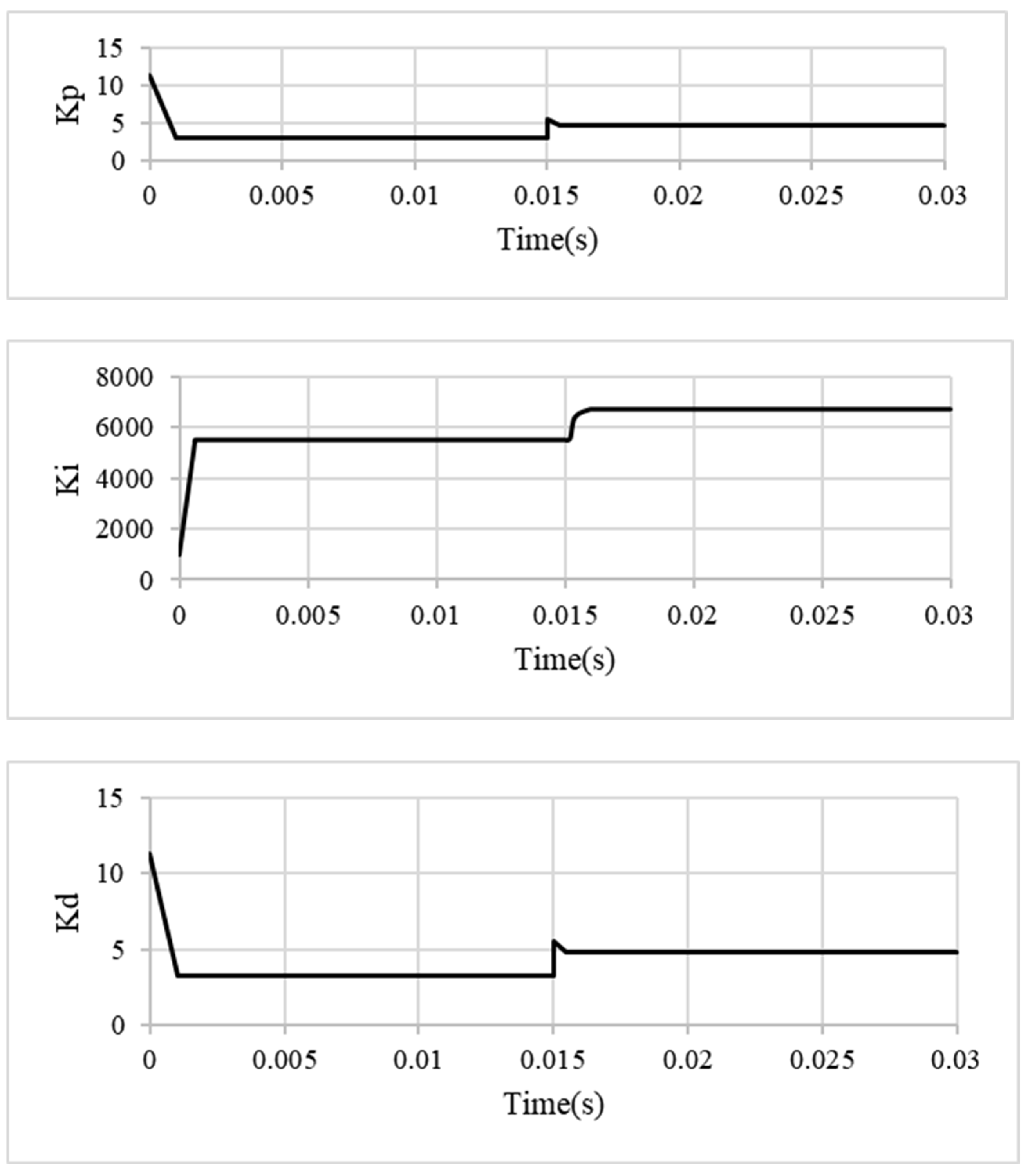
The evolution of the PID gains is illustrated in Figure 8. At the moment of the reference change, K p , K i , and K d are rapidly adapted in response to the real-time Jacobian information, enabling precise tracking of the system dynamics and effectively suppressing transient deviations. This confirms the robustness and adaptability of the proposed control strategy under time-varying operating conditions. This demonstrates that the proposed method effectively enhances both disturbance rejection capability and adaptability compared to conventional PI control.

4.3. Performance Comparison of the Two Control Systems

Based on the comparative simulation results under step response and sudden reference speed variations, the performance advantages of the proposed RBF-PID self-tuning control system are systematically evaluated. In addition, key considerations for practical implementation are also discussed. The comparison results are summarized in Table 1.
As shown in Table 1, the proposed RBF-PID controller exhibits significant improvements over the conventional dual-loop PI controller in terms of overall control performance. Although the rise time of the RBF-PID controller is slightly longer, indicating a more gradual response, this effectively avoids aggressive transients and contributes to improved stability.
Specifically, the overshoot is completely eliminated, and the settling time is reduced by approximately 20%, indicating faster convergence to steady state. Both controllers achieve negligible steady-state error; however, the proposed method significantly reduces the RMS tracking error, demonstrating enhanced control accuracy.
These results indicate that the proposed controller achieves a smoother and more stable response, with reduced oscillations and improved robustness. In contrast, the dual-loop PI controller, while providing a faster initial response, suffers from pronounced overshoot and oscillatory behavior due to its fixed parameter structure.
The performance improvements are mainly attributed to the incorporation of the RBF neural network, which enables online adaptation of the PID parameters based on the system dynamics. This adaptive mechanism enhances the controller’s ability to handle nonlinearities and time-varying characteristics of the robotic joint BLDC motor system.
It should be noted that the improved control performance is achieved at the cost of increased computational complexity and higher hardware requirements. Therefore, appropriate computational resources should be considered in practical implementations. This trade-off reflects the balance between control performance and implementation cost in advanced intelligent control systems.

5. Experimental Validation

To further validate the practical feasibility and real-world performance of the proposed RBF neural network-based PID self-tuning control strategy, a dedicated robotic joint BLDC motor control experimental platform is developed, and a series of hardware experiments are carried out.
This section presents the hardware architecture and implementation details of the experimental setup. Key experiments include winding voltage and current waveform measurements, as well as tests under abrupt start–stop extreme operating conditions, to comprehensively evaluate the control performance. In addition, practical issues encountered during hardware operation are analyzed, and corresponding optimization strategies are proposed. These results provide valuable insights for the practical deployment and engineering application of the proposed control method.

5.1. Experimental Platform Development

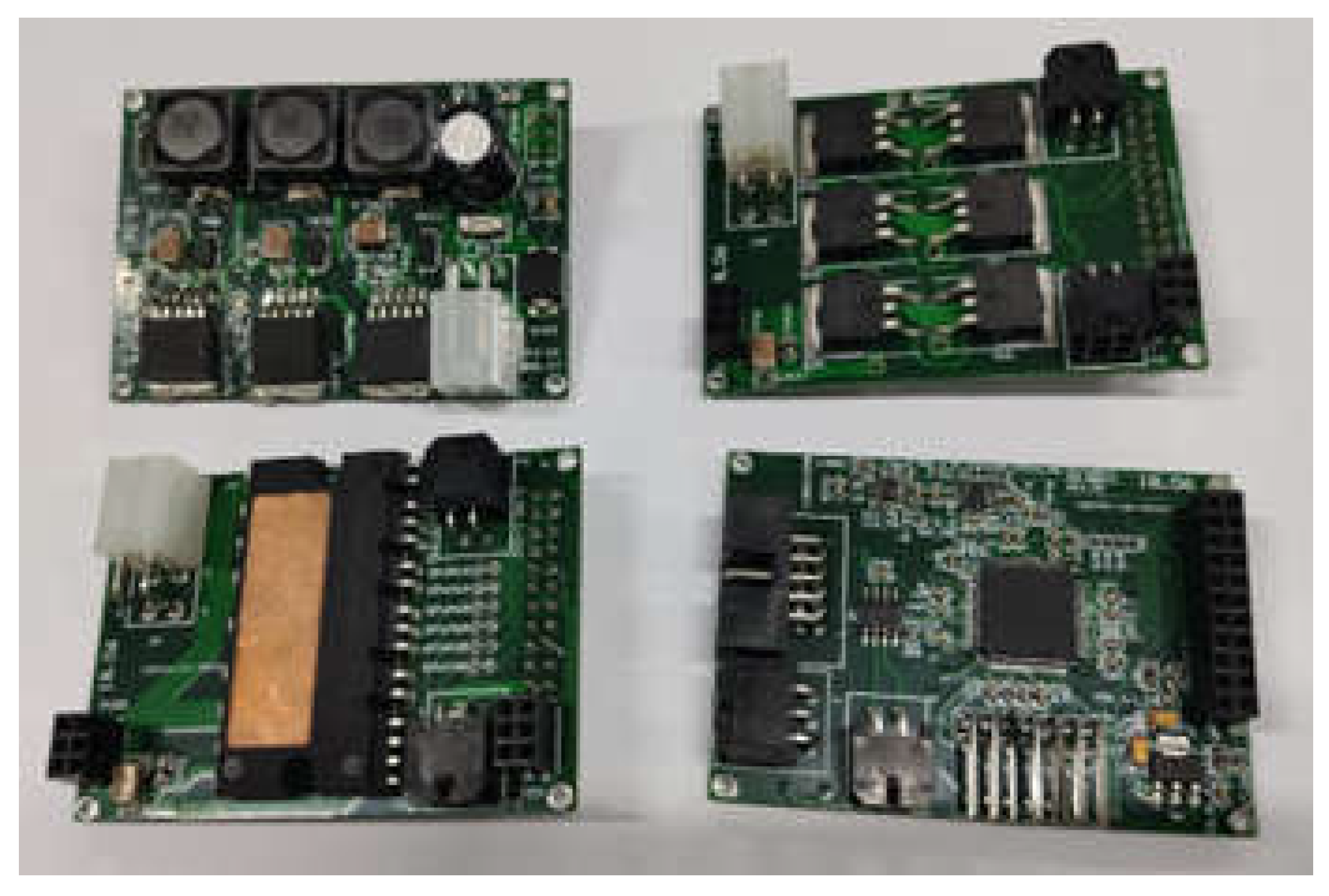
To efficiently utilize the limited internal space of the spherical joint, a distributed multi-board architecture is adopted for the hardware control system. As illustrated in Figure 9, the overall hardware platform consists of four circuit boards, forming a complete and integrated control system.
In this design, the digital signal processor (DSP) and the intelligent power module (IPM) are physically separated onto different boards to enhance system reliability and thermal management. In addition, connectors are uniformly arranged across the boards, facilitating modular integration and improving system compactness. This design is well suited for the constrained installation space within the spherical joint.
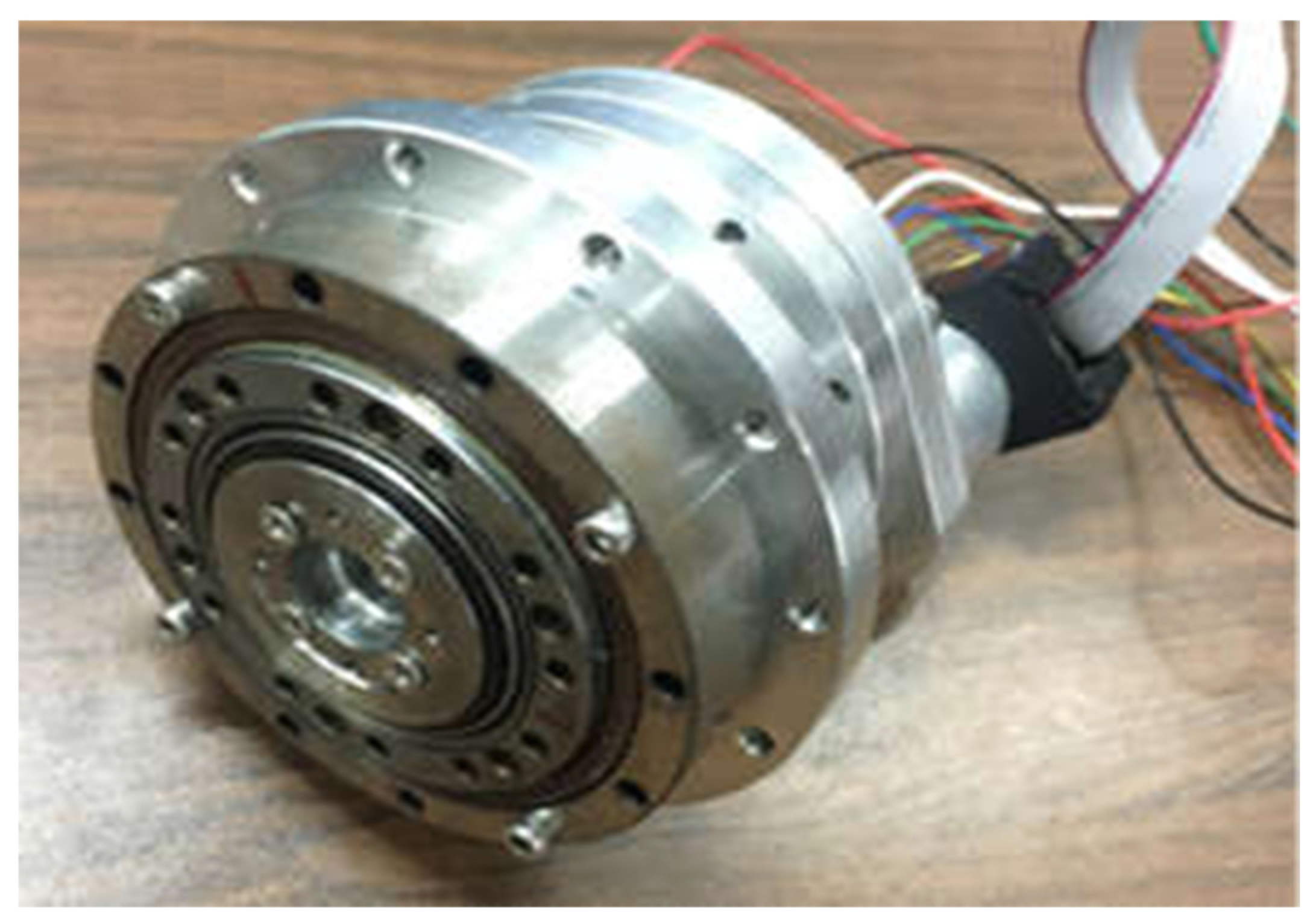
The two-degree-of-freedom spherical joint used in the experiments features an integrated structural design (Figure 10), in which the brushless DC motor, harmonic reducer, brake, and meshing gear set are compactly integrated into a single unit. This high level of integration enhances structural compactness and mechanical reliability.
All electrical terminals are uniformly routed through the rear end, ensuring organized cable management and significantly improving the efficiency of hardware assembly and subsequent debugging. This design also contributes to better maintainability and system integration.
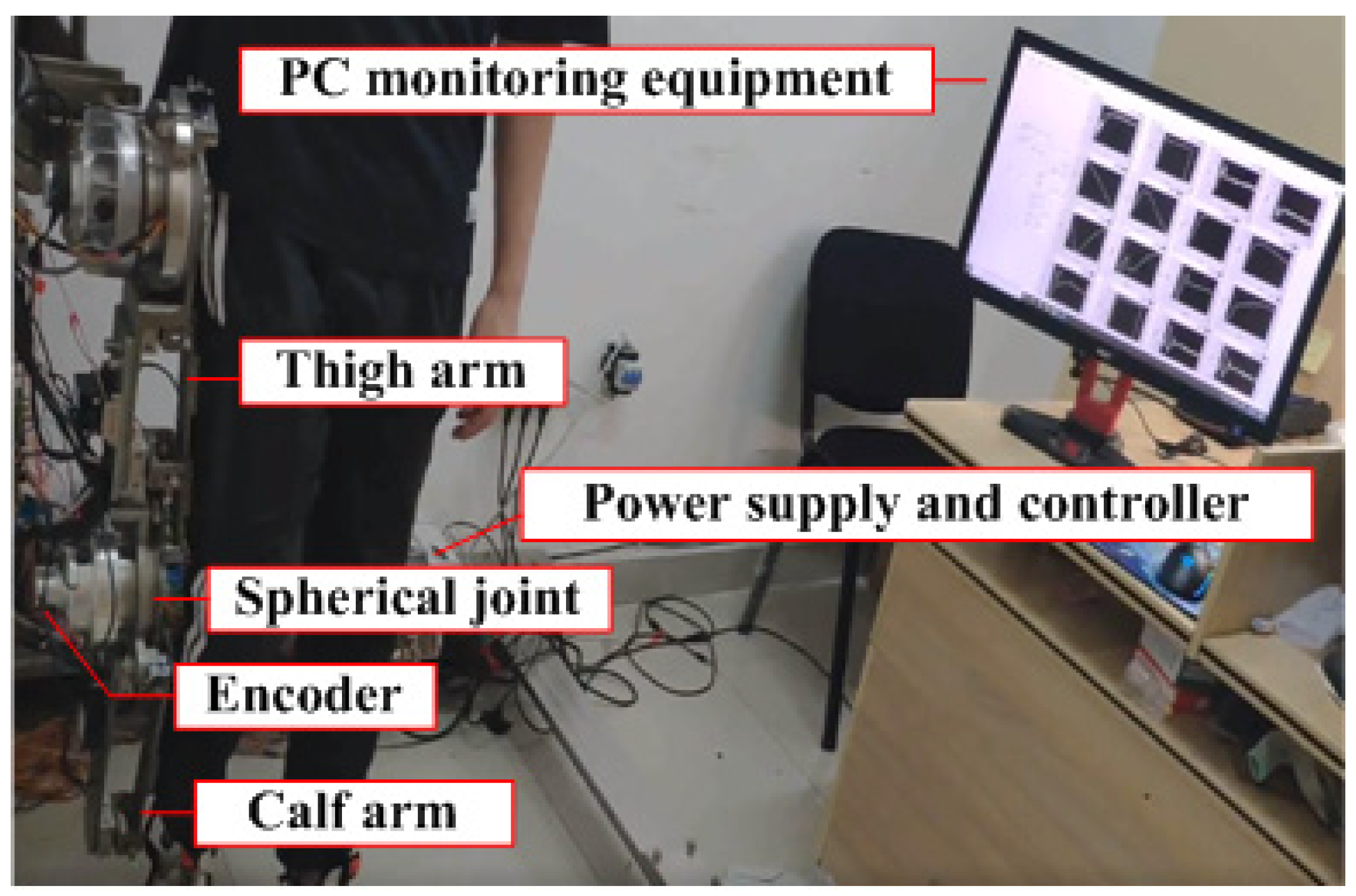
Figure 11 illustrates the assembled robotic joint motor control experimental platform. The system mainly consists of a PC-based monitoring unit, upper and lower limb structures, a spherical joint, an encoder, a power supply, and a controller, forming a complete electromechanical control system.
The printed circuit boards (PCBs) are interconnected via stacked pin headers, enabling compact electrical integration. Communication between the control system and the host computer is established through a programmer, allowing for control command transmission and real-time data acquisition.
The reserved signal interfaces of the spherical joint are accurately aligned with the corresponding interfaces on the circuit boards, ensuring reliable signal transmission. In addition, a DC power supply feeds the motor and circuit boards through an air circuit breaker, which guarantees stable power delivery while providing effective overload protection, thereby enhancing the overall safety and reliability of the experimental platform.
The BLDC motor employed in the experimental platform is a dedicated actuator for robotic joint applications. Its key hardware parameters are summarized in Table 2, which provide the fundamental basis for control algorithm design, system modeling, and hardware tuning.
The control workflow of the experimental platform is illustrated as follows. Control commands are first issued from the Code Composer Studio (CCS) development platform and processed by the DSP control board implementing the RBF-PID self-tuning algorithm. The DSP then generates PWM signals to drive the intelligent power module (IPM), which regulates the motor armature voltage accordingly.
Meanwhile, the torque sensor and encoder continuously acquire the motor operating states, including torque and speed information, and feed them back to the DSP control board. This feedback loop enables real-time closed-loop control of the motor system.

5.2. Experimental Results and Analysis

To further validate the practical performance of the proposed control strategy, quantitative performance indices are introduced in the experimental analysis, including steady-state error, speed fluctuation range, settling time, and transient response characteristics under dynamic conditions.
Based on the developed experimental platform, real-time operational tests of the RBF neural network-enhanced PID self-tuning control system are conducted, including winding voltage and current waveform measurements under steady-state operation, as well as speed response tests under abrupt start–stop extreme conditions. These experiments are performed to evaluate the actual control performance of the system, while also analyzing key issues encountered during hardware operation and identifying potential optimization directions.

5.2.1. Winding Voltage and Current Waveform Analysis

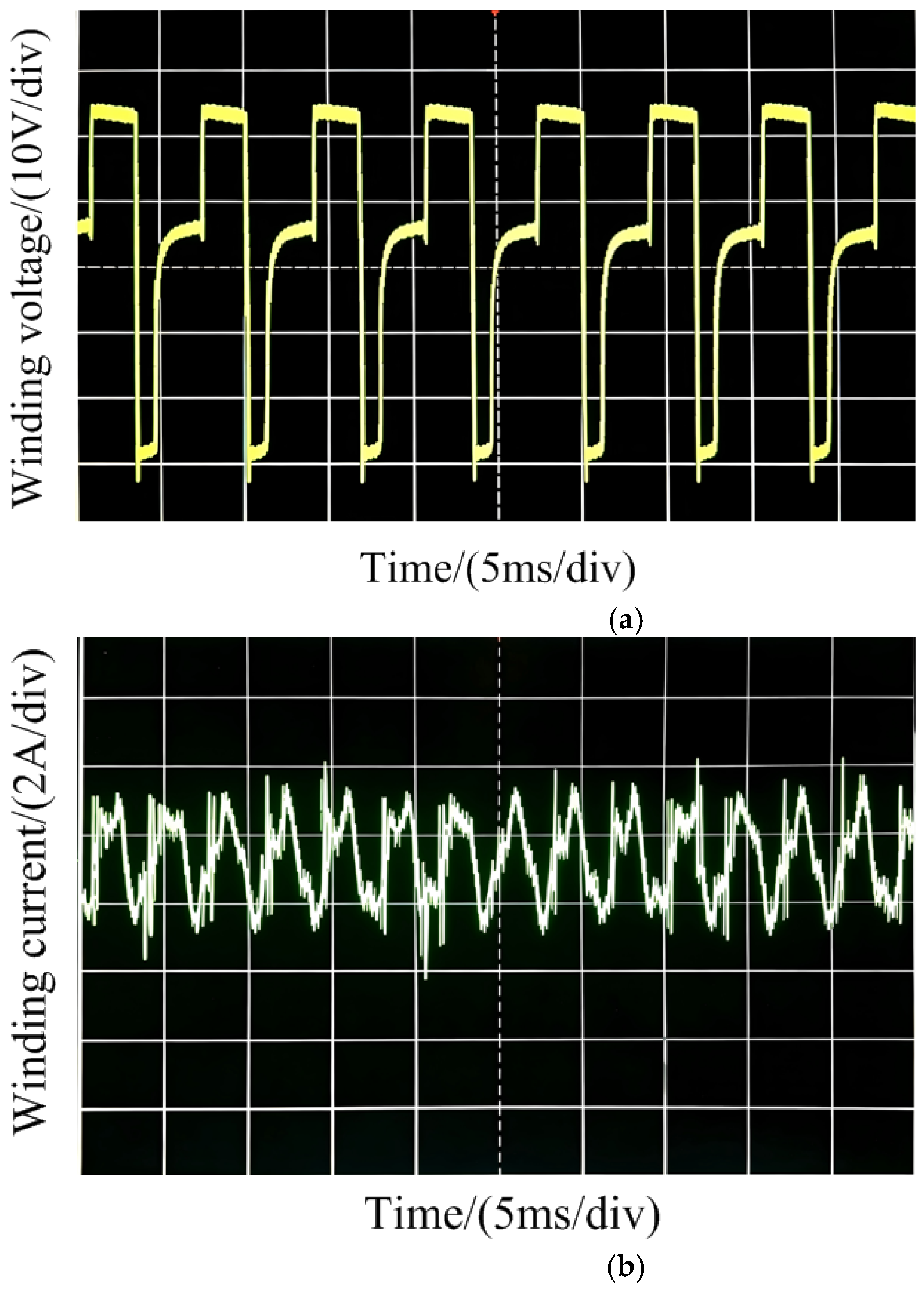
In the experiments, control commands are issued from the host computer, and the ePWM module of the DSP generates PWM signals with a specified duty cycle, which regulate the motor armature voltage to maintain stable operation. Once the PWM duty cycle stabilizes, the motor reaches the desired steady-state speed. At this point, an oscilloscope is used to measure the voltage and current waveforms of one motor phase in real time, and the results are shown in Figure 12.
As observed from Figure 12, under steady-state operation, both the winding voltage and current waveforms closely match the theoretical expectations, exhibiting smooth profiles without noticeable distortion.
To quantitatively evaluate the steady-state performance, the total harmonic distortion (THD) of the current waveform is measured. The THD is below 3%, indicating good waveform quality and effective suppression of harmonic components. Compared with conventional control methods under similar operating conditions, the proposed RBF-PID controller maintains lower harmonic distortion and smoother current profiles, further demonstrating its effectiveness in improving steady-state performance.
Only minor voltage spikes are observed at the waveform edges, with amplitudes less than 5% of the rated voltage. These spikes are attributed to external electromagnetic interference rather than intrinsic control issues. Due to the robustness of the proposed control strategy, such disturbances have negligible impact on the overall control performance. This further validates the effectiveness of the proposed control method in maintaining high-quality steady-state operation.
These results demonstrate that the proposed RBF neural network-enhanced PID self-tuning controller provides stable and accurate control outputs, enabling smooth motor operation, with good consistency between the hardware implementation and control algorithm.
As shown in Figure 12a,b, the winding voltage and current waveforms exhibit stable and periodic characteristics under steady-state operation. The solid lines represent the measured winding voltage and current signals, while the dashed lines are used to mark the zero-reference level for voltage and current, respectively. The voltage waveform presents a regular switching pattern consistent with PWM control, while the current waveform shows a smooth profile with limited ripple, indicating effective current regulation.
Based on the annotated oscilloscope scales (Time scale: 5 ms/div, Voltage scale: 10 V/div, Current scale: 2 A/div), the signal frequency and amplitude can be clearly identified. The observed waveforms confirm that the proposed control strategy ensures stable operation and low current distortion under the given conditions.
The peak-to-peak current ripple is relatively small, and no abnormal oscillations are observed, further demonstrating the robustness of the proposed controller.

5.2.2. Dynamic Response Under Start–Stop Conditions

In practical robotic applications, joint actuators are frequently subjected to extreme operating conditions, such as emergency stops and rapid restarts, which place stringent demands on the dynamic response and stability of the control system.
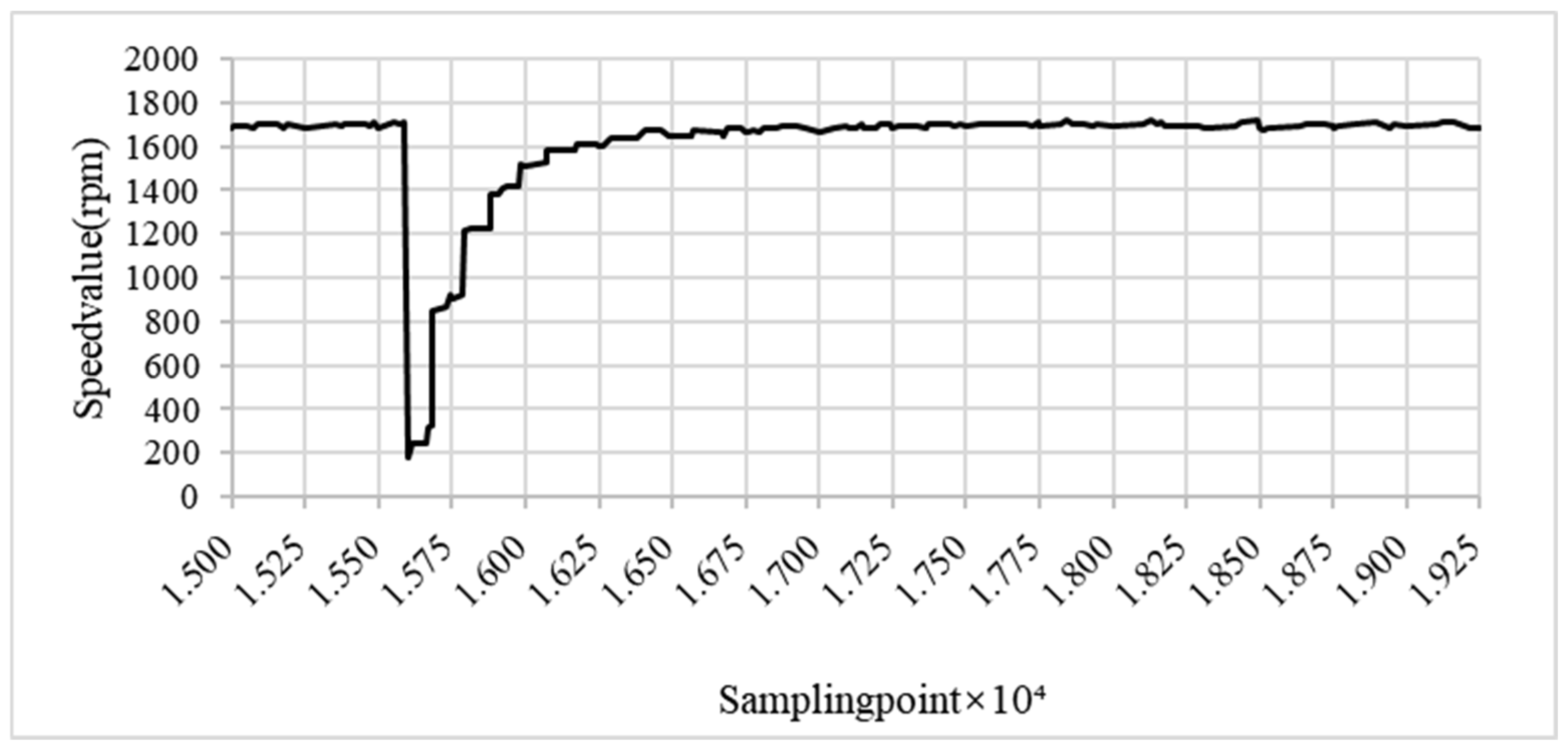
To evaluate the performance of the proposed control strategy under such conditions, emergency stop and rapid restart commands are issued from the host computer to the controller. The resulting motor speed response is measured using the eQEP module of the DSP for real-time speed acquisition. The collected data are further processed and visualized on the PC through the Code Composer Studio (CCS) platform. The experimental results are presented in Figure 13.
The experimental results demonstrate that, under steady-state operation, the motor speed is accurately maintained at 1690 rpm with only minor periodic fluctuations. Further analysis reveals that these fluctuations originate from assembly tolerances in the spherical joint, which introduce periodic load disturbances, rather than from limitations of the control system.
Upon issuing the emergency stop command, the internal brake is rapidly engaged, resulting in a sharp decrease in motor speed and effective braking performance. The non-zero residual speed observed in the CCS display is attributed to encoder pulse accumulation within the speed calculation window, which is a normal artifact of the measurement and processing mechanism.
Following the rapid restart command, the motor speed rises quickly and smoothly converges to the reference value without overshoot or oscillation. This behavior is highly consistent with the simulation results presented in Section 4, further validating the effectiveness of the proposed RBF neural network-enhanced PID self-tuning control strategy. The results confirm that the proposed method achieves superior dynamic performance and robustness under extreme operating conditions, making it well suited for practical robotic joint applications.

5.2.3. Quantitative Performance Evaluation

To further evaluate the experimental performance of the proposed control strategy in a quantitative manner, several key performance indicators are summarized based on the experimental results.
As summarized in Table 3, the proposed RBF-PID controller demonstrates stable and accurate performance under real experimental conditions. The steady-state error is negligible, and the speed fluctuation remains within a narrow range, indicating good regulation capability.
In addition, the measured THD is below 3%, confirming the effectiveness of the controller in suppressing harmonic distortion and ensuring high-quality current waveforms. The system also maintains stable operation under abrupt start–stop conditions, demonstrating strong robustness and adaptability.
These quantitative results further validate the effectiveness of the proposed method in practical applications.
Compared with typical conventional PID-controlled systems reported in the literature, which often exhibit higher overshoot and larger current distortion under similar conditions, the proposed method shows improved steady-state stability and waveform quality.

5.2.4. Step Response Experimental Validation

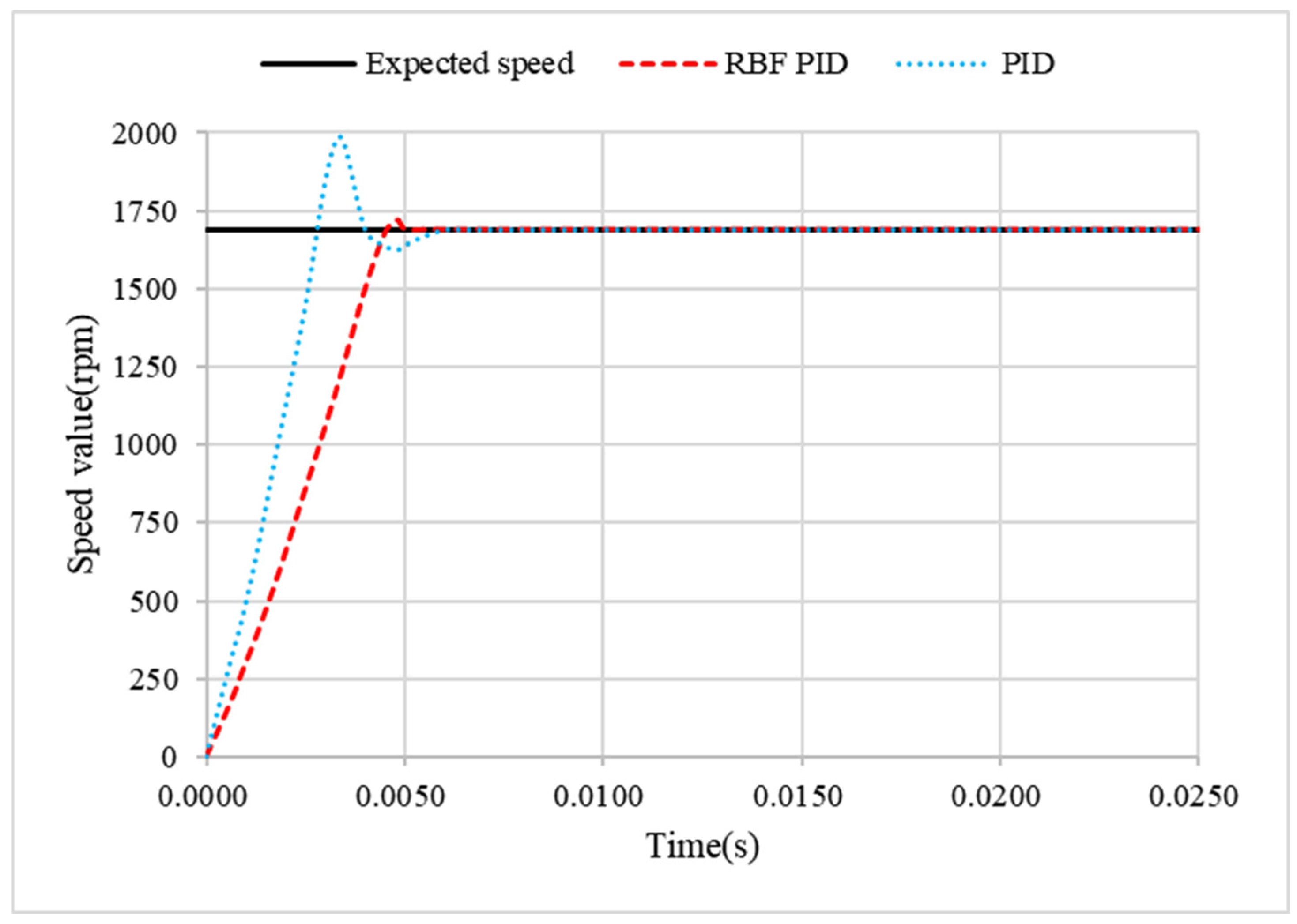
To further evaluate the dynamic performance of the proposed control strategy, a step response experiment is conducted. The reference speed is abruptly changed from 0 rpm to 1690 rpm, and the corresponding speed responses of both the conventional PID controller and the proposed RBF-PID controller are recorded under identical operating conditions. This experiment is specifically designed to evaluate the step response performance of the system under real operating conditions.
As shown in Figure 14, the proposed RBF-PID controller exhibits a fast and smooth response to the step input. The motor speed rapidly converges to the reference value without observable overshoot or oscillation. In contrast, the conventional PID controller shows a noticeable overshoot (18.34%) and a longer settling time (0.0062 s), accompanied by slight oscillations before reaching steady state.
Based on the experimental results and step response analysis shown in Figure 14, a quantitative performance evaluation is provided as follows.
During steady-state operation at 1690 rpm, the proposed RBF-PID controller maintains a speed fluctuation within ±3 rpm, corresponding to a steady-state speed deviation of less than 0.18%, which indicates high control accuracy and stability. In comparison, the conventional PID controller exhibits larger steady-state speed fluctuations of up to ±12 rpm, corresponding to a deviation of approximately 0.71%.
During the transient response, the proposed controller reaches the reference value with a rise time of 0.0038 s and a settling time of 0.0050 s, with only a minor overshoot of 1.78%, demonstrating excellent dynamic performance.
In contrast, under the same operating conditions, the conventional PID controller exhibits significant overshoot of 18.34% and a longer settling time of 0.0062 s. Additionally, larger speed fluctuations are observed during steady-state operation, indicating inferior stability compared to the proposed method.
Based on the above quantitative analysis, a comparative summary of the experimental performance is presented in Table 4.
As summarized in Table 4, the proposed RBF-PID controller demonstrates superior performance compared to the conventional PID controller in terms of rise time, settling time, overshoot, and tracking accuracy. These results indicate that the proposed method achieves faster dynamic response and higher control precision.
The experimental step response further validates the transient performance of the system. Compared with the conventional PID controller, the proposed RBF-PID controller exhibits reduced overshoot, faster settling time, and improved stability under sudden reference changes.
In addition, the experimental results are consistent with the simulation results presented in Section 4, which further confirms the reliability and effectiveness of the proposed control strategy under both simulated and real operating conditions.
Overall, the comparative results highlight the advantages of the proposed method in handling nonlinear and time-varying characteristics of robotic joint systems, demonstrating its potential for practical applications.

5.2.5. Hardware Issues and Optimization Considerations

During prolonged continuous operation, localized overheating issues are observed in the hardware system. On one hand, the RBF neural network-based PID self-tuning control system requires real-time network parameter updates, Jacobian computation, and PID parameter adaptation, resulting in higher computational complexity compared to conventional control algorithms. This leads to increased heat generation in the DSP and surrounding power components. On the other hand, poor contact caused by excessive contact resistance in some PCB connectors results in additional heat generation.
If the temperature continues to rise, the thermal protection mechanism of the circuit board may be triggered, leading to forced motor shutdown and affecting continuous system operation.
To address these issues, two optimization strategies are recommended. First, selecting a DSP with higher computational capability and lower power consumption can reduce the hardware power consumption associated with algorithm execution. In addition, heat sinks and thermal interface materials should be incorporated at key heat-generating components to improve heat dissipation efficiency. Second, the interconnection of PCBs should be optimized by using connectors with improved contact performance and ensuring tight connections during assembly to minimize contact resistance, thereby preventing additional heat generation.
These measures can effectively mitigate overheating issues and ensure long-term stable operation of the system.

5.3. Hardware Validation Summary

Based on the distributed multi-board architecture, a robotic joint motor control experimental platform is successfully developed, enabling the hardware implementation and real-time validation of the proposed RBF neural network-based PID self-tuning control system.
Experimental results demonstrate that the hardware platform is well matched with the proposed control algorithm and can stably drive the robotic joint BLDC motor. The measured winding voltage and current waveforms closely align with theoretical expectations, indicating accurate and stable control performance. Under extreme operating conditions, including emergency stop and rapid restart, the motor speed responds rapidly without overshoot, accurately reproducing the superior performance observed in simulation.
These results fully validate the practical feasibility and effectiveness of the proposed control strategy. In addition, the overheating issues identified during experiments provide valuable insights for further hardware optimization. By improving computational resource allocation, enhancing thermal management design, and optimizing connector contact performance, the long-term stability and reliability of the hardware system can be significantly improved.
Overall, this study provides a solid foundation for the practical deployment of the proposed control system in robotic joint applications.

5.4. Computational Complexity and Real-Time Performance Analysis

To further evaluate the computational efficiency and real-time feasibility of the proposed control strategy, the execution time and CPU usage of the control algorithm were analyzed under experimental conditions.
The control system was implemented on an embedded platform with a fixed sampling period of 1 ms. The execution time of each control cycle was measured through program profiling. The average execution time of the conventional PID controller is approximately 28 μs per cycle, while the proposed RBF-PID controller requires approximately 52 μs due to the additional computations introduced by the RBF neural network, including basis function evaluation and online parameter updating.
Although the proposed method increases computational complexity compared to the conventional PID controller, the total execution time remains significantly lower than the sampling period, occupying only about 5.2% of the available control cycle. In addition, the overall CPU usage of the system is approximately 6.5%, indicating that sufficient computational resources remain available for other control and communication tasks.
These results demonstrate that the proposed RBF-PID controller achieves a favorable balance between control performance and computational cost. Despite the inclusion of adaptive neural network mechanisms, the algorithm remains lightweight and suitable for real-time implementation in embedded motor control systems.
Furthermore, the real-time performance observed in experimental validation confirms that the proposed method can be reliably deployed in practical robotic joint applications without imposing excessive computational burden.

6. Conclusions

To address the inherent limitations of conventional PID controllers in robotic joint BLDC motor control, including poor adaptability due to fixed parameters, large overshoot under complex operating conditions, and weak disturbance rejection capability, this paper proposes an RBF neural network-based PID self-tuning control system. The proposed method integrates the online identification capability of RBF neural networks with the practical advantages of conventional PID control. By performing real-time identification of the nonlinear motor dynamics and providing Jacobian information, adaptive online tuning of the PID parameters K p , K i , and K d is achieved, thereby enhancing control performance while preserving the simplicity and practicality of PID control.
The main contributions of this work are summarized as follows:
(1)
The RBF neural network serves as an effective online identifier capable of approximating nonlinear motor dynamics with arbitrary accuracy. The resulting Jacobian information provides a precise dynamic basis for PID parameter tuning, fundamentally overcoming the lack of model awareness in conventional PID control.
(2)
The proposed RBF-PID self-tuning control system achieves demonstrates superior performance under various operating conditions, including step response, speed variation, and abrupt start–stop scenarios. It demonstrates superior steady-state accuracy, adaptability, and disturbance rejection capability, effectively addressing the shortcomings of conventional PID control.
(3)
The proposed approach combines algorithmic advancement with practical implementability. It can be readily integrated into existing PID-based hardware architectures with minimal modification. However, due to increased computational requirements, appropriate hardware resource allocation and thermal management are necessary. These challenges can be effectively addressed through the use of high-performance low-power processors and enhanced heat dissipation design.
In summary, the proposed control system significantly improves the control accuracy and operational stability of robotic joint motors, providing an effective solution for high-precision motion control. With further optimization in algorithm lightweighting and hardware integration, the proposed method has strong potential for applications in industrial manipulators, service robots, and rehabilitation robotics. Future work will focus on reducing computational complexity and system size to further enhance its applicability in compact and portable robotic systems.

Author Contributions

Conceptualization, C.X. and H.B.; methodology, C.X.; software, C.X.; validation, C.X. and L.Z.; formal analysis, C.X.; investigation, C.X.; resources, H.B.; data curation, C.X.; writing—original draft preparation, C.X.; writing—review and editing, H.B. and L.Z.; visualization, C.X.; supervision, H.B.; project administration, H.B.; funding acquisition, H.B. All authors have read and agreed to the published version of the manuscript.

Funding

This research was funded by the 67th National Postdoctoral Program of China (Grant No.: 2020M671277); the Key Laboratory of Computer Network and Information Integration, Southeast University, Ministry of Education (Grant No.: K93-9-2021-08); and the General Project of Philosophy and Social Sciences Research in Jiangsu Universities (Project Approval No.: 2025SJYB0936).

Data Availability Statement

The data supporting the results of this study are available from the corresponding author upon reasonable request. The source code used in this study can also be provided for research purposes.

Acknowledgments

The authors would like to sincerely thank the funding agencies for their financial support. The authors also acknowledge the support from the laboratory platform of Southeast University, which provided essential experimental conditions for this study. Special thanks are extended to the technical staff for their assistance in system integration, data acquisition, and experimental testing.

Conflicts of Interest

The author declares no conflicts of interest.

Abbreviations

The following abbreviations are used in this manuscript:
RBFRadial basis function
BLDCBrushless direct current motors
PIDProportional-integral-derivative
PIProportional-integra
BPBackpropagation
DSPDigital signal processor
PWMPulse width modulation
UUBUniformly ultimately bounded
THDTotal harmonic distortion

References

  1. Hasanen, B.; Suthar, B.; Zweiri, Y.; Seneviratne, L.; Hussain, I. Design of Twisted String Actuated Flexure Joint for Supernumerary Robotic Arm for Bimanual Tasks. IEEE Sens. J. 2025, 25, 7848–7857. [Google Scholar] [CrossRef]
  2. Ai, J.; Meng, J.; Mai, X.; Zhu, X. BCI Control of a Robotic Arm Based on SSVEP With Moving Stimuli for Reach and Grasp Tasks. IEEE J. Biomed. Health Inform. 2023, 27, 3818–3829. [Google Scholar] [CrossRef] [PubMed]
  3. Fukuoka, M.; Nakamura, F.; Verhulst, A.; Inami, M.; Kitazaki, M.; Sugimoto, M. Sensory Attenuation with a Virtual Robotic Arm Controlled Using Facial Movements. IEEE Trans. Vis. Comput. Graph. 2024, 30, 4023–4038. [Google Scholar] [CrossRef] [PubMed]
  4. Zhu, X.; Zhang, B.; Qiu, Y.; Chepinskiy, S.A. An Interaction Behavior Decision-Making Model of Service Robots for the Disabled Based on Human–Robot Empathy. IEEE Access 2024, 12, 15778–15790. [Google Scholar] [CrossRef]
  5. Black, D.G.; Hosseinabadi, A.H.H.; Salcudean, S.E. 6-DOF Force Sensing for the Master Tool Manipulator of the da Vinci Surgical System. IEEE Robot. Autom. Lett. 2020, 5, 2264–2271. [Google Scholar] [CrossRef]
  6. Cha, B.; Lee, K.-H.; Ryu, J. Deep-Learning-Based Emergency Stop Prediction for Robotic Lower-Limb Rehabilitation Training Systems. IEEE Trans. Neural Syst. Rehabil. Eng. 2021, 29, 1120–1128. [Google Scholar] [CrossRef]
  7. Guo, C.; Luk, W. FPGA-Accelerated Sim-to-Real Control Policy Learning for Robotic Arms. IEEE Trans. Circuits Syst. II Express Briefs 2024, 71, 1690–1694. [Google Scholar] [CrossRef]
  8. Lu, Z.; Zhou, Y.; Hu, L.; Zhu, J.; Liu, S.; Huang, Q.; Li, Y. A Wearable Human-Machine Interactive Instrument for Controlling a Wheelchair Robotic Arm System. IEEE Trans. Instrum. Meas. 2024, 73, 4005315. [Google Scholar] [CrossRef]
  9. Kaczmarski, B.; Goriely, A.; Kuhl, E.; Moulton, D.E. A Simulation Tool for Physics-Informed Control of Biomimetic Soft Robotic Arms. IEEE Robot. Autom. Lett. 2023, 8, 936–943. [Google Scholar] [CrossRef]
  10. Rodríguez-Nieto, D.; Navas, E.; Fernández, R. Automated Seeding in Hydroponic Greenhouse with a Dual-Arm Robotic System. IEEE Access 2025, 13, 30745–30761. [Google Scholar] [CrossRef]
  11. Zhang, F.; Li, Z. Design of fractional PID control system for BLDC motor based on FPGA. In Proceedings of the 2018 Chinese Control and Decision Conference (CCDC), Shenyang, China, 9–11 June 2018; pp. 2293–2296. [Google Scholar]
  12. Mahmud, M.; Motakabber, S.M.A.; Zahirul Alam, A.H.M.; Nordin, A.N. Adaptive PID Controller Using for Speed Control of the BLDC Motor. In Proceedings of the 2020 IEEE International Conference on Semiconductor Electronics (ICSE), Kuala Lumpur, Malaysia, 28–29 July 2020; pp. 168–171. [Google Scholar]
  13. De Viaene, J.; Ceulemans, D.; Derammelaere, S.; Stockman, K. Sensorless Load Angle Control for Energy Optimal Sinusoidal Driven BLDC Motor Applications. IEEE/ASME Trans. Mechatron. 2022, 27, 2290–2300. [Google Scholar] [CrossRef]
  14. Mamadapur, A.; Unde Mahadev, G. Speed Control of BLDC Motor Using Neural Network Controller and PID Controller. In Proceedings of the 2019 2nd International Conference on Power and Embedded Drive Control (ICPEDC), Chennai, India, 21–23 August 2019; pp. 146–151. [Google Scholar]
  15. Sridhar, H.S.; Hemanth, P.; Pavitra; Soumya, H.V.; Joshi, B.G. Speed Control of BLDC Motor using Soft Computing Technique. In Proceedings of the 2020 International Conference on Smart Electronics and Communication (ICOSEC), Trichy, India, 10–12 September 2020; pp. 1162–1168. [Google Scholar]
  16. Lu, Y.; Huang, J.; Jiang, Z.; Tang, T.; Tang, H.; Shi, L. PID Adaptive Feedback Motor System Based on Neural Network. IEEE Access 2024, 12, 60149–60154. [Google Scholar] [CrossRef]
  17. Farrag, M.; Lai, C.S.; Darwish, M. A Comparison of PI and RBF Brushless DC Motor Speed Control Methods. In Proceedings of the 2023 58th International Universities Power Engineering Conference (UPEC), Dublin, Ireland, 30 August–1 September 2023; pp. 1–5. [Google Scholar]
  18. Amirkhani, A.; Shirzadeh, M.; Heydari, J. Automotive Electric Power Steering Control with Robust Observer Based Neuroadaptive Type-2 Radial Basis Function Methodology. IEEE Open J. Veh. Technol. 2024, 5, 592–605. [Google Scholar] [CrossRef]
  19. Liang, H.; Chen, H.; Guo, J.; Zuo, X. Detection and Identification Method of Drilling Total Hydrocarbon Gas Based on Infrared Spectroscopy and KL+BP-RBF Algorithm. IEEE Trans. Instrum. Meas. 2022, 71, 2504510. [Google Scholar] [CrossRef]
Figure 1. Internal power transmission in a motion joint diagram.
Applsci 16 04469 g001
Figure 2. Speed and Current Response During Startup in a Dual Closed-Loop Control System.
Applsci 16 04469 g002
Figure 3. RBF PID Motor Control System.
Applsci 16 04469 g003
Figure 4. RBF neural network structure.
Applsci 16 04469 g004
Figure 5. Simulation step response comparison between Dual PI and proposed RBF-PID controllers.
Applsci 16 04469 g005
Figure 6. PID parameter variation during startup step response.
Applsci 16 04469 g006
Figure 7. Step Response of the Two Control Systems with Varying Desired Speed.
Applsci 16 04469 g007
Figure 8. PID parameter variation during speed transition.
Applsci 16 04469 g008
Figure 9. Hardware Circuit Boards.
Applsci 16 04469 g009
Figure 10. Spherical Joint.
Applsci 16 04469 g010
Figure 11. System Testing Platform.
Applsci 16 04469 g011
Figure 12. (a) Winding voltage waveform. (b) Winding current waveform. Experimental winding voltage and current waveforms under steady-state operation. The solid lines represent the measured voltage and current signals, and the dashed lines denote the zero-reference levels. The oscilloscope scales (time/division, voltage/division, current/division) are clearly labeled for improved readability.
Applsci 16 04469 g012
Figure 13. Motor Speed Variation During Emergency Stop and Restart.
Applsci 16 04469 g013
Figure 14. Experimental step response comparison under a speed command from 0 to 1690 rpm for conventional PID and proposed RBF-PID controllers.
Applsci 16 04469 g014
Table 1. Quantitative performance comparison between the conventional PI controller and the proposed RBF-PID controller.
Performance MetricDual-Loop PI
Controller
Proposed RBF-PID
Controller
Rise Time (s)0.00080.0036
Settling Time (s)0.00650.0052
Overshoot (%)23.260
Steady-State Error (rpm)≈0≈0
Tracking Error (RMS, rpm)≈20≈8
Table 2. Motor Parameter Table.
Parameter NameParameter Value
Rated Torque/(Nm)0.413
Rated Current/(A)5.7
Rated Voltage/(V)48
Terminal Resistance/(Ω)0.771
Terminal Inductance/(mH)0.36
Number of Pole Pairs12
Table 3. Experimental performance comparison of the proposed RBF-PID controller.
Performance MetricValue (Experimental Results)
Steady-State Speed (rpm)1690
Steady-State Error (rpm)≈0
Speed Fluctuation Range (rpm)<±10 (estimated from waveform)
Settling Time (s)≈0.01–0.02 (from start-up response)
Total Harmonic Distortion (THD)<3%
Current RippleLow (smooth waveform, no oscillation)
Disturbance ResponseStable under abrupt start–stop
Table 4. Experimental performance comparison between the conventional PID controller and the proposed RBF-PID controller.
Performance MetricConventional PIDProposed RBF-PID
Rise Time (s)0.00220.0038
Settling Time (s)0.00620.0050
Overshoot (%)18.341.78
Steady-State Error (rpm)≈0≈0
Tracking Error (RMS, rpm)≈18≈7
Speed Fluctuation (±rpm)±12±3
Disclaimer/Publisher’s Note: The statements, opinions and data contained in all publications are solely those of the individual author(s) and contributor(s) and not of MDPI and/or the editor(s). MDPI and/or the editor(s) disclaim responsibility for any injury to people or property resulting from any ideas, methods, instructions or products referred to in the content.