Article

Coordinated Deformation and Energy Dissipation Mechanisms of Backfill and Surrounding Rock Under Impact Loading

1
Key Laboratory of Ministry of Education for Efficient Mining and Safety of Metal Mines, University of Science and Technology Beijing, Beijing 100083, China
2
Future City College, University of Science and Technology Beijing, Beijing 100083, China
3
Yunnan Chihong Zinc and Germanium Co., Ltd., Qujing 654212, China
4
CINF Engineering Co., Ltd., Changsha 410019, China
*
Authors to whom correspondence should be addressed.
Appl. Sci. 2026, 16(9), 4402; https://doi.org/10.3390/app16094402
Submission received: 3 April 2026 / Revised: 27 April 2026 / Accepted: 29 April 2026 / Published: 30 April 2026

Abstract

The synergistic deformation and energy dissipation of backfill–surrounding rock composite structures under impact loading remain poorly understood, despite the frequent exposure of deep mine backfilled stopes to dynamic disturbances such as blasting and seismicity. In this study, Split Hopkinson Pressure Bar (SHPB) tests were conducted at a fixed impact pressure of 0.2 MPa on single-material specimens and bonded backfill–rock composite cylinders, with loading applied from both the backfill end and the surrounding rock end. Single backfill specimens exhibited dominant reflected energy (~90%) and low crushing energy consumption (<20%), whereas composite specimens displayed characteristic “double-peak” or “flat-peak” stress–strain signatures with peak strengths exceeding that of standalone backfill. When loading was directed from the high-strength surrounding rock into the backfill, the reflected energy ratio decreased to 60–80% and crushing energy consumption increased to 20–30%, demonstrating a loading-direction-dependent energy dissipation mechanism. These results provide a quantitative reference for optimizing blast sequence design in backfilled stopes.

1. Introduction

The increasing global demand for mineral resources, coupled with the progressive depletion of shallow ore deposits, has driven underground mining operations to greater depths, commonly exceeding 1000 m. Deep mining is accompanied by complex geological conditions, elevated in situ stresses, and frequent dynamic disturbances such as blasting, rock bursts, and seismicity-induced stress waves. These dynamic loads pose a serious threat to the stability of underground excavations, particularly in backfilled stopes where the interaction between the backfill and the surrounding rock governs the overall structural integrity. Understanding how backfill–rock composite systems respond to impact loading is therefore essential for the safe and efficient design of deep mining operations.
Filling mining technology plays a crucial role in mining operations, offering significant advantages such as reducing surface subsidence, optimizing ground pressure management, and improving resource recovery [1,2,3]. In deep mining, geological conditions and the stress environment are more complex. Additionally, frequent impact loads, such as those from blasting, can lead to stope structure instability, posing serious safety risks. [4,5,6]. This complexity is further amplified by the intense mechanical responses of the backfill and surrounding rock structures under impact loads [7,8].
Extensive research has been conducted by experts and scholars on the mechanical properties of rock and filling materials under dynamic loading. Recent SHPB-based studies have characterized the dynamic compressive strength, energy absorption, and damage evolution of cemented tailings backfill (CTB) under various cement-tailings ratios, strain rates, and confining conditions [9,10,11,12,13], consistently demonstrating a positive strain-rate sensitivity and a strong dependence on binder content. Emad M Z [14,15] established the FLAC 3D numerical model to evaluate the damage of CTB under blasting disturbance by simulating a blasting effect, to optimize the strength design of CTB in stope. Qiu et al. [16] show that charge placement in rock–backfill systems under blast loading affects strain attenuation and damage distribution. For systems with high-strength layers (THSI), placing the charge in the high-strength layer enhances energy dissipation, while for uniform strength systems (CHSI), aligning the charge with the interface promotes balanced attenuation and stability. Liu et al. [17] find that dilatancy stress increases with initial unloading confining pressure and peak stress, and that CGFB’s energy distribution exhibits a “pliers” shape, with rapid elastic energy release signaling unloading instability. Deng et al. [18] investigate the dynamic response of CTB under impact loading, revealing that the dynamic compressive strength (DPCS) is negatively correlated with initial porosity and positively with ASR. The damage evolution of CTB under impact is characterized by four stages, with the plastic yield and post-peak failure stages showing the most severe damage. Gan et al. [19] identify the critical role of tailings gradation in determining failure modes—ranging from shear to tensile failure—and highlight its impact on pore structure and hydration products.
Although these studies have significantly advanced the understanding of dynamic responses in individual backfill or rock materials, the behavior of bonded backfill–rock composite systems under impact loading remains poorly characterized. In practical deep mining stopes, backfill and the adjacent surrounding rock do not act independently; they form a composite structure across a cemented or mechanically interlocked interface, through which stress waves must propagate. The presence of this interface and the strength contrast between the two components introduce deformation mechanisms and energy partitioning patterns that cannot be inferred from single-medium tests alone. Moreover, the direction from which the dynamic load arrives—whether from the backfill side or the rock side—is a practical variable determined by the blasting design, yet its influence on the mechanical response and energy dissipation of the composite has not been systematically examined.
To address these gaps, this study employs the SHPB system to experimentally investigate the combined dynamic behavior of backfill and surrounding rock materials in direct contact. The SHPB technique enables the application of well-defined high-strain-rate compressive pulses to cylindrical specimens and the simultaneous measurement of incident, reflected, and transmitted stress waves, from which the dynamic stress–strain response and energy partitioning of the tested material can be derived. This makes it particularly suitable for isolating the effect of loading direction and material combination on the impact behavior of backfill–rock composites. This work involves a systematic comparison of single-medium and composite responses under identical impact conditions, thereby allowing for the direct isolation of the composite effect. It further provides a quantitative energy-partitioning analysis across the characteristic deformation stages—OA, AB, BC, and CD—for both loading directions. Ultimately, the study identifies a loading-direction-dependent energy dissipation mechanism, demonstrating that directing the stress wave from the high-strength surrounding rock into the low-strength backfill significantly improves energy dissipation efficiency.

2. Methods

2.1. Experimental Design

The backfill materials were prepared using unclassified tailings obtained from a copper mine in Yunnan Province, China, and ordinary Portland cement (P.O. 42.5) as the binder. Two cement-to-tailings ratios—1:3 and 1:6—were selected to represent the typical range used in underground backfill operations: the 1:3 ratio corresponds to a higher binder content commonly adopted for stopes requiring elevated early strength (e.g., primary stopes or areas adjacent to active blasting), while the 1:6 ratio represents a more economical binder dosage frequently used in secondary or non-critical filling applications. The mortar specimens simulating surrounding rock were fabricated from a mixture of ordinary Portland cement (P.O. 42.5) and standard river sand, with mix proportions designed to achieve nominal 28-day compressive strengths of 5 MPa (M5) and 15 MPa (M15). The natural sandstone specimens were cored from a sandstone block quarried in Sichuan Province, China, representing a typical medium-strength sedimentary surrounding rock encountered in Chinese metal mines. All materials were characterized for their basic physical and mechanical properties prior to specimen preparation.
Backfill in the same stope may be subjected to blasting dynamic loads from different directions, and a single blast may affect backfill and surrounding rock at different positions [20]. Therefore, when designing the experimental scheme, it is necessary to consider the impact deformation characteristics of a single material, and it is also necessary to analyze the performance of the combined body when loading at different incident ends. Considering the strength of backfill and the surrounding rock, the fixed impact pressure of the test is 0.2 MPa. Under the fixed 0.2 MPa impact pressure, the striker generated incident stress pulses whose amplitudes, based on the elastic wave properties of the incident bar and the range of specimen impedances tested, are expected to fall approximately within 15–30 MPa at the bar–specimen interface, with corresponding nominal strain rates on the order of 50–150 s−1 for the backfill and mortar specimens. These loading conditions belong to the moderate dynamic regime typical of mid-to-far-field blasting disturbances in deep stopes, where stress waves have attenuated considerably and are no longer in the immediate crushing zone. The specific scheme is as follows:
(1)
Impact test of single material specimen
Backfill, mortar, and sandstone cylinder specimens with a diameter of 50 mm were prepared. Backfill was mixed with tailings and cement powder at a ratio of 1:3 and 1:6, representing the mechanical properties of backfill under two different ratios. The mortar and natural sandstone of the M5 and M15 strength grades were selected as the surrounding rock materials to simulate the dynamic mechanical behavior under different surrounding rock conditions. The number and compressive strength of a single material specimen are shown in Table 1. The specimen numbering convention used throughout this study is as follows: the first number denotes the specimen height in millimeters (50 for single-material specimens, 25 for composite halves); ‘CT’ stands for cemented tailings backfill, followed by the cement-to-tailings ratio (e.g., 1/3 or 1/6); ‘SJM5’ and ‘SJM15’ denote mortar with nominal compressive strengths of 5 MPa and 15 MPa, respectively; ‘SY’ denotes natural sandstone. For composite specimens listed in Table 2, the naming indicates the material at the incident end first, followed by the material at the transmission end (e.g., 25CT1/6-25SJM5 represents a composite loaded from the 1:6 backfill end onto the M5 mortar end).
(2)
CTB and surrounding rock combination specimen impact test
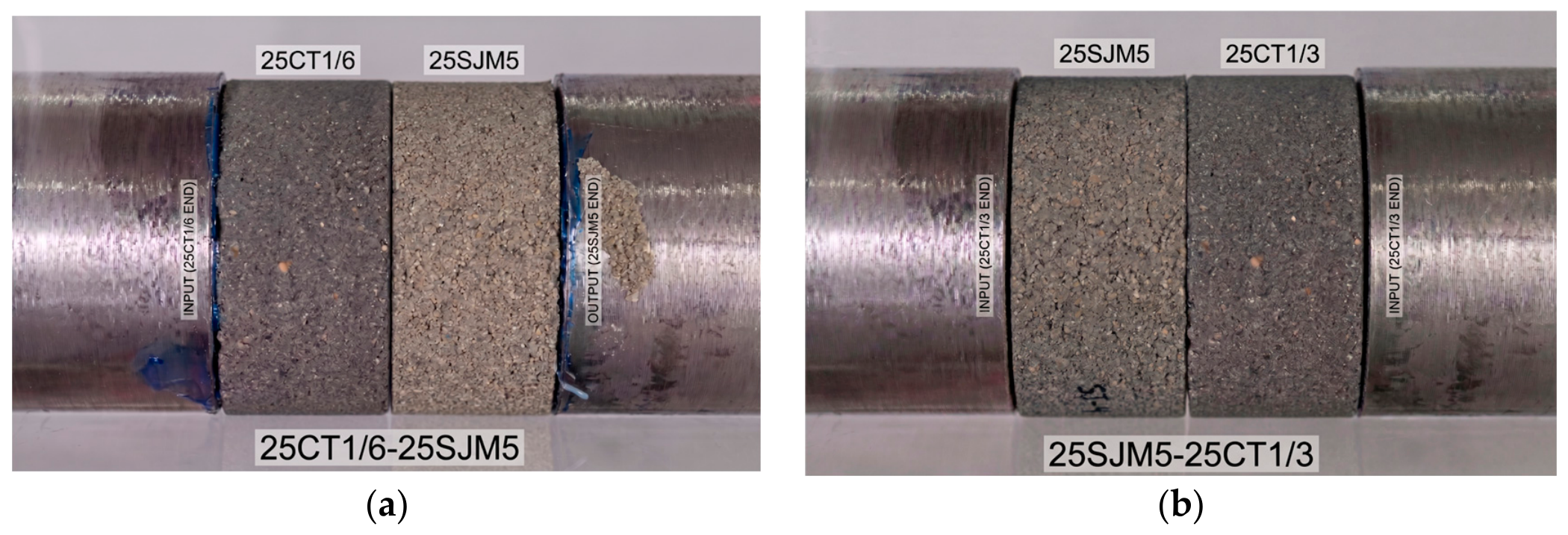
To simulate the backfill–surrounding rock composite with different strengths, CTB specimens with different proportions and surrounding rock specimens with different strengths were prepared. Each composite specimen was assembled from two cured half-length cylinders bonded at their end faces. Before bonding, the contact surfaces were ground flat using a surface grinder to ensure parallelism (tolerance ±0.02 mm). A thin layer of two-component epoxy resin adhesive was applied uniformly to both mating surfaces, and the two halves were pressed together under a light constant load for approximately 24 h at room temperature to allow full curing. The resulting bond-line thickness was estimated to be 0.1–0.3 mm, judged from post-test inspection of failed specimens. All composite specimens were prepared following the same bonding protocol to ensure consistent interface properties across configurations. In actual underground stopes, the backfill–rock interface may form under different conditions (e.g., fresh backfill cast against excavated rock); the present ‘dry–dry’ bonded interface was selected to provide a reproducible and conservative baseline for isolating the mechanical effect of the strength contrast. The specimen is numbered as ‘front end of the composite-back end of the composite’. The front and back orders of the specimens represent different types of specimens near the incident end. Figure 1 shows two different combinations: the ‘backfill-mortar’ combination (the incident end is backfilled) and ‘mortar-backfill’ combination (the incident end is mortar). The specific specimen number is shown in Table 2.
To assess data reproducibility, at least three valid repeated tests were performed for each material type and composite configuration. The reported stress–strain curves and energy values represent the mean of these repeats unless noted otherwise.

2.2. Test Device

The SHPB system is an effective test equipment for testing the mechanical response of composite materials such as rock and concrete at high strain rates [21]. In this experiment, the SHPB system was used to carry out the test.
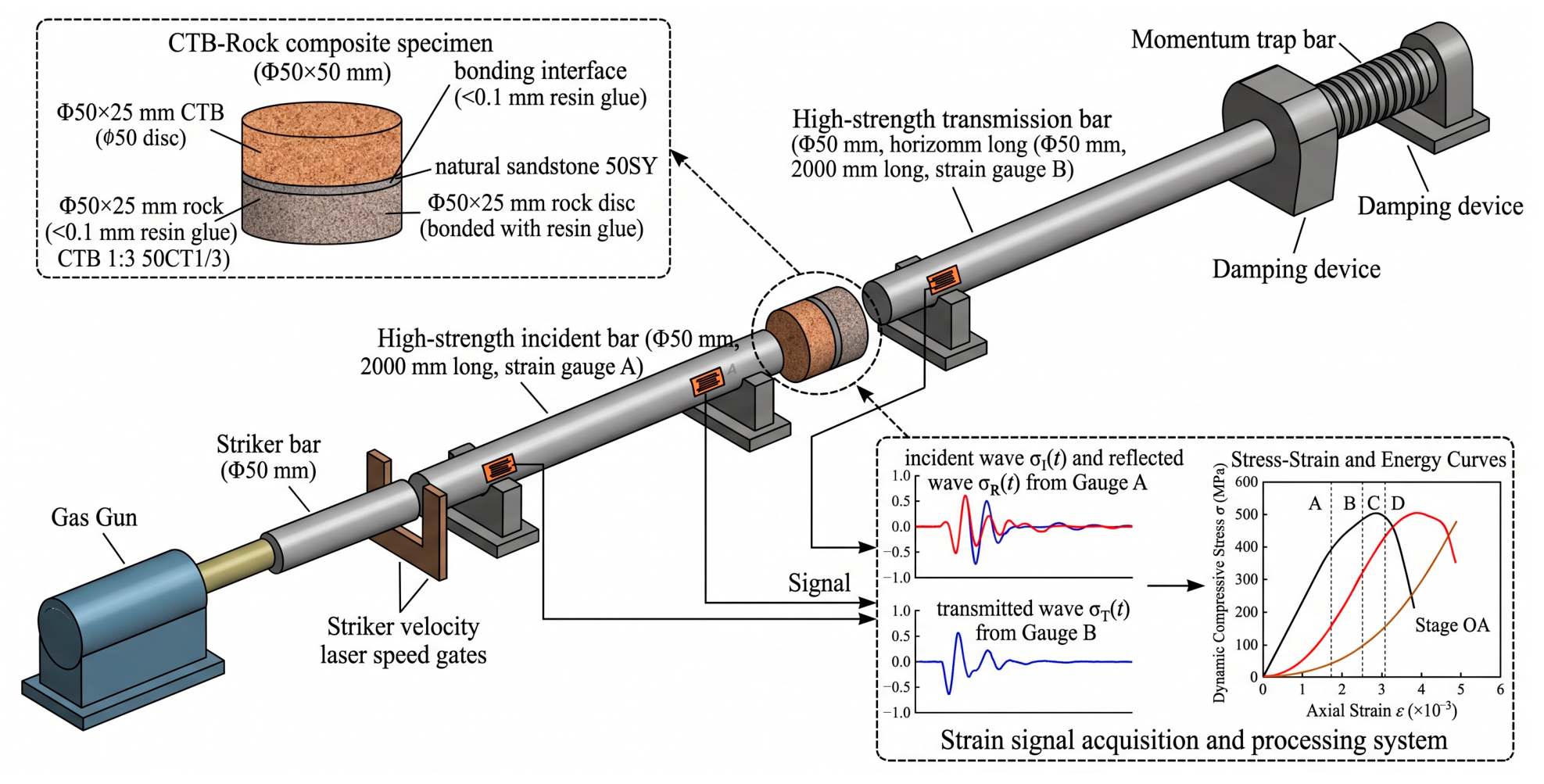
The test controls the impact velocity and the amplitude of the incident stress wave by adjusting the nitrogen pressure in the high-pressure chamber. When the impact bullet hits the incident bar at a certain speed, an incident stress pulse is generated in the incident bar. The stress wave propagates to the incident rod and the transmission rod to generate reflection and transmission pulses and triggers the strain signal. The strain pulse is recorded by the strain gauge attached to the elastic rod, and the mechanical parameters such as dynamic stress and strain of the material are calculated by combining the Hopkinson bar theory [22]. The schematic diagram of the system device is shown in Figure 2.

3. Results

3.1. Dynamic Stress Balance Verification

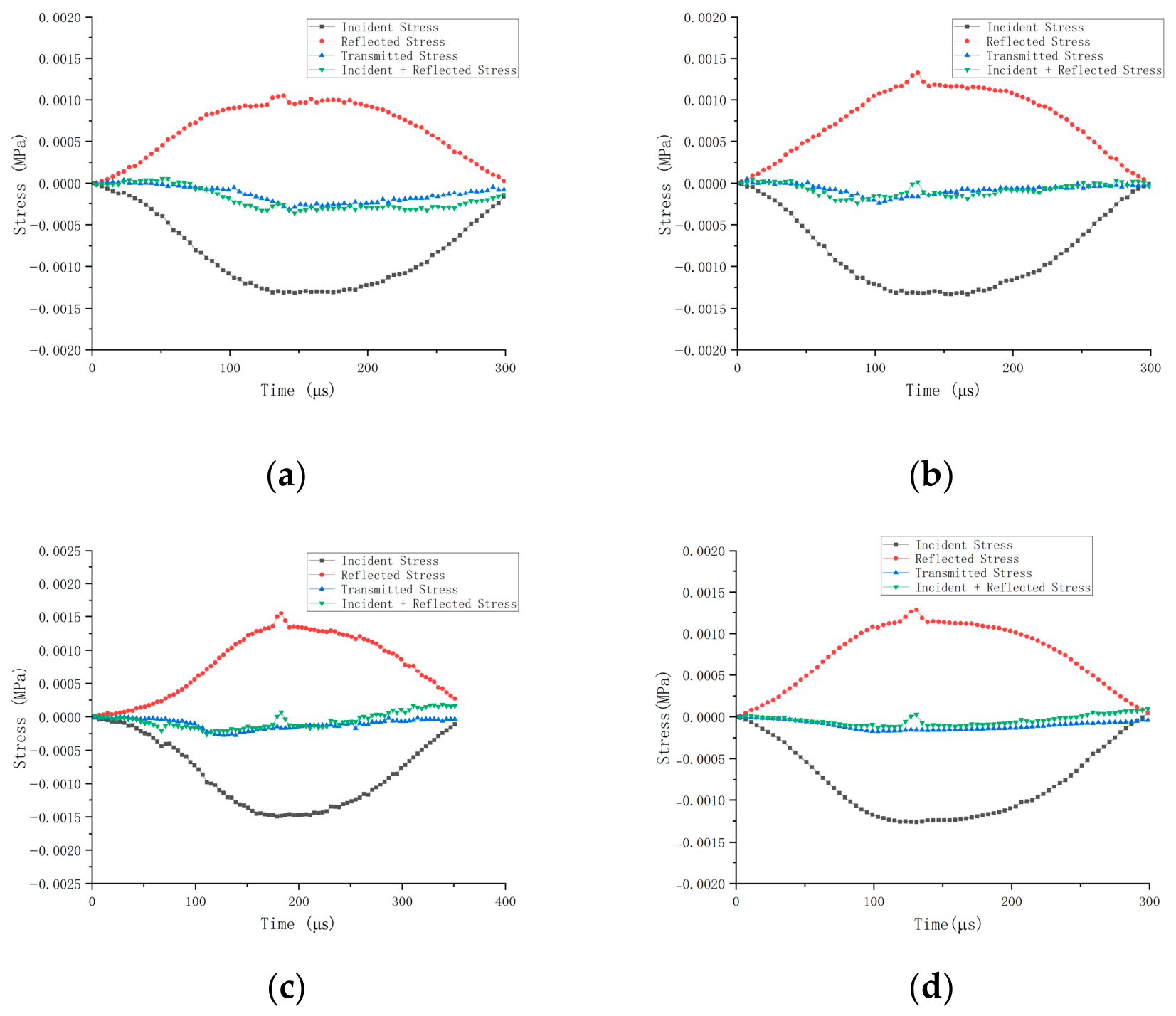
When using the Hopkinson pressure bar to study the dynamic mechanical properties of the composite, it is necessary to ensure that the specimen is in a stress equilibrium state before failure and satisfies the one-dimensional stress wave assumption and the stress (strain) uniformity assumption [23]. Figure 3 shows the typical stress wave curve of the impact test. The sum of the incident stress and the reflected stress is approximately equal to the transmitted stress, indicating that the specimen satisfies the stress equilibrium condition well. This verification was carried out for every test configuration reported in this study; in all cases, the sum of the incident and reflected stress signals closely matched the transmitted signal, confirming that both the one-dimensional stress wave assumption and the stress equilibrium requirement were fulfilled across the entire experimental program. The four cases shown in Figure 3 were selected to span the range of material combinations and loading directions examined in this study. The single mortar specimens (a) and (b) represent the two strength grades of surrounding rock material, while the composite specimens (c) and (d) verify that equilibrium was also achieved in the presence of a bonded interface for both loading directions.

3.2. Synergistic Deformation Law Under Impact Load

3.2.1. Impact Deformation Law of Single-Medium Specimen

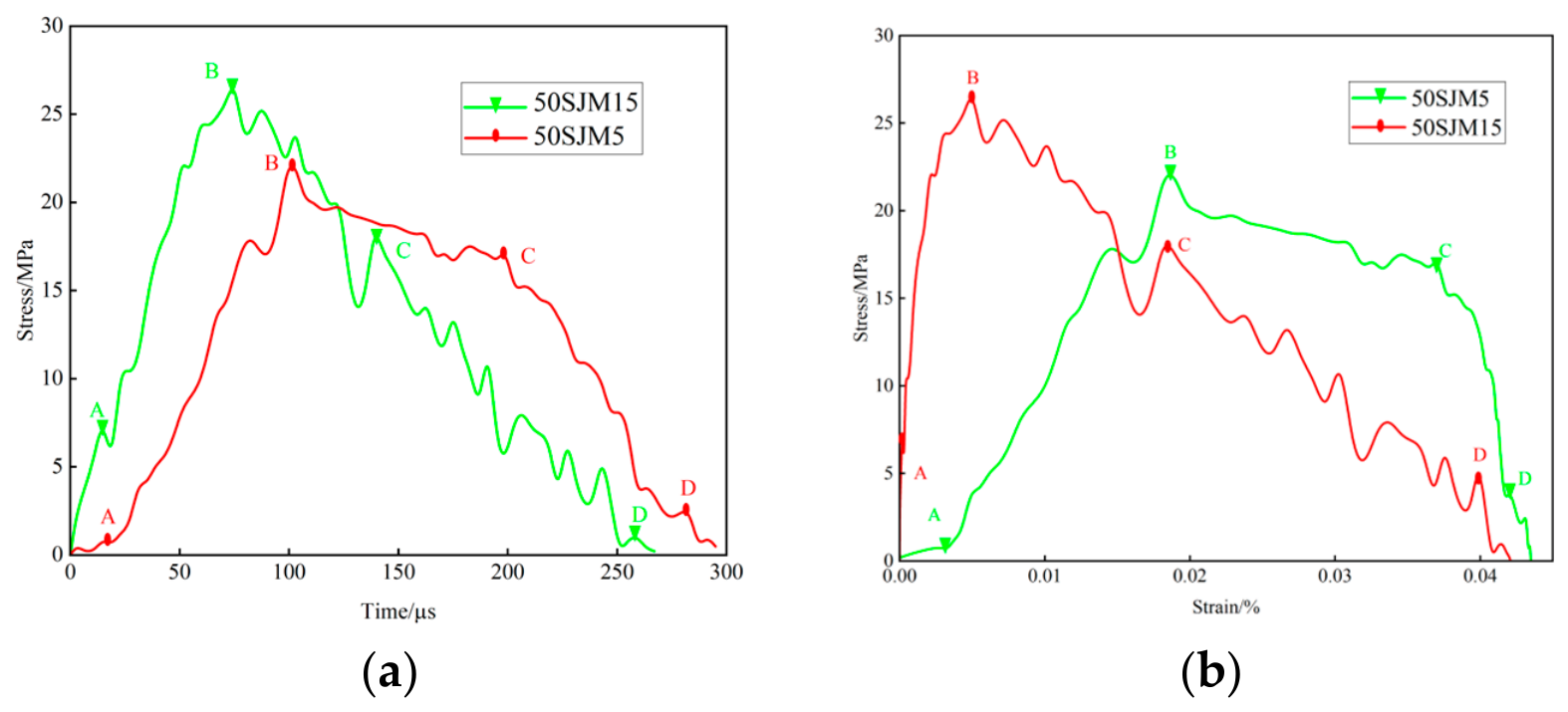
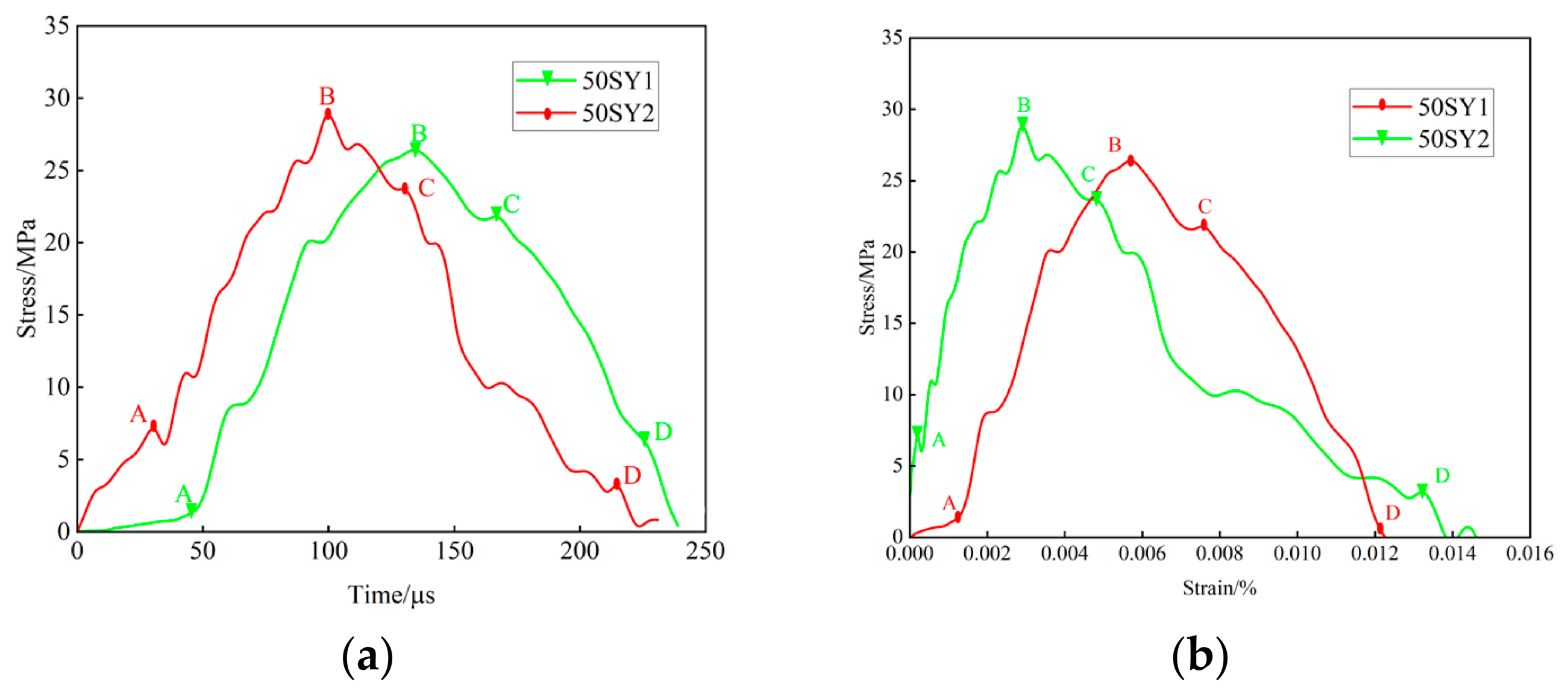
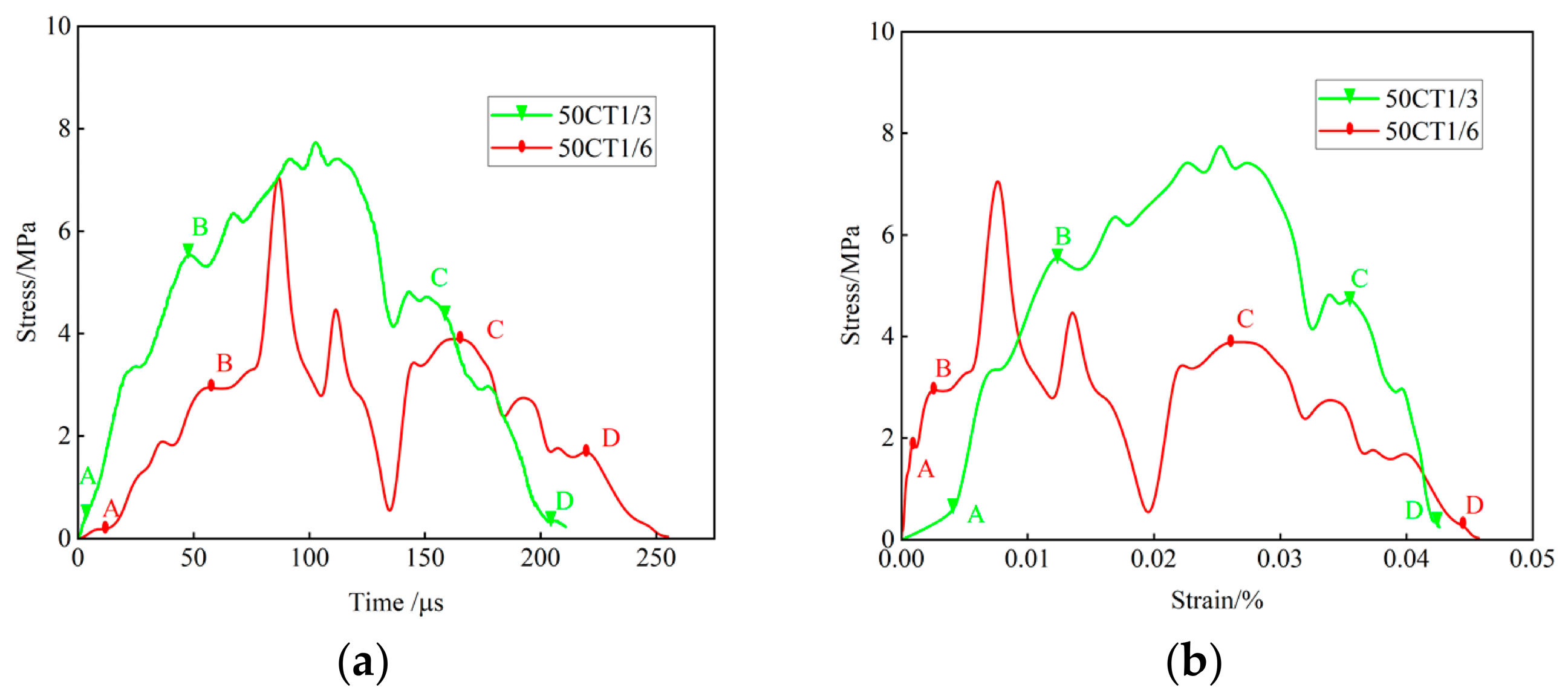
To study the deformation characteristics of mortar, sandstone, and backfill with different proportions under impact load and to provide a reference for analyzing the synergistic deformation of the composite specimens, SHPB tests were first carried out on the single-material specimens. The stress–time and stress–strain curves are presented in Figure 4, Figure 5 and Figure 6. In the stress–strain curves that follow, points A, B, C, and D demarcate the boundaries between the four characteristic deformation stages: OA (compaction), AB (elastic deformation), BC (crack propagation), and CD (post-peak failure).
Figure 4 shows the dynamic response of the two mortar grades. Both M5 and M15 specimens display an approximately linear stress–strain relationship during the early loading stage, followed by a distinct crack propagation phase and post-peak softening. The M15 specimen reaches a higher peak stress compared with M5, consistent with its higher quasi-static compressive strength (Table 1).
The sandstone specimen (Figure 5) develops the highest peak stress among the three single-material types, with the shortest crack propagation stage and the most abrupt post-peak stress drop, reflecting the high stiffness and pronounced brittleness of natural sandstone under impact loading.
In contrast to mortar and sandstone, the backfill specimens with cement-to-tailings ratios of 1:3 and 1:6 (Figure 6) exhibit considerably lower peak stresses and a prolonged crack propagation stage. The stress–strain curves show an extended, gently declining post-peak region, indicating a more ductile, energy-dissipative failure mode.
The duration and significance of the compaction stage (OA) are determined by the internal structural characteristics of the material. The sandstone is dominated by cracks, and the mortar and backfill are more affected by porosity. In the elastic stage (AB), the three materials show a linear relationship, but the slope and the duration of the stage are significantly different. The maximum elastic modulus of sandstone is about 14 GPa, indicating high stiffness. Mortar ranks second: the M5 and M15 mortar specimens exhibit elastic moduli of 1.22 GPa and 5.11 GPa, respectively. The backfill has the lowest elastic modulus, about 0.6 GPa, showing low deformation resistance. The crack propagation stage (BC) represents the core difference in the dynamic characteristics of the three materials. Crack propagation in sandstone is rapid, with the shortest duration (about 30 μs). The crack propagation stage of mortar is longer (about 70 μs), and backfill lasts the longest (about 100 μs), showing pronounced plastic deformation characteristics. Crack propagation in backfill is relatively uniform, whereas in sandstone and mortar it is more concentrated. In the fracture penetration stage (CD), the failure of sandstone is the most abrupt, with bearing capacity decreasing rapidly. Mortar retains a certain residual strength, while backfill exhibits strong ductility and can maintain partial deformation capacity after failure.

3.2.2. Impact Deformation Law of Surrounding Rock–CTB Combination

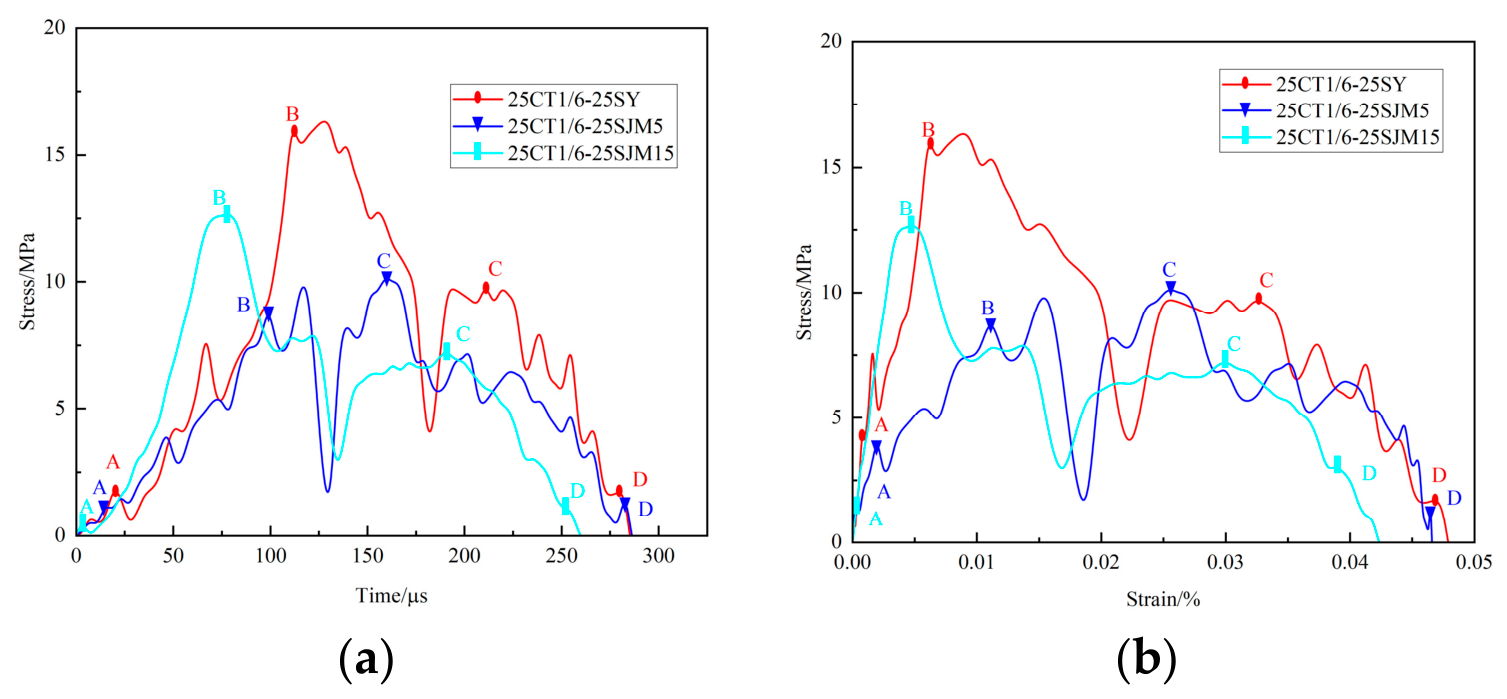
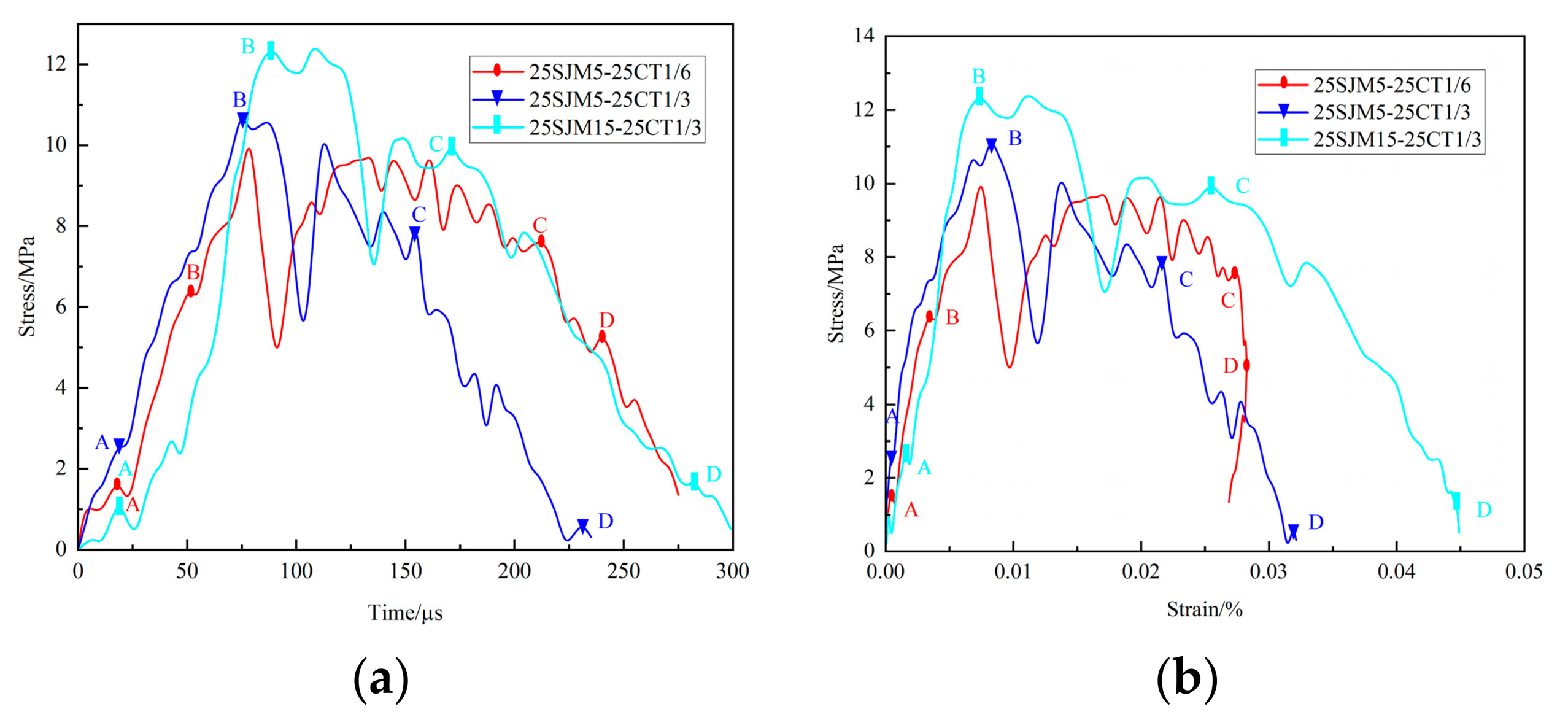
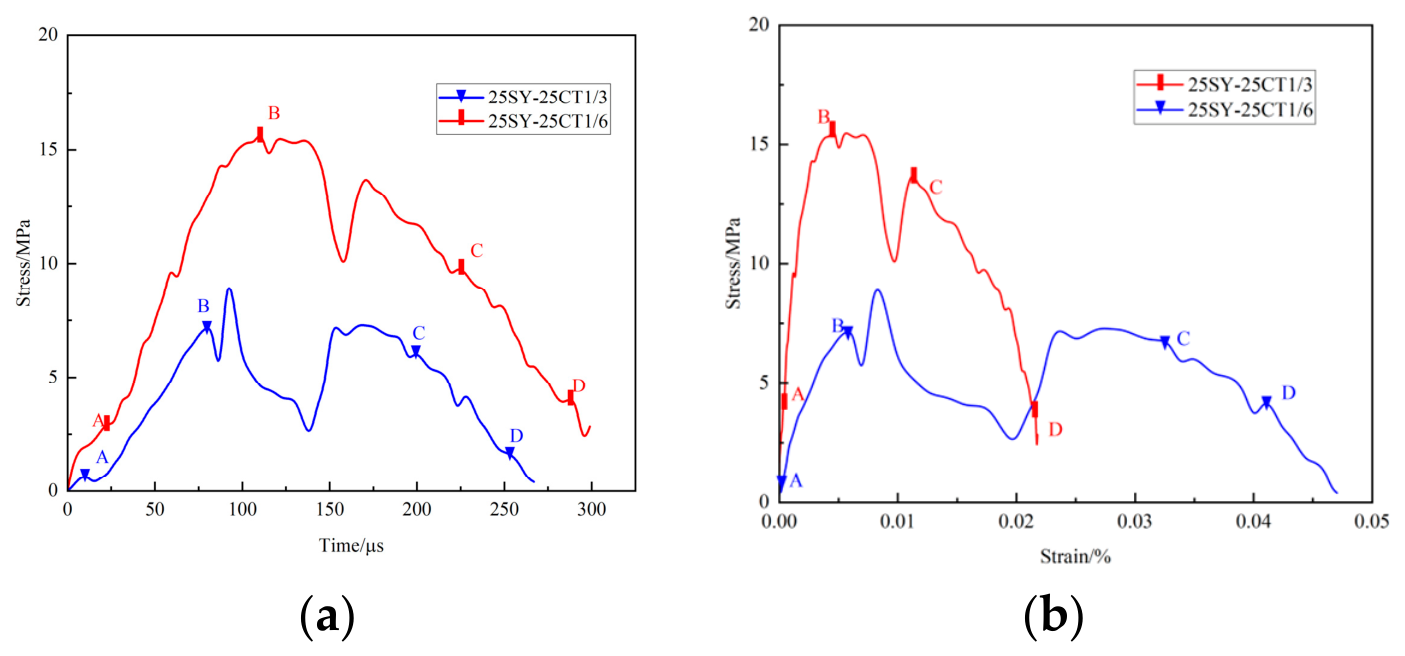
To study the influence of stress waves on the composite body, the impact loading was carried out from the end of backfill and the end of the surrounding rock respectively. The transmission process of stress waves in different incident directions was simulated, and the synergistic deformation characteristics of the composite body under the impact were analyzed. Figure 7, Figure 8, Figure 9 and Figure 10 show the stress–time history curve and stress–strain curve of the composite under different loading directions.
In the elastic stage, the stress–strain curve of the composite shows obvious nonlinear characteristics. When the incident end is backfill, the curve shows a broken line of ‘high→low→high’, indicating that the low-strength CTB first deforms, and then the high-strength surrounding rock gradually bears the load; when the incident end is mortar, there are 1–2 step-like turns in the curve, indicating that the low-strength material deforms locally first, reflecting the synergistic deformation effect of strong and weak materials. When the incident end is sandstone, the curve shows a linear change with a high slope, indicating that the elastic stage is mainly dominated by sandstone. The crack propagation stage is the key to the impact deformation of the composite. The stress–strain curve of the composite usually presents the characteristics of ‘double peak’ or ‘flat-peak’, which is different from the single peak characteristics of a single material. When the incident end is backfill, backfill is first destroyed to form the first peak, and then the stress is transferred to the surrounding rock to form the second peak. When the incident end is mortar, the curve shows a ‘flat peak’ feature, indicating that the deformation coordination of strong and weak materials is good, and the plastic failure is almost synchronous. When the incident end is sandstone, the first peak corresponds to the local failure of sandstone, and the second peak is gradually loaded by backfill. Regardless of the loading direction, the ‘double-peak’ or ‘flat-peak’ characteristics in the crack propagation stage reflect the synergistic deformation and energy absorption mechanism of strong and weak materials. In the crack penetration stage, the residual strength of the composite depends on the strength and deformation capacity of the material at the loading end. When the incident end is backfill, backfill quickly loses its bearing capacity after failure, and the surrounding rock completes the penetration after bearing part of the stress. When the incident end is the surrounding rock, the residual strength of the combination is slightly improved. For example, the ‘sandstone-CTB’ combination can still bear a certain pressure after penetration due to the high strength of the sandstone, showing high structural integrity and impact toughness.
The impact deformation law of the composite shows the significant characteristics of the synergistic effect of strong and weak materials [24]. In the microcrack closure stage, the distribution and characteristics of the interface cracks dominate the duration of the compaction process. In the elastic stage, the difference in elastic modulus between strong and weak materials leads to the nonlinear characteristics of the stress–strain curve, which reflects the deformation coupling effect between materials. The ‘double-peak’ or ‘flat-peak’ characteristics in the crack propagation stage reflect the process of low strength and high-strength materials bearing stress respectively. The fracture penetration stage shows that the supporting effect of high-strength surrounding rock is very important to improve the residual strength of the composite.
The double-peak and flat-peak stress–strain signatures can be understood from the wave-impedance mismatch at the bonded interface. When loading from the backfill end, the low-to-high impedance transition reflects a substantial portion of the incident wave back into the backfill. The superposition of the incident compressive pulse and the reflected tensile pulse promotes early cracking near the interface, producing the first stress peak; subsequent load transfer to the intact surrounding rock accounts for the second peak. Loading from the surrounding rock end reverses the impedance gradient. The smaller mismatch reduces reflection, allowing a larger fraction of the wave to transmit into the backfill. The result is more synchronous loading of the two components and a flatter, more prolonged peak. This direction-dependent energy partitioning is consistent with the reflection and transmission coefficients from one-dimensional elastic wave theory for bonded interfaces.
The nonlinear appearance of the stress–strain curves during the elastic (AB) stage can be further understood through a simple series-spring analogy: under axial impact, the two bonded halves deform in series, and the overall stiffness is dominated by the more compliant component during the early loading phase. As the softer material yields, load is progressively transferred to the stiffer component, producing the observed inflection or stepped shape in the composite curve—an effect not present in single-medium tests. Although the actual failure process involves additional complexities such as microcrack accumulation and interface friction, the wave-impedance framework and series-deformation concept together provide a coherent physical basis for the loading-direction effects and the synergistic deformation behavior reported in this study.

3.3. Energy Evolution Law Under Impact Load

The deformation and failure process of the specimen is accompanied by the accumulation, release and dissipation of energy. Studying the energy dissipation law of the combination under the impact load is of great significance for analyzing the impact resistance of the filling stope and studying the stability control of the stope [25]. During the SHPB test, the energy carried by the stress wave can be calculated according to Formulas (1) to (5).
W I = C B A B E B σ I 2 ( t ) d t
W R = C B A B E B σ R 2 ( t ) d t
W T = C B A B E B σ T 2 ( t ) d t
W A = W I W R W T = W F D W K W O
P = W A W I = W F D W I
The energy quantities used in this study are derived from one-dimensional elastic wave theory under the standard SHPB assumptions: uniaxial wave propagation without geometric dispersion, stress equilibrium across the specimen thickness prior to failure (verified for all configurations in Section 3.1), and negligible energy loss from bar–specimen friction and fragment kinetic energy. Equation (5) provides an empirical partition of absorbed energy into crushing dissipation, fragment kinetic energy, and other forms; because WFD, WK, and WO were not independently measured, the analysis below focuses on the directly calculable quantities WI, WR, WT, and WA.
WI, WR and WT are the energy carried by the incident wave, reflected wave and transmitted wave respectively, J; WA, WFD, WK, and WO are absorption energy, crushing energy dissipation, crushing kinetic energy, and other forms of dissipation energy, J; CB is the wave velocity of the compression bar, m/s; AB is the cross-sectional area of the bar, m2; EB is the elastic modulus of the compression bar, Pa; σ1 and σR are incident wave, reflected wave and transmitted wave stress respectively; and P is the proportion of crushing energy consumption.

3.3.1. Impact Energy Evolution Law of Single-Medium Specimen

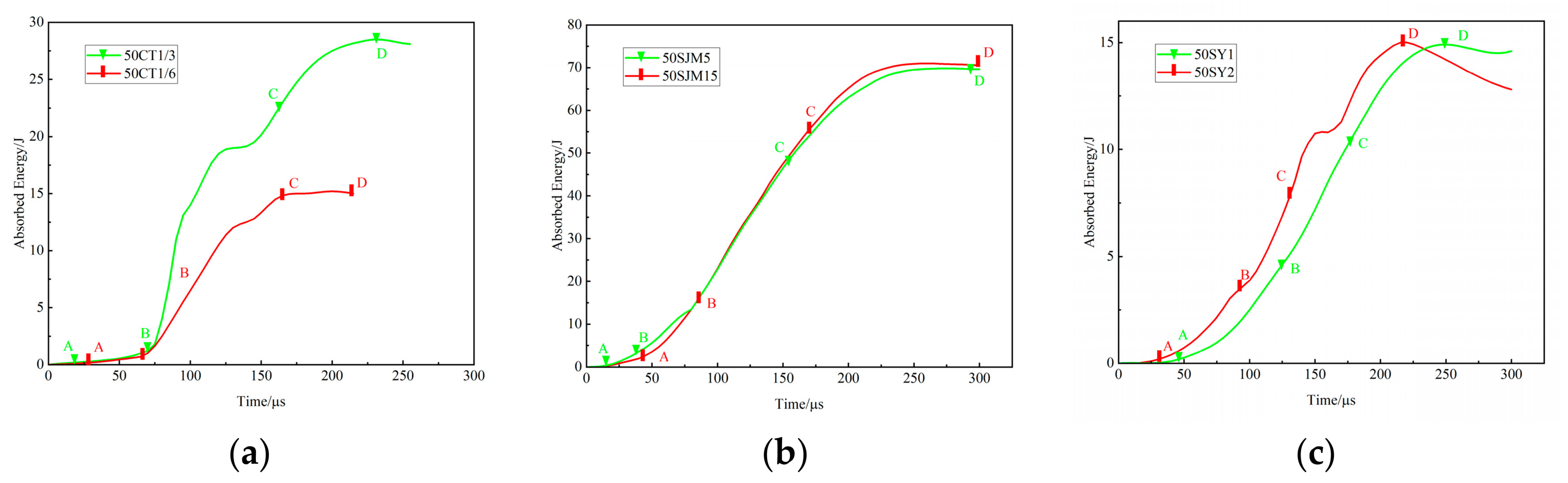
The essence of material failure is the process of energy absorption, transformation and release [26]. The strength characteristics can be reflected by energy dissipation. The test process is analyzed and the energy accumulation curve of a single medium is drawn as shown in Figure 10.
Figure 10a,b show that backfill and mortar, as artificial single-medium specimens, show a strong advantage in energy dissipation capacity. From the energy accumulation curve, in the energy distribution of each stage, the energy dissipation in the BC stage accounts for the largest proportion. Specifically, the energy dissipation of backfill in the BC stage accounts for about 65% of the total energy, and the mortar specimen accounts for about 60%. In contrast, Figure 10c shows that the energy of sandstone in the BC stage accounts for about 35%. Although the strength of sandstone is higher (peak strength is 28–29 MPa, higher than the 22–26 MPa of mortar), the total energy absorption is only 15–16 J due to the shorter crack propagation stage. This shows that the mortar has more significant energy dissipation capacity in the crack propagation stage, while the sandstone has relatively weak energy dissipation capacity due to its strong brittleness and limited crack propagation.
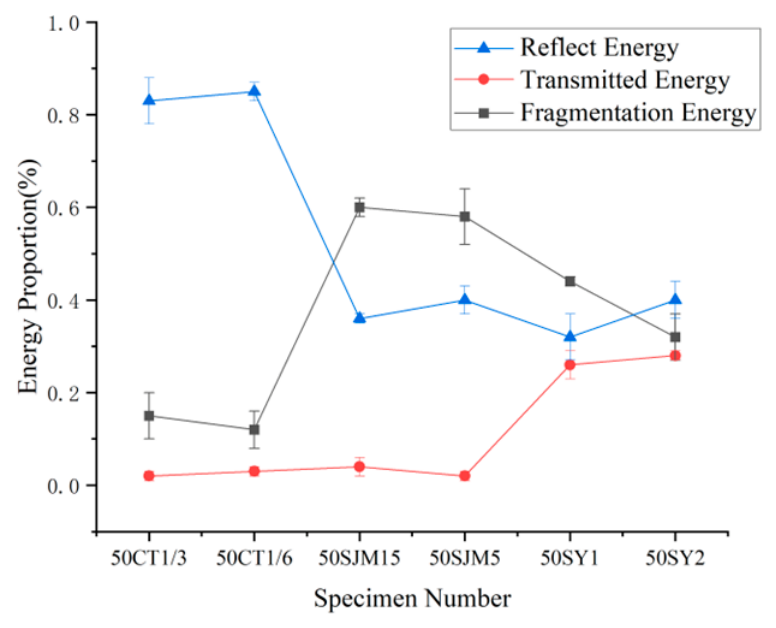
The proportion of impact reflection energy, transmission energy and energy consumption of a single medium is shown in Figure 11. The proportion of the reflection energy of CTB is the highest, followed by mortar, and sandstone is the lowest. It shows that the higher the strength of the specimen, the greater the elastic modulus, the higher the matching degree with the hardness and stiffness of the impact rod, and the weaker the reflection ability of the stress wave. In terms of transmission energy, sandstone accounts for the highest proportion, which is significantly higher than that of mortar and CTB, indicating that low-strength materials with better homogeneity have weaker transmission ability to stress waves. The analysis of crushing energy consumption shows that the energy consumption ratio of backfill is the lowest, not more than 20%, while the mortar and sandstone are more than 30%, indicating that the energy absorbed by backfill during the crushing process is significantly less than that of the mortar and sandstone, and the energy required for crushing is also lower. Error bars in Figure 11, Figure 12, Figure 13, Figure 14 and Figure 15 indicate ± one standard deviation of the measured values, obtained from triplicate tests under identical loading conditions.
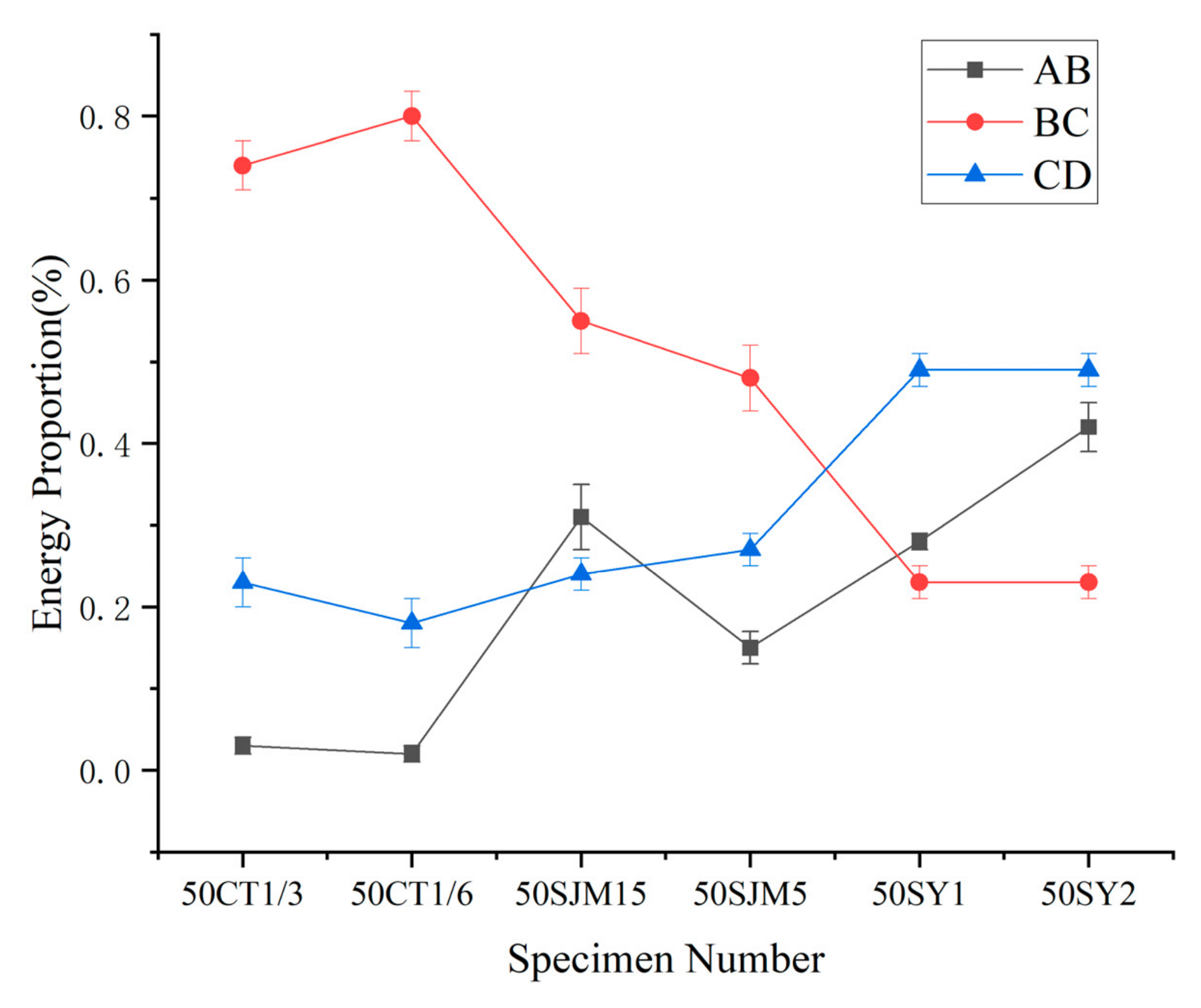
The energy proportion of the three stages of rock failure is shown in Figure 12. The AB stage is a linear elastic stage, and the higher the energy ratio, the stronger the energy storage capacity of the rock. The BC stage is the plastic stage. The higher the energy ratio, the stronger the energy dissipation capacity of the rock, and the more sufficient the deformation and failure. The CD stage is the post-peak stage, and the higher the proportion of energy, the weaker the brittleness of the material. The energy proportion of backfill in the BC stage is the largest, indicating that plastic failure can occur under low energy accumulation, but it can still maintain a certain strength during crack propagation. Due to the strong brittleness of sandstone, the energy proportion of the BC stage is the smallest, the plastic stage is short, and the bearing capacity is quickly lost after crack propagation.

3.3.2. Impact Energy Evolution Law of Composite Specimens

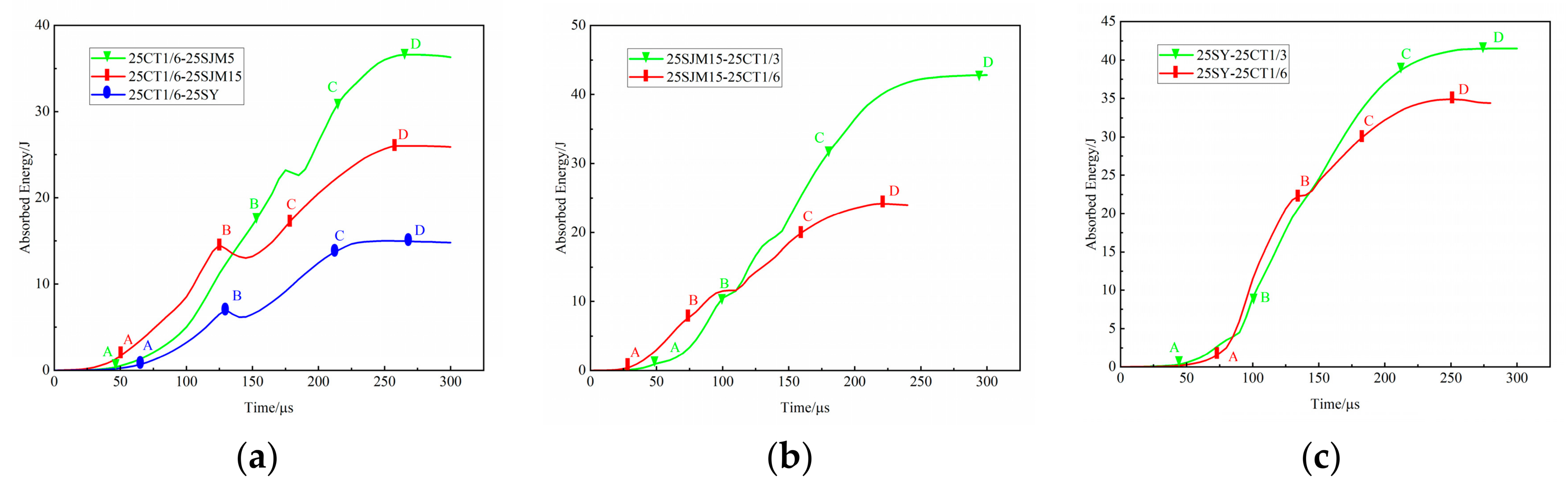
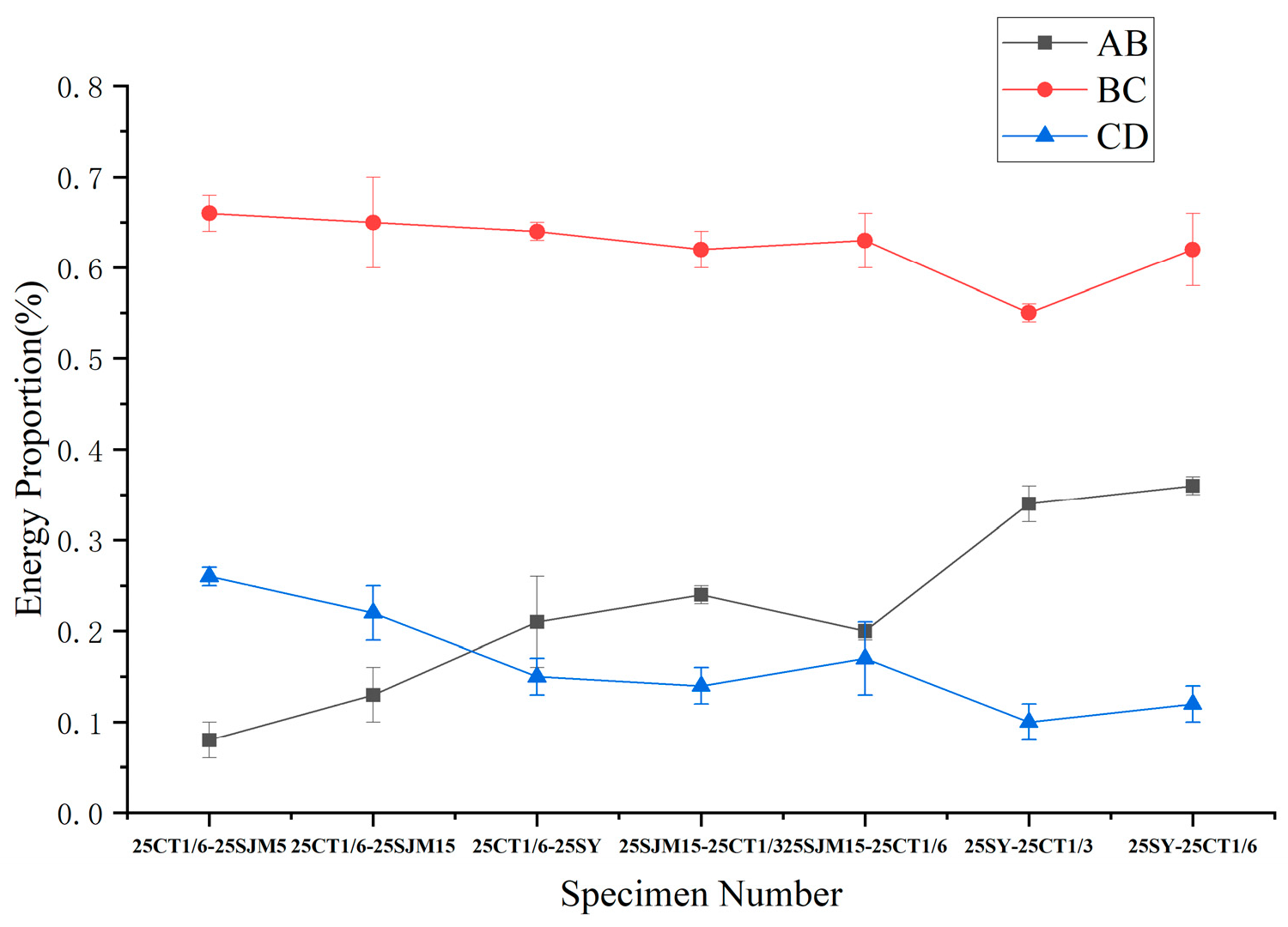
The impact energy evolution of the combination is shown in Figure 13. It can be seen from the figure that the energy distribution of the combination at different stages shows obvious changes. In the AB stage, the energy ratio is relatively low, especially the combination of strong and weak materials with a large gap. For example, in the AB stage, the energy proportion of 25SY-25CT1/6 is about 10%, indicating that the elastic energy storage capacity of the combination is weak at this stage, and the failure strength is mainly limited by weak materials. At high strain rates, low-strength materials affect the overall strength of the composite and fail to effectively store and absorb impact energy. In the BC stage, the energy proportion of the combination is generally high, and the energy accumulation curve shows a step-like growth characteristic, reflecting the process of strong and weak materials carrying and absorbing energy and consuming energy respectively under impact loading. The higher the proportion of energy in the BC stage, the higher the energy absorption efficiency of low-strength materials, and the more complete the degree of fragmentation. The proportion of energy in the CD stage is affected by the difference between strong and weak materials and the interface impedance. For example, as with 25SY-25CT1/3 and 25SY-25CT1/6, when the gap between strong and weak materials is small, more impact energy can be transferred to high-strength materials, triggering further energy consumption, increasing the proportion of energy in the CD stage. When the gap between strong and weak materials is large, the interface reflection effect is enhanced, and more energy is dissipated in advance in the BC stage, resulting in a decrease in the proportion of energy in the CD stage.
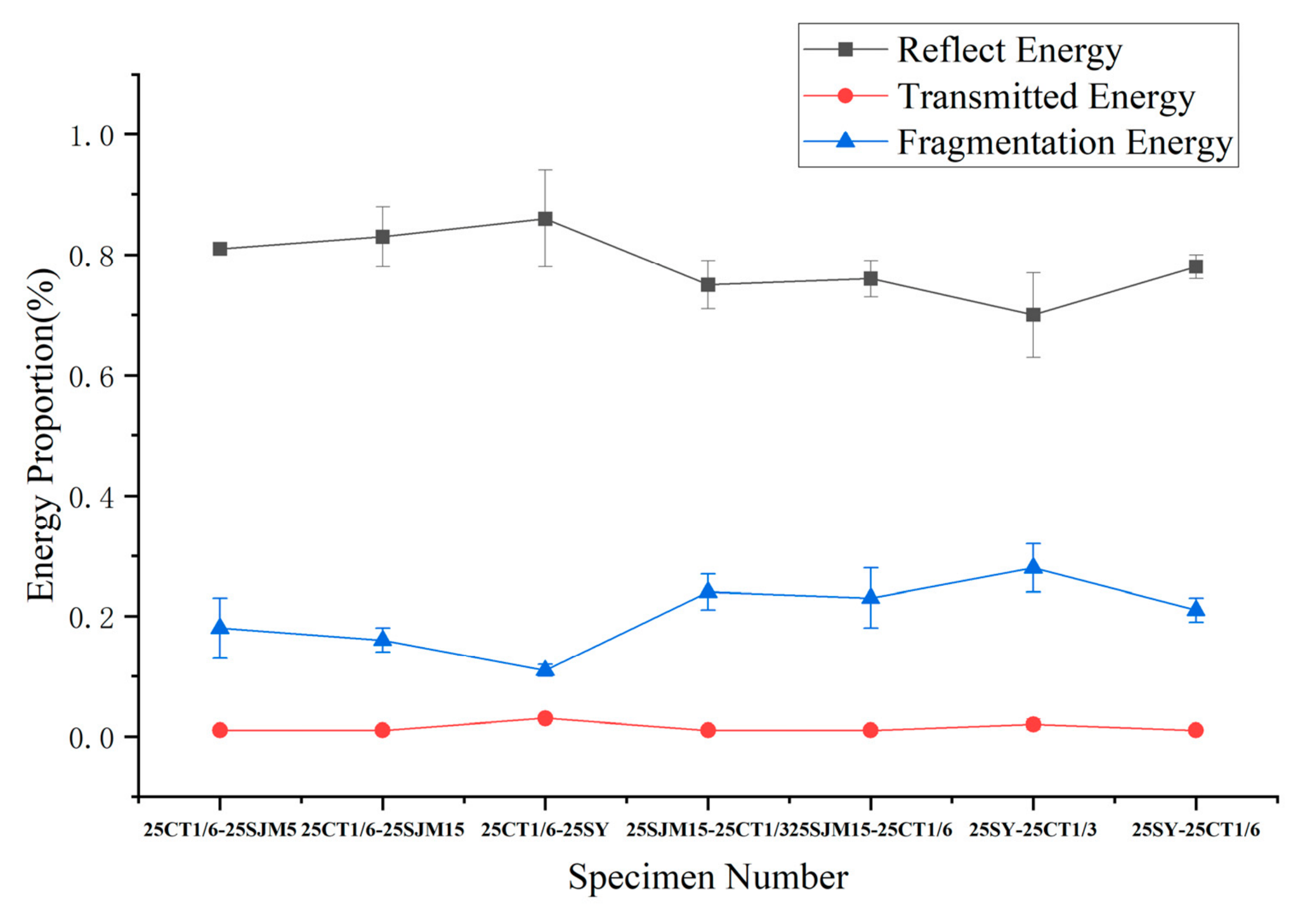
In the process of impact damage, the main damage is backfill. As shown in Figure 14 and Figure 15, when the impact is incident from the end of backfill, the energy reflection accounts for more than 80%, and the crushing energy consumption accounts for less than 18%, indicating that the low-strength material is more directly damaged by the impact. When the impact is incident from the surrounding rock end, the proportion of reflected energy is reduced to about 75%, indicating that the stress wave transmission capacity of high-strength materials is stronger, the crushing energy consumption accounts for a relatively high proportion, and the dynamic load consumes more energy in the transmission process.
The differences in energy partitioning between the two loading directions can be traced directly to the large wave-impedance contrast between the backfill and the surrounding rock. With an estimated P-wave velocity roughly two to three times higher in the mortar/sandstone than in the CTB, and a density contrast of approximately 15–25%, the impedance ratio Zrock/Zbackfill is approximately 2–4, depending on the specific material pair. When the incident wave approaches from the low-impedance backfill side, the reflection coefficient at the interface is large (on the order of 0.3–0.6), causing more than 80% of the incident energy to be reflected before significant transmission can occur. Conversely, when the wave arrives from the high-impedance rock side, the reflection coefficient is smaller, the transmitted energy fraction rises, and a larger share of the total energy is dissipated through cracking and plastic deformation within the backfill. This wave-impedance interpretation is fully consistent with the experimental observation that the BC-stage energy proportion increases and the reflected energy proportion decreases when loading is applied from the high-strength end. In addition, the higher initial porosity of the backfill relative to the surrounding rock makes it the primary energy-dissipating component, while the bonded interface acts as a local damage initiation site that may contribute a secondary dissipation increment during the BC stage. A quantitative separation of interface dissipation from bulk dissipation lies beyond the scope of the present macroscopic energy analysis and warrants further study.
It should be noted that the present energy analysis treats the composite as a macroscopic two-component system and does not resolve the energy dissipated specifically at the interface versus within the bulk of each material. A more refined separation would require in situ measurements (e.g., high-speed digital image correlation or embedded strain gauges) and remains a topic for future investigation.
Comparing these results with recent single-medium SHPB data highlights several noteworthy quantitative consistencies. Zhou et al. [9] for instance, reported maximum energy absorption ratios of 24.04%, 21.44%, and 19.37% for standalone CTB at 1:5, 1:7, and 1:9 ratios, noting that these ratios increase quadratically with strain rate. Once mix proportions and loading pressures are factored in, our pure backfill specimens (50CT1/3 and 50CT1/6) align well with Zhou’s 1:7–1:9 range, consistently staying below 20% crushing energy consumption. The composite specimens stand out not because they absorb more total energy, but because of how that energy is redistributed. Specifically, loading from the high-strength side (Figure 14 and Figure 15) shifts 5–10% of the energy normally lost to reflection into transmission and crushing dissipation compared to single backfill tests.
This behavior mimics the porosity-dependent response described by Deng et al. [18] who found that CTB with lower initial porosity (18.30% at c/t = 1/4) possesses higher dynamic capacity and more gradual dissipation growth. In our configuration, the dense surrounding rock half serves a similar purpose by curbing early reflection and channeling more energy into the backfill portion during the BC stage. This is further echoed in the post-peak response; just as Gan et al. [19] linked finer tailings gradations to a transition from sharp stress drops to post-peak ductility in CTB, our “double-peak” and “flat-peak” signatures (Figure 7, Figure 8 and Figure 9) show a structural version of that effect. Here, the backfill deforms plastically while the rock component delays full failure, effectively stretching the BC stage and increasing its energy share. These cross-study parallels confirm that directing loads from high-strength toward low-strength materials is a viable, reproducible strategy for managing energy in stopes, rather than just an experimental anomaly.

3.4. Failure Modes and Their Correspondence to Stress–Strain Signatures

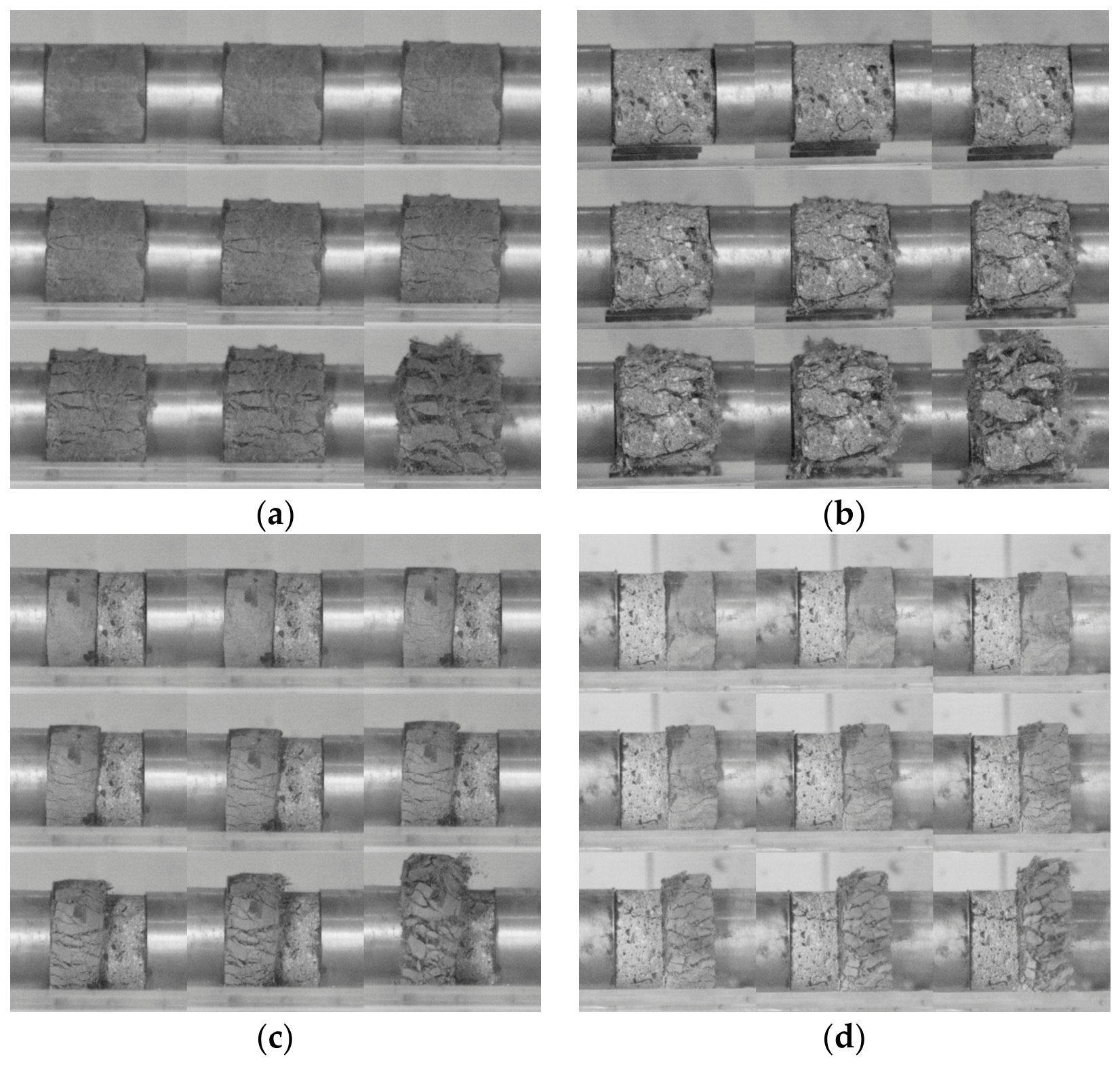
To link the “double-peak” and “flat-peak” stress–strain signatures with the actual damage evolution, Figure 16 presents representative post-test sequences for (a, b) single-material specimens and (c, d) composite specimens loaded from opposite directions.
Under the fixed 0.2 MPa impact pressure, the single backfill specimen (50CT1/6) disintegrated violently into powder and fine granules, consistent with its low strength (2.30 MPa) and the dominant reflection energy reported in Figure 11. The single mortar specimen (50SJM15) failed into larger blocks with visible longitudinal splitting, reflecting its higher strength (14.60 MPa) and greater transmission capacity.
When the composite was loaded from the backfill end (25CT1/6-25SJM15, panel c), the backfill half underwent rapid axial splitting and pulverization first, corresponding to the first peak in the stress–strain curve (Figure 7b). Subsequently, cracks initiated from the interface and propagated through the mortar half, forming the second peak. The final failure morphology showed the backfill reduced to granular/powder debris while the mortar was segmented into blocky fragments by a small number of through-going cracks, indicating sequential rather than simultaneous failure of the two components.
In contrast, when loading was applied from the mortar end (25SJM15-25CT1/6, panel d), the mortar showed only minor visible cracking during the early loading stage, while the backfill half developed pronounced lateral expansion near the interface. Cracks in the backfill initiated at the interface and grew toward the transmission end. The mortar developed clear cracks only after the backfill had largely failed. This delayed, more synchronized damage evolution is consistent with the “flat-peak” curve shape (Figure 8b) and the observation that loading from the high-strength side reduces reflected energy and increases the proportion of energy dissipated during the BC stage (Figure 14 and Figure 15).
Across all composite configurations, no clear interfacial debonding was observed prior to bulk failure; the resin-bonded interface remained largely intact during the impact process, suggesting that the synergistic energy dissipation arises primarily from the differential deformation and sequential cracking of the two constituent materials rather than from interface separation.

4. Conclusions

To clarify the synergistic deformation mechanism and energy dissipation characteristics of CTB and surrounding rock under impact load, different single material and composite specimens were prepared. The synergistic deformation characteristics and energy dissipation characteristics of the composite were analyzed by changing the impact test in different loading directions. The main conclusions are as follows:
(1)
The strength of backfill is low. Under the impact load, the reflection energy is dominant (the reflection energy accounts for about 90%), and the transmission energy accounts for the lowest proportion, showing weak energy absorption capacity and low impact resistance. The strength and elastic modules of mortar and sandstone are high, among which the proportion of sandstone transmission energy is 25–35%, and the proportion of crushing energy consumption is 30–40%, showing good energy absorption capacity, but the failure form is mainly brittle. This shows that the strength of a single material is closely related to its energy absorption capacity.
(2)
The composite exhibited a synergistic deformation response under impact loading, with a peak strength higher than that of the standalone backfill. During the crack propagation stage, it demonstrated typical “double-peak” or “flat-peak” characteristics, and its energy dissipation ratio exceeded that of the backfill alone. These results indicate that the synergistic effect within the composite structure has, to some extent, enhanced its overall impact resistance.
(3)
The material strength of the incident end significantly affects the energy distribution characteristics. When loading from the end of backfill, the reflection energy accounts for more than 80%, and the crushing energy consumption accounts for less than 18%. When loading from the mortar or sandstone end, the proportion of reflection energy is reduced to 60–80%, and the proportion of crushing energy consumption is increased to 20–30%. These results indicate that energy dissipation is more efficient when dynamic load is transferred from high-strength materials to low-strength materials. In practical stope blasting, this suggests that sequencing the detonation so that the stress wave approaches the backfill through the surrounding rock, rather than directly into the backfill body, could reduce premature energy reflection and enhance the overall impact resistance of the backfilled stope.

Author Contributions

Investigation, J.Y.; Methodology, J.Y.; Writing—original draft; J.Y.; Data curation, Y.G.; Formal analysis; Y.G., X.Y., S.W. and Y.W.; Validation, X.Y. and S.Z.; Writing—review and editing, F.L. and Q.G.; Conceptualization, Q.G.; Funding acquisition, Q.G. All authors have read and agreed to the published version of the manuscript.

Funding

This work was supported by the National Natural Science Foundation of China [grant number 52274072] and the National Key Research and Development Program of China [grant number 2023YFC2907302]. The authors are very grateful for the financial contribution and convey their appreciation for supporting this basic research.

Institutional Review Board Statement

Not applicable.

Informed Consent Statement

Not applicable.

Data Availability Statement

The raw data supporting the conclusions of this article will be made available by the authors on request.

Conflicts of Interest

Author Yongbing Wang was employed by the company Yunnan Chihong Zinc and Germanium Co., Ltd. Author Shuaishuai Zhang was employed by the company CINF Engineering Co., Ltd. The remaining authors declare that the research was conducted in the absence of any commercial or financial relationships that could be construed as a potential conflict of interest.

References

  1. Li, S.; Yu, L.; Dan, Z.; Yin, T.; Chen, J. The Recent Progress China Has Made in Mining Method Transformation, Part I: Shrinkage Method Transformed into Backfilling Method. Appl. Sci. 2024, 14, 10033. [Google Scholar] [CrossRef]
  2. Wu, A.; Wang, Y.; Ruan, Z.E.; Xiao, B.; Wang, J.; Wang, L. Key theory and technology of cemented paste backfill for green mining of metal mines. Green Smart Min. Eng. 2024, 1, 27–39. [Google Scholar] [CrossRef]
  3. Xue, G.; Yilmaz, E.; Wang, Y. Progress and prospects of mining with backfill in metal mines in China. Int. J. Miner. Metall. Mater. 2023, 30, 1455–1473. [Google Scholar] [CrossRef]
  4. Zhao, X.; Zhou, X.; Zhao, Y.; Yu, W. Research status and progress of prevention and control of mining disasters in deep metal mines. J. Cent. South Univ. (Sci. Technol.) 2021, 52, 2522–2538. [Google Scholar] [CrossRef]
  5. Luo, R.; Li, G.; Chen, L.; Zeng, L.; Pei, K.; Yu, X. Rock Slope Instability Mechanism Induced by Repeated Mining in Mountain Mining Areas. Appl. Sci. 2024, 14, 9634. [Google Scholar] [CrossRef]
  6. Kang, W.S.; Wen, Z.J.; Xiang, S.Z.; Bing, F.W.; Yang, Z.; Kai, D.X.; Jie, Z.Y.; Hua, K.B.; Song, C.Z.; Tao, Z.J.; et al. Review of the development status of rock burst disaster prevention system in China. J. Cent. South Univ. 2023, 30, 3763–3789. [Google Scholar] [CrossRef]
  7. Deng, D.; Liu, G.; Guo, L.; Li, Y.; Hua, J. Energy Evolution and Fine Structure Effects in Typical Rocks Subjected to Impact Loading. Materials 2025, 19, 3. [Google Scholar] [CrossRef] [PubMed]
  8. Li, J.; Sun, W.; Zhao, J.; Zhang, S.; Lu, K.; Cheng, H. Dynamic characteristics and failure mode of layered backfill under impact load. J. Cent. South Univ. (Sci. Technol.) 2023, 54, 944–955. [Google Scholar] [CrossRef]
  9. Zhou, Y.; Liang, Y.; Ran, X.; Wang, Z.; Zou, Y.; Xu, F. Experimental Study on the Energy Absorption Characteristics and Damage Behaviors of Cemented Backfill Under Impact Load. Min. Metall. Explor. 2025, 42, 3639–3649. [Google Scholar] [CrossRef]
  10. Li, Q.; Sun, J.; Xie, X.; Dong, Q.; Wang, J.; Zhang, H.; Wen, T. Numerical Study on Impact Damage and Damage Evolution of Cemented Backfill. Crystals 2025, 15, 514. [Google Scholar] [CrossRef]
  11. Zheng, D.; Song, W.; Cao, S.; Li, J.; Sun, L. Investigation on Dynamical Mechanics, Energy Dissipation, and Microstructural Characteristics of Cemented Tailings Backfill under SHPB Tests. Minerals 2021, 11, 542. [Google Scholar] [CrossRef]
  12. Yang, L.; Xu, W.; Yilmaz, E.; Wang, Q.; Qiu, J. A combined experimental and numerical study on the triaxial and dynamic compression behavior of cemented tailings backfill. Eng. Struct. 2020, 219, 110957. [Google Scholar] [CrossRef]
  13. Cao, S.; Yilmaz, E.; Song, W. Dynamic response of cement-tailings matrix composites under SHPB compression load. Constr. Build. Mater. 2018, 186, 892–903. [Google Scholar] [CrossRef]
  14. Emad, M.Z.; Mitri, H.; Kelly, C. Dynamic model validation using blast vibration monitoring in mine backfill. Int. J. Rock Mech. Min. Sci. 2018, 107, 48–54. [Google Scholar] [CrossRef]
  15. Emad, M.Z.; Mitri, H.; Kelly, C. Effect of blast-induced vibrations on fill failure in vertical block mining with delayed backfill. Can. Geotech. J. 2014, 51, 975–983. [Google Scholar] [CrossRef]
  16. Qiu, H.; Qiu, X.; Cao, R.; Chen, X.; Shi, X.; Tian, Z.; Li, X. Experimental study on layered cemented tailings backfill damage and failure mechanisms under blast loading. Sci. Rep. 2026, 16, 11339. [Google Scholar] [CrossRef]
  17. Liu, W.Z.; Gong, B.; Niu, S.W.; Wang, H.Q.; Li, H.R.; Hu, Z.J. Damage evolution law under unloading confining pressure of cemented backfill based on energy dissipation. J. Cent. South Univ. 2026, 33, 400–421. [Google Scholar] [CrossRef]
  18. Deng, H.; Lei, Y.; Liu, Y.; Wang, P. Influence of Initial Pore Structure on the Dynamic Response of Cemented Tailings Backfill Under Impact Loading. Geotech. Geol. Eng. 2025, 44, 55. [Google Scholar] [CrossRef]
  19. Gan, D.; Li, H.; Liu, Z. Experimental Study on Dynamic Characteristics of Cemented Tailings Backfill Under Different Tailings Gradation. Appl. Sci. 2025, 15, 12778. [Google Scholar] [CrossRef]
  20. Li, G.; Deng, G.Z.; Ma, J. Numerical modelling of the response of cemented paste backfill under the blasting of an adjacent ore stope. Constr. Build. Mater. 2022, 343, 128051. [Google Scholar] [CrossRef]
  21. Yin, T.; Men, J.; Lu, J.; Wu, Y.; Guo, W.; Yang, Z.; Ma, J. Study on dynamic mechanical properties and microscopic damage mechanisms of granite after dynamic triaxial compression and thermal treatment. Case Stud. Therm. Eng. 2024, 61, 104910. [Google Scholar] [CrossRef]
  22. Tian, X.; Tao, T.; Xie, C. Experimental Study on the Dynamic Mechanical Properties and Critical Crushing Energy Dissipation Characteristics of Rocks Under Three-Dimensional Dynamic–Static Combinations of Loading Scenarios. Int. J. Civ. Eng. 2024, 22, 2109–2127. [Google Scholar] [CrossRef]
  23. Liu, K.; Zhang, Q.B.; Wu, G.; Li, J.C.; Zhao, J. Dynamic Mechanical and Fracture Behaviour of Sandstone Under Multiaxial Loads Using a Triaxial Hopkinson Bar. Rock Mech. Rock Eng. 2019, 52, 2175–2195. [Google Scholar] [CrossRef]
  24. Tan, Y.-Y.; Yu, X.; Elmo, D.; Xu, L.-H.; Song, W.-D. Experimental study on dynamic mechanical property of cemented tailings backfill under SHPB impact loading. Int. J. Miner. Metall. Mater. 2019, 26, 404–416. [Google Scholar] [CrossRef]
  25. Zhao, T.-B.; Guo, W.-Y.; Tan, Y.-L.; Yin, Y.-C.; Cai, L.-S.; Pan, J.-F. Case Studies of Rock Bursts Under Complicated Geological Conditions During Multi-seam Mining at a Depth of 800 m. Rock Mech. Rock Eng. 2018, 51, 1539–1564. [Google Scholar] [CrossRef]
  26. Zheng, D.; Liu, G.; Guo, L.; Yang, X.; Wu, S.; Zhao, Y. Initial pore distribution characteristics and crack failure development of cemented tailings backfill under low impact amplitude. Front. Earth Sci. 2023, 11, 1330766. [Google Scholar] [CrossRef]
Figure 1. Two different specimen combinations: (a) 25CT1/6-25SJM5; (b) 25SJM5-25CT1/3.
Applsci 16 04402 g001
Figure 2. Schematic diagram of the SHPB testing system.
Applsci 16 04402 g002
Figure 3. Typical impact waveform and stress balance condition obtained from the experiment: (a) SJM5; (b) SJM15; (c) CT1/6-SJM5; (d) SY-CT1/3.
Applsci 16 04402 g003
Figure 4. Stress and deformation characteristic curve of mortar specimens under impact loading: (a) stress–time history curve; (b) stress–strain curve.
Applsci 16 04402 g004
Figure 5. Stress and deformation characteristic curve of sandstone specimens under impact loading: (a) stress-time history curve; (b) stress–strain curve.
Applsci 16 04402 g005
Figure 6. Stress and deformation curves of backfill with different ratios under impact loading: (a) stress–time history curve; (b) stress–strain curve.
Applsci 16 04402 g006
Figure 7. Stress and deformation curves of the composite with the impact end as the backfill end: (a) stress–time history curve; (b) stress–strain curve.
Applsci 16 04402 g007
Figure 8. Stress and deformation curves of the composite with the impact end as the mortar end: (a) stress–time history curve; (b) stress–strain curve.
Applsci 16 04402 g008
Figure 9. Stress and deformation curves of the composite with the impact end as the sandstone end: (a) stress–time history curve; (b) stress–strain curve.
Applsci 16 04402 g009
Figure 10. Cumulative energy curve in a single medium: (a) backfill; (b) mortar; (c) sandstone.
Applsci 16 04402 g010
Figure 11. Proportions of reflection, transmission and energy dissipation in single-medium impact.
Applsci 16 04402 g011
Figure 12. Energy dissipation proportions during the deformation in single-medium impact.
Applsci 16 04402 g012
Figure 13. Evolution of impact energy in composite specimens: (a) impact behavior of backfill; (b) impact behavior of mortar; (c) impact behavior of sandstone.
Applsci 16 04402 g013
Figure 14. Proportions of impact reflection energy, transmission energy, and energy dissipation in the composite.
Applsci 16 04402 g014
Figure 15. Energy proportions at different stages of impact in the composite.
Applsci 16 04402 g015
Figure 16. Representative failure sequences under 0.2 MPa impact loading. (a) Single-material specimens: 50CT1/6 (backfill); (b) single-material specimens: 50SJM15 (mortar); (c) backfill-incident composite 25CT1/6-25SJM15; (d) mortar-incident composite 25SJM15-25CT1/6.
Applsci 16 04402 g016
Table 1. Single-material specimen types, designations, and quasi-static uniaxial compressive strength (UCS).
Material CategorySpecimen DesignationCement-to-Tailings Ratio/Strength GradeUCS* (MPa)
Backfill50CT1/31:37.40
50CT1/61:62.30
Mortar50SJM5M5 (~5 MPa)6.23
50SJM15M15 (~15 MPa)14.60
Sandstone50SYNatural rock23.02
UCS* values were determined by the authors through quasi-static uniaxial compression tests conducted on companion specimens of identical composition and curing age (28 days) as those used in the SHPB impact experiments. Each value listed is the mean of three replicate tests.
Table 2. Specimen types and numbering.
Backfill and Mortar-SandstoneMortar-Sandstone and Backfill
25CT1/6-25SJM525SJM5-25CT1/3
25SJM15-25CT1/3
25CT1/6-25SJM1525SJM5-25CT1/6
25SJM15-25CT1/6
25CT1/6-25SY25SY-25CT1/3
25SY-25CT1/6
Disclaimer/Publisher’s Note: The statements, opinions and data contained in all publications are solely those of the individual author(s) and contributor(s) and not of MDPI and/or the editor(s). MDPI and/or the editor(s) disclaim responsibility for any injury to people or property resulting from any ideas, methods, instructions or products referred to in the content.