Article

Ratcheting Evaluation of SS304 Samples Undergoing Peak-Valley Loading Reversals with Hold Time Periods at Room Temperature Through the Incorporation of the Static Recovery Term


by
Petar Jevtic
and
Ahmad Varvani-Farahani
*
Department of Mechanical, Industrial, and Mechatronics Engineering, Toronto Metropolitan University, Toronto, ON M5B 2K3, Canada
*
Author to whom correspondence should be addressed.
Appl. Sci. 2026, 16(9), 4317; https://doi.org/10.3390/app16094317
Submission received: 2 April 2026 / Revised: 24 April 2026 / Accepted: 25 April 2026 / Published: 28 April 2026
(This article belongs to the Special Issue Fatigue and Fracture Behavior of Engineering Materials)

Abstract

The present study intends to evaluate the ratcheting of 304 stainless steel samples at room temperature, subjected to various loading spectra and holding times through the use of the combined Ahmadzadeh–Varvani (A-V) kinematic and Lee–Zavrel (L-Z) isotropic hardening rules. The nonlinear and time-dependent functions a r e c and R r e c were implemented in the hardening framework to account for the static recovery terms (SRTs) in the kinematic and isotropic hardening descriptions. The static recovery phenomenon promoted ratcheting in steel samples tested under asymmetric loading cycles with holding time peak/valley events. The static recovery phenomenon accounts for the restoration process, elevating the plastic deformation and reducing the number of cycles to material failure. The framework with the SRT enabled the prediction of material ratcheting involving the loading rate and dwell time at room temperature.

1. Introduction

Engineering materials and components in pipeline, powerplant, automotive, and aerospace industries are frequently subjected to cyclic loading, leading to the accumulation of plastic strain over repeated cycles, resulting in component failure. Structural components often experience variable stress amplitudes and non-zero mean stress, resulting in complex elastic-plastic and time-dependent deformation. Failure in such components is primarily driven by irreversible inelastic deformation that progressively elevates under asymmetric loading cycles. This time-dependent accumulation of plastic deformation under asymmetric stress-controlled conditions is referred to as the ratcheting phenomenon. The ratcheting response of a material is strongly influenced by factors including the material’s microstructural characteristics, applied stress levels and rates, dwell time periods, and loading patterns [1].
To accurately analyze material ratcheting, several constitutive models have been developed over the past half-century [1,2,3,4,5,6,7,8,9,10]. The early linear model by Prager [2] provided the first mathematical descriptions of kinematic hardening and backstress evolution; however, the linear model was limited in its capabilities to assess accumulative cyclic plastic response in materials. Armstrong and Frederick (A-F) [3] introduced a nonlinear dynamic recovery term into Prager’s model, enabling accurate simulation of mean stress relaxation and cyclic hardening/softening behaviour. The A-F model overpredicted ratcheting in materials tested with asymmetric stress cycles. Bower [4] further developed the dynamic recovery term in the A-F kinematic hardening model to control the ratcheting overprediction; however, after a certain number of stress cycles, ratcheting was arrested. Chaboche [5,6] extended the A-F model by introducing multiple backstress components with various constants, thereby improving the representation of complex loading paths. Ohno and Wang (O-W) [7,8] modified the dynamic recovery term in the kinematic hardening rule by introducing a critical state for each backstress component. The O-W model lacked terms and coefficients to regulate the exponential function, leading to overprediction of ratcheting. The Ahmadzadeh-Varvani (A-V) kinematic hardening rule [9,10] was developed to predict ratcheting under various loading spectra while using fewer parametric coefficients in the dynamic recovery term.
The introduction of a static recovery term into hardening frameworks enabled the assessment of ratcheting in materials under various loading profiles, in which loading intermittently held dwell times at its peak/valley events [11,12,13,14,15,16,17,18,19]. The static recovery term results from a gradual reduction in internal stress and dislocation density during a sustained holding condition. Unlike the dynamic recovery term, the static recovery develops after plastic deformation has ceased [20]. Yaguchi et al. [11] introduced a rate- and time-dependent variable to model static recovery’s effect on backstress in the nickel-based superalloy IN738LC. They reported that the proposed model offered a better increasing trend in mean stress during strain hold waveforms than conventional viscoplastic constitutive equations. Wang et al. [12] proposed an improved unified viscoplastic kinematic model based on the framework of Chaboche [13] and Zhang and Xuan [14] to simulate the behaviour of P92 steel subjected to peak loading events. The isotropic hardening rule of Chaboche [15] was modified to account for the strain amplitude and strain hold by introducing a cycle period-dependent isotropic coefficient [16,17,18]. They found that the modified kinematic and isotropic hardening rules closely agreed with experimental data. At small strain amplitudes, an additional strain memory surface equation is still required. Sun et al. [19] modified the Ohno-Wang model [7,8] to account for various waveform loading conditions in nickel-based superalloy samples. The results showed that the softening proportion of backstress is twice that of isotropic stress over the initial stage of loading.
Experimental studies [21,22,23,24,25,26] on steel and aluminum alloys consistently advocate for the influence of static recovery terms on the ratcheting assessment of materials through the use of hardening rules. Ding et al. [21] conducted studies on 6061-T6 aluminum alloy samples to develop a constitutive model combining the hardening frameworks of Kang-Kan [22], Armstrong-Frederick [3], and Ohno-Wang [7]. Chen et al. [23] proposed a modified unified viscoplastic model to capture holding time effects during internal stress relaxation. In the absence of the static recovery term, the hardening model had yet to adequately encounter the influence of prior strain rate. Chen et al. [24] studied the time-dependent response of 316L stainless steel at room temperature through alternate stress and strain holding patterns. They found that the implementation of the static recovery term in the dynamic recovery term of the Chaboche [6] hardening model improved the stress relaxation trend but caused a deviation in the inelastic strain rate evolution during hold time periods. Karvan [25] adapted an exponential SRT function in the A-V model [9] and the O-W model [7,8] to assess ratcheting of SS304 samples tested at different loading profiles and holding times. Li et al. [26] performed ratcheting tests in 0Cr18Ni10Ti steel samples with a hold-time period introduced in the loading peak/valley events. They integrated a nonlinear static recovery function into the kinematic and isotropic descriptions to simulate ratcheting at room and elevated temperatures.
The present study aims to assess ratcheting in stainless steel 304 samples at room temperature, in the presence and absence of a holding time, introduced into the loading spectra while the SRT is coupled into (i) the A-V kinematic hardening model and (ii) the combined A-V kinematic hardening and the L-Z isotropic hardening framework. Static recovery functions a r e c and R r e c were implemented into the hardening framework to assess ratcheting of steel samples tested with holding times in peak/valley events. The choice to adapt the static recovery term(s) to the kinematic and/or combined hardening framework was discussed.

2. Modelling and Formulation

2.1. Elastic and Plastic Strain Components

Cyclic plasticity constitutive models are structured based on the yield function, flow rule, and hardening rule. The yield function is used to demarcate the elastic and plastic domains. The total strain is defined through the summation of the elastic and plastic strain components as follows:
ε = ε e + ε p
where terms ε e and ε p are the elastic and plastic strain components, respectively. The elastic strain is defined through Hooke’s law:
ε e = σ 2 G υ E σ I I
where terms E and G are the elastic and shear moduli, respectively. Terms I and σ represent the unit and stress tensors, and constant υ denotes Poisson’s ratio. The plastic strain increment is determined through a flow rule earlier defined by Perzyna [27] as follows:
d ε p = 1 H p d s S a ¯ S a ¯ S a ¯ S a ¯
where term H p denotes the modulus of plasticity, a ¯ represents the backstress, and d s is the increment of deviatoric stress. 〈〉 denotes McCauley’s bracket and has the definition that as x 0 , x = 0 ; x > 0 , x = x . The stress tensor S defines the current state in deviatoric stress space and is determined by
S = σ 1 3 σ I I
The initial yield surface, demarking the transition from the elastic to the plastic domain, is described by the von Mises yield criterion as a function of the deviatoric stress, s ; backstress, a ¯ ; and initial yield stress, σ y 0 [28]:
f S a ¯ σ y = 3 2 S a ¯ S a ¯ σ y 0
where term σ y 0 represents the material’s initial yield stress.

2.2. Isotropic Hardening Description

The isotropic hardening rule governs the expansion of the yield surface as the material transitions from elastic to plastic response. Lee and Zavrel [29] proposed an isotropic hardening formulation as follows:
σ y = σ y 0 + R ( p )
where term R is the isotropic hardening variable, defined as a function of accumulated plastic strain, p , as follows:
R = R s a ( 1 e b p )
where coefficient R s a and the exponent b are material-dependent variables representing the saturated value of R and the rate of change of R , respectively. To incorporate the influence of holding time during load cycles, the isotropic hardening is expressed in rate form by differentiating with respect to accumulated plastic strain as follows:
R ˙ = b R s a R p ˙
This rate-based function was first introduced by Abdel-Karim and Ohno (AK-O) [30]. They incorporated this term into the isotropic hardening behaviour. To account for the static recovery term during the holding time periods, the time-dependent isotropic hardening was expanded as follows [26]:
R ˙ = b R s a R p ˙ +   v t R t R m t 1 R t R
where the second term of Equation (9) represents the rate of isotropic static recovery R ˙ r e c during hold periods. Equation (9) was employed by Nouailhas et al. [31] to assess the ratcheting response of materials for load profiles with holding time. Terms v t and m t are time-dependent material parameters, and R t denotes the asymptotic value associated with incomplete recovery during intermittent dwell times.

2.3. The Ahmadzadeh-Varvani Kinematic Hardening Rule

Ahmadzadeh and Varvani-Farahani (A-V) [9,32] developed a kinematic hardening rule to describe the translation of the yield surface and the evolution of backstress within the plastic domain during cyclic loads. The model incorporated an additional internal variable to capture the progressive development and stabilization of backstress over repeated loading cycles. The A-V kinematic hardening model holding an SRT function was earlier developed as follows [25]:
d a ¯ = C d ε ¯ p a ¯ δ b ¯ γ 1 d p + χ ( a ) m 1
d b ¯ = γ 2 a ¯ b ¯ d p
The first term of the A-V hardening rule governs the initial translation of the yield surface in the direction of plastic flow through the kinematic hardening modulus, C , and the plastic strain increment, d ε ¯ p . The second term represents both dynamic and static recovery terms. The dynamic recovery component, controlled by the coefficient γ 1 , regulates the progressive stabilization of the backstress during loading cycles. The internal variable, b ¯ , whose evolution is governed by the coefficient γ 2 , introduces a delayed recovery effect that controls the long-range evolution and stabilization of backstress under cyclic loading. A detailed description of how to determine these coefficients is given in [32]. The increment in equivalent plastic strain d p is expressed as follows:
d p = 2 3 d ε ¯ p d ε ¯ p
where d ε ¯ p represents the increment in plastic strain.
Function a r e c = χ a m 1 in Equation (10) represents the static recovery component influencing the evolution of backstress during cyclic loading. This function was also employed by Li et al. [26]. Parameters χ and m are material constants. Initially, χ was considered to be a constant [11]; however, this made it difficult to predict the ratcheting with longer hold times. To accurately describe the ratcheting with longer hold durations, the magnitude of χ evolves nonlinearly with accumulated plastic strain and is expressed as follows:
χ = χ 0 χ 0 χ s a 1 e κ p
where p denotes the accumulated plastic strain, and χ 0 and χ s a represent the initial and saturated values of χ , respectively. The coefficient κ governs the rate at which χ transitions from its initial to saturated state.
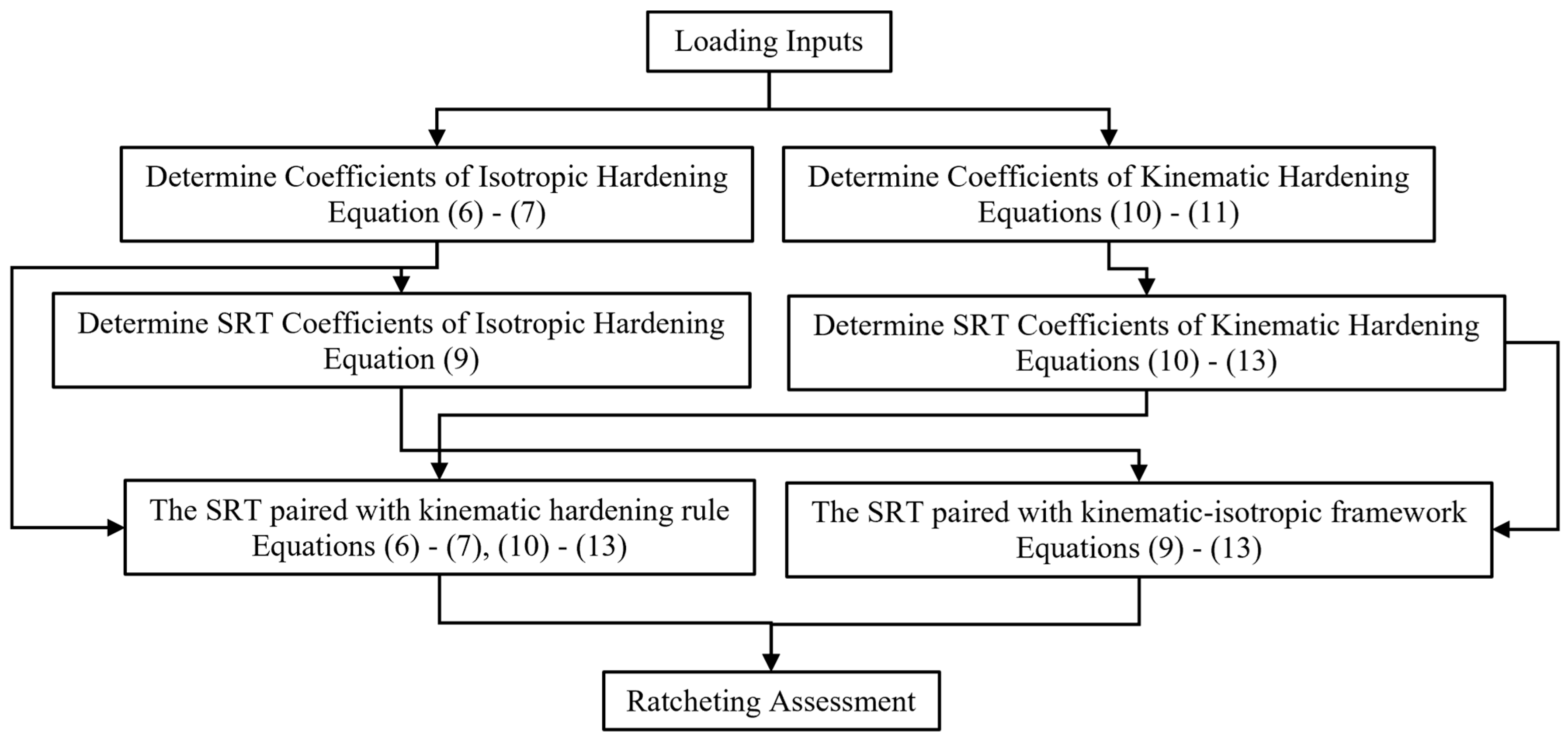
Ratcheting of SS304 samples was assessed using various dwell times through the use of the modified A-V and L-Z hardening rules with a static recovery function incorporated. The isotropic coefficients were first determined through Equations (6) and (7). Kinematic coefficients were determined concurrently through Equations (10) and (11). The coefficients of the static recovery function adapted in the A-V kinematic hardening model were calibrated along with other parameters in the hardening framework. Ratcheting curves were then predicted as the hardening frameworks paired with the static recovery function; (i) the static recovery function for the isotropic L-Z hardening description was calibrated through the use of Equation (9) and (ii) the SRT paired with the combined kinematic-isotropic hardening framework. Figure 1 presents a flowchart for the ratcheting evaluation of SS304 samples to account for SRT engagement in the hardening frameworks, assessing ratcheting during loading cycles with dwell times in the peak/valley events.

3. Materials and Testing Conditions

3.1. Material Testing

To evaluate the ratcheting response of materials undergoing loading cycles with holding time periods introduced at peak/valley events in the loading spectrum, the ratcheting data of SS304 samples were taken from the literature [33]. The stainless steel 304 alloy is an austenitic chromium-nickel alloy widely employed for components requiring formability and corrosion resistance. It is broadly utilized in pressurized piping systems and in various aerospace structures. This alloy, with high tensile strength and an austenitic structure, offers stable mechanical properties, making it suitable for applications where mechanical stresses are prevalent. The chemical composition of the SS304 alloy consists of 0.03%C, 9.8%Ni, 18%Cr, 1.7%Mn, 0.05%P, and 0.05%S, and the remainder is Fe [33].

3.2. Testing Conditions

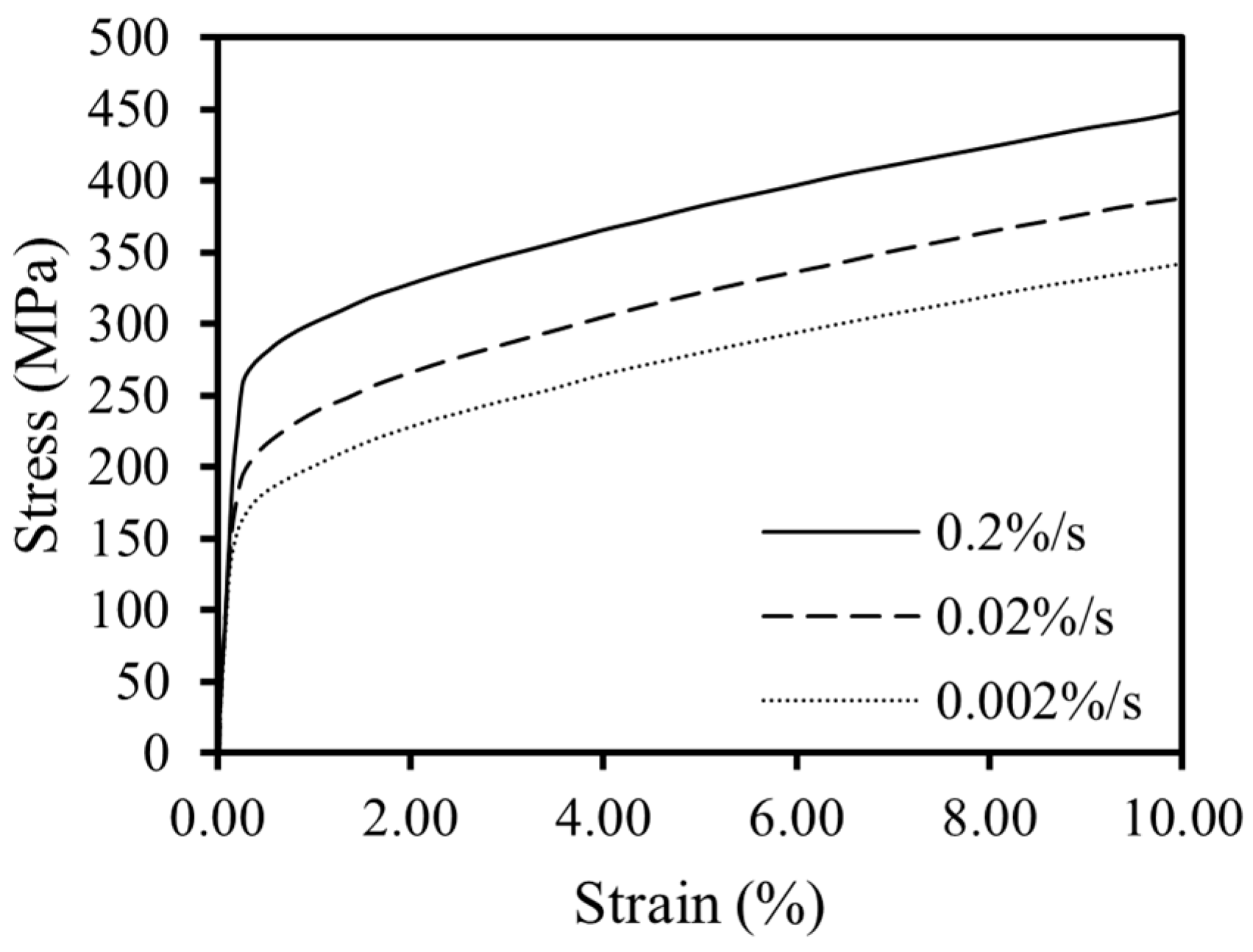
Tensile and cyclic tests were conducted on SS304 samples at ambient temperature under various strain and stress rates, with holding time periods introduced during the loading process. The test samples were cut from a hot-rolled bar solution heat-treated at 1150 °C for a period of an hour, followed by water quenching. Cylindrical specimens with a diameter of 8 mm and a gauge length of 30 mm were used for uniaxial tests [33]. Uniaxial cyclic tests were performed using an MTS809-250 kN testing machine equipped with a controller for precise load and displacement control. Axial strain was measured using an extensometer with a limited axial strain of 10%. The tensile stress-strain curves for SS304 samples tested at strain rates of 0.2, 0.02, and 0.002%/s are presented in Figure 2. A noticeable reduction in flow stress is observed with decreasing strain rate, where the yield strength at 0.002%/s is considerably lower than that obtained at 0.2%/s, representing the strain rate sensitivity in the SS304 alloy, where lower deformation rates allow for increased dislocation glide, cross-slip, and localized recovery processes, reducing the instantaneous resistance to plastic flow [34]. A similar rate-dependent response has been reported by Wang et al. [35]. They evidenced a noticeable drop in the yield strength in Zr50Ti35Nb15 alloy when the strain rate was reduced from 0.099%/s to 0.012%/s.
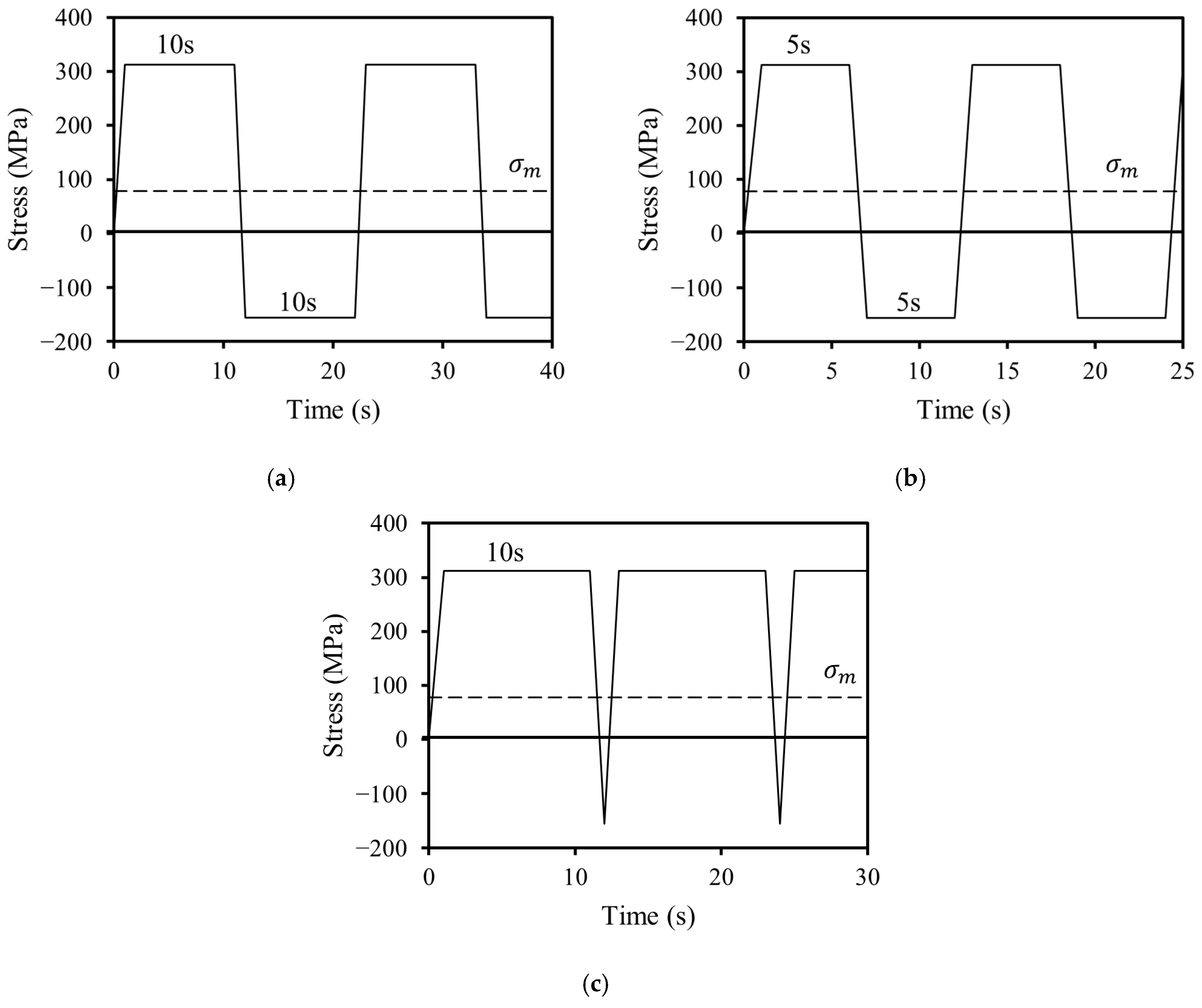
The static recovery phenomenon represents a time-dependent reduction in dislocation density and internal backstress once plastic deformation ceases. At ambient temperatures, this recovery process is primarily governed by the duration of the holding period. Dwell time segments introduced at the peak/valley events facilitate a partial relaxation of the stored internal stress field [25]. Incorporation of the static recovery term into the hardening framework is therefore essential for accurately capturing both the reduction of backstress and increased ratcheting strain accumulation over holding time periods. Figure 3a,b illustrate loading spectra with holding time durations of 10 s and 5 s in peak/valley events. Figure 3c presents asymmetric stress cycles with a 10 s hold imposed exclusively at peak stress, while the stress in the valley consists of no holding time [33]. Cyclic tests were conducted at a mean stress of 78 MPa and a stress amplitude of 234 MPa (78 ± 234 MPa).
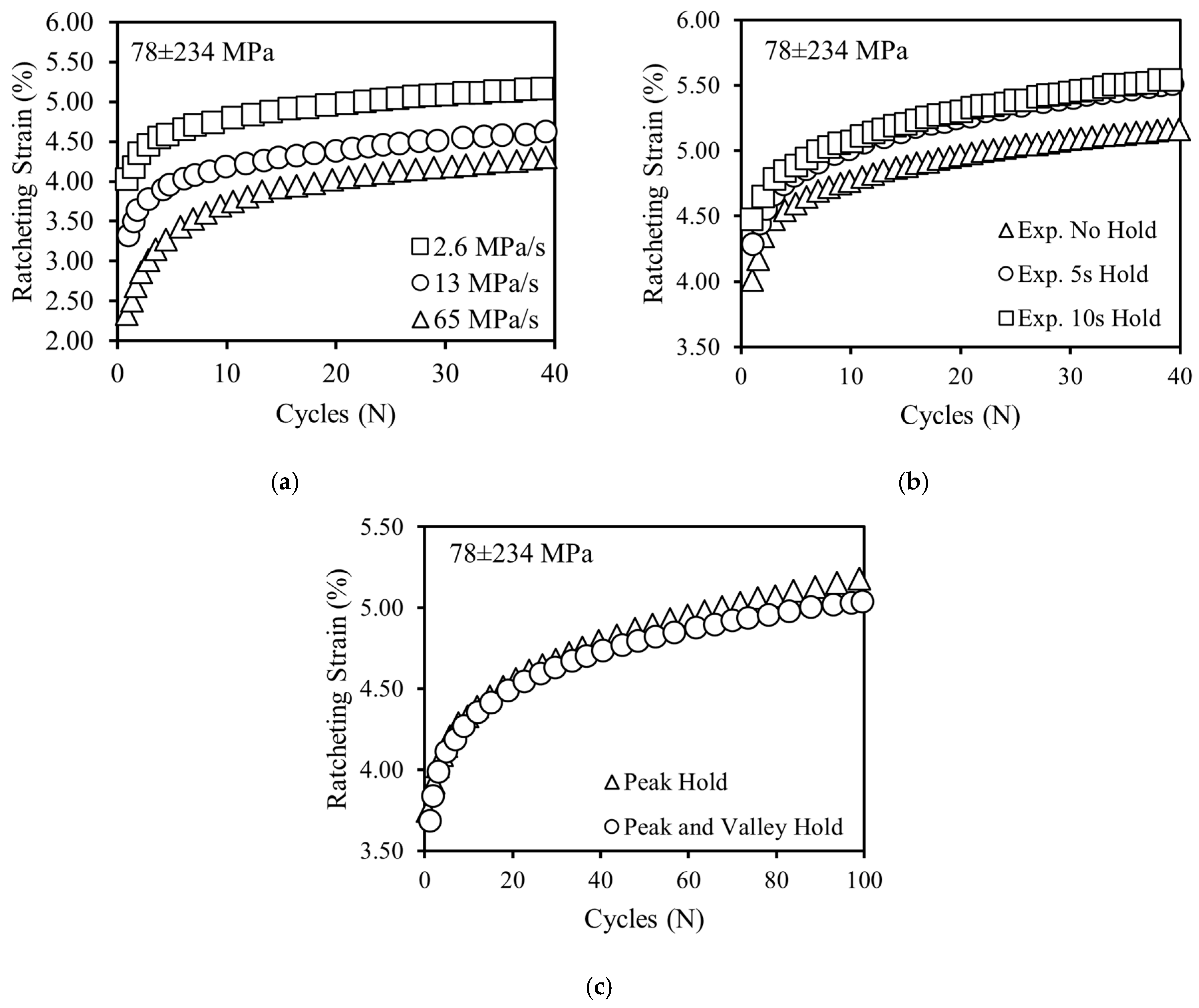
Ratcheting tests on SS304 samples were conducted under stress-controlled conditions at various rates of 2.6, 13, and 65 MPa/s [33]. Figure 4 presents ratcheting data over asymmetric loading cycles for 304 stainless steel samples at various stress rates and in the absence and presence of holding time in peak/valley events. Figure 4a presents the influence of stress rate on ratcheting of steel samples in the absence of dwell time. As the stress rate increased, the magnitude of accumulated ratcheting strain decreased. The experimental data in Figure 4 show that an increase in the stress rate from 2.6 MPa/s → 65 MPa/s resulted in about a 1% drop in ratcheting data over loading cycles. This trend is consistent with the strain rate sensitivity of austenitic steel alloys, in which tests conducted at lower stress rates elevate the time-dependent recovery as dislocation rearrangement smooths out the internal stress relaxation [36]. Higher loading rates, on the other hand, lead to higher backstress increments per cycle, suppressing the accumulation of plastic strain. Figure 4b shows how the holding time and its length adapted in the peak/valley event of loading cycles influence the magnitude of ratcheting steel samples. Merging the holding time period of 10 s with the peak events of load cycles promoted ratcheting progression more than those samples tested with holding time inserted at peak/valley events, as shown in Figure 4c.

4. Results and Discussion

4.1. Backstress and Isotropic Variable Response over the Holding Time Period

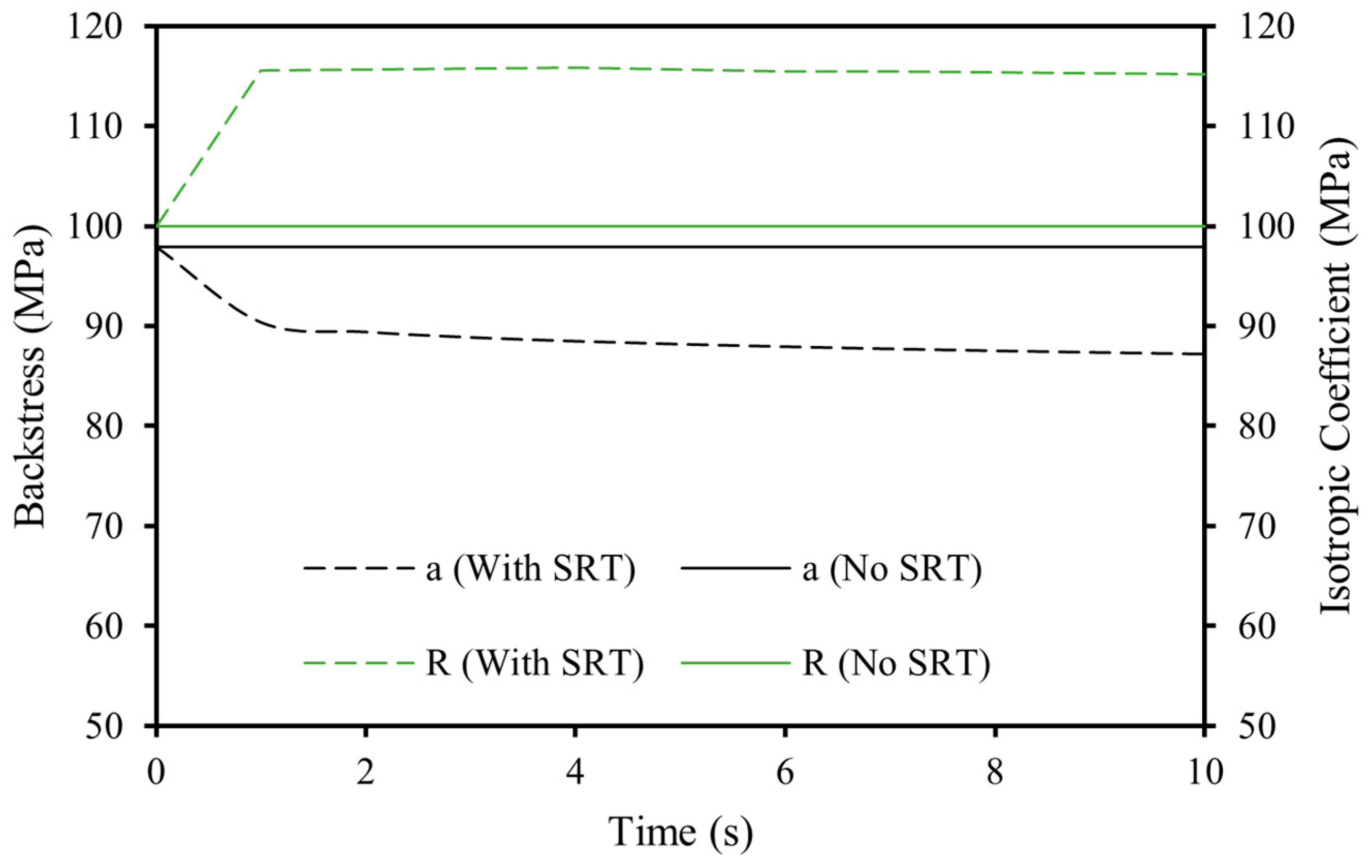
Holding time, adapted to the peaks and valleys of load cycles, causes a steady drop in backstress toward a saturated level. Such relaxation is attributed to the recovery of the dislocation structure, resulting in a noticeable drop in material strength. The holding time events promoted the isotropic hardening variable R in steel samples due to the accumulation of dislocations during the hold period, leading to greater resistance against deformation. Figure 5 presents the variation of the backstress, a , and isotropic hardening variable, R , over the length of holding time. Stress relaxation in this figure occurred at a high rate following an exponential decay in stress.
The adaptation of the static recovery function into the hardening framework enabled the monitoring of the evolution of backstress as well as the isotropic variable over the hold period at the peak stress event, as illustrated by the dashed curve in Figure 5. A rapid decrease in backstress occurred at the onset of a hold period ( t   <   2   s ), followed by a gradual reduction in the rate of change as the hold duration increased ( 2   s   <   t   <   10   s ). This trend advocates that the introduction of a hold period at peak/valley events substantially influences the backstress evolution in the earlier time periods. A further increase in holding time beyond a certain threshold produces only minor changes in backstress. In the absence of the static recovery term within the hardening rule, both backstress and the isotropic variable remain unchanged, as indicated by solid lines. With the incorporation of the SRT into the isotropic hardening description, a sharp increase in R is observed at the start of the hold period. The value of R continues to increase gradually for shorter hold durations ( 1   s   <   t   <   4   s ), before exhibiting a gradual decrease for longer hold periods ( 4   s   <   t   <   10   s ). Although this behaviour suggests that R may eventually return to its original value, the relatively small rate of change between hold durations of 4 s and 10 s ( Δ R   <   0.75 ) indicates that substantially longer hold times would be required for full recovery to occur. Table 1 lists parameters and coefficients to implement the static recovery function into both the kinematic and isotropic hardening rules obtained through ratcheting experimental data, with a hold time of 10 s applied at both peak and valley stress events.

4.2. The Coefficients of the Hardening Framework

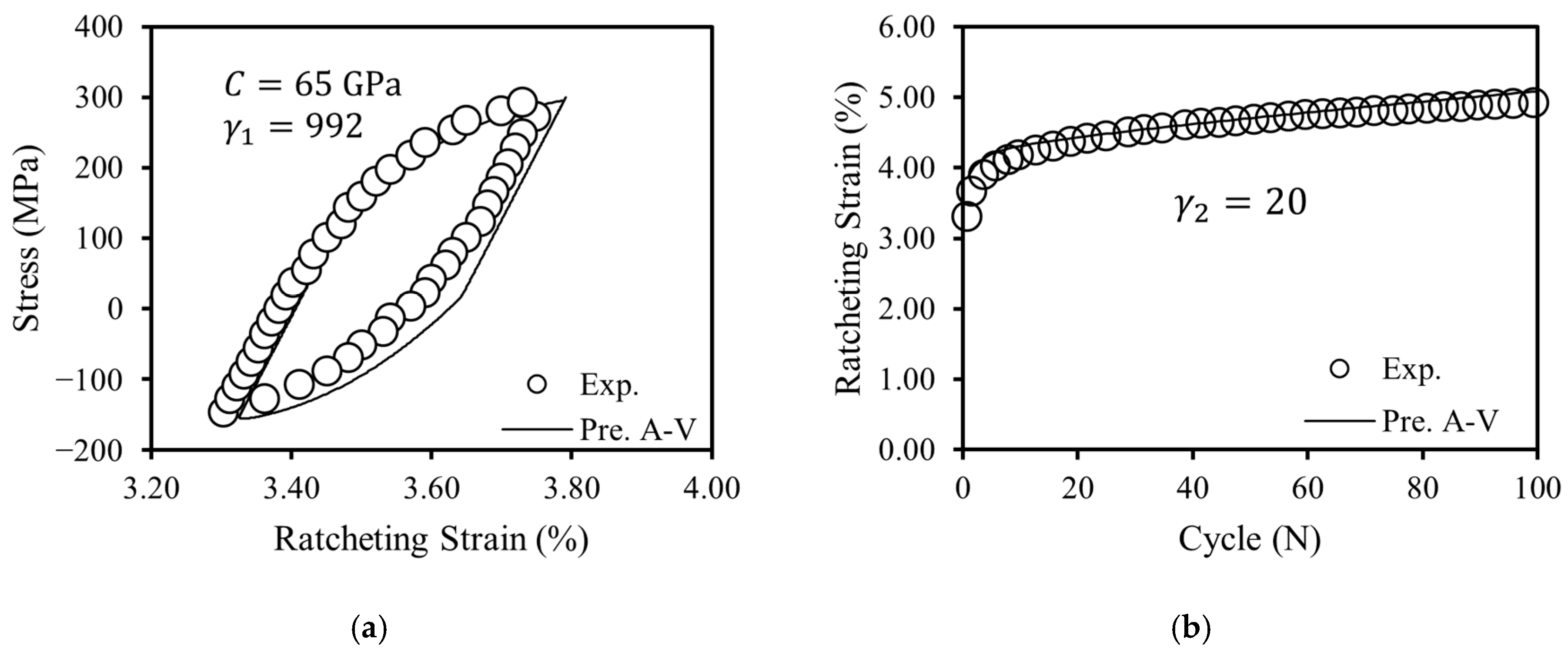
The size and shape of the hysteresis loops were controlled by coefficients C and γ 1 based on the A-V kinematic hardening rule [32]. The calibration of these coefficients through experimental data preserves the consistency condition, ensuring that any increase in stress is accompanied by the hardening rule and that the yield surface remains consistent with the current stress state over the progressive loading cycles. The coefficient γ 2 was calibrated to closely agree with the experimental ratcheting data over asymmetric loading cycles. Figure 6 shows that the optimal values of these coefficients were achieved when both the measured hysteresis loops and those predicted by the A-V hardening rule for SS304 samples at ambient temperature closely coincided with each other. The values of these coefficients used in the A-V kinematic hardening model are listed in Table 1.
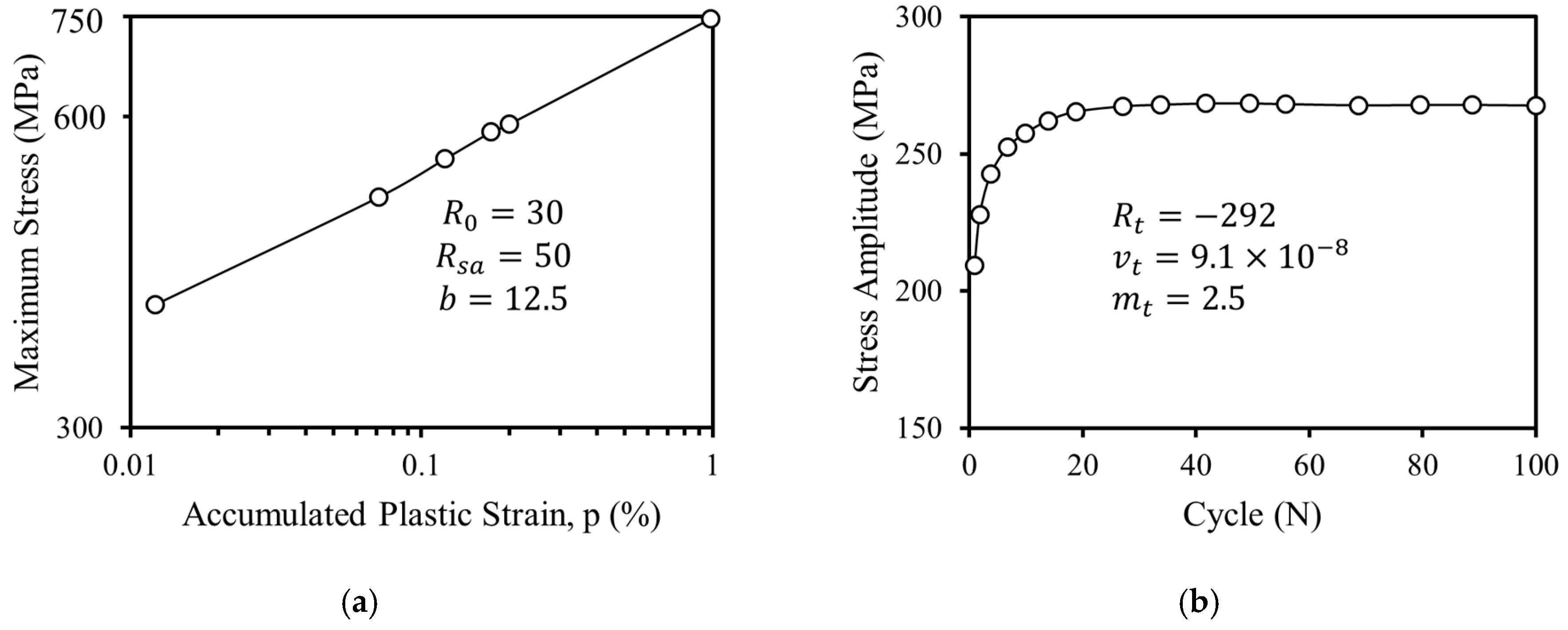
The evolution of isotropic coefficients R 0 , R s a , and   b can be described by Equation (7). These parameters were determined by fitting the experimentally measured values of maximum applied cyclic stress versus the accumulated plastic strain, p , on a Log-Log scale. Figure 7a displays the isotropic coefficients versus the experimental values obtained for SS304 samples tested at 78 ± 234 MPa. The static recovery coefficients R t , v t , a n d   m t can be defined using Equation (9). These parameters were obtained by fitting the evolution curve of stress amplitude versus cycles at a strain amplitude of 0.5% with a hold time of 10 s at ambient temperature. Figure 7b shows the static recovery coefficients plotted versus the experimental data. Table 1 lists the A-V kinematic and the L-Z isotropic rule coefficients and the related SRT variables for the SS304 steel alloy.

4.3. Ratcheting Prediction in the Presence of the Static Recovery Function

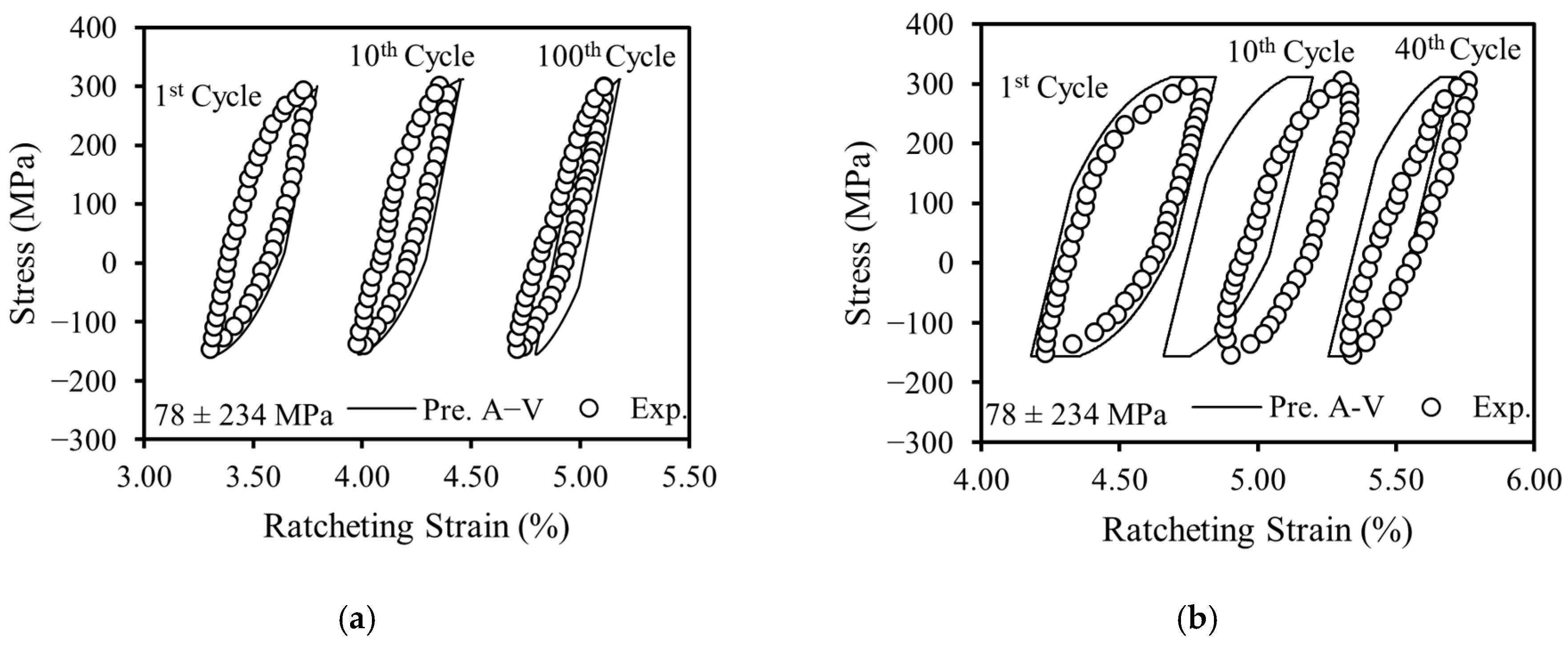
Figure 8 presents the predicted and experimental hysteresis loops at the 1 st, 10th, 40th and 100th loading cycles for SS304 samples tested at ambient temperature in the absence and presence of hold periods. The predicted hysteresis loops generated by the A-V kinematic hardening rule verify the consistency condition and kinematic hardening coefficients C and γ 1 used to predict these loops. The slight discrepancy of 2% between predicted and measured loops in Figure 8b is attributed to the dwell time in peak-valley events in the load cycles. The choice of these hardening coefficients ensures the applicability of the model over asymmetric loading cycles in the absence and presence of dwell time and implementation of the static recovery function in Equations (10) and (11).
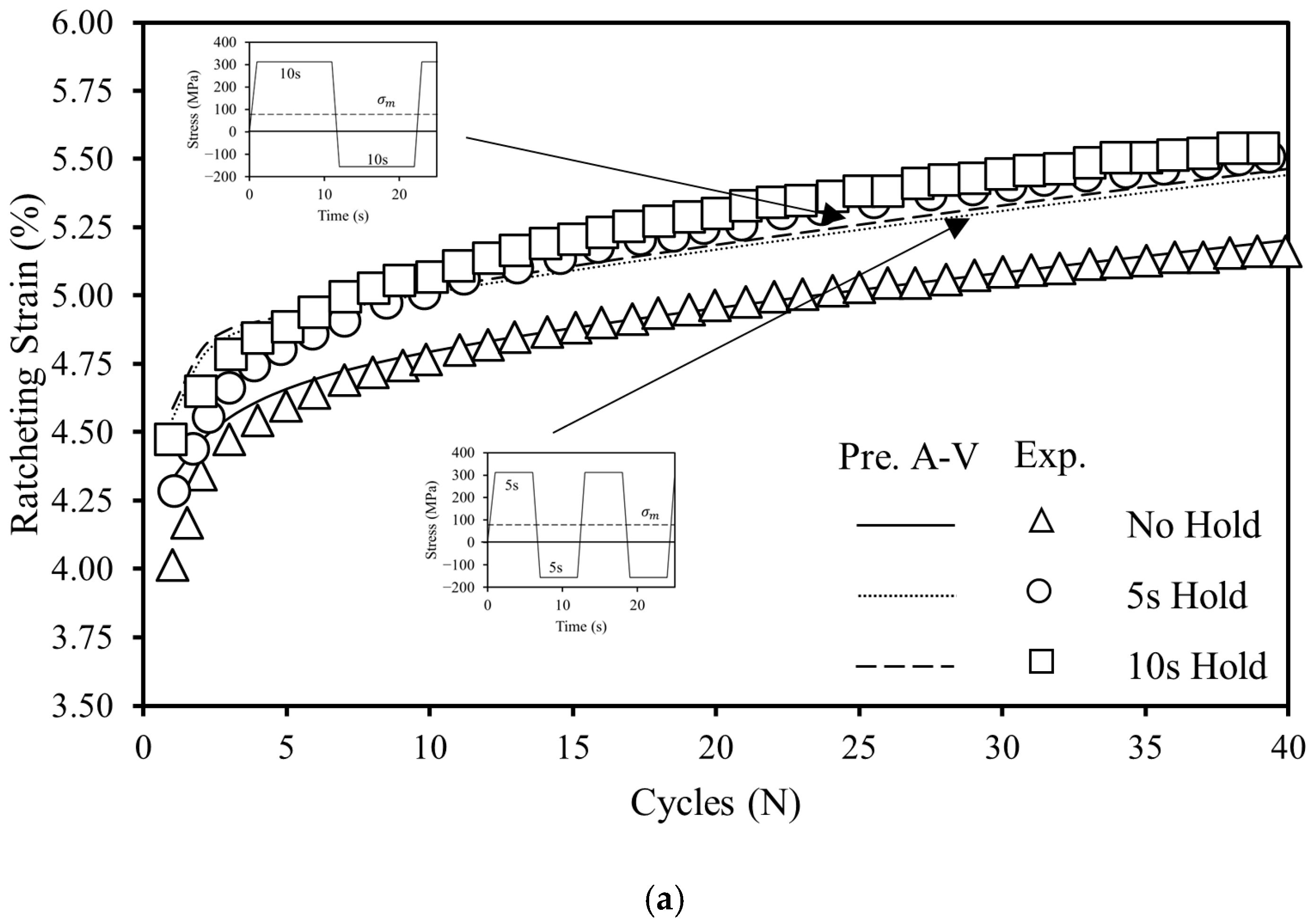
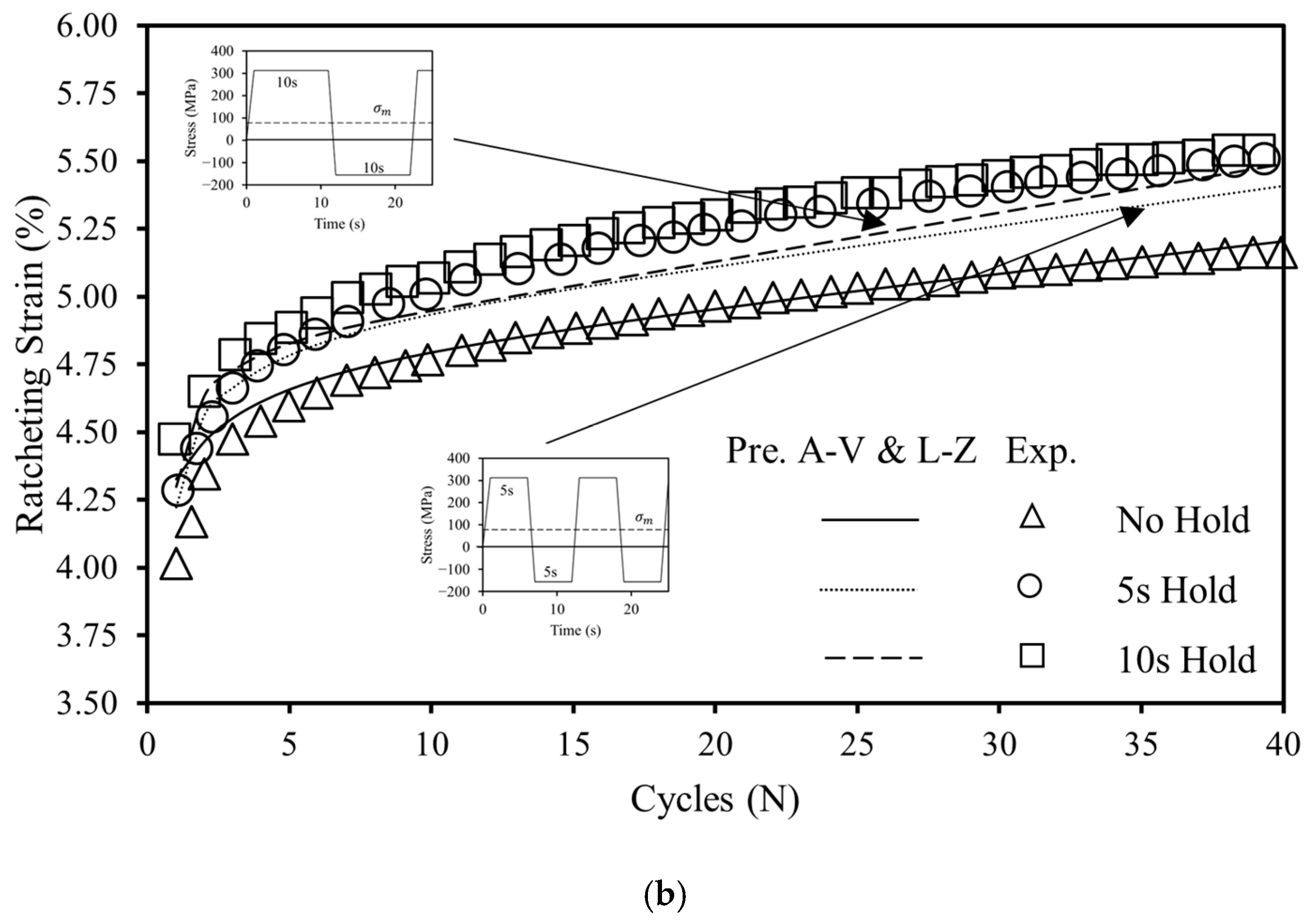
The predicted ratcheting curves for steel samples tested at 78 ± 234 MPa in the absence and presence of holding time periods in the peak/valley events are presented in Figure 9. The introduction of a 5 s holding time resulted in a noticeable increase in ratcheting strain, reaching as high as 0.4% as compared to that of the no-hold condition. Extending the holding time from 5 s to 10 s in the peak/valley events led to a marginal increase in strain development (<0.05%), suggesting the presence of threshold behaviour where most time-dependent plasticity occurs during the initial stage of stress holding. The influence of dwell time on the loading spectrum was found to be consistent with findings reported by Li et al. [26]. Figure 9a compares the predicted ratcheting curves with the measured values, which closely agree with one another. Figure 9b shows that the combined A-V and L-Z hardening framework successfully predicts ratcheting data for steel samples tested with no holding time at peak/valley events. In this figure, a slight deviation in predicted curves for tests conducted in the presence of holding time periods is noticeable beyond the first 10 cycles.
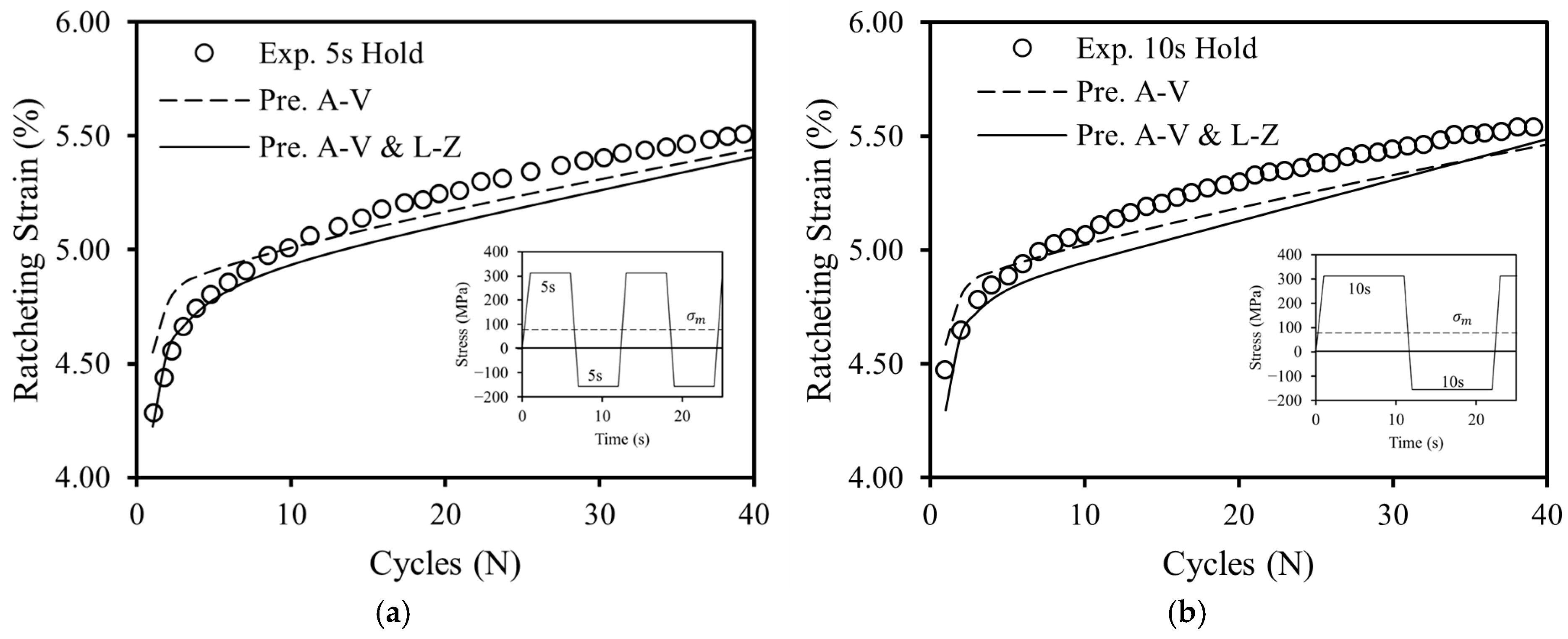
Ratcheting strains predicted by means of (i) the A-V kinematic hardening rule and (ii) the combined A-V and L-Z hardening framework nearly agree with the experimental data. Figure 10 presents the ratcheting curves predicted by the two frameworks coupled with the static recovery function. The ratcheting curve predicted by means of the combined framework pairing the SRT in the kinematic and isotropic portions showed closer agreement with the experimental data during the initial loading cycles ( N   <   5 ) for the steel samples tested with a loading spectrum with hold time in the peak/valley events. As the asymmetric cycles progressed, both frameworks slightly underpredicted ratcheting values. The inclusion of the SRT and the pairing of the function in both isotropic and kinematic models produced a slight difference in the ratcheting assessment of steel samples at ambient temperature.
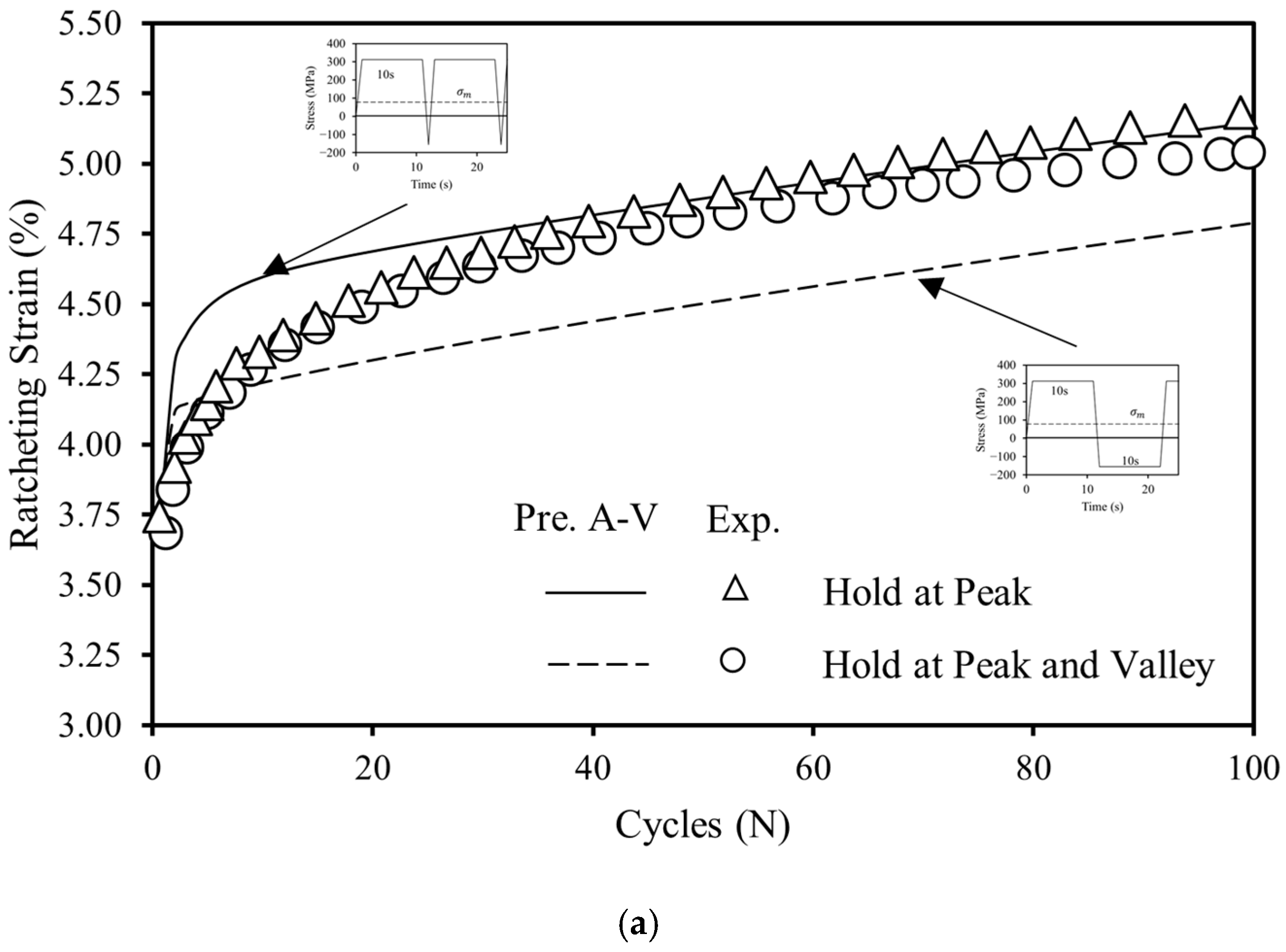
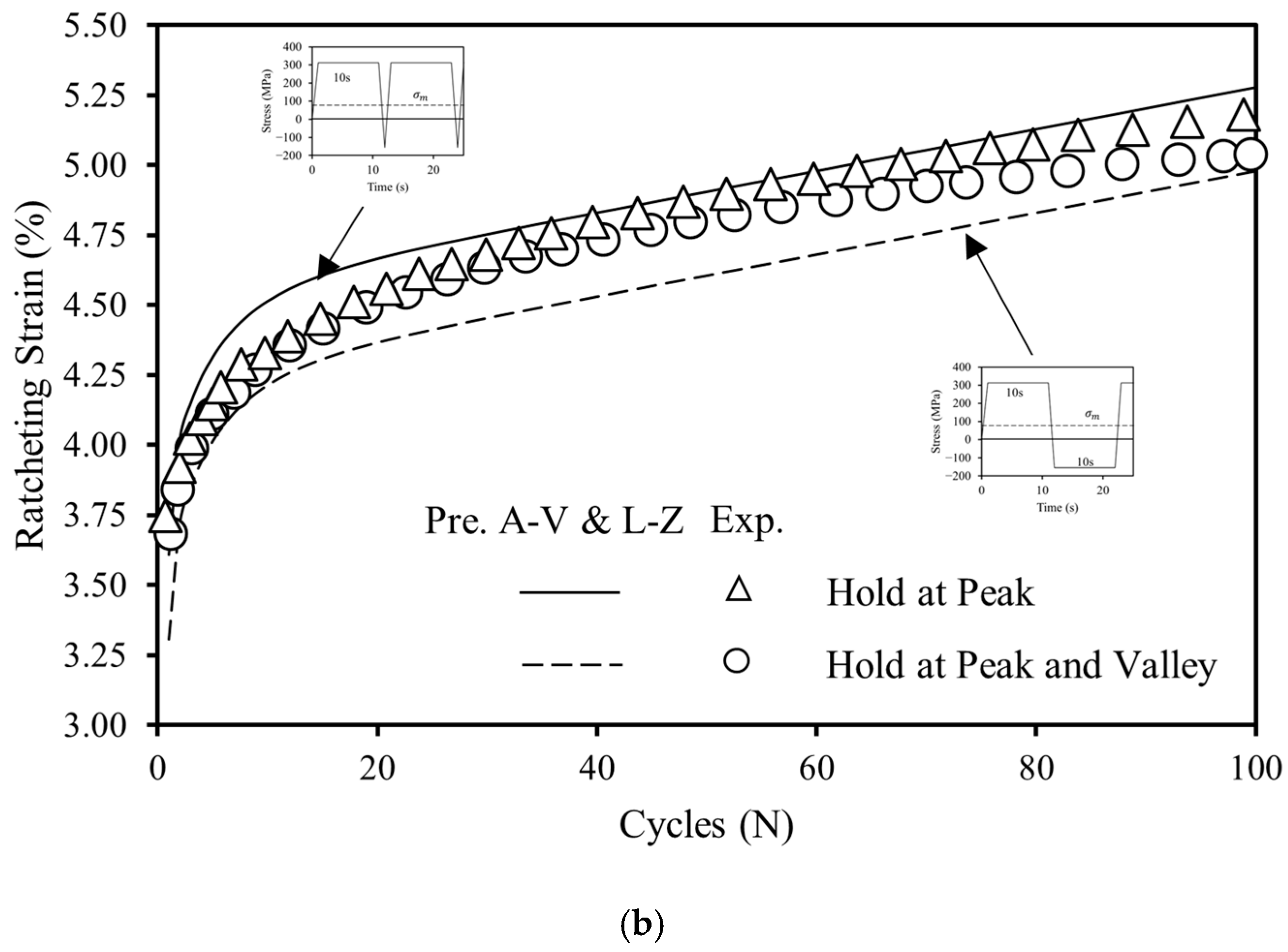
Ratcheting tests conducted on steel samples with a hold time at peak events were compared to tests involving delays in peaks and valleys over asymmetric loading cycles. Test data reported by Kang et al. [33] for steel samples tested at 78 ± 234 MPa with a stress and a hold time of 10 s during (i) peak events and (ii) during peak–valley events verified that the dwell time in compressive reversals (valley events) slightly alleviated ratcheting magnitude over the stress cycles. In Figure 11, the measured ratcheting data for tests with a peak-only hold time elevated ratcheting slightly more than the data obtained from tests with hold time at peak–valley events. When a hold was introduced at both peak and valley stresses, the net ratcheting strain per cycle decreased, indicating that the compressive hold mitigated the overall strain accumulation. This behaviour manifests as hold periods at the peak/valley of loading cycles, which influence the evolution of plastic strain and backstress during plastic deformation. A tensile peak hold promoted plastic strain, pushing forward the hysteresis loops in the tensile direction. Introducing a valley hold allows time-dependent plasticity in the compressive direction, partially counterbalancing the tensile strain accumulated at the peak and resulting in a drop in ratcheting. The predicted ratcheting curves in Figure 11 show a small difference when the SRT function is paired with the isotropic–kinematic hardening model, as opposed to the kinematic hardening model, for tests conducted with peak-only hold time. This figure also shows a noticeable difference between the frameworks in ratcheting assessment in the presence of peak–valley holding time periods.
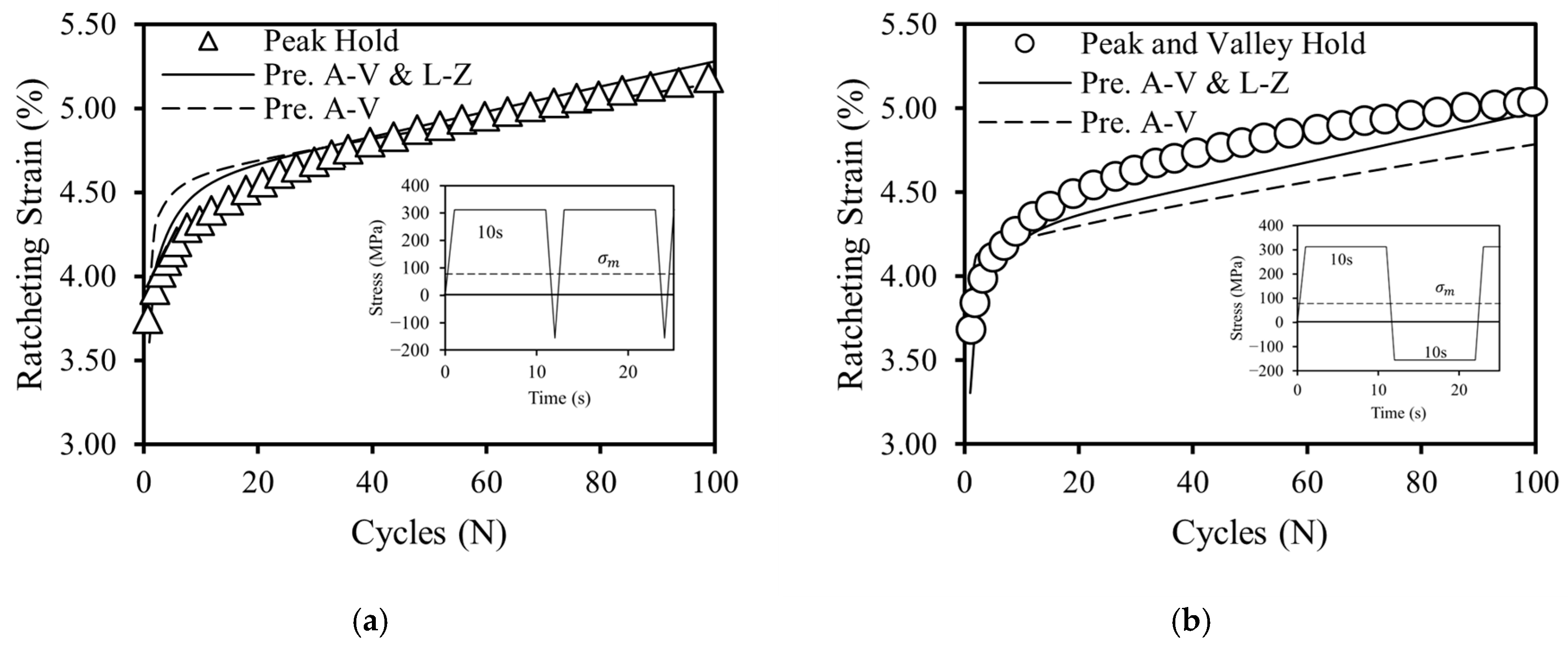
The predicted ratcheting strains obtained by means of (i) the A-V kinematic hardening rule and (ii) the combined A-V and L-Z hardening framework agree closely with the experimental data for tests conducted with a peak-only hold period. Figure 12 plots the predicted ratcheting for two loading spectra of peak-only hold and peak–valley hold durations. In Figure 12a, the ratcheting curves predicted by means of two frameworks closely agreed with the measured values of steel samples tested with a peak-only period spectrum. For tests holding dwell time in peak–valley events, however, the two frameworks showed a noticeable difference in the predicted curves, deviating from the measured data, particularly beyond the first 10 cycles. The presence of hold time during valley events in Figure 12b verifies the contribution of the SRT function coupled with the isotropic description. This further reduced the difference between the predicted and experimental data in this figure.
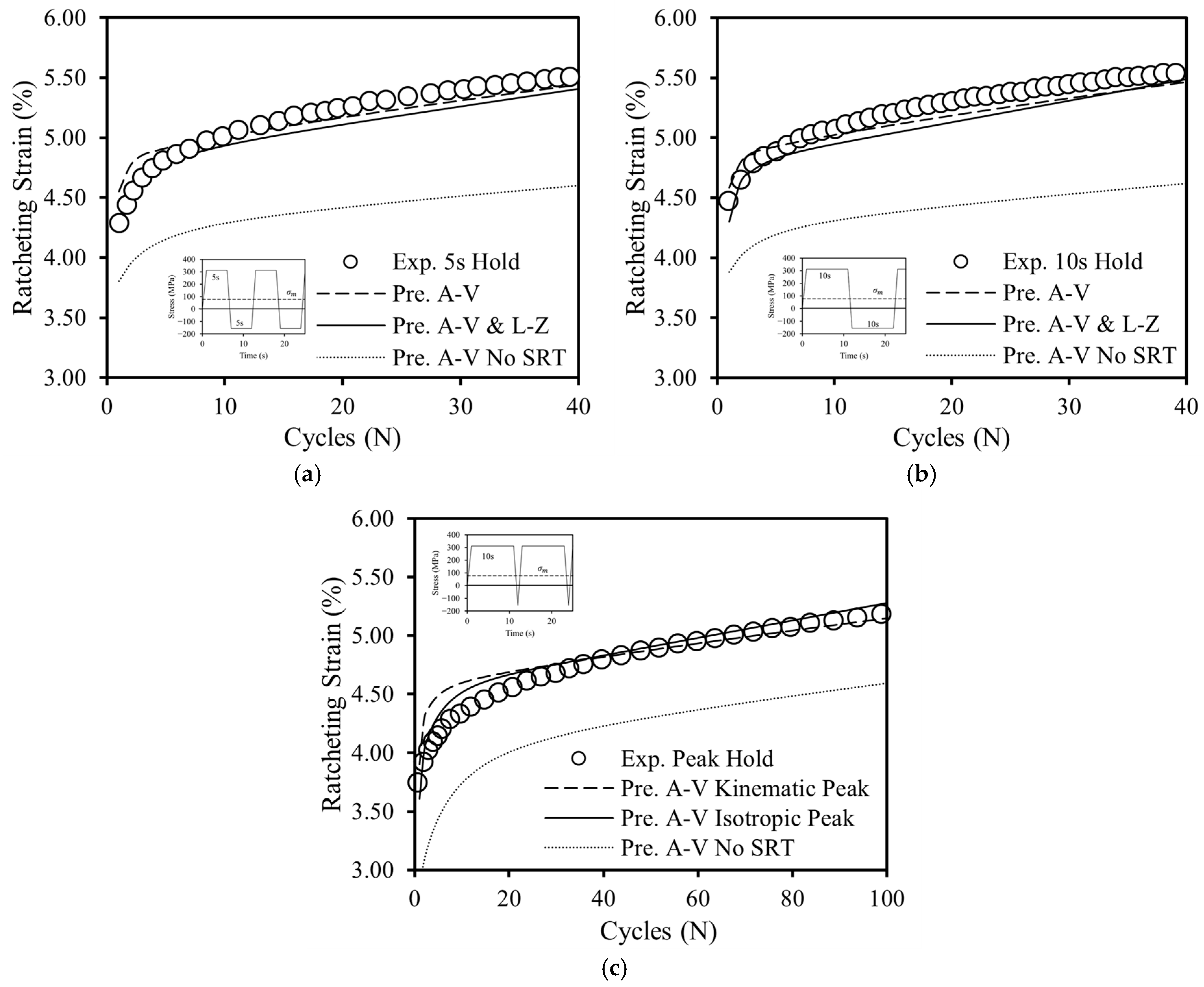
The predicted ratcheting of SS304 samples in various hold conditions verified that the inclusion of SRT functions α r e c and R r e c within the A-V kinematic hardening rule and the L-Z isotropic hardening model was essential. The inclusion of the SRT functions enabled the constitutive framework to capture the time-dependent static recovery behaviour occurring during dwell periods. Figure 13 highlights that incorporating the SRT functions yields predicted ratcheting curves that closely agree with the measured values. Exclusion of the SRT functions consistently resulted in an underprediction of ratcheting curves. Figure 13a compares the experimental ratcheting data for SS304 samples undergoing a 5 s hold applied during both the peak and valley stress events with the predicted results obtained using (i) the A-V kinematic hardening rule, (ii) the combined modified A-V and L-Z hardening framework, and (iii) the A-V and L-Z models without inclusion of the SRT functions. The omission of the SRT resulted in an underprediction of ratcheting strain as high as 1%. A similar trend can be observed in Figure 13b for the case of a 10 s holding time applied during both the peak and valley stresses. Figure 13c shows that ratcheting curves were underpredicted by nearly 0.5% for the 10 s hold during peak stress. These results indicate that the inclusion of the SRT functions improved the capability of the hardening frameworks to capture the dwell time effect in the ratcheting of materials.

5. Conclusions

The ratcheting response of 304 stainless steel samples was assessed at ambient temperatures under uniaxial asymmetric loading cycles using the combined A-V kinematic and L-Z isotropic hardening frameworks. The introduction of a hold during the loading peak/valley events during loading cycles promoted ratcheting in steel samples. The increase in hold time produced an initial build-up in ratcheting, followed by a decay in the ratcheting rate. The predicted ratcheting results showed that when a hold was applied to both the peak and valley stresses, as compared with the peak-only hold period, ratcheting slightly dropped in magnitude, indicating that the compressive hold mitigated the overall strain accumulation. Exponential functions α r e c and R r e c were incorporated into the kinematic and isotropic hardening rules to account for the static recovery during hold peak–valley events. The choice of the hardening framework in the ratcheting assessment and pairing the static recovery functions in the kinematic and isotropic descriptions influenced the predicted ratcheting of steel samples tested at different loading spectra with different peak–valley holding times. The variation in predicted ratcheting strain between the cases where (i) the SRT is coupled with only the kinematic hardening model and (ii) the SRT is paired with the isotropic and kinematic hardening framework was found to be as small as 0.05%, highlighting the fact that the selection of either model is sufficient in replicating the experimental data. Exclusion of the SRT from the hardening rules resulted in an underprediction of ratcheting strain as high as 2%. The ratcheting curves predicted by means of the combined framework showed how influential the contribution of the SRT is in both kinematic and isotropic descriptions, particularly for steel samples tested in the presence of peak–valley holding time periods.

Author Contributions

Conceptualization, P.J. and A.V.-F.; methodology, P.J. and A.V.-F.; software, P.J. and A.V.-F.; validation, P.J. and A.V.-F.; formal analysis, P.J.; investigation, P.J. and A.V.-F.; data curation, P.J. and A.V.-F.; writing—original draft preparation, P.J. and A.V.-F.; writing—review and editing, P.J. and A.V.-F.; visualization, P.J. and A.V.-F.; supervision, A.V.-F.; project administration, A.V.-F.; funding acquisition, A.V.-F. All authors have read and agreed to the published version of the manuscript.

Funding

This research was funded by the Natural Sciences and Engineering Research Council of Canada (NSERC) through A.V-F. (RGPIN-2021-03047).

Institutional Review Board Statement

Not applicable.

Informed Consent Statement

Not applicable.

Data Availability Statement

The original contributions presented in this study are included in the article. Further inquiries can be directed to the corresponding author.

Conflicts of Interest

The authors declare that they have no known competing financial interests or personal relationships that could have appeared to influence the work reported in this paper.

Abbreviations

The following abbreviations are used in this manuscript:
α r e c The kinematic static recovery term
R r e c The isotropic recovery term
a ¯ Backstress tensor
b ¯ The A–V model internal variable
C ,   γ 1 , γ 2 , δ The A–V model coefficients
S State of stress in deviatoric stress space
R Isotropic hardening internal variable
σ y Yield strength
σ y 0 Initial yield strength
σ Applied stress
I Unit tensor
E Elastic modulus
G Shear modulus
H p Plastic modulus
υ Poisson’s ratio
R s a Saturated value of the internal variable R
b Exponent defining the evolution rate of variable R
ε e Elastic strain
ε p Plastic strain
R t ,   v t ,   m t Isotropic time-dependent parameters
χ ,   m ,   κ Kinematic time-dependent parameters

References

  1. Varvani-Farahani, A.; Nayebi, A. Ratcheting in pressurized pipes and equipment: A review on affecting parameters, modelling, safety codes, and challenges. Fatigue Fract. Eng. Mater. Struct. 2018, 41, 503–538. [Google Scholar] [CrossRef]
  2. Prager, W. A New Method of Analyzing Stresses and Strains in Work-Hardening Plastic Solids. J. Appl. Math. 1956, 23, 493–496. [Google Scholar] [CrossRef]
  3. Frederick, C.; Armstrong, P. A Mathematical Representation of the Multiaxial Bauschinger Effect; Berkeley Nuclear Laboratories: Berkeley, UK, 1966. [Google Scholar]
  4. Bower, A.; Johnson, K. The influence of strain hardening on cumulative plastic deformation in rolling and sliding line contact. J. Mech. Phys. Solids 1989, 37, 471–493. [Google Scholar] [CrossRef]
  5. Chaboche, J. Constitutive equations for cyclic plasticity and cyclic viscoplasticity. Int. J. Plast. 1989, 5, 247–302. [Google Scholar] [CrossRef]
  6. Chaboche, J. Time-independent constitutive theories for cyclic plasticity. Int. J. Plast. 1986, 2, 149–186. [Google Scholar] [CrossRef]
  7. Ohno, N.; Wang, J. Kinematic hardening rules with critical state of dynamic recovery, part I: Formulation and basic features for ratchetting behavior. Int. J. Plast. 1993, 9, 375–390. [Google Scholar] [CrossRef]
  8. Ohno, N.; Wang, J. Kinematic hardening rules with critical state of dynamic recovery, Part II: Application to experiments of ratchetting behavior. Int. J. Plast. 1993, 9, 391–403. [Google Scholar] [CrossRef]
  9. Ahmadzadeh, G.; Varvani-Farahani, A. A kinematic hardening rule to investigate the impact of loading path and direction on ratcheting response of steel alloys. Int. J. Fatigue 2016, 101, 40–49. [Google Scholar] [CrossRef]
  10. Ahmadzadeh, G.; Varvani-Farahani, A. Ratcheting assessment of steel alloys under uniaxial loading: A parametric model versus hardening rule of Bower. Fatigue Fract. Eng. Mater. Struct. 2013, 36, 81–92. [Google Scholar] [CrossRef]
  11. Yaguchi, M.; Yamamoto, M.; Ogata, T. A viscoplastic constitutive model for nickel-base superalloy, part 1: Kinematic hardening rule of anisotropic dynamic recovery. Int. J. Plast. 2002, 18, 1083–1109. [Google Scholar] [CrossRef]
  12. Wang, X.; Zhang, T.; Zhang, W.; Wahab, M.; Gong, J. An improved unified viscoplastic model for modelling low cycle fatigue and creep fatigue interaction loadings of 9–12%Cr steel. Eur. J. Mech. A-Solids 2021, 85, 104123. [Google Scholar] [CrossRef]
  13. Chaboche, J. A review of some plasticity and viscoplasticity constitutive theories. Int. J. Plast. 2008, 24, 1642–1693. [Google Scholar] [CrossRef]
  14. Zhang, S.; Xuan, F. Interaction of cyclic softening and stress relaxation of 9-12% Cr steel under strain-controlled fatigue-creep condition: Experimental and modeling. Int. J. Plast. 2017, 98, 45–64. [Google Scholar] [CrossRef]
  15. Chaboche, J.; Van, K.; Cordier, G. Modelization of the Strain Memory Effect on the Cyclic Hardening of 316 Stainless Steel. In Structural Mechanics in Reactor Technology. Transactions; North-Holland Publishing Co: Amsterdam, The Netherlands, 1979; Volume L, pp. 1–10. [Google Scholar]
  16. Jurgens, M.; Olbricht, J.; Fedelich, B.; Skrotzki, B. Low cycle fatigue and relaxation performance of ferritic-martensitic grade P92 steel. Metals 2019, 9, 99. [Google Scholar] [CrossRef]
  17. Wang, R.; Zhang, X.; Gong, J.Z.X.; Tu, S.; Zhang, C. Creep-fatigue life prediction and interaction diagram in nickel-based GH4169 superalloy at 605 °C based on cycle-by-cycle concept. Int. J. Fatigue 2017, 97, 114–123. [Google Scholar] [CrossRef]
  18. Wang, X.; Zhang, W.; Gong, J.W.M. Low cycle fatigue and creep fatigue interaction behavior of 9Cr-0.5Mo-1.8W-V-Nb heat-resistant steel at high temperature. J. Nucl. Mater. 2018, 505, 72–84. [Google Scholar] [CrossRef]
  19. Sun, L.; Liu, L.-Q.; Wang, R.-Z.; Wang, X.-W.; Tan, J.-P.; Guo, S.-J.; Wang, J.; Zhang, D.-W.; Zhang, X.-C.; Tu, S.-T. A modified damage-coupled viscoplastic constitutive model for capturing the asymmetric behavior of a nickel-based superalloy under wide creep-fatigue loadings. Int. J. Fatigue 2022, 164, 107160. [Google Scholar] [CrossRef]
  20. Hernandez, E.; Nguyen-Minh, T.; Traka, K.; Cerda, F.; Kestens, L. Orientation dependence of dynamic compared to static recovery in Interstitial Free steel. Scr. Mater. 2024, 249, 116151. [Google Scholar] [CrossRef]
  21. Ding, J.; Kang, G.; Kan, Q.; Liu, Y. Constitutive model for uniaxial time-dependent ratcheting of 6061-T6 aluminum alloy. Comp. Mater. Sci. 2012, 57, 67–72. [Google Scholar] [CrossRef]
  22. Kan, Q.; Kang, G.; Zhang, J. Uniaxial time-dependent ratchetting: Visco-plastic model and finite element application. Theor. Appl. Fract. Mech. 2007, 47, 133–144. [Google Scholar] [CrossRef]
  23. Chen, W.; Wang, F.; Kitamura, T.; Feng, M. A modified unified viscoplasticity model considering time-dependent kinematic hardening for stress relaxation with effect of loading history. Int. J. Mech. Sci. 2017, 133, 883–892. [Google Scholar] [CrossRef]
  24. Chen, W.; Kitamura, T.; Feng, M. Creep and fatigue behavior of 316L stainless steel at room temperature: Experiments and a revisit of a unified viscoplasticity model. Int. J. Fatigue 2018, 112, 70–77. [Google Scholar] [CrossRef]
  25. Karavan, P. Visco-Plastic Ratcheting Evaluation of Steel Alloys Undergoing Various Step-Loading Conditions by Means of Isotropic-Kinematic Hardening Rules. Ph.D. Thesis, Ryerson University, Toronto, ON, Canada, 2020. [Google Scholar]
  26. Li, J.; Chen, J.; Liu, Y.; Jiang, W.; Kan, Q. Constitutive modeling for the creep-ratcheting interaction of 0Cr18Ni10Ti stainless steel at high temperature. Eur. J. Mech. A-Solids 2025, 111, 105602. [Google Scholar] [CrossRef]
  27. Perzyna, P. The Constitutive Equation for Rate Sensitive Plastic Materials. Q. Appl. Math. 1963, 20, 321–332. [Google Scholar] [CrossRef]
  28. Khan, A.; Huang, S. Continuum Theory of Plasticity; John Wiley and Sons: New York, NY, USA, 1995. [Google Scholar]
  29. Lee, D.; Zavrel, F. A generalized strain rate dependent constitutive equation for anisotropic metals. Acta Metall. 1978, 26, 1771–1780. [Google Scholar] [CrossRef]
  30. Abdel-Karim, M.; Ohno, N. Kinematic hardening model suitable for ratcheting with steady-state. Int. J. Plast. 2000, 16, 225–240. [Google Scholar] [CrossRef]
  31. Nouailhas, D.; Cailletaud, G.; Policella, H.; Marquis, D.; Dufailly, J.; Lieurade, H.; Ribes, A.; Bollinger, E. On the description of cyclic hardening and initial cold working. Eng. Fract. Mech. 1985, 21, 887–895. [Google Scholar] [CrossRef]
  32. Varvani-Farahani, A. A comparative study in descriptions of coupled kinematic hardening rules and ratcheting assessment over asymmetric stress cycles. Fatigue Fract. Eng. Mater. Struct. 2017, 40, 882–893. [Google Scholar] [CrossRef]
  33. Kang, G.; Kan, Q.; Zhang, J.; Sun, Y. Time-dependent ratchetting experiments of SS304 stainless steel. Int. J. Plast. 2006, 22, 858–894. [Google Scholar] [CrossRef]
  34. Liu, D.; Yang, D.; Hou, Y.; Li, Y.; Wang, G.; Yi, H. Strain rate effects on mechanical properties, microstructural evolution, and deformation mechanisms of high manganese steels. J. Mater. Sci. Technol. 2025, 237, 219–255. [Google Scholar] [CrossRef]
  35. Wang, X.; Cheng, J.; Hassanzai, H.; Hu, Y.; Xu, T.; Song, X.; Zhao, W.; Ma, Y.; Cao, Z.; Wu, S.; et al. Enhanced strain rate hardening and phase transformation in body-centered cubic medium entropy alloy under dynamic deformation. Mater. Sci. Eng. A 2025, 939, 148481. [Google Scholar] [CrossRef]
  36. Paul, S. A review on cyclic hardening and softening behavior of alloys. J. Alloys Metall. Syst. 2025, 9, 100153. [Google Scholar] [CrossRef]
Figure 1. Procedural flowchart for the predicted ratcheting of SS304 samples with peak/valley hold periods using the A-V and L-Z hardening framework.
Applsci 16 04317 g001
Figure 2. Tensile stress-strain curves for 304 stainless steel samples at various strain rates [33].
Applsci 16 04317 g002
Figure 3. Schematic representations of cyclic stress-controlled loading paths incorporating dwell periods of (a) 10 s at both tensile and compressive peak stresses; (b) 5 s at both tensile and compressive peak stresses; and (c) only the tensile peak [33].
Applsci 16 04317 g003
Figure 4. Ratcheting data tested at 78 ± 234 MPa (a) at various stress rates with no dwell time; (b) with and without a holding time at peak/valley events at 2.6 MPa/s; and (c) with a holding time of 10 s at peak and peak/valley events over asymmetric loading cycles [33].
Applsci 16 04317 g004
Figure 5. The variation in backstress a and isotropic hardening variable R for SS304 samples tested at 78 ± 234 MPa and 2.6 MPa/s for various hold times.
Applsci 16 04317 g005
Figure 6. The A-V hardening rule coefficients (a) C ,   γ 1 and (b) γ 2 for 304 stainless steel samples with no hold condition.
Applsci 16 04317 g006
Figure 7. (a) Maximum stress plotted versus the accumulated plastic strain and (b) the stress amplitude of 0.5% with a hold time of 10 s versus the cycle for SS304 samples tested at 78 ± 234 MPa.
Applsci 16 04317 g007
Figure 8. The predicted hysteresis loops vs. the measured loops tested at 78 ± 234 MPa (a) with no holding time and a stress rate of 13 MPa/s and (b) with a holding time of 10 s at peak/valley events tested at 2.6 MPa/s.
Applsci 16 04317 g008
Figure 9. The experimental and predicted ratcheting curves of SS304 samples tested at 78 ± 234 MPa at a stress rate of 2.6 MPa/s and at various hold durations for the modified (a) A-V kinematic hardening rule and (b) A-V kinematic hardening rule and L-Z isotropic hardening rule.
Applsci 16 04317 g009aApplsci 16 04317 g009b
Figure 10. Comparison of the predicted ratcheting curves generated by the modified A-V kinematic hardening rule and the modified A-V and L-Z framework for (a) 5 s hold and (b) 10 s hold durations.
Applsci 16 04317 g010
Figure 11. The ratcheting curves for peak hold and peak–valley hold predicted by means of employing SRT functions in the hardening frameworks of (a) the A-V kinematic hardening rule and (b) the combined A-V and L-Z framework.
Applsci 16 04317 g011aApplsci 16 04317 g011b
Figure 12. The predicted ratcheting curves based on the A-V kinematic hardening and the A-V and L-Z frameworks for (a) holding time during peak events and (b) holding time during peak–valley events.
Applsci 16 04317 g012
Figure 13. Ratcheting assessment in the presence and absence of SRT functions in the A-V and A-V/L-Z frameworks for (a) a 5 s hold during peak and valley events, (b) a 10 s hold during peak and valley events, and (c) a 10 s hold during peak events.
Applsci 16 04317 g013
Table 1. Coefficients of the A-V kinematic and the L-Z isotropic rules and related static recovery function parameters used to evaluate ratcheting in SS304 samples with various holding periods.
MaterialCoefficients
SS304 E   G P a = 192 , ν = 0.3
C   G P a = 65 ,   γ 1 = 992 ,   γ 2 = 20
K = 85 ,   n = 15
χ 0 = 3 × 10 9 ,   χ s a = 1.5 × 10 9
R 0   M P a = 30 ,   R s a M P a = 50 ,   b = 12.5
R t   M P a = 292 ,   v t = 9.1 × 10 8 ,   m t = 2.5 ,   κ = 3 ,   β = 3.2
Disclaimer/Publisher’s Note: The statements, opinions and data contained in all publications are solely those of the individual author(s) and contributor(s) and not of MDPI and/or the editor(s). MDPI and/or the editor(s) disclaim responsibility for any injury to people or property resulting from any ideas, methods, instructions or products referred to in the content.