1. Introduction
Industrial electrical systems operating in isolated conditions are essential for sectors such as process industries, mining, and hydrocarbon production [
1,
2,
3]. In these systems, power quality and, above all, supply continuity are fundamental factors to ensure operational safety, protect equipment, and maintain process stability, as disruptions can cause significant industrial losses. Unlike interconnected systems, since there is no support from a large-scale grid, service continuity depends entirely on local generation and on the available control and protection schemes [
4].
In the analyzed system, the current installed generation provides approximately 24 MW, which defines the operational limits for integrating additional industrial demand.
This work focuses on the stability analysis of an isolated industrial power system through a sensitivity study to load variations, and also includes the technical feasibility of integrating a new production plant. This expansion is planned in two construction phases of 2 MW each, requiring a staged evaluation of system capability. To achieve this, dynamic time-domain simulations are performed, considering detailed models of synchronous generators and their control systems, in accordance with IEEE standards [
2,
3,
5]. The assessment considers spinning reserve requirements and security criteria based on industrial standards, including IEEE 3007 [
6] series and IEEE C37.106 [
1].
Accordingly, four study cases were defined based on realistic operating and contingency conditions. The analysis begins with the evaluation of the system under Phase 1 load increase (2 MW), followed by contingency scenarios involving the sudden outage of generating units, including both a 5 MW unit and the largest 8 MW unit (N-1 condition). Based on these results, the feasibility of integrating additional load corresponding to Phase 2 is assessed from the perspective of spinning reserve and dynamic stability. Finally, the effectiveness of a RoCoF-based load shedding scheme is evaluated under the most critical conditions, together with the assessment of system behavior during the energization of the new plant through an 8 km feeder, including the use of available reactive compensation. In addition, the study evaluates the proper integration of a new production facility with a total estimated load of 4 MW, planned in two phases, analyzes the sudden outage of the largest generator, and proposes the implementation of a load shedding scheme (LSS) that does not compromise the production process, thereby avoiding total energy loss. The analysis determines that only Phase 1 can be safely integrated under current operating conditions, while Phase 2 exceeds the available spinning reserve limits. The load shedding scheme was designed following IEEE recommendations [
1,
7] for underfrequency protection and system stability, taking as reference the established guidelines and the stability classification and dynamic response criteria defined by this organization.
In recent years, operating isolated industrial power systems has become increasingly challenging, especially in cases where the system inertia is low and new loads are continuously being incorporated. Unlike large interconnected networks, these systems do not have external support, which makes them inherently more sensitive to disturbances. As a result, conventional steady-state analyses are often not enough, since they do not fully capture fast dynamic phenomena such as frequency deviations or the rate of change of frequency (RoCoF). This limitation becomes more critical under contingency conditions such as generator outages, where rapid power imbalance occurs.
Recent studies have shown that low-inertia power systems exhibit faster and more severe frequency dynamics under disturbances, making conventional steady-state analysis insufficient. In this context, RoCoF has gained relevance as an early indicator of frequency instability, although its interpretation must be complemented with other dynamic variables such as frequency nadir and recovery behavior [
8].
In this context, this work proposes a practical approach to evaluate dynamic stability by combining load sensitivity analysis with RoCoF assessment. The idea is not only to analyze system behavior after a disturbance, but also to identify early signs of instability that may compromise system operation. This perspective allows defining more realistic criteria for integrating new industrial loads while maintaining a secure and stable operation.
From this perspective, the main contributions of the study are:
- (i)
the use of RoCoF as a key indicator to characterize the dynamic response of isolated industrial systems;
- (ii)
the development of a load sensitivity-based framework to assess system behavior under varying operating conditions; and
- (iii)
the definition of practical mitigation measures, particularly emergency load shedding strategies, to enhance system resilience.
- (iv)
the evaluation of load integration feasibility based on spinning reserve criteria and contingency analysis in isolated industrial systems.
2. System Description and Methodology
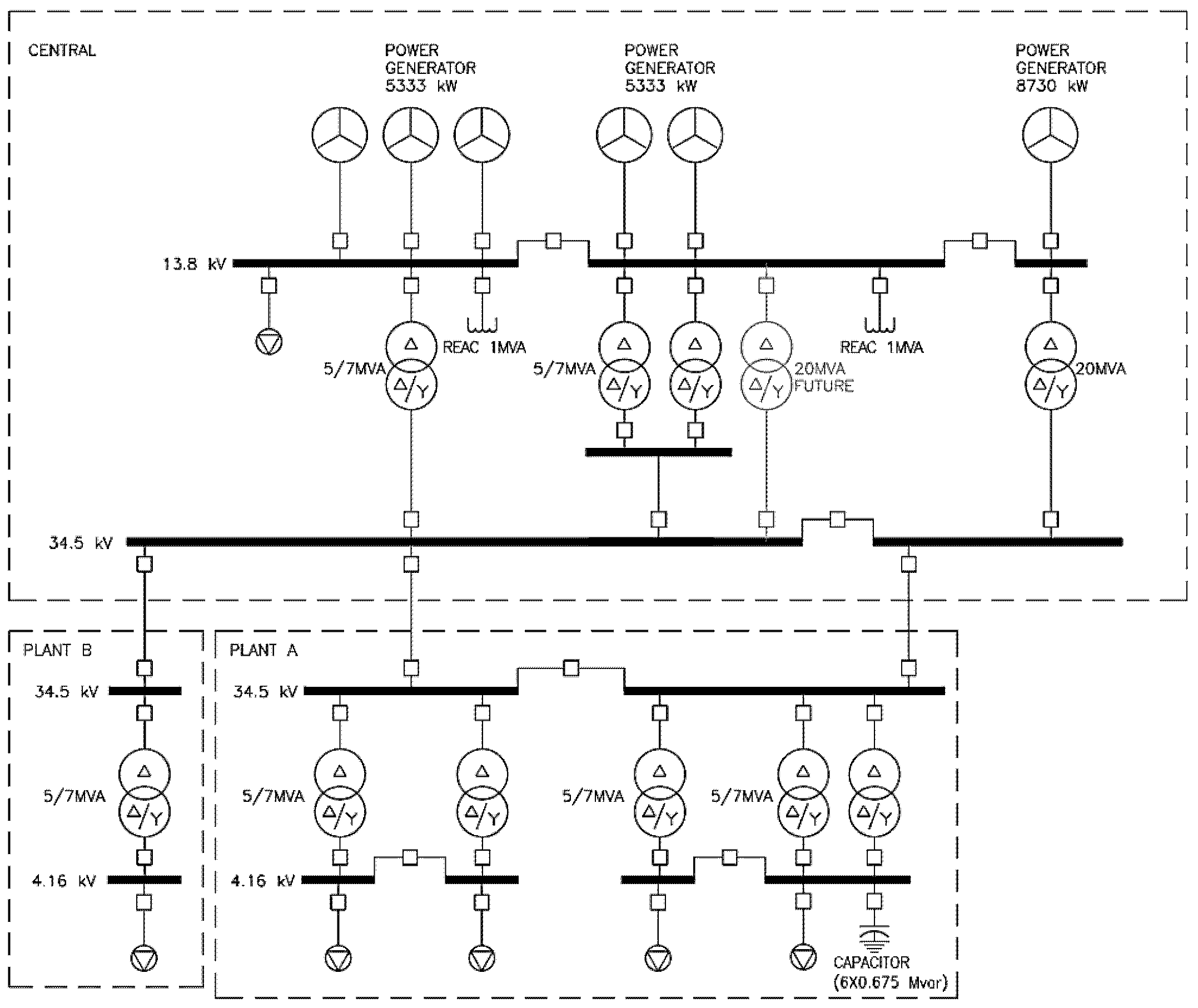
The analyzed electrical system corresponds to an isolated industrial power system considered medium to large scale, designed to operate autonomously and supply critical loads associated with production processes. Under current operating conditions, the system provides an available generation of approximately 24 MW, which defines the maximum operational capacity and available spinning reserve margins for load integration studies. Electrical generation is mainly based on five 5.533 MW synchronous units and one 8.730 MW unit driven by thermal engines, connected at a medium-voltage level of 13.8 kV and coordinated through 34.5 kV step-up transformers toward a distribution network that interconnects different operational areas of the production facility. The generation system, as summarized in
Table 1, consists of synchronous generators driven by Wärtsilä diesel engines operating at 13.8 kV. Five units rated at 5.33 MW and one unit rated at 8.73 MW are in operation. From an operational dispatch perspective, generation is distributed among the available units to meet a system demand close to 26 MW, leaving a limited spinning reserve that must be evaluated under contingency conditions. This reserve margin becomes a critical constraint when assessing the integration of new loads.
The dynamic behavior of these units is characterized by relatively low inertia values, typical of thermal engine-based generation systems. Based on manufacturer data, the total inertia constant (H) of the generator–engine set ranges approximately from 0.93 s for the 5.33 MW units to 1.24 s for the 8.73 MW unit. This low-inertia condition results in a fast frequency response under disturbances.
From an operational perspective, the system combines isochronous and droop control modes. The main units operate in isochronous mode, providing primary frequency control, while the largest unit operates under droop control, allowing proportional participation in power sharing. This configuration ensures stable load sharing among generators based on their control characteristics. The main electrical and mechanical parameters of the installed generating units are summarized in
Table 2.
Based on the operational data and generation capacity, the available spinning reserve is constrained by the unit commitment and loading conditions. In particular, the loss of a single generating unit (N-1 condition), especially the largest 8.73 MW unit, represents a severe disturbance that significantly reduces the available generation and challenges system stability.
From a structural standpoint, the system presents a radial topology with switching points that provide a certain degree of operational flexibility. The electrical demand consists mainly of high-power inductive loads and medium-power industrial loads, characterized by abrupt power variations associated with startups, shutdowns, and changes in process operating conditions. This characteristic increases the system’s sensitivity to disturbances and reinforces the need to evaluate its dynamic behavior under system faults or load changes.
Figure 1 shows the general single-line diagram of the industrial plant electrical system.
The system demand is close to 24 MW, with generation distributed among multiple units operating under a combination of isochronous control and speed droop control strategies. This configuration allows active power sharing among the operating units and contributes to primary frequency control. Additionally, voltage regulation is performed through automatic excitation regulators, while reactive power support is complemented by compensation elements installed at strategic points in the network.
The methodology used in this work is based on dynamic time-domain simulations using an AVR model defined in IEEE 421.5 [
10], which establishes standardized models for stability studies. In this case, the AC8C model is used, corresponding to the model installed in the system.
The analysis is developed from a base scenario representing normal operating conditions, from which load increases associated with the integration of a new production plant are progressively evaluated. This plant is planned in two phases of 2 MW each. The study first assesses the feasibility of Phase 1 under available spinning reserve conditions and, subsequently, evaluates Phase 2 under the same criteria.
Additionally, contingency scenarios are analyzed following N-1 security criteria, including the sudden outage of generating units (5 MW and 8 MW), in order to determine whether the system can maintain stability under reduced generation conditions. Based on this analysis, the study identifies the maximum admissible load increase that satisfies both dynamic stability and spinning reserve requirements.
From a dynamic perspective, the system presents limited inertia and relies heavily on primary regulation mechanisms to maintain frequency control under disturbances.
The configuration of the electrical network, together with load locations and generation distribution, has a direct impact on both power flows and the transient response of the system. In particular, the integration of a new load located approximately 8 km from the generation center is carried out through a 34.5 kV radial feeder using a 250 kcmil underground cable. This configuration imposes additional reactive power requirements and may intensify voltage deviations and transient oscillations during major disturbances. This condition also requires the evaluation of available reactive compensation resources during energization of the new plant, including the use of capacitor banks or reactors, to mitigate voltage deviations and prevent underexcitation conditions.
Additionally, the adopted methodology directly analyzes how the system responds to load increases, both gradual and stepwise. For this purpose, not only the new steady-state operating condition reached after each change is evaluated, but also the system’s dynamic response during the first few seconds, where the most critical effects typically occur. This approach makes it possible to identify the limits associated with frequency and voltage stability, as well as to assess whether the current control schemes can adequately compensate for demand growth.
2.1. Dynamic Modeling
The stability analysis presented in this work is based on a detailed dynamic modeling of the main components of the isolated electrical system, with special attention to the representation of the electromechanical behavior of synchronous generators and their control systems [
2,
4].
According to IEEE C37.106 [
1], the following operating margins were considered for the industrial isolated system analyzed in this study: continuous operation is acceptable in the range of 59.5–60.5 Hz; operation between 58.5 and 59.5 Hz is acceptable for a maximum accumulated duration of 10 min; operation between 57.5 and 58.5 Hz is limited to 4 s; and operation below 57.5 Hz or above 61.8 Hz is considered inadmissible and requires immediate protective action.
2.2. Synchronous Generator Modeling
The generation units are represented using salient-pole synchronous machine models, considering their dynamic behavior based on the swing equation [
2,
4,
11], which describes the relationship between power imbalance and rotor angular acceleration:
where
H is the inertia constant of the motor–generator set,
ωs is the synchronous speed, δ is the rotor angle,
Pm is the mechanical power,
Pe is the electrical power delivered, and
D represents the damping coefficient.
In industrial systems operating in isolated mode, the total system inertia results from the combined contribution of the electrical generator, the thermal engine, and the mechanical coupling. Proper estimation of this parameter is essential, as it determines the magnitude of initial frequency variations when sudden power imbalances occur.
2.3. Rate of Change of Frequency (RoCoF) Analysis
Based on the swing equation, the initial system frequency dynamics can be described through the Rate of Change of Frequency (RoCoF), which allows estimating how frequency evolves during the first moments following a disturbance [
12,
13,
14]:
where
f0 is the nominal system frequency,
Hsys is the equivalent system inertia, and
ΔP represents the instantaneous imbalance between generation and load.
This relationship shows that in low-inertia systems, both load increases and sudden generation outages can produce rapid frequency drops during the first moments after a disturbance [
13,
14]. In particular, generator outages represent the most severe condition due to the immediate loss of generation capacity, resulting in high RoCoF values and reduced system stability margins. These imbalances may result from load increases or generation outages, with the latter typically producing more severe frequency excursions due to the sudden loss of generation capacity.
For this reason, RoCoF analysis is used in this work as a key indicator to evaluate system sensitivity under both load integration scenarios and generation loss contingencies. In particular, the outage of large generating units represents one of the most critical conditions in isolated systems, as it produces high RoCoF values that may compromise system stability. This is especially relevant under N-1 contingency conditions, where the system must remain stable despite the loss of a major generation unit.
Additionally, modern frequency control strategies in low-inertia systems emphasize the need to complement RoCoF with additional dynamic indicators such as frequency nadir and recovery behavior, which provide a more comprehensive assessment of system stability [
15].
The Rate of Change of Frequency (RoCoF) is widely used as a fast indicator of system imbalance; however, its estimation is affected by measurement noise, filtering requirements, and transient conditions, which may compromise its accuracy. During fast disturbances, the frequency may not be well defined, leading to RoCoF values that lack physical meaning. Additionally, the use of moving time windows introduces a trade-off between responsiveness and reliability. Therefore, RoCoF alone is not sufficient to fully characterize system stability, and a comprehensive time-domain dynamic analysis is required to accurately evaluate system behavior following disturbances [
16].
2.4. Automatic Voltage Regulator
Voltage control of the generating units is modeled using a static excitation system in accordance with IEEE 421.5 [
10], incorporating a proportional–integral–derivative (PID) controller, exciter dynamics, and overexcitation limiters. This approach enables an accurate representation of voltage transient response and reactive power sharing among generating units during severe disturbances.
The AC8C excitation system model was selected based on IEEE 421.5 [
10] recommendations, as it provides a detailed and widely accepted representation of excitation system dynamics, including saturation effects and transient response behavior. This model is suitable for analyzing voltage control performance in isolated industrial power systems under dynamic conditions.
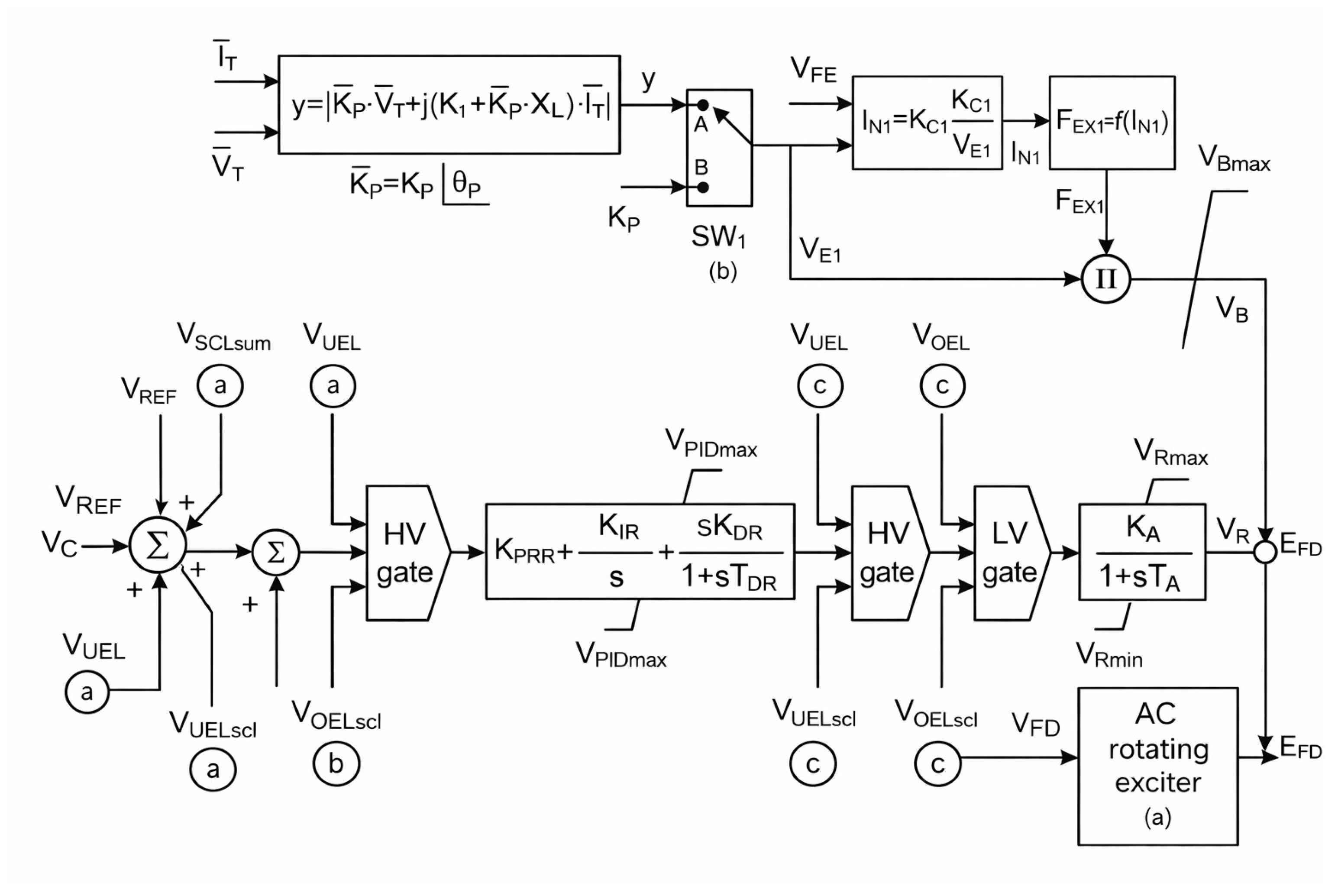
Figure 2 shows the block diagram of the AC8C model, consisting of a PID controller with proportional (Kp), integral (Ki), and derivative (Kd) gains.
The diagram shows how the excitation system adjusts the field voltage
EFD to maintain generator voltage stability under operating changes. The parameter
KE represents the internal influence of the exciter within the system feedback, while
TE defines the speed of its dynamic response, enabling stable and secure regulation without reaching overexcitation or underexcitation conditions. The AC8C model parameters are selected based on typical recommendations established in IEEE 421.5 [
10]. Including exciter saturation effects helps represent more realistically the system’s capability to maintain voltage, especially when demand increases significantly.
The parameters of the AC8C model were selected based on IEEE 421.5 [
10] recommendations and validated using manufacturer data. Typical values include KE = 1 p.u., TE = 1 s, and PID gains of KP = 170, KI = 130, and KD = 60. These values ensure an adequate representation of excitation system dynamics under transient conditions.
2.5. Speed Governor and Primary Frequency Control
Frequency control is modeled through a detailed representation of the thermal generator speed governor, considering fuel actuator dynamics, engine delays, and the droop characteristic. This approach enables realistic analysis of primary frequency response and active power sharing among operating units.
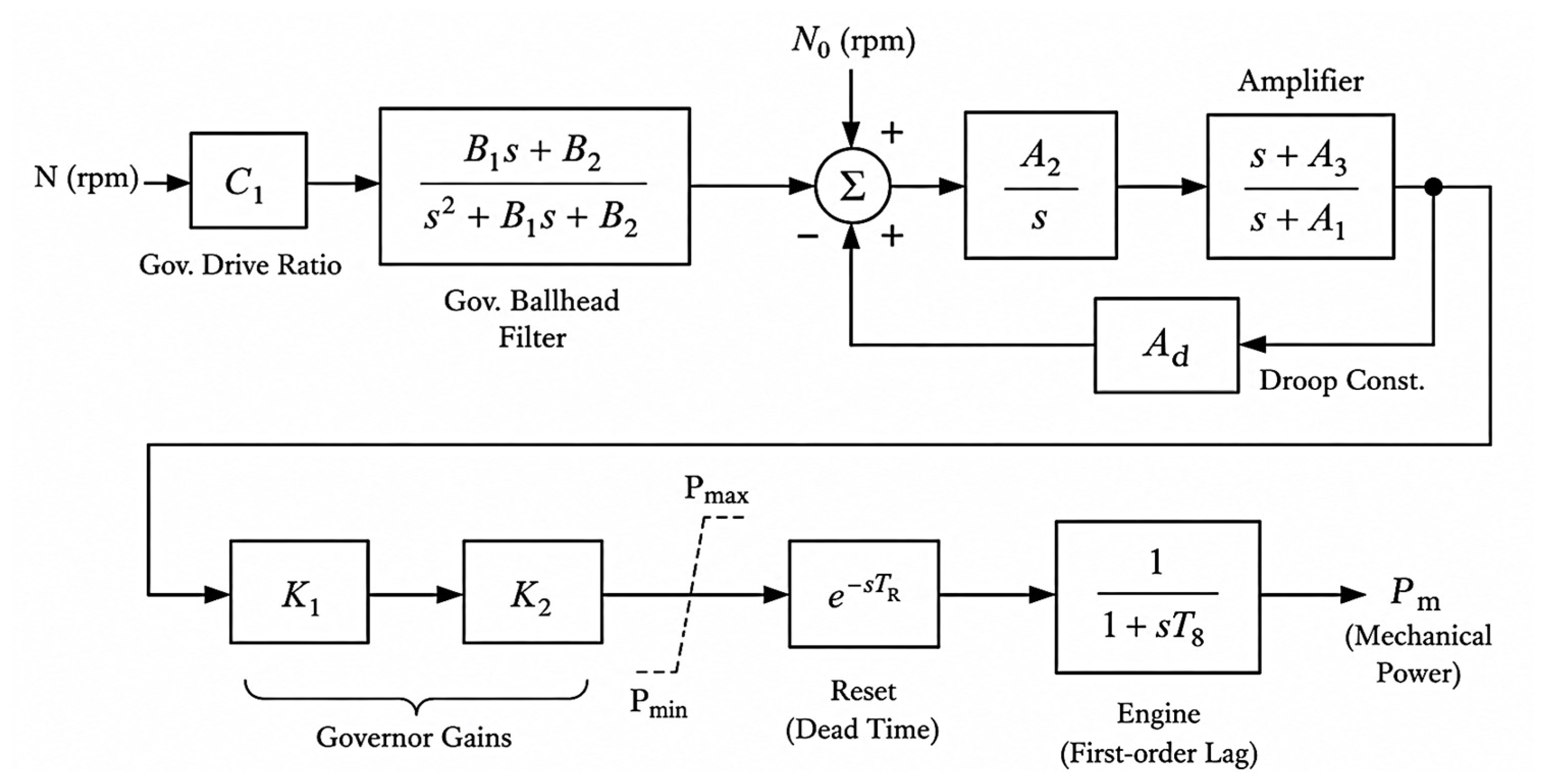
For the automatic speed regulator (governor), the generation plant uses the UG-8 model [
17], which includes a complete representation of the speed control system, from speed measurement to mechanical power delivery to the generator, based on physically meaningful parameters available from field data. The indicated model is shown in
Figure 3.
The UG-8 governor model parameters were selected based on available field data and manufacturer documentation. The model incorporates droop characteristics and dynamic response parameters, enabling realistic representation of primary frequency control in diesel-based generation systems.
In
Figure 3, parameters such as K1 and K2 represent internal gain and dynamic scaling factors within the UG-8 governor model. K1 is associated with the primary frequency control gain, governing the immediate response of the system to speed deviations, while K2 reflects secondary dynamic effects related to fuel system response and actuator behavior. These parameters influence the transient active power response of the generating units and were selected based on manufacturer data and standard ETAP model implementation, ensuring a realistic representation of primary frequency control dynamics.
Unlike simplified models such as TGOV1 or more complex and highly parameterized digital models like GGOV1, the UG-8 representation provides a balanced level of detail that more accurately describes primary frequency response dynamics.
From a functional perspective, the combined operation of units in isochronous mode and droop mode generates a relevant dynamic interaction during transients. In the first moments, isochronous units absorb most of the power imbalance, while droop-controlled units progressively participate to stabilize the frequency at a new equilibrium point, a behavior clearly observed in the simulation results.
2.6. Load Shedding Schemes
Due to the system’s low inertia and high sensitivity to load variations, the analysis incorporates the implementation of load shedding schemes (LSS) [
7,
18] as an additional measure to maintain frequency stability. These schemes are activated when the frequency, or its rate of change, exceeds certain thresholds, allowing rapid reduction of the power imbalance.
It is important to clarify that the load shedding scheme (LSS) considered in this study is not intended for normal system operation during load integration. Instead, it is implemented as an emergency corrective action scheme (EAC), primarily activated during severe contingencies such as sudden generation loss events.
In particular, the loss of large generating units leads to significant power imbalance and high RoCoF values, requiring fast corrective actions to prevent frequency collapse. Under these conditions, the LSS plays a key role in maintaining system stability by rapidly restoring the balance between generation and demand.
In practical industrial operation, load integration is typically performed through gradual or staged processes. Therefore, the load shedding scheme analyzed in this work represents a protective mechanism designed to mitigate severe contingencies rather than a routine operational strategy.
In particular, RoCoF-based load shedding schemes are especially effective in low-inertia systems [
13], as they enable early detection of severe disturbances even before frequency reaches critical values [
13,
19]. In this work, system behavior is analyzed both with and without LSS activation, allowing quantification of its impact on frequency nadir and evaluation of its contribution to overall system stability under load increases associated with the integration of new production capacity.
Table 3 presents the plant loads that are disconnected during an electrical system fault event.
The selected RoCoF threshold of 5 Hz/s and the total shedding load of approximately 4.4 MW are based on dynamic simulation results. Severe contingencies, such as the loss of the 8.73 MW generator, produce initial RoCoF values close to 8 Hz/s within the first cycles. Therefore, the selected threshold ensures early detection while avoiding unnecessary load disconnections under less severe conditions.
Recent studies on low-inertia power systems have emphasized the increasing importance of accurately characterizing system response under disturbances, particularly in scenarios where traditional indicators are insufficient to capture fast dynamic behavior [
20]. In this context, RoCoF-based approaches have gained relevance as early detection mechanisms; however, their effectiveness depends on proper integration with system-specific dynamic analysis. In this work, the load shedding strategy is evaluated within a time-domain simulation framework, ensuring that the selected parameters are consistent with the actual dynamic response of the analyzed industrial system.
2.7. Evaluation Variables and Criteria
The dynamic analysis is carried out by evaluating the time evolution of key variables such as system frequency, rate of change of frequency, voltage levels at representative buses, and active power sharing among generation units. These indicators allow an objective identification of system operating margins and the conditions under which stability may be compromised.
The simulation model is based on real system data provided by the plant operator and validated manufacturer parameters. Standard IEEE models were used to ensure consistency with accepted practices in power system dynamic studies. This approach guarantees a realistic representation of system behavior under transient conditions.
All simulations were performed using continuous time-domain dynamic models in ETAP. The apparent one-second step observed in the plots corresponds only to the visualization sampling interval and does not represent the numerical integration time step used in the simulations. The evaluation also considers compliance with industrial power system operational standards, including IEEE 3007 [
6] series and IEEE C37.106 [
1], particularly in terms of frequency limits, acceptable operating ranges, and contingency response criteria.
3. Study Cases
To evaluate the stability of the isolated industrial electrical system under the integration of a new production plant, the study cases were organized according to a progressive decision-making methodology. First, the admissibility of the planned demand increase is assessed using spinning reserve criteria, N-1 contingency requirements, and applicable IEEE standards. Based on this assessment, the study determines whether the system can safely integrate Phase 1 (2 MW) and Phase 2 (additional 2 MW).
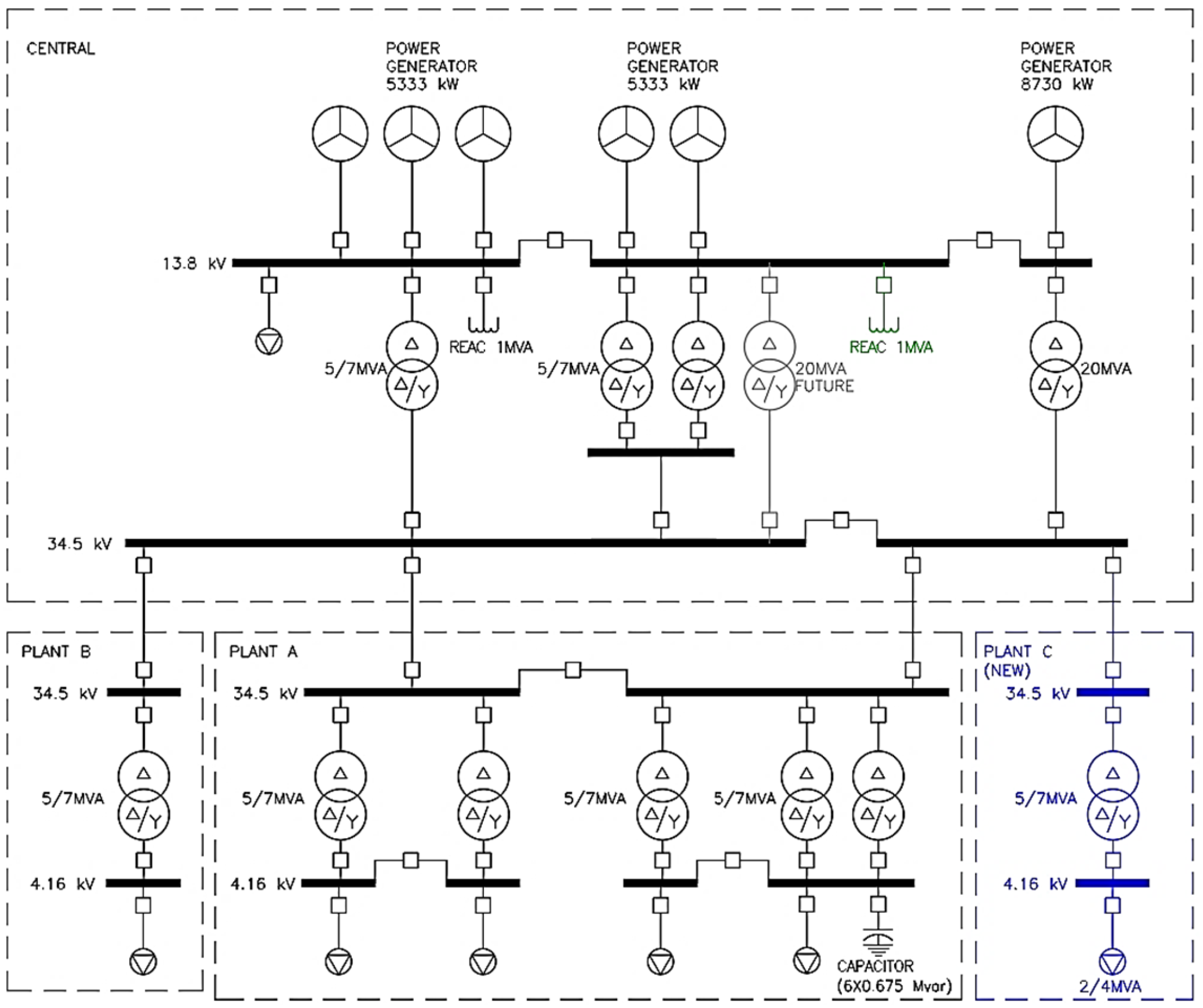
The results of this preliminary assessment show that Phase 2 cannot be incorporated under the current operating conditions without violating reserve and contingency criteria. Therefore, the subsequent dynamic simulations are performed considering only Phase 1 load integration, together with generation-loss contingencies, RoCoF-based mitigation, and the evaluation of reactive support during energization of the new plant through the 8 km feeder. The general system topology and the relative location of the new demand are schematically illustrated in
Figure 4.
3.1. Case 1: Phase 1 + Phase 2 (4 MW)—Frequency Response Under Sudden Outage of an 8 MW vs. a 5 MW Generating Unit with Evaluation Under IEEE Standards and N-1 Criteria
Case 1 establishes the admissibility of the new load integration based on spinning reserve criteria, N-1 security requirements, and applicable IEEE standards for isolated industrial power systems. The evaluation considers the current available generation contribution of approximately 24 MW and the phased expansion of the new plant, consisting of Phase 1 (2 MW) and Phase 2 (additional 2 MW).
Under N-1 security criteria, the system must be capable of withstanding the loss of the most critical generation unit while remaining within acceptable operating limits. In this study, the most severe contingency corresponds to the outage of the largest generating unit (8 MW), which is adopted as the reference event for reserve assessment.
The spinning reserve requirement is evaluated by comparing the available reserve against the largest single generation loss, considering the operating dispatch of the generating units. In practical terms, the available reserve must be sufficient to support the system following the loss of the largest unit while preserving frequency response within the limits defined by IEEE C37.106 [
1] and the operational criteria derived from IEEE 3007 series [
6].
The reserve adequacy criterion adopted in this study can be expressed as:
where R_spin is the available spinning reserve and P_loss,max is the largest single generation outage considered under N-1 conditions. For the analyzed system, P_loss,max corresponds to the outage of the 8 MW generating unit.
Table 4 presents the generation dispatch considering the integration of Phase 1 and Phase 2 (4 MW). It includes the active power, effective power—defined according to the maintenance reports provided by the manufacturer for each generating unit—operating power, and loading percentage.
From this table, it can be observed that the total effective power is approximately 32 MW, indicating that the system does not maintain a minimum spinning reserve, thereby failing to comply with the applicable regulatory requirements.
This assessment is based on the operational frequency limits established in IEEE C37.106 [
1], the operational guidelines provided in the IEEE 3007 series [
6] for industrial power systems, and the application of the N-1 criterion as a minimum security requirement to ensure generation adequacy.
The reserve assessment confirms that the available spinning reserve is sufficient to accommodate Phase 1. However, after including the additional 2 MW of Phase 2, the reserve margin becomes insufficient to satisfy the adopted N-1 criterion based on the outage of the largest generating unit.
Recent studies on low-inertia systems have highlighted the importance of combining reserve adequacy criteria with dynamic stability assessment, since conventional steady-state margins alone may be insufficient to guarantee secure operation under major contingencies [
14,
19].
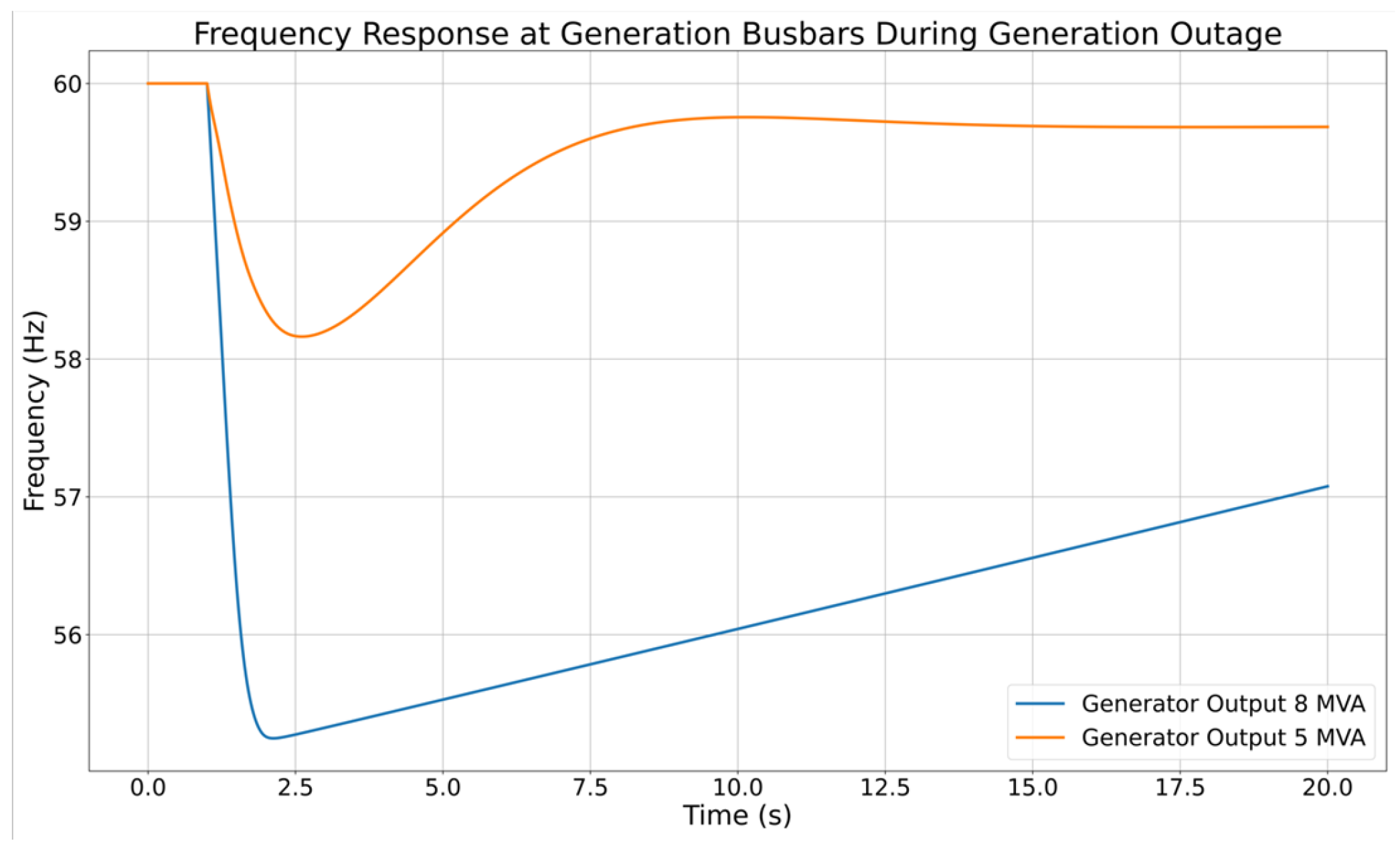
As shown in
Figure 5, the blue curve (8 MW generator output) exhibits a significantly more pronounced transient frequency deviation, reaching a nadir of approximately 56.5–57 Hz, which corresponds to a significant drop of about 3.0–3.5 Hz below the nominal value. The initial slope is considerably steeper, indicating a higher RoCoF during the first seconds after the disturbance. This response reflects a severe power imbalance associated with the outage of the largest generating unit, highlighting the reduced capability of the system to contain frequency excursions under this condition [
19].
In contrast, the orange curve (5 MVA generator output) shows a less severe frequency excursion, reaching a nadir of approximately 58.0–58.5 Hz, corresponding to a deviation of about 1.5–2.0 Hz below nominal frequency. The smoother transient response and reduced RoCoF indicate a lower disturbance to system stability.
These results confirm that the system response is strongly dependent on the magnitude of the generation loss. The outage of the largest unit represents the most critical contingency, leading to the most severe frequency deviation and placing higher stress on system stability.
Based on this combined evaluation of spinning reserve and dynamic response, it is concluded that the integration of Phase 2 is not feasible under the current operating conditions. Therefore, only Phase 1 (2 MW) is considered in the subsequent dynamic analyses.
3.2. Case 2: Frequency Response Under Sudden Outage of 5 MW and 8 MW Generating Units Considering Only Phase 1
In line with the results obtained in Case 1, this section presents the dynamic analysis considering only the admissible load increase of Phase 1 (2 MW). Under this condition, the system maintains an acceptable spinning reserve margin and can therefore be evaluated under contingency scenarios.
Case 2 evaluates the system dynamic response under the sudden outage of a 5 MW generating unit and the largest 8 MW generating unit, analyzed individually and comparatively. These scenarios represent the relevant N-1 contingencies for the system and allow the assessment of the influence of generation loss magnitude on frequency stability.
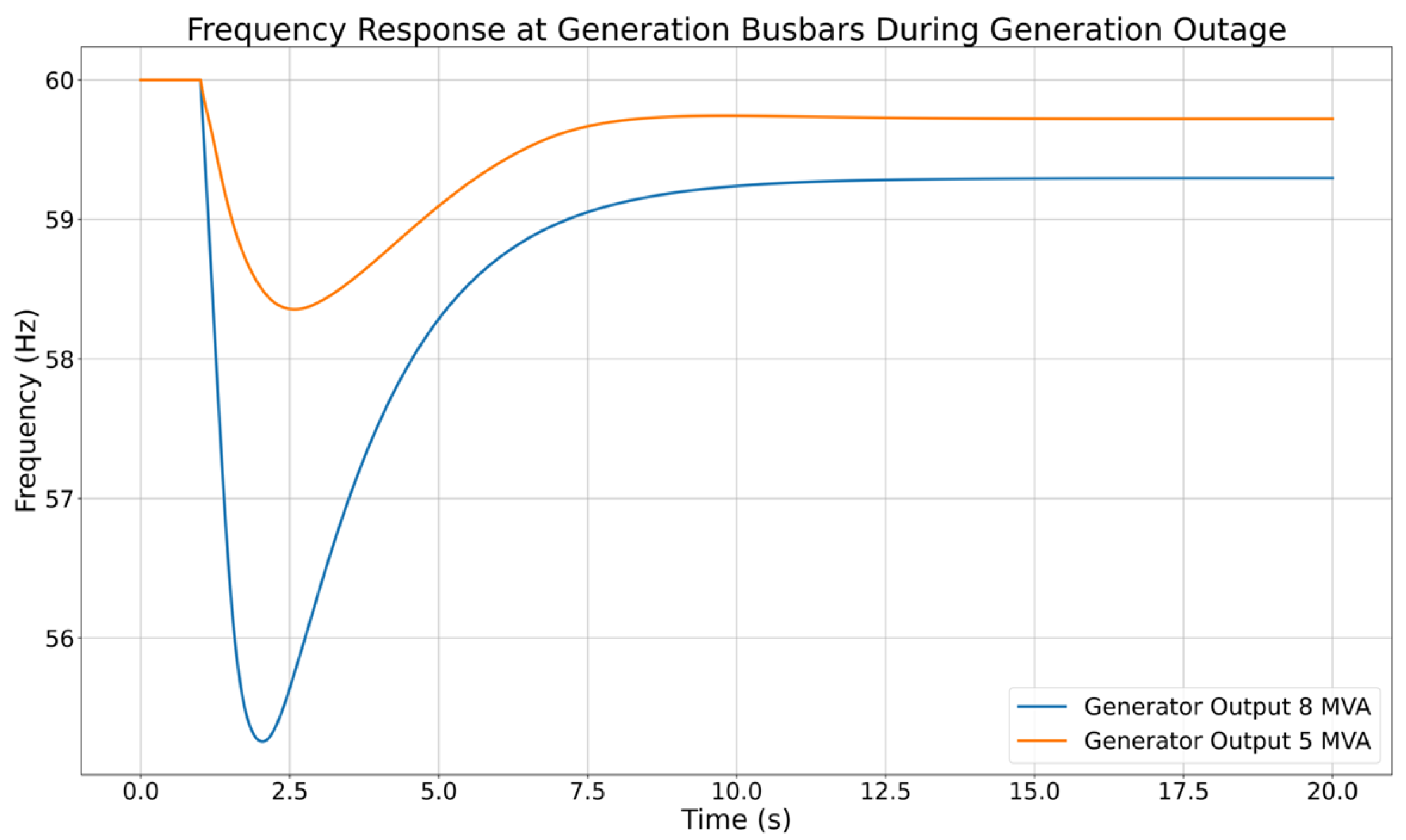
As shown in
Figure 6, the blue curve corresponding to the outage of the 8 MW generating unit exhibits a pronounced frequency drop during the first moments after the disturbance, reaching a minimum value of approximately 57.96 Hz, equivalent to a deviation close to 2 Hz below the nominal frequency. This response reflects the severity of the contingency and the significant power imbalance introduced by the loss of the largest unit.
In contrast, the orange curve corresponding to the outage of the 5 MW generating unit shows a less severe frequency excursion, with a higher frequency nadir and a smoother dynamic response. This indicates a lower level of disturbance and confirms that the system can more easily maintain stability under this condition.
As shown in
Table 5, under Phase 1 load conditions, the system maintains an acceptable spinning reserve of approximately 7.5 MW, which provides sufficient margin to properly evaluate the subsequent contingency cases. This reserve level contributes to limiting the Rate of Change of Frequency (RoCoF) during the initial transient and to maintaining the frequency nadir within acceptable operational limits, thereby ensuring an adequate dynamic stability response.
Therefore, from this point onward, the analysis is conducted considering only the conditions associated with Phase 1, where the system remains within an acceptable operating margin. For Phase 2, the integration of the additional load is not feasible under the current generation configuration, as it would further compromise system security. Consequently, the incorporation of an additional generating unit is required to ensure compliance with spinning reserve requirements and to maintain system reliability under contingency conditions.
3.3. Case 3: RoCoF-Based Load Shedding Under the Critical Contingency Considering Phase 1
Case 3 evaluates the effectiveness of a RoCoF-based load shedding scheme (LSS) under the same contingency scenarios defined in Case 2, incorporating the activation of the LSS as an emergency corrective action. The analysis considers only the admissible load increase corresponding to Phase 1.
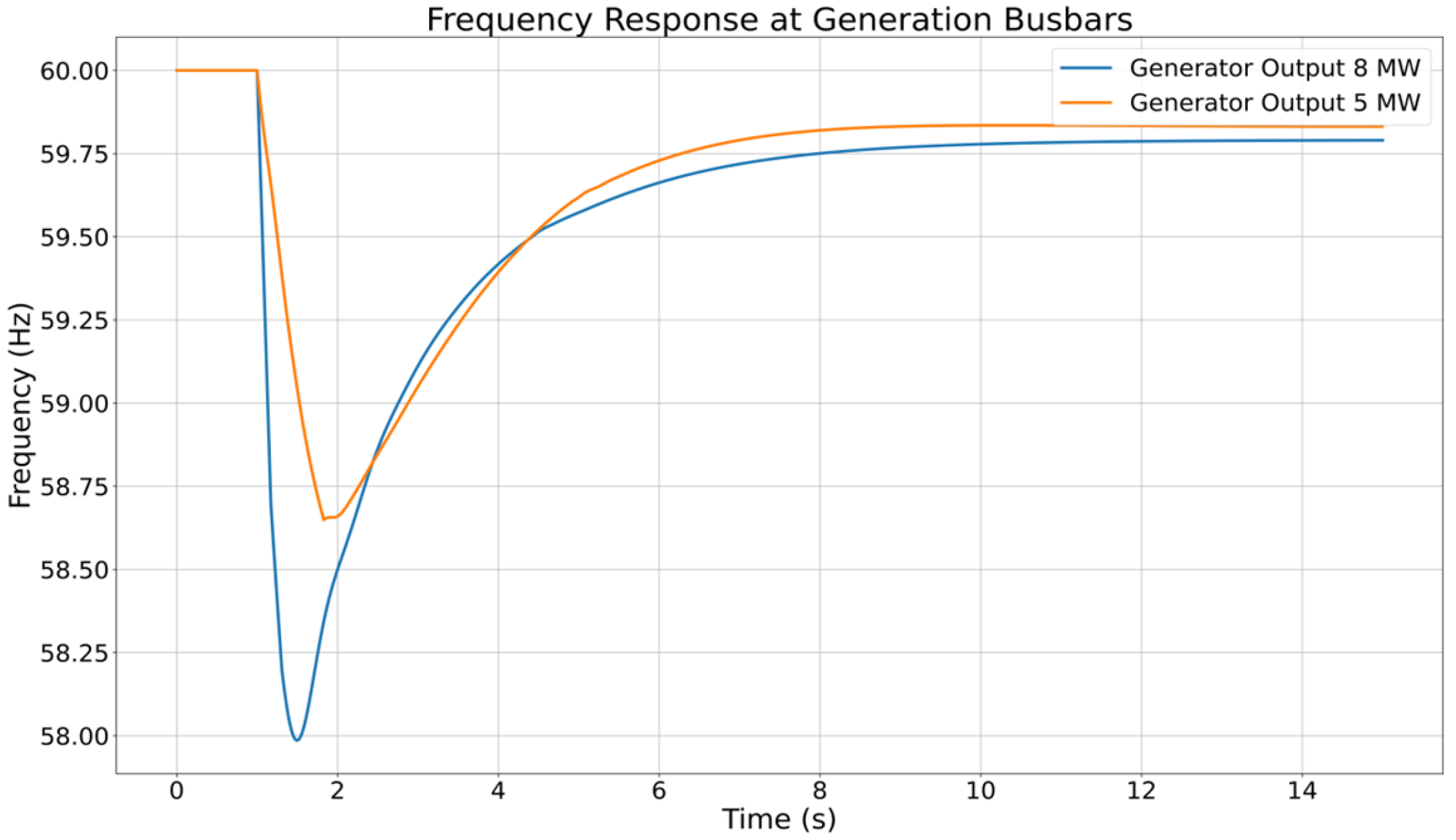
As observed in
Figure 7, the blue curve corresponding to the outage of the 8 MW generating unit exhibits a pronounced frequency drop during the first moments after the disturbance, reaching a minimum value of approximately 57.96 Hz, equivalent to a deviation close to 2 Hz below the nominal frequency. This response reflects the severity of the contingency and the significant power imbalance introduced by the loss of the largest unit. However, the reduction in frequency deviation compared to the uncontrolled case is a direct result of the staged load disconnection defined in the LSS.
The initial slope of the frequency curve is steeper than in the case of the smaller unit, indicating a higher RoCoF during the first seconds following the disturbance. This behavior confirms the greater severity associated with the outage of the largest generating unit and highlights the importance of fast corrective actions in low-inertia systems.
The minimum frequency value (nadir) and recovery time are key indicators to evaluate the severity of the disturbance and the effectiveness of the system response [
14,
20]. Although the system stabilizes without loss of synchronism, the depth of the frequency nadir in the most critical case reveals a reduced stability margin and a closer proximity to the acceptable operational limits defined by applicable standards.
This case demonstrates that the application of the load shedding scheme significantly improves system response, limiting the frequency deviation and reducing the severity of the contingency. Therefore, the incorporation of protection and fast corrective control schemes is essential for maintaining stability in isolated industrial electrical systems under severe contingencies.
In contrast, the orange curve, corresponding to the outage of the 5 MW generator unit, shows a less severe frequency excursion, with a higher frequency nadir and a smoother dynamic response. This indicates a lower level of disturbance and confirms that the system can more easily maintain stability under this condition, particularly with the support of the implemented load shedding scheme [
4].
The minimum frequency value (nadir) and recovery time are key indicators to evaluate the severity of the disturbance and the effectiveness of the system response [
15,
21].
Although the system stabilizes without loss of synchronism, the depth of the frequency nadir in the most critical case reveals a reduced stability margin and a closer proximity to the acceptable operational limits defined by applicable standards. This case highlights the importance of considering protection and dynamic control schemes as an integral part of expansion studies in isolated industrial electrical systems.
3.4. Case 4: Evaluation of Line Energization Under No-Load for the Integration of a New Production Plant
In this scenario, a set of simulations is carried out to evaluate the operating conditions of the electrical system prior to the energization of the 250 kcmil line supplying the new production plant. The analysis focuses on validating voltage behavior, power flows, and reactive power contributions under no-load line energization conditions.
Case A:
Corresponds to the base operating condition without reactive compensation at the central bus.
System demand: 24 MW (without the new plant load).
Generation dispatch and operating mode:
Four 5.33 MW generators (GE-001B/C/D/E) operating at 3.96 MW each in isochronous mode, with active and reactive power sharing.
One 8.73 MW generator (GE-001F) operating in droop mode for both speed and voltage control, supplying 7.8 MW.
Central reactors: Not considered.
Capacitors at Field A: In operation, providing 2.12 MVAr.
Stability Analysis—Caso A:
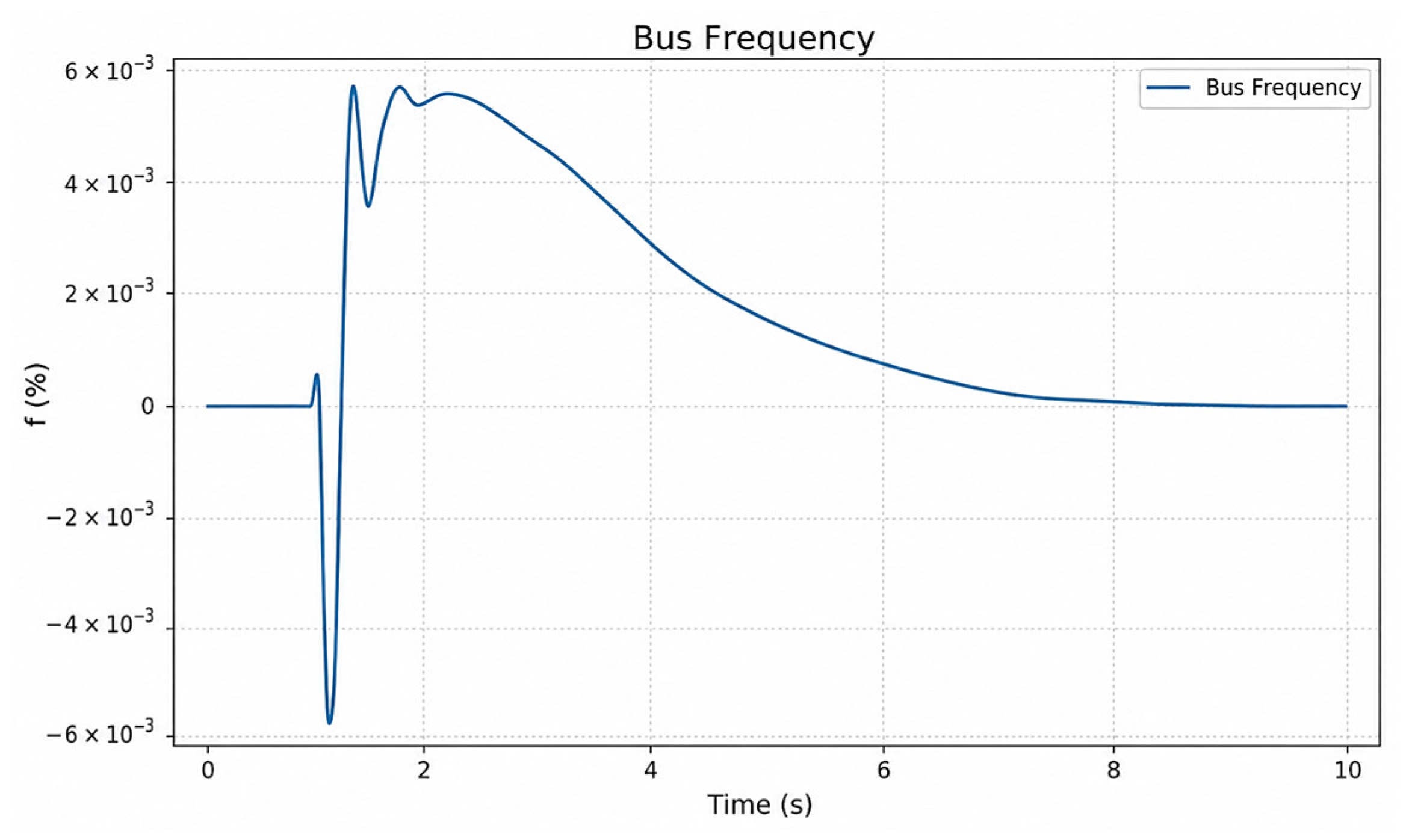
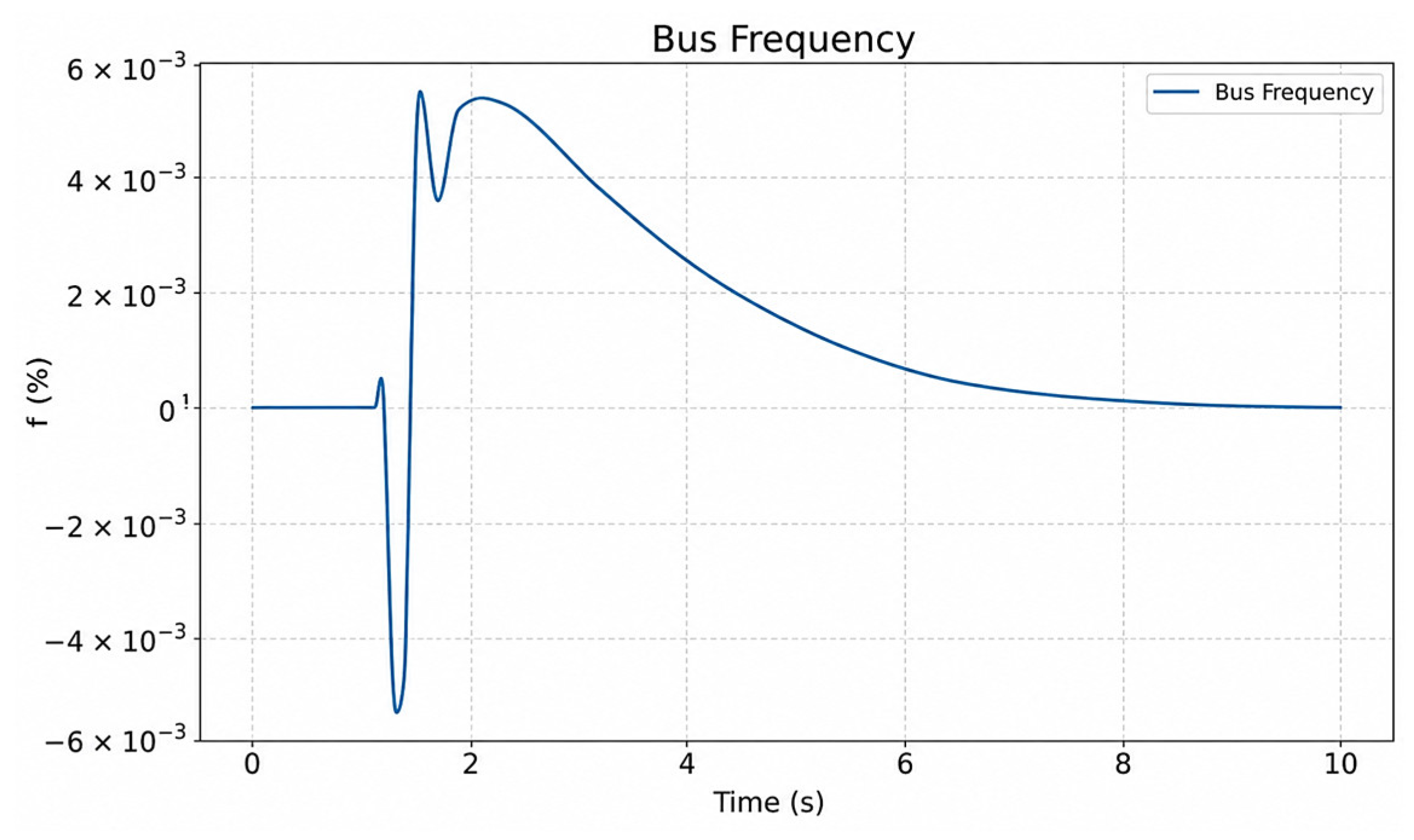
Figure 8—Frequency: The system frequency remains practically constant during the simulation, with a maximum deviation below ±0.003 Hz. This behavior confirms that line energization does not compromise frequency stability.
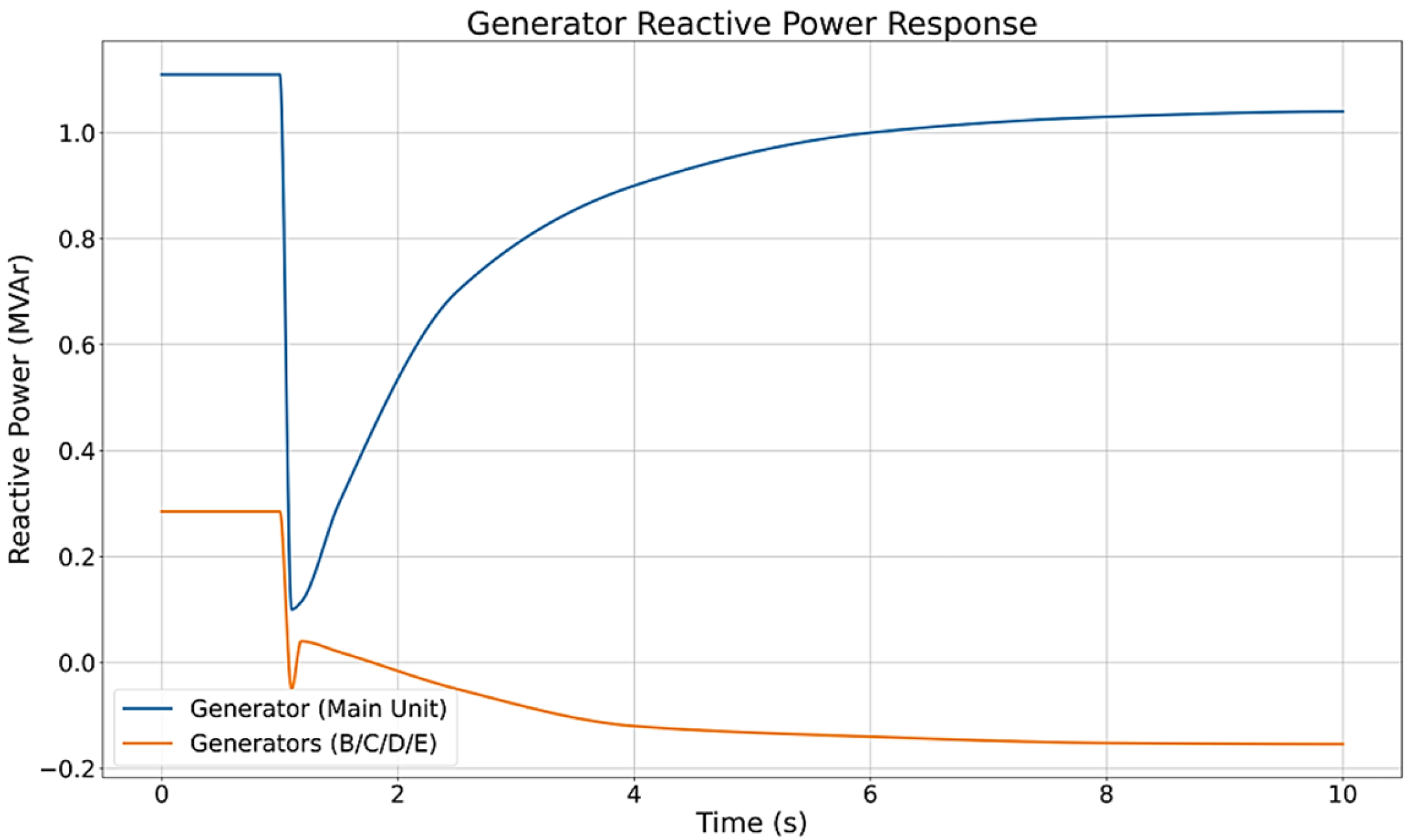
Figure 9—Reactive Power: Generators GE-001B/C/D/E experience subexcitation due to the capacitive effect of the energized line, stabilizing at approximately −0.154 MVAr. In contrast, generator GE-001F assumes the main voltage regulation role, reaching a steady-state output of approximately 1.1 MVAr.
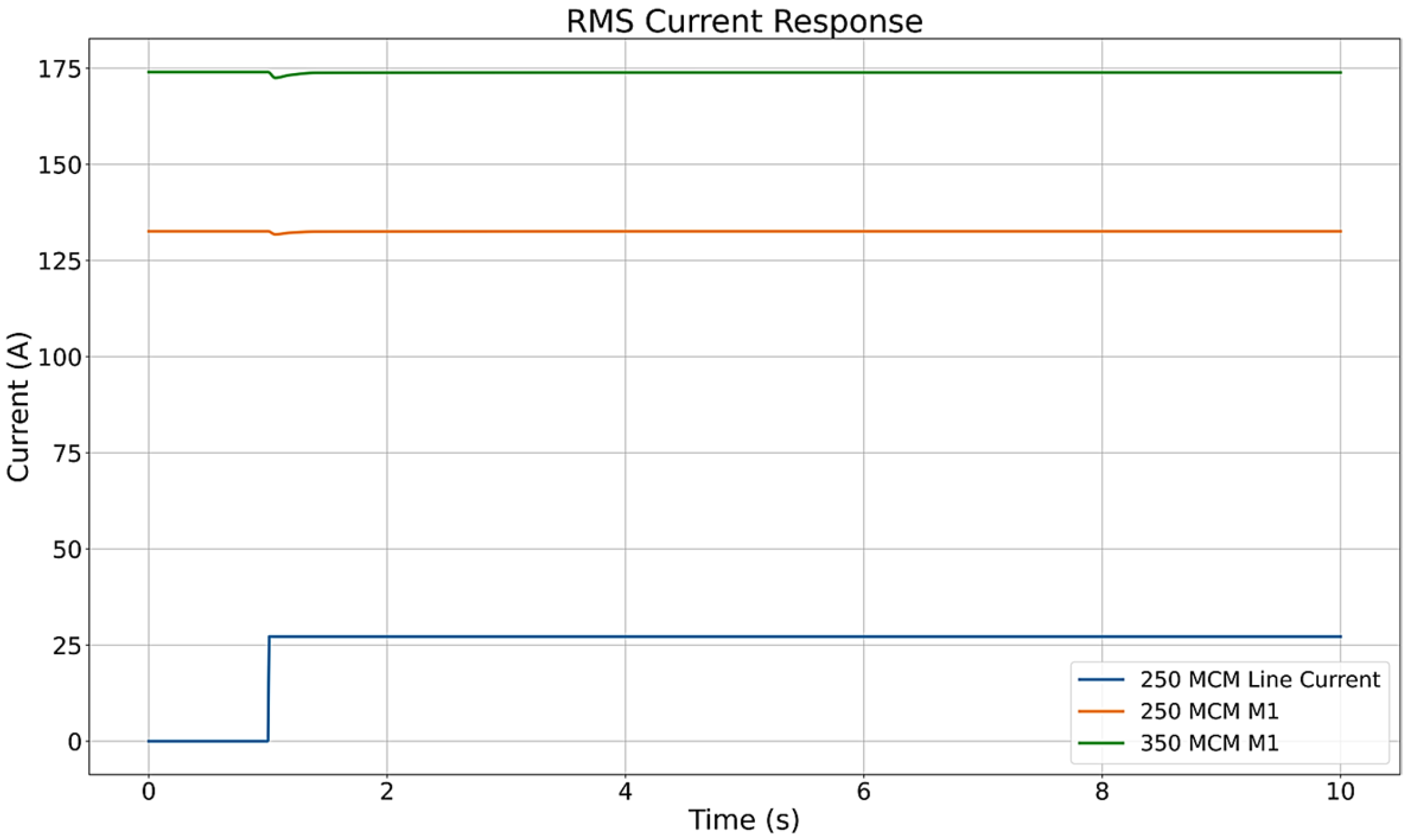
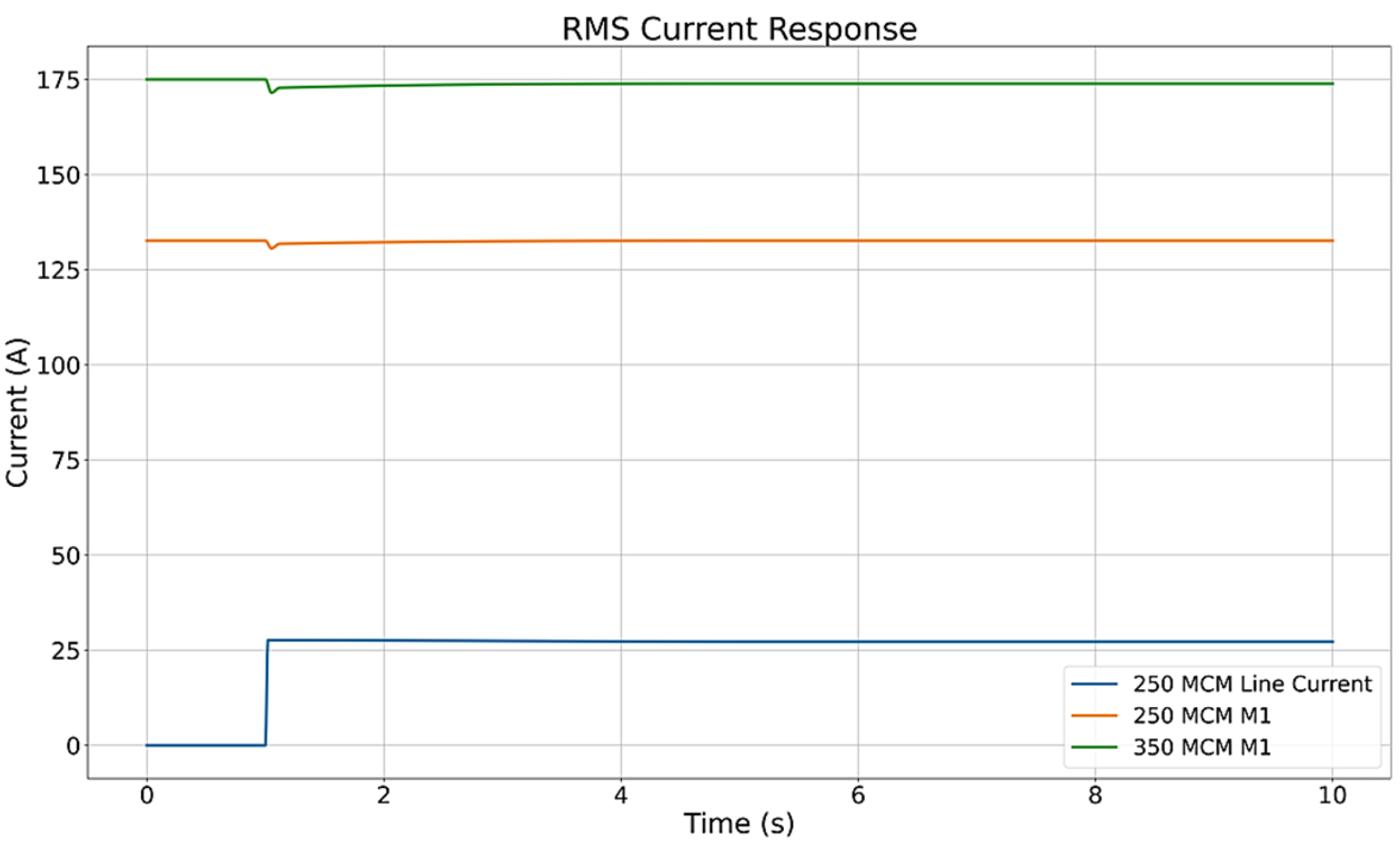
Figure 10—Line Reactive Power and Current: The 250 kcmil line delivers approximately −1.716 MVAr under steady-state conditions, consistent with the expected capacitive behavior of a long-unloaded line. The current reaches approximately 27.2 A.
Conclusion—Case A:
Although the system remains stable in terms of frequency and active power, the no-load energization of the line is not recommended under this operating condition. The subexcitation observed in generators GE-001B/C/D/E reduces their reactive power margin and may compromise system performance under additional disturbances.
Case B (Recommended)
Case B evaluates a mitigated scenario by incorporating reactive compensation prior to line energization.
System demand: 23.63 MW (without new plant load).
Generation dispatch and operating mode:
Four 5.33 MW generators (GE-001B/C/D/E) operating at 3.96 MW each in isochronous mode.
One 8.73 MW generator (GE-001F) operating in droop mode for speed and voltage control, supplying 7.8 MW.
Central reactor: In operation, providing 1 MVAr.
Capacitors at Field A: In operation, providing 2.12 MVAr.
Stability Analysis—Case B:
Figure 11—Frequency: The system frequency remains stable, with deviations below ±0.003 Hz, confirming that compensated line energization does not affect frequency stability.
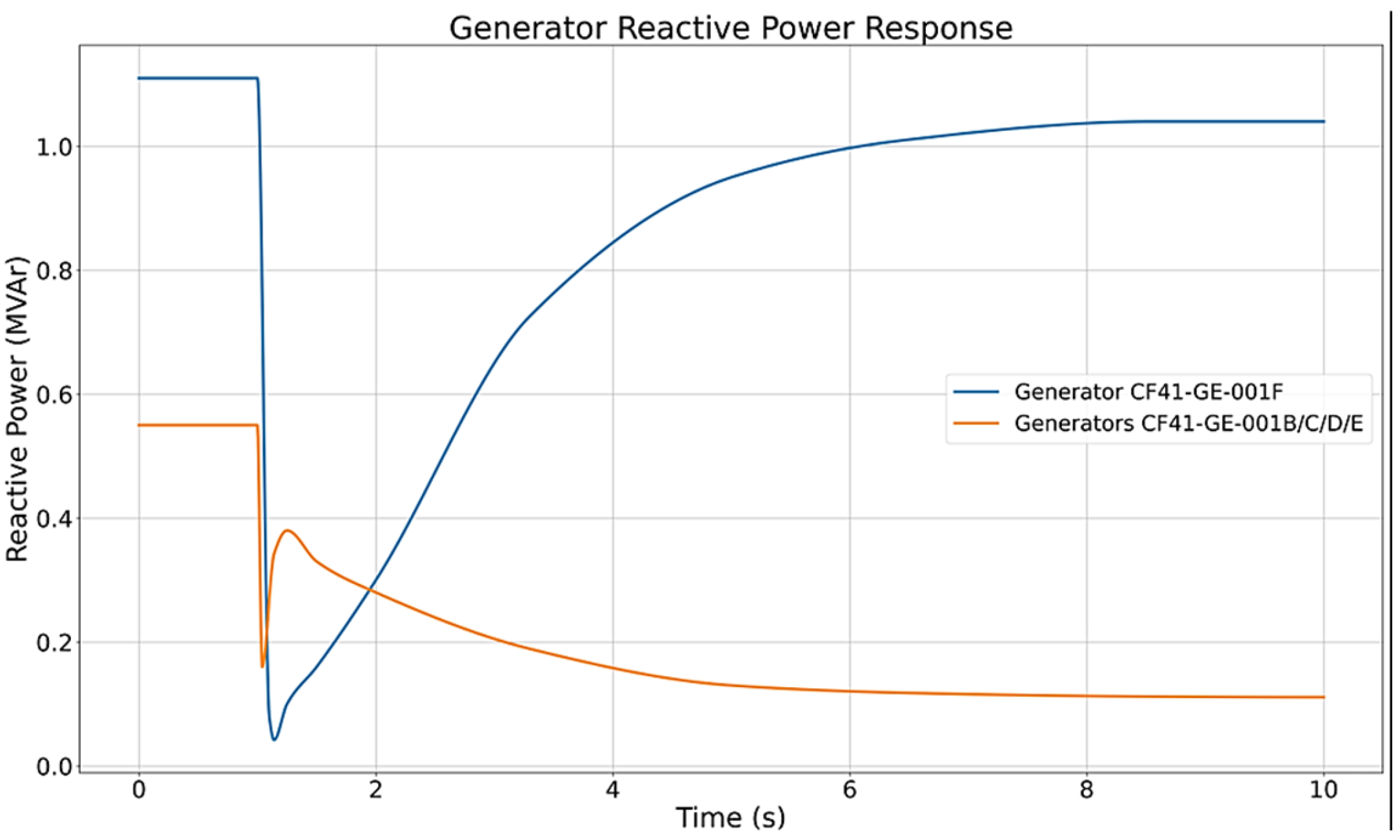
Figure 12—Reactive Power: Generators GE-001B/C/D/E operate within safe limits, avoiding subexcitation. Each unit supplies approximately 0.412 MVAr, while generator GE-001F provides the main reactive support, stabilizing at approximately 1.11 MVAr.
Figure 13—Line Reactive Power and Current: The 250 kcmil line supplies approximately −1.716 MVAr, consistent with the expected capacitive behavior of an unloaded line. The current remains at approximately 27.2 A.
Technical Conclusion—Case B:
The incorporation of a 1 MVAr reactor at the central bus is an effective mitigation measure to prevent subexcitation during no-load energization of the line toward the new plant. Under these conditions, the system maintains stable operation in terms of frequency, voltage, and power sharing. Therefore, this configuration is recommended for the safe energization of the new feeder.
4. Results
The results obtained from the defined study cases provide a comprehensive understanding of the dynamic behavior of the isolated industrial electrical system under realistic operating and contingency conditions. The analysis begins with the verification of load integration feasibility based on spinning reserve and N-1 criteria, followed by the evaluation of system response under generation outages, the application of corrective actions such as load shedding, and the assessment of voltage behavior during line energization.
This structured approach allows identifying the operational limits of the system and quantifying the impact of different disturbance scenarios, linking the observed dynamic response to system inertia, control strategies, and the effectiveness of mitigation measures.
Table 6 presents a summary of the study cases performed:
4.1. Load Integration Feasibility Under Reserve and N-1 Criteria
The first result of the study is the verification of load integration feasibility based on spinning reserve adequacy and N-1 security requirements. The analysis shows that, although the system can safely accommodate Phase 1, the incorporation of the additional 2 MW corresponding to Phase 2 is not feasible under the current generation configuration.
This limitation becomes evident when the system is evaluated under the governing contingency, corresponding to the outage of the largest generating unit. Under this condition, the available reserve is insufficient to maintain adequate security margins, and the resulting frequency excursions exceed acceptable operating conditions. Therefore, the combination of reserve assessment and dynamic simulation confirms that only Phase 1 can be admitted under the present operating scheme [
2,
14].
4.2. Influence of Inertia and Primary Control Under Generation Outages
The results confirm that the system’s low global inertia has a decisive effect on the severity of frequency transients under generation outage conditions. In particular, the highest RoCoF values observed in the study are associated with the outage of the largest generating unit, confirming that the limited capability of the system to store kinetic energy reduces its ability to oppose sudden changes in the power balance [
4,
13].
The coordinated operation of units in isochronous and droop modes enables an initial coordinated response to disturbances, although it becomes insufficient for large-magnitude events. During the first moments, isochronous units absorb most of the imbalance impact, while droop-controlled units progressively contribute to stabilizing the frequency at a new equilibrium point. However, when the imbalance exceeds certain thresholds, primary control alone is no longer sufficient to maintain system stability within acceptable margins [
4,
13].
Recent studies have shown that additional support mechanisms, such as battery energy storage systems, can significantly enhance frequency response in low-inertia systems by improving frequency nadir and reducing RoCoF [
21].
This effect is particularly evident in the comparison between the 5 MW and 8 MW outage scenarios, where the larger unit produces the deepest frequency nadir and the highest RoCoF, defining the governing contingency for system stability assessment.
4.3. Voltage Behavior During Energization of the New Plant
The analysis of voltage profiles during the energization of the new plant shows that the main concern in this condition is not frequency stability but the reactive behavior of the 8 km feeder under no-load conditions. The energized line produces a capacitive effect that leads to subexcitation in the smaller generating units when no compensating device is connected.
This behavior highlights the importance of evaluating the coordination between automatic voltage regulators and available reactive compensation devices during the energization of new feeders. The results confirm that the incorporation of a 1 MVAr reactor at the central bus effectively mitigates the adverse reactive power exchange, prevents subexcitation, and maintains acceptable voltage conditions during the energization of the new plant [
22].
4.4. Effectiveness of the RoCoF-Based Load Shedding Scheme
The comparison between the controlled and uncontrolled contingency responses demonstrates the effectiveness of the RoCoF-based load shedding scheme as a mitigation mechanism under severe events. This benefit is particularly evident in the outage of the 8 MW generating unit, which represents the most critical condition identified in the study.
Early load disconnection helps contain the frequency drop, reduce the RoCoF, and facilitate system recovery toward a stable operating condition. From a physical perspective, load shedding rapidly restores the balance between generation and demand, compensating for the limited inertia of the system during the first moments after the disturbance. These results reinforce the value of incorporating RoCoF-based load shedding schemes as an integral part of the protection and operational strategy of isolated industrial electrical systems.
4.5. Implications for Planning and Secure Operation
The analyzed results show that the integration of new production capacity in isolated industrial electrical systems must be evaluated not only from a steady-state perspective but also considering dynamic behavior, reserve adequacy, and N-1 contingency performance. In this context, the combined use of spinning reserve assessment, dynamic simulations, and corrective actions such as load shedding provides a robust basis for operational decision-making.
The study demonstrates that Phase 1 can be safely integrated under the current generation configuration, whereas Phase 2 cannot be admitted without additional generation support. It should also be noted that RoCoF values during the first instants of the disturbance may be affected by measurement and estimation limitations, and therefore should be interpreted together with the overall dynamic frequency response.
5. Conclusions
In this work, a stability analysis focused on sensitivity to load integration feasibility and dynamic response under contingency conditions was developed for an isolated industrial electrical system supplied by low-inertia thermal generation. The main objective was to evaluate the technical feasibility of integrating a new production plant planned in two phases of 2 MW each, considering not only steady-state operating conditions but also reserve adequacy, N-1 security criteria, and the dynamic response of the system to real disturbances. The adopted approach, based on detailed dynamic simulations and representative control system models, enabled a clearer identification of system operating limits and the physical mechanisms that govern its behavior under events of different severity, consistent with what has been reported in the literature.
The results show that the admissibility of new load integration in isolated industrial electrical systems is strongly constrained by spinning reserve and N-1 security requirements. In the analyzed system, Phase 1 can be incorporated while maintaining acceptable operating margins, whereas the additional 2 MW corresponding to Phase 2 cannot be integrated under the current generation configuration without violating reserve adequacy criteria and exposing the system to critical operating conditions [
3,
5].
Likewise, the analysis confirmed the decisive role of global system inertia in the severity of transients, showing that the limited kinetic energy available in industrial thermal units restricts the ability of primary control to compensate for large imbalances, particularly under generation outage conditions [
4,
14].
Although coordinated operation of units in isochronous and droop modes improves the initial system response, this strategy alone is insufficient under the governing contingency corresponding to the outage of the largest generating unit. In this regard, the implementation of RoCoF-based load shedding schemes, with a threshold close to 5 Hz/s and an approximate disconnection of 4.4 MW, proved to be an effective corrective action to limit frequency nadir, reduce transient severity, and facilitate recovery toward a new stable equilibrium point under the most critical operating condition [
5,
13].
Additionally, the coordinated use of available reactive compensation, such as the 1 MVAr reactor, contributed to improved voltage control and prevented underexcitation conditions during the no-load energization of the 8 km feeder supplying the new production plant.
From a planning and operational perspective, the results highlight the need to complement traditional power flow studies with reserve adequacy verification, N-1 contingency assessment, and dynamic simulations. This combined approach provides more robust technical criteria for decision-making in expansion projects, enabling the identification of admissible load levels, the definition of corrective strategies, and the implementation of mitigation measures that enhance reliability and operational safety in isolated electrical systems [
3].
The results confirm that, although RoCoF is a useful indicator for early disturbance detection, a comprehensive stability assessment in isolated industrial power systems requires a broader dynamic analysis that considers reserve adequacy, contingency severity, frequency nadir, voltage response, and post-disturbance recovery behavior. In particular, the outage of the 8 MW unit showed that RoCoF is especially valuable for identifying the most critical system conditions and supporting the activation of fast corrective actions [
20].
Finally, the proposed methodology can be applied to other industrial systems with similar characteristics, serving as a practical reference for the phased integration of new demand under reserve and contingency constraints. As a future research line, the incorporation of additional generating units, the integration of inverter-based resources, and the development of advanced frequency support strategies are proposed in order to improve resilience in low-inertia systems [
2,
19].
From a practical perspective, the results provide useful criteria for the safe integration of new loads in isolated industrial systems. In particular, the study demonstrates that Phase 1 can be safely incorporated under the current generation configuration, whereas Phase 2 requires additional generation support to satisfy reserve and N-1 criteria. However, this study is limited to thermal generation systems without considering the integration of renewable or inverter-based resources. Future work should address these aspects in order to evaluate their impact on system inertia, reserve adequacy, and overall stability.