1. Introduction
With the continuous dissemination of concepts related to children’s health and safety and the growing demand for parents for high-quality children’s products, the safe use of children’s products has gradually become a core concern in household consumption. Children’s scooters align well with children’s natural tendencies and developmental needs, contributing to the development of motor skills, enhancement of coordination, and stimulation of imagination and creativity, and are therefore widely favored by both parents and children [
1]. Academic research on children’s scooters has also deepened in recent years, mainly focusing on ergonomics, safety protection, interactive enjoyment, and developmental adaptability, showing a clear trend toward interdisciplinary integration [
2]. Scooter design centered on child users has continuously evolved in terms of form, structural configuration, and functional expansion, necessitating scientifically sound and rational design evaluation methods. However, existing products still exhibit notable deficiencies in safety, usability, and age appropriateness, with evident shortcomings in user demand identification, analysis, and product evaluation stages [
3]. Children’s users have not yet fully developed cognitive abilities, motor coordination, and risk judgment, and significant differences exist in height, weight, and strength across age groups. As a result, children’s scooters face more complex design constraints in structural safety, operational logic, and functional configuration. From both existing research and market practices, although children’s scooters continue to innovate in appearance, color schemes, and entertainment functions, insufficient emphasis on usability remains prevalent at the design decision-making level [
4,
5,
6]. On the one hand, some designs overly prioritize visual appeal or functional stacking while neglecting children’s real needs for operational simplicity, structural stability, and safety feedback during actual use, leading to issues such as difficult handling, unstable centers of gravity, or inadequate safety protection. On the other hand, existing studies tend to focus on structural or single performance indicators, lacking comprehensive evaluation mechanisms that systematically balance multidimensional design elements from a user-demand perspective. In practical design processes, the importance of design elements often relies on experience-based judgment without sufficient quantitative support, which not only increases uncertainty in design decision-making but also weakens product usability in real usage contexts. Therefore, translating the needs of children and parents into quantifiable design indicators through scientific methods and achieving rational trade-offs among design alternatives in the face of multi-objective conflicts has become a critical issue in children’s scooter design research.
Multi-criteria decision-making (MCDM) methods have been widely applied in engineering design problems involving multiple conflicting objectives [
7]. Existing methods can generally be categorized into single-method techniques, integrated frameworks, hybrid models, and robust MCDM methods. Single-method techniques, such as the Analytic Hierarchy Process (AHP), Technique for Order Preference by Similarity to Ideal Solution (TOPSIS), and VIKOR, provide structured decision support but often suffer from limitations such as subjective bias in weight determination and limited adaptability to complex data characteristics. To address these limitations, integrated and hybrid MCDM frameworks have been developed by combining multiple methods, enabling the incorporation of both subjective judgments and objective data information [
8]. In addition, robust and fuzzy MCDM methods have been introduced to handle uncertainty and variability in decision-making processes. Despite these advances, existing studies still exhibit several limitations. Many integrated frameworks lack systematic integration logic, and their applicability in practical engineering product design remains insufficiently validated. Furthermore, the coordination between subjective weighting, objective data-driven evaluation, and compromise-based ranking has not been fully explored. These limitations highlight the need for a more comprehensive and systematically integrated MCDM framework for engineering-oriented product design. In this study, an integrated AHP–CRITIC–VIKOR framework is proposed to address these issues.
In the design evaluation stage, this study introduces an integrated AHP–CRITIC–VIKOR multi-criteria decision-making method to systematically quantify and rank multiple children’s scooter design alternatives across multiple indicators. In this study, an integrated multi-criteria decision-making (MCDM) framework combining the Analytic Hierarchy Process (AHP), Criteria Importance Through Intercriteria Correlation (CRITIC), and VIKOR methods is proposed for children’s scooter design evaluation. The Analytic Hierarchy Process (AHP) was originally proposed by Saaty [
9]. The Criteria Importance Through Intercriteria Correlation (CRITIC) method was introduced by Diakoulaki et al. [
10]. The VlseKriterijumska Optimizacija I Kompromisno Resenje (VIKOR) method was developed by Opricovic and Tzeng [
11]. The AHP method is used to structure the decision problem and derive subjective weight based on expert judgment [
12]. The CRITIC method is employed to calculate objective weights by considering the variability and correlation among evaluation indicators [
13]. Finally, the VIKOR method is applied to rank alternative design schemes by identifying compromise solutions under multi-objective conflicts [
14]. This integrated framework enables the systematic incorporation of user requirements, expert knowledge, and data-driven evaluation into a unified decision-making process. First, the AHP is employed to hierarchically decompose complex design problems, transforming user requirements and design elements into a clearly structured evaluation indicator system. Subjective weights are obtained through expert pairwise comparisons, reflecting the role of design experience and cognitive judgment in determining indicator importance [
15]. For example, Yu, S., et al. [
16] applied AHP to construct a three-level model—visceral, behavioral, and reflective—for the emotional design of children’s furniture and calculated comprehensive weights for design factors, thereby identifying optimal design solutions and improving the scientific rigor of decision-making. Sun and Ke [
17] analyzed user requirement weights for express packaging using AHP and proposed innovative packaging solutions by integrating design thinking and service design concepts. Sun et al. [
18] Assigned weights to design factors using AHP to systematically evaluate and optimize the user interface of an intelligent agricultural management cloud platform, enhancing interaction experience and platform value. Ma, Y., et al. [
19] employed AHP to analyze intelligent pig housing spatial design, prioritizing sustainable materials, structural stability, and modular design, thereby improving decision objectivity and design precision and providing methodological guidance for intelligent livestock farming. Second, the CRITIC method is introduced to revise the weights objectively. By calculating the variability and inter-correlation of indicators, CRITIC comprehensively reflects the information content and discriminative power of each indicator, avoiding bias caused by purely subjective weighting and yielding more objective results [
20]. For instance, Kuo, P. H., et al. [
21] enabled a six-degree-of-freedom robotic arm to autonomously learn joint movements through trial and error, accomplishing point-tracking and obstacle-avoidance tasks and demonstrating its applicability in complex operations. Qi, Y., et al. [
22] Proposed a CRITIC-based evaluation framework for pet cat home products, systematically quantifying user requirements to address the limitations of qualitative evaluation and address user satisfaction and product development decision-making. Ding, F., et al. [
23] applied the CRITIC method to analyze conflicts and contrast intensity among structural indicators, establishing a lightweight design evaluation framework that prioritizes structural integrity of garbage truck bucket arms while achieving optimal lightweight performance and extending service life. Yu, S., et al. [
24] utilized CRITIC to analyze user preference data and objectively quantify key indicators influencing the attractiveness of wicker home products, thereby establishing a comprehensive scientific ranking to support sustainable product design targeting young consumers. Finally, the VIKOR method is adopted for the comprehensive evaluation of design schemes. Under conditions of conflicting criteria, VIKOR determines compromise rankings by measuring the proximity of each alternative to the ideal solution [
25]. For example, Min, Q., et al. [
26] applied VIKOR to systematically balance diverse user requirements for air purifiers, providing scientific decision support by reconciling optimal solutions and group utility. Wang, Z., et al. [
27] employed VIKOR to rank and optimize alternative museum cultural and creative product designs, offering a replicable tool for early-stage development and improving decision objectivity and market potential. Li, X., et al. [
28] Applied VIKOR to multi-objective optimization of Tibetan seating-bed designs, attempting to balance conflicts between cultural heritage and modernization needs, identifying key technical features such as modularity, and selecting optimal solutions for ethnic furniture innovation. Huo, Y., et al. [
29] utilized VIKOR to optimize pavement concrete mix proportions in arid regions, balancing multiple objectives such as high strength–toughness ratio, low shrinkage, and controllable porosity, thereby providing scientific solutions for pavement design in extreme environments. Multi-criteria decision-making (MCDM) methods have been widely applied in engineering design problems involving multiple conflicting objectives. Existing approaches can generally be categorized into single-method techniques, integrated frameworks, hybrid models, and robust MCDM approaches. Single-method techniques, such as the Analytic Hierarchy Process (AHP), CRITIC, and VIKOR, provide structured decision-making tools but exhibit inherent limitations. The AHP method is effective in structuring complex problems and incorporating expert knowledge; however, its reliance on subjective judgments may introduce bias and reduce consistency in weight determination. In contrast, the CRITIC method determines objective weights based on data variability and inter-criteria correlation, enhancing objectivity but lacking the ability to reflect expert preferences and contextual knowledge. The VIKOR method focuses on compromise ranking by balancing group utility and individual regret, making it suitable for decision scenarios with conflicting criteria; however, its performance depends heavily on the reliability of input weights and does not inherently address the weighting problem. To overcome these limitations, integrated and hybrid MCDM frameworks have been increasingly developed by combining multiple methods. Several studies have compared different MCDM methods in terms of ranking performance and decision stability. For instance, Opricovic and Tzeng demonstrated that VIKOR provides a compromise solution by simultaneously considering group utility and individual regret, which distinguishes it from methods such as TOPSIS that rely primarily on distance to ideal solutions. These comparative analyses indicate that VIKOR is particularly suitable for decision problems involving conflicting criteria and the need for balanced trade-offs. For example, AHP–TOPSIS and CRITIC–VIKOR models incorporate both subjective and objective information, improving decision robustness. Nevertheless, many existing hybrid approaches still suffer from insufficient integration logic, where methods are combined in a sequential or ad hoc manner without clear theoretical justification. In addition, the interaction between subjective weighting, objective evaluation, and compromise-based ranking remains insufficiently explored, which may affect the stability and interpretability of decision results. Furthermore, robust and fuzzy MCDM approaches have been introduced to address uncertainty and ambiguity in decision-making processes. Compared with single-method approaches, such integration enables a more balanced and comprehensive evaluation process. While these methods improve the adaptability of decision models under uncertain conditions, they often increase model complexity and computational cost, which may limit their applicability in practical engineering design scenarios. Therefore, there is a need for a more systematic and balanced MCDM framework that can effectively integrate subjective judgment, objective data, and compromise decision strategies. Based on this consideration, this study proposes an integrated AHP–CRITIC–VIKOR framework to address these challenges.
By simultaneously considering group utility and individual regret, the VIKOR method attempts to balance conflicts among different design objectives. However, existing studies still exhibit several limitations. First, most research relies on single-method or loosely combined MCDM methods without systematically addressing the integration of subjective and objective weighting mechanisms. Second, the robustness of decision results is rarely validated through sensitivity analysis or comparative methods. Third, limited attention has been given to the engineering applicability and stability of evaluation frameworks in real product design scenarios. These gaps restrict the reliability and practical adoption of existing methods. Overall, AHP emphasizes indicator structure and expert experience, CRITIC focuses on data characteristics and inter-indicator relationships, and VIKOR concentrates on scheme optimization and decision compromise. Their integration enhances the scientific rigor and interpretability of design evaluation and provides a reliable quantitative decision-making basis for optimizing children’s scooter design.
Based on the above methodology, this study proposes an integrated AHP–CRITIC–VIKOR framework for children’s scooter design and evaluation, establishing a systematic design process oriented toward user demands and supported by multi-criteria decision-making. This framework realizes a complete closed loop from demand identification and indicator construction to scheme evaluation and optimization. Specifically, the contributions of this study are threefold. First, by combining user research, the literature analysis, and expert experience, a comprehensive evaluation indicator system for children’s scooters encompassing functionality, safety, aesthetics, and developmental attributes is systematically constructed, addressing the problems of fragmented demand expression and insufficient justification for indicator weighting in traditional design. Second, a hybrid subjective–objective weighting mechanism integrating AHP and CRITIC is introduced; this allows for the effective integration of expert insights and data-driven evidence, which mitigates subjective bias and enhances the objectivity and stability of weight allocation. Third, the VIKOR method is applied to compromise-rank multiple design alternatives and identify solutions closest to the ideal under multi-objective conflicts, enhancing the scientific validity and operational feasibility of design decision-making for children’s scooters. This study provides a structured decision-making framework for supporting product design evaluation in engineering contexts. Unlike conventional hybrid MCDM approaches that focus primarily on method combination, the proposed framework emphasizes the structured integration of user demand analysis, indicator construction, and decision-making processes, thereby forming a complete and application-oriented design optimization loop.
Regarding the remaining structure of the paper,
Section 2 focuses on the research methods and evaluation framework for children’s scooter design, systematically explaining the basic principles of AHP, CRITIC, and VIKOR and their integration logic, as well as the construction of the evaluation indicator system, the weighting determination process, and the scheme ranking mechanism, thereby providing methodological support for subsequent design practice.
Section 3 presents the generation and representation of children’s scooter design schemes based on user research and demand analysis and conducts quantitative evaluation and comparative analysis of different schemes using the integrated evaluation model to clarify their respective strengths and weaknesses in terms of safety, usability, and overall performance, ultimately identifying the optimal design solution.
Section 4 provides a comprehensive discussion and summary of the research findings, analyzes the applicability and limitations of the integrated AHP–CRITIC–VIKOR method in children’s scooter design, summarizes the theoretical and practical significance of the study, and outlines future research directions related to user data expansion, evaluation model optimization, and children’s product design. Despite extensive applications of MCDM methods in product design, several research gaps remain. First, most existing studies rely on either subjective or objective weighting methods, with limited integration of both perspectives. Second, robustness validation of decision results, such as sensitivity analysis and comparative evaluation, is often insufficient. Third, there is a lack of systematic application of integrated MCDM frameworks in children-oriented engineering product design, where safety and usability are simultaneously critical.
Based on the above methodology, this study proposes a structured decision-support framework for children’s scooter design that integrates user demand analysis with multi-criteria evaluation. Rather than focusing solely on methodological novelty, this study emphasizes the systematic integration of user-driven design and quantitative decision-making in an engineering context.
The contributions of this study are threefold. First, a user-oriented evaluation indicator system is constructed by combining user research, online review analysis, and expert knowledge. This indicator system integrates functional, safety, emotional, and developmental attributes, addressing the limitations of fragmented and experience-driven indicator selection in existing studies. Second, a structured integration mechanism of subjective and objective weighting is established by combining AHP and CRITIC methods. Instead of applying these methods independently, this study clarifies their complementary roles within a unified framework, where AHP captures expert cognition and CRITIC reflects data-driven variability, thereby improving the transparency and consistency of weight determination. Third, the proposed framework is applied to a realistic engineering design scenario involving children’s scooters, incorporating real user data and multiple design alternatives. This application demonstrates how compromise-based decision-making (VIKOR) can be effectively integrated with hybrid weighting strategies to support design evaluation under multi-objective constraints. Overall, this study contributes a systematic and application-oriented framework that enhances the interpretability and practical applicability of MCDM methods in product design, rather than proposing a new decision-making algorithm. This work shifts the focus from method selection to structured integration and application in real-world engineering design.
2. Construction of an Integrated AHP–CRITIC–VIKOR Framework for Children’s Scooter Design and Evaluation
2.1. Research Framework Development
This study develops a children’s scooter design method based on an integrated AHP–CRITIC–VIKOR model, which enables balanced fusion of subjective and objective information and provides optimized support for multi-criteria decision-making. First, the AHP effectively decomposes complex problems by establishing an indicator system and hierarchical structure grounded in expert knowledge and experience, thereby ensuring the scientific rationality of the evaluation framework [
30]. However, as AHP relies on expert judgment for weight assignment, it inevitably involves a degree of subjectivity. To address this limitation, the CRITIC method is introduced to objectively revise weights by considering contrast intensity and conflict among indicators based on data characteristics [
31]. This approach compensates for the shortcomings of purely subjective weighting and enhances the objectivity and stability of the weighting results. The combination of AHP and CRITIC achieves a complementary integration of “experience-based judgment” and “data-driven analysis,” preserving the theoretical foundation of indicator construction while strengthening the scientific rigor of weight determination. Subsequently, in the scheme selection stage, the VIKOR method is employed to balance group utility and individual optimality by identifying a compromise solution closest to the ideal alternative, thus providing a quantitative basis for ranking and selecting among multiple complex design schemes [
32]. This compromise ranking overcomes potential biases associated with single weighted-sum methods while accounting for the diversity of user needs and the multidimensionality of design objectives. Accordingly, the integrated AHP–CRITIC–VIKOR method forms a top-down decision-making chain: AHP establishes the structural logic and initial weights, CRITIC enhances objectivity at the data level, and VIKOR realizes final decision optimization. The proposed framework demonstrates methodological complementarity and coherence, offering efficient and reliable support for demand-oriented design and scientific evaluation of children’s scooters.
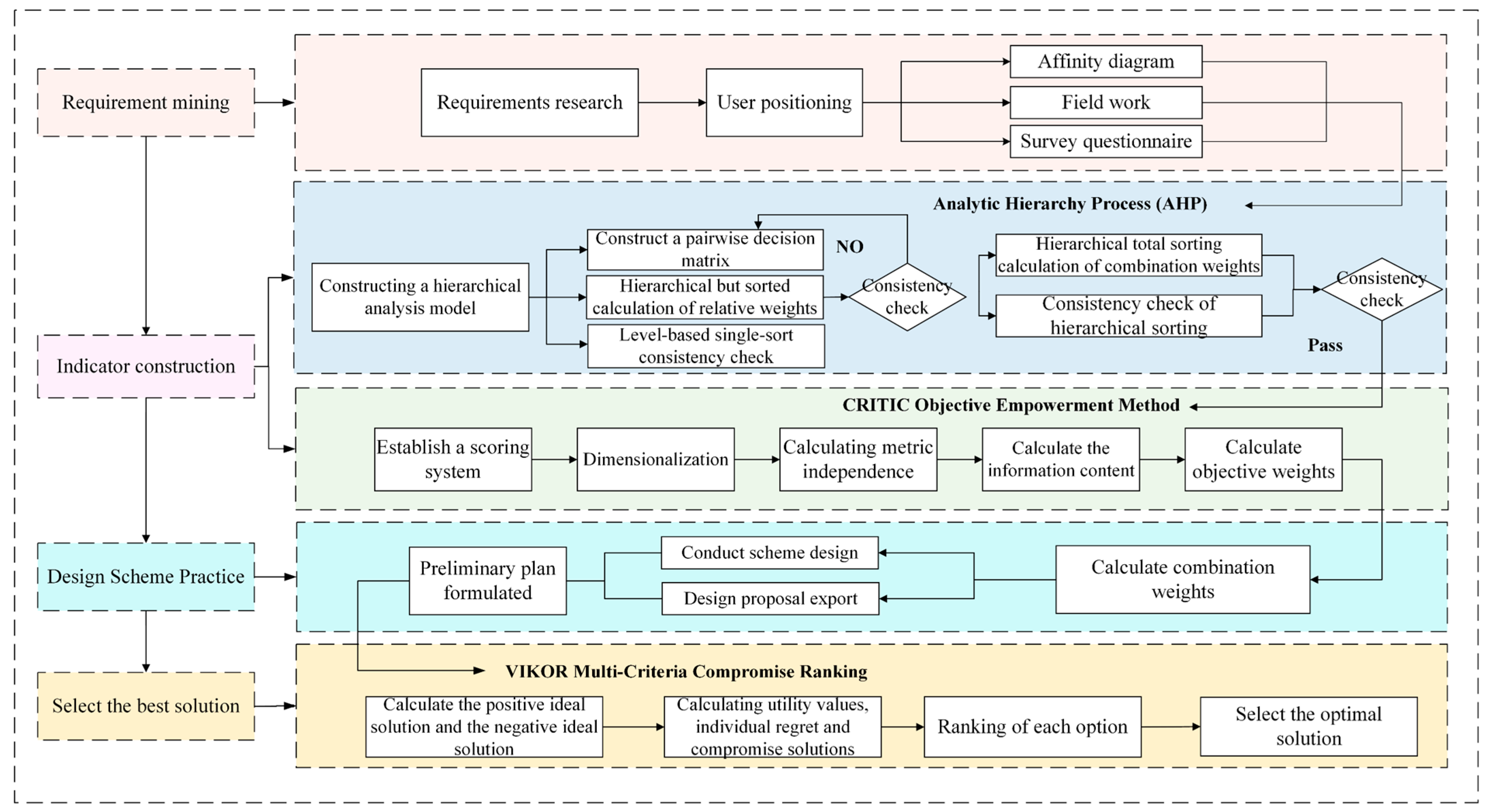
The research process comprises four main stages: demand identification, indicator construction, design scheme development, and optimal scheme selection, as illustrated in
Figure 1. The first stage focuses on demand identification, in which user requirements for children’s scooters are explored through questionnaire surveys and in-depth interviews. The second stage involves indicator construction, whereby evaluation factors derived from the demand hierarchy are incorporated into the analytical model. AHP and the CRITIC objective weighting method are jointly applied to calculate integrated weights that combine subjective and objective perspectives, thereby defining the core optimization directions for children’s scooter design and forming an AHP-CRITIC-based comprehensive digital decision-making model. The third stage consists of design scheme development, where the calculated AHP–CRITIC combined weights are synthesized and analyzed to prioritize design elements according to their relative importance, leading to the formulation of preliminary children’s scooter design schemes. The fourth stage focuses on optimal scheme selection, in which the VIKOR decision-making method systematically evaluates multiple criteria to efficiently identify the optimal compromise solution among the preliminary schemes, providing decision-makers with scientifically grounded and reliable support.
The integration of AHP, CRITIC, and VIKOR in this study is not a simple combination but a complementary process. AHP provides a structured decomposition of decision problems and incorporates expert knowledge, CRITIC enhances objectivity by capturing data variability and conflict among indicators, and VIKOR enables compromise decision-making under conflicting criteria. This integrated mechanism ensures both interpretability and robustness in multi-criteria design evaluation.
Compared with conventional single-method approaches, the proposed integrated framework supports decision reliability by combining structural decomposition, data-driven weighting, and compromise optimization. This integration enhances both interpretability and engineering applicability, making it suitable for complex product design scenarios involving multiple conflicting criteria.
The data used in this study were collected from major e-commerce platforms, including JD.com (Beijing, China) and Taobao (Hangzhou, China), which provide extensive user-generated reviews for children’s scooters. All data preprocessing, text mining, and analysis procedures were conducted using Python 3.10 (Python Software Foundation, Wilmington, DE, USA). The main libraries included jieba for text segmentation, pandas for data processing, and scikit-learn for feature extraction and analysis. These tools ensured the reproducibility and reliability of the data-driven design process. Statistical analysis was further supported by IBM SPSS Statistics 26 (IBM Corp., Armonk, NY, USA).
2.2. Determination of Subjective Weights Using the AHP Method
In this study, AHP is employed to decompose the complex design problem of children’s scooters into a multi-level hierarchical structure. The relative importance of each element is then calculated and comprehensively ranked to construct a user demand analysis model for children’s scooters. This approach enables accurate identification of key user requirements during the design stage and facilitates the transformation of qualitative judgments into quantitative weights.
Step 1: Calculate the product of the scale values in each row of the judgment matrix.
where the demand indicator in the
row and
column is denoted as
, and
represents the evaluation indicator.
Step 2: Calculate the geometric mean of the row scale products
where
represents the geometric mean value of the
criterion.
Step 3: Determine the relative weight calculations for each criterion
where
denotes the normalized weight value of the
evaluation criterion, and
represents the sum of the geometric mean values of all criteria, which is used for weight normalization.
Step 4: Calculate the largest eigenvalue in the matrix
where
denotes the
component of the
quantitative value, and
is the order of the matrix.
Step 5: Perform consistency checks
where
denotes the order of the judgment matrix for determining the evaluation scale, and
generally adopts the consistency ratio
≤ 0.1 as the critical threshold. If this condition is satisfied, the consistency of the judgment matrix is considered acceptable; otherwise, if
≥ 0.1, the matrix is regarded as logically inconsistent and must be adjusted and recalculated.
2.3. Determination of Objective Weights Using the CRITIC Method
To obtain more scientific and reasonable indicator weights, relying solely on subjective weighting methods has inherent limitations. Therefore, an objective weighting method is introduced for complementary optimization. By integrating subjective and objective weighting approaches, a more scientific and reliable weight distribution can be achieved.
Step 1: Construct the initial evaluation matrix
based on the scores assigned by experts within the same group to the design metrics.
where
denotes the number of alternatives to be evaluated, and
represents the number of evaluation indicators.
Step 2: Data Standardization Processing: Standardize the raw data matrix using the commonly applied range standardization method.
Positive indicators (the larger, the better)):
Negative indicators (the smaller, the better):
where
denotes the
indicator value of the
sample, and
and
represent the maximum and minimum values of the
indicator, respectively.
Step 3: Calculate the internal conflict within the indicator: Conflict is measured by standard deviation, reflecting the indicator’s volatility and internal divergence. A higher standard deviation value indicates richer information content.
where
denotes the variability of the j indicator.
Step 4: Calculate indicator independence: Independence is measured by the sum of correlations with other indicators. The lower the correlation, the stronger the independence.
where
denotes the total number of indicators, and
represents the correlation coefficient between indicator
and indicator
.
Step 5: Calculate the information content
where
denotes the information content of the
indicator.
Step 6: Calculate Objective Weights
where
denotes the CRITIC objective weight of the
indicator, and
represents the sum of information content across all indicators.
2.4. Calculation of AHP–CRITIC Comprehensive Weights
The AHP and CRITIC methods are integrated to calculate the comprehensive weight
, representing the combined subjective–objective weight.
where
denotes the AHP–CRITIC comprehensive weight of the
indicator, and
represents the total number of evaluation indicators.
Compared with other multi-criteria decision-making (MCDM) methods such as TOPSIS and weighted sum models, the VIKOR method is particularly suitable for problems involving conflicting criteria and the identification of compromise solutions [
33]. Unlike distance-based ranking methods, VIKOR simultaneously considers group utility and individual regret, enabling a more balanced evaluation of alternatives under multi-objective conflict conditions. This characteristic is especially important in safety-critical product design scenarios, where both overall performance and worst-case performance must be carefully addressed. In addition, VIKOR introduces a decision-making strategy parameter that allows flexible adjustment between collective optimality and individual regret, further enhancing its applicability in engineering design decision-making. Although fuzzy MCDM methods can effectively handle uncertainty and vagueness in decision-making processes, the present study is based on structured questionnaire data and quantified evaluation indicators, which provide relatively clear and deterministic input information. Therefore, a deterministic MCDM framework is considered sufficient and appropriate for this study. Nevertheless, incorporating fuzzy logic to address uncertainty in user perception and expert judgment represents a valuable direction for future research. Based on the above considerations, the VIKOR method is adopted as the final ranking approach for evaluating and selecting the optimal design scheme.
Unlike TOPSIS, which ranks alternatives based on their distance to ideal and negative-ideal solutions, VIKOR introduces a compromise ranking mechanism by simultaneously considering group utility (S) and individual regret (R). This dual-perspective evaluation enables a more balanced assessment of alternatives, particularly in engineering design scenarios where multiple objectives may be in conflict. Furthermore, the effectiveness of VIKOR depends on the reliability of the weighting scheme. In this study, the integration of AHP and CRITIC provides both subjective and objective weights, thereby improving the robustness of the input data for VIKOR. This combination allows VIKOR to operate on a more reliable evaluation basis, enhancing the credibility of the final ranking results. Although fuzzy MCDM methods can effectively handle uncertainty and vagueness, the present study is based on structured questionnaire data and quantified evaluation indicators, which provide relatively clear and deterministic input information. Therefore, a deterministic MCDM framework is considered appropriate in this context. Nevertheless, incorporating fuzzy approaches to address uncertainty in user perception and expert judgment could be explored in future research. Therefore, VIKOR is adopted as the final ranking method in this study due to its ability to handle conflicting criteria and to generate compromise solutions under multi-objective conditions.
2.5. VIKOR Scheme Evaluation
In this study, the AHP–CRITIC method is first applied to determine the comprehensive weights, and several optimized design schemes are obtained through preliminary product design. Subsequently, the VIKOR method is adopted to evaluate and rank the children’s scooter design schemes, enabling decision-making on scheme priorities and identifying the optimal design solution. This approach ensures higher objectivity and reliability in the evaluation results.
Step 1: Calculate the positive ideal solution and negative ideal solution
where
denotes the positive ideal solution of the
indicator, and
represents the negative ideal solution of the
indicator.
Step 2: Calculate group utility
and individual regret
where
denotes the group utility value of scheme
, reflecting its overall performance, and
represents the maximum regret value of scheme
, indicating the worst performance among all indicators.
Step 3: Calculate the compromise solution
where
denotes the compromise solution of the
alternative,
represents the group utility measure,
denotes the individual regret measure, and
is the weight of the decision-making strategy reflecting the preference for group utility versus individual regret.
In the VIKOR method, the parameter v represents the weight of group utility, while (1 − ) reflects the weight of individual regret. In this study, is set to 0.5 to ensure a balanced compromise between overall performance and worst-case criteria, which is commonly adopted in engineering decision-making. In this study, the decision-making parameter was set to 0.5 to represent a balanced consideration between group utility and individual regret.
3. Empirical Study on Children’s Scooter Design and Evaluation
3.1. User Demand Investigation
3.1.1. User Research
For the user study of children’s scooter products, children and their parents were selected as the target groups [
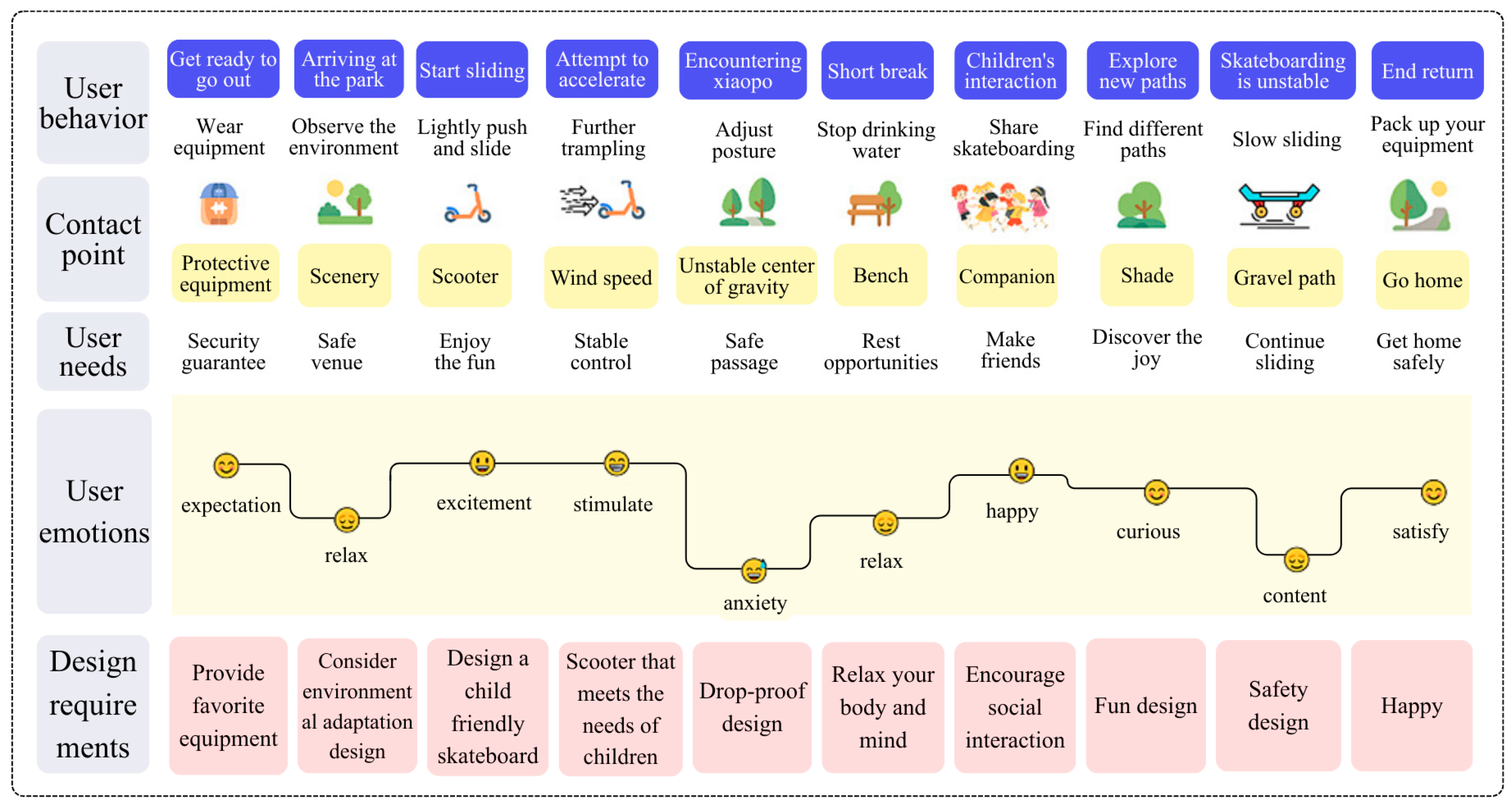
6]. Through a systematic review of relevant literature on children’s motor development and scooter safety design, on-site field observations were conducted in children’s activity areas in parks. Children of different age groups and their guardians were selected as observation subjects, and the entire process of children using scooters in natural settings was recorded in real time. Based on these observations, user journey maps were constructed (
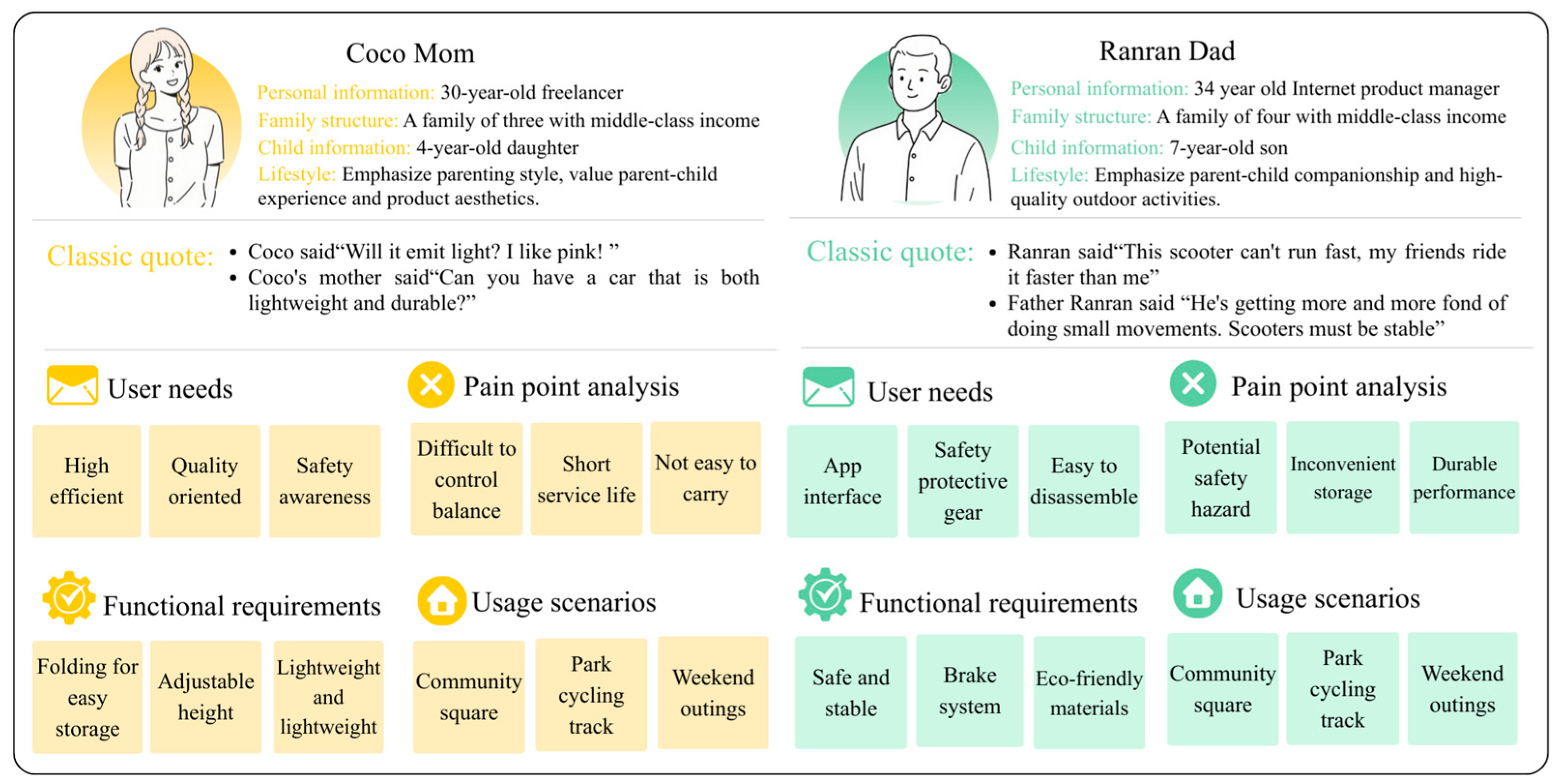
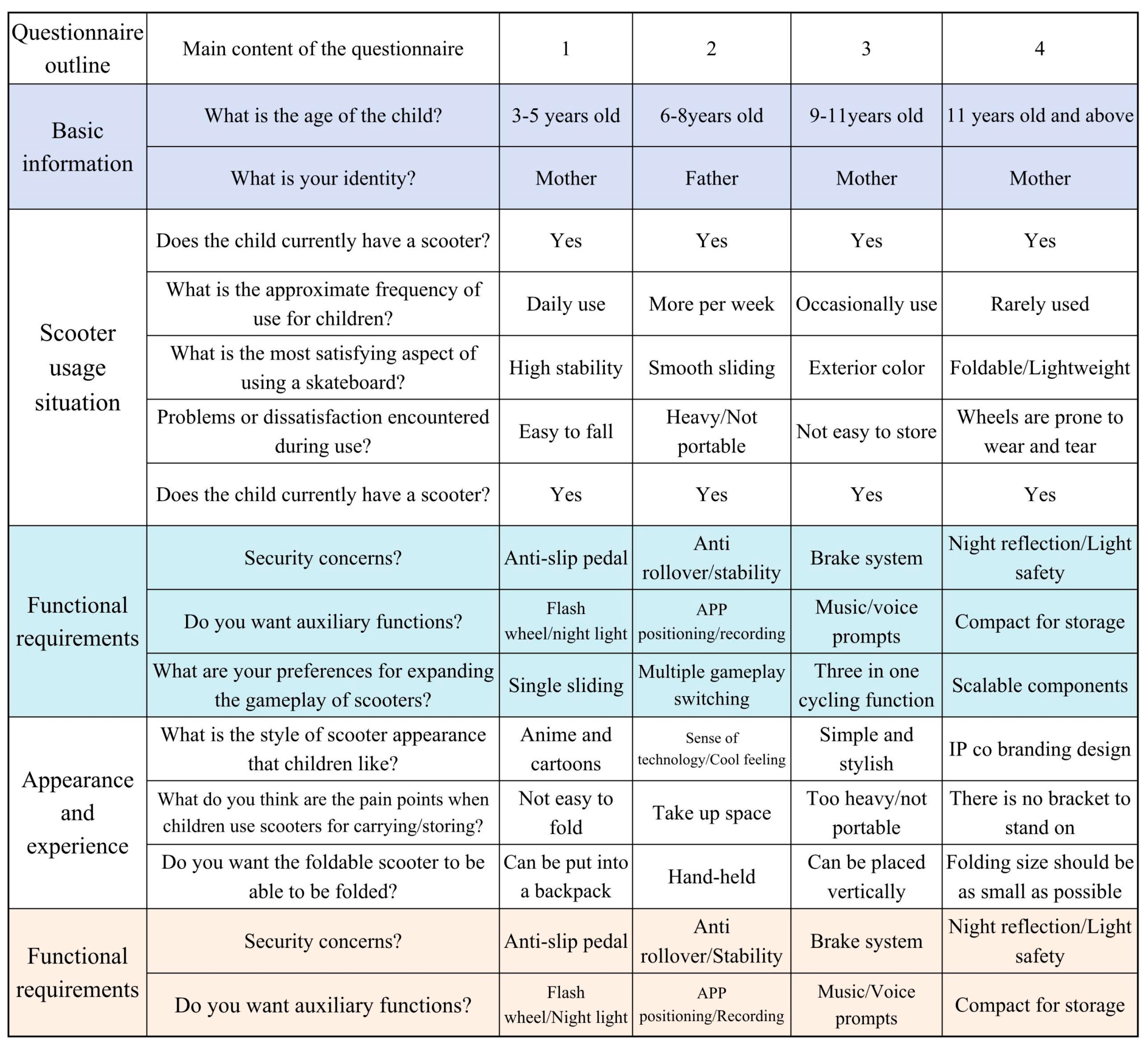
Figure 2). In parallel, in-depth interviews were conducted with parents focusing on product usage experience, safety requirements, and existing problems. These interviews enabled a deeper exploration of the key factors influencing children’s user experience and parents’ purchasing decisions. Ultimately, typical user personas and questionnaire survey results were generated, as shown in
Figure 3.
To ensure the validity of data collected from children aged 4–8, a simplified questionnaire was designed based on their cognitive characteristics. The questionnaire used short sentences, intuitive wording, and visual aids [
34]. A pictorial Likert scale with facial expressions was adopted to help children easily understand and respond [
35]. The questions focused on concrete and experience-based aspects, including comfort, ease of use, perceived safety, and overall preference. For example, children were asked: “Do you feel comfortable when riding the scooter?” and “Do you like this scooter?”, with response options represented by smiley faces (
Table 1). All questionnaires were completed under parental supervision to ensure comprehension, while parents were instructed not to influence children’s responses. Considering the cognitive and comprehension abilities of children aged 4–8, a simplified questionnaire was designed using short sentences, intuitive expressions, and visual aids. A pictorial Likert scale based on facial expressions (e.g., very happy, neutral, unhappy) was adopted to help children easily understand and respond to questions. The questionnaire focused on concrete and experience-based aspects of scooter usage, avoiding abstract or technical terms [
36]. The main dimensions included comfort, safety perception, ease of operation, and overall preference.
All procedures involving human participants complied with ethical research standards. For children aged 4–8, questionnaires were simplified and administered under parental supervision. Informed consent was obtained from all parents or guardians prior to participation. All responses were collected anonymously to ensure confidentiality and ethical compliance. To ensure data reliability, internal consistency was evaluated using Cronbach’s alpha, and the results indicated acceptable reliability for all measurement scales.
3.1.2. Questionnaire Survey
The empirical research aims to support the innovative design of children’s scooter products. To obtain authentic and reliable user demand data, the questionnaire was designed based on analyses from field investigations and user interviews. Offline questionnaires were randomly distributed in parks, residential plazas, and children’s play areas in shopping malls. In addition, 211 online questionnaires were distributed via the Wenjuanxing platform, of which 204 valid responses were collected. The questionnaire contents and statistical results are presented in
Figure 4.
3.2. Establishment of Evaluation Indicators
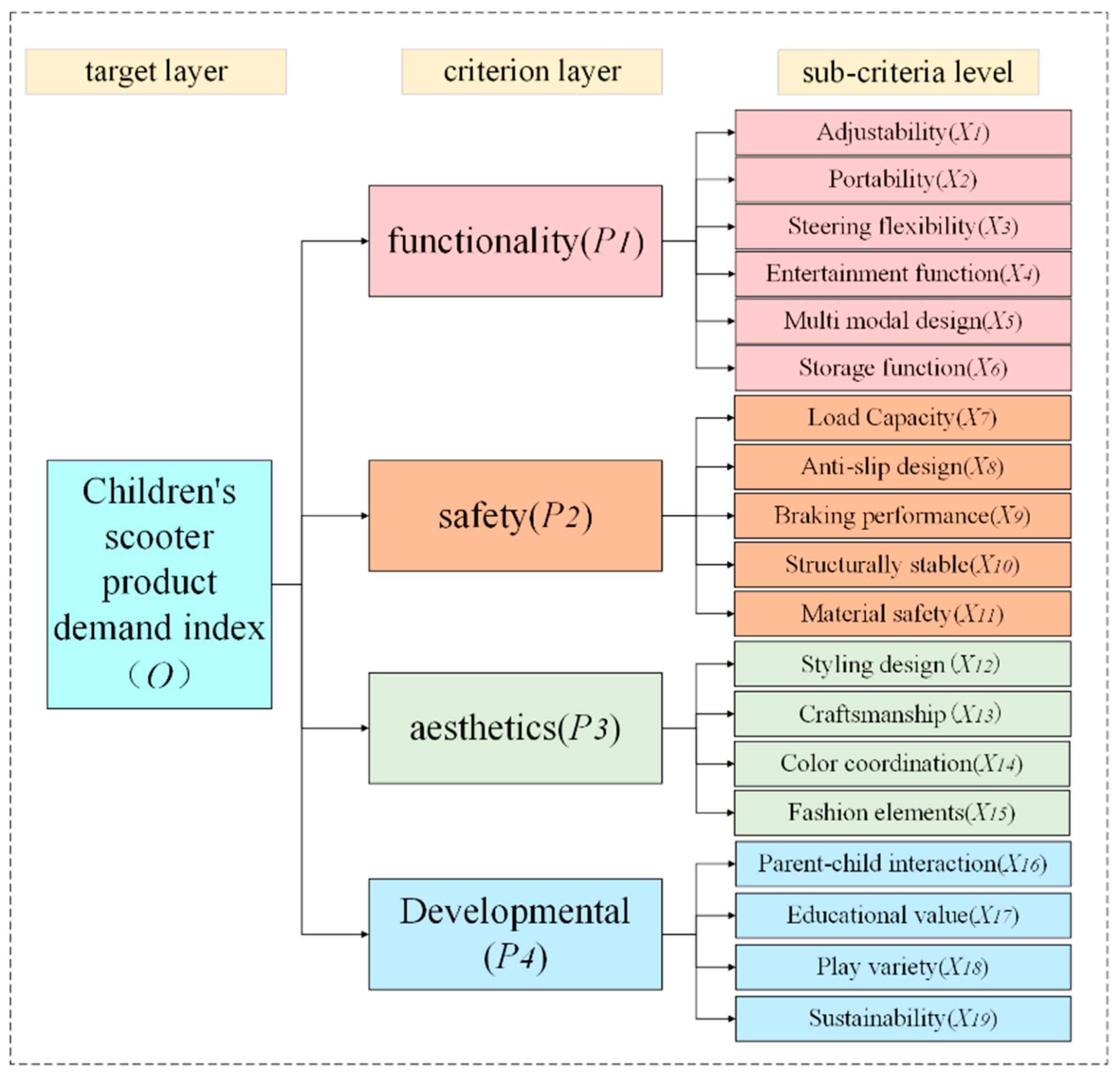
Based on multiple approaches, including questionnaire surveys, user interviews, the literature review, and field investigation research data on children’s scooter products were collected and preliminarily organized. Subsequently, experts from related fields such as children’s scooters, product design, and intelligent children’s toy design were consulted. Expert opinions were gathered through emails and questionnaires, and then secondarily integrated with the preliminarily organized data to establish a children’s scooter product evaluation index system (O). This system comprises four criterion-level decision indicators and nineteen element-level evaluation indicators, as shown in
Figure 5.
3.3. Calculation of Subjective Weights
According to the relevant principles, indicators at each demand level were pairwise compared within the hierarchical structure model to construct judgment matrices for calculating indicator weights. Scoring was conducted by 8 professors of industrial design, 12 master’s and doctoral students in industrial design, 11 industrial designers with more than five years of professional experience, and 9 practitioners in scooter design. After averaging the scores, judgment matrices were obtained as shown in Equations (20)–(24). Subsequently, AHP was applied to calculate the weight values at each level of the judgment matrices, as shown in
Table 2. The consistency test results of the judgment matrices are presented in
Table 3. All consistency ratios were below 0.01, indicating good consistency and confirming that the matrices passed the consistency test and were suitable for subsequent analysis.
3.4. Calculation of Objective Weights
To collect objective data, users were asked to score the 19 demand indicators under the four criteria levels of children’s scooters to calculate the contrast intensity and conflict among indicators. A Likert 7-point scale questionnaire was adopted, requiring users to rate the importance of each demand indicator (e.g., 1 = extremely unimportant, 4 = neutral, 7 = extremely important). The questionnaire was mainly distributed to children aged 4–8 who had experience using scooters and their parents, ensuring coverage across different age groups. A total of 148 valid questionnaires from children and 154 valid questionnaires from parents were collected. The questionnaire data were then input into the objective weighting formulas to obtain the weights of the objective evaluation indicator system, as shown in
Table 4.
The weight distribution indicates that safety-related criteria receive the highest importance, reflecting users’ primary concern for risk prevention in children’s product usage. This result suggests that design priorities should focus on enhancing structural reliability and protective features rather than solely improving aesthetic attributes. Moreover, the relatively lower weights assigned to emotional factors imply that while user experience is important, it is secondary to safety considerations in decision-making.
3.5. Analysis of Combined Weights
Using Equation (14), the combined weights for subjective and objective factors were calculated and ranked, as shown in
Table 5. At the criterion level, the hierarchy is: Safety > Functionality > Aesthetics > Development. Safety is the primary focus. At the element level, the ranking is: Material safety X
11 > Braking performance X
9 > Load Capacity X
7 > Adjustability X
1 > Portability X
2 > Structurally stable X
10 > Anti-slip design X
8 > Steering flexibility X
3 > Multi mode design X
5 > Entertainment function X
4 > Play variety X
18 > Styling design X
12 > Educational value X
17 > Storage function X
6 > Parent–child interaction X
16 > Fashion elements X
15 > Color coordination X
14 > Sustainability X
19 > Craftsmanship X
13. The top three weighted factors are Material safety X
11 > Braking performance X
9 > Load capacity X
7, with respective importance weights of 0.3309, 0.1395, and 0.0710. Based on user needs analysis, these three elements form the core evaluation framework for children’s scooter products.
Further analysis reveals that certain evaluation indicators exhibit interdependent relationships. For instance, safety-related indicators, such as structural stability and braking reliability, tend to show strong consistency with usability factors, indicating that improvements in safety design may simultaneously enhance user experience. In contrast, aesthetic and emotional design attributes demonstrate relatively weaker correlations with functional performance, suggesting potential trade-offs between visual appeal and engineering practicality.
To verify the feasibility of the AHP–CRITIC combined weighting method, Spearman’s rank correlation coefficient was applied. The statistical results show that the AHP–CRITIC value is 0.712 (p < 0.01), which is highly significant, indicating that the proposed combined weighting method has reliable validity.
This result further confirms that safety-related indicators dominate the decision process, which is consistent with real-world user concerns and enhances the practical validity of the evaluation framework.
3.6. Design Scheme Development
Based on the combined subjective–objective weights obtained from the AHP–CRITIC method, design exploration for children’s scooters was conducted with a focus on improving key performance indicators, including material safety, braking performance, and load-bearing capacity [
37]. The design adopts stable geometric configurations and streamlined structural forms to enhance mechanical stability and operational safety [
38]. Rounded edges and smooth surface transitions are implemented to minimize potential injury risks during use. From a material engineering perspective, the main structural components are fabricated using high-strength, lightweight, and non-toxic alloy materials to ensure durability and user safety [
39]. Polyurethane (PU) wheels are employed to improve shock absorption and reduce noise during operation, thereby enhancing riding comfort. In addition, all external surfaces are processed to achieve a smooth and burr-free finish, effectively preventing scratches and accidental injuries. In terms of braking performance, a rear foot-braking mechanism is integrated to enable rapid and stable deceleration, reducing the likelihood of skidding and rollover under dynamic conditions. Load-bearing capacity is addressed through a growth-oriented structural design. Adjustable handlebar heights, detachable seating modules, and adaptable deck configurations are incorporated to accommodate children at different developmental stages, thereby extending the product lifecycle and improving overall usability [
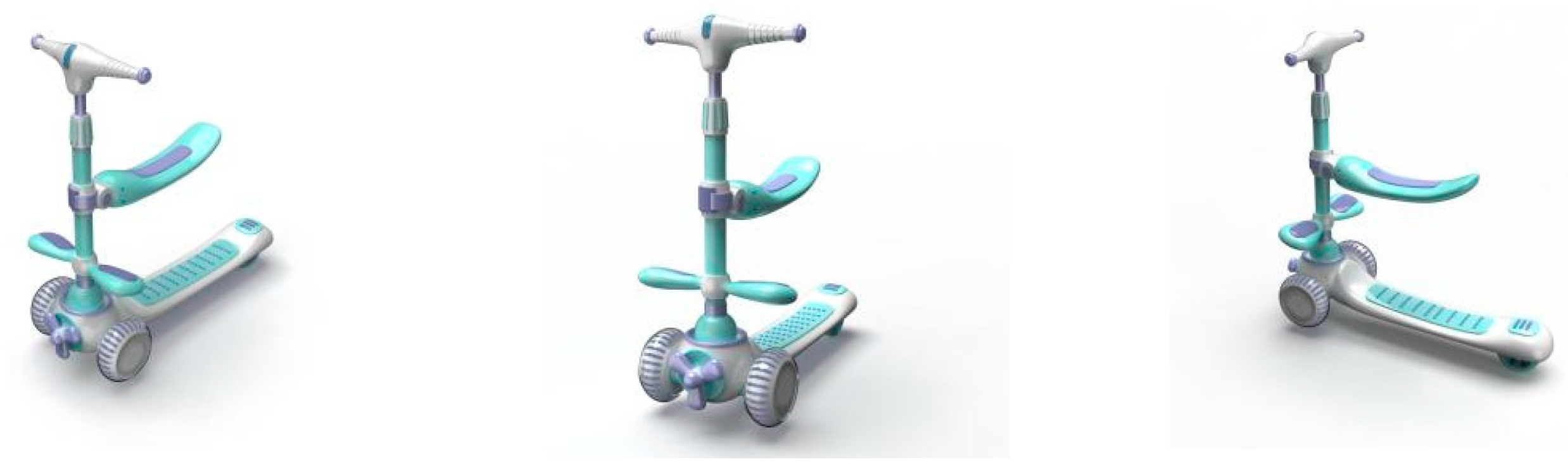
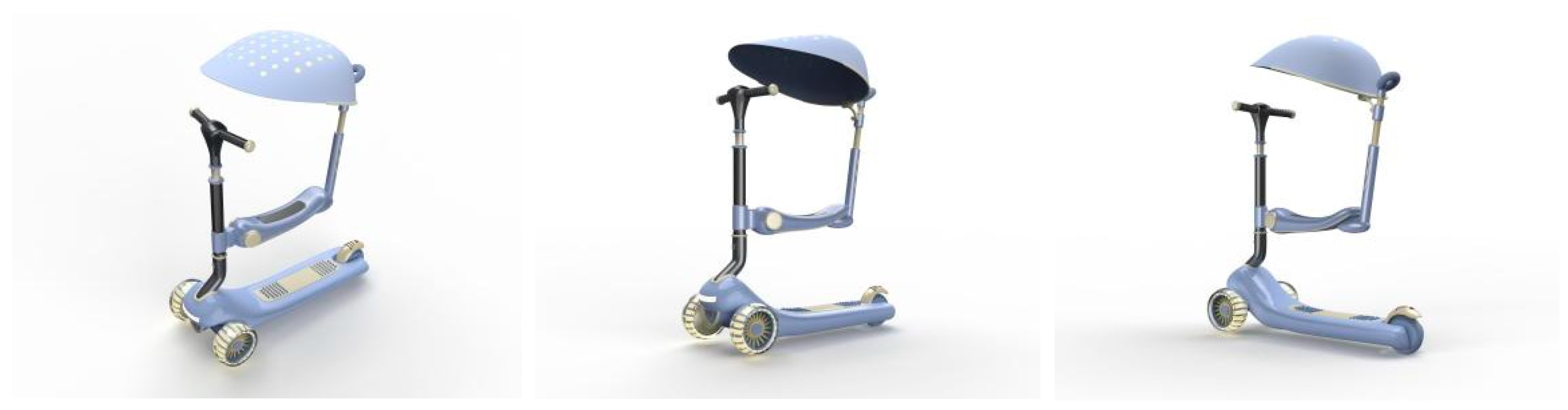
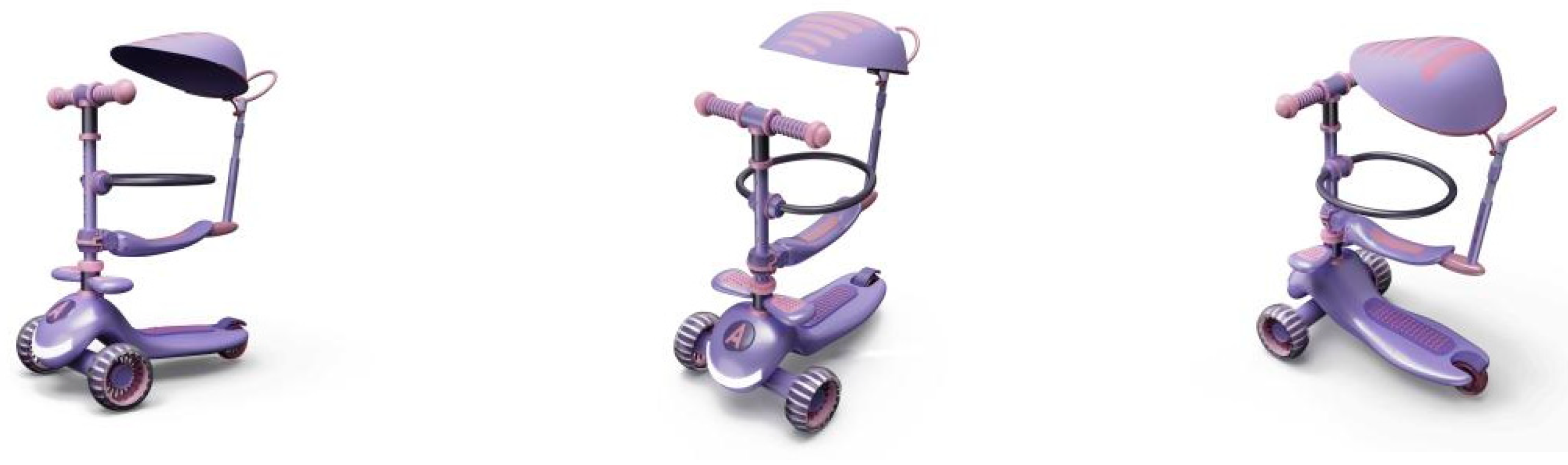
40]. Based on the above design principles and the weighted evaluation results, three alternative design schemes were developed for further evaluation. These design schemes provide the basis for subsequent quantitative evaluation using the VIKOR method. From a mechanical perspective, the design emphasizes the optimization of structural stability and load-bearing performance under dynamic loading conditions. The adoption of a three-wheel support system increases the effective support base, improving static and dynamic stability by reducing the overturning moment during steering maneuvers. The frame structure is designed to facilitate efficient load transmission, allowing forces generated during operation to be evenly distributed across the supporting components. This reduces stress concentration and enhances fatigue resistance. The selection of high-strength lightweight alloy materials supports the strength-to-weight ratio, contributing to both structural integrity and operational efficiency. Moreover, the braking system is configured to achieve controlled deceleration through frictional interaction between the brake and wheel surfaces [
41]. This design facilitates braking responsiveness and reduces slip risk, particularly on low-friction surfaces. Overall, these mechanical optimizations ensure reliable performance and enhanced safety in practical usage scenarios.
Scheme a (
Figure 6) is designed to enhance structural stability and operational safety. A three-wheel support configuration combined with an extended deck structure is adopted to lower the center of gravity and improve balance during operation. This configuration effectively reduces the risk of tipping and enhances stability under varying usage conditions.
Scheme b (
Figure 7) focuses on improving environmental adaptability and auxiliary functionality. Additional functional components are integrated to enhance visibility under low-light conditions and to improve usability in diverse outdoor environments. The structural design ensures that these auxiliary features do not interfere with the user’s field of vision or operational safety.
Scheme c (
Figure 8) is developed based on a modular and multi-functional design concept. Multiple usage modes are integrated within a unified structural system to accommodate different stages of child development. Safety performance is further enhanced through anti-slip deck structures, rounded protective edges, and adjustable support components. These features collectively improve adaptability, operational safety, and user interaction.
3.7. Design Evaluation and Optimization
This study combines the product performance indicators X1~X19 from the preceding section and conducts a VIKOR multi-criteria evaluation of the three design proposals. Using a 10-point scoring system, 60 evaluators participated in the assessment. This group comprised 8 professors and experts in product design, 7 professional children’s skateboard designers, 12 industrial designers, 17 child users, and 16 parent representatives. Each evaluator scored the criteria, and the evaluation matrix shown in
Table 6 was constructed based on the scoring results for each criterion.
Combining the scores from
Table 7 with Formulas (15) to (16), the positive and negative ideal solutions for each indicator were calculated, with results shown in
Table 8. Integrating these values with the combined subjective and objective weights determined by the AHP-CRITIC method, the
S values,
R values, and
Q values for each scheme were computed using Formulas (17) to (19). The final evaluation results for each Scheme are presented in
Table 7. Sorted by ascending
Q values: Scheme c > Scheme a > Scheme b. A smaller
Q value indicates a higher degree of association between the evaluated Scheme and the ideal solution (positive ideal solution), signifying enhanced performance and a higher ranking. Based on this principle, Scheme c possesses the smallest
Q value and is therefore determined as the optimal solution. The results demonstrate that the proposed framework provides stable and consistent ranking outcomes. Compared with traditional decision-making approaches, it effectively reduces uncertainty in scheme selection. In addition, the integration of subjective and objective weighting facilitates a more robust evaluation process. All calculations were implemented using Python 3.10 (Python Software Foundation, Wilmington, DE, USA) to ensure reproducibility. The calculation codes are available from the corresponding author upon request.
The superior performance of Scheme c can be attributed to its balanced performance across high-weight indicators. Unlike Scheme a and Scheme b, which exhibit strong performance in specific criteria but weaknesses in others, Scheme c achieves a more consistent distribution of scores across safety, usability, and functional dimensions. This balanced performance effectively reduces the influence of low-performing criteria, which is particularly important in multi-criteria decision-making contexts. The results further demonstrate the advantage of the VIKOR method in identifying compromise solutions rather than extreme optimal alternatives. From an engineering perspective, this indicates that design solutions emphasizing overall balance are more likely to achieve higher comprehensive evaluations than those focusing on isolated performance improvements.
Based on the aforementioned methodology, both Plan c and Plan a exhibit relatively similar overall performance. When evaluated solely by the
S value, Plan a demonstrates optimal performance. However, the final ranking requires simultaneous consideration of both the
R value and the
Q value. While Option c scores lower than Option a on most evaluation metrics, its
R and
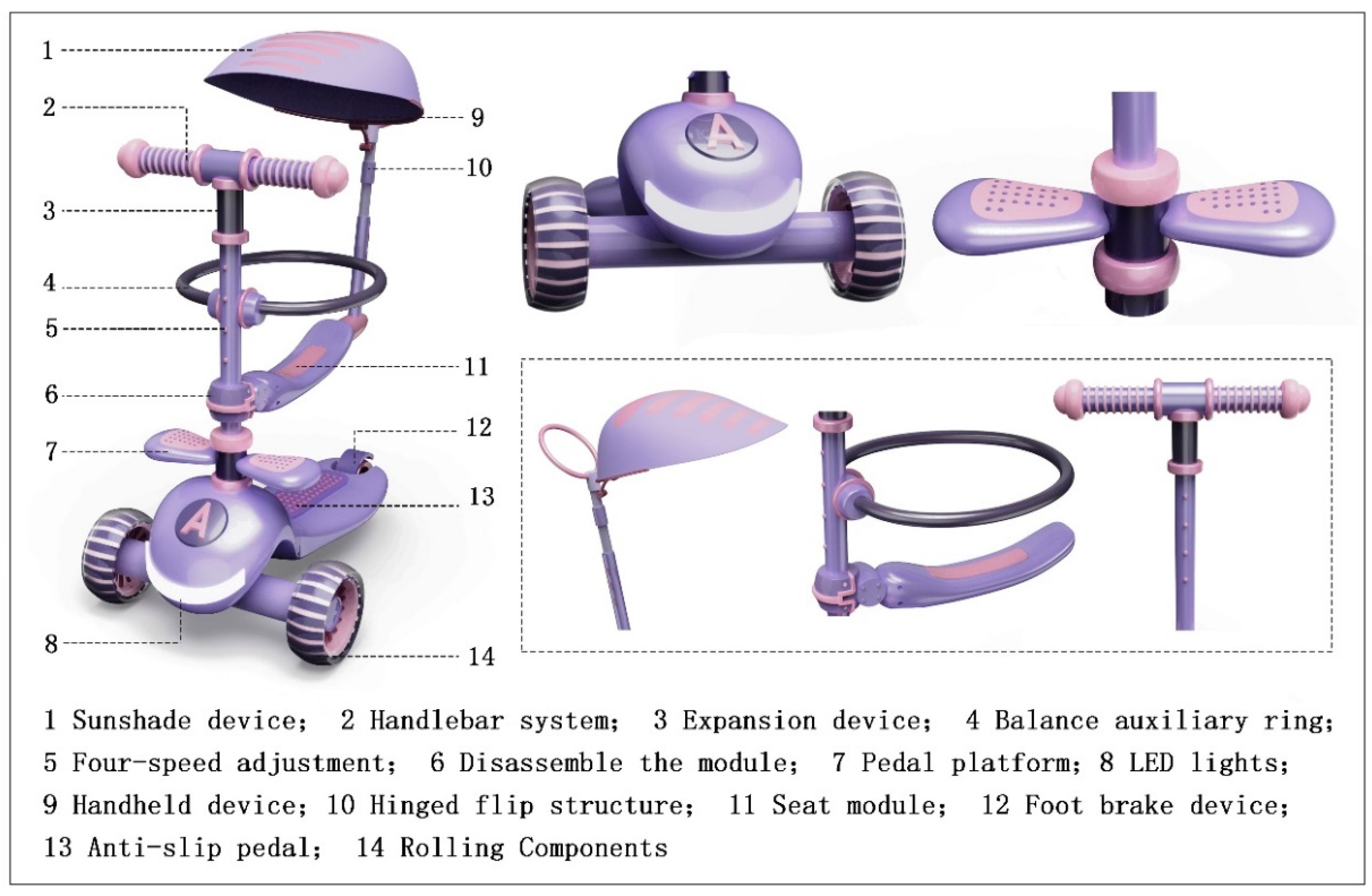
Q values are the smallest among all alternatives. This indicates that Option c deviates the least from the optimal solution overall, making it the preferred option. Further refinement of Option c design yields the final outcome shown in
Figure 9.
To further interpret the ranking results, the underlying reasons for the superior performance of Scheme c are analyzed as follows. The differences in ranking among the design alternatives can be attributed to variations in key performance indicators. Scheme a achieves the highest ranking primarily due to its superior performance in safety and usability criteria, which carry higher weights in the evaluation system. In contrast, Scheme b demonstrates strengths in aesthetic design but performs less favorably in stability-related indicators, leading to a lower overall ranking. These findings highlight the dominant influence of safety-oriented criteria in the decision-making process.
To ensure the technical approach, dimensional specifications, and structural design of the optimal solution possess high feasibility and accuracy in subsequent production and R&D, thereby avoiding resource wastage and directional deviations, this study conducted technical refinement and detailed design of the final preferred solution based on comprehensive evaluation results. The design process systematically considered the dynamic evolution of children’s physiological and psychological characteristics during growth, strictly adhering to pediatric ergonomics principles. It primarily caters to the needs of children aged 2 to 12, adapting to the developmental features of different age groups. The children’s scooter primarily consists of a T-bar, seat, handlebars, safety guardrail, push handle, chassis, brake components, and wheels. Its stable three-wheel design enhances stability during riding. This product offers five modes: Stroller Mode, Beginner Mode, Exercise Mode, Riding Mode, and Smooth Glide Mode. Based on child body measurements, height adjustments accommodate varying heights: the T-bar height ranges from 68 cm to 82 cm, primarily divided into four settings: 68 cm, 72 cm, 77 cm, and 82 cm. The child seat height adjusts from 29 cm to 35 cm, primarily divided into two settings: 29 cm and 35 cm. The push handle height ranges from 85 cm to 95 cm. The growth-oriented design employs a modular approach, enhancing adaptability throughout the child’s developmental stages while reducing the need for repeated vehicle replacements due to physical growth. For storage, the product features a folding mechanism: the child seat and T-bar fold to a 90-degree angle, then the T-bar folds parallel to the chassis to complete the storage process. The folded unit is compact and easy to store.
3.8. Sensitivity Analysis
To verify the robustness and stability of the proposed AHP–CRITIC–VIKOR framework, a sensitivity analysis was conducted by introducing controlled perturbations to the combined weights of evaluation indicators. Specifically, the weights of key indicators were adjusted within a ±10% range while maintaining normalization constraints, and the corresponding changes in the ranking results of the alternative design schemes were observed. The results indicate that, under different weight variation scenarios, Scheme c consistently remains the top-ranked solution, while the relative ranking between Scheme a and Scheme b exhibits only minor fluctuations. This demonstrates that the proposed model is not overly sensitive to small changes in indicator weights and maintains a stable decision outcome. Furthermore, the stability of the optimal solution suggests that the integrated weighting mechanism effectively balances subjective and objective information, reducing the risk of biased decision-making caused by extreme parameter settings. Therefore, the proposed framework shows strong robustness and reliability in supporting multi-criteria design evaluation. Overall, the sensitivity analysis confirms that the AHP–CRITIC–VIKOR method provides consistent and dependable decision results, enhancing its applicability in practical product design scenarios.
The sensitivity analysis results indicate that the ranking of alternatives remains relatively stable under moderate variations in the weighting parameters. This suggests that the decision-making outcome is not overly sensitive to minor fluctuations in subjective or objective weights, thereby enhancing the robustness of the proposed framework. However, when extreme weight adjustments are introduced, slight changes in ranking are observed, indicating that certain alternatives are competitive and sensitive to specific criteria. This finding underscores the importance of accurately determining key indicator weights in practical applications.
3.9. Comparative Analysis with Alternative MCDM Methods
To further validate the effectiveness of the proposed AHP–CRITIC–VIKOR framework, a comparative analysis was conducted using the Technique for Order Preference by Similarity to Ideal Solution (TOPSIS), a widely adopted multi-criteria decision-making method.
Using the same evaluation dataset and combined weights, the TOPSIS method was applied to rank the alternative design schemes. The results show that both VIKOR and TOPSIS identify Scheme c as the optimal solution, indicating consistency in decision outcomes across different methods. However, differences were observed in the ranking of the remaining alternatives. Compared with TOPSIS, the VIKOR method demonstrates stronger capability in handling trade-offs between group utility and individual regret, providing a more balanced compromise solution under conflicting criteria. Moreover, VIKOR explicitly incorporates a decision-making strategy parameter, allowing flexible adjustment between overall performance and worst-case scenarios. This characteristic is particularly suitable for children’s product design, where safety considerations require careful attention to extreme risks. Therefore, the comparative results confirm that the proposed AHP–CRITIC–VIKOR framework not only ensures consistent ranking outcomes but also offers enhanced decision rationality in multi-criteria conflict situations, making it more suitable for complex product design evaluation.
4. Discussion
This study focuses on a user-demand-driven design and evaluation method for children’s scooters based on the integrated AHP–CRITIC–VIKOR framework. Children and their parents were identified as the core user groups, and authentic usage requirements were systematically collected through questionnaire surveys and field observations [
42]. On this basis, a multi-level evaluation indicator system encompassing functionality, safety, aesthetics, and develop mentality was established. By combining the hierarchical analytical strengths of AHP with the objective weighting characteristics of CRITIC, effective integration of subjective and objective weights was achieved, thereby enhancing the scientific rigor and reliability of the design decision-making process [
43,
44,
45]. In the scheme evaluation stage, the VIKOR multi-criteria decision-making method was introduced to conduct comprehensive comparisons and compromise ranking among different design schemes [
46]. This approach revealed differences in the importance of various design elements in children’s scooter design and enabled scientific selection of the optimal scheme under conditions of multi-objective conflict. The research findings provide practical theoretical foundations and methodological support for the systematic design and optimization of children’s scooters and related children’s products.
First, analysis of evaluation results and weight distributions indicates that safety occupies a central position in children’s scooter design. Among the safety-related factors, material safety, braking performance, and load-bearing capacity were identified as the key determinants of overall product performance. This conclusion is highly consistent with the priorities expressed by both parents and child users during the investigation, further validating the rationality of constructing the evaluation indicator system based on user demand. The AHP–CRITIC integrated weighting results demonstrate that neither purely subjective nor purely objective weighting methods can fully capture indicator importance; in contrast, the integrated approach effectively mitigates subjective bias and enhances the stability and credibility of the weight outcomes, providing a reliable basis for subsequent design decisions. The dominance of safety-related indicators, particularly material safety and braking performance, reflects the high risk sensitivity inherent in children’s product design. These indicators not only represent fundamental functional safety requirements but also play a decisive role in parental purchasing decisions. From a design perspective, the results suggest that safety-related attributes exert a significantly greater influence on overall product evaluation than aesthetic or auxiliary functions. This finding highlights the necessity of prioritizing protective performance in the early stages of product development rather than treating safety as a secondary consideration. Furthermore, the strong weighting of these indicators indicates a clear alignment between user perception and objective safety requirements, reinforcing the importance of integrating safety-driven criteria into the core design framework. The consistency between VIKOR results and comparative methods further supports the robustness of the proposed evaluation framework.
Moreover, the introduction of the VIKOR method in the scheme selection stage effectively addresses the challenge of comprehensive evaluation under multi-criteria conflict conditions. The results show that the optimal scheme does not necessarily achieve the best performance across all indicators but instead attains a more reasonable balance between overall utility and local weaknesses—an especially important consideration for children’s products that emphasize safety thresholds. Comparison between evaluation outcomes and the final design implementation demonstrates strong consistency, confirming the applicability and operational feasibility of the integrated AHP–CRITIC–VIKOR method in children’s scooter design. Nevertheless, limitations remain in terms of sample size, diversity of data sources, and sensitivity to model parameters. Future studies may further refine the model by incorporating real-world usage data and multi-scenario analyses. From an engineering perspective, the proposed framework provides a structured and quantitative decision-support tool that can be applied to similar product design problems involving multiple conflicting criteria. The integration of subjective and objective weighting methods facilitates accurate decision-making, while the incorporation of VIKOR enhances the ability to identify compromise solutions under practical constraints. This makes the framework particularly suitable for engineering-oriented product development processes. Compared with TOPSIS and traditional weighted-sum methods, the proposed framework demonstrates improved compromise decision capability.
In addition, compared with single-method approaches, the integrated AHP–CRITIC–VIKOR framework demonstrates improved robustness and decision reliability. The sensitivity analysis confirms that the ranking results remain stable under weight perturbations, while the comparative analysis with TOPSIS further validates the consistency and rationality of the proposed method. These findings highlight how integrating subjective and objective weighting mechanisms with compromise decision strategies enables better outcomes in complex design scenarios. This not only enhances methodological credibility but also strengthens the practical applicability of the proposed framework in engineering-oriented product design. The proposed framework enables better performance in compromise solution identification and engineering applicability compared to conventional decision-making methods. From an engineering perspective, the proposed framework serves as a quantitative decision-support tool that facilitates design efficiency and reduces uncertainty in complex product development processes. The integration of hybrid weighting and compromise decision-making enhances its applicability in real-world engineering scenarios.
5. Conclusions
This study takes children’s scooters as the research object and addresses existing challenges in children’s product design, including vague expression of user needs, strong subjectivity in weight allocation, and the lack of systematic quantitative support for scheme evaluation. An integrated AHP–CRITIC–VIKOR design and evaluation method is proposed and validated, and a systematic design framework centered on user needs and supported by multi-criteria decision-making is established. The results demonstrate that the proposed method effectively enhances the scientific rigor, objectivity, and operability of decision-making in children’s scooter design.
First, at the theoretical level, this study organically integrates three multi-criteria decision-making methods—AHP, CRITIC, and VIKOR—and applies them to children’s scooter design practice, forming a complete decision-making chain from demand identification and indicator construction to weight calculation and scheme selection. This integration not only enriches the application of multi-criteria decision-making methods in the field of product design, particularly in children’s product design, but also provides a novel research perspective for resolving conflicts between subjective and objective weighting and balancing multiple design objectives. Moreover, the evaluation indicator system developed based on user research further clarifies and deepens the internal relationships among design elements in children’s scooter products.
Secondly, from the methodological and empirical perspectives, the results indicate that safety is the most critical evaluation criterion in children’s scooter design, with material safety, braking performance, and load-bearing capacity identified as the key factors influencing overall product performance. By adopting the AHP–CRITIC integrated weighting method, this study effectively avoids the biases that may arise from purely subjective judgments or purely data-driven methods, thereby improving the stability and interpretability of the weighting results. Furthermore, the VIKOR method enables effective evaluation and ranking of design schemes under multi-criteria conflict conditions, successfully identifying the alternative closest to the ideal solution and verifying the applicability and reliability of the proposed framework in children’s scooter design evaluation. In design practice, quantitative evaluation results are used as the basis for systematic refinement of the optimal scheme, achieving an effective transformation from data analysis to tangible design outcomes. The superior performance of Scheme c can be attributed to its balanced performance across all evaluation dimensions. Unlike Scheme a, which exhibits strong performance in certain indicators but relatively weaker performance in others, Scheme c maintains a more consistent level across criteria, thereby reducing the influence of low-performing indicators. This finding demonstrates the advantage of the VIKOR method in identifying compromise solutions rather than extreme optimal solutions, particularly in multi-objective design scenarios. The final design allows for enhanced structural safety, functional adaptability, and growth-oriented extensibility, highlighting the practical value of user-demand-driven design. The proposed framework provides practical guidance for designers in balancing safety, usability, and functionality in early-stage product development.
Despite the establishment of an integrated AHP–CRITIC–VIKOR framework and its validation through specific design cases, several limitations remain and warrant further investigation. First, user demand data in this study are primarily derived from questionnaires and interviews and are largely subjective in nature; objective behavioral data and usage trajectories from real-world scooter use have not yet been fully incorporated. Second, although a combined subjective–objective weighting mechanism is employed, the CRITIC method relies on static evaluation matrices and may not fully capture dynamic changes in demand weights across different usage scenarios and stages of child development. In addition, parameter settings in the VIKOR method partially depend on expert judgment, and variations in parameter values may influence scheme ranking results, indicating the need for sensitivity analysis in future research to enhance model robustness. Finally, design validation in this study is mainly based on conceptual schemes and expert and user evaluations, without prototype testing or long-term usage experiments; thus, in-depth verification of safety, durability, and sustained user experience in real usage environments remains limited. Future research should therefore focus on multi-source data integration, dynamic demand modeling, and empirical validation to further enhance the generalizability and practical guidance value of the proposed framework in the field of children’s product design. The robustness of the proposed framework is verified through sensitivity analysis, while its effectiveness is further confirmed by comparison with alternative decision-making methods. These results demonstrate that the integrated AHP–CRITIC–VIKOR method provides reliable and stable decision support for complex product design problems. The framework shows strong potential for application in engineering design and evaluation scenarios involving multiple criteria and user-centered considerations. Although the proposed framework provides consistent ranking results, it should be noted that the evaluation outcomes are influenced by the selection of indicators and the quality of input data. Although the indicator system is developed for children’s scooters, the proposed framework can be extended to other consumer product design scenarios with appropriate adaptation of evaluation criteria.
In addition, interrelationships among evaluation indicators reveal meaningful coupling effects in the design system. Improvements in structural stability and material safety are often accompanied by enhanced user confidence and operational comfort, suggesting a positive interaction between safety and usability-related criteria. Similarly, braking performance is closely associated with perceived safety, indicating strong internal consistency within safety-related indicators. Conversely, aesthetic and emotional design attributes demonstrate relatively weaker correlations with functional and safety indicators, implying potential trade-offs between visual appeal and engineering performance. These findings highlight the necessity of balancing multiple criteria in design decision-making and further justify the use of compromise-based evaluation methods such as VIKOR. This study demonstrates that integrating subjective and objective weighting methods with compromise decision-making techniques significantly improves the reliability and interpretability of engineering design decisions. Although the proposed framework provides consistent and interpretable results, several limitations should be acknowledged. The evaluation outcomes are influenced by the selection of indicators and the quality of input data, which may introduce potential bias. In addition, while the current model assumes deterministic inputs, user perception and expert judgment may involve uncertainty that is not fully captured. Future research could incorporate fuzzy or probabilistic approaches to enhance the robustness of decision-making under uncertainty.