Article

Research on Energy Transfer Mechanism and Floor Heave Control Technology of Pressure Relief by Floor Slotting in Deep Roadways

College of Mining Engineering, Taiyuan University of Technology, Taiyuan 030024, China
*
Author to whom correspondence should be addressed.
Appl. Sci. 2026, 16(9), 4165; https://doi.org/10.3390/app16094165
Submission received: 25 March 2026 / Revised: 20 April 2026 / Accepted: 22 April 2026 / Published: 24 April 2026
(This article belongs to the Section Applied Industrial Technologies)

Abstract

Aiming at the difficult problem of floor heave control in deep coal mine roadways, this paper took the 1224 transportation roadway of Shuguang Coal Mine in Shanxi as the engineering background and carried out the first underground industrial test of floor-slotting pressure relief technology by using special slotting equipment. The aim is to reveal the energy transfer law of the floor rock mass during slotting pressure relief and clarify its inherent connection with stress redistribution and floor heave deformation control. The research adopts a combination of theoretical analysis, numerical simulation, and field tests to systematically explore the energy accumulation characteristics of the floor and the induced mechanism of floor heave. Results show that the maximum energy accumulated in the floor after roadway excavation reaches 6.0 × 10⁵ J, which is the fundamental cause of floor heave. After optimizing the slotting parameters (depth 2.5 m, width 0.2 m), numerical simulation indicates that the surrounding rock stress concentration zone migrates to the deep part, the energy peak shifts down by 2.5 m, the floor plastic zone expands, and the range of the high-energy zone shrinks. Field test results show that the floor heave amount decreases from 30 cm to 20 cm, with a reduction rate of 33%. This study reveals the synergistic mechanism of “energy transfer–stress regulation–deformation control”, verifies the effectiveness and feasibility of the slotting pressure relief technology in the floor heave control of deep, high-stress roadways, and provides a guarantee for the safe and efficient advancement of the working face.

1. Introduction

With the increase in coal mining depth, the problem of floor heave in roadways caused by deep high in situ stress environments has become increasingly prominent and has become a key factor restricting the safe and efficient production of coal mines [1,2] Severe floor heave deformation not only seriously affects transportation and ventilation, equipment operation, and personnel safety, but also substantially increases roadway maintenance costs, posing a significant threat to the long-term stability of the mine [3,4].
In research on surrounding-rock control in deep roadways, many scholars have carried out valuable explorations from theoretical, experimental, and engineering-practice perspectives. Xie et al. [5] elucidated the relationships between energy dissipation and damage, energy release and overall failure during rock deformation and failure, and defined a global rock-mass failure criterion based on the principles of energy dissipation and release. Wang et al. [6,7] wrote a finite-difference program for an energy dissipation model using the FISH language, realized secondary development of the energy module based on the strain-softening model, and extended the energy-calculation function of FLAC3D. Zhu et al. [8] studied shallow-buried roadways, systematically analyzed the cyclic loading–unloading mechanical properties and stability evolution laws of surrounding rock, and revealed the associated mechanism between the stress transfer and energy dissipation of surrounding rock under dynamic loads. Although the object of study had a shallow-buried condition, its analytical framework for the mechanical response and energy transfer of surrounding rock provides an important reference for comparative studies on the dynamic changes in the stress-energy field of surrounding rock in deep roadways, especially by supplementing the research dimension concerning the energy accumulation characteristics of surrounding rock at different burial depths. SB Tang and CA Tang [9] proposed a method to realistically simulate floor heave in roadways under high-humidity conditions. The swelling of the rock mass in the roadway is treated as the result of interactions between the solid and water phases, effectively mitigating the corrosive effects of groundwater on the surrounding rock. On this basis, the actual floor heave observed in the field is reproduced in a figurative manner. The swelling rock is regarded as an elastoplastic medium with existing damage values, and, based on the characteristics of the swelling rock and corresponding theoretical analysis methods, the evolution of roadway floor heave under high-humidity conditions is studied. As an effective method for surrounding-rock control, floor-slotting technology can reduce the risk of disasters by pre-cutting pressure relief slots in the floor to change the stress distribution state and release part of the energy [10]. Shan et al. [11] confirmed through multi-field coupling experiments that, when the geometric parameters of the pressure relief slot form a specific proportional relationship with the Poisson’s ratio of the surrounding rock, a balanced state of optimal roadway stability can be achieved between dissipated energy and residual elastic energy, thereby providing a new dimension for the precise design of pressure relief measures. Li et al. [12] studied deep roadways with retained bottom coal, clarified the multi-stage evolution characteristics of floor heave, and proposed control strategies such as layout optimization and support strengthening. He et al. [13], based on theoretical analysis and numerical simulation, proposed a three-dimensional evaluation index system for pressure relief effectiveness using floor stress gradient, elastic energy accumulation degree, and roadway displacement and related these parameters to the bolt anchorage depth, thereby establishing a criterion for the optimized design of pressure relief slots. The numerical simulation results established by Chen et al. [14] show that the implementation of the pressure relief process is essentially the construction of a controllable release channel for elastic potential energy, during which the formation of a fracture network can absorb 70–80% of the deformation energy. Although the above studies have confirmed the effectiveness of slotting pressure relief, there is still a lack of systematic research on the dynamic transfer path and quantitative evolution law of energy during the pressure relief process, as well as its intrinsic correlation with stress redistribution and plastic-zone development.
Accordingly, taking floor heave prevention and control in the 1224 transportation roadway of Shuguang Coal Mine, Shanxi, as the engineering background, this study adopts a combination of theoretical analysis, numerical simulation, and field tests to focus on the release, transfer, and dissipation laws of elastic energy during floor slotting, revealing the synergistic mechanism among energy transfer, stress regulation, and deformation suppression, with the aim of providing a theoretical basis and engineering reference for floor heave disaster control in deep high-stress roadways.

2. Roadway Surrounding Rock Conditions

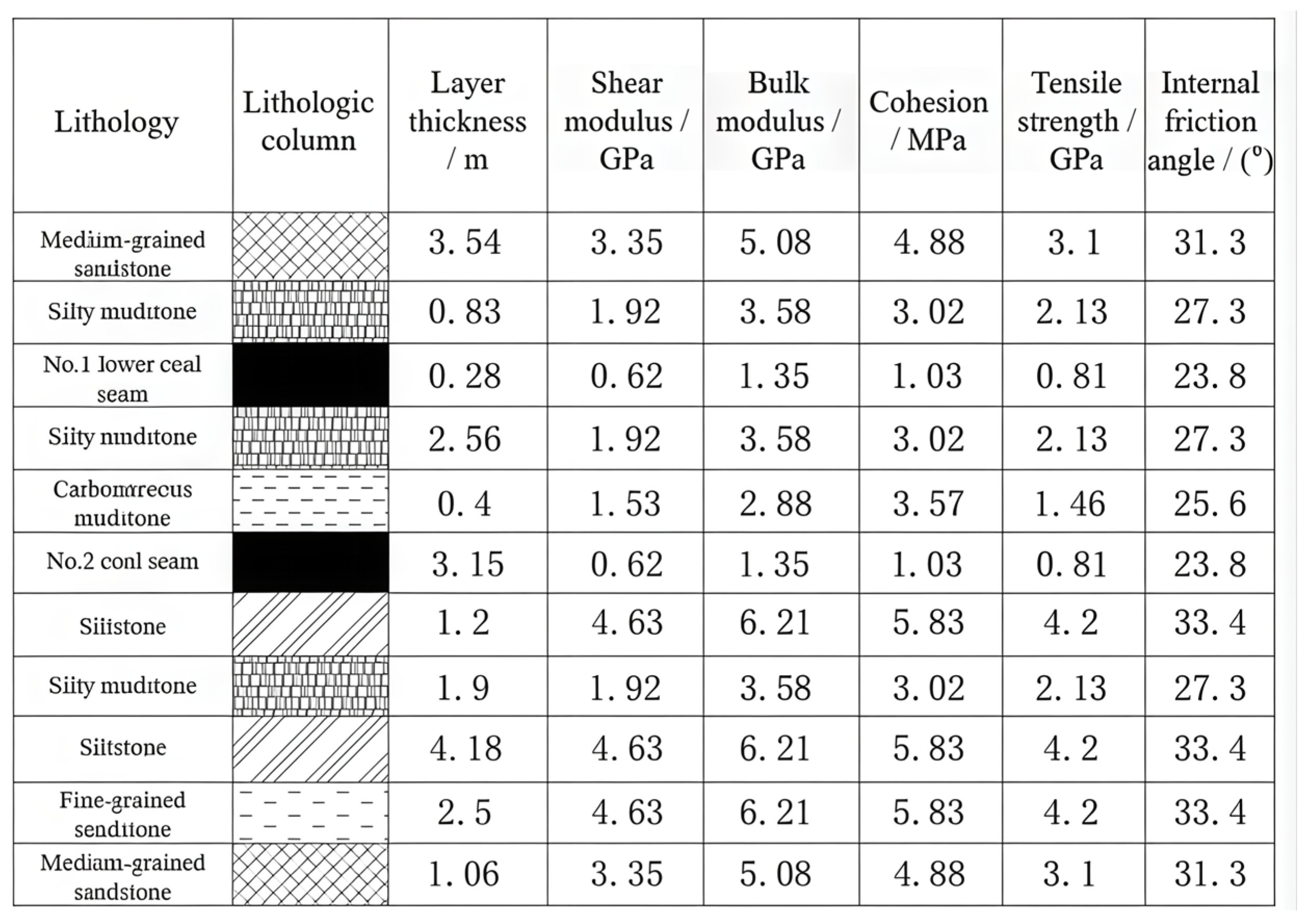
Shuguang Coal Mine is located in Xiaoyi City, Shanxi Province, with a designed production capacity of 0.90 Mt/a, and is classified as a high-gas mine. The 1224 transportation roadway is a gate roadway with a burial depth of 600 m. It has a rectangular cross-section of 5.5 m × 3.5 m and is excavated along the floor of Coal Seam No. 2. The thickness of Coal Seam No. 2 is 3.15 m; the immediate floor is siltstone, and the old floor is sandy mudstone. The lithologic column and mechanical parameters are shown in Figure 1.
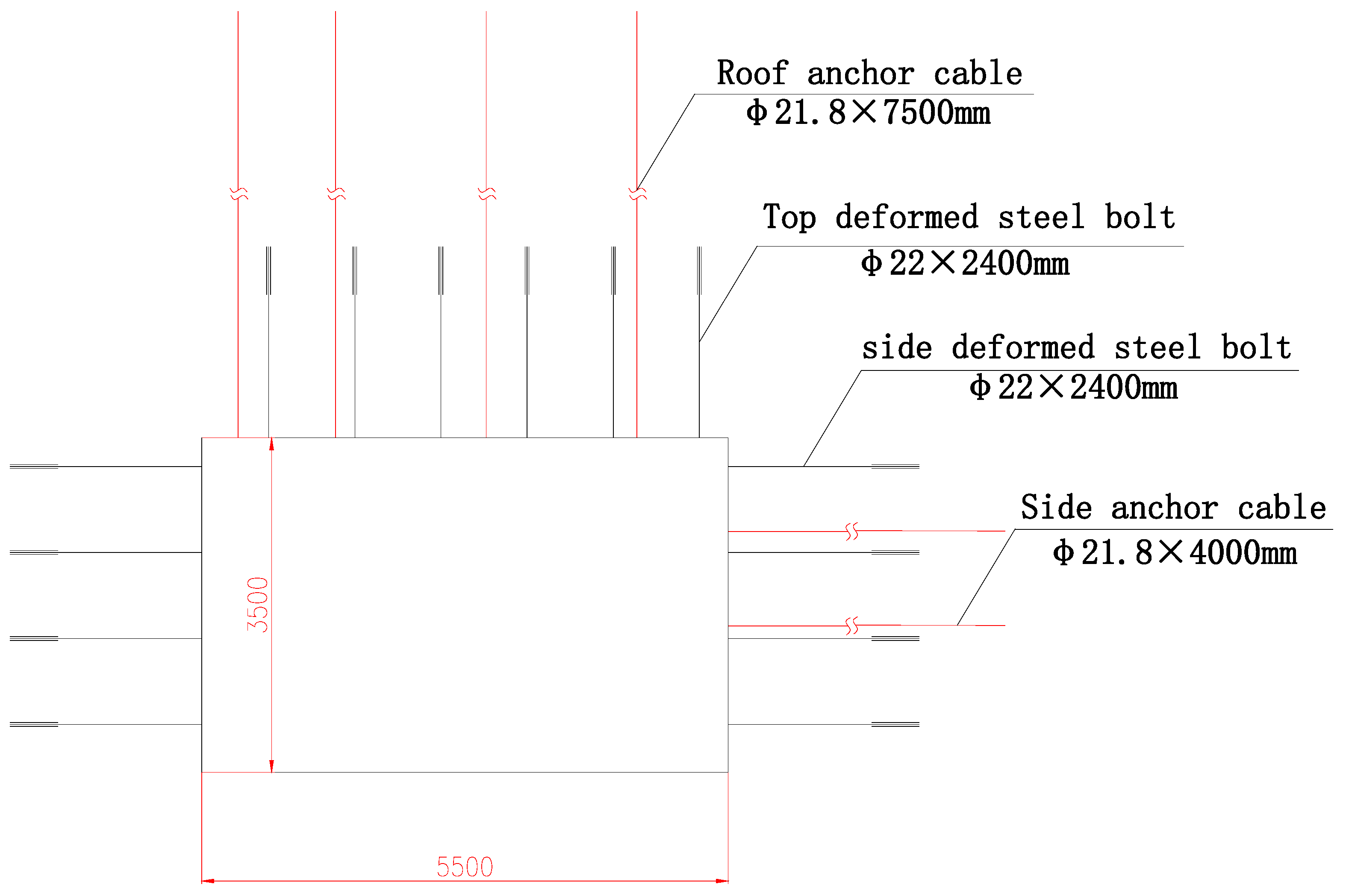
The support method and parameters for the 1224 transportation roadway of Shuguang Coal Mine are as follows: Φ 22 mm × 2400 mm threaded steel bolts are installed in the roof and both ribs, with a bolt spacing of 900 mm × 900 mm, and Φ 21.8 mm × 4000 mm cable bolts are installed in the non-mining rib for supplemental reinforcement. The specific support scheme is shown in Figure 2.
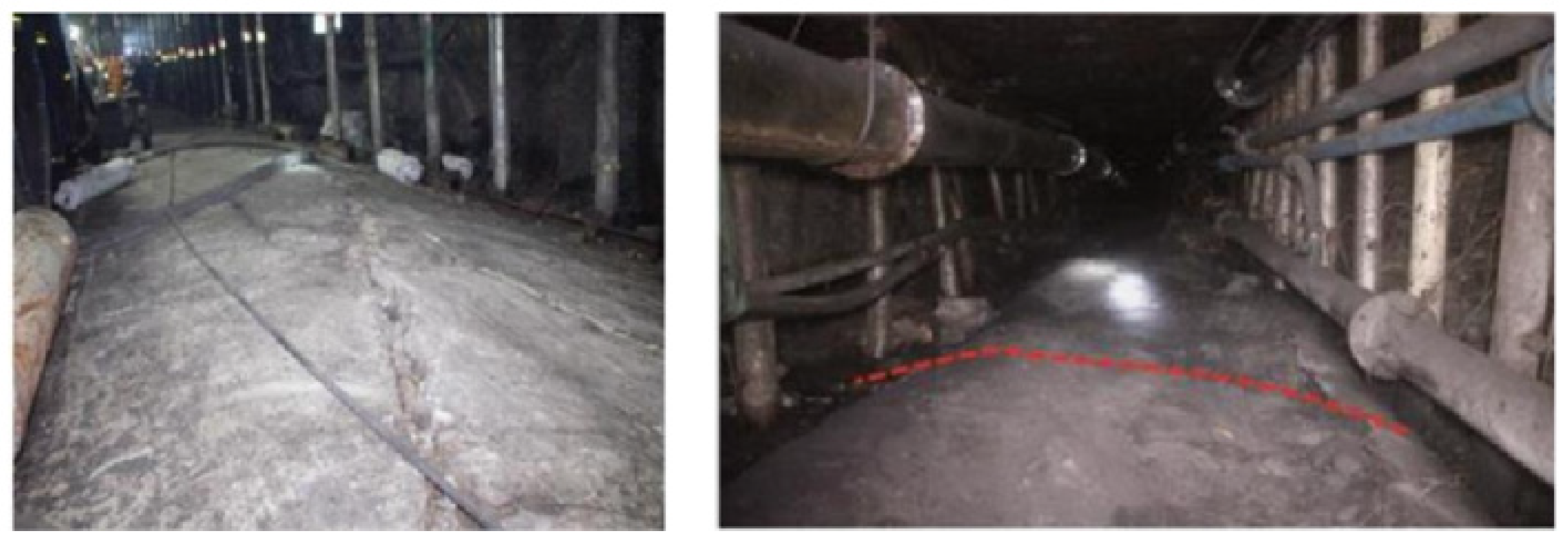
Under the effects of high in situ stress and mining disturbance, the floor of the deep roadway exhibits obvious floor heave, which seriously interferes with the normal operation of the working face. As shown in Figure 3, the field photograph of floor heave in the 1224 transportation roadway, support props are installed at the roadway ribs to control the deformation of the surrounding rock. These props are used to provide passive support for the rib rock mass, limit the lateral displacement of the roadway, and reduce the stress concentration at the floor, which is an important auxiliary support measure for the deep roadway with severe floor heave.

3. Calculation of Elastic Energy of Roadway Surrounding Rock and Analysis of Pressure Relief Slot Dimensions

3.1. Calculation and Analysis of Elastic Energy of Roadway Surrounding Rock in the Elastic State

It is assumed that the rock mass is in a hydrostatic stress state before roadway excavation [15], thus:
σ 1 = σ 2 = σ 3 = P 0
where σ1, σ2, and σ3 are the maximum, intermediate, and minimum principal stresses, respectively, in MPa, and P0 is the in situ stress, in MPa. In this study, P0 is taken as 15 MPa, corresponding to the overburden stress at a burial depth of 600 m.
Accordingly, the elastic energy density of the roadway surrounding rock is:
ν 0 = 1 2 E σ 1 2 + σ 2 2 + σ 3 2 2 μ σ 1 σ 2 + σ 2 σ 3 + σ 3 σ 1
where μ is Poisson’s ratio, taken as 0.25; E is the elastic modulus, taken as the equivalent elastic modulus of the surrounding rock, 6939 MPa.
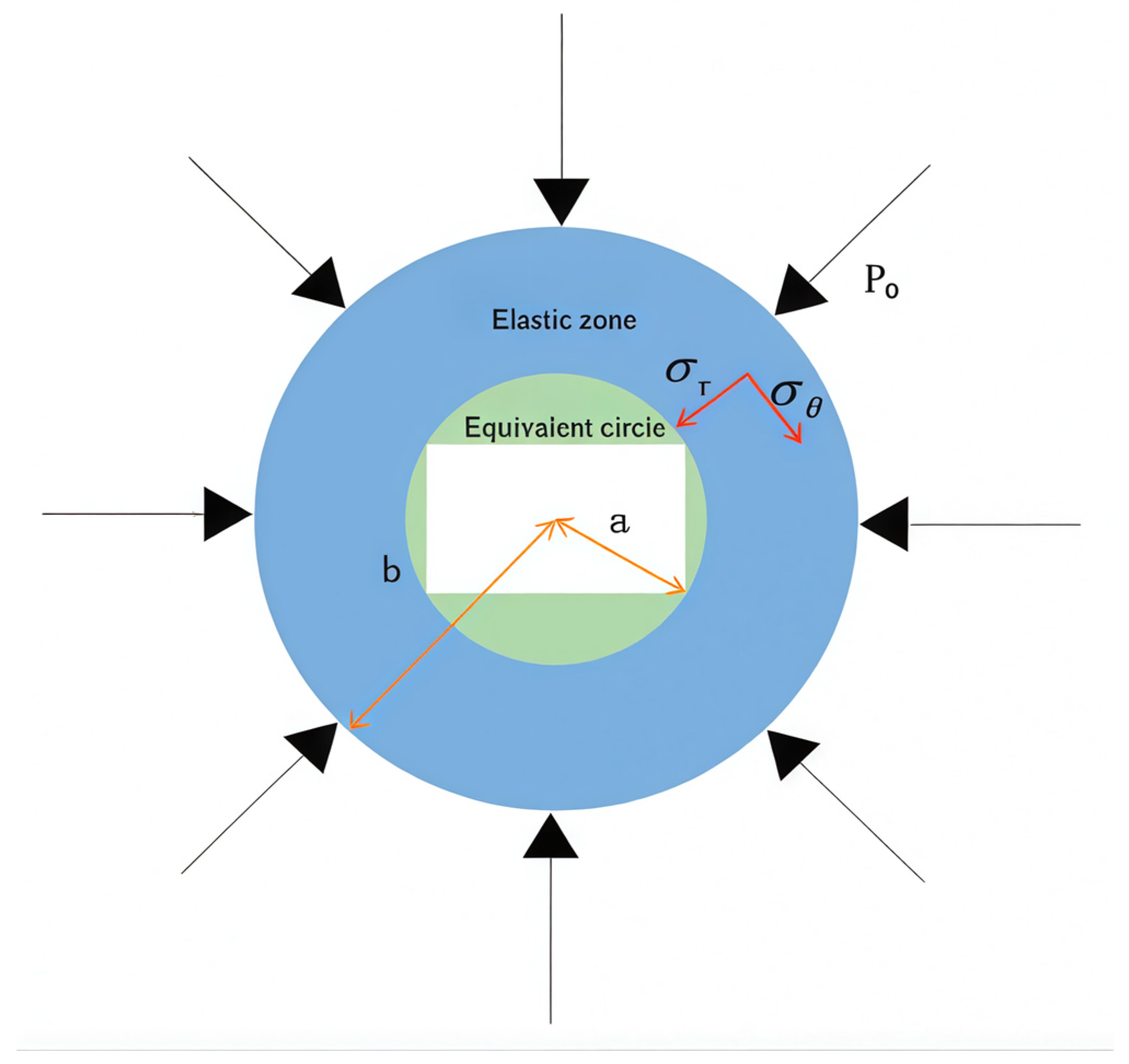
For a rectangular roadway, its equivalent circular radius is taken according to the area-equivalence principle. Substituting the roadway cross-sectional dimensions of 5.5 m × 3.5 m gives a 2.47 m. The error of this equivalence method mainly arises from the difference in stress distribution patterns between rectangular and circular cross-sections. Verification shows that, in the estimation of elastic energy in shallow and medium-buried roadways, the error of the area-equivalence method can be controlled within 10%, making it suitable for qualitative and semi-quantitative analysis. The surrounding rock is regarded as an elastic body, and the effect of the support system is neglected; therefore, the problem can be treated as a plane-strain problem. Its mechanical model is shown in Figure 4. Here, b is the radius of the elastic zone, in m, and is taken as 10 m, and σr and σθ are the radial and tangential stresses in the elastic zone, respectively, in MPa.
After roadway excavation, the stress distribution formula for the surrounding rock [16] is:
σ r = P 0 1 a 2 r 2 ; σ θ = P 0 1 + a 2 r 2
Substituting the axial stress σ z = μ σ r + σ θ , radial stress, and tangential stress into Equation (2) yields the formula for elastic energy density:
ν ε = 1 + μ ( 1 - 2 μ ) P 0 2 E + ( 1 + μ ) P 0 2 a 4 E r 4
Roadway excavation causes stress-field reconstruction and induces corresponding displacement in the surrounding rock mass. According to the law of energy conservation, the additional energy generated in this process must originate from external forces. The displacement at any position within the surrounding rock mass is [16]:
u r = P 0 a 2 2 r G
Considering the extent of boundary b, the work done by the external force is [17]:
W = π P 0 2 a 2 2 G 1 a 2 b 2
where G is the shear modulus in MPa, and is taken as 2775.6 MPa, and r is the distance from the roadway center in m.
Under ideal conditions, without considering heat exchange and other effects, the elastic energy stored in the roadway surrounding rock mass is equal to the work done by the external force.
Because the area-equivalence method is applicable to the calculation and analysis of elastic energy in shallow and medium-buried roadways, whereas this study concerns a deep roadway, the use of an elastoplastic model together with consideration of the in situ stress and surrounding-rock characteristics specific to deep roadways can effectively reduce the error and control it within a reasonable range to a certain extent.

3.2. Calculation and Analysis of Elastic Energy of Roadway Surrounding Rock in the Elastoplastic State

After roadway excavation, the surrounding rock readily enters an elastoplastic state. Using the Mohr–Coulomb yield criterion [17] as the plastic-failure criterion yields:
σ θ = 1 + sin φ 1 sin φ σ r + 2 c cos φ 1 sin φ
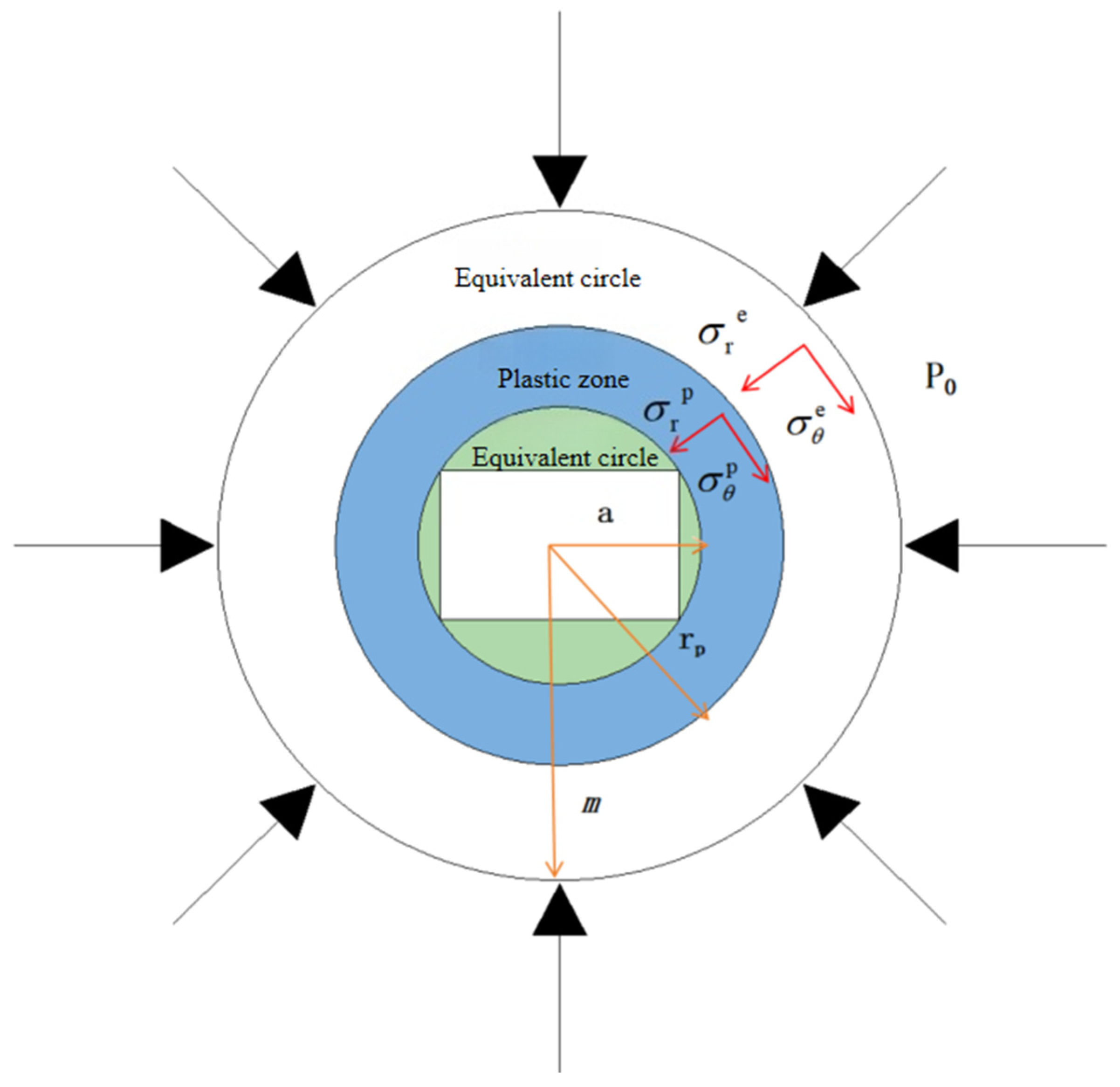
where c is the rock cohesion in MPa; φ is the internal friction angle in degrees. Therefore, the mechanical model includes an elastic zone and a plastic zone, as shown in Figure 5. σre and σɵe denote the radial and tangential stresses in the elastic zone, respectively, and σrp and σɵp denote the radial and tangential stresses in the plastic zone, respectively, in MPa.
From the elastoplastic analytical solution, the stress in the elastic zone is [18]:
σ r e = P 0 P 0 σ θ p r P 2 r 2 σ θ e = P 0 + P 0 σ θ p r P 2 r 2
where σ r p is the radial stress at the elastoplastic boundary, in MPa.
The stress in the plastic zone is [18]:
σ r P = A N r N 1 B σ θ P = A r N 1 B
where N = 1 + s i n φ 1 s i n φ ; A = B a N 1 ; B = c c o t φ .
The radius of the plastic zone is [18]:
r P = a P 0 + ccot φ ccot φ × 2 N + 1 1 N 1
The radial stress at the elastoplastic boundary is [18]:
σ rp = 2 P 0 S N + 1
where S = 2 c c o s φ 1 s i n φ .
Treating the problem as one of plane strain, the elastic energy density can be written as:
ν e = 1 μ σ r 2 + σ θ 2 2 μ σ r σ θ 4 G
The displacement of the roadway surrounding rock after excavation disturbance can be obtained by [16]:
u r = P 0 σ rp r P 2 2 r G
The work done by the external force is obtained by [17]:
W = π r P 2 P 0 P 0 σ r p 2 G
During roadway excavation, the sum of the elastic strain energy accumulated in the surrounding rock and the dissipated energy is equal to the total deformation energy. According to the law of energy conservation, combined with the analysis of Equation (14), Equation (15) can be obtained to describe the overall distribution of energy during the deformation of the roadway surrounding rock:
U = W = U 1 = U P
where U1 is the retained elastic energy under the stable state; Up is the plastic dissipated energy.
During floor-slotting pressure relief, energy transfer in the rock mass is mainly manifested as the processes of energy accumulation, release, and redistribution within the rock mass. When floor-slotting pressure relief is carried out, fractures gradually develop in the rock-mass region with concentrated stress, and the originally accumulated elastic energy is progressively transformed into dissipation energy associated with fracture propagation and deformation, thereby realizing the spatial redistribution of energy. Floor slotting can establish a new stress-equilibrium state within the rock mass, inducing energy transfer from high-energy regions to low-energy regions and suppressing the occurrence and development of floor heave.
The mechanism of energy transfer can be explained from two aspects. On the one hand, floor slotting directly weakens the structural strength of the rock mass, guides fracture propagation, and releases part of the elastic energy in high-stress regions. On the other hand, the fracture channels formed by the pressure relief measure change the distribution characteristics of the internal stress field and energy field of the rock mass, thereby redistributing stress and realizing optimized energy allocation within the floor rock mass.
The slotting behavior disturbs the stress field of the surrounding rock through slot-mouth damage, leading to local stress release, a reduction in elastic energy, and a new round of plastic-zone expansion. The overall energy balance relationship is then adjusted to:
W = U 1 + U p + U d
where U1′ is the retained elastic energy after slotting; UP′ is the newly increased plastic dissipated energy after slotting; and Ud is the energy transferred to the deep rock mass after slotting.
After slotting, the elastic strain energy is reduced to U1. Part of the energy is converted into plastic dissipation energy UP through slot-wall damage, and part is transferred to or released into the deeper rock mass through the slot. This process effectively alleviates stress concentration in the floor region, reduces floor deformation, and thereby suppresses the occurrence of floor heave.

3.3. Analysis of Pressure Relief Slot Dimensions

Calculation of the reasonable depth of the pressure relief slot:
Qin Xuanye, Shen Hailong, and others [19,20,21] demonstrated through comparative studies of roadways with and without pressure relief slots that setting pressure relief slots yields a favorable effect on floor heave control and improvement of the surrounding-rock stress state. Zhao Zhewen [22], by combining theoretical analysis with numerical simulation, studied the inhibitory effect of slotting pressure relief on floor heave under different slot widths and determined that, when the slot depth is 2.75 m, the floor heave amount of the roadway decreases significantly and the control effect is remarkable. However, to ensure that the pressure relief slot does not affect the normal use of the roadway, a slot depth of 2.5 m was selected for the test.
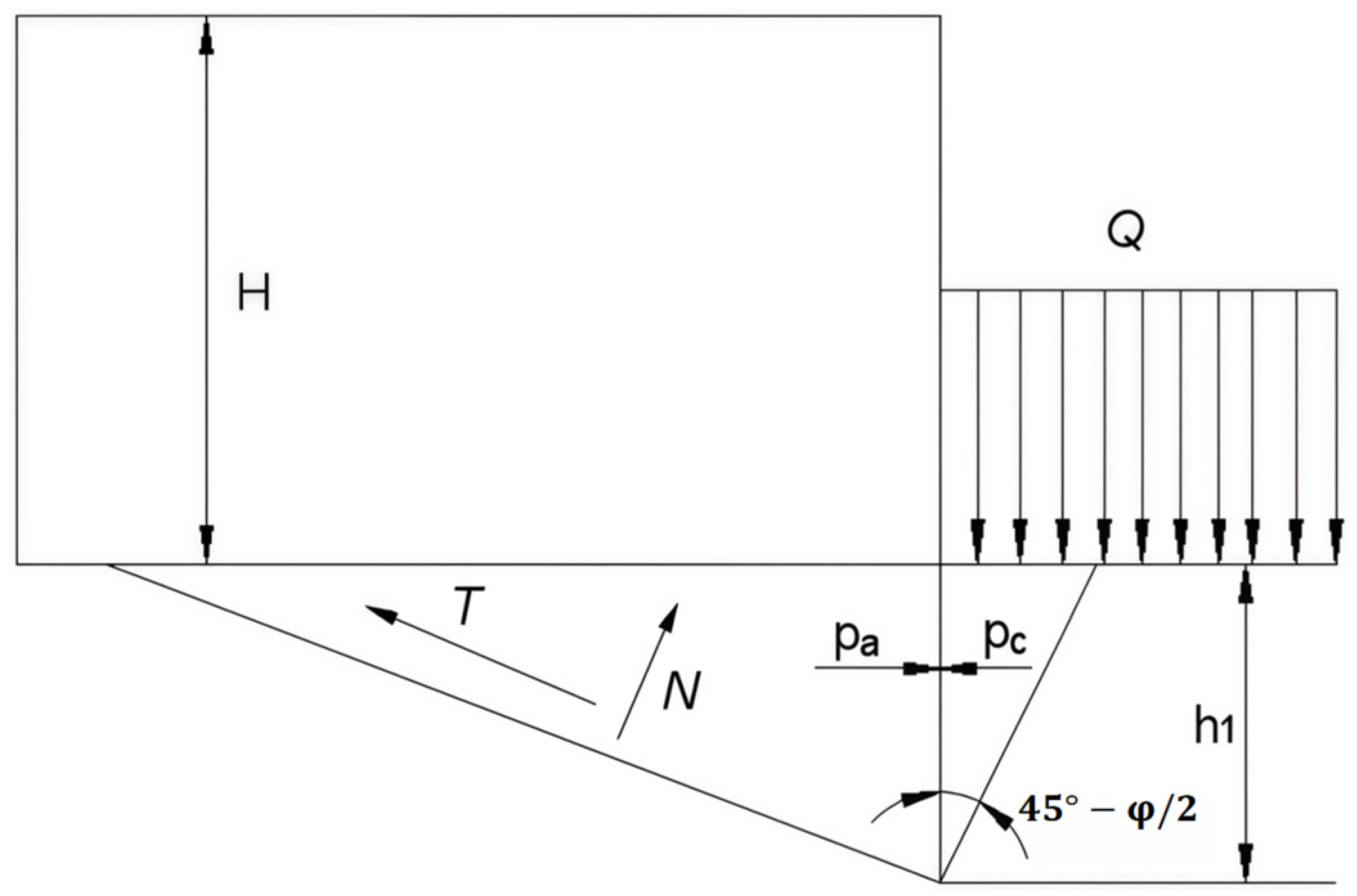
By calculating the failure depth h1 of the roadway floor, the schematic diagram of floor loading is shown in Figure 6:
h 1 = Q γ × k a k a k a k a = 1 s i n φ 1 + s i n φ ; k c = 1 + s i n φ 1 s i n φ
where Q is the load borne by the coal pillar on the roadway side in kPa; γ is the rock mass bulk density in kN/m3, taken as 25 kN/m3; φ is the internal friction angle of the rock stratum in degrees, taken as 33.4°; Pa is the active stress; Pc is the passive stress; ka is the active stress coefficient; kc is the passive stress coefficient; T is the shear force; and h1 is the depth of the pressure relief slot.
Calculation of the reasonable width of the pressure relief slot:
From the above analysis, the optimal slotting depth is 2.5 m, and the horizontally distributed load acting on the roadway floor can be obtained according to the formula:
P = λ P 0
where λ is the lateral pressure coefficient, taken as 1.2; P0 is the in situ stress, taken as 15 MPa.
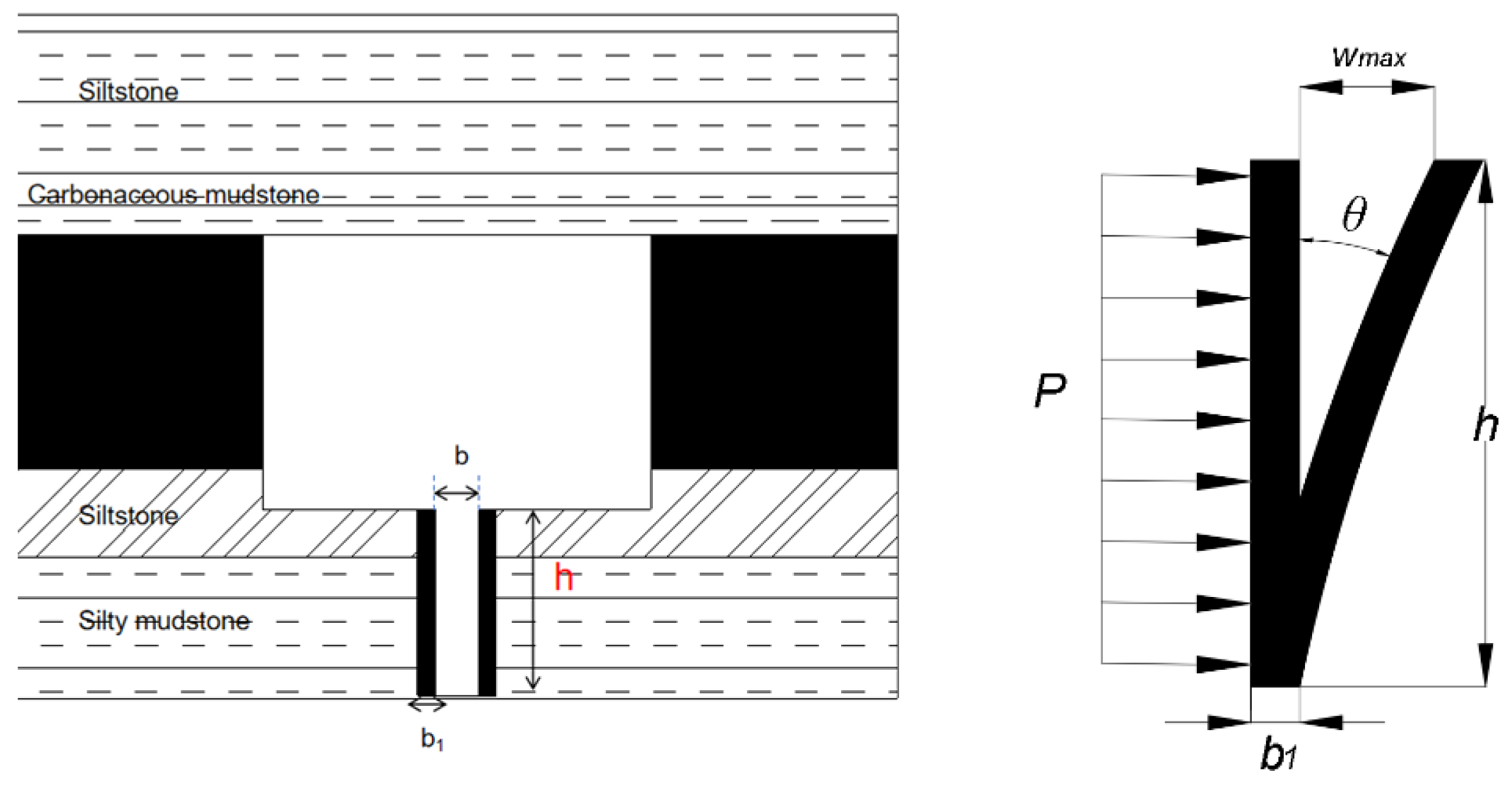
The mechanical model related to the pressure relief slot is established as shown in Figure 7, and it is analyzed as a short cantilever structure, which is more conducive to maintaining stability.
The rotation equation and deflection-curve equation of the cantilever beam can be obtained by:
θ = ph 3 3 E I
w = ph 4 8 E I
According to Equations (17) and (18), the following can be obtained:
w max = 3 θ h 4
According to the symmetry of the pressure relief slot arrangement, the slot width b should satisfy:
b 2 w max
Substituting the engineering allowable deflection in Equation (19) (taken as 0.085 m) into Equation (21) and taking the safety factor k = 1.3 yields:
b ≥ 1.3 × 2 × 0.085 = 0.221 m
Considering the nominal parameters of the construction equipment, the width of the pressure relief slot is finally determined to be 0.2 m as a reasonable dimension.
According to the specific conditions of the 1224 transportation roadway in Shuguang Coal Mine and the performance level of the existing slotting machine, the selected slotting dimensions (2.5 m × 0.2 m) not only optimize floor heave control but also minimize construction effort and resource usage. Although exact cost data are not available at this stage, the chosen dimensions were determined based on practical considerations of machinery capacity, excavation efficiency, and material usage. Alternative slotting depths and widths were also considered, but the selected dimensions provide the best balance between effectiveness and operational efficiency.

4. Simulation Analysis of Energy Distribution Law of Floor Slotting for Pressure Relief

This study comparatively analyzes the differentiated distribution characteristics of the surrounding-rock stress field and energy field under two conditions, namely roadway excavation without slotting pressure relief and roadway excavation with slotting treatment. From the perspective of energy transformation, it explains the mechanism of surrounding-rock failure and reveals that the essence of rock-material failure is a dynamic transformation process among different forms of energy. Considering that the magnitudes of kinetic energy and thermal energy are much lower than those of elastoplastic energy, the damage process of the roadway’s surrounding rock is essentially a dynamic response triggered by the imbalance between energy storage and energy consumption. The imbalance between the internal energy release rate and the dissipation efficiency of the surrounding-rock system is the key inducing factor for the instability of the roadway engineering structure. Controlling the energy of the surrounding rock through slotting pressure relief is an active form of guidance. Its core mechanism is to artificially create a weak structure in the roadway floor so as to actively intervene in and alter the stress state and energy distribution of the surrounding rock, thereby controlling surrounding-rock deformation and maintaining roadway stability. The influence of kinetic energy, thermal energy, and other forms of energy is neglected below.

4.1. Establishment of Numerical Model

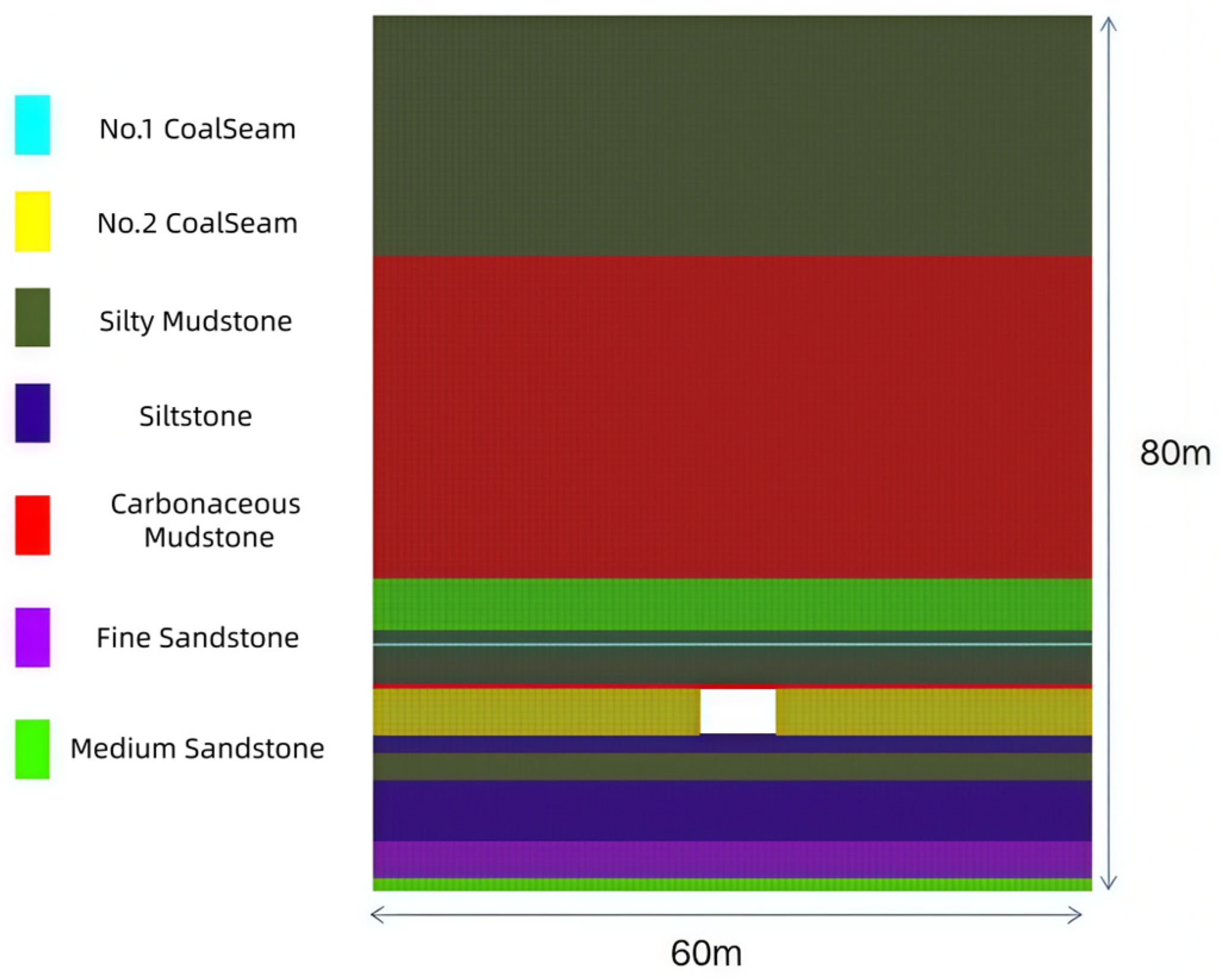
Combined with the actual geological background of the 1224 transportation roadway, an FLAC3D numerical model was established (Figure 8). The roadway cross-section was designed as 5.5 m × 3.5 m, and the overall model size was set to 60 m × 1 m × 80 m (X × Y × Z). Fixed-displacement constraint boundaries were adopted on the four sides and the bottom of the model. A vertical stress of 15 MPa was applied at the top of the model to simulate the pressure of the overlying strata at a burial depth of 600 m. Initial horizontal stresses were applied in the model using a lateral pressure coefficient of 0.8 relative to the vertical overburden stress of 15 MPa, resulting in an initial horizontal stress of 12 MPa. These stresses were applied uniformly before excavation to represent the natural stress state of the surrounding rock. The Mohr–Coulomb constitutive model was used. The surrounding rock of the 1224 transportation roadway in Shuguang Coal Mine is mainly composed of sandstone and silty mudstone, with relatively low strength and proneness to deformation. The mechanical parameters of each stratum are shown in Figure 1.

4.2. Floor Deformation Characteristics and Energy Distribution After Roadway Excavation

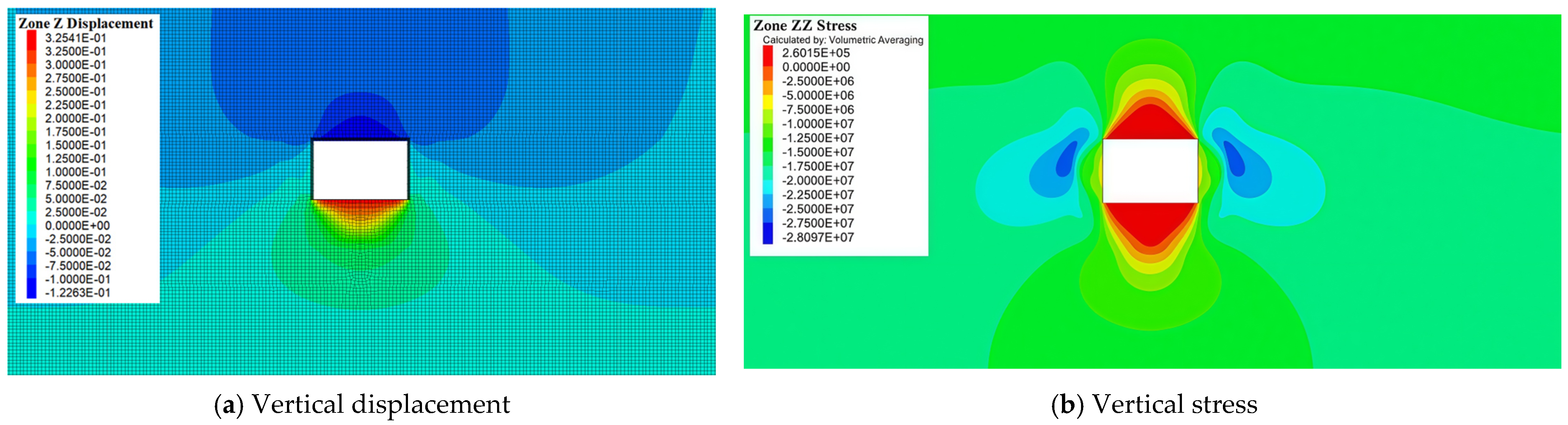
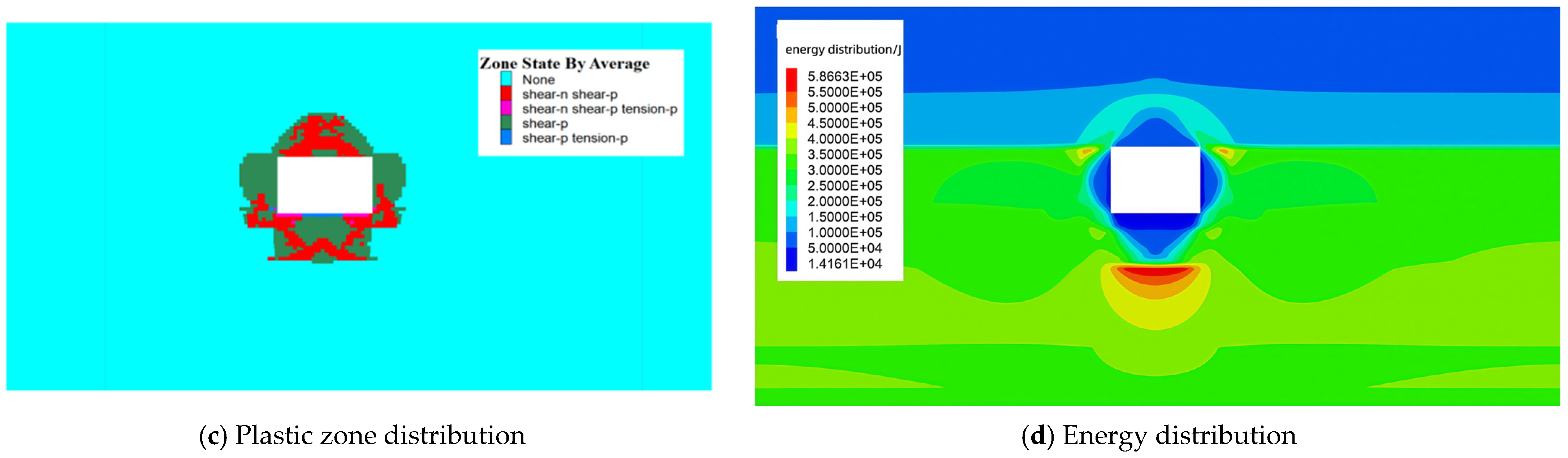
To investigate the evolution law of floor displacement, a numerical model after roadway excavation was established by coding the built-in FISH language in FLAC3D.The floor displacement and stress redistribution were analyzed based on the principal stresses and corresponding strains, and the energy distribution at each point was calculated using the following formula (Equation (23)):
U = 1 2 σ 1 ϵ 1 + σ 2 ϵ 2 + σ 3 ϵ 3
where σ i and ϵ i (i = 1, 2, 3) are the principal stresses and corresponding strains at each point. For clarity, the contour plots in Figure 9 display the vertical stress ( σ z ), although the maximum and minimum principal stresses ( σ 1   a n d   σ 3 ) were also calculated and are consistent with the vertical stress trends.
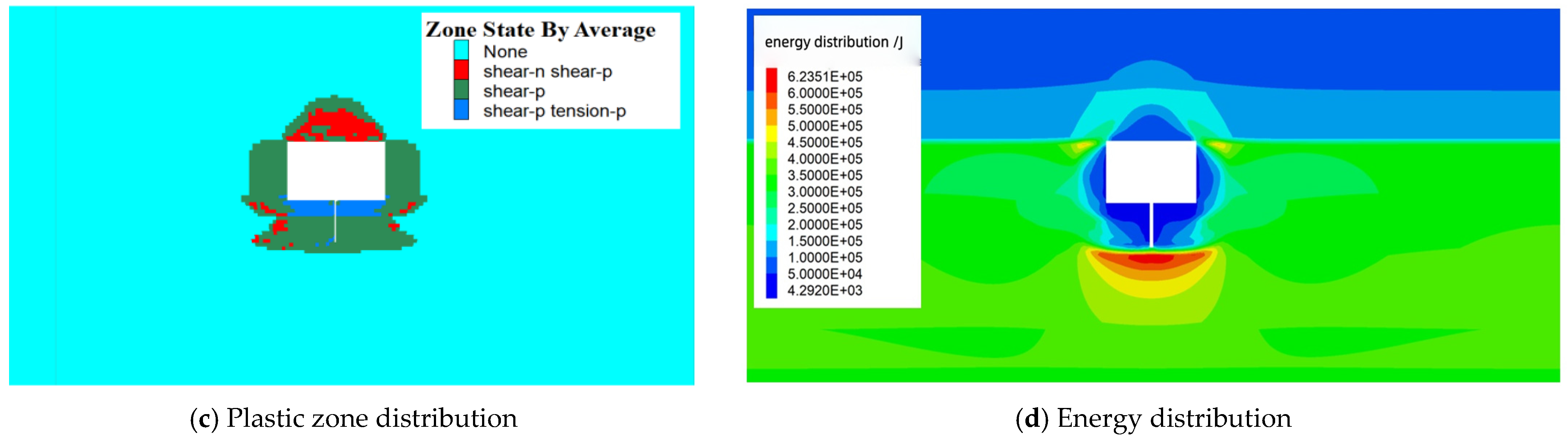
Based on the application of the stress calculation formula, post-processing was conducted using Tecplot 360 software, with emphasis on analyzing the energy accumulation state and stress redistribution characteristics of the surrounding rock so as to reveal the relationship between energy distribution and the stress field. The contour plots of vertical displacement, stress, plastic zone, and energy distribution of the surrounding rock after roadway excavation are comprehensively presented in Figure 9.
After roadway excavation, observation of the vertical displacement contour plot of the surrounding rock shows that, without slotting pressure relief measures, the maximum floor deformation of the roadway reaches 30 cm, and the maximum floor heave is located at the center of the floor. From the perspective of stress, roadway excavation reconstructs the stress field of the surrounding rock, causing a substantial increase in vertical stress on both sides and in the floor, accompanied by obvious stress concentration in the roof and floor regions. The influence range of this stress concentration is wide and is particularly prominent in the roadway ribs, where it can readily induce shear failure and trigger floor heave. The plastic-zone characteristics show that the roadway floor is dominated by shear failure, while composite failure occurs at the junctions of the ribs and floor, thereby causing rib extrusion deformation. From the perspective of energy, after roadway excavation, the energy in the floor region is high, especially in the contact region between the floor and the surrounding rock, indicating that the floor region bears a large amount of energy accumulation. Energy is transferred from the floor region to both sides of the roadway. As floor energy is gradually released, floor deformation progressively intensifies. The energy is transformed from elastic deformation energy into plastic energy and ultimately leads to plastic deformation of the floor, namely the formation of floor heave.

4.3. Analysis of Floor-Slotting Pressure Relief Control Technology

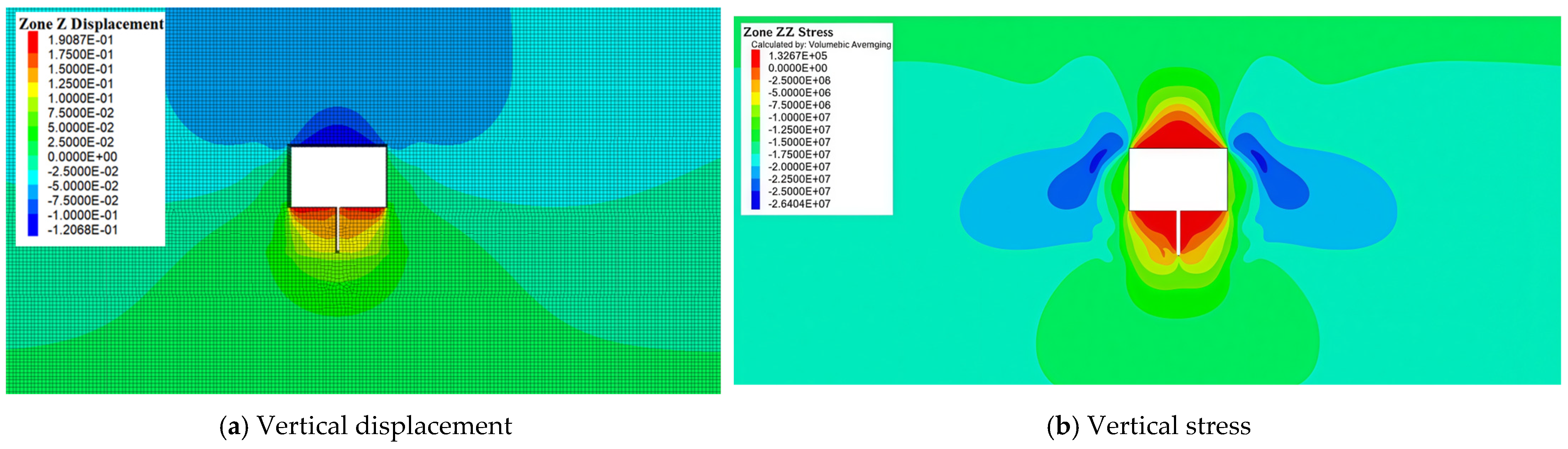
According to the analysis in Section 3.3, the dimensions of the pressure relief slot were determined to be a width of 0.2 m and a depth of 2.5 m. Under these parameters, a simulation study on the deformation characteristics of the roadway surrounding rock was carried out. The results show the contour plots of vertical displacement, stress, plastic zone, and energy distribution of the surrounding rock after floor-slotting pressure relief, as shown in Figure 10.
Through numerical simulation, the stress and energy distribution characteristics of the roadway’s surrounding rock under two pressure relief conditions, namely floor slotting and no slotting, were comparatively analyzed, and the following results were obtained. Floor-slotting pressure relief improves energy accumulation in the high-stress zone and alleviates energy concentration in potentially hazardous areas. After slotting, the overall stress field of the roadway surrounding rock decreases, the horizontal stress in the floor region is significantly reduced, the stress concentration band migrates to a greater depth, and the energy distribution of the surrounding rock is restructured. Analysis of plastic-zone evolution indicates that floor-slotting pressure relief expands the plastic zone; the coal-rock mass at the slot’s bottom corners undergoes plastic transformation due to the release of elastic energy, and new energy accumulation appears in the slot’s bottom region, while the floor’s plastic zone continues to develop toward greater depth. The energy migration characteristics show a two-way transfer of the surrounding rock’s energy: on the one hand, energy is transferred to the deep rock mass, causing the maximum surrounding-rock energy value to increase from 6.0 × 10⁵ J to 6.2 × 10⁵ J, with the energy peak position shifting downward by 2.5 m and the energy at the same floor position decreasing; on the other hand, the extent of the high-energy zone originally concentrated in the floor plastic band is significantly reduced after slotting, confirming that this technology can effectively alleviate local stress concentration and reduce the risk of floor heave and roof instability. The work effect of slot excavation on the surrounding rock is minimal, but it significantly increases the accumulation of elastic energy at the same position in the roof. This phenomenon reveals the synergistic effect of reduced surrounding-rock energy release and decreased plastic dissipation: the energy concentrated around the pressure relief slot is released to act on the surrounding rock and drive its deformation, while the energy of the corresponding surrounding rock in the roadway floor shows a synchronous weakening trend. This directly confirms the intrinsic relationship between the elastic energy release process and the deformation mechanism of the surrounding rock. According to the vertical displacement, after slotting pressure relief is implemented, the roadway floor heave amount decreases from 30 cm to 20 cm, a reduction of 33%, fully demonstrating the effectiveness of this technology in controlling floor heave deformation.

5. Industrial Test

To realize the effective application of floor-slotting pressure relief technology in deep roadways, the design of a reasonable and efficient slotting machine is crucial. As the key equipment for this technology, the slotting machine can precisely control slotting depth, width, and position by intervening in the roadway floor, thereby effectively changing the stress state and energy distribution of the surrounding rock and, in turn, suppressing floor heave deformation.

5.1. Design of the Slotting Machine

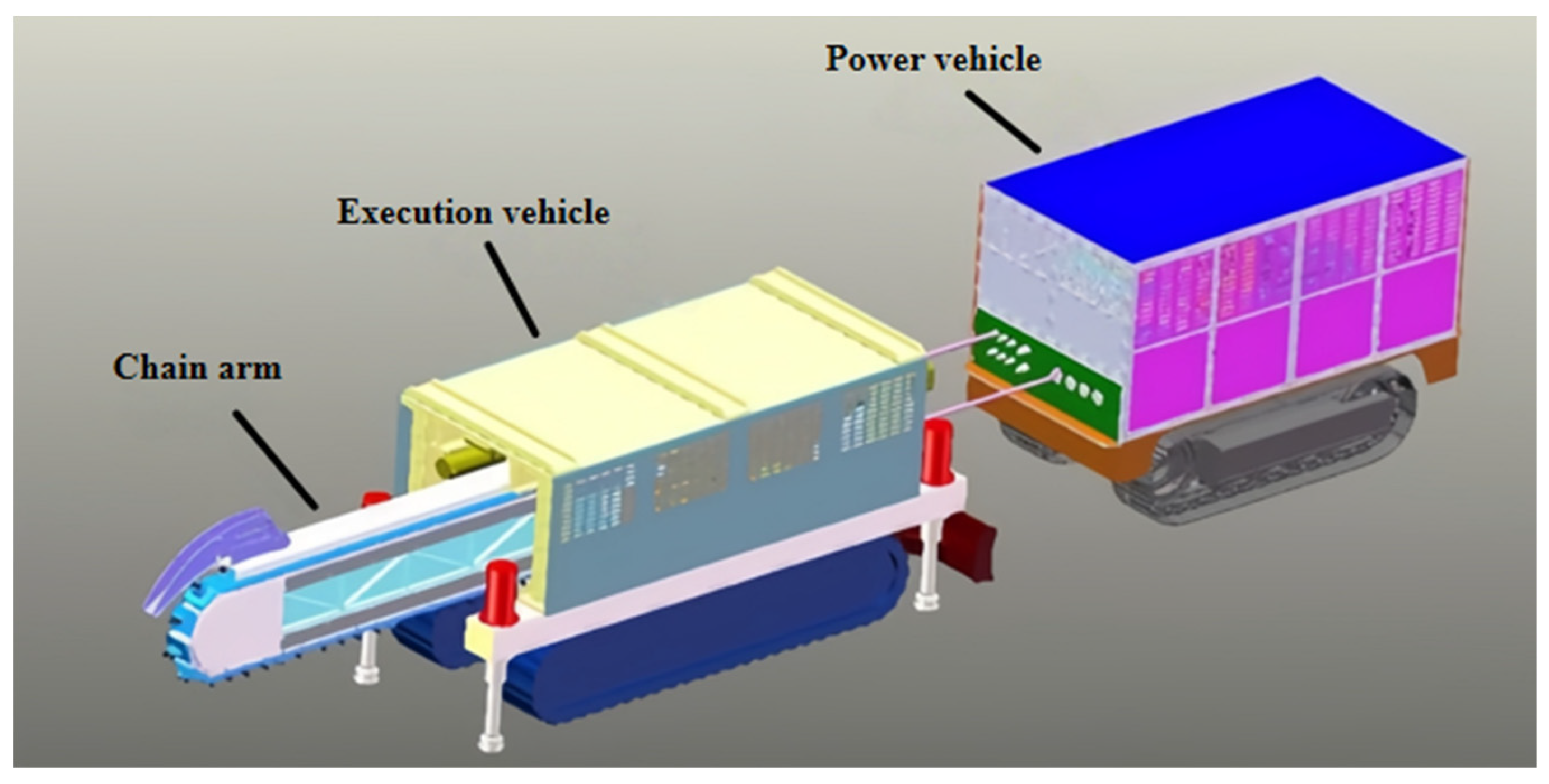
Because the roadway space is relatively small and the underground transport of large machinery is difficult, the slotting machine was designed to consist of two parts, namely a power vehicle and an execution vehicle. The execution vehicle is composed of a traveling device (self-balancing system), a cutting device, an electric control box, an intelligent water-control system, and a hydraulic system. The power vehicle is composed of a traveling system, a power-supply box, an operation console, and a hydraulic system, as shown in Figure 11.
The specific parameter summary is shown in Table 1.

5.2. Field Test

Through the above theoretical calculations and simulation-effect analysis, it was determined that a slotting pressure relief test should be carried out in the 1224 transportation roadway of Shuguang Coal Mine. The main technical parameters were a floor-slotting pressure relief depth and width of 2.5 m × 0.2 m.
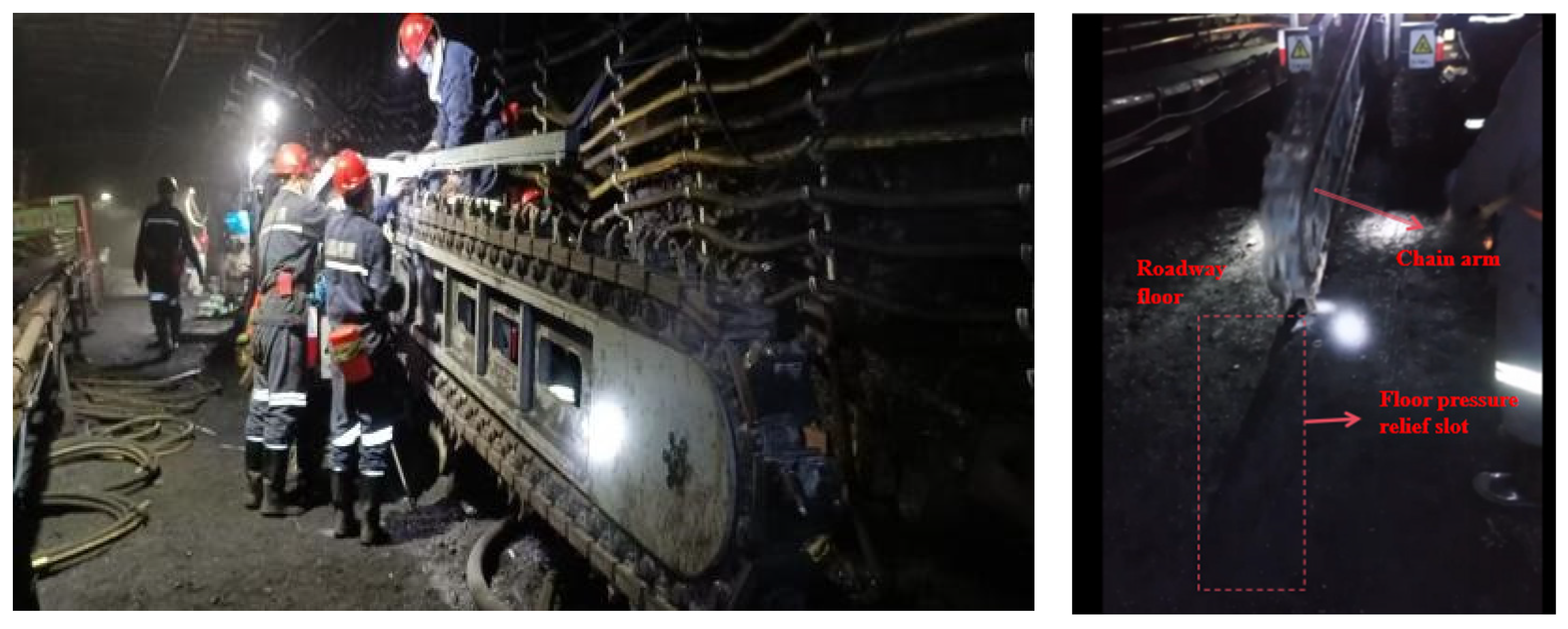
The field construction is shown in Figure 12.
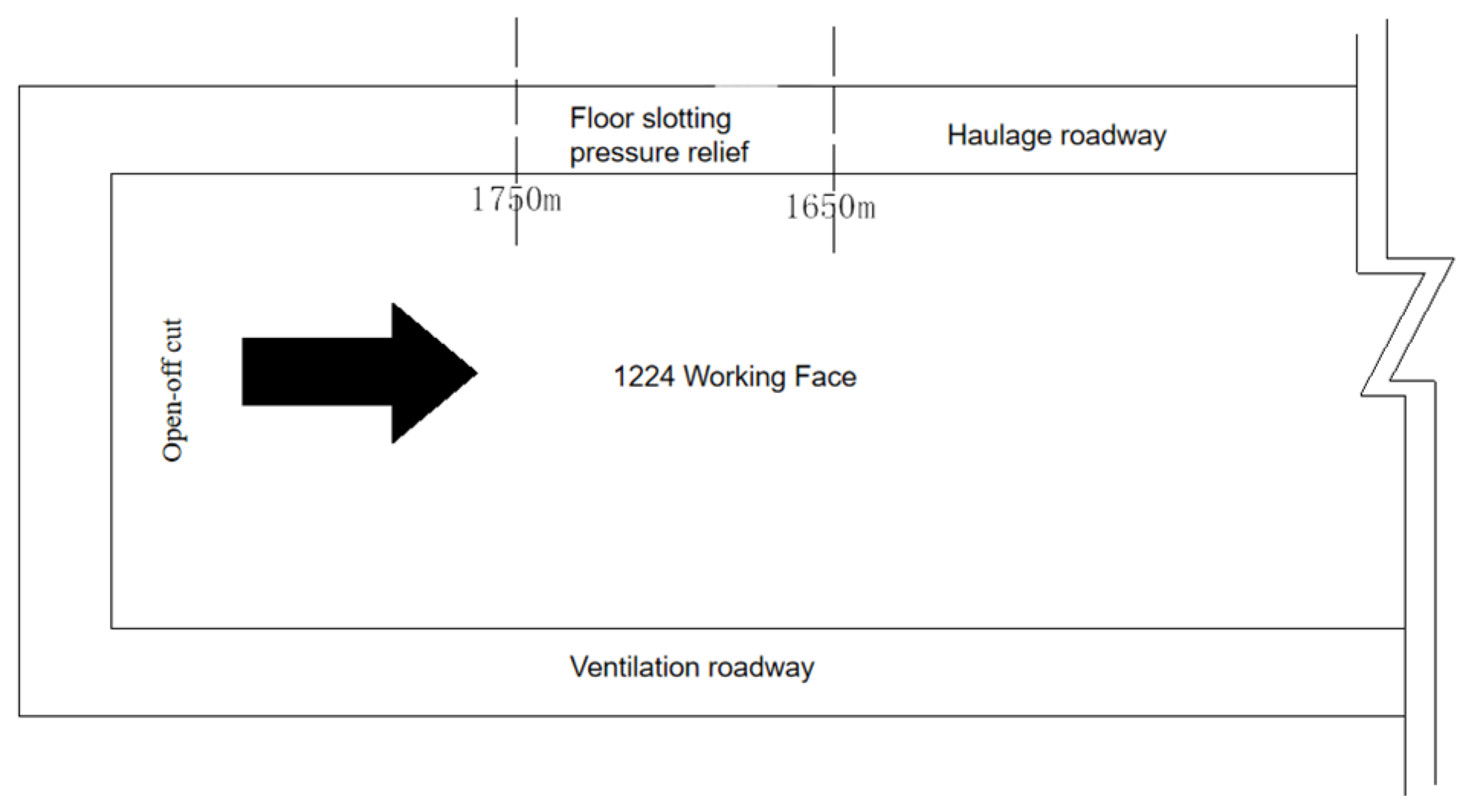
To evaluate the actual application effect of slotting pressure relief technology, slotting pressure relief was carried out in the 1650–1750 m section of the 1224 transportation roadway, as shown in Figure 13.
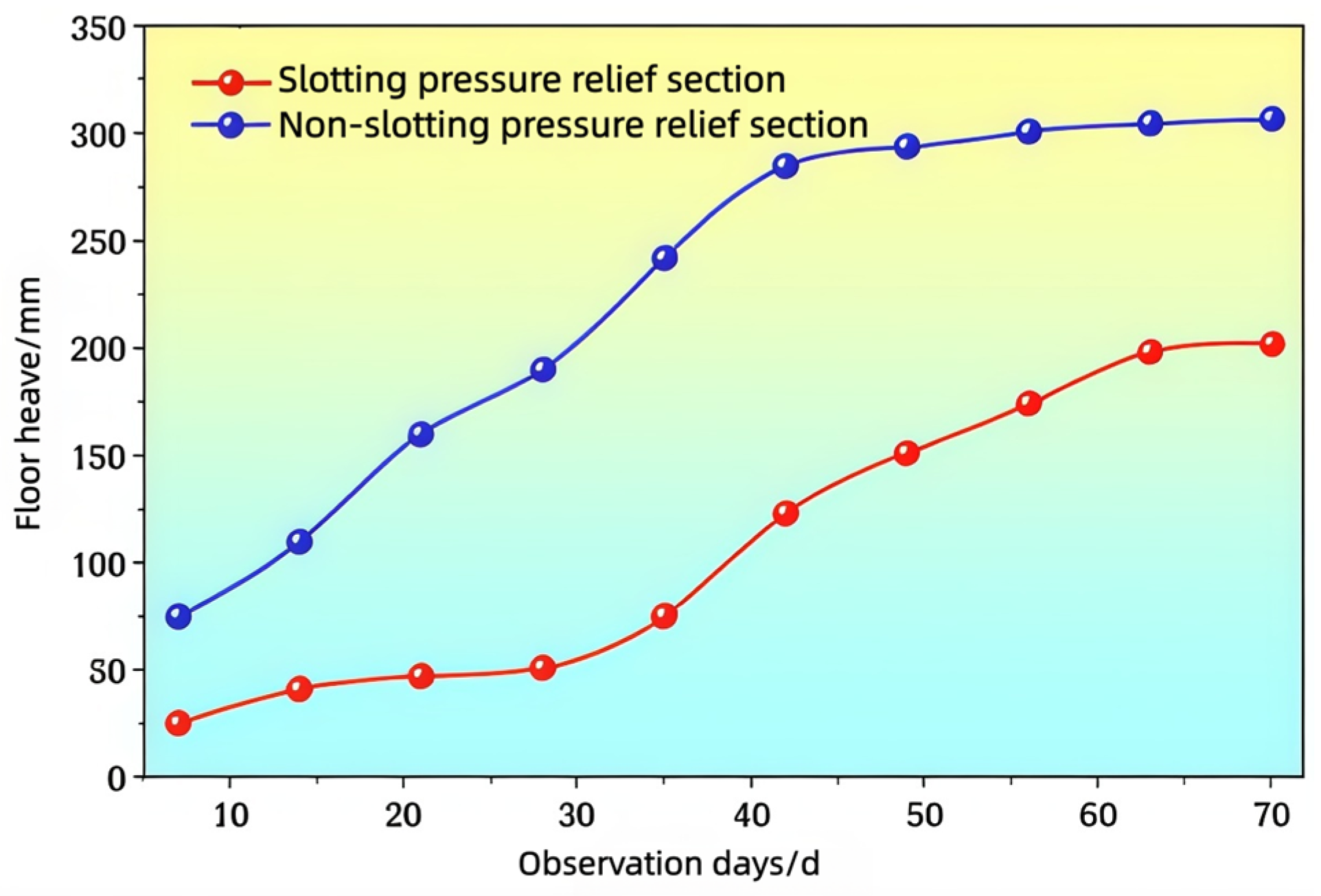
The floor heave amount was calculated using the cross-measurement-point method [23]. Measurement points were arranged on the floor section of the 1224 transportation roadway, and the floor heave value was determined based on the vertical displacement data obtained from field monitoring. The calculated results were then compared with the floor deformation monitoring data from the non-slotting section of the same roadway. The evolution characteristics of floor heave in the slotting section and the non-slotting section are shown in Figure 14.
The field measurements shown in Figure 14 were conducted immediately after excavation and slotting. Observations indicate that the slot gradually closes over time, while the horizontal displacement of the slot edges remains small and within expected limits. No significant interpenetration between opposing slot edges was observed in either the field or the numerical model. Monitoring results further show that the floor heave magnitude decreases significantly after slotting compared with sections without slotting. Initially, the closure of the pressure relief slot led to a slow growth of floor heave. As time progressed, slotting effectively reduced the release of elastic energy in the surrounding rock, thereby slowing the growth rate of floor heave. These observations confirm that applying slotting pressure relief effectively controls floor heave and contributes to overall roadway stability.

6. Conclusions

Based on a comparative analysis of the stress-field and energy-field distributions of the surrounding rock in the 1224 transportation roadway of Shuguang Coal Mine under the application of floor-slotting technology, the conclusions are as follows:
(1)
By combining theoretical analysis, numerical simulation, and field tests, it is quantitatively revealed that high-energy accumulation in the floor rock mass is the fundamental cause of floor heave. The study shows that slotting pressure relief forms a weak plane structure, converts the accumulated elastic energy into plastic dissipation energy, and transfers it to deeper strata, thereby verifying the effective control mechanism of “energy release–stress redistribution–deformation suppression”.
(2)
Slotting pressure relief technology can significantly change the stress distribution state of the surrounding rock, effectively guide the energy-transfer path, reduce the horizontal stress in the high-stress zone of the floor, narrow the range of vertical stress concentration, and improve the mechanical environment of the surrounding rock.
(3)
Field strata-pressure monitoring results show that slotting pressure relief technology provides directional deformation space for floor strata, effectively releases horizontal stress, changes the energy release mode of the surrounding rock, suppresses the abrupt release of elastic energy, and thereby reduces the plastic dissipation energy that causes the surrounding rock’s failure, achieving effective control of roadway floor heave deformation.

Author Contributions

Conceptualization, B.H.; methodology, Z.Z.; software, C.W.; validation, X.L.; writing—original draft preparation, X.L.; writing—review and editing, B.H.; funding acquisition, B.H. All authors have read and agreed to the published version of the manuscript.

Funding

This research received no external funding.

Institutional Review Board Statement

Not applicable.

Informed Consent Statement

Not applicable.

Data Availability Statement

The data presented in this study are available on request from the corresponding author. The data are not publicly available due to privacy.

Conflicts of Interest

The authors declare no conflicts of interest.

References

  1. Wang, S.M.; Feng, Y.L. Mechanism and application of grouting reinforcement on surrounding rock of roadway with high stress and large section. China Min. Mag. 2024, 33, 209–216. [Google Scholar]
  2. Shi, L.; Wang, P.; Jiang, B.X.; Sun, Y.H. Study on surrounding rock deformation control technology of deep complex broken soft rock roadway. China Min. Mag. 2025, 34, 215–223. [Google Scholar]
  3. Wang, W.J.; Hou, C.J. Study on mechanical principle and control technique of floor heave in roadway driven along next goaf. Chin. J. Rock Mech. Eng. 2004, 23, 69–74. [Google Scholar]
  4. Yang, L.L.; Chen, K.M.; Ju, Z.Y. Research on deformation characteristics of surrounding rocks in irregular roadway of inclined thick coal seams and asymmetric support technology. China Min. Mag. 2024, 33, 155–162. [Google Scholar]
  5. Xie, H.P.; Ju, Y.; Li, L.Y. Criteria for strength and structural failure of rocks based on energy dissipation and energy release principles. Chin. J. Rock Mech. Eng. 2005, 24, 3003–3010. [Google Scholar]
  6. Wang, M.; Li, Z.X.; Xia, E.L.; Li, Z.H.; Zou, Y.D.; Wei, S.J.; Wang, X.Y.; Yang, D.M. Energy dissipation and supporting regulation effect of surrounding rock in deep roadway. J. Min. Saf. Eng. 2022, 39, 741–749. [Google Scholar]
  7. Wang, M.; Song, Z.F.; Zheng, D.J.; Shen, W.L.; Gou, P.F.; Wei, S.J. Development and application of rock energy dissipation model in FLAC3D. J. China Coal Soc. 2021, 46, 2565–2573. [Google Scholar]
  8. Zhu, M.L.; Ma, Y.S.; Qin, G.P.; Wang, S.Y.; Han, K.Y.; Hou, X.Y. Cyclic loading-unloading mechanical properties and stability analysis of surrounding rock in shallowly buried roadways. China Min. Mag. 2025, 34, 360–366. [Google Scholar]
  9. Tang, S.B.; Tang, C.A. Numerical studies on tunnel floor heave in swelling ground under humid conditions. Int. J. Rock Mech. Min. Sci. 2012, 55, 139–150. [Google Scholar] [CrossRef]
  10. Zuo, J.P.; Wang, J.T.; Jiang, Y.Q. Macro/meso failure behavior of surrounding rock in deep roadway and its control technology. Int. J. Coal Sci. Technol. 2019, 6, 301–319. [Google Scholar] [CrossRef]
  11. Shan, P.F.; Zhang, S.; Lai, X.P.; Yang, Y.B.; Bai, R.; Liu, B.W. Analysis of cooperative early warning and regulation mechanism of “dual energy” indicators under different pressure relief measures. Chin. J. Rock Mech. Eng. 2021, 40, 3261–3273. [Google Scholar]
  12. Li, P.; Suo, Y.L.; Gong, P.L.; Lai, X.; Yi, K.; Su, C.; Liu, C. Evolution Mechanism and Control of Floor Heave in the Deep Roadway with Retained Bottom Coal. Geofluids 2023, 2023, 3658141. [Google Scholar] [CrossRef]
  13. He, J.; Cao, L.T.; Wu, J.H.; Wang, B.S. Pressure relief parameters of floor slotting in roadway with rock burst hazards. J. Min. Saf. Eng. 2021, 38, 963–971. [Google Scholar]
  14. Chen, T. Danger-relief principle and parameter optimization of borehole energy relief for rock burst in coal road floor. Coal Sci. Technol. 2023, 51, 21–31. [Google Scholar]
  15. Hua, A.Z. Energy analysis of surrounding rocks in underground engineering. Chin. J. Rock Mech. Eng. 2003, 22, 1054–1059. [Google Scholar]
  16. Jiang, B.S.; Zhang, Q.; He, Y.N.; Han, L.J. Elastoplastic analysis of cracked surrounding rocks in deep circular openings. Chin. J. Rock Mech. Eng. 2007, 26, 982–986. [Google Scholar]
  17. Chen, H.X.; Wang, M.Y.; Qi, C.Z.; Li, J. Mechanism of energy adjustment and balance of rock masses near a deep circular tunnel. Chin. J. Geotech. Eng. 2020, 42, 1849–1857. [Google Scholar]
  18. Cai, M.F.; Hei, M.C.; Liu, D.Y. Rock Mechanics and Engineering; Science Press: Beijing, China, 2013; pp. 308–326. [Google Scholar]
  19. Qin, X.Y.; Zhang, Y.H.; Wang, J.J.; Dong, Y.L. Experimental Study on Floor Heave Mechanism of Soft Rock Roadway Based on Numerical Simulation. Min. Res. Dev. 2019, 39, 51–56. [Google Scholar]
  20. Yang, R. Study on Slotting Pressure-Relief Control Technology for Floor Heave in Mining Roadways. Master’s Thesis, Taiyuan University of Technology, Taiyuan, China, 2022. [Google Scholar]
  21. Ding, W.B.; Gao, W.W.; Xiao, Q.; Wang, D.Y. Study on mechanical properties and control of floor heave in mining roadway of extra-thick coal seam. China Coal 2024, 50, 75–83. [Google Scholar]
  22. Zhao, Z.W. Study on the Floor-Heave Mechanism and Slotting Pressure-Relief Technology in Mining Roadways. Master’s Thesis, Taiyuan University of Technology, Taiyuan, China, 2024. [Google Scholar]
  23. Li, F.; Zhang, B.; Guo, J.; Li, Z.; Xie, Y.; Xu, Q.; Duan, D. Cross-Section Shape and Asymmetric Support Technology of Steeply Inclined Thick Coal Seam Roadway. Appl. Sci. 2025, 15, 5976. [Google Scholar] [CrossRef]
Figure 1. Mechanical parameters of the surrounding rock in different layers of the 1224 transportation roadway.
Applsci 16 04165 g001
Figure 2. Support plan.
Applsci 16 04165 g002
Figure 3. Field photo of floor heave in Shuguang Coal Mine.
Applsci 16 04165 g003
Figure 4. Model diagram of roadway surrounding rock in an elastic state.
Applsci 16 04165 g004
Figure 5. Model diagram of roadway surrounding rock in an elastoplastic state.
Applsci 16 04165 g005
Figure 6. Stress diagram of the roadway floor.
Applsci 16 04165 g006
Figure 7. Mechanical model and force diagram of the pressure relief groove.
Applsci 16 04165 g007
Figure 8. Schematic diagram of the model.
Applsci 16 04165 g008
Figure 9. Stress and energy distribution of the surrounding rock without floor slot-cutting.
Applsci 16 04165 g009aApplsci 16 04165 g009b
Figure 10. Stress and energy distribution of the surrounding rock with floor slot-cutting.
Applsci 16 04165 g010aApplsci 16 04165 g010b
Figure 11. Overall schematic diagram of the slotting machine.
Applsci 16 04165 g011
Figure 12. Field construction photographs.
Applsci 16 04165 g012
Figure 13. Slotting location.
Applsci 16 04165 g013
Figure 14. Monitoring curves of floor heave with and without slot-cutting.
Applsci 16 04165 g014
Table 1. Summary of key technical parameters for the slotting machine.
1Machine weight:>20,000 kg
2MotorPower 55 + 160 kW; voltage 660 V/1140 V
3Maximum machine widthLimited by the width of the coal mine roadway, the maximum vehicle width must be less than 1400 mm
4Maximum machine height1800 mm
5Maximum operating advance speed2 m/h, with stepless speed regulation
6Slot widthNominal 200 mm
7Vertical slotting depthNominal 2500 mm
8Ground contact pressure0.2 MPa
9Crawler travel speed (stepless speed regulation)Maximum no-load travel speed 400 m/h
10Maximum climbing angle of the vehicle±15°
Disclaimer/Publisher’s Note: The statements, opinions and data contained in all publications are solely those of the individual author(s) and contributor(s) and not of MDPI and/or the editor(s). MDPI and/or the editor(s) disclaim responsibility for any injury to people or property resulting from any ideas, methods, instructions or products referred to in the content.