1. Introduction
The present-day global community is actively focusing on the transition to the “green” economy as the key condition for sustainable development, addressing environmental issues related to the climate change and mitigating social and economic challenges. In this context, Kazakhstan, which possesses significant reserves of oil, gas, coal, and uranium, approved a strategic document in 2013: the Concept for the Transition to the “Green Economy”. It envisaged a gradual reduction in dependence on fossil fuels, an increase in the share of renewable and nuclear energy sources in the generation mix, and the achievement of carbon neutrality by 2060.
Despite ongoing energy diversification measures and the decision made in 2025 to build the 2.4 GW Balkhash Nuclear Power Plant, a significant portion of the country’s electricity is still generated from coal, primarily at thermal power plants in the Ekibastuz and Karaganda basins. This demonstrates that the coal industry retains its strategic importance and remains the key part of the Kazakhstan economy.
The coal industry, particularly in the Karaganda basin, is associated with high production risks. The most dangerous factor is methane emissions and the potential for explosive methane–air mixtures, which often lead to serious accidents resulting in fatalities and destruction of mine workings and equipment. Therefore, ensuring the safe development of coal deposits and strict compliance with industrial safety requirements remains one of the most pressing challenges for the country’s energy sector and economy.
Methane emissions and explosions occur annually at coal mines across various countries [
1,
2,
3], and Kazakhstan is no exception. From 1993 to 2023, numerous major accidents involving methane explosions, coal and gas emissions, and fires occurred at Kazakhstan coal mines, claiming the lives of hundreds of miners. The first tragedies occurred in 1993–1995 at the Ekibastuzshakhtostroy, Aktasskaya, Kazakhstanskaya, and Lenin mines, where explosions and sudden emissions killed dozens of people. In subsequent years, accidents regularly recurred at the Lenin, Shakhtinskaya, Abayskaya, Tentekskaya, and other mines. They were caused by challenging mining and geological conditions, methane emissions, safety violations, insufficient monitoring, and personnel errors. The largest disasters in terms of the number of victims were in 2004 at the Shakhtinskaya mine (23 fatalities), in 2006 at the Lenin mine (41 fatalities), and in 2023 at the Kostenko mine, where 46 people died in the methane–air mixture explosion [
4].
All the tragic incidents highlight the existing problem in the coal industry related to inadequate safety measures during underground mining operations. The primary causes of the accidents were ineffective gas control during coal mining, inadequate ventilation, and inadequate monitoring the mine atmosphere, which lead to methane accumulation and formation of an explosive gas–air mixture, as well as forming the conditions that provoked the development of endogenous fires [
5,
6]. The use of obsolete and outdated equipment in mines further increased the risk of accidents and ignition sources. These incidents highlighted the need for improved gas controlling and the methane content monitoring, as well as modernizing mine equipment and improving occupational safety standards.
A critical element of methane control measures at coal mines is effective ventilation designed to maintain gas concentrations within acceptable limits throughout the working network. However, current measures are often insufficient and fail to ensure safe working conditions in mining and development faces. Therefore, improving methane emission controlling and monitoring in the workplace, modernizing mining equipment, and enhancing industrial safety remain urgent tasks.
The scientific problem lies in the lack of comprehensive, reliable, and practically applicable methods for predicting, monitoring, and controlling methane emissions in coal mines. Existing approaches often fail to adequately account for the dynamic nature of mining operations, the variability of geological conditions, and the actual aerodynamic parameters of mine ventilation. As a result, this leads to the formation of explosive methane–air mixtures and an increased risk of accidents.
Designing mine ventilation systems requires comprehensive consideration of the aerodynamic drag of the entire mine working network: from the air supply shafts to the working areas in the production and development faces. The aerodynamic drag is significantly affected by the aerodynamic drag coefficient that characterizes the amount of air pressure loss as it moves through the working. The accuracy of its determination affects:
the distribution of air flows between workings;
the energy consumption of fan units;
the stability of the ventilation system (prevention of recirculation and stagnant zones);
the ability to accurately model air flows in mine workings using modern software (the VentSim, the Ventsim Visual, the VENTEX, etc.).
In the Karaganda coal basin, coal seam mining technologies using a direct-flow ventilation system have become widely used. This system offers a significant advantage: it allows removing a significant portion of the emitted methane directly into a supported ventilation working, bypassing the stope and reducing the gas load on the face. However, with this ventilation system, the stope (longwall) is a diagonal element of the aerodynamic network that is located in a potentially unstable ventilation zone. This means that the ventilation regime of the longwall and adjacent workings significantly depends on the intensity of air exchange through the mined-out space, i.e., on the magnitude of air leaks. Classic aerodynamic formulas [
7,
8] used to determine the aerodynamic drag of mine workings and its coefficient are not entirely accurate in this case. The error arises due to the presence of uncontrolled leaks in the longwall and additional air inflows into the supported working. The classical aerodynamic drag coefficient used in mine ventilation calculations is not applicable to conditions involving air leakage through the goaf for several fundamental reasons.
First, the conventional drag coefficient adequately describes airflow in mine workings with well-defined geometry and steady flow regimes. However, in a longwall panel with a mined-out area, airflow occurs not only along the face but also through a highly irregular porous medium formed by collapsed rocks, where distinct flow boundaries are absent.
Second, airflow through the goaf is characterized by strong heterogeneity and spatiotemporal variability in permeability, driven by the dynamic processes of roof collapse and compaction. As a result, the resistance of the medium is not constant and cannot be accurately represented by a single coefficient.
Third, the airflow regime in the combined “longwall–goaf” system is inherently mixed, involving transitions between laminar and turbulent flow. This leads to a nonlinear relationship between airflow rate and pressure loss. The classical drag coefficient, which is based on a quadratic relationship, does not account for these effects.
Therefore, the use of the classical drag coefficient to describe air leakage in the longwall and the goaf results in significant inaccuracies and fails to capture the actual processes of gas and airflow filtration.
Consequently, there is a need to adjust the applied coefficients taking into account specific features of the production process: the ventilation scheme used, the filtration properties of the developed space, the type of treatment complex and the presence of reinforcement supports.
Effective ventilation at coal mines is the key factor in ensuring safety of underground operations and the reliable operation of mine workings. Studies in this area are actively developing in China, where the issues of optimizing the aerodynamic characteristics of workings, modeling airflows, and improving ventilation control systems are being studied [
9,
10,
11,
12,
13]. One of the key indicators of the ventilation efficiency is the aerodynamic drag coefficient of the workings that is determined by the working geometry, the wall roughness, the presence of support elements, and the airflow velocity. Understanding the effect of these factors on aerodynamic drag allows optimizing the airflow, increasing reliability of the ventilation system, and minimizing the risks to miner safety, making this issue relevant for the modern scientific and engineering community.
Recent studies show that the drag coefficient values depend significantly on the working geometry, the wall roughness, the local resistance, and specific mining conditions. In [
14], scientists used the mobile LiDAR to obtain friction coefficients for specific sections of a mine, enabling a quick and accurate assessment of aerodynamic characteristics without manual measurements. A similar approach was proposed by the authors in [
15], where 3D scanning was used to segment workings and directly calculate drag coefficients for integration into ventilation network modeling (the VentSim). Kobylkin S. et al. [
16,
17] in their papers demonstrate that local drag and impact losses significantly affect the overall aerodynamic drag of a mine network and proposed a new classification of drag types (friction, local, and frontal), which facilitates systematization of calculations in complex ventilation systems.
Mathematical and computational methods are also actively used to evaluate resistances. Thus, Peng Cao et al. in [
18] use Deep Reinforcement Learning (DRL) to inversely determine aerodynamic drag coefficients, increasing the accuracy of ventilation network diagnostics. In paper [
19], scientists developed air distribution models taking into account stationary ventilation and natural draft, and Gao K. et al. in [
20] demonstrate that the friction coefficient directly depends on the roughness of the tunnel walls.
Experimental and modeling studies emphasize the importance of taking into account the variability of the drag coefficient for different mining conditions. Thus, Dziurzyński W. et al. in [
21] demonstrated the sensitivity of air flows to changes in aerodynamic drag and air density, and in paper [
22], scientists calculated the resistance of air ducts using the example of the Rosh Pinah mine and demonstrated the practical importance of accurately accounting for resistances for the design of ventilation systems. In work [
23], Gao K. et al. proposed a method of inverse determining the aerodynamic drag coefficient of ventilation workings using a genetic algorithm. This method allows reconstructing drag values based on limited actual data on the pressure and air flow, ensuring the calculation accuracy and the algorithm robustness to local minima. The results demonstrated the effectiveness of this approach for assessing aerodynamic safety and optimizing mine ventilation.
Overall, the studies accumulated confirm that accurately determining the aerodynamic drag coefficient for specific working conditions is critical for assessing the effectiveness of longwall ventilation and reliable modeling the airflow distribution at underground mines. Accurately determining the aerodynamic drag coefficient will ensure standard airflow velocities, prevent the formation of hazardous gas situations, and minimize energy costs for ventilation of the entire mine ventilation network. This article examines the feasibility of managing the aerodynamic situation in a mining area with a direct-flow ventilation system by adjusting the aerodynamic drag coefficient. The aim of this study is to establish relationships that enable refinement of the aerodynamic drag coefficient for supported ventilation workings and longwall faces, taking into account the applied ventilation schemes as well as the mining, geological, and technical conditions of the Karaganda coal basin. The scientific novelty of the research lies in the development of an approach to describing the aerodynamic resistance of extraction panel elements, incorporating the filtration properties of the goaf and the technological parameters of longwall mining. This makes it possible to more adequately represent airflow redistribution processes and air leakage mechanisms. In contrast to existing approaches, this study employs quasi-network modeling combined with in situ measurements from five longwall panels to derive power-law relationships between the aerodynamic drag coefficient and key parameters such as cross-sectional area and airflow velocity, explicitly accounting for air leakage through the goaf.
The study is positioned as a contribution to the advancement of both theoretical and applied foundations of mine ventilation modeling, aimed at improving methane emission control and reducing the risk of explosive methane–air mixtures. Classical theory assumes a constant aerodynamic drag coefficient α under turbulent flow conditions. Modern approaches [
14,
15] determine α locally but do not account for leakage through the goaf, while filtration-based models require detailed knowledge of the highly variable porosity of collapsed rock mass. In contrast, the power-law relationships proposed in this study,
α =
f(
S,
V) with exponents
β > 0 and
γ < 0, provide, for the first time, a quantitative description of the interaction between longwall airflow and goaf filtration under direct-flow ventilation conditions.
The developed relationships allow for a more accurate determination of the aerodynamic drag coefficient for both supported workings and longwall faces operating under direct-flow ventilation schemes. This enables:
more precise calculation of airflow distribution and prevention of methane accumulation to hazardous levels, thereby directly reducing the risk of methane–air explosions;
optimization of main ventilation fan operation based on a more accurate estimation of required airflow rates, contributing to reduced energy consumption while maintaining regulatory ventilation standards;
improved prediction of aero-gas conditions at the design stage of extraction panels, enhancing ventilation reliability and miner safety.
The proposed approach to adjusting the aerodynamic drag coefficient is of a universal nature and can be adapted for coal mines in other basins with similar mining and geological conditions.
2. Materials and Methods
For reliable prediction of the gas balance of a longwall panel and effective ventilation management, it is necessary to employ methods that enable quantitative assessment of airflow distribution in the goaf, taking into account the aerodynamic resistance of caved rocks and air leakage through supported workings. The proposed research methodology combines theoretical modeling of filtration processes in the caved rock mass with subsequent empirical verification of the obtained results under operating coal mine conditions. The theoretical component is based on a quasi-network approach, while the experimental component relies on repeated gas–air and pressure surveys using standardized measuring equipment.
2.1. Theoretical Modeling of Airflow Distribution in the Goaf
A quasi-network model of the longwall goaf [
4,
24,
25] served as the basis for the theoretical analysis of the effect of the aerodynamic characteristics of collapsed rocks and active workings on the distribution of ventilation flows within the working area. This approach was chosen due to the complexity of direct measuring filtration parameters in collapsed rocks and the need to account for air leaks that play a decisive role in determining the gas balance of the working area.
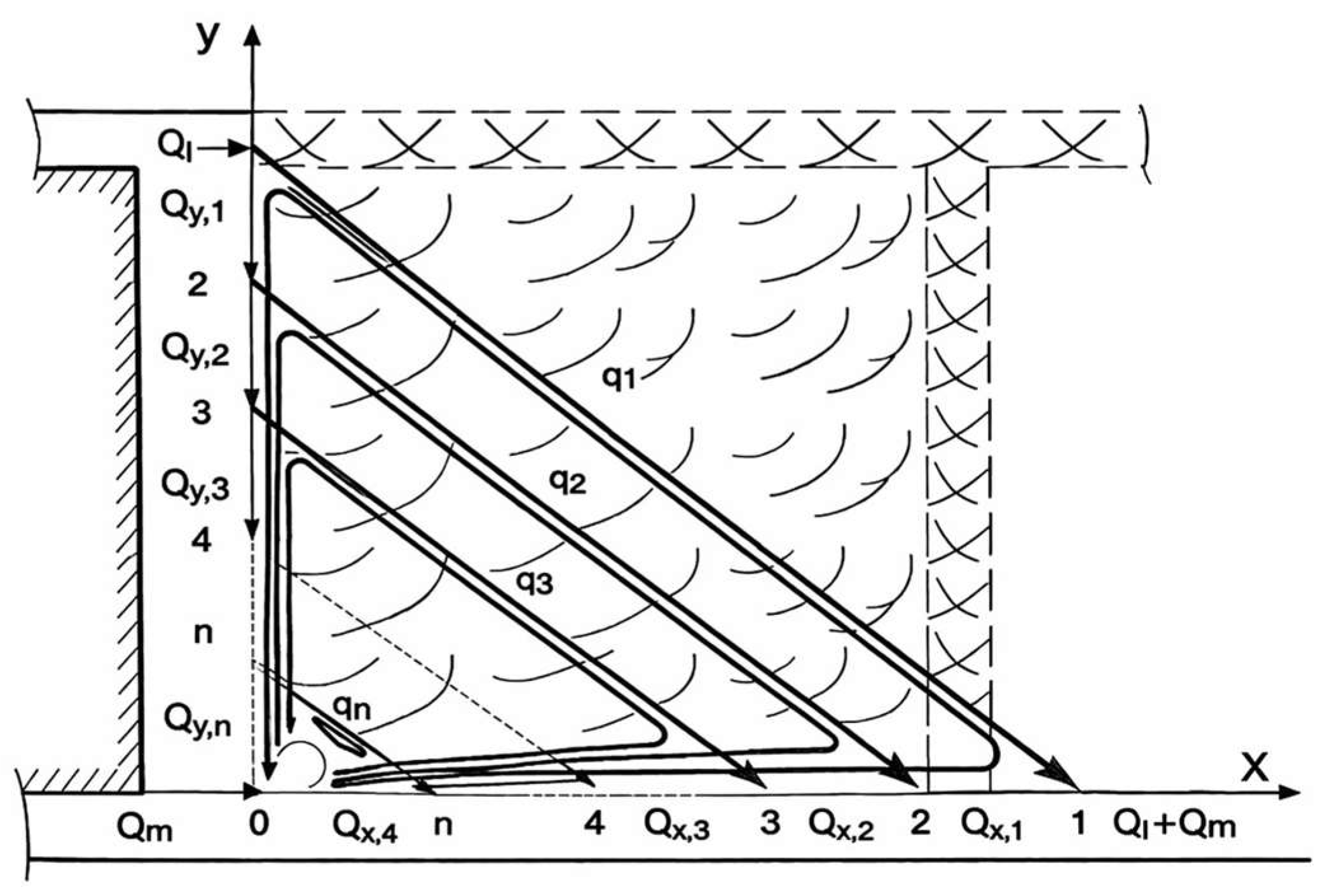
The model represents a spatial ventilation network constructed in coordinates tied to the junction of the working face and the ventilation working (
Figure 1). Under active longwall mining conditions, the origin of the coordinate system is defined at the junction between the longwall face line and the wall of the supported ventilation roadway on the goaf side. The
OX axis is oriented along the wall of the supported ventilation roadway, the
OY axis follows the longwall face line, and the
OZ axis is directed perpendicular to the seam plane. The number of branches connecting the nodes in the longwall face and the ventilation roadway, representing airflow paths through the collapsed (goaf) space, varies from 1 to
n depending on the size of the mined-out area. Accordingly, the proposed model constitutes a complex ventilation network comprising 3
n branches, 2
n + 1 nodes, and
n independent loops. The model structure best reflects actual filtration processes within the rock massif, allows solving flow distribution problems taking into account the diagonal nature of the longwall as an element of the ventilation network.
Assumptions of the quasi-network model:
Air is treated as incompressible (constant density), and the flow is assumed to be steady-state.
Airflow through the collapsed rock mass follows a quadratic resistance law: Δp = R·Q2.
The goaf is discretized into individual branches connecting the longwall face to the caved zone. The number of branches n depends on the length of the extraction panel (typically 10–20).
No internal mixing of air is assumed within the goaf; airflow occurs only along the defined “longwall–goaf” branches.
The support system and equipment within the longwall face create a uniformly distributed resistance along its length, which is incorporated into the main “longwall” branch.
The governing equations include mass balance at the network nodes (Kirchhoff’s first law) and a quadratic relationship between pressure drop and airflow rate for each branch. The system of equations for the independent loops is presented below (1). The solution of system (1) is obtained using the Newton–Raphson iterative method, where initial airflow rates are specified, residuals are evaluated, the equations are linearized, and pressure corrections are computed. The airflow rates are iteratively updated until convergence is achieved, defined as a relative change in flow rates of less than 0.01%.
The system of equations describing the studied circuit, for a given direction of bypassing the circuits, has a closed system with respect to unknown independent air flow rates
qi,
i =
1,n satisfying the first and second laws of ventilation networks [
4,
24] and has the form:
where
Ql is the air flow rate in the
i-th section of the breakage face, m
3/s;
Qm is the air flow rate in the i-th section of the supported ventilation working, m3/s;
qi is the air leakage in the i-th direction through the collapsed massif of the worked-out space, m3/s;
Ry,i is the aerodynamic resistance of the i-th section of the breakage face, daPa⋅s2/m6;
Rx,i is the aerodynamic resistance of the i-th section of the supported working, daPa⋅s2/m6;
ri is the aerodynamic resistance of the i-th direction through the collapsed massif of the worked-our space, daPa·s/m3.
As a result of solving system (1), the calculated airflow rates along the sections of the longwall face are obtained. However, due to intensive air leakage into the goaf, these calculated values do not always fully agree with field measurements. Such leakage creates an additional channel for airflow redistribution, affecting the flow structure, the degree of turbulence, as well as local Reynolds number values and the effective aerodynamic resistance coefficient.
Therefore, the calculated values require subsequent adjustment based on in situ measurement data. In this context, the quasi-network model is not used as a standalone predictive tool, but rather as a basis for the theoretical estimation of airflow distribution parameters, which are then refined using results from ventilation and pressure survey measurements.
2.2. Experimental Studies and Data Processing
The empirical basis of the study consisted of the data from gas–air surveys conducted at five direct-flow ventilation working areas in the Karaganda coal basin. Gas–air depression surveys in the coal mines were conducted using a complex of control and measuring equipment: a Testo 417 vane anemometer and an MS 13 cup anemometer to determine the airflow velocity, an MMN 240 differential micromanometer to measure the depression between ventilation network points, and an SHI 11 mine interferometer to monitor methane and carbon dioxide levels in the mine atmosphere. Additionally, psychrometers were used to record the temperature and relative humidity, and barometers were used to measure the atmospheric pressure.
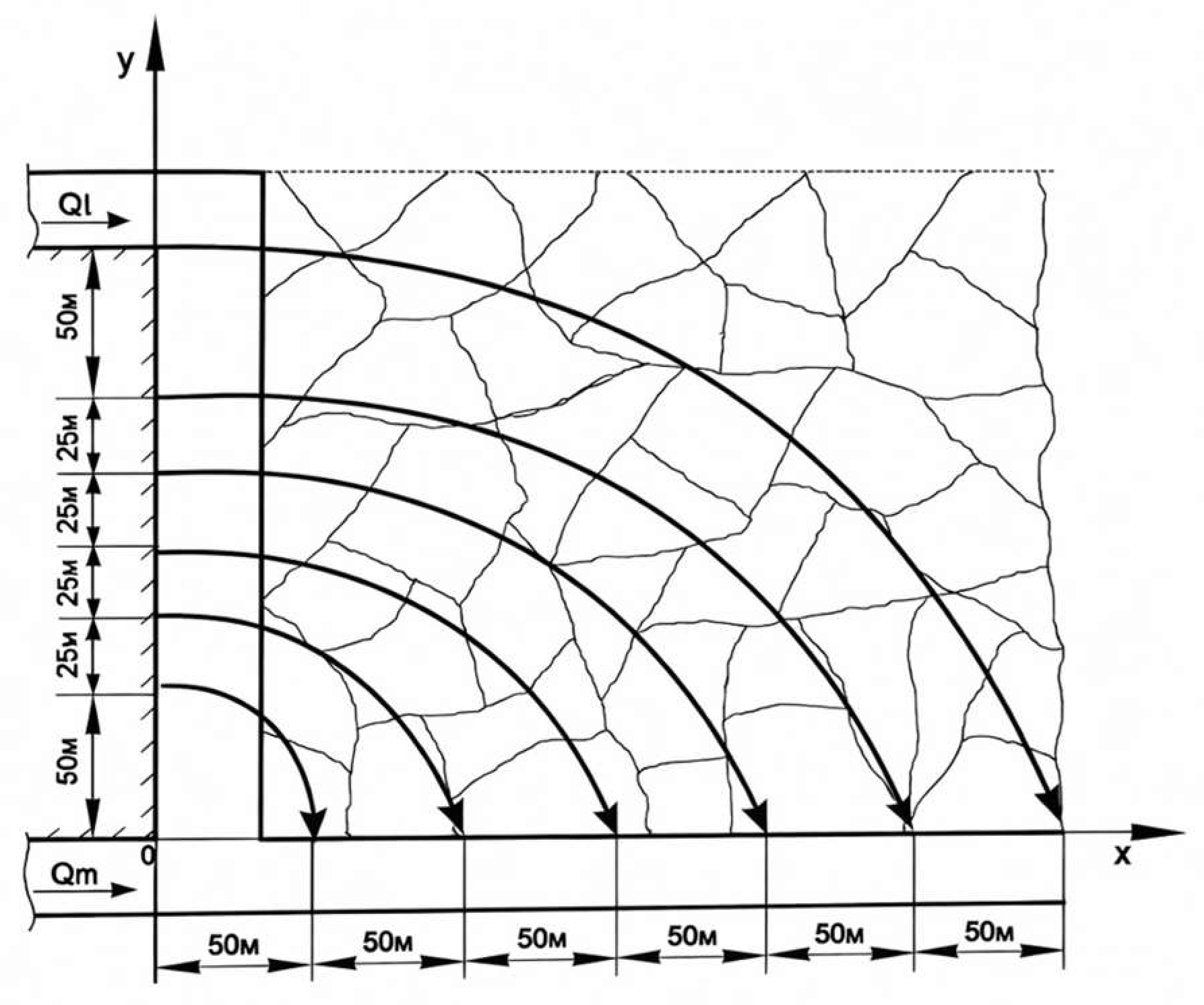
During the study, the longwall face and the supported ventilation roadways were divided into segments with intervals of 25 m and 50 m, respectively (
Figure 2). The working cross-section, the support pitch, the number of props, and reinforcement supports were recorded for each section. Aerial and depression surveys were conducted for each section. The actual air flow and depression values were determined in accordance with standard industry methods. For the supported roadways, during the measurement period, the cross-sectional area of the investigated longwall faces varied from 5.2 to 10.2 m
2, while the air velocity ranged from 1.9 to 4.7 m/s. In the longwall faces, during the measurement period, the cross-sectional area ranged from 5.5 to 11.8 m
2, and the air velocity varied from 0.6 to 1.6 m/s. The layout of the measurement points used during the pressure (depression) surveys is shown in
Figure 2.
The experimental data were used not only for regression approximation, but also for subsequent comparison of the quasi-network model results with field measurements, as well as for refining its parameters. An assessment of the discrepancies between the calculated and measured values of air flow rate and pressure made it possible to evaluate the adequacy of the model and adjust the effective aerodynamic resistance coefficient.
Instrumental measurements were carried out on a monthly basis throughout the entire period of longwall panel extraction, which lasted from 10 to 17 months. The repeated measurements enabled the formation of a representative dataset of experimental observations, thereby improving their statistical stability and reliability. Depression surveys were conducted under steady-state operating conditions of the ventilation system. Each measurement cycle took 30–60 min per segment, while the total duration of fieldwork at a single longwall panel reached 2–4 h. At each control point, measurements were performed at least three times, followed by statistical averaging of the results, which reduced the influence of random errors and increased the reliability of the obtained data.
The collected material was subjected to mathematical processing with the use of correlation and regression analysis tools. This allowed identifying the nature and degree of various factors effect on the processes under study. To quantitatively assess the strength of relationships, standard deviation and correlation coefficient indicators were used, with the strength of relationships classified according to the Chaddock scale.
3. Research Results
Present-day coal mining technology with high-performance mining equipment requires methane emission management and optimized mine ventilation. The airflow in workings encounters aerodynamic drag, including wall friction, headwind, and local resistance that are collectively characterized by the aerodynamic drag coefficient α. It is an unstable value that changes depending on the working condition, the presence of equipment, and the wall roughness, necessitating regular measurement and analysis for the accurate ventilation network design.
Instability of the aerodynamic drag coefficient α contributes to the aerodynamic drag of the supported working and the longwall varying depending on the flow structure and its turbulent characteristics. Air leaks in the longwall and the corresponding inflows into the supported ventilation working are continuously distributed over the areas that are adjacent to the longwall mined-out space. This circumstance introduces certain peculiarities into the flow pattern at the “airflow-mined space” interface. In the longwall, a significant portion of the airflow surface is subject to leakage, which leads to the airflow redistribution, changes in aerodynamic parameters, and variability in the aerodynamic drag coefficient. In the supported ventilation drift, due to the presence of air inflows from the longwall mined space, the airflow also experiences some deformation. This disrupts its structure and ultimately affects the formation of shear stresses in both the longwall and the supported ventilation drift.
Shear stresses on the surface of the excavation can be determined by the following relationship:
where
α is the aerodynamic drag coefficient, дaPa s
2/m
2;
V is the average airflow velocity, m/s.
All the parameters included in expression (2) are interconnected and indirectly affect each other.
Air flow patterns in mining sections with a direct-flow ventilation system are characterized by unevenness caused by airflow variations along the length of the working. Air leakage through the mined-out space of the longwall significantly affects the degree of turbulence in the airflow, as well as such parameters as the Reynolds number and the aerodynamic drag coefficient.
In addition to the factors mentioned above, as well as the presence of an additional support such as spacers, reinforcement, or a combination thereof, the formation of the aerodynamic drag coefficient α is significantly affected by the flow velocity in the boundary region, which for most mine workings is assumed to be zero, the so-called “no-slip condition” on stationary surfaces.
Table 1 and
Table 2 present the results of a single cycle of air quantity and pressure (depression) surveys conducted in the studied mining panels, provided as an example.
The aerodynamic drag coefficient presented in
Table 1 and
Table 2 was calculated using the following formula:
where
i is the number of the working interval,
i = 1,
n;
Δhi is the depression at the i-th area, дPa;
Si is the average cross-section of the i-th working segment, m2;
l is the segment length, m;
Qi is the average air rate for the i-th working segment, m3/s;
Kϕ is the coefficient of the working cross-section shape.
Based on the results of mathematical processing using correlation-regression analysis tools of the initial data, dependencies were obtained that approximate the studied data in the form of a product of partial functions:
Partial functions in (4) have the form:
where
b1,
b2,
β,
γ are coefficients of the eqautions0.
Based on (4)–(6), the dependence of the aerodynamic drag coefficient α
x for the supported longwall face takes the form:
where
Bx is the equation coefficient equal to the product of
b1x and
b2x.
This formula should be used to calculate the aerodynamic drag coefficient
αx for a supported ventilation working with direct-flow ventilation schemes. The coefficients of Equation (7) and the calculated values of the multiple correlation coefficients
rk obtained from the analysis of statistical data across the entire factor space for the supported ventilation working conditions are presented in
Table 3.
Table 3 shows that the correlation coefficient values for all the obtained relationships exceed 0.69 which confirms a sufficiently close relationship between the studied parameters and validating the experimental relationships.
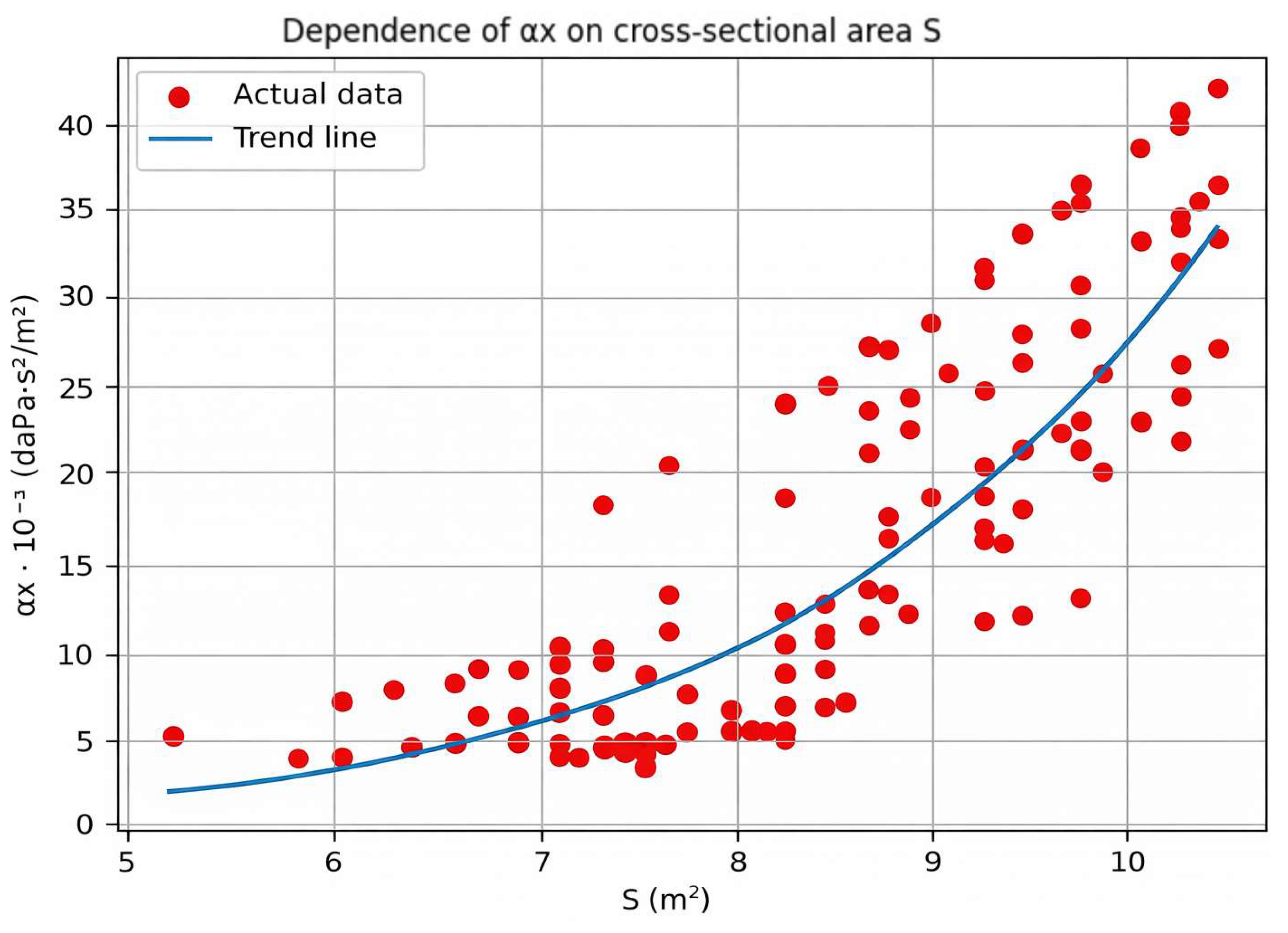
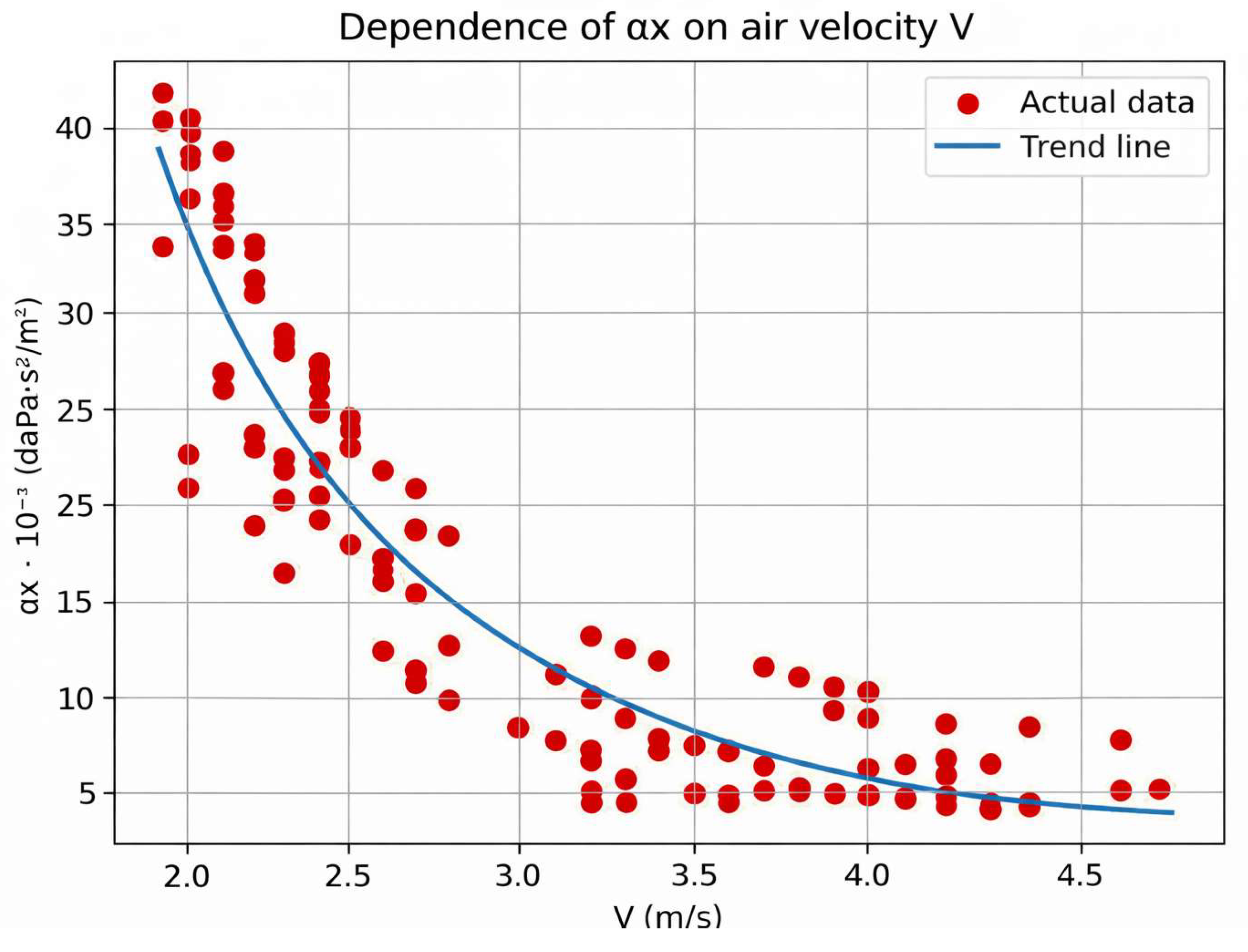
Figure 3 and
Figure 4 illustrate the graphs of partial functions
f1x(
S) and
f2x(
V) for the supported workings of longwall face 1. Studying the graph of partial function (5) reveals that the aerodynamic drag of the workings increases nonlinearly with the installation of reinforcing supports. According to the graph in
Figure 3, the aerodynamic drag coefficient
αx increases with increasing working cross-section
S. The approximating curve is described by a power-law relationship with an exponent
βx > 1 (for longwall face 1,
βx = 4.499), indicating a superlinear (accelerating) increase: when the cross-sectional area increases by a factor of
k, the aerodynamic resistance coefficient
αx increases by
kβ, which is significantly faster than a linear dependence (
βx = 1). The physical mechanism underlying this effect involves three components:
As the cross-sectional area of the roadway increases, a greater number of support elements (props, SRS) must be installed. This alters the roadway geometry and increases the surface roughness.
Each support element generates local vortex resistance, and when the spacing between supports is small, the vortex zones interact, producing additional turbulence.
An additional contribution arises from coupled filtration flow from the caved (goaf) zone: air leakage through the collapsed rock mass modifies the flow structure in the supported roadway, enhancing turbulent fluctuations and increasing pressure losses. This mechanism is not accounted for in classical theory but manifests itself through elevated values of βx.
Thus, the increase in the aerodynamic resistance coefficient α
x is determined not only by the cross-sectional area but also by the structural features of the installed support system, turbulent effects in the airflow, and filtration interaction with the goaf, which is consistent with the findings reported by other authors [
4,
15,
16,
17].
Table 3 shows that the coefficient
βx of Equation (7) increases with increasing the number of mounted spacer props in the support of the supported ventilation working.
In classical theory, the aerodynamic drag coefficient α is considered constant in turbulent conditions. However, field studies of mine workings demonstrate its dependence on the airflow velocity. The graph in
Figure 4 shows that the resulting power-law dependence of the aerodynamic drag coefficient α
x on airflow velocity
V with a negative exponent indicates decreasing the relative drag of the working with increasing the flow velocity. The approximating curve is described by a power-law relationship with an exponent γ = −2.617 for longwall face 1. This indicates that when the air velocity increases by a factor of 2, for example, the coefficient
αx decreases by 2
|γ| ≈ 6.1 times, which quantitatively characterizes the intensity of the effect. This phenomenon is typical for supported ventilation workings with reinforced supports. The mounting of supports increases the surface roughness, provides an additional local drag, and changes the distribution of airflow velocities in the cross-section. The physical mechanism behind the negative exponent can be explained as follows:
At low airflow velocities, the wake (vortex) zones formed downstream of each support element are large and highly chaotic, resulting in increased flow resistance.
As the airflow velocity increases, these vortex zones become more stable, compact, and organized (a “flow attachment” or streamlined flow effect). The relative contribution of local resistance losses decreases, leading to a reduction in αx.
In additional contribution arises from coupled filtration flow from the goaf: air leakage through the caved rock mass modifies the velocity profile and turbulence structure in the supported roadway, enhancing the dependence of αx on V. With increasing V, the pressure differential between the roadway and the goaf increases, leading to a redistribution of flows and further stabilization of vortex structures. This mechanism is not accounted for in classical theory, where αx is typically assumed to be constant in fully turbulent flow regimes.
In Equation (7), the influence of the considered effect is expressed through the coefficient γx. The negative exponent γx (ranging from −0.27 to −2.6) serves as a quantitative measure of the intensity of vortex stabilization and flow redistribution induced by leakage effects. In classical theory, for turbulent flow regimes α is assumed to be independent of V. However, the obtained relationship (7) with γx < 0 demonstrates that a through-flow ventilation scheme with inevitable leakage into the goaf fundamentally alters the aerodynamics of the roadway. Thus, the reinforcement support system has a significant impact on the aerodynamic state of the roadway, governing the dependence of coefficient α on airflow velocity with a negative power-law exponent. This effect is a direct consequence of the interaction between the airflow and support elements, as well as filtration-driven leakage from the goaf.
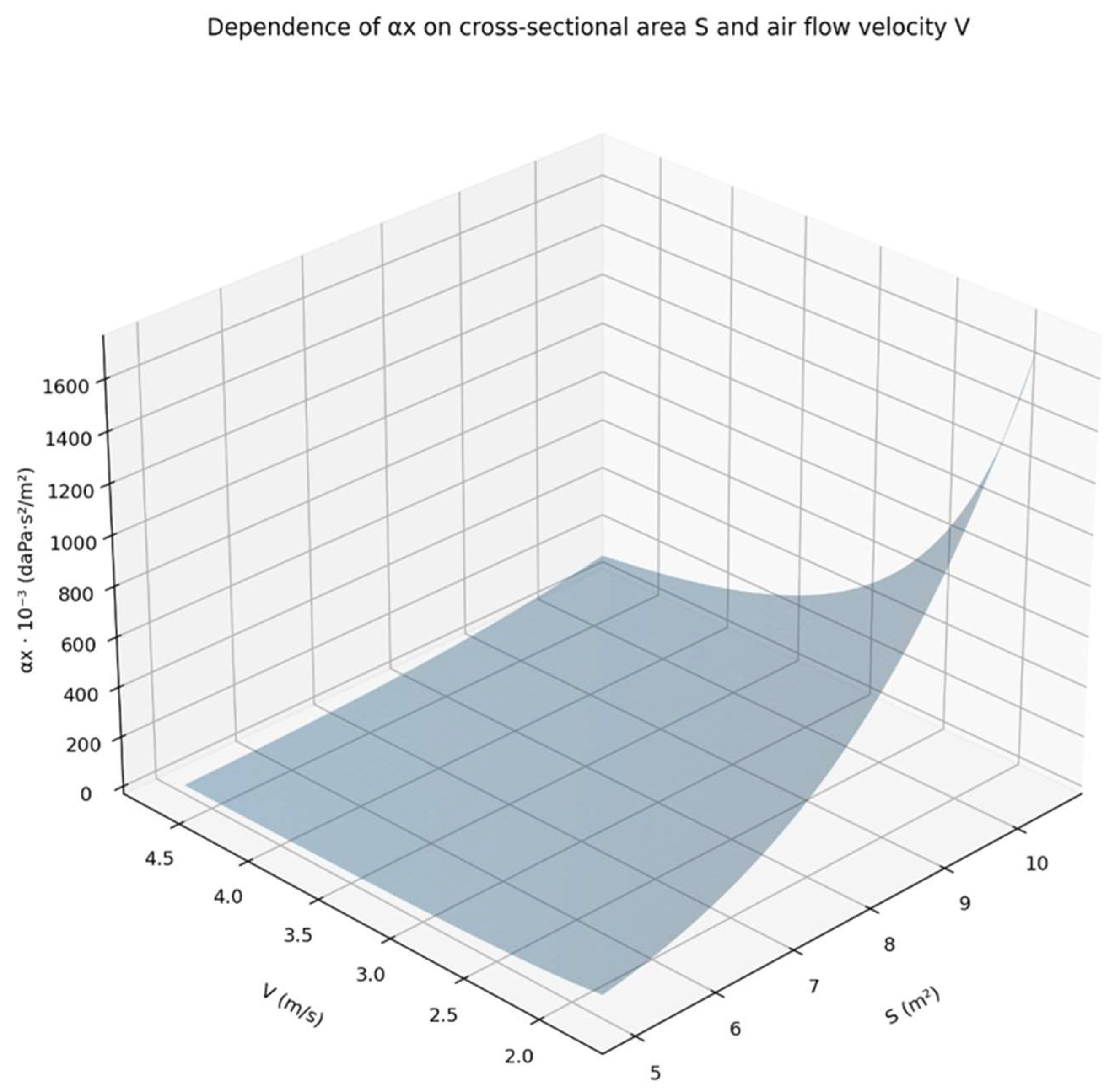
Figure 5 shows the surface describing function (7) for the supported workings of longwall face 1, which is formed under the effect of two factors with opposite directions. As established previously, the function
f1x(
S) is characterized by an increasing power law, while the function
f2x(
V) is characterized by a decreasing power law. Therefore, the surface increases along the S-axis and decreases along the
V-axis, reflecting the competing effects of the factors under study. A similar situation arises for the other supported workings of the longwalls under study.
Based on (4)–(6), the dependence of the aerodynamic drag coefficient
for the longwall face takes the form:
where
By is the coefficient of equation equal to the product of
b1y and
b2y.
The coefficients of Equation (8) and the calculated values of the multiple correlation coefficients
rk obtained from the analysis of statistical data across the entire factor space for the conditions of various working faces are presented in
Table 4.
Table 4 shows that the correlation coefficient values for all the obtained relationships exceed 0.65 which indicates a stable relationship between the parameters studied. Given the in-kind nature of the experiments and the effect of mining factors, the obtained values can be considered satisfactory and confirm the validity of the obtained relationships.
Considering that the working area is ventilated using a direct-flow ventilation system with a supported ventilation tunnel, the longwall face is not simply an isolated working but represents a single “longwall-mined space” system. In classical theory, the aerodynamic drag coefficient α is independent of velocity (V) in the developed turbulent regime. However, the experiment revealed a power-law relationship with a negative exponent. This fact indicates that the airflow regime in the “longwall-mined space” system does not correspond to the classical turbulent model. In this case, additional factors related to air leaks effect the airflow. Air leaks through collapsed rocks provide an additional filtration channel, the resistance of which affects the air flow velocity in the longwall face.
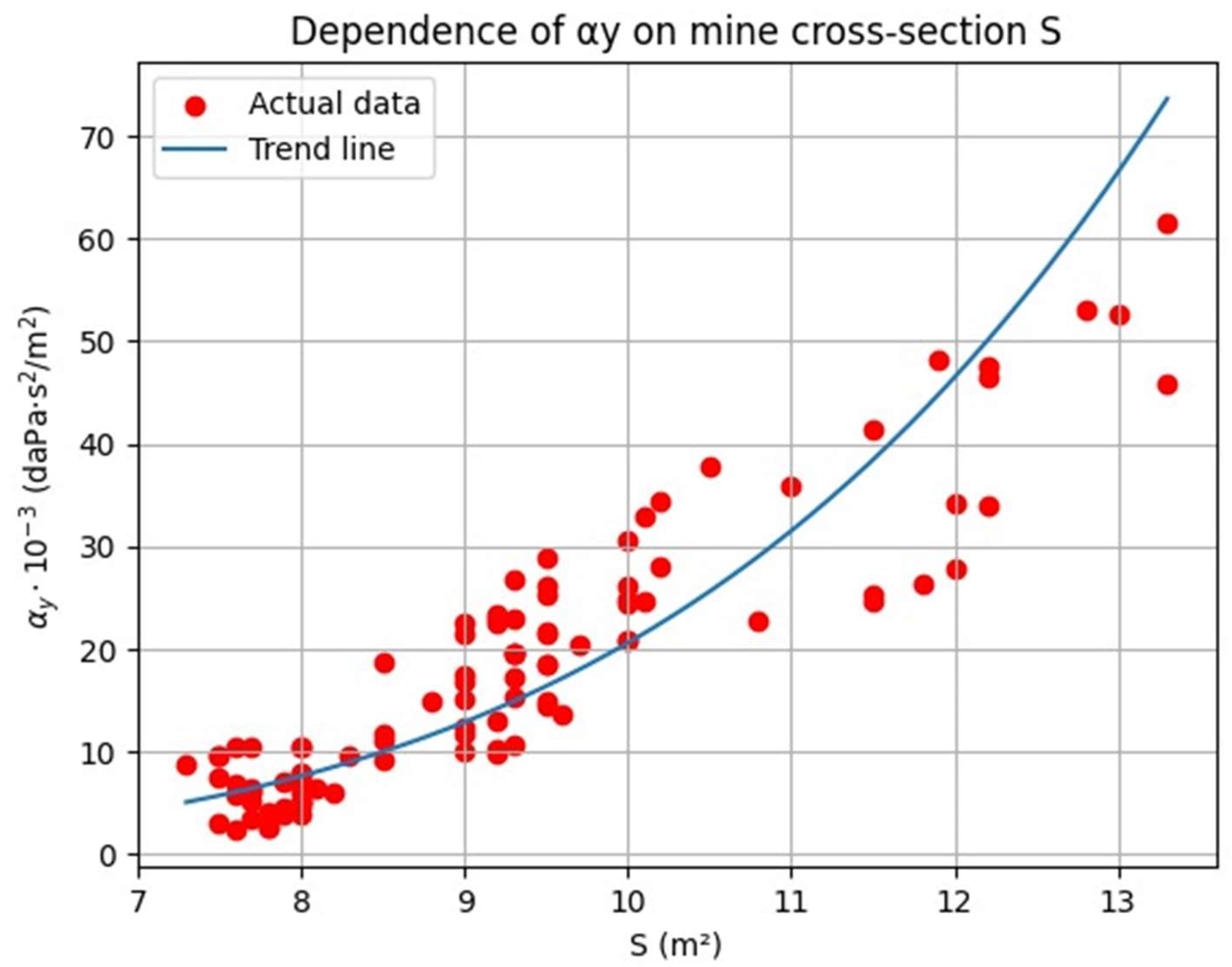
The dependence of the aerodynamic drag coefficient α on the longwall cross-sectional area is represented by a positive power law. This contradicts classical aerodynamic theory but for a longwall with air leaks through the goaf, it is absolutely realistic and has a definite physical basis.
Figure 6 shows a graph of the function
f1y(
S) for longwall 1, which shows that the larger the longwall cross-section (
S), the higher the aerodynamic drag coefficient
αy. The approximating curve in
Figure 6 is described by a power-law relationship with a positive exponent
βy = 4.475 for longwall face 1. This indicates that an increase in the panel cross-sectional area by a factor of
k leads to an increase in the aerodynamic resistance coefficient
αy by k
4.475, i.e., a superlinear growth. Such behavior contradicts classical duct aerodynamics, where resistance decreases with increasing cross-sectional area; however, for a longwall with leakage into the goaf, it has a clear physical explanation. An increase in the longwall cross-sectional area leads to a larger contact surface between the face and the caved rock mass (the filtration interface). As a result, the intensity of air leakage into the goaf increases, while pressure losses due to filtration through the collapsed rock mass become dominant, since the flow resistance of the goaf can be one to two orders of magnitude higher than that of the longwall face. At a larger longwall cross-sectional area, the velocity of the main airflow decreases, which increases the relative proportion of air leaking through the goaf. Pressure losses associated with overcoming the resistance of the fractured volume of caved rock are significantly higher than the losses caused by reduced flow velocity within the longwall itself. In longer longwall panels, a greater number of mechanized support units are installed, which generate additional local resistance and enhance turbulence. Thus, the positive exponent
βy > 0 (up to 4.5) quantitatively reflects the dominance of filtration losses in the goaf over the aerodynamic losses within the open longwall space.
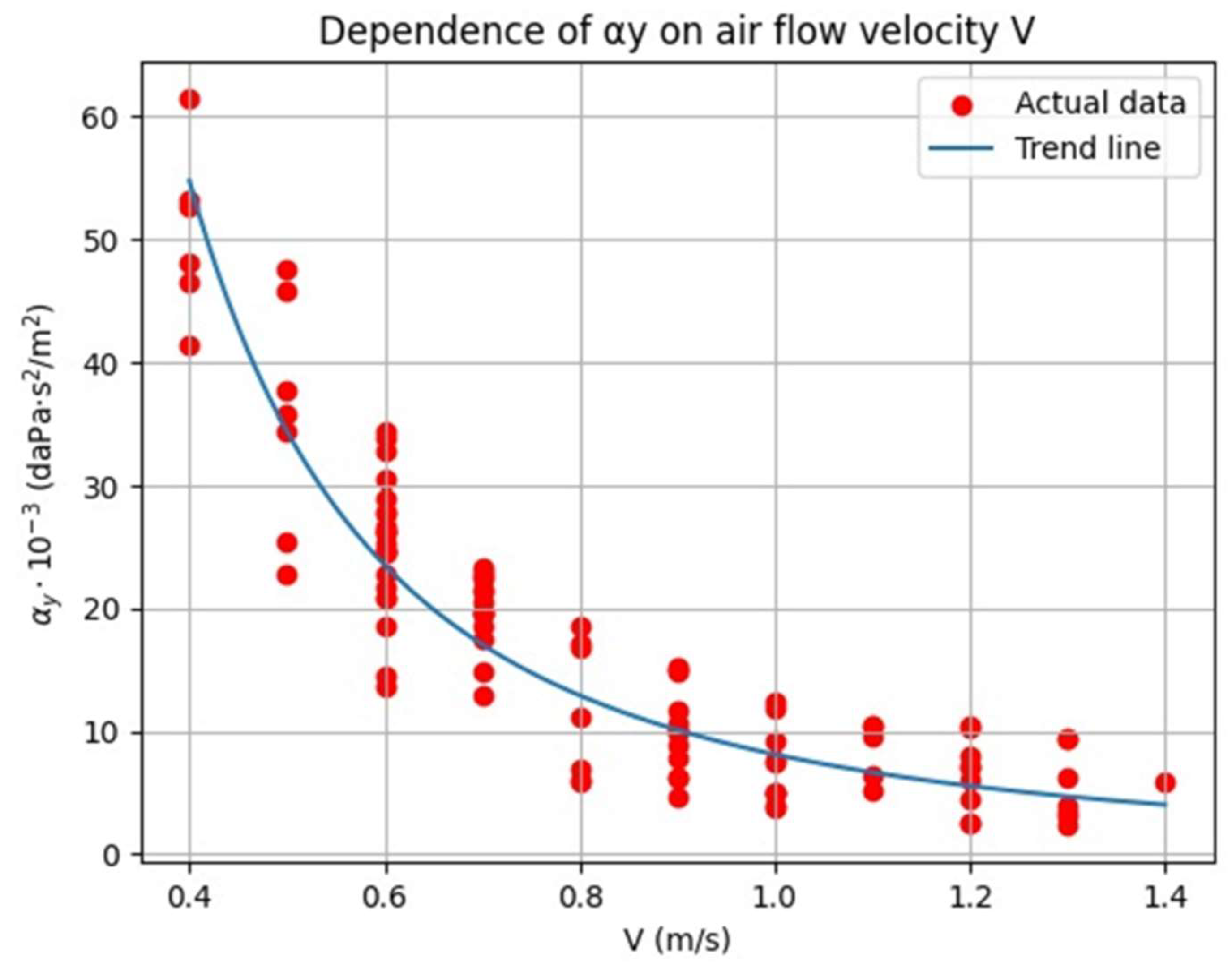
The experimentally obtained power-law dependence of the aerodynamic drag coefficient
αy on the airflow velocity
V with a negative exponent
γy reflects the influence of air leakage through the goaf on the aerodynamics of the longwall face. The approximating curve in
Figure 7 is described by a power-law relationship with a negative exponent
γy = −2.085 for longwall panel 1. This indicates that, for example, when the airflow velocity doubles, the coefficient
αy decreases by a factor of 2
2.085 ≈ 4.2. The negative exponent
γy is a direct consequence of the redistribution of airflow between the longwall and the goaf. The physical mechanism underlying the negative exponent can be explained as follows:
A redistribution of airflow rates occurs with increasing velocity. As the air velocity in the longwall increases, dynamic pressure rises, leading to a reduction in filtration flow into the goaf (a “leakage suppression” effect). The proportion of air escaping through the caved zone decreases; consequently, the effective resistance of the combined “longwall–goaf” system approaches that of the longwall itself, which is significantly lower.
Vortex structures behind the support elements become stabilized. At low airflow velocities, the wake regions downstream of mechanized support props are large and highly chaotic, resulting in increased flow resistance. As the velocity increases, these vortices become more compact and better organized, and the relative contribution of local resistance losses decreases.
A nonlinear filtration behavior is observed. The filtration resistance of the caved rock mass does not follow a strictly quadratic dependence at low velocities; as the velocity increases, the flow regime transitions to fully developed turbulence, in which the resistance stabilizes and the coefficient αy decreases.
The negative exponent γy characterizes the intensity of airflow redistribution and depends on the filtration properties of the caved rock mass in the goaf. The larger the absolute value of γy, the stronger the influence of leakage flows on the aerodynamics of the longwall. The obtained values of γy ranging from −0.98 to −2.09 confirm that a through-flow ventilation scheme fundamentally alters the dependence of resistance on velocity compared to classical theory, where γ = 0 in the turbulent regime.
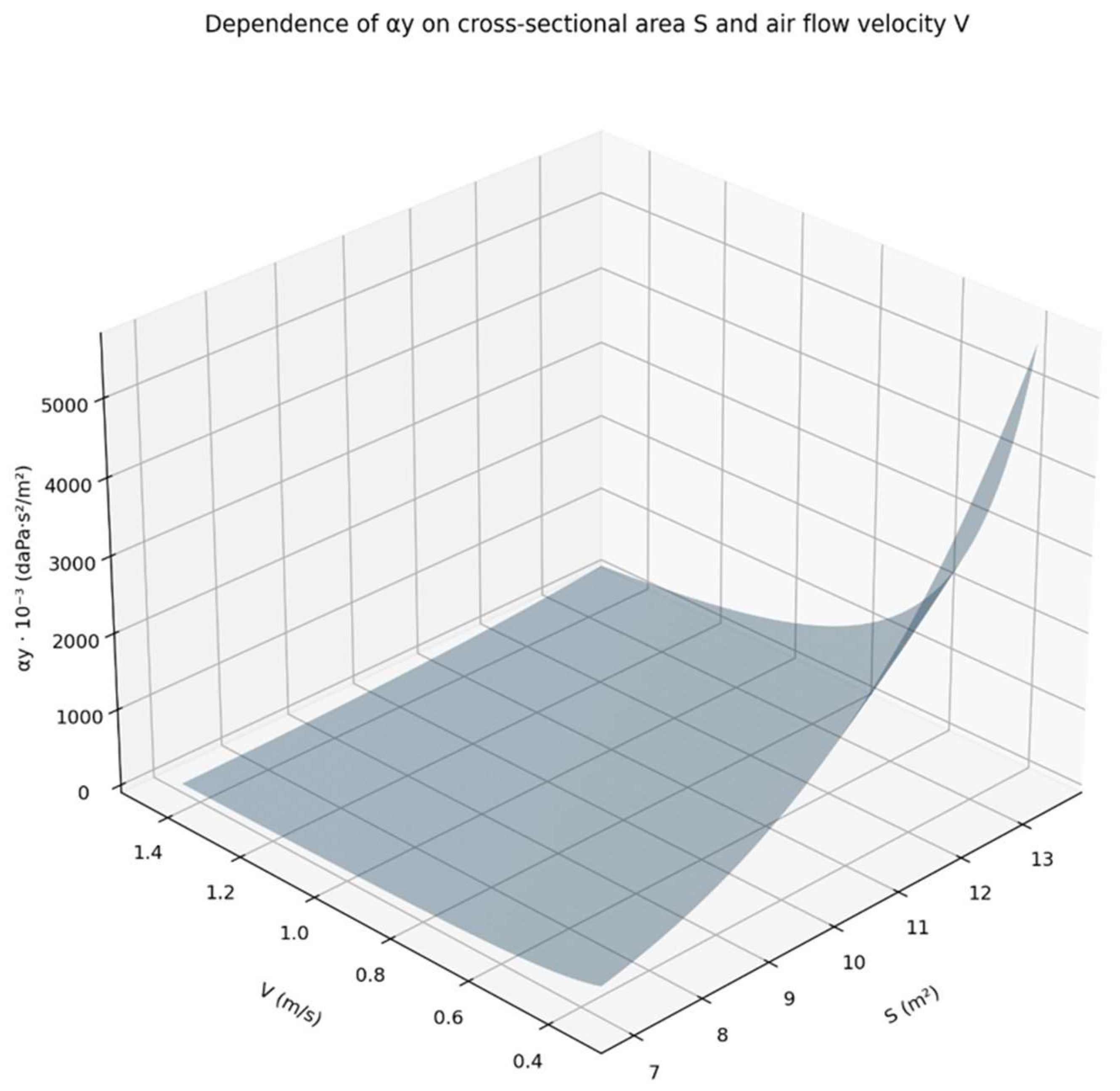
Figure 8 shows the surface of function (8) for longwall face 1 formed under the effect of factors with opposite directions of impact. It was found that
f1y(
S) increased according to the power law, while
f2y(
V) decreases, which determines the corresponding surface geometry: its increase along the S-axis and decrease along the V-axis. This pattern reflects the competing effects of the parameters. A similar situation arises on the other studied faces.
4. Discussion
The primary objective of aerological safety is to ensure effective ventilation to prevent the formation of hazardous methane concentrations and to maintain standard methane levels in mine workings. The need to improve mine ventilation is driven by changes in the underground coal mining technology. Mines operate one or two longwall faces equipped with high-performance mining systems, which can increase coal production volumes and the rate of face advance. However, increased productivity and increased workload on the face must be achieved while maintaining gas factor safety requirements.
The use of a direct-flow ventilation system for coal seam mining has proven to be highly effective. This mining system significantly increases the workload on the face, reduces the volume and the cost of development workings, and eliminates coal losses in undercut pillars. This technology allows for the safe removal of methane at its source and prevents methane levels in the outgoing air from exceeding permissible levels, which is a distinct advantage over the return-flow ventilation system.
At the same time, a significant amount of methane is generated in the coal–rock mass of the longwall mined area, located in the immediate vicinity of the production face. When the roof rock of the production face sinks and collapses, methane is forced into the longwall and adjacent workings, creating a risk of gasification and a methane–air explosion. Therefore, effective longwall ventilation and operational safety require reliable information on the gas and aerodynamic conditions of the workings in a direct-flow ventilation system.
Classical methods for calculating aerodynamic resistance are based on the assumption that the coefficient α remains constant under turbulent flow conditions and do not account for continuously distributed air leakage through the goaf. Modern approaches based on 3D scanning techniques [
14,
15] allow for local determination of coefficient
α but neglect the filtration interaction between the longwall face and the caved rock mass. Filtration models, in turn, require time-dependent porosity of the collapsed rock, which is difficult to determine in practice.
The proposed approach overcomes these limitations by:
- -
accounting for air leakage through the goaf as a continuously distributed factor affecting the flow structure and the coefficient α;
- -
deriving empirical power-law relationships α = f(S,V) directly from in situ measurements conducted in five longwall panels, thereby eliminating the need to determine porosity and other hard-to-measure parameters;
- -
validating the obtained equations using cross-validation, which confirms their generalization capability even with a limited dataset.
Thus, the proposed approach provides a more adequate representation of the aerodynamic behaviour of a mining panel under a through-flow ventilation scheme compared to existing methods.
The conducted studies allow for the aerodynamic drag coefficient of the production face and the supported ventilation drift to be adjusted based on the specific geological and mining conditions of the seams in the Karaganda coal basin. The aerodynamic drag coefficient of the supported ventilation drift is a power-law function of the cross-sectional area of the working and the air velocity within it. The coefficients of equations for various supported ventilation workings of the mining sections depend on the density of the support mounting, the presence of reinforcement supports and can take values 0 < αx < 1, βx > 1, γx < 0. The aerodynamic drag coefficient of a stope equipped with a working complex is a power-law function of the cross-sectional area and air velocity within it. The coefficients of the equation for different longwall faces depend on air leakage through the goaf and the working complexes used and can take values of 0 < αy < 1, 0 < βy < 1, γy < 0. The proposed research methodology can also be applied to the other coal basins, taking into account their specific coal seam mining conditions.
At the same time, the aerodynamic drag coefficient of both the working face and the supported ventilation drift can be potentially affected by the collapse pitch of the main roof, the filtration properties of the coal–rock mass in the goaf, and various methods used to control the aerodynamic parameters of the working area, such as isolation and soil blasting in the supported ventilation drift. However, studying the effect of these factors was not the objective of this study.
The results of refining the aerodynamic drag coefficient for workings in a mining area, taking into account specific conditions, allow the following:
- -
more accurate determining the airflow required to ventilate a mining area with a direct-flow ventilation system;
- -
ensuring a stable ventilation system for the mining area;
- -
eliminating air recirculation and the formation of stagnant zones in the stope;
- -
controlling the aerodynamic parameters of stopes, supported ventilation workings, and the collapsed massif of the longwall face to prevent gas contamination with a direct-flow ventilation system;
- -
more accurate modeling the airflow movements when planning and preparing new working faces, taking into account specific mining, geological, and technical conditions.
Generalization Ability and Verification of the Derived Dependencies
To assess the generalization ability of Equations (7) and (8), cross-validation was performed using the leave-one-out approach. At each iteration, one of the five longwall panels was excluded from the training dataset, and the coefficients of Equations (7) and (8) were recalculated based on the remaining four panels. The aerodynamic resistance coefficient α was then predicted for the excluded panel and compared with the measured values.
The results are presented in
Table 5. The mean relative prediction error was 14.2% for the supported roadways and 16.8% for the longwall faces. This confirms that the obtained relationships are not overfitted and retain predictive capability for panels not used in model development. The highest error (up to 22%) was observed for panel 3, which can be attributed to differences in the filtration properties of the caved rocks (a higher proportion of coarse fractions).
Thus, despite the limited size of the initial dataset (five longwall panels), the derived relationships demonstrate an acceptable level of generalization ability. To further improve accuracy and expand the applicability domain, it is planned to incorporate data from longwall panels in other coal basins in future studies
5. Conclusions
A comprehensive assessment of the research results confirms that changes in the cross-section of workings, the airflow velocity in the presence of leaks, and the density of support and reinforcement elements are interrelated and ultimately have a significant impact on the aerodynamic drag coefficient α, which must be considered when developing recommendations for controlling the air and gas situation in mining areas with direct-flow ventilation systems. Understanding the impact of these factors on aerodynamic drag allows optimizing the airflow, increasing reliability of the ventilation system, and minimizing risks to miner safety, making this issue relevant for the present-day scientific and engineering community.
The scientific novelty of this work consists of the development of statistical multivariate equations for determining the aerodynamic drag coefficient depending on changes in the cross-sectional area of stopes and supported ventilation workings, the airflow velocity in the presence of leaks through the mined-out longwall space, the support density and the presence of reinforcement elements, the type of mining system, the extracted seam thickness, and the cross-sectional aspect ratio.
The study yielded power-law relationships for the aerodynamic resistance coefficient in supported roadways (αx = Bx · Sβx; · Vγx) with parameter ranges: βx = 2.08–4.50 and γx = −2.62 to −0.27; and for longwall faces (αγ = Bγ · Sβγ · Vγγ) with βγ = 0.22–4.48 and γγ = −2.09 to −0.98.
Based on leave-one-out cross-validation, the mean relative prediction error of α was 14.2% for supported roadways and 16.8% for longwall faces. This corresponds to “good” and “satisfactory” accuracy levels for mining engineering studies, considering that the instrumental error of in situ measurements is 5–7%.
It was found that an increase in support density (number of props) leads to an increase in the exponent βx, while the presence of reinforcement supports strengthens the negative dependence of αx on velocity (i.e., increases |γx|).
Contrary to classical theory, in a through-flow ventilation scheme the resistance coefficient of the longwall increases with increasing cross-sectional area (βγ > 0) and decreases with increasing airflow velocity, which is explained by the dominance of filtration losses in the goaf. The negative exponent γγ reflects the reduction in αγ with increasing airflow velocity due to flow redistribution.
The obtained relationships are based on data from five longwall panels in the Karaganda coal basin. Their application to other geological and mining conditions requires additional calibration. The validated airflow velocity ranges are 1.9–4.7 m/s for supported roadways and 0.6–1.6 m/s for longwall faces. Extrapolation beyond these ranges is not recommended without further investigation.
Cross-validation confirms the generalization capability of the model; however, increasing the number of investigated mining panels (beyond five) is desirable to further improve reliability.
Further studies can be aimed at studying the impact of the main roof collapse step, the filtration properties of the coal–rock massif of the mined space and various methods of controlling the aerodynamic parameters of the working area (isolation and undermining of the soil of the supported ventilation workings) on the aerodynamic drag coefficient of both the production face and the supported ventilation workings.




 ,
,