Mechanism of Progressive Failure, Stress and Wave Velocity Misalignment in Sandstone

 , , and
Abstract
1. Introduction
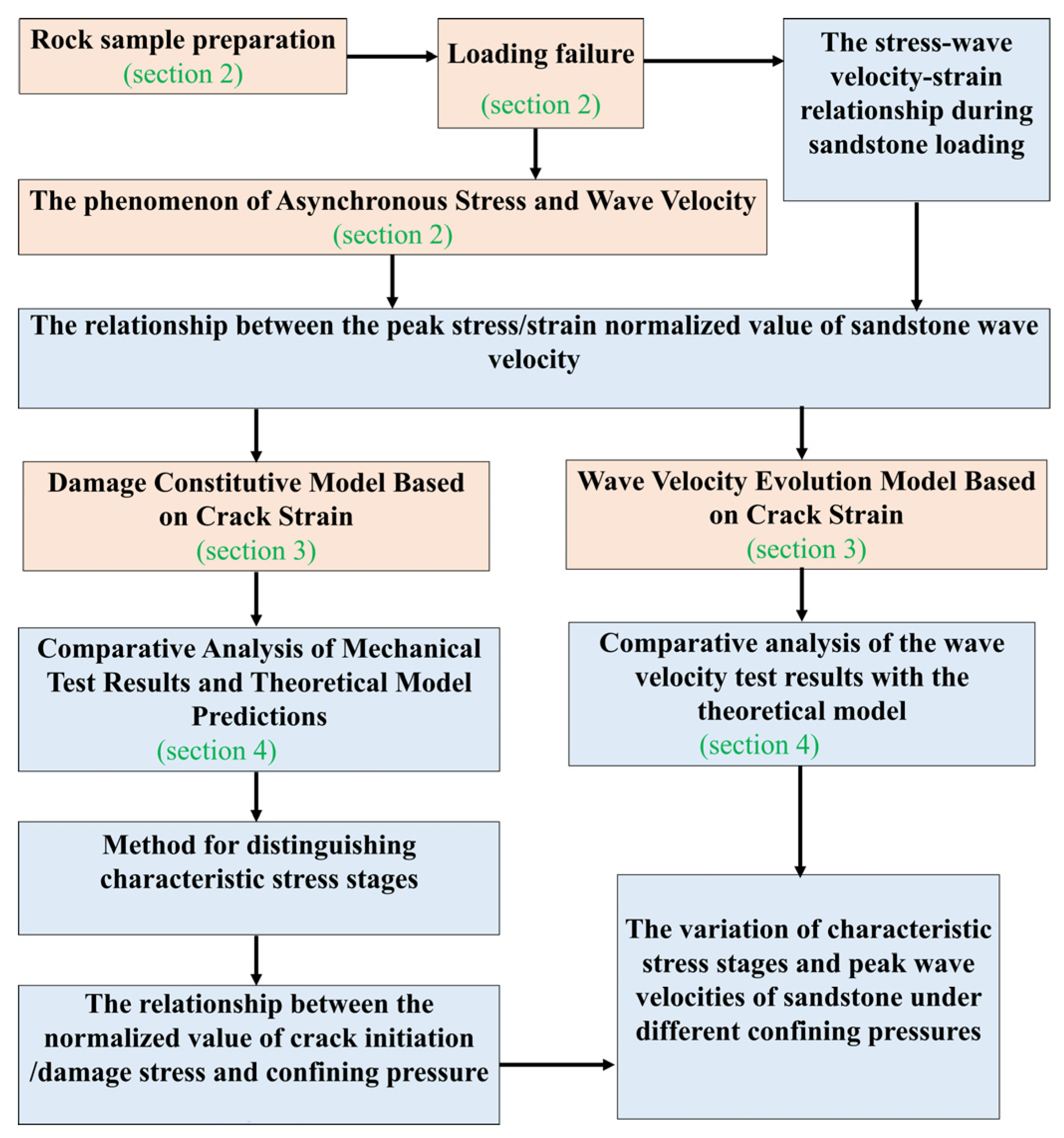
2. Asynchronous Response Characteristics of Stress and Wave Velocity
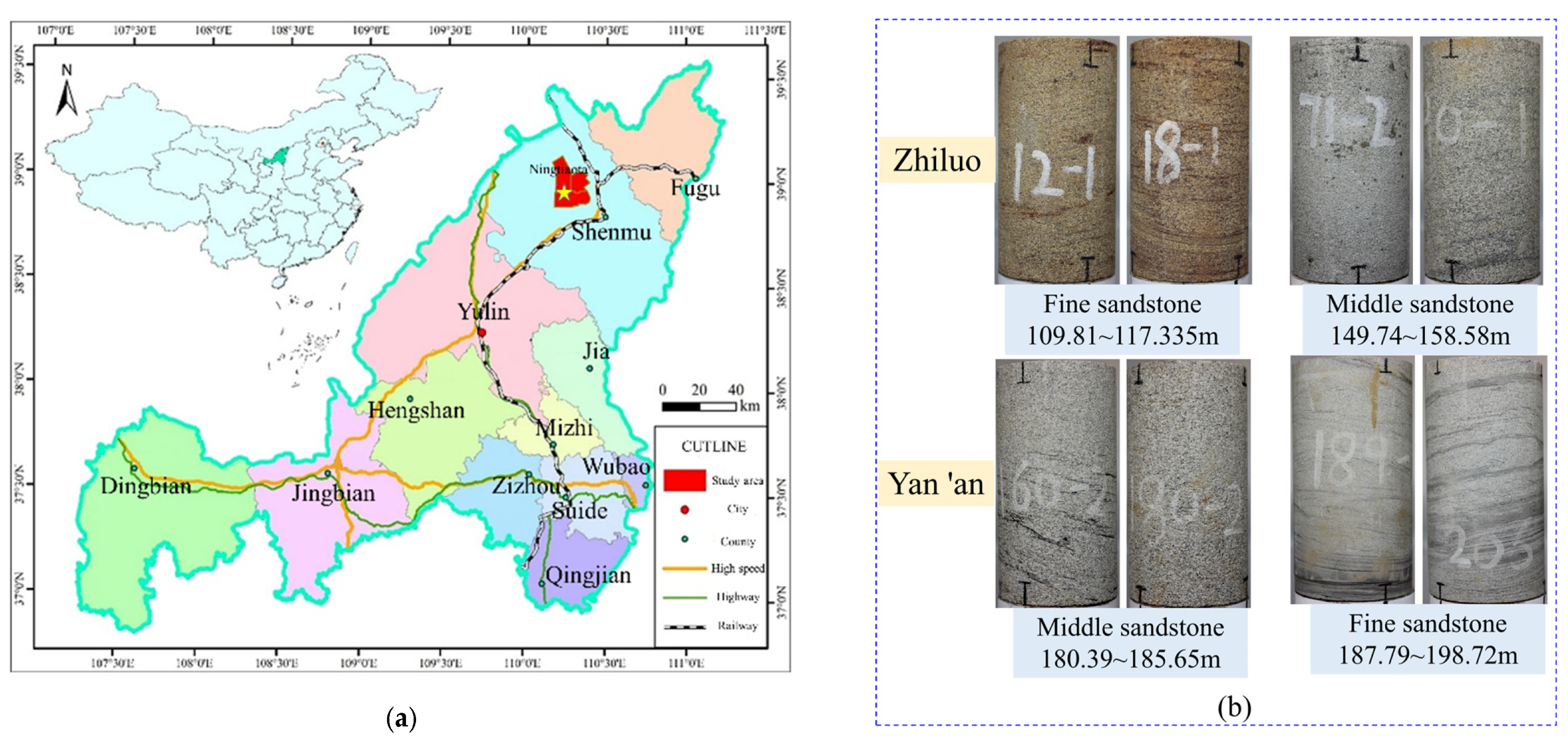
2.1. Test Material Preparation
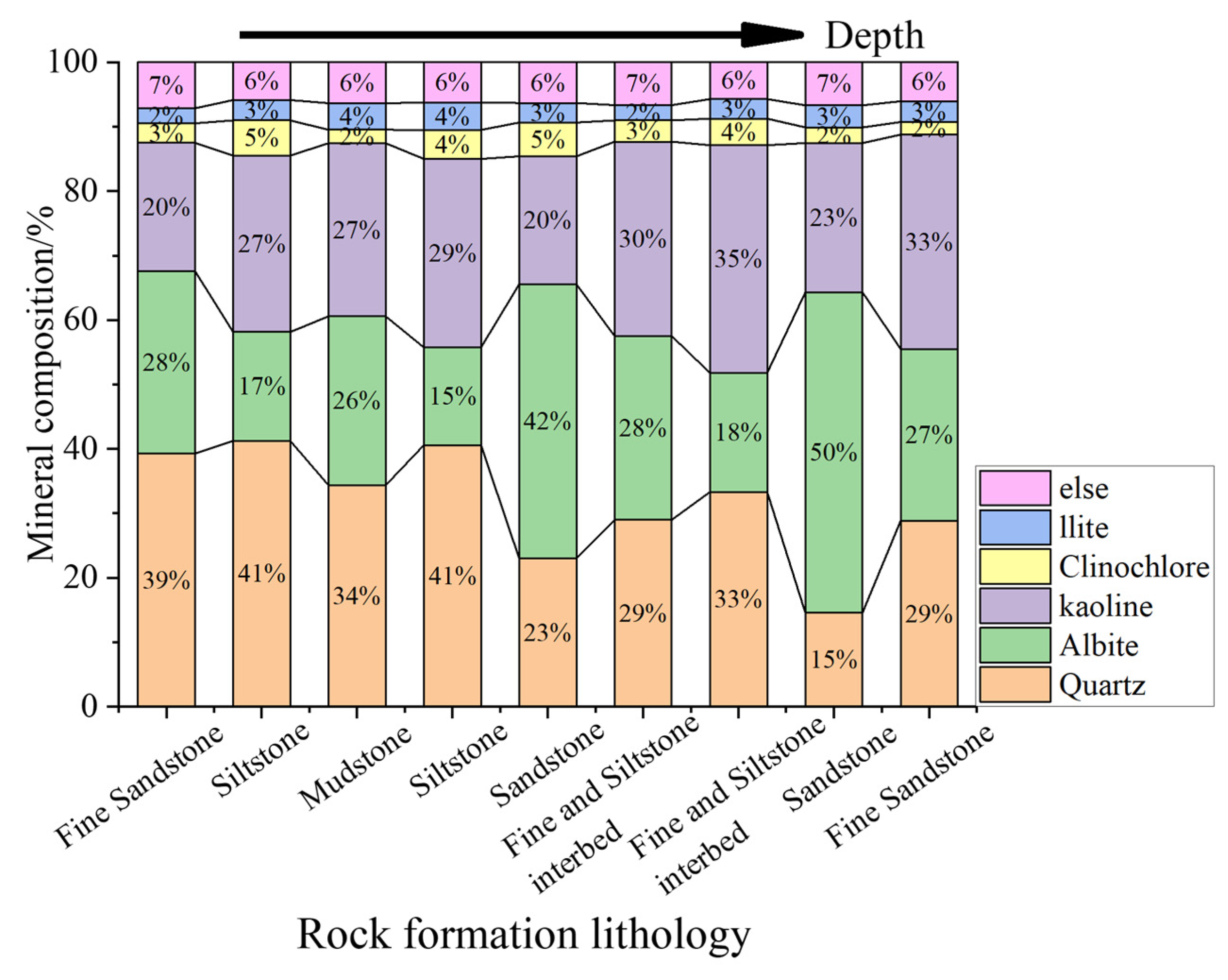
2.2. The Basic Physical Properties of Sandstones
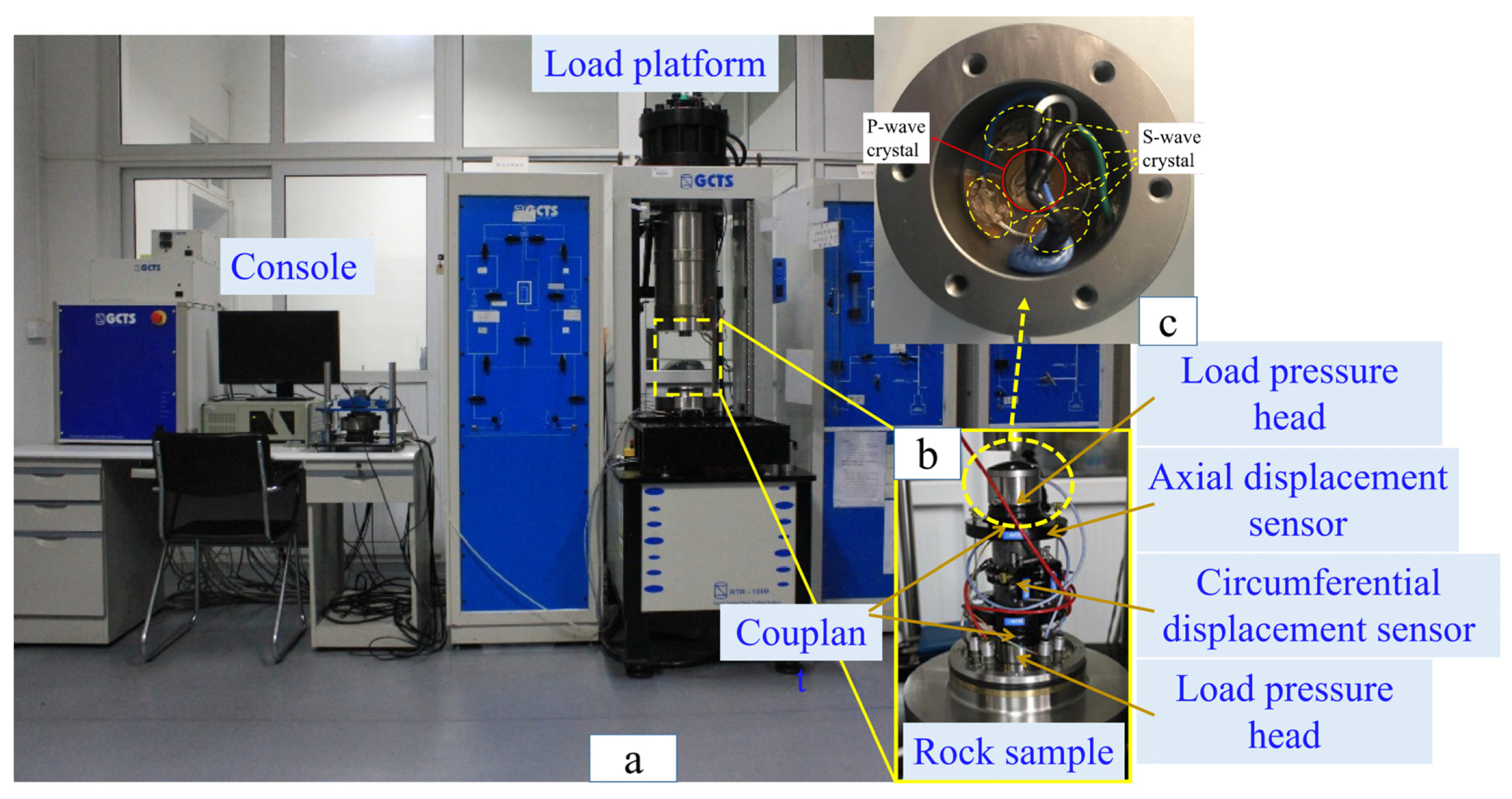
2.3. Testing Apparatus and Test Plan
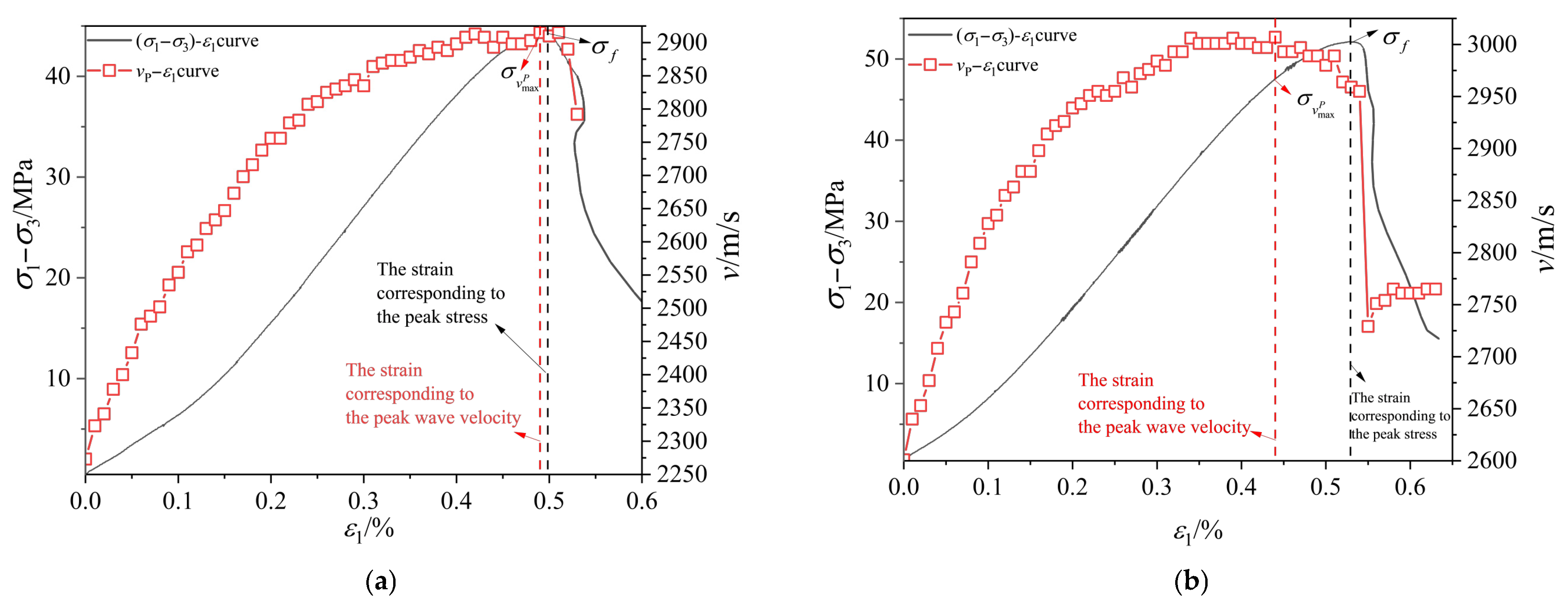
2.4. Typical Experimental Results of Asynchronous Stress and Wave Velocity
3. Research on the Mechanical Mechanism of Asynchrony Between Stress and Wave Velocity
3.1. Damage Constitutive Model Based on Crack Strain
3.2. Wave Velocity Evolution Model Based on Crack Strain
3.3. Theoretical Derivation of Asynchrony Between Stress and Wave Velocity
4. Comparative Analysis of Theoretical Models and Experimental Outcomes
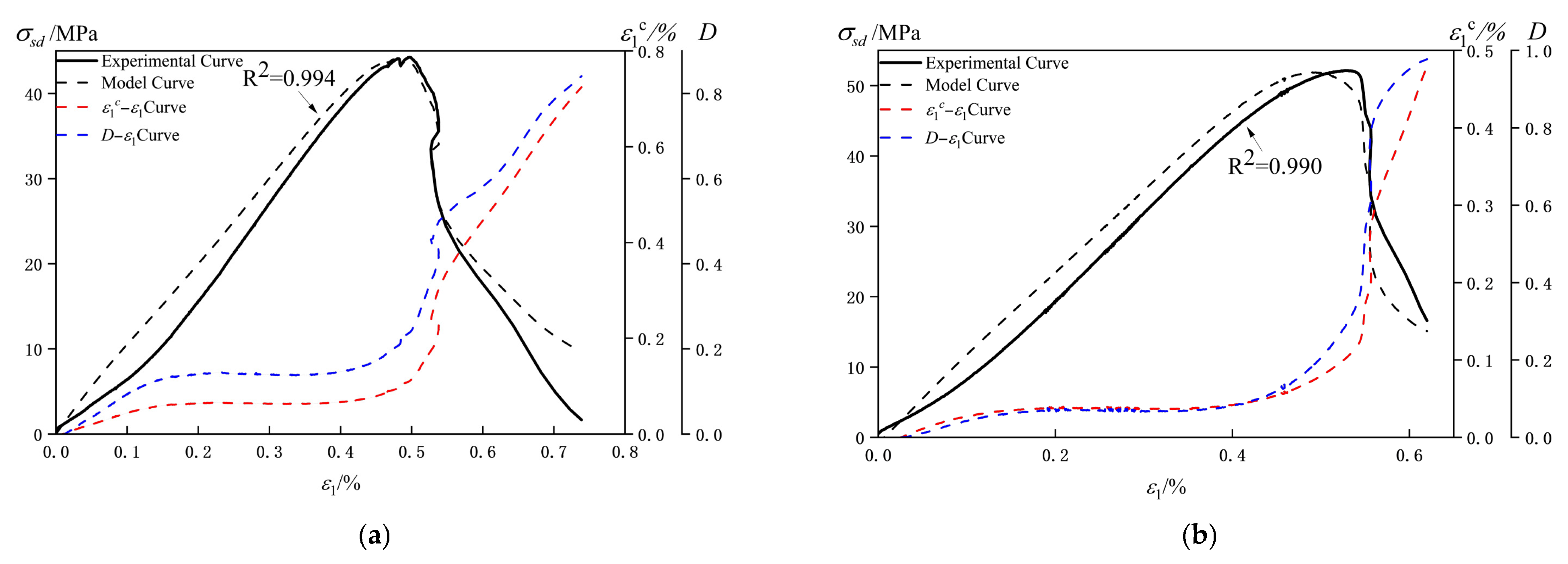
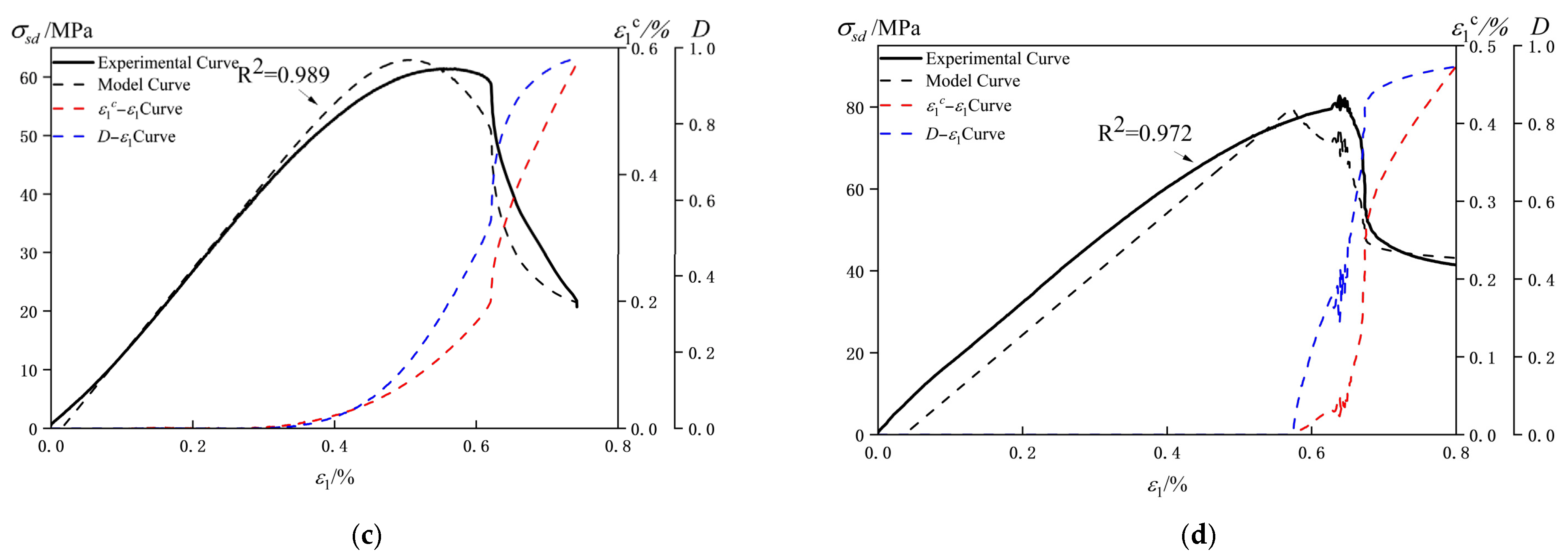
4.1. Comparative Analysis of Mechanical Test Results and Theoretical Model Predictions
4.2. Comparative Analysis of the Wave Velocity Test Results with the Theoretical Model
5. Discussion
5.1. Method for Distinguishing Characteristic Stress Stages
5.2. Relationship Between Peak Wave Velocity and Damage Variables
5.3. Comparison and Analysis of Damage–Wave Velocity Coupling Models
6. Conclusions
- (1)
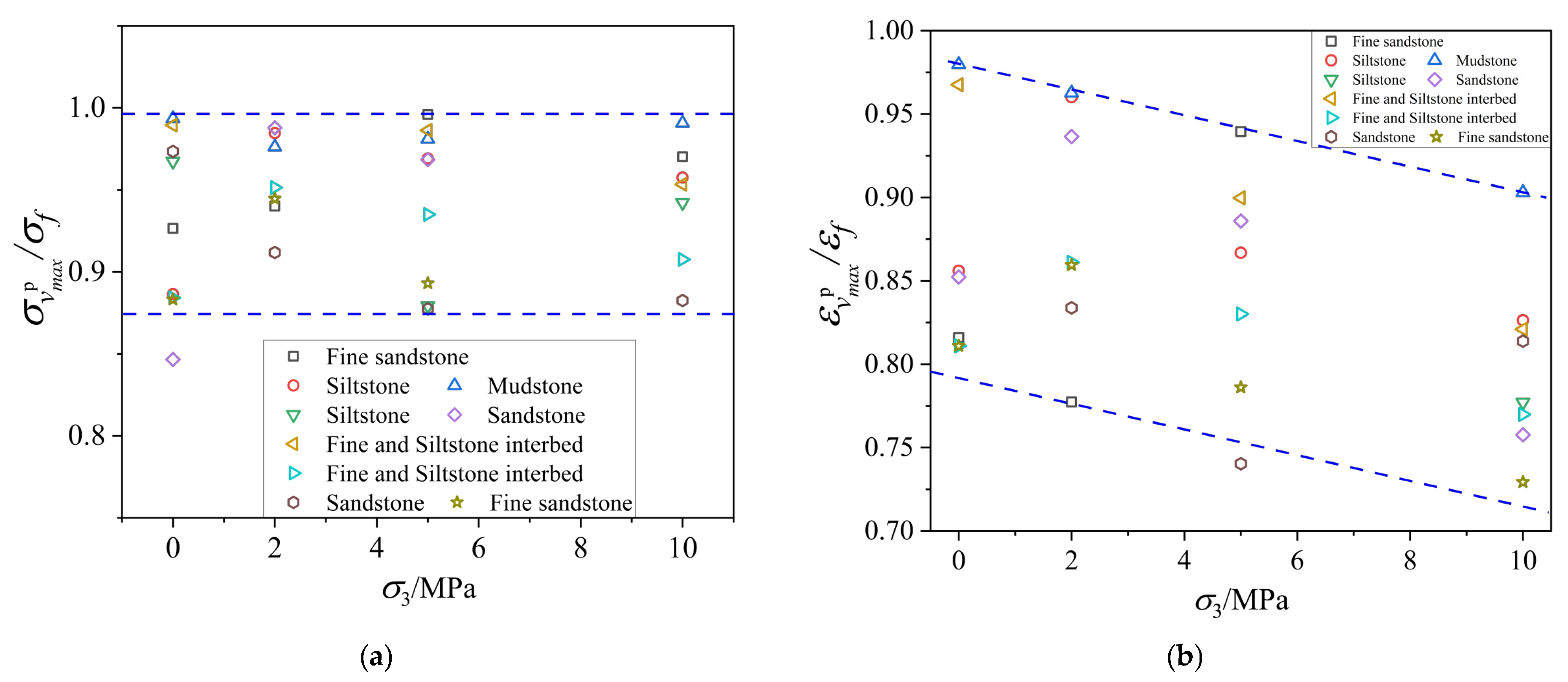
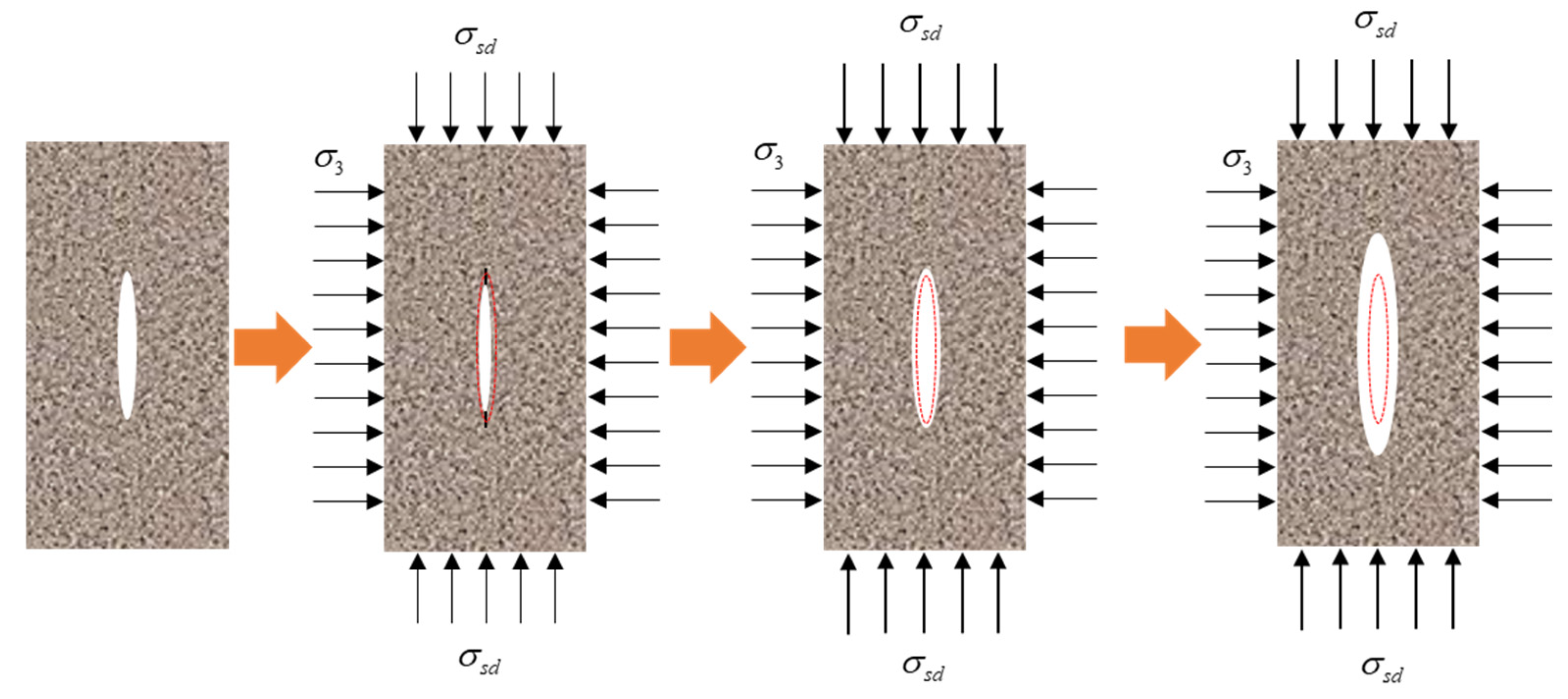
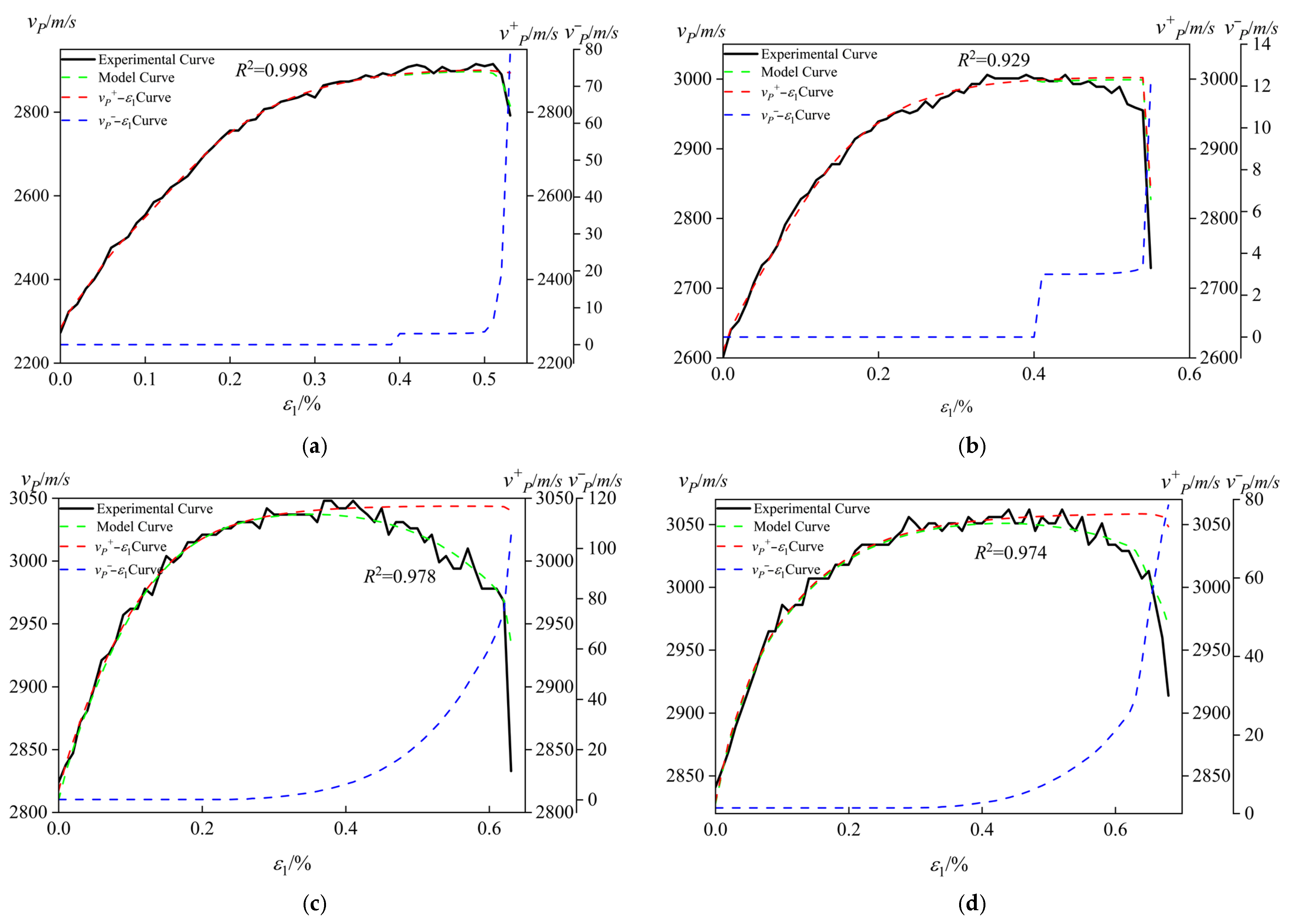
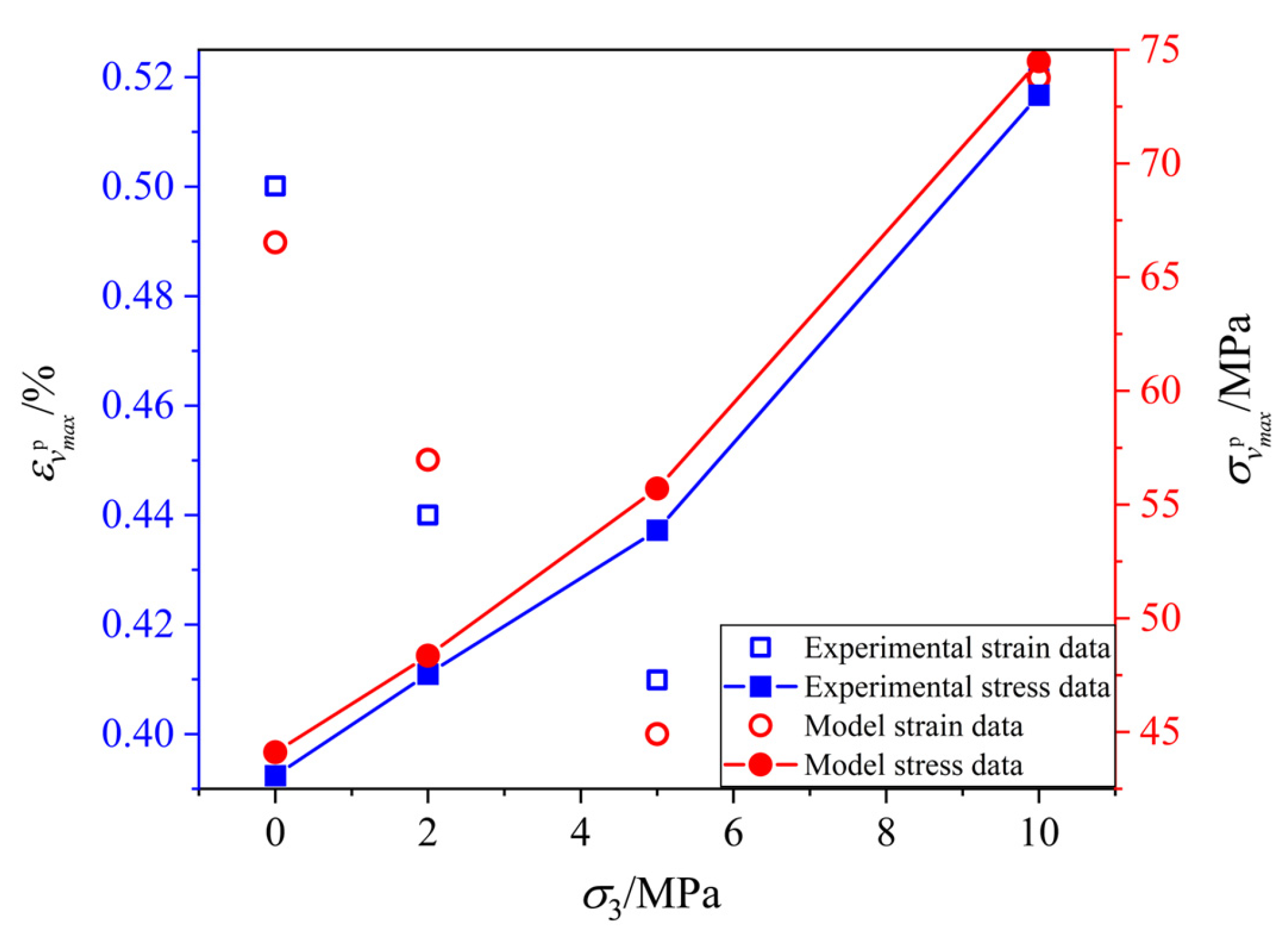
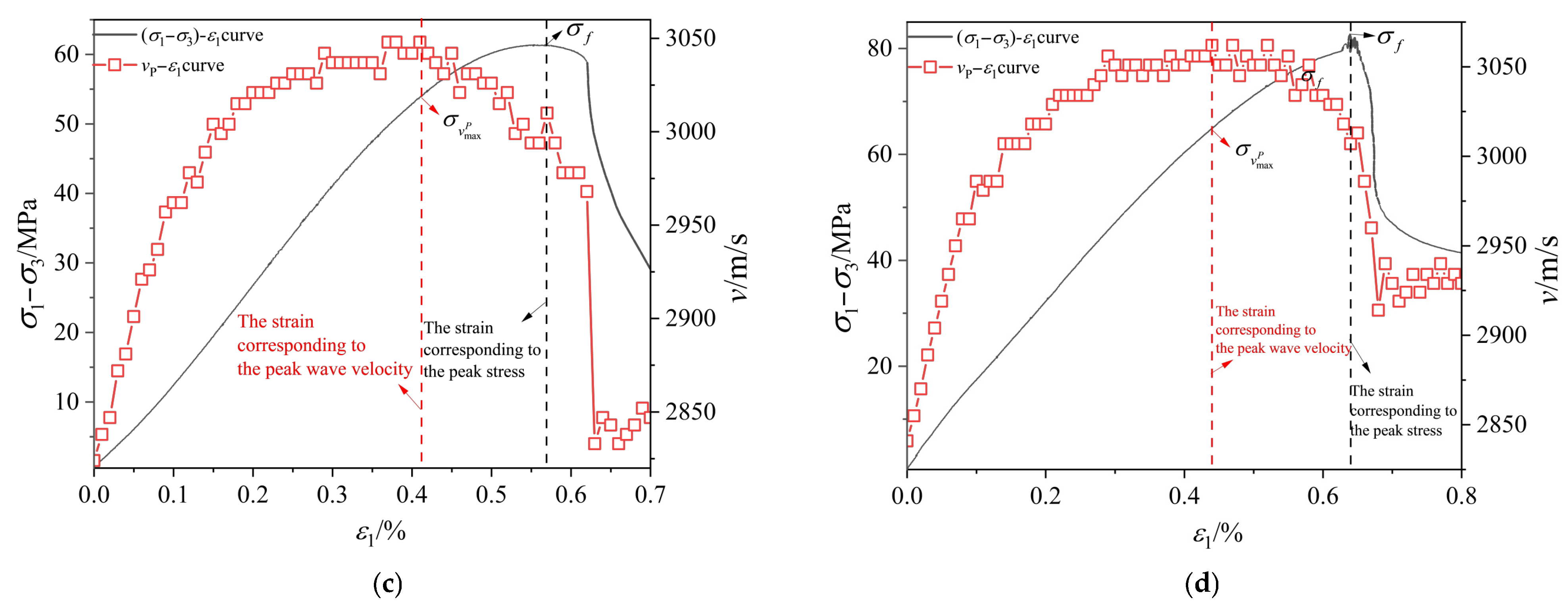
- The peak wave velocity consistently occurred before the peak stress across all confining pressures, with the normalized stress at peak wave velocity () ranging from 0.84 to 0.99 and the normalized strain () ranging from 0.73 to 0.98. Both ratios decreased with increasing confining pressure. This behavior is explained by the competition between two opposing mechanisms: effective stress promotes wave velocity increase by closing micro-cracks. In contrast, crack strain promotes wave velocity decrease by generating and propagating micro-cracks. The wave velocity peak occurs when the marginal gain from effective stress equals the marginal loss from crack strain, a condition that shifts earlier with higher confining pressure owing to suppressed micro-cracking.
- (2)
- The crack-strain-based damage constitutive model accurately reproduced the full stress–strain response, with coefficients of determination (R2) ranging from 0.972 to 0.994 across all confining pressures. The wave velocity evolution model, which explicitly separates effective stress and crack strain contributions, achieved R2 values of 0.929–0.998. These quantitative metrics confirm the model’s ability to capture both pre-peak and post-peak behavior.
- (3)
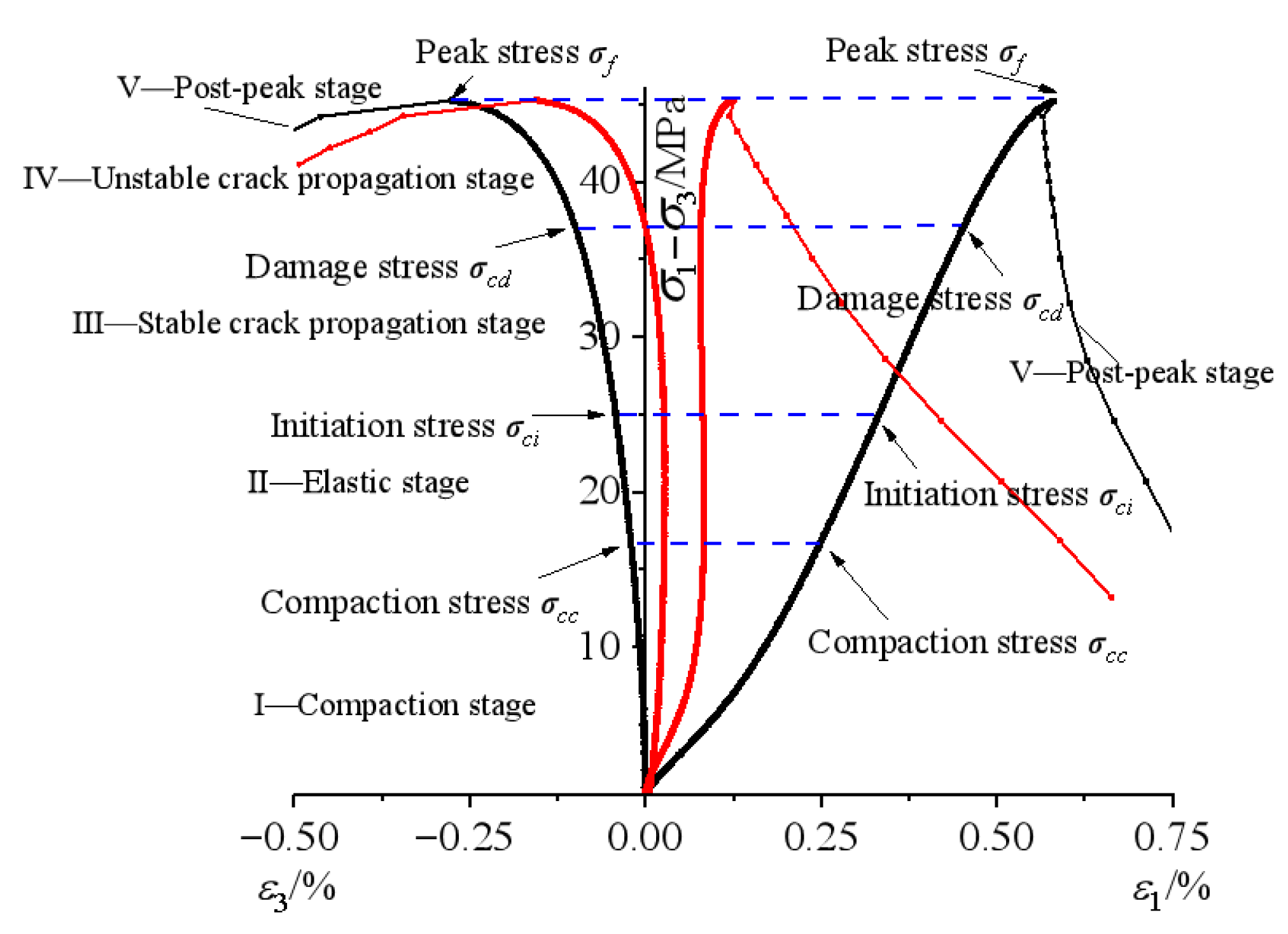
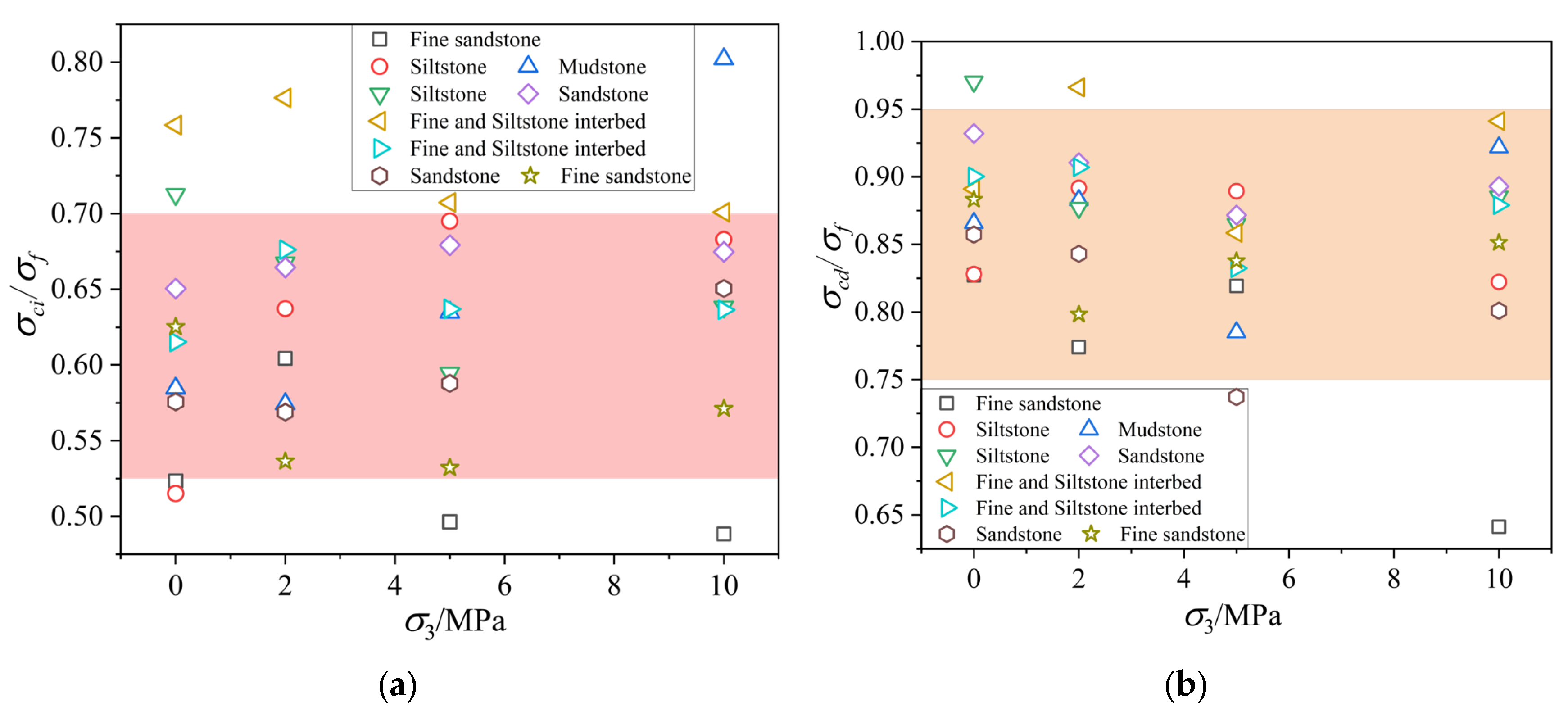
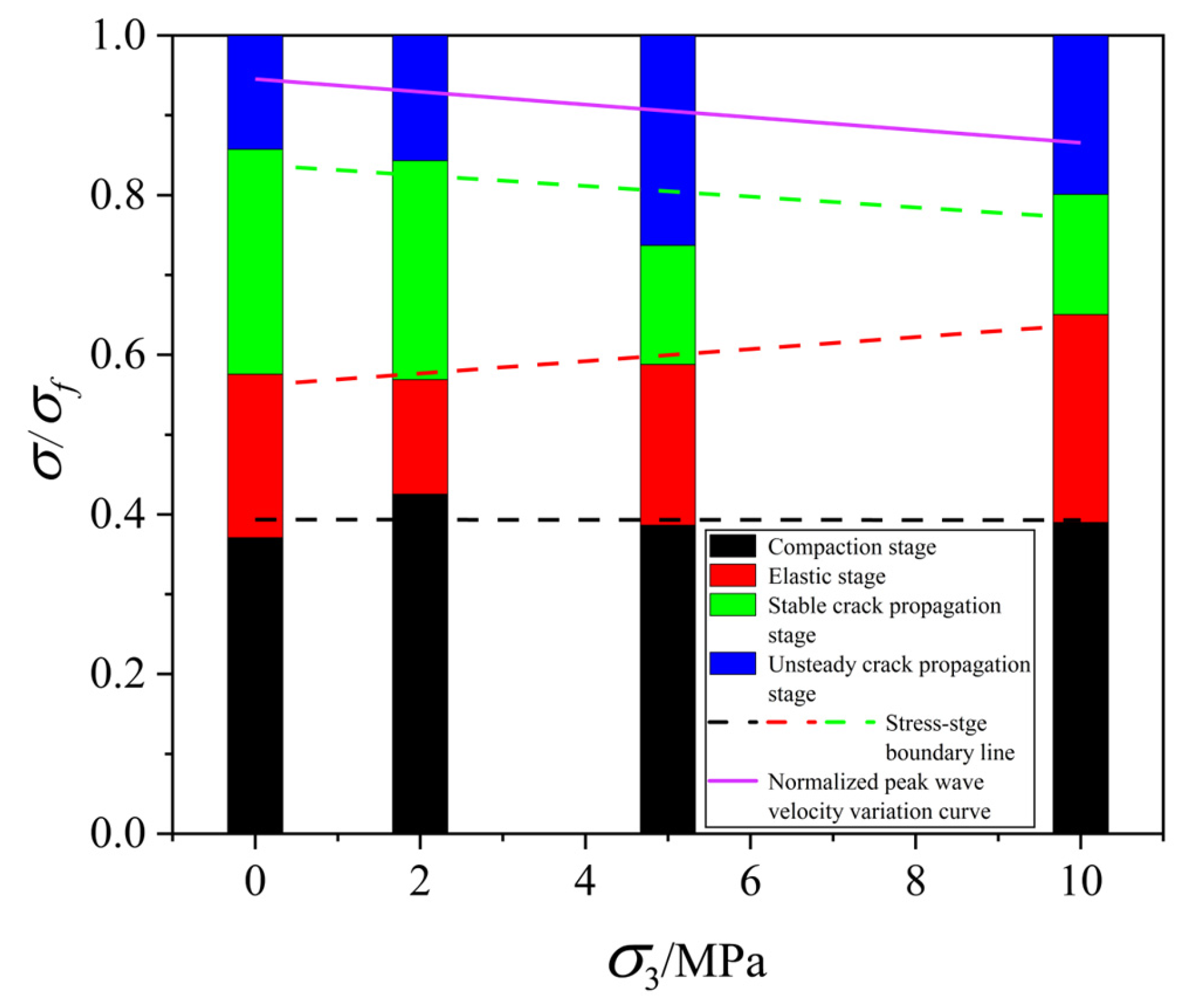
- The normalized crack initiation stress () ranged from 0.55 to 0.68, and the normalized crack damage stress () ranged from 0.79 to 0.9Z, consistent with ranges in the literature of 0.525–0.7 and 0.75–0.95, respectively. This consistency validates the crack-strain-based stress stage identification method and suggests that the observed behavior aligns with general trends in brittle sandstones.
- (4)
- The stress-normalized difference between the peak wave velocity and the damage variable protrusion point was approximately 0.1 across all confining pressures, with a slight decreasing trend under higher confinement. This relationship, derived from the model and validated experimentally, indicates that the wave velocity peak serves as a quantitative precursor to the onset of significant damage, providing a measurable early warning indicator for rock instability.
- (5)
- The findings are based on sandstone samples from a single geological source (Ningtiaota mine) under four confining pressures, with two replicates per condition. Although the proposed mechanistic framework is physically reasonable and supported by quantitative model–data agreement, the model was calibrated using the same dataset; therefore, it does not constitute independent validation. The current data do not support claims of general applicability to other rock types or geological settings. Future work should include validation of the model using independent datasets from different lithologies and stress paths, incorporation of direct microstructural observations to further confirm the proposed mechanisms, and extension of the analysis to field-scale monitoring applications.
Author Contributions
Funding
Institutional Review Board Statement
Informed Consent Statement
Data Availability Statement
Conflicts of Interest
References
- Fu, L.Y.; Yang, H.D.; Fu, B.Y.; Tobias, M.M. Stress-Dependent Wave Propagation in Fractured Rocks With Nonlinear Elastic and Hyperelastic Deformations. J. Geophys. Res. Solid Earth. 2025, 130, e2024JB030889. [Google Scholar] [CrossRef]
- Gao, M.Z.; Xie, J.; Gao, Y.N.; Wang, W.Y.; Li, C.; Yang, B.G.; Liu, J.J.; Xie, H.P. Mechanical behavior of coal under different mining rates: A case study from laboratory experiments to field testing. Int. J. Min. Sci. Technol. 2021, 31, 825–841. [Google Scholar] [CrossRef]
- Cai, M.; Kaiser, P.K.; Tasaka, Y.; Maejima, T.; Morioka, M.; Minami, H. Generalized crack initiation and crack damage stress thresholds of brittle rock masses near underground excavations. Int. J. Rock Mech. Min. Sci. 2004, 41, 833–847. [Google Scholar] [CrossRef]
- He, X.Q.; Zhou, C.; Song, D.Z.; Li, Z.L.; Gao, A.Y.; He, S.Q.; Majid, K. Mechanism and monitoring and early warning technology for rockburst in coal mines. Int. J. Min. Met. Mater. 2021, 28, 1097–1111. [Google Scholar] [CrossRef]
- Zhao, X.P.; Zhang, J.Z.; Yang, S.Q.; Filippo, B. Compression-induced crack initiation and growth in flawed rocks: A review. Fatigue Fract. Eng. Mater. Struct. 2021, 44, 1681–1707. [Google Scholar] [CrossRef]
- Martin, C.D. The progressive fracture of Lac du Bonne granite. Int. J. Rock Mech. Min. Sci. 1994, 31, 643–659. [Google Scholar] [CrossRef]
- Yuan, Q.Y.; He, C.; Chen, Z.Q.; Ma, C.C. Investigation on the Time-Dependent Fracturing Behavior and Delayed Rockburst Mechanism of Deep Hard-Rock Tunnel. Rock Mech. Rock Eng. 2025, 58, 8647–8676. [Google Scholar] [CrossRef]
- Zhao, Y.G.; Huang, L.Q.; Dong, L.J.; Li, X.B. Estimation of characteristic stresses in granite through acoustic emission monitoring of micro-crack fracture mode evolution. Int. J. Min. Sci. Technol. 2026, 36, 1–22. [Google Scholar] [CrossRef]
- Nicksiar, M.; Martin, C.D. Evaluation of methods for determining crack initiation in compression tests on low-porosity rocks. Rock Mech. Rock Eng. 2012, 45, 607–617. [Google Scholar] [CrossRef]
- Zhao, X.G.; Cai, M.; Wang, J.; Ma, L.K. Damage stress and acoustic emission characteristics of the Beishan granite. Int. J. Rock Mech. Min. Sci. 2013, 64, 258–269. [Google Scholar] [CrossRef]
- Li, X.; Si, G.Y.; Cao, A.Y.; Wang, C.B.; Oh, J.; Zhang, Z.Y.; Canbulat, I. Rock anisotropic damage characterisation and its evolution model by integrating acoustic emission tomography and ultrasonic monitoring. Int. J. Rock Mech. Min. Sci. 2024, 180, 105817. [Google Scholar] [CrossRef]
- Li, T.T.; Pei, X.J.; Guo, J.; Meng, M.H.; Huang, R.Q. An Energy-Based Fatigue Damage Model for Sandstone Subjected to Cyclic Loading. Rock Mech. Rock Eng. 2020, 53, 5069–5079. [Google Scholar] [CrossRef]
- Yang, Y.Z.; Zhao, Y.S.; Ma, H.L.; Chen, W.W.; Feng, H.Y.; Jin, M.H.; Lin, Q.Q.; Ma, W.G. The Mechanical Characteristics and Damage Model of Helan Mountain Rock based on Acoustic Emission. J. Wuhan Univ. Technol. Mater. Sci. Ed. 2021, 36, 845–864. [Google Scholar] [CrossRef]
- Wang, X.Z.; Xie, H.P.; Zhang, R.; Zhang, G.Z.; Xu, Z.X.; Deng, J.H.; Wang, D.; Li, C.B.; Feng, G.; Zhang, Z.T.; et al. Progressive Failure Characterization of Sandstone from Yingjinshan Area in Qinghai-Tibet Plateau. Rock Mech. Rock Eng. 2022, 55, 6723–6740. [Google Scholar] [CrossRef]
- Yao, W.; Yu, J.; Liu, X.Y.; Zhang, Z.Q.; Feng, X.W.; Cai, Y.Y. Experimental and theoretical investigation of coupled damage of rock under combined disturbance. Int. J. Rock Mech. Min. Sci. 2023, 164, 105355. [Google Scholar] [CrossRef]
- Fan, C.Y.; Liu, J.F.; Meng, F.B. Micro-cracking process characterization and failure time prediction of three typical rocks upon uniaxial compression based on acoustic emission activity. Rock Mech. Rock Eng. 2024, 57, 9145–9164. [Google Scholar] [CrossRef]
- Song, H.Q.; Zuo, J.P.; Liu, H.Y.; Zuo, S.H. The Strength Characteristics and Progressive Failure Mechanism of Soft Rock-Coal Combination Samples with Consideration Given to Interface Effects. Int. J. Rock Mech. Min. Sci. 2021, 138, 104593. [Google Scholar] [CrossRef]
- Song, C.H.; Lu, C.P.; Zhang, X.F.; Wang, C.; Song, J.F.; Liu, Y.; Li, S.D.; Zhao, D.P. Uncovering the complexity of source mechanism in an anisotropic coal mine using sequential inversion. Sci. Rep. 2024, 14, 31495. [Google Scholar] [CrossRef]
- Yang, P.J.; Miao, S.J.; Ma, Y.T.; Yu, W.X.; Shang, X.F. Multi-dimensional non-uniform deformation and failure of siltstone determined using acoustic, 3D-digital image correlation, and computed tomography. Theor. Appl. Fract. Mech. 2023, 125, 103800. [Google Scholar]
- Shirole, D.; Hedayat, A.; Ghazanfari, E.; Walton, G. Evaluation of an ultrasonic method for damage characterization of brittle rocks. Rock Mech. Rock Eng. 2020, 53, 2077–2094. [Google Scholar] [CrossRef]
- Zhao, M.J.; Nie, Z.C.; Wang, K.; Liu, P.; Zhang, X. Nonlinear ultrasonic test of concrete cubes with induced crack. Ultrasonics 2019, 97, 1–10. [Google Scholar] [CrossRef]
- Jin, J.F.; Xu, H.; Guo, Z.Q.; Liao, Z.X. An equivalent medium model of stress wave propagation through a three-dimensional geo-stressed rock. Arab. J. Geosci. 2022, 15, 1236. [Google Scholar] [CrossRef]
- Chen, Y.C.; Zhao, Z.K.; Guo, J. Precursors of rock failure under cyclic loading and unloading: From the perspective of energy and acoustics. Eng. Fail. Anal. 2024, 166, 108860. [Google Scholar] [CrossRef]
- Zuo, J.P.; Wei, X.; Shi, Y.; Liu, C.; Li, M.; Robina, H.C.W. Experimental study of the ultrasonic and mechanical properties of a naturally fractured limestone. Int. J. Rock Mech. Min. Sci. 2020, 125, 104162. [Google Scholar] [CrossRef]
- Lisabeth, H.P.; Ajo-Franklin, J. The role of stress and fluid saturation on the acoustic response of fractured rock. Front. Earth Sci. 2023, 11, 1058984. [Google Scholar] [CrossRef]
- Zheng, C.K.; Yao, Q.L.; Li, X.H.; Hudson-Edwards, K.A.; Shang, X.B.; Shan, C.H.; Hao, Y.S. Evolution law of ultrasonic characteristics and its relationship with coal-measure sandstone mechanical properties during saturation and desaturation. J. Build. Eng. 2023, 75, 106909. [Google Scholar] [CrossRef]
- Shi, Y.; Zuo, J.P.; Lei, B. Experimental investigation on the correlation between fracture surface characteristic and in situ stress of different depths rock based on wave velocity method. Bull. Eng. Geol. Environ. 2024, 83, 26. [Google Scholar] [CrossRef]
- Chen, K.; Roberto, C.; Andres, A.P.O. Mechanical impairment characteristics and a novel constitutive model for rocks subjected to uniaxial loading process. Int. J. Damage Mech. 2024, 33, 497–526. [Google Scholar] [CrossRef]
- Li, Y.L.; Ranjith, P.G.; Peng, J.M.; Zhao, J.J.; Li, J.M. Interconversion of micro-crack Density Parameters and the Impact of Their Statistical Characteristics on the Physico-mechanical Properties of Rocks. Rock Mech. Rock Eng. 2025, 58, 8221–8242. [Google Scholar] [CrossRef]
- Wang, C.L.; Shen, H.R.; Sun, L.H. Evolution Law of Fractured Rock Permeability under Cyclic Loading and Unloading. Int. J. Geomech. 2025, 25, 04025124. [Google Scholar] [CrossRef]
- Ruhul, A.I.H.; Dutta, T. Material elasticity determines scaling behaviour of cracking dynamics in porous materials: A precursor to crack percolation. Phys. Scr. 2025, 100, 085986. [Google Scholar]
- Xia, Y.H.; Liu, J.F.; Hu, X.J.; Tang, L.H.; Zhou, J.B.; Zhai, S.J. Characteristic stress response law and fracture precursor of granite under different dynamic disturbance damage conditions. Environ. Earth Sci. 2024, 83, 659. [Google Scholar] [CrossRef]





| Formation | Lithology | Range of Rock Depth (m) | Mean Density of Rock (kg/m3) | Average Wave Speed (m/s) |
|---|---|---|---|---|
| Zhiluo | Fine sandstone | 109.81–117.34 | 2144.3 ± 87.2 | 2369.9 ± 102.4 |
| Siltstone 1 | 120.31–126.53 | 2279.9 ± 65.3 | 2621.5 ± 118.7 | |
| Mudstone | 130.16–141.45 | 2386.0 ± 54.8 | 2947.0 ± 135.2 | |
| Siltstone 2 | 143.73–149.61 | 2348.3 ± 71.2 | 2965.2 ± 121.5 | |
| Sandstone | 149.74–158.58 | 2246.9 ± 68.5 | 2432.0 ± 109.3 | |
| Fine and siltstone interbed | 159.02–165.29 | 2387.8 ± 59.4 | 3356.6 ± 148.3 | |
| Yan’an | Fine and siltstone interbed | 167.57–172.67 | 2407.2 ± 62.1 | 3513.3 ± 156.8 |
| Sandstone | 180.39–185.65 | 2155.6 ± 73.4 | 2499.9 ± 112.6 | |
| Fine sandstone | 187.79–198.72 | 2363.2 ± 61.7 | 3412.8 ± 139.5 |
| Confining Pressure (MPa) | R2 | Normalized RMSE | MAPE (%) |
|---|---|---|---|
| 0 | 0.994 | 0.05 | 3.8 |
| 2 | 0.990 | 0.04 | 3.2 |
| 5 | 0.989 | 0.06 | 4.5 |
| 10 | 0.972 | 0.07 | 5.1 |
Disclaimer/Publisher’s Note: The statements, opinions and data contained in all publications are solely those of the individual author(s) and contributor(s) and not of MDPI and/or the editor(s). MDPI and/or the editor(s) disclaim responsibility for any injury to people or property resulting from any ideas, methods, instructions or products referred to in the content. |
© 2026 by the authors. Licensee MDPI, Basel, Switzerland. This article is an open access article distributed under the terms and conditions of the Creative Commons Attribution (CC BY) license.
Share and Cite
Shi, Y.; Zuo, J.; Zhao, S.; Sun, Y.; Gao, H.; Li, Y.; Ren, W.; Zhou, Z. Mechanism of Progressive Failure, Stress and Wave Velocity Misalignment in Sandstone. Appl. Sci. 2026, 16, 4141. https://doi.org/10.3390/app16094141
Shi Y, Zuo J, Zhao S, Sun Y, Gao H, Li Y, Ren W, Zhou Z. Mechanism of Progressive Failure, Stress and Wave Velocity Misalignment in Sandstone. Applied Sciences. 2026; 16(9):4141. https://doi.org/10.3390/app16094141
Chicago/Turabian StyleShi, Yue, Jianping Zuo, Shankun Zhao, Yunjiang Sun, Hainan Gao, Yunpeng Li, Weiguang Ren, and Zhibin Zhou. 2026. "Mechanism of Progressive Failure, Stress and Wave Velocity Misalignment in Sandstone" Applied Sciences 16, no. 9: 4141. https://doi.org/10.3390/app16094141
APA StyleShi, Y., Zuo, J., Zhao, S., Sun, Y., Gao, H., Li, Y., Ren, W., & Zhou, Z. (2026). Mechanism of Progressive Failure, Stress and Wave Velocity Misalignment in Sandstone. Applied Sciences, 16(9), 4141. https://doi.org/10.3390/app16094141