1. Introduction
Immersive technologies have undergone a remarkable evolution in recent years, improving significantly in terms of capabilities, performance, maturity, and adoption. On the one hand, novel immersive formats, and their strategic combinations, currently enable precise, realistic, and cost-effective reconstructions of ideated, lost, or existing spaces, even supporting interactive exploration and manipulation via diverse multimodal interaction features (e.g., [
1,
2,
3,
4]). On the other hand, emerging Social Virtual Reality (VR) or Metaverse platforms enable geographically distributed users to be teleported in real-time to shared virtual environments, where they can engage in interactive and collaborative shared activities. While most Social VR platforms rely on synthetic avatars (cartoon-like or human-like) to represent users, a few cutting-edge solutions go further by enabling realistic, volumetric representations (i.e., 3D holograms) captured in real time, even using affordable capture setups (e.g., [
5,
6,
7,
8]).
Despite the clear potential of both multimodal VR reconstruction and Social VR technologies across various domains, including not only entertainment, but also culture and education, among others, their integrated exploration and adoption has been scarcely explored to date [
7,
8]. This paper fills this gap by providing three beyond-state-of-the-art contributions:
As a first contribution, it builds upon insights from prior studies (see
Section 2) to propose and validate innovative content hybridization strategies, combining video-based and synthetic elements to create realistic and plausible reconstructions of real-world spaces (specifically, a restaurant–museum), enabling their interactive and rich visit, even with six Degrees of Freedom (6DoF) navigation.
As a second contribution, it extends and evolves a state-of-the-art Social VR platform [
5,
6] by incorporating role-based, multimodal interaction mechanisms. These features enable remote user groups to collaboratively and coherently explore reconstructed 3D environments, interact with various Points of Interest (PoIs), and access contextually rich multimodal information about the location.
As a third contribution, it explores the readiness, effectiveness, and potential of combining state-of-the-art Social VR and holographic communication technologies [
5,
6] to provide interactive group visits to realistic multimodal VR environments in the cultural and tourism sectors. Specifically, the study offers valuable insights into technical requirements and user perceptual aspects, including sense of immersion, (co-)presence, interaction quality, and Quality of Experience (QoE), through a user study involving 22 participant pairs who jointly explored a reconstructed restaurant–museum. The obtained results reveal high levels of user satisfaction, regardless of whether participants acted as Guides (interacting with the VR environment) or Followers (observing and following the Guide’s actions).
By integrating these three novel contributions, this paper fills a gap in the state-of-the-art by pioneering the joint exploration and validation of Social VR, holographic communication, and multimodal content integration and interaction as effective tools for enabling next-generation tourism and cultural experiences. In doing so, it opens the door to new, cost-effective, and engaging forms of cultural engagement.
The remainder of the paper is organized as follows.
Section 2 reviews key state-of-the-art contributions relevant to the scope of this work.
Section 3 describes the novel extensions developed and integrated into an existing Social VR platform [
6] to support group-based and role-based multimodal interaction.
Section 4 details the content ideation and production processes adopted for reconstructing the target real-world space.
Section 5 presents the evaluation phase, including the methodology, deployment steps, and the results obtained. Finally,
Section 6 discusses the findings, outlines key conclusions, and highlights directions for future research.
2. Related Work
2.1. Content Formats and Hybridization for VR Reconstruction
Immersive technologies and content formats have been widely employed to create virtual reconstructions of ideated, existing, and lost environments, particularly in the domains of cultural heritage, tourism, and gamification (e.g., [
2,
3,
9]).
Traditionally, virtual reconstructions have relied predominantly on 3D modeling techniques and synthetic, computer-generated visual content, as reviewed in [
3]. While this approach provides high levels of control and interactivity, it often entails significant production costs and may lack visual realism. In response, alternative digitization methods—such as photogrammetry, 3D scanning, and 360° video capture—have gained traction, especially for reconstructing real-world spaces. For instance, photogrammetric techniques have been shown to enhance the authenticity of VR reconstructions and increase user engagement [
10]. Similarly, 360° video has emerged as a cost-effective, fast, and visually realistic format for capturing and representing immersive cultural and tourism experiences [
11,
12]. However, this format is typically limited to three degrees of freedom (3DoF), restricting the user to a fixed point of view without the ability to navigate freely within the environment.
To overcome these limitations, content hybridization techniques have emerged to strategically and, ideally, seamlessly integrate and blend multiple media formats, such as video, synthetic graphics, and interactive elements, into single virtual reconstructions. These approaches aim to leverage the strengths of each content type (e.g., the authenticity and photorealism of video capture with the interactivity and spatial freedom of synthetic environments) to create more engaging, immersive, and cost-efficient VR experiences [
4,
5].
Numerous studies have explored distinct hybridization approaches. For example, several works combine 360° video with interactive overlays or embedded synthetic elements to provide contextual information and enrich user interaction [
11,
13]. The study in [
14] reviews notable examples where diverse content formats, such as 3D models and digitization techniques, have been jointly used to deliver interactive and customizable virtual tours in cultural settings. Likewise, the study in [
5] demonstrates how a strategic and interactive integration of 3D modeling, stereoscopic 180° and 2D video, and mesh-based holographic representation results in a realistic and interactive reconstruction of a live TV show. Additionally, the study in [
4] provides a comparative analysis of various content formats, including 3D synthetic scenes, animated avatars, and 2D/360° video, for producing cinematic VR experiences. Subjective user studies from that work highlight how hybrid approaches (e.g., combining 3D modeling with video content) can reduce production costs while enhancing Quality of Experience (QoE) metrics such as visual fidelity, immersion, presence, and motion parallax, particularly in constrained interaction contexts (e.g., 3DoF+).
More recently, emerging immersive techniques such as Neural Radiance Fields (NeRF) and 3D Gaussian Splatting (3DGS) [
15] have shown great promise, as they allow for the generation of high-fidelity spatial reconstructions, using low-cost 2D video sensors, significantly broadening the accessibility and precision of VR content creation. However, their integration into interactive and Social VR platforms remains in its infancy [
16], presenting a compelling direction for future research.
This work goes beyond previous research in this topic (e.g., [
4,
5]) by incorporating extra media modalities to reconstruct interactive environments with diverse PoIs that can be freely explored (i.e., 6DoF) and actioned.
2.2. Social VR and Holographic Communications
In recent years, interest in Social VR platforms and associated experiences has significantly increased to overcome identified limitations of traditional 2D videoconferencing solutions [
5]. The study in [
17] analyzed how to efficiently support group-based cinematic VR services, and it proposed interaction and guiding techniques to optimize the user experience in remote shared media consumption of 360° videos via Head Mounted Displays (HMDs). The study in [
18] highlighted that the usage of RGB-D sensors (i.e., sensors that capture both color and depth information) for human body capture, combined with HMD-based content consumption, results in higher engagement, immersion, and a more enjoyable sense of embodied telepresence compared to traditional 2D communication and interaction tools. In this line, the work in [
19] introduced a web-based Social VR platform that supports real-time user capture through a single RGB-D sensor (e.g., Kinect) and places users in a shared virtual scenario represented by a static 360° image. Likewise, the study in [
20] provided initial evidence on the potential of (avatar-based) Social VR compared to traditional 2D conferencing tools and to a baseline face-to-face scenario for a multi-user photo sharing use case. Expanding on the comparative approach, the study in [
12] evaluated the quality of user experience across three conditions—face-to-face, avatar-based Social VR, and realistic video-based Social VR (the latter implemented using the platform from [
19]) in shared video-trailer-watching activities among couples. Findings revealed that realistic video-based Social VR offered more engaging experiences in terms of presence, togetherness, and interaction quality than avatar-based systems, and it approached the experience of face-to-face interaction to a certain extent.
The study in [
8] provided further evidence on the potential of Social VR with realistic user representations by (i) integrating technological components to enable the real-time holoportation of mesh-based volumetric user representations to a shared virtual environment and (ii) creating a 3D VR immersive clip for which two integrated users need to gather and exchange hints to help understanding a (murder investigation) story. In addition, the study in [
8] provides an overview of related studies having discussed and provided evidence on the benefits of the availability of realistic (and dynamic) user representations over synthetic (and static) avatars in VR experiences. Similarly, the study in [
6] shows that state-of-the-art technology from [
5,
21] for capturing and integrating realistic user representations into shared virtual environments, even when using single low-cost sensors for capturing the frontal users’ viewpoint, enables satisfactory and effective interactions and gesture-based collaborations when groups of two and four users meet virtually around a round table.
This work departs from state-of-the-art Social VR platforms (e.g., [
4,
5,
6]) and expands them by incorporating synchronized role-based, multimodal interaction mechanisms in shared virtual experiences.
2.3. Multimodal Interaction and Virtual Visits in (Social) VR
Virtual reconstructions of environments increasingly aim not only for precision, realism, and cost-effectiveness, but also for enabling rich interaction. The studies in [
10,
11] provide a comprehensive review of immersive technologies, formats, and methods that can be adopted to provide interactive virtual visits to cultural spaces by identifying diverse case studies.
The study in [
5] shows how diverse content formats for representing the VR environment can be combined and transitioned, based on the actions and discourse of a live teleported presenter, to recreate a realistic and interactive live TV show. The study in [
22] assesses the impact on exploration patterns and UX when four users—represented as real-time captured Point Clouds [
6,
21]—are holoported to a shared virtual environment where they can watch a VR movie from inside while being able to freely explore the environment (6DoF) and perform basic interactions to influence the narrative. Similarly, the study in [
7] recreates and evaluates a Social VR scenario in which four distributed users, represented as Point Clouds, are also teleported to shared customized and multimodal virtual environments to jointly, interactively, and collaboratively explore a catalog of professional (2D and 360°) video clips, recreating diverse historical events and moments, and thus a time travel lift.
In summary, the technical contributions and insights from prior studies provide a solid foundation and motivation to not just address specific gaps in each of the explored domains, but interestingly to strategically explore and exploit them in a unified, coordinated manner. This reflects the core innovation and value proposition of this work, which is pioneering in jointly addressing the next beyond-state-of-the-art contributions: (i) adopting content hybridization techniques to provide a professional-grade and cost-effective reconstruction of a cultural site—specifically, a restaurant–museum—for its interactive exploration and visit; (ii) evolving and extending a reference Social VR platform [
6] to support a real-time holoportation of geographically distributed users to the reconstructed virtual space for an interactive group-shared visit, with free exploration patterns (6DoF); (iii) augmenting both the virtual reconstruction and Social VR platform with multimodal content capabilities, enabling a designated Guide (one of the holoported visitors) to trigger diverse media linked to specific PoIs, which are then presented coherently and synchronously to all participants in the shared session.
3. Evolved Social VR Platform
3.1. Social VR Platform Architecture
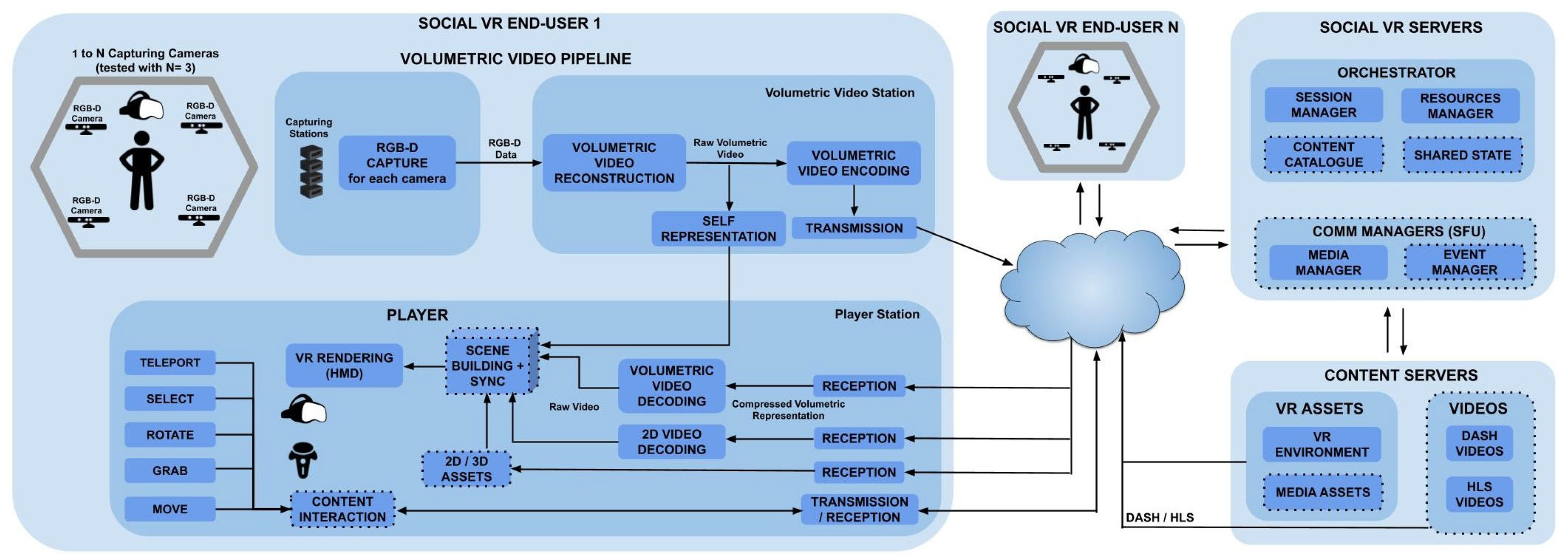
The Social VR platform used in this work has been built by adopting, evolving, and extending technological contributions from the state-of-the-art. A high-level architecture of the resulting Social VR platform and the main interactions between its components/modules are sketched in
Figure 1. In essence, the Social VR platform is composed of client and server components. On the one hand, client components include a real-time volumetric video capture pipeline and a Unity-based VR player handling multimodal content consumption and interaction features. On the other hand, server components include mainly session and resources managers, communication managers, and content servers. A detailed explanation of its core components and technological aspects can be found in [
5,
6,
7], in which the main novel developed and evolved components in this work along the end-to-end chain (highlighted in dotted borders for the associated boxes in
Figure 1), and the evaluated aspects are detailed next.
3.1.1. Volumetric Video Capture and Reconstruction
The adopted Social VR platform integrates a versatile volumetric video Capture and Reconstruction subsystem to enable a real-time, realistic, and fluid volumetric representation of users in the shared virtual environment, represented as Point Clouds. Specifically, the Point Cloud capture subsystem can adopt flexible setups from 1 to N RGB-D sensors, such as Azure Kinect, which captures both color (RGB) and depth (D) information. In the case that >1 RGB-D sensors are used, they are strategically placed for capturing the full 360° volume of the human body, with an effective capture area around a radius of 1.5 m. The captured Point Cloud frames from each sensor are then converted into per-frame Point Clouds, fused and cleaned (e.g., background removal) in a common processing station to provide a reconstructed volume as output, as detailed in [
5,
6,
7].
On the one hand, the resulting Point Cloud data stream is provided to the local rendering process to enable the user’s self-representation in the virtual environment. On the other hand, the resulting Point Cloud data stream needs to be encoded for an effective real-time distribution to the involved remote participants in the Social VR experience. For such a purpose, the Social VR platform has adopted the encoder/decoder from [
21,
23], which (i) is based on using intra frames for the whole captured volumetric video stream; (ii) exploits octree occupancy to represent the geometry; and (iii) strategically projects the colors onto a 2D grid using a Joint Photographic Experts Group (JPEG)-based image compression technique. Such a configuration allows for low delay encoding and decoding, thus making it suitable for real-time applications.
3.1.2. Orchestration and Communication Modules
In the original architecture described in [
6], the Orchestrator component followed a monolithic design, combining both session/connection management (i.e., Control Plane) and media forwarding (i.e., User Plane) functionalities. To better support interactive and collaborative group-shared Social VR experiences, this work introduces three key improvements to such an Orchestrator component:
Decoupling Control and User Plane Functionalities: This architectural shift enables reusable Control Plane components (e.g., the Session Manager) across multiple Social VR sessions, while allowing a dynamic instantiation of User Plane components (e.g., Selective Forwarding Units, or SFUs [
6]) for each specific session. This modular design enhances scalability and flexibility in session management and media distribution.
Modularizing the SFU. The original SFU [
6], responsible for distributing media and interaction data among distributed users, has been split into two independent submodules:
Media Manager: It handles the exchange of audio and (volumetric) video streams.
Events Manager: It handles the transmission of control and interaction data (e.g., user positions, viewpoints, and users’ interactions/actions).
Both submodules interface with a newly developed cloud-based Shared State module (
Figure 1), which integrates a modular synchronization and coherence mechanism that aligns with the Digital Video Broadcasting Companion Screens & Streams (DVB-CSS) protocol [
24]. Together, these components ensure a globally synchronized and coherent state across all participants in a multi-user session, both spatially and temporally.
Integration with External Content Sources: Additional modules have been incorporated into the Orchestrator component to interface with external Content Catalogs and Content Sources (e.g., VR assets and videos). These modules support content retrieval using adaptive streaming protocols such as Dynamic Adaptive Streaming over HTTP (DASH) and HTTP Live Streaming (HLS), thereby enhancing the platform’s capability to deliver high-quality, dynamic media content.
Communication and exchange of data, including both control signals and media/data streams, between clients and the Orchestrator, is facilitated via the Media and Events Managers of the SFU, using socket.io (Socket.IO
https://socket.io/ Last Accessed in 17 March 2026) (i.e., TCP-based socket communication), consistent with the approach followed in [
6].
3.1.3. Social VR Client
The Unity-based Social VR Client, originally described in [
6], has been significantly evolved and extended in this work to support the intended interactive, group-shared Social VR experiences. The client-side features (including navigation, PoI selection/activation, UI state, and role permissions) have been implemented as modular Unity C# scripts, organized into interaction, content, and networking components, and executed within Unity’s runtime update loop. The next remarkable enhancements have been introduced:
Support for Multimodal Interactions. The client now leverages the Unity eXtended Reality (XR) Interaction Toolkit (XR Interaction Toolkit
https://docs.unity3d.com/Packages/com.unity.xr.interaction.toolkit@3.0/ Last Accessed in 17 March 2026), which is built upon the OpenXR standard (OpenXR
https://www.khronos.org/openxr/ Last Accessed in 17 March 2026), to provide interoperable and rich multimodal interaction capabilities. These interactions are enabled through a variety of input devices, including keyboard, mouse, VR controllers, and hand tracking. Supported features include:
Diverse teleportation methods for environment navigation (e.g., selection of hotspots linked to PoIs, direct pointing with VR controllers, and coarse locomotion via controller wheels).
Pointing at elements for their selection or activation.
Grabbing, rotating, moving, and manipulating 3D elements.
Support for Synchronized Multi-user Interaction. The implemented multimodal interactions have been extended to support multi-user scenarios through integration with the Events Manager and Shared State modules (see
Figure 1). Concretely, each interaction (e.g., teleport to hotspot, PoI activation, object manipulation) is serialized as an event with specific metadata (timestamp, position, PoI or object, triggered action, status…) and propagated via the Events Manager to update the shared session state, which all clients apply to render consistent object states and media playback. As a result, all participants in a shared Social VR session can experience interactions and their effects in a coherent and synchronized manner.
Content Interaction and Media Control. The client incorporates a new Content Interaction module, which allows:
Selecting and exploring available content elements related to the current VR scenario and associated PoIs.
Retrieving relevant content assets (e.g., 3D models, videos).
Controlling media playback, when applicable.
User Roles and Control Management. To maintain coherence and avoid conflicting actions, all interaction features that can influence the shared environment or its elements are, by default, restricted to a single master user (typically the session creator). However, other users in the session may request to take over this role and gain access to these privileged interactions, a mechanism inspired by related approaches discussed in [
7].
Finally, the Social VR Client and its associated functionalities have been packaged into a Software Development Kit (SDK) (version 1.0), which can be easily retrieved and installed via the Unity Package Manager. The SDK includes all the core modules of the client application, along with comprehensive and intuitive interfaces to other key components of the Social VR platform, such as the Capture and Reconstruction modules. Additionally, it provides appropriate endpoints to interface with the server-side components, including Communication, Orchestration, and Content Server/Interaction modules.
By offering the client as a modular and well-documented SDK, the platform significantly lowers the barrier to entry for developers, facilitating its integration into future Unity-based Social VR projects, including those developed by third parties. This packaging strategy is expected to promote broader adoption and foster innovation within the Social VR ecosystem.
4. Content Ideation and Production
4.1. Selected Scenario and Historical Cultural Context
A key objective of this study is to assess and demonstrate how content hybridization techniques can enhance QoE and reduce content production costs, while simultaneously: (i) enabling high-realism and diverse multimodal interaction features, including 6DoF capabilities, and (ii) enriching the virtual exploration of cultural spaces, with augmented information that can be interactively presented in a coherent, rich and synchronized manner.
To achieve high levels of realism, the approach adopted in this work focused on reconstructing a real-world environment with strong historical and cultural significance. This strategy enables the use of authentic captures of the actual space and its elements, thereby grounding the experience in real-world heritage.
After evaluating several candidate locations, the decision was made to virtually reconstruct the mythical “Els Quatre Gats” café in Barcelona. Opened in 1897, the café quickly emerged as a prominent gathering place for leading figures of the Catalan modernist movement, including artists such as Pablo Picasso and Ramon Casas. The café hosted numerous cultural events and exhibitions, and today functions as a museum, recognized for its architectural significance and the cultural heritage it embodies.
This historically rich and visually distinctive environment provided an ideal scenario to demonstrate the potential of the developed Social VR platform, especially in terms of immersive interaction, cultural storytelling, and content hybridization.
4.2. Hybridization Techniques for the Virtual Space Reconstruction
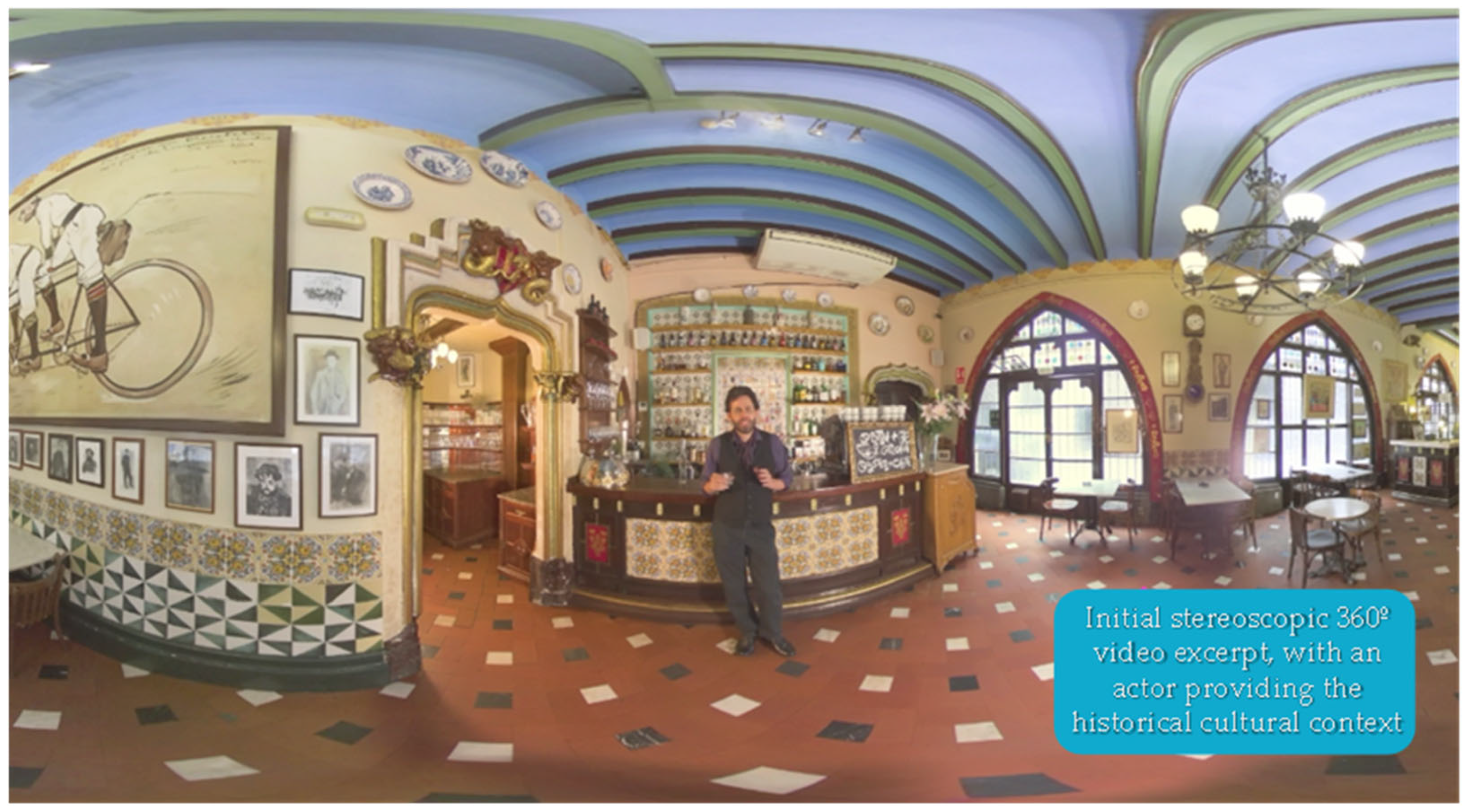
An introductory 5 min stereoscopic 360° capture of the scene was captured to maximize the sense of realism, presence, and plausibility within the virtual experience. This video was captured on-site at the actual café (see
Figure 2).
In this immersive scene, the character welcomes the teleported users into the experience and offers a brief but engaging overview of the historical and cultural significance of the venue. The use of real-world video capture, combined with a live actor, serves to immediately ground users in an authentic setting, evoking the sensation of physically entering the original space.
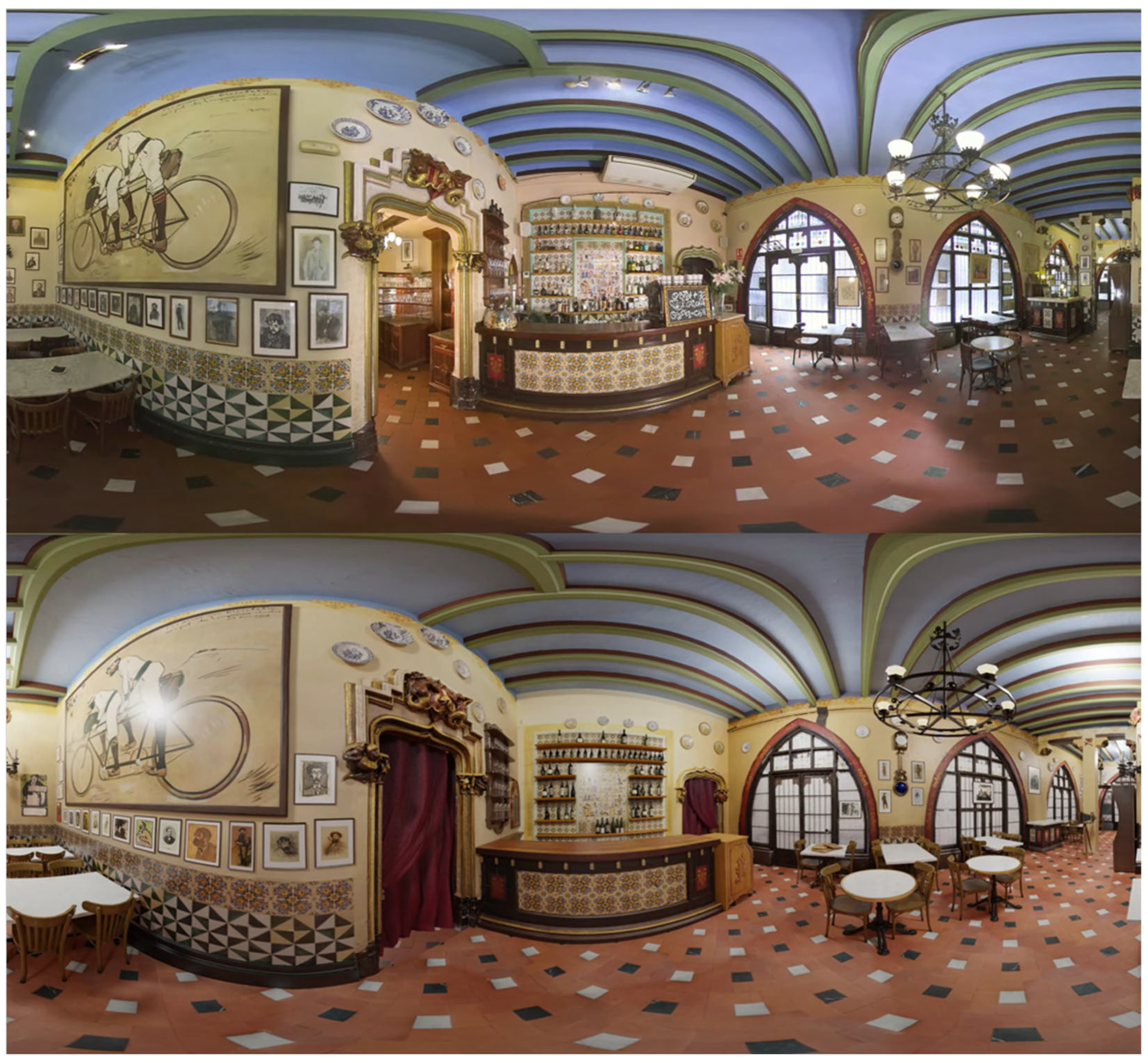
After the introductory sequence, the character invites users to freely explore the café museum, triggering a short transition phase to seamlessly convert the scene from a high-quality 360° stereoscopic video (3DoF) to a fully navigable synthetic 3D environment (6DoF) recreated with photogrammetry techniques, as shown in
Figure 3. This transition was carefully designed and produced to achieve smooth, subtitle conversion, minimizing disruption to user immersion. A short video excerpt illustrating this seamless content transition is available at
https://tinyurl.com/4Gats1 (accessed on 17 March 2026).
4.3. Interaction Elements
The 3D reconstructed space has been augmented with a set of PoIs that can be freely visited and triggered to present additional multimodal information relevant to the space being visited, like 3D modeled objects, animated motion graphics, audio tracks with visual effects, pictures, etc. Thus, the recreated space combines various Computer-Generated Imagery (CGI) techniques, including photogrammetry, 3D modeling and motion graphics, beyond other video-based and multimodal (e.g., audio) stimuli.
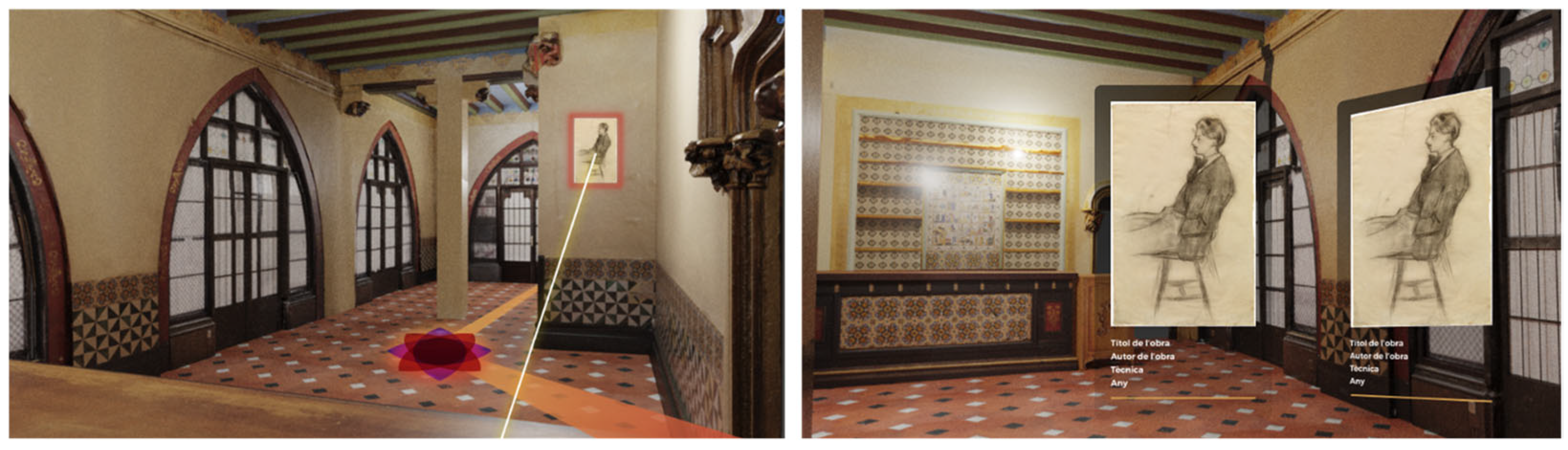
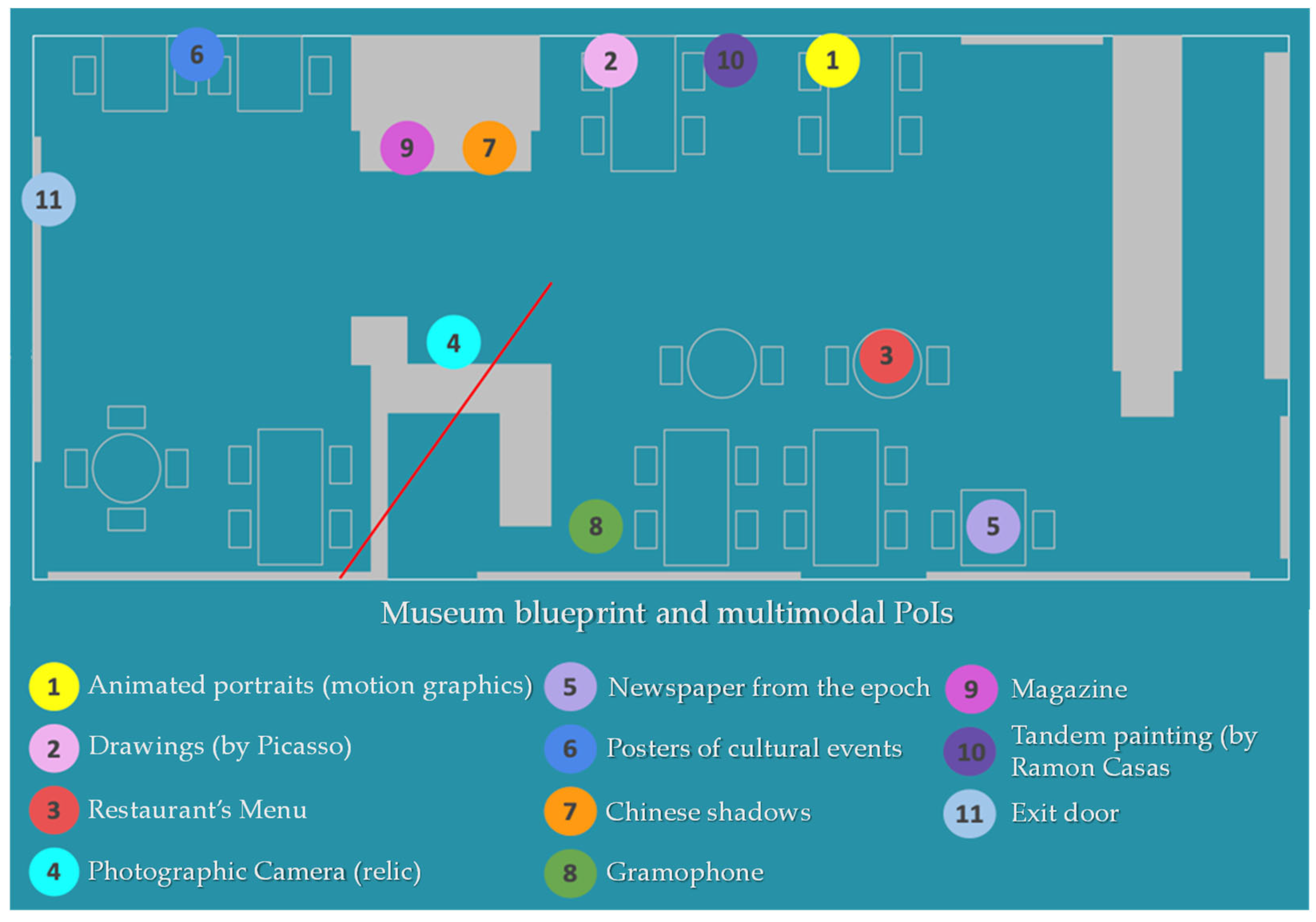
Figure 4 sketches the blueprint of the reconstructed 3D VR space, augmented with a set of distributed, multimodal PoIs which can be easily identified with associated hotspot marks added intuitively on the floor (see
Figure 5) to enhance usability and guide the narrative.
In total, 11 PoIs have been integrated into the interactive VR experience (see
Figure 4). These PoIs can be freely visited, selected, and activated using the VR controller, each offering access to a variety of interactive multimodal content items. The included content spans multiple formats and media types, designed to enrich the cultural and historical storytelling, including:
Dynamic sequences, such as animated portraits and historical video excerpts.
Artistic works, including drawings and paintings by figures associated with the café.
Periodicals, such as newspapers and magazines from the epoch, which can be grabbed and browsed, allowing users to flip through pages as if handling physical documents.
Relic objects, such as a vintage photographic camera and a gramophone, both 3D modeled. Users can insert disks into the gramophone to listen to period-appropriate music, accompanied by contextual visual animations.
4.4. Story Board
The experience begins by teleporting two users to the reconstructed virtual space, initially represented as stereoscopic 360° video. In that introductory scene, the users are positioned in from of the bar, featuring an actor portraying the café’s historical founder and owner who welcomes them. In this phase, the users are provided with 3DoF capabilities. At the end of this speech, the actor invites the users to freely visit the space, and then the scene fully transitions into the synthetic 3D VR environment. In such a phase, users gain 6DoF capabilities, allowing them to freely explore the space naturally using VR controllers (or a keyboard, if using a desktop PC setup). Fine-grained motion is supported via the controller’s thumbwheel or equivalent keyboard input. Although the space is freely explorable, a set of hotspots on the floor have been added, serving as intuitive markers for the available PoIs to which users can teleport directly by pointing at them with their VR controller. Once at a PoI, users can access contextual multimodal information by interacting with its associated visual elements, enabling a rich and personalized exploration of cultural content.
Throughout the experience, users maintain full autonomy to navigate and engage with these PoIs at their own pace. For example,
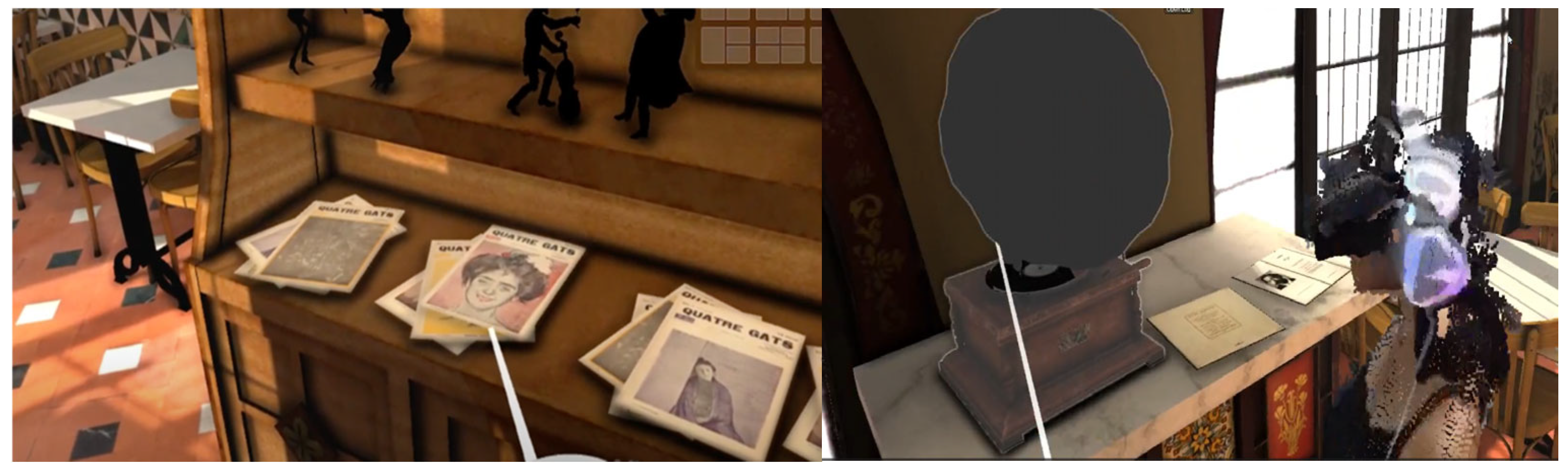
Figure 6 depicts users interacting with a historically styled magazine and activating the gramophone, both objects having been recreated using detailed 3D modeling techniques.
By default, the ability to teleport to and interact with PoIs is restricted to a single designated user, who acts as the Session Master or Guide. This user controls the navigation and interaction flow, thus enabling more structured and coherent group experiences, particularly beneficial for guided tours or educational scenarios.
To conclude the experience, users can exit the VR environment by selecting the PoI associated with the exit door, or simply by clicking on the door itself.
The overall duration of the session is not predefined, but rather determined by how much time users choose to spend exploring the virtual space and interacting with the available PoIs, thus allowing for flexible user-driven engagement.
Short video excerpts demonstrating the teleportation to, and navigation through, the reconstructed VR space, as well as interactions with selected PoIs, can be viewed at
https://youtu.be/8yx00K79yFw (accessed on 17 March 2026) and
https://youtu.be/RhcqsXUy8tM (accessed on 17 March 2026).
5. Evaluation
This section first outlines the evaluation objectives and the adopted methodology to achieve them. Next, it briefly describes the evaluation setup and then presents the obtained results from the conducted objective and subjective tests.
5.1. Objectives
The evaluation was designed to address two main goals:
First, to assess and demonstrate the potential of the proposed content hybridization techniques and multimodal interaction features in delivering rich, immersive virtual visits for applications in the cultural heritage and tourism sectors.
Second, to evaluate the technical implications, readiness, and appropriateness of novel holoportation technologies in enabling group-shared virtual experiences. Specifically, the evaluation focused on two-user sessions with role-based interaction capabilities, analyzing how well the system supports collaborative exploration and synchronized real-time interaction.
5.2. Methodology
The evaluation comprised both objective and subjective experiments. For the objective evaluation, the focus was on assessing the technical performance and resource usage levels necessary to run the VR experience smoothly and reliably. This approach aligns with methodologies adopted in prior related works [
5,
6,
7], easing reproducibility.
For the subjective evaluation, participants were recruited in pairs, forming interactive two-user sessions. Although the platform supports up to six simultaneous users using Point Cloud representations [
6,
7], the two-user configuration was selected due to the nature of the group-based teleportation experiment and the spatial characteristics of the virtual scenario. Prior studies [
5,
6] have shown that such pair-based sessions promote natural interaction, yield comfortable user experiences, and are applicable across a wide range of scenarios and use cases. The participants’ recruitment criteria were as follows:
Participants were recruited via mailing to personnel of the entities involved in the study (although they had to not be involved in the associated project and technological development).
They had to be over 18 years old.
Each participant had to know their session partner to foster natural and fluid social interactions.
Ideally, the group of participants had to include diverse backgrounds, combining technical and creative profiles, to gather varied perspectives on usability and experience quality.
The following procedure was followed for conducting the subjective tests:
Step 1 (~5 min). Participants were welcomed and introduced to the experiment, including an overview of the procedure, VR experience, hardware, and objectives. They were informed that participation was voluntary and that they could withdraw at any time without providing a reason.
Step 2 (~5 min). Participants completed a consent form followed by a demographic and background questionnaire. The Simulation Sickness Questionnaire (SSQ) [
25] was not included to avoid lengthening the session, as no significant symptoms were reported in related previous studies [
5,
6,
7].
Step 3 (~5 min). Each participant was taken to the experimentation room and equipped with an HMD and headphones, with assistance from facilitators as needed.
Step 4 (~15–20 min): Once ready, facilitators launched the Social VR experience. Participants were instructed to: (i) interact freely with one another and (ii) engage with any interactive features of interest within the virtual environment. With this approach, each two-participant session, including the initial content consumption and subsequent interaction phases, lasted approximately 20 min.
Step 5 (~15 min). After finalizing the Social VR experience, participants completed two paper-based questionnaires: (i) an adapted version of a Social VR experience questionnaire designed and openly shared in a previous study [
8] and (ii) an ad hoc questionnaire tailored to the specific experience.
Step 6 (~2 min). Participants were thanked and allowed to leave.
In total, each session took approximately 45 to 50 min.
5.3. Setup
The experiment was conducted in two separate rooms within the same building. Both rooms maintained appropriate lighting and temperature conditions, were free of background or ambient noise, and were adequately equipped to support the Social VR experience. Specifically, each room included the following components: (i) a VR-ready PC with sufficient computational resources (see
Table 1) to run the developed Social VR client application; (ii) a Meta Quest 2 HMD, which has connected the client PC via an Oculus Link cable (so in fact the HMD in use does not have an impact on the experience) and by using its built-in microphone to enable bi-directional audio interaction between participants; (iii) noise-canceling headphones to ensure immersive spatial audio perception and eliminate ambient noise; and (iv) a capture subsystem comprising N = 3 Azure Kinect cameras, enabling full-body volumetric capture of each participant.
The Point Cloud streams, after the multi-sensor fusion and reconstruction processes, were encoded at 15 frames per second (fps), with approximately 70,000–100,000 points per frame, depending on the captured scene and background removal processes. The volumetric video processing and encoding steps were performed using the pipeline described in [
6,
7]. The audio and volumetric video streams were captured and exchanged in real-time between participants, but their associated data were discarded upon reception, thus not storing any personal data from participants.
The client PCs were connected via a 1 Gbps full-duplex Ethernet local network. The Orchestrator and Communication modules responsible for stream exchange between users—specifically the Media Manager and Events Manager of the SFU—were also deployed on a dedicated server within the same network. This configuration allowed for minimizing network-related instability aspects, such as internet connectivity fluctuations, even though the platform has been shown to perform reliably in distributed environments [
6,
7].
Participants remained standing throughout the session to allow for full-body capture and recreate a natural exploration (6DoF) within the virtual environment.
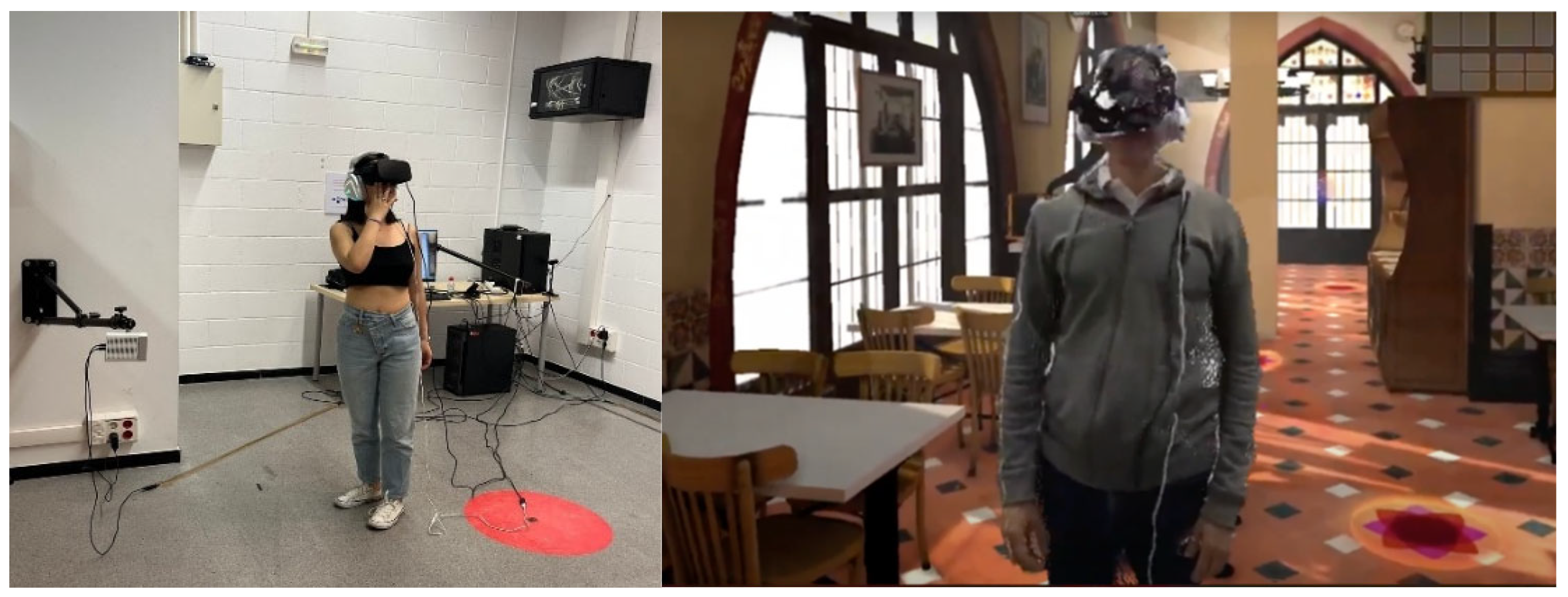
Figure 7 illustrates the evaluation setup in one of the rooms.
6. Results
6.1. Objective Evaluation
This section evaluates the performance and stability of the Social VR platform during test sessions (five repetitions of 5 min sessions), with the integrated VR environment and Point Cloud streams conveying the complete full-body volumetric representations of two captured users.
First, the computational resources usage levels on the client side were measured by adopting the open-source tool from [
26], confirming the percentages of CPU and GPU usage were kept quite stable, with non-critical peaks reaching 51% and 72%, respectively. Note that metrics for the Orchestrator and SFU components are not reported, as these server entities are in charge of managing sessions and forwarding streams, respectively, but do not perform heavy computational processes.
Second, the bandwidth consumption for each Point Cloud stream was also measured by using Wireshark (Wireshark
https://www.wireshark.org/ Last Accessed in 17 March 2026), resulting in an average data rate of 16.9 Mbps (std: 1.7 Mbps) per stream, with minimal TCP errors or retransmissions. These figures are consistent with earlier studies [
6,
7], which used the same measurement tools, and demonstrate a smooth and uninterrupted playout during the VR sessions.
Third, the end-to-end latency for the Point Cloud transmissions was also assessed by comparing wall-clock synchronized timestamps during the capturing and rendering processes. As for the bandwidth figures, the end-to-end delays were also kept quite stable, with average values of 147 ms (std: 10.9 ms). These delay magnitudes are appropriate for successfully providing interactive real-time communication services [
7].
Future work will focus on assessing scalability implications and limits in sessions with a higher number of clients and in multi-session setups. Likewise, usage of heterogeneous client devices will be considered to determine stability and scalability limits under a variety of deployment scenarios.
6.2. Subjective Evaluation
The subjective evaluation aimed to assess participants’ perceptions of immersion, presence, interaction quality, and social connectedness (togetherness). Additionally, it examined other ad hoc aspects, such as the opinions on the perceived quality and performance, awakened interest and potential impact in diverse sectors.
In each session, participants were assigned specific roles: one acted as the ‘Guide’, with access to PoI interactions and teleportation control, while the other played the role of ‘Follower’. Whenever applicable, results were analyzed by participant role to assess potential differences in experience depending on interactivity level and control.
6.2.1. Sample of Participants
Overall, 44 users (i.e., N = 22 couples) participated in the experiment. Of them, 25 (56.9%) were female and 19 (43.1%) were male. They were aged between 18 and 63 years old (average of 39.2, standard deviation of 11.1). Regarding the relationship between the participants in each session, 36 of them (81.8%) stated to be colleagues, while 8 of them (18.9%) stated to have met recently or have a sporadic contact between them. None of the participants reported on having visual and/or auditive impairments that prevented them from effectively experiencing and enjoying the VR experience. Twelve participants had a technical profile, while 32 had a non-technical profile.
Participants were asked about their previous experience with similar platforms and/or tools. Regarding experience with 2D social video viewing platforms/tools, 4 (9.1%) reported no previous experience, 12 (27.3%) reported using them in approximately a yearly basis, 4 (9.1%) reported using them approximately in a monthly basis, 16 (36.7%) approximately in a weekly basis, and 8 of them (18.2%) approximately in a daily basis. Regarding experience with VR platforms/tools, 38 (86.4%) reported no previous experience, 4 (9.1%) reported using them in approximately a yearly basis, and 2 (4.5%) reported using them in approximately a monthly basis. Regarding experience with Social VR or Metaverse-type platforms/tools, 40 (90.1%) stated to not having had previous experience, and 4 (12.5%) reported using them in approximately a yearly basis.
6.2.2. Results from the Social VR Experience Questionnaire
The Social VR experience questionnaire includes question items categorized in three parts to be answered using a five-level Likert scale. Apart from providing the Likert percentage answers, the overall mean (M) and standard deviation (SD) values for each item are also reported, for both Guide and Follower roles (
Table 2,
Table 3 and
Table 4):
Interaction Quality (IQ) (
Table 2): It mainly captures the emotional experience, as well as quality and naturalness of the communication. From the obtained results (
Table 2), it can be affirmed that the presented Social VR technology, scenario and experience provided a satisfactory IQ to the participants, resulting in pleasant, natural, fluent and meaningful conversations, even allowing for feeling their emotions together in the virtual space. Likewise, participants stated that they could contribute to the conversions effortlessly. This also somehow reflects that the magnitudes and stability of the end-to-end delays for the exchanged media streams were satisfactory (
Section 6.1).
Social meaning or Connectedness (SM) (
Table 3): It captures the feeling of togetherness and emotional closeness, as well as the enjoyment of the relationship. From the obtained results (
Table 3), it can be affirmed that the presented technology and VR scenario allowed for feeling social connectedness and togetherness. Participants felt they were in the same space together. They paid closed attention to the other participants, enjoyed the shared experience, perceived the experience as consistent with real-world experiences without being distracted by external factors, and declared to having felt “there” in the virtual environment. In addition, participants stated that the experience was not perceived as superficial, that it derived satisfaction, and that the shared experience provided a pleasant, shared memory between themselves. This also reflects that the quality of the volumetric video representation, with the bandwidth occupation requirements reported in
Section 6.1, led to satisfactory feelings of social meaning and togetherness.
Presence/Immersion (PI) Part (
Table 4): It captures the plausibility and illusion of space. From the obtained results (
Table 4), it can be affirmed that the presented Social VR technology and scenario provided satisfactory levels of presence/immersion, allowing the users to feel detached from external factors (especially for Guides as reported for PI1) and focused on the experience, leading to the perception that the experience took less time than its actual duration.
Table 2.
Social VR experience questionnaire—interaction quality (IQ). The text in italics denotes the questionnaire item to be answered. The most popular answers in the table are shown in bold.
Table 2.
Social VR experience questionnaire—interaction quality (IQ). The text in italics denotes the questionnaire item to be answered. The most popular answers in the table are shown in bold.
| Question | Totally
Disagree | Partially
Disagree | Neutral | Partially Agree | Totally
Agree | Mean (M)/Standard
Deviation (SD) |
|---|
| IQ1. “I was able to feel the emotions experienced by the other user within the virtual environment” | 0 | 3 (6.8%) | 5 (11.3%) | 19 (43.2%) | 17 (38.6%) | M = 4.13; SD = 0.87 |
| Guides | 0 | 1 (4.5%) | 2 (9.1%) | 12 (54.5%) | 7 (31.8%) | M = 4.13; SD = 0.77 |
| Followers | 0 | 2 (9.1%) | 3 (13.6%) | 7 (31.8%) | 10 (45.5%) | M = 4.13; SD = 0.99 |
| IQ2. “I was convinced that the other user felt the emotions I experienced during the experience” | 0 | 2 (4.5%) | 5 (11.3%) | 26 (59.1%) | 11 (25%) | M = 4.04; SD = 0.74 |
| Guides | 0 | 0 | 2 (9.1%) | 14 (63.6%) | 6 (27.3%) | M = 4.18; SD = 0.58 |
| Followers | 0 | 2 (9.1%) | 3 (13.6%) | 12 (54.5%) | 5 (22.7%) | M = 3.90; SD = 0.86 |
| QI3. “The shared virtual experience was natural” | 0 | 4 (9.1%) | 13 (29.5%) | 19 (43.2%) | 8 (18.2%) | M = 3.70; SD = 0.87 |
| Guides | 0 | 1 (4.5%) | 6 (27.3%) | 10 (45.5%) | 5 (22.7%) | M = 3.86; SD = 0.83 |
| Followers | 0 | 3 (13.6%) | 7 (31.8%) | 9 (40.9%) | 3 (13.6%) | M = 3.54; SD = 0.91 |
| QI4. “The actions used to interact with the other users were similar to the ones in the real world” | 2 (4.5%) | 6 (13.6%) | 13 (29.5%) | 16 (36.4%) | 7 (15.9%) | M = 3.45; SD = 1.06 |
| Guides | 1 (4.5%) | 2 (9.1%) | 7 (31.8%) | 9 (40.9%) | 3 (14%) | M = 3.50; SD = 1.01 |
| Followers | 1 (4.5%) | 4 (18.2%) | 6 (27.3%) | 7 (31.8%) | 4 (18.2%) | M = 3.40; SD = 1.14 |
| QI5. “It was easy for me to contribute to the conversation” | 1 (2.3%) | 0 | 3 (6.8%) | 16 (36.4%) | 24 (54.5%) | M = 4.40; SD = 0.81 |
| Guides | 0 | 0 | 1 (4.5%) | 9 (40.9%) | 12 (54.5%) | M = 4.50; SD = 0.59 |
| Followers | 1 (4.5%) | 0 | 2 (9.1%) | 7 (31.8%) | 12 (54.5%) | M = 4.31; SD = 0.99 |
| QI6. “The conversation with the other users seemed highly interactive and intense” | 0 | 2 (4.5%) | 6 (13.6%) | 15 (34.1%) | 21 (47.7%) | M = 4.25; SD = 0.86 |
| Guides | 0 | 0 | 3 (13.6%) | 8 (36.4%) | 11 (50%) | M = 4.36; SD = 0.72 |
| Followers | 0 | 2 (9%) | 3 (13.6%) | 7 (31.8%) | 10 (45.5%) | M = 4.13; SD = 0.99 |
| QI7. “I could readily tell when the other users were listening to me” | 0 | 0 | 8 (18.2%) | 19 (43.2%) | 17 (38.6%) | M = 4.20; SD = 0.73 |
| Guides | 0 | 0 | 4 (18.2%) | 9 (40.9%) | 9 (40.9%) | M = 4.22; SD = 0.75 |
| Followers | 0 | 0 | 4 (18.2%) | 10 (45.5%) | 8 (36.4%) | M = 4.18; SD = 0.73 |
| QI8. “I found it difficult to keep track of the conversation” | 25 (56.8%) | 12 (27.3%) | 3 (6.8%) | 3 (6.8%) | 1 (2.3%) | M = 1.70; SD = 1.02 |
| Guides | 13 (59.1%) | 7 (31.8%) | 1 (4.5%) | 1 (4.5%) | 0 | M = 1.54; SD = 0.80 |
| Followers | 12 (54.5%) | 5 (22.7%) | 2 (9.1%) | 2 (9.1%) | 1 (4.5%) | M = 1.86; SD = 1.20 |
| QI9. “I felt completely absorbed in the conversation and the story presented” | 0 | 5 (11.4%) | 5 (11.4%) | 17 (38.6%) | 17 (38.6%) | M = 4.04; SD = 0.98 |
| Guides | 0 | 3 (13.6%) | 2 (9.1%) | 8 (36.4%) | 9 (40.9%) | M = 4.04; SD = 1.04 |
| Followers | 0 | 2 (9.1%) | 3 (13.6%) | 9 (40.9%) | 8 (36.4%) | M = 4.04; SD = 0.95 |
| QI10. “I could fully understand what the other users were talking about.” | 0 | 0 | 0 | 21 (47.7%) | 23 (52.3%) | M = 4.52; SD = 0.50 |
| Guides | 0 | 0 | 0 | 10 (45.5%) | 12 (54.5%) | M = 4.54; SD = 0.51 |
| Followers | 0 | 0 | 0 | 11 (50%) | 11 (50%) | M = 4.50; SD = 0.51 |
| QI11. “I was very sure that the other users understood what I was talking about.” | 0 | 0 | 7 (16%) | 17 (38.6%) | 20 (45.5%) | M = 4.29; SD = 0.73 |
| Guides | 0 | 0 | 3 (13.6%) | 8 (36.4%) | 11 (50%) | M = 4.36; SD = 0.72 |
| Followers | 0 | 0 | 4 (18.2%) | 9 (40.9%) | 9 (40.9%) | M = 4.22; SD = 0.75 |
| QI12. “I often felt as if I was all alone in the virtual shared experience.” | 22 (50%) | 14 (31.8%) | 5 (11.4%) | 2 (4.5%) | 1 (2.3%) | M = 1.77; SD = 0.98 |
| Guides | 12 (54.5%) | 7 (31.8%) | 2 (9.1%) | 1 (4.5%) | 0 | M = 1.63; SD = 0.84 |
| Followers | 10 (45.5%) | 7 (31.8%) | 3 (13.6%) | 1 (4.5%) | 1 (4.5%) | M = 1.90; SD = 1.10 |
| QI13. “I think the other users often felt alone in the virtual shared experience.” | 22 (50%) | 15 (34.1%) | 5 (11.4%) | 3 (6.8%) | 0 | M = 1.75; SD = 0.90 |
| Guides | 11 (50%) | 8 (36.4%) | 2 (9.1%) | 1 (4.5%) | 0 | M = 1.68; SD = 0.83 |
| Followers | 11 (50%) | 7 (31.8%) | 3 (13.6%) | 2 (9.1%) | 0 | M = 1.82; SD = 0.98 |
Table 3.
Social VR experience questionnaire—social connectedness (SC). The text in italics denotes the questionnaire item to be answered. The most popular answers in the table are shown in bold.
Table 3.
Social VR experience questionnaire—social connectedness (SC). The text in italics denotes the questionnaire item to be answered. The most popular answers in the table are shown in bold.
| Question | Totally
Disagree | Partially Disagree | Neutral | Partially Agree | Totally
Agree | Mean (M)/Standard
Deviation (SD) |
|---|
| SC1. “I often felt that the other user and I were together in the same space.” | 0 | 2 (4.5%) | 4 (9.1%) | 12 (27.3%) | 26 (59.1%) | M = 4.40; SD = 0.84 |
| Guides | 0 | 1 (4.5%) | 2 (9.1%) | 6 (27.3%) | 13 (59.1%) | M = 4.40; SD = 0.85 |
| Followers | 0 | 1 (4.5%) | 2 (9.1%) | 6 (27.3%) | 13 (59.1%) | M = 4.40; SD = 0.85 |
| SC2. “I paid close attention to the other user.” | 0 | 0 | 3 (6.8%) | 17 (38.6%) | 24 (55%) | M = 4.47; SD = 0.62 |
| Guides | 0 | 0 | 2 (9.1%) | 9 (40.9%) | 11 (50%) | M = 4.40; SD = 0.66 |
| Followers | 0 | 0 | 1 (4.5%) | 8 (36.4%) | 13 (59.1%) | M = 4.54; SD = 0.59 |
| SC3. “The other user was easily distracted when other things were going on around us.” | 15 (34.1%) | 13 (29.5%) | 9 (20.5%) | 7 (15.9%) | 0 | M= 2.18; SD = 1.08 |
| Guides | 8 (36.4%) | 7 (31.8%) | 4 (18.2%) | 3 (13.6%) | 0 | M = 2.09; SD = 1.06 |
| Followers | 7 (31.8%) | 6 (27.3%) | 5 (22.7%) | 4 (18.2%) | 0 | M = 2.27; SD = 1.12 |
| SC4. “I felt that the having the VR experience together enhanced our closeness.” | 3 (6.8%) | 2 (4.5%) | 8 (18.2%) | 16 (36.4%) | 12 (27.3%) | M = 3.78; SD = 1.15 |
| Guides | 1 (4.5%) | 1 (4.55%) | 1 (4.5%) | 9 (40.9%) | 7 (31.8%) | M = 4.05; SD = 1.07 |
| Followers | 2 (9.1%) | 1 (4.5%) | 7 (31.8%) | 7 (31.8%) | 5 (22.7%) | M = 3.54; SD = 1.18 |
| SC5. “Having the VR experience together created a good, shared memory between us.” | 0 | 3 (6.8%) | 5 (11.4%) | 17 (38.6%) | 19 (43.2%) | M = 4.18; SD = 0.89 |
| Guides | 0 | 1 (4.5%) | 3 (13.6%) | 8 (36.4%) | 10 (45%) | M = 4.22; SD = 0.89 |
| Followers | 0 | 2 (9.1%) | 2 (9.1%) | 9 (40.9%) | 9 (41%) | M = 4.13; SD = 0.94 |
| SC6. “I derived little satisfaction from the virtual shared experience.” | 31 (70.5%) | 7 (15.9%) | 3 (6.8%) | 3 (6.8%) | 0 | M = 1.50; SD = 0.90 |
| Guides | 16 (72.7%) | 4 (18.2%) | 1 (4.5%) | 1 (4.5%) | 0 | M = 1.40; SD = 0.79 |
| Followers | 15 (68.2%) | 3 (13.6%) | 2 (9.1%) | 2 (9.1%) | 0 | M = 1.59; SD = 1.00 |
| SC7. “The virtual shared experience with my partner felt superficial.” | 17 (38.6%) | 13 (29.5%) | 7 (15.9%) | 5 (11.4%) | 2 (4.5%) | M = 2.16; SD = 1.19 |
| Guides | 9 (41%) | 7 (31.8%) | 3 (13.6%) | 2 (9.1%) | 1 (4.5%) | M = 2.09; SD = 1.19 |
| Followers | 8 (36%) | 6 (27.3%) | 4 (18.2%) | 3 (13.6%) | 1 (4.5%) | M = 2.18; SD = 1.20 |
| SC8. “I really enjoyed the time spent with the other users.” | 0 | 1 (2.3%) | 3 (6.8%) | 15 (34.1%) | 25 (56.8%) | M = 4.43; SD = 0.69 |
| Guides | 0 | 0 | 1 (4.5%) | 8 (36.4%) | 13 (59.1%) | M = 4.45; SD = 0.67 |
| Followers | 0 | 1 (4.5%) | 2 (9.1%) | 7 (31.8%) | 12 (54.5%) | M = 4.36; SD = 0.84 |
| SC9. “In the virtual world I had a sense of ‘being there.” | 0 | 0 | 5 (11.4%) | 17 (38.6%) | 22 (50%) | M = 4.38; SD = 0.68 |
| Guides | 0 | 0 | 2 (9.1%) | 8 (36.4%) | 12 (54.5%) | M = 4.45; SD = 0.67 |
| Followers | 0 | 0 | 3 (13.6%) | 9 (40.9%) | 10 (45.5%) | M = 4.31; SD = 0.71 |
| SC10. “Somehow I felt that the virtual world was surrounding me and my partner.” | 0 | 0 | 5 (11.4%) | 15 (34%) | 24 (55%) | M = 4.43; SD = 0.69 |
| Guides | 0 | 0 | 1 (4.5%) | 8 (36.4%) | 13 (59.1%) | M = 4.45; SD = 0.59 |
| Followers | 0 | 0 | 4 (18.2%) | 7 (31.8%) | 11 (50%) | M = 4.31; SD = 0.78 |
| SC11. “I had a sense of acting in the virtual space, rather than operating something from outside.” | 0 | 1 (2.3%) | 10 (22.7%) | 22 (50%) | 11 (25%) | M = 3.97; SD = 0.76 |
| Guides | 0 | 0 | 4 (18.2%) | 12 (54.5%) | 6 (27.3%) | M = 4.09; SD = 0.68 |
| Followers | 0 | 1 (4.5%) | 6 (27.3%) | 10 (45.5%) | 5 (22.7%) | M = 3.86; SD = 0.81 |
| SC12. “My virtual shared experience seemed consistent with a real-world experience.” | 2 (4.5%) | 5 (11.4%) | 17 (38.6%) | 16 (36.4%) | 4 (9.1%) | M = 3.34; SD = 0.96 |
| Guides | 1 (4.5%) | 2 (9.1%) | 8 (36.4%) | 9 (40.9%) | 2 (9.1%) | M = 3.40; SD = 0.95 |
| Followers | 1 (4.5%) | 3 (13.6%) | 9 (40.9%) | 7 (31.8%) | 2 (9.1%) | M = 3.27; SD = 0.98 |
| SC13. “I did not notice what was happening around me in the real world.” | 0 | 4 (9.1%) | 3 (6.8%) | 13 (29.5%) | 24 (54.5%) | M = 4.29; SD = 0.95 |
| Guides | 0 | 2 (9.1%) | 1 (4.5%) | 6 (27.3%) | 13 (59.1%) | M = 4.36; SD = 0.95 |
| Followers | 0 | 2 (9.1%) | 2 (9.1%) | 7 (31.8%) | 11 (50%) | M = 4.22; SD = 0.97 |
Table 4.
Social VR experience questionnaire—presence/immersion (PI). The text in italics denotes the questionnaire item to be answered. The most popular answers in the table are shown in bold.
Table 4.
Social VR experience questionnaire—presence/immersion (PI). The text in italics denotes the questionnaire item to be answered. The most popular answers in the table are shown in bold.
| Question | Totally
Disagree | Partially
Disagree | Neutral | Partially
Agree | Totally
Agree | Mean (M)/Standard
Deviation (SD) |
|---|
| PI1. “I felt detached from the outside world while having the VR experience.” | 0 | 2 (4.5%) | 2 (4.5%) | 17 (38.6%) | 24 (54.5%) | M = 4.40; SD = 0.77 |
| Guides | 0 | 1 (4.5%) | 0 | 8 (36.4%) | 13 (59.1%) | M = 4.50; SD = 0.74 |
| Followers | 0 | 1 (4.5%) | 2 (9.1%) | 9 (40.9%) | 10 (45.5%) | M = 4.27; SD = 0.82 |
| PI2. “At the time, the shared VR experience with the other user was my only concern.” | 0 | 1 (2.3%) | 5 (11.4%) | 11 (25%) | 27 (61.4%) | M = 4.45; SD = 0.79 |
| Guides | 0 | 0 | 3 (13.6%) | 5 (22.7%) | 14 (63.6%) | M = 4.50; SD = 0.74 |
| Followers | 0 | 1 (4.5%) | 2 (9.1%) | 6 (27.3%) | 13 (59.1%) | M = 4.40; SD = 0.85 |
| PI3. “Everyday thoughts and concerns were still very much on my mind.” | 28 (63.6%) | 4 (9.1%) | 8 (18.2%) | 2 (4.5%) | 2 (4.5%) | M = 1.77; SD = 1.17 |
| Guides | 14 (63.6%) | 2 (9.1%) | 5 (22.7%) | 0 | 1 (4.5%) | M = 1.72; SD = 1.12 |
| Followers | 14 (63.6%) | 2 (9.1%) | 3 (13.6%) | 2 (9.1%) | 1 (4.55%) | M = 1.81; SD = 1.25 |
| PI4. “It felt like the VR shared experience took shorter time than it really was.” | 2 (4.55%) | 5 (11.4%) | 11 (25%) | 13 (29.5%) | 13 (29.5%) | M = 3.68; SD = 1.15 |
| Guides | 1 (4.5%) | 2 (9.1%) | 6 (27.3%) | 6 (27.3%) | 7 (31.8%) | M = 3.72; SD = 1.16 |
| Followers | 1 (4.5%) | 3 (13.6%) | 5 (22.7%) | 7 (31.8%) | 6 (27.3%) | M = 3.63; SD = 1.17 |
| PI5. “When having the VR experience together, time appeared to go by very slowly.” | 26 (59.1%) | 11 (25%) | 6 (13.6%) | 1 (2.3%) | 0 | M = 1.59; SD = 0.81 |
| Guides | 14 (63.6%) | 6 (27.3%) | 2 (9.1%) | 0 | 0 | M = 1.45; SD = 0.67 |
| Followers | 12 (54.5%) | 5 (22.7%) | 4 (18.2%) | 1 (4.5%) | 0 | M = 1.72; SD = 0.93 |
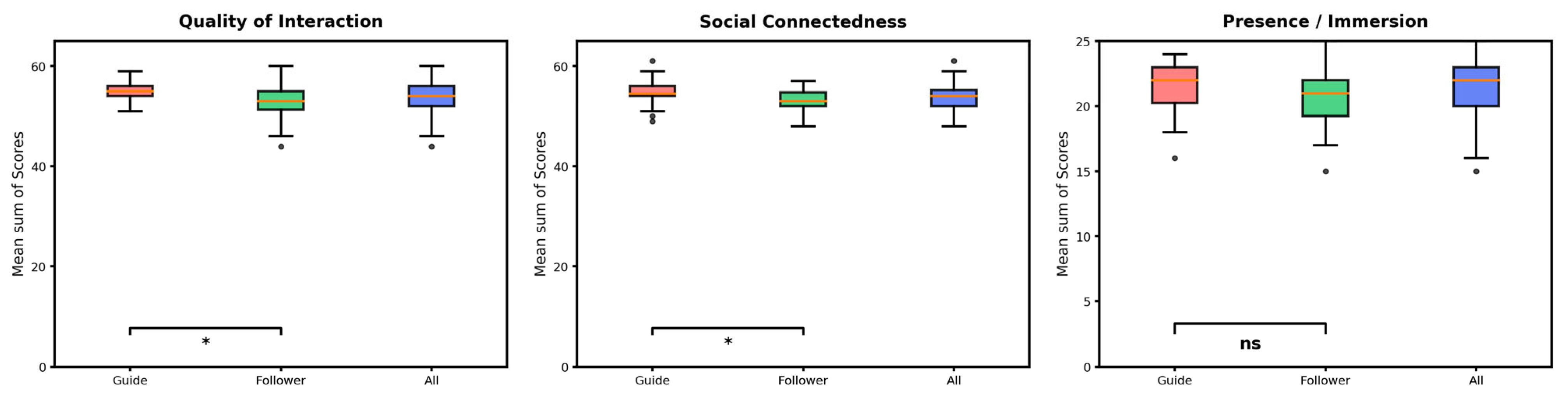
Figure 8 provides the box plots of the mean sum of scores (per participant) for the Guide, Follower, and All groups across the IQ, SC, and PI factors. Wilcoxon–Mann–Whitney (Mann–Whitney U) tests on the summed factor scores (with reverse-coding applied to the negatively worded items within each factor) were conducted to assess whether significant statistical differences between Guides and Followers exist. On the one hand, the analysis indicates a significant difference between roles for IQ (U = 334.5,
p = 0.029, r = 0.33) and SC (U = 341.0,
p = 0.020, r = 0.35), with Guides scoring slightly higher than Followers in both factors. Although the results are positive overall for both roles, the statistical analysis confirms the expected higher satisfaction for Guides due to their greater interaction freedom. Still, Followers reported higher feelings of emotion (IQ1) than Guides, as the former likely paid more attention to the latter to follow their interactions with the environment, as reported for SC2. On the other hand, no significant differences were observed for the PI factors (U = 293.5,
p = 0.225), which reflects that both roles felt high feelings of presence and immersion.
To complement these results, the mean (M) and standard deviation (SD) statistics for each participant group and evaluation factor are detailed in the following:
IQ: Guide (M = 54.86, SD = 2.08), Follower (M = 52.82, SD = 3.62), All (M = 53.84, SD = 3.09).
SC: Guide (M = 54.91, SD = 2.97), Follower (M = 52.91, SD = 2.31), All (M = 53.91, SD = 2.82).
PI: Guide (M = 21.55,SD = 2.04), Follower (M = 20.77,SD = 2.41), All (M = 21.16, SD = 2.24).
6.2.3. Results from the Ad Hoc Questionnaire
The Social VR experience questionnaire was extended to get valuable ad hoc feedback about various aspects of the presented technology and scenario (
Table 5,
Table 6,
Table 7,
Table 8 and
Table 9):
Perceived Quality (
Table 5): On the one hand, the perceived quality for the visual holographic representations was considered acceptable, with slightly more positive scores to the other’s user representation. On the other hand, the perceived audio quality from the remote user was considered good or excellent by most participants. This also confirms that the obtained bandwidth and delay results (
Section 6.1) led to satisfactory quality perception.
Real vs. Virtual Experience (
Table 6): in some aspects the quality and naturalness of the virtual experience resembled the one provided in real experiences. While the quality of the visual representation, as well as the fluidity and naturalness of gestures, were perceived as slightly worse by the majority, the quality of audio was perceived almost equivalent by the participants. In overall terms, the quality of communication in the virtual experiences was rated positively by both Guides and Followers.
Perceived Quality (Part II)—Intuitiveness and Satisfaction (
Table 7): Participants in general liked the VR environment (AH9) and considered that the multiple media modalities were adequately integrated and transitioned (AH10–AH13). This reflects that the adopted content hybridization techniques resulted in a pleasant and enjoyable experience. Likewise, most participants (Guides) stated that the integrated PoIs allowed them to obtain additional information of interest about the environment visited that was adequate and intuitive (AH14–AH16). Still, most Followers felt comfortable with the other participant interacting with the PoIs and enjoyed the experience even without being in control of the interactions (AH17–AH18).
Quality/Performance (
Table 8): In general terms, participants stated that the quality of users’ holographic representations is sufficient to maintain effective interactions and communications (AH19), and that the experienced delays in the audiovisual communication between users were satisfactory, enabling fluid and natural interactive experiences (AH20). This reinforces that the obtained objective results are satisfactory.
Impact and Potential (
Table 9): Most participants stated that the presentation is effective for making interactive virtual visits, including for holding virtual meetings, and that the fact of wearing an HMD did not prevent them from enjoying the experience, and that they would use this technology if available in the market. These inputs envisage a promising impact and potential of the presented technology and the scenarios it can enable.
Table 5.
Ad hoc experience questionnaire—perceived quality (part I). The text in italics denotes the questionnaire item to be answered. The most popular answers in the table are shown in bold.
Table 5.
Ad hoc experience questionnaire—perceived quality (part I). The text in italics denotes the questionnaire item to be answered. The most popular answers in the table are shown in bold.
| Question | Bad | Poor | Fair | Good | Excellent | M/SD |
|---|
| AH1. “The visual quality of my own holographic representation” | 2 (4.5%) | 6 (13.6%) | 20 (45.5%) | 16 (36.4%) | 0 | M = 3.136; SD = 0.824 |
| AH2. “The visual quality of the other user’s holographic representation” | 1 (2.3%) | 5 (11.4%) | 18 (40.9%) | 20 (45.5%) | 0 | M = 3.295; SD = 0.765 |
| AH3. “The quality of the audio coming from the other user” | 0 | 0 | 1 (2.3%) | 22 (50%) | 21 (47.7%) | M = 4.455; SD = 0.548 |
Table 6.
Ad hoc experience questionnaire—“Real vs. Virtual Experience”. The text in italics denotes the questionnaire item to be answered. The most popular answers in the table are shown in bold.
Table 6.
Ad hoc experience questionnaire—“Real vs. Virtual Experience”. The text in italics denotes the questionnaire item to be answered. The most popular answers in the table are shown in bold.
| Question | Much Worse | Slightly
Worse | Equivalent | Slightly
Better | Much Better | Mean (M)/
Standard
Deviation (SD) |
|---|
| AH4. “In general terms, the virtual experience compared to a real-life experience.” | 0 | 19 (43.2%) | 15 (34.1%) | 8 (18.2%) | 2 (4.5%) | M = 2.84; SD = 0.88 |
| Guides | 0 | 9 (40.9%) | 7 (31.8%) | 5 (22.7%) | 1 (4.5%) | M = 2.90; SD = 0.92 |
| Followers | 0 | 10 (45.5%) | 8 (36.4%) | 3 (13.6%) | 1 (4.5%) | M = 2.77; SD = 0.86 |
| AH5. “The visual representation of users in the virtual experience compared to that in real life.” | 11 (25%) | 17 (38.6%) | 14 (31.8%) | 2 (4.5%) | 0 | M = 2.15; SD = 0.86 |
| AH6. “The audio quality in the virtual experience compared to that of a real setting.” | 2 (4.5%) | 7 (15.9%) | 18 (40.9%) | 12 (27.3%) | 3 (6.8%) | M = 3.16; SD = 0.96 |
| AH7. “The naturalness and fluidity of gestures and actions in the virtual environment compared to a real scenario.” | 5 (11.4%) | 21 (47.7%) | 16 (36.4%) | 3 (6.8%) | 0 | M = 2.84; SD = 0.88 |
| Guides | 2 (9.1%) | 10 (45.5%) | 8 (36.4%) | 2 (9.1%) | 0 | M = 2.37; SD = 0.77 |
| Followers | 3 (13.6%) | 11 (50%) | 8 (36.4%) | 1 (4.5%) | 0 | M = 2.30; SD = 0.76 |
| AH8. “In general, the quality of communication in the virtual environment compared to a real scenario.” | 3 (6.8%) | 16 (36.4%) | 18 (40.9%) | 6 (13.6%) | 1 (2.3%) | M = 2.68; SD = 0.88 |
| Guides | 1 (4.5%) | 7 (31.8%) | 10 (45.5%) | 3 (13.6%) | 1 (4.5%) | M = 2.81; SD = 0.95 |
| Followers | 2 (9.1%) | 9 (40.9%) | 8 (36.4%) | 3 (13.6%) | 0 | M = 2.54; SD = 0.85 |
Table 7.
Ad hoc experience questionnaire—perceived quality (part II), intuitiveness and satisfaction. The text in italics denotes the questionnaire item to be answered. The most popular answers in the table are shown in bold.
Table 7.
Ad hoc experience questionnaire—perceived quality (part II), intuitiveness and satisfaction. The text in italics denotes the questionnaire item to be answered. The most popular answers in the table are shown in bold.
| Question | Totally Disagree | Partially
Disagree | Neutral | Partially Agree | Totally
Agree | Mean (M)/
Standard
Deviation (SD) |
|---|
| AH9. “I liked the recreated virtual environment.” | 0 | 0 | 4 (18.2%) | 14 (31.8%) | 26 (59.1%) | M = 4.50; SD = 0.65 |
| AH10. “The real environment in the initial 360° video (introductory part with the owner) and the visitable 3D synthetic environment have been perceived in an analogous way.” | 1 (2.3%) | 3 (6.8%) | 11 (25%) | 17 (38.6%) | 12 (27.3%) | M = 3.81; SD = 0.99 |
| AH11. “The transition between the 360° video (introductory part with the owner) and synthetic 3D environment (second part, visitable) has been practically imperceptible.” | 2 (4.5%) | 6 (13.6%) | 8 (18.2%) | 16 (36.4%) | 12 (27.3%) | M = 3.68; SD = 1.15 |
| AH12. “The different multimedia formats (3D content, video, images, text, animations, sound) have been integrated into the experience in a satisfactory manner.” | 0 | 0 | 6 (13.6%) | 18 (40.9%) | 20 (45.5%) | M = 4.31; SD = 0.70 |
| AH13. “The spatiality in the virtual environment (that is, the sizes and distances between elements, including that of the characters) is consistent with a real setting.” | 0 | 5 (11.4%) | 9 (20.5%) | 16 (36.4%) | 14 (31.8%) | M = 3.88; SD = 0.95 |
| AH14. “The interactions with the virtual environment have allowed me to obtain additional information of interest about the environment visited.” | 0 | 1 (2.3%) | 2 (4.5%) | 18 (40.9%) | 23 (52%) | M = 4.43; SD = 0.69 |
| Guides | 0 | 0 | 1 (4.5%) | 8 (36.4%) | 13 (59.1%) | M = 4.54; SD = 0.59 |
| Followers | 0 | 1 (4.5%) | 1 (4.5%) | 10 (45.5%) | 10 (45%) | M = 4.31; SD = 0.78 |
| AH15. “The interactions with the virtual environment provided are adequate.” | 0 | 2 (4.5%) | 6 (13.6%) | 20 (45.5%) | 16 (36.4%) | M = 4.13; SD = 0.82 |
| Guides | 0 | 0 | 1 (4.5%) | 11 (50%) | 10 (45.5%) | M = 4.40; SD = 0.59 |
| Followers | 0 | 2 (4.5%) | 5 (22.7%) | 9 (40.9%) | 6 (27.3%) | M = 3.86; SD = 0.94 |
| AH16. (Only for Guides) “The activation and use of the interactions with/in the virtual environment has been intuitive.” | 0 | 0 | 0 | 10 (45.5%) | 12 (54.5%) | M = 4.54; SD = 0.51 |
| AH17. (Only for Followers) “I found it comfortable that the other user had control and was in charge of the interactions.” | 2 (9.1%) | 5 (22.7%) | 6 (27.3%) | 5 (22.7%) | 4 (18.2%) | M = 3.18; SD = 1.25 |
| AH18. (Only for Followers) “Even without having control of the interactions, I am satisfied with the virtual visit and the additional information provided through the interactions.” | 0 | 1 (4.5%) | 0 | 8 (36.4%) | 13 (59.1%) | M = 4.50; SD = 0.74 |
Table 8.
Ad hoc experience questionnaire—quality/performance. The text in italics denotes the questionnaire item to be answered. The most popular answers in the table are shown in bold.
Table 8.
Ad hoc experience questionnaire—quality/performance. The text in italics denotes the questionnaire item to be answered. The most popular answers in the table are shown in bold.
| Question | Totally
Disagree | Partially
Disagree | Neutral | Partially Agree | Totally
Agree | Mean (M)/Standard Deviation (SD) |
|---|
| AH19. “The quality of users’ holographic representations is sufficient to maintain effective interactions and communications.” | 3 (6.8%) | 5 (11.4%) | 14 (31.8%) | 16 (36.4%) | 6 (13.6%) | M = 3.38; SD = 1.08 |
| AH20. “The delays in audiovisual communication between users are satisfactory, and enable fluid and natural interactive experiences.” | 0 | 2 (4.5%) | 10 (22.7%) | 22 (50%) | 10 (22.7%) | M = 3.90; SD = 0.80 |
Table 9.
Ad hoc experience questionnaire—impact and potential (IP). The text in italics denotes the questionnaire item to be answered. The most popular answers in the table are shown in bold.
Table 9.
Ad hoc experience questionnaire—impact and potential (IP). The text in italics denotes the questionnaire item to be answered. The most popular answers in the table are shown in bold.
| Question | Totally Disagree | Partially
Disagree | Neutral | Partially Agree | Totally Agree | Mean (M)/Standard Deviation (SD) |
|---|
| IP1. “This technology is effective for making interactive virtual visits.” | 0 | 0 | 2 (4.5%) | 13 (29.5%) | 29 (65.9%) | M = 4.614; SD = 0.579 |
| Guides | 0 | 0 | 0 | 7 (31.8%) | 15 (68.2%) | M = 4.682; SD = 0.477 |
| Followers | 0 | 0 | 2 (9.1%) | 6 (27.3%) | 14 (63.6%) | M = 4.545; SD = 0.671 |
| IP2. “This technology is effective for holding virtual meetings.” | 1 (2.3%) | 4 (9.1%) | 7 (15.9%) | 13 (29.5%) | 19 (43.2%) | M = 4.023; SD = 1.089 |
| Guides | 1 (4.5%) | 2 (9.1%) | 3 (13.6%) | 6 (27.3%) | 10 (45.5%) | M = 4.000; SD = 1.195 |
| Followers | 0 | 2 (9.1%) | 4 (18.2%) | 7 (31.8%) | 9 (40.9%) | M = 4.045; SD = 0.999 |
| IP3. “The fact of wearing a Virtual Reality headset was a barrier to having a satisfactory interactive experience (e.g., due to the fact of not seeing the other user’s eyes).” | 7 (15.9%) | 8 (18.2%) | 14 (31.8%) | 10 (22.7%) | 5 (11.4%) | M = 2.955; SD = 1.238 |
| Guides | 3 (13.6%) | 5 (22.7%) | 6 (27.3%) | 5 (22.7%) | 3 (13.6%) | M = 3.000; SD = 1.272 |
| Followers | 4 (18.2%) | 3 (13.6%) | 8 (36.4%) | 5 (22.7%) | 2 (9.1%) | M = 2.909; SD = 1.231 |
| IP4. “I would use technology like this if it were available on the market.” | 1 (2.3%) | 6 (13.6%) | 8 (18.2%) | 13 (29.5%) | 16 (36.4%) | M = 3.841; SD = 1.140 |
| Guides | 0 | 3 (13.6%) | 4 (18.2%) | 7 (31.8%) | 8 (36.4%) | M = 3.909; SD = 1.065 |
| Followers | 1 (4.5%) | 3 (13.6%) | 4 (18.2%) | 6 (27.3%) | 8 (36.4%) | M = 3.773; SD = 1.232 |
7. Conclusions and Future Work
This study has been pioneering in exploring a cohesive integration between multimodal content hybridization techniques, multimodal interaction, and real-time multi-user holoportation to enable rich and interactive role-based group visits to virtual heritage. The reconstructed scenario, centered around the historically significant “Els Quatre Gats” café in Barcelona, served as a rich use case for evaluating the effectiveness of the proposed technological and creative contributions, integrated into a state-of-the-art Social VR platform. The adopted content hybridization strategy allowed for a strategic and smooth transition between real captured and 3D modeled content elements, while the addition of relevant PoIs with multimodal contextual information, to be interactively visited and selected, provided coherent behavior and role-based interactions.
On the one hand, the objective evaluation confirmed the system’s technical robustness, reasonable bandwidth figures and low-latency performance. On the other hand, subjective assessments involving 44 participants resulted in positive and promising immersion, co-presence, and quality of interaction levels. Interestingly, the Social VR technology and experience has delivered high engagement and evoked high interest for both Guides and Followers, despite the latter not being in control of the selected interactions. This might be due to the fact that Followers still perceived naturally the contextual multimodal information presented for the PoIs, and that they could also express to the Guides the elements they were interested in, via voice and/or gestures.
While the study included a wide sample of participants (N = 44) and the results obtained are promising, it encounters intrinsic limitations, especially due to the recruitment criteria, that is limited to known pairs, and the controlled deployment setting. On the one hand, the consideration of only known colleagues may have impacted and biased the perceptual results and reported opinions, thereby limiting generalizability and conclusiveness. However, physical group visits in real-world settings are typically conducted with relatives, which determined our specific recruitment criteria for this use case. Still, additional tests with wider and more diverse samples of participants (including family members, friends and unknown colleagues) and groups of different sizes would need to be conducted to further assess the receptiveness of the presented technology and role-based features, as well as the potential of the resulting use case. On the other hand, the objective and subjective results may be determined to some extent by the controlled scenario deployment setting. Further tests across remote, ubiquitous locations would need to be conducted to confirm the satisfactory performance of the platform and users’ receptiveness in these cases.
Finally, further work would be needed to not only address the aforementioned limitations, but also to improve performance, completeness, and ease the adoption of the presented technology. First, strategies to enable dynamic role transitions will be explored to allow users to gain control of interactions, especially in virtual environments of greater size and involving a higher number of users. The benefits and impact of such strategies for group-shared activities would need to be assessed in different application contexts. Second, the visual quality of the holograms will be iteratively improved by proposing novel volumetric video capture, reconstruction and encoding methods, and assessing the implications of incorporating full volumetric human reconstructions. Third, scalability enablers will be devised to support a higher number of users per session, and to dynamically adapt to the available network and client resources. Fourth, novel hardware systems will be proposed to ease the portability and deployment of such technologies. Finally, its application and potential in other relevant use cases, like education and cultural events, will be explored to further assess its accessibility and societal and sustainability impact.
In summary, the findings from this work underscore the potential of combining volumetric video, multimodal interaction, content hybridization and Social VR technologies to support the next generation of interactive and collaborative cultural and tourism experiences.
Author Contributions
Conceptualization, M.H., M.M., D.R.-R. and S.F.L.; methodology, M.H., M.M. and S.F.L.; software, M.H., M.M. and S.F.L.; validation, M.H., M.M., D.R.-R. and S.F.L.; formal analysis, M.H. and M.M.; investigation, M.H. and M.M.; resources, M.M. and S.F.L.; data curation, M.H. and M.M.; writing—original draft preparation, M.H. and M.M.; writing—review and editing, M.H., M.M. and D.R.-R.; visualization, M.H. and M.M.; supervision, M.M., D.R.-R. and S.F.L.; project administration, M.M., D.R.-R. and S.F.L.; funding acquisition, M.M. and S.F.L. All authors have read and agreed to the published version of the manuscript.
Funding
This work has been funded by the European Union’s Horizon Europe program, under agreement n° 101135025 (PRESENCE project), and by Agencia Estatal de Investigación (AEI), in the framework of Proyectos Generación de Conocimiento 2022, under agreement PID2022-140749OBI0 (EVOLVE project). The work of Mohamad Hjeij has been funded by the Generalitat de Catalunya and the European Social Fund (Juan Oro Grants to hire research staff in training FI 2022). The work of Mario Montagud has been funded by MCIN/AEI/10.13039/501100011033 under Grant RYC2020-030679-I and by “the European Social Fund (ESF) Investing in Your Future”. The work of David Rincón Rivera has been funded by project PID2022-137329OB-C41, supported by MICIU/AEI/10.13039/501100011033 and FEDER, EU.
Institutional Review Board Statement
Not applicable.
Informed Consent Statement
Not applicable.
Data Availability Statement
The datasets used and analyzed during the current study are available from the corresponding author upon reasonable request.
Conflicts of Interest
The authors declare no conflicts of interest.
References
- Rakkolainen, I.; Farooq, A.; Kangas, J.; Hakulinen, J.; Rantala, J.; Turunen, M.; Raisamo, R. Technologies for multimodal interaction in extended reality—A scoping review. Multimodal Technol. Interact. 2021, 5, 81. [Google Scholar] [CrossRef] [Scilit]
- Demetrescu, E.; Ferdani, D. From Field Archaeology to Virtual Reconstruction: A Five Steps Method Using the Extended Matrix. Appl. Sci. 2021, 11, 5206. [Google Scholar] [CrossRef] [Scilit]
- Rodriguez-Garcia, B.; Guillen-Sanz, H.; Checa, D.; Bustillo, A. A systematic review of virtual 3D reconstructions of Cultural Heritage in immersive Virtual Reality. Multimed. Tools Appl. 2024, 83, 89743–89793. [Google Scholar] [CrossRef] [Scilit]
- Debarba, H.G.; Montagud, M.; Chagué, S.; Lajara, J.; Lacosta, I.; Langa, S.F.; Charbonnier, C. Content format and quality of experience in virtual reality. Multimed. Tools Appl. 2024, 83, 46481–46506. [Google Scholar] [CrossRef] [Scilit]
- Fernández, S.; Montagud, M.; Cernigliaro, G.; Rincón, D. Toward Hyper-realistic and Interactive Social VR Experiences in Live TV Scenarios. IEEE Trans. Broadcast. 2022, 68, 13–32. [Google Scholar] [CrossRef] [Scilit]
- Fernández, S.; Montagud, M.; Cernigliaro, G.; Rincón, D. Multi-party Holomeetings: Toward a New Era of Low-Cost Volumetric Holographic Meetings in Virtual Reality. IEEE Access 2022, 10, 81856–81876. [Google Scholar] [CrossRef] [Scilit]
- Montagud, M.; Martos, M.; Egea, Á; Fernández, S. Social VR with holographic comms: Enablers for new engaging experiences within the TV/video consumption landscape. In IEEE Transactions on Broadcasting; IEEE: New York City, NY, USA, 2025. [Google Scholar] [CrossRef] [Scilit]
- Montagud, M.; Li, J.; Cernigliaro, G.; El Ali, A.; Fernández, S.; Cesar, P. Towards socialVR: Evaluating a novel technology for watching videos together. Virtual Real. 2022, 26, 1593–1613. [Google Scholar] [CrossRef] [Scilit] [PubMed]
- Theodoropoulos, A.; Antoniou, A. VR games in cultural heritage: A systematic review of the emerging felds of virtual reality and culture games. Appl. Sci. 2022, 12, 8476. [Google Scholar] [CrossRef] [Scilit]
- Fink, M.C.; Sosa, D.; Eisenlauer, V.; Ertl, B. Authenticity and interest in virtual reality: Findings from an experiment including educational virtual environments created with 3D modeling and photogrammetry. Front. Educ. 2023, 8, 969966. [Google Scholar] [CrossRef] [Scilit]
- Argyriou, L.; Economou, D.; Bouki, V. Design methodology for 360° immersive video applications: The case study of a cultural heritage virtual tour. Pers. Ubiquit Comput. 2020, 24, 843–859. [Google Scholar] [CrossRef] [Scilit]
- De Simone, F.; Li, J.; Debarba, H.G.; Ali, A.E.; Gunkel, S.N.B.; Cesar, P. Watching Videos Together in Social Virtual Reality: An Experimental Study on User’s QoE. In IEEE Conference on Virtual Reality and 3D User Interfaces (VR); IEEE: New York, NY, USA, 2019. [Google Scholar] [CrossRef] [Scilit]
- Snelson, C.; Hsu, Y.C. Educational 360-Degree Videos in Virtual Reality: A Scoping Review of the Emerging Research. TechTrends 2020, 64, 404–412. [Google Scholar] [CrossRef] [Scilit]
- Hutson, J.; Hutson, P. Immersive technologies. In Inclusive Smart Museums: Engaging Neurodiverse Audiences and Enhancing Cultural Heritage; Springer Nature: Cham, Switzerland, 2024; pp. 153–228. [Google Scholar] [CrossRef] [Scilit]
- Fei, B.; Xu, J.; Zhang, R.; Zhou, Q.; Yang, W.; He, Y. 3D Gaussian Splatting as a New Era: A Survey. IEEE Trans. Vis. Comput. Graph. 2024, 31, 4429–4449. [Google Scholar] [CrossRef] [Scilit] [PubMed]
- Huerta, I.; Toledo, L.; Montoya, S.; Martos, M.; Fernandez, S.; Montagud, M. Volumetric Video Reconstruction and Communications: Toward a New Era of Interactive and Immersive Social Virtual Reality (VR) Experiences. In Proceedings of the 2024 ACM International Conference on Interactive Media Experiences Workshops; IMXw ’24; ACM: New York, NY, USA, 2024. [Google Scholar] [CrossRef] [Scilit]
- Rothe, S.; Schmidt, A.; Montagud, M.; Buschek, D.; Hußman, H. Social viewing in cinematic virtual reality: A design space for social movie applications. Virtual Real. 2021, 25, 613–630. [Google Scholar] [CrossRef] [Scilit]
- McGill, M.; Williamson, J.H.; Brewster, S. Examining the role of smart TVs and VR HMDs in synchronous at-a-distance media consumption. ACM Trans. Comput.-Hum. Interact. (TOCHI) 2016, 23, 33. [Google Scholar] [CrossRef] [Scilit]
- Gunkel, S.; Prins, M.; Stokking, H.; Niamut, O. Social VR Platform: Building 360-Degree Shared VR Spaces; ACM TVX: Hilversum, The Netherlands, 2017. [Google Scholar] [CrossRef] [Scilit]
- Li, J.; Kong, Y.; Röggla, T.; De Simone, F.; Ananthanarayan, S.; de Ridder, H.; El Ali, A.; Cesar, P. Measuring and Understanding Photo Sharing Experiences in Social Virtual Reality. In Proceedings of the 2019 CHI Conference on Human Factors in Computing Systems; ACM: New York, NY, USA, 2019; pp. 1–14. [Google Scholar] [CrossRef] [Scilit]
- Jansen, J.; Subramanyam, S.; Bouqueau, R.; Cernigliaro, G.; Cabré, M.; Pérez, F.; Cesar, P. A pipeline for multiparty volumetric video conferencing. In Proceedings of the 11th ACM Multimedia Systems Conference; ACM: New York, NY, USA, 2020; pp. 341–344. [Google Scholar] [CrossRef] [Scilit]
- Li, J.; Subramanyam, S.; Jansen, J.; Mei, Y.; Reimat, I.; Lawicka, K.; Cesar, P. Evaluating the user Experience of a Photorealistic Social VR Movie. In IEEE International Symposium on Mixed and Augmented Reality (ISMAR); IEEE: New York, NY, USA, 2021; pp. 284–293. [Google Scholar] [CrossRef] [Scilit]
- Mekuria, R.; Blom, K.; Cesar, P. Design, Implementation, and Evaluation of a Point Cloud Codec for Tele-Immersive Video. IEEE Trans. Circuits Syst. Video Technol. 2017, 27, 828–842. [Google Scholar] [CrossRef] [Scilit]
- Montagud, M.; Cesar, P.; Jansen, J.; Boronat, F. MediaSync: Handbook on Multimedia Synchronization (23 Chapters); Springer-Verlag: Berlin/Heidelberg, Germany, 2018; pp. 3–31. [Google Scholar] [CrossRef] [Scilit]
- Kennedy, R.S.; Lane, N.E.; Berbaum, K.S.; Lilienthal, M.G. Simulator sickness questionnaire: An enhanced method for quantifying simulator sickness. Int. J. Aviat. Psychol. 1993, 3, 203–220. [Google Scholar] [CrossRef] [Scilit] [PubMed]
- Subramanyam, S.; Viola, I.; Jansen, J.; Alexiou, E.; Hanjalic, A.; Cesar, P. Evaluating the impact of tiled user-adaptive real-time point cloud streaming on VR remote communication. In Proceedings of the 30th ACM International Conference on Multimedia; ACM: New York, NY, USA, 2022; pp. 3094–3103. [Google Scholar] [CrossRef] [Scilit]
| Disclaimer/Publisher’s Note: The statements, opinions and data contained in all publications are solely those of the individual author(s) and contributor(s) and not of MDPI and/or the editor(s). MDPI and/or the editor(s) disclaim responsibility for any injury to people or property resulting from any ideas, methods, instructions or products referred to in the content. |